




NCERT Exemplar Solutions for Class 11 Biology Chapter 15 Body Fluids and Circulation solve all 42 questions from the Exemplar book. Every MCQ, Very Short Answer, Short Answer and Long Answer problem is answered step by step in the free 68-page PDF, updated for the 2026-27 syllabus.
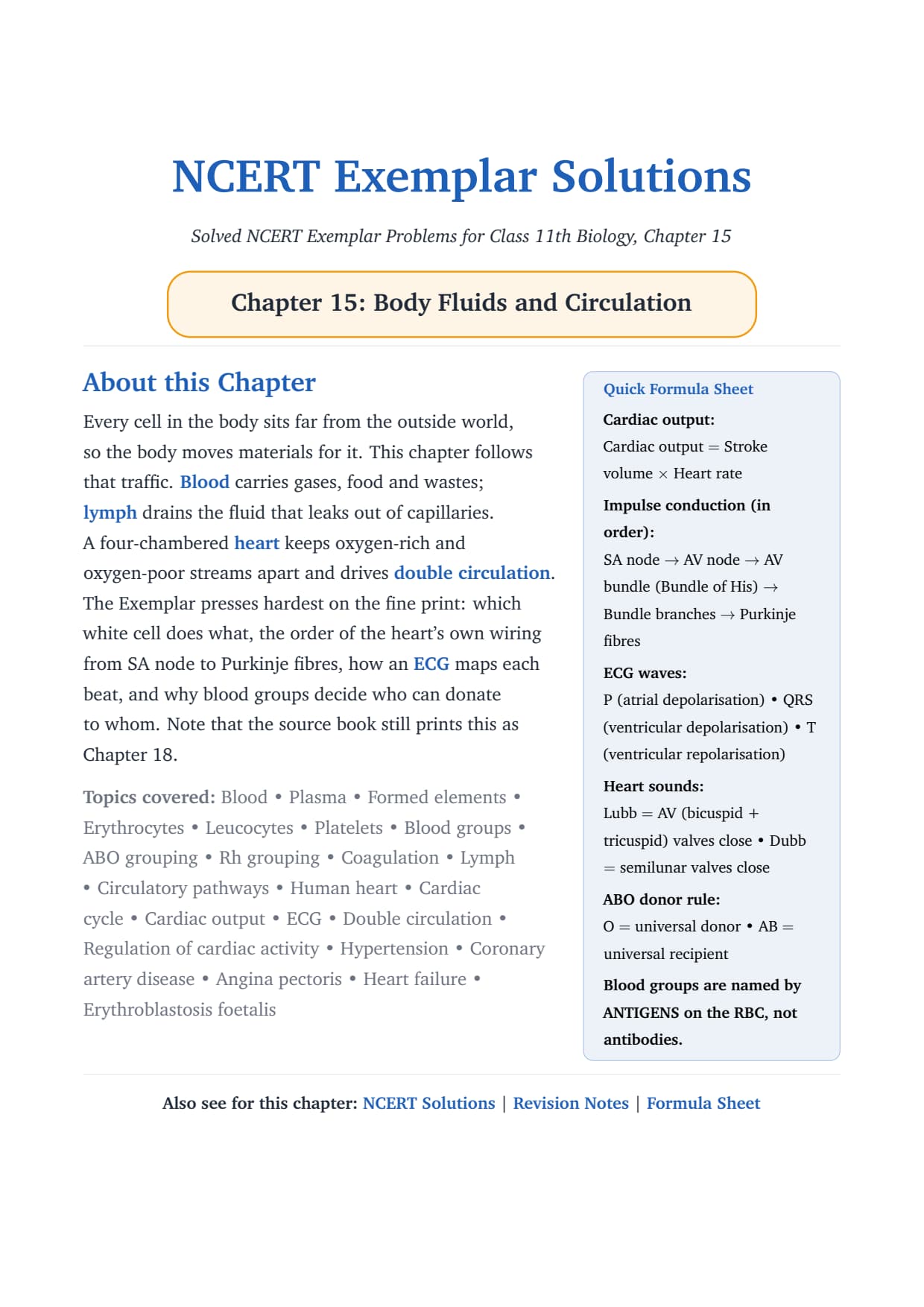
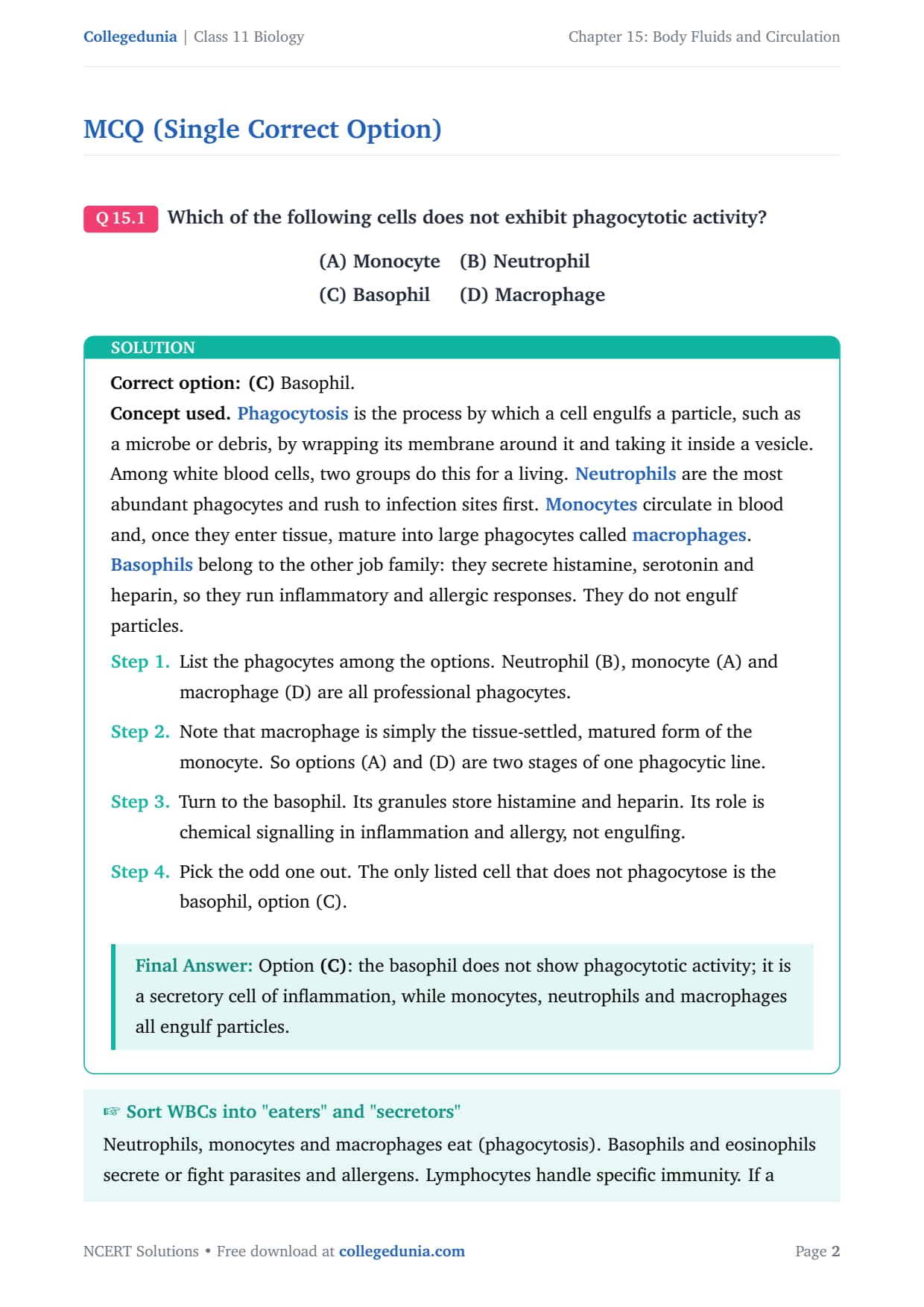
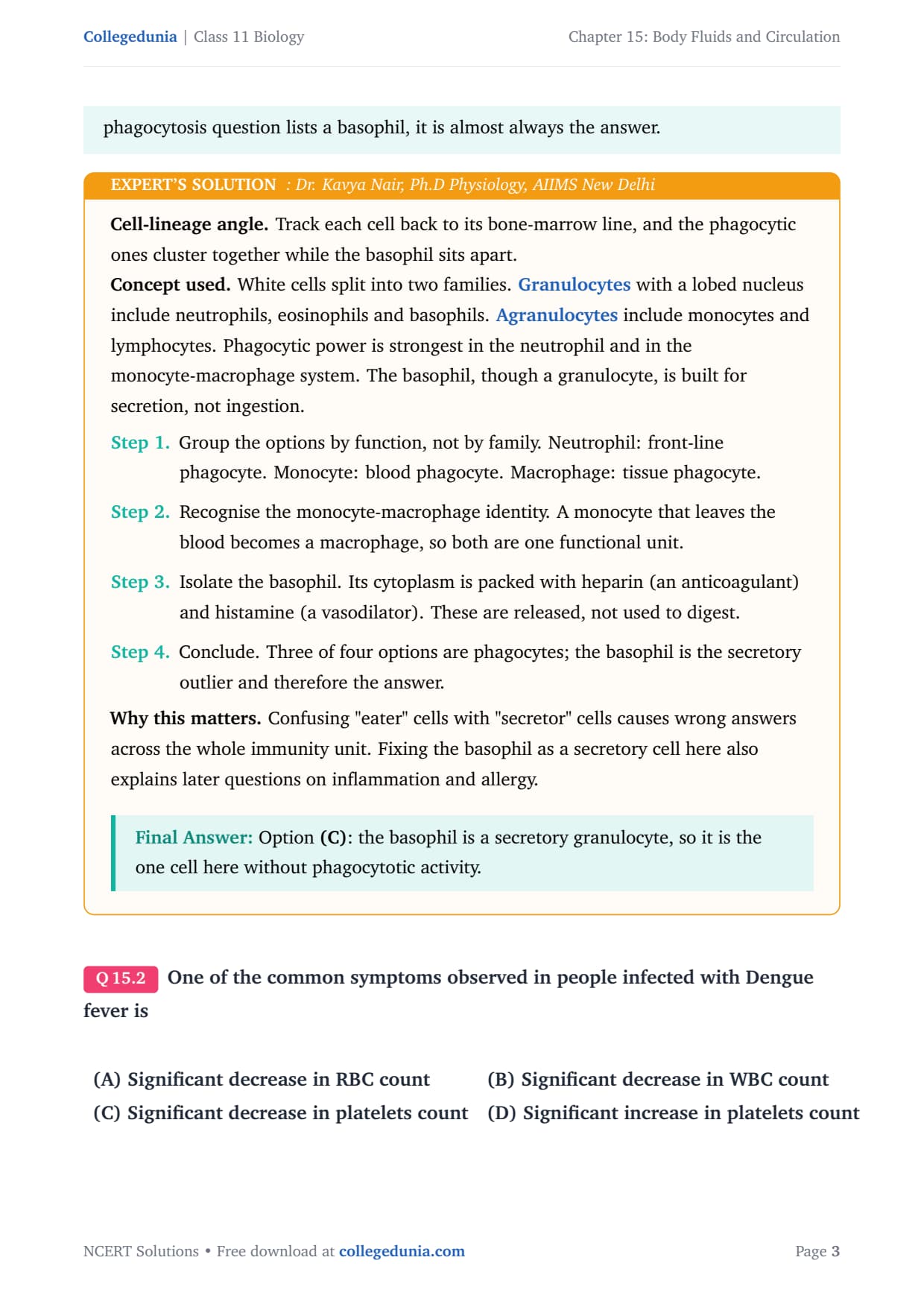
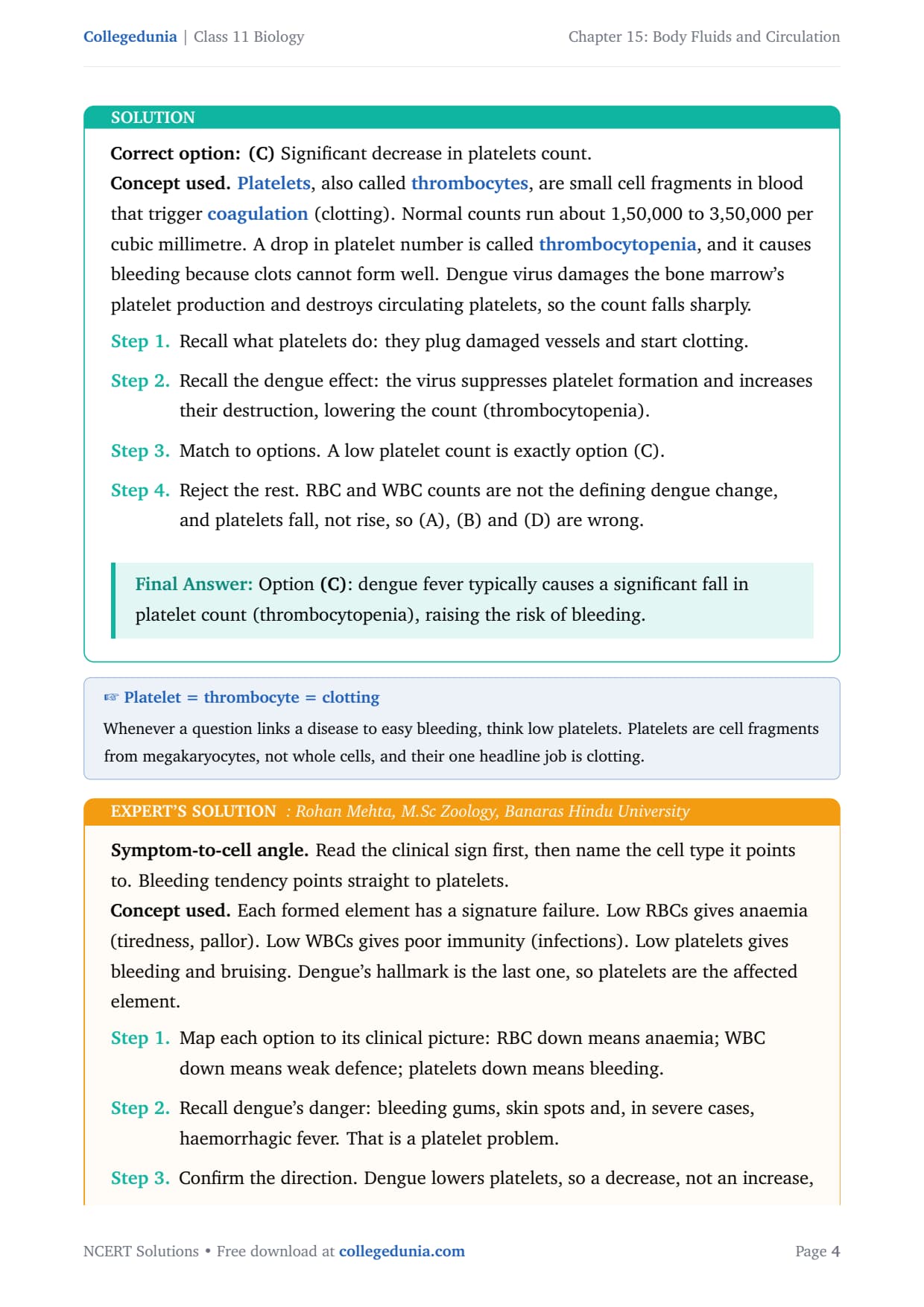
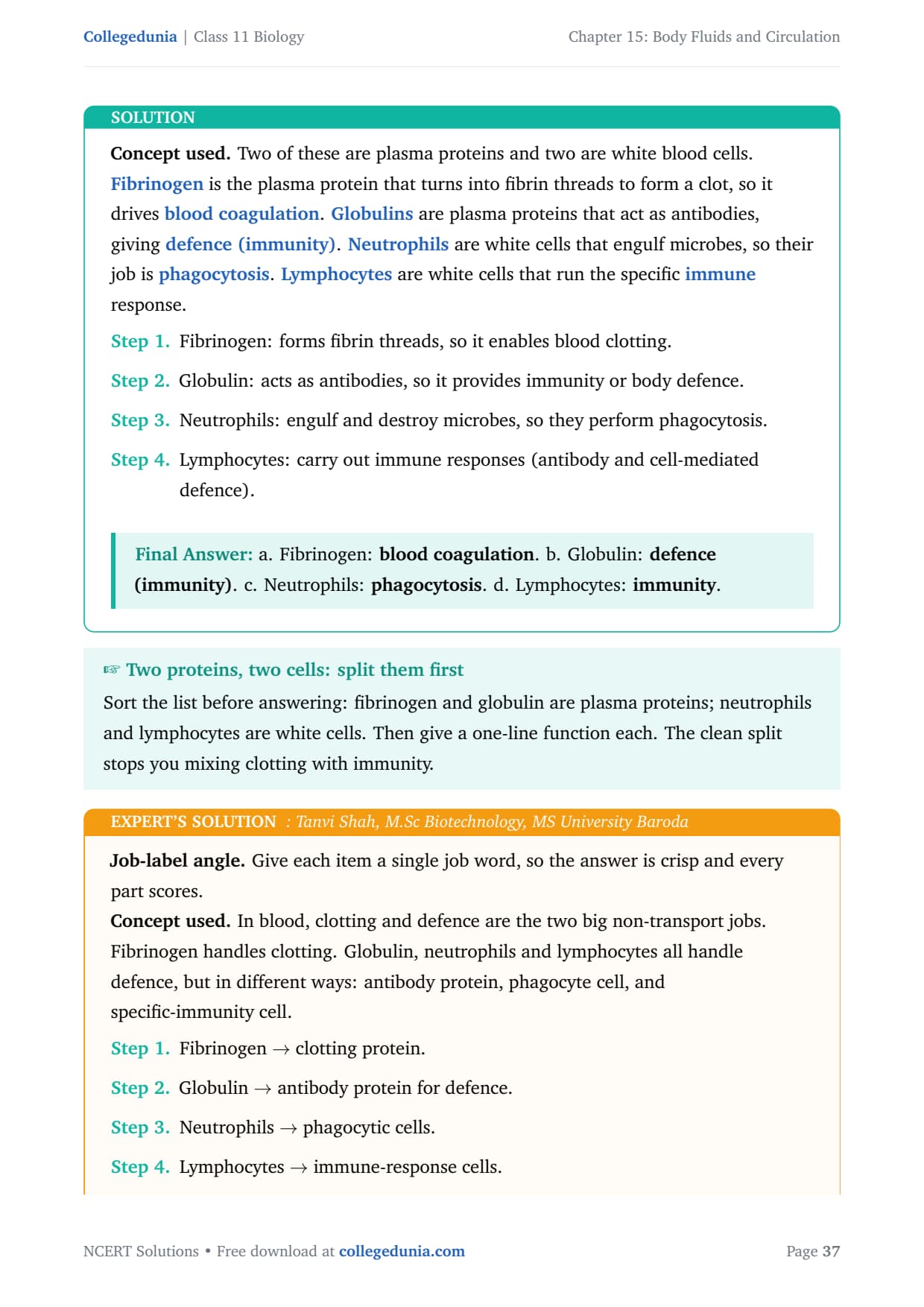
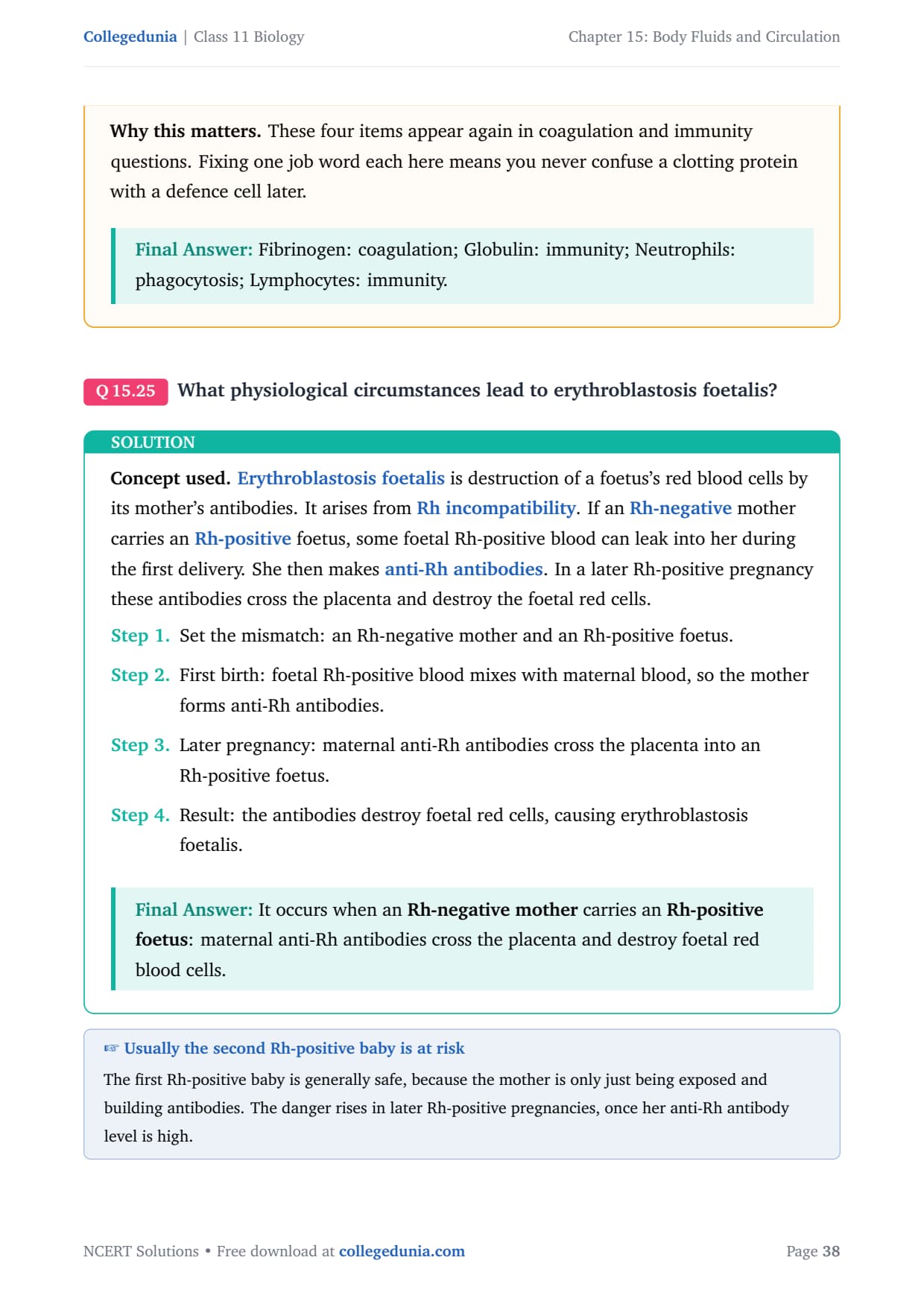
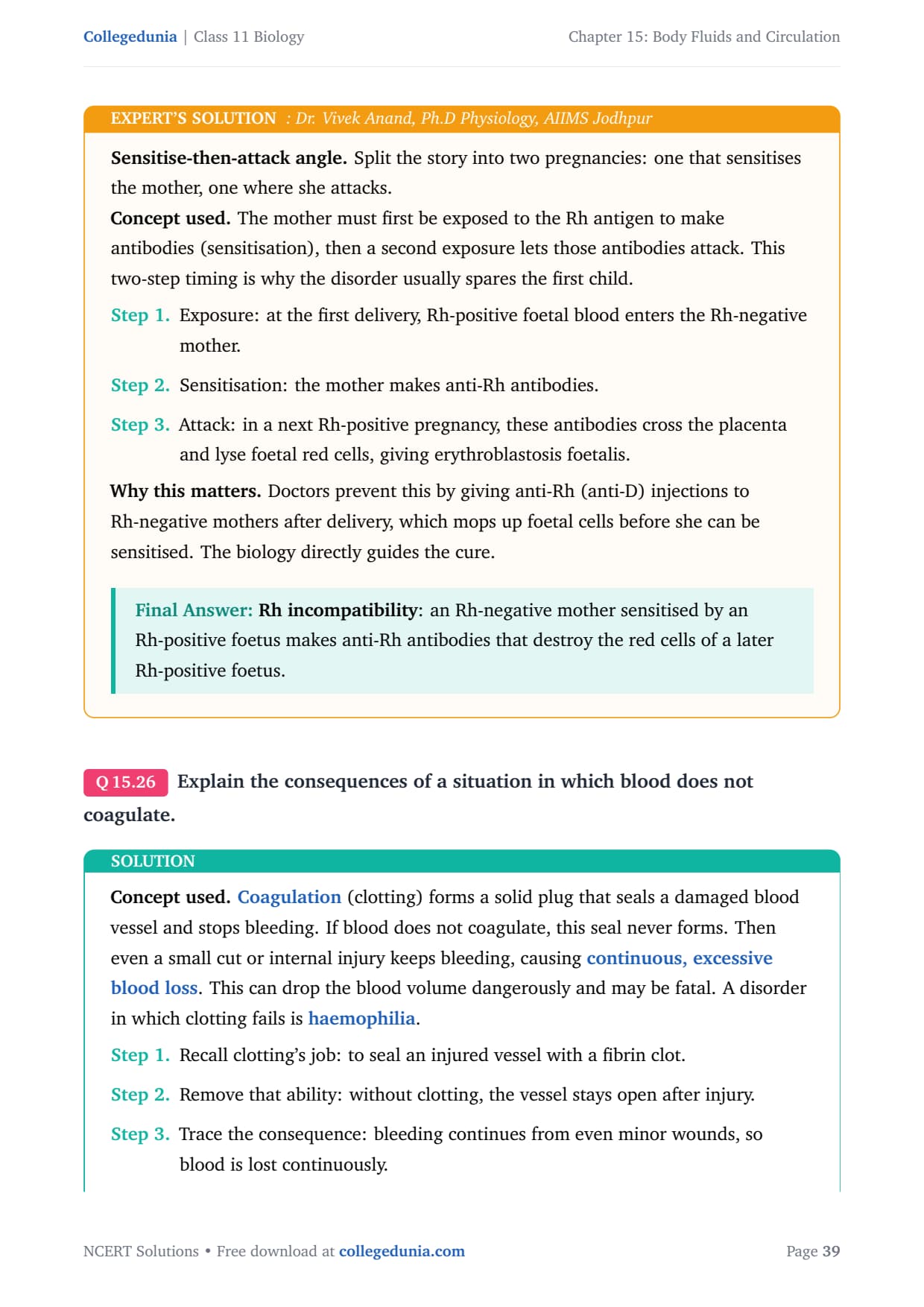
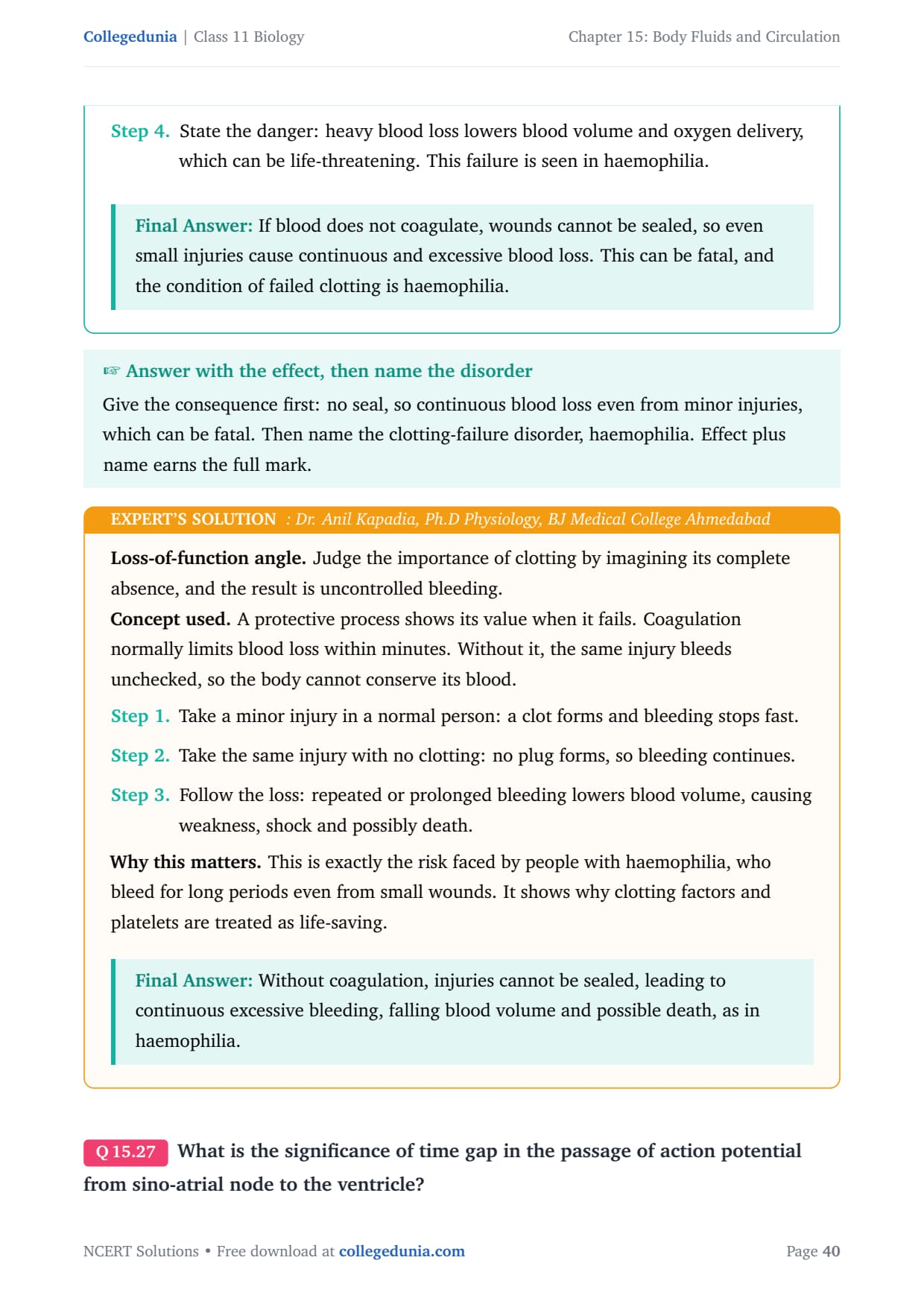
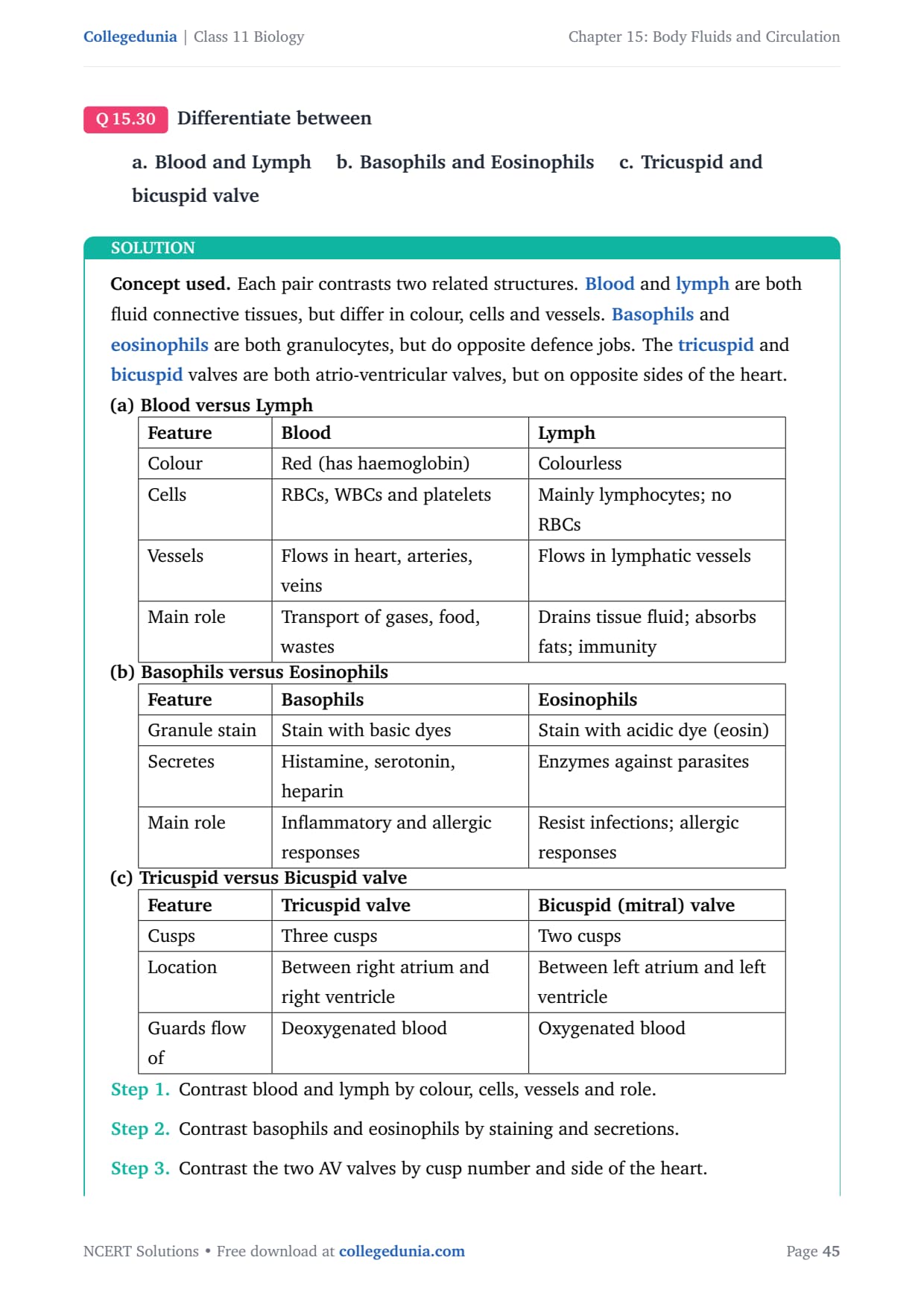
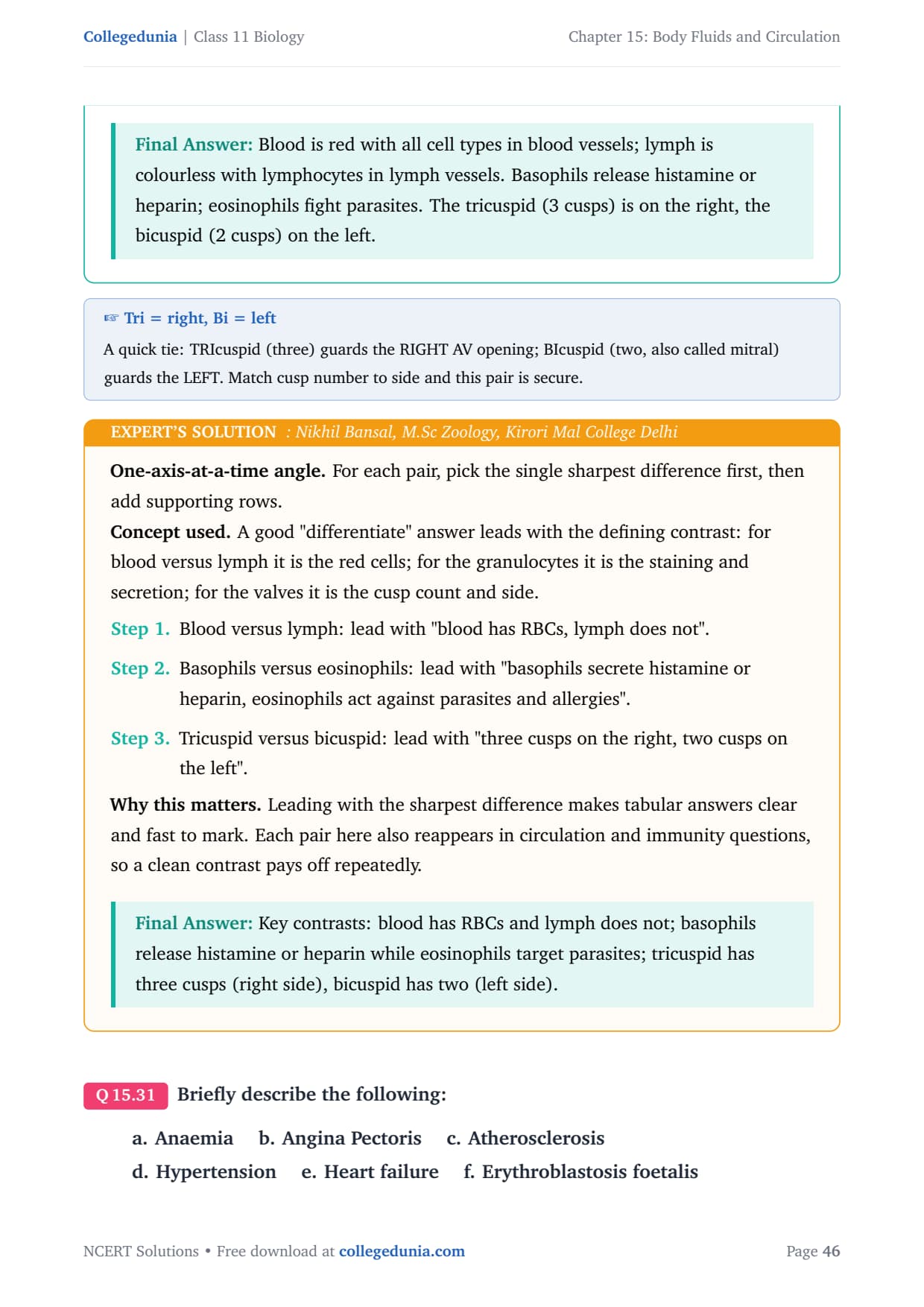
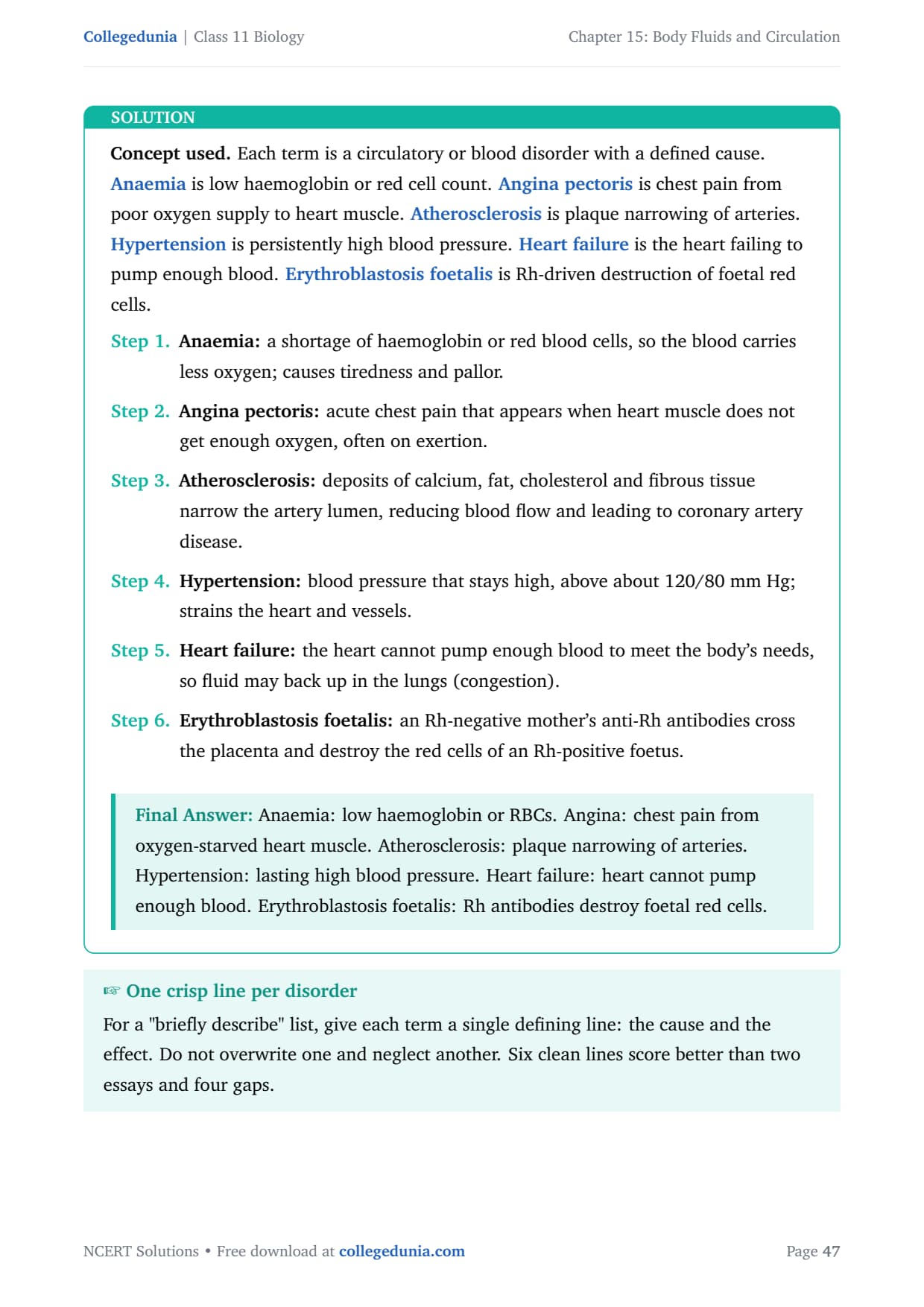
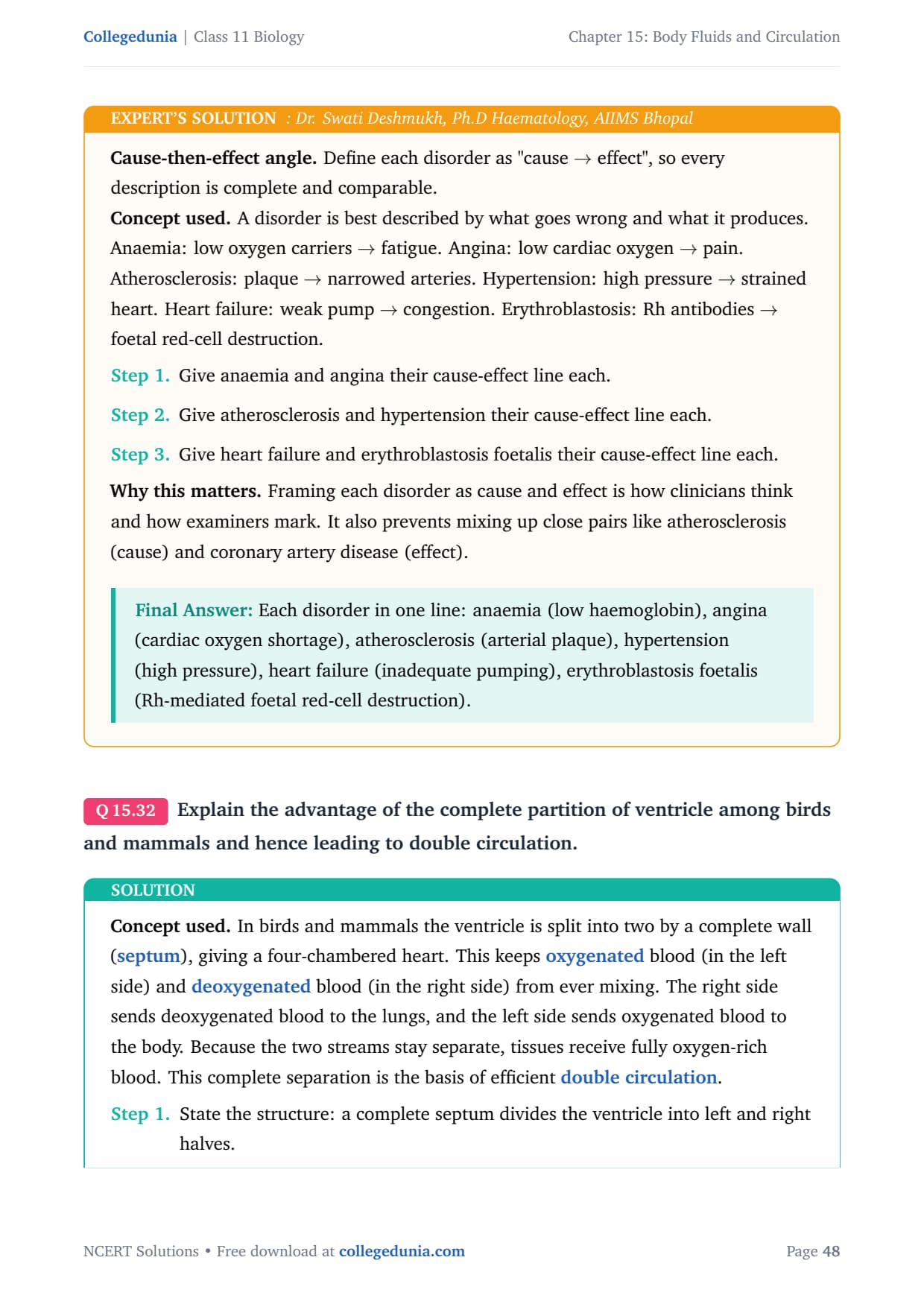
This chapter follows how the body moves material to cells that sit far from the outside world. Blood carries gases, food and wastes, and lymph drains what leaks out of capillaries. The Exemplar presses on the fine print that the textbook exercise skips.
- CBSE Weightage: 3 to 5 marks, usually one question on the cardiac cycle, ECG or blood groups
- NEET Weightage: 2 to 3 questions per year from formed elements, cardiac output and the conducting system
- CUET Weightage: 2 to 3 questions on blood components and circulatory disorders in the Biology domain paper
Every answer is checked against both official NCERT Exemplar keys, and the one MCQ where the printed key contradicts the NCERT textbook is flagged at the question itself.
Topics Covered in the Class 11 Biology Body Fluids and Circulation Exemplar
The 42 questions sit on four clusters. Each returns in the Excretory Products chapter, so the vocabulary you fix here keeps paying off. The Exemplar leans hardest on sequence and on which cell does which job.
- Blood and its components: plasma, erythrocytes, leucocytes, platelets, and what each formed element actually does
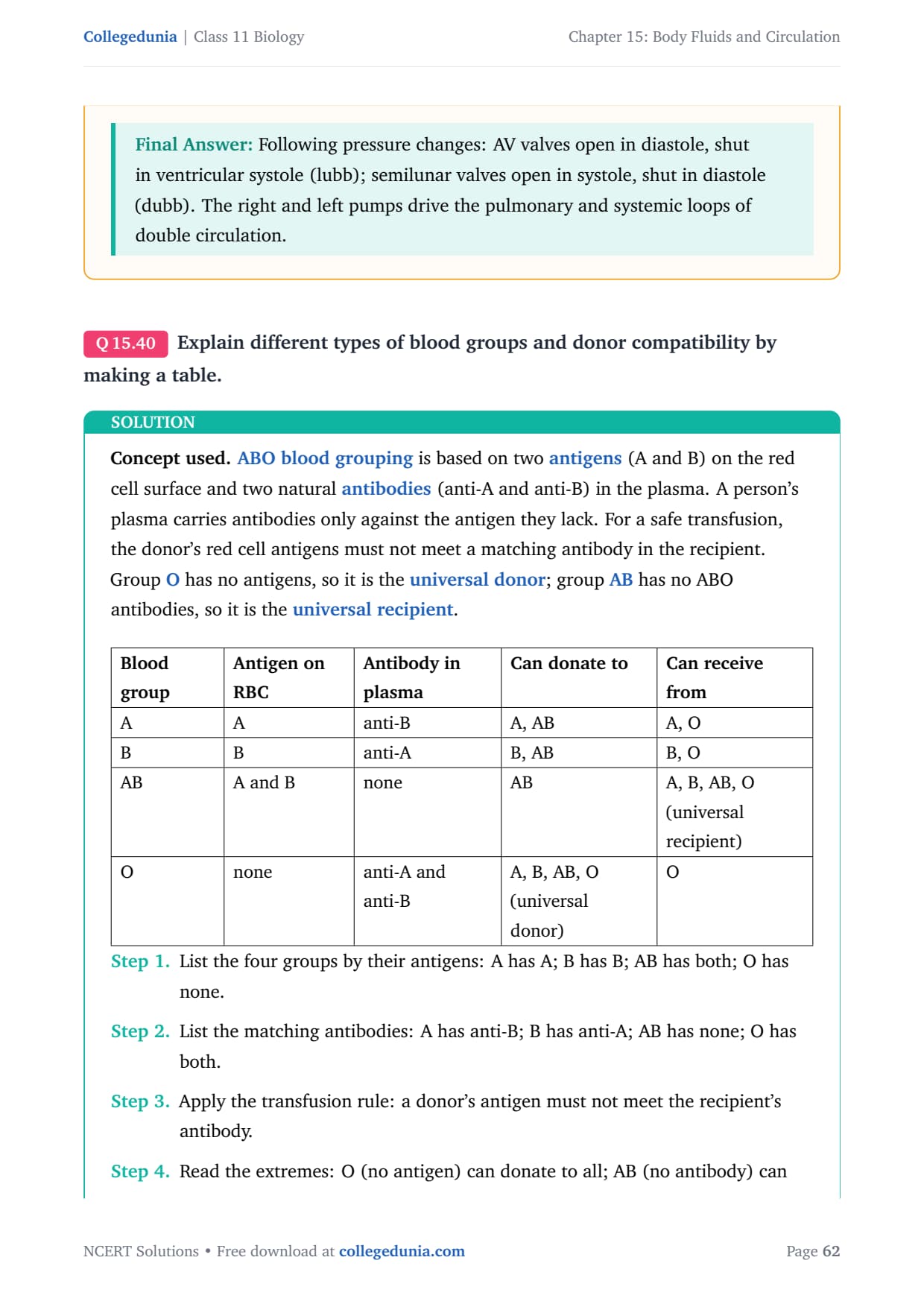
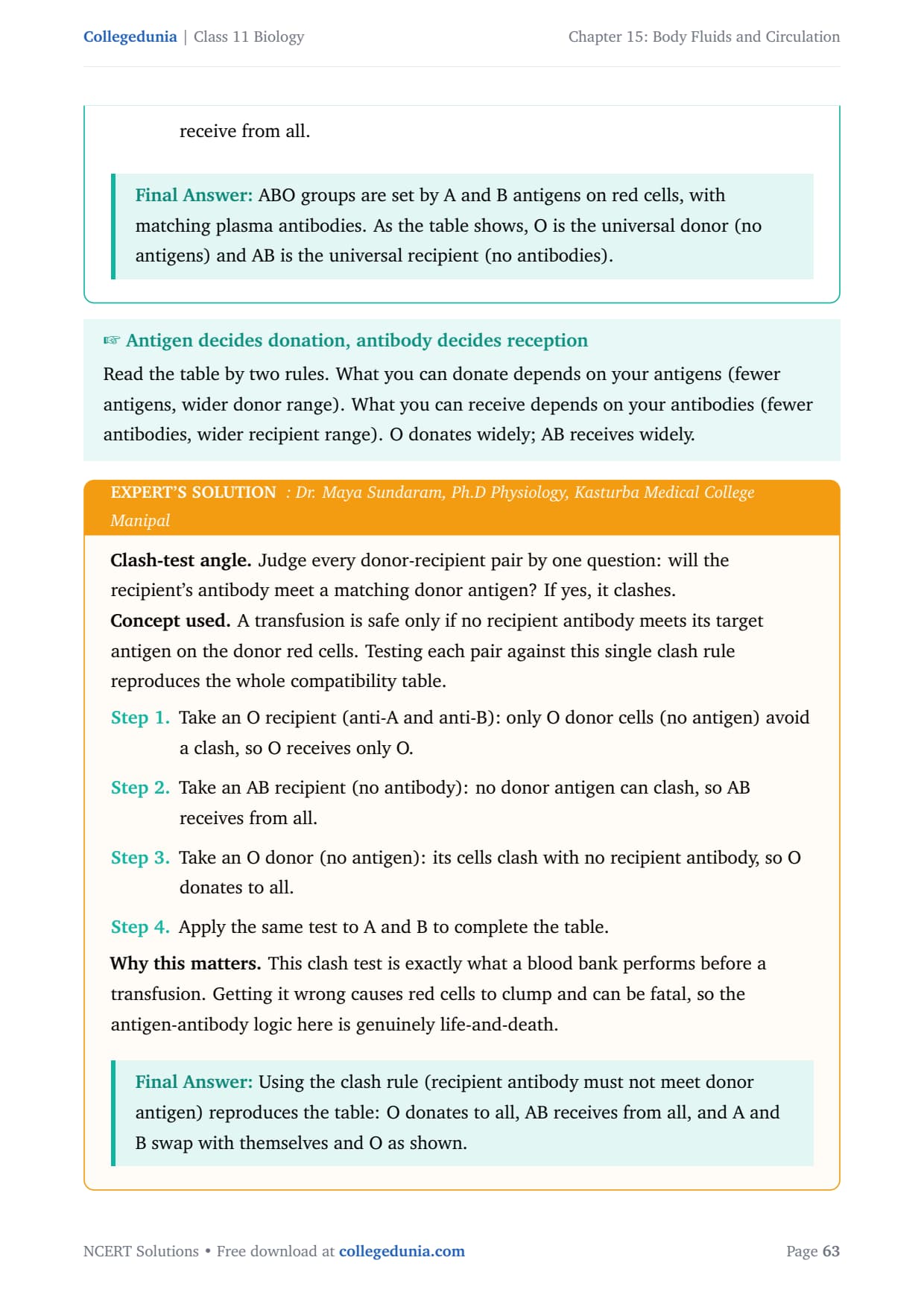
- Blood groups and coagulation: ABO grouping, Rh grouping, donor rules, clotting factors and anticoagulants
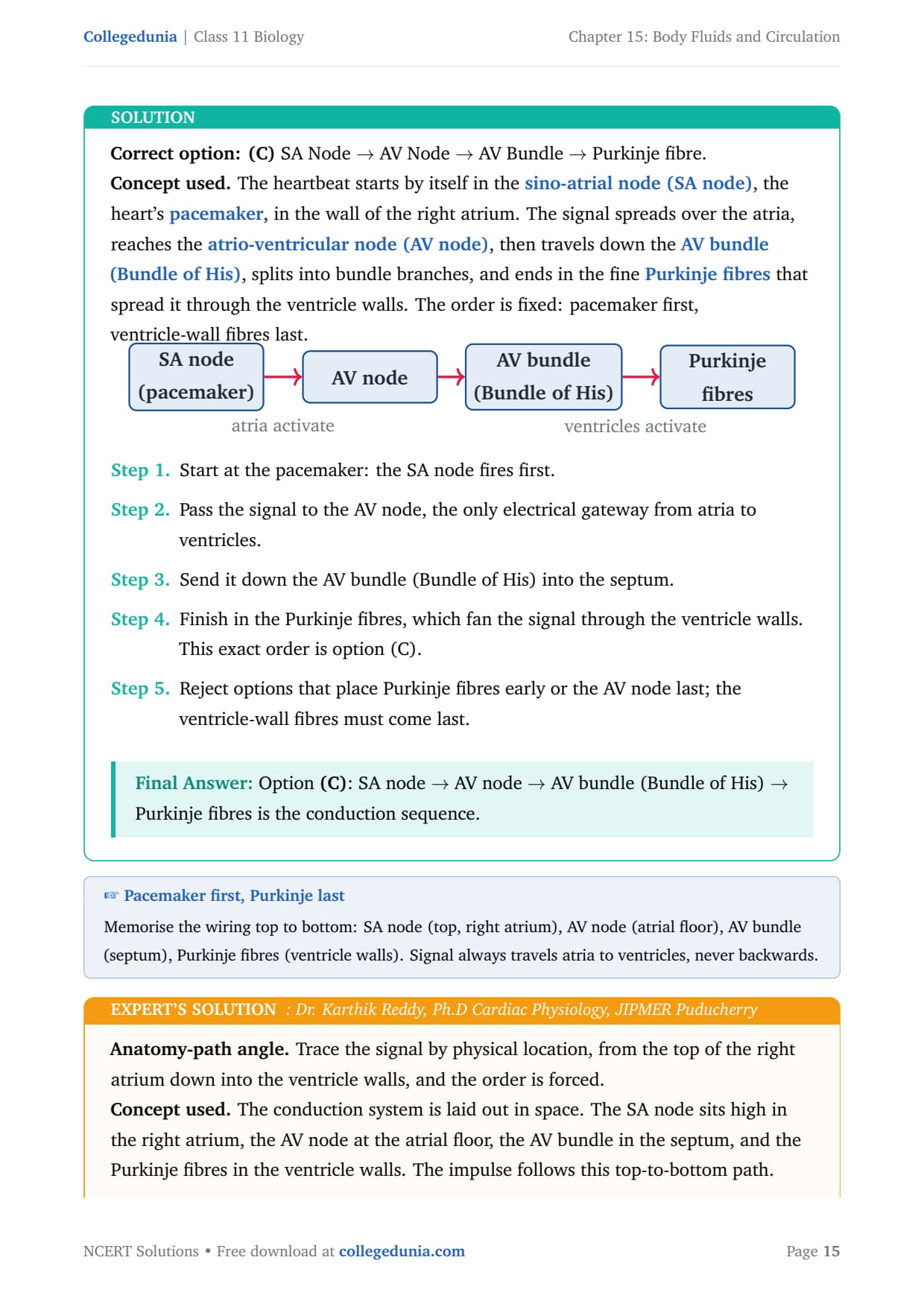
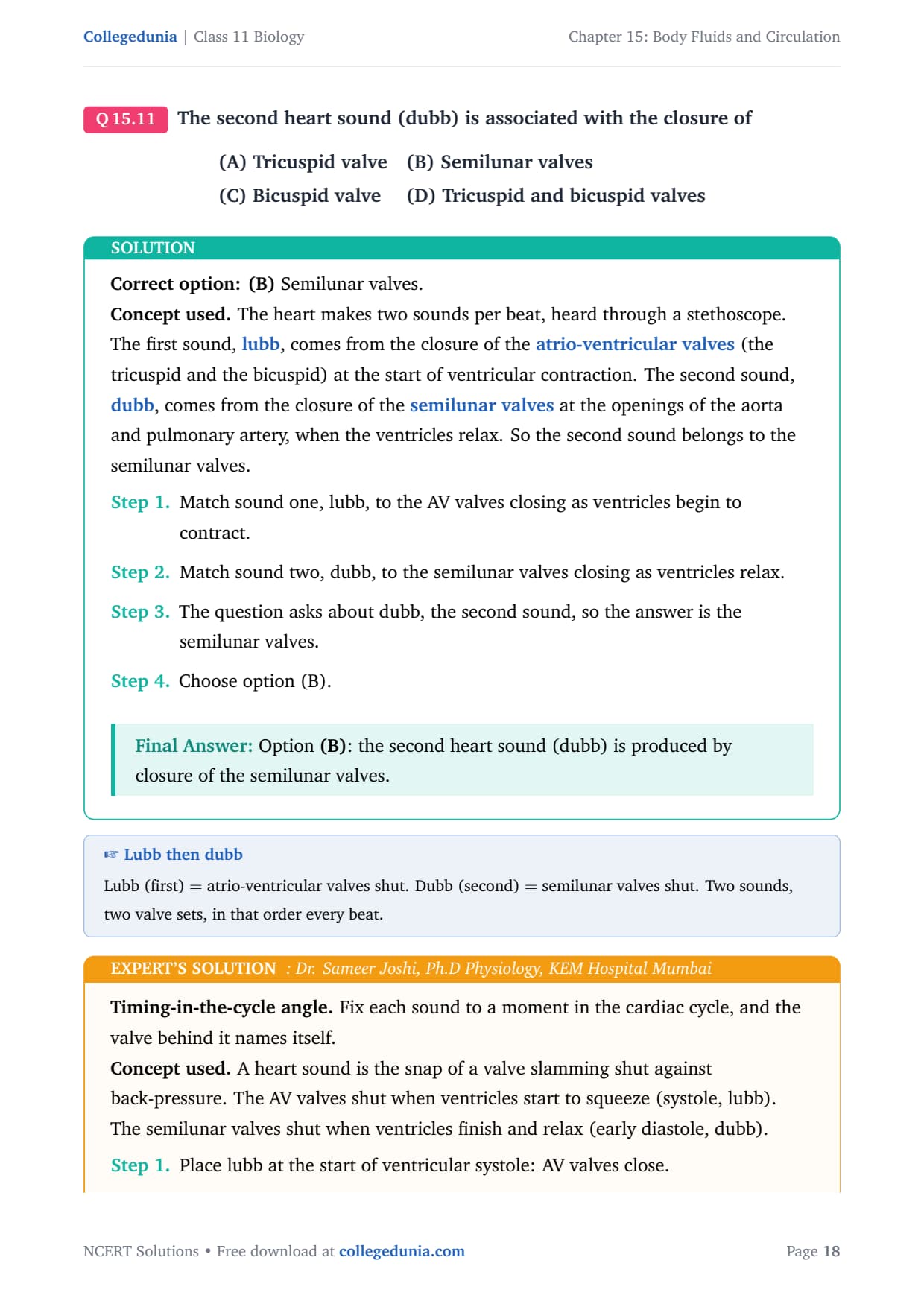
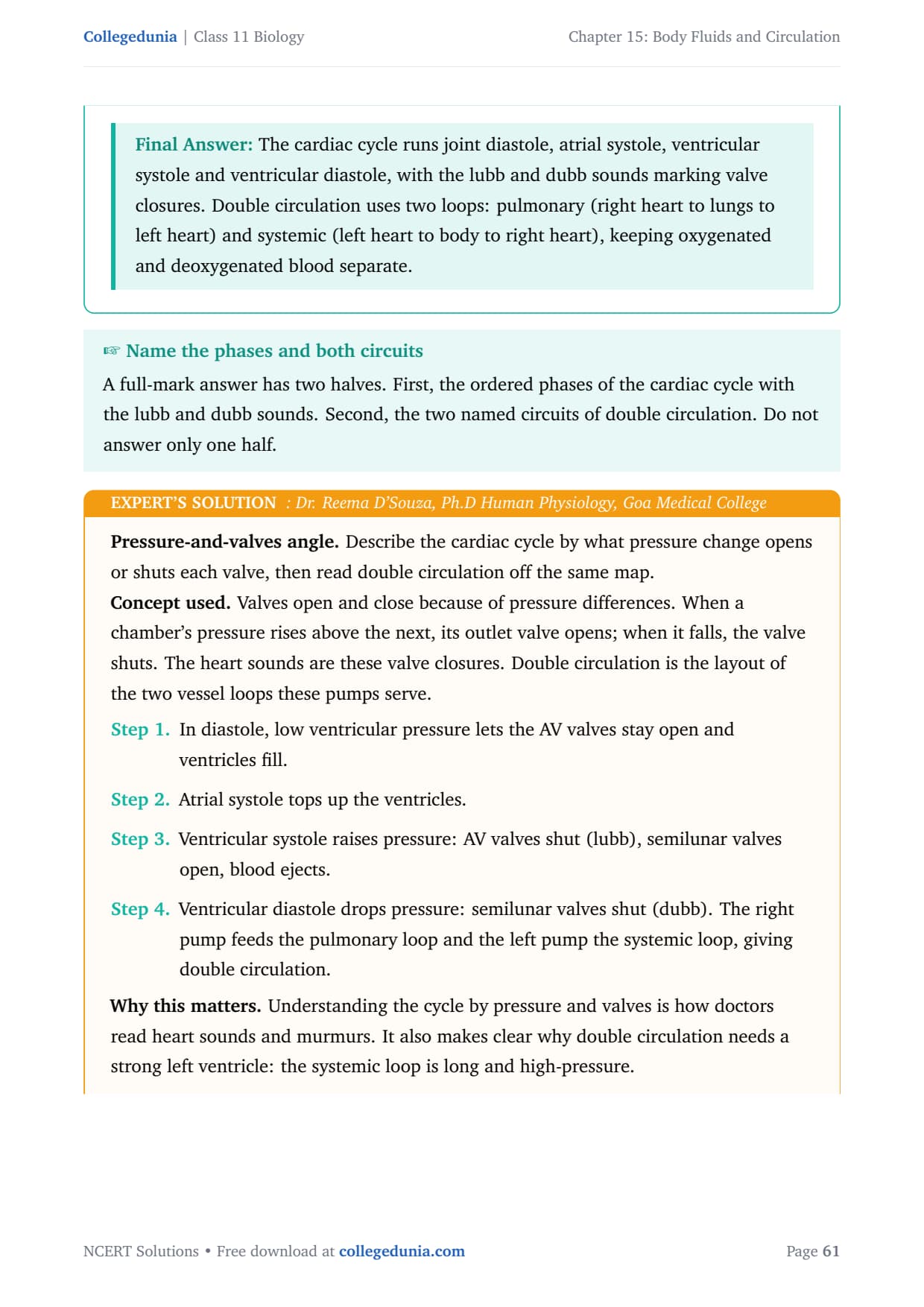
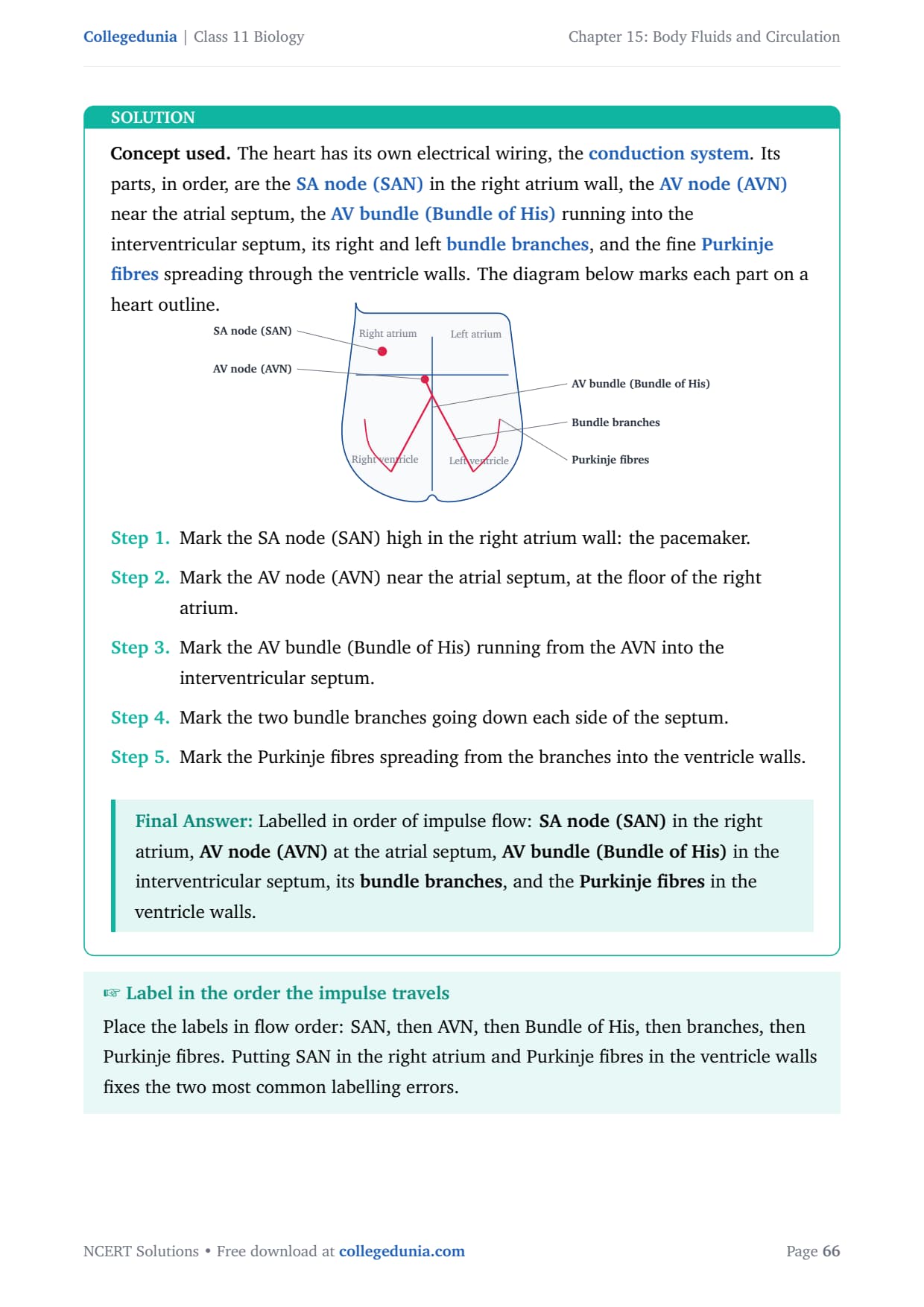
- The human heart and cardiac cycle: conduction from SA node to Purkinje fibres, heart sounds, cardiac output and the ECG
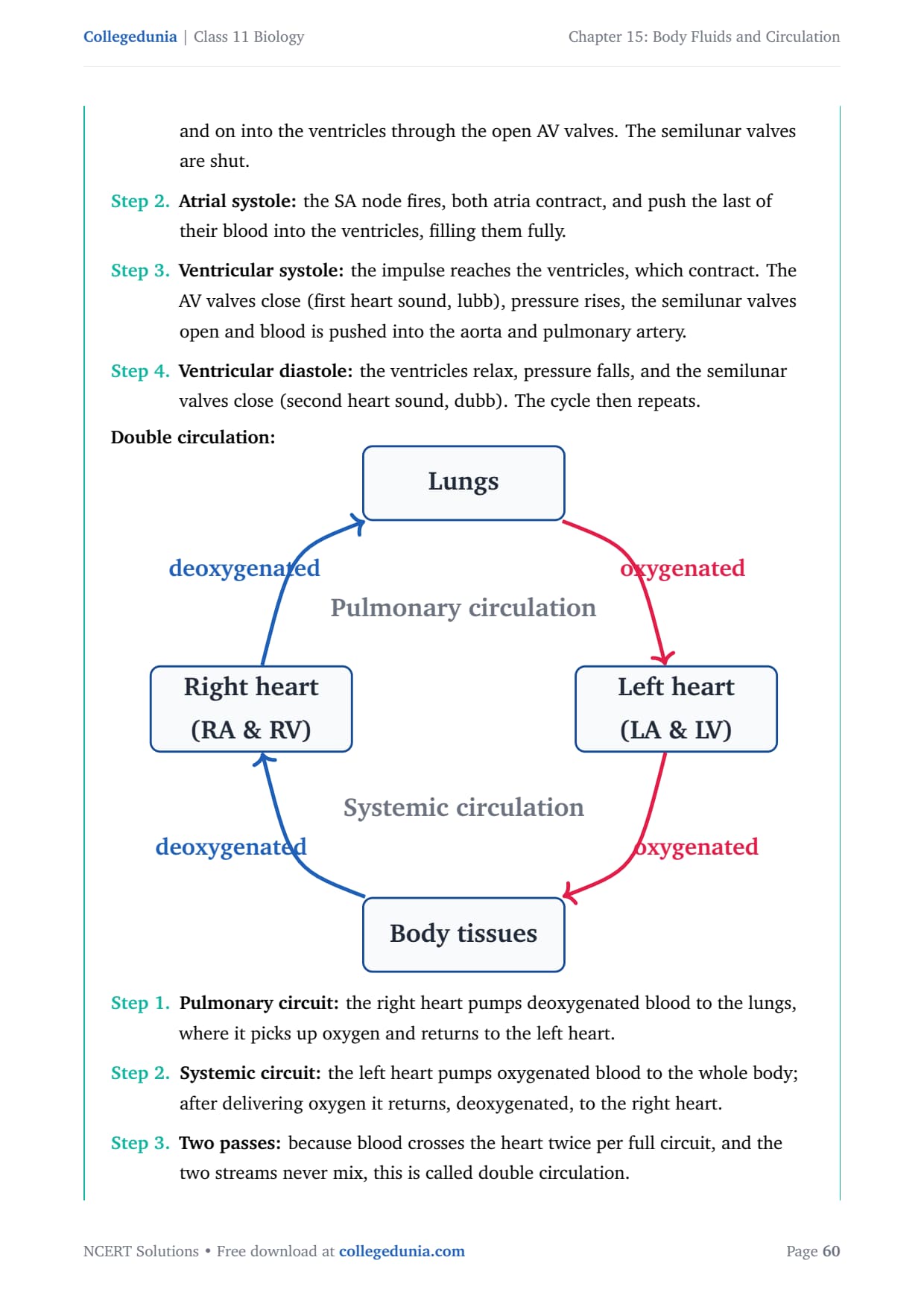
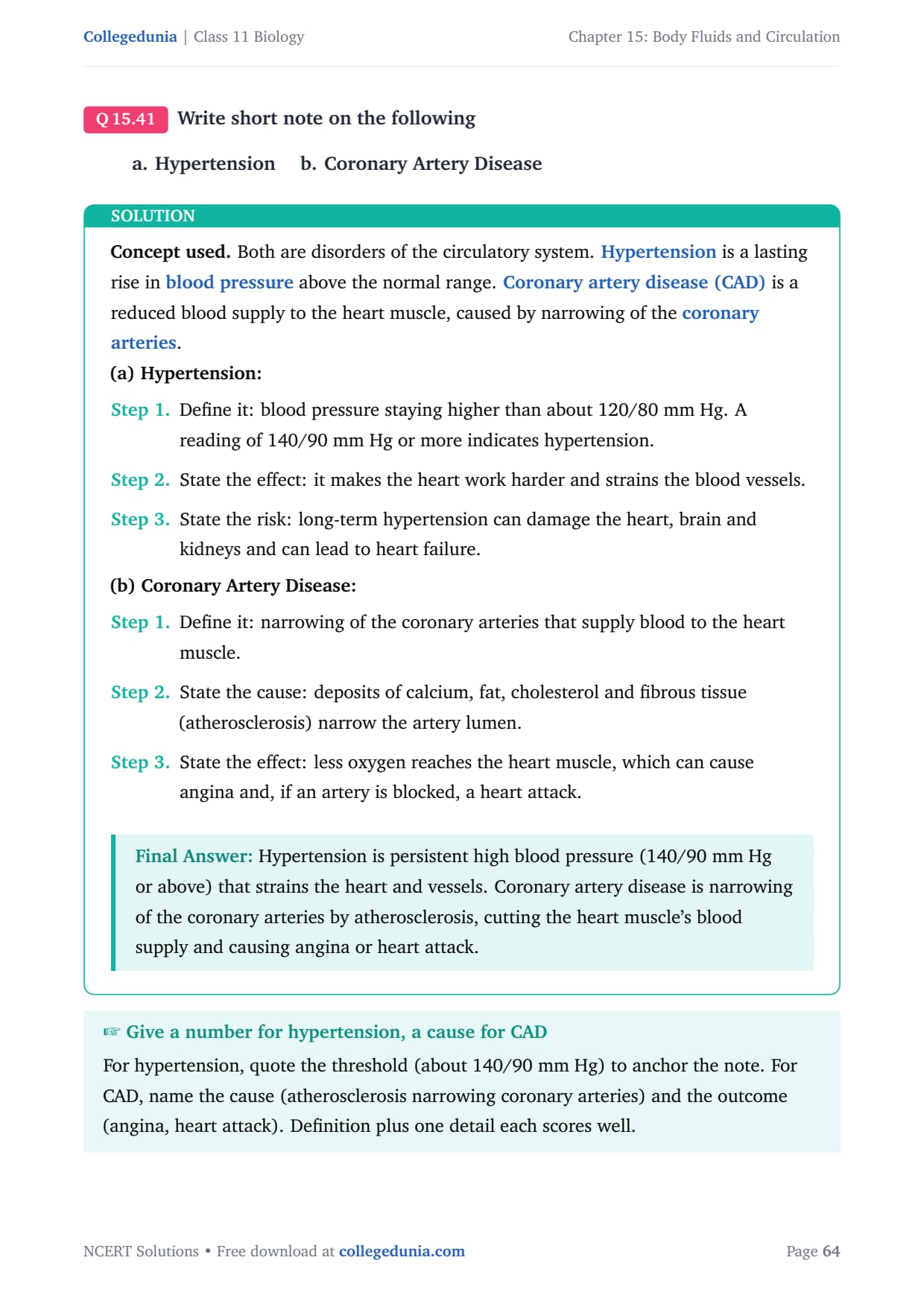
- Circulatory pathways and disorders: double circulation, lymph, hypertension, coronary artery disease and erythroblastosis foetalis
Question Types in the Body Fluids and Circulation NCERT Exemplar
This chapter is unusually MCQ-heavy. Sixteen of the 42 questions are objective, and several turn on a single word inside one option. The table below shows the full split.
| Question Type | Count | What It Tests |
|---|---|---|
| MCQ (single correct) | 16 | Precise recall of cell functions, ECG waves and conduction order |
| VSA (Very Short Answer) | 12 | One-line naming, such as the hepatic portal system or angina pectoris |
| SA (Short Answer) | 9 | Comparing blood with lymph, and explaining circulatory disorders |
| LA (Long Answer) | 5 | Building full accounts of ABO donation and Rh incompatibility |
Why the Exemplar Prints This Chapter as Chapter 18
Students open the Exemplar book, look for Chapter 15, and find a different chapter there. The Exemplar is still the older 22-chapter edition, where Body Fluids and Circulation is printed as Chapter 18. The content is identical to your Chapter 15, but every label inside the source carries the old number.
- Chapter heading: the source reads "CHAPTER 18 BODY FLUIDS AND CIRCULATION" throughout
- MCQ key: the answer key is chapter-indexed, so you must look under the Chapter 18 block, not Chapter 15
- Figure and table numbers: these follow the old chapter, so they will not match your textbook figure numbers
New Chapter 15 equals old Chapter 18, and nothing else changes. The Collegedunia PDF renumbers everything to the 2026-27 textbook so you never have to translate.
The Printed Key Error in MCQ 10 and the Split Answer Keys
This Exemplar splits its answers across two separate PDFs, and one of them contains a genuine error. Knowing both facts saves real time.
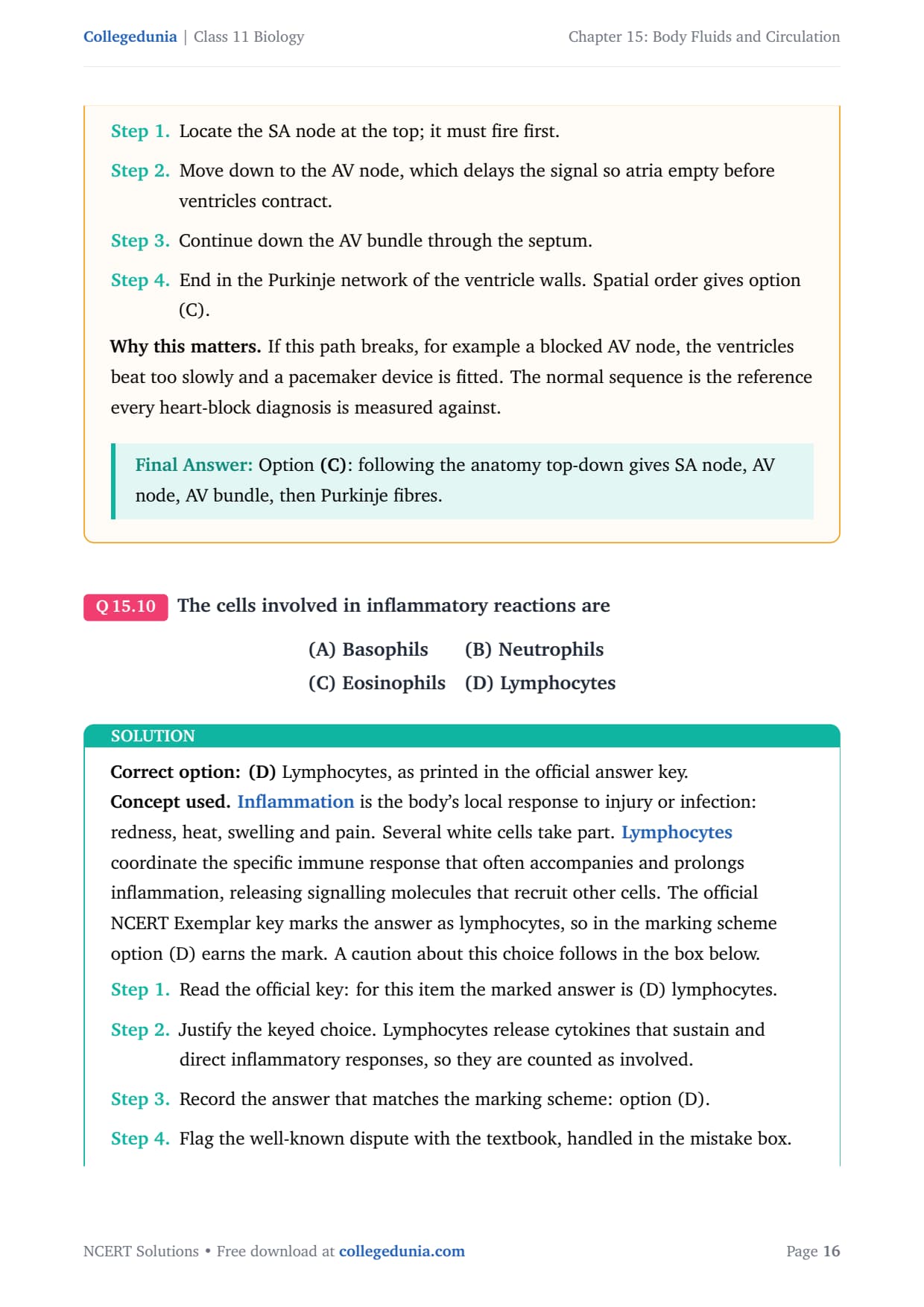
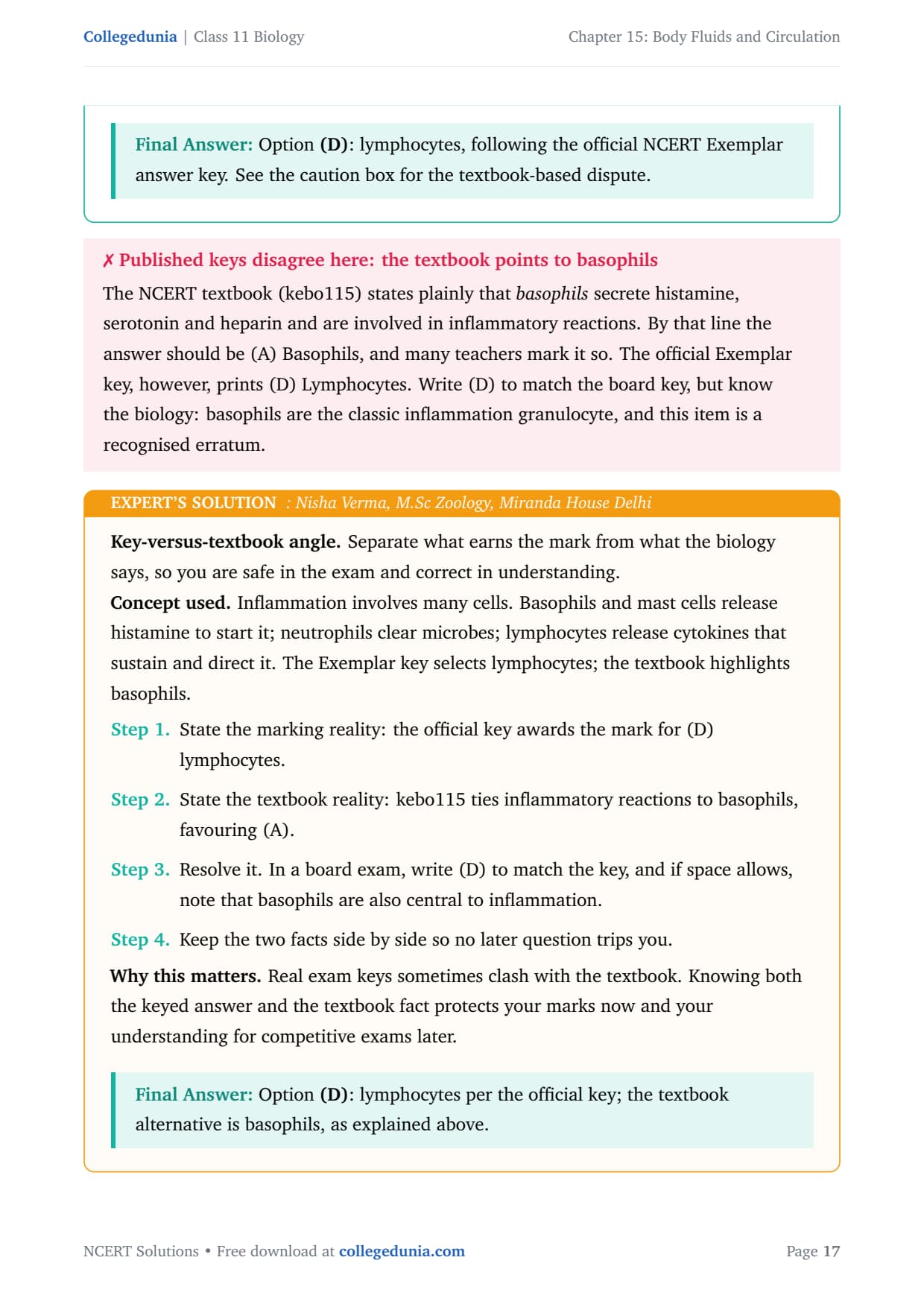
- The erratum, MCQ 10: the question asks which cell is involved in inflammatory reactions. The official MCQ key prints (d) Lymphocytes. The NCERT textbook states that basophils secrete histamine, serotonin and heparin and take part in inflammatory reactions, so the textbook-consistent answer is (a) Basophils. Write (d) to match the board key, but learn the biology behind (a).
- Two keys, not one: MCQ answers sit in one PDF that is arranged chapter by chapter. Descriptive answers sit in a second PDF that is not chapter-indexed at all.
- Partial descriptive coverage: the descriptive key states that its questions were picked at random across units. It answers only 10 of the 26 descriptive questions here. The rest are solved against the NCERT textbook chapter instead.
Common Mistakes Students Make in Body Fluids and Circulation
Four errors catch most students, and each is flagged in the PDF at the question where it appears. All four come from real Exemplar options, not invented traps.
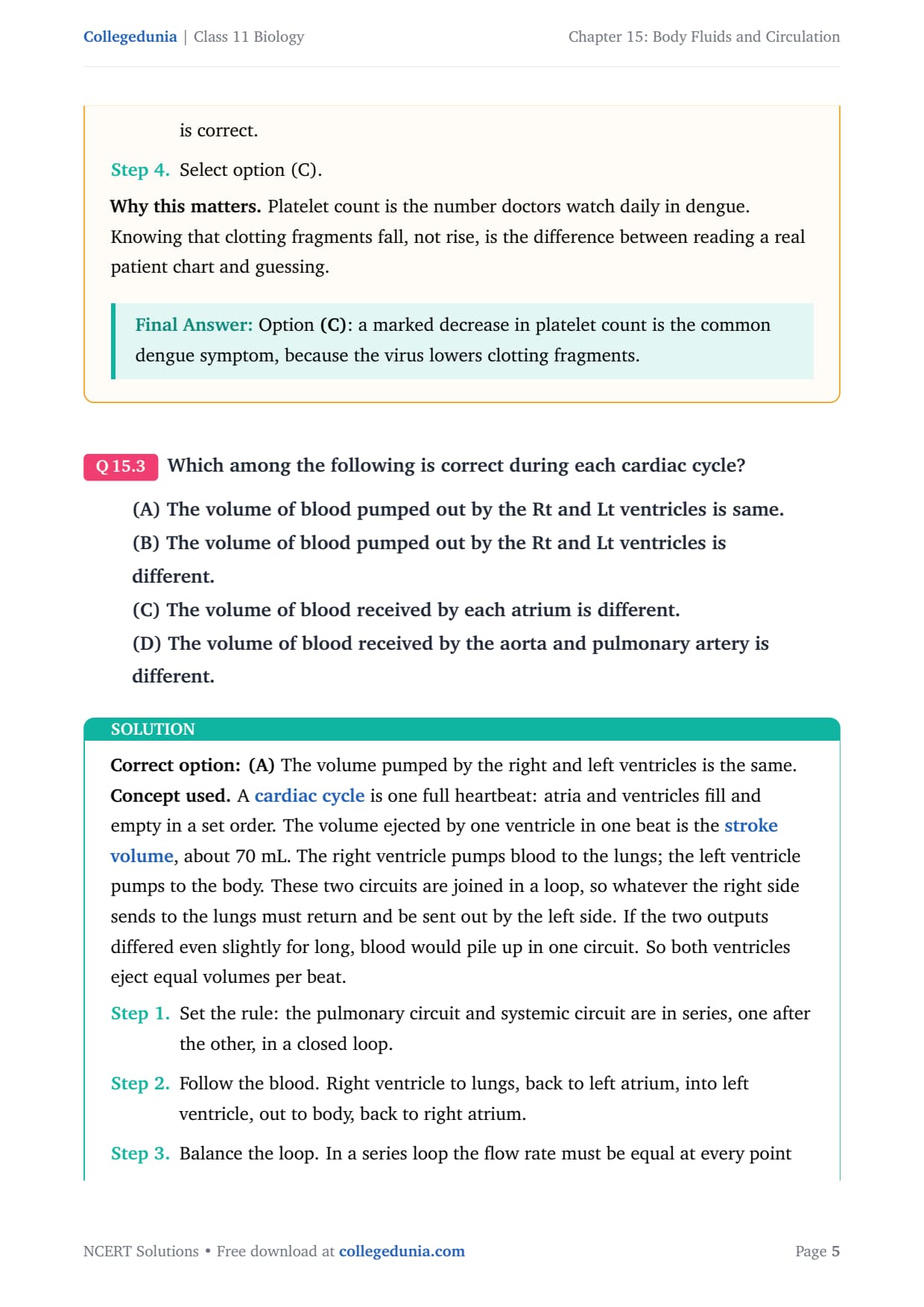
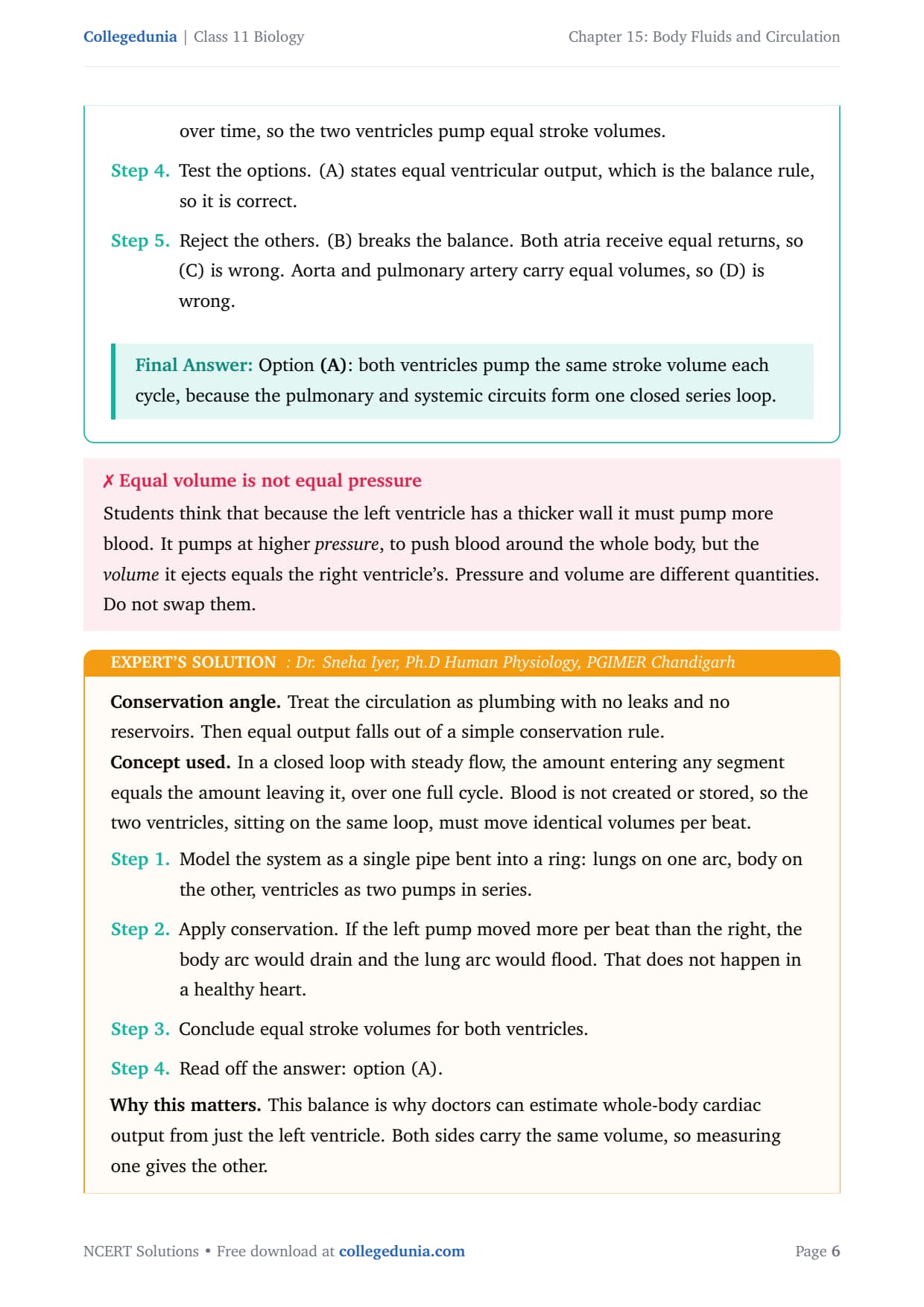
- Equal volume is not equal pressure: the left ventricle has a thicker wall, so students assume it pumps more blood. It pumps at higher pressure. The volume it ejects per beat equals the right ventricle's.
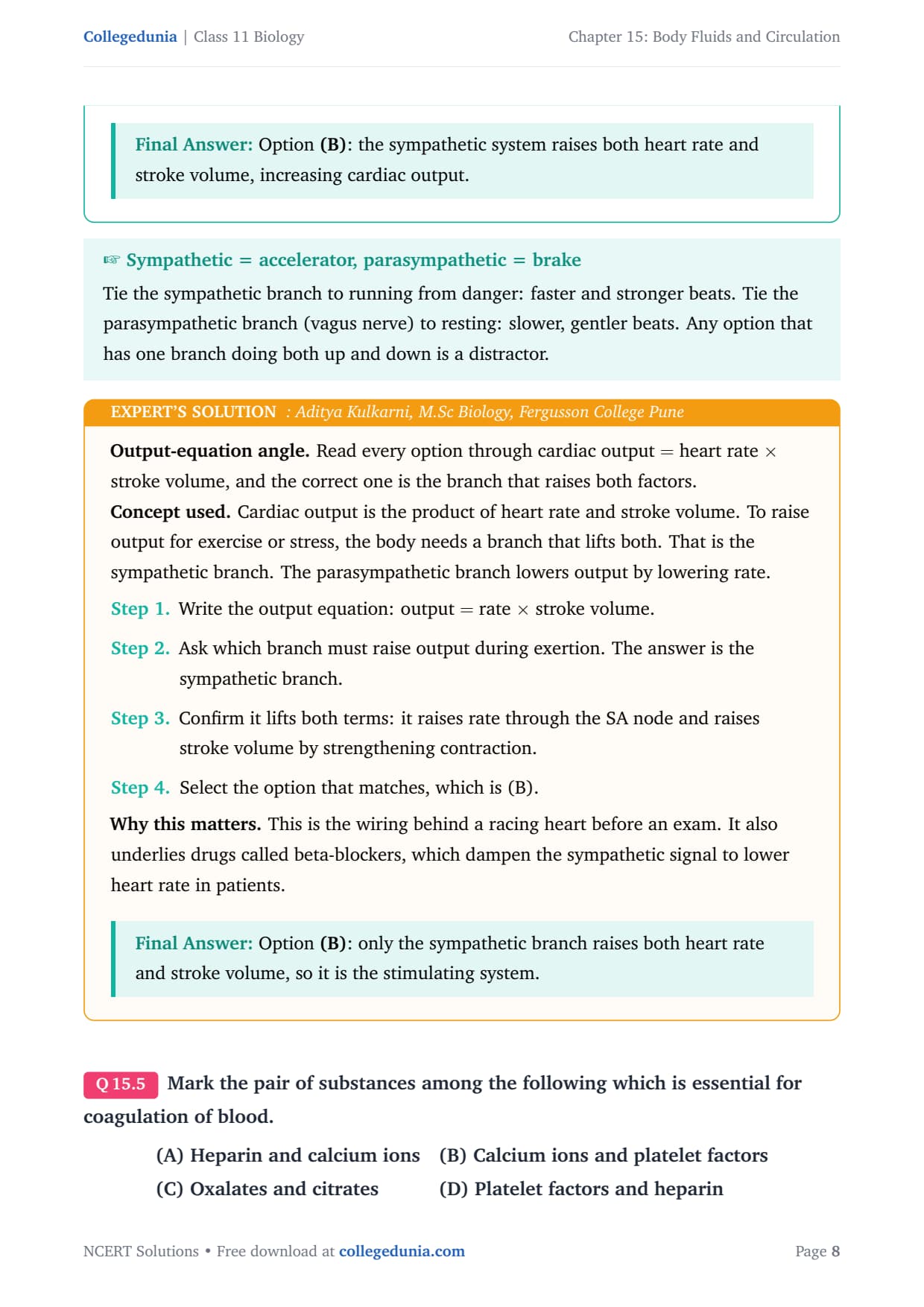
- Citrate and oxalate stop clots: free calcium promotes clotting, while citrate and oxalate lock calcium away and prevent it. Blood banks add citrate for exactly that reason.
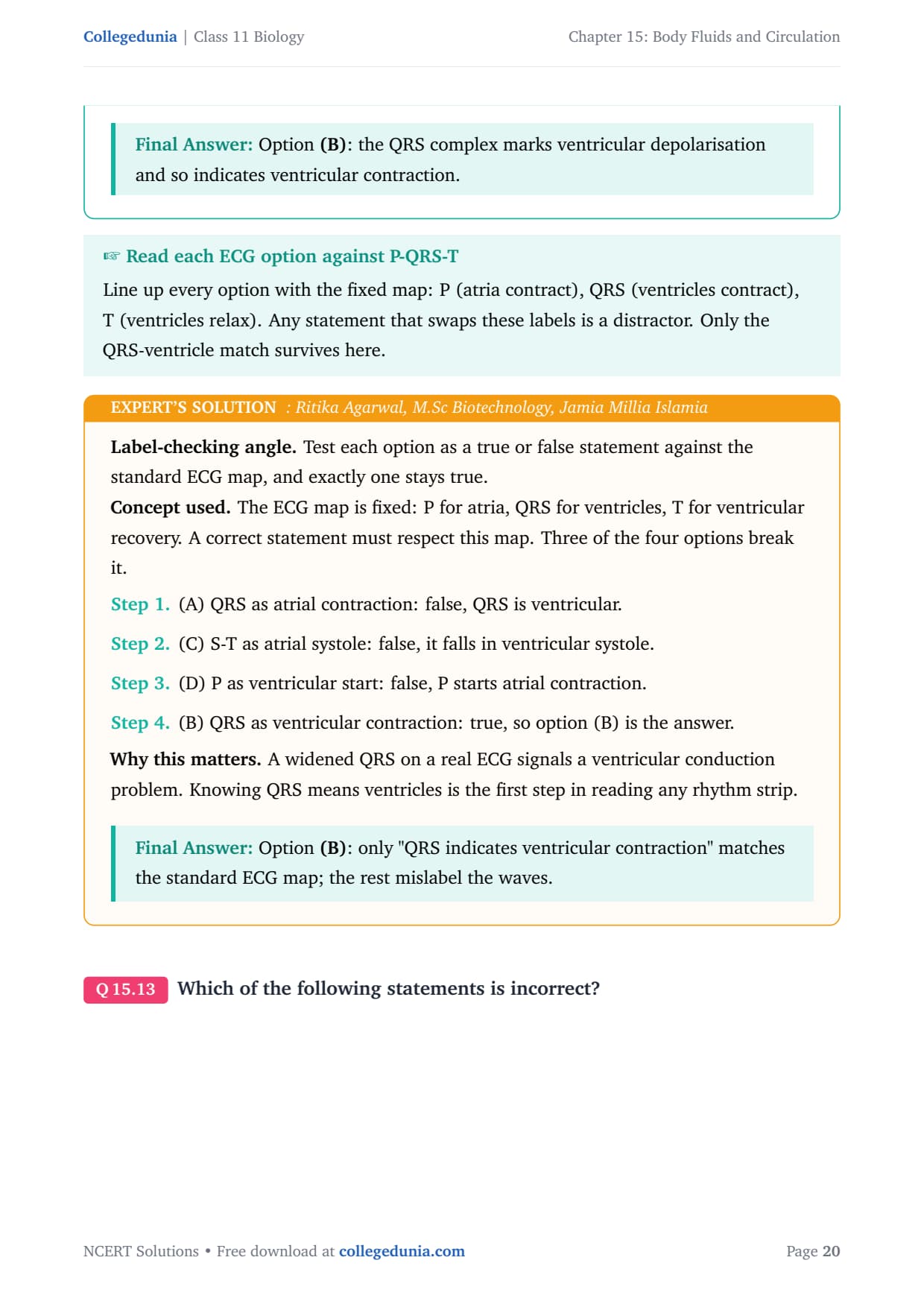
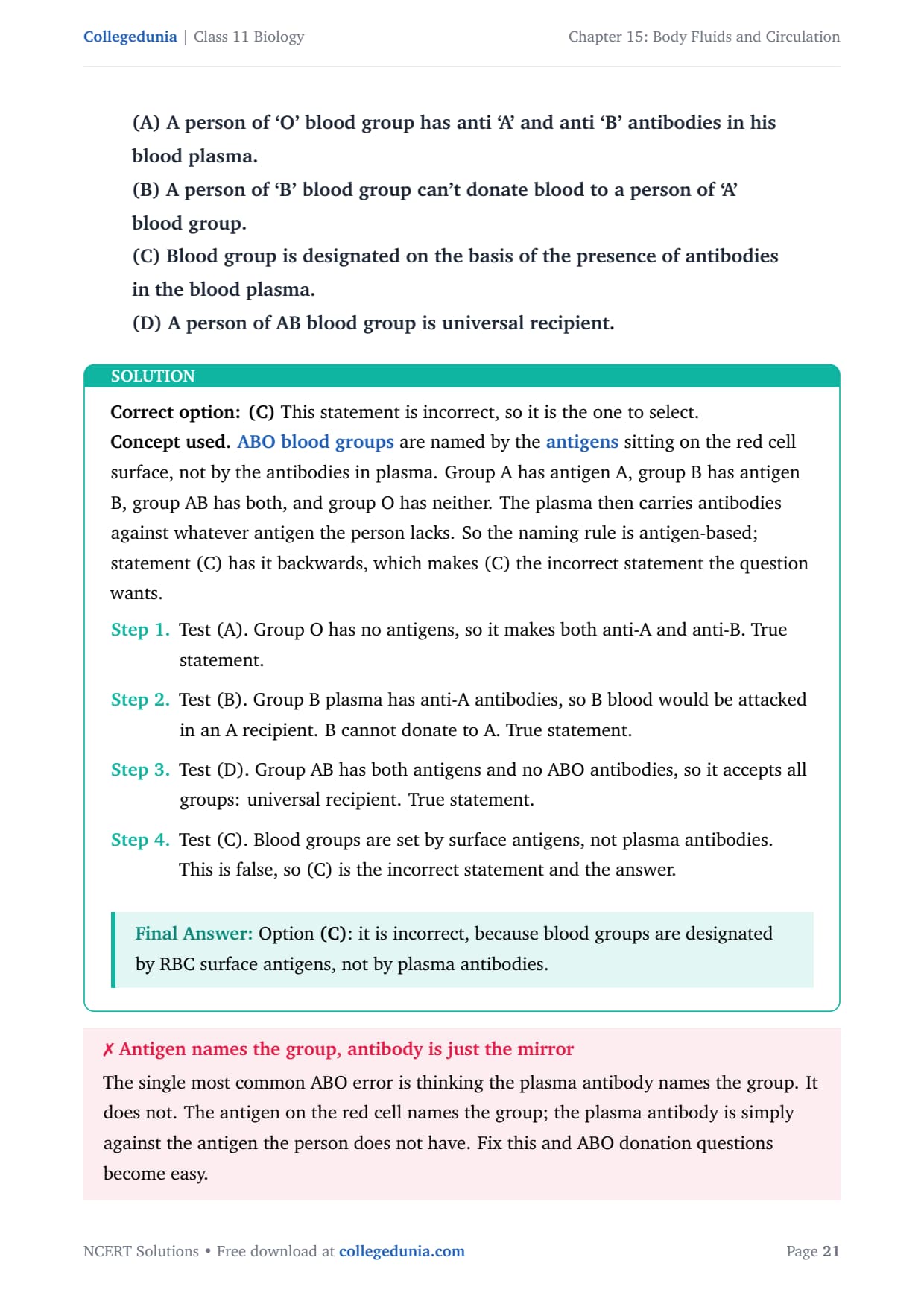
- The antigen names the blood group: the antigen on the red cell decides the group, not the plasma antibody. One MCQ asks for the incorrect statement and rests entirely on this.
- The at-risk mother is Rh-negative: only an Rh-negative person treats the Rh antigen as foreign, so only she can make anti-Rh antibodies. Students routinely flip this.
Student Feedback
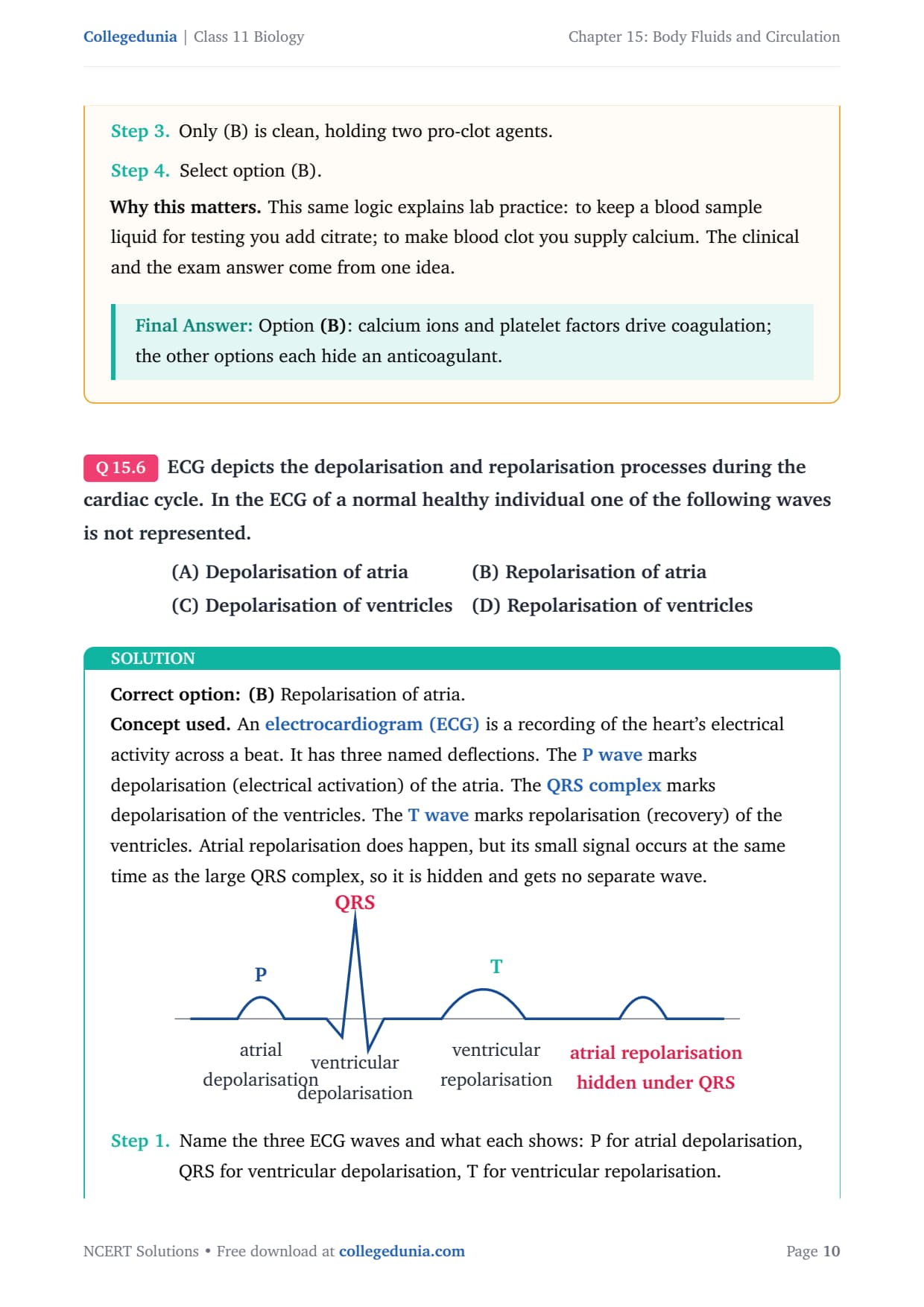
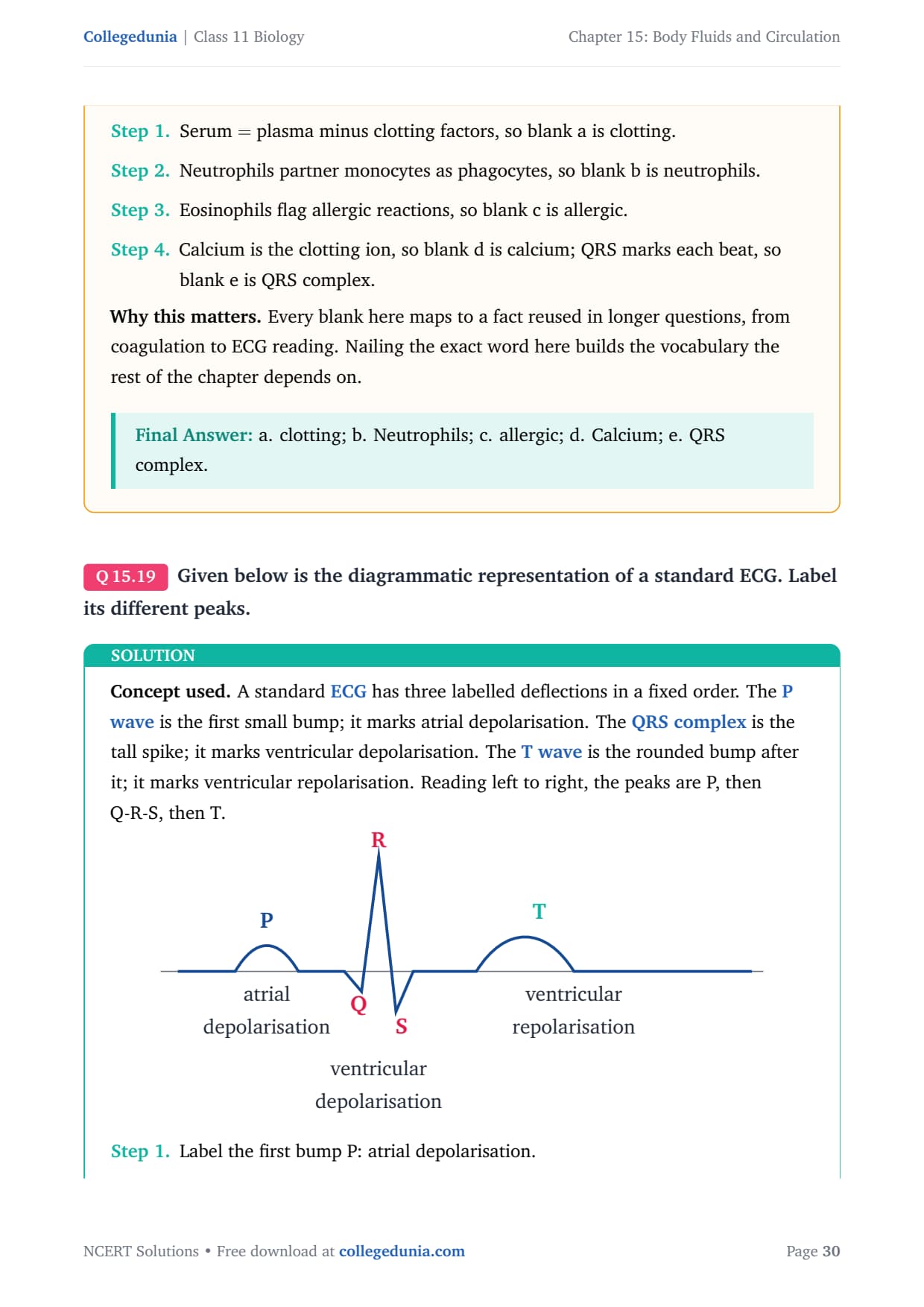
Students using Collegedunia's Class 11 Biology Exemplar Solutions told us the ECG questions gave them the most trouble, ahead of blood groups. Around 7 in 10 said that seeing why atrial repolarisation never appears on the trace, while ventricular repolarisation shows up as the T wave, finally settled the wave labels for them.
Other Resources for Class 11 Biology Body Fluids and Circulation
Collegedunia has the full set of study material for this chapter. Read the Notes first, then work the Exemplar once the cardiac cycle is steady.
Also Check:
- NCERT Solutions for Class 11 Biology Chapter 15
- Class 11 Biology Chapter 15 Notes
- Class 11 Biology Chapter 15 NCERT Book PDF
- Class 11 Biology Chapter 15 Exemplar Questions with Solutions
NCERT Exemplar Solutions for Other Class 11 Biology Chapters
Each chapter below has the same step-by-step treatment and a free PDF.
Body Fluids and Circulation Class 11 NCERT Exemplar Solutions FAQs
Ques. How many questions are there in the Class 11 Biology Body Fluids and Circulation Exemplar?
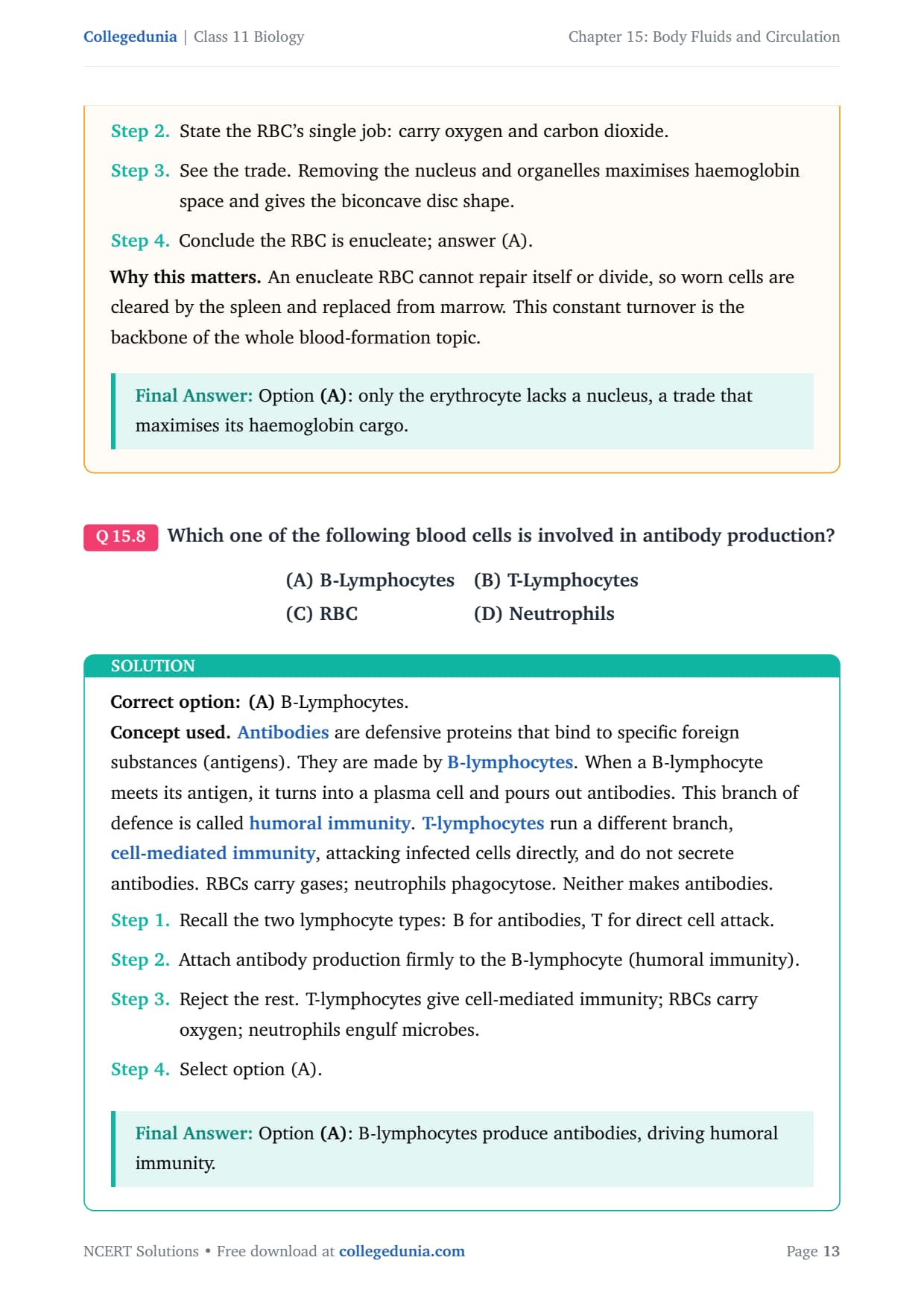
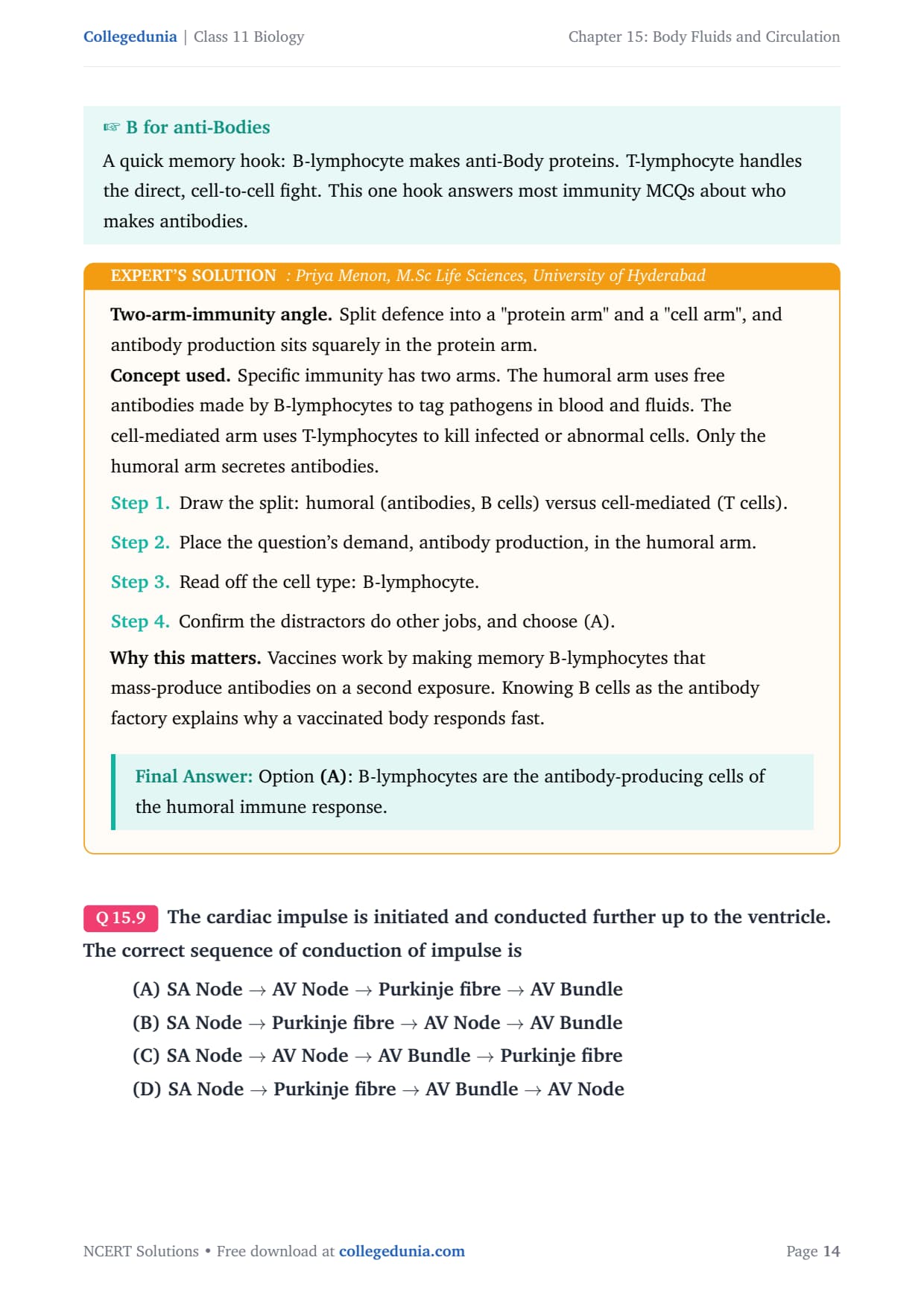
Ans. This chapter has 42 questions. They split into 16 MCQ, 12 Very Short Answer, 9 Short Answer and 5 Long Answer questions. All 42 are solved in the free 68-page PDF on this page.
Ques. Why is Body Fluids and Circulation printed as Chapter 18 in the Exemplar book?
Ans. The Exemplar is still the older 22-chapter edition, in which this chapter is numbered 18. The 2026-27 textbook numbers it 15. The questions are the same, but the source headings, the chapter-indexed MCQ key and the figure numbers all use 18. Look under Chapter 18 when you check the printed key.
Ques. Is there a printing error in the Exemplar answer key for this chapter?
Ans. Yes, in MCQ 10. The key prints (d) Lymphocytes as the cell involved in inflammatory reactions. The NCERT textbook says basophils secrete histamine, serotonin and heparin and take part in inflammation, which points to (a) Basophils. Write (d) to match the board key, and note the conflict.
Ques. How do you calculate cardiac output in this chapter?
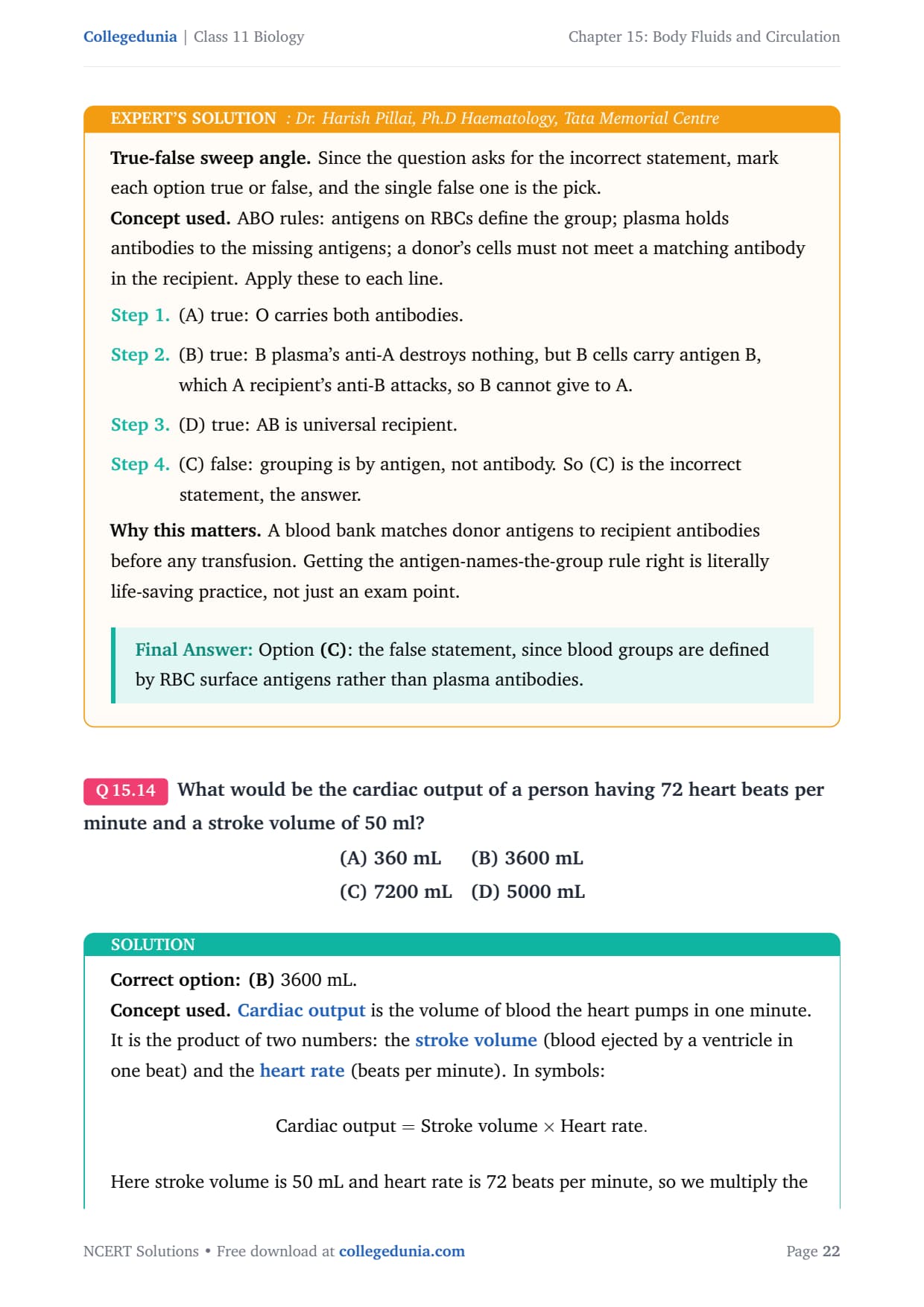
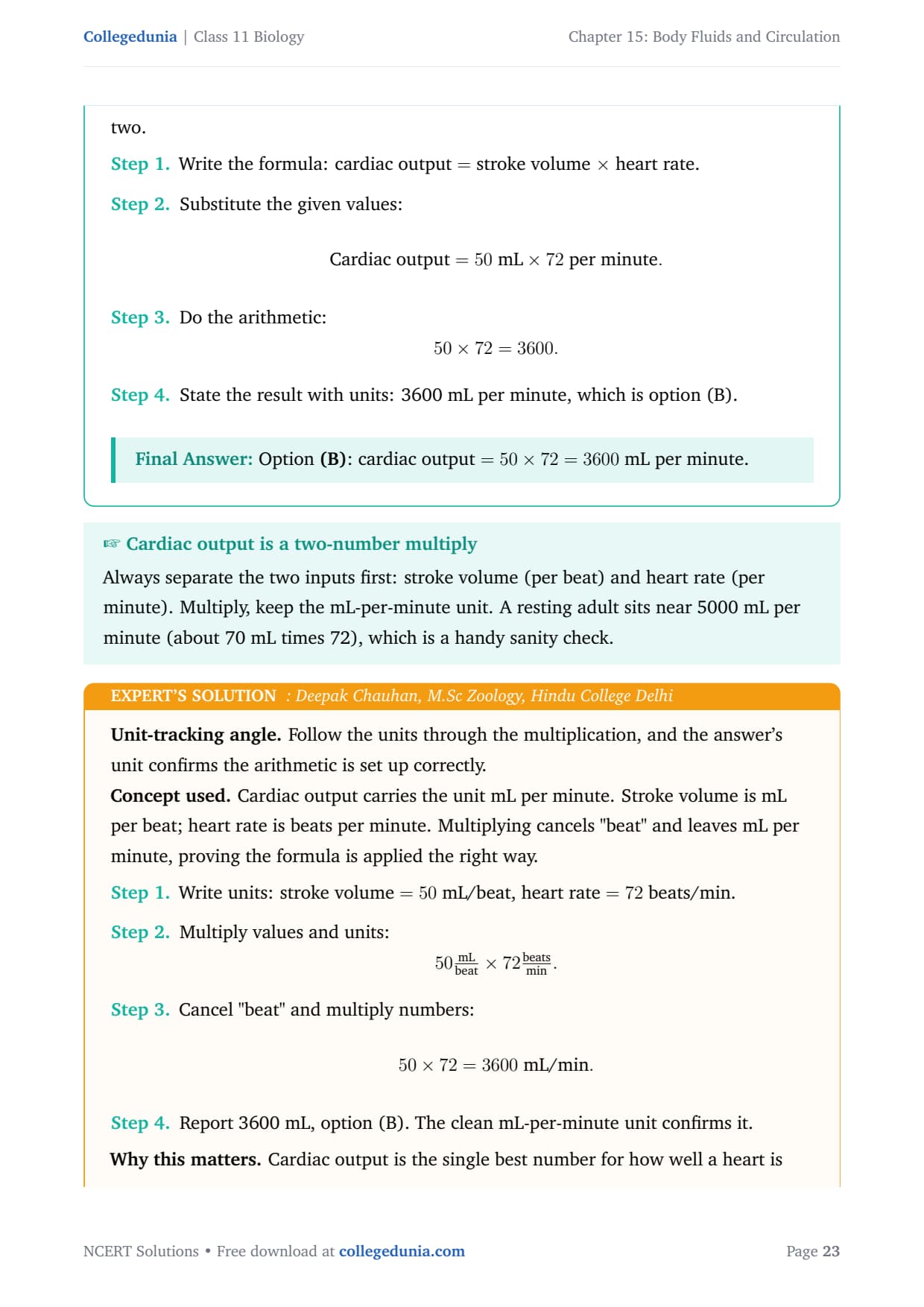
Ans. Cardiac output equals stroke volume multiplied by heart rate. One MCQ gives a heart rate of 72 beats per minute and a stroke volume of 50 mL, so the cardiac output is 3600 mL per minute. The Exemplar asks this as a direct substitution, so the only trap is mixing up the two inputs.
Ques. Why does atrial repolarisation not appear on an ECG?
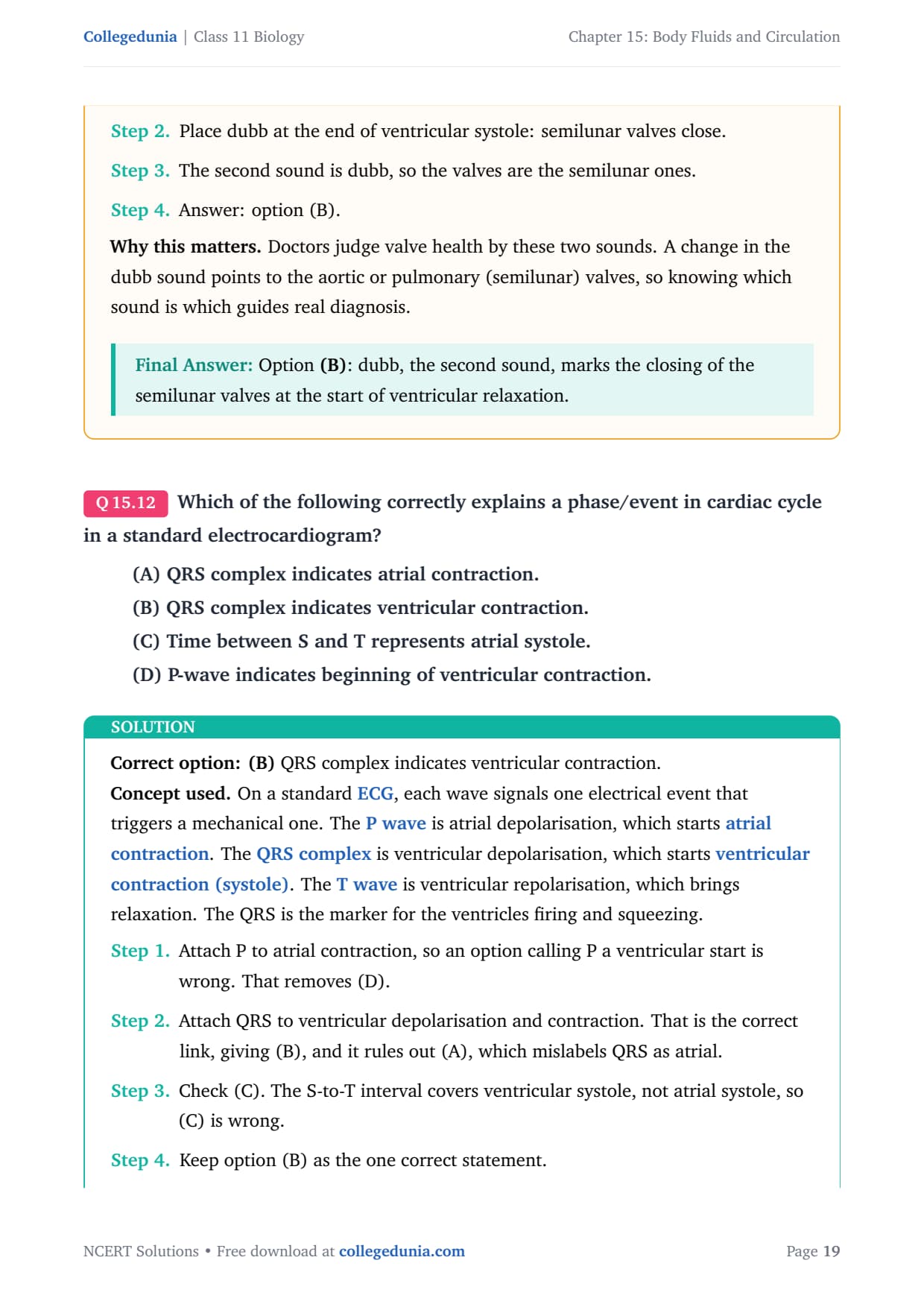
Ans. Atrial repolarisation happens at the same time as ventricular depolarisation, and the much larger QRS complex hides it. So a normal ECG shows P for atrial depolarisation, QRS for ventricular depolarisation and T for ventricular repolarisation, with no separate wave for the atria repolarising.



Comments