




NCERT Exemplar Solutions for Class 11 Biology Chapter 16 Excretory Products and their Elimination solve all 45 questions from the Exemplar book. Every MCQ, Very Short Answer, Short Answer and Long Answer problem is answered step by step in the free 66-page PDF, updated for the 2026-27 syllabus.
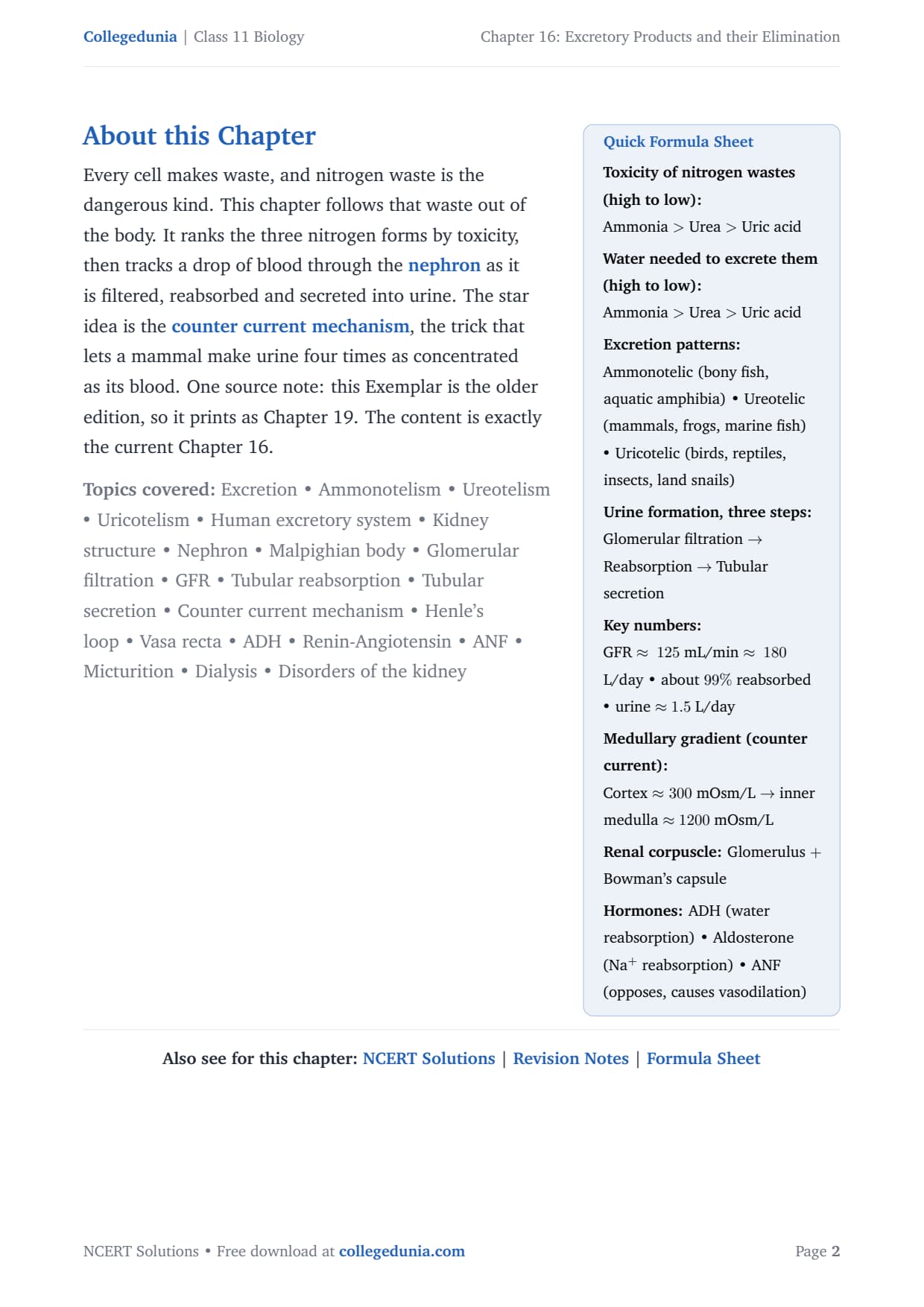
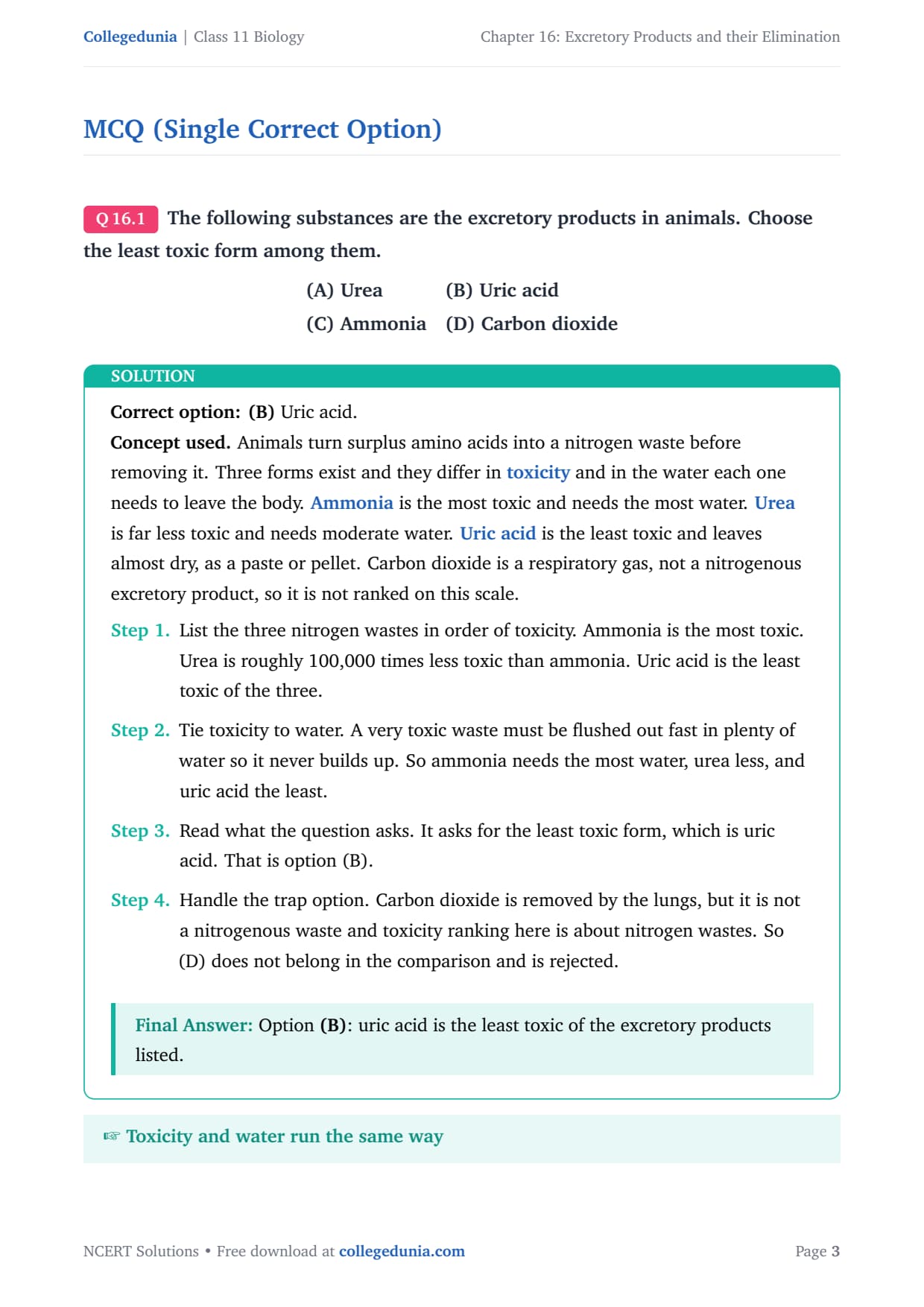
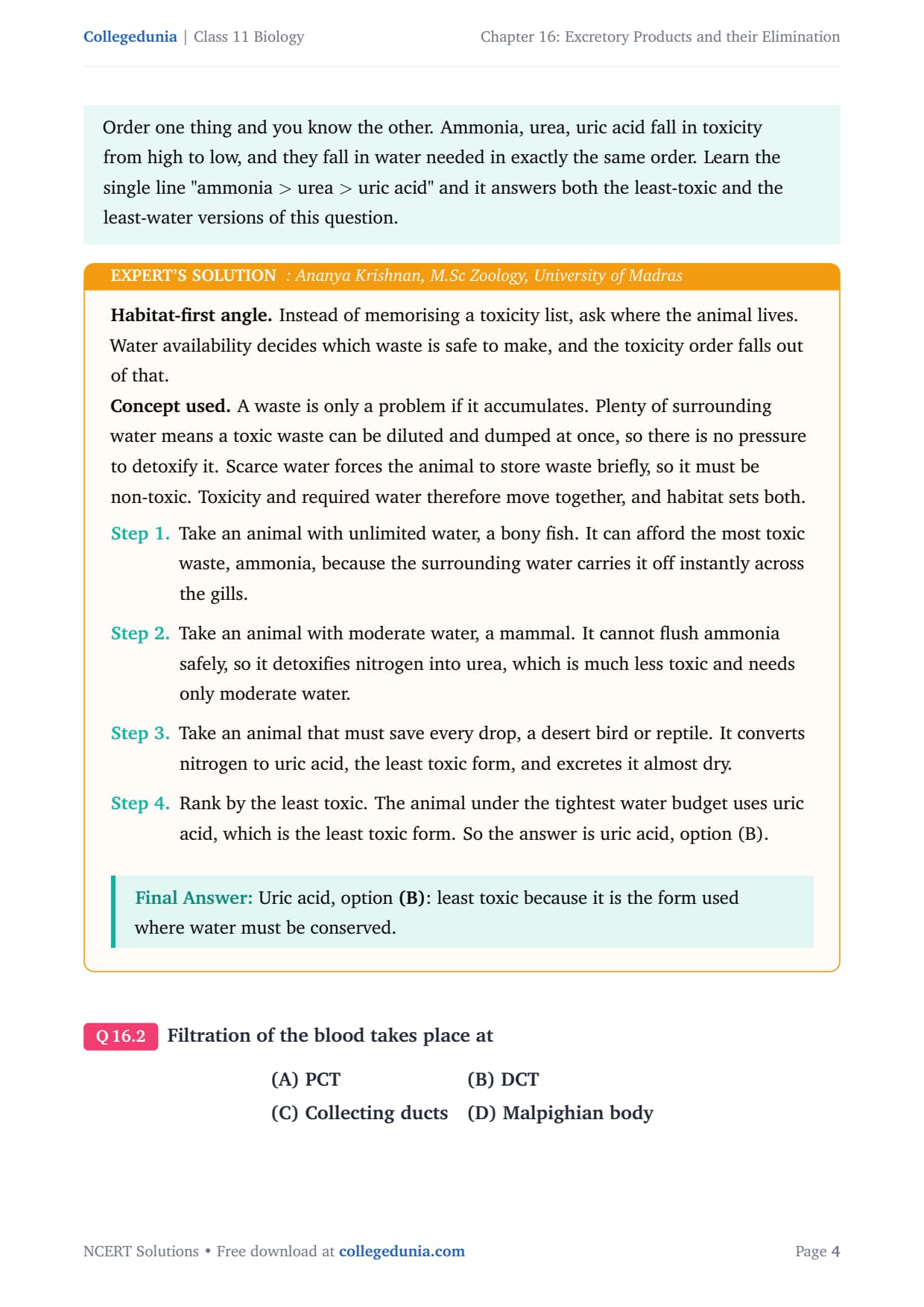
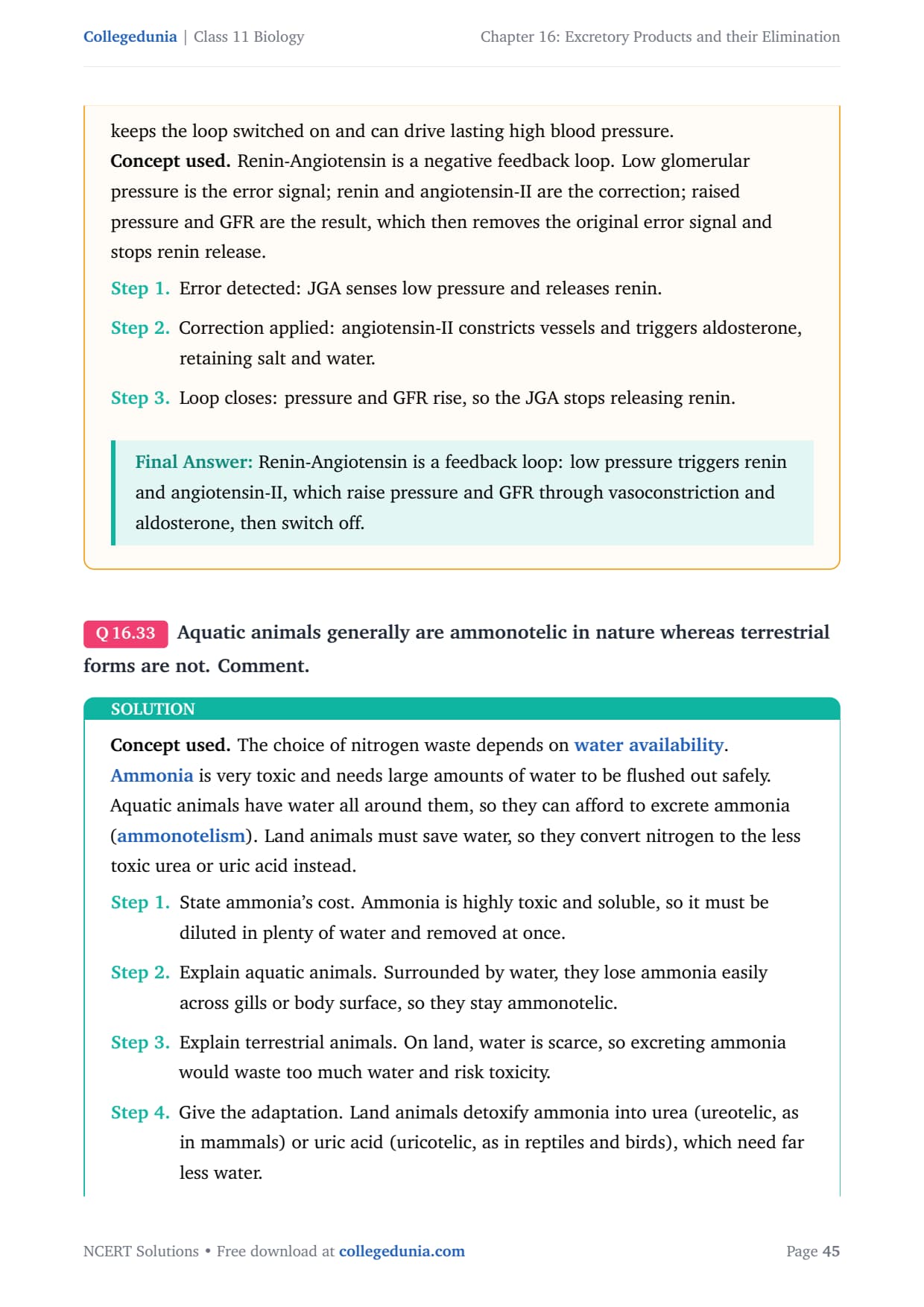
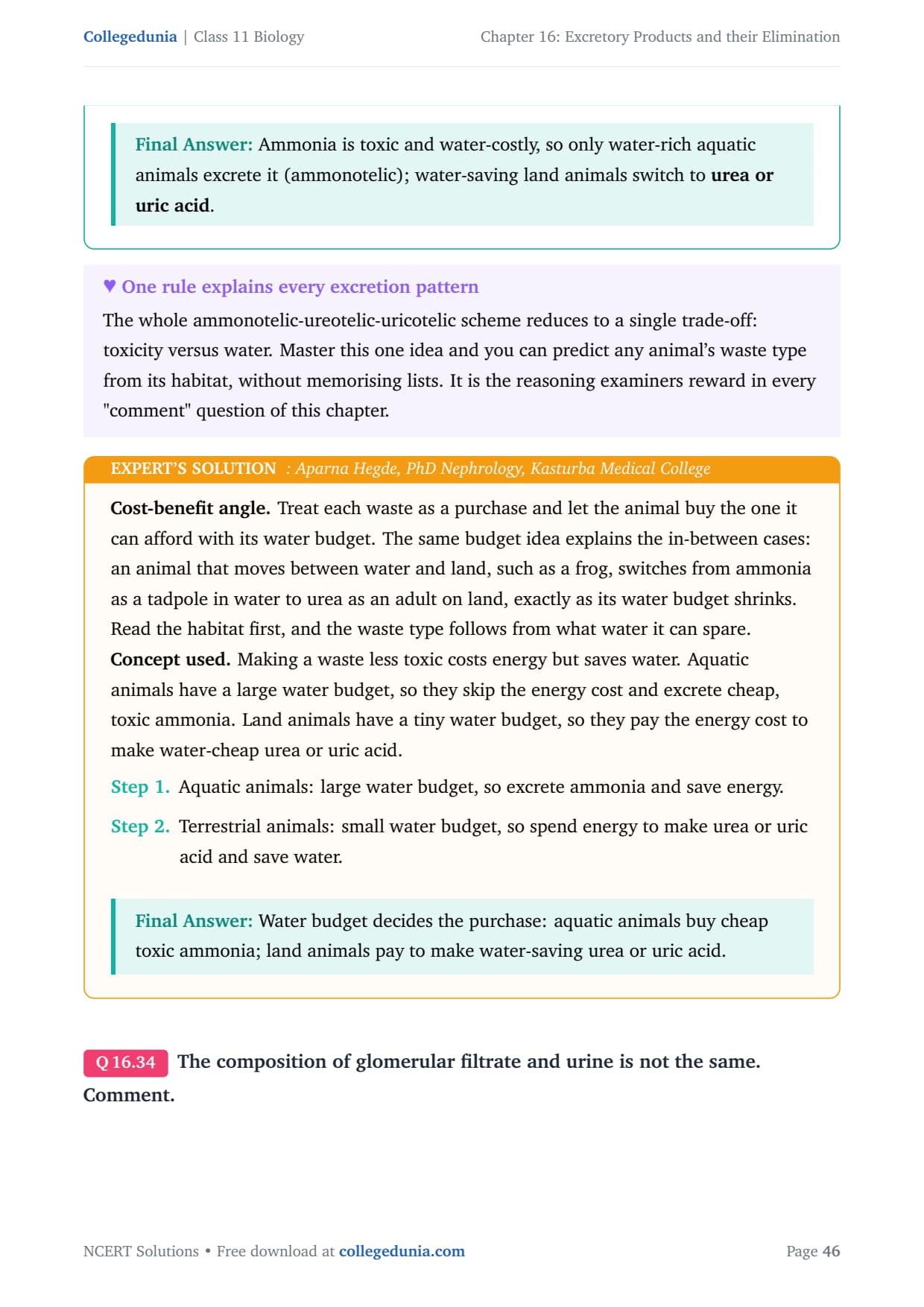
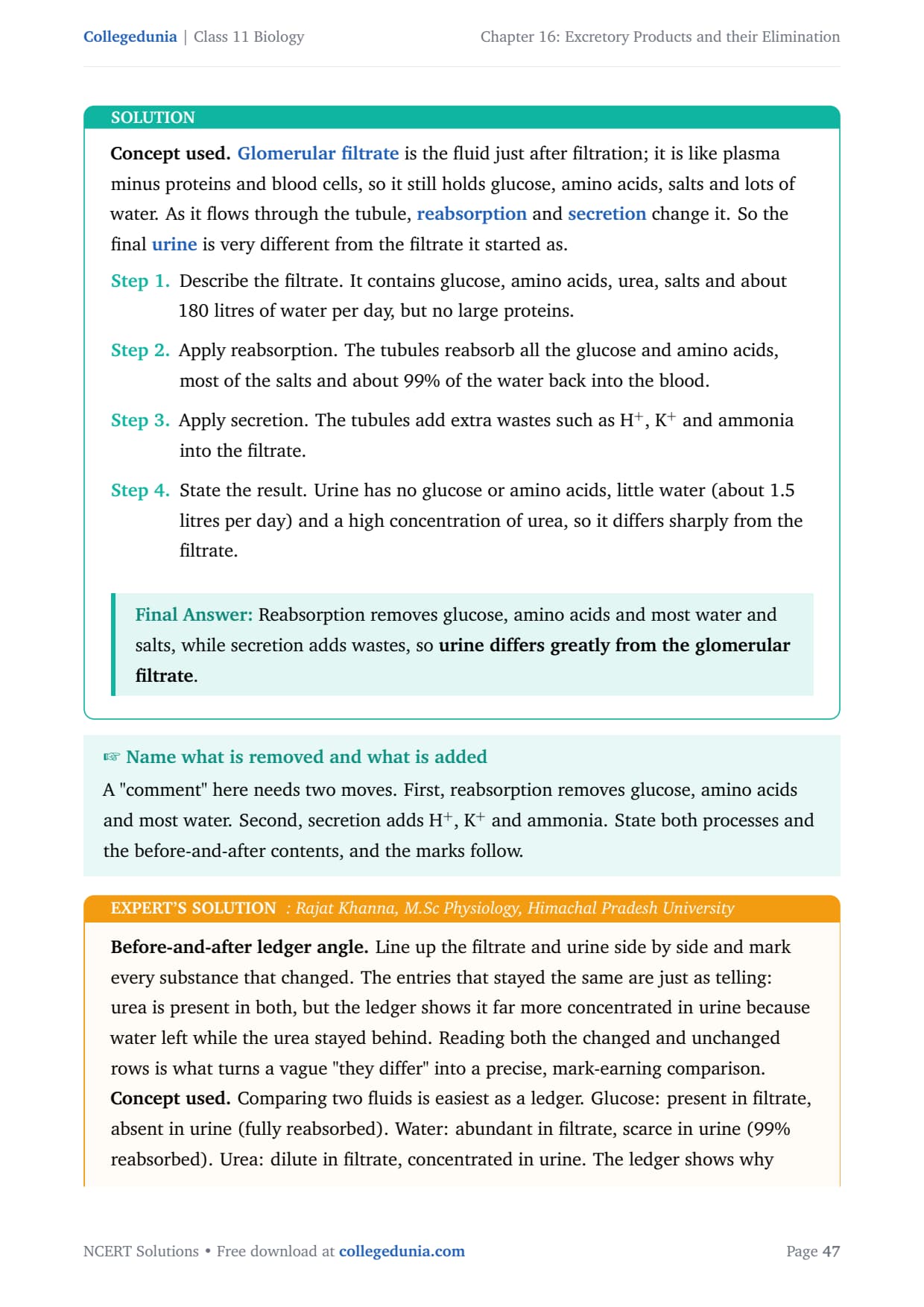
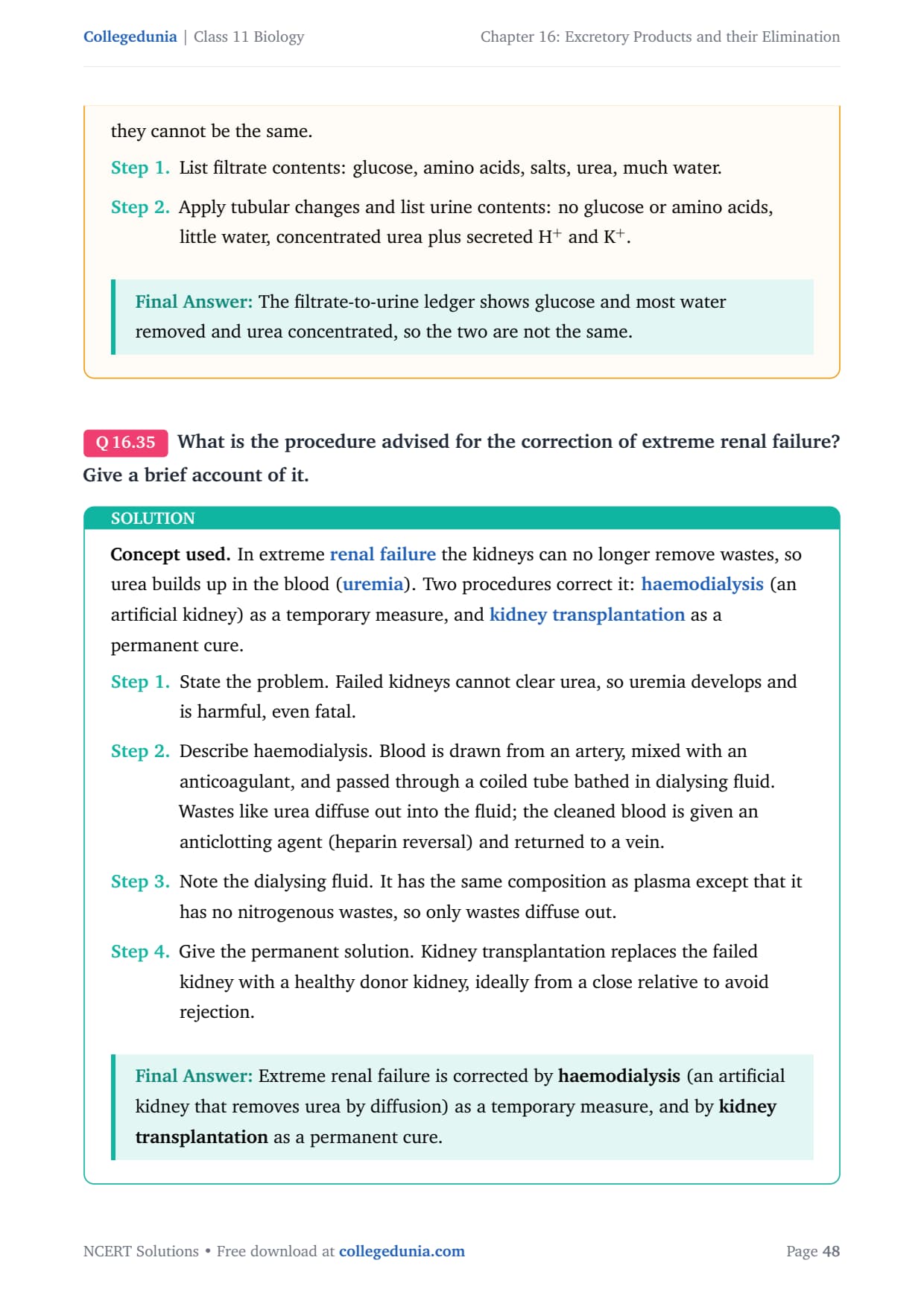
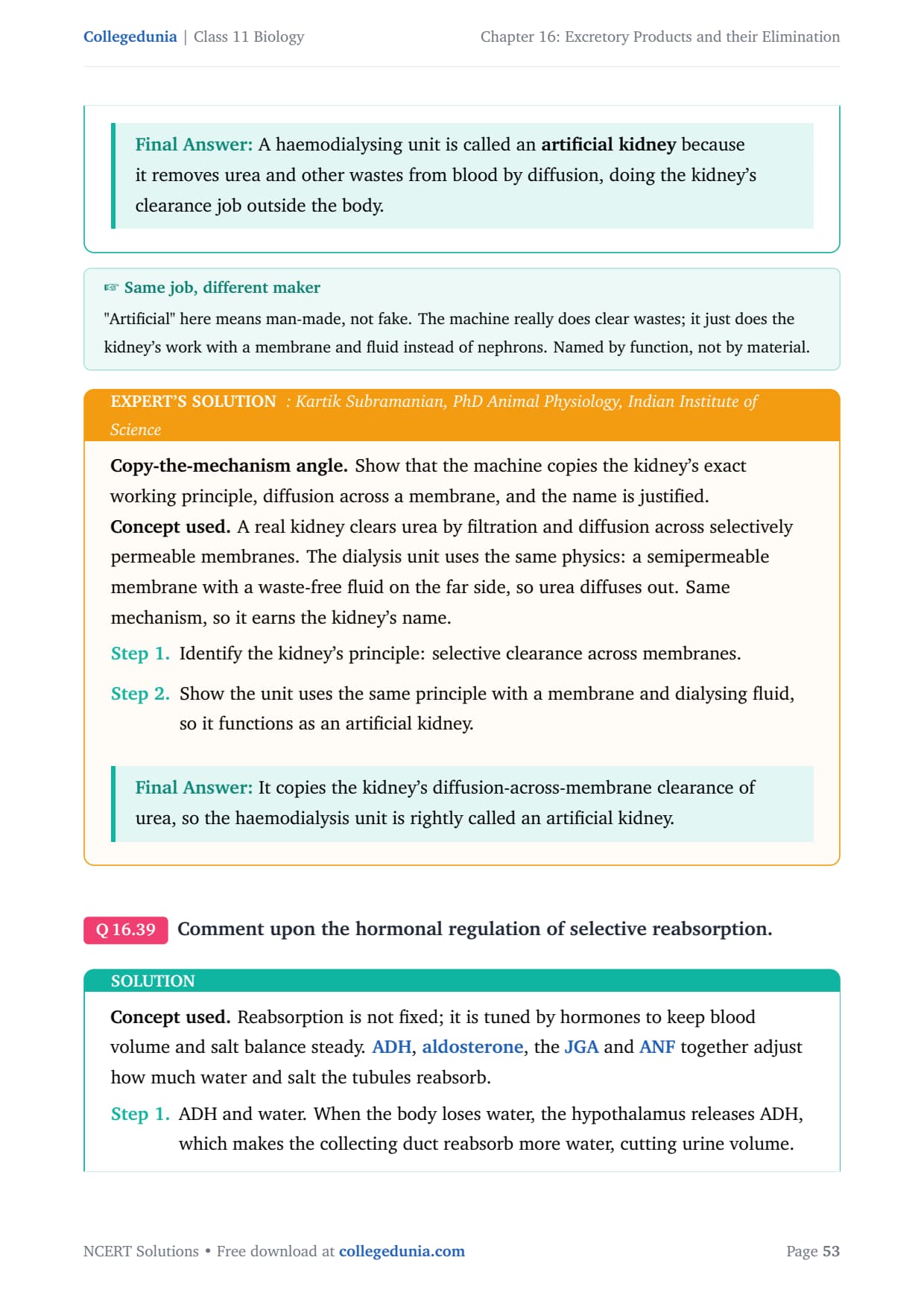
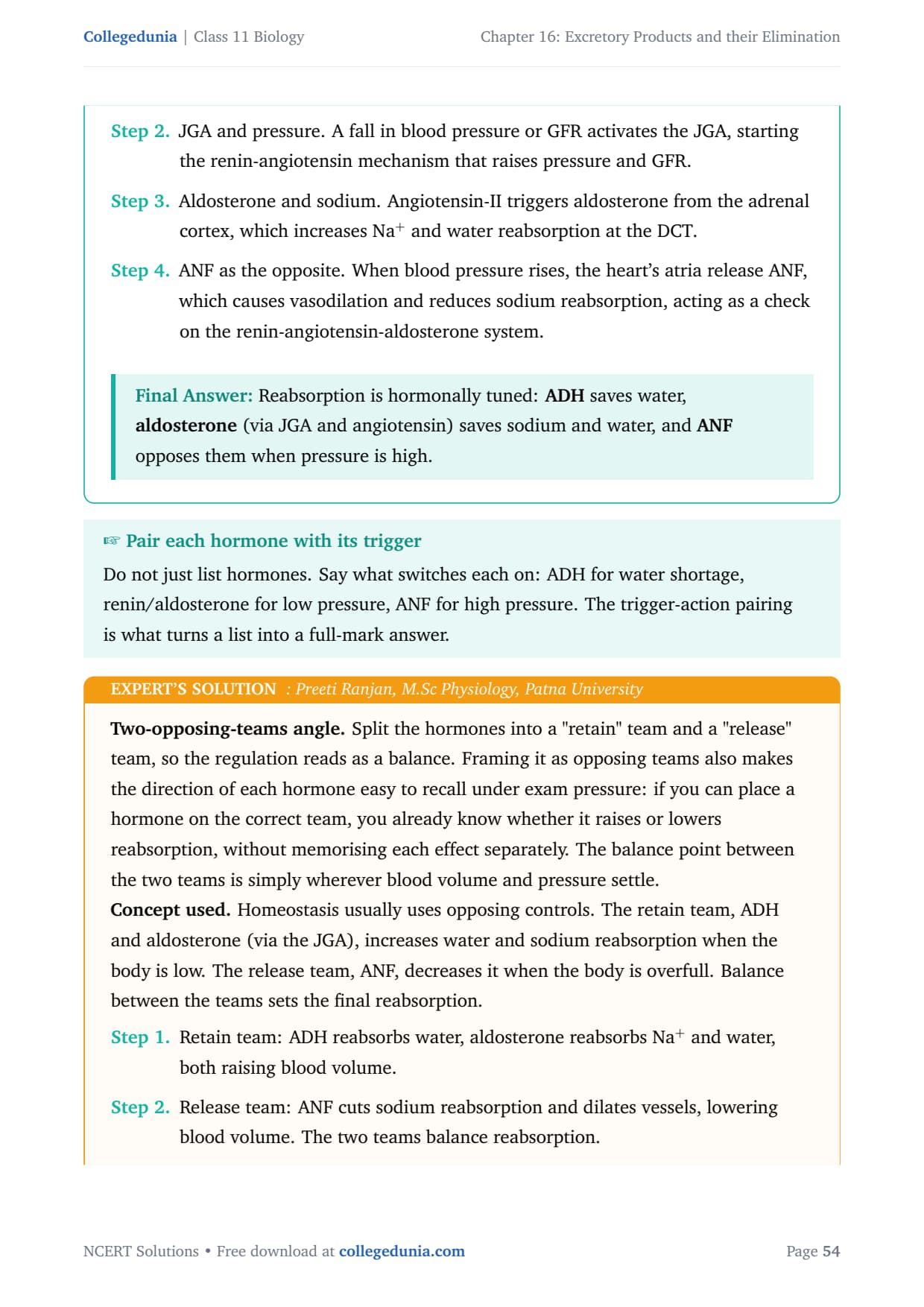
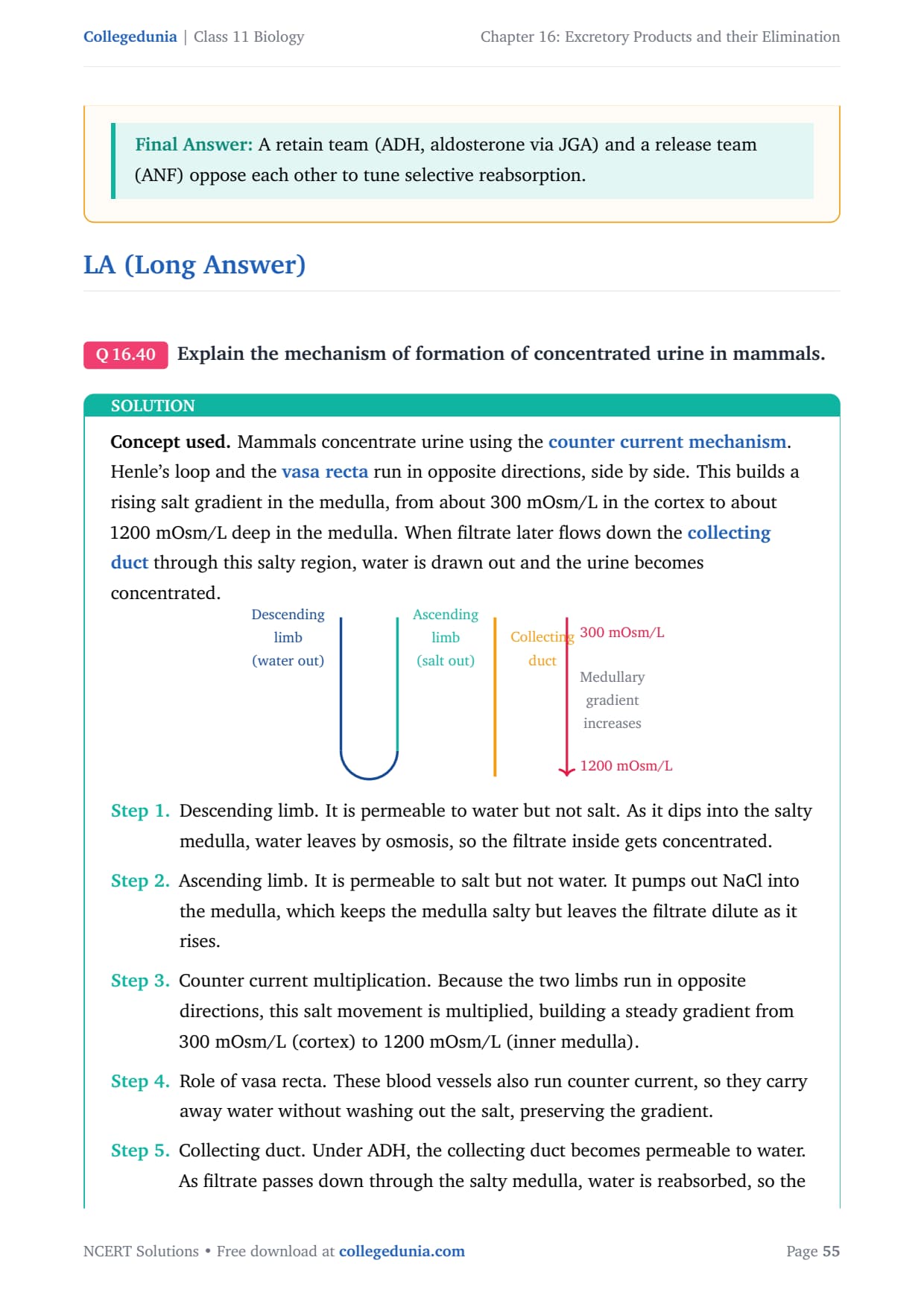
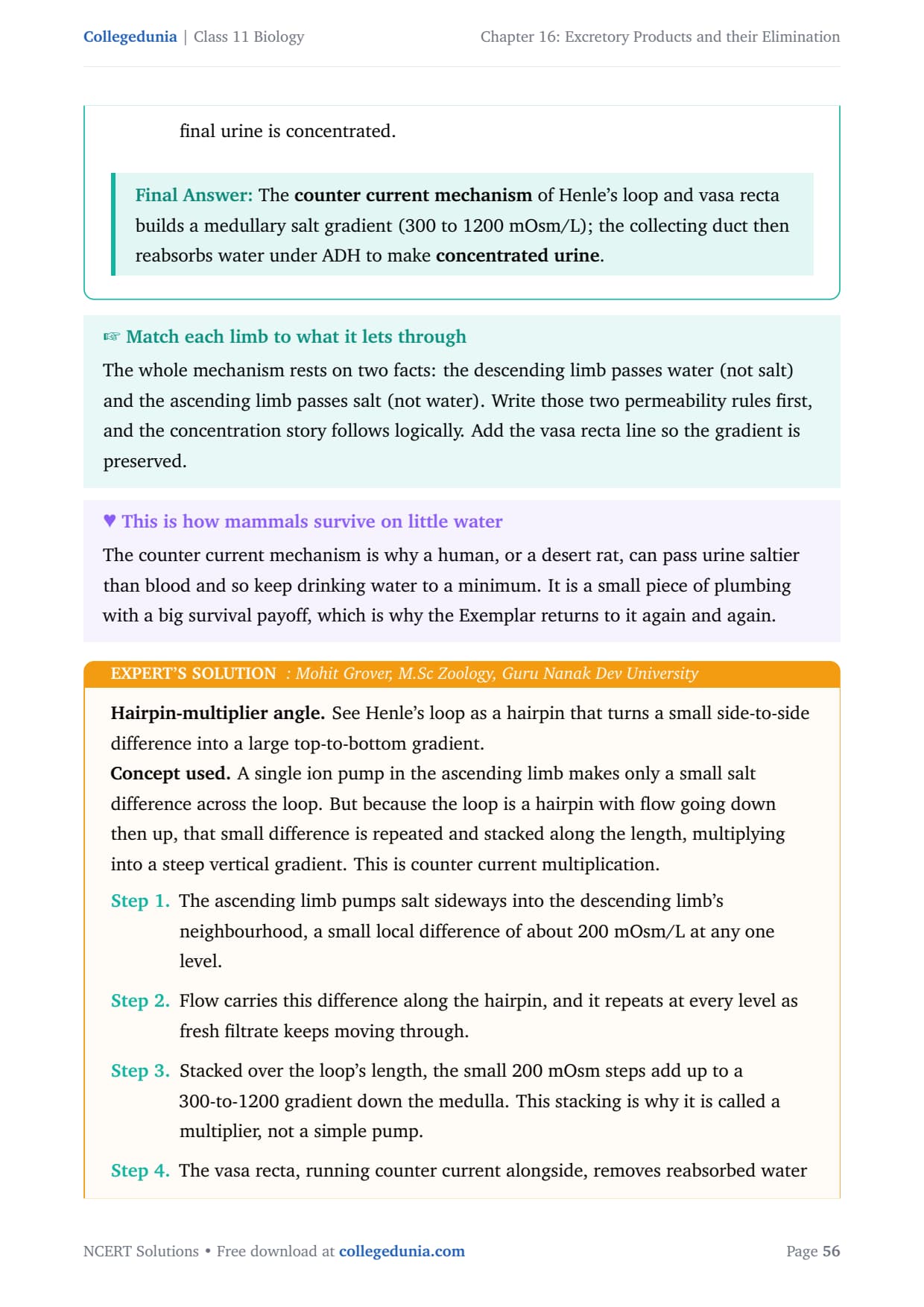
Every cell makes waste, and nitrogen waste is the dangerous kind. This chapter ranks the three nitrogen forms by toxicity, then tracks blood through the nephron as it is filtered, reabsorbed and secreted. The Exemplar turns that pathway into reasoning questions the textbook exercise never asks.
- CBSE Weightage: 4 to 5 marks, usually one nephron diagram plus a short question on hormonal regulation
- NEET Weightage: 2 to 3 questions per year from nephron structure, the counter current mechanism and kidney disorders
- CUET Weightage: 1 to 2 questions on excretory structures and urine formation in the Biology domain paper
Every answer is checked against the official NCERT Exemplar keys, and the one MCQ where the printed key disagrees with the physiology is flagged at the question itself rather than quietly copied.
Topics Covered in the NCERT Exemplar Class 11 Biology Solutions Chapter 16
The 45 questions sit on four ideas, and each returns in Class 12 when you study osmoregulation. The chapter is short to read but heavy to answer, because most questions ask you to name the exact tubule region or the exact hormone doing the work. A vague answer scores nothing here.
- Modes of excretion: ammonotelism, ureotelism and uricotelism, and the water budget that decides which animal uses which
- Excretory structures across animals: protonephridia, nephridia, Malpighian tubules, green glands in prawns and the contractile vacuole in amoeba
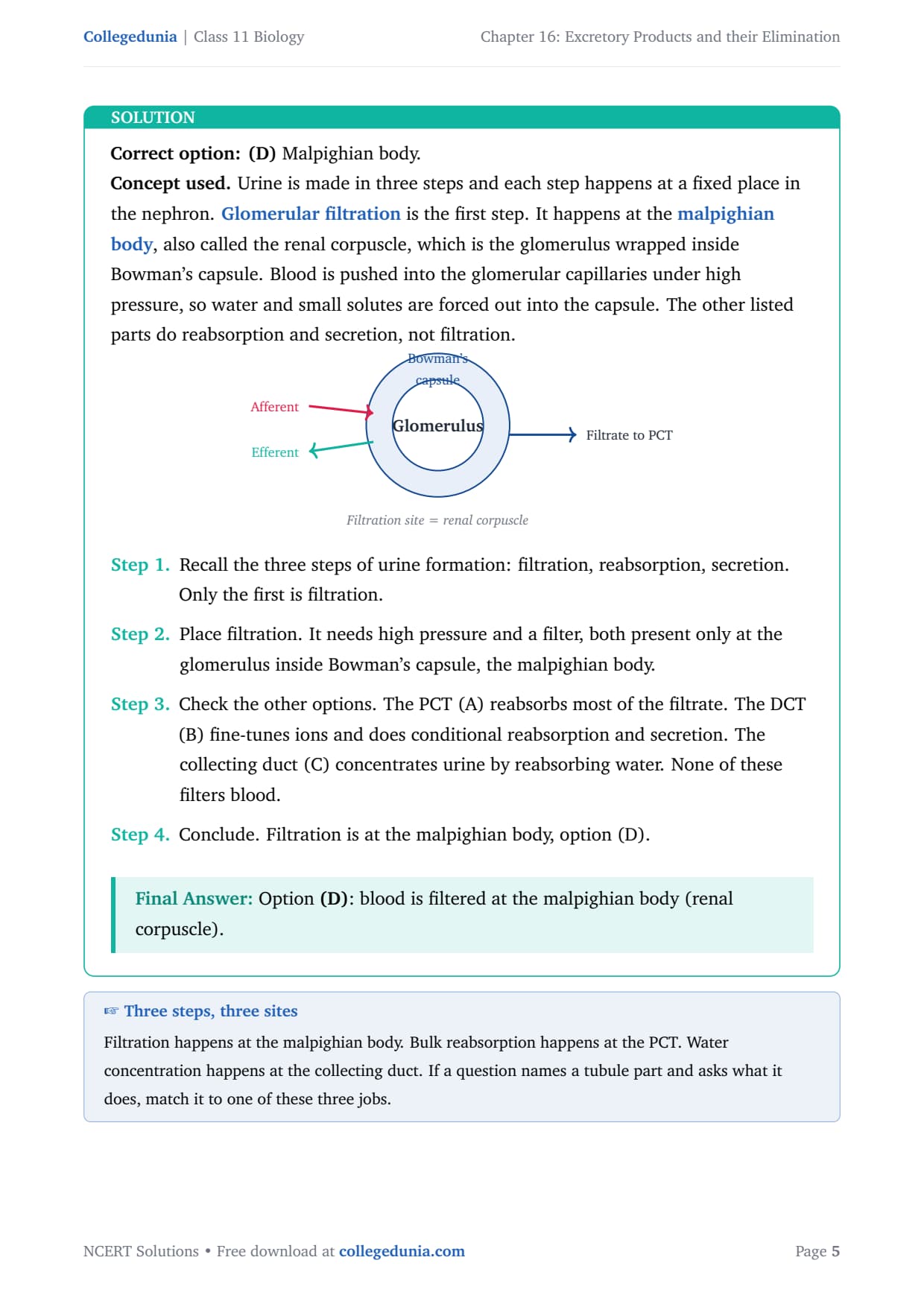
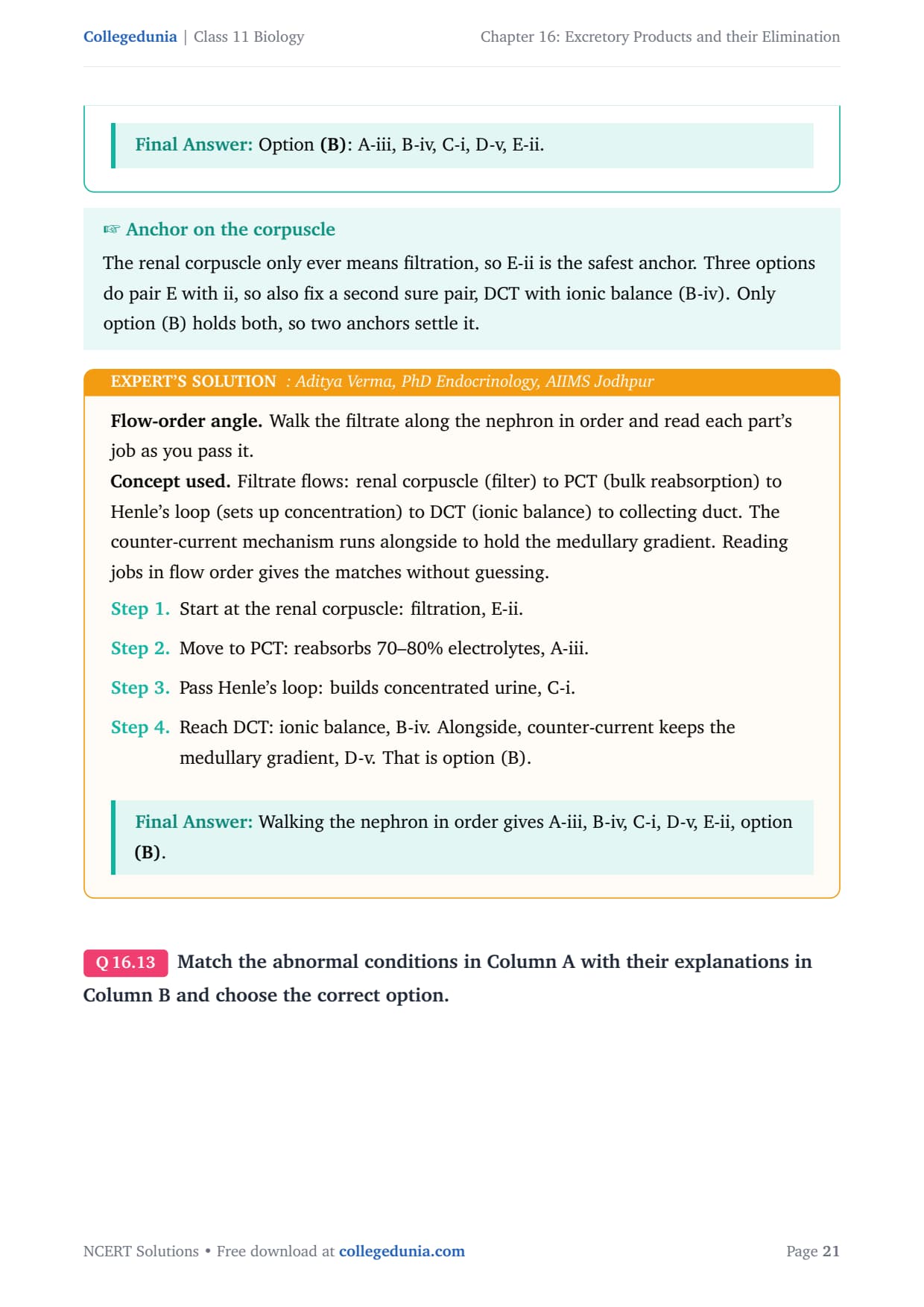
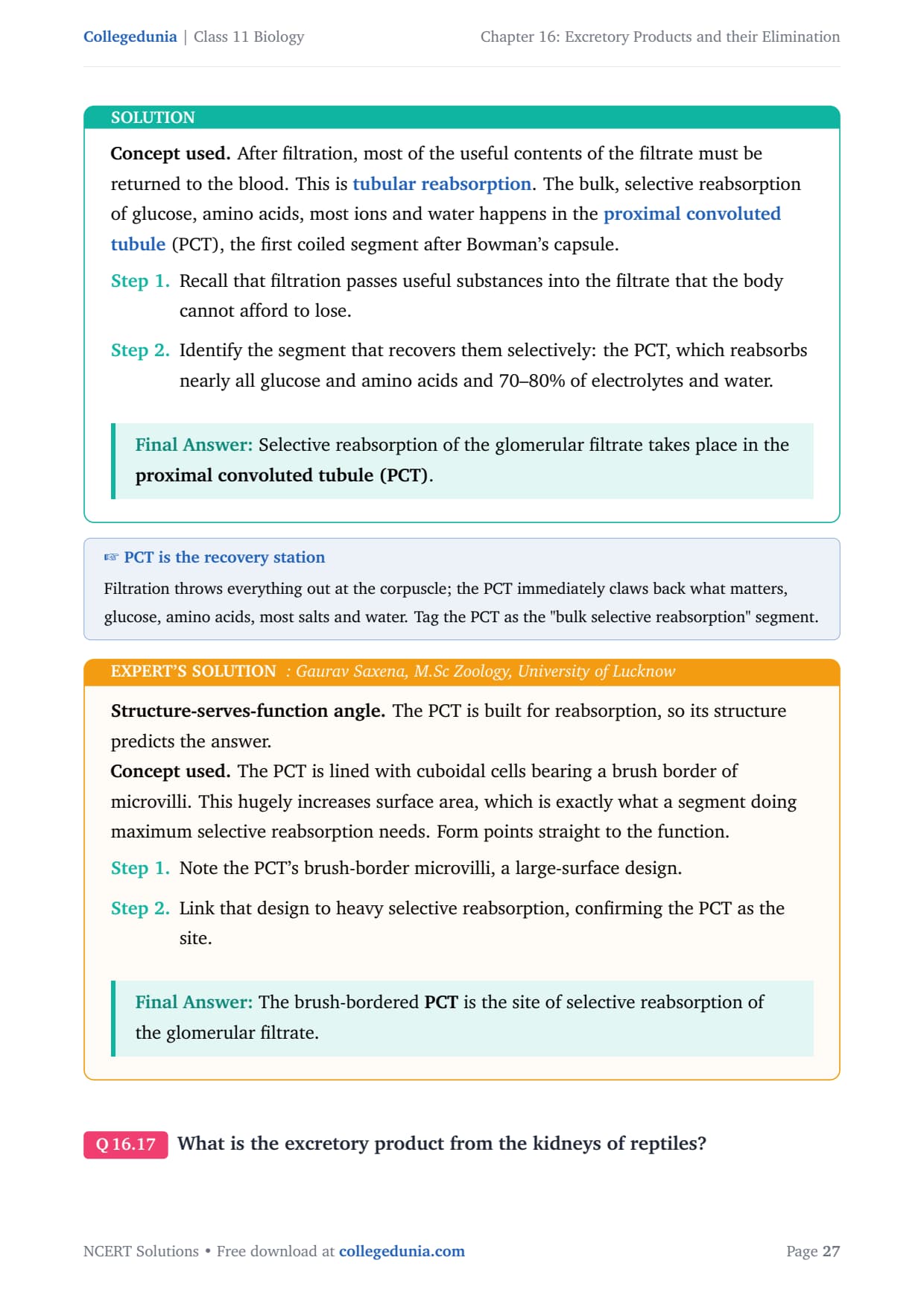
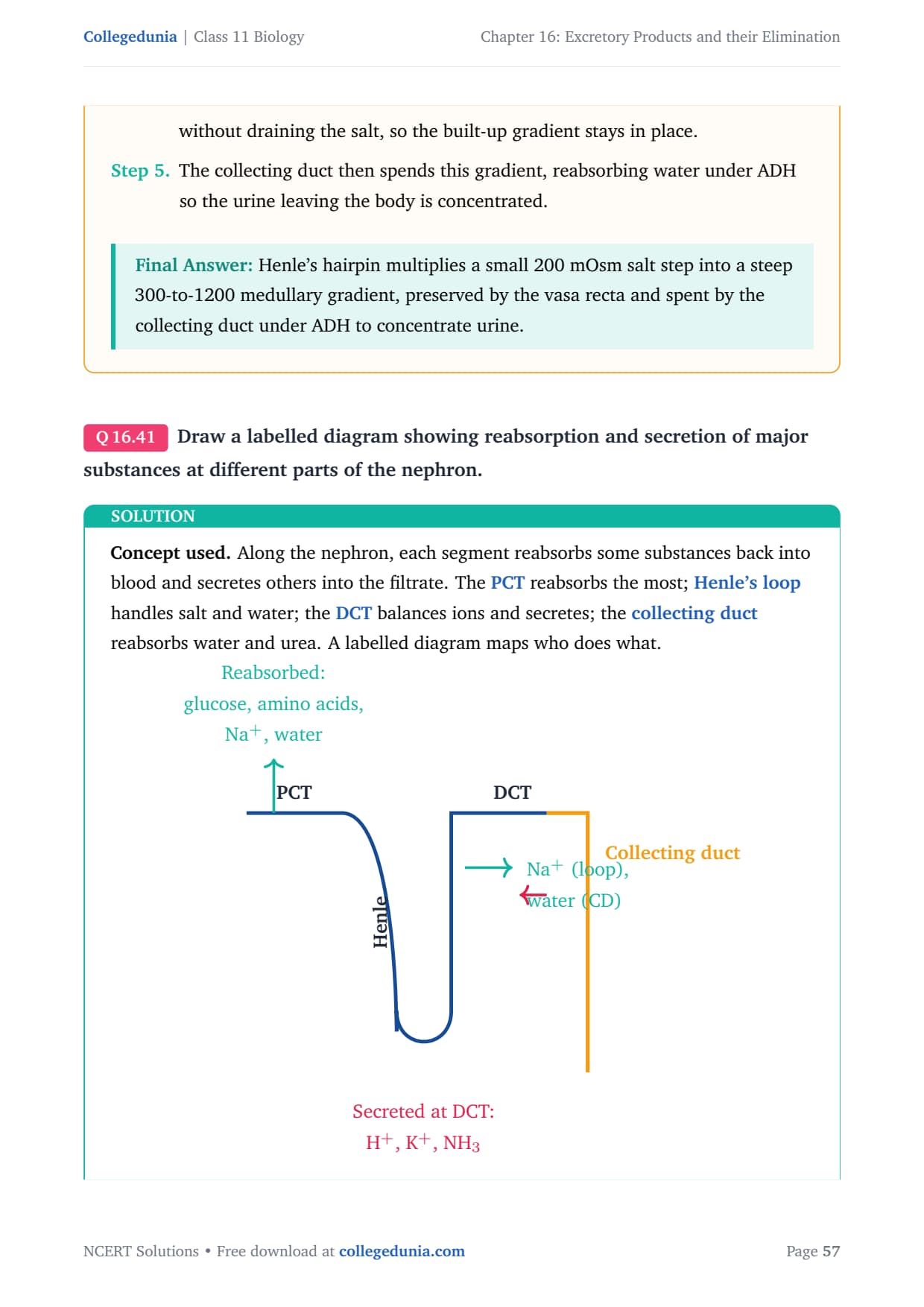
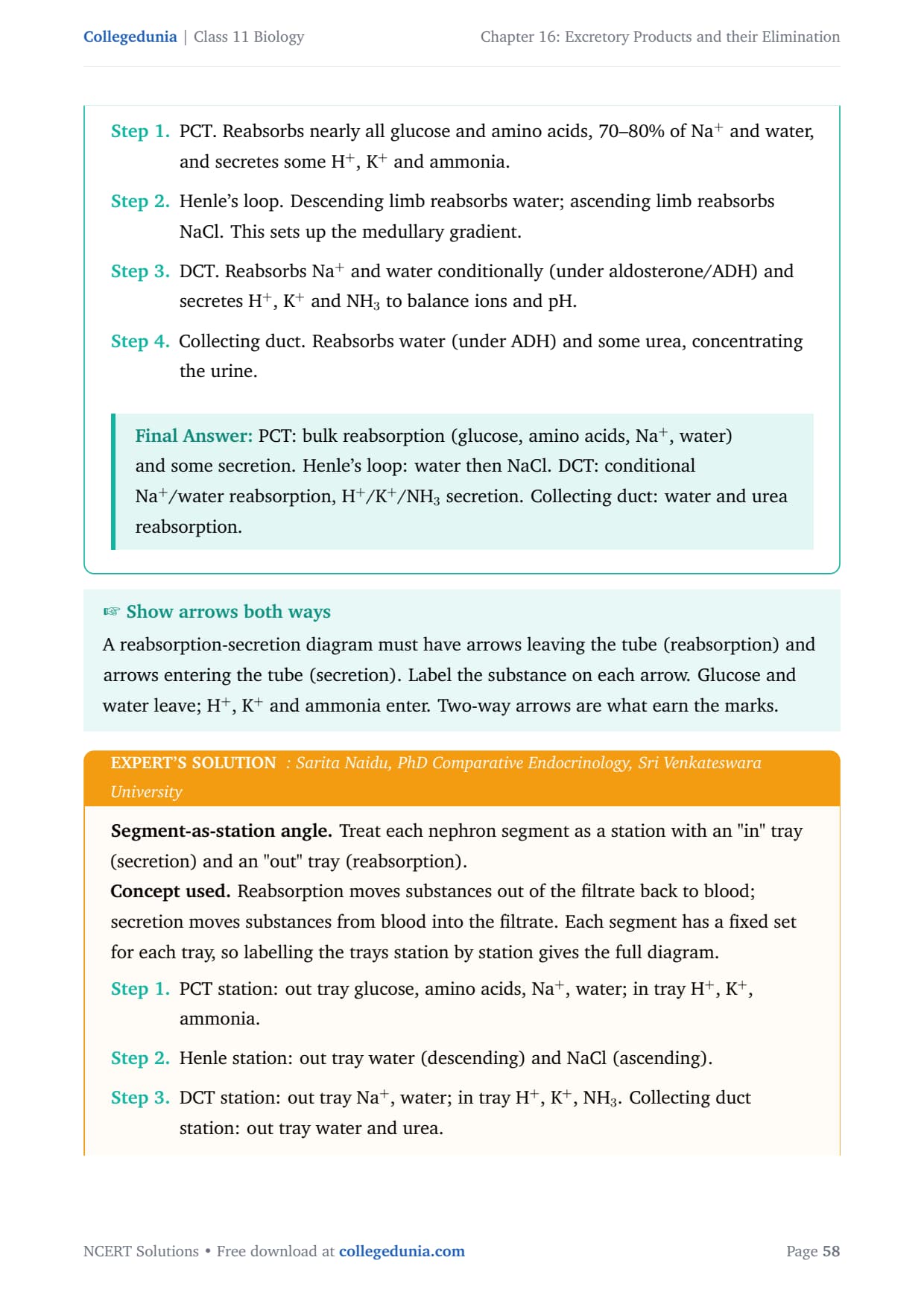
- Urine formation: filtration at the renal corpuscle, then reabsorption and secretion along the PCT, Henle's loop, DCT and collecting duct
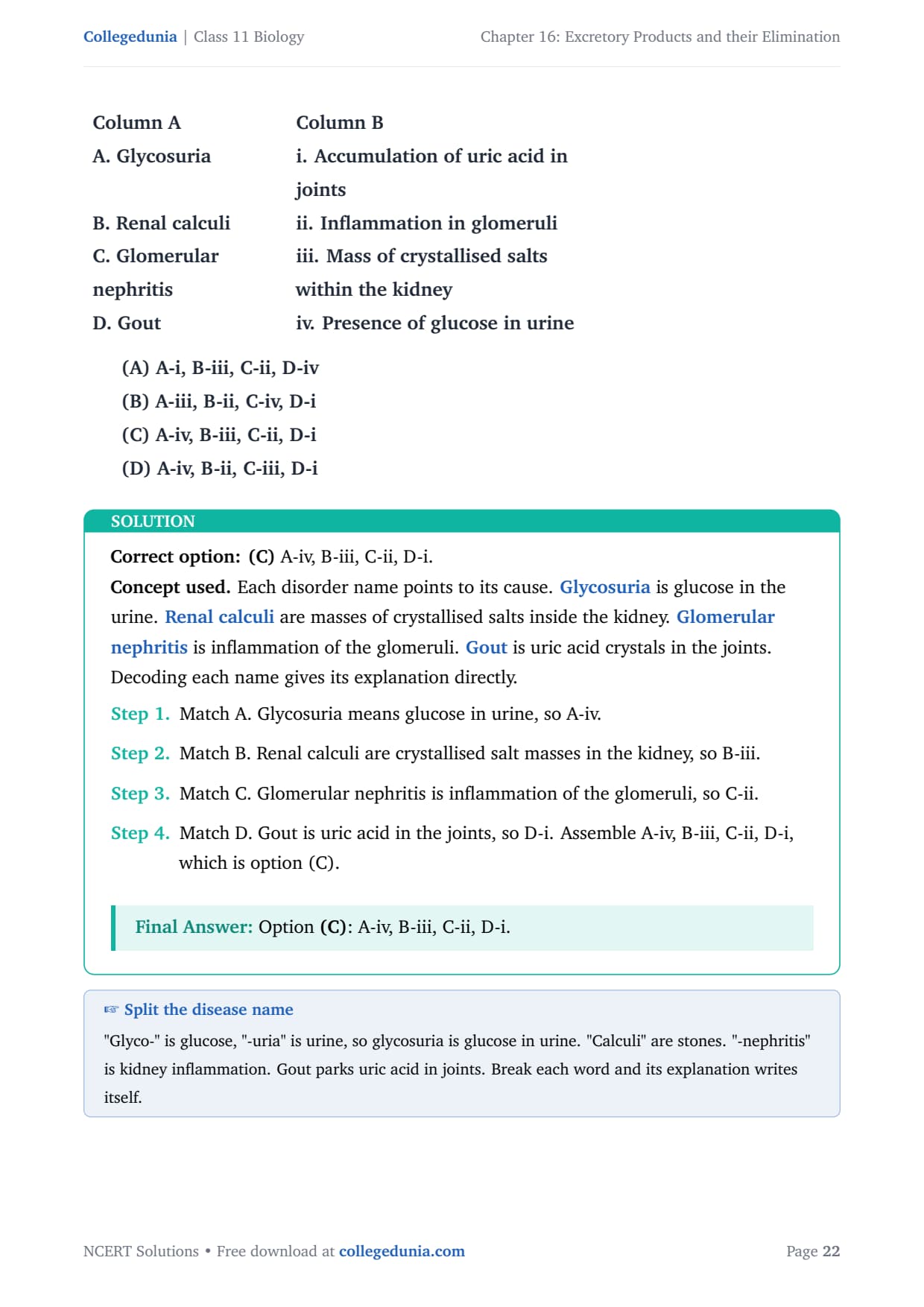
- Regulation and disorders: ADH, aldosterone, ANF and the renin-angiotensin route, plus uremia, glycosuria, renal calculi, gout and dialysis
Question Types in the Excretory Products and their Elimination Exemplar
The four types make different demands. The MCQ set turns on one word inside an option, while the Long Answer set asks for a labelled diagram and a full mechanism. Half of this chapter is MCQ and Very Short Answer, so it is unusually good NEET practice. The split is below.
| Question Type | Count | What It Tests |
|---|---|---|
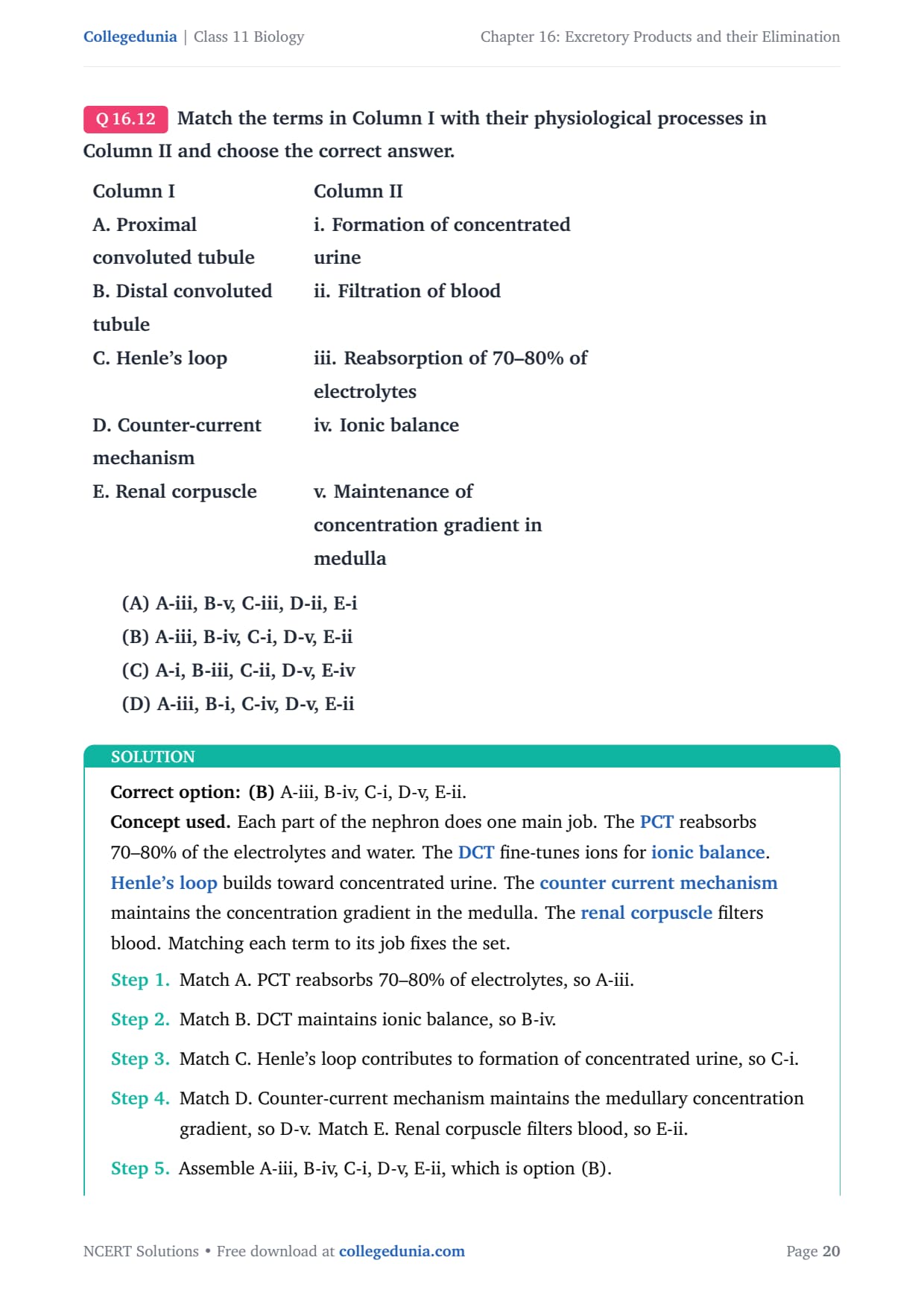
| MCQ (single correct) | 15 | Hormone jobs, waste types and two matching-column sets |
| VSA (Very Short Answer) | 15 | One-line recall such as the excretory organ of a prawn |
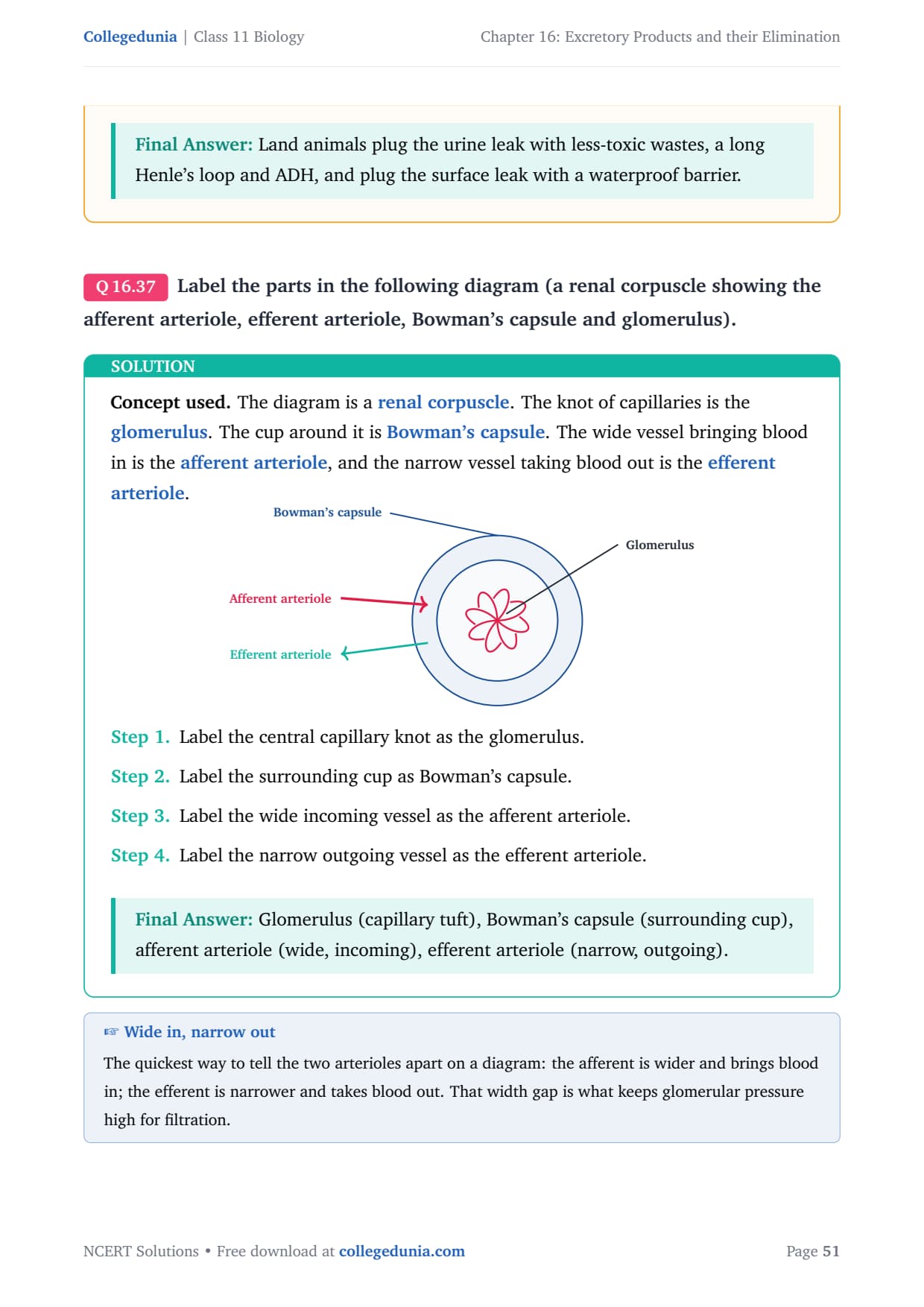
| SA (Short Answer) | 9 | Renin-angiotensin, water conservation and renal corpuscle labelling |
| LA (Long Answer) | 6 | Counter current mechanism, micturition and kidney structure |
Printed Key Errors and the Chapter 19 Numbering in This Exemplar
Two source problems catch students here, and both are handled openly in the PDF. Neither is a mistake in your reading. They are quirks of the Exemplar book itself, which is an older edition than your textbook.
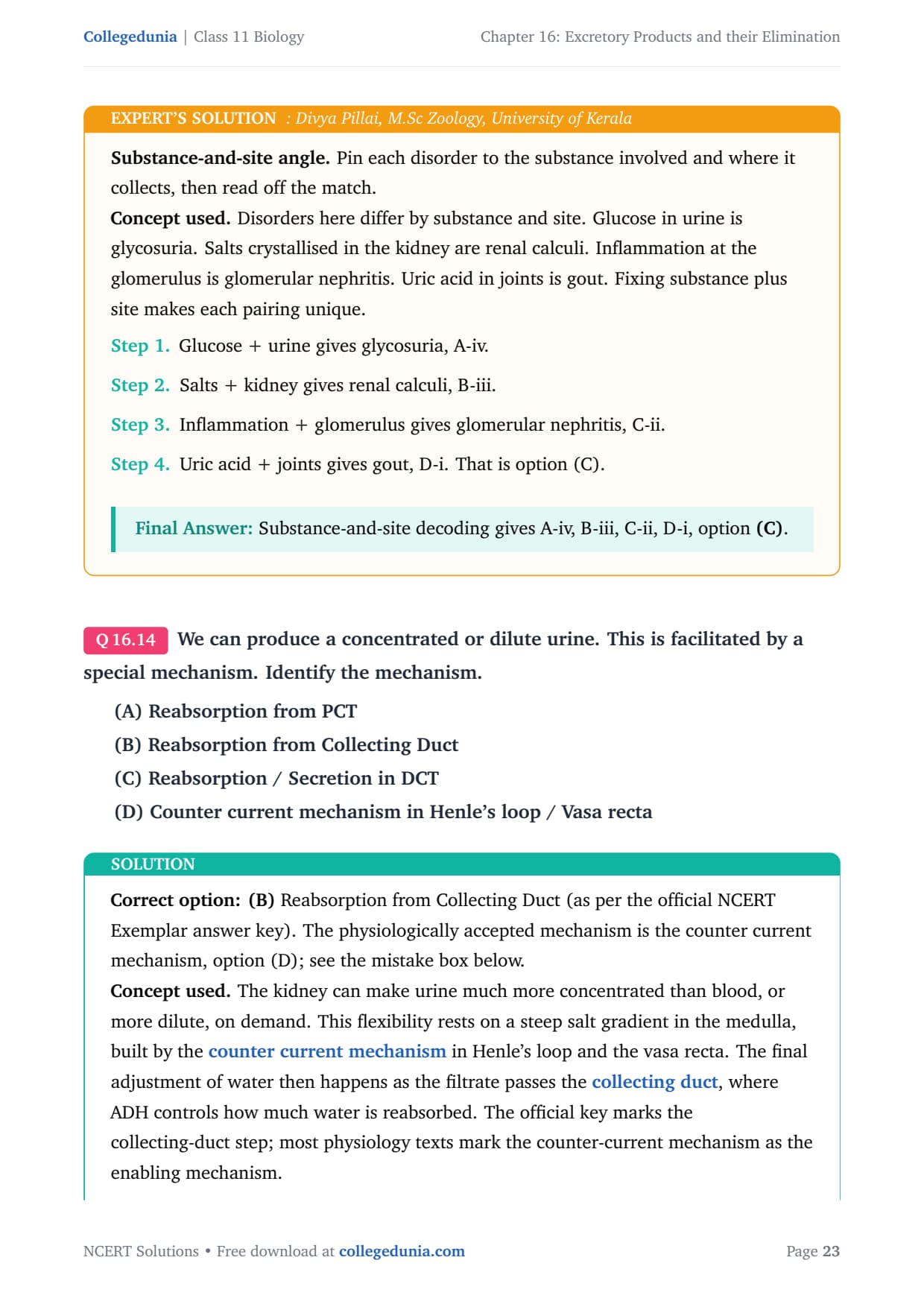
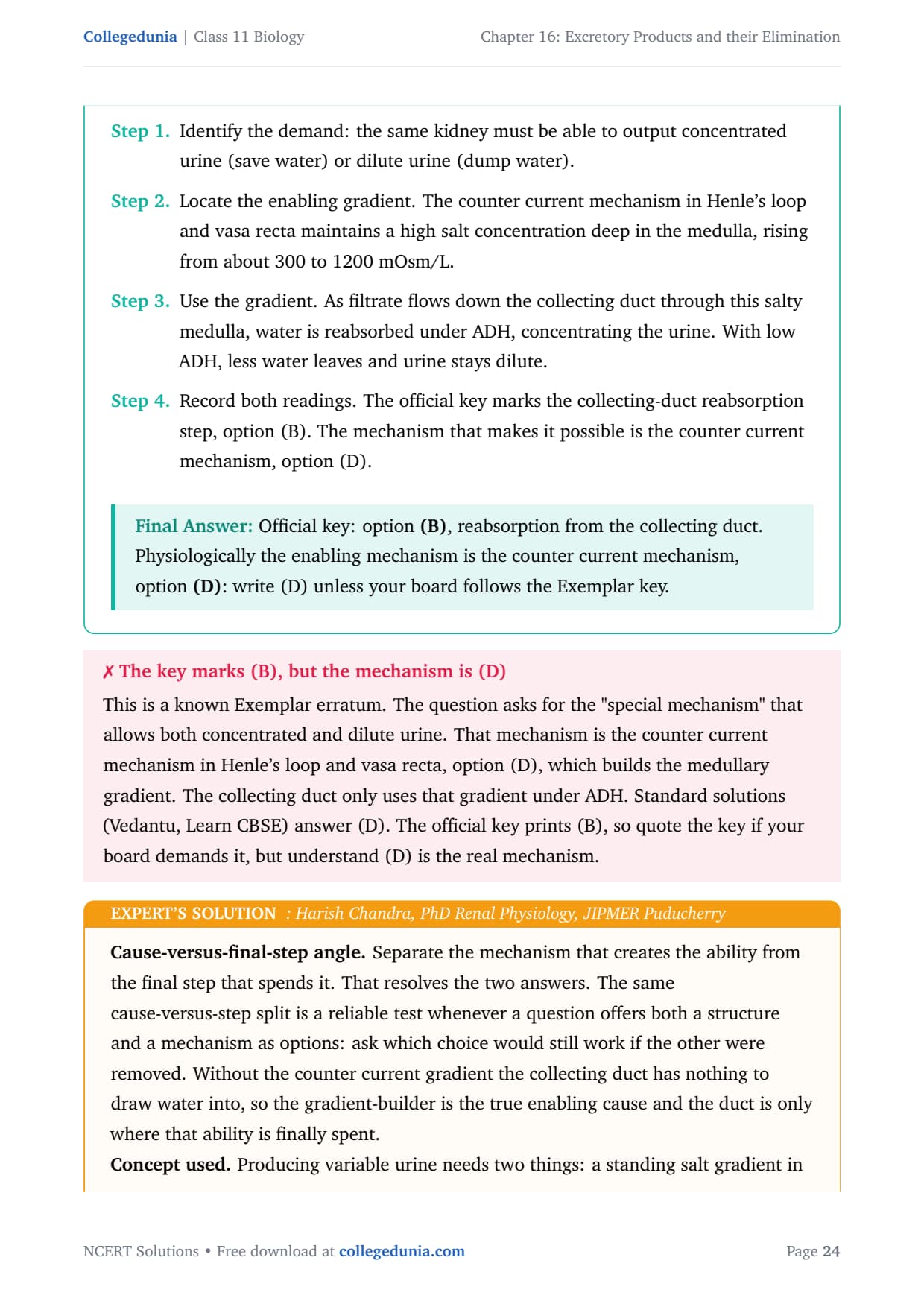
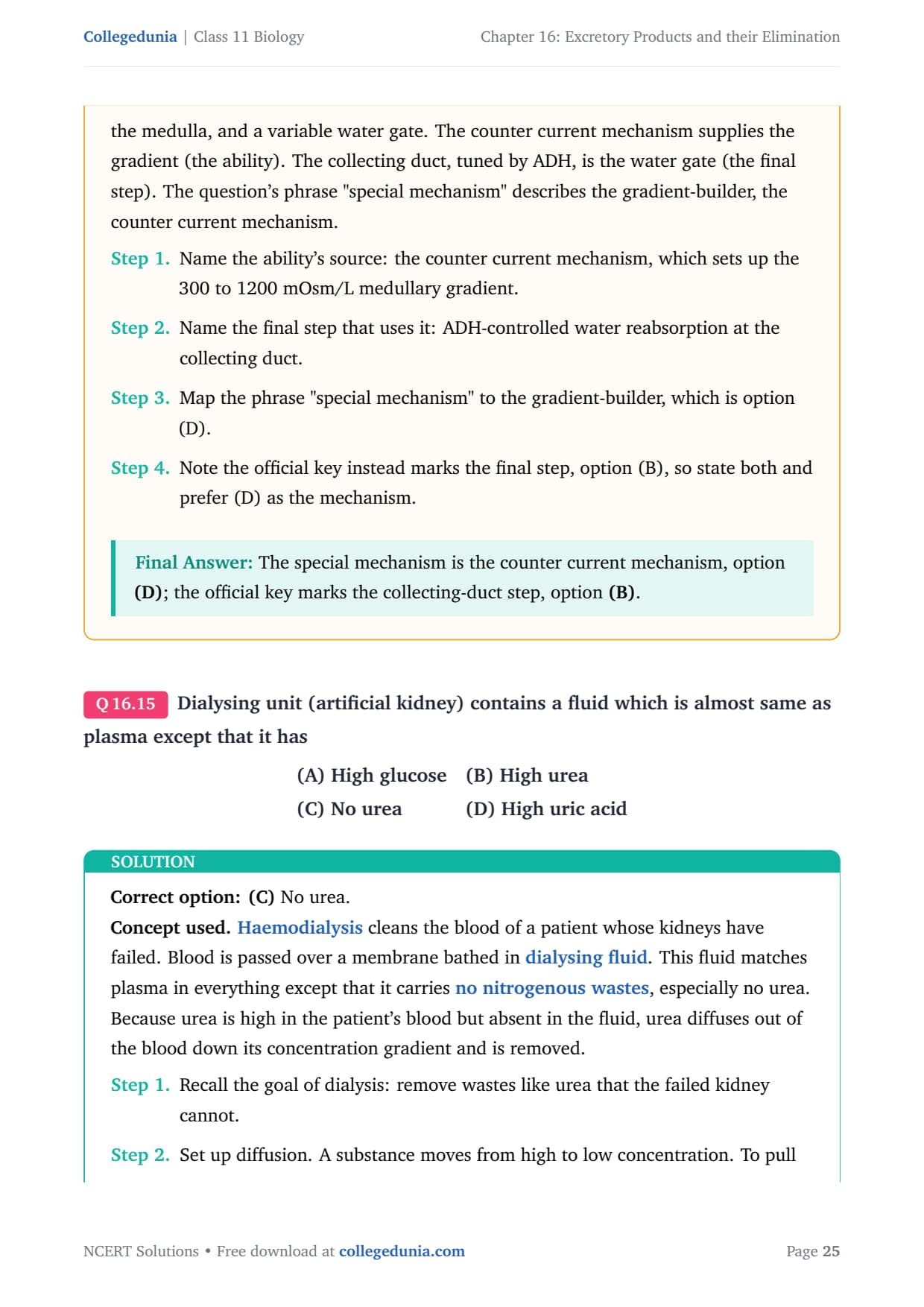
- MCQ 14 has a disputed key: the question asks which mechanism lets the kidney produce both concentrated and dilute urine. The official key prints (b) reabsorption from the collecting duct. The mechanism that actually creates that ability is the counter current mechanism in Henle's loop and the vasa recta, option (d). The collecting duct only spends the medullary gradient once ADH acts. The PDF quotes the key for marking and explains why (d) is the physiology.
- The chapter prints as Chapter 19: the Exemplar is the older 22-chapter edition, so the book and both answer keys index this content under "CHAPTER 19 Excretory Products and their Elimination". Your textbook calls it Chapter 16. Same content, different label.
- The answer key is split across two files: MCQ answers sit in one key, descriptive model answers in another that is not chapter-indexed. Only five items here have an official model answer, so the rest are grounded in the NCERT textbook chapter.
Knowing that (b) is printed but (d) is correct saves you an argument in the exam hall and a wrong idea in NEET.
Common Mistakes Students Make in Excretory Products and their Elimination
The Exemplar plants wrong options on purpose, and four errors take most of the marks here. Each is flagged in the PDF at the question where it appears.
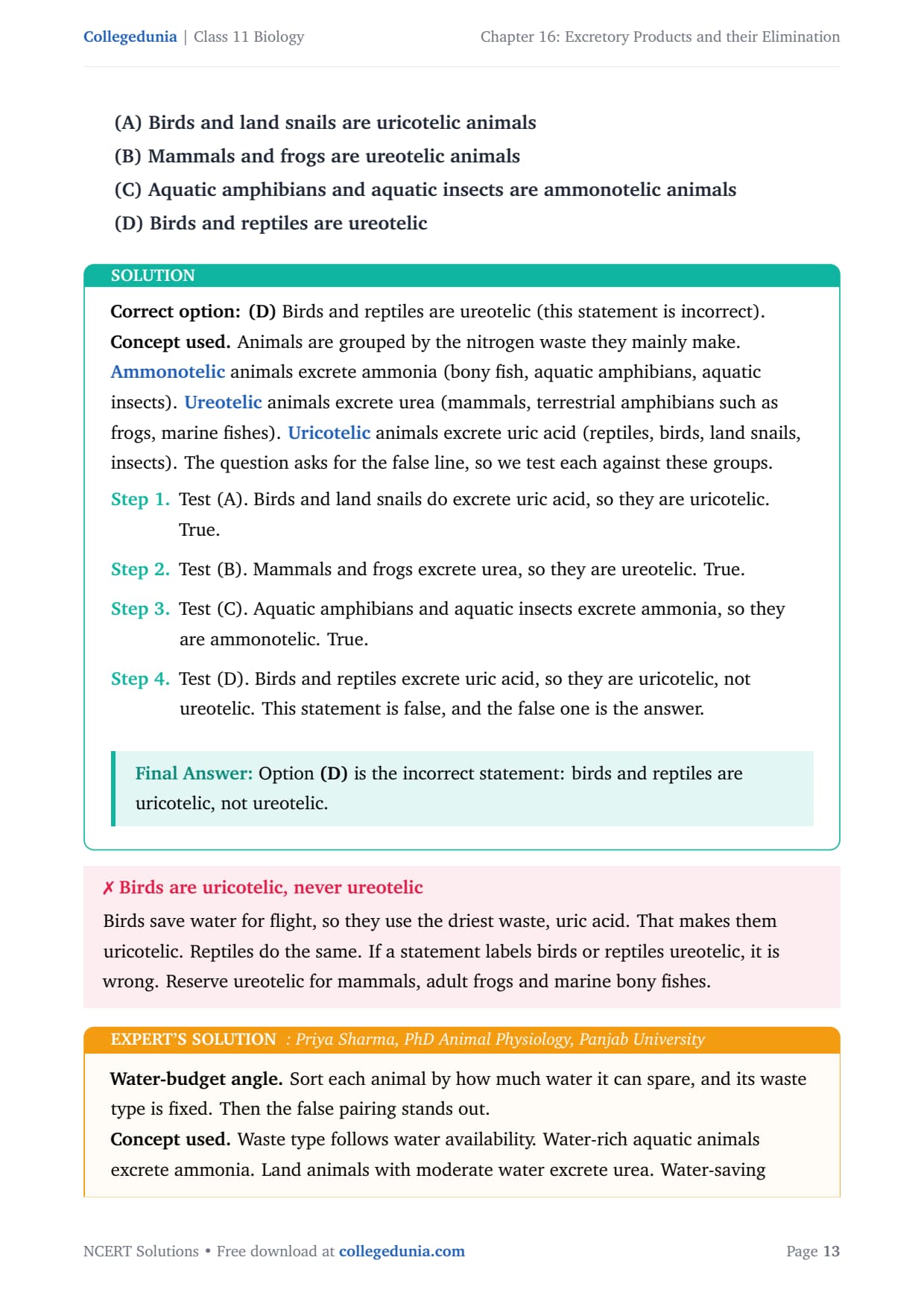
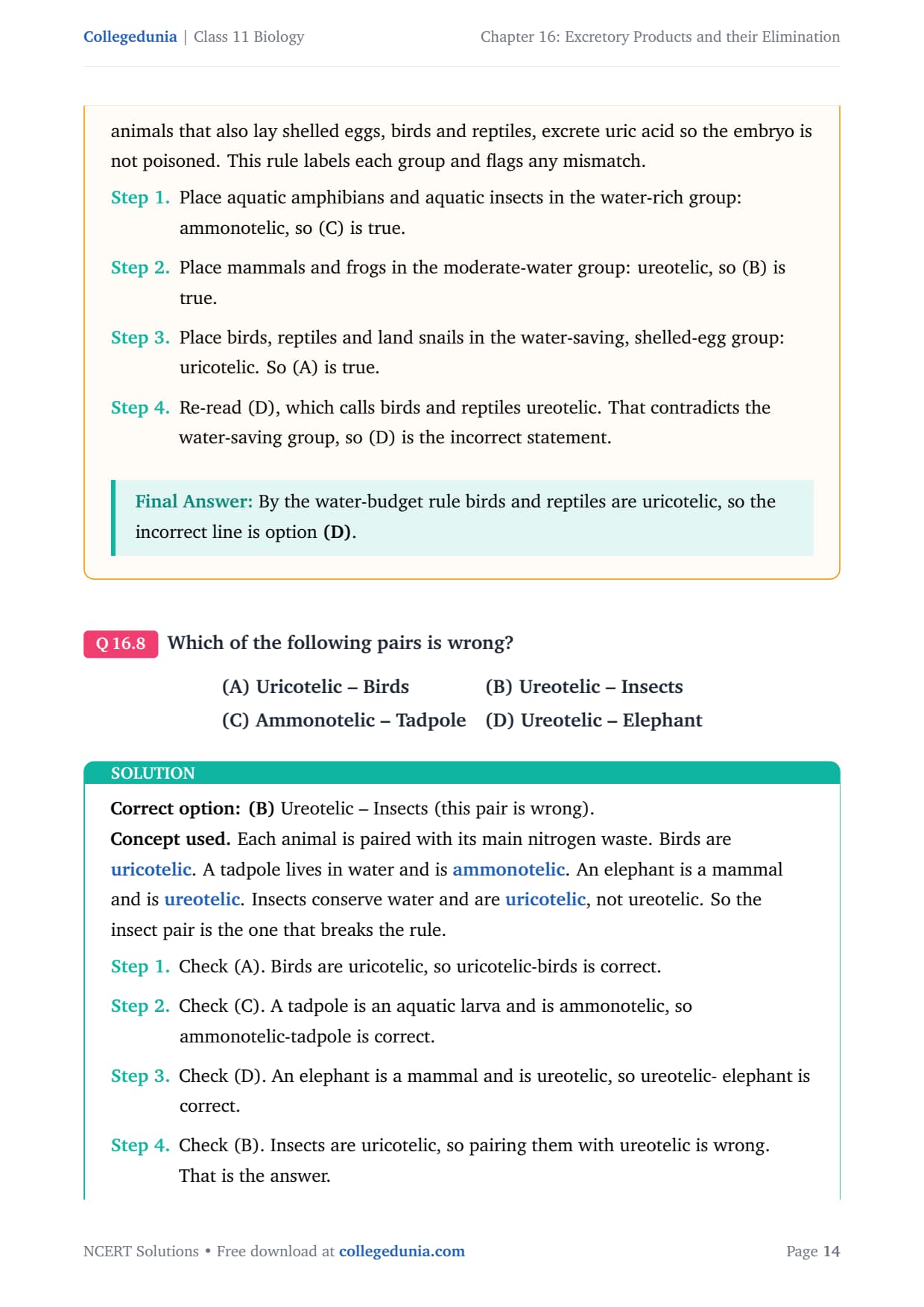
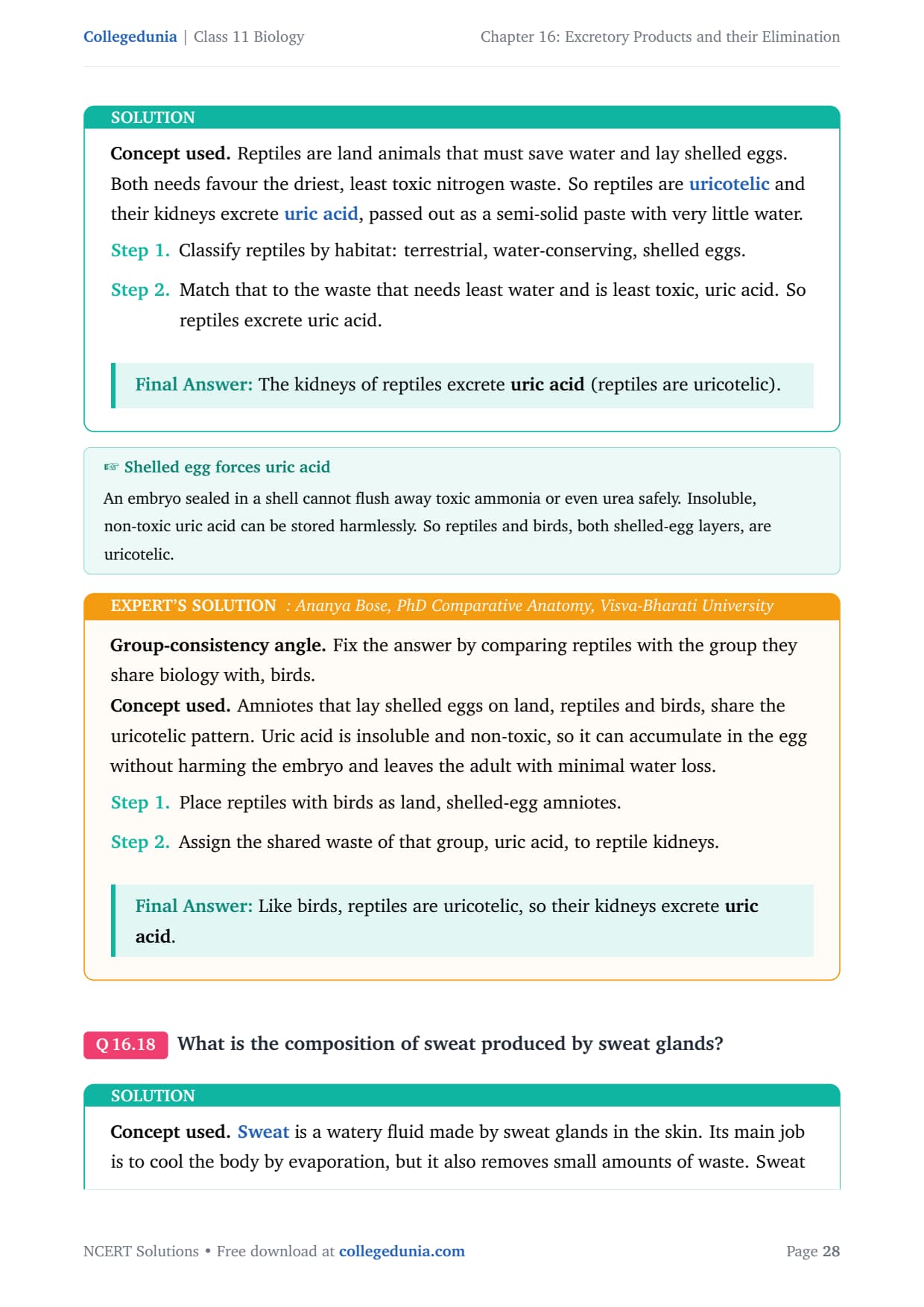
- Calling birds and reptiles ureotelic: both are uricotelic. They save water and lay shelled eggs, so they use uric acid. Two separate MCQs test this.
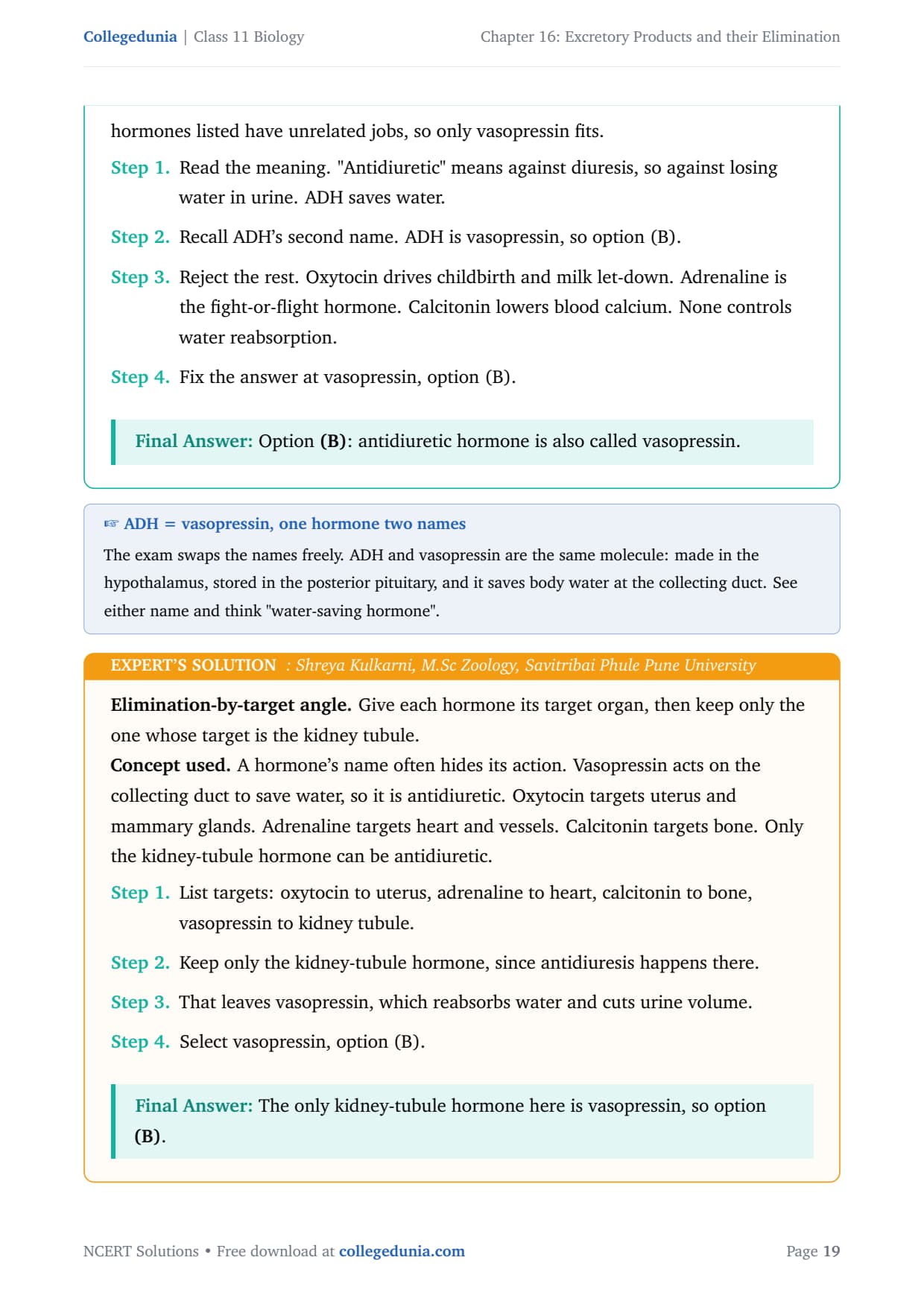
- Reversing what ANF does: ANF is released when blood pressure rises and pushes sodium out. It does not increase sodium reabsorption. Aldosterone does that.
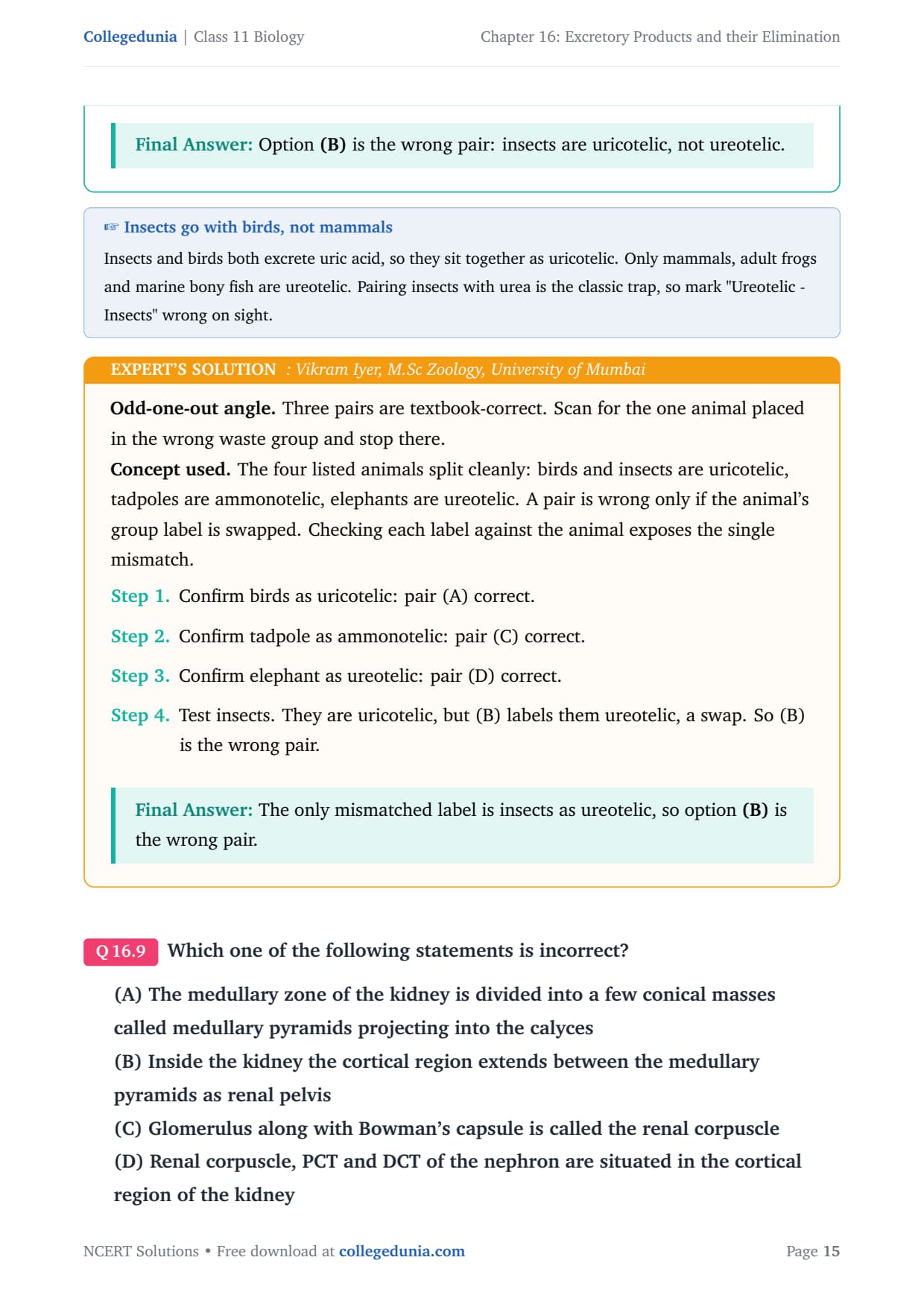
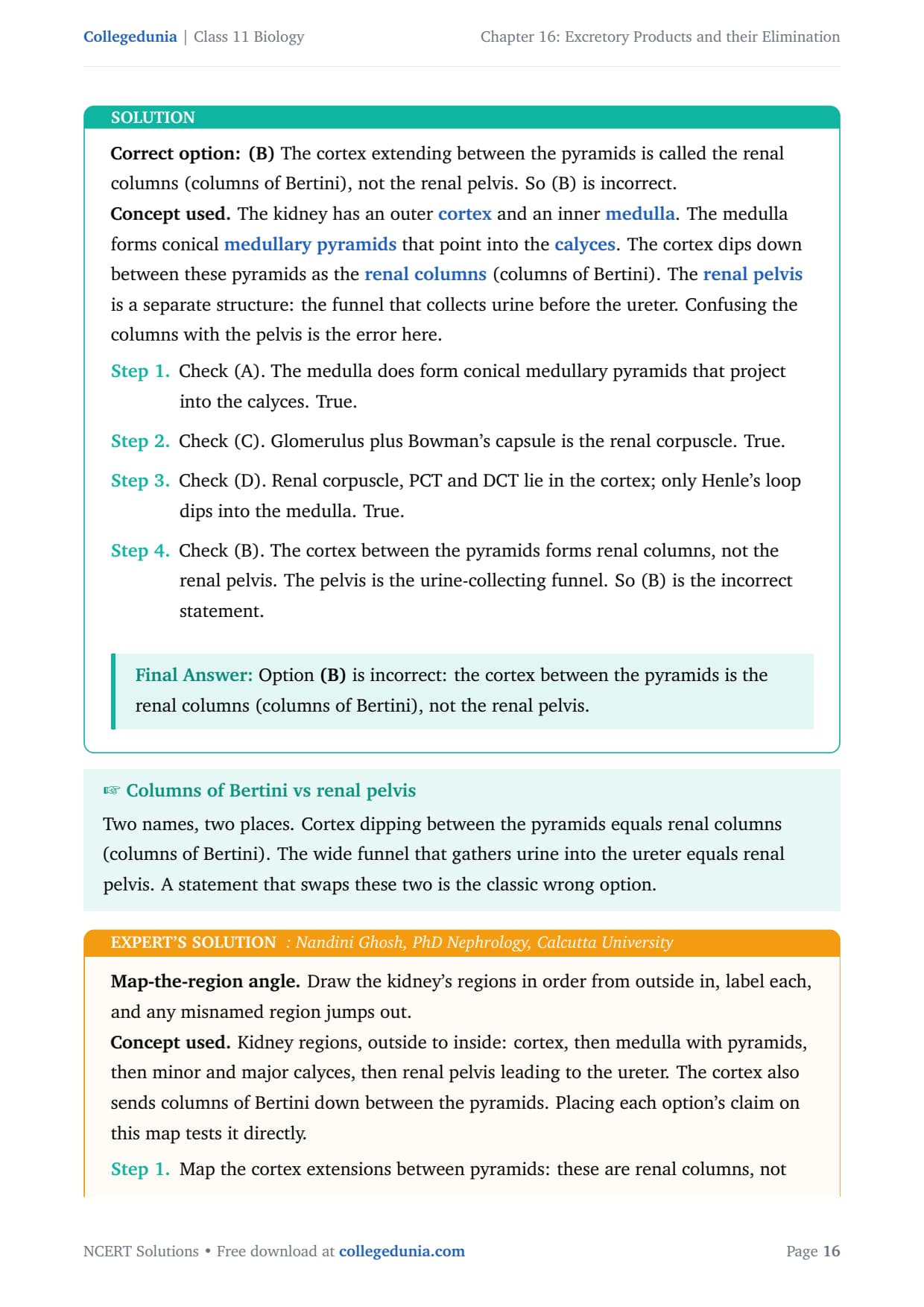
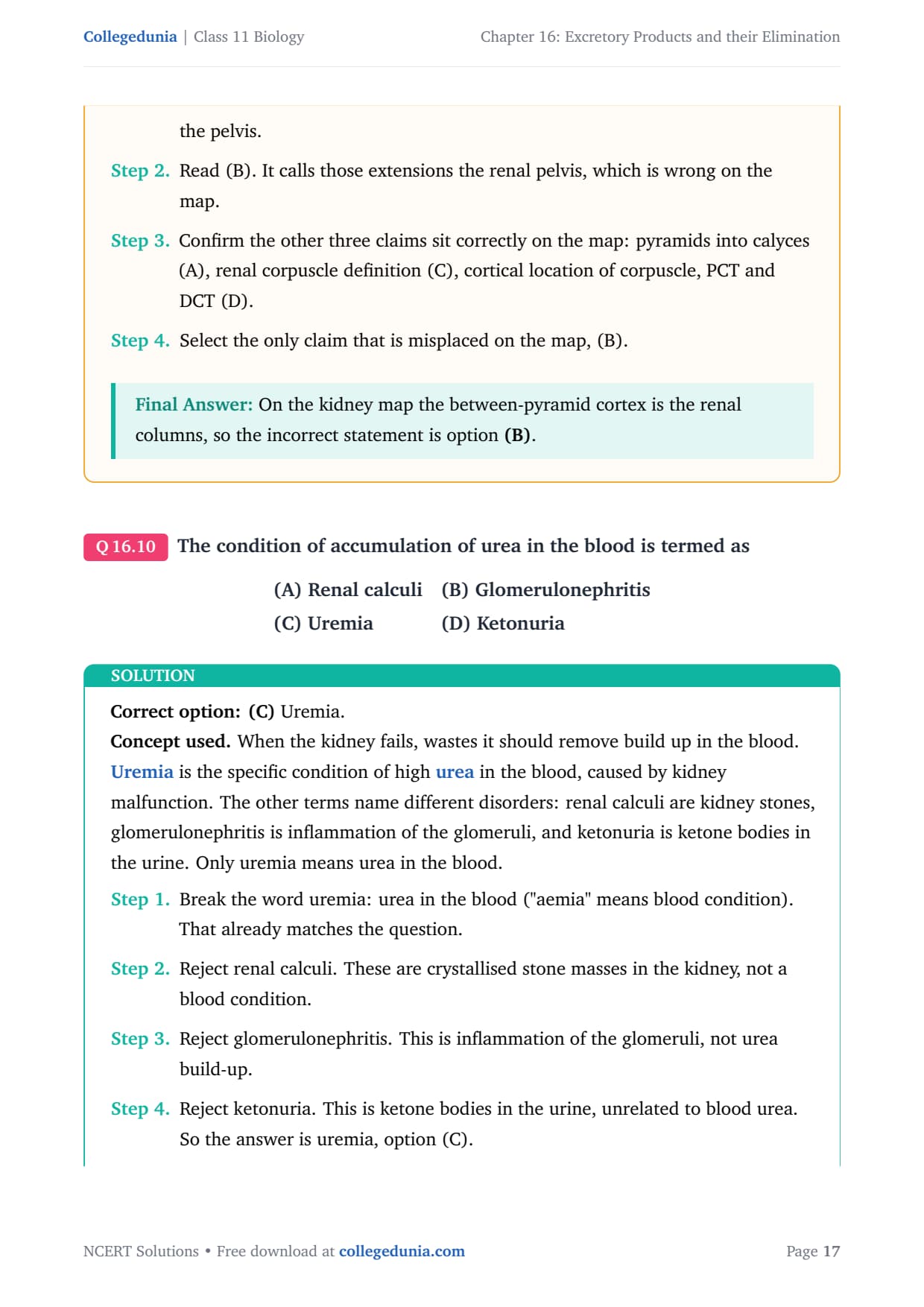
- Sending the cortex into the renal pelvis: the cortex extends between the pyramids as the columns of Bertini, not as the pelvis. One MCQ is built on this line.
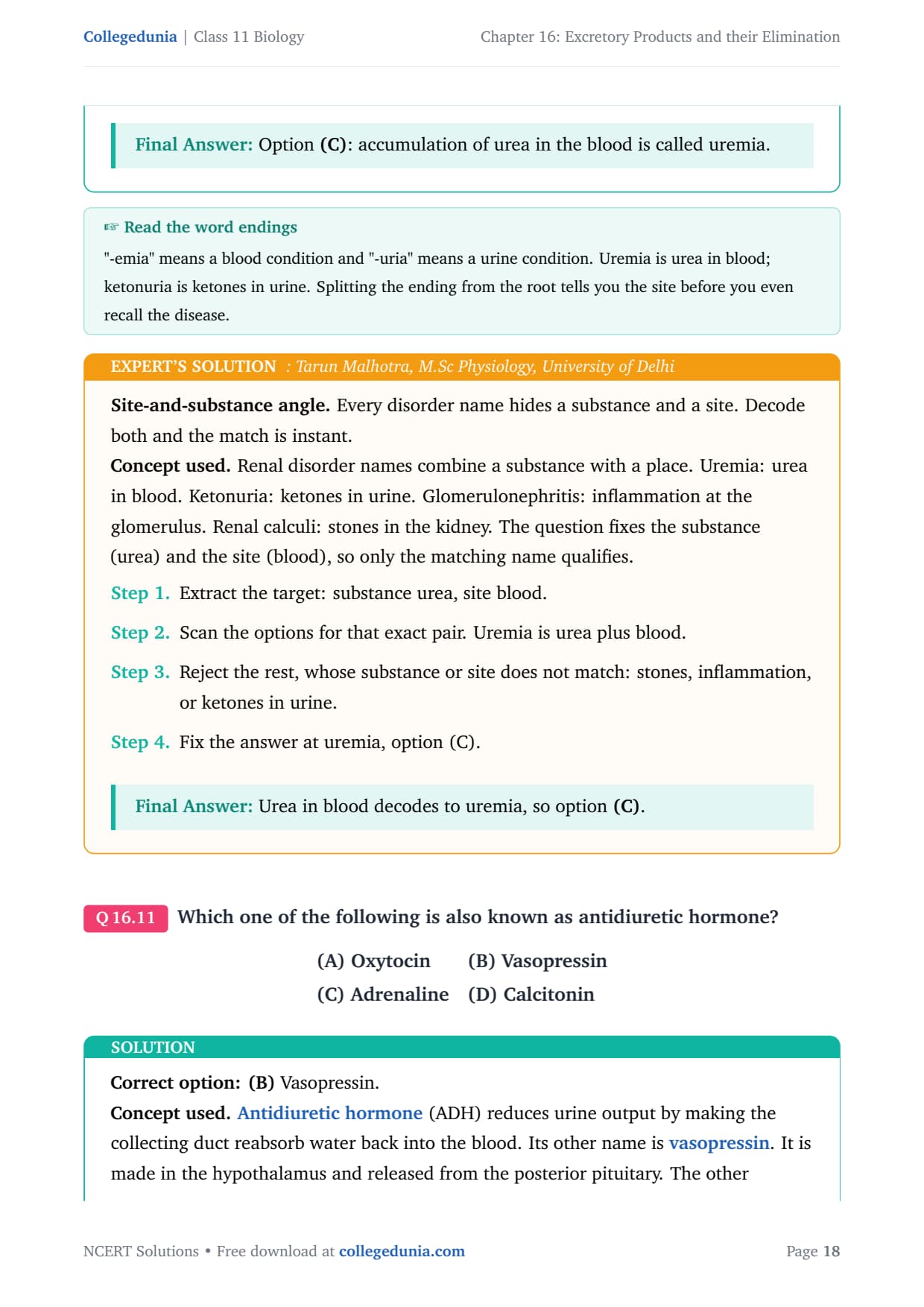
- Mixing glycosuria with ketonuria: glycosuria is glucose in urine, ketonuria is ketone bodies. A Very Short Answer question asks you to separate them.
How to Use These Exemplar Solutions for Boards, NEET and CUET
Attempt each question before you open the solution. This chapter rewards the attempt, because the answers feel obvious until you try to name the exact tubule region. Draw the nephron from memory once a week until the labels come without effort.
- Boards: the Short Answer and Long Answer sets match the diagram-plus-explanation pattern, especially the renal corpuscle and the counter current questions
- NEET: work the 15 MCQs and 15 Very Short Answers first, since NEET repeats hormone jobs and excretory structures at exactly that level
- CUET: the matching-column MCQs are the closest practice for the domain paper, which favours precise one-term recall
Student Feedback
Students using Collegedunia's Class 11 Biology Exemplar Solutions told us the counter current mechanism was the hardest part of this chapter, well above the waste-type questions. Around 7 in 10 said the flagged MCQ 14 note was the first time anyone had explained why two different answers circulate for the same question.
Other Resources for Class 11 Biology Chapter 16
Collegedunia has the full set of study material for this chapter. Use the Notes for a first read, then the Exemplar once the nephron is steady.
Also Check:
- NCERT Solutions for Class 11 Biology Chapter 16
- Class 11 Biology Chapter 16 Notes
- Class 11 Biology Chapter 16 NCERT Book PDF
- Class 11 Biology Chapter 16 Exemplar Questions with Solutions
NCERT Exemplar Solutions for Other Class 11 Biology Chapters
Each chapter below has the same step-by-step treatment and a free PDF, with the question count taken from the Exemplar book itself.
Excretory Products and their Elimination Class 11 NCERT Exemplar Solutions FAQs
Ques. How many questions are there in the Class 11 Biology Excretory Products and their Elimination Exemplar?
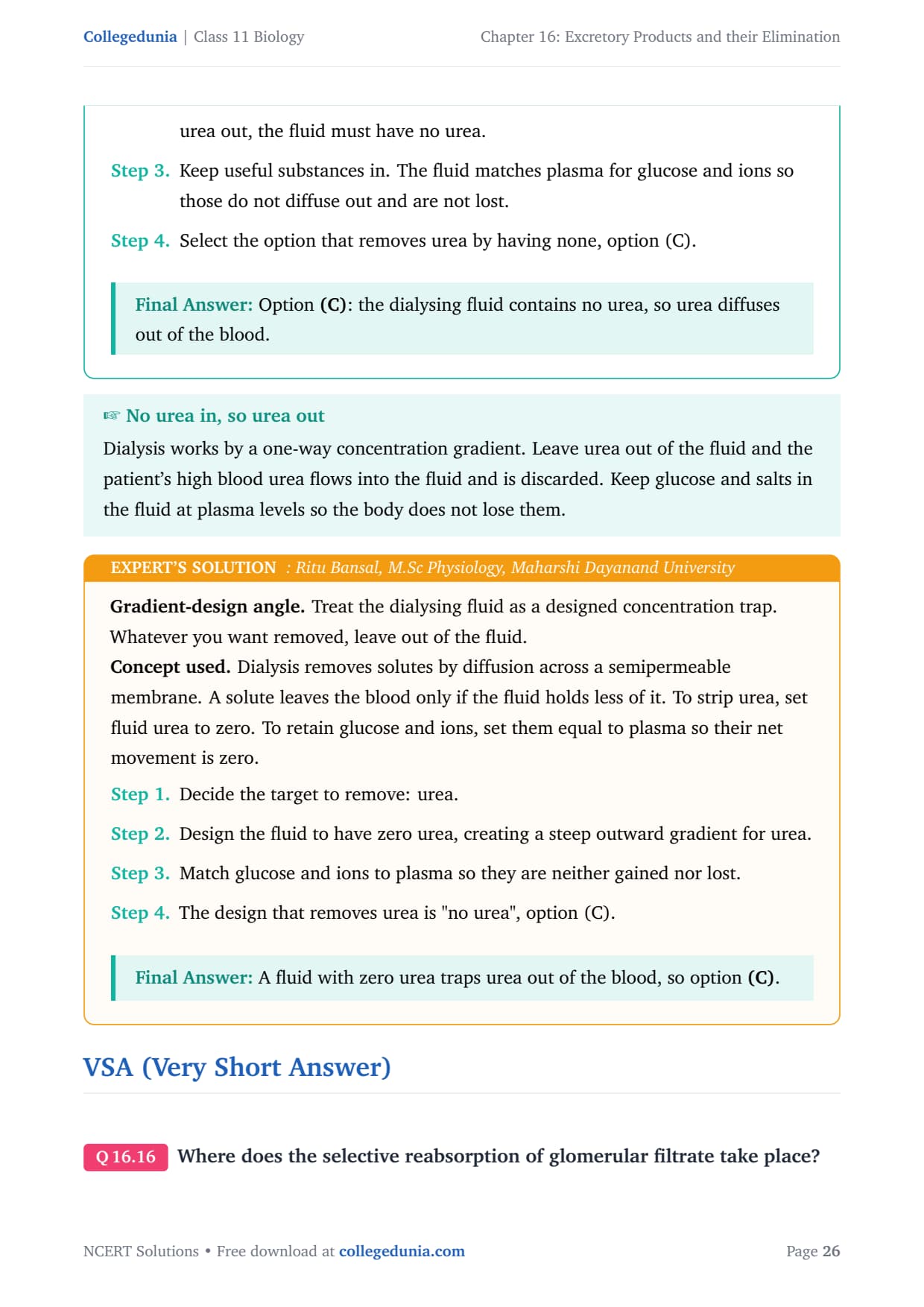
Ans. Chapter 16 has 45 questions. They are split into 15 MCQ, 15 Very Short Answer, 9 Short Answer and 6 Long Answer questions. All 45 are solved in the free 66-page PDF on this page.
Ques. Why does my Exemplar book call this Chapter 19 and not Chapter 16?
Ans. The NCERT Exemplar for Class 11 Biology is the older 22-chapter edition, where this content is printed as Chapter 19. The current textbook has 19 chapters and lists it as Chapter 16. Both answer keys also index it under Chapter 19, so search there when you check an answer. The content is identical.
Ques. What is the correct answer to MCQ 14 on concentrated and dilute urine?
Ans. The official key prints option (b), reabsorption from the collecting duct. The mechanism that actually gives the kidney this ability is the counter current mechanism in Henle's loop and the vasa recta, which is option (d). The collecting duct only uses the gradient that mechanism builds, and only when ADH is present. Quote the key if your board demands it, but learn (d) for NEET.
Ques. Why are birds and reptiles uricotelic rather than ureotelic?
Ans. Uric acid needs the least water to excrete, so animals that must save water use it. Birds also fly, which makes carrying extra water costly, and both birds and reptiles lay shelled eggs where a toxic waste would poison the embryo. Ureotelism belongs to mammals, adult frogs and marine bony fishes.
Ques. Is this Exemplar chapter enough for NEET questions on excretion?
Ans. It covers the ground well. NEET asks two to three questions a year on nephron structure, the counter current mechanism, hormonal regulation and kidney disorders, and all four appear here. Work the 15 MCQs and 15 Very Short Answers first, then the Long Answer set on urine concentration before moving to a coaching module.



Comments