



Exams Prep Master
Baking soda is the famous chemical name of Sodium bicarbonate, is the chemical compound with the formula NaHCO3 and the IUPAC designation sodium hydrogen carbonate. The process of recrystallization of sodium carbonate gives washing soda. From Sodium Carbonate, baking soda can be obtained. Sodium carbonate decahydrate is the chemical name of washing soda and the chemical formula is Na2CO3. Washing soda is generally used as a detergent that washes the clothes. Let’s learn more on the topic and discuss some important questions.
| Table of Contents |
Key Terms: Baking soda, Washing Soda, Plaster of Paris, Sodium Bicarbonate, Solvay’s process.
What is Baking Soda?
[Click Here for Sample Questions]
The most commonly used in households across the world and white crystalline compound with a slightly salty taste is famous by the name baking soda the chemical formula is NaHCO3 and the chemical name is Sodium Bicarbonate.
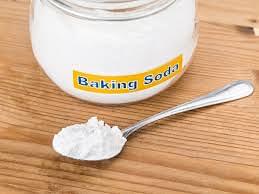
Baking Soda
Structure of Sodium Bicarbonate
[Click Here for Sample Questions]
- NaHCO3 is the chemical formula of sodium bicarbonate
- The structure of sodium bicarbonate is designed with sodium cation (Na+) and the bicarbonate anion (BaCO3) (HCO3-).
- The structure of baking soda or sodium bicarbonate is the combination of these compounds, one sodium atom, one carbon atom, one hydrogen atom, and three oxygen atoms
- The structure of baking soda or sodium bicarbonate is by nature monoclinic.
Preparation of Baking Soda
[Click Here for Sample Questions]
In the preparation of baking soda, Solvay’s process takes an important role. The reaction of sodium chloride, ammonia, and carbon dioxide in water is known as Solvay’s process. The carbon dioxide which is involved in the preparation is produced through calcium carbonate and the calcium oxide left is used in making ammonia from ammonium chloride. Through all these reactions finally, sodium bicarbonate is produced.
NaCl + H2O + CO2 + NH3 → NH4Cl + NaHCO3
Properties of Sodium Bicarbonate
[Click Here for Sample Questions]
Some of the important properties are listed below:
- Sodium bicarbonate Chemical formula - NaHCO3
- The density of Sodium bicarbonate is solids:2.20 g/cm3 and Powder: 1.1 – 1.3
- The texture and appearance of Sodium bicarbonate (NaHCO3) has a white, crystalline powder.
- The boiling and melting point of Sodium bicarbonate is 851 °C and 50 °C
- This compound NaHCO3 is not soluble in ethanol but it is slightly soluble in methanol and acetone and water also.
- When it is heated, releasing carbon dioxide gas and forming sodium carbonate.
Na2CO3 + H2O + CO2 = 2NaHCO3
- The Molecular Weight/ Molar Mass of sodium bicarbonate is 84.0066 g/ mol.
Uses of Baking Soda
[Click Here for Sample Questions]
There are various applications and uses where baking soda can be used. Listed below is some of the uses and applications:
- In the medical field, It is used as an antacid in the treatment of acidity and indigestion.. Its fast action reduces stomach acid, providing brief relief. Its alkaline composition helps to reduce indigestion by neutralizing excess hydrochloric acid in the stomach.
- It can be used in making soft and fluffy bread and cakes due to the production of carbon dioxide when it is heated or mixed in water.
NaHCO3 + H+ → CO2 + H2O + sodium salt of acid
- In the manufacturing of beauty care, cosmetics, and personal hygiene goods, it can be used.
- It is used to clean the mouth and teeth and get relief from bacteria and yellowness of teeth.
- In the making of soda-acid fire extinguishers, it is used.
- It is used as an ingredient in the manufacturing of antacids.
Washing Soda
[Click Here for Sample Questions]
Washing soda is also very famous like baking soda in households across the world. The texture and appearance of washing soda is a whitish, odorless powder, and the chemical formula of washing soda is Na2CO3.10H2O and the chemical name is sodium carbonate. In the environment its nature is hygroscopic and it absorbs moisture from the air.

Washing Soda
- Washing Soda Preparation
Preparation and manufacturing of washing soda or Sodium Carbonate is synthesized through Solvay’s process. In this process the reaction of sodium chloride, ammonia, and carbon dioxide in water takes place. When the calcium carbonate and the calcium oxide left are used in recovering ammonia from ammonium chloride then carbon dioxide is produced.
Stepwise Solvay’s process is given below:
Step 1: Carbon dioxide is passed through an ammoniated brine solution in a carbonating tower, Finally in this reaction sodium bicarbonate is found.
NH3(aq) + CO2(g) + NaCl(aq) +H2O → NaHCO3(s) + NH4Cl(aq)
Step 2: When sodium bicarbonate heated at a temperature of 300°C. Finally, the sodium carbonate takes place.
2NaHCO3 → Na2CO3 + CO2 + H2O
Step 3: Finally, by recrystallization of sodium carbonate. washing soda or sodium carbonate decahydrate is produced.
Na2CO3 + 10H2O → Na2CO3.10H2O
Read More:
| Chapter Related Articles | ||
|---|---|---|
| Group 2 Elements : Alkaline Earth Metals | Carbonates | Sulphates |
| Beryllium | s - block elements | Soda lime |
| Barium | Barium carbonate | Bicarbonates |
Plaster of Paris
[Click Here for Sample Questions]
The texture and appearance of Plaster of Paris are white powder and it hardens when exposed to moisture and allowed to dry. The chemical formula of plaster of Paris is CaSO4.1/2H2O and the chemical name is calcium sulphate hemihydrate.

Plaster of Paris
- Plaster of Paris Preparation
Gypsum (CaSO4.2H2O) is the basic compound in the manufacturing of Plaster of Paris. At temperature 373 K, when Gypsum is heated it will lose its water molecules and it will appear in the form of calcium sulfate (Plaster of Paris).
CaSO4.2H2O → CaSO4.1/2H2O + 3/2H2O
Things to Remember
- The chemical name of baking soda is sodium bicarbonate.
- Sodium Bicarbonate is the composition of four compounds carbon, sodium, oxygen, and hydrogen.
- The recrystallization process of sodium carbonate gives washing soda
- Plaster of Paris can be obtained by heating the gypsum
- The chemical formula of Plaster of Paris is CaSO4.1/2H2O
- The chemical formula of washing soda is Na2CO3.10H2O
- The chemical formula of baking soda is NaHCO3
Sample Questions
Ques: What will happen When sodium bicarbonate is combined with water? (3 marks)
Ans: When baking soda, also known as sodium bicarbonate (NaHCO3), mix with water, carbonic acid is produced. The reaction is exothermic, meaning it expels heat. Sodium bicarbonate is what baking soda is made of. Because sodium bicarbonate is alkaline, it will dissolve in water, making it slightly more basic.
Ques: What are the sodium bicarbonate conditions? (4 marks)
Ans: The conditions of Sodium Bicarbonate are mentioned below:
- Hypersensitivity, metabolic or respiratory alkalosis, hypocalcemia, and excessive chloride (Cl-) loss from vomiting or GI suctioning are all possible contraindications of Sodium bicarbonate.
- Patients at risk of hypochloremic alkalosis caused by diuretics.
- Hypercarbic acidosis is a condition in which there is an excess of carbon dioxide in the blood.
- Unidentified abdominal pain.
Ques: What is the reason that baking powder is used to prepare the cake? (4 marks)
Ans: Baking powder contains sodium hydrogen carbonate, and
- Tartaric acid
- Sodium carbonate
- Calcium chloride
- Acetic acid.
Ques: What are the side effects of using more sodium bicarbonate? (3 marks)
Ans: The given below are the health hazards associated with sodium Bicarbonate:
- If a large concentration of dust has been inhaled, coughing and sneezing may occur.
- If a substantial amount is consumed, it might cause gastrointestinal irritation.
- Contact with the eyes might cause minor discomforts, such as redness and pain.
Ques: Explain with two examples how Plaster of Paris is used. (2 marks)
Ans: First use of it use for it in coating walls and ceilings. Plaster is also widely used by doctors to set the bones after they've been fractured.
Ques: Write 5 examples of Sodium Bicarbonate. (4 marks)
Ans: Listed below are the uses of Sodium Bicarbonate:
- It is used as pest control to kill cockroaches and control fungal growth
- It is used as a disinfectant
- It is used to protect armpits from bad smell and irritation
- It is used in cooking especially to bake food items
Check-Out:



Comments