



Content Curator
Chondrichthyes is a taxonomic superclass of the phylum Chordata (chordates) that contains fish with cartilaginous skeletons. They are usually fish that live in the sea. Sharks, rays, skates, and chimeras are among the fish that fall under this category. They initially appeared around 450 million years ago. They have paired fins. The vertebral columns go into the caudal fin, hence their fins aren't symmetrical.
| Table of Content |
Also Read: Difference between Osteichthyes and Chondrichthyes
Key Takeaways: Chondrichthyes, Cartilaginous, Vertebrae, Endoskeleton, Sharks, Stingrays.
Characteristics of Chondrichthyes
[Click Here for Sample Questions]
Chondrichthyes are jawed fish that have paired fins, nostrils, scales, two-chambered hearts, and cartilage skeletons (rather than bone). Holocephali (sharks, rays, and skates) and Elasmobranchii (rays, sharks, and skates) are the two subclasses (chimera, sometimes called ghost sharks).
Also Read: Invertebrates
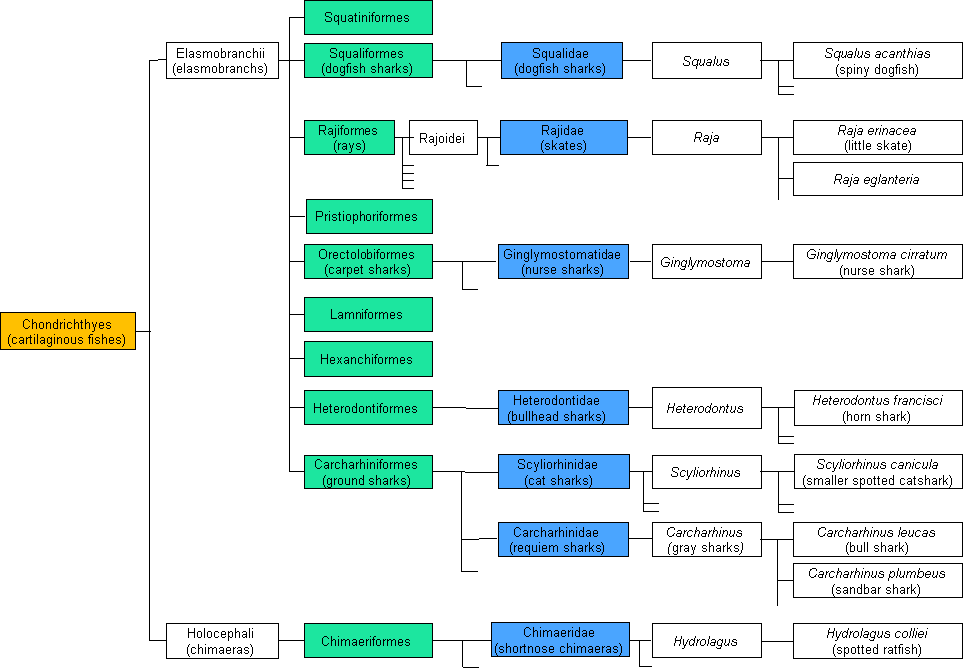
Chondrichthyes Classification
Cartilaginous fish lack the ability to swim because they lack a swim bladder. Any gill-bearing animal that lacks digits on its limbs is referred to as a fish. Chondrichthyes (cartilaginous fish), Osteichthyes (bony fish), and Agnatha are the three superclasses of fish species (jawless fish).
Read More:
| Related Articles | ||
|---|---|---|
Some of the characteristics of Chondrichthyes are as follows.
- Chondrichthyes are powerful jawed saltwater fish. Whale sharks are the second-biggest vertebra and the largest fish in the world, measuring up to 15 meters in length.
- This class of fish has a cartilaginous endoskeleton. They have a cold-blooded nature (poikilothermous or ectothermic). There are around 600 different species of cartilaginous fish.
- Jaws have a good amount of development. The mouth is positioned on the ventral side.
- Placoid scales, which resemble tiny teeth, cover the skin.
- Their teeth are modified placoid scales with no jawbone attachments. They are encased in tissue. Old teeth fall out, and new teeth grow in their stead.
- There are 5-7 pairs of gills in each of them. The water circulation that passes over the gills is responsible for gas exchange.
- They don't have air bladders, therefore they have to swim to stay afloat.
- The gills are not covered by an operculum, except in Chimaeras (gill cover).
- Fins that are paired have a lot of space between them. The caudal fin is asymmetrical and mostly heterocercal.
- Cartilaginous fish have stomachs that are U-shaped, although they are not as advanced as humans'. The spiral valve connects their stomach to their intestines. Their intestines are spiral-shaped, resulting in a larger surface area and a shorter length. These have fewer offspring than other fish, but they are bigger and live longer. They usually have internal fertilization, although they might have both internal and external fertilization (exceptions).
- The heart has two chambers (one auricle and one ventricle). Renal portal systems are well-developed. RBCs are oval and have a nucleus.
- Massive olfactory lobes and a large cerebellum are found in the brain.
- The cranial nerves are divided into ten pairs.
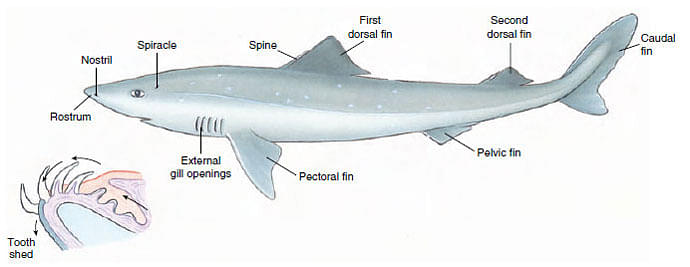
Chondrichthyes Anatomy
Read More:
| Related Topics | ||
|---|---|---|
Examples of Chondrichthyes
[Click Here for Sample Questions]
Examples of Chondrichthyes include:
- Sharks include dogfish, whale sharks, angel sharks, and ground sharks, among others.
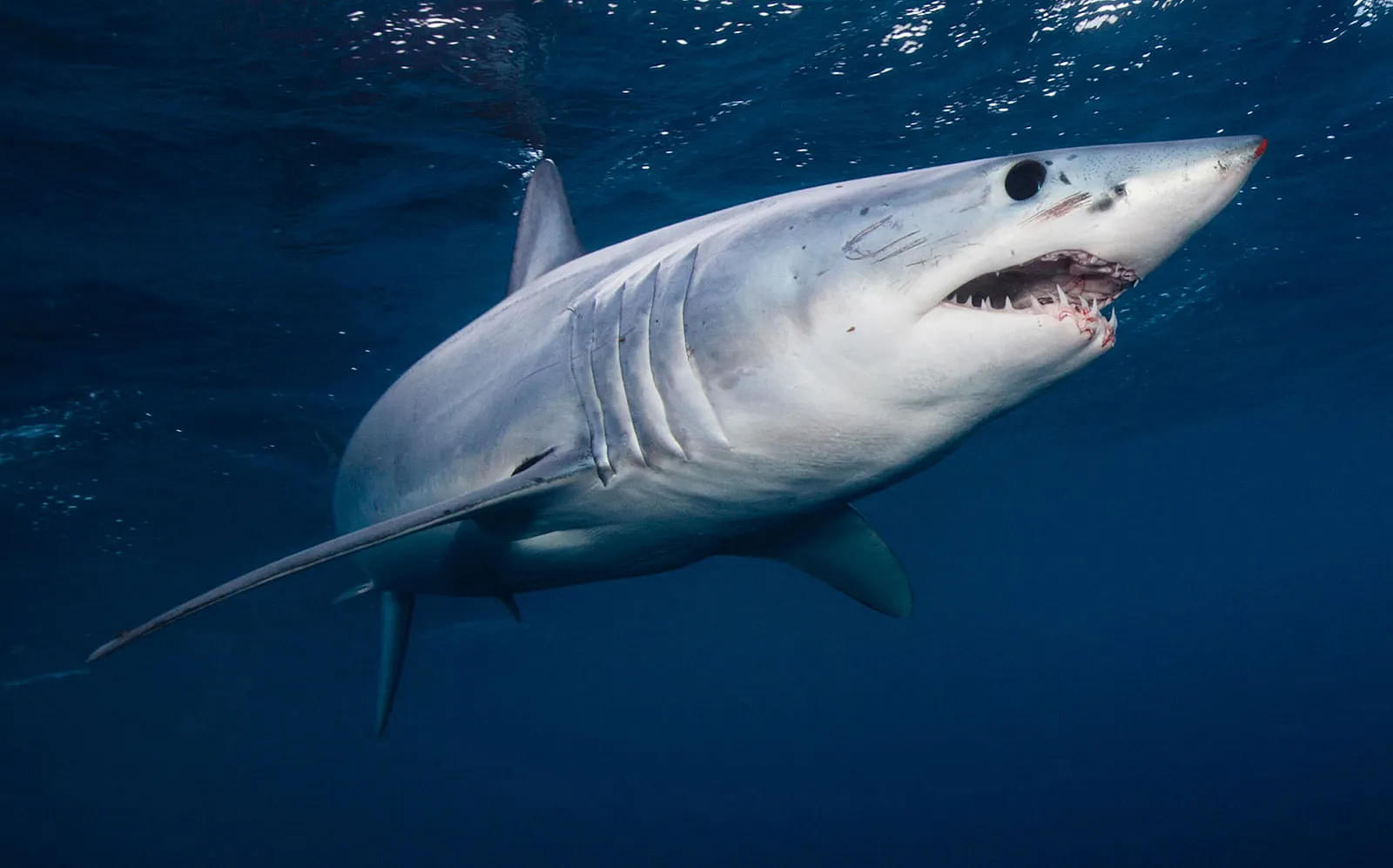
Sharks
- Electric rays, stingrays, manta rays, and other rays.
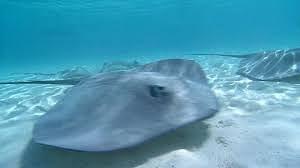
Stingrays
- Skates include little skates, small deepwater skates, and Andaman leg skates, among others.
- Narrow sawfish and dwarf sawfish are two types of sawfish.
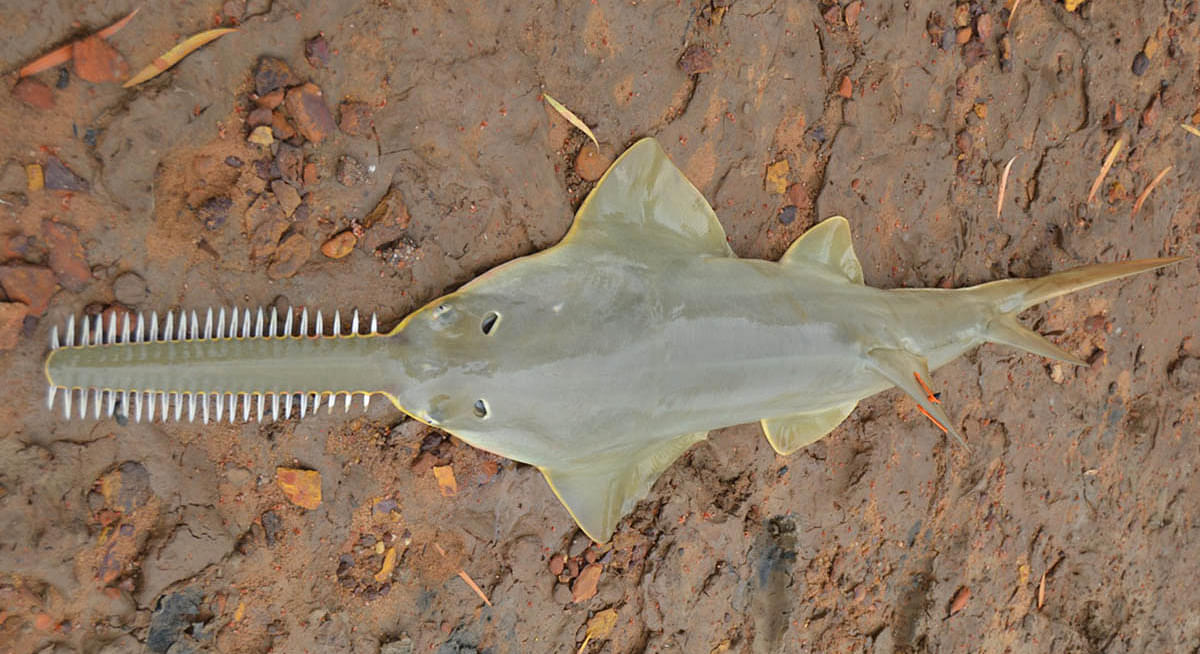
Dwarf Sawfish
Also Read:
| Relevant Articles | ||
|---|---|---|
Things to Remember
- The mouth is located on the ventral side of the body.
- The endoskeleton is made up of cartilage, which is reinforced by calcium deposits.
- The presence of the notochord can occur at any time during one's life.
- One auricle and one ventricle make up the two-chambered heart.
- They are made up of a brain and a spinal cord that is protected by vertebrae.
- Some of them have electric organs or poison stings that they use for both defense and predation.
Read More:
| Relevant Topics | ||
|---|---|---|
Sample Questions
Ques. Make a list of Cartilaginous Fish features. [3 marks]
Ans. The following are the characteristics of cartilaginous fish:
- Cartilage forms the endoskeleton.
- Their gills and fins are paired.
- The heart is divided into two chambers.
- Placoid scales cover the entire body.
- Internal fertilization takes place.
- They don't have a swimming bladder.
- The endoskeleton is made up of cartilage, which is strengthened by calcium deposits.
- The presence of a notochord can occur at any time during one's life.
Ques. Give two examples of Chondrichthyes. [2 marks]
Ans. Chondrichthyes include the following organisms:
- Sharks include dogfish, whale sharks, angel sharks, ground sharks, and a variety of others.
- Electric, string, and manta rays are examples of rays.
- Skates include the Little Skate, Small Deepwater Skate, and the Andaman Leg Skate, among others.
- Narrow and dwarf sawfishes are the two types of sawfishes.
Ques. Why are sharks classified as cartilaginous fish? [2 marks]
Ans. Sharks, skates, and rays all have cartilaginous skeletons because cartilage has a low density, which allows sharks to swim quicker in the water while using less energy and keeps them afloat. Because cartilage has a lower density than bones, it has more flexibility and can bend more easily than bony fish.
Ques. What kind of food do Chondrichthyes eat? [2 marks]
Ans. Rays use their blunt teeth to feed largely fish and invertebrates. Plankton and tiny organisms are even eaten by some. The shark and the ray feast on practically everything that swims between them.
Ques. How do species of the class Chondrichthyes breathe? [2 marks]
Ans. Depending on the species, all chondrichthyans have five to seven pairs of gills. Pelagic species must swim continuously to keep oxygenated water moving through their gills, whereas demersal species can actively pump water in and out of their spiracles.
Ques. Why do Chondrichthyes have to swim all the time to keep from sinking? [2 marks]
Ans. Chondrichthyes are marine animals with streamlined bodies and a cartilaginous endoskeleton. They must swim frequently to prevent sinking due to the lack of an air bladder. Osteichthyes have an air bladder that controls buoyancy.
Ques. What makes cartilaginous fish ureotelic? [3 marks]
Ans. Ammonia is more poisonous than urea, yet it requires less water. The uricotelic organism excretes uric acid or uric acid ions. Because they don't have a normal urinary system, urea is concentrated in their blood and excreted via the skin. Sharks, like the majority of cartilaginous fish, are hence ureotelic.
Ques. Differentiate between Chrondrichtyes and Osteichthyes. [5 marks]
Ans.
| Characteristics | Chondrichthyes | Osteichthyes |
|---|---|---|
| Endoskeleton | Commonly known as cartilaginous fish as they have cartilaginous endoskeleton | Commonly known as bony fish as they have bony endoskeleton |
| Body size | Large-sized fish | Comparatively smaller in size |
| Mouth position | Ventral | Terminal (anterior) |
| Type of scale present on skin | Placoid scales | Scales absent, if present, cycloid scales |
| Number of gills present | 5-7 pairs of gills, not covered by operculum | 4 pairs of gills, covered by operculum |
| Caudal fin | Heterocercal | Homocercal |
| Excretory waste | Urea | Ammonia |
Check-Out:



Comments