



Education Journalist | Study Abroad Lead
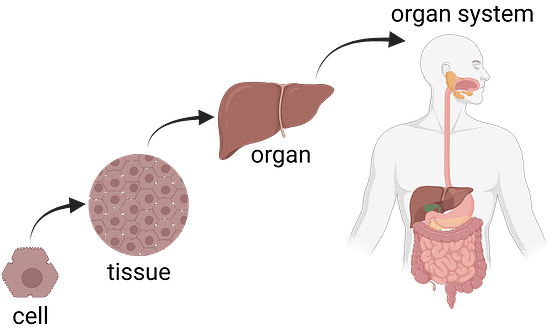
The difference between a tissue and an organ is that a tissue is a group of similar cells whereas an organ is a group of different tissues that perform a specific function in the body. All living things are composed of cells and tissues are a group of cells, which combine to form organs, and the organs form an organ system.
- The tissues perform simpler functions compared to the organs which perform the complex functions of the body.
- The size of an organ is larger in comparison to the tissues, so it requires more energy to perform the activities.
- Both animals and human beings consist of tissues as well as organs.
- Both, a tissue and an organ take part in different activities throughout their lives.
- The difference between tissue and organs is that tissues are the building blocks of organs, and organs are made up of different types of tissues.
Read More: Tissue Important Questions
Key Terms: Cell, Tissue, Organ, tissue vs organ, difference between a tissue and an organ, muscular tissue, nerve tissue.
What is a Tissue?
[Click Here for Sample Questions]
A tissue is a combination of cells, wherein a cell is the structural and functional unit of all living entities. All the cells that perform a particular task or function come together to form a tissue. Tissues are of four types namely, epithelial tissue, connective tissue, muscular tissue, and nerve tissue. The functional groups of tissues combine to form organs.
- Epithelial tissue covers the surfaces of the body and lines internal organs. It acts as a barrier to protect against injury, dehydration, and infection.
- Connective tissue provides support and structure to the body. They help in transporting oxygen and nutrients to different body parts.
- Muscle tissue is responsible for movement and is formed of muscle fibres that contract and relax to move. They are of 3 types: skeletal, smooth, and cardiac.
- Nervous tissue is formed of neurons and is responsible for transmitting electrical signals throughout the body.

Also read:
What is an Organ?
[Click Here for Sample Questions]
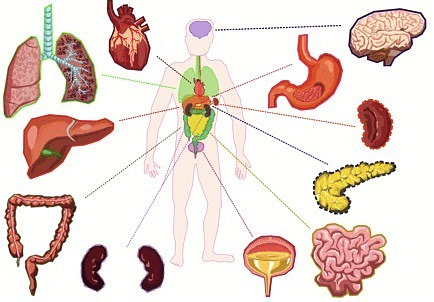
An organ is a combination of several tissues that perform a particular purpose, task, or function. Every organism has five main body organs, which are, the brain, heart, lungs, liver, and kidneys. Every organ performs its particular function and forms an entire organ system that allows the organism to function smoothly.
- The digestive system is composed of the oesophagus, stomach, and liver.
- The heart is made up of muscle tissue, connective tissue, and nervous tissue that pumps blood throughout the body.
- The lungs are composed of epithelial tissue and connective tissue that allow us to breathe by exchanging oxygen and carbon dioxide.
- The liver is composed of epithelial tissue and specialized cells that detoxify the blood, produce bile, and regulate metabolism.
An organ is a complex structure made up of two or more types of tissues that work together to perform specific functions necessary for the body to survive.
Similarities Between Tissues and Organs
[Click Here for Sample Questions]
The similarities between tissues and organs are as follows:
- Every organism (including humans, animals, and plants) comprises innumerable tissues and specific organs that form a proper organ system.
- A tissue and an organ, both perform their particular purpose and are essential components of living organisms.
- A tissue and an organ both indicate two high organizational levels of an organism.
- Both tissues and organs are composed of cells.
- They can be affected by diseases and injuries, which can impact their function and the overall health of the body.
Also read:
| Related Topics | ||
|---|---|---|
| Leg Anatomy | Leg Muscles | Sliding Filament Theory |
| Deltoid Muscle | Tendon | Cardiac Muscle |
Difference Between Tissues and Organs
[Click Here for Sample Questions]
The major differences between tissues and organs are as follows:
| Tissues | Organs |
|---|---|
| Tissues are a group of cells performing specific functions. | Organs are formed of different tissues working together to perform several complex functions. |
| Tissues are the building blocks of organs. | Tissues combine to form complex organs. |
| It is distributed evenly throughout. | It is a hollow structure present at a particular region of the body. |
| It is the structural component of an organ. | It is the structural component of an organ system. |
| It repairs itself by regeneration and fibrosis. | It gets automatically repaired as the tissue repairs itself. |
| Tissues have a limited lifespan and need to be continuously replaced. | Organs are long-lived and do not need to be replaced frequently. |
| Its combination leads to the formation of an organ. | Its combination leads to the formation of the entire organ system. |
| In the human body, tissues are of 4 types – epithelial, connective, muscle, and nervous tissue. | In the human body, there are various organs like the heart, lungs, liver, kidneys, and brain. |
| Tissues are smaller as compared to organs. | Organs are larger in size. |
| Tissues can be regenerated after injury or damage. | Organs may have limited ability to regenerate after injury or damage. |
Things to Remember
- A tissue is formed by the possession of innumerable similar cells that perform a particular purpose or function.
- An organ is formed by the combination of innumerable tissues that perform some specific function.
- Tissues repair themselves through the process of regeneration and fibrosis.
- Any repair in the tissue automatically leads to the repair of an organ.
- Tissues are spread throughout uniformly.
- Organs are hollow structures that present a particular site in the body.
Sample Questions
Ques: What is a tissue? (1 mark)
Ans: A tissue is a structure that is formed by the union of several cells that perform a particular purpose or function. Several tissues combine together to form an organ that allows it to perform different functions.
Ques: Discuss different types of tissues. (2 marks)
Ans: There are mainly four types of tissues named epithelial tissue, connective tissue, muscular tissue, and nerve tissue.
- The main issues found in plants are the epidermis, the ground tissue, and the vascular tissue.
- All of these further combine to form different organs in the human and plant bodies.
Ques: What is an organ? Give examples. (2 marks)
Ans: An organ is a complex structure composed of two or more types of tissues that work together to perform specific functions in the body. Organs are essential for the body to function properly, and they perform more complex functions than tissues.
There are several organs in the human body, each with its unique structure and function.
- The heart is an organ made up of muscle tissue, connective tissue, and nervous tissue that pumps blood throughout the body.
- The lungs are organs composed of epithelial tissue and connective tissue that allow us to breathe by exchanging oxygen and carbon dioxide.
- The liver is an organ composed of epithelial tissue and specialized cells called hepatocytes that detoxify the blood, produce bile, and regulate metabolism.
Ques: Discuss the main body organs. (1 mark)
Ans: Five main organs are present in a human as well as a plant’s body, that is, the heart, brain, liver, kidneys, and lungs. All the organs further form an entire organ system together.
Ques: Discuss the similarities between a tissue and an organ. (3 marks)
Ans: The main similarities between a tissue and an organ:
- Both tissues and organs are found in humans, animals, and plants.
- Both tissues and organs perform their specific tasks.
- Both tissues and organs are made up of cells.
- Both tissues and organs are the high organizational levels of an organism.
Ques: How are simple tissues different from complex tissues? (3 marks)
Ans: Simple tissues are made of one type of cell which coordinates to perform a proper function. For instance, parenchyma, epidermis, and so on.
Whereas, complex tissues are made up of more than one type of cell. All of these coordinates perform a common function. For example, vascular tissues.
Ques: Discuss the difference between a tissue and an organ. (5 marks)
Ans: The main difference between a tissue and an organ are:
- A tissue is formed by the union of several similar types of cells that perform a particular task. Whereas an organ is formed by the union of several tissues that let the organ perform different functions.
- A tissue repairs itself through the process of regeneration and fibrosis. Whereas an organ gets automatically repaired as the tissue gets itself repaired.
- A tissue is uniformly distributed throughout. Whereas an organ is a hollow structure present at a particular place in the body.
- Tissue is the structural component of an organ. Whereas an organ is the structural component of the entire organ system.
- The union of several tissues forms an organ. Whereas, the union of several organs from the entire organ system.
Ques: What are the sites where tissue and an organ are located? (1 mark)
Ans: A tissue is uniformly distributed throughout and ultimately forms an organ. An organ is a hollow structure present at a particular region in the human body and several organs unite together to form the entire organ system.
Read More:



Comments