



Education Journalist | Study Abroad Lead
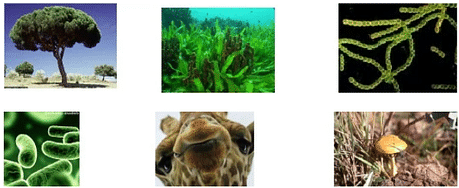
Living things refer to any organism or a living form that possesses a characteristic of life or being alive. Living things are made up of microscopic units called cells. They experience metabolism, they can exhibit movement. Living things eat, breathe, grow, move, and have senses. They can even reproduce their young ones. They have senses like smell, taste, sight, and touch. All living things die eventually with age as their organs and senses stop functioning. Living things are the organisms that show movement, plants are an exception to this as they do not walk as humans or the rest of the living things or organisms do.
| Table of Content |
Key Terms: Living Things, Trees, Plants, Movement, Nutrients, Water, Living Organisms
What are Living Things?
[Click Here for Sample Questions]
A living being is an organism that requires food to grow, air to breathe, and water to survive. A living organism can move, sense, and reproduce its young ones. Earth consists of living things and non-living things. Examples of living things are trees, birds, etc. The trees breathe in air and require nutrients, water, and sunlight to stay alive. The birds can move by flying, they eat to grow, and they hatch eggs to give birth to their young ones. They can see, smell, taste, hear, and feel.
Also Read:
Characteristics of Living Things
[Click Here for Sample Questions]
Following are the characteristics that separate living things from non-living things:
- Based on Cells: A cell is the basic fundamental biological unit of a life or an organism. The cell undergoes various cellular processes. In a cell, there is protoplasm, which is further enclosed by the plasma membrane. There are two kinds of organisms, single-celled organisms such as bacteria, and multicellular organisms such as a tree, human beings, etc.
- Based on Energy Requirements: Energy is required by all living beings in order to conduct various metabolic activities. Plants synthesize energy through the process of photosynthesis, where the light energy is converted into chemical energy which is further used to produce their food. Another way is cellular respiration, where the biochemical energy is obtained from some organic substances and stored in some energy-carrying molecules for later use.
- Based on Reproduction: All living beings can produce their young ones. There are two kinds of reproduction, sexual reproduction, and asexual reproduction. In sexual reproduction, the reproductive cell of both male and female unite to form a zygote. From this zygote, young ones develop. In asexual reproduction, there is no involvement of sex cells. The new ones come from one parent only. Plants undergo this type of reproduction.
- Based on Growth: All living things grow, which comes from the cellular division. Every living organism comes from a single cell, then grows into a full being. That is done through cellular division. Cellular division means the increase in the number of cells or increase in size. The stem cell and the meristematic cell of animals and plants divide to grow. The cytoplasmic mass increases with the increase in cell size.
Classification of Living Things
[Click Here for Sample Questions]
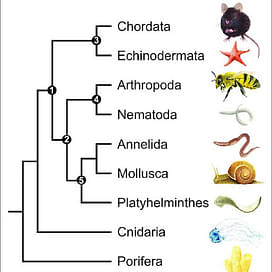
Living things are broadly classified into two types: Plants and Animals. They are both eukaryotic. They are distinguished on the basis of their characteristics, mode of nutrition, the process of reproduction, etc.
- Animals are heterotrophic, motile, and do not have a cell wall, whereas plants are non-motile and photosynthetic and have a cell wall.
- Bacteria are neither plants nor animals, as they are prokaryotes.
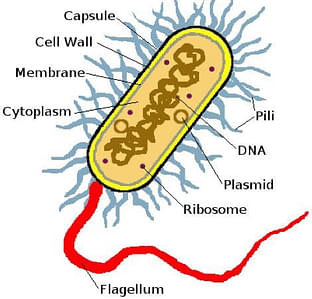
- Bacteria and archaea are single-celled organisms. Although they have cell walls, made up of different materials, they lack a nucleus.
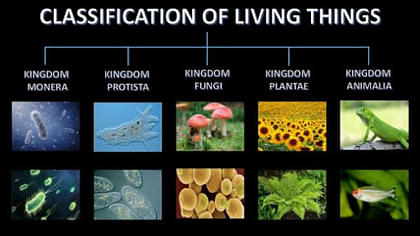
Living things are classified into 7 levels:
- Kingdoms
- Phylum
- Classes
- Order
- Families
- Genes
- Species
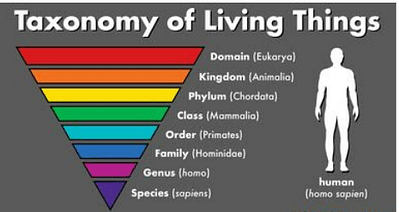
Kingdoms
The kingdom is the first classification of a living thing. There are five kingdoms, and the animals are classified into each kingdom based on their food acquisition, type of cells, number of cells, etc.
Phylum
The next level of classification of living things after the kingdom is phylum, where the organism with physical similarity within a kingdom, is put under phylum. The physical similarities are in terms of common ancestry among the organism in a phylum.
Classes
The organism of phylum is further subdivided into classes. The organism in classes has more things in common than in an entire phylum. Human beings come under the mammals class, as they drink their mother’s milk when they are small.
Order
A class is further subdivided into orders. The organisms are classified into orders with the help of taxonomy. This taxonomy is a list of characteristics, through which it is determined which organism belongs to which order, and how the organisms are grouped under each order.
Families
Families are a subdivision of orders. Organisms in a family have more common features than an organism in any other classification level. The organisms of a family are related to each other. Human beings belong to the Hominidae family.
Genus
Genus is a classification of the organism, on the basis of its generic name. There are lots of genera between animals and plants. The genus is used to complete the first part of the two-part names of the organism.
Species
The most specific classification is done at this species level. The classification of an organism into a species is done on the basis of the capability to breed with another organism of the same species. The species of an organism determines the second part of its two-part name.
Properties of Five Kingdoms
[Click Here for Sample Questions]
The properties of the Five Kingdoms are:
Monera
- The type of cell is prokaryotic.
- They have a cell wall but are noncellulosic.
- They are Unicellular organisms.
- Their Mode of nutrition is autotrophic and heterotrophic.
Protista
- The type of cell is eukaryotic.
- They have a cell wall as well as a nuclear membrane.
- They are unicellular organism.
- Their mode of nutrition is autotrophic.

Fungi
- The cell type is eukaryotic.
- They have a cell wall as well as a nuclear membrane.
- They are multicellular organisms.
- Their mode of nutrition is heterotrophic.
- They cannot produce their own food.

Plantae
- The type of cell is eukaryotic.
- They have a cell wall that is non – cellulosic.
- The nuclear membrane is present.
- They are multicellular organisms (tissue or organ).
- The mode of nutrition is autotrophic.

Animalia
- The type of cell is eukaryotic.
- They do not have a cell wall.
- They have a nuclear membrane.
- They are multicellular organisms (tissue/ organ/ organ system).
- They are heterotrophic, that is they cannot make their own food.
Also Read:
| Related Articles | ||
|---|---|---|
| Mammalia | Aves | Reptilia |
| Amphibia | Pisces | Cyclostomata |
| Protochordatae | Echinodermata | Mollusca |
Things to Remember
- All those organisms which breathe, move, eat, reproduce, and have senses are called living things.
- Living things can be of unicellular or multicellular.
- There are 7 classifications of living things Kingdoms, Phylum, Classes, Order, Families, Genus, Species
- Poperties of five kingdom classifications is Animalia, Plantae, Protista, Fungi, and Monera.
Sample Questions
Ques. Which division among the plants has the simplest organism? (1 Mark)
Ans. Algae, or Thallophyta, has the simplest organism among the plants.
Ques. Will advanced organisms be the same as complex organisms? Why? (1 Mark)
Ans. Yes, complex organisms are the same as advanced organisms. This is because the multicellular organisms operate uniquely.
Ques. Why is it necessary to classify organisms? (1 Mark)
Ans. It becomes easier, and more convenient to study the characteristics of the classified organism. The similarities that are exhibited by various entities facilitate the categorization of different organisms into a class and study them as a whole group .
Ques. How do we differentiate between animals and plants? (2 Marks)
Ans. The differences between the animal and plants are as follows:
- In an animal's cell, the cell wall is absent, which is present in plant cells.
- The mode of nutrition is different for animals from that of plants.
Ques. Give three examples of the range of living things found in your surroundings. (2 Marks)
Ans. The range of living things available around us are:
- Small frog to big-whale
- Creepers to eucalyptus three
- Black cuckoo to colourful peacock
Ques. List down the characteristics of Living Things. (5 Marks)
Ans. Here are some characteristics of Living Things:
- In living beings, there is a series of phases in the cell cycle. In animals, the new cells are produced by mitosis, which further goes through interphase. These cells could replicate their DNA and prepare themselves for the next cell division. In plants, the new cells increase in their volume by storing water inside a vacuole. Some plant cells grow a secondary cell wall in between the primary cell wall and the plasma membrane.
- Metabolism consists of many processes that need to be carried out the keeping up the living state of an organism or a cell. Reproduction, Respiration, response to stimuli, biomolecular synthesis, waste elimination, etc are some of the processes of metabolism. All living things go through metabolism. There are two types of metabolism, Catabolism, and Anabolism.
- In catabolism, the body undergoes a degradative chemical reaction that leads to the breakdown of complex molecules into smaller units. This breaking down process releases energy. In anabolism, the chemical reaction boosts the molecule from smaller units.
- All living beings have the capability of detecting any kind of modification in the environment through a type of cell that functions as receptors. They can respond to stimuli and adjust to environmental changes. The five fundamental senses are hearing, smell, sight, taste, and touch. There are other kinds of senses also, such as thermoreceptors which can detect temperature, senses which can detect acceleration, direction, etc. All living things respond according to the stimuli received by them.
Check-Out:



Comments