



Content Curator
Gibberellins are hormones produced by plants that promote and regulate growth. They are involved in a number of biological processes in plants, including starch hydrolysis during germination, fruit formation, and stem lengthening. Gibberellin is a diterpenoid. They are made in the plastids of plant cells, which are the double membrane-bound organelles responsible for food production.
| Table of Content |
Also Read: Movement Due to Growth
Key Takeaways: Gibberellins, Plant Hormones, Plastid, Germination, Gene Transcription, Gibberellic acid
Gibberellins
[Click Here for Sample Questions]
Gibberellins are a group of plant hormones that are involved in growth and development. Gibberella fujikuroi is a hormone-producing fungus belonging to the Ascomycota phylum that causes excessive growth and poor yield in rice plants.

Gibberellin Structure
Gibberellin is a diterpenoid. They are made in the plastids of plant cells, which are the double membrane-bound organelles responsible for food production. Gibberellin then moves up to the cell's endoplasmic reticulum, where they are changed and processed for use.
Gibberellic acid, a derivative of gibberellin found in higher plants and fungi, is sold commercially for horticultural and home gardening purposes. More than 100 gibberellins have been identified and denoted as GA1, GA2, GA 3, GA4 and so on. GA3 Gibberellic acid is the plant growth regulator that has been studied the most.
The video below explains this:
Gibberellins Detailed Video Explanation:
Also Read:
| Related Articles | ||
|---|---|---|
| Transpiration | Photosynthesis and Respiration | Tissues |
| Sexual and Asexual Reproduction | Active and Passive Transport | C3 and C4 Plants |
Chemistry of Gibberellins
[Click Here for Sample Questions]
Gibberellins are diterpenoid acids synthesized in plastids by the terpenoid pathway and subsequently changed in the endoplasmic reticulum and cytoplasm to reach their physiologically active state.
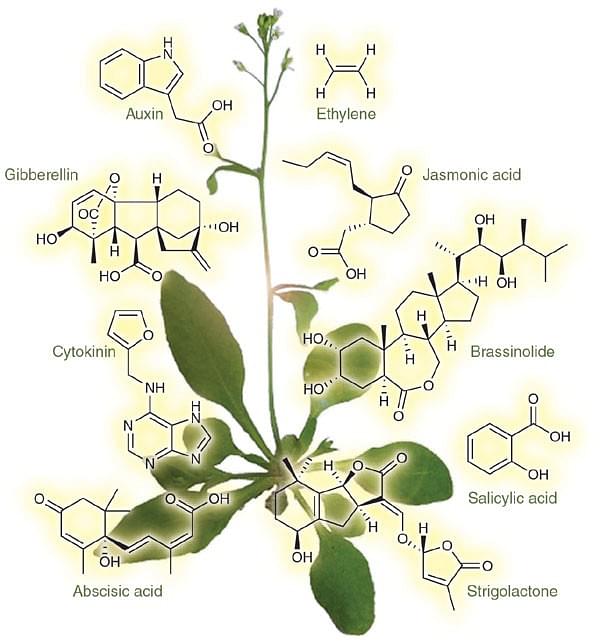
Plant Hormones Chemical Structure
Ent-kaurene is used to produce all gibberellins, which are derived from the ent-gibberellin skeleton. In a sequence of detection, gibberellins are designated as GA1 through GAn. Gibberellins are tetracyclic diterpene acids. Based on the presence of 19 or 20 carbons, they are characterised into two groupings.
Functions of Gibberellins
[Click Here for Sample Questions]
Following are the functions performed by Gibberellins:
Germination of Seeds: In the absence of sunlight, some light-sensitive seeds, such as tobacco and lettuce, do not germinate well. If the seeds are exposed to sunshine, they germinate quickly. The light requirement can be met if the seeds are treated with gibberellic acid.
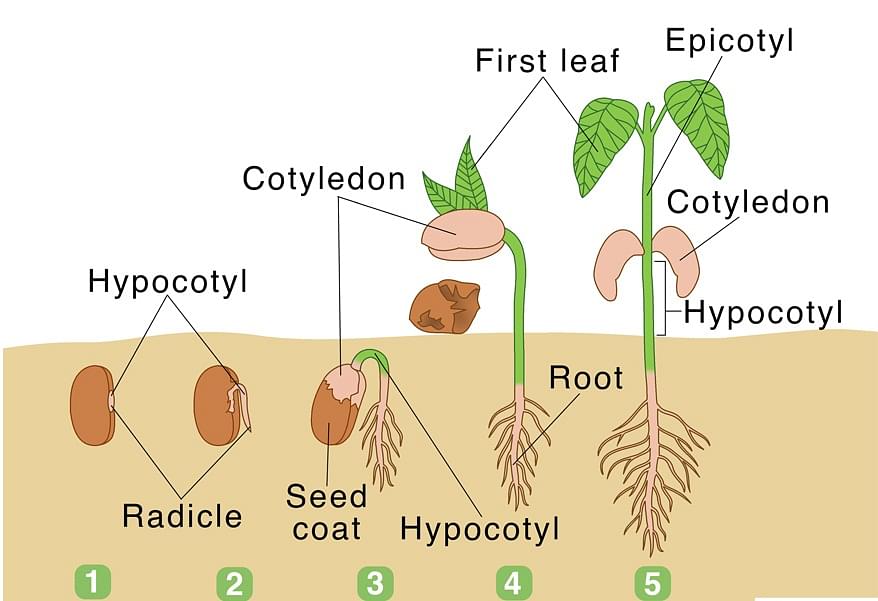
Germination of Seed
Buds in the state of dormancy: The buds that grow in the autumn remain dormant until the following spring. Gibberellin can be used to break them out of their slumber.
Root Development: Gibberellins have a negligible effect on root growth. In a few plants, however, larger concentrations can cause some growth suppression.
Elongation of the Internodes: The most noticeable effect of gibberellins on plant growth is internode elongation. Genetic dwarfism can be overcome in many plants, including dwarf pea and maize.
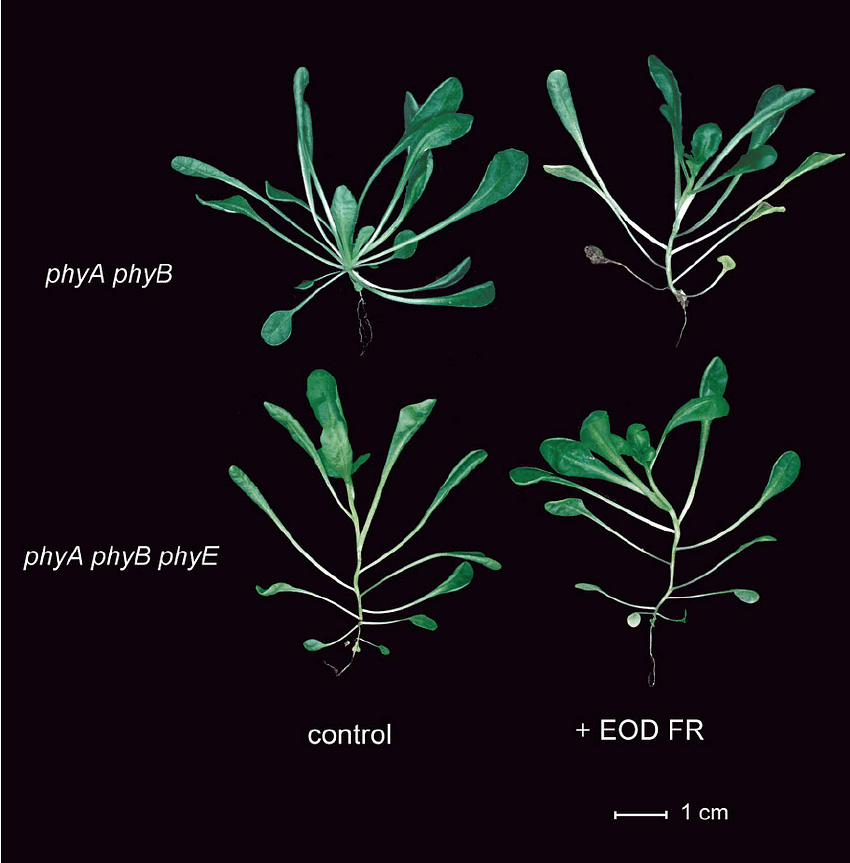
Internode Elongation
Dwarf pea plants, for example, have enlarged leaves and short internodes. When treated with gibberellin, however, the internodes stretch and resemble tall plants. Gibberellins have an effect through altering gene transcription.
Also Read:
| Related Articles | ||
|---|---|---|
| Transportation in Plants | Tissue Culture | |
| Locomotion and Movement | Growth Hormone | |
| Transpiration | Vegetative Propagation in Plants | |
| Parthenocarpy | Plant Cell | |
The steps in the gibberellin function are as follows:
- The GA reaches the cell and binds to a protein receptor that is soluble.
- This binds to the SCF protein complex, which attaches ubiquitin to one of the DELLA proteins.
- Proteasomes are activated, and DELLA proteins are eliminated.
The inhibition is released when DELLA proteins are destroyed, and gene transcription begins. This process is one of many examples in biology where a route is activated by blocking it. However, whereas most of the proteins involved vary depending on the situation, both auxin and gibberellins regulate gene expression through a common repression release mechanism.
Uses of Gibberellins
[Click Here for Sample Questions]
- Gibberellins are growth hormones that cause plants to grow taller by stimulating cell elongation.
- Other plant activities involving gibberellins include stem elongation, germination, flowering, and fruit ripening. The pituitary gland secretes human growth hormone at the appropriate times in humans; plant plastids secrete gibberellin in a similar way.
- A plant's cells begin to elongate once gibberellins are released. Because plants are made up of thousands of separate cells stacked on top of one another, this elongation results in the plant's overall growth.
- Gibberellins play a huge role in the greenhouse and flower industries all over the world. Many dwarf plants that are used in landscaping are short because the plant either cannot produce gibberellins, or its cells are not receptive to the hormone. Gibberellin levels in dwarf trees, such as the bonsai are extremely low.

Bonsai Tree with low gibberellin
- Farmers have discovered that gibberellins stimulate the growth of buds and fruits on plants and have utilised this knowledge to their advantage. To increase fruit production, they use synthetic gibberellins on the trees.
- It is used to produce all-male flowers on cucumber plants. This aids farmers in obtaining pollen with the appropriate properties for hybridization.
- Flowers are only produced by biennial plants when the temperature is below freezing. These plants will flower regardless of the low temperatures if gibberellin is injected.
Read More:
Things to Remember
- Gibberellins are plant hormones that promote and regulate growth. More than 100 gibberellins have been identified and denoted as GA1, GA2, GA 3, GA4 and so on.
- Gibberellin is a diterpenoid. They are made in the plastids of plant cells, which are the double membrane-bound organelles responsible for food production.
- Gibberellins in plants were discovered by Japanese scientist Eiichi Kurosawa in the year 1926.
- Gibberellins are diterpenoid acids synthesized in plastids by the terpenoid pathway and subsequently changed in the endoplasmic reticulum and cytoplasm to reach their physiologically active state.
- Various functions are performed by gibberellins such as seed germination, root development, elongation of the internodes, fruit production and many more.
Sample Questions
Ques. What are the functions of Gibberellins? [2 marks]
Ans. Gibberellins are plant growth regulators that help plants grow taller by facilitating cell elongation. They're also important for germination, stem elongation, fruit ripening, and flowering.
Ques. What is the structure of Gibberellins? [2 marks]
Ans. Gibberellins are made of tetracyclic diterpene acids and consist of either 19 or 20 carbons. The 19-carbon gibberellins or gibberellic acid loses carbon 20 and instead in that place, it possesses a five-member lactone bridge that links carbons 4 and 10.
Ques. Who discovered gibberellin? When was it discovered? [2 marks]
Ans. E. Kurosawa discovered gibberellin in 1926 while researching foolish seedling (bakanae) disease. Gibberella fujikuroi, a fungus, had caused it.
Ques. What is the chemical nature of gibberellin? [2 marks]
Ans. Gibberellins have high acidity. Because of its acidic nature, it aids cell growth and elongation. They can speed up the growth of roots and stems, as well as initiate mitotic division in some plants' leaves.
Ques. ‘Both growth and differentiation in higher plants are open. Comment. [2 marks]
Ans. In general, plant growth is ambiguous. Meristems, which are found in higher plants, play a role in the production of new cells. Because the tips (with apical meristem) "are open-ended - continually developing and creating new organs to replace the older or senescent ones," the body of plants is created in a modular approach.
Differentiation is inextricably linked to growth. The precise cause of differentiation is likewise unknown. Plants are not only open-ended in their growth, but also in their differentiation. At maturity, the same apical meristem cells produce multiple types of cells, such as xylem, phloem, parenchyma, sclerenchyma fibres, collenchyma, and so on. As a result, both processes are indeterminate, limitless, and mature into various structures, i.e., they are both open.
Ques. Which one of the plant growth regulators would you use if you are asked to
(a) induce rooting in a twig
(b) quickly ripen a fruit
(c) delay leaf senescence
(d) induce growth in axillary buds
(e) ‘bolt’ a rosette plant
(f) induce immediate stomatal closure in leaves. [2 marks]
Ans.
- Auxins like IBA, NAA.
- Ethylene
- Cytokinins
- Cytokinins
- Gibberellins
- Abscisic acid (ABA)
Ques. What would be expected to happen if:
(a) GA3 is applied to rice seedlings
(b) dividing cells stop differentiating
(c) a rotten fruit gets mixed with unripe fruits
(d) you forget to add cytokinin to the culture medium. [4 marks]
Ans.
- Because GA3 promotes cell development, the coleoptile will lengthen quickly.
- The formation of a callus (a mass of undifferentiated cells) will occur.
- Because of the enhanced rate of respiration caused by the emission of ethylene from decaying fruit, unripe fruits will ripen quickly.
- Cell division will be slowed, and no shoots will emerge from the callus.
Ques. What is the effect of gibberellins? [2 marks]
Ans. Gibberellins have a strong pro-growth effect. To stimulate flowering, stem and root elongation, and fruit growth in dwarf types by hastening their elongation to normal sizes. In some ways, this elongation resembles that generated by IAA, and gibberellin similarly causes IAA production.
Ques. Differentiate between auxin, gibberellins, and cytokinins? (3 marks)
Ans: Auxins are a type of protein that promotes cell growth. It aids the development of roots. It aids in the following functions: breathing, motility, apical dominance, preoccupation inhibition, fruit growth, fruit sweetening, and parthenocarpy.
Gibberellins aid in fruit output and growth. It assists in the production of malt by overcoming dormancy. Flowering and parthenocarpy are both aided by it.
Cell division requires the presence of cytokinins. Cell differentiation is aided by this aid. They act as a deterrent to aging. They aid in the movement of phloem. They aid in the development of disease resistance and temperature tolerance. They aid in the elimination of apical dominance and the emergence of Lateral buds.
Ques. What are the functions of plant peptide hormones? (2 marks)
Ans: All tiny secreted peptides involved in cell-to-cell signalling are referred to as plant peptide hormones. Defense mechanisms, cell division and expansion regulation, and pollen self-incompatibility are all regulated by these tiny peptide hormones. Water stress perceived in the roots is sent to the stomata in the leaves via the short peptide CLE25.
For Latest Updates on Upcoming Board Exams, Click Here: https://t.me/class_10_12_board_updates
Check out:



Comments