



Content Curator
Hinge Joint is a synovial joint that exists in the body. It allows motion primarily in one plane. Joints connect bones in the body, and these joints link the entire skeletal system together to form a functional unit that aids in the movement of body components.
| Table of Content |
Key Terms: Hinge Joint, Joints, Body Movements, Tissues, Muscles, Human Body, Skeleton, Bones
What Is a Hinge Joint?
[Click Here for Sample Questions]
Hinge joints are joints that can only move in one direction. They bend and straighten things, like flexing fingers. Hinge joints are protected by a protective coating that covers the bones, and a thick gel called synovial fluid is present between joints, acting as a lubricant and allowing smooth joint movement.
Muscles, ligaments, and other forms of tissue stabilize the joint and its movements in these sorts of joints. The stability of their joints extends beyond ball and socket joints to include shoulder and hip joints. Ball and socket joints have a larger range of motion and flexibility in more than one plane than hinge joints.
Synovial joints are what hinge joints are classified as. A synovial joint is a type of joint that connects two bones that move against each other, such as limb joints. Example: Shoulder, hip, elbow, and knee. As a result, a hinge joint is defined as a joint between two bones that enables just one plane of movement. Human fingers, toes, elbows, knees, and ankles, are examples of hinge joints.
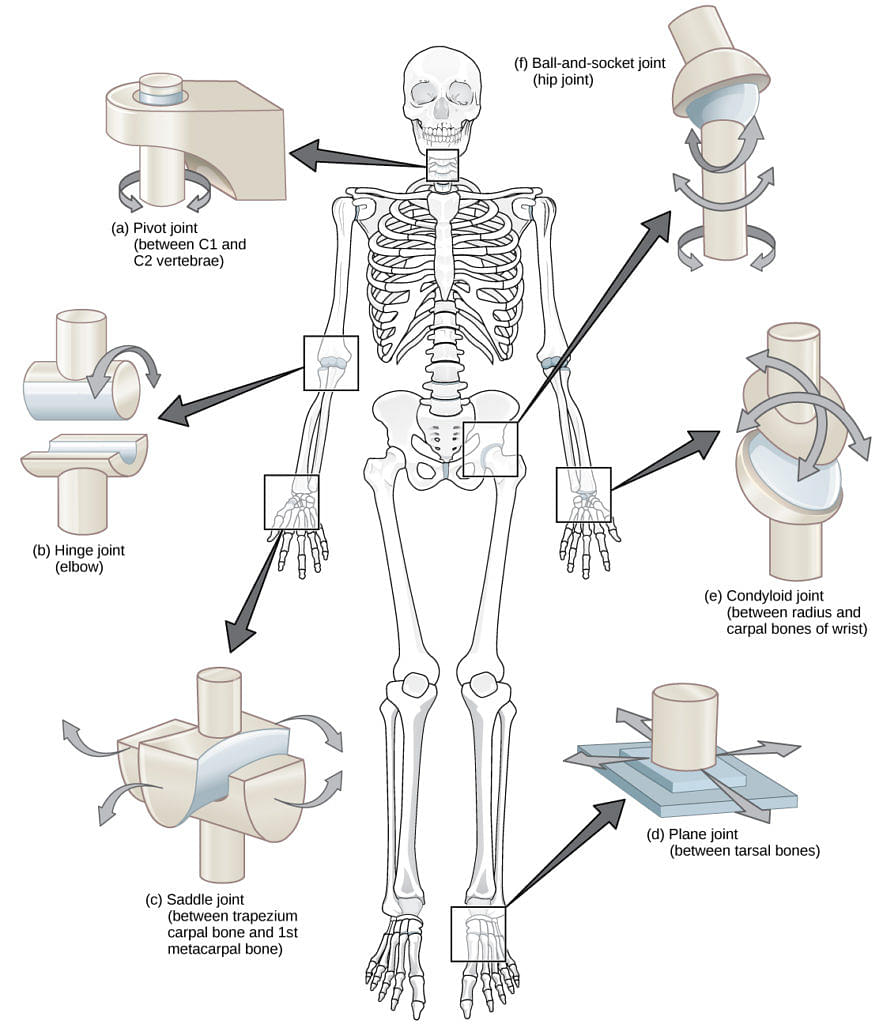
Types of Synovial Joints
Features Of Hinge Joints
[Click Here for Sample Questions]
Important features of hinge joints are as follows:
- The hinge joint resembles the hinge on a box lid.
- Hinge joints can only move in one plane; they cannot move in more than one plane.
- The convex surface of one bone is fitted to the concave surface of another bone to form the hinge joint.
- The movement of ball and socket joints differs from that of hinge joints because ball and socket joints move in multiple planes.
- Even when hinge joints are thought to be stable, they are susceptible to dislocation.
- A healthy hinge joint can be maintained by eating a nutritious diet, decreasing stress, moving around frequently, and strengthening the muscles around the joints.
Also Read: Types of Movement
Types Of Hinge Joints
[Click Here for Sample Questions]
There are several types of hinge joints:
- The Elbow: This joint connects the top part of the arm, the humerus, to the two bones in the lower arms, the radius and the ulna. This joint is also known as a humeroulnar joint since it is located between an ulna notch and a humerus notch.
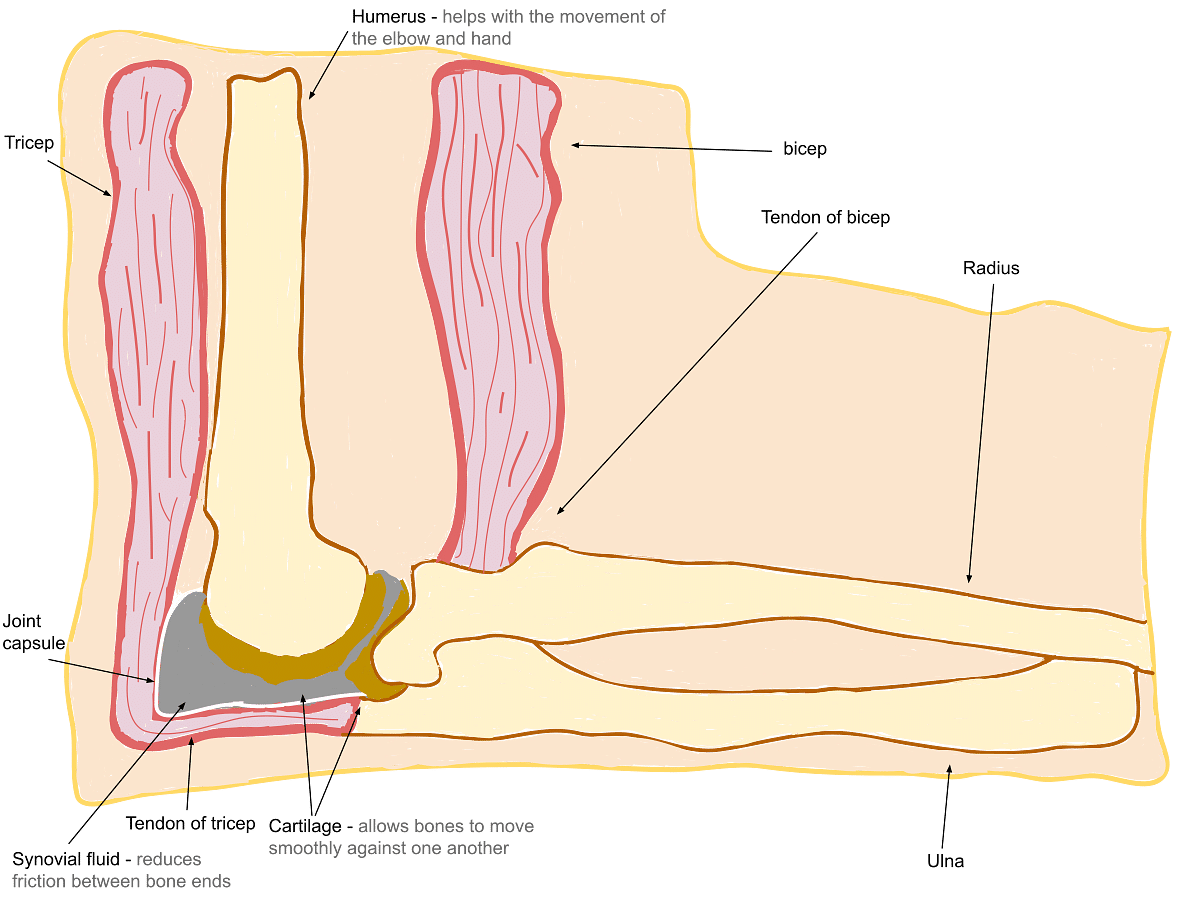
Elbow
- The Jaw: It also acts as a hinge, allowing us to open and close our mouth. The hinge joint is not literally a hinge joint, but it allows the mouth to move. Their tongue moves in the same way as their knees and ankles do.
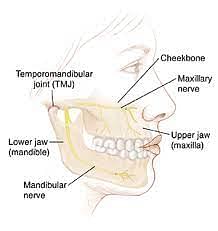
Jaw
- The Hand: Interphalangeal joints are the joints that link our fingers. This joint is well-known for its significance, as the usage of our hands is crucial in our daily lives. Metatarsophalangeal joints, proximal interphalangeal joints, and distal interphalangeal joints are the three types of joints in our hands.
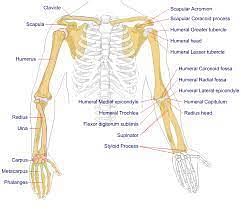
Human Arm Bones
- The Foot: Interphalangeal joints are found in both hands and feet. They have two planter tendons in them. Our toes may appear to be distinct from our fingers in appearance, yet they perform the same activities as fingers and can perform both flexion and extension movements.

Lower Leg and Foot
- The Knee: Knees' primary role is to connect our thighs to our legs. They are the biggest joints in the human body. Instead of just flexion and extension, the knee allows for side-to-side movement.
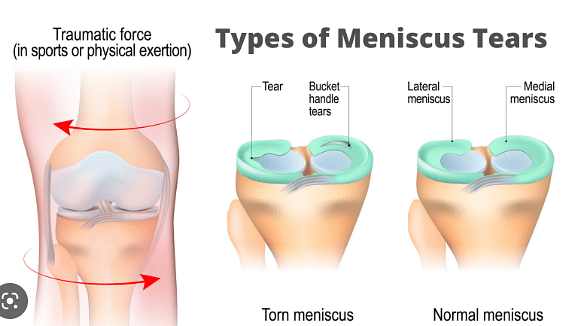
Meniscus
- The Ankle: The talocrural area of the ankle joint aids in the movement of the feet at the ankles. It also allows for some mobility from side to side. The talocrural joint, subtalar joint and tibiofibular joint are the three joints that make up the ankle joint.
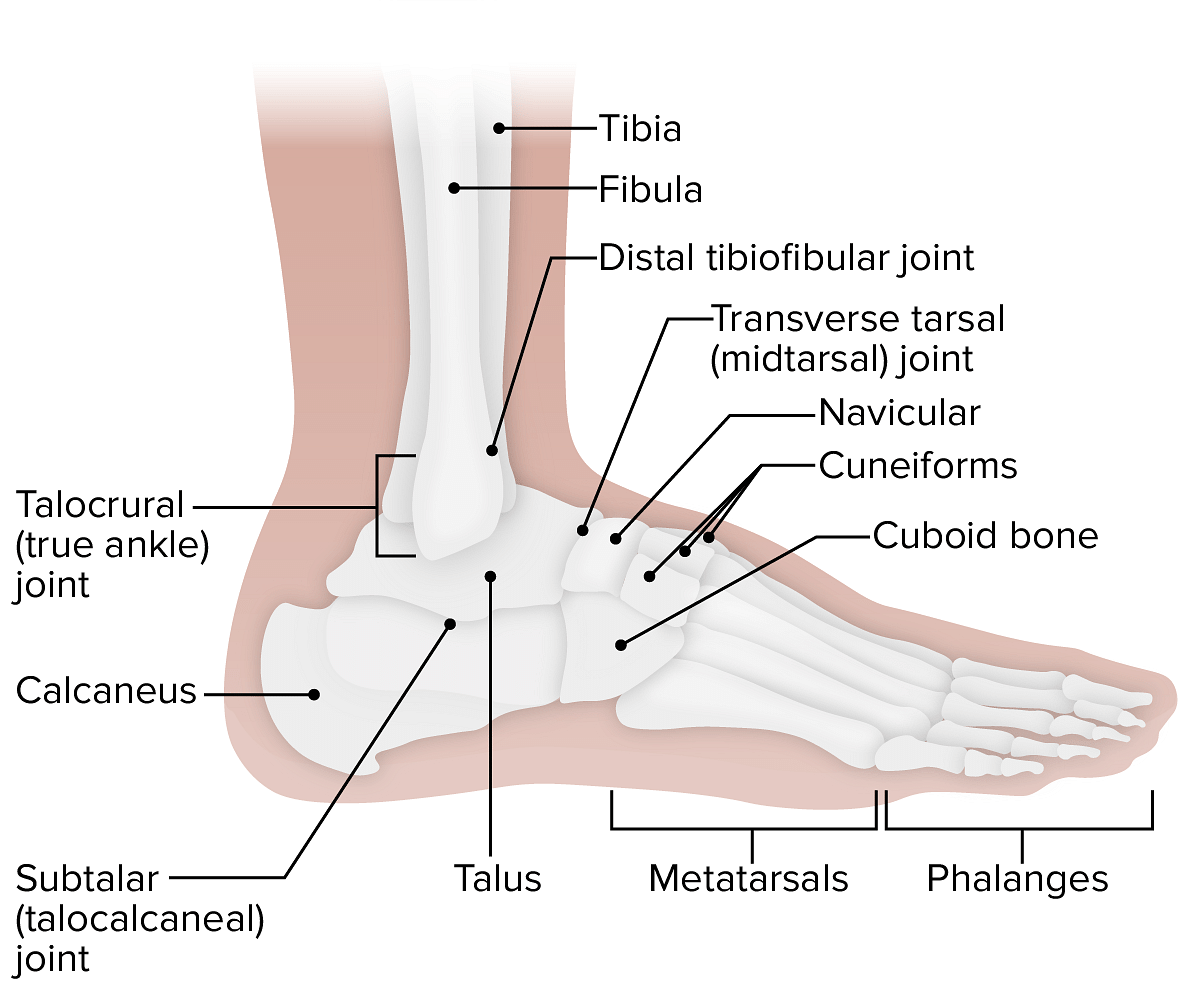
Also Read: Bones of Legs
Implications Of Hinge Joints
[Click Here for Sample Questions]
The implications of hinge joints are as follows:-
- Hinge joints, unlike other joints, allow movement in only one plane.
- Hinge joints allow for joint straightening, bending, and flexing. Flexing a finger or toe, for example.
- Protective cartilage and a thick fluid known as synovial fluid wrap the bones in hinge joints. This fluid lubricates the bones, allowing them to move without friction.
- Muscles, ligaments, and other tissues that keep the joint in place are found in all hinge joints.
- Hinge joints, such as hips and shoulder joints, are thought to be more stable than ball-and-socket joints. Ball-and-socket joints, on the other hand, have more movement.
- Unlike hinge joints, which move in only one plane, ball-and-socket joints move in multiple planes.
- Even though hinge joints are thought to be stable, they can be dislocated. Hinge joints of the hands and feet are the most commonly dislocated.
- Hinge joints are commonly affected by regressive sports activities. Consider runner's knee.
- A healthy hinge joint can be maintained by eating a nutritious diet, decreasing stress, moving around frequently, and strengthening the muscles around the joints.
Also Check:
| Biology Related Topics | ||
|---|---|---|
| Human Eye | Pelvic Bones | Calvin Cycle (C3 Cycle) |
| Electrocardiograph (ECG) | Difference Between Ligaments and Tendons | Sleeping Sickness |
Things To Remember
[Click Here for Sample Questions]
- The importance of hinge joints in our bodies may be seen after knowing the meaning of hinge joints, their importance, and the different types of hinge joints.
- The hinge joints are essential parts of the human body's complicated biomechanics.
- The articular cartilage in hinge joints in the knee, hand and foot may degrade, resulting in osteoarthritis.
- Stress, trauma, everyday activities, weight, lifestyle, and heredity all play a part in the development of osteoarthritis.
Also check: NCERT Solutions for Class 11 Biology
Sample Questions: Hinge Joints
Ques: What kinds of motions do hinge joints allow? (1 Mark)
Ans: The hinge joint moves along a single axis, allowing for flexion and extension. While flexion is used to bend a hinge joint, extension is used to straighten it.
Ques: Is it true that the shoulder is a hinge joint? (1 Mark)
Ans: The shoulder is a ball-and-socket joint, not a hinge joint.
Ques: What types of hinge joints are there? (2 Marks)
Ans: The ankle, elbow, knee, and interphalangeal joints are all hinge joints.
Ques: What causes hinge joints to bend exclusively in one direction? (1 Mark)
Ans: Because of their shape, hinge joints flex exclusively in one direction, a concept known as form determines function.
Ques: At which point does the arm rotate? (1 Mark)
Ans: The arm rotates on the round pit-like structure.
Ques: Which bone is termed the longest bone in the human body and where is it located? (1 Mark)
Ans: The Femur is the longest bone in the human body. It is a thigh bone.
Ques: In which direction does the hinge joint allow movement? (1 Mark)
Ans: The two bones open and close in one direction only (along one plane) like a door, such as the knee and elbow joints.
Ques: Is the jaw a hinge joint? (1 Mark)
Ans: The Temporomandibular Joint, or (TMJ) is a hinge joint that connects our lower jaw to the bone of the skull located just in front of our ears.
Ques: What is the structure of a hinge joint? (1 Mark)
Ans: A hinge joint is a bone joint in which the articular surfaces are molded to each other in such a manner as to permit motion only in one plane.
Ques: How is a hinge joint different from a ball and socket joint? (1 Mark)
Ans: Ball-and-Socket joints are the most mobile of all synovial joints. They allow the bone with the ball head to be moved freely in all planes, Whereas hinge joints allow restricted movements in one plane only. They are capable of bearing heavy loads.
Also check:
Also Check:
| Biology Study Guide | ||
|---|---|---|
| Biology MCQs | Biology Study Material | Difference between in biology |



Comments