



Content Curator
The spread of a disease from one individual to another is referred to as transmission. There are numerous types of transmission, each of which involves a pathogen and a host. A pathogen can be a bacterium, a virus, a fungus, a parasite, or a prion (a protein particle). Infectious agents that cause illness When one organism causes disease in another, the interaction is referred to as parasitism. Let us take a look at the various routes of transmission of diseases.
| Table of Content |
Keyterms: Disease, transmission, pathogen, bacterium, virus, parasite, prion, protein, Infectious agents, organism, parasitism
Read Also: Why do we fall ill?
What is the Mode of Transmission of Diseases?
[Click Here for Sample Questions]
The movement or transmission of pathogens from a reservoir to a susceptible host is a method of transmission. Once a pathogen has exited the reservoir, it requires a mode of transmission to the host through an entry portal.
The video below explains this:
Mode of Transmission of Diseases Detailed Video Explanation:
Types of Mode of Transmission of Diseases
[Click Here for Sample Questions]
There are several methods for the agent to be transmitted to the host, from one host to the next, or to exit from the host to infect another susceptible host, which may be an infected host, either an animal or a human. It is determined by the infectious agent and the portal of entry or the current environmental conditions in the area. In general, the mode of transmission of disease modes can either be direct or indirect.

Also Read:
| Related Articles | ||
|---|---|---|
| Infectious Diseases | Principles of Treatment | |
| Human Bacterial Diseases | Vaccines | |
Direct Transmission
[Click Here for Sample Questions]
It's also known as person-to-person transmission. In this case, the microorganism or agent is transferred directly and immediately from a host or reservoir to a susceptible host.
Direct transfer can occur via :
- Direct Contact
- Droplets,
- Soil Contact,
- Inoculation through the skin or mucosa
- The transplacental (through the placenta from the mother to the fetus).
Ways of Direct Transmission
[Click Here for Sample Questions]
- Direct contact - In this case, the infectious agent is transmitted through skin-to-skin contact, as in the case of scabies, or mucosa-to-mucosa contact, or mucosa-to-mucosa contact of the same or another person. There is no participation of any kind of intermediate agent for the transmission. Skin to Skin contact through touching by a contaminated hand or close continuous contact or sexual intercourse. Some examples of diseases that are transmitted through this mode is - leprosy, HIV/AIDS, skin infections, etc.
- Droplets- During coughing, sneezing, talking, or spitting, nasal or nasopharyngeal secretions or saliva are released as a spray of droplets. Such droplets, usually from the respiratory tract of an infected person, can be ejected into the surrounding environment Examples of diseases that can spread through droplets are tuberculosis, respiratory infections, whooping cough, meningococcal meningitis, etc.

- Contact with soil - Infectious agents for diseases such as tetanus, hookworm, and mycosis are found in soil, which includes compost or decaying organic matter. Direct contact with soil can result in the transmission of these infectious agents.
- Inoculation into the skin or mucosa - Infectious agents such as hepatitis B and HIV can be transmitted directly into the skin through injection or a dog bite for the rabies virus.
- Transplacental - Some infectious disease agents, such as HIV, hepatitis C, syphilis, and others, can be transmitted from the mother to the fetus via the placenta, which is also known as vertical transmission.
Also Read:
| Related Articles | ||
|---|---|---|
| Pathogens | Malaria | |
| Dengue | Filariasis | |
| Ascariasis | Typhoid | |
| Pneumonia | Common Cold | |
Indirect Transmission
[Click Here for Sample Questions]
This is a condition in which disease-causing agents are transferred or carried to the susceptible host by some intermediate means or organisms. Thus, Indirect transmission of diseases can occur through a variety of channels, including :
- Airborne
- Waterborne
- Vehicleborne
- Foodborne
- Vector Borne
Ways of Indirect Transmission
[Click Here for Sample Questions]
- Airborne transmission - Organisms or disease agents can be transmitted through droplets or dust particles. It can float in the air for a long time and be carried by the wind to great distances from the source.
- Waterborne transmission - It is one of the most common methods of infectious disease agent transmission. Rivers, lakes, ponds, and wells are examples of drinking water sources that can be contaminated by sewage and effluents from the industry. There are a plethora of waterborne diseases including cholera, shigellosis, typhoid, amoebiasis, giardiasis, and other parasitic infections.
- Vehicle-borne transmission - In this mode of disease transmission, intermediate items such as fomites, eating utensils, combs, clothing, shared drinking bottles, and so on transmit the agents. As an example, consider the sharing of common resources. The use of a kajal applicator can result in the transmission of a microbial agent that causes trachoma from one individual to another.
- Foodborne transmission - Food can act as a carrier for the spread of disease agents, such as contaminated and improperly washed vegetables used for salad, which can transmit the microbial agent salmonella, which can cause food poisoning.
Typhoid fever, for example, can be caused by canned seafood, which can cause food poisoning.
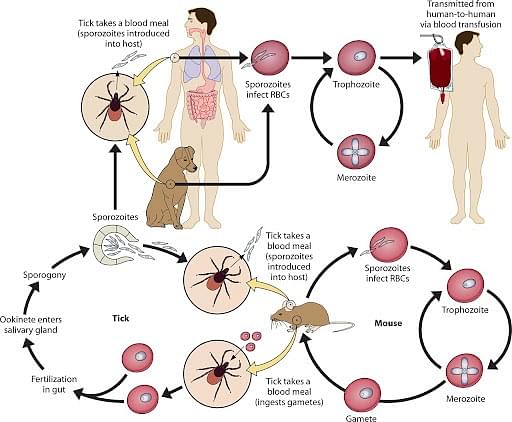
- Vector-borne transmission - Vectors are arthropods or living carriers other than humans that transport infectious agents to vulnerable individuals. Invertebrates such as flies, mosquitoes, and fleas are examples of vectors.
In general, vectors transmit infectious agents in one of two ways:
- Mechanical Transmission - A simple mechanical process can occur when the vector carries or transports the infectious agent, such as a fly carrying bacilli that causes diarrhea.
- Biologic Transmission - On the other hand, when an infectious agent multiplies or develops within the host/vector as part of its lifecycle, it is referred to as biologic transmission. Example - Plasmodium, a malarial parasite develops inside the female. Anopheles mosquito is a part of sexual development.
Read Also: Difference Between Epidemic and Pandemic
Points to Remember
- Communicable diseases are those that spread from an infected person to a healthy and disease-free person.
- Food can act as a carrier for the spread of disease agents, such as improperly washed vegetables used for salad.
- Rivers, lakes, ponds, and wells are examples of drinking water sources that can be contaminated by sewage and effluents from the industry.
- Leprosy is transmitted through direct contact with an infected person.
- Malaria is caused by the Anopheles mosquito and Dengue is caused by the Aedes mosquito.
Sample Questions
Q.1. What are the various methods of disease transmission? (2 Marks)
Ans: Transmission modes are classified in various ways. Diseases can be passed on either directly or indirectly. The immediate transfer of an infectious agent from an infected host or reservoir to an appropriate entry point through which human infection can occur is referred to as direct transmission.
Q.2. What are communicable diseases? Give an example. (2 Marks)
Ans: Communicable diseases are those that spread from an infected person to a healthy and disease-free person. For example - Chickenpox, Tuberculosis, and Pneumonia.
Q.3. Which method is the most effective in preventing disease spread? (2 Marks)
Ans: The best way to prevent disease transmission is to first understand what the disease is and how infectious disease spreads. Once you know, you will have a better idea of how to avoid catching and spreading the disease once you understand what it is and how it spreads.
Q.4. What is the full form of AIDS and how is it transmitted? (2 Marks)
Ans: AIDS stands for Acquired Immune Deficiency Syndrome. It can spread through other means, such as blood-to-blood contact with an infected person in hospitals by using the same syringes, or by sharing personal belongings like a razor or toothbrushes with an infected person.
Q.5. How does a doctor diagnose Infectious diseases? (2 Marks)
Ans: A variety of laboratory tests are used by doctors to diagnose infectious diseases. They examined samples of blood, urine, mucus, or other bodily fluid samples and provided information used in the diagnostic process.
Q.6. Give examples of waterborne diseases? (1 Mark)
Ans: Waterborne diseases include cholera, shigellosis, typhoid, amoebiasis, giardiasis, and other parasitic infections.
Q.7. What are the signs and symptoms of an infectious disease? (3 Marks)
Ans: Infectious disease symptoms vary depending on the type of disease.
Influenza symptoms, for example, include:
- Fever
- Chills
- Congestion
- Fatigue
- Muscle pain and a headache
Also Read:



Comments