



Content Writer
Psoriasis is a skin disorder that is caused by an overactive immune system. It is characterised by abnormal patches that are red, pink or purple area. Psoriasis causes the cells to divide rapidly, which results in thick and scaly plaques that are itchy or uncomfortable.
- Psoriasis is one of the most irritating and unpredictable chronic skin disorders.
- It causes a thick, dry and itchy area of skin.
- The scaly areas developed on the skin are called plaques.
- The patches can most commonly seen on knees, elbows, trunk and scalp.
- There are different types of psoriasis, and it affects a large part of the body.
- Psoriasis affects 2-4% of the entire population.
- Stress, smoking, vitamin-D deficiency and alcohol consumption trigger the disease.
Read More: Human Health and Diseases
Key Terms: Psoriasis, Skin, Plaques, Immune System, White Blood Cells, Vitamin, T-Cells, Limbs, Disease
What is Psoriasis?
[Click Here for Sample Questions]
Psoriasis disease is a non-contagious and long-lasting skin condition that is caused by keratinocytes becoming scaly, which further results in the formation of dry, itchy skin patches.
- Psoriasis is caused by an immunity disorder related to T-cells and white blood cells, which are also known as neutrophils.
- The disease is usually formed on the epidermis layer of the skin.
- It is an autoimmune disease which multiplies ten times faster than the normal conditions.
- The method of diagnosis is based on the symptoms of the disease.

Psoriasis
Read More:
Types of Psoriasis
[Click Here for Sample Questions]
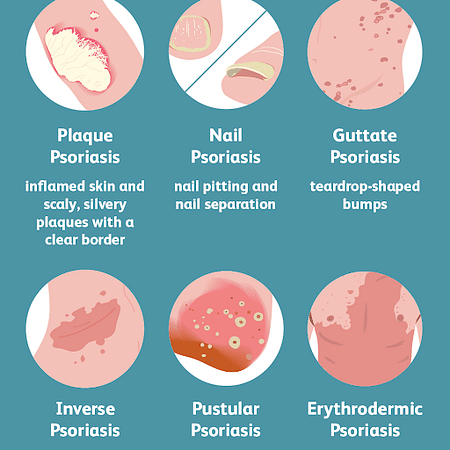
Psoriasis is divided into five different categories which are as follows:
Guttate Psoriasis
Guttate Psoriasis usually starts in childhood or early adulthood. Less than 30% of children and adolescents are affected by the risk of this disease. This kind of psoriasis is recognized with small red spots on the limbs and torso. Guttate Psoriasis will easily go away without any treatment.

Read More: Class 10 Life Processes
Pustular Psoriasis
Pustular Psoriasis is a rare type of psoriasis that makes the skin of the hand and legs or any part of the body inflamed and scaly. It looks like white pustules or blisters of pus that are boarded by inflamed skin. It also results in the discolouration of the skin after the formation of scaling and pustules.

Read More: Leg Muscles: Definition & Parts
Erythrodermic Psoriasis
Erythrodermic Psoriasis is a type of psoriasis that needs special attention as it may lead to severe illness or can even be fatal. Certain medications, infections, or severe burns trigger it. Erythrodermic Psoriasis affects a large part of the body and is accompanied by pain, itching, and excessive skin shedding.

Read More: Mutagens
Inverse Psoriasis
Inverse psoriasis commonly affects body parts such as the groin, armpit, under the breast, skin folds around the buttock and the genitals. It causes smooth and shiny rashes without scales. This kind of psoriasis generally happens within the skin folds, which is why sweating and rubbing make the condition worse.

Read More: Infectious Diseases
Plaque Psoriasis
Plaque Psoriasis is the most common type of psoriasis, which affects the elbow, scalp, knees and lower back. It is recognized as inflamed and raised red bumps with silvery-white scales prominent on light skin. On dark skin, it is generally identified as dark brown or purple rashes with grey scales.

Read More: Ringworm
Causes of Psoriasis
[Click Here for Sample Questions]
Several causes stimulate the condition of psoriasis, although the real causes are yet unknown. Some of the causes of psoriasis are:
- Cold or dry weather
- Medications such as quinidine, indomethacin, antimalarials and lithium
- Alcohol consumption
- Skin injury
- Smoking
- Medication of blood pressure
- Strep infection
- Cuts, scrapes, surgery
- Emotional stress
Read More: Types of Joints - Classification of Joints
Symptoms of Psoriasis
[Click Here for Sample Questions]
The common signs and symptoms of psoriasis are:
- Chills
- Fever
- Diarrhea
- Thick and silvery scales on the skin
- Thickened, pitted, or ridged nails
- Dry, cracked, and inflamed skin
- Red patches on the skin
- Swollen and stiff joints
- Disorder in nail growth
- Blisters that are filled with pus
- Small scaling spots
- Discoloration of nails
- Severe itching and burning skin
Read More:
Treatment for Psoriasis
[Click Here for Sample Questions]
Psoriasis Treatment focuses on stopping the skin cells from growing quickly. It also aims to remove scales from the body. The various treatment for psoriasis is as follows:
- Using creams and ointments in the affected area is the most common treatment for psoriasis.
- Doctors advise to increase the consumption of food rich in vitamin D.
- The severe symptoms require UV (ultraviolet) phototherapy and systemic treatments.
- The treatment includes methotrexate, ciclosporin and hydroxycarbamide.
- Emollients are another effective way to solve the problem of psoriasis.
- In emollients, treatment is applied directly to the skin to reduce the water loss in the body.
- The treatment also helps in providing a protective layer to the skin.
- Individuals can also indulge in yoga, meditation and pilates.
- A person suffering from the disease must wear sunscreen and glasses while going out.
Read More: Blood Pressure
Things to Remember
- Psoriasis disease is caused by an increase in the formation of skin cells.
- It results in the formation of dry, itchy and scaly skin patches.
- It increases the risk of several types of cancers, some of them being lung and non-melanoma skin cancer
- Treatments for Psoriasis include light therapy, oral medication, and steroid cream, along with a balanced lifestyle.
- Stress and hormonal changes, along with many other factors, can trigger inflammation in the body.
- The condition of Psoriasis is very common in the United States.
- Several kinds of psoriasis should be recognized and treated as soon as possible.
Read More:
| Related Articles | ||
|---|---|---|
| Pathogens | Malaria | Dengue |
| Filariasis | Ascariasis | Typhoid |
| Arthritis | Lung Diseases | Hormonal Imbalance |
Sample Questions
Ques: Is psoriasis communicable? (2 Marks)
Ans: Psoriasis disease is a non-contagious and long-lasting skin condition that is caused by keratinocytes becoming scaly, which further results in the formation of dry, itchy skin patches. It is a non-communicable chronic skin disease. Certain factors may trigger the condition of psoriasis but it is not a contagious disease.
Ques: What are the factors that can increase the risk of Psoriasis? (3 Marks)
Ans: Psoriasis is a common condition that affects a large population worldwide. The main component of psoriasis is TH17 cell activation which is responsible for the inflammation in psoriasis. Some of the risk factors which can trigger the condition of psoriasis are:
- Respiratory infections such as bronchitis, tonsillitis, strep throat
- Obesity
- Cardiovascular disease
- Metabolic syndrome
- Diabetes
- Hypertension
- Family history
- Skin injury
Ques: How to detect Psoriasis? (2 Marks)
Ans: There is no specific cause for Psoriasis. There are certain symptoms that tell about the severity of the condition. The doctor may check the medical history of the family and also ask for a biopsy report to look out for conditions such as eczema. The early treatment of the condition may help in controlling the severity of the skin disorder and the other problems related to it.
Ques: Can psoriasis lower the life expectancy period? (2 Marks)
Ans: Psoriasis has the chance of reducing the life expectancy of people by 10 years or more. People who have been diagnosed with psoriasis before the age of 25 do not live up to 60 years of age whereas people who have been diagnosed with psoriasis after the age of 25, live up to 70 years of age or more. One should aim at controlling the condition and increasing the life expectancy of a person.
Ques: What is the treatment for Psoriasis? (3 Marks)
Ans: The treatment of Psoriasis is based on the seriousness of the condition. It is essential to keep the skin moisturized by the use of emollients to reduce itching and rashes.
- Medications such as coal tar, hydrocortisone cream, salicylic acid, anti-itch agents help in the treatment of disease.
- Synthetic vitamin D, retinoids, pimecrolimus cream, and tacrolimus ointment are also used for treatment.
- Phototherapy is also a treatment process that involves exposing the affected skin area to lights and lasers.
- It retards cell growth, reduce irritation and suppress immune activity.
Ques: What are the complications that are related to psoriasis? (3 Marks)
Ans: Psoriasis is not only a skin disorder but can also affect the bones, metabolic activities, and the muscles of the body. Psoriatic arthritis is most common in aged people where it causes damage to the joints in the form of inflammation and arthritis. People suffering from psoriasis not only have pain, discomfort, and itching but also experience low self-esteem, social anxiety, and self-image issues. The blood test conducted at the time of psoriatic arthritis will alwyas come negative.
Ques: How can a healthy diet help a person with Psoriasis? (3 Marks)
Ans: A healthy diet can help a psoriasis person deal with its symptoms and the risk of developing certain complications such as heart disease, inflammation, diabetes, and high blood pressure. A healthy diet for a person with psoriasis includes:
- Limiting alcohol consumption
- Light protein sources such as chicken breast should be consumed
- Limiting the consumption of saturated fats and simple carbohydrates
- Limiting the consumption of gluten
- Include fish in diet which is rich in omega 3 fatty acid
Ques: What are the recommended home remedies to be followed by a person with Psoriasis? (3 Marks)
Ans: Some home remedies should be followed along with the traditional treatment process to control the inflammations. Some of them are:
- Avoiding excessive drinking and smoking
- Recognizing and avoiding foods that cause inflammations
- Intake of a balanced diet
- Managing stress with the help of medication, yoga, and exercise.
- Avoid hot and prolonged showers
- Keeping the skin moisturized and hydrated
Ques: What are the symptoms of psoriasis? (3 marks)
Ans: The symptoms of psoriasis are as follows:
- Chills
- Fever
- Diarrhea
- Thickened, pitted, or ridged nails
- Dry, cracked, and inflamed skin
- Red patches on the skin
- Swollen and stiff joints
- Disorder in nail growth
- Blisters that are filled with pus
- Small scaling spots
- Discoloration of nails
- Severe itching and burning skin
Ques: What are the types of psoriasis? (5 marks)
Ans: The types of psoriasis are as follows:
- Guttate Psoriasis: Guttate Psoriasis usually starts in childhood or early adulthood. Less than 30% of children and adolescents are affected by the risk of this disease. This kind of psoriasis is recognized with small red spots on the limbs and torso.
- Pustular Psoriasis: Pustular Psoriasis is a rare type of psoriasis that makes the skin of the hand and legs or any part of the body inflamed and scaly. It looks like white pustules or blisters of pus that are boarded by inflamed skin.
- Erythrodermic Psoriasis: Erythrodermic Psoriasis is a type of psoriasis that needs special attention as it may lead to severe illness or can even be fatal. Certain medications, infections, or severe burns trigger it.
- Inverse Psoriasis: Inverse psoriasis commonly affects body parts such as the groin, armpit, under the breast, skin folds around the buttock and the genitals. It causes smooth and shiny rashes without scales.
- Plaque Psoriasis: Plaque Psoriasis is the most common type of psoriasis, which affects the elbow, scalp, knees and lower back. It is recognized as inflamed and raised red bumps with silvery-white scales prominent on light skin.
Ques: What are the causes of psoriasis? (2 marks)
Ans: The causes of psoriasis are as follows:
- Cold or dry weather
- Medications such as quinidine, indomethacin and lithium
- Alcohol consumption
- Skin injury
- Smoking
- Medication of blood pressure
- Strep infection
- Cuts, scrapes, surgery
- Emotional stress
Check-Out:



Comments