


Scientific name of the lizard is Lacertilia, though their scientific names differ from one category to the other. Lizards are a type of reptile that has a long tail and legs. There are more than 6000 recognized types of lizards all over the world except Antarctica. Komodo dragons are considered to be the largest type of lizard. Some lizards are venomous. The lizards belong to the order Squamata.
| Table of Contents |
Key Terms: lizard, scientific names, dragon, chameleons, taxonomy, reptiles.
Taxonomy Of Lizard
[Click Here for Previous Year Questions]
Here are the taxonomic details of the lizards-
| Type | Classification |
|---|---|
| Kingdom | Animalia |
| Phylum | Chordata |
| Class | Reptilia |
| Superorder | Lepidosauria |
| Order | Squamata |
There are a few groups that come under the lizard category as well. They are- Anguimorpha, Gekkota, Iguania, Lacertidae, Scincomorpha.
Characteristics Of Lizards
[Click Here for Sample Questions]
Though there are a varieties of lizards, and they have different characteristics, here are the basic characteristics of the lizards-
- Lizards have rounded torso, elevated head, short neck, four long legs, long tail with forked tongue.
- The lizards may weigh up to 160 kg. And can be 10 ft long.
- Some lizards can be legless as well.
- They can regrow their tails.
- They can move their eyelids.
- The lizards are carnivorous mostly.
- Some lizards can be venomous.
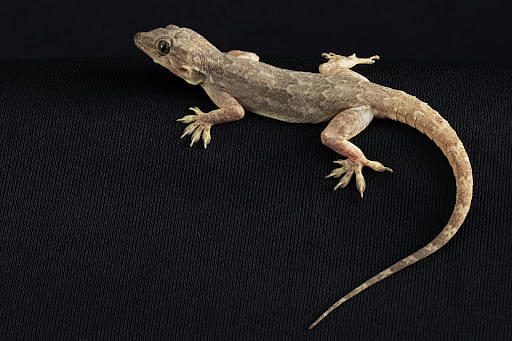
Lizard
Learn More About:
Life Cycle of Lizards
[Click Here for Previous Year Questions]
There are three phases in the life cycle of the lizard's life. Those are- egg stage, juvenile stage, and adult stage.
-
Egg Stage
The size of eggs and the way of laying eggs are different for every type of lizard. Therefore, the clutch size varies too as per the number of eggs. The hatching time for the eggs are different as well with the time span of 50 to 90 days. For example, while an Iguana takes 90 days, the frilled lizards take around 70 days. The baby lizards take 12-24 hours to get out of the egg shells.
- Juvenile Stage
At this stage, the lizards need to survive alone. The time span for maturation of the juvenile lizards varies from one category to another.
- Adult Stage
The matured lizards usually mate in the rainy season. Female lizards can lay up to 24 eggs. Though female Iguana can lay up to 70 eggs.
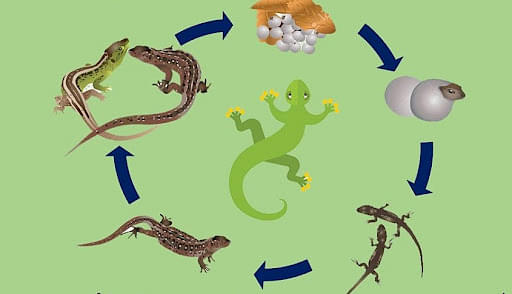
Life Cycle Of Lizard
Scientific Names Of Different Lizards
[Click Here for Sample Questions]
There are more than 6000 categories of lizards with different scientific names. Here are some of the prominent categories of lizards with their scientific names.
- Slow Worm – Anguis fragilis
- Komodo Dragon – Varanus komodoensis
- Common house gecko – Hemidactylus frenatus
- Rock monitor – Varanus albigularis
- Megalania – Varanus priscus (extinct)
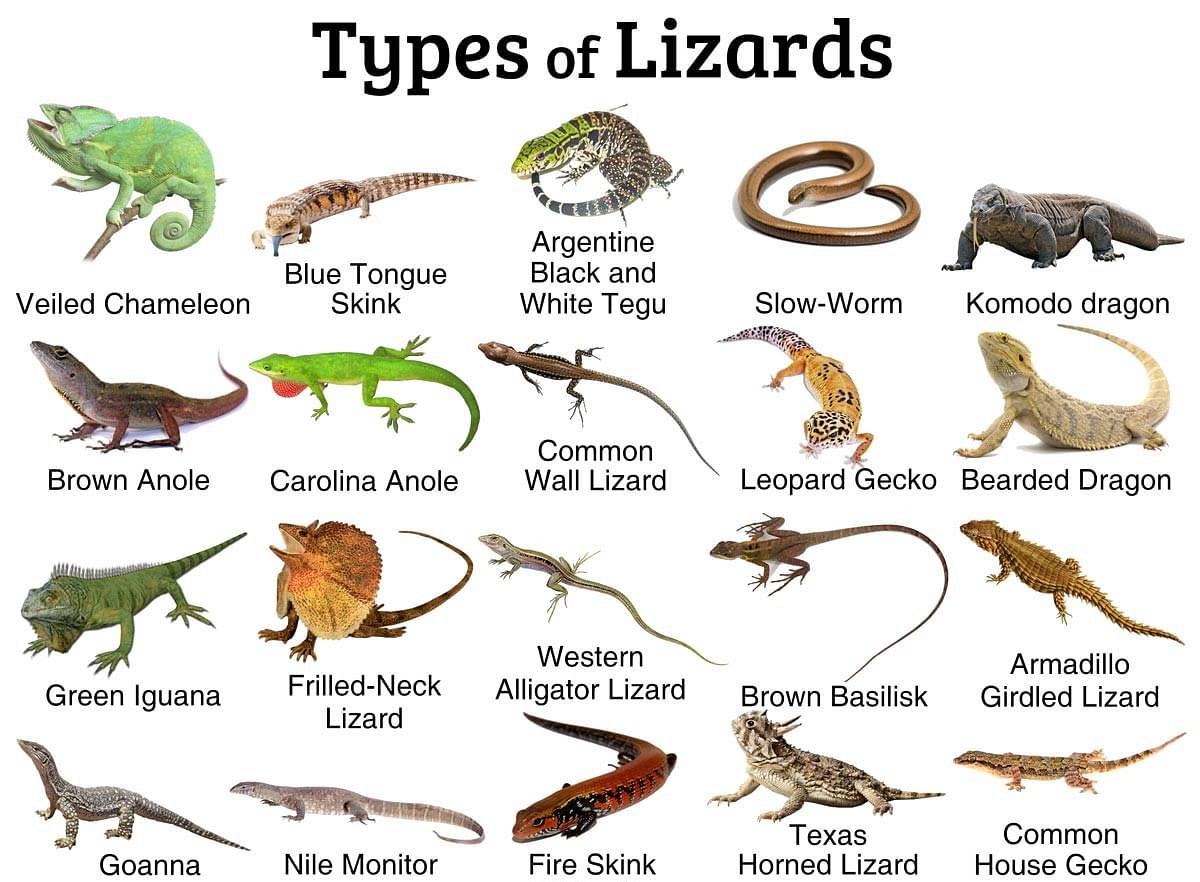
Different Types Of Lizards
Also Check:
Things To Remember
- Scientific name of the lizard is Lacertilia.
- There are more than 6000 recognized types of lizards all over the world except Antarctica.
- There are three phases in the life cycle of the lizard's life. Those are- egg stage, juvenile stage, and adult stage.
- Komodo dragons are the largest type of lizard.
- They can regrow their tails.
Sample Questions
Ques. What is the scientific name of a lizard? (1 Mark)
Ans. Though the scientific names of the lizards vary from type to the other, the common scientific name is - Lacertilia.
Ques. Mention the different scientific names of the common categories of the lizards. (3 marks)
Ans. Though there are more than 6000 categories of lizards with different scientific names, here are some of the prominent categories of lizards with their scientific names.
- Slow Worm – Anguis fragilis
- Komodo Dragon – Varanus komodoensis
- Common house gecko – Hemidactylus frenatus
- Rock monitor – Varanus albigularis
- Megalania – Varanus priscus (extinct)
Ques. Write the basic characteristics of the lizards. 43 marks)
Ans. Here are the basic characteristics of the lizards-
- Lizards have rounded torso, elevated head, short neck, four long legs, long tail with forked tongue.
- The lizards may weigh up to 160 kg. And can be 10 ft long.
- Some lizards can be legless as well.
- They can regrow their tails and can move their eyelids.
- The lizards are carnivorous mostly.
Ques. What are the five subcategories of the lizards? (1 Mark)
Ans. The five subcategories of the lizards are- Anguimorpha, Gekkota, Iguania, Lacertidae, Scincomorpha.
Ques. Mention the taxonomic details of the lizards. (3 marks)
Ans. Here are the taxonomic details of the lizards-
Kingdom- Animalia
Phylum- Chordata
Class- Reptilia
Superorder- Lepidosauria
Order- Squamata
Ques. What food attracts lizards? (1 mark)
Ans. Lizards are carnivorous, hence, they mostly survive on crawling insects, flying insects, and fruits.
Ques. What are the three stages of the life cycle of a lizard? (3 marks)
Ans. The three stages of the life cycle of lizards are- egg stage, juvenile stage, and adult stage.
- Egg Stage- The size of eggs and the way of laying eggs are different for every type of lizard. Therefore, the clutch size varies too as per the number of eggs. The hatching time for the eggs are different as well with the time span of 50 to 90 days. For example, while an Iguana takes 90 days, the frilled lizards take around 70 days. The baby lizards take 12-24 hours to get out of the egg shells.
- Juvenile Stage- At this stage, the lizards need to survive alone. The time span for maturation of the juvenile lizards varies from one category to another.
- Adult Stage- The matured lizards usually mate in the rainy season. Female lizards can lay up to 24 eggs. Though female Iguana can lay up to 70 eggs.
Ques. Which one is considered to be the most colorful lizard? (1 mark)
Ans. The most colorful lizard is considered to be- Spider-Man Agama.
Also check:



Comments