



Education Journalist | Study Abroad Lead
Uses of Electroplating include its main usage in terms of designing, construction and maintenance of the particular objects to enhance the competent capabilities of their surfaces. The coating of one metal over another is the main function that is covered under the electroplating and the main objective behind the same is to implant the properties of one metal over another as per their different qualities.
| Table of Content |
Keyterms: Electroplating, Metal, Hydrolysis, Chemical bonds, Water, Electrode, Cathode, anode
Electroplating Definition
[Click Here for Sample Questions]
Electroplating refers to the entire procedure of coating or covering one type of metal with that of another type of metal. This coating of metals is done through the process of hydrolysis.
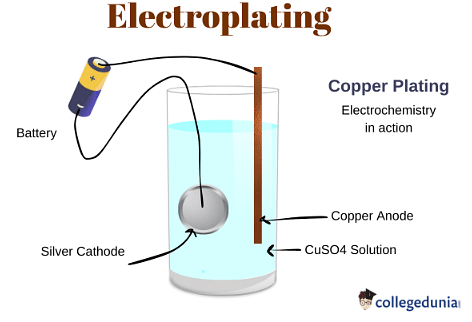
In other words, hydrolysis is said to be a chemical reaction in which a molecule of water tends to break one or more chemical bonds which makes the process of coating easy through quick transfer of properties of one metal over another.
Read More:
Procedure of Electroplating
[Click Here for Sample Questions]
Hydrolysis is a mechanism which facilitates the procedure of electroplating. The use of water molecules in the coating of the electrode makes the process less harmful and also environment friendly. The procedure of electroplating is simple and easy to go but requires greater technicalities.
- In the process of electroplating, an electric current is used which helps in reducing the cations (positively charged ions) of the dissolved metal at the cathode (negatively charged electrode).
- This mechanism through cathode and anode provides a lean coherent metal coating on the electrode.
- For instance, the process of electroplating is frequently applied at the time of electrical oxidation of the anions which are negatively charged ions on a solid substrate. Such as in the formation of silver chloride (AgCl3) on the silver wire to form silver chloride electrodes.
Usage of Electroplating
[Click Here for Sample Questions]
The procedure of electroplating the metals is majorly used to modify or enhance the features of the surface of any object. This in turn also contributes to preventing the corrosion or abrasion of the metals. Although, the metals are also sometimes or say majority of times, are electroplated for the decorative purposes or for preserving the properties of some commercial goods. However, electroplating is used for multiple purposes in various domains and this signifies the significance of electroplating through hydrolysis.
Application of Electroplating
[Click Here for Sample Questions]
GIven below are the applications of electroplating:
-
Commercial Applications in Multiple Goods:
One of the most prominent usage of electroplating is on the commercial goods, such as, the parts of the automobiles like that of cars are electroplated to give them a smooth appearance and texture with the help of a thin layer of chromium. Another example of the same is the electroplating on the tin cans which helps to preserve the drinks in a better way.
-
Aesthetics
In this era of extensive globalization and capitalism, the demand of people has increased in terms of quality and appearances of the products which help them in matching with their living standards. Therefore, the process of electrolysis helps in coating a thin sheet of expensive and rare metals over that of cheaper metals. This in turn helps in raising the quality of the final product which will ultimately have all the beauty and lustre at a minimal cost. For instance, Electroplating is widely used for designing jewellery and other ornaments.
-
To Conduct Electricity
Another important usage of electroplating is in terms of making the metals work as conductors of electricity. Metals like silver and gold are indeed excellent conductors of electricity but as mentioned above, these metals are not easily accessible and are also extremely expensive. Therefore, through the techniques of electroplating, a little amount of these highly conductive and precious metals can be incorporated into the integrated circuits and electrical components like computers, cell phones, etc. and then this will ultimately help in the conduction of electricity.
-
Protection from Radiation
Electroplating majorly helps in protecting the materials from multiple recurring phenomena such as radiation and abrasion. Hence, electroplating simply helps in imparting the desired features or characteristics to the surface of the metals, which are not already present in that particular form of metal.
-
Prevention of Corrosion
Some of the metals are more prone to the natural processes of corrosion and rusting, therefore, one of the major uses of electroplating involves protecting the surface of such metals by covering them with a thin layer of metal which are corrosion - resistant. For instance, copper, chromium, and nickel are few examples of the non - corrosive metals which are spread over corrosive metals like that of steel and iron.
Things to Remember
- Electroplating refers to the entire procedure of coating or covering one type of metal with that of another type of metal.
- Hydrolysis is a mechanism which facilitates the procedure of electroplating.
- The procedure of electroplating the metals is majorly used to modify or enhance the features of the surface of any object.
Also Read:
Sample Questions
Ques. What is the main purpose of electroplating? (1 mark)
Ans. The main use of electroplating is to cover one metal with another so that the properties of that metal could prove beneficial for another incompetent metal.
Ques. Mention a few uses of electroplating? (1 mark)
Ans. Few uses of electroplating include protection of metals from radiation, corrosion and rusting are some of the main uses of electroplating.
Ques. Which process is used for electroplating? (1 mark)
Ans. Hydrolysis is the process which is used for electroplating.
Ques. Mention few commercial products in which electroplating is applied. (1 mark)
Ans. Car appliances, tin cans, electric wires, etc. are few commercial products which are electroplated.
Ques. How does electroplating help in protecting from radiation? (1 mark)
Ans. Electroplating helps in protecting the materials / metals from multiple recurring phenomena such as radiation. Electroplating simply helps in imparting the desired features or characteristics to the surface of the metals, which are not already present in that particular form of metal.
Ques. What is electroplating? (1 mark)
Ans. Electroplating refers to the entire procedure of coating or covering one type of metal with that of another type of metal. This coating of metals is done through the process of hydrolysis.
Ques. What is electro disposition? (1 mark)
Ans. Electro disposition refers to the procedure of coating a thin layer of metal on another metal in order to improve the surface properties of that particular metal.
Ques. What is Nickel plated steel? (2 marks)
Ans. Nickel electroplating refers to a process of electroplating in which a thin layer of nickel metal is plated onto another metal. The layer of nickel on the metal object provides decorative appearance, protects it from corrosion, wear resistance or helps in the production of worn or small parts for salvage purposes.
Ques. What is Flash plated? (1 mark)
Ans. Flash plating is generally done with gold while making jewellery. Through flash gold plating a thin layer of gold coating is done just sufficient to give the colour and finish. It is generally used while making display items or costume jewellery.
Ques. Given the steps of electroplating? (3 marks)
Ans. The steps of electroplating:
- In the process of electroplating, an electric current is used which helps in reducing the cations (positively charged ions) of the dissolved metal at the cathode (negatively charged electrode).
- This mechanism through cathode and anode provides a lean coherent metal coating on the electrode.
- For instance, the process of electroplating is frequently applied at the time of electrical oxidation of the anions which are negatively charged ions on a solid substrate. Such as in the formation of silver chloride (AgCl3) on the silver wire to form silver chloride electrodes.
For Latest Updates on Upcoming Board Exams, Click Here:https://t.me/class_10_12_board_updates
Also Read:



Comments