




The Bricks, Beads and Bones PDF is the official NCERT chapter on the Harappan Civilisation from Themes in Indian History Part I. This page lets students download the original Chapter 1 text and figures for the 2026-27 CBSE syllabus. Reading the source chapter is the best way to understand the archaeological evidence behind every exam answer on the Indus Valley cities.
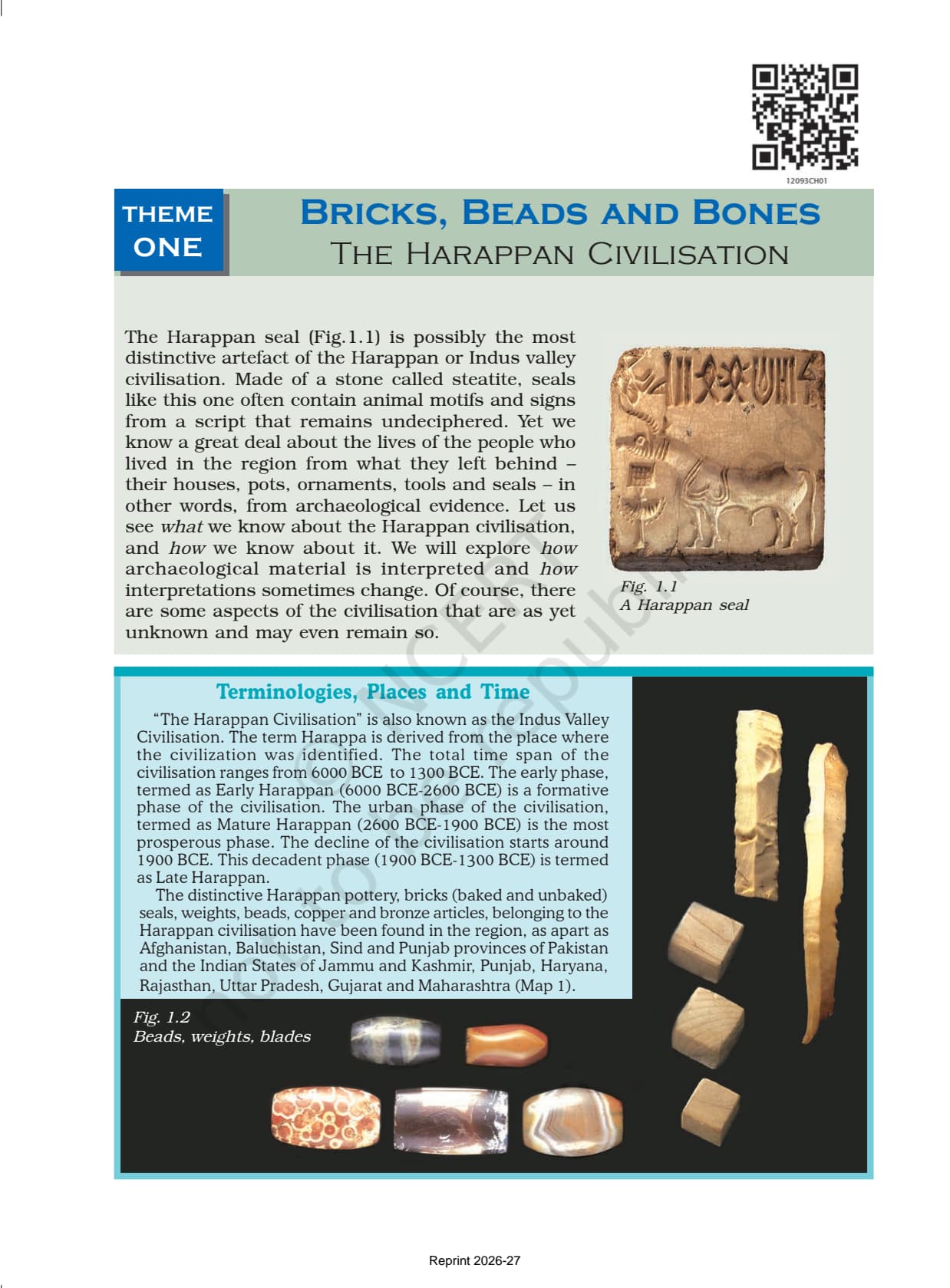
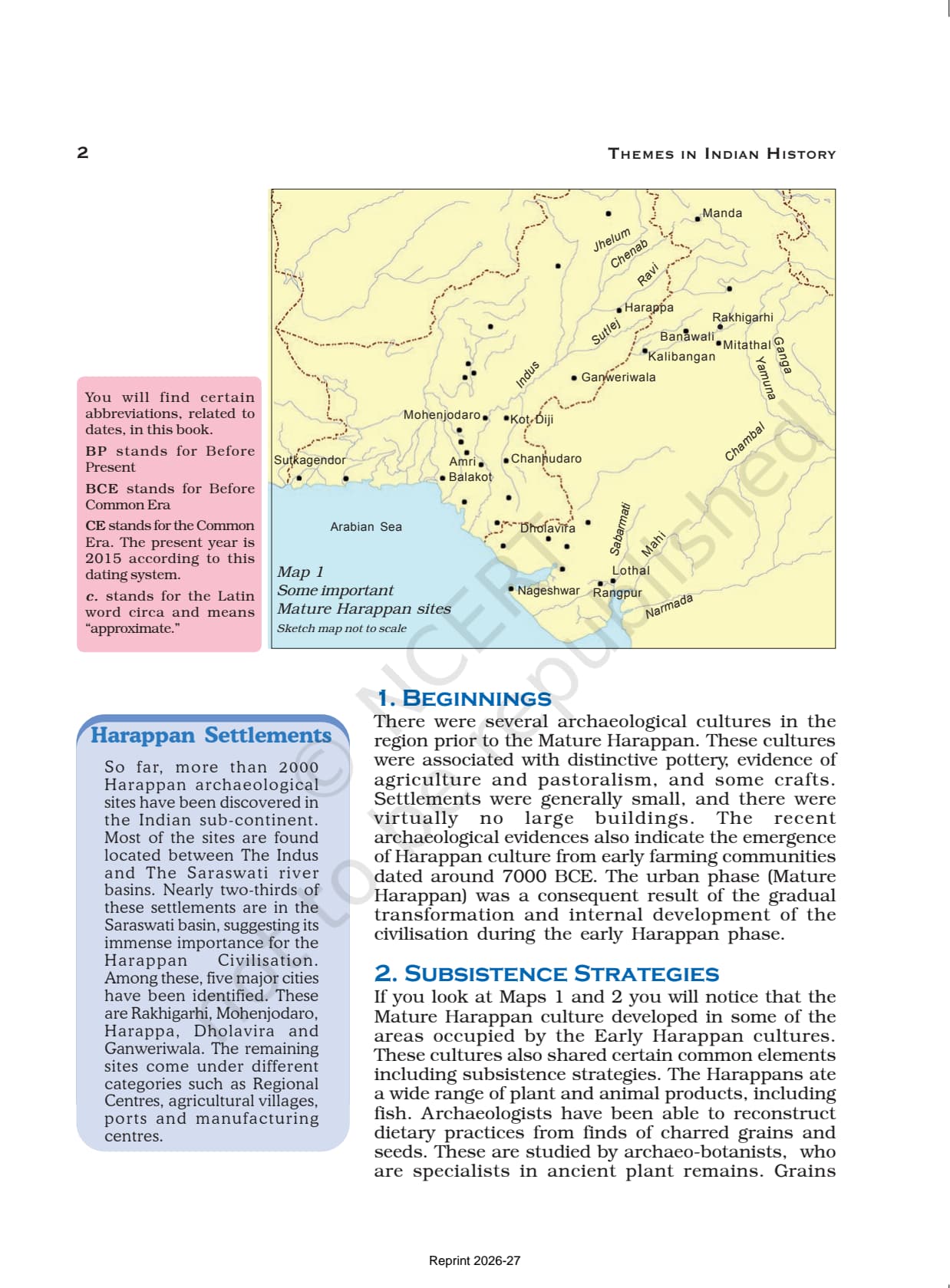
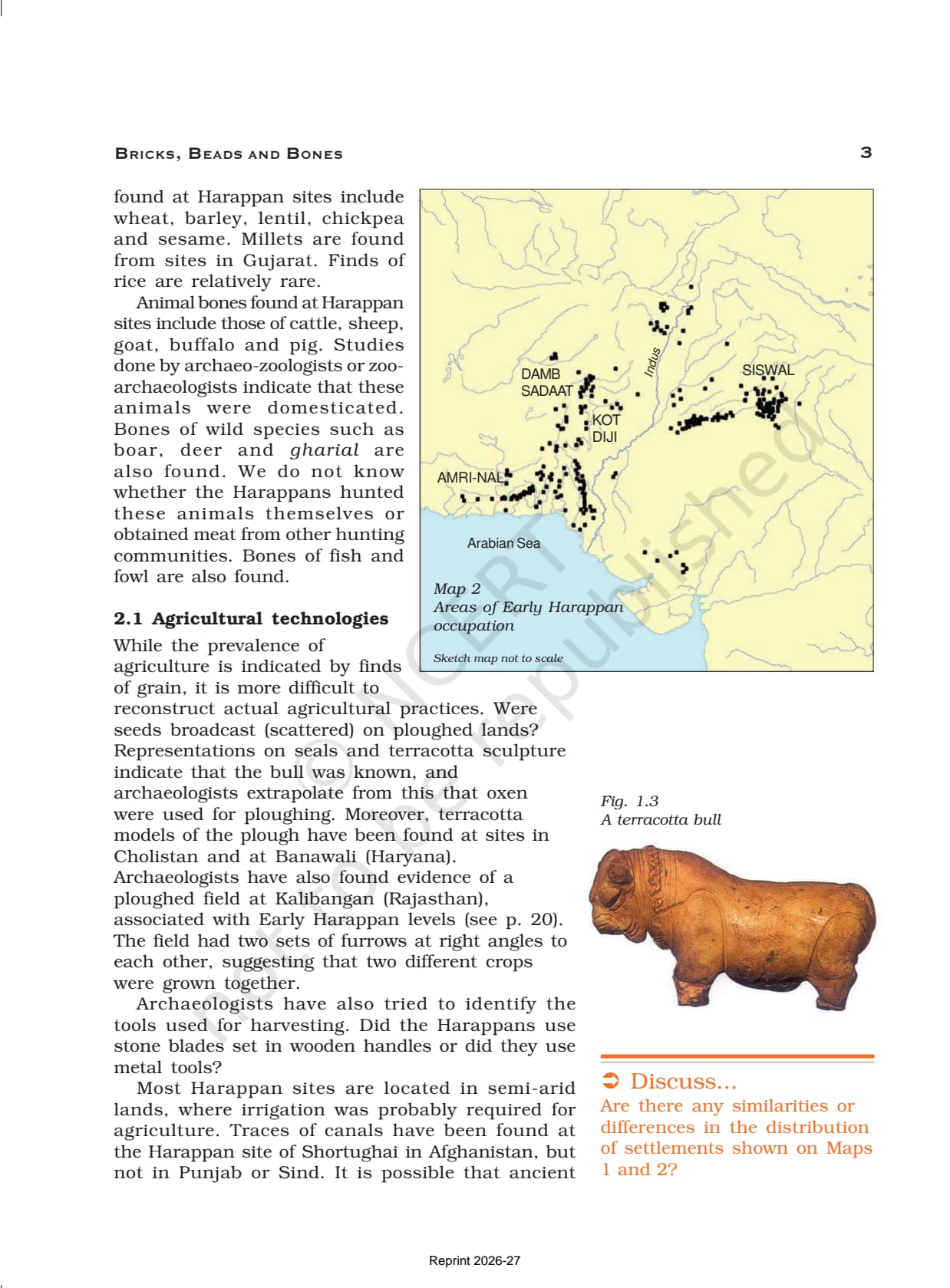
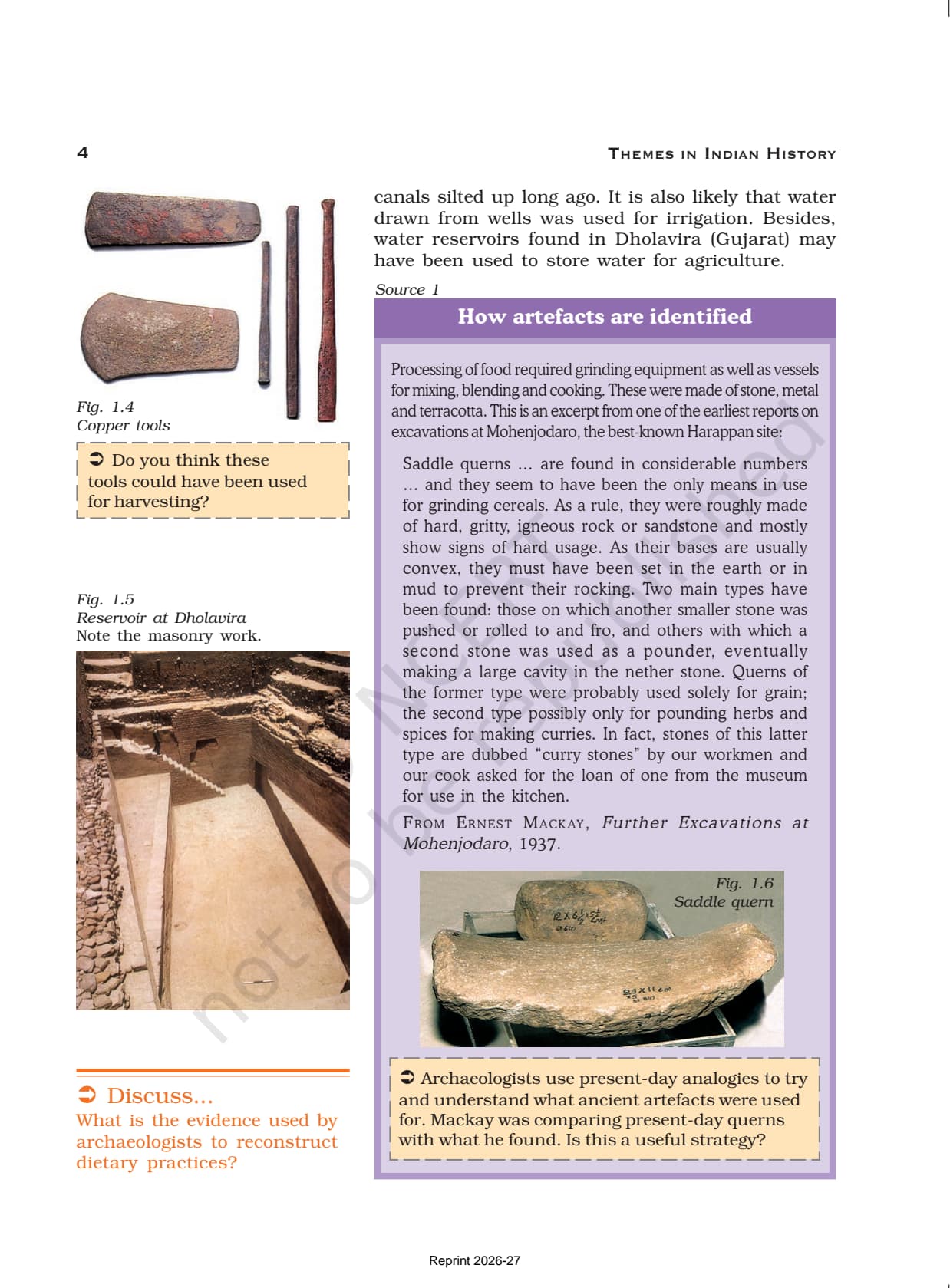
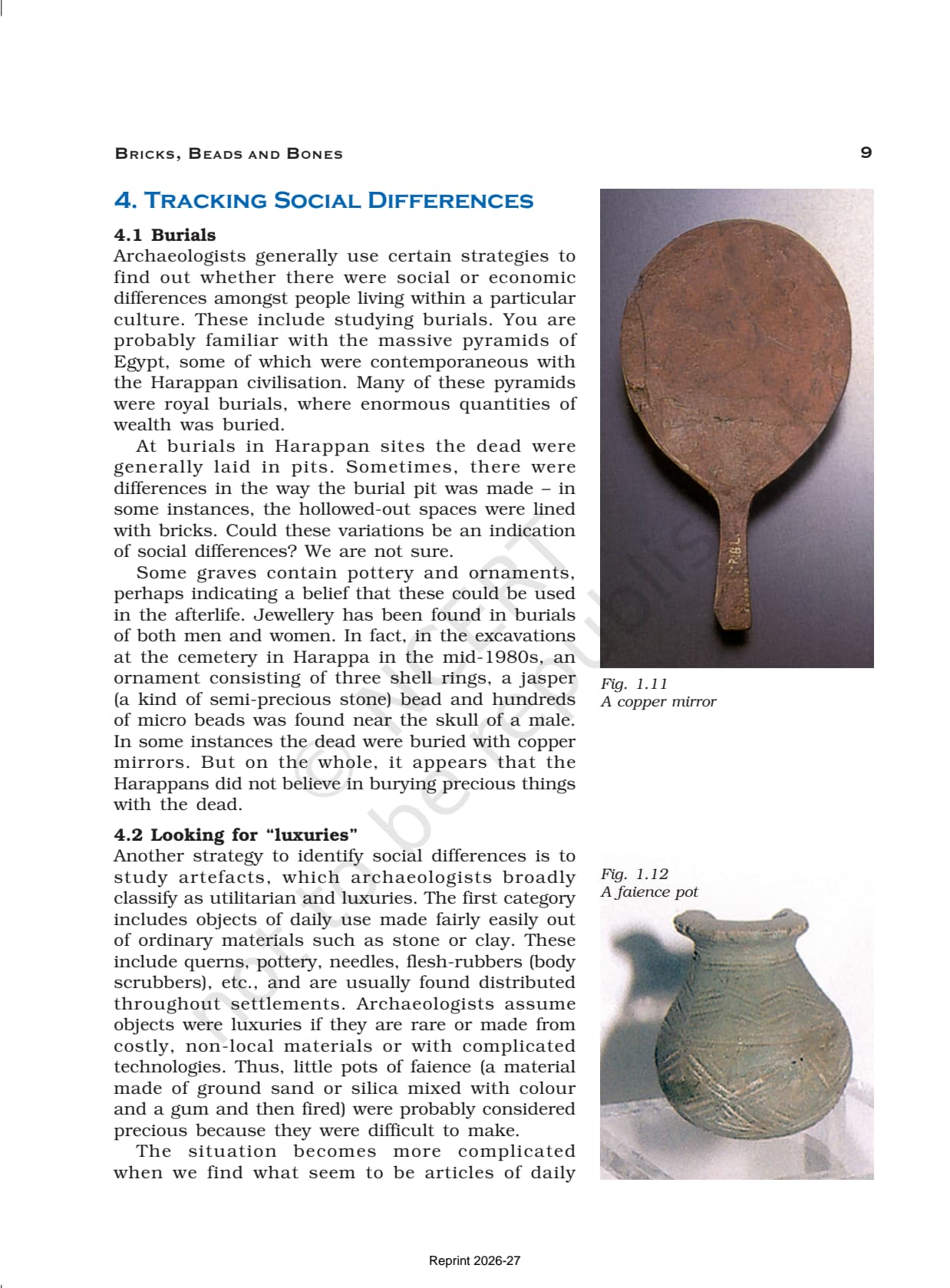
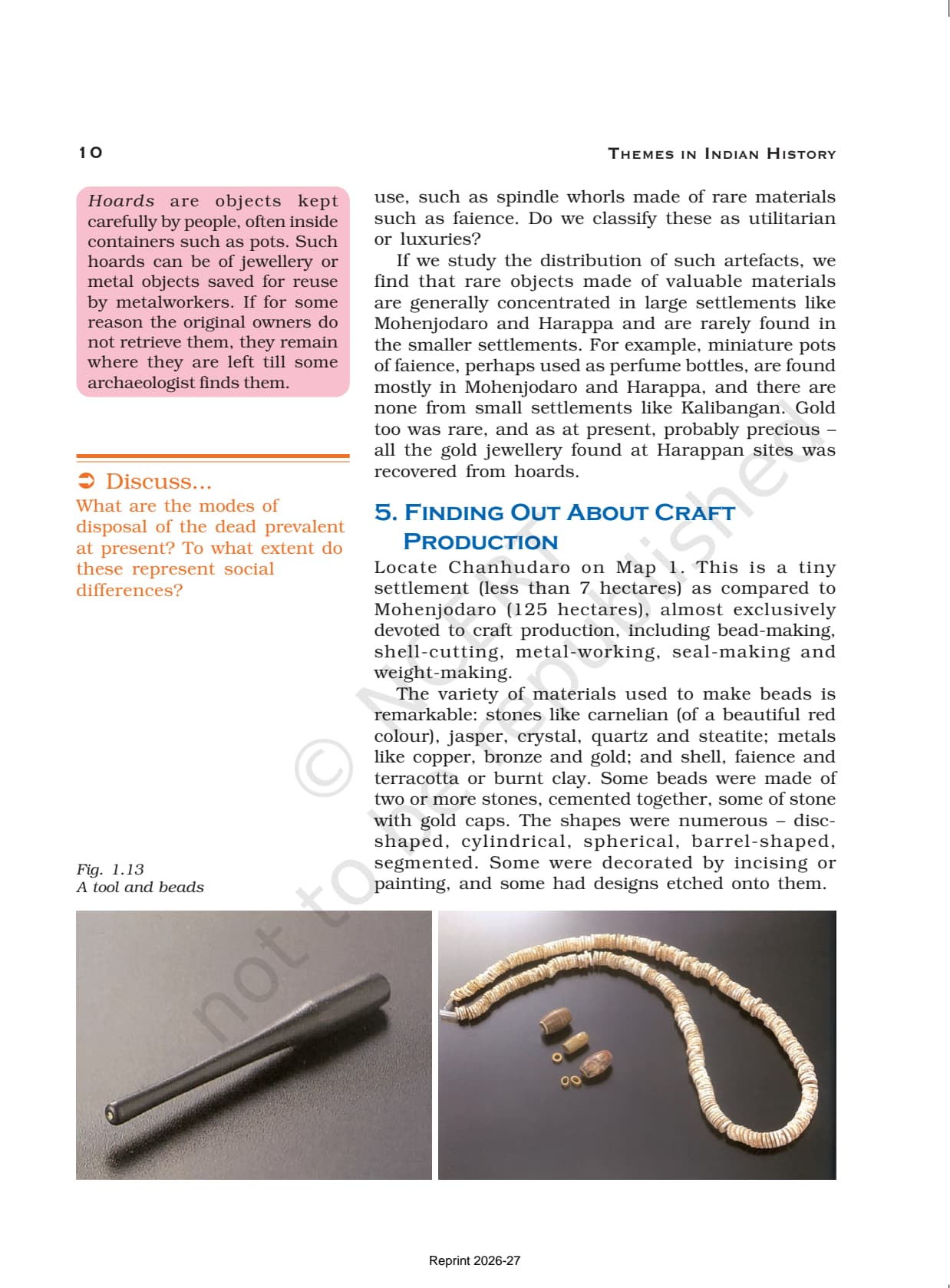
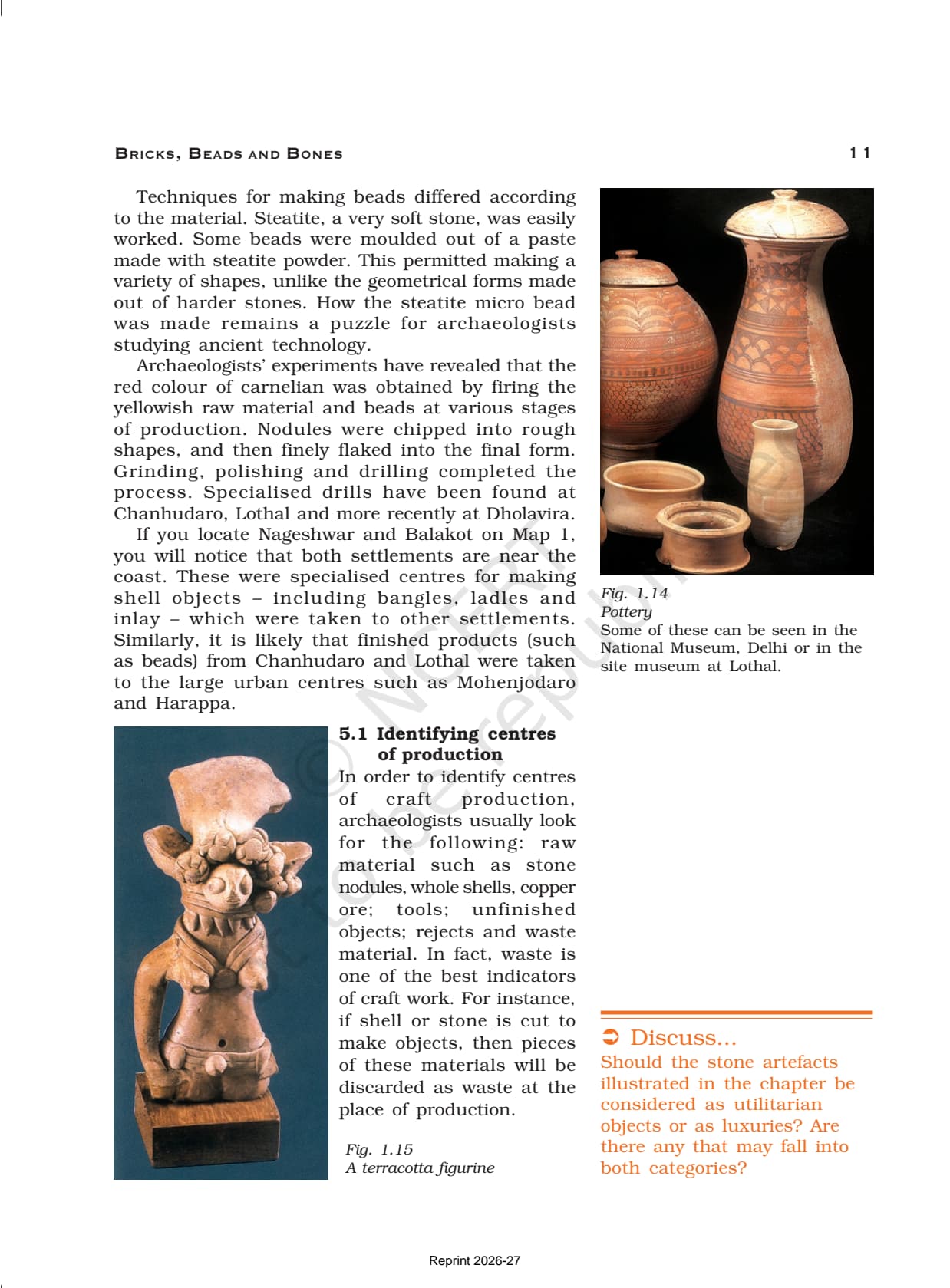
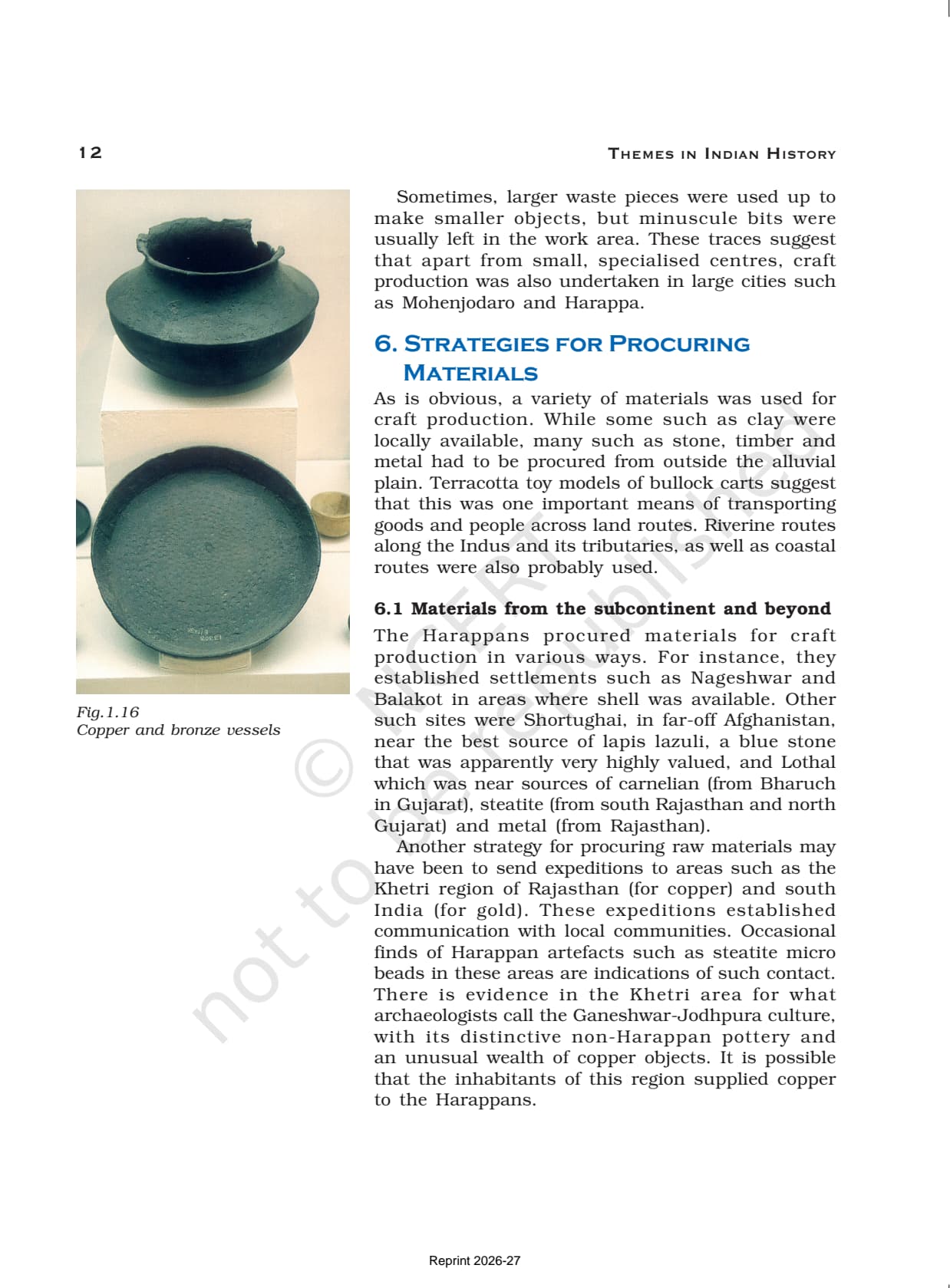
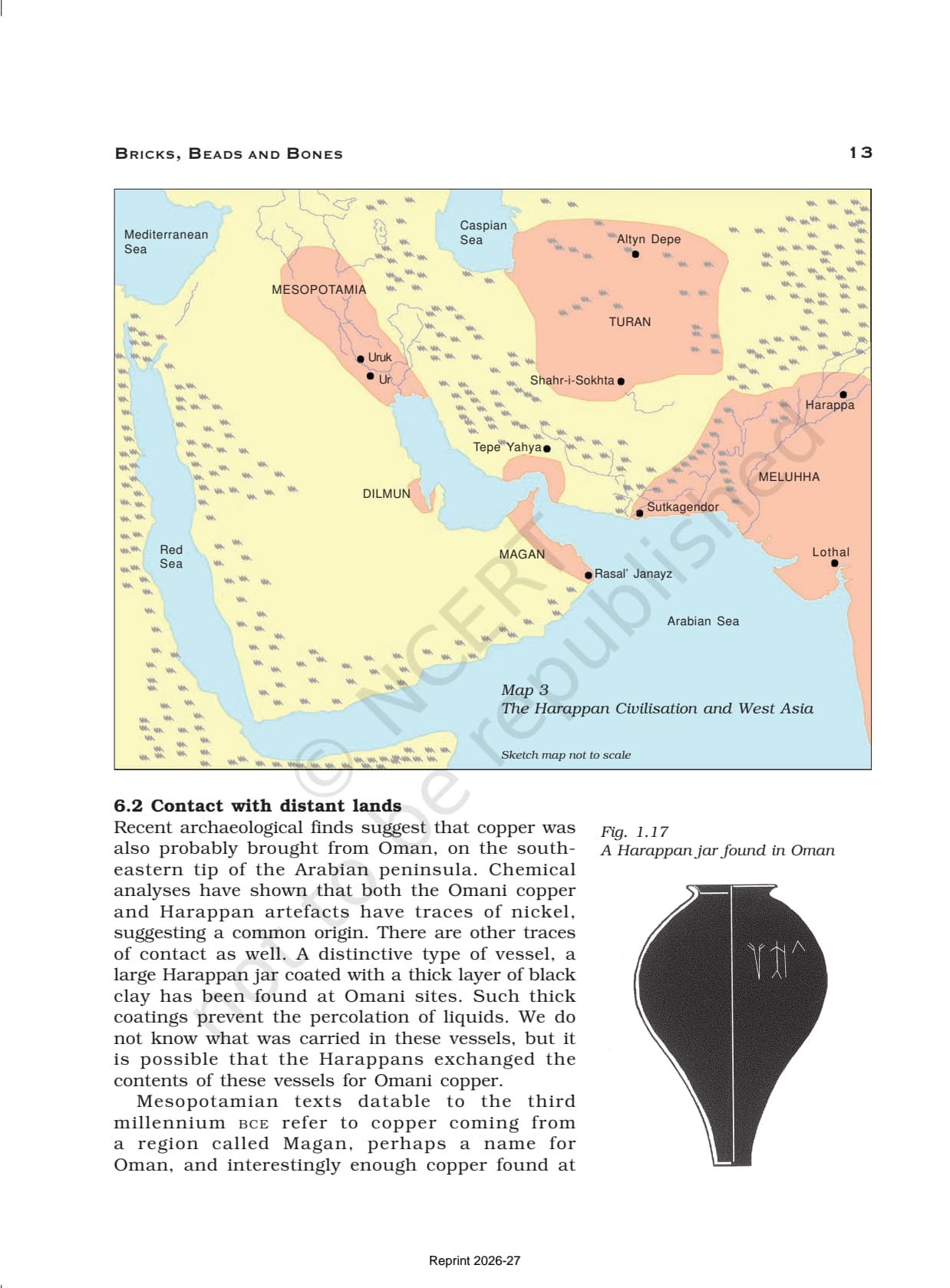
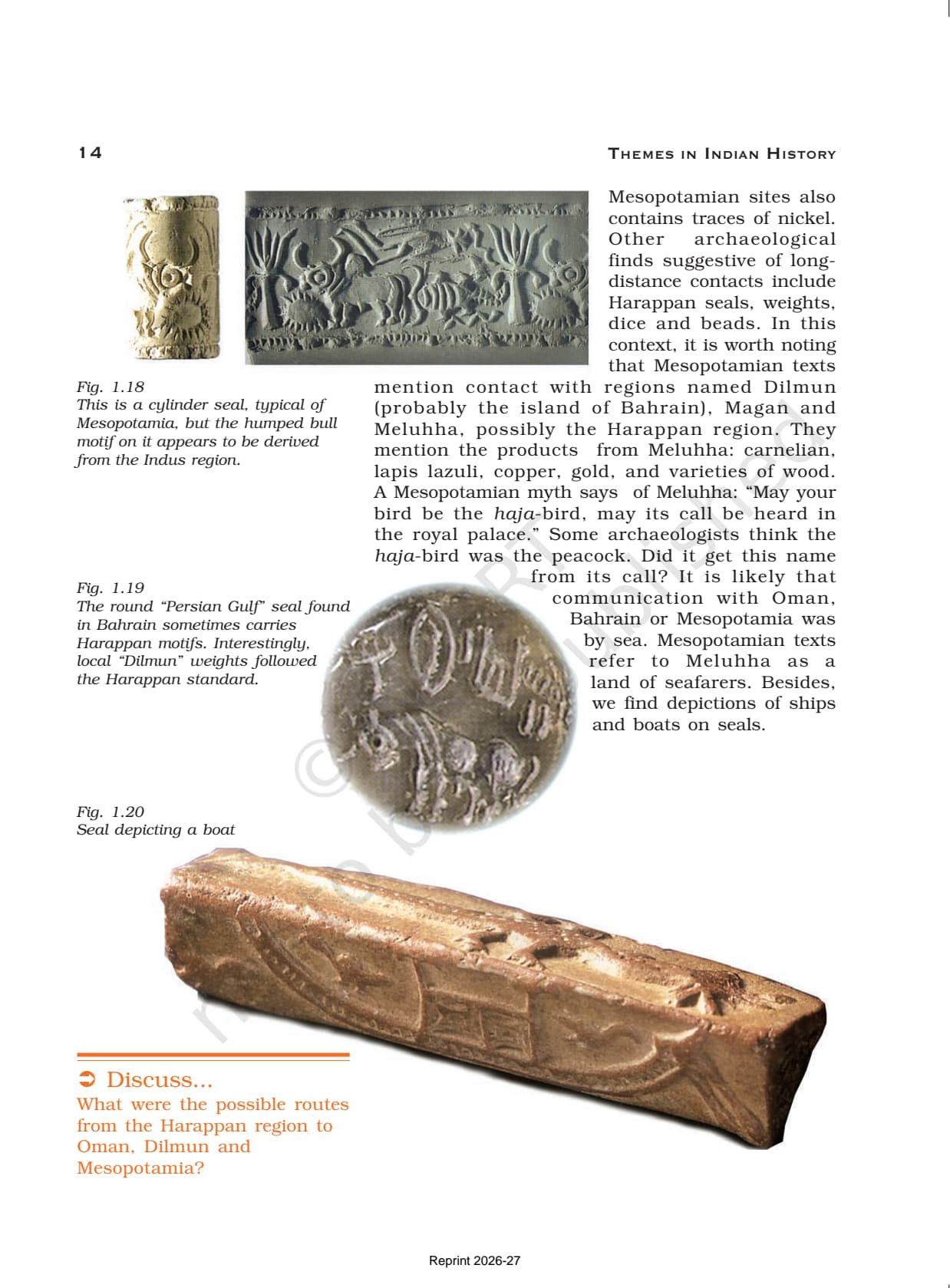
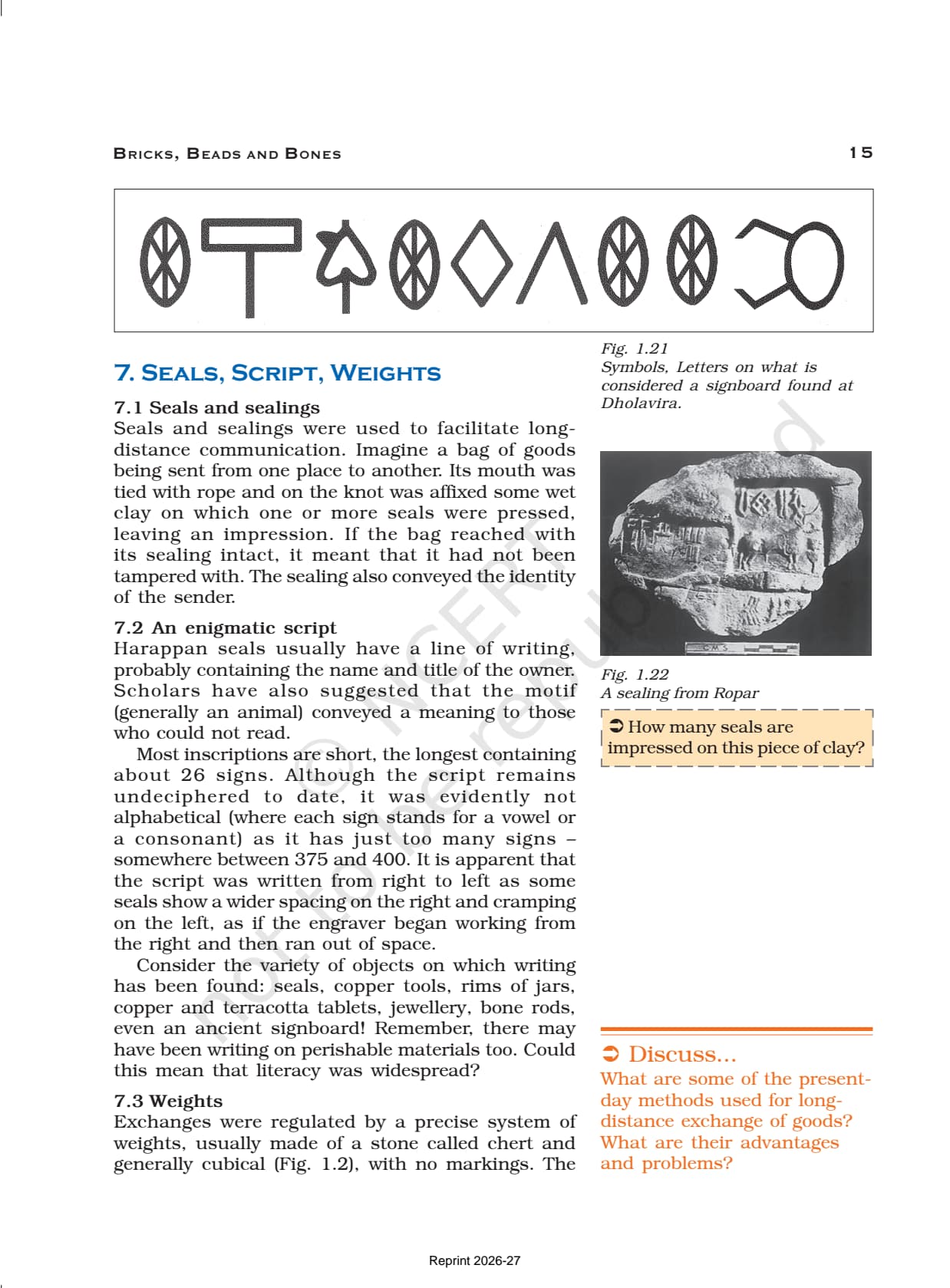
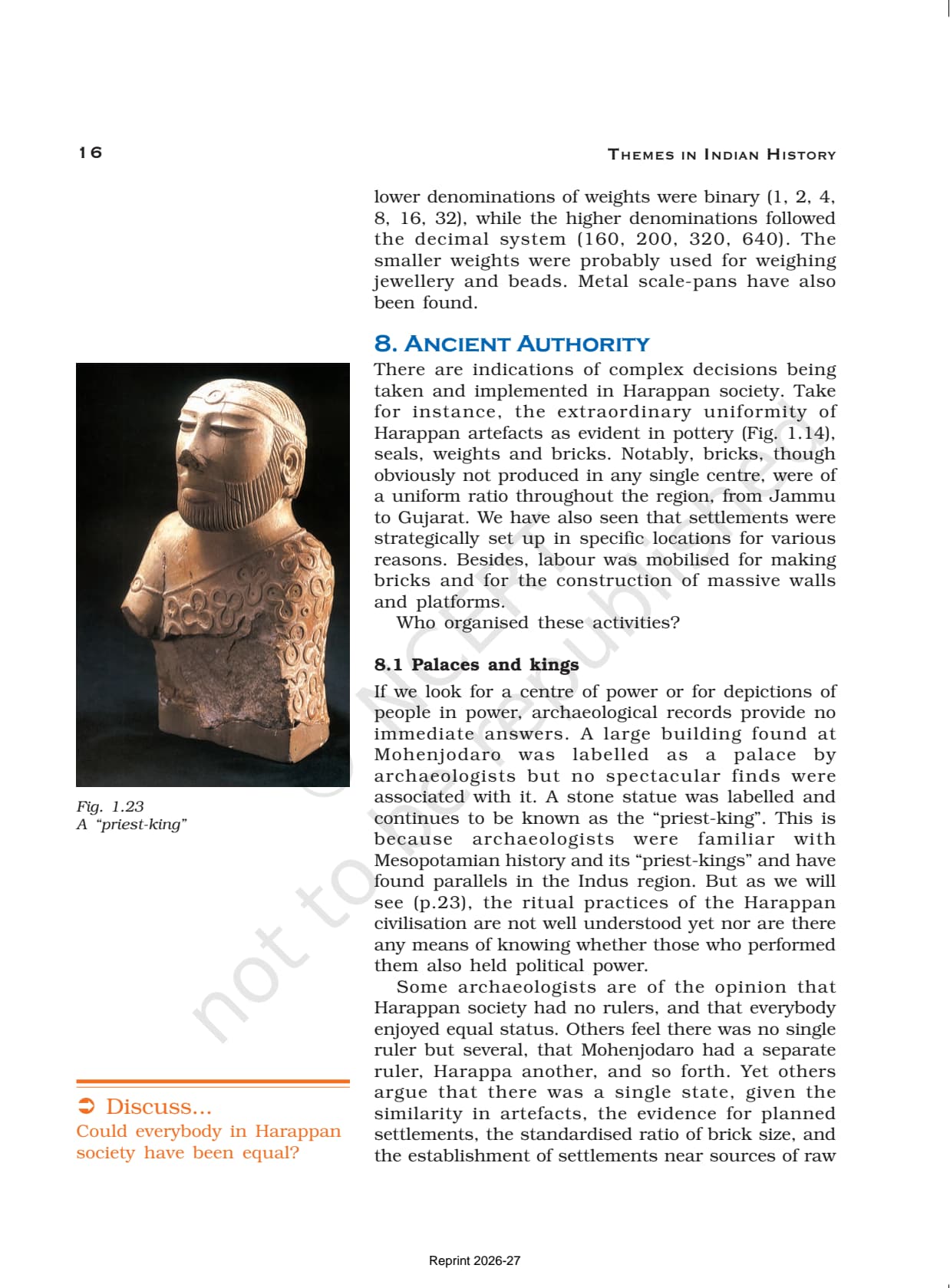
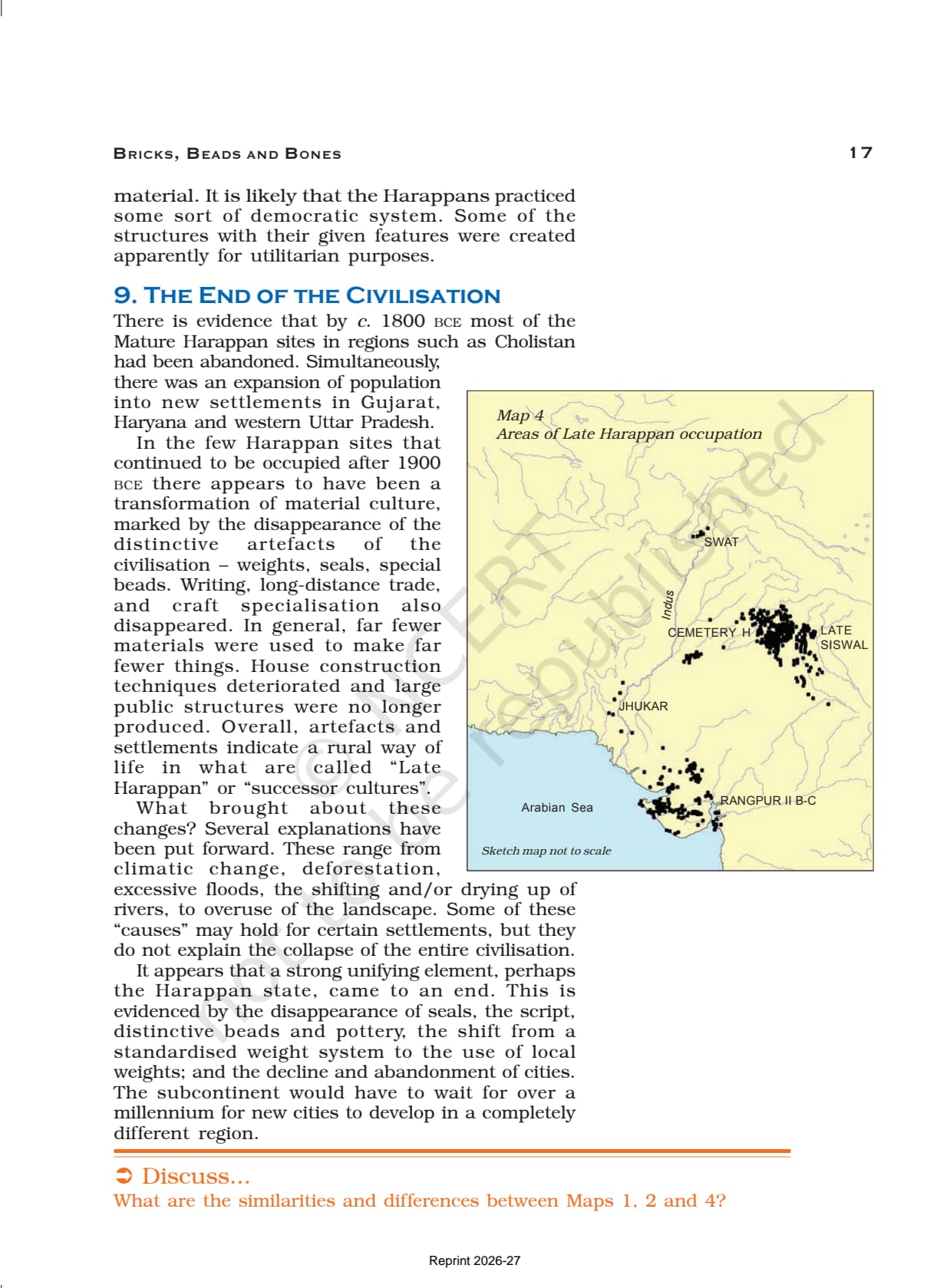
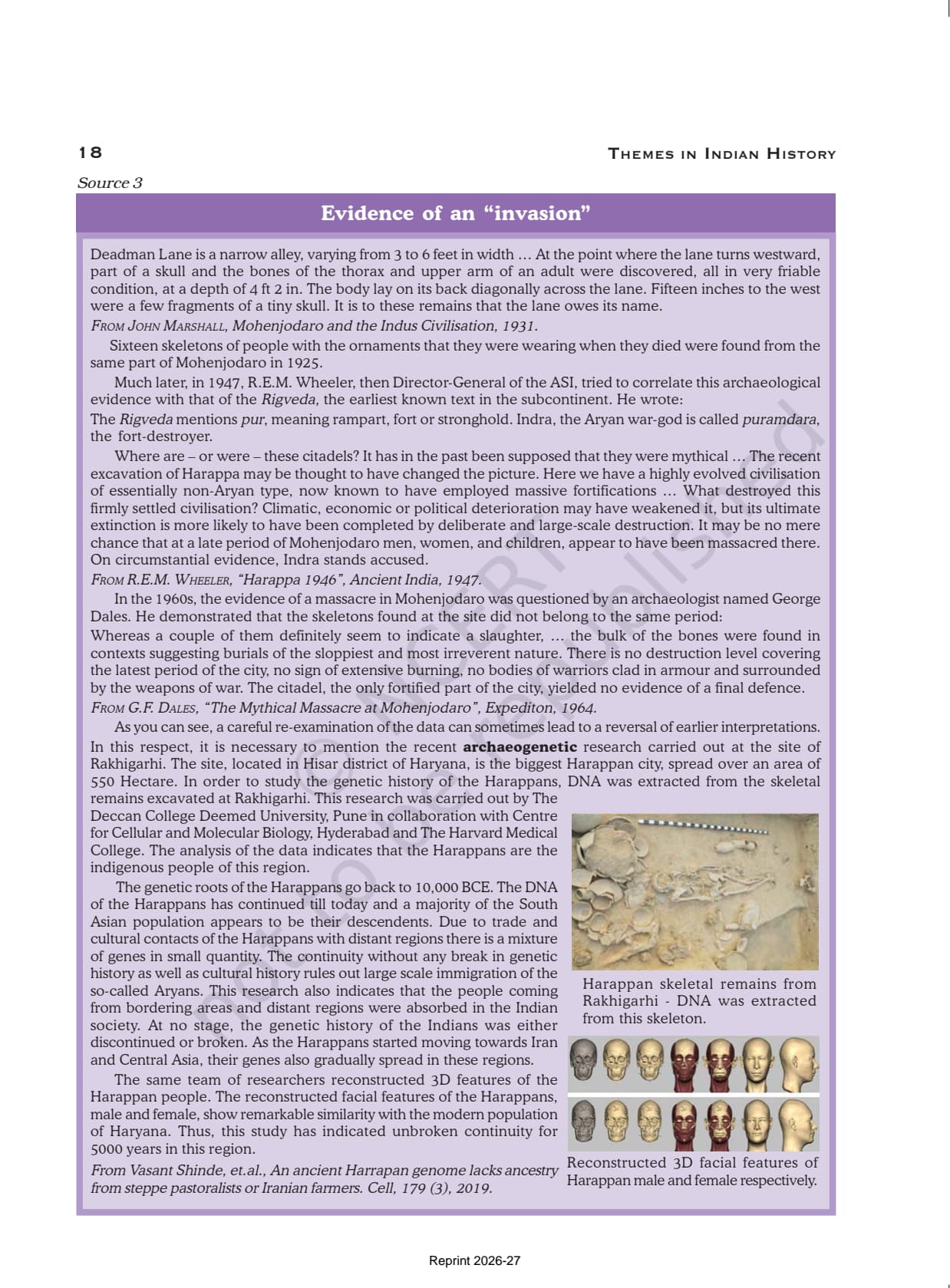
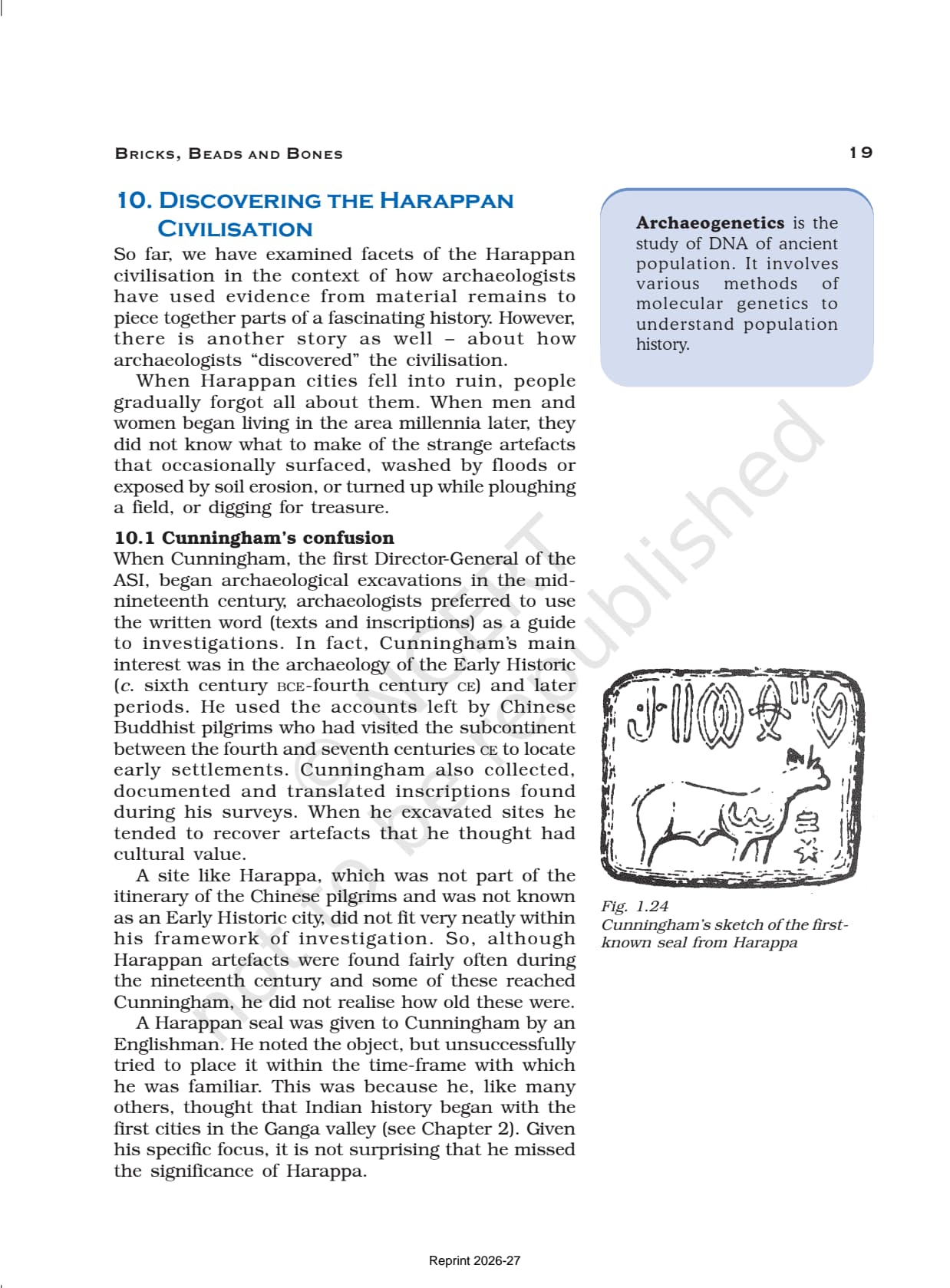
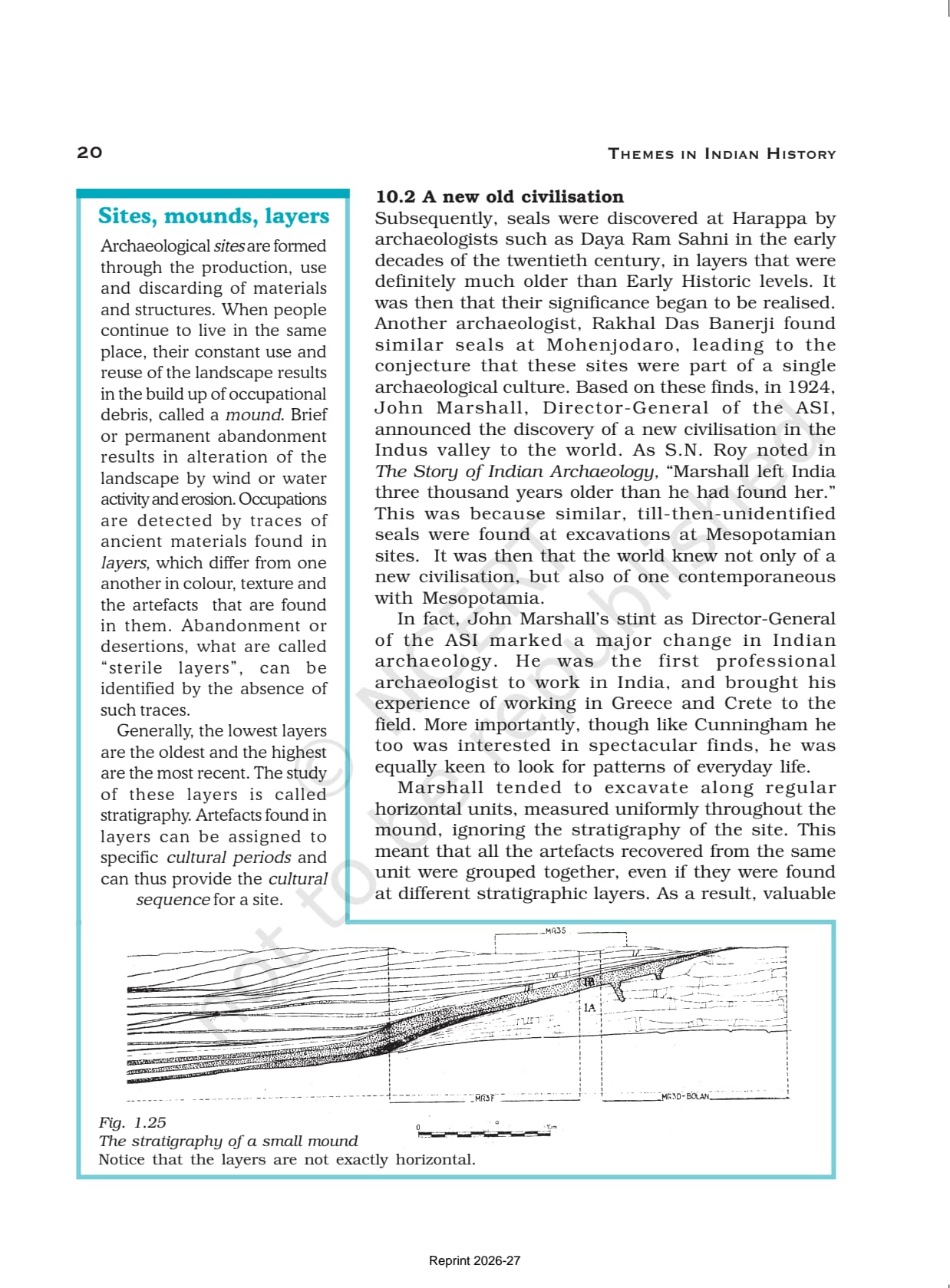
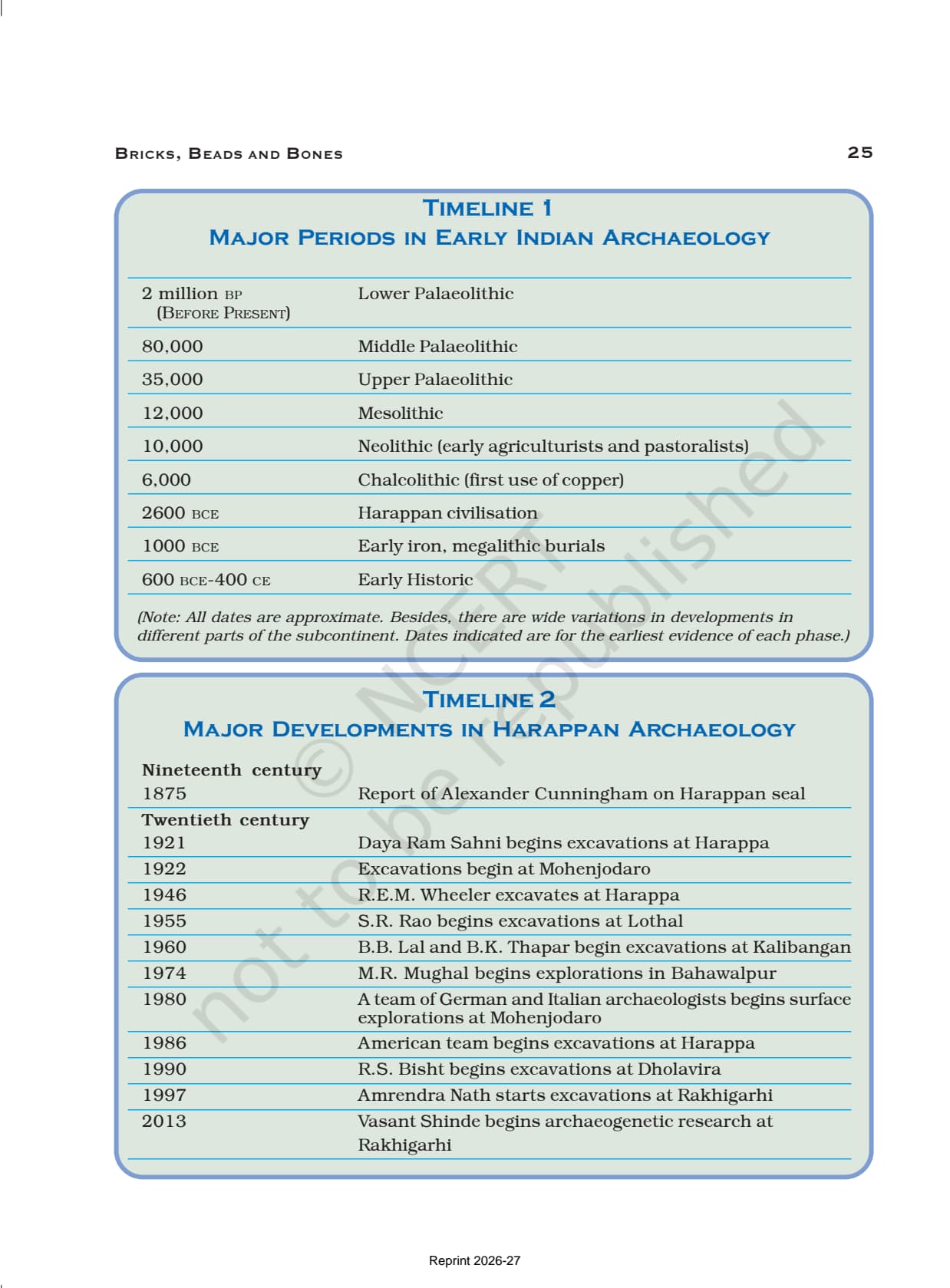
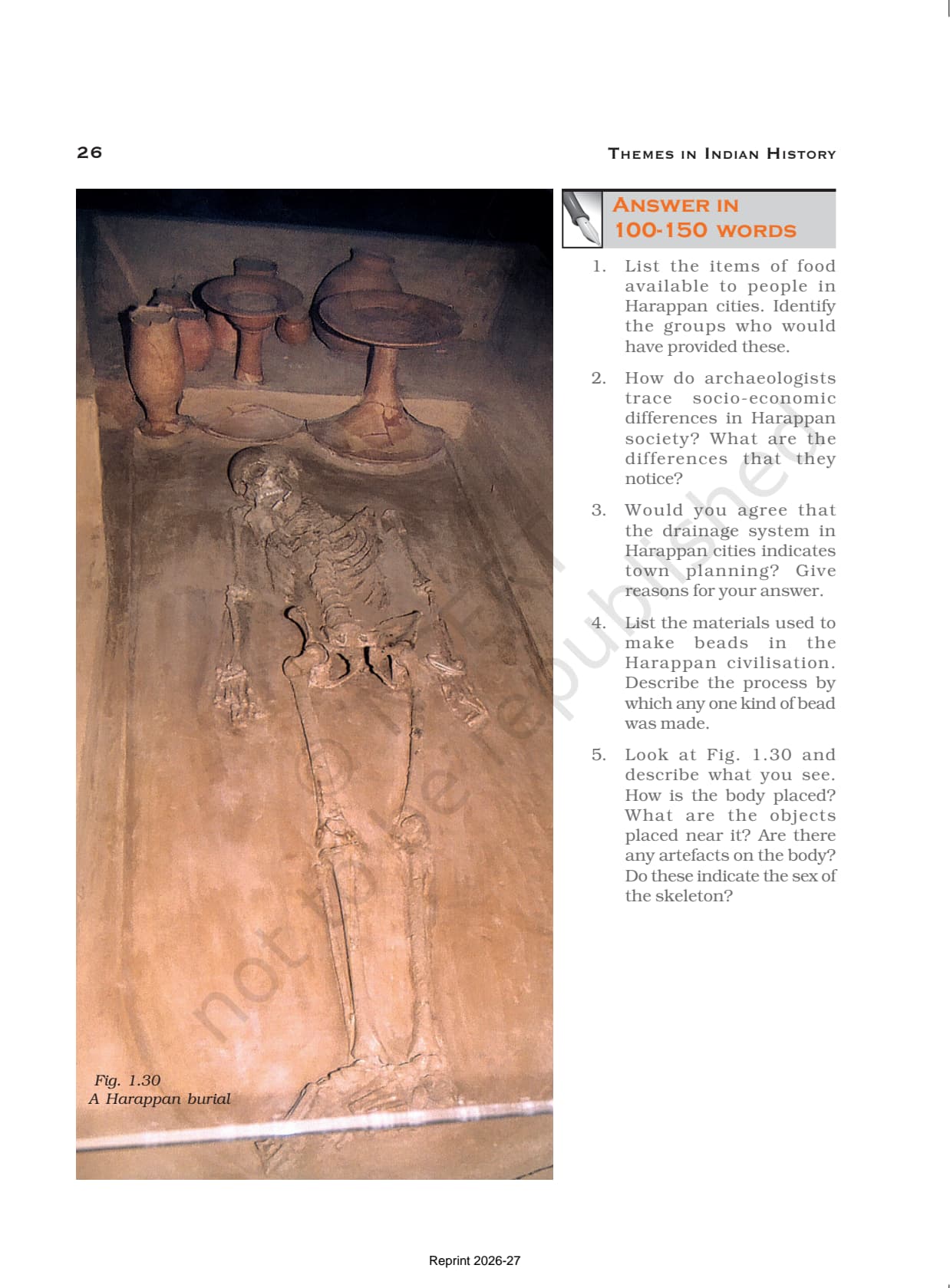
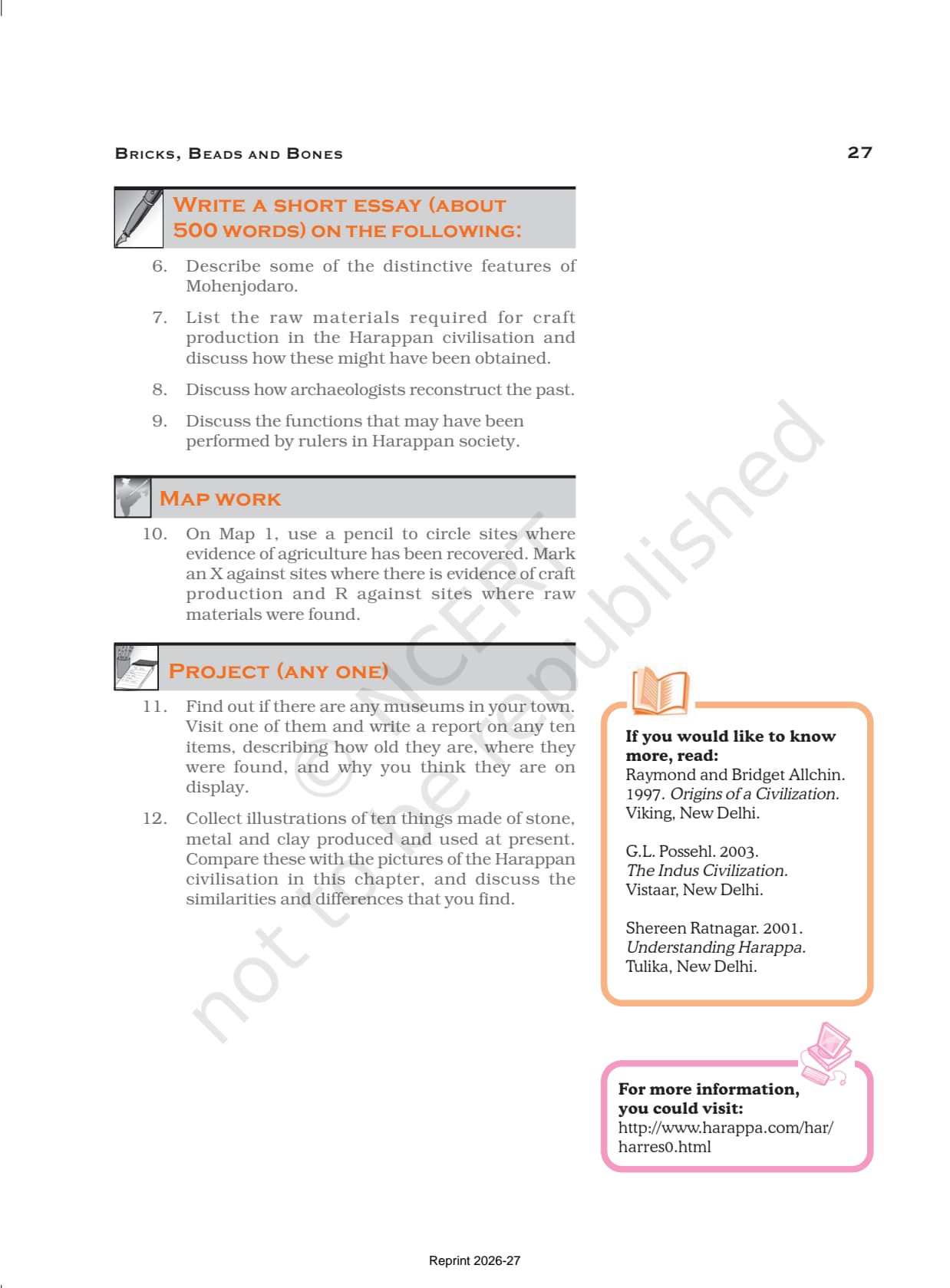
- Official NCERT chapter with the original maps, photographs and source extracts.
- This Class 12 History chapter usually carries 6 to 8 marks in the board paper.
- Pairs with the NCERT Solutions, Notes and Handwritten Notes linked lower on this page.
This is the official NCERT Bricks, Beads and Bones chapter from Themes in Indian History Part I, offered for free download in the 2026-27 edition.
Student Feedback: In a Collegedunia poll of 7,940 Class 12 History students before the 2026 boards, 66% of students said they kept the official NCERT chapter PDF open while solving source-based questions, because the answers come straight from the chapter's own extracts and figures.
Source: 2026-27 Class 12 History student poll. Sample of 7,940 students from CBSE schools across 12 states.
What the Bricks, Beads and Bones NCERT Chapter Covers
Bricks, Beads and Bones is the first chapter of Themes in Indian History Part I. It studies the Harappan or Indus Valley Civilisation, a Bronze Age urban culture that grew along the Indus and its tributaries between roughly 2600 BCE and 1900 BCE. The chapter has no written history students can read, so the NCERT builds the whole story from objects dug out of the ground.
The three words in the title organise the chapter's evidence:
- Bricks introduce town planning, houses, drains and the Great Bath.
- Beads introduce craft production, trade and the work of specialists.
- Bones (animal and human) introduce food, farming and burials.
The chapter also closes with a section on how archaeologists reconstruct the past and how the civilisation was rediscovered. Reading the original NCERT text matters because the source extracts and captions in the class 12 history chapter 1 pdf are exactly what CBSE quotes in source-based questions. A student who knows the chapter's own examples can answer those passages with confidence.
Chapter Highlights and Important Figures
The NCERT chapter is rich with photographs, seals and maps that the exam often refers to. Knowing what each figure shows helps students answer "look at the figure" questions quickly. The table below lists the highlights students should study in the original chapter PDF.
| Highlight | Why it matters |
|---|---|
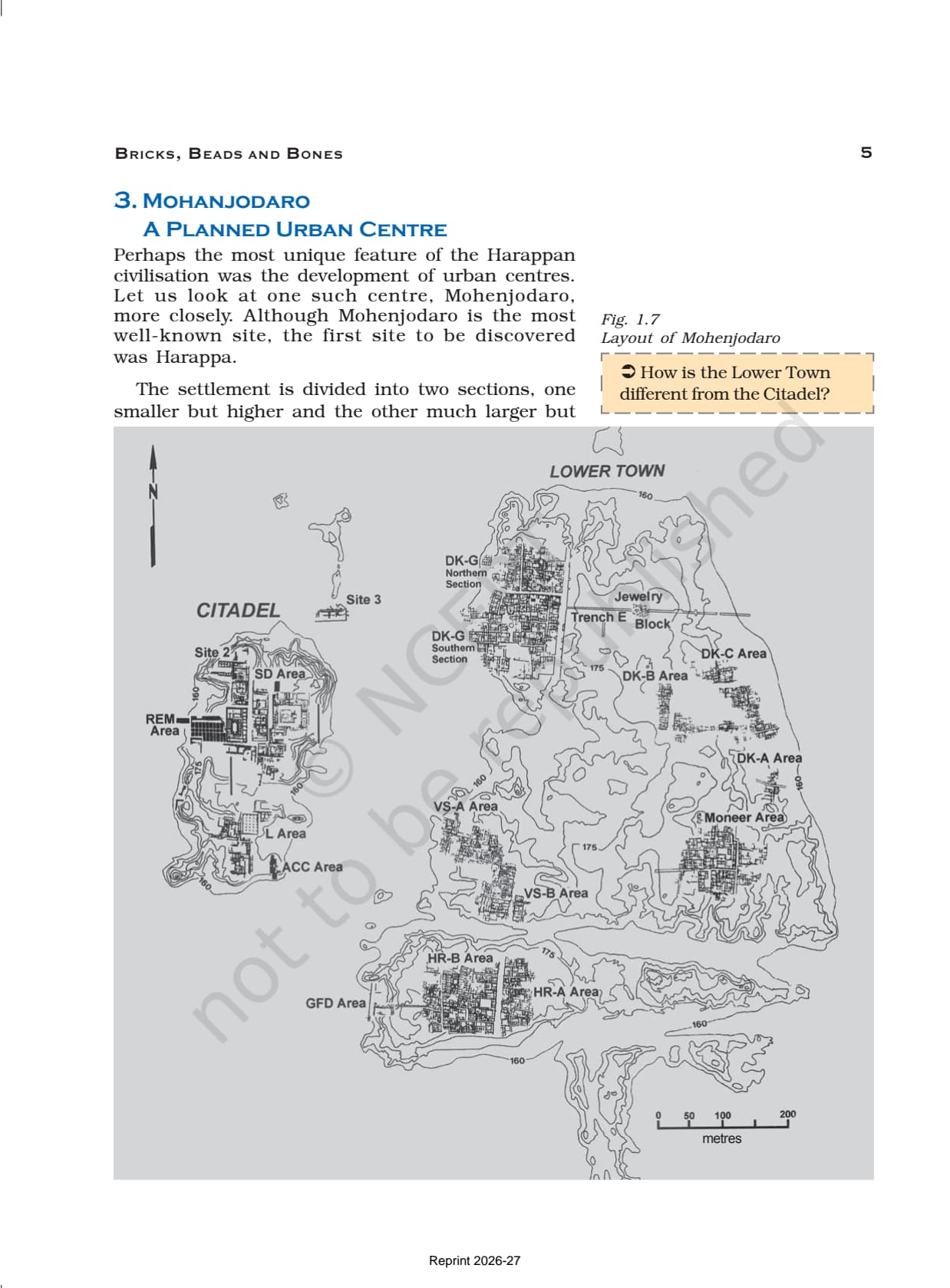
| Mohenjodaro layout | Shows the Citadel and Lower Town, the grid streets and the covered drains. |
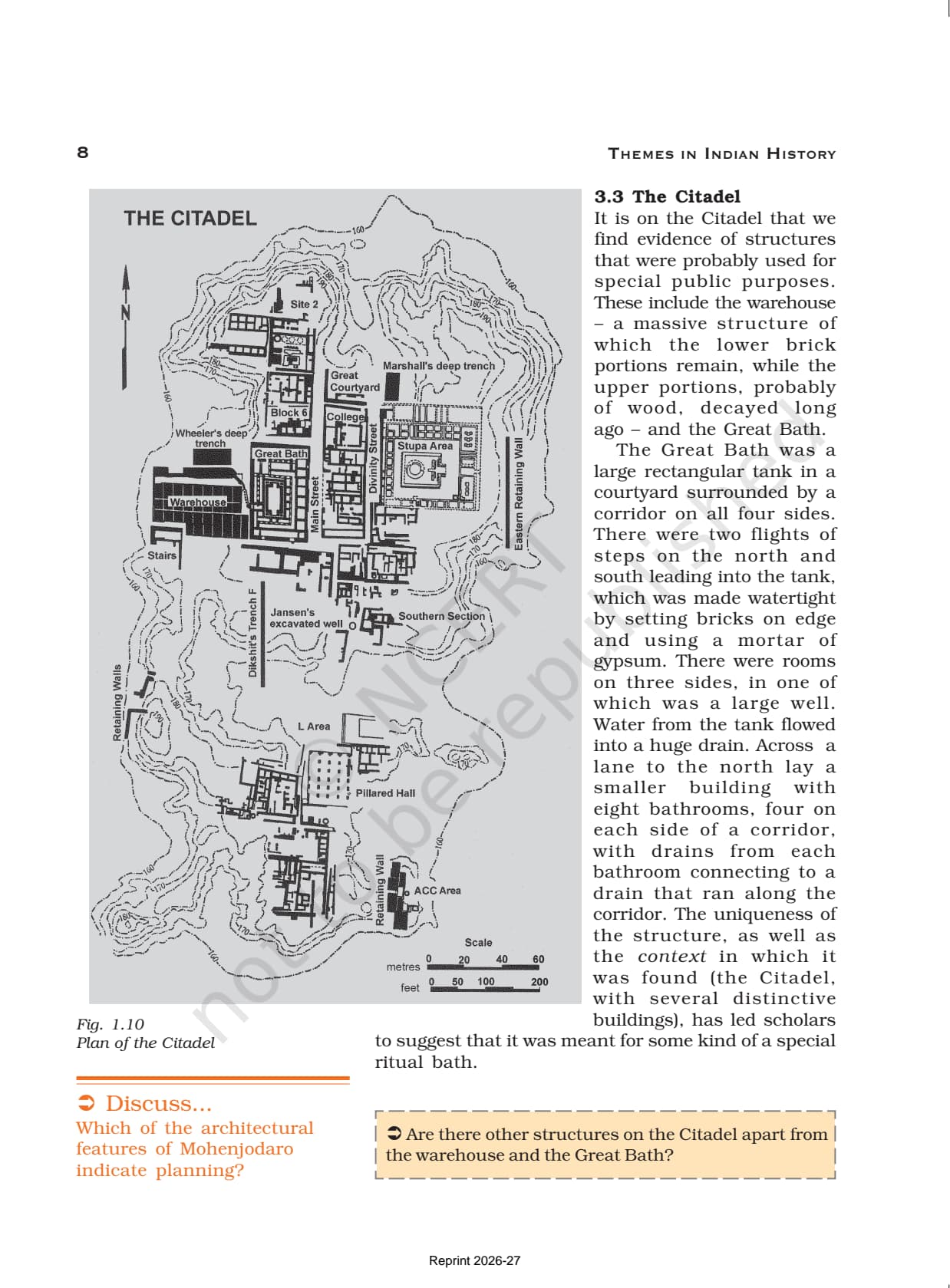
| The Great Bath | A watertight tank on the Citadel, likely used for ritual bathing. |
| Seals and the script | The famous seals carry the undeciphered Harappan script and animal motifs. |
| The "priest-king" | A stone figure Marshall named so, used to discuss the rulers debate. |
| Burial figures | Source images that questions use to discuss social differences. |
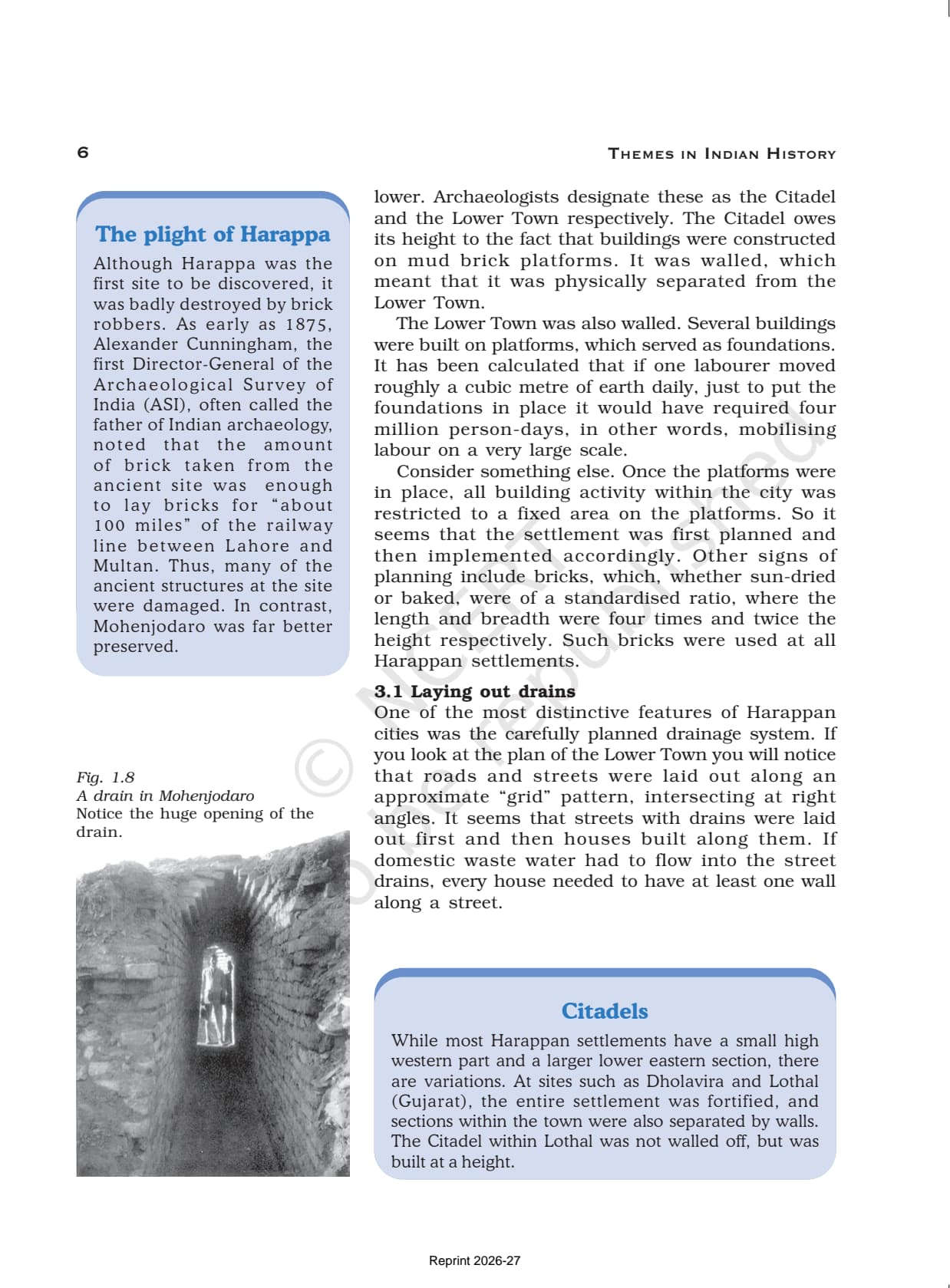
The chapter also explains the standard bricks (length twice the width, width twice the height) and the chert weights that show shared planning rules. One point students should mark while reading is that the drains were planned and laid first, and houses were built along them. That single line from the chapter is the heart of the town planning answer, and it appears almost every year.
Subsistence, Crafts and Trade in the Chapter
The chapter devotes whole sections to what Harappans ate and what they made. These sections feed the short and long answers, so reading them in the original NCERT helps students quote the right examples. The lists below show what the chapter covers under food, crafts and trade.
- Food base: wheat, barley, lentil, chickpea and sesame; cattle, sheep, goat, buffalo and pig.
- Bead materials: carnelian, jasper, crystal, quartz, steatite, copper, bronze, gold, shell, terracotta and faience.
- Craft centres: Chanhudaro, Lothal, Nageshwar and Balakot focused on shell and bead work.
- Trade and sources: copper from Rajasthan and Oman, tin from Afghanistan, carnelian from Gujarat, lapis lazuli from Afghanistan.
The chapter explains that some raw materials came from the plains, but many were brought from far-off areas through trade, expeditions and settlements like Shortughai. It also covers the seals, sealings and chert weights that show how the Harappans controlled trade. Because these examples are drawn straight from the source chapter, the chapter 1 history class 12 ncert book is the most reliable place to learn them.
How Archaeologists Reconstruct the Harappan Past
The closing sections of the chapter are the most thoughtful, and they are also the hardest to answer well. NCERT explains how scholars use material remains to rebuild the story when there is no readable script. Reading these pages in the original chapter helps students write balanced answers.
- Recovering remains: objects are classified by material and function, and layers are dated.
- Social differences: burials and rare luxury items hint at status, while plain graves suggest ordinary people.
- The rulers debate: the chapter gives the no-ruler, several-rulers and single-state views.
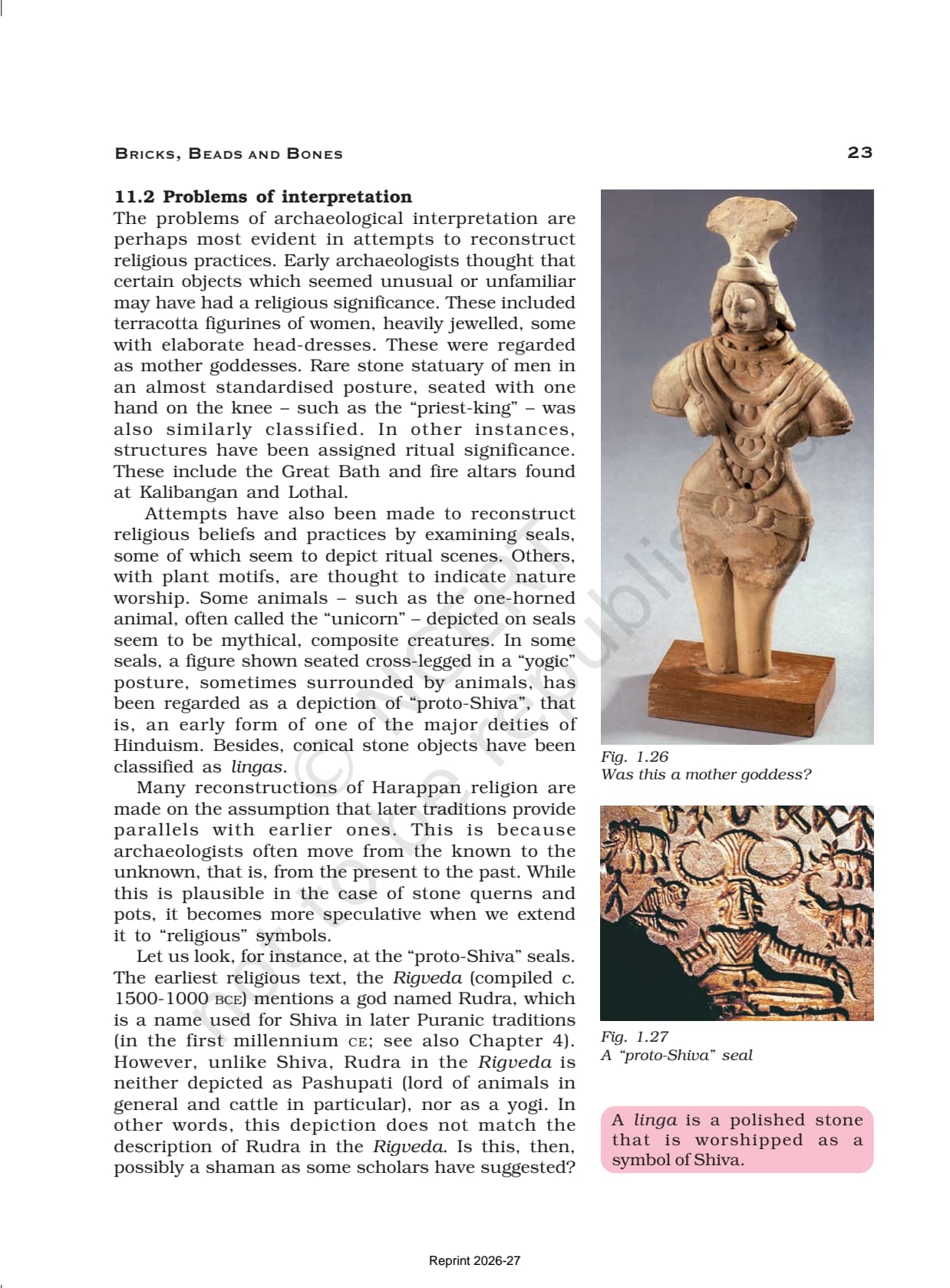
- Beliefs are hardest: the "Proto-Shiva" seal and Mother Goddess figures are interpretations, not proof.
The chapter is honest that material remains are easy to find, but religious meaning is the hardest to recover. It ends with the rediscovery story: Cunningham missed the seals' true age, Marshall announced the find in 1924, and Wheeler later dug with stratigraphic precision. Reading these closing pages in the official PDF gives students the wording NCERT itself uses, which scores best in the board paper.
How to Download and Use the NCERT Chapter PDF
The chapter PDF is free and easy to use on any device. Students can save it for offline reading and pair it with the solutions and notes. The steps below show how to get the most out of the bricks beads and bones pdf during revision.
- Download: tap the download card above to save the official Chapter 1 PDF to your device.
- First read: read the chapter once end to end, marking the figures and source extracts.
- Source practice: keep the PDF open while attempting source-based questions, since the passages come from it.
- Revision: use the chapter alongside the notes to fix dates and site names.
Many students search for the class 12 history chapter 1 pdf the night before a test so they can revise offline. A saved copy means the source extracts and figures are always at hand. After reading the chapter, move to the solutions to check that your answers match the model points, then use the notes for a final quick recall.
How the Book PDF Pairs with the Solutions and Notes
The NCERT Book PDF is the source text. To prepare fully, students should use it with the other resources for the same chapter, all linked in the table below. Read the chapter, fix the ideas with the notes, then test yourself with the solutions.
| Resource | Best used for |
|---|---|
| Bricks, Beads and Bones NCERT Solutions | Step-by-step answers to all 12 back-exercise questions |
| Bricks, Beads and Bones Class 12 Notes | Quick chapter summary with all dates and site names in one place |
| Bricks, Beads and Bones Handwritten Notes | Last-minute, one-shot revision in a scanned notebook style |
Tip: read the chapter PDF first, then attempt the solutions on your own, and only then check the model answers. Reading the source text before the answers builds far stronger source-based skills.
All Class 12 History NCERT Book PDFs by Chapter
The table links the NCERT chapter PDFs for every chapter in Themes in Indian History so students can move across the book in one click. Chapter 1 is highlighted.
| Chapter | NCERT Book PDF |
|---|---|
| Chapter 1 | Bricks, Beads and Bones |
| Chapter 2 | Kings, Farmers and Towns |
| Chapter 3 | Kinship, Caste and Class |
| Chapter 4 | Thinkers, Beliefs and Buildings |
| Chapter 5 | Through the Eyes of Travellers |
| Chapter 6 | Bhakti-Sufi Traditions |
| Chapter 7 | An Imperial Capital Vijayanagara |
| Chapter 8 | Peasants, Zamindars and the State |
| Chapter 9 | Colonialism and the Countryside |
| Chapter 10 | Rebels and the Raj 1857 |
| Chapter 11 | Mahatma Gandhi and the Nationalist Movement |
| Chapter 12 | Framing the Constitution |
FAQs on Bricks, Beads and Bones NCERT Book PDF
Bricks, Beads and Bones Class 12 NCERT Book Common Questions
Ques. Where can I download the Bricks, Beads and Bones NCERT Book PDF?
Ans. You can download the official Bricks, Beads and Bones Class 12 History chapter PDF directly from this page. It is free, follows the 2026-27 NCERT edition, and carries the original text, maps and source extracts of Chapter 1.
Ques. Which book is Bricks, Beads and Bones from?
Ans. It is the first chapter of Themes in Indian History Part I, the Class 12 History textbook. The chapter studies the Harappan or Indus Valley Civilisation through its bricks, beads and bones, that is, its towns, crafts and burials.
Ques. What does the Bricks, Beads and Bones chapter cover?
Ans. It covers the Harappan Civilisation from about 2600 BCE to 1900 BCE, including planned cities like Mohenjodaro, standard bricks, beads and crafts, seals, the undeciphered script, the rulers debate, and the decline and rediscovery of the cities.
Ques. Why should I read the original NCERT chapter PDF?
Ans. Because CBSE draws source-based questions straight from the chapter's own extracts, figures and captions. Reading the official chapter 1 history class 12 PDF gives you the exact wording and examples that score best in the board paper.
Ques. How should I use the chapter PDF with the other resources?
Ans. Read the chapter PDF first, fix the ideas with the notes, then test yourself with the solutions. Keeping the PDF open while practising source-based questions helps, since the passages come directly from it.



Comments