




The Peasants, Zamindars and the State PDF is the official NCERT chapter on Mughal agrarian society from Themes in Indian History Part II. This page lets students download the original Chapter 8 text and figures for the 2026-27 CBSE syllabus. Reading the source chapter is the best way to understand the Ain-i Akbari and the land revenue system behind every exam answer on the Mughal countryside.
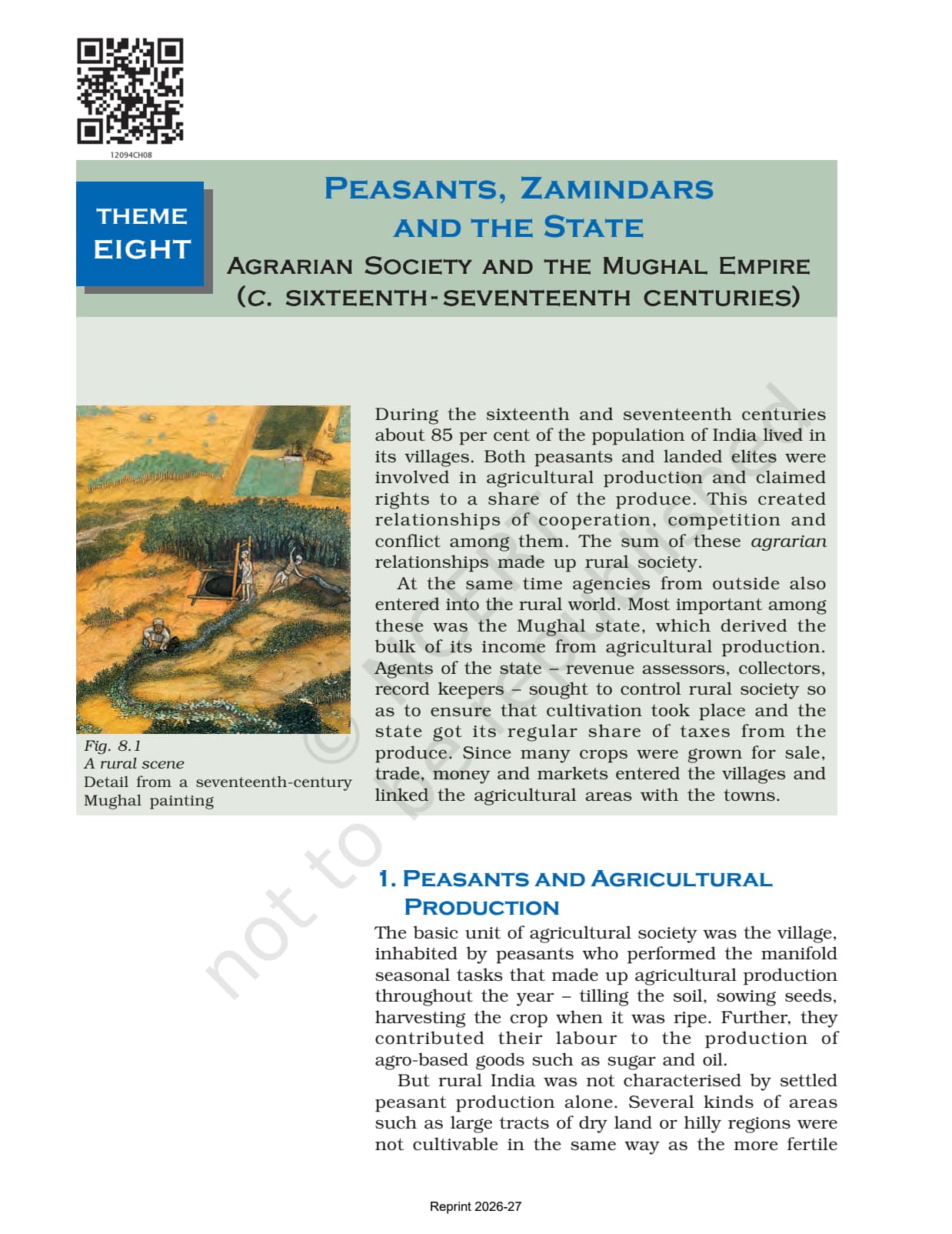
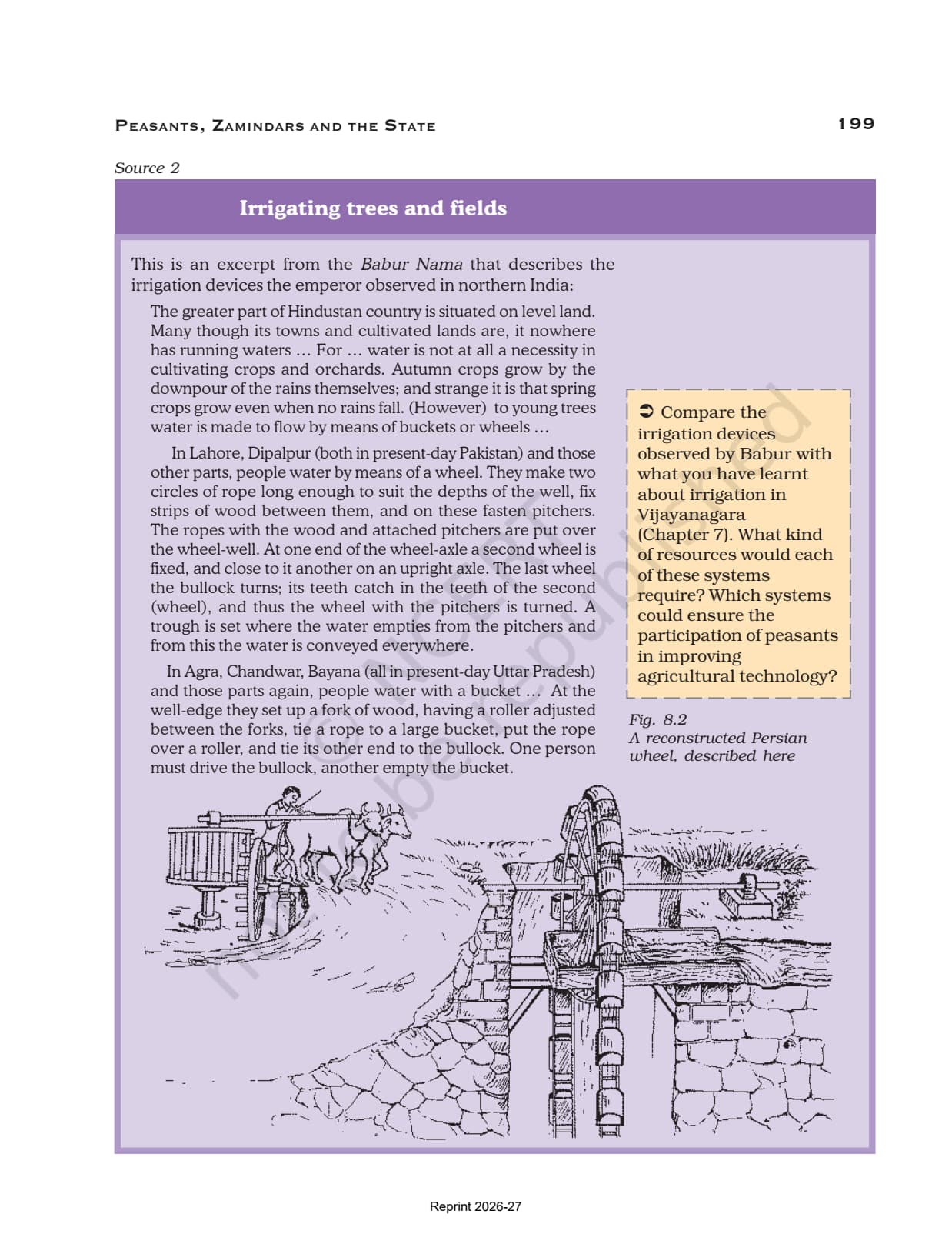
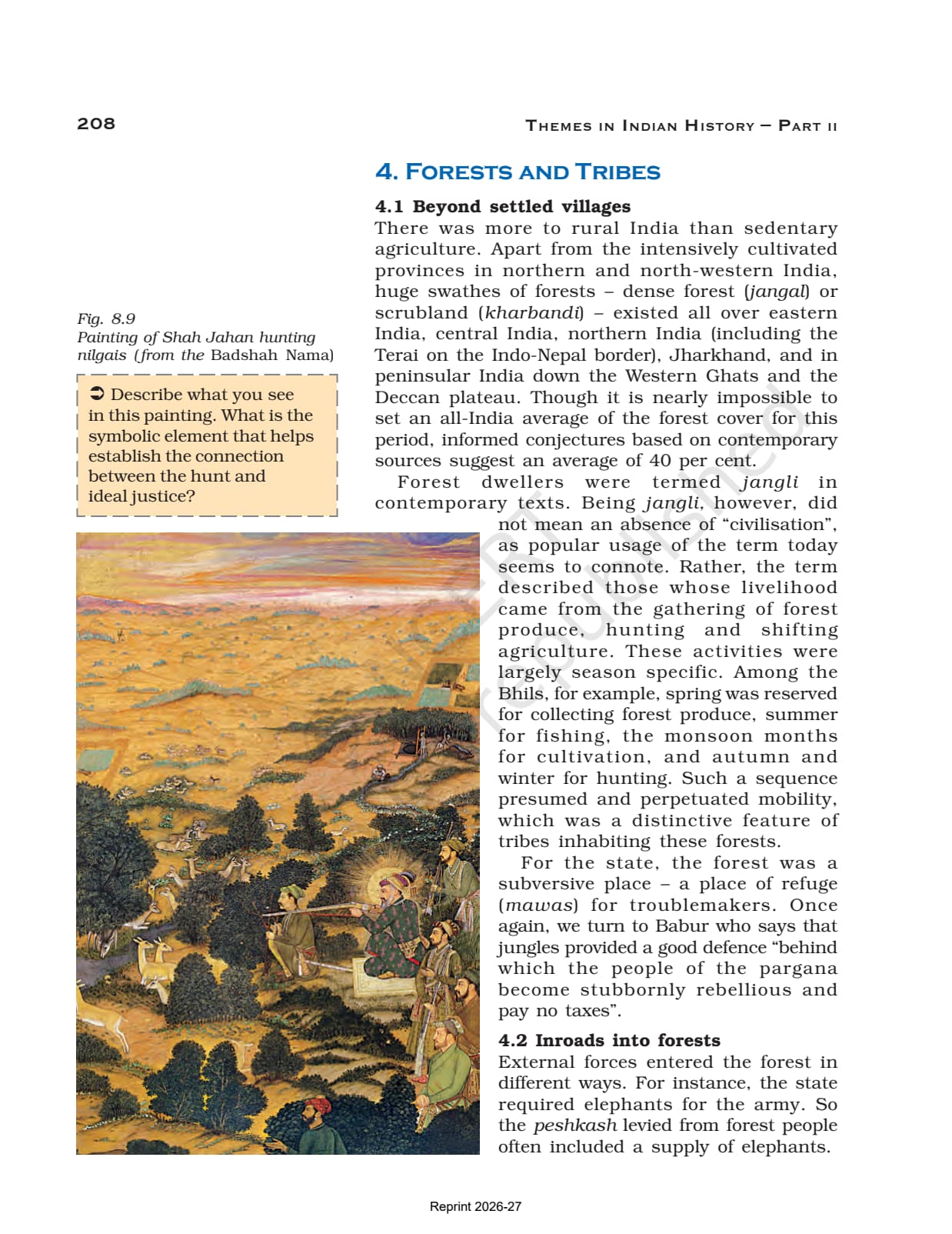
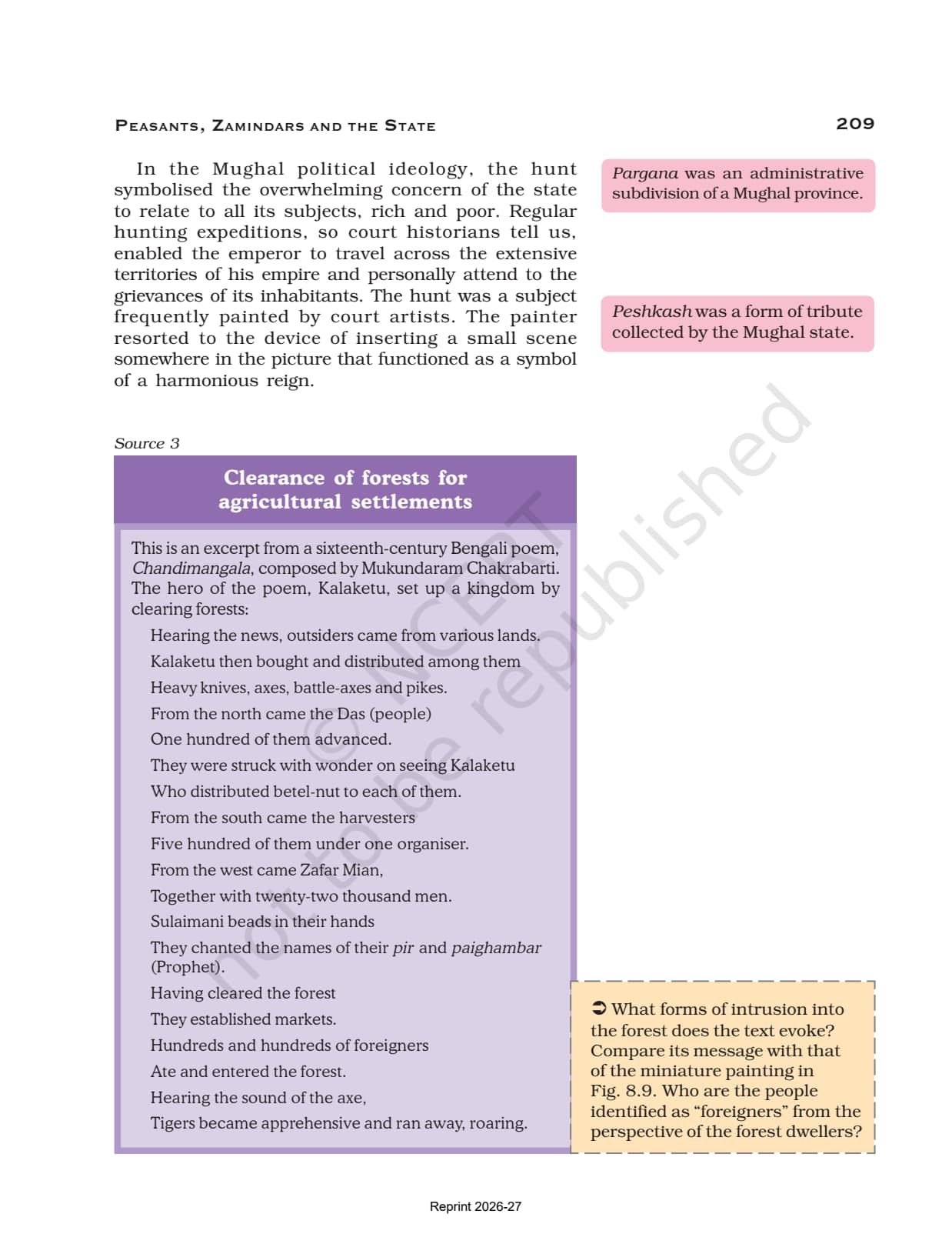
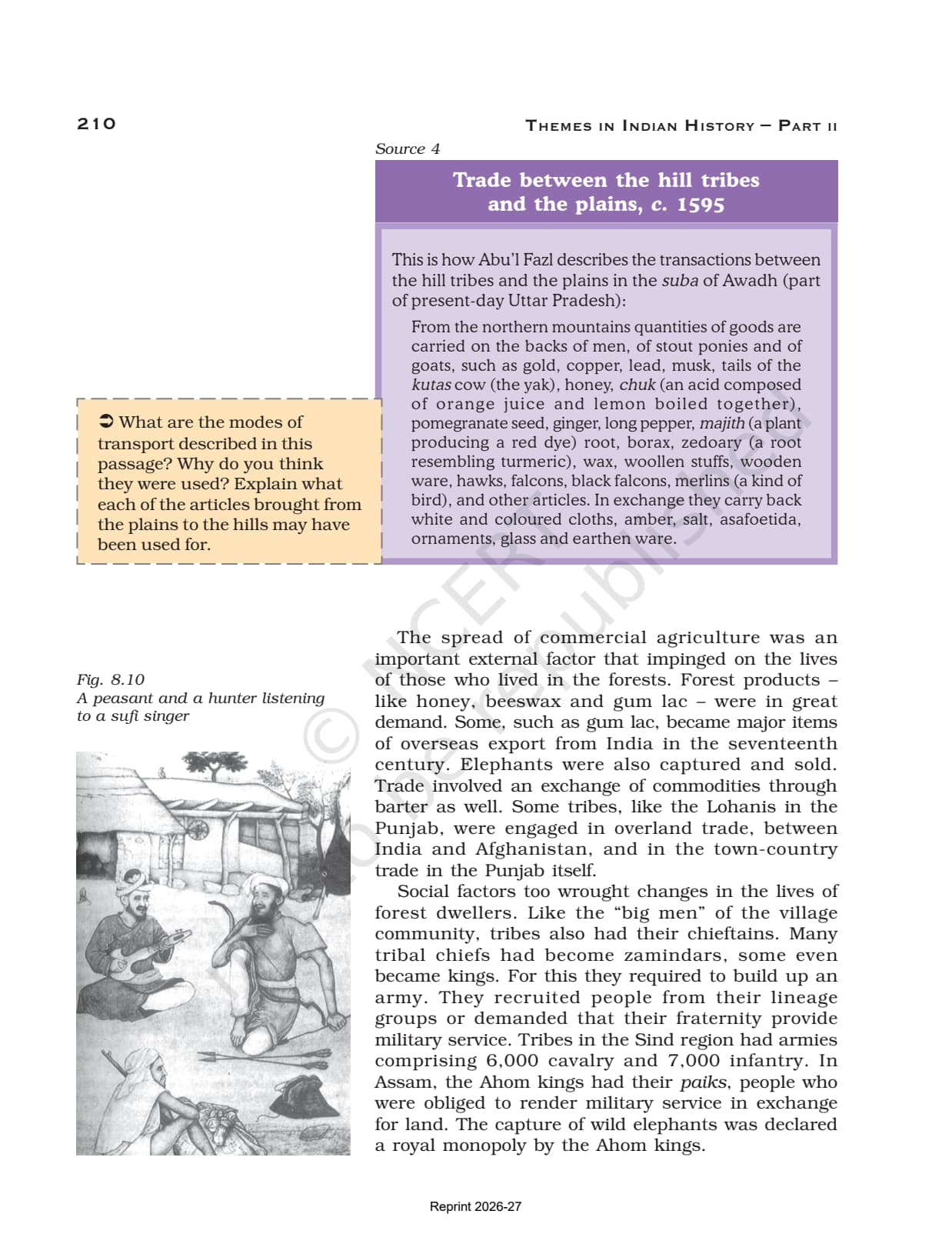
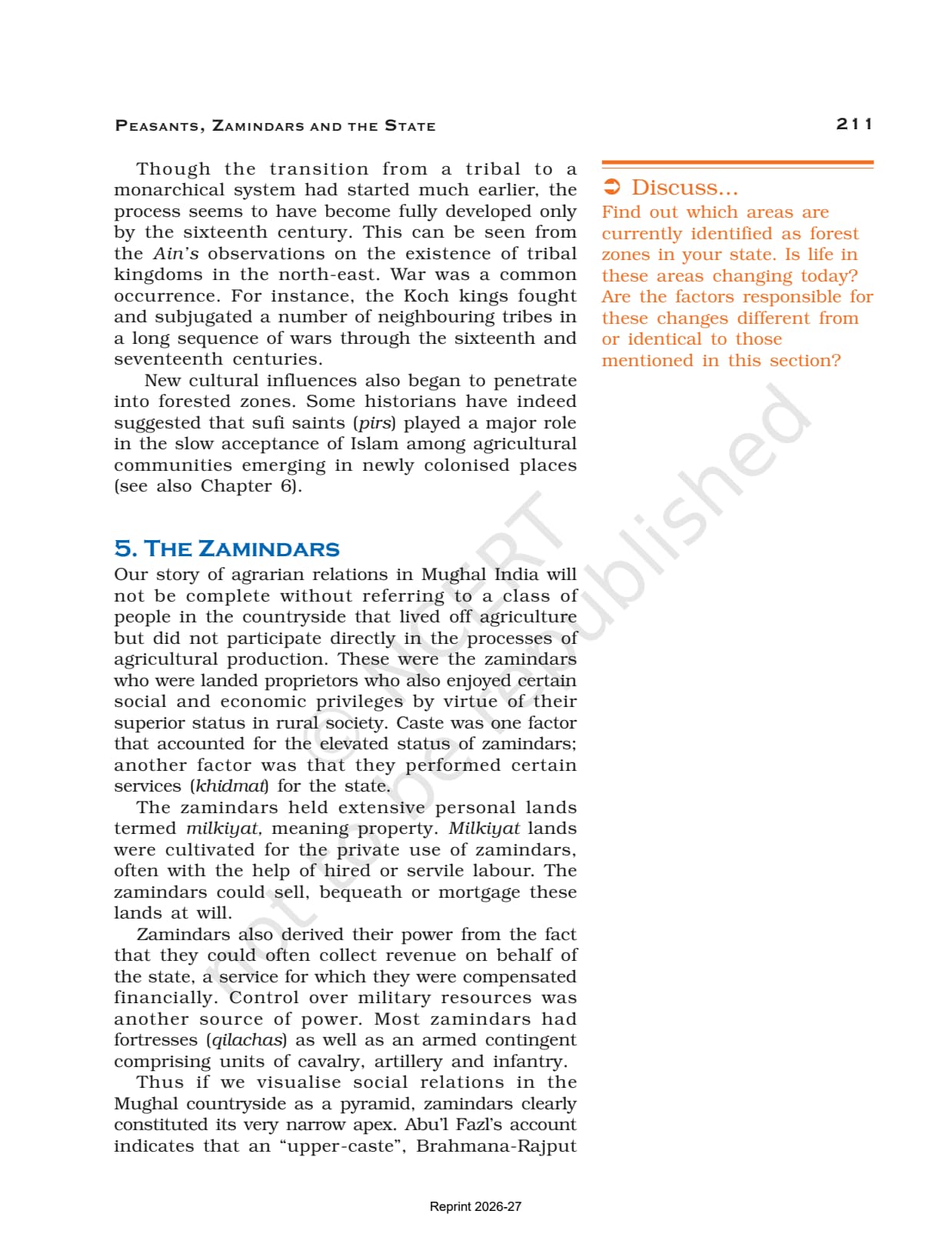
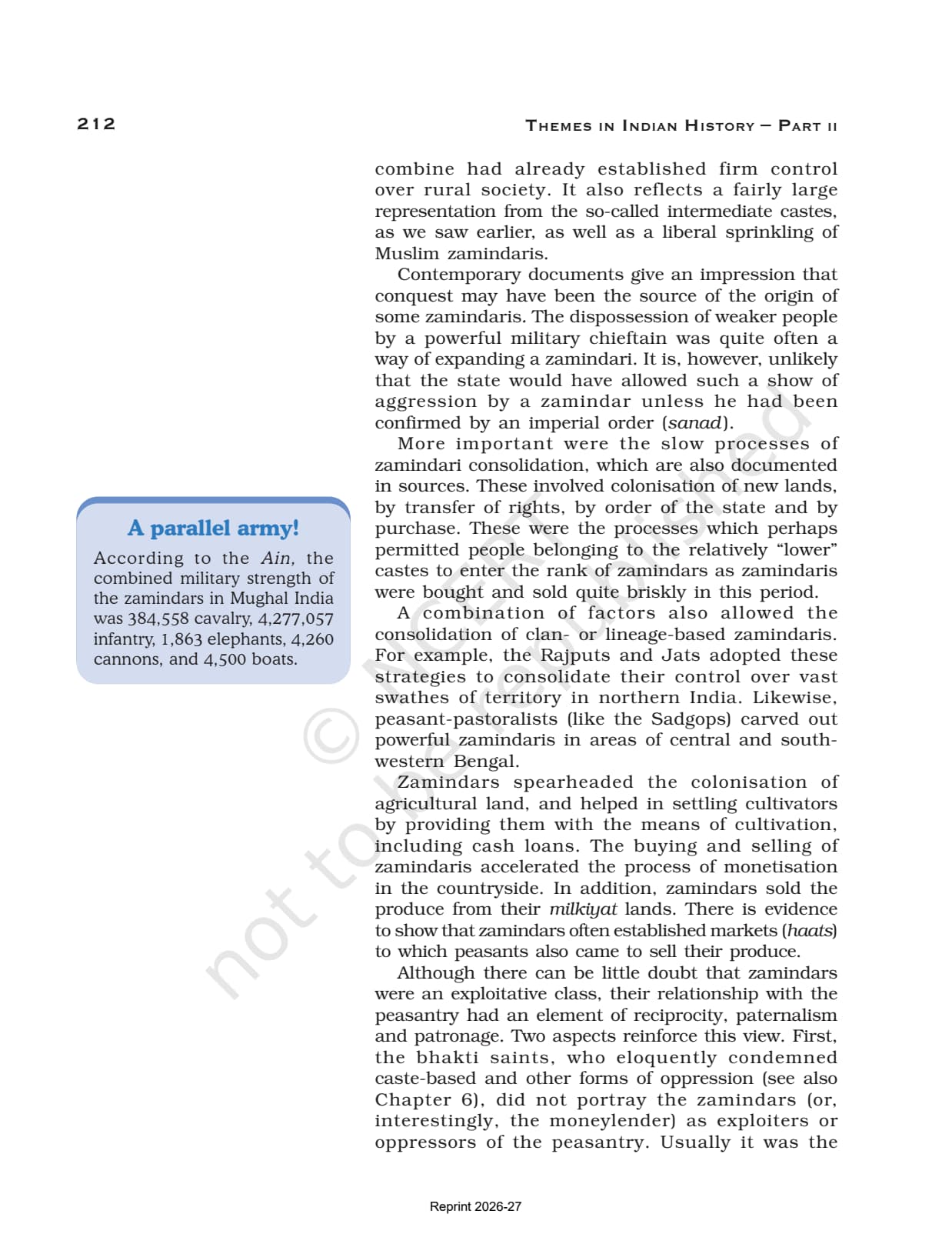
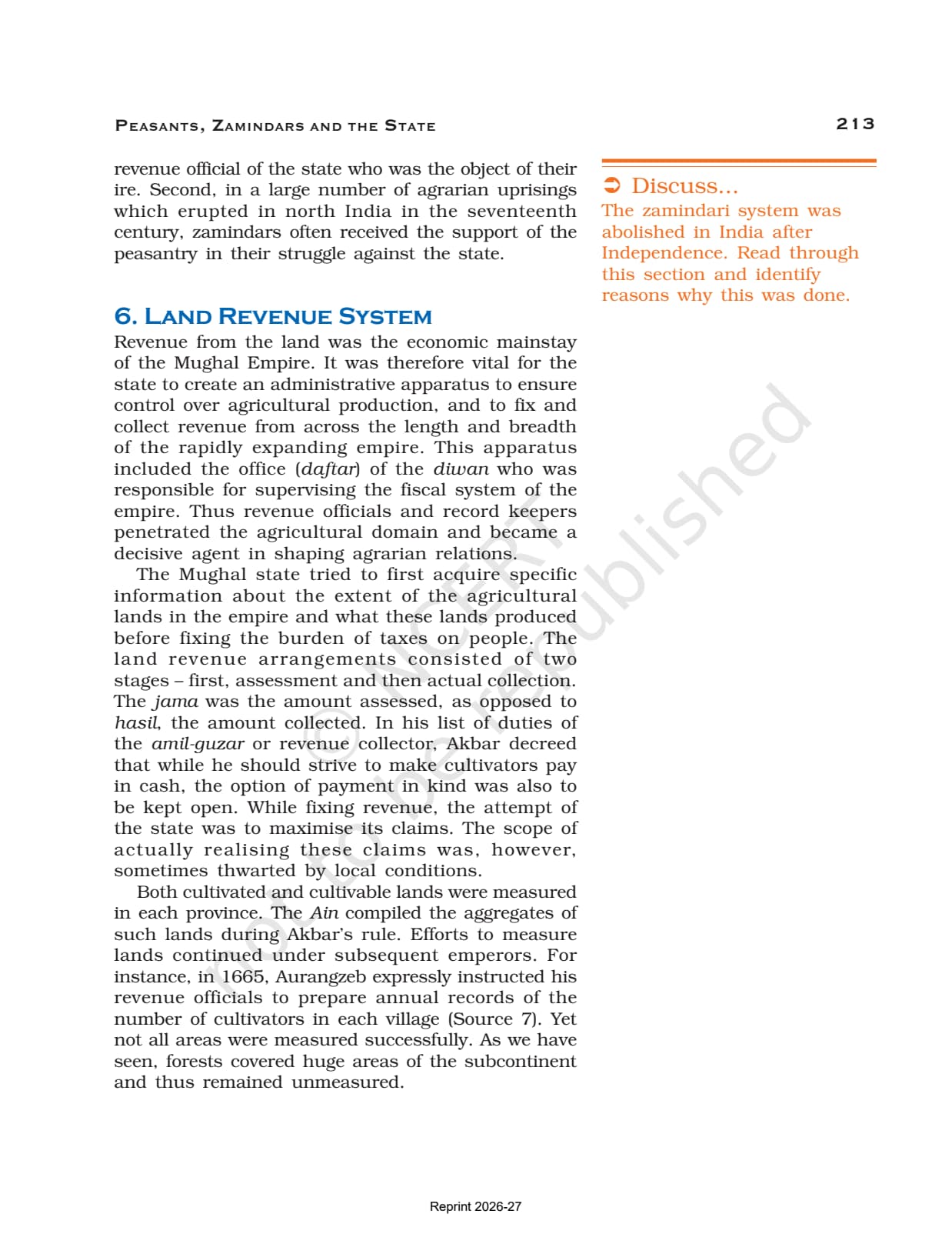
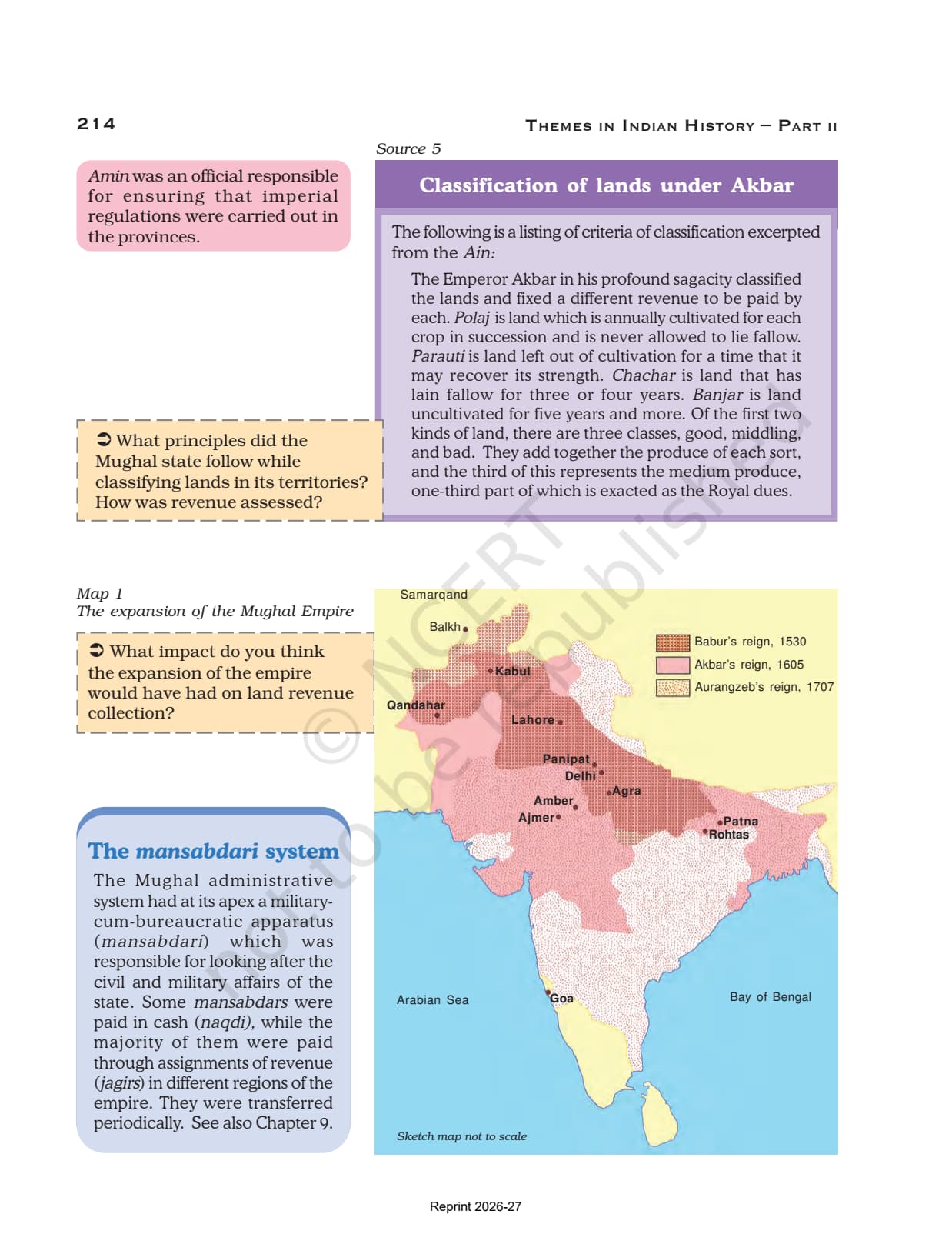
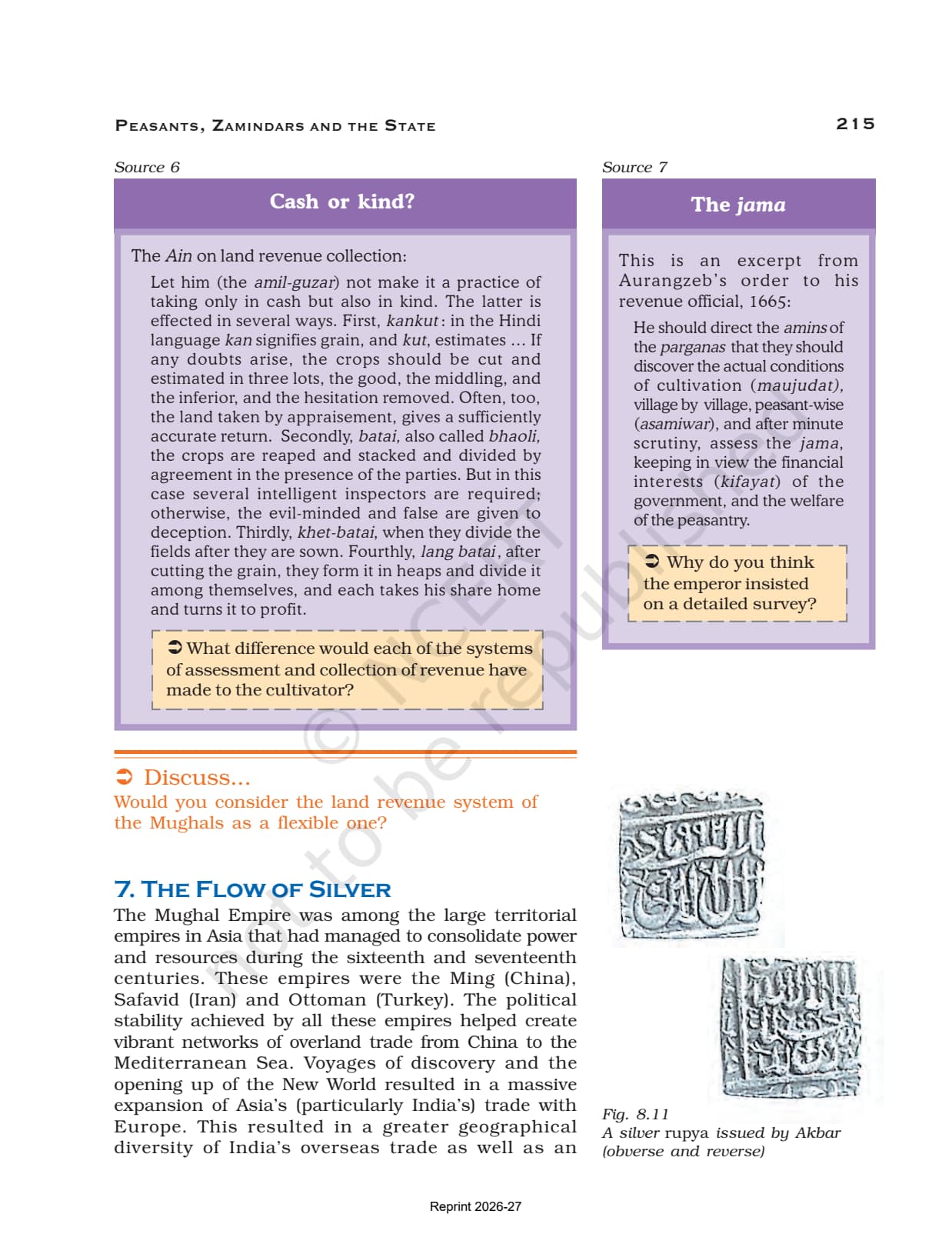
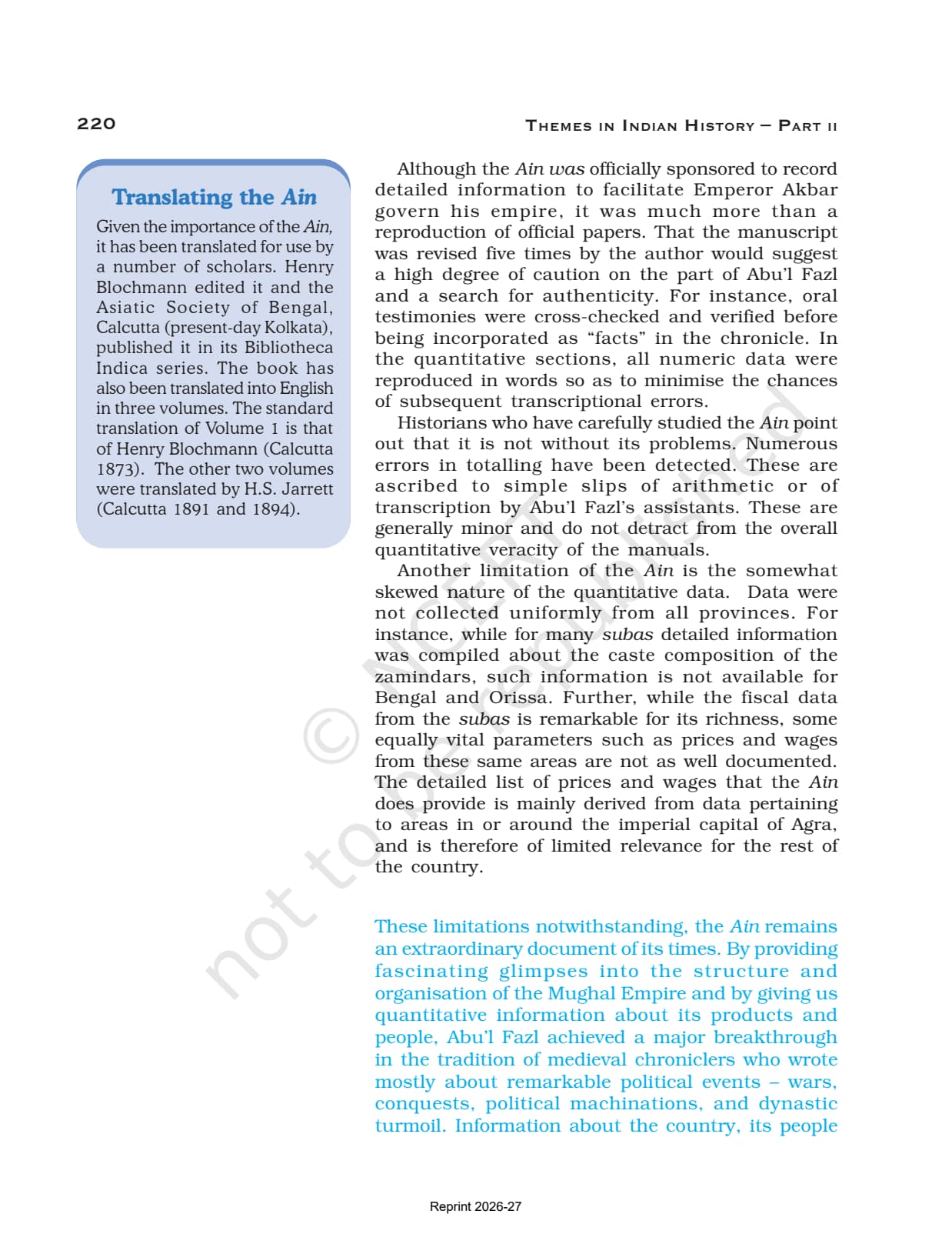
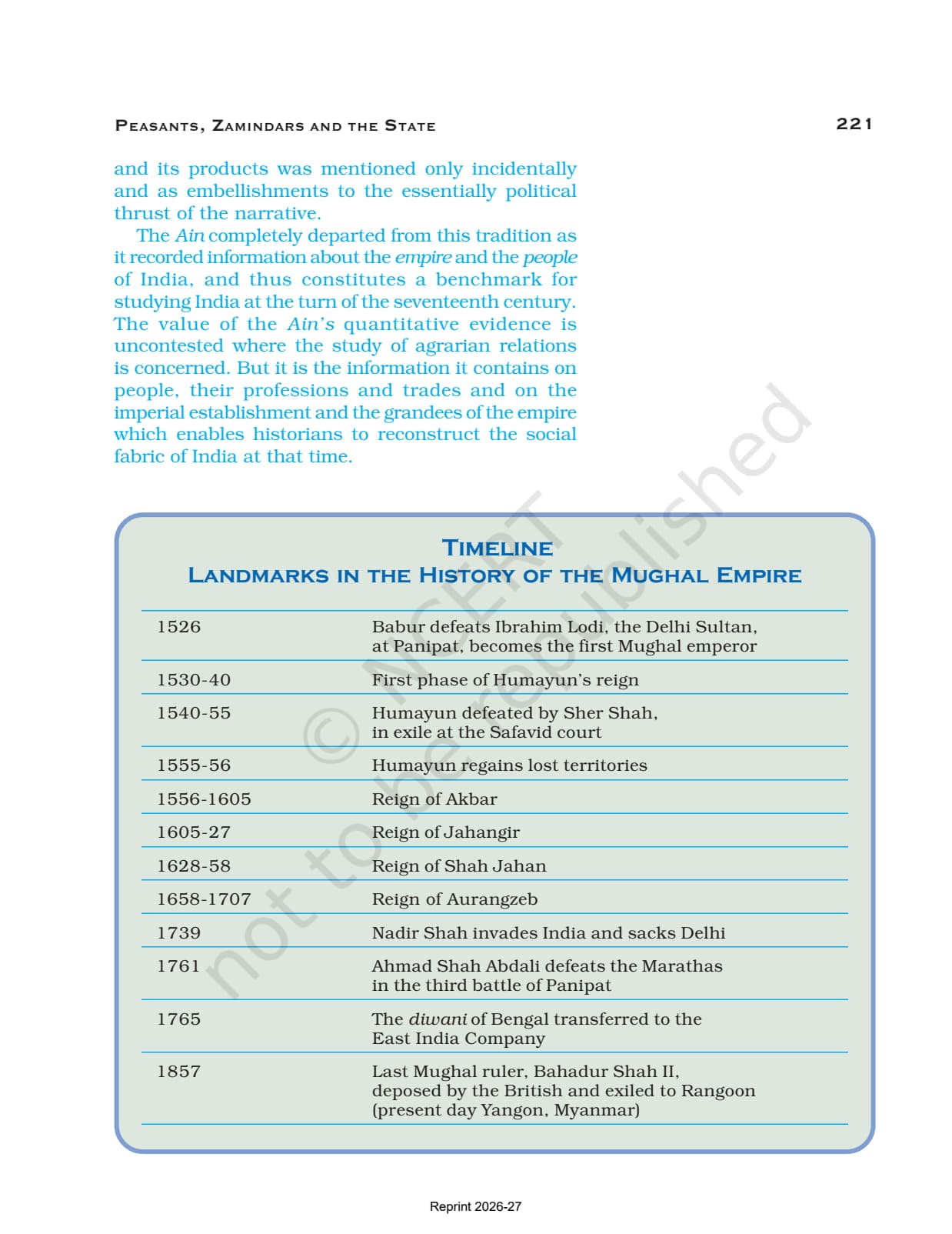
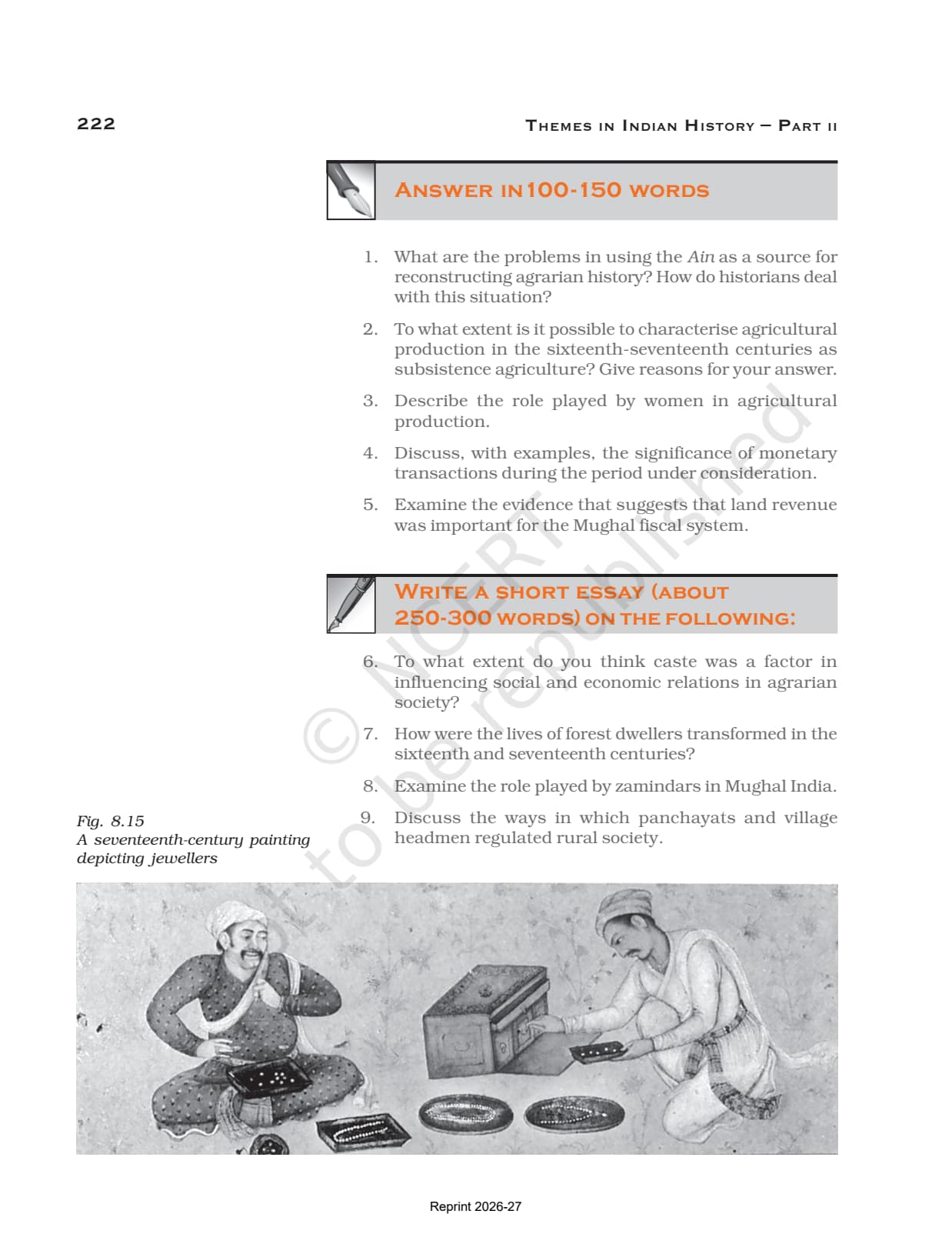
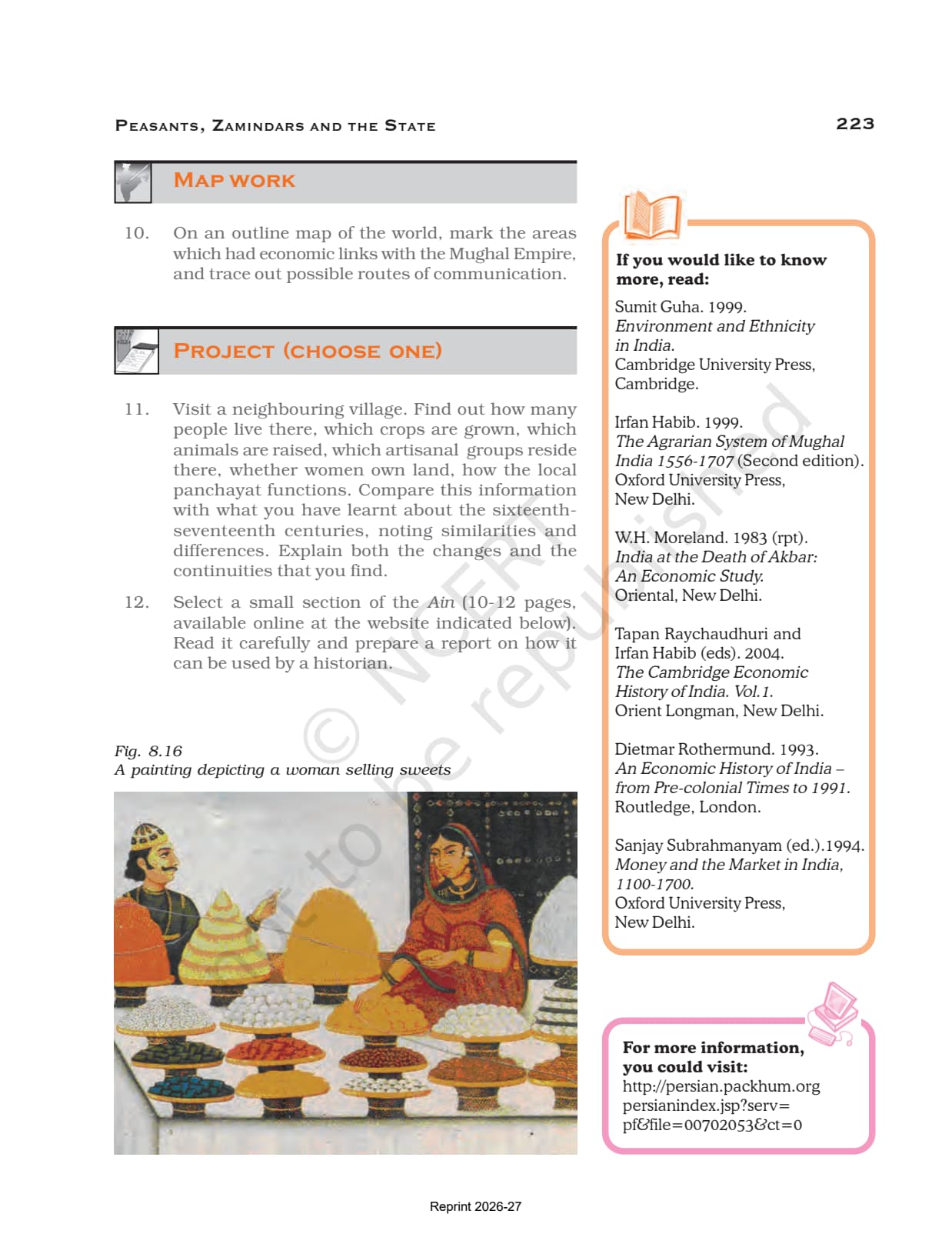

- Official NCERT chapter with the original paintings, maps and source extracts from the Ain.
- This Class 12 History chapter usually carries 6 to 8 marks in the board paper.
- Pairs with the NCERT Solutions, Notes and Handwritten Notes linked lower on this page.
This is the official NCERT Peasants, Zamindars and the State chapter from Themes in Indian History Part II, offered for free download in the 2026-27 edition.
Student Feedback: In a Collegedunia poll of 7,680 Class 12 History students before the 2026 boards, 67% of students said they kept the official NCERT chapter PDF open while solving source-based questions, because the answers come straight from the chapter's own extracts of the Ain and its figures.
Source: 2026-27 Class 12 History student poll. Sample of 7,680 students from CBSE schools across 12 states.
What the Peasants, Zamindars and the State NCERT Chapter Covers
Peasants, Zamindars and the State is Chapter 8 of Themes in Indian History Part II. It studies agrarian society under the Mughals, when about 85 per cent of people lived in villages in the sixteenth and seventeenth centuries. The chapter builds its story mainly from the Ain-i Akbari, while also using records from outside the Mughal capital.
The three players in the title organise the chapter's material:
- Peasants introduce the raiyat, crops, the cropping seasons and farming technology.
- Zamindars introduce milkiyat land, revenue collection and the land revenue system.
- The State introduces jama, hasil, the flow of silver and the Ain-i Akbari.
The chapter also covers women, caste, forest dwellers and the village panchayat. Reading the original NCERT text matters because the source extracts and captions in the Class 12 History Chapter 8 PDF are exactly what CBSE quotes in source-based questions. A student who knows the chapter's own examples can answer those passages with confidence.
Chapter Highlights and Important Figures
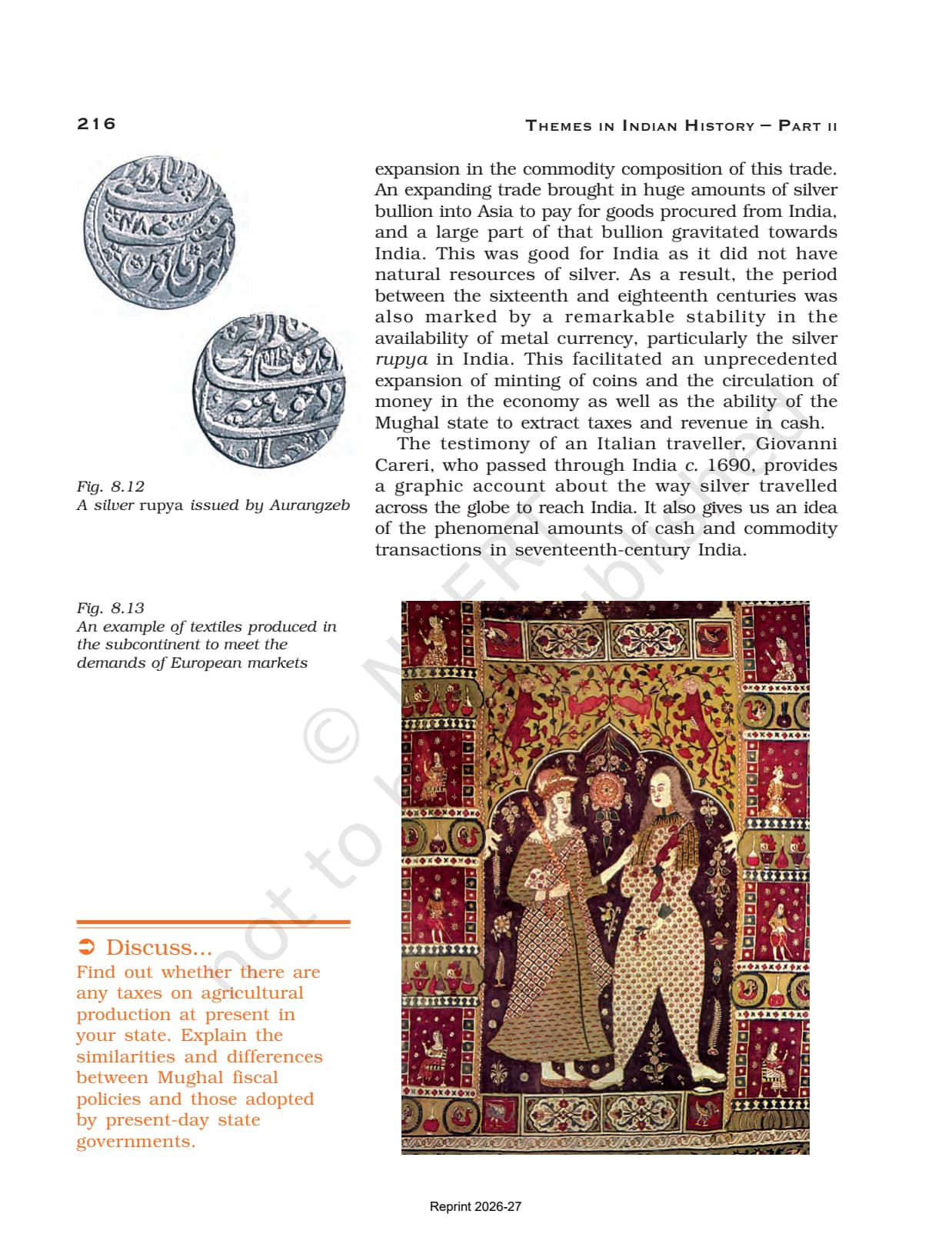
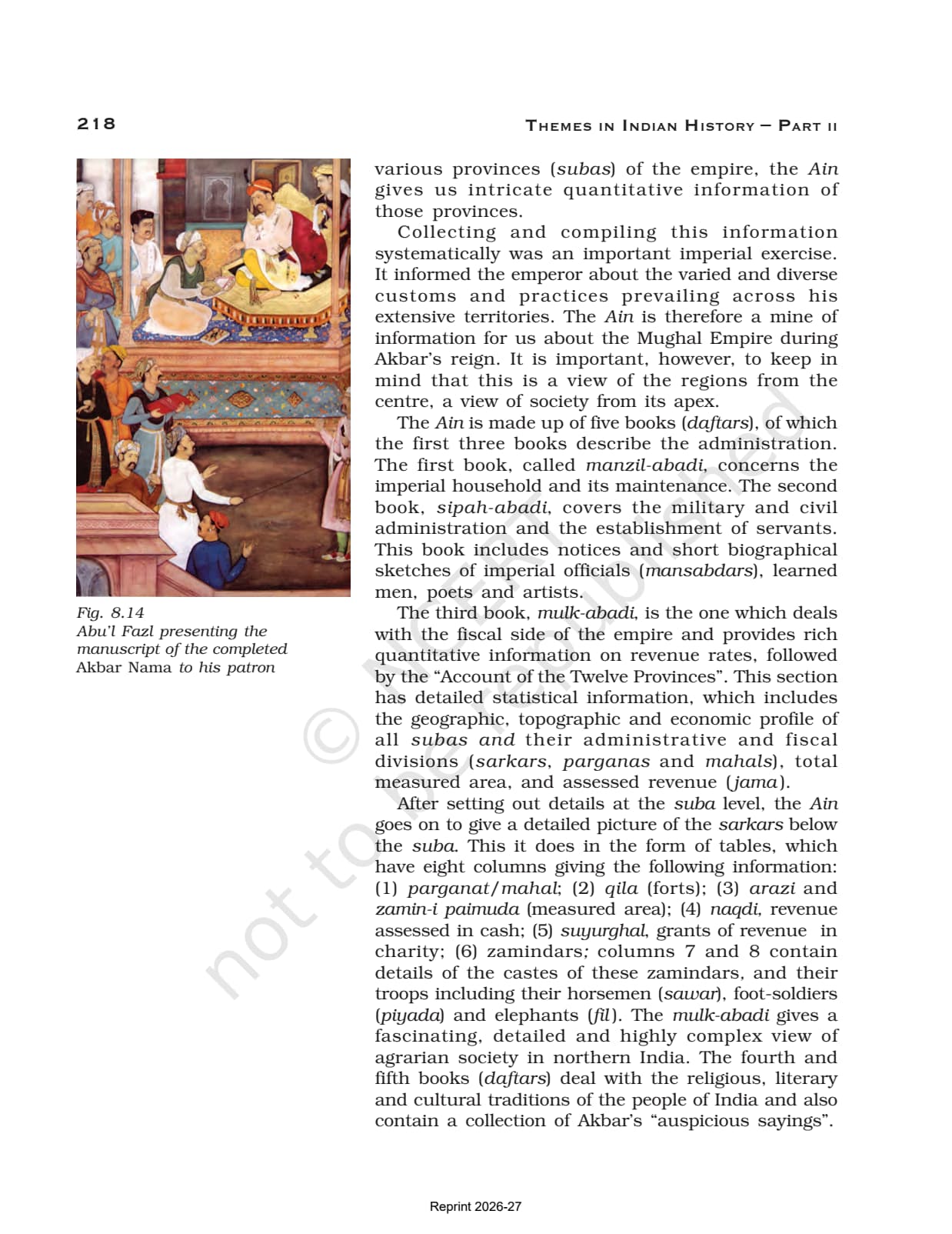
The NCERT chapter is rich with Mughal paintings, a silver rupya and source extracts that the exam often refers to. Knowing what each figure shows helps students answer "look at the figure" questions quickly. The table below lists the highlights students should study in the original chapter PDF.
| Highlight | Why it matters |
|---|---|
| Abu'l Fazl and the Ain | The painting of Abu'l Fazl presenting the Akbar Nama frames the main source of the chapter. |
| The silver rupya | A coin of Akbar that shows the inflow of silver and the spread of money. |
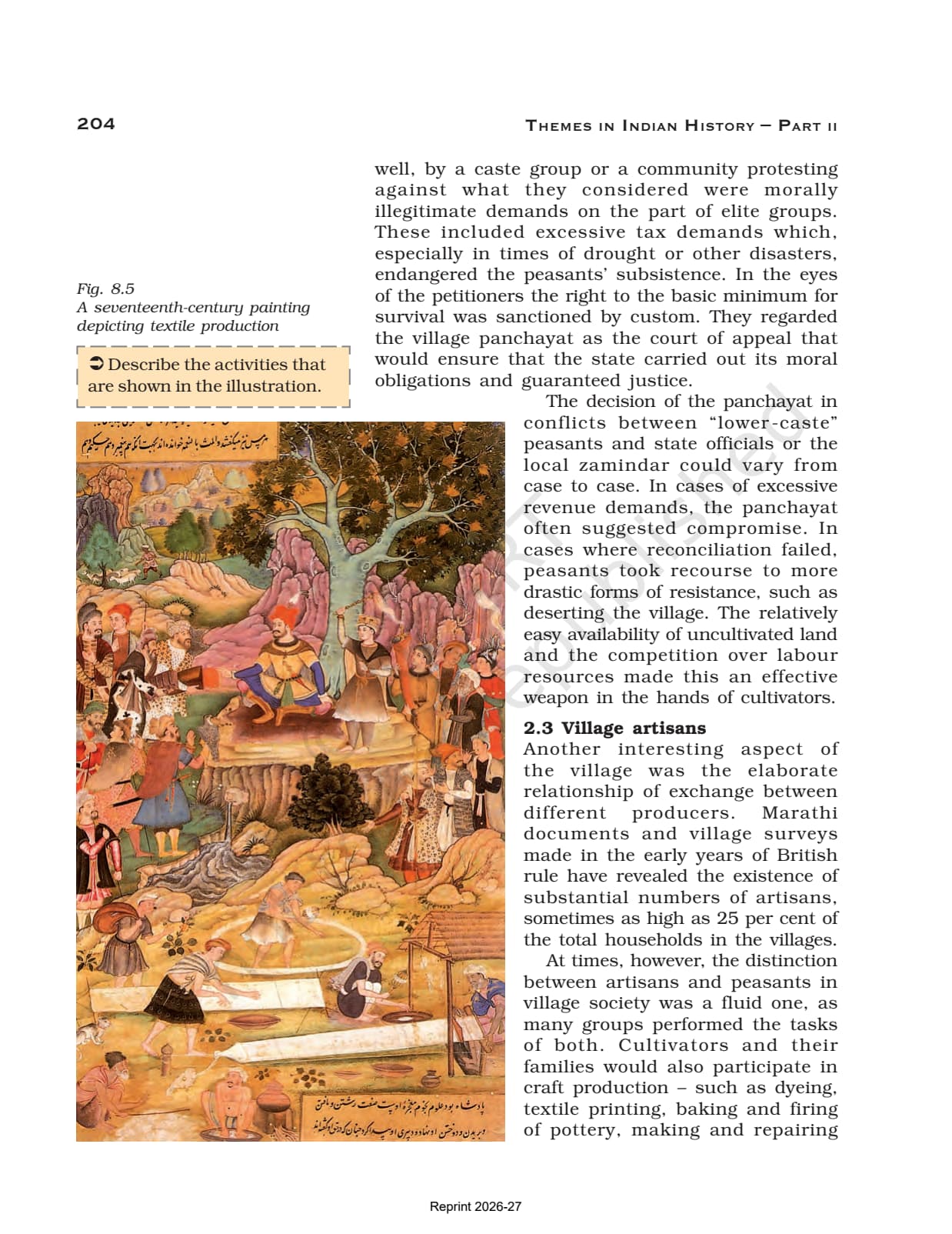
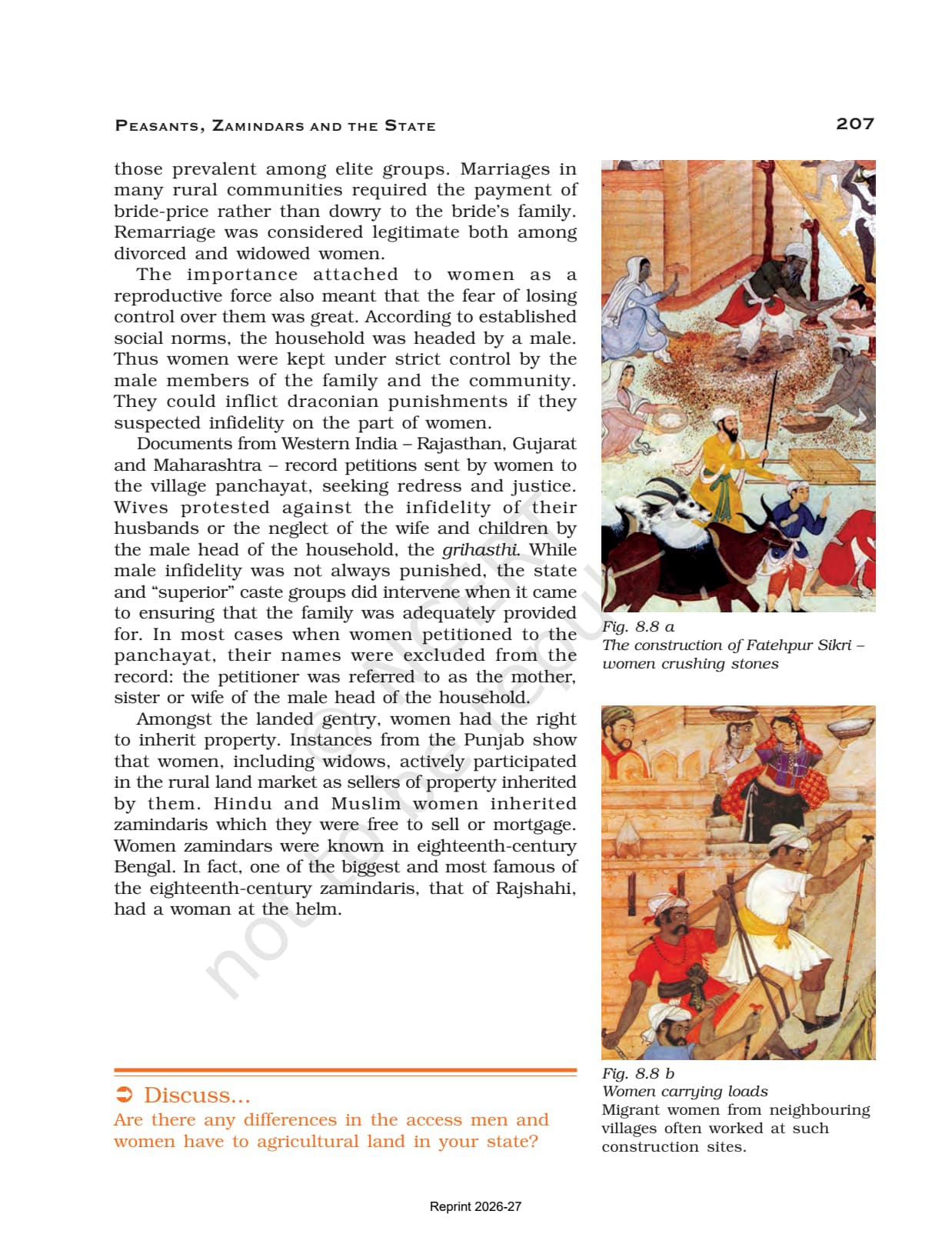
| Rural working scenes | Paintings of men and women at work that feed the women-in-farming answer. |
| Forest and hunting scenes | Images used to discuss forest dwellers and the state's reach into the forests. |
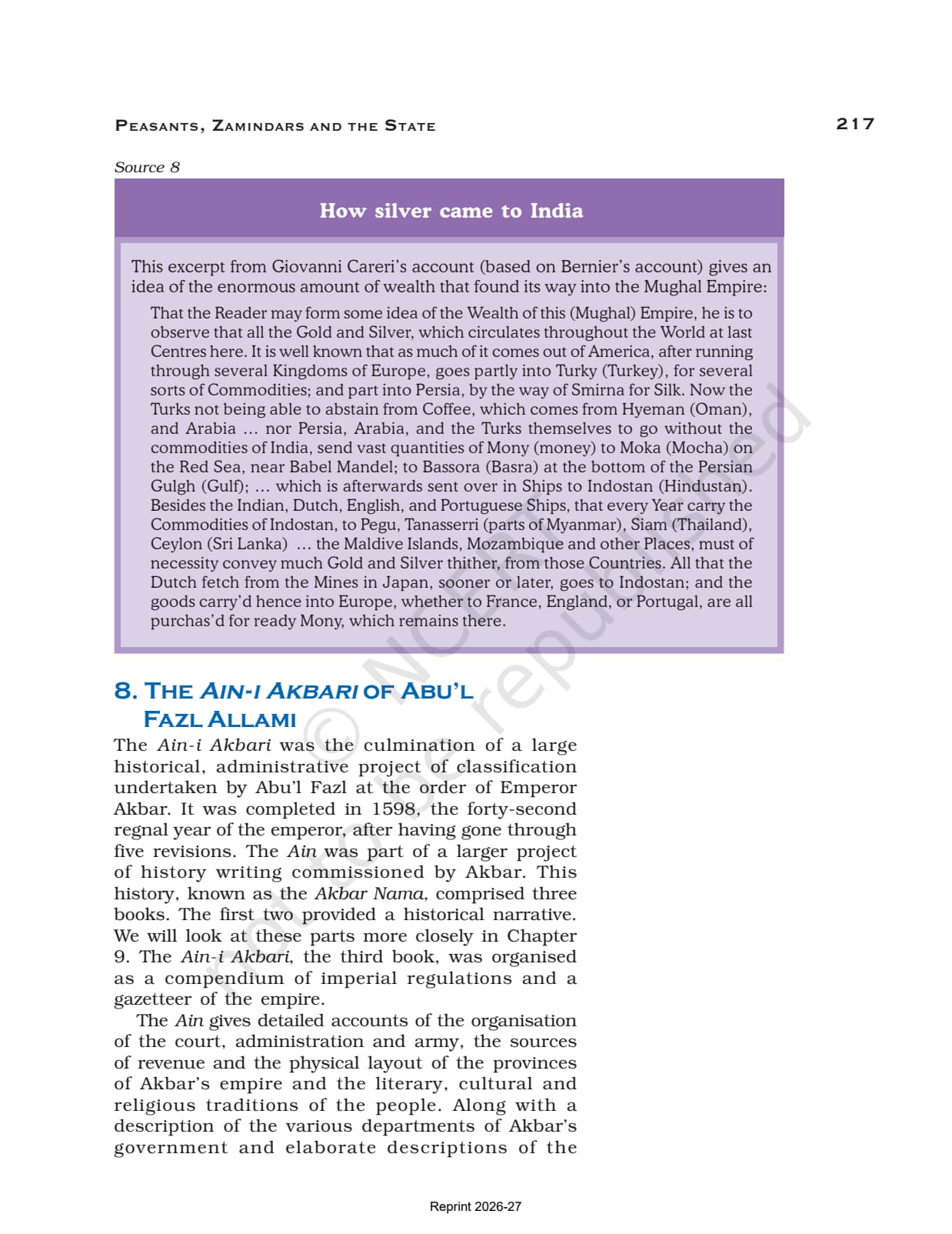
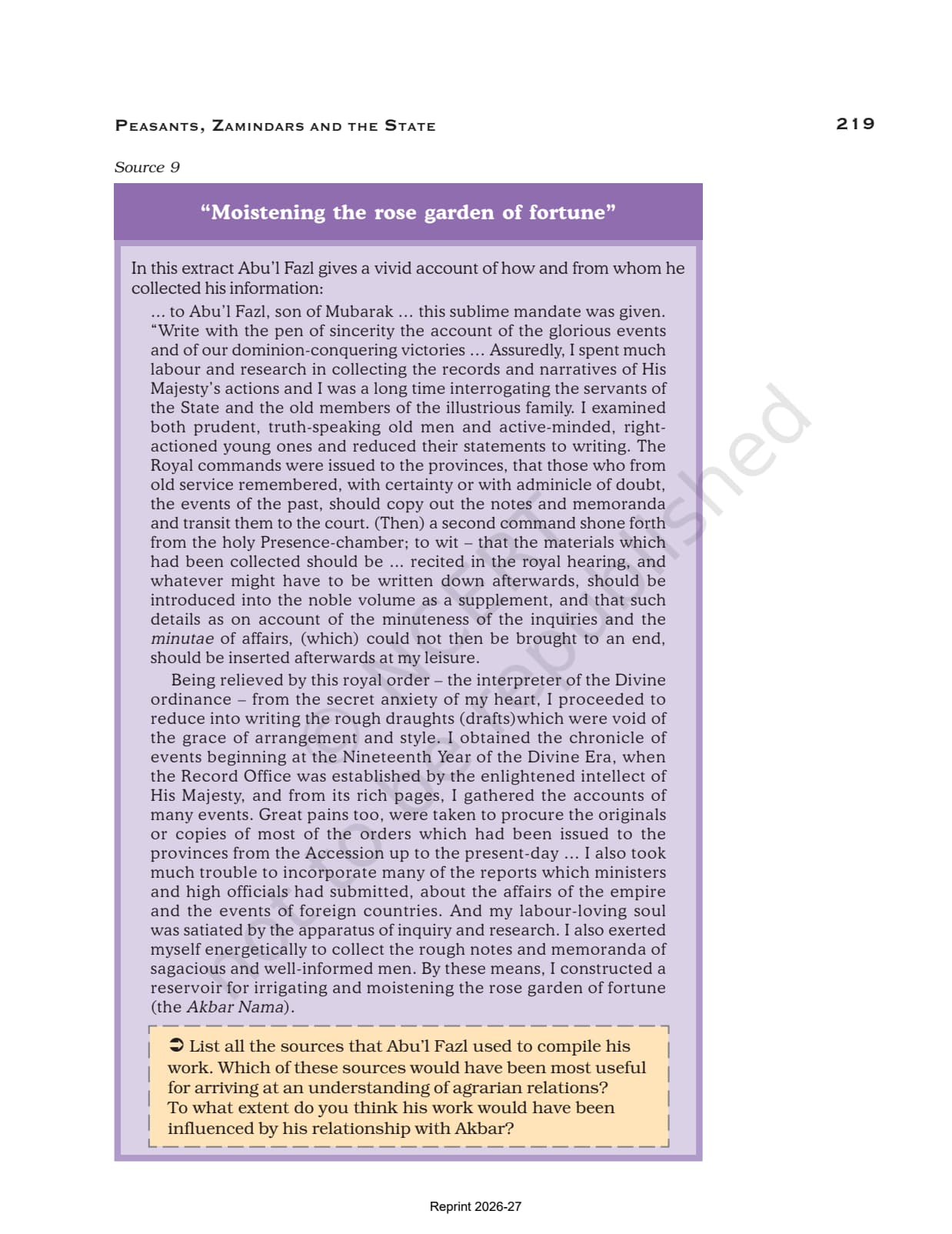
| Source extracts of the Ain | Quoted passages that CBSE turns into source-based questions. |
The chapter also explains the key terms, khud-kashta, pahi-kashta, jama, hasil and milkiyat, that the exam tests as one-mark objectives. One point students should mark while reading is that jama was the revenue assessed and hasil was the revenue actually collected. That single distinction from the chapter is the heart of the land revenue answer, and it appears almost every year.
Peasants, Zamindars and Land Revenue in the Chapter
The chapter devotes whole sections to the peasants, the zamindars and the way the state taxed the land. These sections feed the short and long answers, so reading them in the original NCERT helps students quote the right examples. The lists below show what the chapter covers under each head.
- Peasants: khud-kashta lived in the village; pahi-kashta came from outside; both grew kharif and rabi crops.
- Zamindars: held milkiyat lands, collected revenue for the state, and often commanded their own troops.
- Land revenue: the diwan ran a department that surveyed land, fixed the jama and collected the hasil.
- The flow of silver: trade brought silver that was minted into the rupya and pushed revenue toward cash.
The chapter explains that the land revenue system was the backbone of Mughal finances, run by a whole department under the diwan. It also covers the village panchayat, the headman and the artisans who kept rural life going. Because these examples are drawn straight from the source chapter, the Chapter 8 history Class 12 NCERT book is the most reliable place to learn them.
Women, Forests and the Ain as a Source in the Chapter
The closing sections of the chapter are the most thoughtful, covering women, forest dwellers and the Ain itself. NCERT explains how scholars use the Ain while reading it with care. Reading these pages in the original chapter helps students write balanced answers.
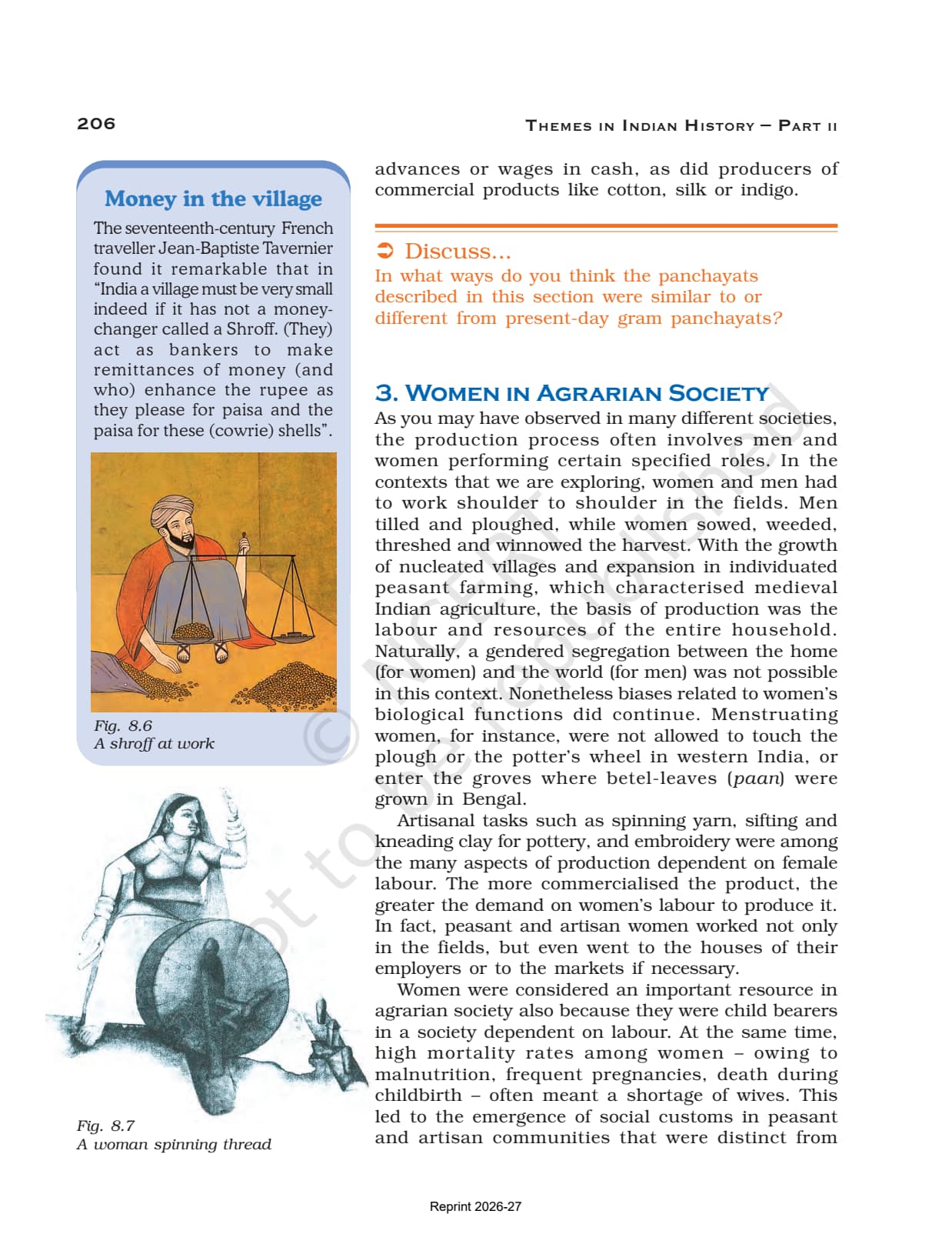
- Women's work: they sowed, weeded and threshed grain, spun thread and made pottery, and could hold property.
- Forest dwellers: the jangli lived by hunting and shifting farming, drawn in by trade and the demand for elephants.
- The Ain-i Akbari: Abu'l Fazl's chronicle of 1598, our richest source on Mughal rural life.
- Its limits: an official view from the top, with totalling errors and data skewed toward areas near Agra.
The chapter is honest that the Ain shows the empire as the court wished it to look, so it must be read with records from outside the capital. It explains that historians add revenue records from Gujarat, Maharashtra and Rajasthan to get a view from below. Reading these closing pages in the official PDF gives students the wording NCERT itself uses, which scores best in the board paper.
How to Download and Use the NCERT Chapter PDF
The chapter PDF is free and easy to use on any device. Students can save it for offline reading and pair it with the solutions and notes. The steps below show how to get the most out of the Peasants, Zamindars and the State PDF during revision.
- Download: tap the download card above to save the official Chapter 8 PDF to your device.
- First read: read the chapter once end to end, marking the figures and source extracts of the Ain.
- Source practice: keep the PDF open while attempting source-based questions, since the passages come from it.
- Revision: use the chapter alongside the notes to fix the key terms like jama, hasil and milkiyat.
Many students search for the Class 12 History Chapter 8 PDF the night before a test so they can revise offline. A saved copy means the source extracts and figures are always at hand. After reading the chapter, move to the solutions to check that your answers match the model points, then use the notes for a final quick recall.
How the Book PDF Pairs with the Solutions and Notes
The NCERT Book PDF is the source text. To prepare fully, students should use it with the other resources for the same chapter, all linked in the table below. Read the chapter, fix the ideas with the notes, then test yourself with the solutions.
| Resource | Best used for |
|---|---|
| Peasants, Zamindars and the State NCERT Solutions | Step-by-step answers to all 12 back-exercise questions |
| Peasants, Zamindars and the State Class 12 Notes | Quick chapter summary with all terms and dates in one place |
| Peasants, Zamindars and the State Handwritten Notes | Last-minute, one-shot revision in a scanned notebook style |
Tip: read the chapter PDF first, then attempt the solutions on your own, and only then check the model answers. Reading the source text before the answers builds far stronger source-based skills.
All Class 12 History NCERT Book PDFs by Chapter
The table links the NCERT chapter PDFs for every chapter in Themes in Indian History so students can move across the book in one click. Chapter 8 is highlighted.
| Chapter | NCERT Book PDF |
|---|---|
| Chapter 1 | Bricks, Beads and Bones |
| Chapter 2 | Kings, Farmers and Towns |
| Chapter 3 | Kinship, Caste and Class |
| Chapter 4 | Thinkers, Beliefs and Buildings |
| Chapter 5 | Through the Eyes of Travellers |
| Chapter 6 | Bhakti-Sufi Traditions |
| Chapter 7 | An Imperial Capital Vijayanagara |
| Chapter 8 | Peasants, Zamindars and the State |
| Chapter 9 | Colonialism and the Countryside |
| Chapter 10 | Rebels and the Raj 1857 |
| Chapter 11 | Mahatma Gandhi and the Nationalist Movement |
| Chapter 12 | Framing the Constitution |
FAQs on Peasants, Zamindars and the State NCERT Book PDF
Peasants, Zamindars and the State Class 12 NCERT Book Common Questions
Ques. Where can I download the Peasants, Zamindars and the State NCERT Book PDF?
Ans. You can download the official Peasants, Zamindars and the State Class 12 History chapter PDF directly from this page. It is free, follows the 2026-27 NCERT edition, and carries the original text, paintings and source extracts of Chapter 8.
Ques. Which book is Peasants, Zamindars and the State from?
Ans. It is Chapter 8 of Themes in Indian History Part II, the Class 12 History textbook. The chapter studies Mughal agrarian society through its peasants, zamindars and the state, that is, the villages, the landed proprietors and the land revenue system.
Ques. What does the Peasants, Zamindars and the State chapter cover?
Ans. It covers Mughal agrarian society in the sixteenth and seventeenth centuries, including peasants, the village panchayat, women, forest dwellers, the zamindars, the land revenue system of jama and hasil, the flow of silver, and the Ain-i Akbari as a source.
Ques. Why should I read the original NCERT chapter PDF?
Ans. Because CBSE draws source-based questions straight from the chapter's own extracts of the Ain, figures and captions. Reading the official Class 12 History Chapter 8 PDF gives you the exact wording and examples that score best in the board paper.
Ques. How should I use the chapter PDF with the other resources?
Ans. Read the chapter PDF first, fix the ideas with the notes, then test yourself with the solutions. Keeping the PDF open while practising source-based questions helps, since the passages come directly from the Ain extracts in the chapter.



Comments