



Education Journalist | Study Abroad Lead
Carnivores and Herbivores are the two classifications of animals based on their mode of nutrition. While carnivorous animals fulfill their nutrient requirements through other animals, the herbivores depend on the plants to fulfill their nutritional needs. An ecosystem’s balance is maintained by the presence of all types of animals. If any of the animal types become extinct or endangered, the ecosystem will lose its balance. If the population of herbivores declines in our ecosystem, the carnivores will not be able to survive for much longer. In this article, we will have a look at carnivores and herbivores, and understand the difference between the two.
| Table of Content |
Keyterms: Carnivores, Herbivores, Nutrition, Ecosystem, Tigers, Jaguars, Lions, Bones, Flesh, Teeth, Flesh
Also read: Biodiversity and conservation
Carnivores
[Click Here for Sample Questions]
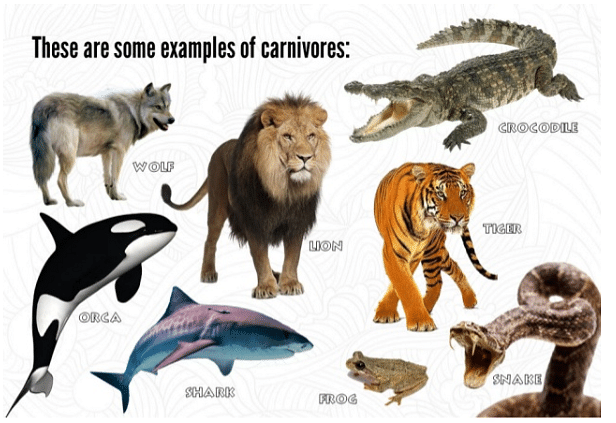
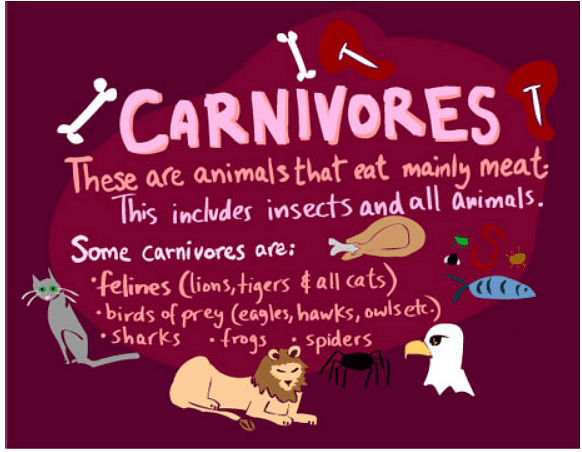
Carnivores or carnivorous animals are those that feed on other animals. They have evolved over time and developed characteristic features that help them hunt their prey. For example, big cats like tigers, jaguars, and lions have muscular bodies to chase their prey, with strong jaws and sharp teeth to bite and tear flesh and bones.
Carnivores
Basic Features of Carnivores
The basic features of carnivorous animals are: -
- Carnivore animals have a specially adapted set of teeth to kill their prey and feed. For example, cats have sharped canines and snakes have venomous fangs like injections to inject venom.
- Carnivores like frogs, lizards, and chameleons are equipped with long sticky tongues to capture their prey.
- Cats like tigers, cheetahs, jaguars have strong muscular legs, to chase their prey and climb on trees if needed.
- Carnivorous animals have small intestines as they do not require digesting plant-based proteins.
- Carnivores don’t have the ability to detoxify Vitamin A in their liver.
Carnivore
Types of Carnivores
On the basis of what carnivores eat, they can be further characterized into the following categories:
| Type | Consumed Food | Examples |
| Aviovore | Preys on birds | Sharp-shinned hawk, Peregrine falcon, serval, red fox, fanged frog, goliath bird-eater, etc. |
| Insectivore | Preys on insects | Robber fly, anteater, certain birds, etc. |
| Vermivore | Preys on worms | Pacific brown salamander, platypus, kiwi, hedgehogs, etc. |
| Hematophage | Consumes blood | Leeches, mosquitoes, bedbugs, etc. |
| Piscivore | Preys on fish | Northern water snake, large fishes like shark, octopus, squid, turtles, wolves, jaguars, etc. |
| Oviovore | Preys on eggs | Red-bellied snake, red fox, badgers, pine martens, etc. |
On the basis of how they prey, we can further divide carnivores into a few more categories:-
- Predators: These carnivores hunt their food/prey like tiger, lion, cheetah, etc.
- Scavengers: These carnivores feed on dead and decaying animals. They do not hunt their own food, rather feed on the leftovers of other predators. They have sharp and strong canines and molars to even chew on bones and digest them. They generally eat in packs. Examples include hyena, vulture, etc.
Further on the basis of the composition of meat in their diet, carnivores can be classified as:-
- Hypercarnivores: Shark, owl, tiger, lion, etc. Basically, all the top predators come under this list. Their diet composition is more than 70% meat.
- Mesocarnivores: Carnivores with diet composition within 50-70% flesh come under this category. Examples include dog, fox, etc.
- Hypocarnivores: Carnivores that have less than 30% meat are included in this category. For example, bears, humans, etc.
Examples of Carnivores
- Mammals: Tiger, lion, jaguar, cheetah, fox, wolf, etc.
- Birds: Hawk, vulture, eagle, woodpecker, kites, etc.
- Reptiles: Snakes, lizards, Komodo dragon, chameleon, crocodiles, and alligator (also amphibian), etc.
- Fishes: Sharks, whales, tuna, octopus, squid, etc.

Classification of animals on the basis of their mode of nutrition
Some Unique Facts About Carnivores
[Click Here for Sample Questions]
- Carnivores have only uni-directional movement in their jaws. They can only move it up and down and not sideways.
- Not all carnivores are strict flesh-eaters. Some animals like red pandas and raccoons are carnivores but consume very little meat.
- Carnivores have a very simple digestive system, unlike herbivores.
- All carnivores have a common ancestor.
- Plants like the Venus flytrap are carnivorous plants and feed on insects, small birds, etc.
Read More: Algal Bloom
Herbivores
[Click Here for Sample Questions]
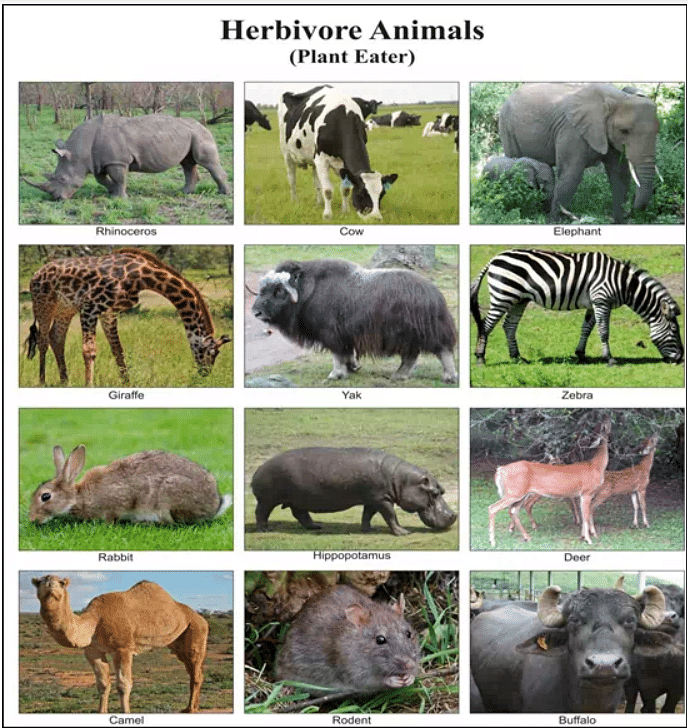
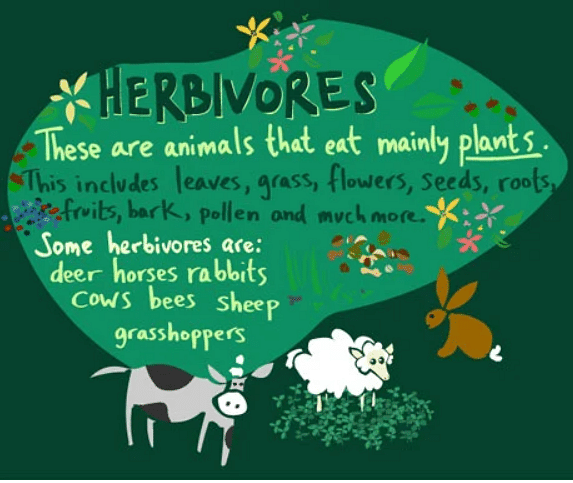
Herbivores or herbivorous animals are those that feed on fruits, plants, or plant-based nutrition. They are also known as primary consumers of a food chain. Examples include giraffe, cow, zebra, horse, etc. There are some herbivores that specialize in feeding on specific parts of the plant such as animals that consume only fruits are called frugivores while those that feed on leaves are referred to as folivores.
Herbivores
Read More: Heterotrophic Nutrition
Basic Features of Herbivores
The basic features of herbivorous animals are:
- Herbivores are physically and physiologically functioning animals that feed on plants and plant-based food.
- Herbivores generally have mutually leveled bacteria in their digestive system that helps in the breakdown of the plant-based food and release methane.
- Most herbivores also have a regurgitating mechanism, and they chew their food twice to digest cellulose.
- Herbivores also have an intestine approximately 10 times their body size to digest the cellulose.
- Herbivores are also equipped with a special set of teeth to chew their food properly. They usually have strong and flat molars to grind their food.
Herbivores
Types of Herbivores
Herbivores can be classified into 4 types based on what they consume.
- Animals that feed on fruits are called Frugivores. For example, bats.
- Herbivores that feed on leafy parts are called Folivores. For example, cow, goat, etc.
- Animals that feed on grains are called Granivores. For example, pigeons.
- Herbivores that feed on nectar are called Nectivores. For example, butterfly.
Examples of Herbivores
- Insects: Grasshoppers, butterflies, treehoppers, etc.
- Reptiles: Iguanas and tortoises
- Birds: Parrots, goose, etc.
Things to Remember
- Carnivores are the animals that fulfill their nutritional requirements by feeding on other animals.
- Carnivores can be divided into certain categories on the basis of their mode of nutrition, type of nutrition, and composition of nutrition.
- Carnivores are specially adapted to suit their needs with sharp canines, muscular bodies, and small and simple digestive systems.
- Examples of carnivores include a tiger, lion, shark, crocodile, chameleon, snakes, etc.
- Herbivores are those animals that feed on plants and consume plant-based substances.
- Herbivores are equipped with mutual gut flora, and longer intestines with flat molar teeth to grind and digest the cellulose in plant food.
- Examples include horses, cows, zebra, goats, sheep, etc.
Also Read:
| Related Articles | ||
|---|---|---|
| Municipal Solid Waste | Types of Waste | Waste Disposal |
Sample Questions
Ques. What are omnivores? (1 mark)
Ans. Omnivores are animals that consume different types of food, including both flesh and plant-based parts. Humans are an example of omnivores.
Ques. Why do we call herbivores ruminants? (3 marks)
Ans. Herbivores do not have the specific enzymes required to break down cellulose. Thus, they have a mutual gut flora with bacteria like methanogens in a special compartment in their stomach called rumen. This bacterium helps in partially digesting the cellulose and form cud. This cud is then again chewed by the herbivorous animals and digested again in their long intestines. All this is to digest the cellulose in an effective way. Thus, they are called ruminants.
Ques. What type of nutrition does amoeba have? (1 mark)
Ans. Amoeba is counted as omnivorous as it feeds on various types of matter including both microorganisms and plants.
Ques. Differentiate between herbivore and carnivore. (5 marks)
Ans. The differences between herbivores and carnivores are as follows:
| Criteria | Herbivore | Carnivore |
|---|---|---|
| Definition | Herbivores are those animals that feed on plants and consume plant-based substances. | Carnivores or carnivorous animals are those that feed on other animals. |
| Features | Herbivores are physically and physiologically functioned to feed on plants and plant-based food. They also have a special set of dentures to help grind their food along with intestines as large as 10 times their body size. | Carnivorous animals have specially adapted set of teeth to kill their prey and feed, like sharp canines. They have a simple digestive system along with muscular bodies to chase their prey and digest the protein. |
| Classification | Herbivores can be divided into 4 types of broad categories: frugivore (fruit-eating), folivore (leaf-eating), granivore (grain-eating), and nectivore (nectar-eating). | Carnivores can be divided into aviovore (bird-eating), insectivore (insect-eating), hematophage (blood-nutrition), piscivore (fish-eating), vermivore (worm-eating), and oviovore (egg-eating). They can also be divided on the basis of the composition of their diet into hyper carnivorous (70% or above), mesocarnivorous (50-70%), and hypocarnivorous (less than 30%) |
| Examples | Giraffe, horse, cow, goat, sheep, iguana, parrot, goose, etc. | Lion, tiger, jaguar, crocodile, alligator, snake, shark, etc. |
Ques. What are scavengers? (2 marks)
Ans. Scavengers are carnivores that feed on dead and decaying animals. They generally do not hunt for their prey, rather feed on the leftover flesh after another carnivore has hunted and feasted. Examples include hyenas, vultures, etc.
Ques. Can plants also be carnivorous? (2 marks)
Ans. Yes, there are plants that feed on flesh. Plants like the Venus flytrap are specially equipped with enzymes to digest flesh. They trap insects and small birds with aromatic fragrances that attract them and then digest them slowly.
Ques. How can carnivores be classified on the basis of the composition of their diet? (3 marks)
Ans. On the basis of their diet composition, carnivores can be classified into:
- Hypercarnivores: Sharks, owls, tigers, lions, etc. Basically, all the top predators come under this list. Their diet composition is more than 70% meat.
- Mesocarnivores: Carnivores with diet composition within 50-70% flesh come under this category. Examples include dogs, foxes, etc.
- Hypocarnivores: Carnivores that have less than 30% meat are included in this category. For example, bears, humans, etc.
Ques. Classify carnivores on the basis of what they hunt and feed on. (5 marks)
Ans. On the basis of what carnivores consume, we can classify them as follows:
- Aviovore: These carnivores prey on birds.
- Insectivore: They consume insects.
- Vermivore: Vermivores prey on worms.
- Hematophage: They feed on blood.
- Piscivore: These types of carnivores prey on fishes.
- Oviovore: Oviovores consumes eggs.
For Latest Updates on Upcoming Board Exams, Click Here: https://t.me/class_10_12_board_updates
Check-Out:



Comments