



Content Curator
Insertional Inactivation is one of the steps in recombinant DNA technology that is done by inserting a fragment of foreign DNA into a restricted area of the genome to stop its specific functions. It is an important step in rDNA technology which is used in the production of vaccines, insulins, hormones and some plant varieties etc. In this article, we are going to discuss insertional inactivation and its methods with some examples.
| Table of Content |
Keyterms: Insertional Inactivation, Recombinant DNA technology, DNA, rDNA, Vaccines, Insulins, Hormones, Bacteria, Gene, Genome, Plasmids, Anibiotics
Also Read: Pollen Grains
What is Insertional Inactivation?
[Click Here for Sample Questions]
It is a technique of recombinant DNA technology. It is a process to inactive the gene in a living cell by inserting a fragment of foreign DNA or bacteria carrying recombinant plasmids into the restricted site of the gene to resist the antibiotics and that results in the inactivation of the gene.
Insertional Inactivation
Method of Insertional Inactivation
[Click Here for Sample Questions]
- The main component used in insertional inactivation is plasmids. The plasmids are a combination of different genes in different sites. This kind of gene creates antibiotic resistance in a living organism in which they are present. There is a type of plasmid named pBR322 that is used in the process of Insertional Inactivation.
- The plasmid got its resistance property for ampicillin and tetracycline from the sites of the gene.
- In this Insertional Inactivation technique, the foreign DNA is inserted into the site of a gene called BamHI. BamHI is responsible for tetracycline resistance. As a result, the plasmid lost its resistance towards tetracycline because of the invasion of different genes in its coding sequence.
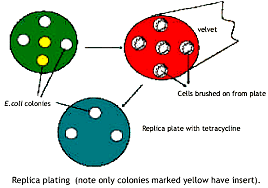
- To recognize this process, the playing method of ampicillin and tetracycline is used in this process. The gene changed recombinant bacteria will grow in ampicillin without any barriers, but they cannot survive in tetracycline. This is because of the inactivation of tetracycline resistance.
Examples of Insertional Inactivation
[Click Here for Sample Questions]
- The selectable marker gene LacZ gene is responsible for the production of β-galactosidase by breaking down the X-gal, a chromogenic substrate
- pUC18 is the genetically engineered plasmid that has some specific features
- When bacterial cells containing the genetically engineered pUC18 are grown on an agar-based medium with X-gal
- Bacterial cells which contain pUC18 plasmids give rise to blue colonies which is a result of β-galactosidase due to LacZ
- So a fragment of foreign DNA is inserted into a restricted site of the LacZ gene, so the code of production of β-galactosidase is inactivated
- LacZ alpha is used as a selective marker for Recombinant pUC18 plasmid
- When a recombinant plasmid is grown on an agar-based medium with X-gal. This time LacZ is not expressed, so no β-galactosidase is produced. This results in a rise of white colonies by recombinant plasmid
Also Read: Menstrual Cycle
Terms Related to Insertional Inactivation
[Click Here for Sample Questions]
- Biotechnology: Biotechnology is a division of biology that uses a living system or organisms to produce a certain product that will be helpful for our environment. A simple example of biotechnology is the use of yeast, a living organism to make a cake, wine and some other food products.
- Recombinant DNA Technology: It is a technology that involves the joining of DNA molecules of two different species and uses those DNA molecules to produce new products which are used in medicine, food etc. The joined DNA molecule is known as Recombinant DNA which is inserted into a host to produce new products. A simple example of Recombinant DNA technology is Insect-resistant Crop
- Plasmid: It is a small DNA structure that is found within the cell but separated from chromosomal DNA and it has the ability to replicate independently. It is commonly used in lab processes. Some examples of plasmids used in DNA technology are pUC18 and pBR322
- Foreign DNA: A DNA molecule from other species or recombinant DNA is manipulated in the laboratory and inserted into a gene of other organisms or species to create changes in its coding sequence.
- DNA Sequencing: It is a technique used in laboratories to find the exact sequence or order of bases in a DNA molecule. It is an important technique that helps if understanding gene functions
- DNA Cloning: DNA Cloning is a technique used to assemble the recombinant DNA in a host organism and to give commands to perform replication inside a host organism
- Coding DNA: It is a sequence of DNA that has a set of rules to code protein for performing particular tasks. There are also known as Exons which are separated by a long region of DNA called introns
- Non-coding DNA: It is also a sequence of DNA but it does not code for amino acids which lie in-between coding DNA and it is also known as Intron
Things to Remember
- The insertional inactivation is a technique that helps in inserting a fragment of foreign DNA into a restricted part of a gene to make it inactive and this method is used to change the original functionality of a gene
- This method is done with the help of plasmids, a small DNA molecule used for many DNA techniques.
- If the plasmid has an insert, then it will not give the original result of the process otherwise it will show the exact outcome of a function of a gene.
- The insertional inactivation method is used in the process of selecting and screening a particular DNA molecule.
Also Read:
| Related Articles | ||
|---|---|---|
| Blastocyst | Infant Mortality Rate | Embryology |
| Infectious Diseases | Mutation | Endangered Species |
Sample Questions
Question: Explain in detail Recombinant DNA. (2 marks)
Answer: Recombinant DNA is DNA molecules that are produced by joining two DNA molecules from two different species. These DNA molecules are used to produce certain products which are highly beneficial to humans.
Question: Explain the whole process of Recombinant DNA technology. (5 marks)
Answer: Step 1: Isolation of DNA- DNA is always found with RNA, enzymes and some proteins, so it is mandatory to remove all the substances which are present with DNA by a certain process
Step 2: Cutting of DNA- A small segment of DNA has to be cut at a specific location and this is done by restriction digestion enzyme
Step 3: Desired DNA Fragment- This is done by using the anodes because the DNA molecules have negative charges by the above process, so desired DNA fragments can be obtained
Step 4: PCR Amplification- In this step, the DNA molecules are replicated
Step 5: Ligation- In this step, the vector DNA, enzyme DNA and gene of interest are combined to form a hybrid or recombinant DNA
Step 6: Insertional Inactivation- This step involves the insertion of recombinant DNA into a restricted part of a gene to make it inactive
Step 7: Obtaining Gene product- The recombinant DNA is replicated into the host organism and starts to produce certain products or enzymes. They are separated by various techniques
Question: Mention any five of the applications of rDNA technology. (3 marks)
Answer: The 5 applications of rDNA technology are,
- Hormone production
- Vaccines production
- Insulin production
- Interferon production
- Transgenic plants production
Question: Define Passenger DNA. (2 marks)
Answer: Passenger DNA or Foreign DNA is a fragment of DNA molecule which is produced in the labs and inserted into the host organism to make changes in the genetic code of that organism.
Question: Differentiate between the Coding DNA and the Non-Coding DNA. (4 marks)
Answer: The difference between Coding DNA and Non-Coding DNA are,
| Coding DNA | Non-Coding DNA |
|---|---|
| A DNA sequence that is encoded with rules to produce certain proteins | A DNA sequence that does not produce any proteins |
| An example of Coding DNA is Exon | Examples of non-coding DNA are Introns, repetitive DNA |
| It occupies just 2 % length of the total human genome | It occupies 98% length of the human genome |
| Transcribing and translating are its functions | Regulation, epigenetic activity are their functions |
Question: How is rDNA technology used in agriculture? (4 marks)
Answer: rDNA are used as,
- Recombinant DNA technology is used in plants to increase the efficiency of plant growth by increasing the efficiency of the plant’s ability to fix nitrogen.
- It has been used to increase plant immunity to a disease by reengineering the plant to produce viral proteins.
- The genes for insect resistance capability is obtained from a bacterium that has been inserted into plants to allow the plants to the pests.
- One of the first agricultural outcomes of biotechnology was the rot-resistant tomato and this is done by adding a gene that results in an antisense molecule that inhibits the tomato from producing the enzyme that encourages rotting.
Question: Define Transposition. (2 marks)
Answer: It is the process of moving or transporting a certain genetic element between the different genome locations and its process needs a catalyzer.
Question: What is a transgenic organism or genetically modified organism? (2 marks)
Answer: The host organism from which the foreign DNA or DNA molecule is taken for biological purposes is known as transgenic organisms.
Question: How insertional inactivation is done in plants? (2 marks)
Answer: The insertion process in plants is more difficult than in bacterias. Here a gene is inserted into a single cell of a plant and the cells begin to cultivate to produce a mature plant. The plasmid for the insertion inactivation process in plants is obtained from the plant-bacteria named Agrobacterium tumefaciens.
Question: How insulin is produced by rDNA technology? (2 marks)
Answer: The insulin-making gene from the human is isolated then it is cut using restriction enzymes and it is inserted into a host bacteria using ligase enzyme, inside a host bacteria it begins to replicate which results in the production of millions of bacteria that produces human insulin.
For Latest Updates on Upcoming Board Exams, Click Here: https://t.me/class_10_12_board_updates
Check-Out:



Comments