



Content Curator
A Light Emitting Diode (LED) is a semiconductor device that converts electrical energy into light energy. When a voltage is applied across the p-n junction of the LED, the electrons and holes combine and release energy in the form of photons. This process is called electroluminescence.
- A Light Emitting Diode is a semiconductor device that is designed to emit light when an electrical current flows through it.
- It is made of semiconductor material, such as gallium arsenide or silicon, that has been doped with impurities to create a p-n junction.
- When a voltage is applied across the p-n junction, the diode becomes forward-biased, allowing electrons and holes to recombine and release energy in the form of photons (light).
- The energy of the photons emitted by the LED is determined by the energy gap between the conduction and valence bands of the semiconductor material.
- The color of the light emitted by the LED is also determined by the material used to make it. For example, gallium arsenide produces red or yellow light, while indium gallium nitride produces blue or green light.
- The efficiency of the LED is determined by the ratio of the electrical power applied to it to the optical power emitted by it. This efficiency can be improved by using better semiconductor materials and by optimizing the design of the LED.
- LEDs are commonly used in a wide range of applications, including lighting, displays, and indicators, due to their low power consumption, long lifespan, and fast response time.
- The increasing use of LED technology is contributing to energy savings and reducing carbon emissions.
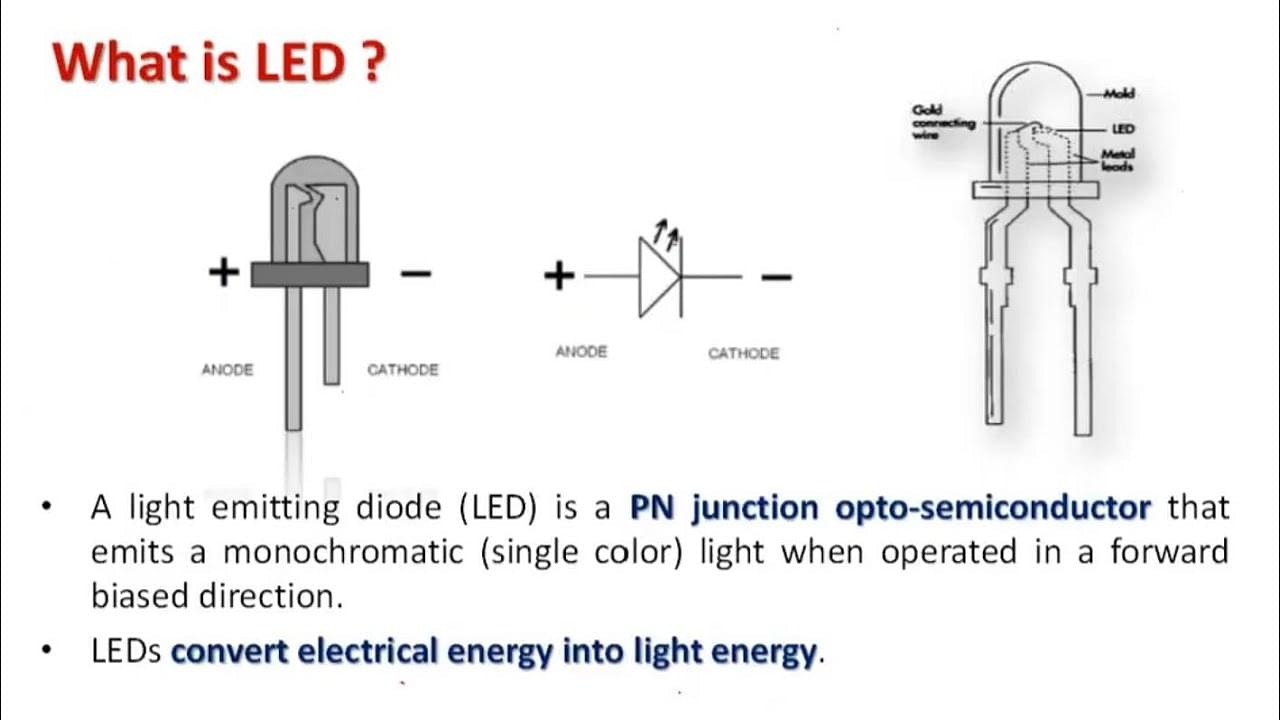
LED Converts Electrical Energy into Light Energy
Also read:



Comments