



Content Writer
Lysosomal Storage Disease is a disease that is caused by the lack of enzymes in the lysosomes of the cells in the human body. The enzymes are essential as they remove all the unwanted and unhealthy substances in the cells contributing.
- Lysosomal Storage Disease is usually diagnosed during pregnancy or infancy.
- It is a form of a rare genetic condition that causes the building of toxic materials in your body’s cells.
- They lead to greater mortality and morbidity.
- The majority of this disease is caused by mutations in the genes.
- Severity of lysosomal storage disease increases when it is discovered at later stage.
- It will affect the working of the enzyme activator or modifier.
Key Terms: Lysosomal Storage Disease, Disease, Mortality, Genes, Lysosomes, Cells, Mutation, Enzymes, Cell Membrane, Respiratory System, Nervous System
What are Lysosomes?
[Click Here for Sample Questions]
Lysosomes are defined as subcellular and spherical organelles that consist of hydrolytic enzymes. They are also known as Suicidal bags.
- The lysosomes surround the cell membrane so that they can protect the cells from being absorbed.
- They are also very effective in breaking food particles into finer particles and thus help in good digestion.
- Lysosomes are also known as digestive bags.
- It involves the breaking of biomolecules like proteins and fats
- The discarded waste materials are digested by a process called autophagy.
- The term was coined by Belgian biologist Christian de Duve, who won a Nobel prize in medicine or physiology in 1974.
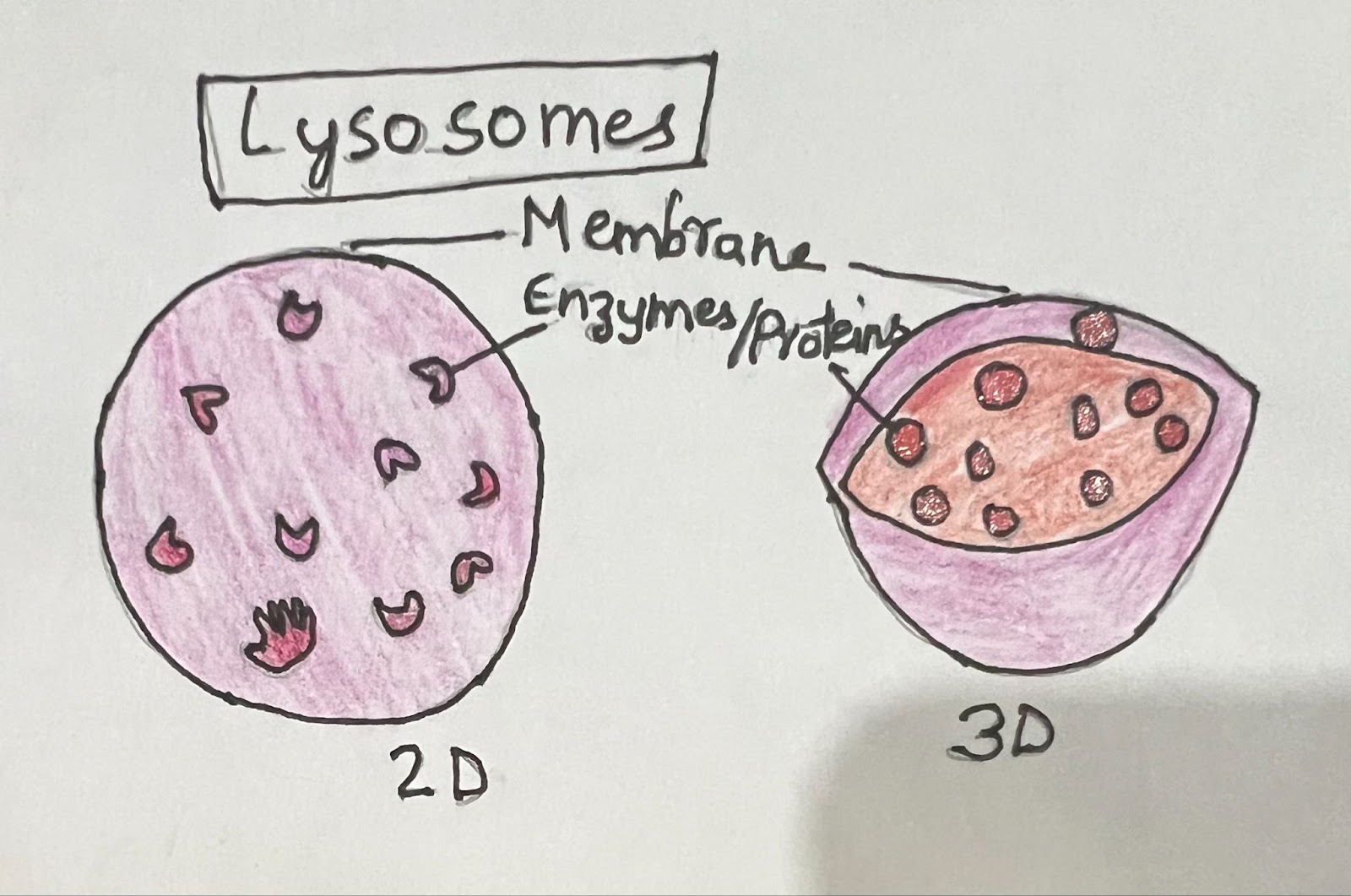
Lysosomes
Read More:
| Chapter Related Concepts | ||
|---|---|---|
| Dengue Fever | Why Do We Fall Ill? | Down syndrome |
| Genetics | Gonads | Endocrine Gland |
Lysosomal Storage Diseases
[Click Here for Sample Questions]
Lysosomal Storage Diseases are metabolic disorders that occur due to the lack of enzymes in the cell, which leads to the accumulation of macromolecules.
- These macromolecules are harmful to our health as they mainly consist of toxic and undigested food particles.
- There are more than 50 different kinds of Lysosomal Storage Diseases.
- These diseases can adversely affect various body parts.
- It can forever damage our respiratory, circulatory, nervous, and digestive systems.
- The macromolecules get lined up in line due to the lack of enzymes in the Lysosome.
- This type of disease can affect our skin, eyes, bones, liver, spleen, kidneys, etc.

Types of Lysosomal Storage Diseases
[Click Here for Sample Questions]
Different kinds of Lysosomal Storage diseases are as follows:
- Gaucher Disease
- Fabry Disease
- Niemann-Pick Disease
- Pompe Disease
- Tay-Sachs Disease
- Mucopolysaccharidoses (MPS) Disease

Causes of Lysosomal Storage Diseases
[Click Here for Sample Questions]
There are three main reasons for Lysosomal Storage Diseases
Absence of Enzymes in Lysosomes
The enzymes that are found in Lysosomes will help in the processing of food particles and dead cells. They will also process disease-causing microorganisms such as viruses, protozoa and organisms.
Deficiency of Proteins
The deficiency of proteins is an important cause of Lysosomal Storage Diseases as it will alter the processing cycle of enzymes found in lysosomes.
Autosomal Recessive Manner
Some Lysosomal Storage Diseases are inherited in an autosomal recessive manner.

Symptoms of Lysosomal Storage Diseases
[Click Here for Sample Questions]
The most detrimental symptoms include organ enlargements and organ failure. Few symptoms of Lysosomal Storage Diseases that are common to all are:
- Skin Rashes
- Severe pains in hands and feet
- Lung dysfunction
- Damage in Central Nervous System
- Muscle cramps
- Respiratory problems
- Kidney failure
- Anemia
- Stiff limbs resulting in walking problems
- Tiredness
- Depression
- Heart failure leads to strokes and ultimate death at an early age.
Read More: Difference Between Diabetes Mellitus and Diabetes Insipidus
Diagnosis of Lysosomal Storage Diseases
[Click Here for Sample Questions]
It is difficult to predict and analyze Lysosomal Storage Diseases as the symptoms change from one type of LSD to the other. Tissue Biopsies are conducted to analyze the disease. Some of the basic tests conducted to diagnose Lysosomal Storage Diseases are:
- Skin fibroblasts test
- Blood test
- Amniotic fluid test
- Urine test
Diagnosis Tools
Some of the Diagnosis Tools include:
- Testing for enzyme deficiencies in the blood, urine, and tissue.
- Prenatal genetic testing includes amniocentesis and chorionic villus sampling.
- It is included in families which have a history of a lysosomal storage disorder.
- Genetic screening indicates a person’s risk for passing a defective gene to their children.
Treatment of Lysosomal Storage Diseases
[Click Here for Sample Questions]
Lysosomal Storage Diseases have the following few treatments:
- Intravenous(IV) enzyme replacement
- Bone marrow transplantation which slows down the disease progression
- Umbilical cord blood stem cell transplantation which will help in restoring the missing enzymes
Read More:
| Class 11 Biology Related Concepts | ||
|---|---|---|
| Dengue | Vitamin B12 Deficiency | Stomach Ulcer |
| Common cold | Jaundice Symptoms | Smallpox |
| Ascariasis | Filariasis | Diphtheria |
Things To Remember
- Lysosomal Storage Disease is the result of the lack of enzymes in the lysosomes of the cells in the human body.
- Lysosomes are considered protective barriers to our cells.
- They even help break down food particles and aid in easy and fast digestion.
- The absence of Lysosomes and the deficiency of proteins in the body are the two main causes of Lysosomal Storage Disease.
- Organ Dysfunction, tiredness, joint and muscle pains are the most common symptoms of LSD.
- Although it is difficult to detect LSDs, there are a few common tests, such as blood and urine tests, that can detect the disease.
- Some medical treatments can either cure or reduce the intensity of the disease to a considerable extent.
Sample Questions
Ques. Why are Lysosomes called Suicidal bags? (3 marks)
Ans. Lysosomes are very important for healthy living. It breaks down old cells, removes the dead cells, and renews cells. It is the protective barrier of our cells and even safeguards them from being absorbed by harmful microorganisms such as Protozoa, bacteria, and fungi.
- If the cells in the body are damaged which result in bursting of lysosomes cells.
- When lysosomes cells burst they will release digestive enzymes.
- These enzymes will consume their own cells which result in death of cells.
- Hence Lysosomes are called suicidal bags.
Ques. What is Gaucher disease? (3 marks)
Ans. Gaucher disease is a kind of Lysosomal Storage Disease. Gaucher disease results in detrimental blood issues. It weakens the bones severely. It also enlarges our liver and results in developing the spleen.
- It result in building of fatty substances in certain parts of the oragns.
- This will hamper the functioning of the organs.
- It will also increase the chance of fractures.
Ques. What are the various clinical tests conducted to detect LSDs? (2 marks)
Ans. There are mainly four tests which are usually conducted to detect any kind of LSDs-
- Skin fibroblasts test,
- Blood test,
- Amniotic fluid test and
- Urine test
Ques. What are the most severe damages caused by LSDs? (2 marks)
Ans. LSDs can adversely affect various body parts and can damage our respiratory, circulatory, nervous, and digestive systems forever. It can cause various side effects which are as follows:
- Dry mouth
- Reduce in appetite
- Tremors and weakness
- Numbness
- Sweating and dizziness
Ques. What are Lysosomes? (3 marks)
Ans. Lysosomes are membrane bound organelles that is involved in degradation and recycling of cellular waste, debris, energy metabolism and cellular signalling.
- Lysosomes also help in removing excess or worn-out cell parts.
- They will eliminate the viruses, protozoans and bacteria that are invading the cell.
- In case a cell cannot be repaired then lysosomes will initiate self-destruct by the efforts of a method known as “programmed cell death” or apoptosis.
Ques. What is the test prescribed by doctors in the case of Lysosome storage diseases? (2 marks)
Ans. The test prescribed by doctors in the case of Lysosome storage diseases are as follows:
- Genetic test for mutation
- Biopsy
- Urine Test
- Blood Count Test
- Eye Examination
- Heart Test such as ECO and EKG
- Liver Test
- MRI
- Kidney Test
- X-Ray
- Hearing Test
Ques. What are Lysosomes storage diseases? (3 marks)
Ans. Nuclear genes are generally recognized to assist arrange the lysosomes' enzyme synthesis. To put it simply, nuclear genes which are mostly found in eukaryotes—are often located within the cell nucleus.
- Now, in any case, if the mutations, especially if only one of the many, are discovered in these specific genes.
- It may lead to the onset of over thirty different types of human genetic illnesses, which are commonly also known by many as Lysosomal Storage Diseases (LSD).
- A cell will eventually die if any mutations are discovered to have changed the molecules' tendency to assemble in one.
- Numerous illnesses, including cancer and others, can arise as a result of these mutations.
Ques. Explain (A) Lipidoses (B) Mucopolysaccharidoses? (2 marks)
Ans. (A) Lipidoses: Lipidoses is a condition that occur when your body does not have enzymes that will break down the molecules of fats. It include women disease and Cholesteryl ester storage disease.
(B) Mucopolysaccharidoses: Mucopolysaccharidoses is a condition that occur when your body does not have enzymes that will break down the molecules of sugar. It include Hurler’s disease and hunter syndrome.
Ques. Mention various treatment for Lysosomal Storage Diseases (LSD)? (3 marks)
Ans. The various treatment for Lysosomal Storage Diseases (LSD) are as follows:
- Enzyme replacement therapy: It involves your doctor injecting an intravenously (intravenously) genetically modified enzyme into your vein.
- Stem cell transplants: In order to assist create the missing enzyme, your provider may transplant stem cells from donors or umbilical cord blood.
- Substance reduction therapy: It involves taking drugs that lower the amount of chemicals that accumulate within your cells. For example, Gaucher disease can be treated with miglustat. Clinical trials are now underway for more SRTs.
Ques. Explain the Niemann-Pick disease? (2 marks)
Ans. A genetic condition known as Niemann-Pick disease impacts lipid metabolism, which controls how fats, lipids, and cholesterol are deposited in and eliminated from the body.
- Adverse lipid metabolism in Niemann-Pick disease patients results in the accumulation of toxic levels of lipids in multiple organs.
It will effect following organs of the body
- Spleen
- Bone Marrow
- Liver
- Brain
Ques. Mention the function of lysosomes? (3 marks)
Ans. The function of lysosomes are as follows:
- It help in the digestion process that take place inside cells.
- Lysosomes help in signalling of the cells and energy metabolism.
- It help in restoration of plasma membrane.
- It will broke the large substance molecules into smaller substances molecules.
Read Also:



Comments