



Education Content Expert
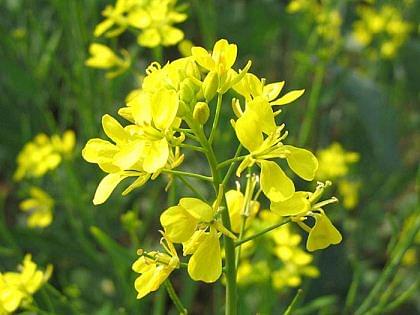
Mustard’s Botanical Name is Brassica. Mustard is an annual herb that is cultivated as a vegetable or an oil seed crop or as fodder. Mustard (Brassica) falls under the family Brassicaceae, which is a family of flowering plants usually cultivated for their economic importance. Pale yellow or white mustard (Brassica hirta), brown mustard (Brassica juncea), and black mustard (Brassica nigra) are the three species of mustard that are known for their condiment value. Mustard is one of the world's most popular and widely used spices and condiments.
Read More: Scientific Names of Animals and Plants
Key Terms: Mustard, Brassica, Brassicaceae, White Mustard, Brown Mustard, Mustard Seeds, Condiment, Black Mustard
What is Mustard?
[Click Here for Sample Questions]
Mustard is a condiment made from the pungent-smelling seeds of the mustard plant. Mustard belongs to the family Brassicaceae. There are two major types of mustard. The first one is white, or yellow mustard (Sinapis alba), a plant of Mediterranean origin and the other one is brown, or Indian mustard (Brassica juncea), which is of Himalayan origin.
- Mustard seeds have tiny globules which are strong, pungent, and slightly bitter flavour.
- Mustard seeds have been used as a spice and condiment from the earliest times.
- White mustard seeds are usually light yellow in colour with a diameter of 2.5 mm.
- Brown mustard seeds are a little darker yellow in colour and are almost the same size.
- Both of these seeds have 30 to 40% of vegetable oil, a smaller proportion of protein, and a strong enzyme called myrosin.
- There is one more variety of Mustard named Brassica nigra, or black mustard, which is an annual plant cultivated for its black or dark brown seeds, which are commonly used as a spice.
- Mustard is used in a variety of foods and cuisines as a spice or condiment.

Mustard Seeds
Mustard Botanical Name
[Click Here for Sample Questions]
The botanical name of mustard is Brassica. Brassica is a member of the Cruciferae or Brassicaceae family of plants and has a variety of regional names such as Chinese mustard, brown mustard, and oriental mustard.
- Brown mustard is known by the botanical name Brassica juncea.
- Pale yellow or white mustard is known by the botanical name Brassica hirta.
- The botanical name of black mustard is Brassica nigra.
- Brassica rapa subsp. oleifera is the botanical name for field mustard.
Read More: Biological Classification
Scientific Classification of Mustard
[Click Here for Sample Questions]
The scientific classification of Brassica (Mustard) is tabulated below:
| Kingdom | Plantae |
| Clade | Tracheophytes |
| Clade | Angiosperms |
| Clade | Eudicots |
| Clade | Rosids |
| Order | Brassicales |
| Family | Brassicaceae |
| Genus | Brassica |
Origin and Distribution of Mustard
[Click Here for Sample Questions]
Mustard is an annual herb that is a very popular spice and condiment used throughout the world.
- The pale yellow or white mustard is indigenous to Southern Europe.
- The brown mustard originated in China and was later on introduced in Northern India.
- The black mustard is native to the Southern Mediterranean region.
- The white mustard is cultivated in most of the countries in the world such as Australia, Denmark, Italy, Japan, the UK, China, Chili, Denmark, Italy, Japan, North Africa, Canada, and the USA.
- Mustard is grown in loamy or clayey loam soil.
- In India, it is a rabi crop grown majorly in Northern India.
- It is grown during the rainy season from July to November in South India.
Read More: Difference Between Rabi Crops And Kharif Crops
Uses of Mustard
[Click Here for Sample Questions]
Mustard is one of the most popular spices or condiments used in the entire world. Mustard is found in various dressings, glazes, soups, and marinades.
- Mustard sauce or paste is prepared by combining mustard seeds with water, vinegar, lemon juice, wine, or other liquids and spices. The mustard sauce ranges in colour from bright yellow to dark brown.
- Mustard is used with various other sauces, mayonnaise, and cheeses in various food items.
- It is very popular as a condiment for sandwiches, hamburgers, corn dogs, and hot dogs.
- Whole mustard seeds are used as a flavouring agent in Indian cuisine.
- Mustard flour has natural preservatives and antioxidant properties and is sued to provide flavour and colour.
Read More: Biological Classification Important Questions
Economic Importance of Mustard
[Click Here for Sample Questions]
Mustard belongs to the Brassicaceae family, which is a family of flowering plants usually cultivated for their economic importance. With 372 genera and over 4000 species, the family Brassicaceae is one of the major dicot groups. Some members of the family include cabbage, broccoli, turnips, radish, Brussel sprouts and rapeseeds.
- Mustard and related members are grown practically everywhere in the world except Antarctica because of their edible leaves, roots, stems, buds, flowers, and oilseeds.
- Some weedy members of the Brassicaceae family offer an experimental platform for the advancement of modern biology.
- The wild germplasm of this group could be exploited to create cytoplasmic male sterility for the creation of hybrid seeds.
- The next big economic importance is culinary. Mustard is one of the most popular and used spices and condiments around the world.
Things to Remember
- Mustard belongs to the family Brassicaceae and is known by the botanical name Brassica.
- There are three main varieties of mustard namely Pale yellow or white mustard (Brassica hirta), brown mustard (Brassica juncea), and black mustard (Brassica nigra).
- Mustard is majorly used as a vegetable and oil seed crop.
- Mustard seeds are tiny globules with a size of about 2.5 mm in diameter and are generally used as spices and for oil extraction.
- Mustard is native to tropical regions of North Africa, temperate regions of Europe, and most parts of Asia.
- It is a widely popular spice and condiment used in cuisines throughout the world.
Sample Questions
Ques. What is the botanical name of mustard? List the botanical name of all varieties of mustard. (3 Marks)
Ans. The botanical name of mustard is Brassica. There are three main varieties of mustard which are known by different botanical names which are as follows:
- Brown Mustard: Brassica juncea
- Pale yellow or White mustard: Brassica hirta
- Black Mustard: Brassica nigra
Ques. What are mustard seeds? (3 Marks)
Ans. Mustard seeds are tiny, pitted globules made from the mustard plant. They are usually white and brown. They are odourless when they are whole and are pungent-tasting. White mustard seeds are light yellow in colour whereas brown mustard seeds are a little darker yellow in colour. The size of mustard seeds is around 2.5 mm in diameter. There is about 30 to 40% of vegetable oil, a slightly smaller proportion of protein, and a strong enzyme named myrosin in mustard seeds.
Ques. What is white mustard? (3 Marks)
Ans. White Mustard, known by the botanical name Sinapis alba, can also be known as yellow mustard. It is an annual herb that belongs to the family of Brassicaceae. It is cultivated for its pungent seeds. It is native to the Mediterranean region. It is used as a condiment, as green manure and fodder crop.
Ques. What is mustard oil? (3 Marks)
Ans. The tiny, pitted mustard seeds are used for oil production. These seeds are hydro-distilled to produce mustard oil. The oil appears to be pale yellow to brownish-yellow in colour and has a strong, unpleasant odour. The volatile mustard oil is produced after the mustard seed is pulverised, combined with water, and distilled, which yields the essential oil. Mustard oil can also be produced by the dry distillation of the seed.
Ques. Describe the role of mustard in cuisines throughout the world. (3 Marks)
Ans. Mustard plays a very important role in cuisines throughout the world.
- It is used as a dipping sauce for both warm and cold types of meat.
- It is also a part of barbecue sauce, vinaigrette, marinades, and mayonnaise.
- Mustard is the most popular and most used condiment along with bratwurst, pretzels, and hot dogs.
- It is also used to make mustard soup.
- Mustard is used in Indian dishes to add a distinctive flavour to mixed vegetable or fish curries.
Ques. Is mustard a herb? (3 Marks)
Ans. White mustard is considered to be a herb. The seeds of white mustard are used to make medicine. It is also used by people for chest congestion, joint pain, sore throat, and many other conditions. However, there is no valid scientific evidence to support these uses of mustard.
Ques. Can mustard last for a long period of time? (3 Marks)
Ans. Mustard need not be refrigerated for safety owing to its antibacterial qualities and acidity. Mustard does not support the growth of mould, mildew, or dangerous germs. Mustard can dry out, lose flavour or become brown due to oxidation. However, it can last for a long period of time without becoming unusable or hazardous.
Ques. Why do whole mustard seeds are flavourless and cracked not? (3 Marks)
Ans. The whole mustard seeds are flavourless but cracked or grinded seeds flex their flavour. On grinding, two compounds are released namely myrosin, and sinigrin, which, when combined with the water, cause a chemical reaction that gives mustard its heat.
Check-Out:



Comments