



Content Curator
The parrot is an extremely fascinating bird with colorful structures. It has clawed zygodactyl feet, a robust, curved beak, and an erect posture.
| Table of Contents |
Key Terms: Parrot, Taxonomy, Zoological Terminology, Aves, Animalia
What is a Parrot?
[Click Here for Previous Year Questions]
Parrots are omnivorous creatures belonging to the class Aves. The majority of parrots are wild, however, several species have been domesticated since ancient times due to their intelligence and devotion. Parrots can imitate humans very well. They have the ability to communicate, interact, and even exhibit human-like emotions. Their distinctiveness increases their appeal as pets.
It is well recognised that theropod dinosaurs, a kind of dinosaurs, were the ancestors of birds. The majority of parrots are wild, however, several species have been domesticated since ancient times due to their intelligence and devotion.
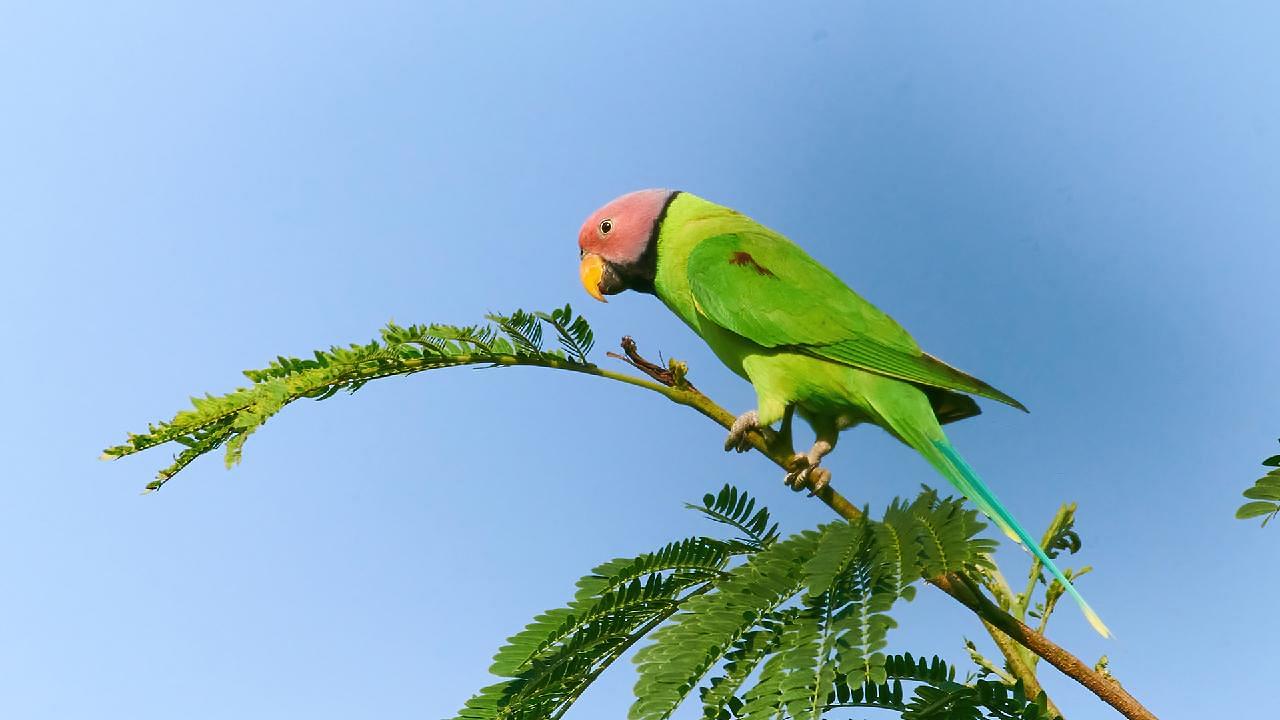
Parrot
They are frequently referred to as hookbills since a bird's beak needs to be curled in order to be a parrot. There are four toes on each foot, two of which face forward and the other two backward. The companion parrots range in size from little macaws to giant five-inch birds. Different species have different colors and textures on their bodies.
Also read: Life Process
Scientific Name of Parrot
[Click Here for Sample Questions]
The scientific name of the common Parrot is Psittaciformes.
- Parrots are classified as members of the order Psittaciformes by the Integrated Taxonomic Information System.
- The class also contains more than 350 other bird species including parakeets, macaws, cockatiels, and cockatoos (ITIS).
- The Psittacidae family of loud, flashy birds is referred to as the "parrot" family.
What do Parrots eat?
Fresh fruits, veggies, and seeds are the greatest meals to feed your pet parrot. The food of a parrot in the wild can vary greatly, although they often like eating fruit, fruit seeds, nuts, flowers, and maize wherever they can find it.
Where are Parrots found?
Warm environments including rain forests, grasslands, savannahs, and islands are where parrots originally evolved. A few Species, like the Kea parrot, require a frigid environment that prevents them from living in New Zealand's mountainous areas. There is proof that parrots were kept in India three thousand years ago.
Learn More About:
Taxonomy of Parrots
[Click Here for Previous Year Questions]
Biology defines the class of Parrots as Class Aves in Linnaean taxonomy.
| Type | Classification |
|---|---|
| Phylum | Chordata |
| Kingdom | Animalia |
| Order | Psittaciformes |
| Class | Aves |
Different Species of Parrots
[Click Here for Sample Questions]
There are over 350 identified species of parrots. There are several parrot species in Australia. The most well-known are:
- Eclectus
Eclectus parrots are indigenous to the Moluccas, the Solomon Islands, Indonesia, New Guinea, and northeastern Australia. The eclectus is a kind, considerate, and clever species of bird that is well-known for its friendliness.
- Hyacinth Macaw
These have a long tail and a completely blue body. The beak is black, although the photographs may make it look blue. It also has a golden circle around the bottom beak and around the eyes.

Hyacinth Macaw
- Sun Conure (Sun Parakeet)
A rainbow in bird form, sometimes referred to as the Sun Parakeet in aviculture. Their vivid yellow plumage is what gives them their name. The bottom of the bird has a vivid orange color, and the face is also orange-flushed.
- Rose-breasted Cockatoo
The common name for the rose-breasted cockatoo is Galah. These birds may be found all throughout the continent of Australia and are native to that region. The bird is well-known for its exterior traits because of its lovely rose-colored body and grey wings.

Rose-breasted Cockatoo
- Scarlet Macaw
The Scarlet Macaw is another rainbow bird, like the Sun Parakeet. The biggest distinction between it and other rainbow birds is the size and weight of its body. The wingspan and height of the scarlet macaw are about one meter each. As the name implies, it has predominantly red feathers in both wings, along with yellow, blue, and green feathers.
Features of Parrot
[Click Here for Previous Year Questions]
Here are some common features of a Parrot:
- The parrots range in size from 8 to 100 cm.
- They seem big due to their short necks, strong bodies, and thick feet.
- The tail's length and form vary, and the wings are large and pointed.
- Some species have small tails, whereas macaws have long, pointed tails.
Parrot Reproduction and Lifespan
The majority of animals practise monogamy, or staying with the same spouse throughout life.
In their natural environment, parrots prefer to mate during the warmer months of the year. Due to the warmer temperatures and the abundance of food supplies for young, the reproductive process often begins in the spring. For the purpose of mating, parrots naturally start to release sex hormones throughout these months.
Parrots lay eggs, much as many other birds. They typically lay two to eight eggs at a time. Before hatching, there is an approximately 18 to 30 day incubation period.
Also Check:
Things to Remember
- The scientific name of the common parrot is Psittaciformes.
- Fresh fruits, veggies, and seeds are the greatest meals to feed your pet parrot.
- The Psittacidae family of loud, flashy birds is referred to as the "parrot" family.
- Parrots have four toes on each foot, two of which face forward and the other two backward.
Previous Year's Questions
|
Sample Questions
Ques. What is the scientific name for a Parrot? (1 mark)
Ans. The scientific name of the common parrot is Psittaciformes.
Ques. What are Parrots? (3 marks)
Ans. Parrots are omnivorous members of the Aves class. The majority of parrots are wild, but due to their intellect and loyalty, several species have also been domesticated. Parrots are excellent mimics of humans. They are able to engage, converse, and even display human-like emotions. Their desirability as pets is increased by their uniqueness.
Ques. What is the class of Parrots in biology? (1 mark)
Ans. Parrots are creatures with a distinct beak and toes.they belong to the class Aves.
Ques. What is the habitat of a parrot? (2 marks)
Ans. Parrots originated in warm habitats such as rain forests, grasslands, savannahs, and islands. Some species, like the Kea parrot, can't survive in New Zealand's alpine regions because they require a chilly habitat. Parrots were reared in India three thousand years ago, according to historical evidence.
Ques. What is taxonomy? (2 marks)
Ans. All of the world's plants, animals, and microbes are included in taxonomy, which is the study of identifying, characterizing, and categorizing species.
Ques. What do parrots eat? (2 marks)
Ans. Fresh produce, fruit, and seeds or pellets are the ideal things for your pet parrot to consume. A parrot's diet in the wild can vary greatly, although they generally consume fruit, fruit seeds, nuts, flowers, and maize when they can.
Ques. What is a baby parrot called? (1 mark)
Ans. A baby parrot is called a chick.
Ques. Why is writing a scientific name considered better? (2 marks)
Ans. Scientific names help scientists and other researchers rapidly identify certain species, and because they are distinctive and cannot be changed based on region, location, or area, they also make it simpler for people all around the world to speak properly about different animal species.
Also check:



Comments