



Content Curator
Peacock is a very unique bird with its beautiful tail, which is covered with more than 200 different feathers and shimmers when it is flapped wide. Peacocks are large birds that have a height of up to 7.5 feet.
| Table of Contents |
Key Terms: Peacock, Taxonomy, Zoological Terminology, Aves, Binomial Nomenclature
What is a Peacock?
[Click Here for Sample Questions]
Peacocks are omnivorous creatures belonging to the class Aves. Peacocks can still fly in spite of the size and length of their covert feathers. Peahens (female peafowls) lack the train, have a dark brown coat, a white face, and an iridescent green lower neck. The Indian peafowl spends much of its time foraging for berries and grains on the ground in open forests or on land that is being farmed. They also hunt snakes, lizards, and small rodents.
They hunt on the ground in small packs and often attempt to flee on foot through brush, however they may occasionally soar into large trees to roost.
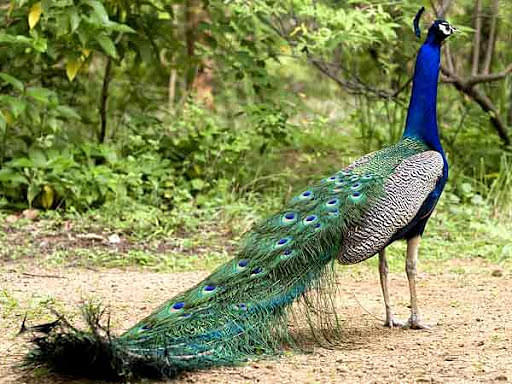
Peacock
Learn More About:
Scientific Name of Peacock
[Click Here for Sample Questions]
The scientific name of the common Indian Peacock is Pavo cristatus.
- They are of the Galliformes order and are of the Aves class.
- The technical name Pavo cristatus was given to the Indian peafowl by Carl Linnaeus in his 1758 publication Systema Naturae.
- The Persian term "tavus" and the Greek word for peacock, "taos," are related.
What do Peacocks eat?
Grass, roots, flowers, fruits, and seeds are just a few of the plants and plant debris that make up these birds' typical diet. Additionally, they consume a variety of worms, insects, and amphibians like frogs and snakes.
Where are Peacocks found?
Peacocks like living in a variety of environments, most of which are wooded. In addition, these birds enjoy great spots on farms and in agricultural areas. These birds make sure that they are housed in tropical lowland forests.
The deciduous woodlands and other dry environments are other areas where they can be found. Peacocks wander about in various towns and parks even though they usually stay in their native habitats. They do this in an effort to find various food sources.
Taxonomy of Peacocks
[Click Here for Sample Questions]
Biology defines the class of Peacocks as Class Aves in Linnaean taxonomy.
| Phylum | Chordata |
| Kingdom | Animalia |
| Order | Galliformes |
| Class | Aves |
| Family | Phasianidae |
| Genus | Pavo |
Population of Peacocks
[Click Here for Sample Questions]
The Indian peafowl population continues to grow in the wild and is not currently endangered, making its situation the least concerning. Currently, there are more than 100,000 of these birds on the globe.
There are less than 30,000 green peacocks left in the wild, making them an endangered species. With less than 10,000 individuals, the Congo peafowl is in danger. As a result of the population decline and the lack of habitat, they are in danger of going extinct.
Appearance and Behavior Of Peacock
[Click Here for Sample Questions]
Each type of peacock has a different size and look. These birds may grow to be between two and ten feet long and between eight and a half and thirteen pounds in weight.
- Their height might range from little shorter than three feet to slightly taller than four feet.
- The Indian peacock has a huge tail covered in intricate dots that mimic eyes, and it has a remarkable, vivid blue hue.
- These blotches are known as ocelli.
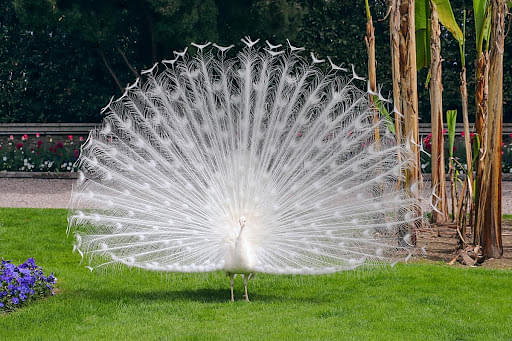
White peacocks
- Peahens, or female peafowl, are often smaller than males and have muted hues rather than vivid ones.
- Peahens also lack the males' tail feather plumes.
- Peafowls can be completely white. These are frequently called albino peacocks.
Peacock Reproduction and Lifespan
During mating season, peacocks are known to mate with a large number of peahens. Their reproductive organs, called cloacas, are lined up as they mate. The peahen produces eggs, which are then incubated in a manner akin to that of a chicken. A 27 to 30-day incubation period is possible. A peachick is the name for a young peafowl. The mother alone is responsible for caring for each infant.
Peachicks are capable of short-distance flight by the time they are a few weeks old and can walk as infants within days or even minutes after hatching. At three years old, they start to moult, and their feathers regrow swiftly. The average lifetime of peafowl is between 12 and 20 years.
Also Check:
| Concepts Related to This Chapter | ||
|---|---|---|
| Blood | Difference Between Biology And Zoology | Life Process |
| Reproduction | Reproduction | Megafauna |
| Biodiversity hotspot | DNA Replication | External Fertilization |
Things to Remember
[Click Here for Sample Questions]
- The scientific name of the common Indian Peacock is Pavo cristatus.
- Peachicks are capable of short-distance flight by the time they are a few weeks old and can walk as infants within days or even minutes after hatching.
- Grass, roots, flowers, fruits, and seeds are just a few of the plants and plant debris that make up peacock’s typical diet.
- Peacock is a very unique bird with its beautiful tail, which is covered with more than 200 different feathers and shimmers when it is flapped wide.
Previous Year's Questions
|
Sample Questions
Ques. What is the scientific name for a Peacock? (1 mark)
Ans. The scientific name of the common peacock is Psittaciformes.
Ques. Define characteristics of birds? (2 marks)
Ans. Birds are a class of warm-blooded animals, known as the Aves. Birds are distinguished by their feathers, toothless beaked mouths, hard-shelled eggs, high metabolic rates, four chambered hearts, and robust but light skeletons.
Ques. What is the class of Peacocks in biology? (1 mark)
Ans. Peacocks, which have grey and brown feathers, may disappear into their surroundings by not moving. Peahens spend the majority of their time resting on eggs, and because of this, predators cannot see them or the dazzling white eggs they lay.
Ques. What is binomial nomenclature? (2 marks)
Ans. Binomial nomenclature, also known as binary nomenclature, is a formal method for naming species of living things that consists of two sections that both derive from Latin grammatical forms, however they can also be derived from terms from other languages.
Ques. What do peacocks eat? (2 marks)
Ans. Peacocks often eat plants and plant waste, including grass, roots, flowers, fruits, and seeds. They also eat many kinds of insects, worms, and amphibians like frogs and snakes.
Ques. What is a baby peacock called? (1 mark)
Ans. A baby peacock is called a peachick.
Ques. What is an example of taxonomy? (2 marks)
Ans. An example of taxonomy is the way living beings are divided up into Kingdom, Phylum, Class, Order, Family, Genus, Species.
Also check:



Comments