



Content Curator
Plant Cell can be distinguished from animal cell primarily on three bases. Both plant cells and animal cells possess a nucleus, cytoplasm, and cell membrane, but only plant cells possess a cell wall, a vacuole, and chloroplasts. With the help of jelly, we can make a simple and easy plant cell model that highlights the key characteristics and features of the same.
Key Terms: Plant Cell, Eukaryotic Cells, Nucleus, Organelles, Cell Wall, Cell Membrane, Cytoplasm, Chloroplast, Vacuole
What is a Plant Cell?
[Click Here for Sample Questions]
The term "plant cell" refers to eukaryotic cells that have a well-defined nucleus and specialised components called cell organelles that perform particular duties.
The plant cell is surrounded by a cell wall, which gives it shape. The cell wall of the plant cell is made up of various parts, each of which serves a different purpose.
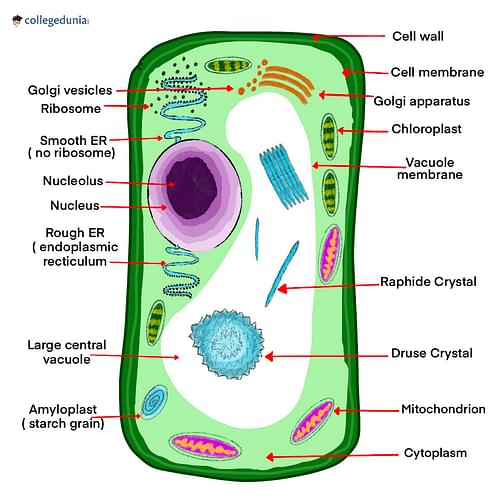
Plant Cell
Parts of Plant Cell
[Click Here for Sample Questions]
Some of the main parts of a plant cell are as follows:
- Cell Wall
Cellulose, glycoproteins, lignin, pectin, and hemicellulose make up the stiff layer known as the plant cell wall, which is found external to the cell membrane. Cellulose, polysaccharides, and proteins make up the cell wall. The main purpose of the cell wall is to defend and support the cell structurally, shield it from mechanical stress, and give it shape and structure.
- Cell Membrane
The semi-permeable cell membrane is a component of plant cells. It is one of the vital organelles since it controls how various substances enter and leave the cell. A thin layer of protein and fat makes up its composition.
Also Check:
| Concepts Related to This Unit | ||
|---|---|---|
| Test for Protein | Cell Wall and Cell Membrane | Lipoproteins |
| Endomembrane System | Cytoskeleton | Microbodies |
- Nucleus
Eukaryotic cells have a membrane-based organelle called the nucleus which facilitates the formation of ribosomes, structures that create proteins, and permits the passage of proteins and nucleic acids.
- Plastids
In the cells of plants and algae, there are double-membrane organelles called plastids. It is important for photosynthesis. The photosynthetic process is aided by the pigments that are also present. In addition to aiding in photosynthesis, the pigments in plastids have the power to alter the colour of the cell.
Some of the vital types of Plastids are-
- Leucoplasts- They are found in the non-photosynthetic tissues and are used for the storage of protein, lipid and starch in plants.
- Chloroplasts- Chloroplasts are elongated organelle enclosed by phospholipid membrane. The chloroplast is shaped like a disc and the stroma is the fluid within the chloroplast that comprises a circular DNA. Each chloroplast contains a green coloured pigment called chlorophyll required for the process of photosynthesis. The chlorophyll absorbs light energy from the sun and uses it to transform carbon dioxide and water into glucose.
- Chromoplasts- Chromoplasts are heterogeneous, coloured plastid present in plants which are responsible for pigment synthesis and for storage in photosynthetic eukaryotic organisms.
- Central Vacuole
The biggest organelle in plant cells is the central vacuole. It serves as a container for goods and garbage and is surrounded by a membrane. It keeps an appropriate pressure for a developing plant while also storing materials and wastes and giving the plant a proper structure.
- Golgi Apparatus
Golgi complex is another name for the Golgi apparatus, which is in charge of delivering produced macromolecules to the various cell regions. distributing newly created macromolecules to the various cell regions.
- Ribosomes
All live cells contain ribosomes, an organelle that serves as a macromolecular factory for the synthesis of biological proteins. Another name for ribosomes is "Protein Factories of the Cell."
- Mitochondria
The double-membrane organelles known as mitochondria are frequently referred to as the "powerhouse of the cell" since they are responsible for supplying energy to the cell by dissolving sugar and carbohydrate molecules.
- Lysosomes
A variety of cellular processes are carried out by lysosomes, membrane-bound cell organelles that contain digestive enzymes. In addition to digesting things inside and outside of the cell and releasing enzymes, lysosomes are also responsible for recycling old cells.
Read More: Difference between Lysosomes and Ribosomes
Plant Nutrition
[Click Here for Sample Questions]
Every green plant engages in a chemical process known as photosynthesis, which is how they function. Making glucose (the plant's energy source) and oxygen through photosynthesis requires the combination of carbon dioxide, water, and solar energy.
Both water and carbon dioxide are absorbed by plants through their leaves and roots, respectively. Chlorophyll absorbs solar light energy from the environment (found in chloroplasts). The green colour of leaves is a result of chlorophyll.

Photosynthesis Equation
In order to store energy, the glucose produced during photosynthesis is transformed into other materials, such as starch. Respiration is one way to discharge this energy.
Read More: Difference Between Mitochondria and Chloroplast
Plant Cell Model Project
[Click Here for Sample Questions]
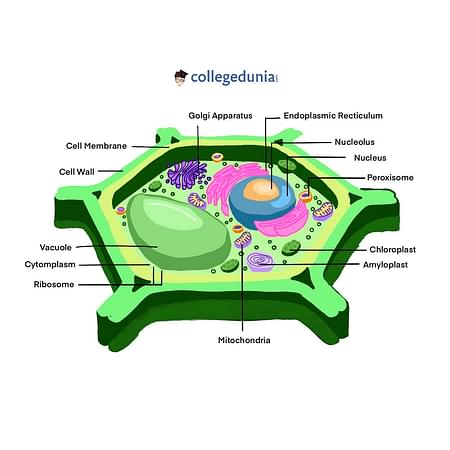
The plant cell model was created with jelly and various candies. The model appears to be fantastic and is really simple to make.
Material Required
- Jelly/Jello
- Different candies are required for the cell membrane; you will want something long and thin.
Instructions
- In a lightly greased container, prepare your jello according to the recipe.
- Once it is prepared, carefully tip it into the container you intend to store the cell in (it will be difficult to move at this time).
- Add candy to represent each organelle.
- Put stickers and toothpicks as labels on the cell model.
- If you look closely, you may be able to see a mistake in our labelling.
We discovered that some candies, particularly those that were hard-boiled or sugar-coated, eventually leaked colour into the jelly. It appears to have slowed this process to keep them in the refrigerator.
Also Check:
Handwritten Notes on Plant Cell
[Click Here for Sample Questions]


Things to Remember
- Plant cells and animal cells differ from each other basically on three parameters. Plant cells have a cell wall, vacuole, and chloroplasts, which are not present in animal cells.
- A plant cell has various constituents namely cell wall, cell membrane, nucleus, plastids, mitochondria, lysosomes, ribosomes, Golgi apparatus, vacuoles and others.
- Plants obtain their nutrition through the process of photosynthesis with the help of carbon dioxide, water, and solar energy to release oxygen and glucose.
- A plant cell model can be made easier with the help of jelly and sweet candies of different shapes.
- It can also be made from modroc (plaster bandage).
Sample Questions
Ques. What is the function of a plant cell? (3 Marks)
Ans. Photosynthesis is the primary task carried out by plant cells, these cells are referred to as the skeleton of plants. The activity that takes place in the chloroplasts of the plant cell is known as photosynthesis. It is the method through which plants use sunshine, water, and carbon dioxide to make their food.
Ques. Write a short note on types of plastids. (3 Marks)
Ans. In the cells of plants and algae, there are double-membrane organelles called plastids. It is important for photosynthesis. In the production and storage of food, these organelles are essential. The photosynthetic process is aided by the pigments that are also present. In addition to aiding in photosynthesis, the pigments in plastids have the power to alter the colour of the cell.
Ques. What are the types of plastids? (3 Marks)
Ans. The types of plastids are as follows:
- Leucoplast: Leucoplasts are organelles that store protein, fat, and starch in the non-photosynthetic tissues of plants.
- Chloroplast: A phospholipid membrane surrounds the lengthy organelle known as the chloroplast. Chloroplasts are disc-shaped organelles that are surrounded by stroma, a fluid that contains circular DNA. They also include chlorophyll, a green pigment used by plants to produce glucose during photosynthesis from carbon dioxide and water.
- Chromoplast: They are a type of coloured, heterogeneous plastid that produces and stores pigment in photosynthetic eukaryotic organisms. Red, orange, and yellow pigments found in chromoplasts give all ripe fruits and flowers their colour.
Ques. Which organelles are unique to the cells of plants? (2 Marks)
Ans. The chloroplast, cell wall, plastids, and a sizable central vacuole are the organelles that are exclusive to plant cells. The green pigment chlorophyll, which is found in the chloroplasts, is what causes photosynthesis to occur.
Ques. Write the difference between plant cells and animals cell? (5 Marks)
Ans. The difference between plant cells and animals cell is as follows:
| Basis | Plant Cell | Animal Cell |
|---|---|---|
| Meaning | They are eukaryotic cells with a real nucleus and specialized components called organelles that carry out particular tasks. | They are eukaryotic cells without a cell wall that also include other cellular organelles including a genuine, membrane-bound nucleus. |
| Shape | They have a stiff, fixed shape that is typically cubical or rectangular. | They are shaped obliquely and spherical. |
| Cell wall | Cell wall is present. | Cell wall is not present. |
| Surrounded By | Plasma membrane and cells with rigid walls. | Plasma membrane is flexible and thin. |
| Mitochondria | Present only occasionally. | Present in a significant number. |
Ques. What part of plant cells undergoes photosynthesis? (2 Marks)
Ans. Inside the chloroplast of the plant cells, photosynthesis takes place. Chlorophyll, a green pigment, makes up chloroplast. The thylakoids of the chloroplast, which contain the pigment chlorophyll, are where the light reactions take place.
Ques. What is the name of the jelly-like substance found in cells? (3 Marks)
Ans. The cytoplasm is the transparent jelly-like substance found in cells. The fluid that fills the space inside the cell between the nucleus and the cell membrane is called cytoplasm. Here, the majority of the chemical processes necessary to maintain cell life occur. Cells are made of protoplasm, which is alive. It contains the nucleus as well as the cytoplasm. In every plant cell, there are coloured plastids called chromoplasts. The nucleus contains chromosomes, which resemble thread-like filaments.
Ques. Why is the cell membrane encased in a second layer in plant cells? What name does the layer go by? (3 Marks)
Ans. The cell wall refers to the extra layer that surrounds the cell membrane in plants. A cell wall is required for protection because plants cannot move physically and cannot flee from harsh environmental circumstances on their own. The plant's cells are shielded by the cell wall from things like temperature changes, strong winds, atmospheric moisture, etc. Additionally, it gives plant cells form and stability.
Ques. Name the pigment and cell organelle that give leaves their green colour. (2 Marks)
Ans. Chloroplast is an organelle found in cells, and chlorophyll is the pigment that gives plants their green colour. This pigment is what allows plants to absorb sunlight (energy) and perform photosynthesis.
Ques. Why are mitochondria referred to as the cell's powerhouse? (5 Marks)
Ans. Adenosine triphosphate (ATP), a source of energy for the cell, is produced by mitochondria, which are tiny organelles found in the cytoplasm of eukaryotic cells. Cellular respiration is the mechanism through which mitochondria, which are tiny membrane-bound organelles found in the cytoplasm of eukaryotic cells, convert energy (ATP) into food. Be a result, mitochondria are frequently referred to as the cell's "powerhouse" today. Numerous mitochondria can be found in muscle cells and other energy-hungry cells.
As food is broken down, its breakdown products enter the cytoplasm, where they may trigger a variety of chemical processes. The cell will produce two universal energy sources called ATP (Adenosine Triphosphate) as a result. The leftover molecular fragments can then enter the mitochondria, where they will undergo a complicated chemical procedure to make 32–34 ATPs.
Also Check:



Comments