



Content Curator
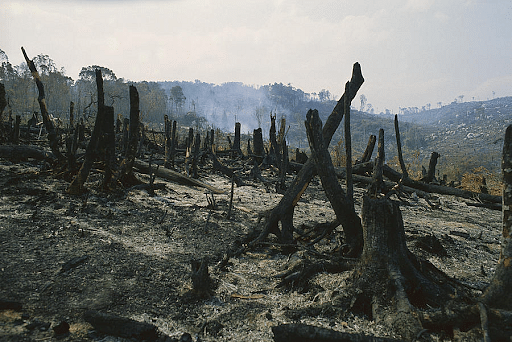
Slash-and-Burn agriculture is the practice of removing vegetation from a specific plot of land, burning leftover foliage, and using the ashes to supply nutrients to the soil for the purpose of planting food crops. The cleared area after slash and burn, also known as swidden, is used for a brief period before being left alone for a longer period to allow vegetation to grow again. As a result, shifting cultivation is another name for this sort of agriculture. Slash-and-Burn Agriculture for oil palm production has been a major source of annual air pollution from smoke in Southeast Asia. Let’s explore more on the topic and discuss some important questions on it.
Keyterms: Slash-and-Burn agriculture, Food crops, Swidden, Oil palm, Air pollution, Agriculture, Nutrients, Vegetation, Soil, Cultivation cycle
What is Slash-and-Burn?
[Click Here for Sample Questions]
Slash and Burn agriculture also known as Shifting Agriculture or cultivation, typically refers to land uses in which a cropping period is alternate with a fallow period long enough to allow the growth of dense, Woody, vegetation, and the Biomass is eliminated from the plot before the the the next cultivation cycle by cutting, slashing, and burning it. It contrasts two more intensive land uses where Biomass is integrated into the soil by plugging or other procedures.

Slash-and-Burn Agriculture
It is generally considered an extensive land use that has been sustained over time by extension across an uncultivated territory in response to two populations growth (extensification ). It includes a wide range of systems that varies in terms of the ecosystems cleared, the landscapes formed, the duration of cultivation and fallow periods, the management of fallow land, the crops farmed, and the Techniques utilized.
Although they describe different parts of the technique, the terms slash and burn, Swidden, And shifting agriculture are frequently used interchangeably. Slash-and-Burn refers to how the Biomass is destroyed after clearing: by shifting at a fire, as opposed to slashing and mulch techniques, which are typically used in places with no dry season and leave the Biomass to degrade.
The act of burning Biomass to grow it is referred to as “swiddening”. It is the closest synonym to slash and bone and is frequently preferable to this term because it does not outline the acts of “ slashing” and “ burning”, which could lead to unfavorable stereotypes. However, in flesh and bone systems with short fallow periods, it is rarely used. Shifting cultivation implies that fields are moved from one area to another and that the land is not continuously cultivated. It includes both Slash-and-Burn and slash and mulch Systems, however, like with Swidden cultivation, it is rarely used in systems with short fallow, where cultivation is nearly permanent. It is also misleading because it implies that the land is abandoned and idle after a few years of agriculture, which is not always the case.

Slash-and-Burn Agriculture
The video below explains this:
Slash and Burn Agriculture Detailed Video Explanation:
Where is Slash-and-Burn Agriculture Practiced?
[Click Here for Sample Questions]
Slash-and-Burn agriculture Is commonly used in locations where there is no open land for farming due to high vegetation. Southeast Asia, Northern South America, and Central Africa are among the regions on the list. tribal populations rely on this agriculture approach for subsistence farming. Humans had been using this approach for 12,000 years when they quit hunting and gathering and began to plant crops.
Slash-and-Burn agriculture Now used by roughly 70% of the world's population. That sort of agriculture is a source of food and cash for many communities. As a result, by employing this strategy, People can farm in locations where they would otherwise be unable to do so due to dense vegetation, unmanageable pests, soil Sterility, and loss of soil nutrient content.
Read More: Manure and Fertilization
Steps to Slash-and-Burn Agriculture
[Click Here for Sample Questions]
Slash-and-Burn agriculture often involves the following steps,
- Cut down the education to prepare the fields; Plants that produce food or Timber may be left standing.
- To guarantee an effective fire, The downed vegetation is allowed to dry until right before the rainy season of The Year.
- The land is burned to eliminate vegetation, drive pests away and create a burst Of nutrients for planting.
- planting takes place immediately in the Ashes leftover from the Fire.
Cultivation (the preparation of land for crop planting) all the plot is carried out for a few years Until the fertility of the previously Bond area is reduced. The plot is left alone for a longer period than it was cultivated, often up to 10 years or more, To allow wild vegetation to flourish on the plot. The cut and Burn Method can be repeated once the vegetation has grown back.
Characterization of Slash-and-Burn
[Click Here for Sample Questions]
- Slash-and-Burn Agriculture is a frequently used, and sometimes unavoidable, approach for farming in forested areas. Most primary annual crops require Full Sun exposure to flourish, so tracts of the forest must be cleared to build new fields. crops benefit: Improve the sanitary conditions because their major competitors (weeds) and risks (pests and illnesses) are eliminated, except wild animals if some forest remains around the field.
- By burning the Biomass, nutrients are released into the soil in the form of ashes. Weeds, bugs, and Diseases Begin to arise After 12 several years of cultivation, and nutrients are washed away or used by the crop. The field is then left fallow for a while before being cleared and cultivated again after the secondary forest for sufficient Biomass has regrown.
- The fallow phase normally lasts between 3 and 25 years, depending on the climate and adaptation conditions, as well as the techniques used. its goal gift to replenish a biomass stock that can be mobilized again through burning, as well as to reduce weeds, pests, and illnesses.
- A longer period is technically superfluous And would result in increased costs for larger trees to be cut down. a shorter time is usually conducive to the extinction of woody vegetation, which causes a fertility crisis or severe technological changes. When grasses dominate the vegetation, fire is avoided for use in a slow-burning manner to Limit nutrient and carbon losses. vegetation is removed from the land, along with its root mat, and stacked into heaps, occasionally covered with soil and burnt.
- Hops grown in Slash-and-Burn farming techniques vary widely. Several crops are connected, giving the area a cluttered appearance, with stumps, partially Bond logs, and spare canopy trees littering the field. but there is order in this chaotic atmosphere. Farmers adjust to field heterogeneity by altering crop associations and spacing. We can plant shade-tolerant plants beneath remnant trees, pumpkins, and other vegetables in the most fruitful places, and cereals and legumes in open areas.
- Planting perennial woody crops, which will continue to develop during the fallow time, is another option. Natural trees that are useful are also valued, as they are spared during clearing and weeding, given some care during the fallow period, and occasionally deliberately planted.
- As a result, there is no clear distinction between Slash-and-Burn agriculture and more intensive farming techniques. After clearance, perennial crops such as coca and coffee can coexist with annual crops. They succeed to these crops in the same manner as fallow vegetation would otherwise, until the aging plantation, which frequently takes the shape of a forest with a closed canopy, is revitalized by beginning a new cycle or remains of a permanent agricultural system known as Agroforest.
- Despite its suited for forest habitats, Slash-and-Burn agriculture is rarely used on its own. Most farmers make it with other land uses such as home gardens, integrated fields, or perennial crop permanent fields. Slash-and-Burn Farmers often engage in hunting, gathering, and fishing, activities whose value is proportionate to the amount of forest cover left.
Read More: Irrigation
Economic Rationality of Slash-and-Burn Agriculture
[Click Here for Sample Questions]
Slash-and-Burn agriculture is all over the world forested with moist climates and low population density. this is not your confidence. It is frequently used in these conditions, and it may be maintained despite population expansion as long as forest land survives, through extensification.
When population density is low, the land is abundant, however, cleverness is usually a significant limiting factor in putting more land into production. Slash-and-Burn agriculture procedures, like other economic agents, want to maximize production for a given level of input of a limited resource, in this case, labor. Slash-and-Burn agriculture Allows for maximum labor productivity for three reasons:
- First, do a Slash-and-Burn. Once the crops are sown, agriculture with lengthy fallow requires little labor. Clearing the forest is strenuous work but it is done by men who are not burdened with substantial domestic responsibilities, and it is not confined by a diet timetable because it is done off-season, during the dry season. After the Biomass has been burned, crops are often shown by both men and women, with the latter in charge of the majority of maintenance operations until harvest, at least in African countries. Weed invasion is limited in Slash-and-Burn agriculture with long fallows because weeds grow less abundantly in primary or ancient secondary forests. This is most likely The system's main advantage and the force of its high worker productivity. With the decrease of the fallow time, this advantage is gradually lost. After a few years of agriculture, the cause of abandoning the field is secretly weed invasion, rather than or in addition to diminishing soil chemical fertility. Weeds may thus be the most significant barrier to adopting permanent agriculture, due to the manpower required for the wedding.
- Second, use Slash-and-Burn techniques. Agriculture does not involve plowing the land, which Is a laborious task if done manually. crop roots are not required to go deep into the soil because nutrients are concentrated around the surface following the burning. Plowing would be impossible or extremely difficult due to the deep root mat and numerous stumps That cover the soil.
- Third, while yield maximization is not the goal, Slash-and-Burn systems typically have a high yield, at least when performed with lengthy fallow. fertility is determined by the amount of biomass that may be burned as well as the chemical qualities of the soil. Even soils thought to be fertile such as ferralsols, can produce a high yield if a long fallow period is maintained.
Disadvantages of Slash-and-Burn Agriculture
[Click Here for Sample Questions]
Some of the major disadvantages of Slash and Burning Agriculture are listed below:
- Deforestation: Deforestation is one of the drawbacks of Slash-and-Burn Agriculture. When the population adopted this sort of agriculture, they must contain many trees to cultivate new crops. Carbon dioxide levels rise as a result of this, Furthermore, elevated CO2 Levels amplify the consequences of climate change.
- Threatened species: Many kinds of insects, animals, and plants that have adapted to that specific rainforest are threatened by Slash-and-Burn Agriculture. species are displayed when the trees and plants burn. Indonesia’s Tropical rainforest supports a diverse spectrum of biodiversity. As a result, Slash-and-Burn techniques have an impact on a wide range of species that rely on native trees for food and production. Unfortunately, some of the most incredible organisms On the planet dwell in the rainforest, and their survival is in peril. The number of orangutans in Borneo has plummeted considerably. This vegetation is also Important to numerous insects, Birds species, elephants, and tigers. All of these species require the rainforest’s shade, fruits, roots, and flora to stay healthy
- The soil’s condition: The quality of the soil improves as a result of this Agricultural activity, which is aided by the ash layer. Nonetheless, after a few years, the nutrients deplete, And farmers are oblique to relocate their crops in search of new ground. When people quit the plots, it may take up to 20 years for the soil to recover and restore its optimum health. Healthy soil is the consequence of a positive relationship between the area’s moisture, insects, and native trees. The vegetation and trees in the region produce fruit and shade that are beneficial to the soil’s health. As a result, Slash-and-Burn Agriculture Upsets the natural balance of the Tropical rainforest, having a significant impact on the soil.
- Erosion: When people chop, burn, and crop adjacent fields, they destroy temporary water storage and roots. These have been lost, and they can no longer keep nutrients from leaving the area permanently.
- The neighborhood: These activities also hurt the health of local populations. Indonesia not only safeguards Animal and plant species, but it also protects varied human populations. Many of them even live right next to the rainforest. The air pollution and smoke in the area caused by Slash-and-Burn Activities cause a variety of health issues. Smoke and travel hundreds of kilometers, endangering the health of the young and old people who live throughout this region. They may have developed respiratory problems that necessitate the use of sophisticated medical Technologies to treat. As a result, the Importance of plants and leaves in the area is extremely high. because pollutants collect in the atmosphere without them filtering the air, the number of health problems increases.

Disadvantages of Slash-and-Burn Agriculture
To summarise, the application of Slash-and-Burn agriculture has various drawbacks, and all of them are interconnected. When one of them affects the area, The others usually follow. The problem arises as a result of irresponsible activities practiced by a large number of people living near rainforests. The farming approach endangers the lives of various animal and plant species, turning them into endangered species.
Read More: Seed
The Evolution of the Slash-and-Burn Agriculture Systems
[Click Here for Sample Questions]
Slash-and-Burn agriculture is one of the most ancient agricultural lands. It has been performed throughout the world, from the tropics to temperate regions, and is still commonly practiced in the tropics.
Evolution of the Slash-and-Burn Agriculture Systems
However, it has been abandoned in many areas, sometimes for decades or millennia, and alternate land uses have Developed. Looking at the past and current trends allows us to forecast future land-use changes in regions where Slash-and-Burn agriculture Is still practiced. farmers use two major techniques when confronted with the limitation of slash-and-Burn agriculture systems. They integrate Slash-and-Burn agriculture with other land uses and activities, gradually transforming the slash-and-Burn agriculture system itself.
Slash-and-Burn agriculture Combined with Other Land Uses and Activities
[Click Here for Sample Questions]
Slash-and-Burn agriculture supplies staples as well as a variety of other items. However, even in the absence of a crisis, they are frequently practiced alongside other land uses and activities.
- Fruit trees are typically planted near residences, and permanent vegetable and sometimes staple crop Gardens are developed on the most productive soils. Slash-and-Burn agriculture farmers often Engage in hunting, fishing, and gathering, as well as animal husbandry. Livestock replaces wild animals when hunting success is low, i.e. when population density rises.
- Women manufacture and sell various crafts such as baskets or women mats, An occupation that demands a lot of work but little energy because it is done at home. seasonal job hunting and Temporary or permanent out-migration are other typical habits.
- When the fallow period short turns and Slash-and-Burn agriculture fields fail to produce enough, all of these activities, except hunting, fishing, and gathering which diminish as forest resources dwindle, can become the most important source of food and revenue.
- When a Crisis Strike, farmers frequently relocate to the bottom ground to cultivate it. Slash-and-Burn agriculture Is most common on hillsides because this sort of land drains well, which is beneficial in wet areas. bottom ground,
- On the other hand, it is frequently avoided due to the possibility of flooding and heavyweight soils.
- However, as erosion happens, nutrients are lost on slopes and accumulate on the bottomland, which becomes more appealing. cotton plant cultivation, on the other hand, often necessitates significant human investment to drain surplus water or integrate the area to prevent Reliance on rain and the risk of floods.
- A common pattern, which frequently coexists with the first, is the growth of perennial crops on the degraded slope that is no longer suited for Slash-and-Burn agriculture. Perennial crops suggest cocoa, coffee, palm oil trees, rubber trees, cloves, and Cinnamon, are cash crops. This strategy is frequently related to the development of infrastructure and improved market connectivity.
Also Read:
| Related Articles | ||
|---|---|---|
| Leprosy | TB (Tuberculosis) | Amoeba |
| What are Antibiotics | Dengue Fever Symptoms | What are Fertilizers |
Things to Remember
- Slash-and-Burn Agriculture is a land use that dates back to the beginning of agricultural history. It is performed in areas where forest resources are still plentiful. It often refers Change of primary forests into a mosque of secondary forests at varying stages of growth, rather than the complete erasure Of the forest. However, primary forest removal occurs gradually to preserve the same fallow time despite population development.
- When no primary forest exists the fallow season shortens, secondary forests gradually disappear, and new techniques emerge or are adopted. depending on whether the limits to these changes can be levered, natural capital is gradually replaced by man-made productive capital or system experiences of Crisis.
- Slash-and-Burn Agriculture is considered the primary source of deforestation. Shortsighted policymakers fail to contextualize tree and Swayed modernizing myths that portray Slash-and-Burn agriculture as primitive land use.
- If property agents are to be made, that is, if they are to be allowed to control their future and increase their output while producing goods, they must be listened to, away from the prejudice that criminalizes or idealizes their choices, depending on which political agenda frames the debate.
Sample Questions
Question: Which category does Slash-and-Burn Agriculture Belong to? (3 marks)
Answer: Slash-and-Burn Agriculture Sometimes known as shifting cultivation or Jhum cultivation. It is the method of cultivating crops in which the area is cleared of trees and vegetation and then burned. The charred soil includes potash, which boosts the soil’s nutrient value. It Falls within the category of agroforestry. As a result, the right response is ‘Agroforestry”.
Question: Jhum cultivation Is a type of agriculture practiced in the North Eastern states of India is also known as …… (2 marks)
Answer: Jhum cultivation is also known as slash and Burn agriculture in India's North Eastern states. It is a procedure of cultivating crops first, then clearing the land's tree and vegetation and burning them.
Question: Which of the following statements is not correct regarding the slash and Burn agriculture activities? (3 marks)
It is also known as shifting cultivation and has resulted in deforestation slash and Burn agriculture activity helps in increasing crop yield to a considerable extent.
A time gap for several years in slash and Burn agriculture activity is required for the recovery of the land after cultivation.
It involves cutting down trees from the forest, burning the plant remains, and then using the land for farming activities.
Answer: Jhum cultivation, Also known as shifting cultivation, is one of the oldest types of cultivation practices in India and is mostly used in the north eastern regions. This cultivation has a certain pattern that must be followed in accordance with the cycle or period of jhum cultivation. Initially, the vegetation of forest on the site where the agriculture is to be practiced is cleared, then pharming begins. After the harvest, the land is permitted to revert to its natural state. According to the data shown above, jhum cultivation will not significantly increase crop productivity. As a result the correct answer is” significantly increases crop output”.
Question: Deforestation has occurred in North Eastern and Central India as a result of….. (4 marks)
(A) Mixed cultivation
(B) Terrace farming
(C) Shifting cultivation
(D) Intensive farming
Answer: Shifting cultivation is a farming practice in which parts of land are cultivated for a brief period of time. Then they are left to regrow their natural vegetation as the farmer relocate to another location. Shifting cropping is particularly common in North Eastern and Central India. However, the most significant harm to two Indian forests occurred during the colonial period as a result of the spread of Railways, agriculture, commercial and Scientific Forestry, and mining activities. Even after independence, agricultural growth remains one of the principal causes of forest resource degradation.
Question: What is shifting cultivation? What are its drawbacks? (3 marks)
Answer: Shifting agriculture is commonly used in densely forested areas. These are the locations with considerable rainfall and Rapid vegetation renewal. a parcel of land is cleaned by feeling and burning trees. The Ashes are subsequently incorporated into the soil. When the soil loses its fertility, the farmer abandons the area and goes to a new plot. The main downside of shifting cultivation is that numerous trees are cut down in the forest, which raises soil fertility and causes soil erosion.
For Latest Updates on Upcoming Board Exams, Click Here: https://t.me/class_10_12_board_updates
Check-Out:



Comments