




NCERT Exemplar Solutions for Class 11 Biology Chapter 1 The Living World solve all 37 questions from the Exemplar book. Every MCQ, Very Short Answer, Short Answer and Long Answer problem is answered step by step in the free 108-page PDF, updated for the 2026-27 syllabus.
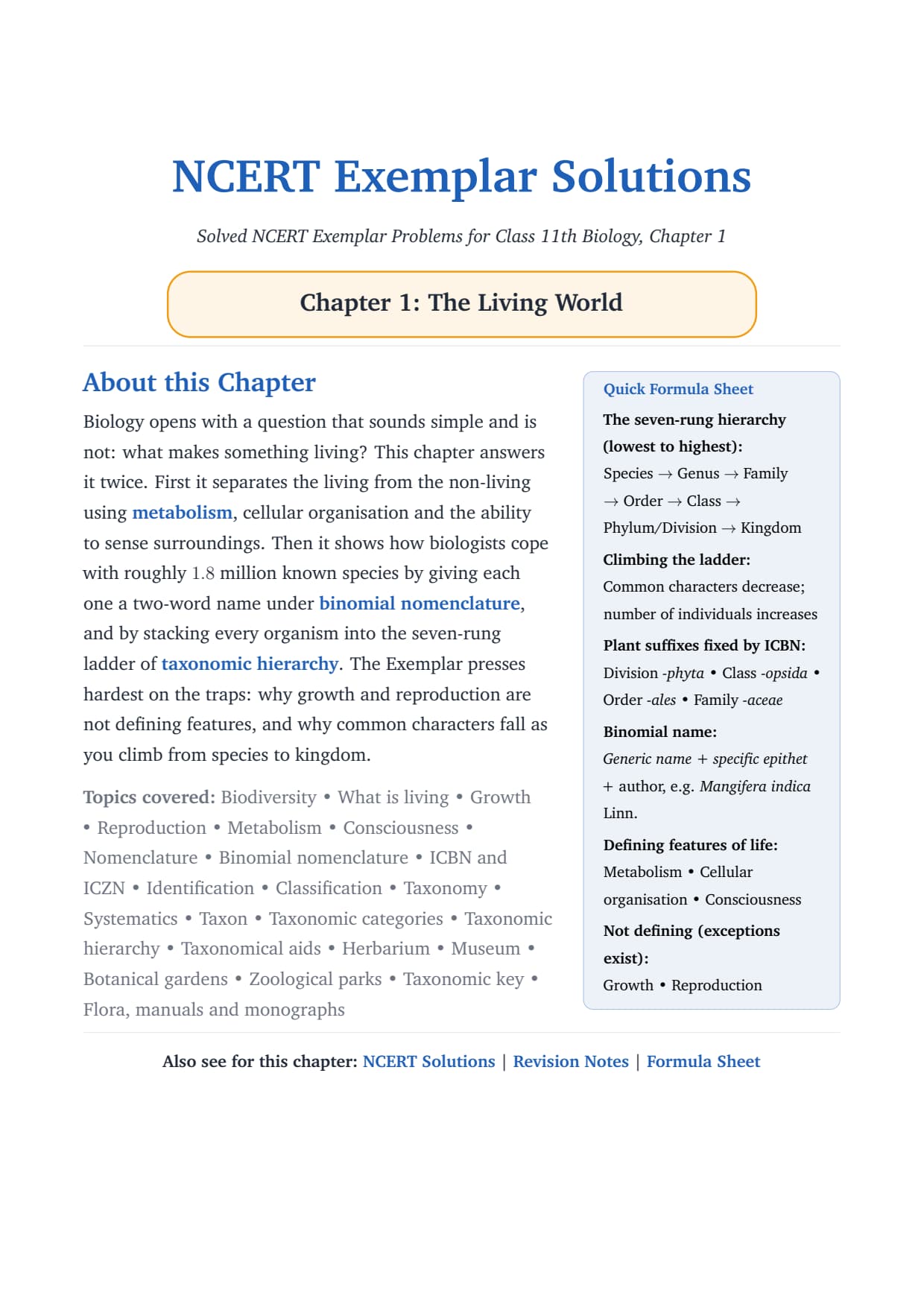
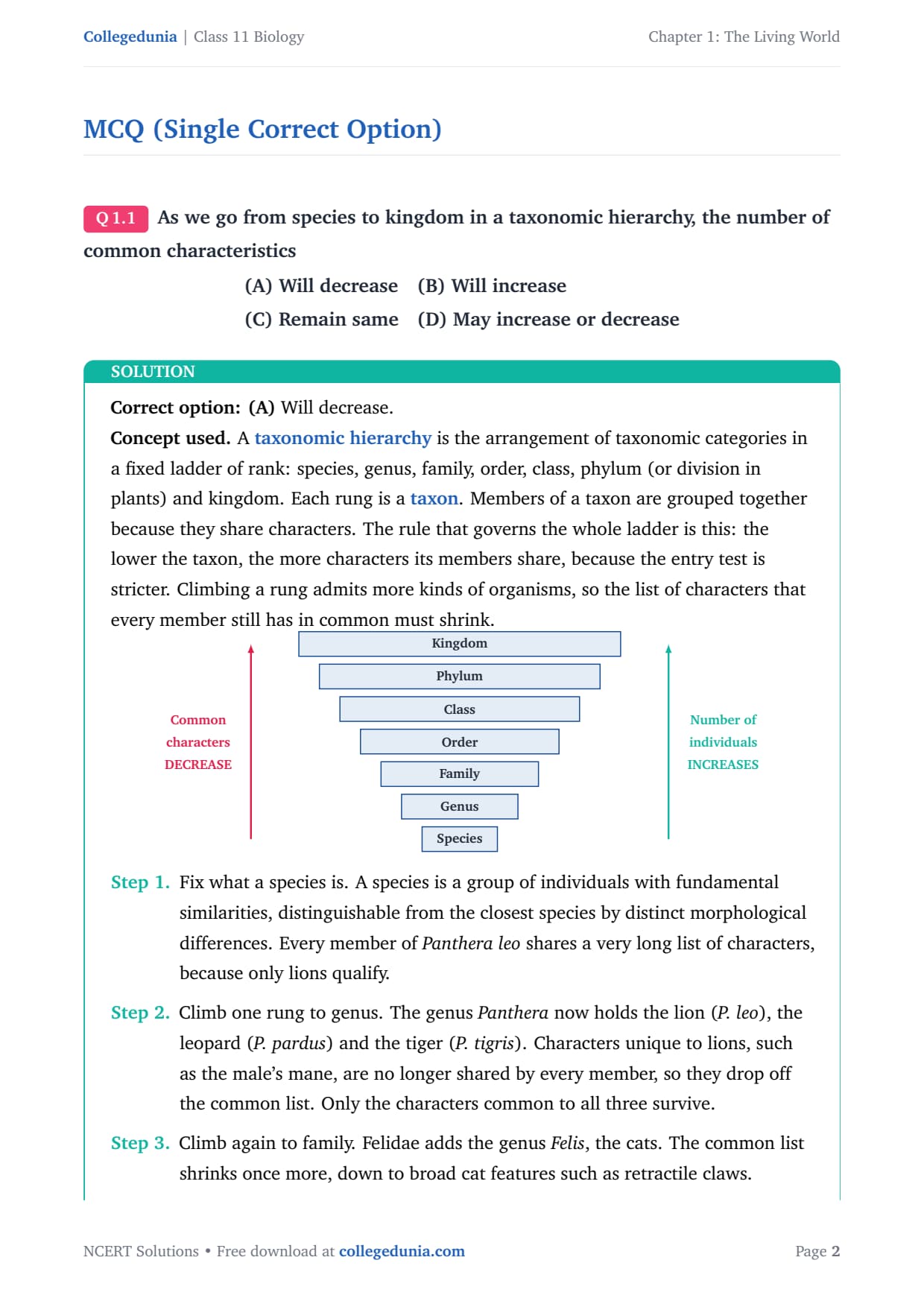
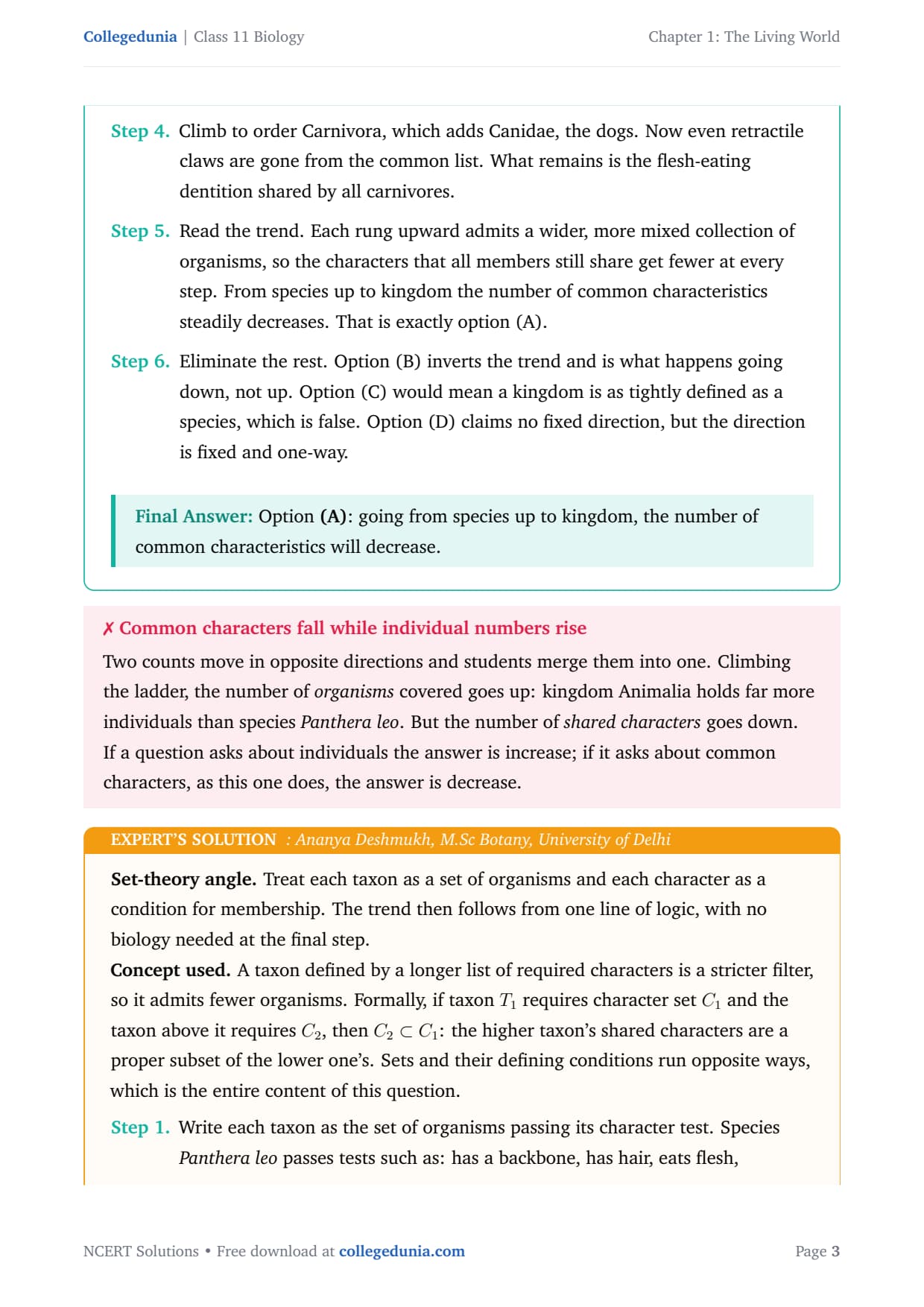
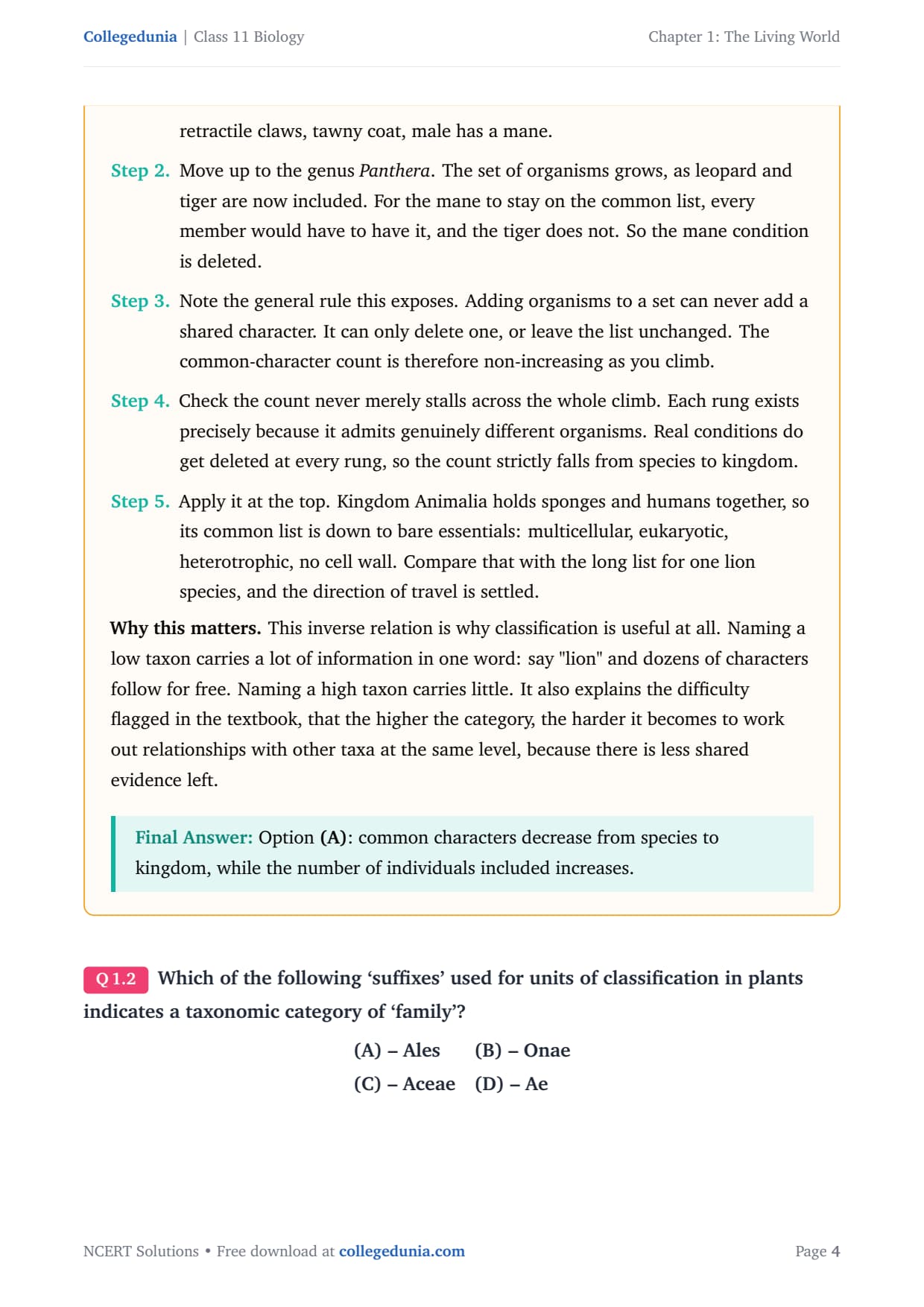
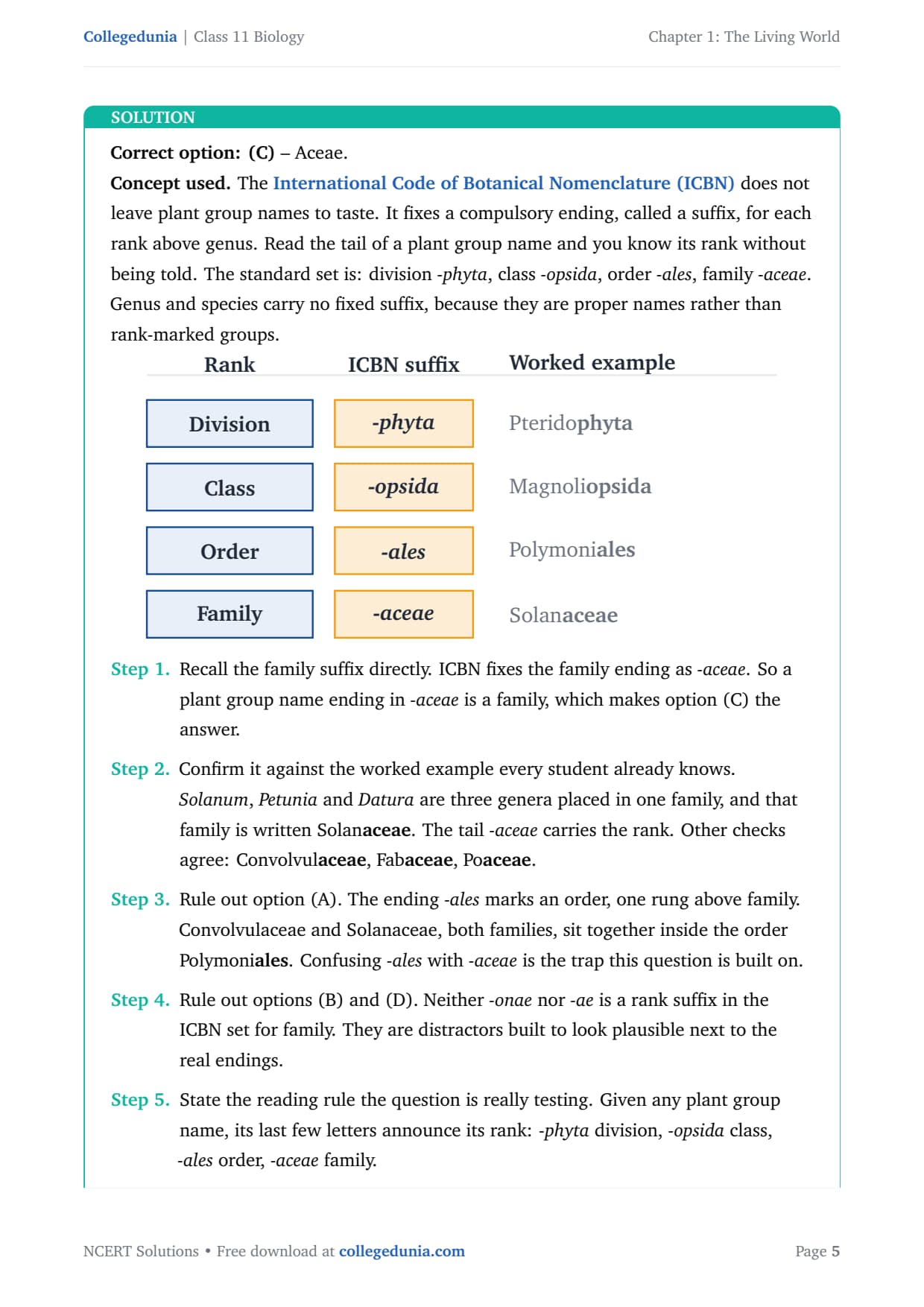
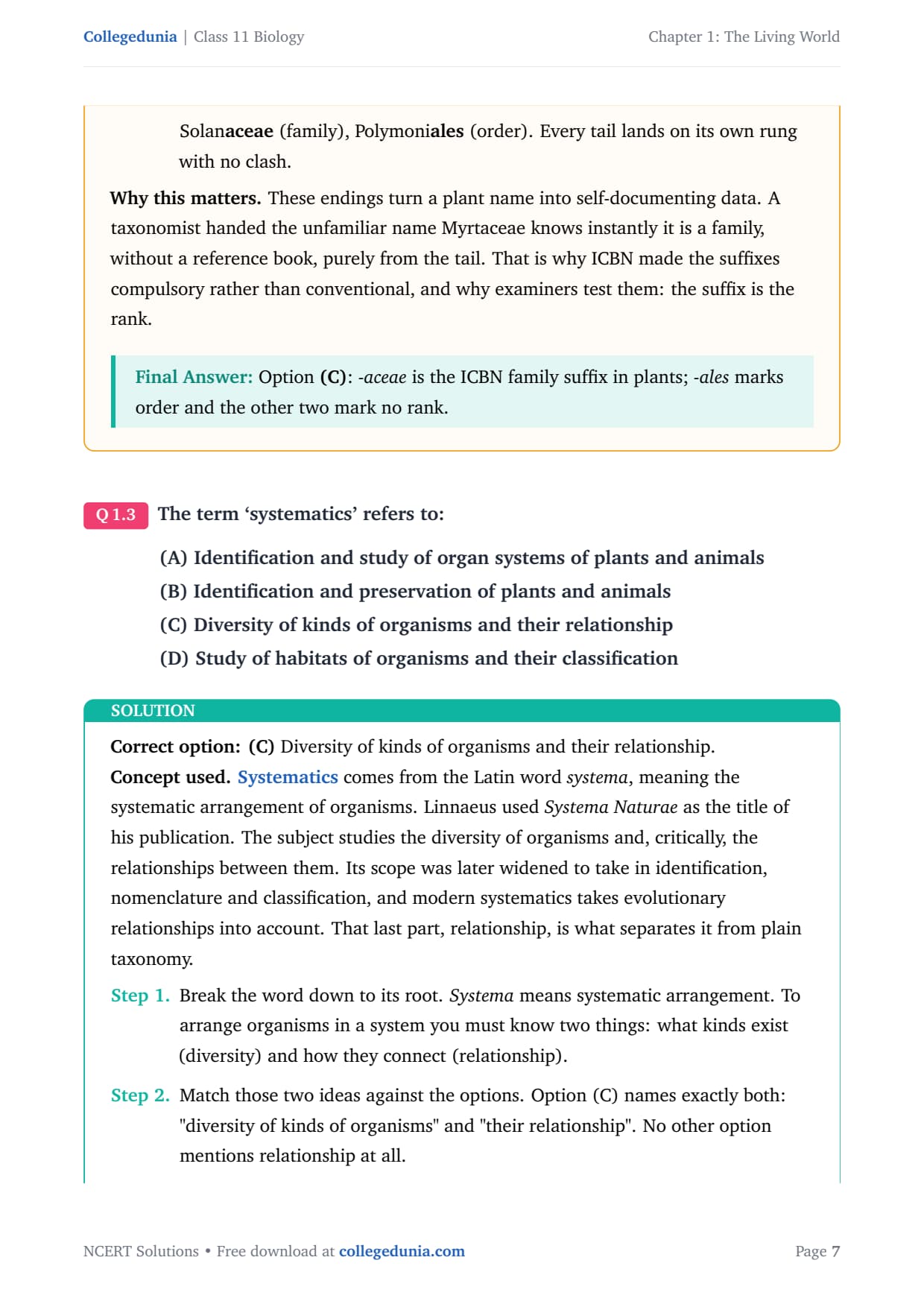
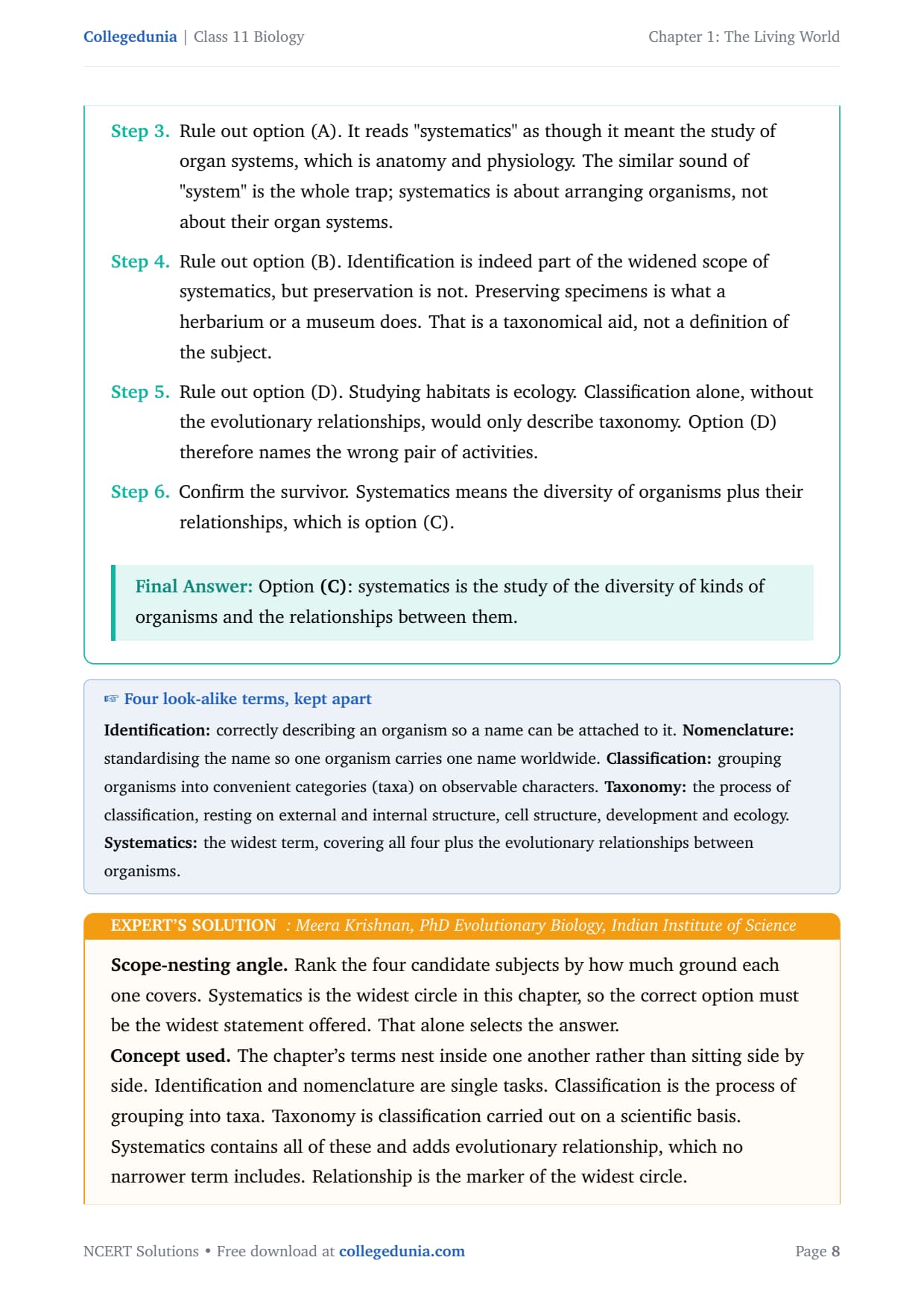
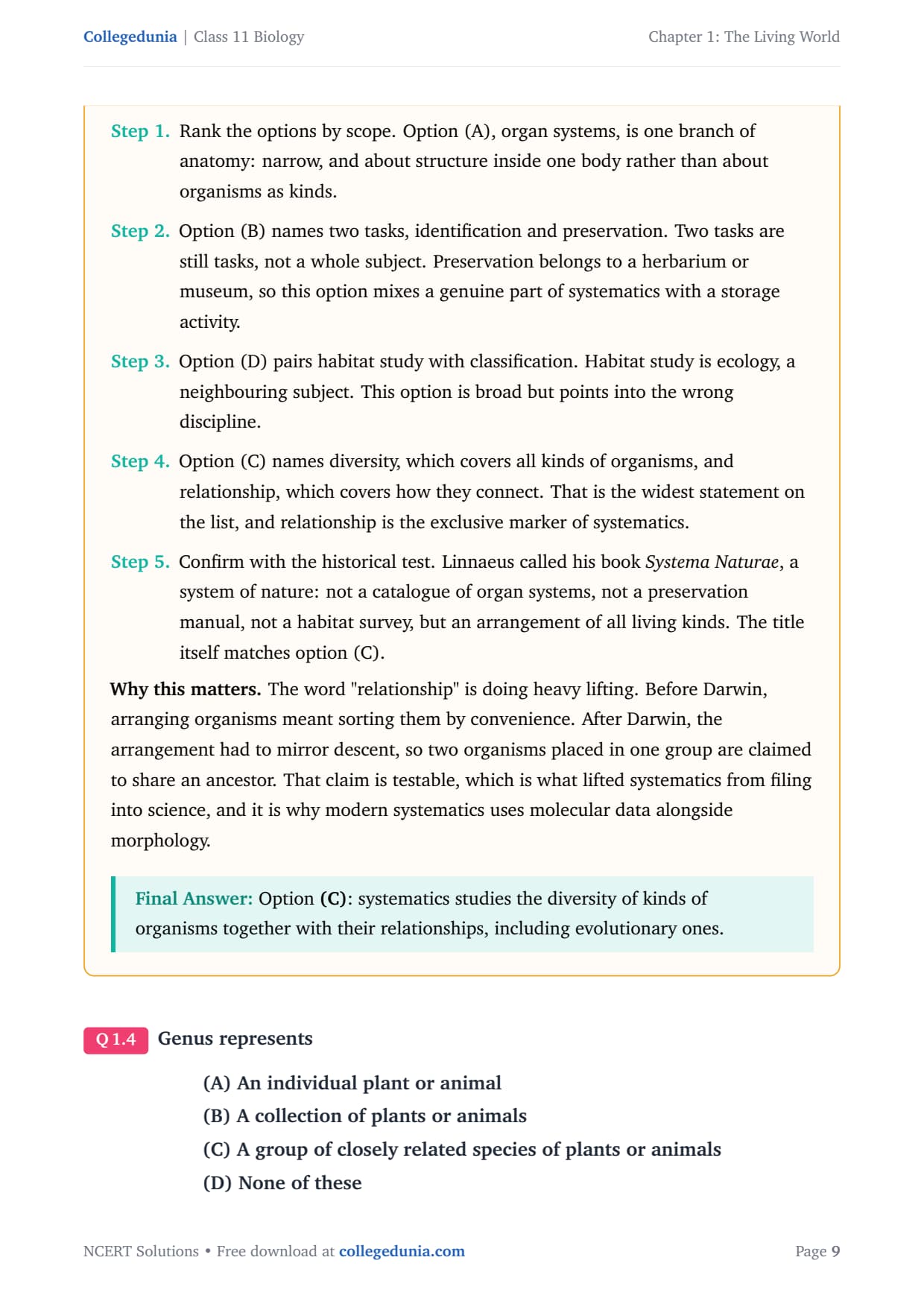
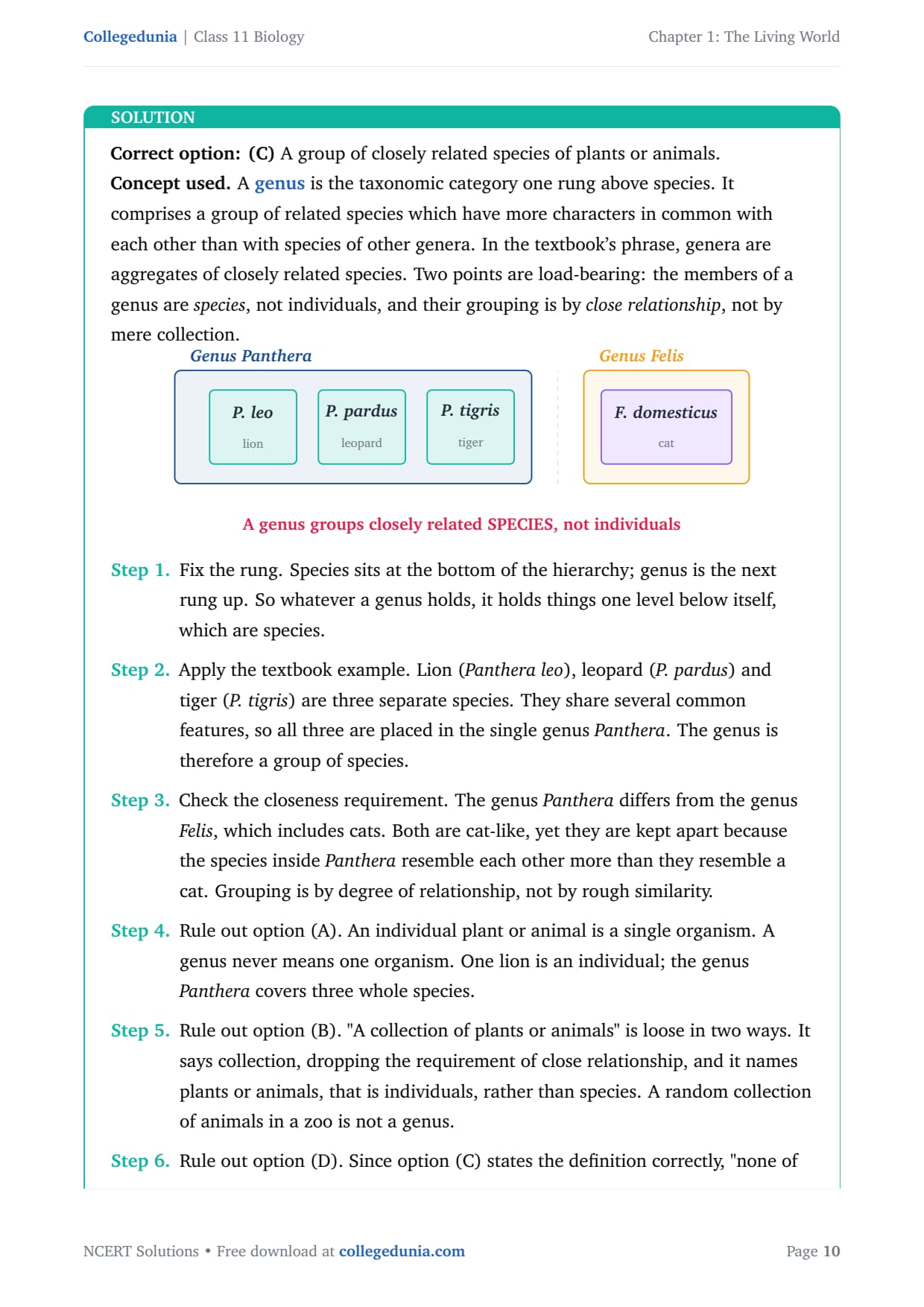
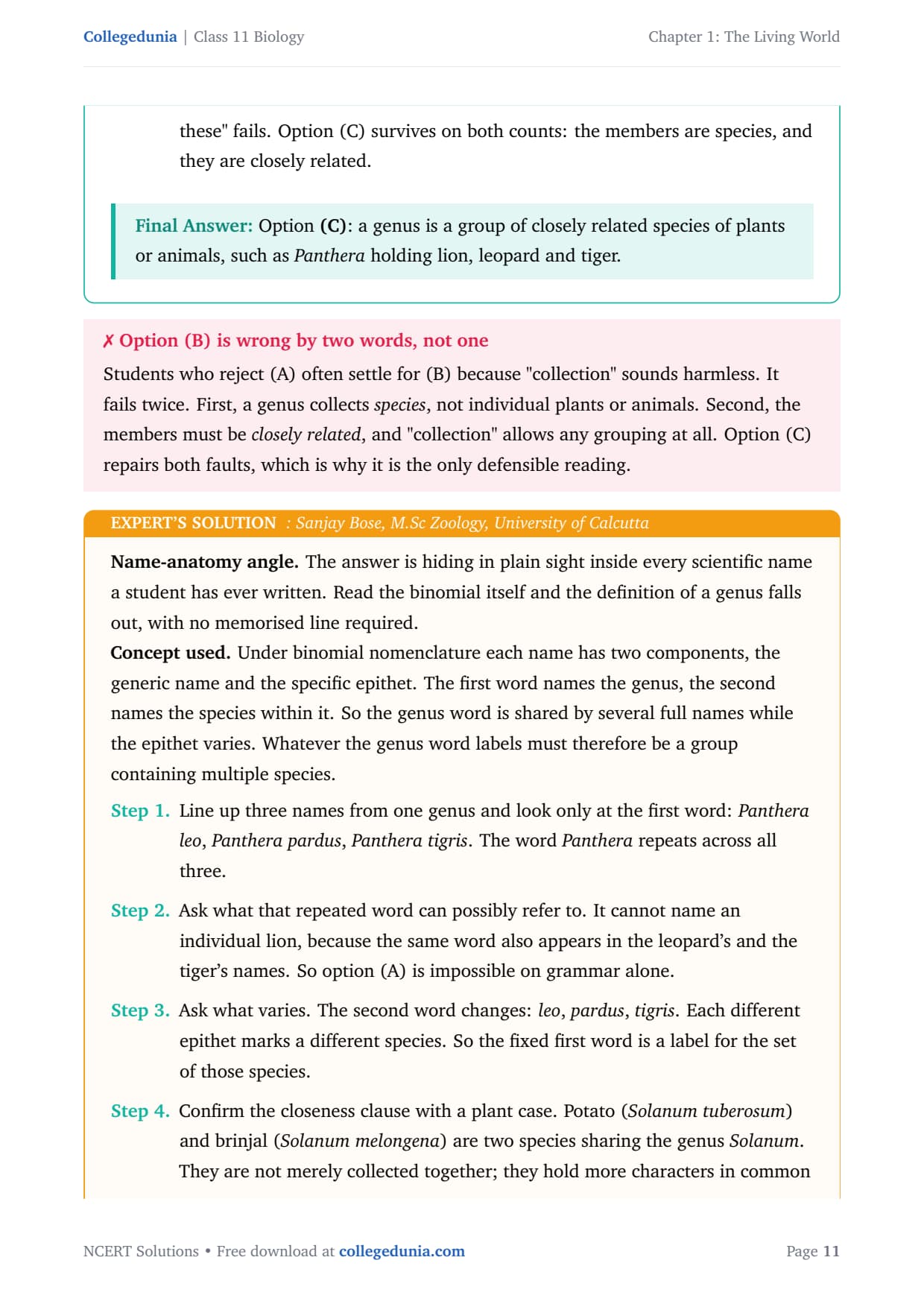
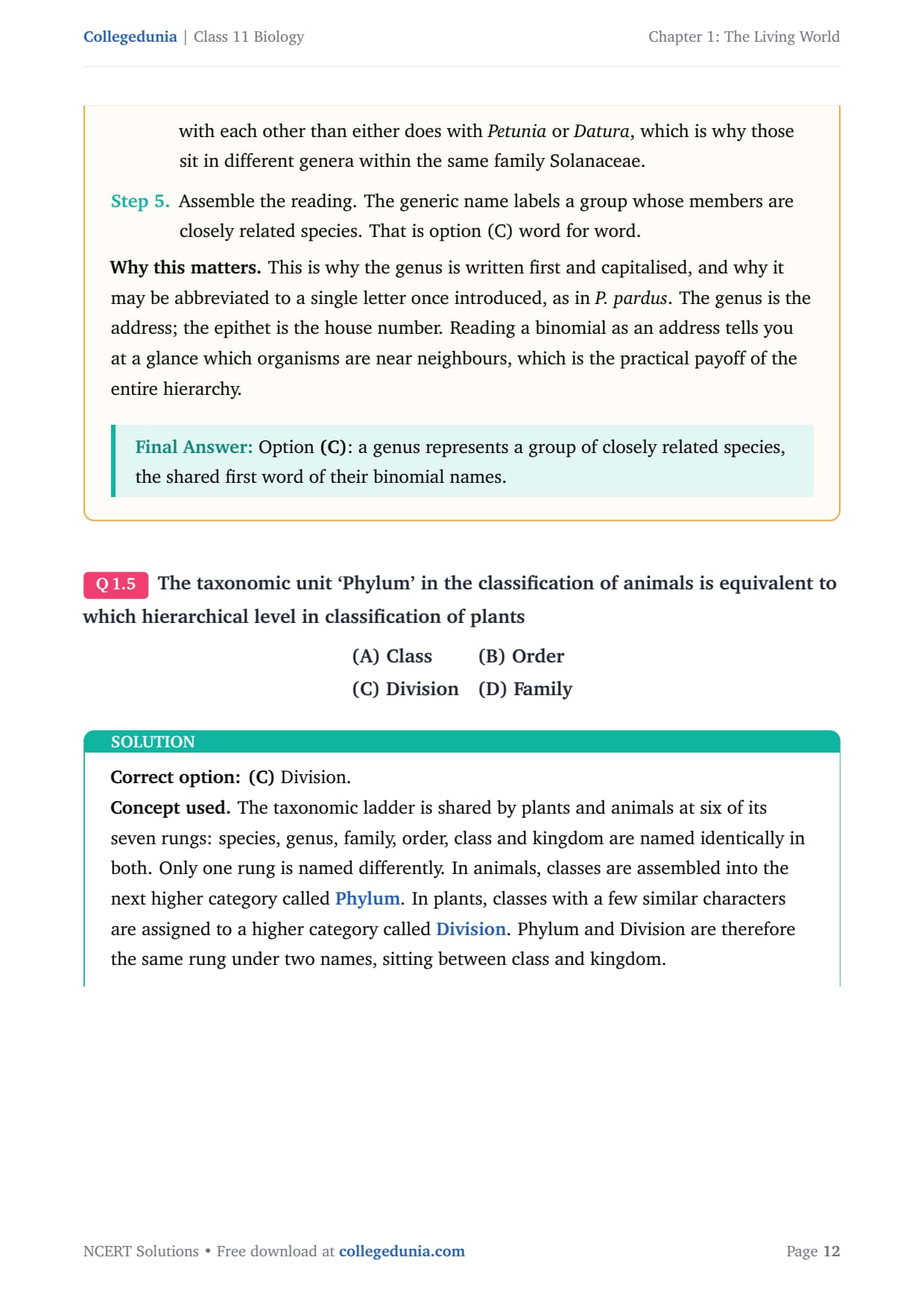
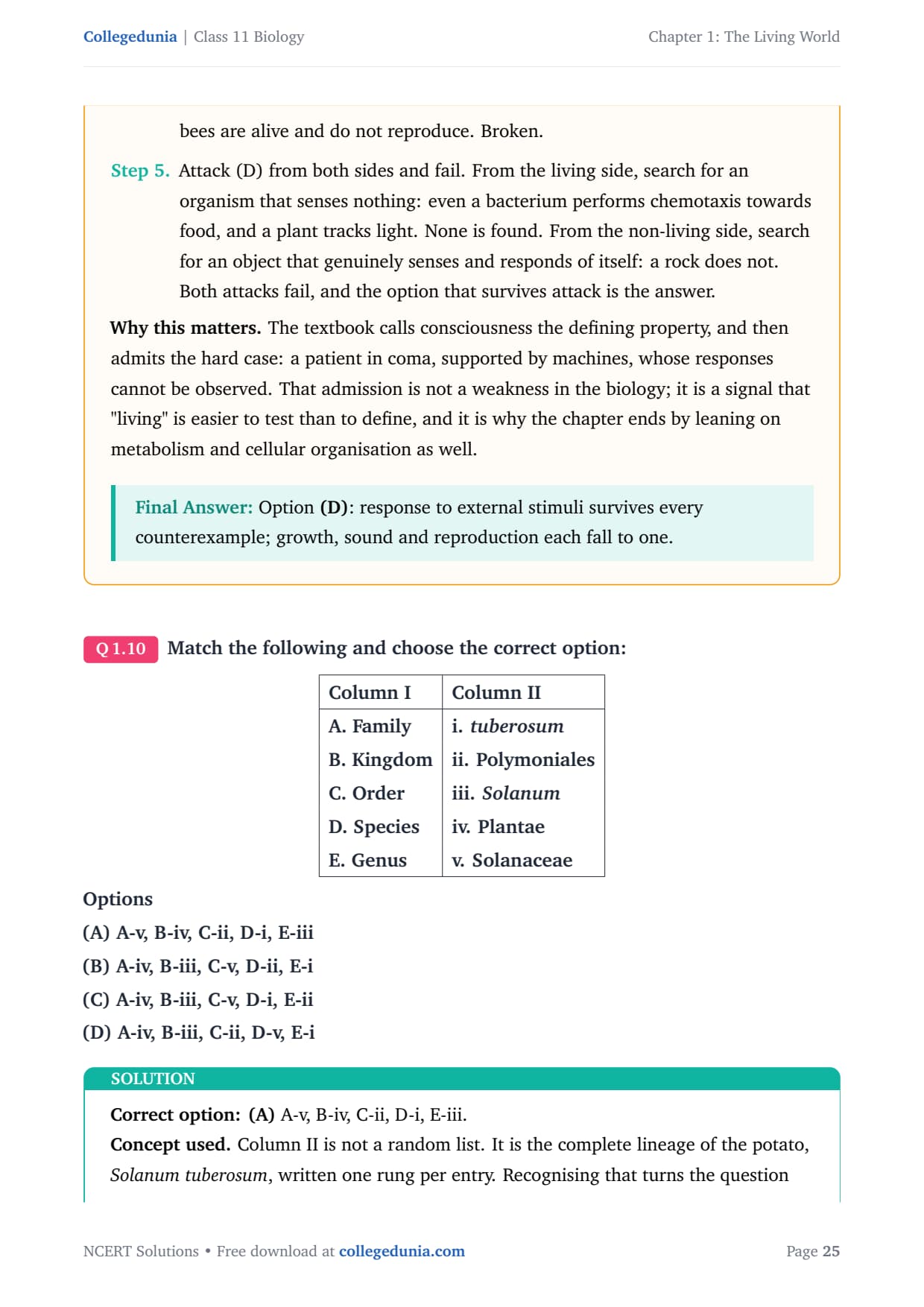
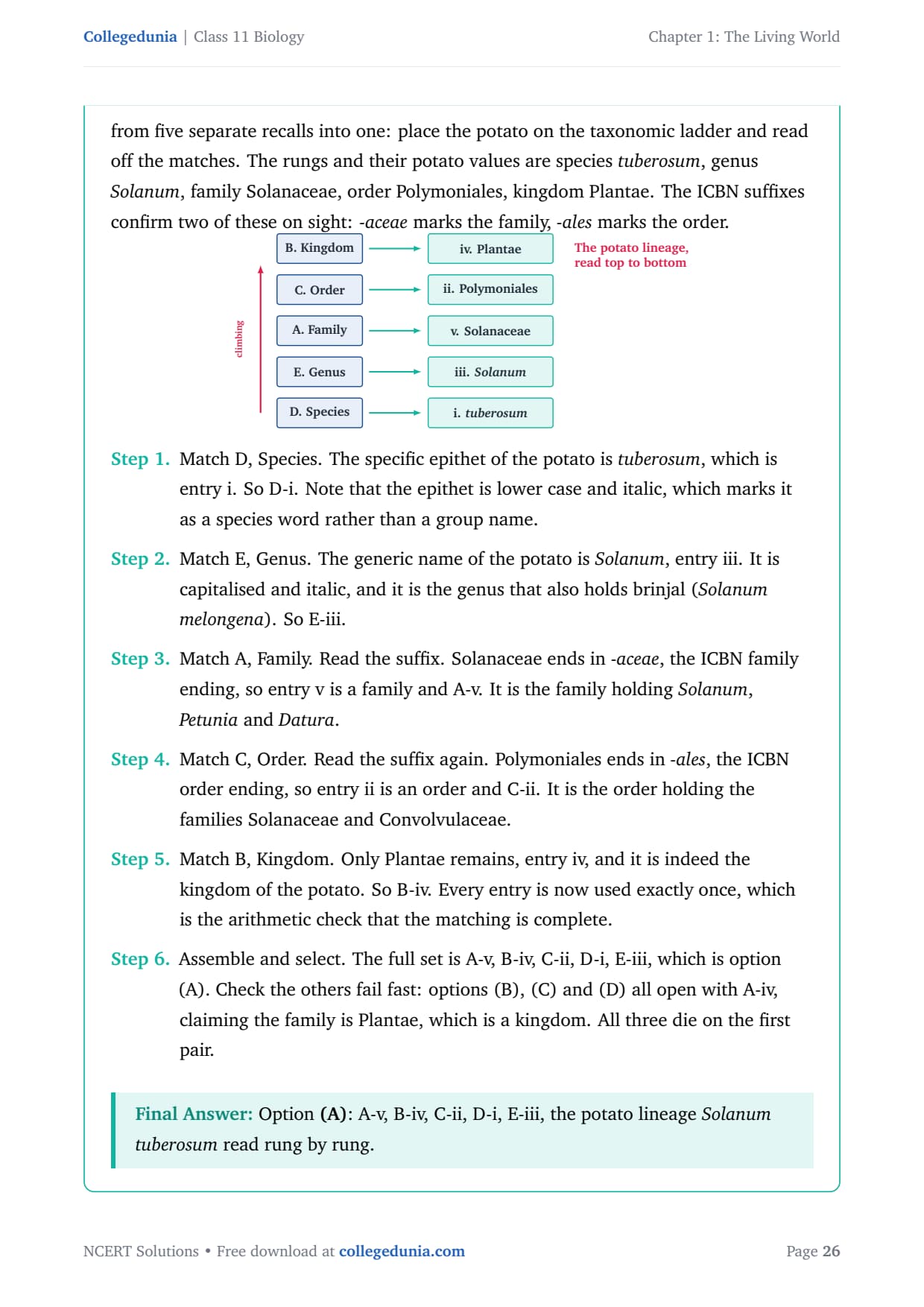
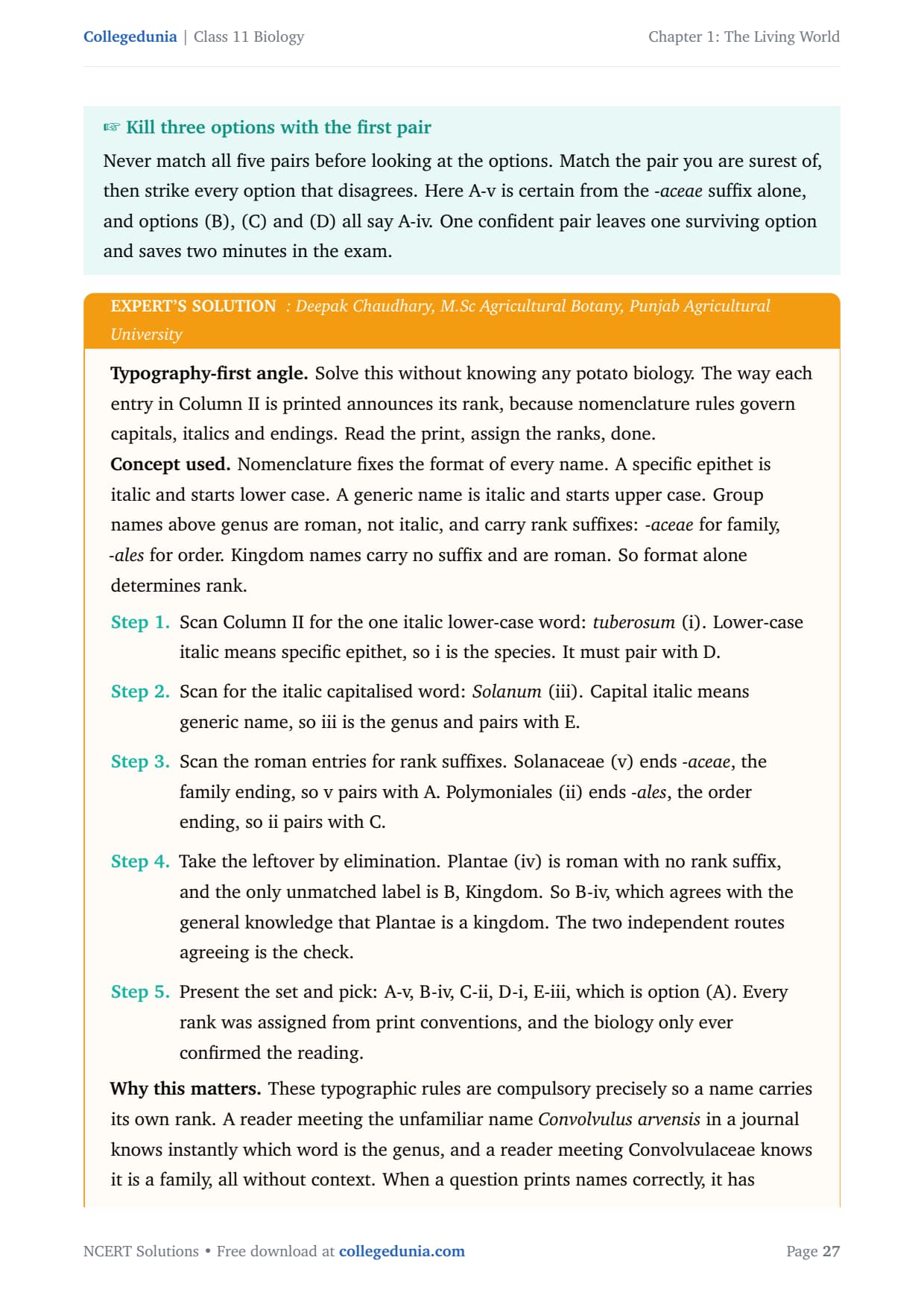
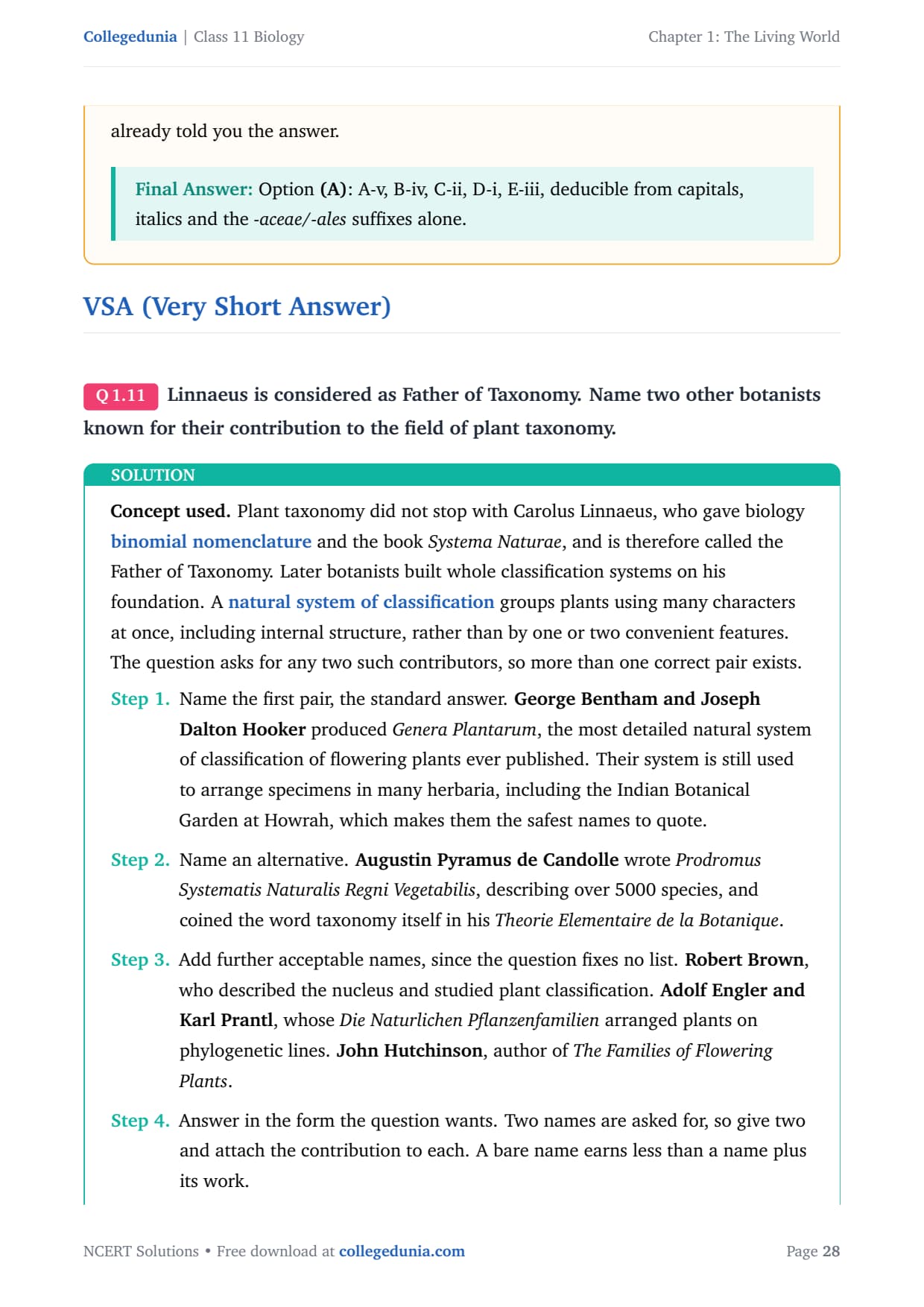
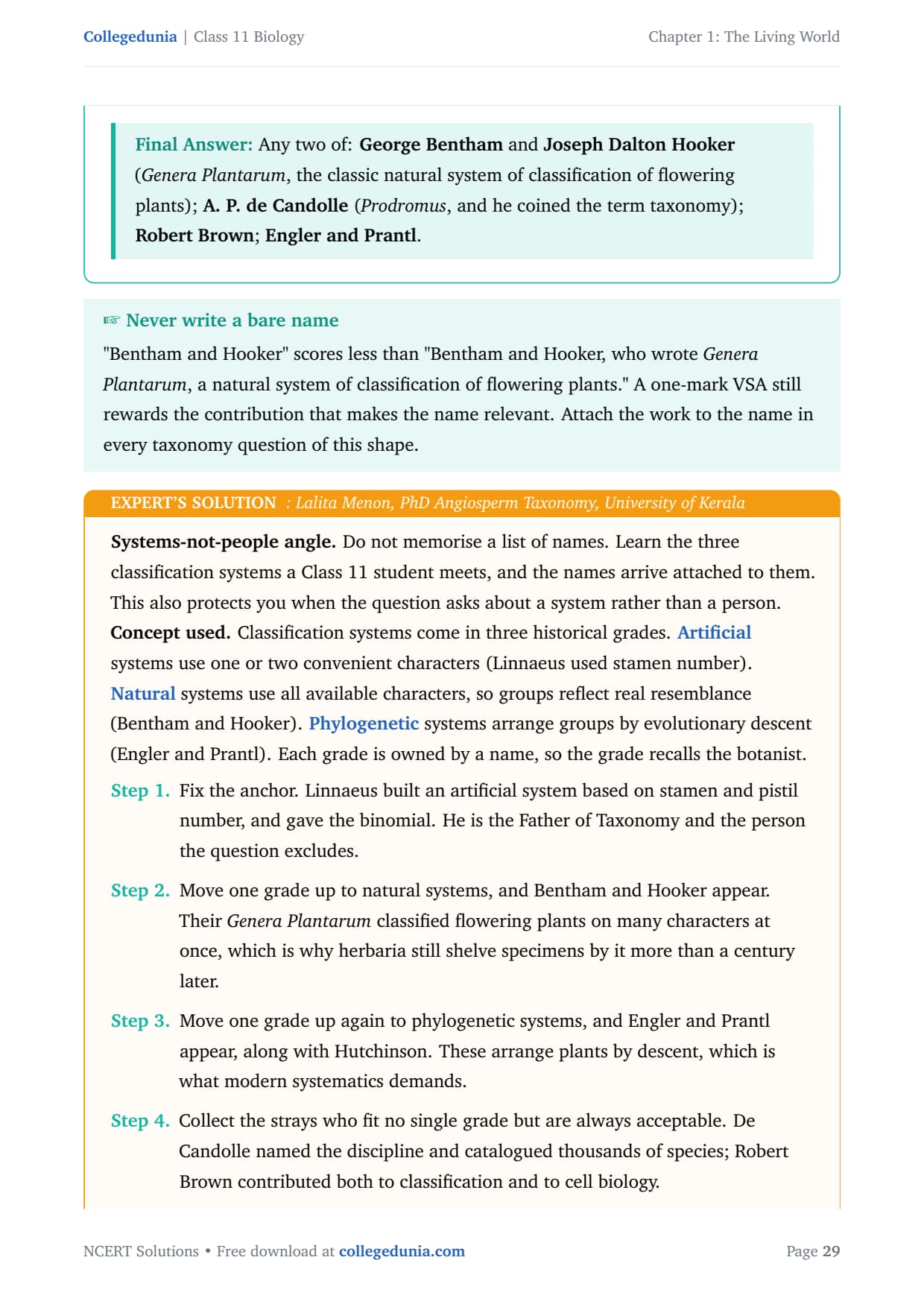
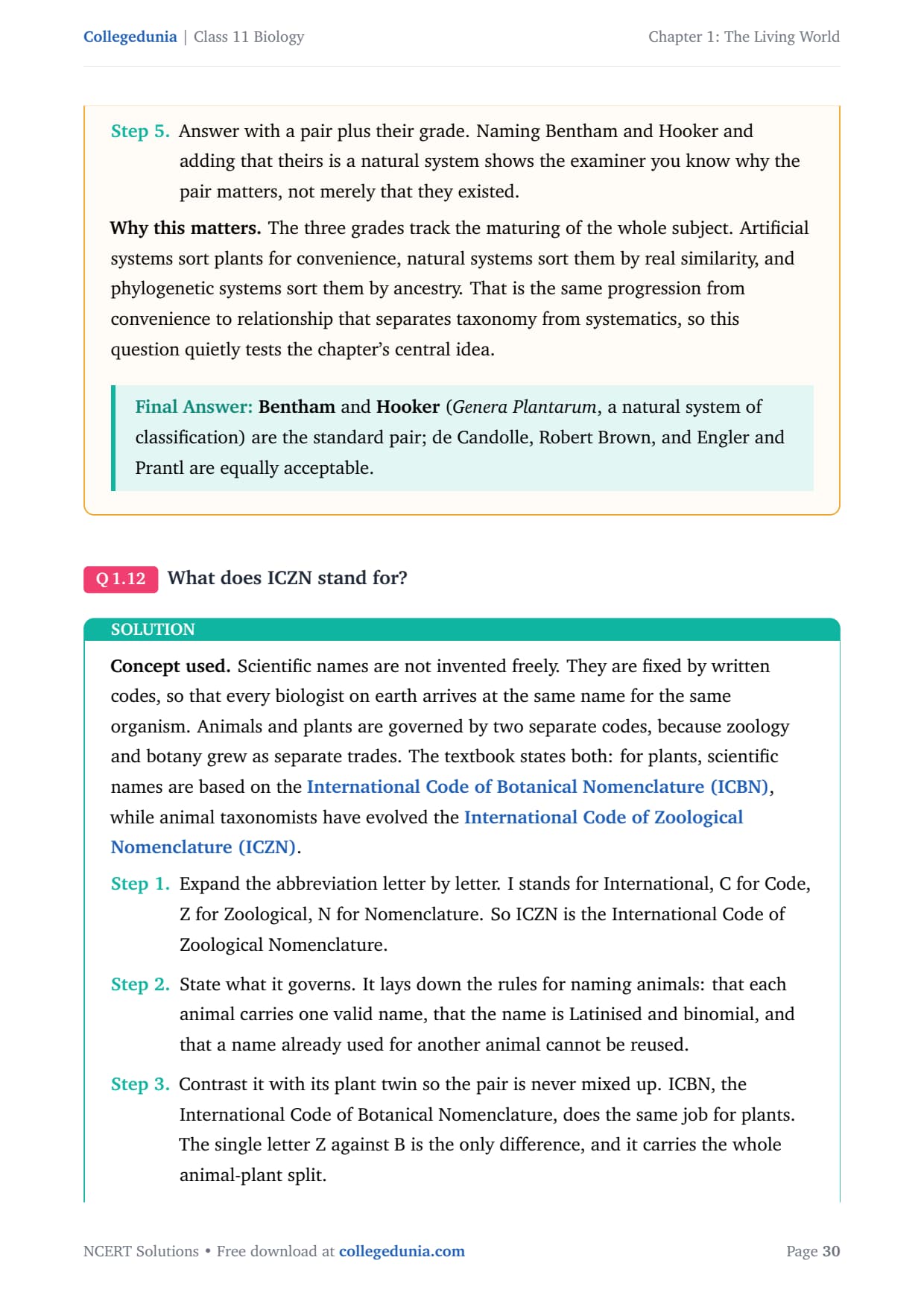
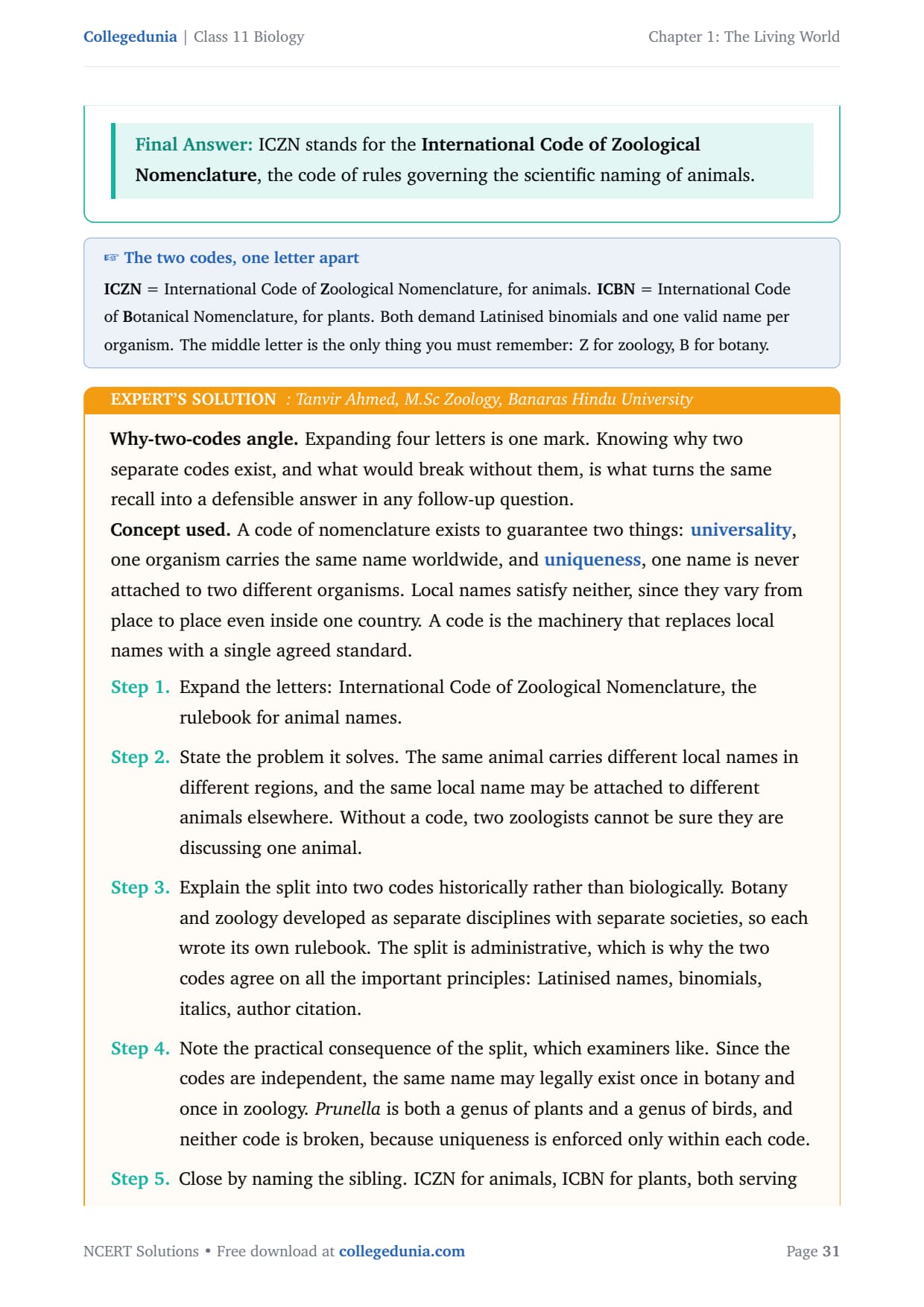
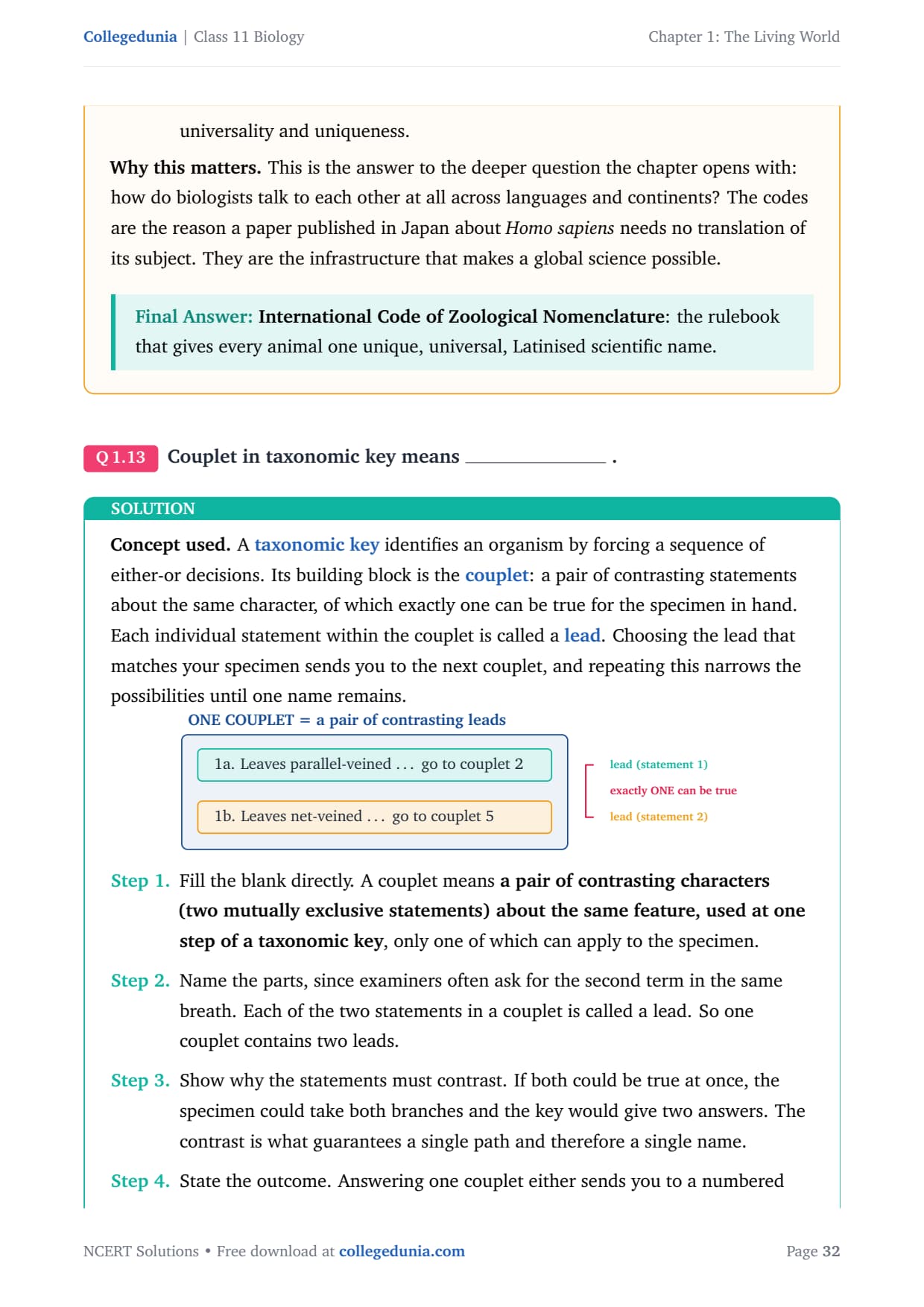
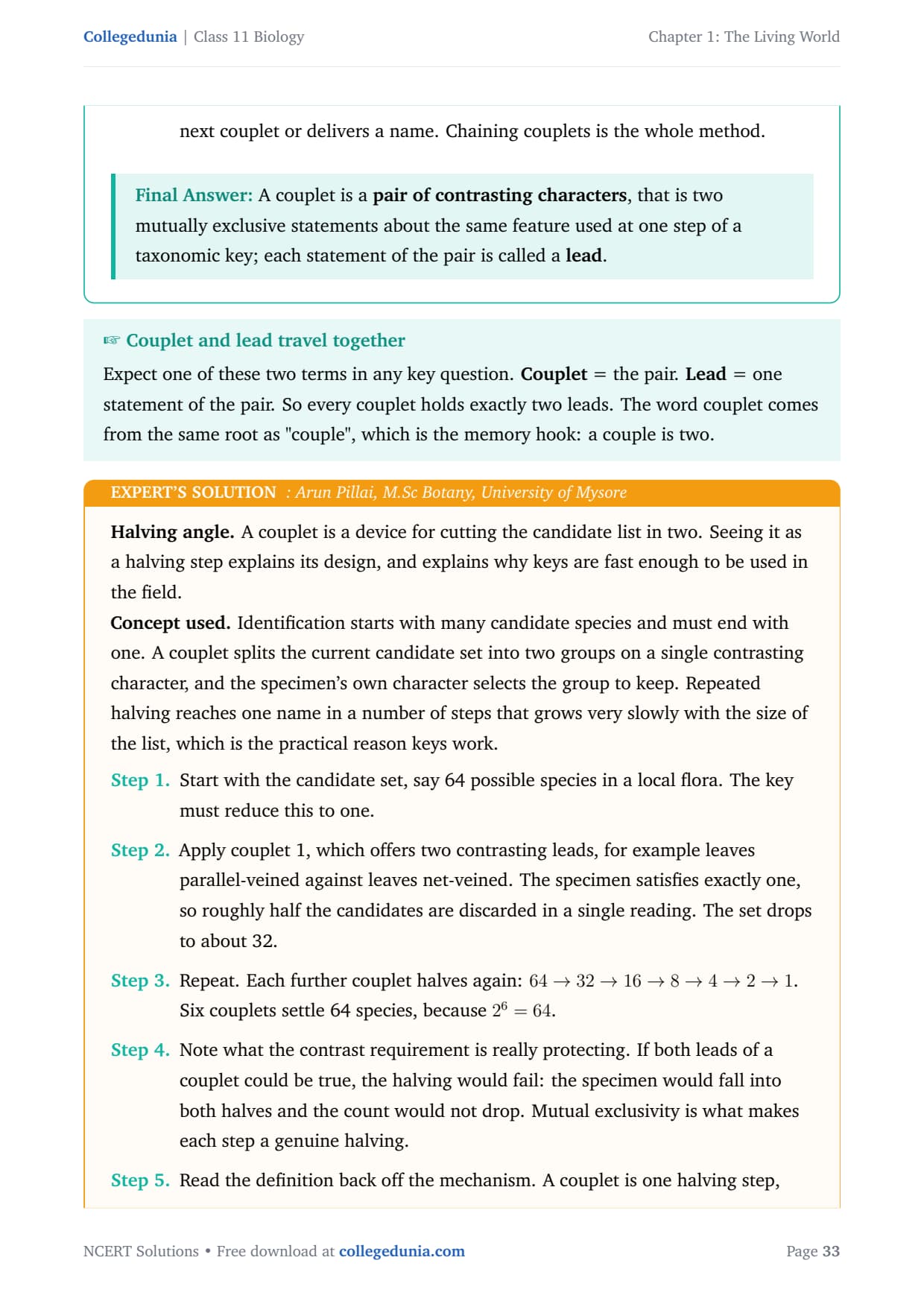
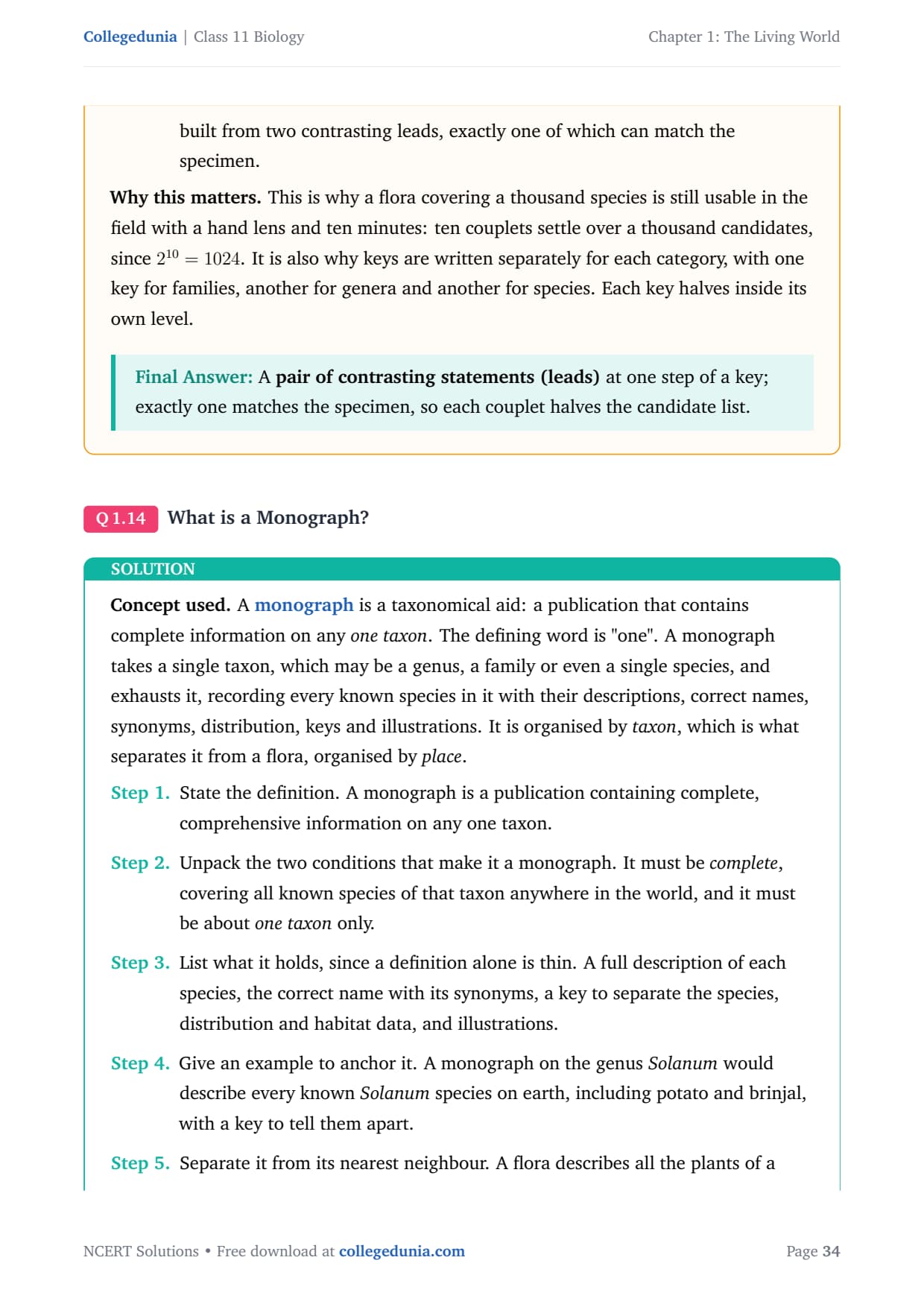
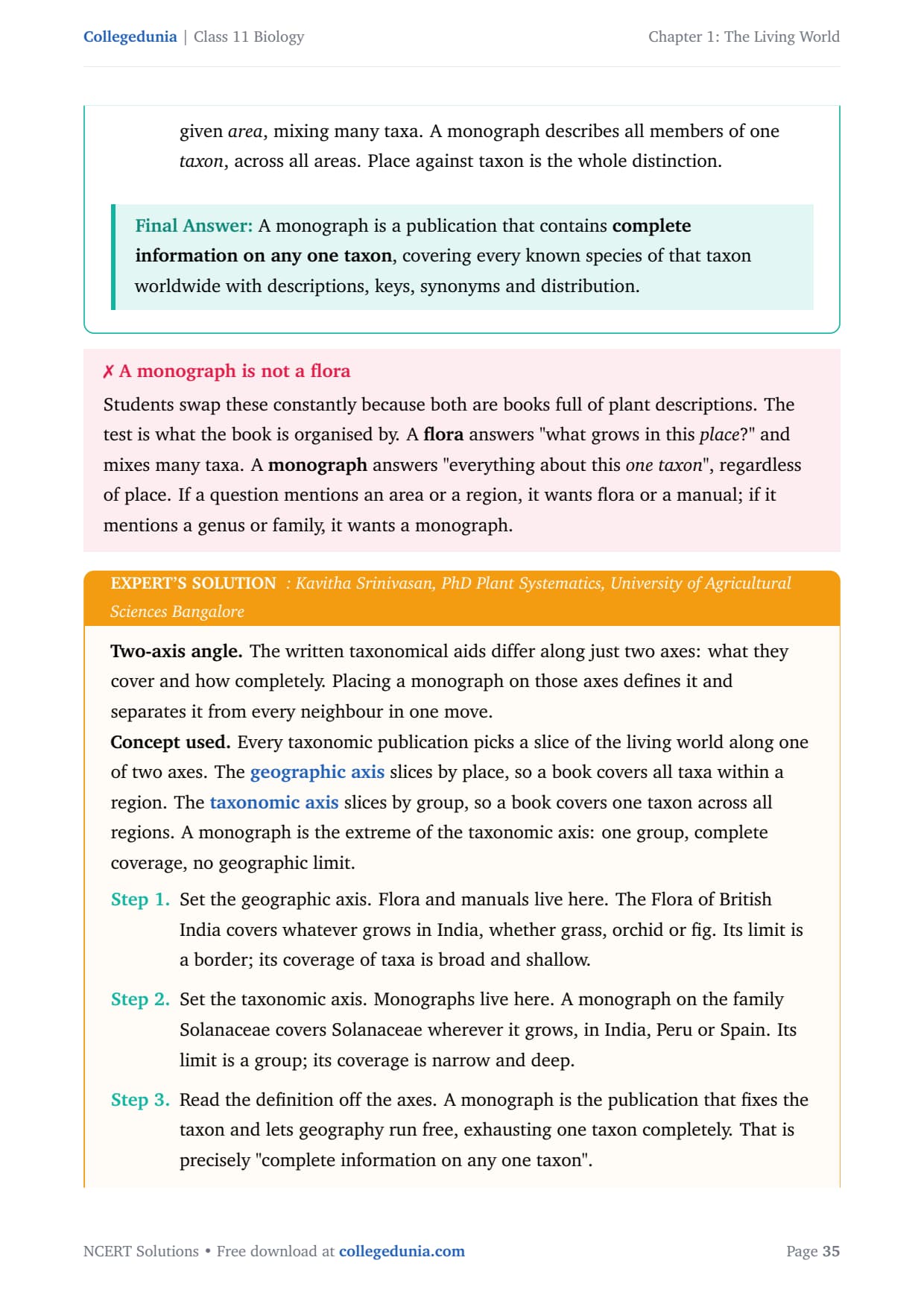
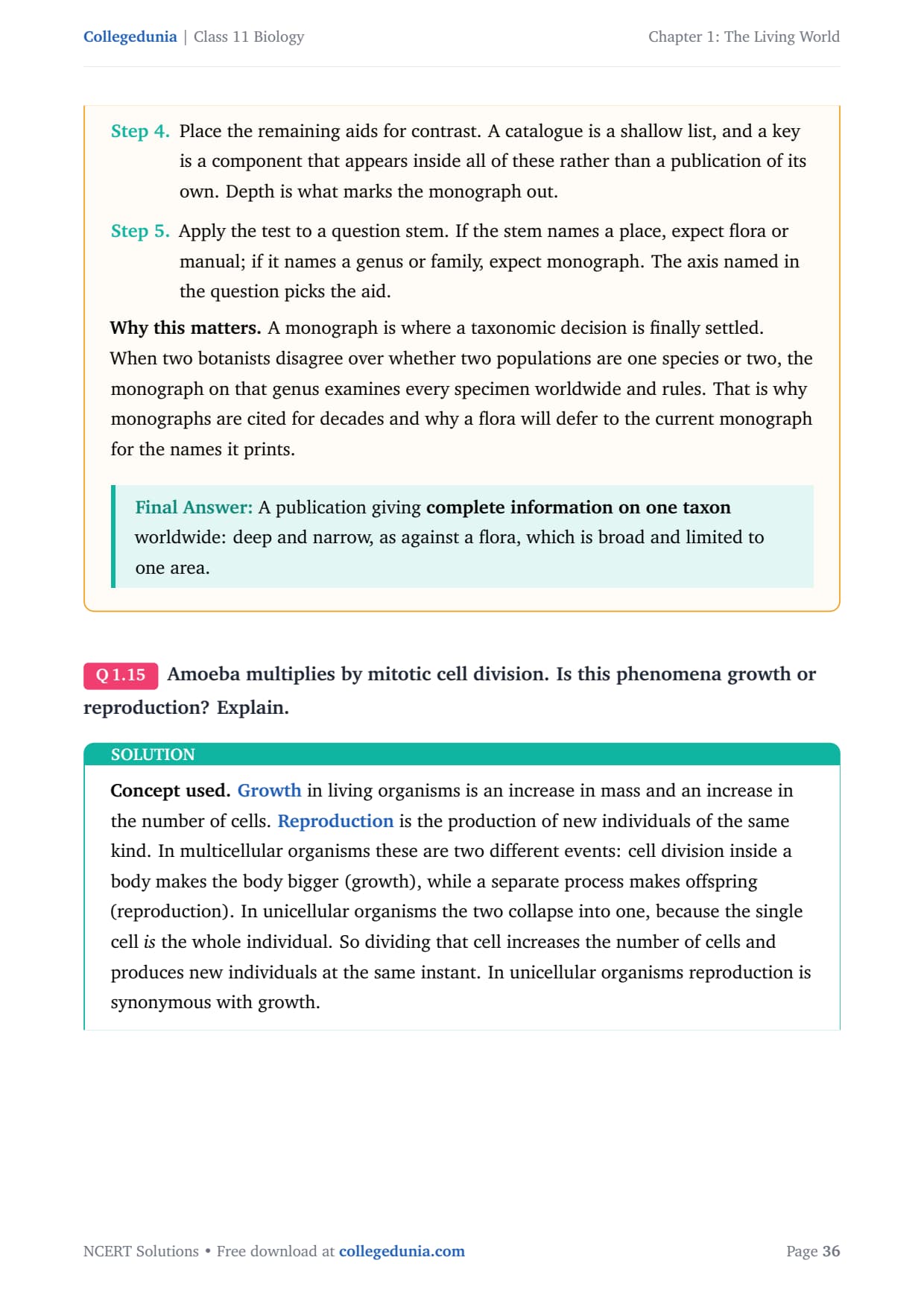
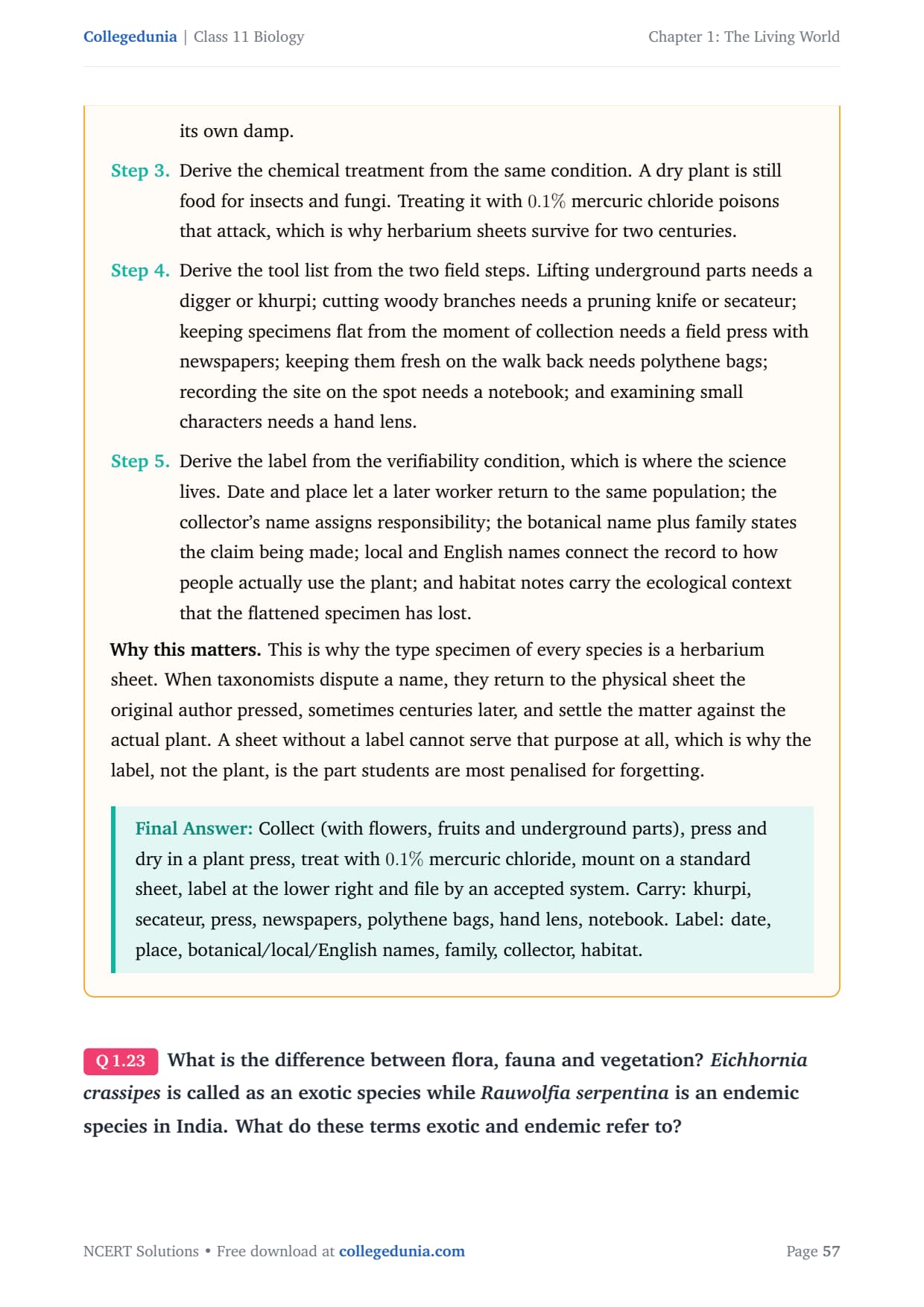
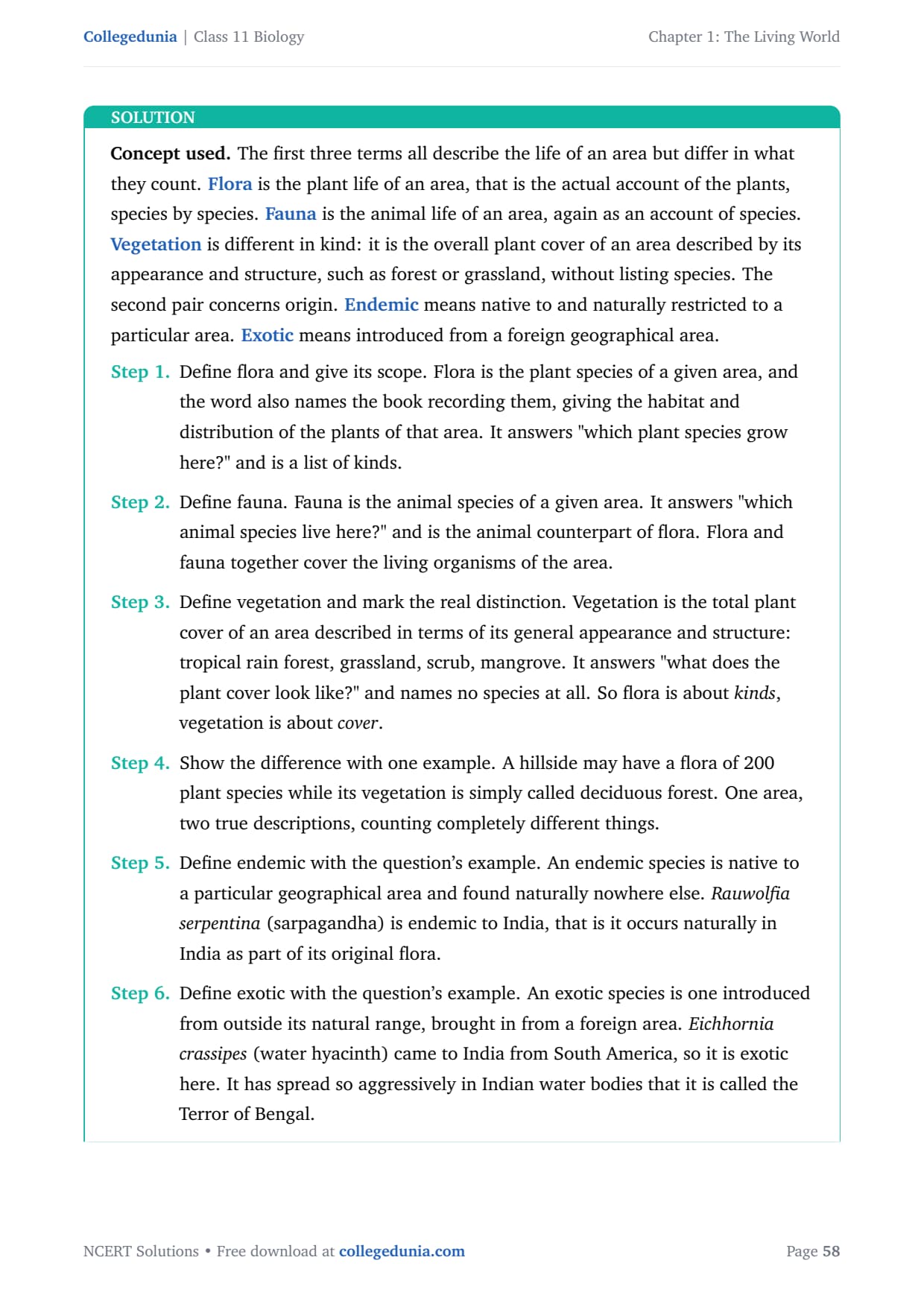
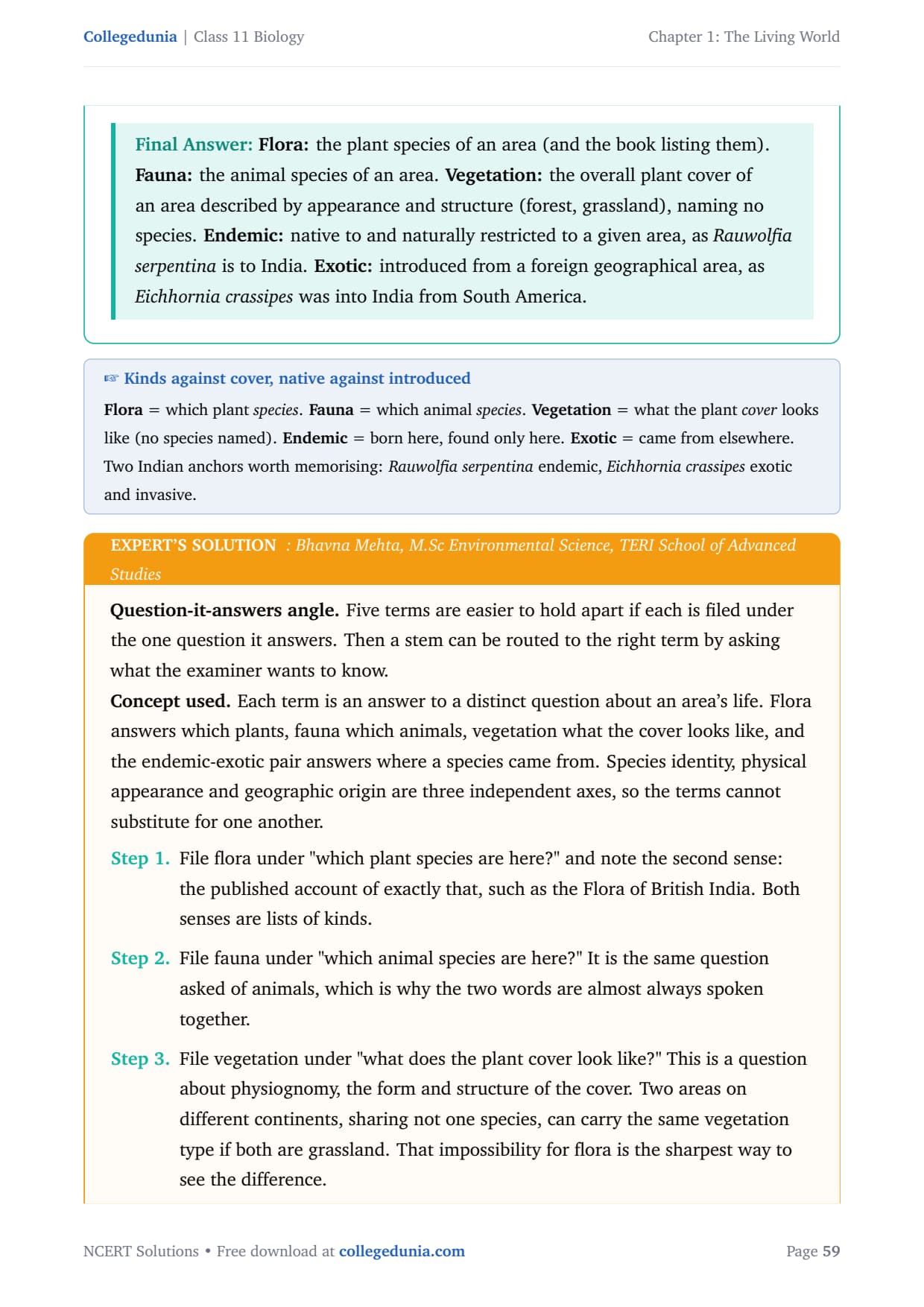
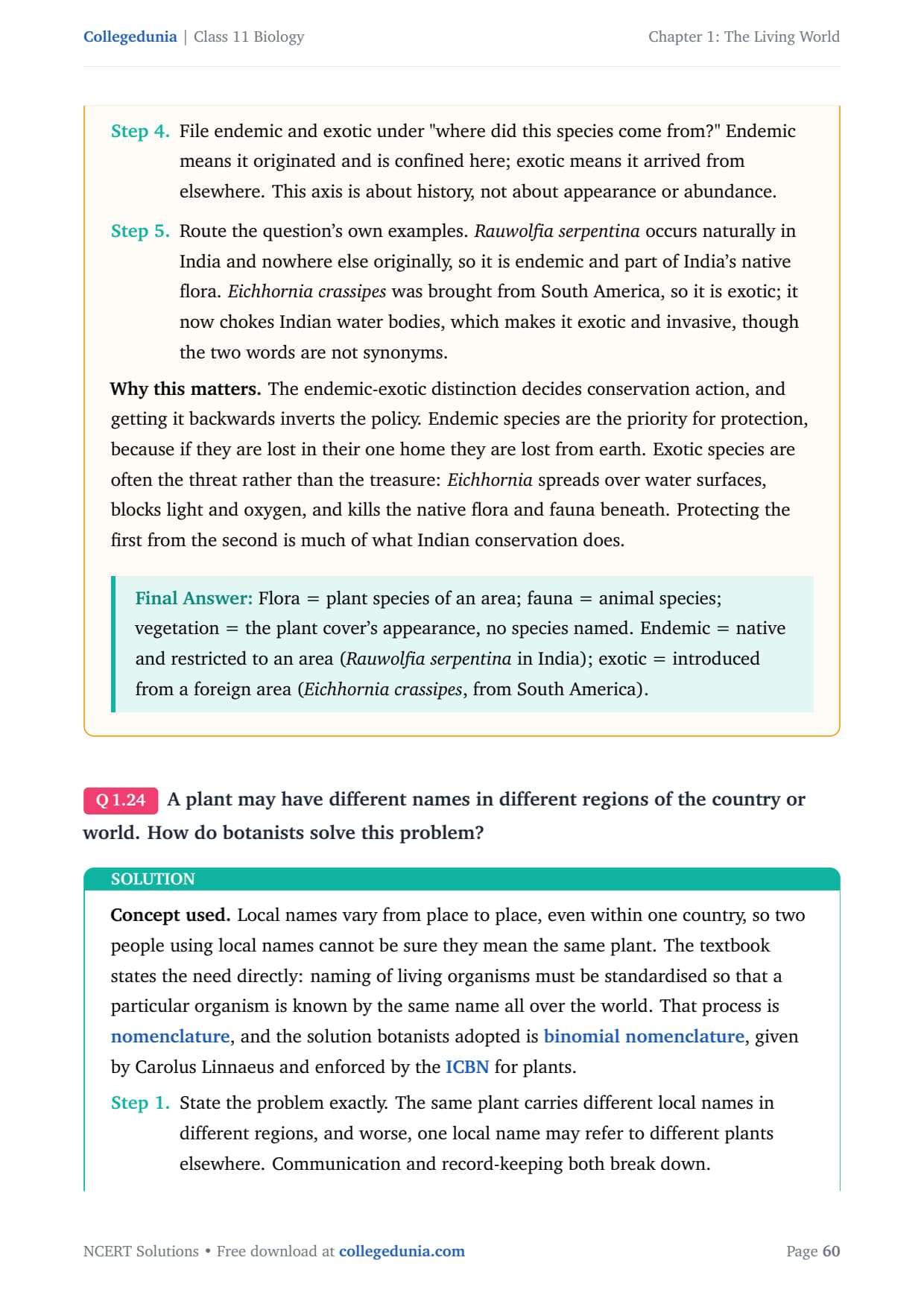
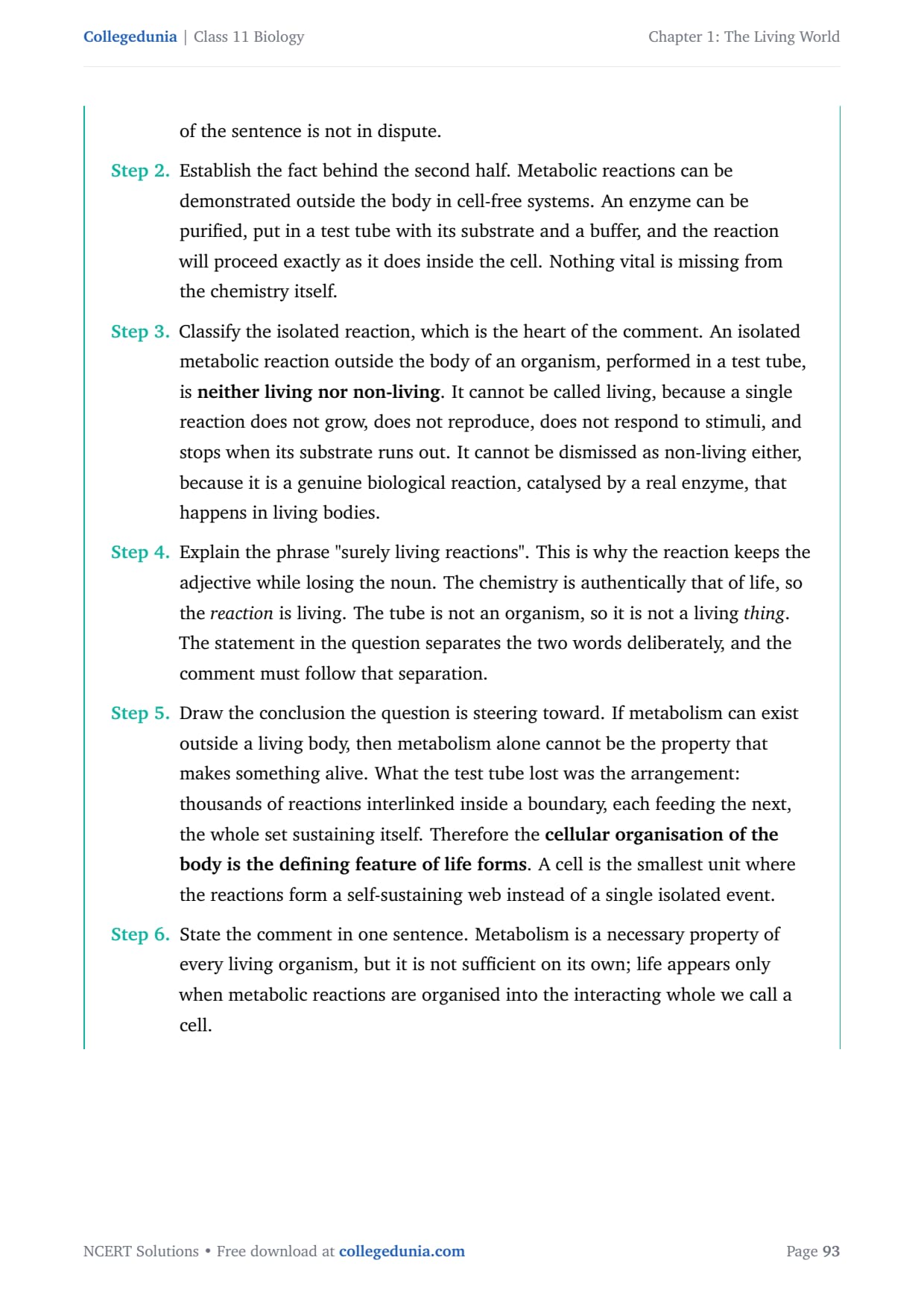
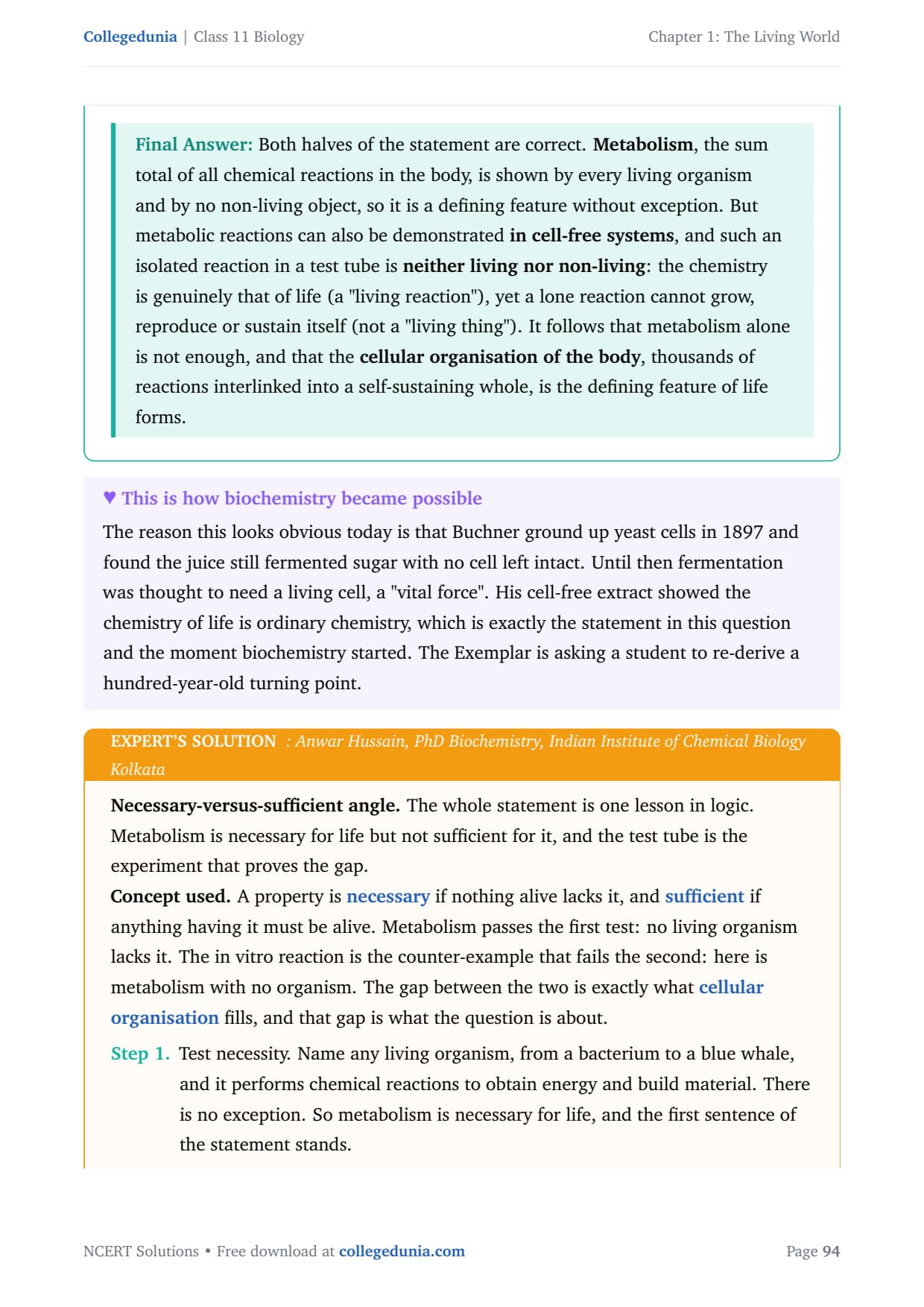
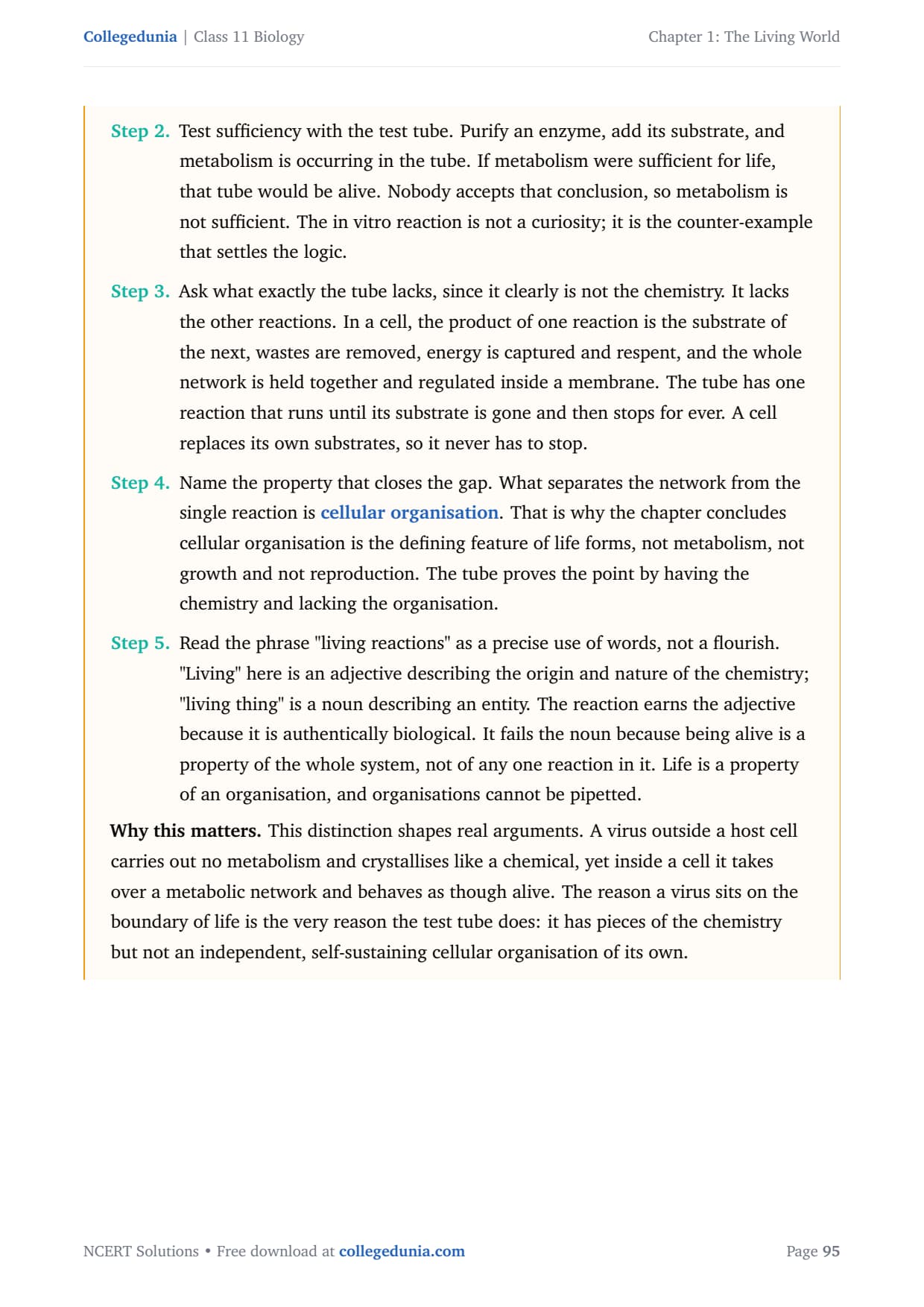
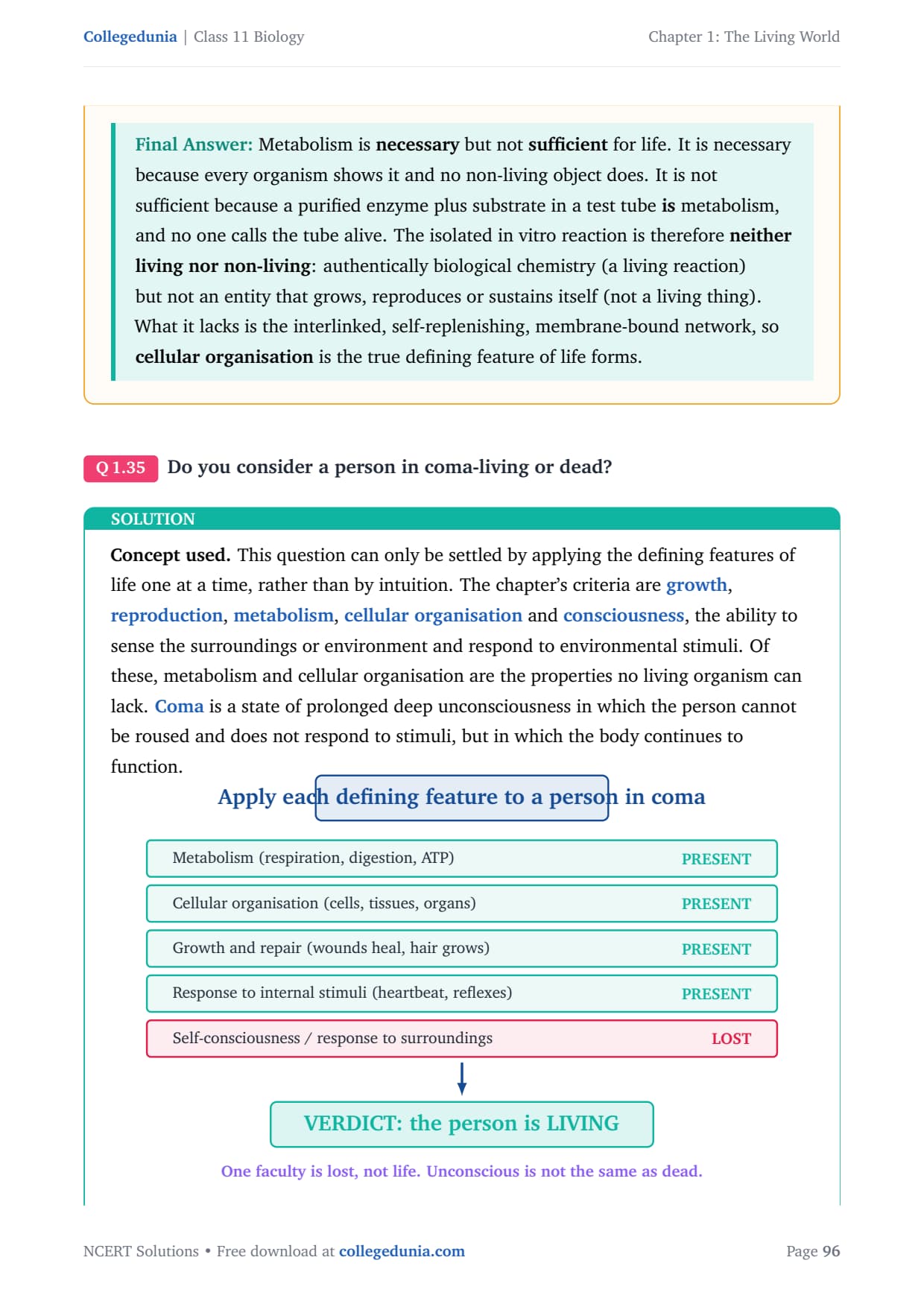
This is the first chapter of Class 11 Biology, and it sets the vocabulary you use for the next two years. Taxonomy, nomenclature and the defining features of life all start here. The Exemplar pushes these ideas much further than the textbook exercise, turning definitions into reasoning questions.
- CBSE Weightage: 2 to 3 marks, usually one question on the taxonomic hierarchy or a taxonomical aid
- NEET Weightage: 1 to 2 questions per year from nomenclature, taxonomic categories and characteristics of living organisms
- CUET Weightage: 1 to 2 questions on taxonomy terms and taxonomical aids in the Biology domain paper
Every answer is checked against the official NCERT Exemplar key, and the terms this chapter is famous for confusing, such as systematics against taxonomy, are pulled apart in full.
Topics Covered in the Class 11 Biology The Living World Exemplar
The 37 questions in this chapter are built on four ideas, and each one comes back the moment you start Biological Classification in the next chapter. The Living World is short in the textbook but dense in the Exemplar, because almost every question is a definition asked in a way that a memorised line cannot answer. Working through it fixes the language you need before any real classification begins.
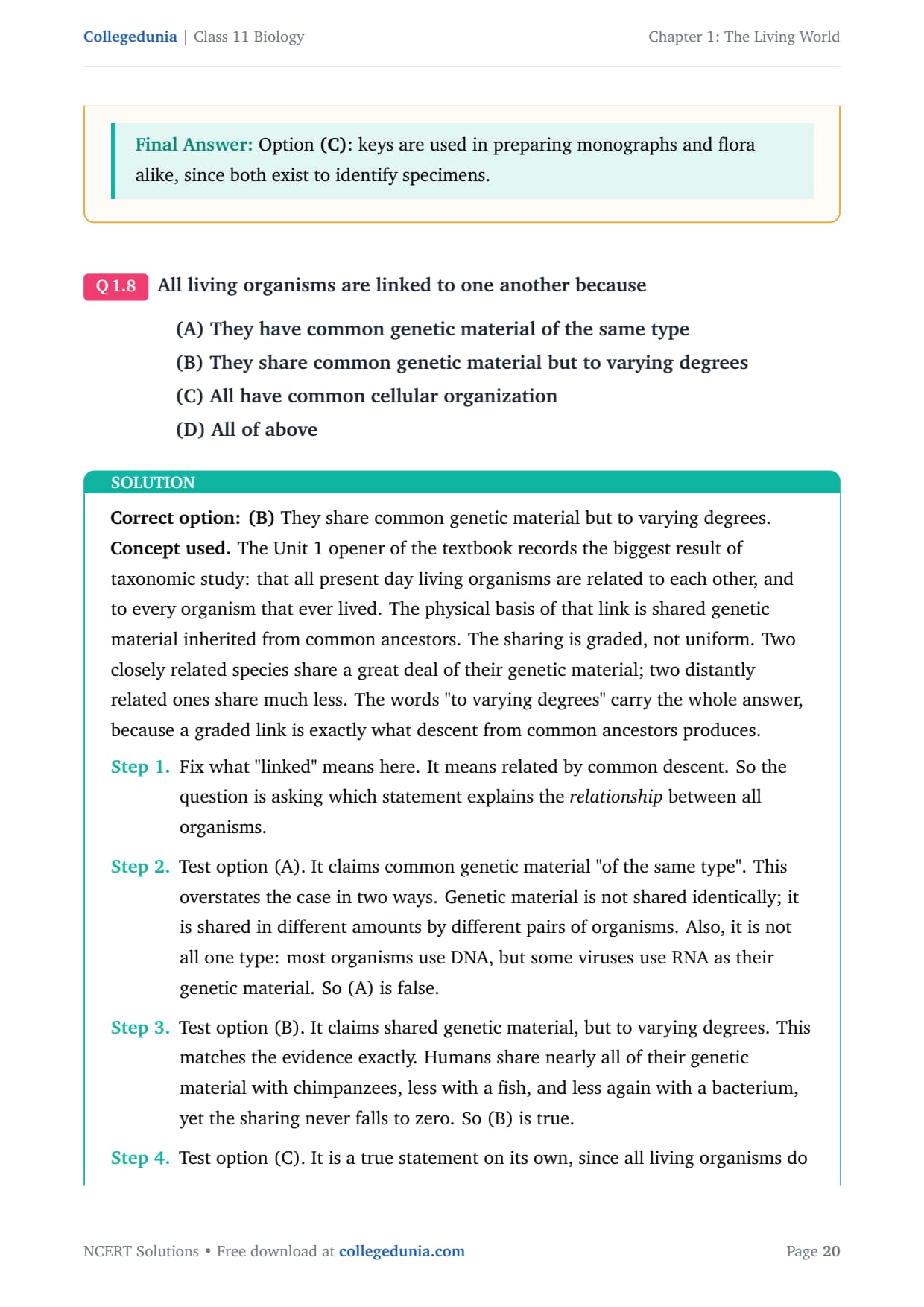
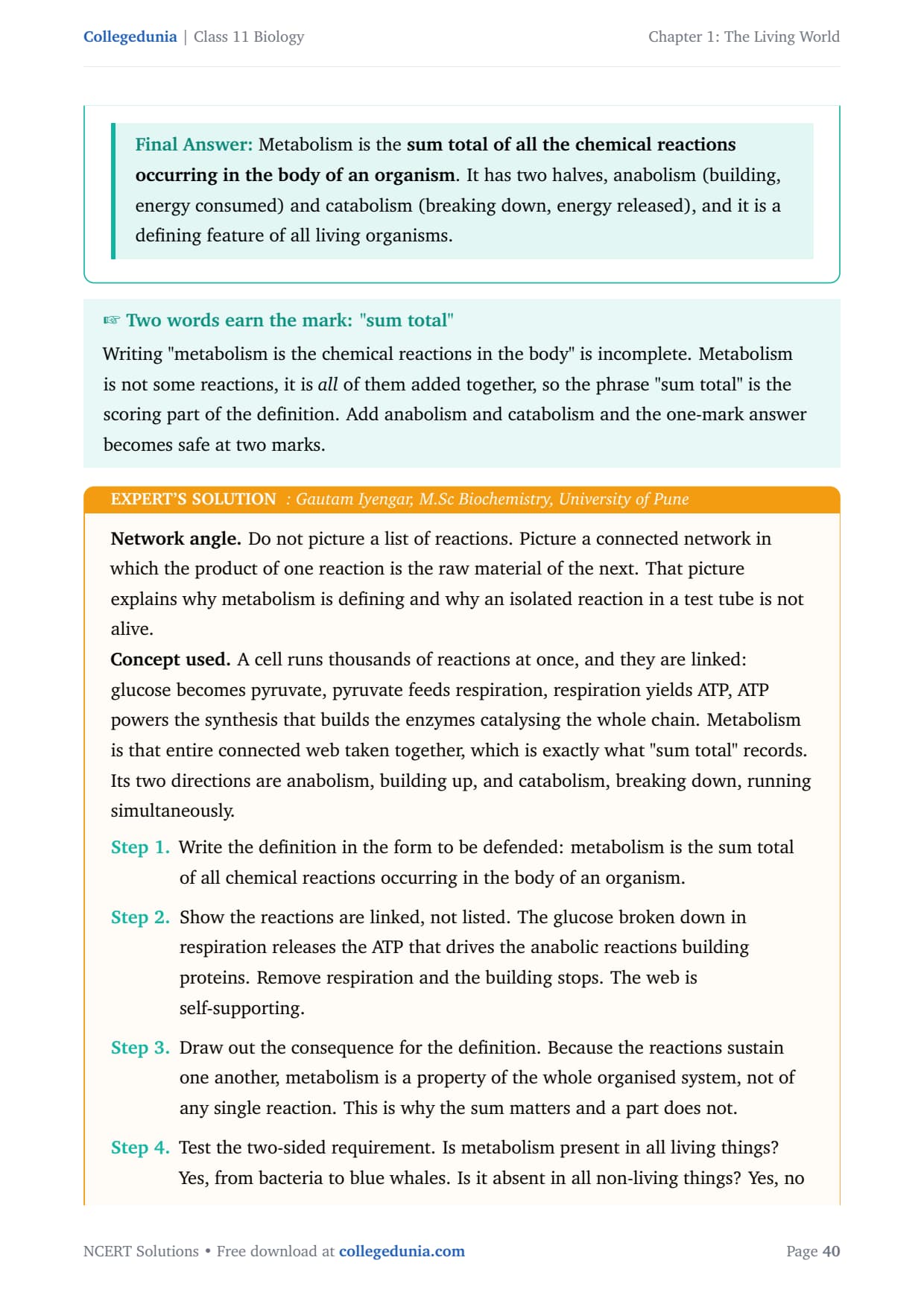
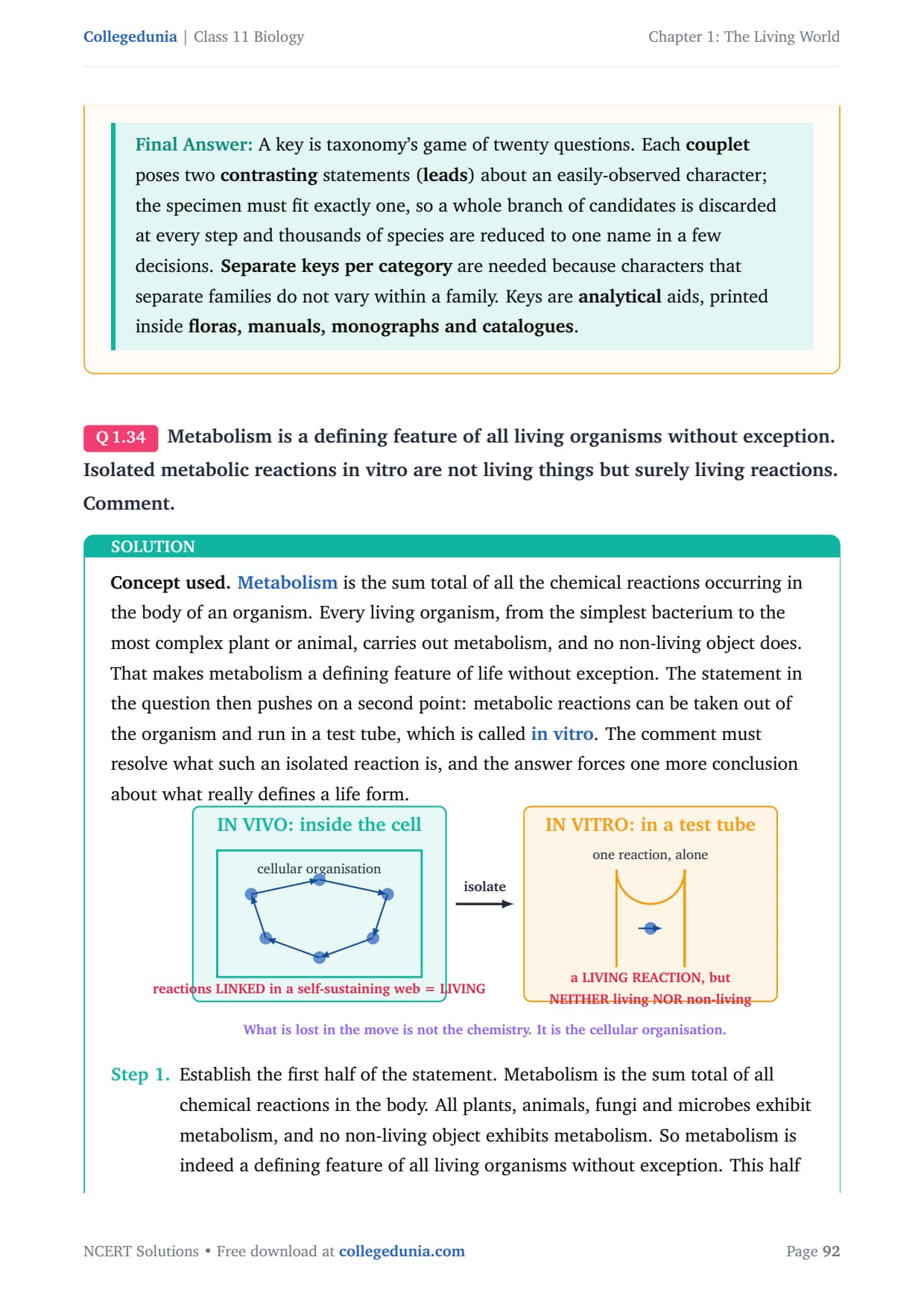
- Characteristics of living organisms: metabolism, growth, reproduction, cellular organisation, consciousness and self-replication
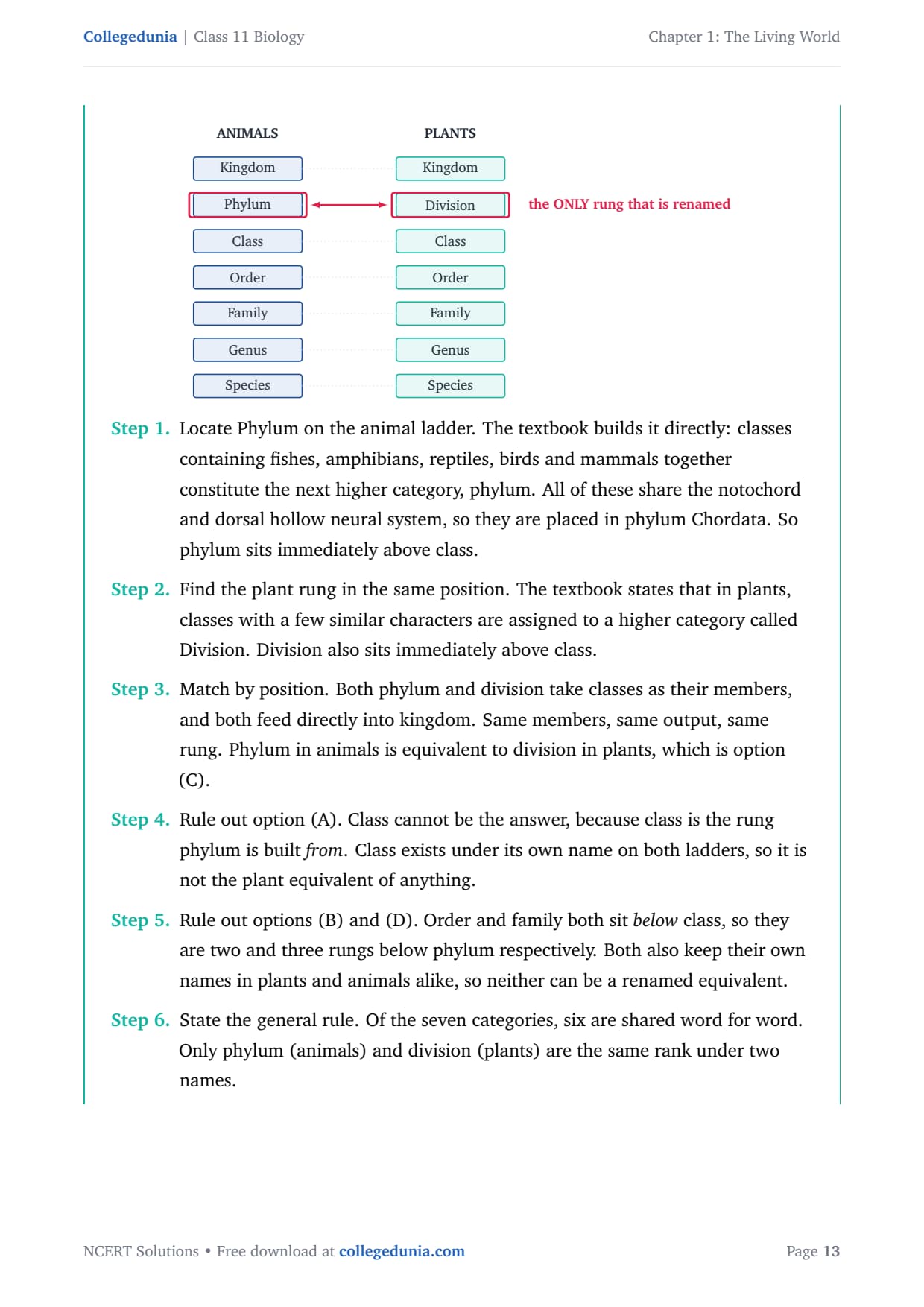
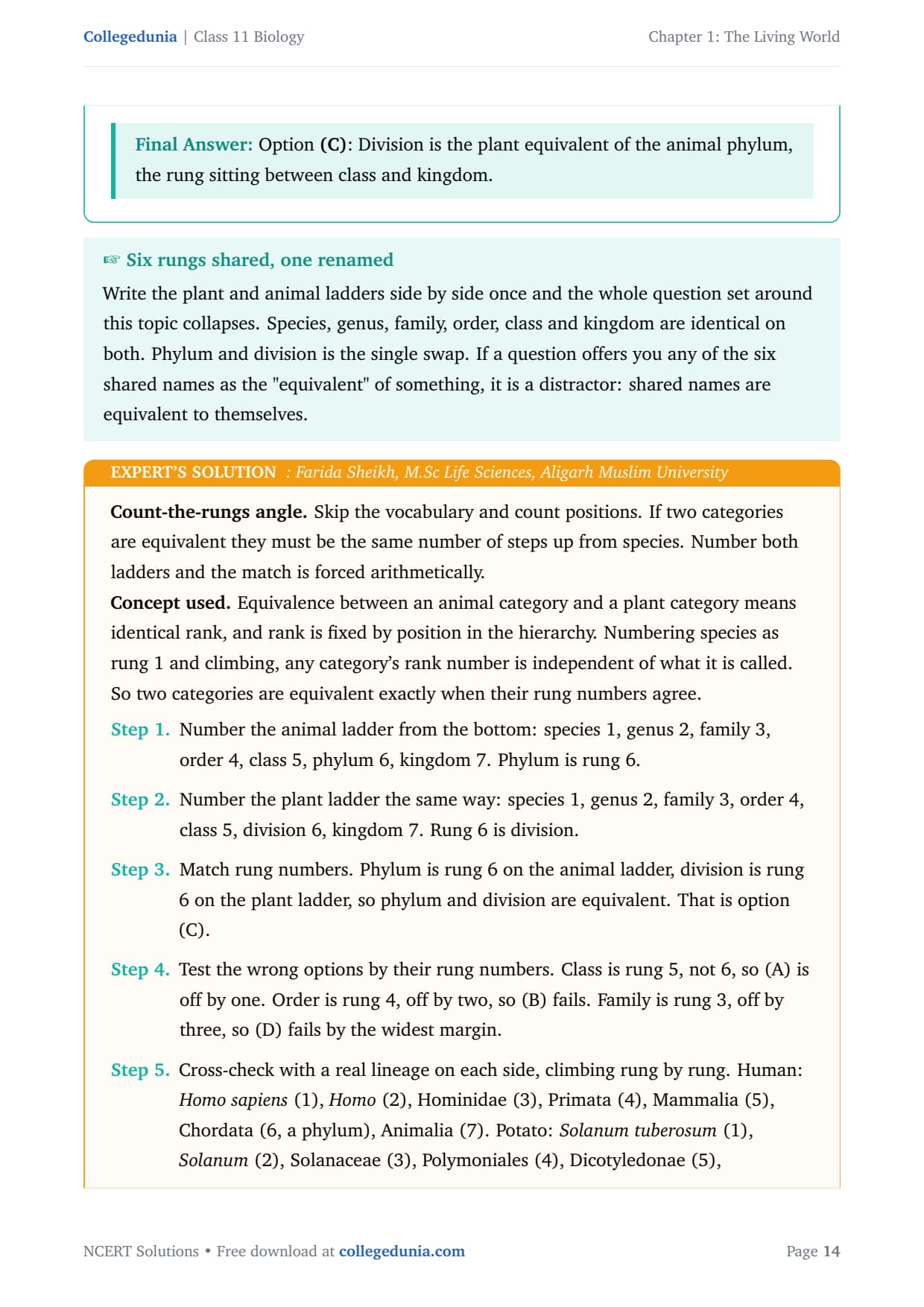
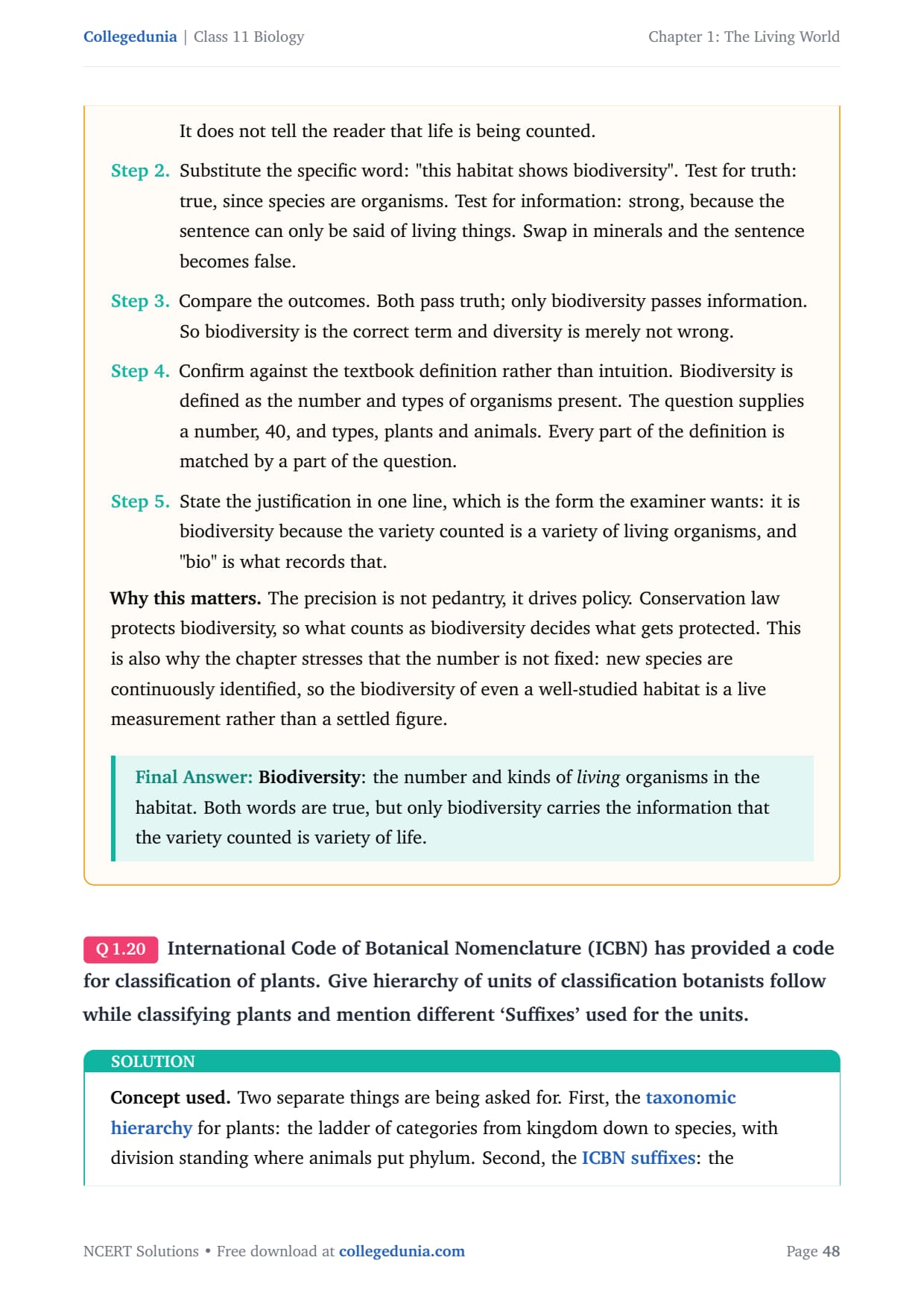
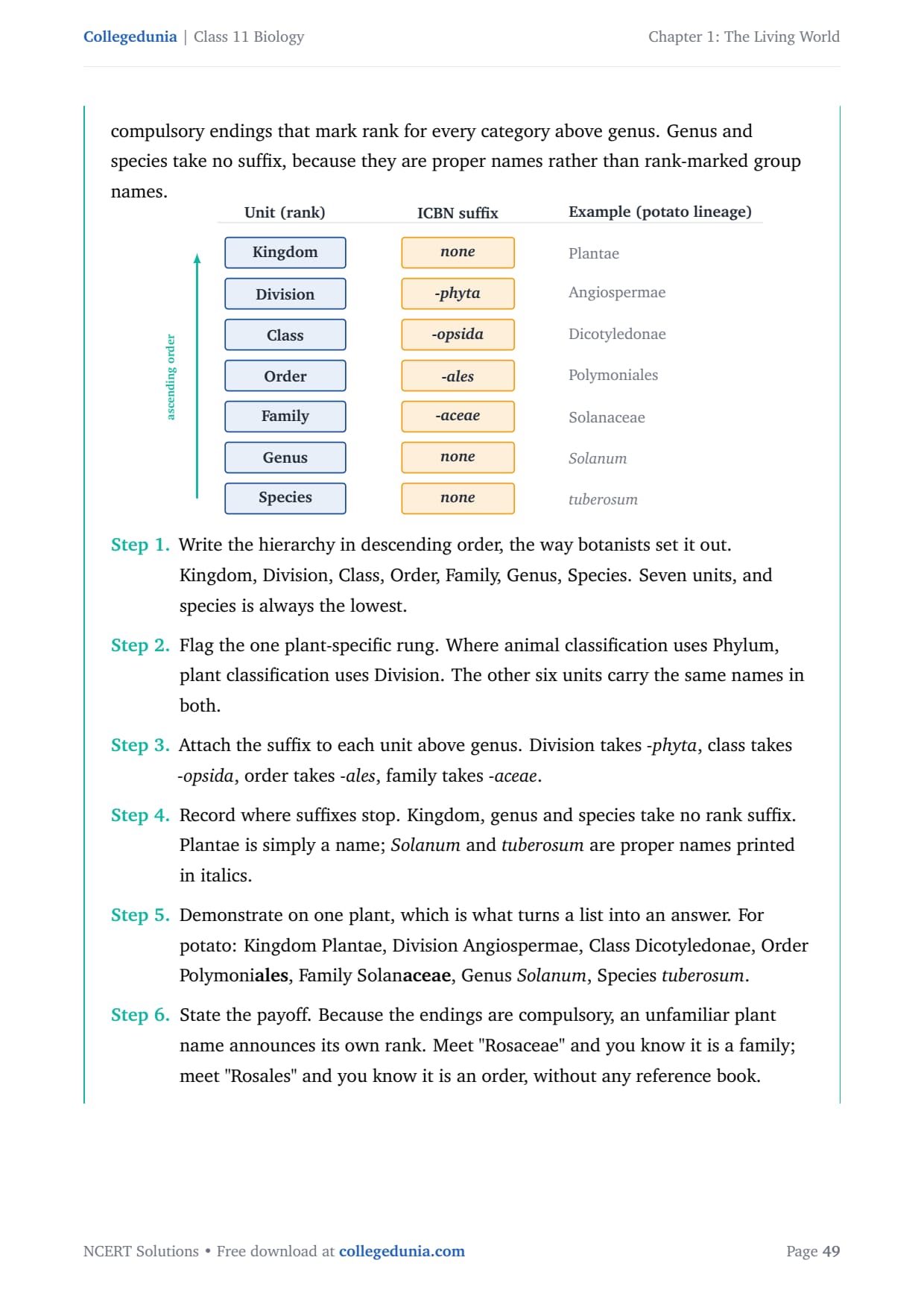
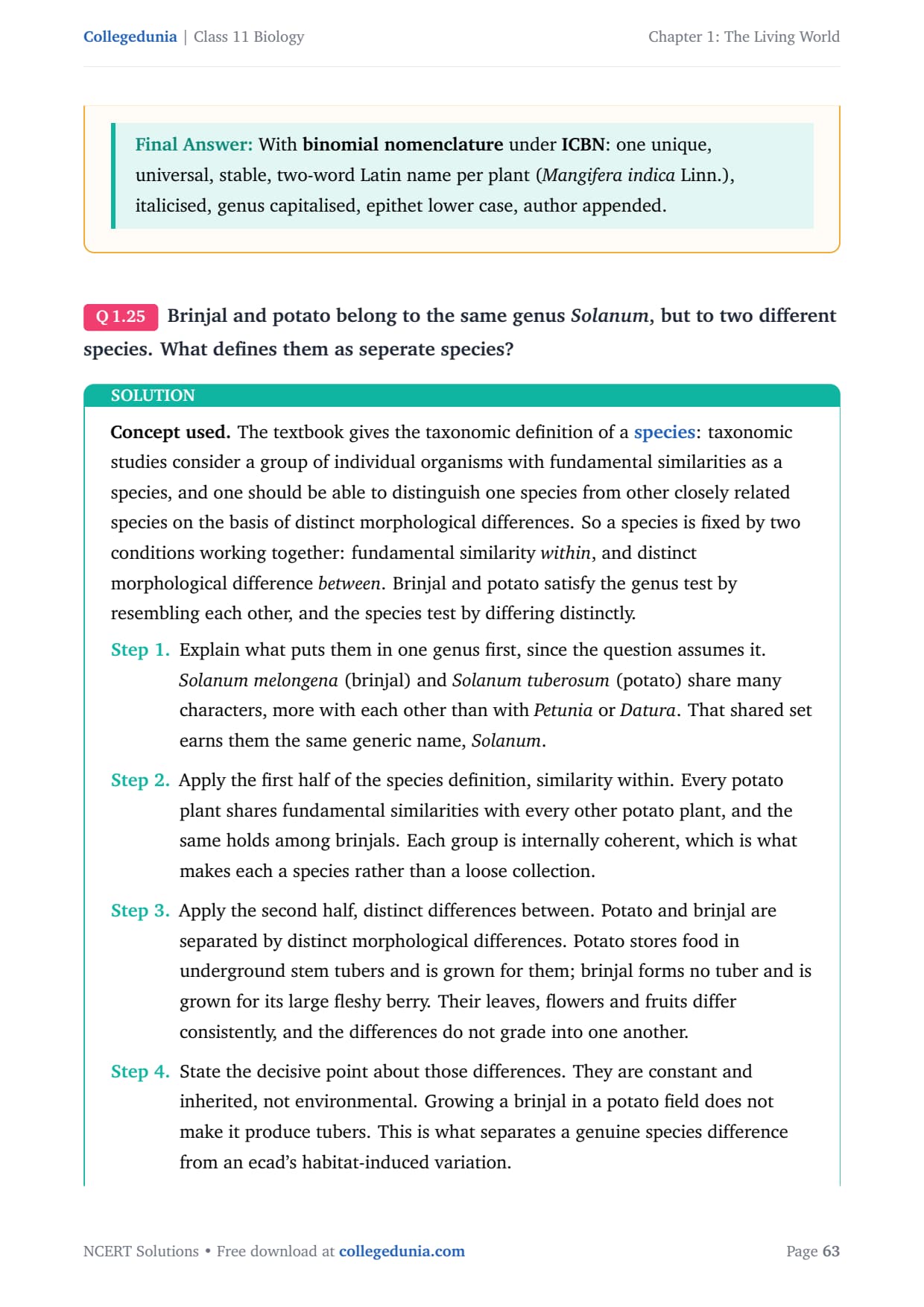
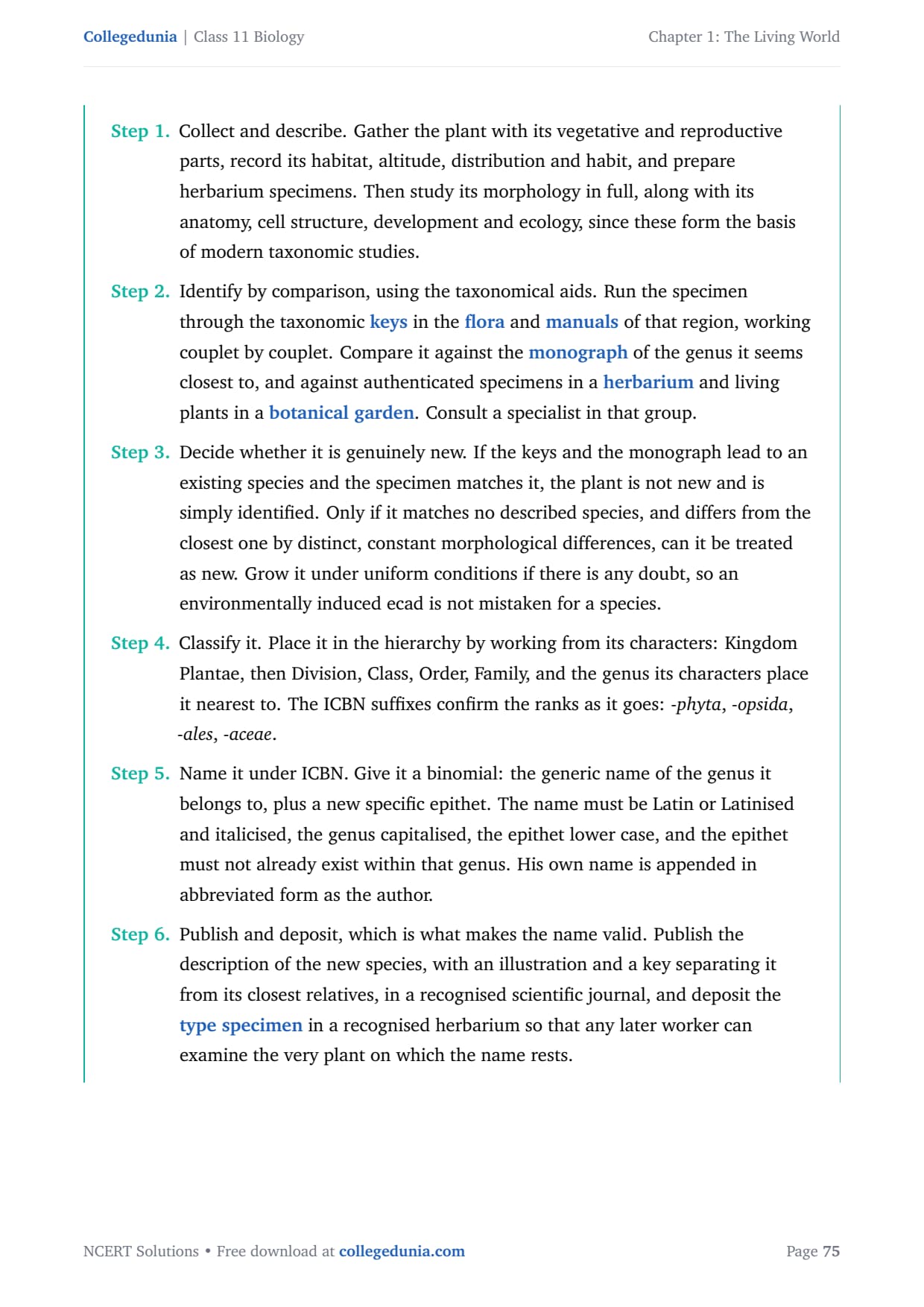
- Taxonomic categories and hierarchy: species, genus, family, order, class, phylum or division, and kingdom
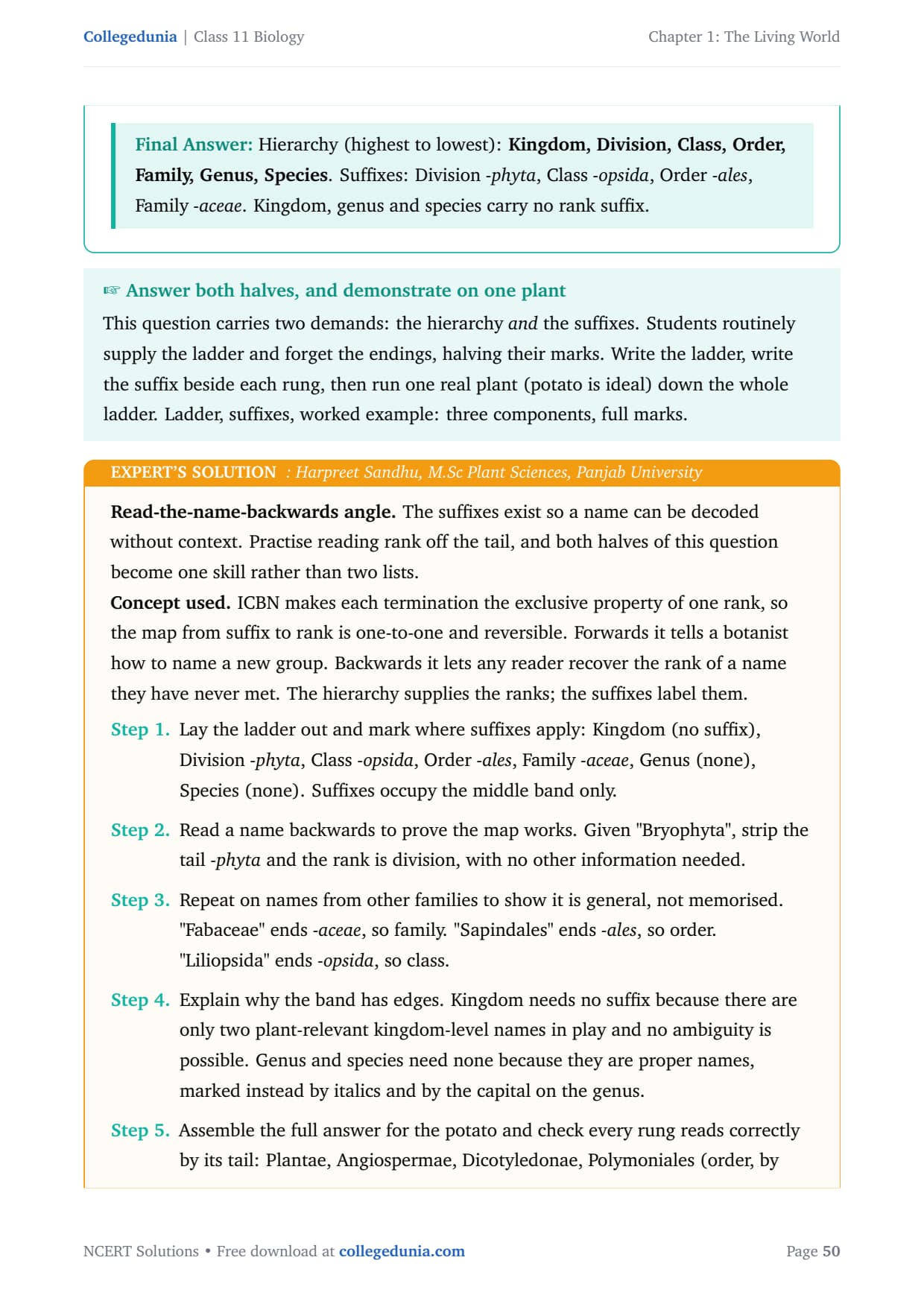
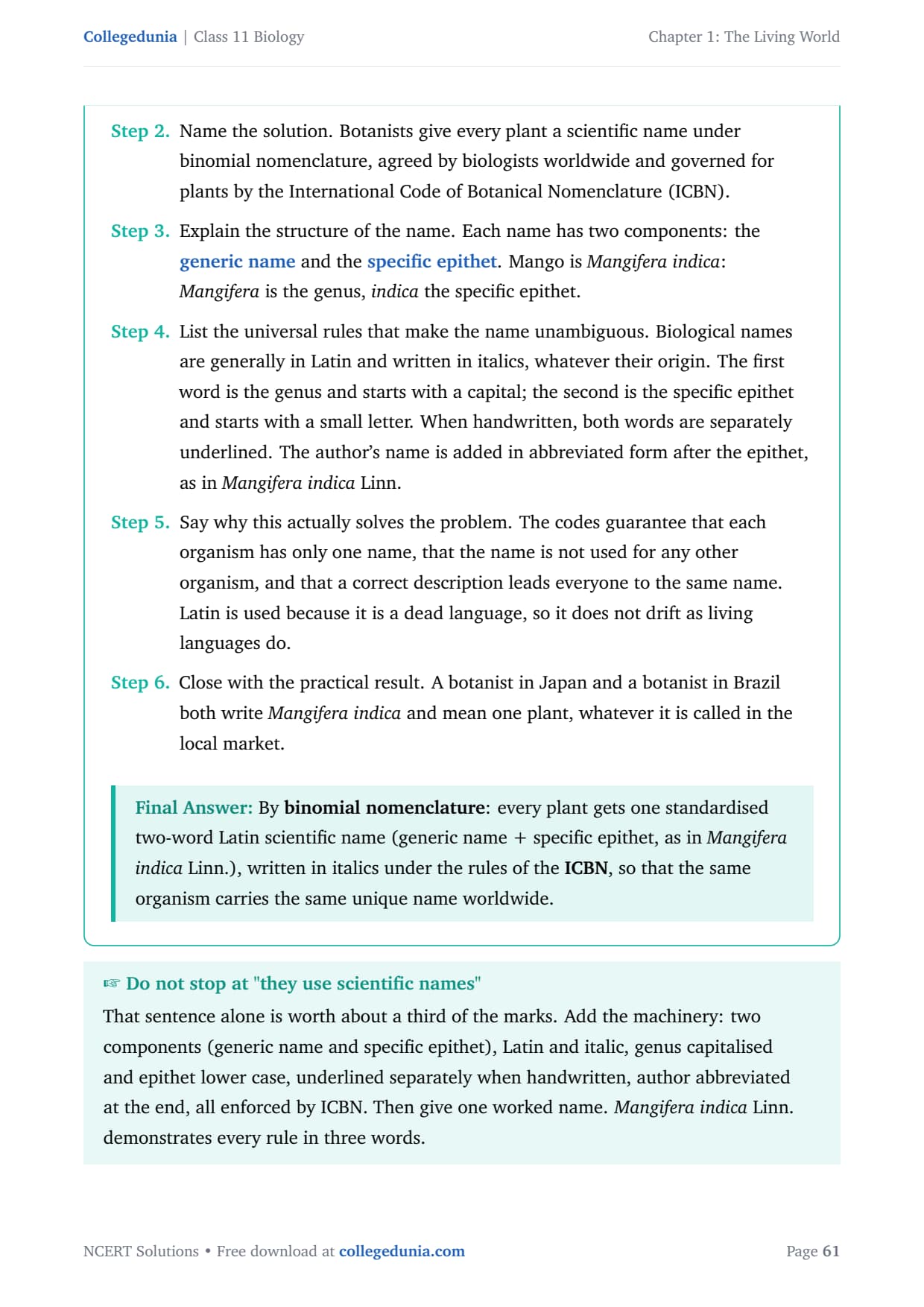
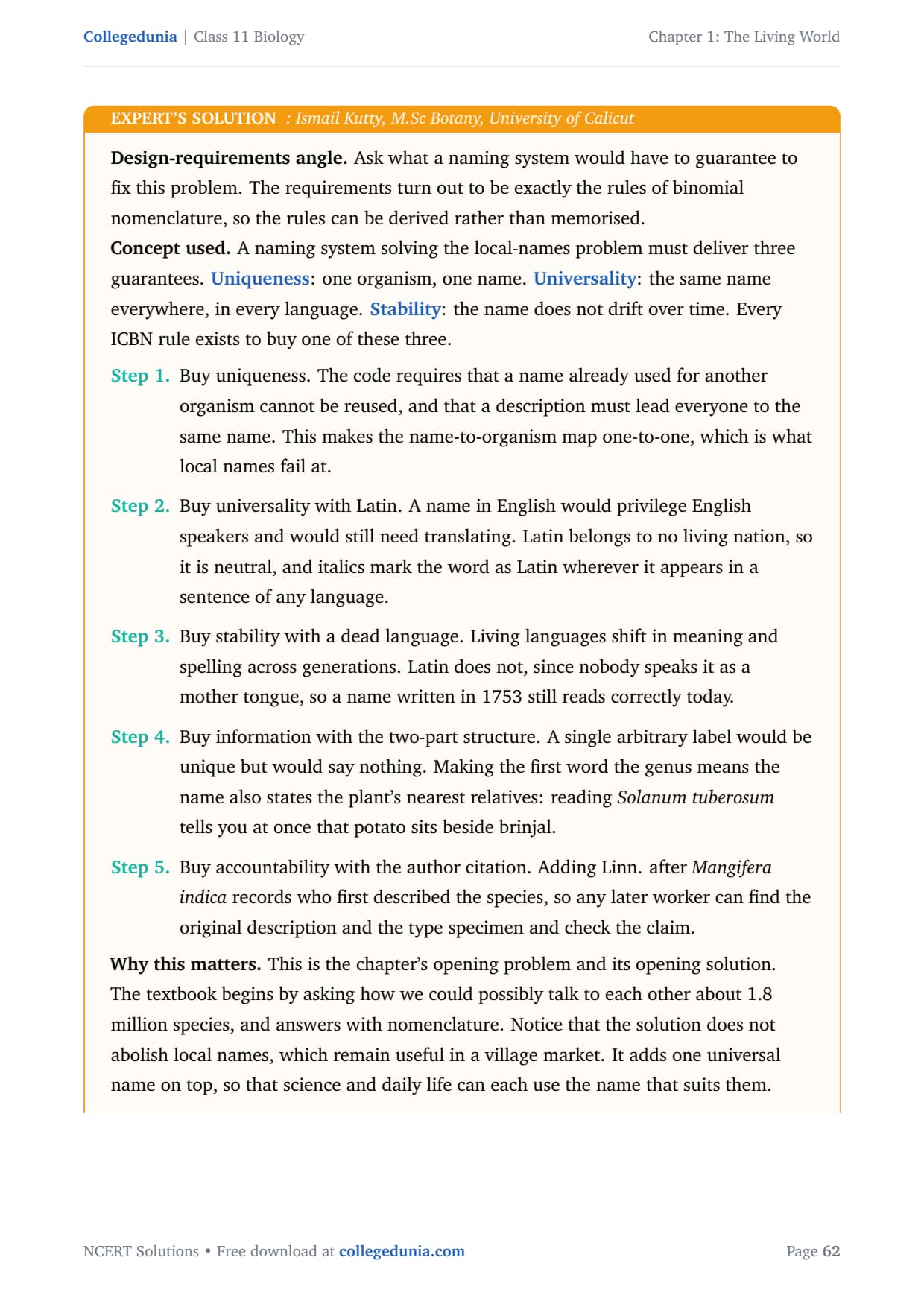
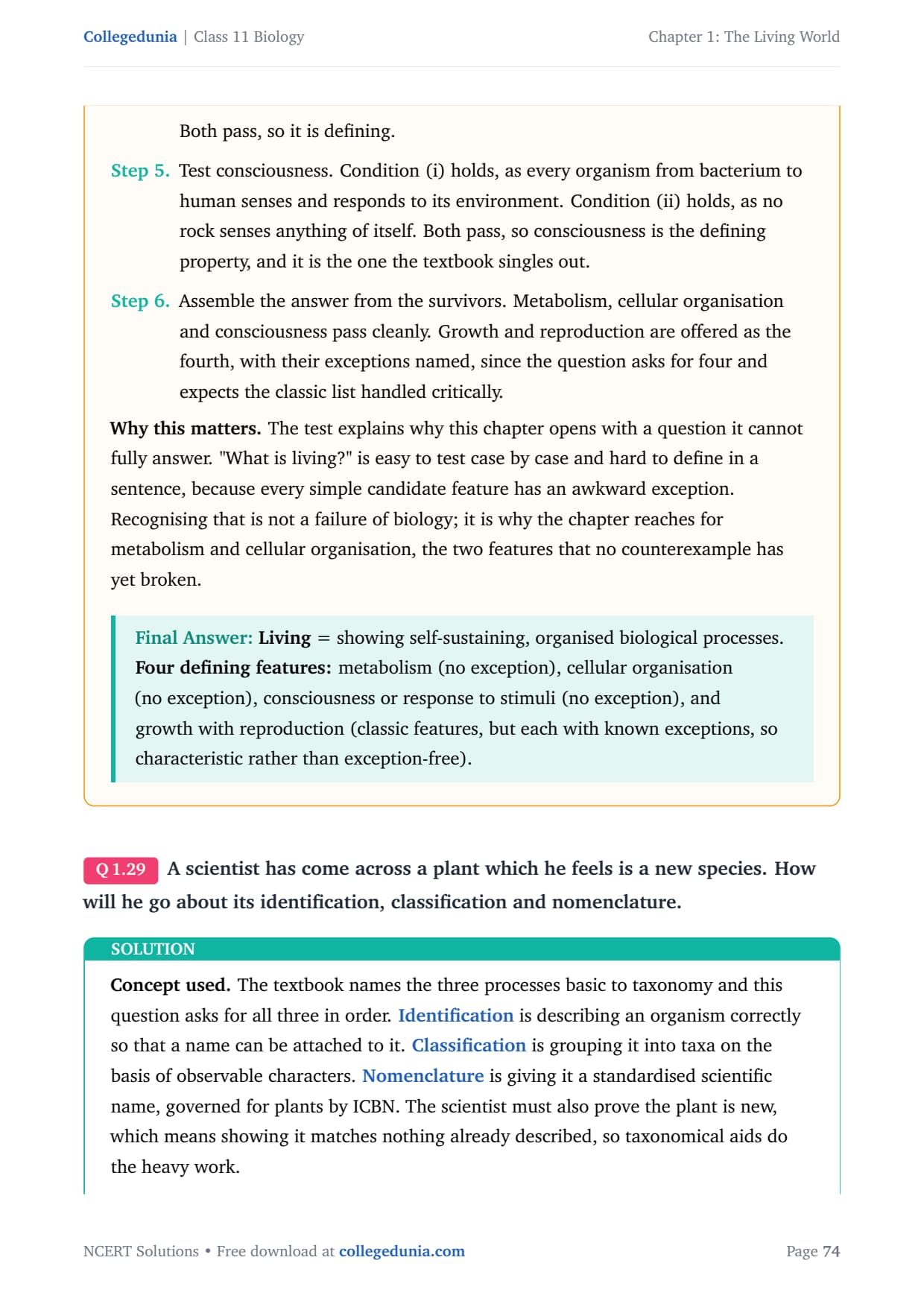
- Nomenclature and systematics: binomial nomenclature, the rules of ICBN and ICZN, and the meaning of systematics
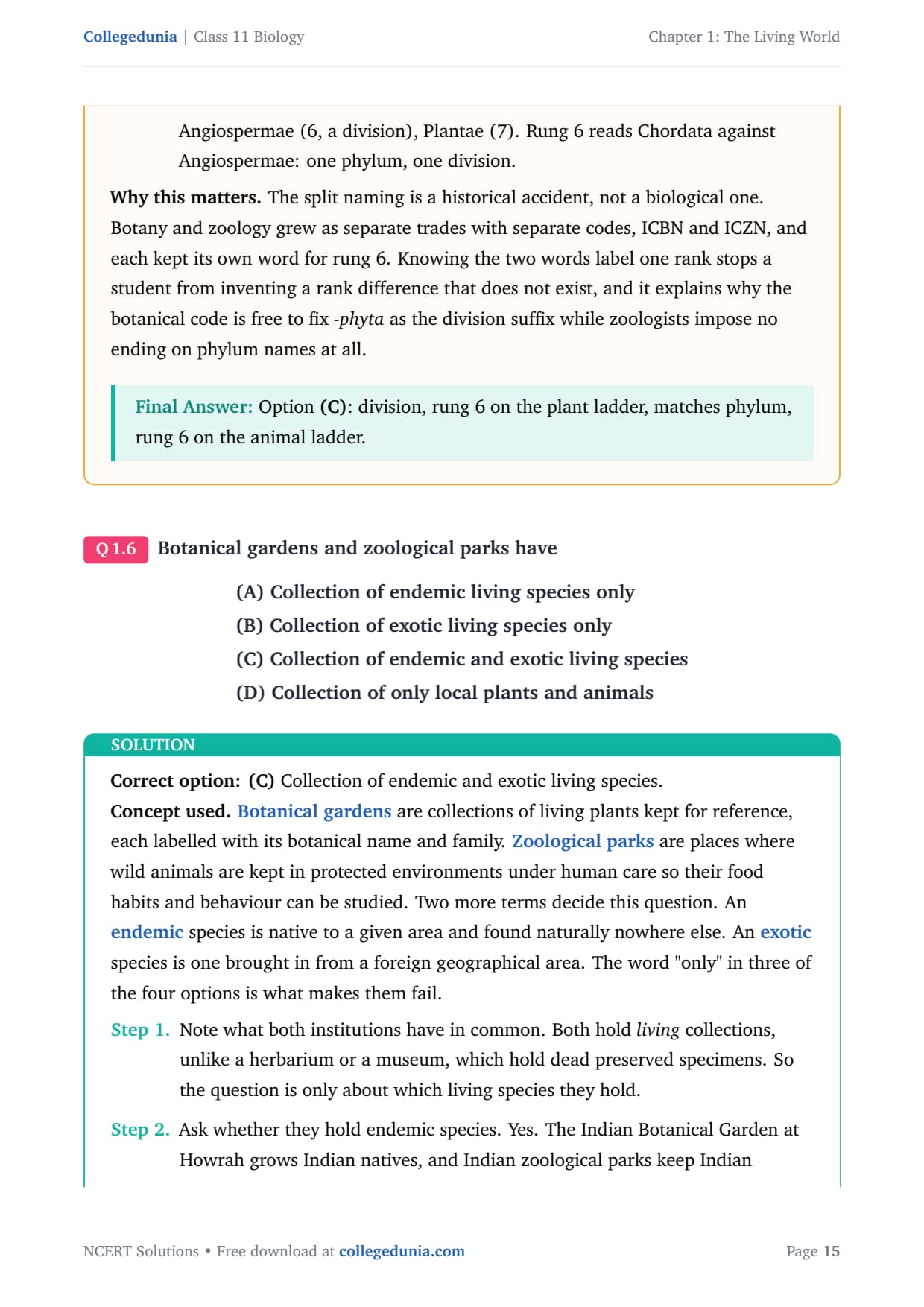
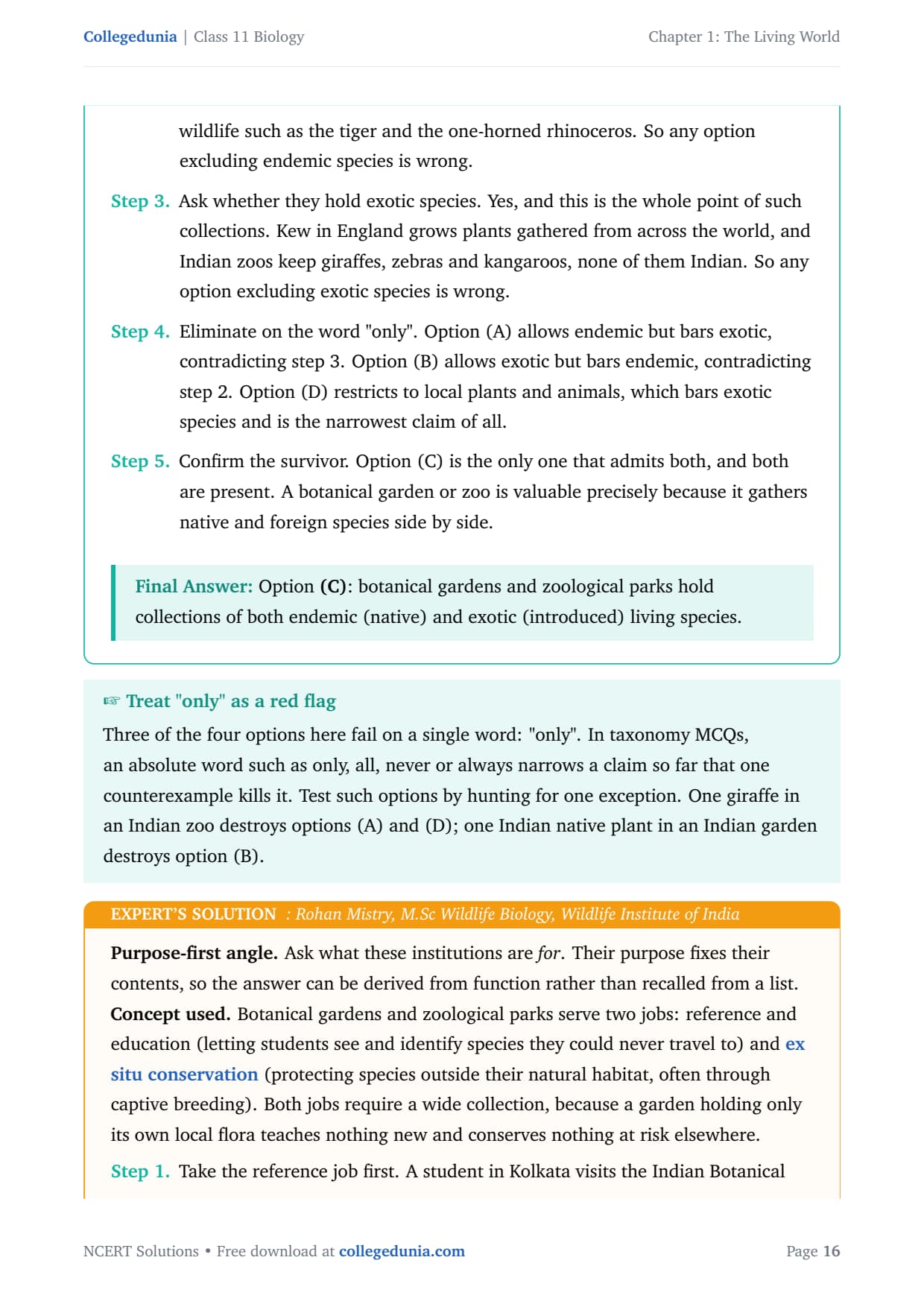
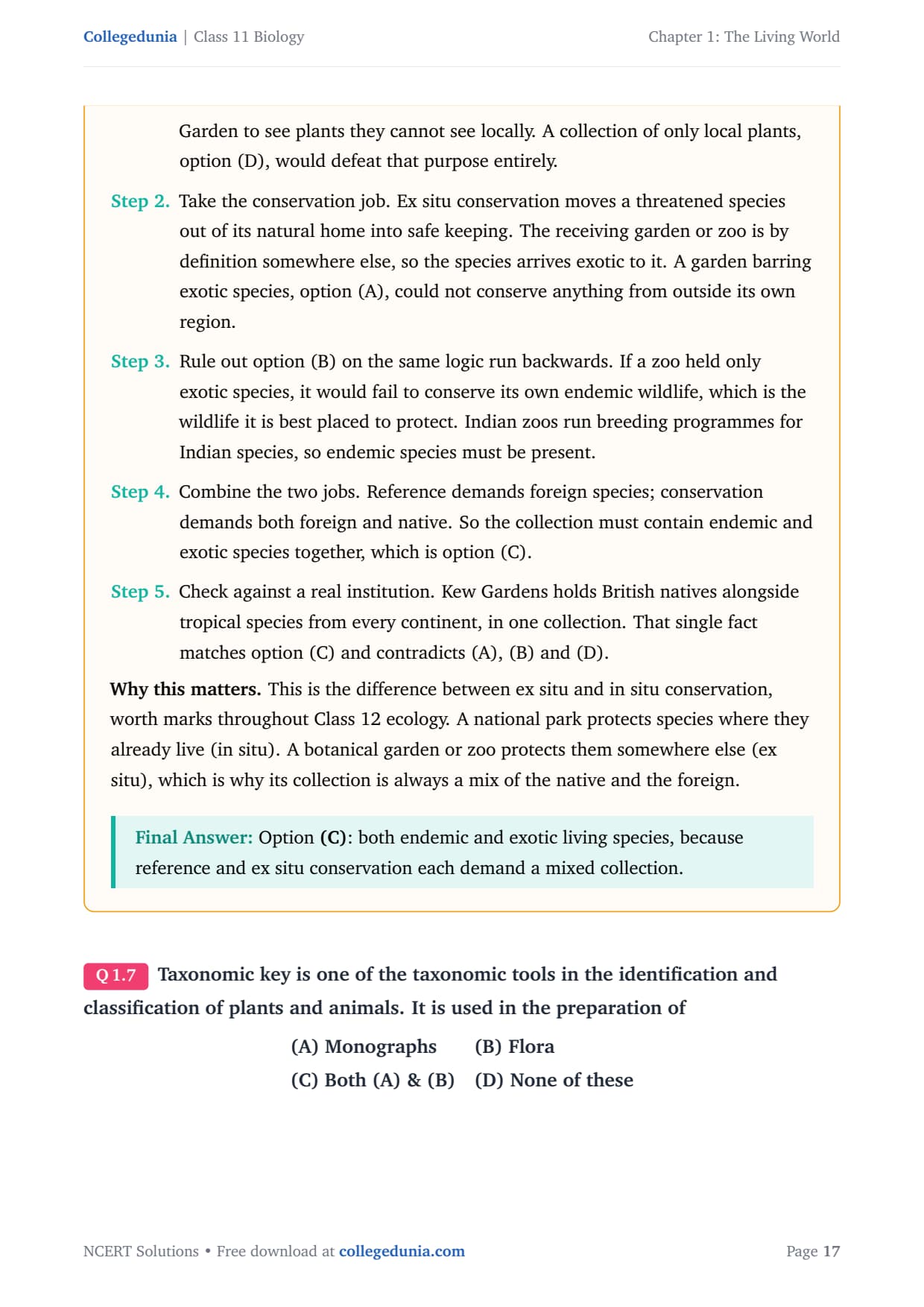
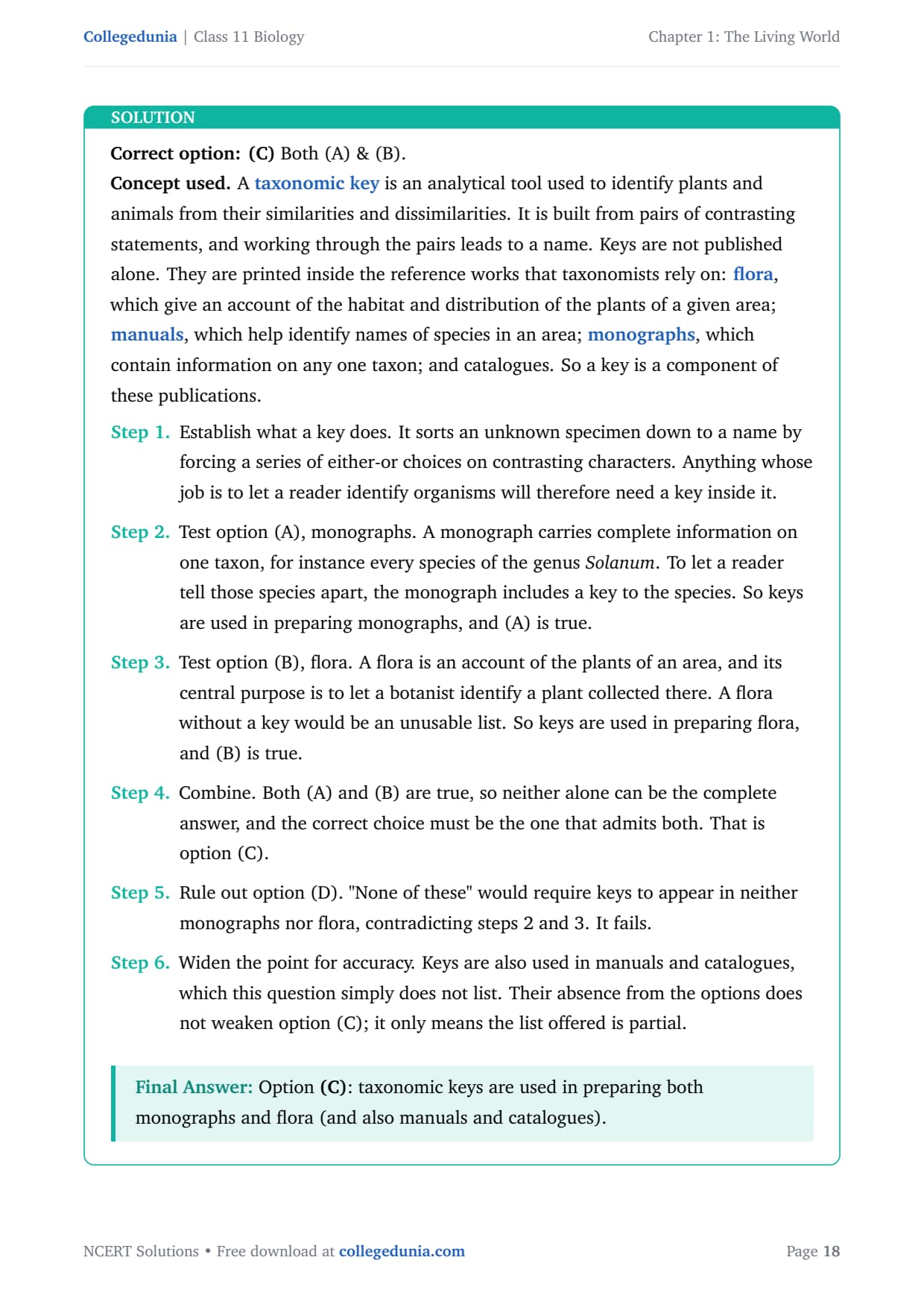
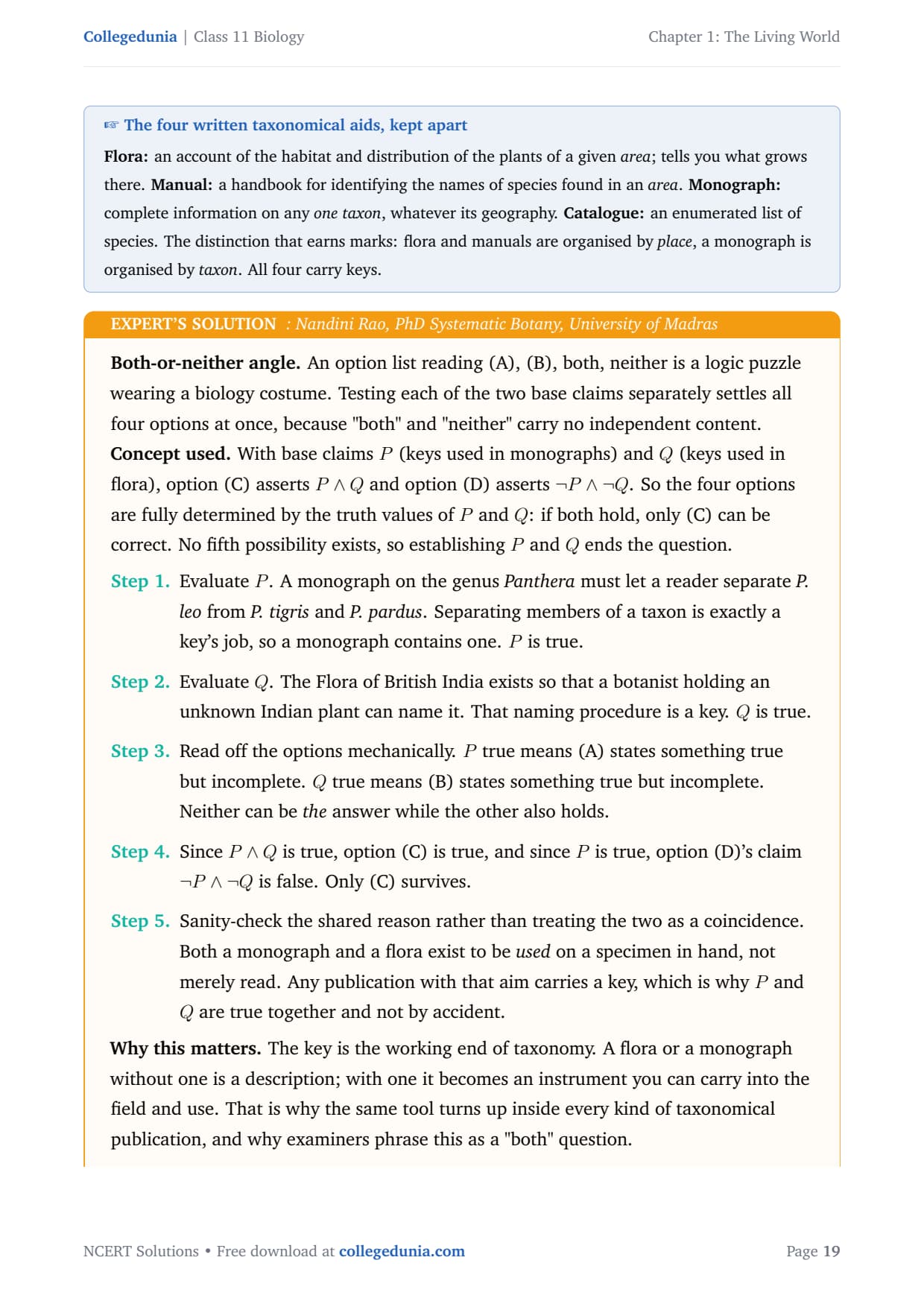
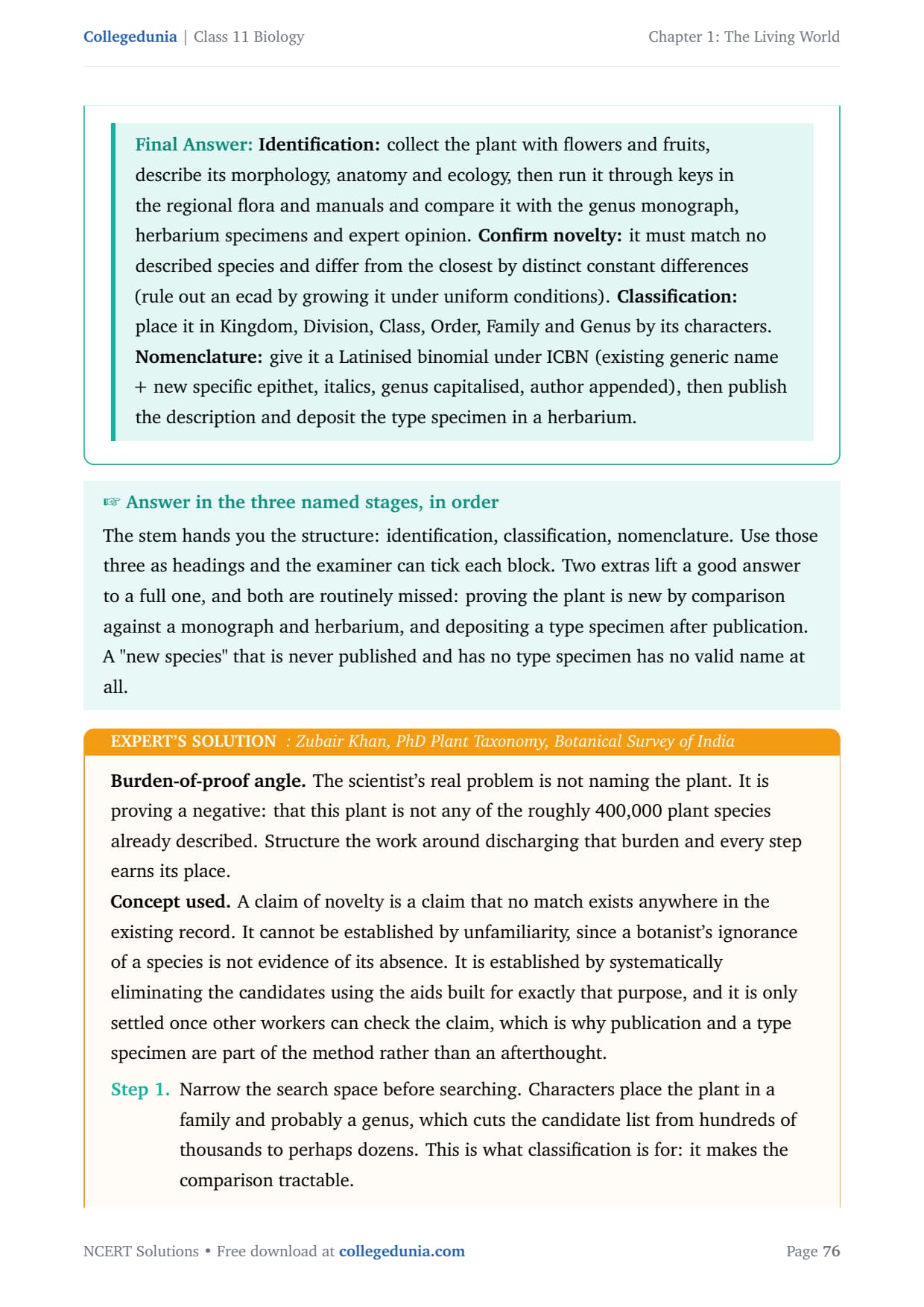
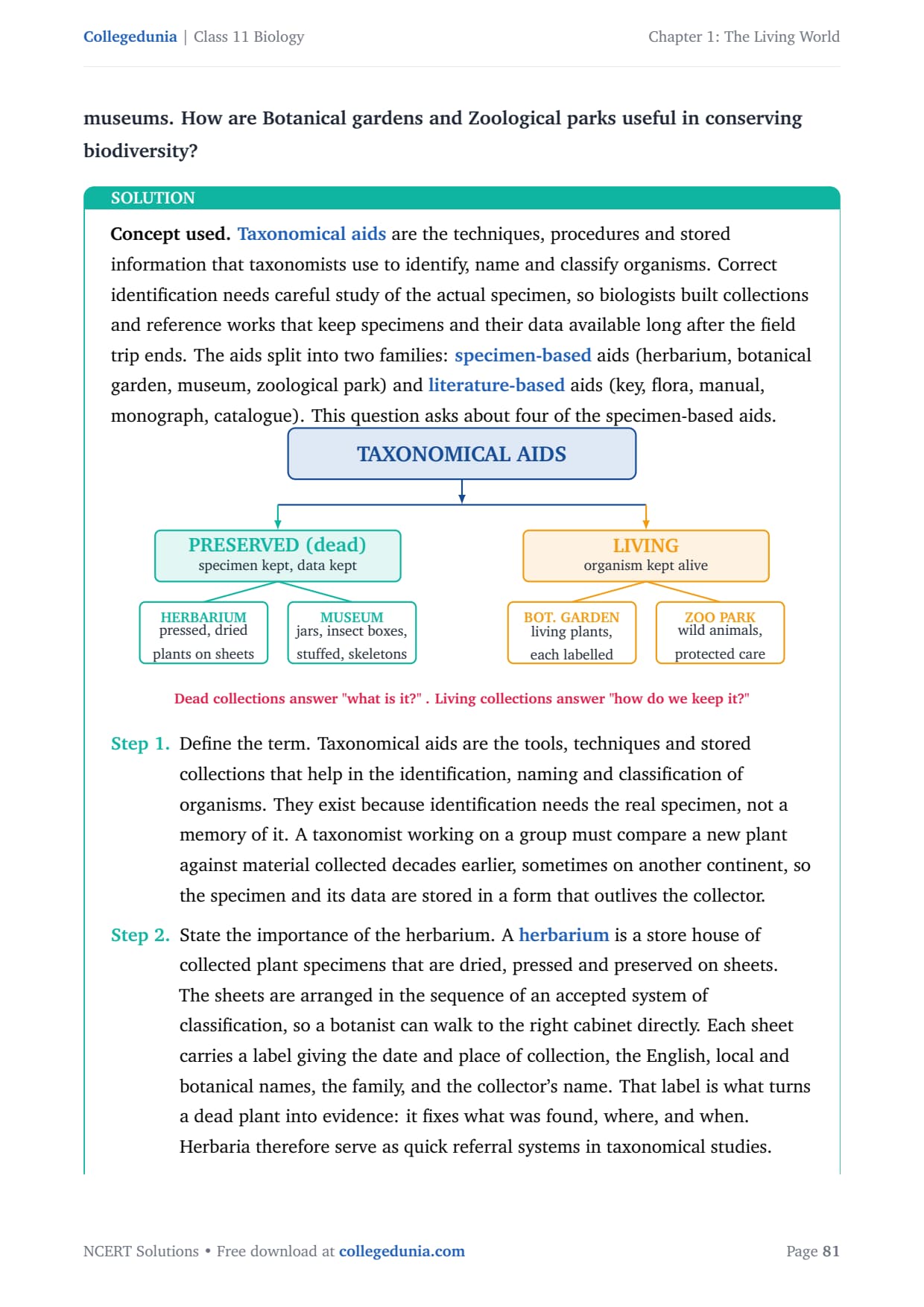
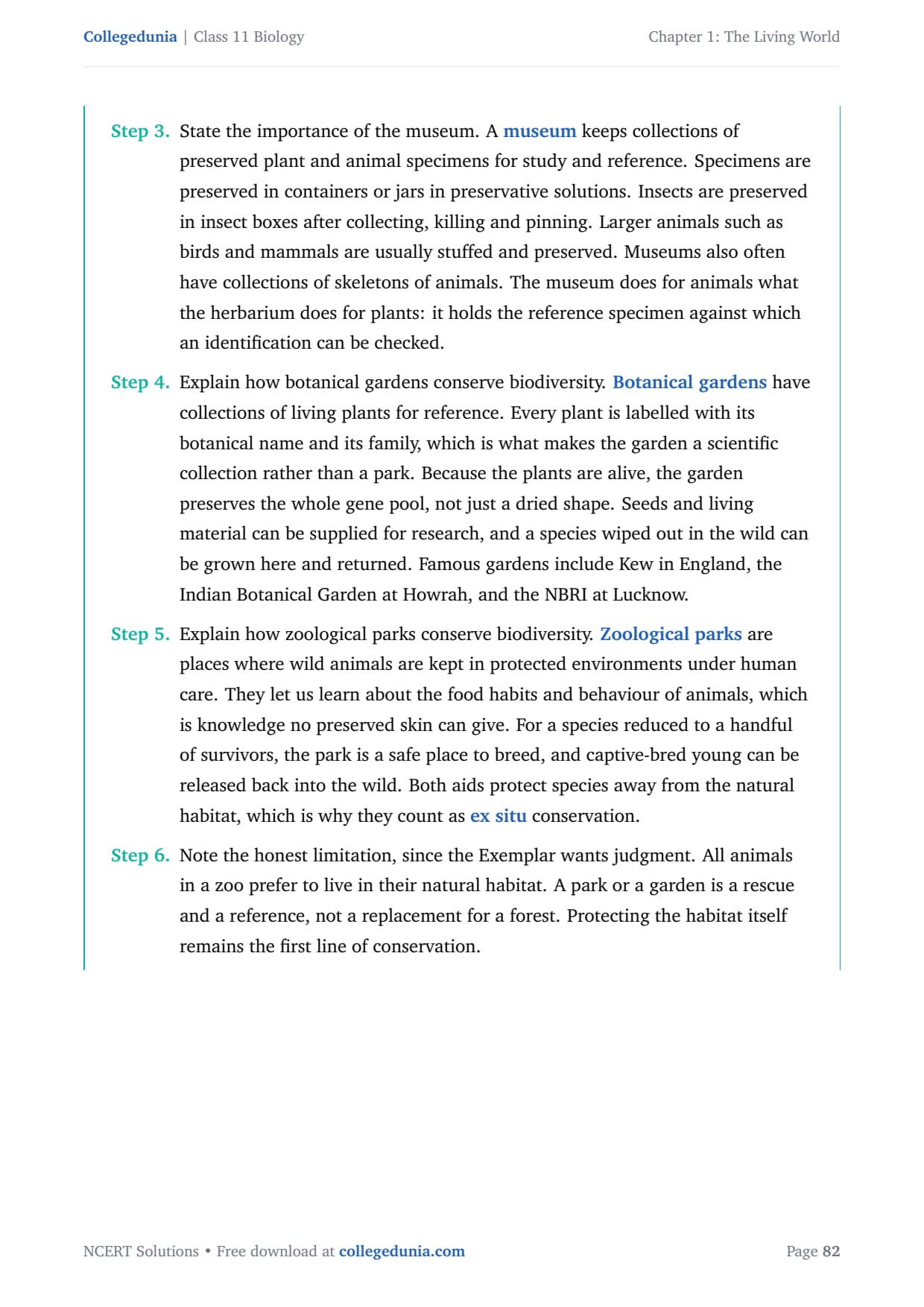
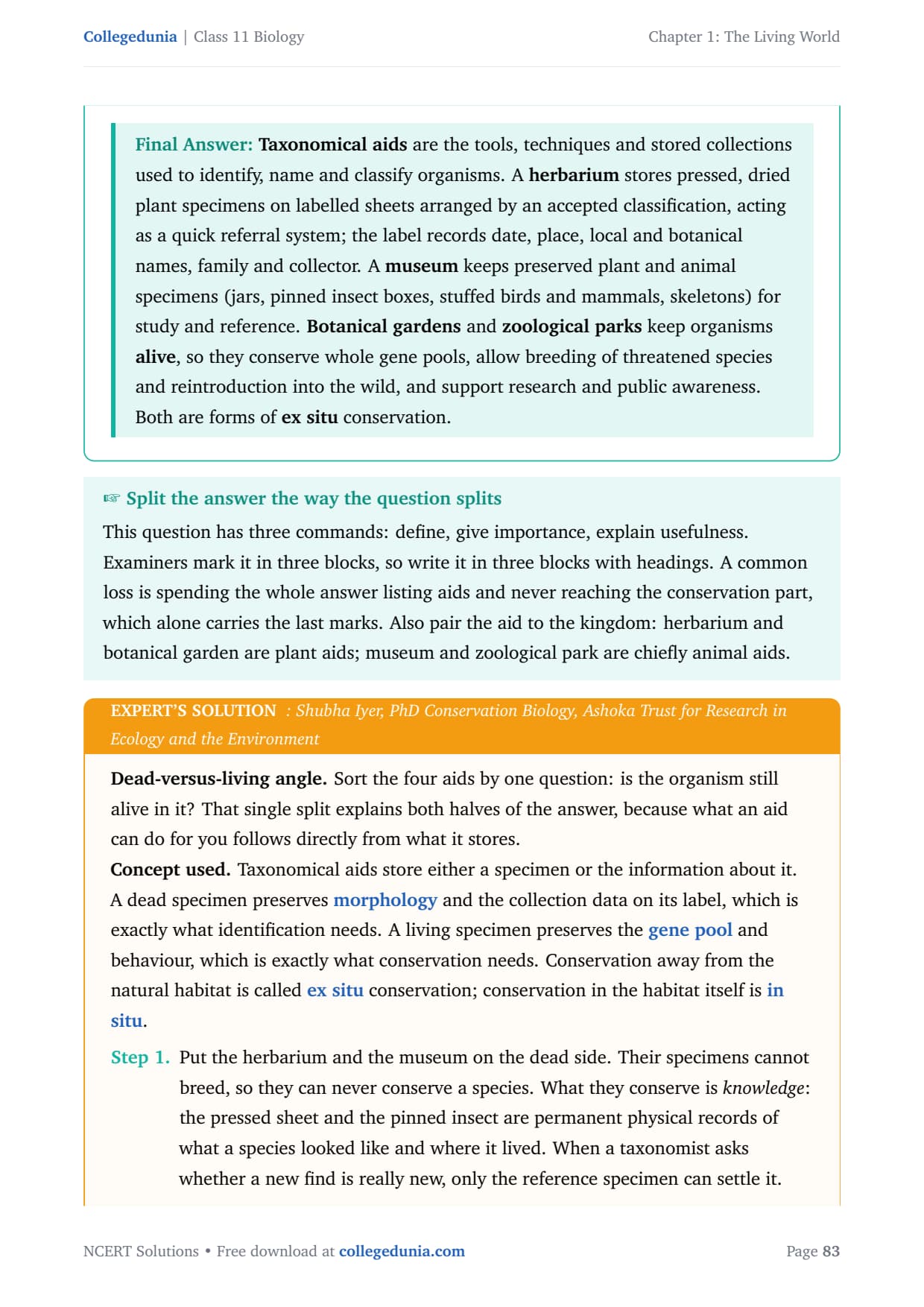
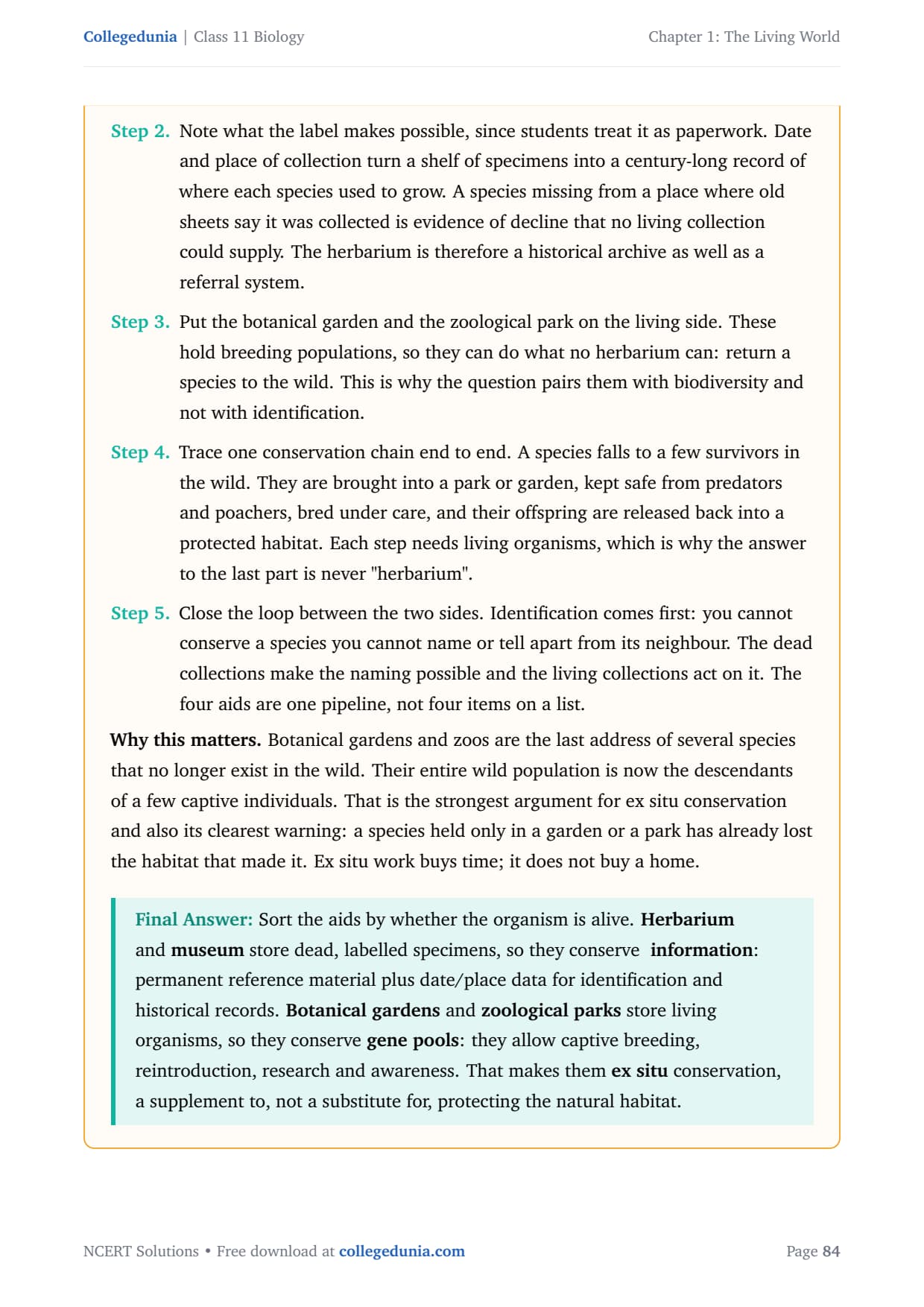
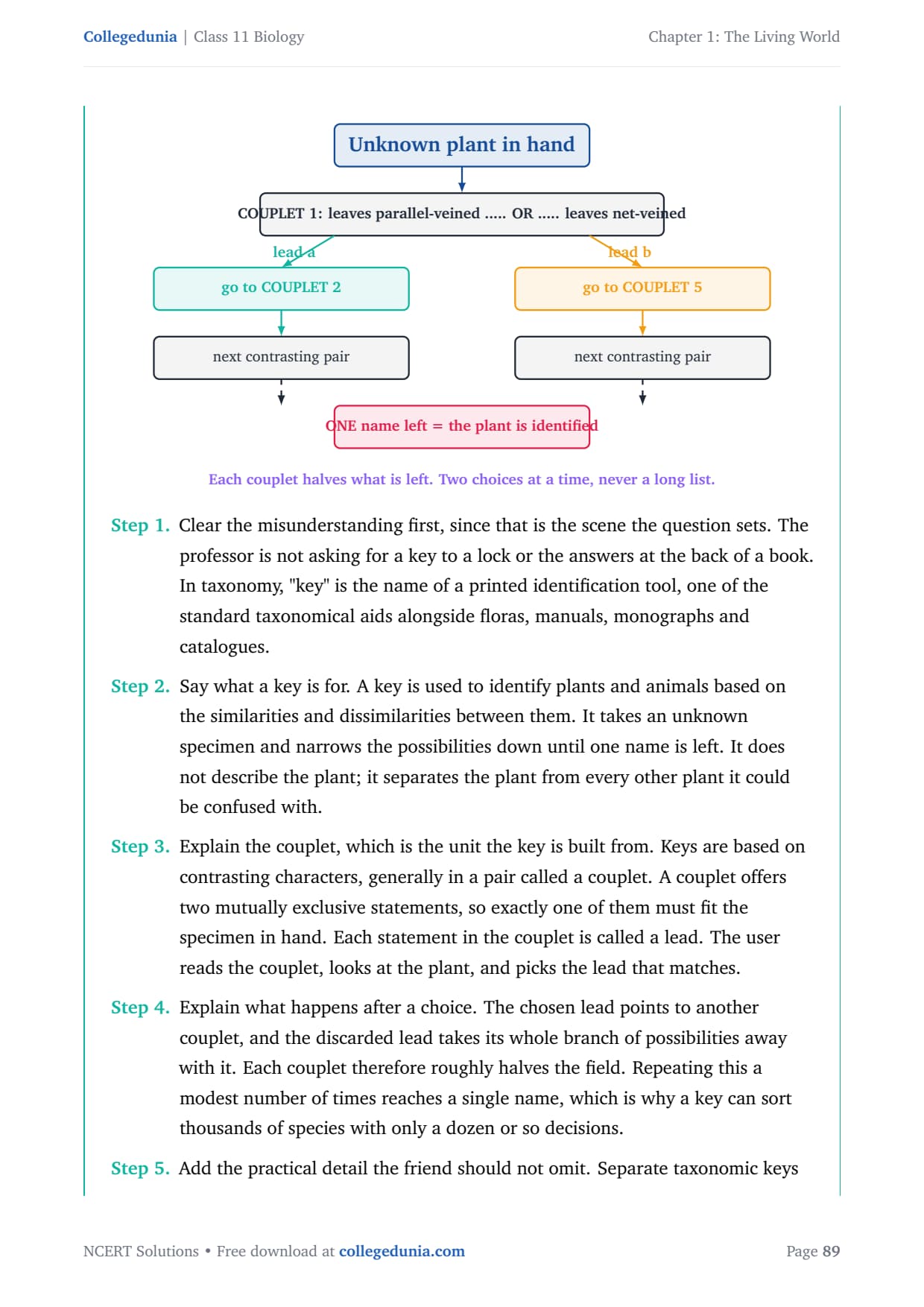
- Taxonomical aids: herbaria, botanical gardens, museums, zoological parks, keys, flora, manuals, monographs and catalogues
Question Types in the The Living World NCERT Exemplar
Class 11 Biology Exemplar chapters use four question types, and each one carries a different demand. The MCQ set looks easy until an option turns on a single word, while the Long Answer set asks you to build a full explanation rather than recall a phrase. The Short Answer questions are where most marks are won or lost, because they reward a precise definition and punish a vague one. The table below shows how the 37 questions split.
| Question Type | Count | What It Tests |
|---|---|---|
| MCQ (single correct) | 10 | Precise reading of taxonomy and nomenclature terms |
| VSA (Very Short Answer) | 7 | One-line definitions and full forms such as ICZN |
| SA (Short Answer) | 10 | Distinguishing look-alike terms like flora, fauna and vegetation |
| LA (Long Answer) | 10 | Building a definition of life or a full taxonomic hierarchy |
Growth, Reproduction and What Counts as Living
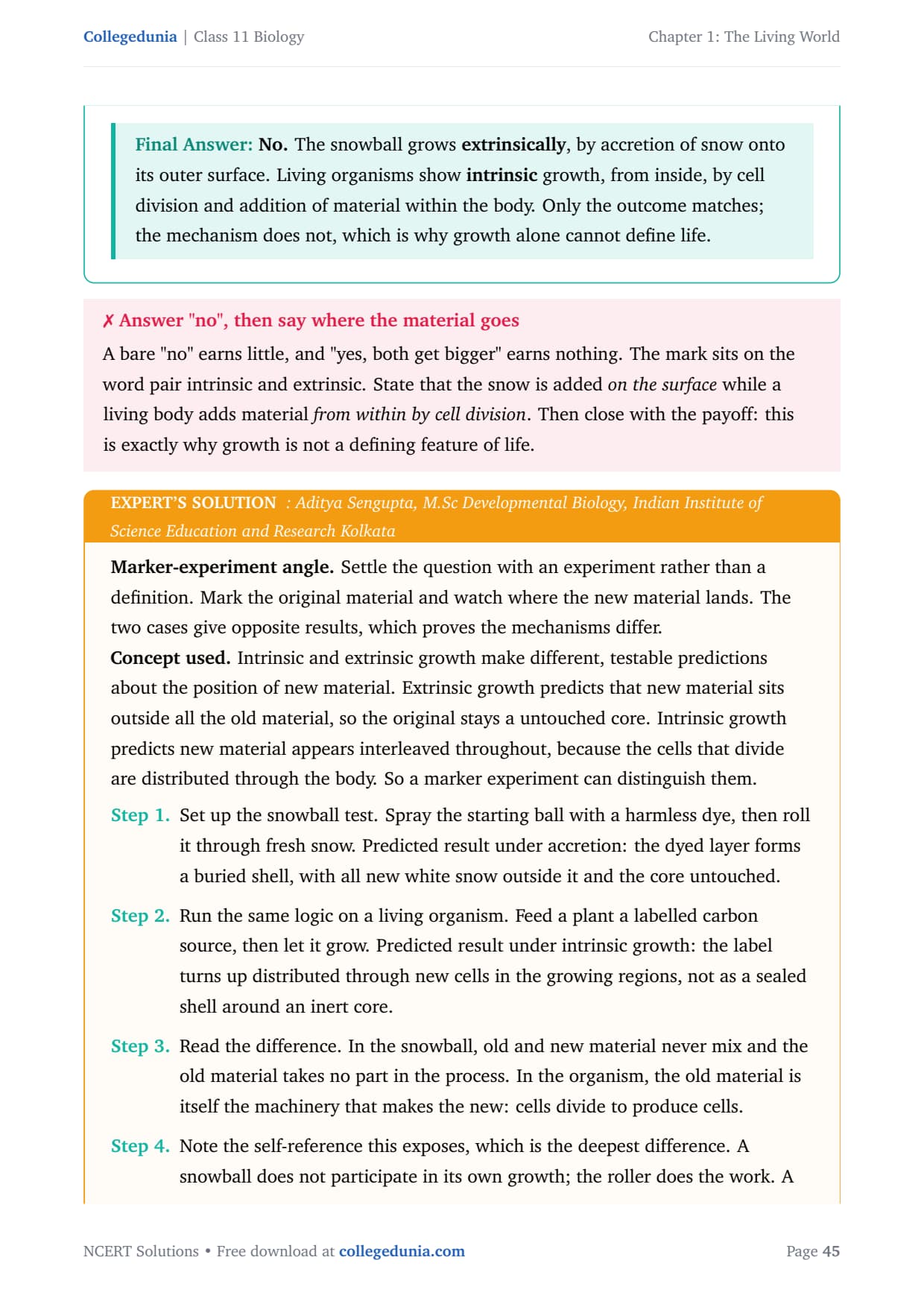
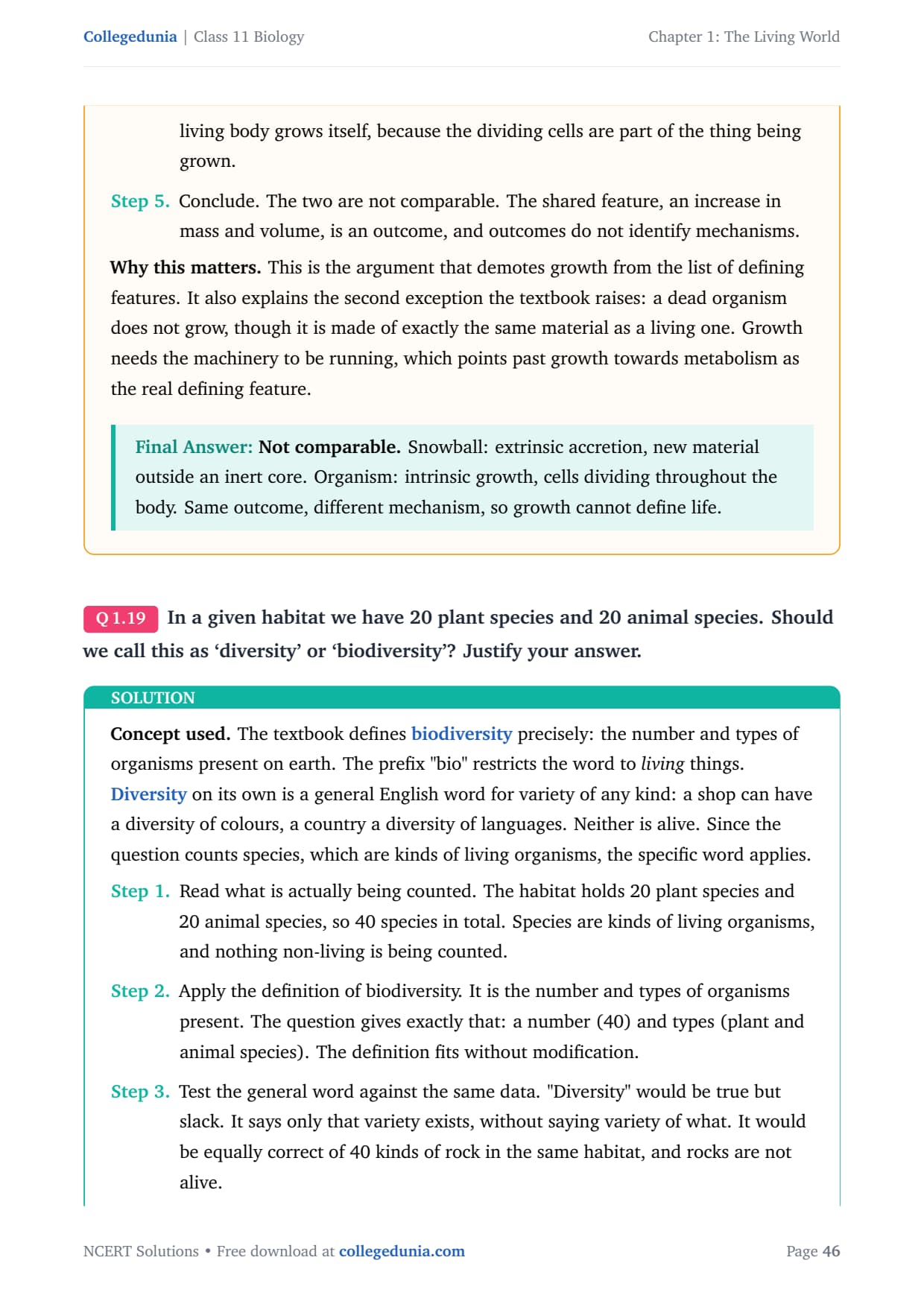
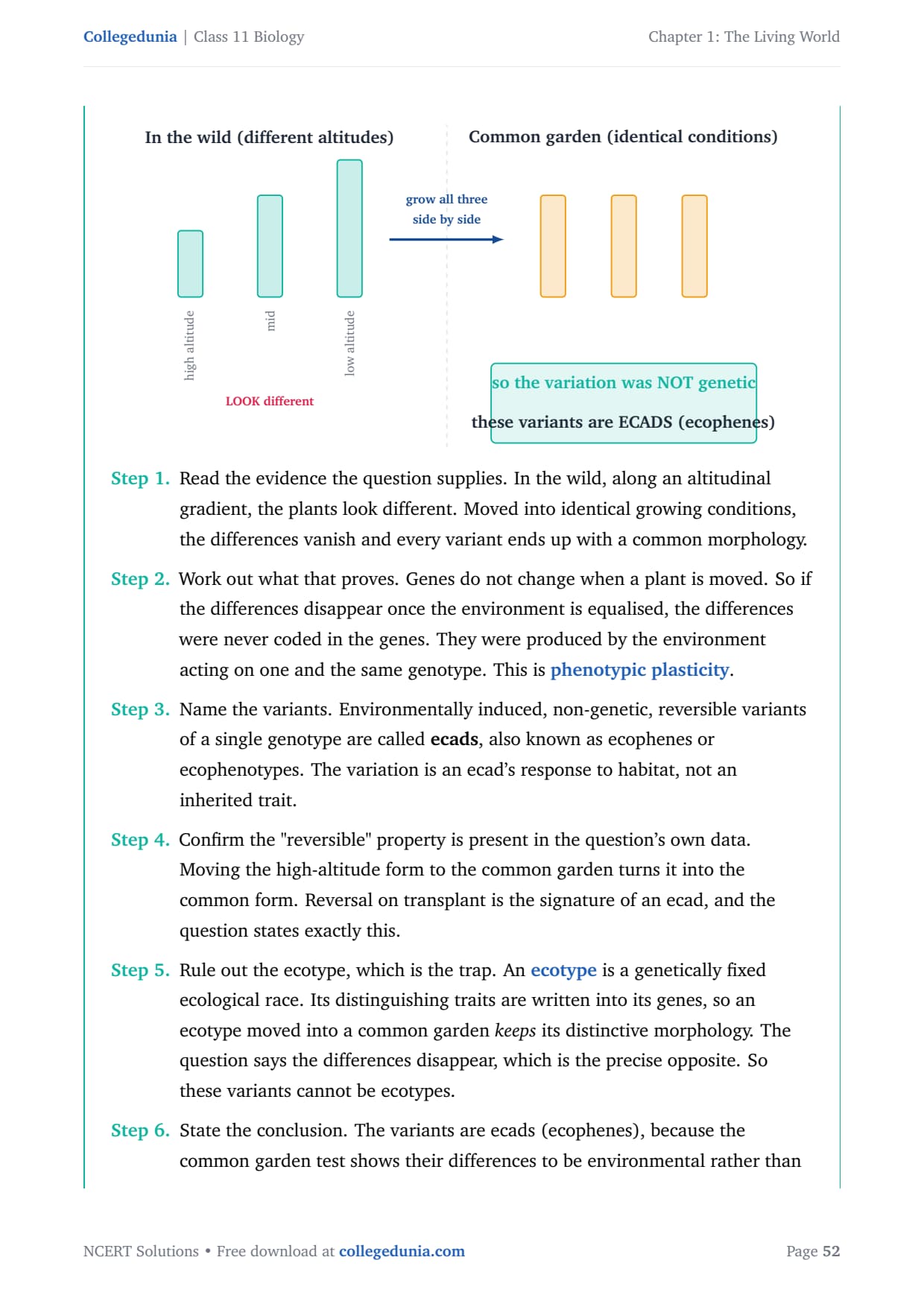
The hardest questions in this chapter are not about names at all. They ask you to decide whether something is alive, and the Exemplar builds several problems around the traps in that decision. A ball of snow rolled over snow gains mass and volume, yet it is not living, because growth from outside is not the same as growth from inside. This single distinction settles more than one question here, so it is worth learning as a rule rather than a fact.
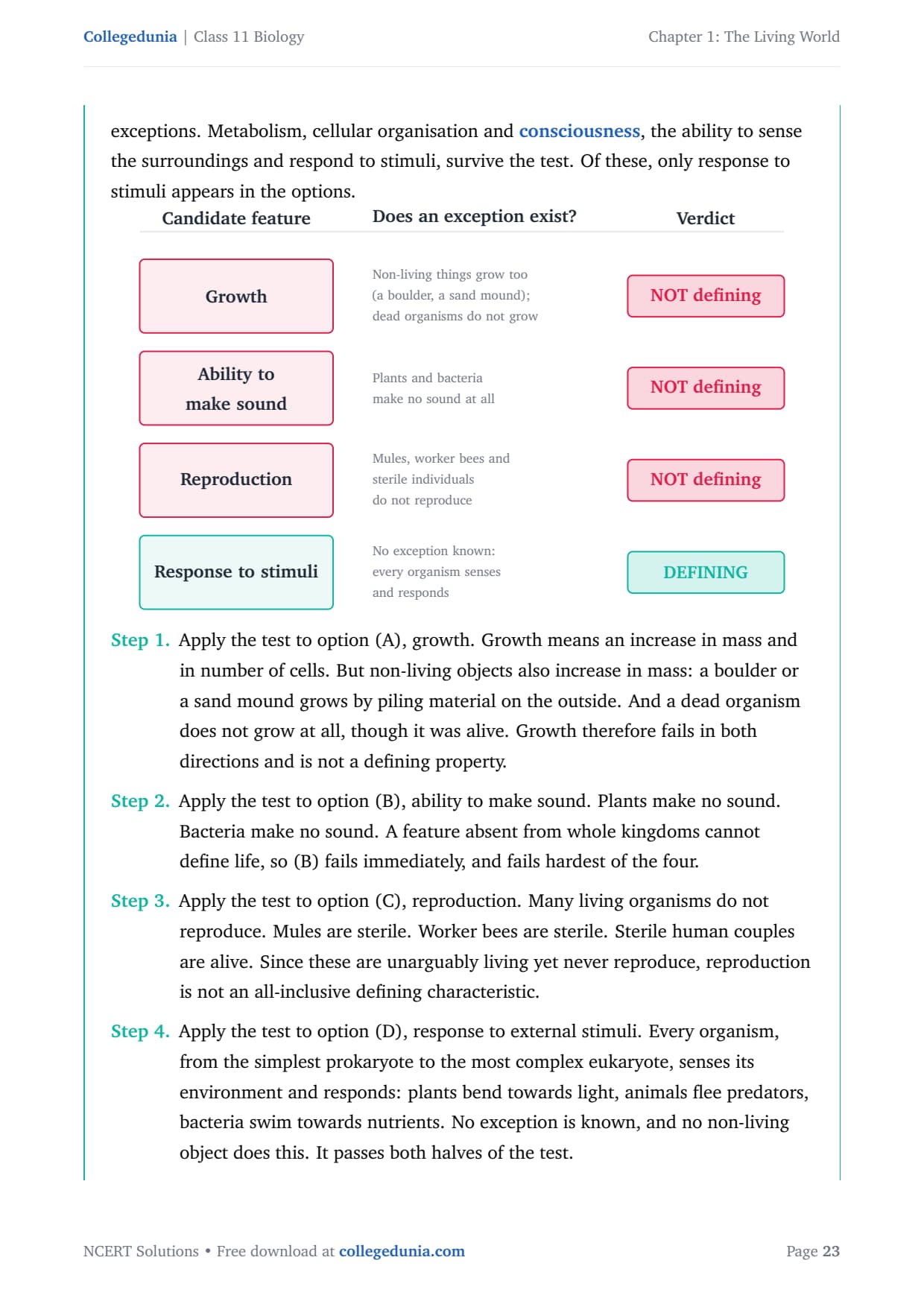
- Growth is not proof of life: non-living things like a snowball or a mountain grow by accumulation from outside, while living things grow from inside by cell division
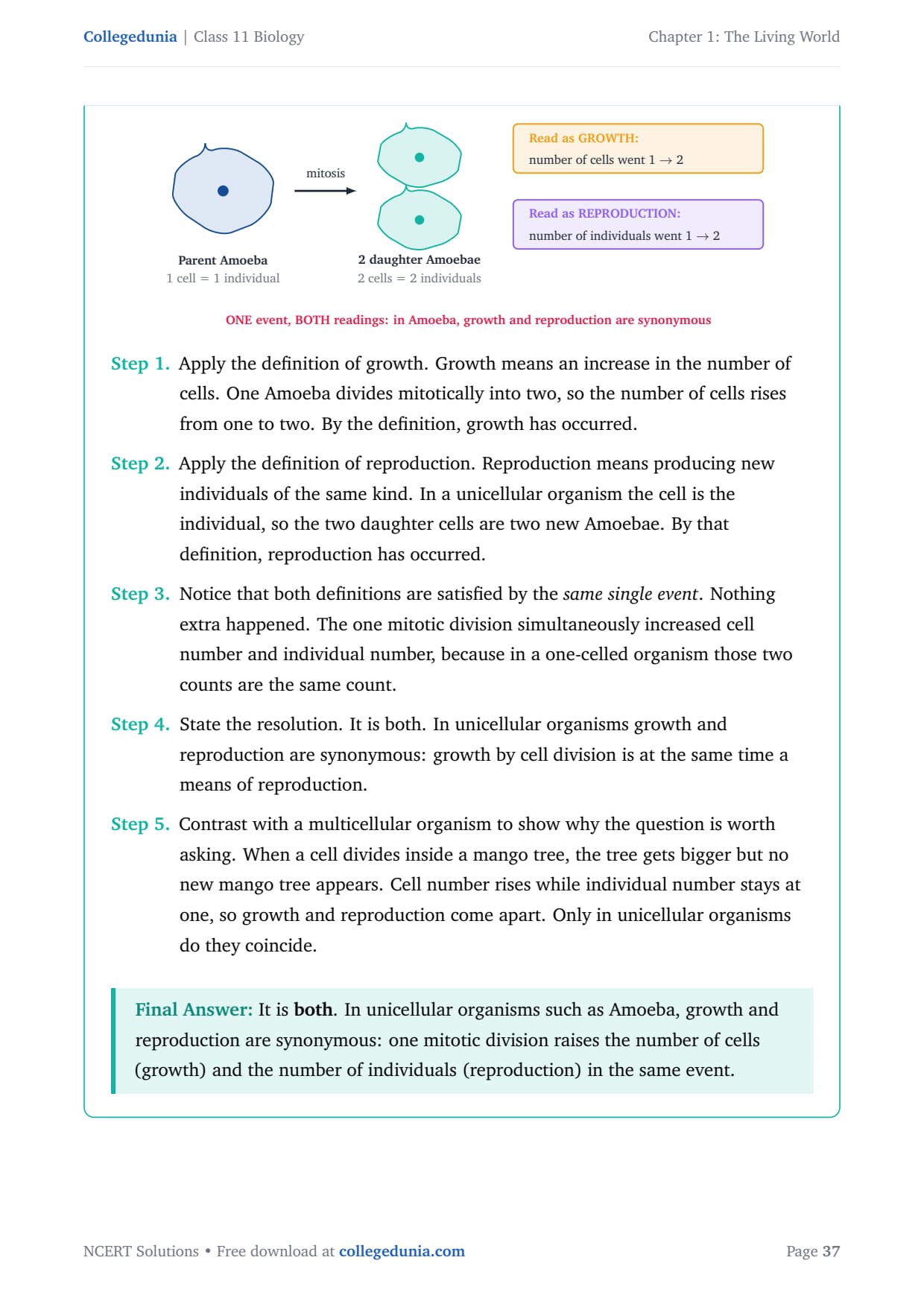
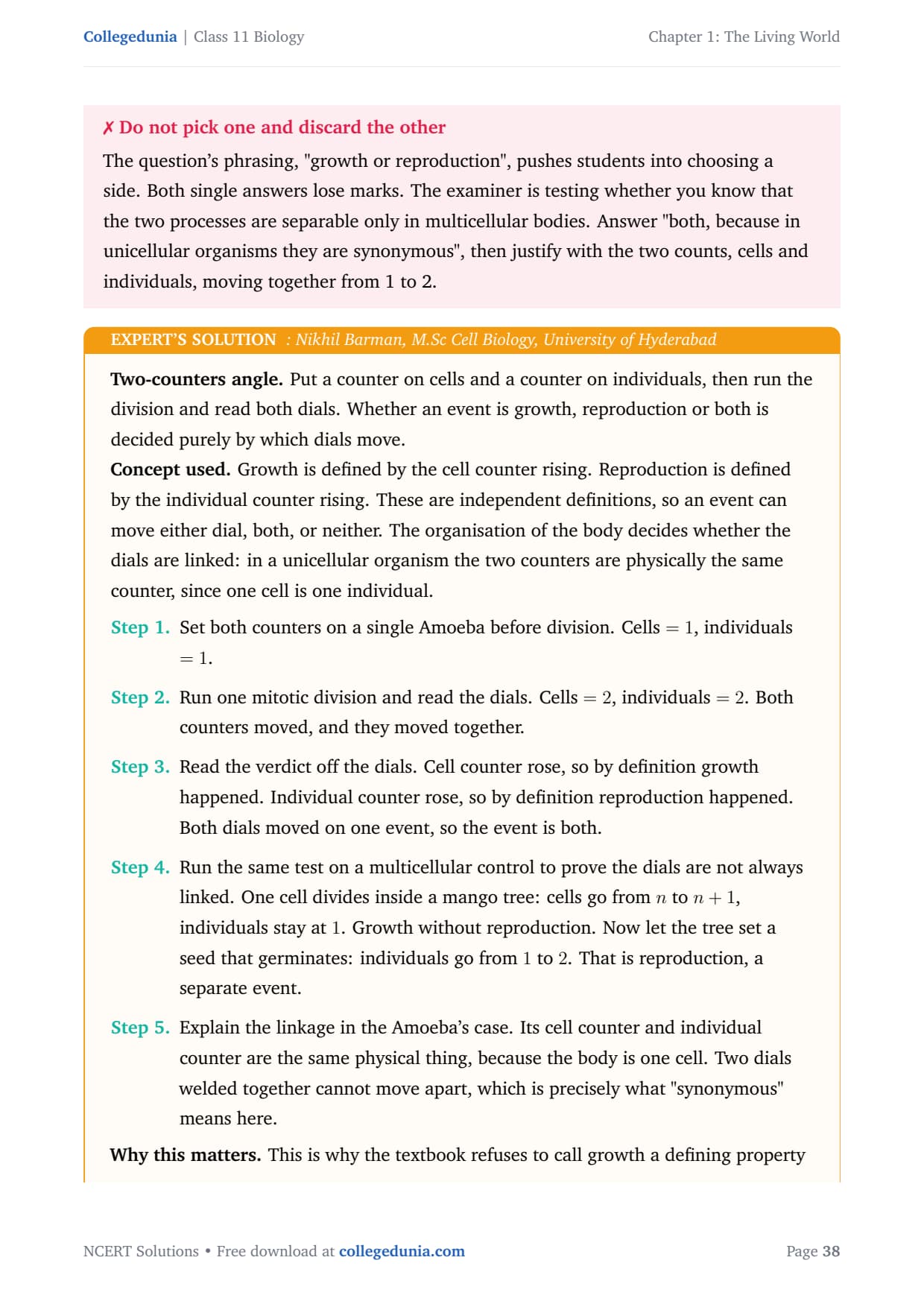
- Amoeba and growth: in single-celled organisms, increase in cell number by mitosis is counted as both growth and reproduction, so the two features overlap
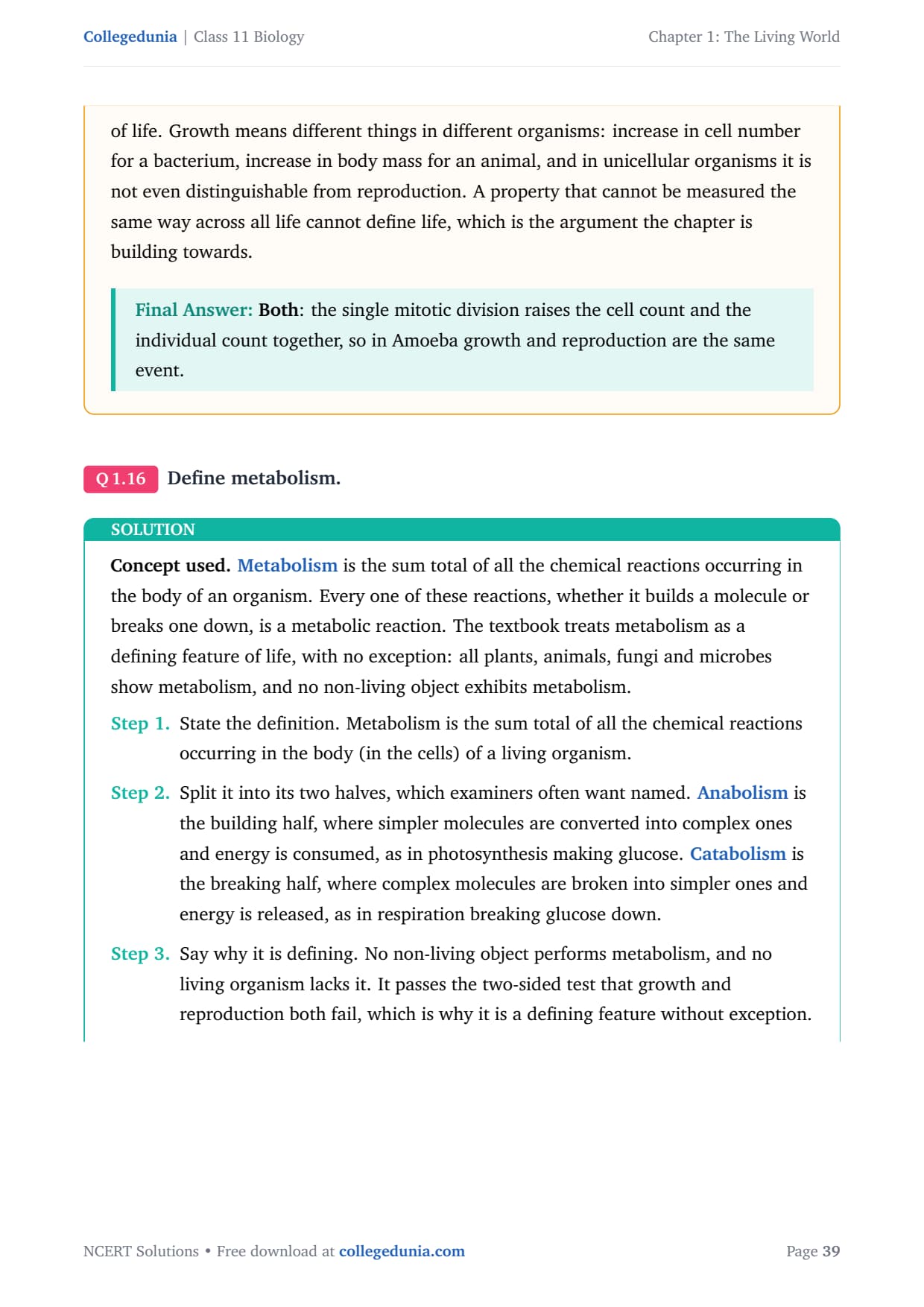
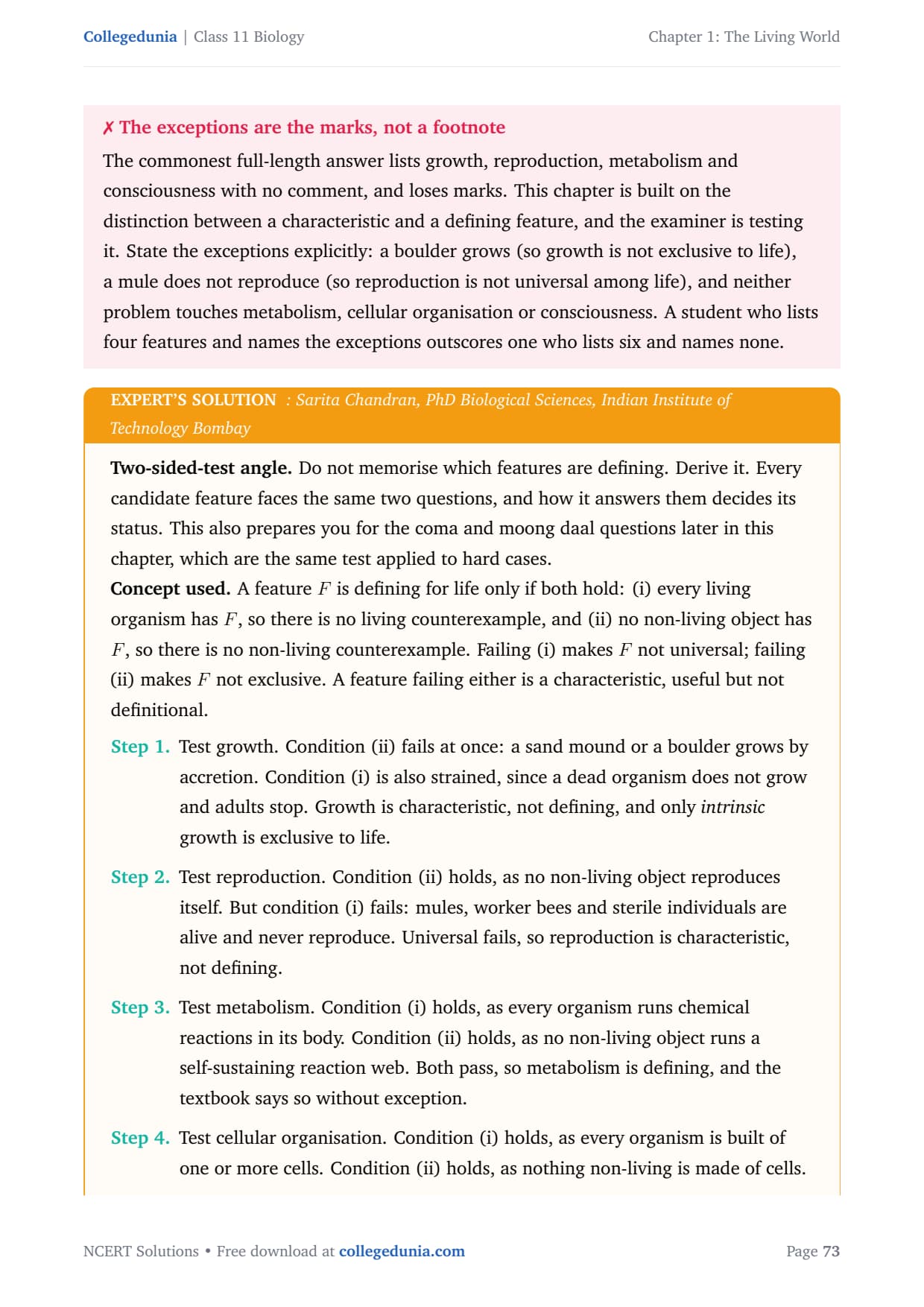
- Metabolism is the only universal feature: reproduction fails as a definition because mules and sterile individuals do not reproduce, yet they are clearly alive
- Consciousness is the defining property: the Exemplar treats the ability to sense and respond to the environment as the feature that finally separates the living from the non-living
No single feature defines life on its own, and the Exemplar makes you prove it. A person in a coma still counts as living because metabolism continues, even when consciousness is lost. Each answer in the PDF states which feature is doing the work and why the tempting one is not enough.
Common Mistakes Students Make in The Living World
The Exemplar plants wrong options and half-right definitions on purpose. Four errors catch most students in this chapter, and each is flagged in the PDF at the exact question where it appears. Learning to spot them early saves marks across the whole taxonomy unit, because the same distinctions return in Biological Classification, Plant Kingdom and Animal Kingdom.
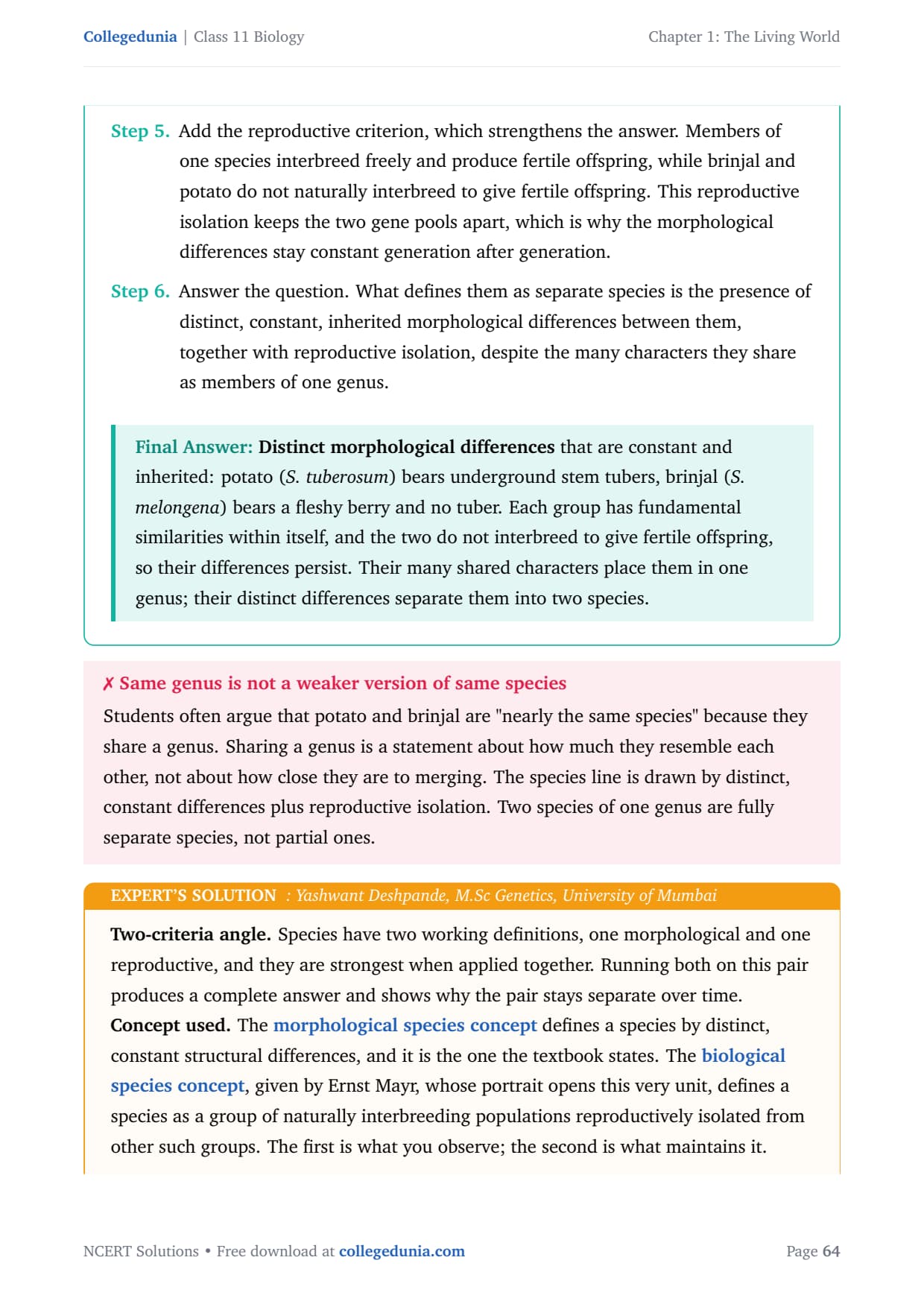
- Taxonomy against systematics: taxonomy is the science of classification, while systematics also studies the evolutionary relationships between organisms. Systematics is the wider term.
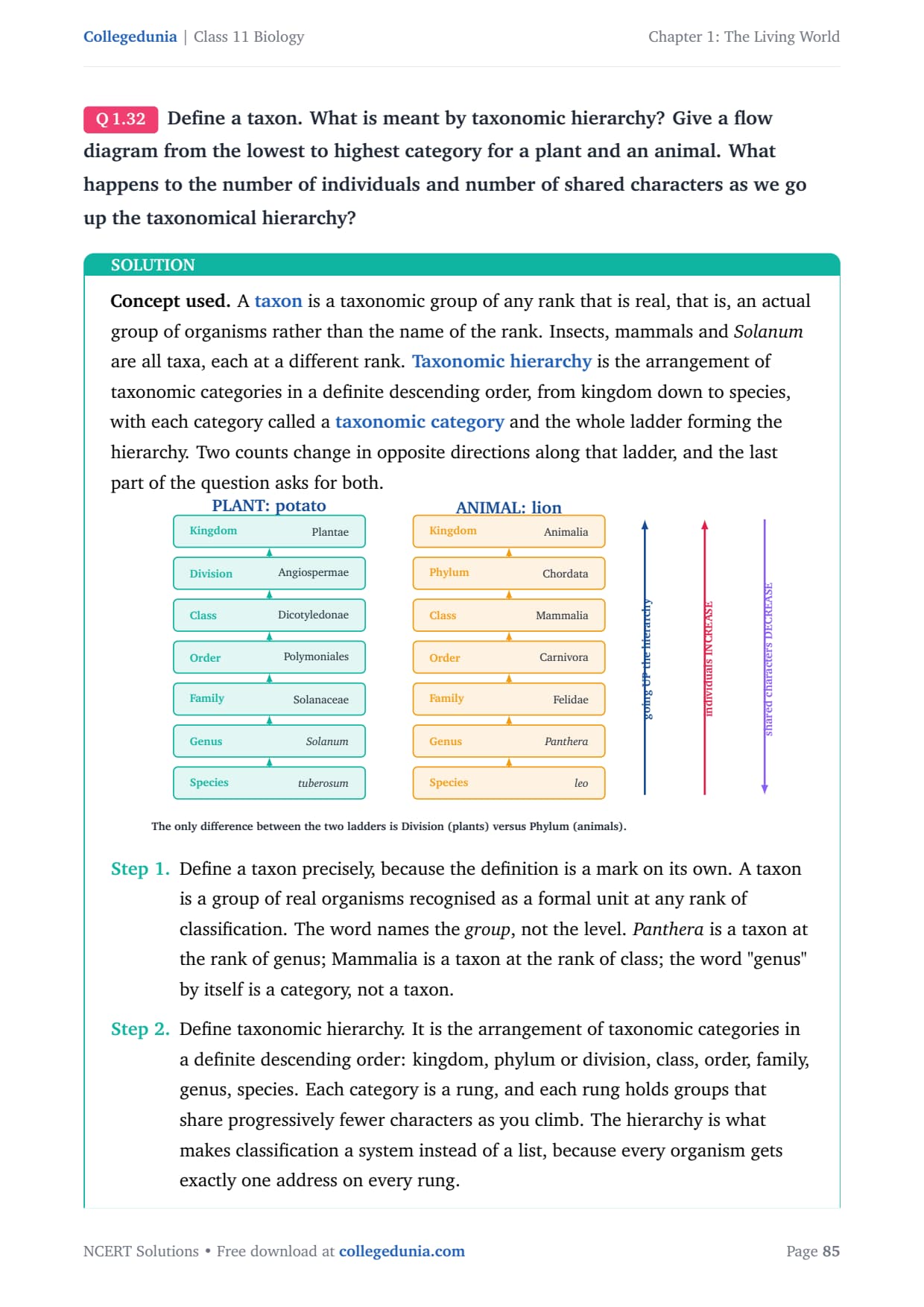
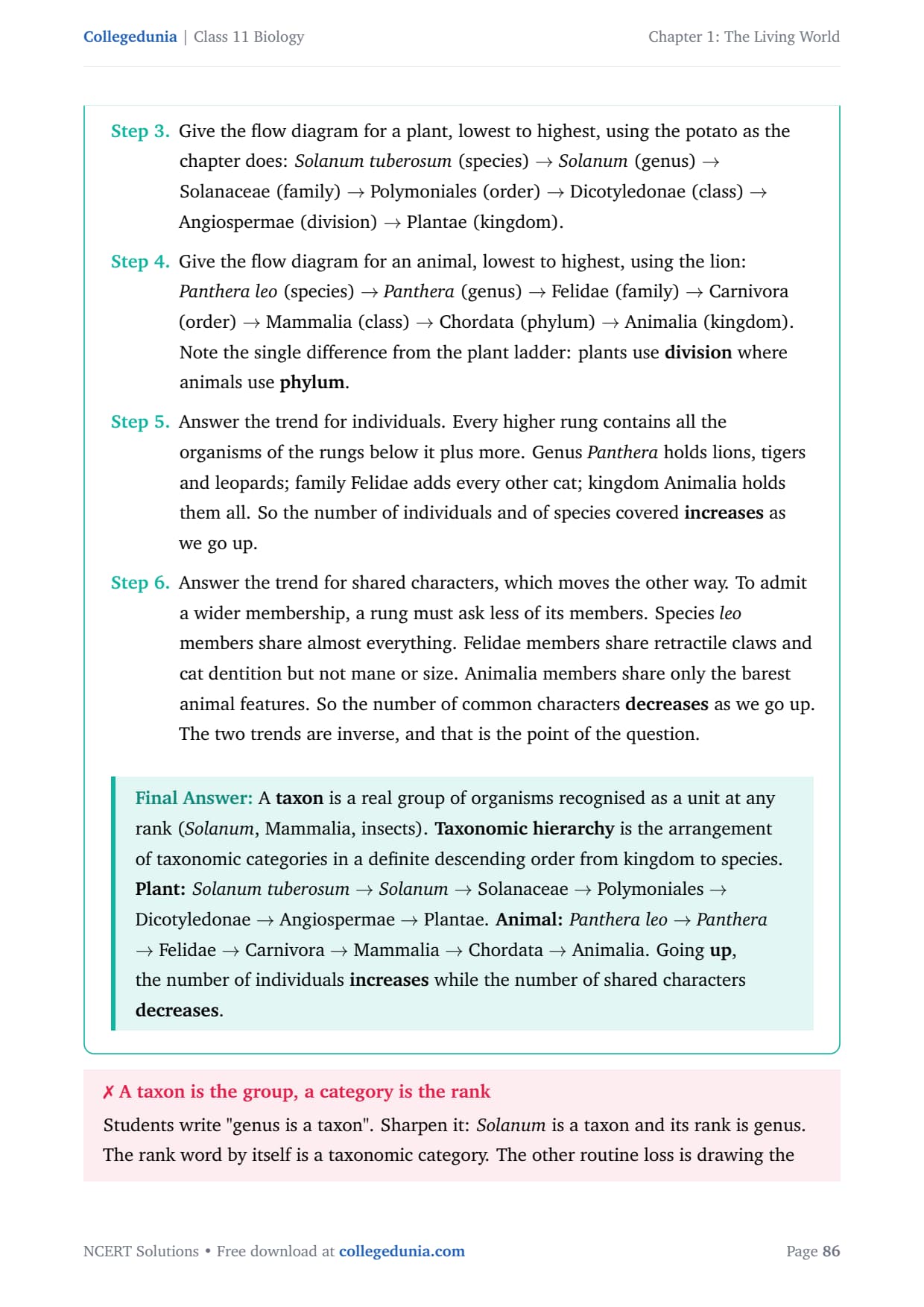
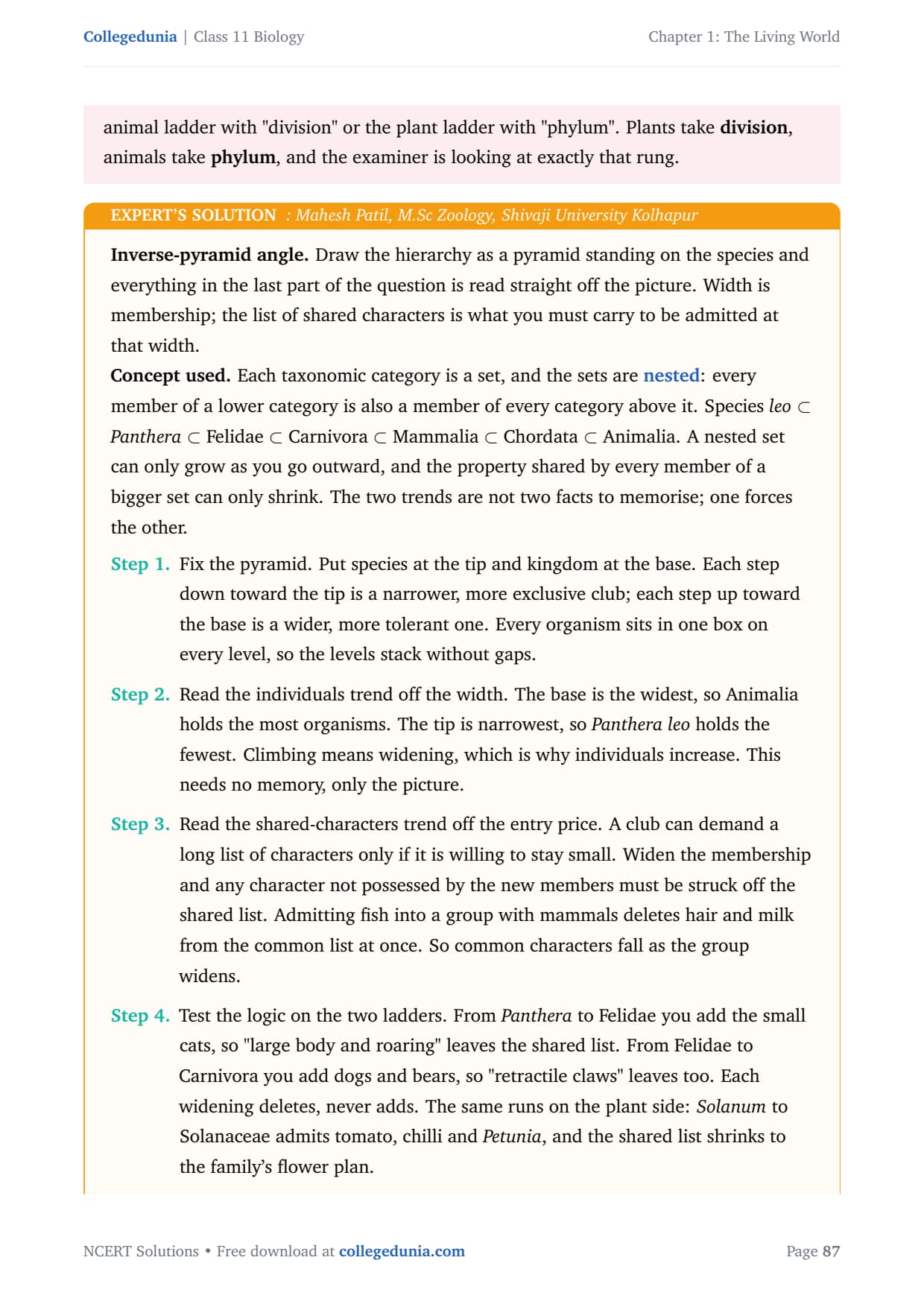
- Common characters against number of individuals: as you move from species up to kingdom, the number of shared characters falls while the number of organisms included rises. Students often reverse this.
- Flora, fauna and vegetation: flora is the account of plants of an area, fauna is the account of animals, and vegetation is the general plant cover. All three are asked apart in one Short Answer question.
- ICBN against ICZN: the botanical code names plants and the zoological code names animals. Writing the wrong full form loses the whole Very Short Answer mark.
How the Exemplar Steps Up from the Class 11 Biology Textbook
The textbook gives you a definition and asks you to state it back. The Exemplar gives you a situation and asks you to judge it, which is a different skill and the one that boards and NEET actually test. This is why students who only read the chapter feel the Exemplar is unfair. It is not harder in content, it is harder in the way it asks.
The question about the snowball shows the gap clearly. The textbook tells you that living things grow, so a quick reader ties growth to life. The Exemplar hands you a growing snowball and waits. To answer, you have to separate growth by internal cell division from growth by external accumulation, a distinction the textbook never forces you to use. The same happens with the coma question and the mule question, where reproduction and consciousness are each tested as necessary or not. Working these builds judgement, not recall, which is exactly what Chapter 1 is meant to leave you with.
How to Use These NCERT Exemplar Solutions for Boards, NEET and CUET
Attempt each question before you open the solution. This chapter rewards the attempt more than the reading, because the answers look obvious until you try to write them precisely. Read the question, commit to a definition in your own words, and only then check it against the PDF. The gap between your line and the model answer is where the marks live.
- Boards: the Short Answer and Long Answer sets match the 2 and 3 mark board pattern, especially the taxonomic hierarchy flow chart
- NEET: work the MCQ and Very Short Answer sets first, since NEET repeats nomenclature, taxonomic categories and taxonomical aids at that level every year
- CUET: the definition-based MCQ set is the closest practice for the domain paper, which favours precise single-term recall
Student Feedback
Students using Collegedunia's Class 11 Biology Exemplar Solutions told us that the questions on what counts as living were the hardest part of this chapter, well above the naming and hierarchy questions. Around 7 in 10 said that seeing the snowball and the coma questions solved side by side, with the exact feature named each time, finally made the definition of life stick after a full year of confusion.
Other Resources for Class 11 Biology The Living World
Collegedunia has the full set of study material for this chapter. Use the Notes for a first read, then the Exemplar once the taxonomy vocabulary is steady, and keep the NCERT Solutions open for the textbook exercise alongside.
Also Check:
- NCERT Solutions for Class 11 Biology Chapter 1
- Class 11 Biology Chapter 1 Notes
- Class 11 Biology Chapter 1 NCERT Book PDF
- Class 11 Biology Chapter 1 Exemplar Questions with Solutions
NCERT Exemplar Solutions for Other Class 11 Biology Chapters
Each chapter below has the same step-by-step treatment and a free PDF. All 19 chapters have an NCERT Exemplar book chapter behind them, so the list covers every one.
The Living World Class 11 NCERT Exemplar Solutions FAQs
Ques. How many questions are there in the Class 11 Biology The Living World Exemplar?
Ans. Chapter 1 has 37 questions. They are split into 10 MCQ, 7 Very Short Answer, 10 Short Answer and 10 Long Answer questions. All 37 are solved in the free PDF on this page.
Ques. What is the difference between taxonomy and systematics?
Ans. Taxonomy is the science of identification, naming and classification of organisms. Systematics is broader, since it also studies the evolutionary relationships and diversity among organisms. Every question that uses systematics is asking for the relationship, not just the group, and the Exemplar plants an option for students who treat the two as the same.
Ques. Why is a growing snowball not considered living?
Ans. A snowball grows by adding material from outside its surface, while living organisms grow from inside through cell division. Because growth can happen in non-living things too, growth alone is not a defining feature of life. This is why the Exemplar uses the snowball to test the idea rather than the definition.
Ques. What do ICBN and ICZN stand for?
Ans. ICBN is the International Code of Botanical Nomenclature, which sets the rules for naming plants. ICZN is the International Code of Zoological Nomenclature, which sets the rules for naming animals. A Very Short Answer question in this chapter asks for one of these full forms, and writing the wrong code loses the mark.
Ques. Is the NCERT Exemplar enough for NEET questions from The Living World?
Ans. For this chapter it covers the ground well. NEET asks one to two questions a year on nomenclature, taxonomic categories and taxonomical aids, and they sit at the level of the Exemplar MCQ and Very Short Answer sets. Work all 10 MCQs and the 7 Very Short Answers before moving to a coaching module.



Comments