




NCERT Exemplar Solutions for Class 11 Biology Chapter 11 Photosynthesis in Higher Plants solve all 58 questions from the Exemplar book. Every MCQ, Very Short Answer, Short Answer and Long Answer problem is answered step by step in the free 92-page PDF, updated for the 2026-27 syllabus.
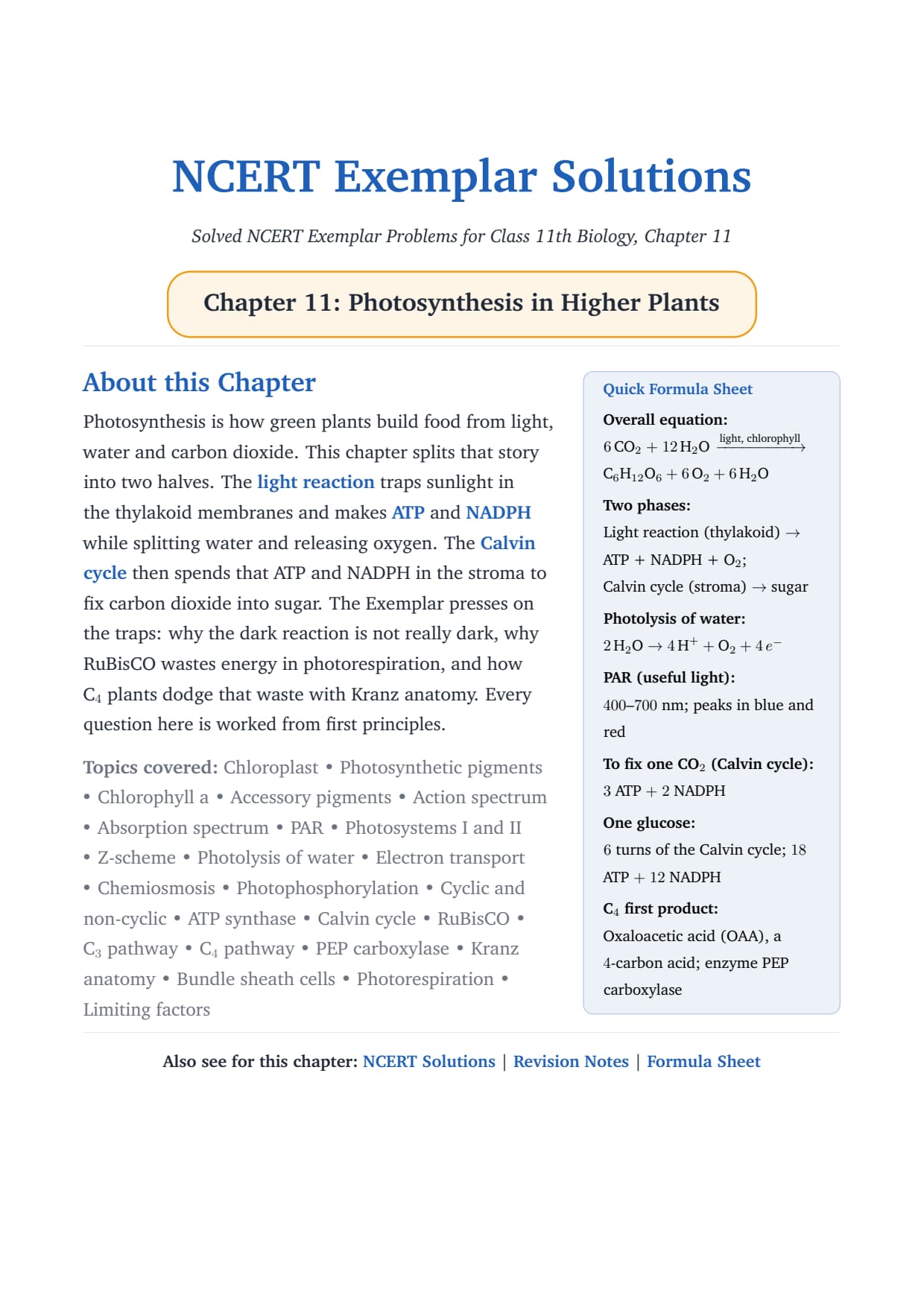
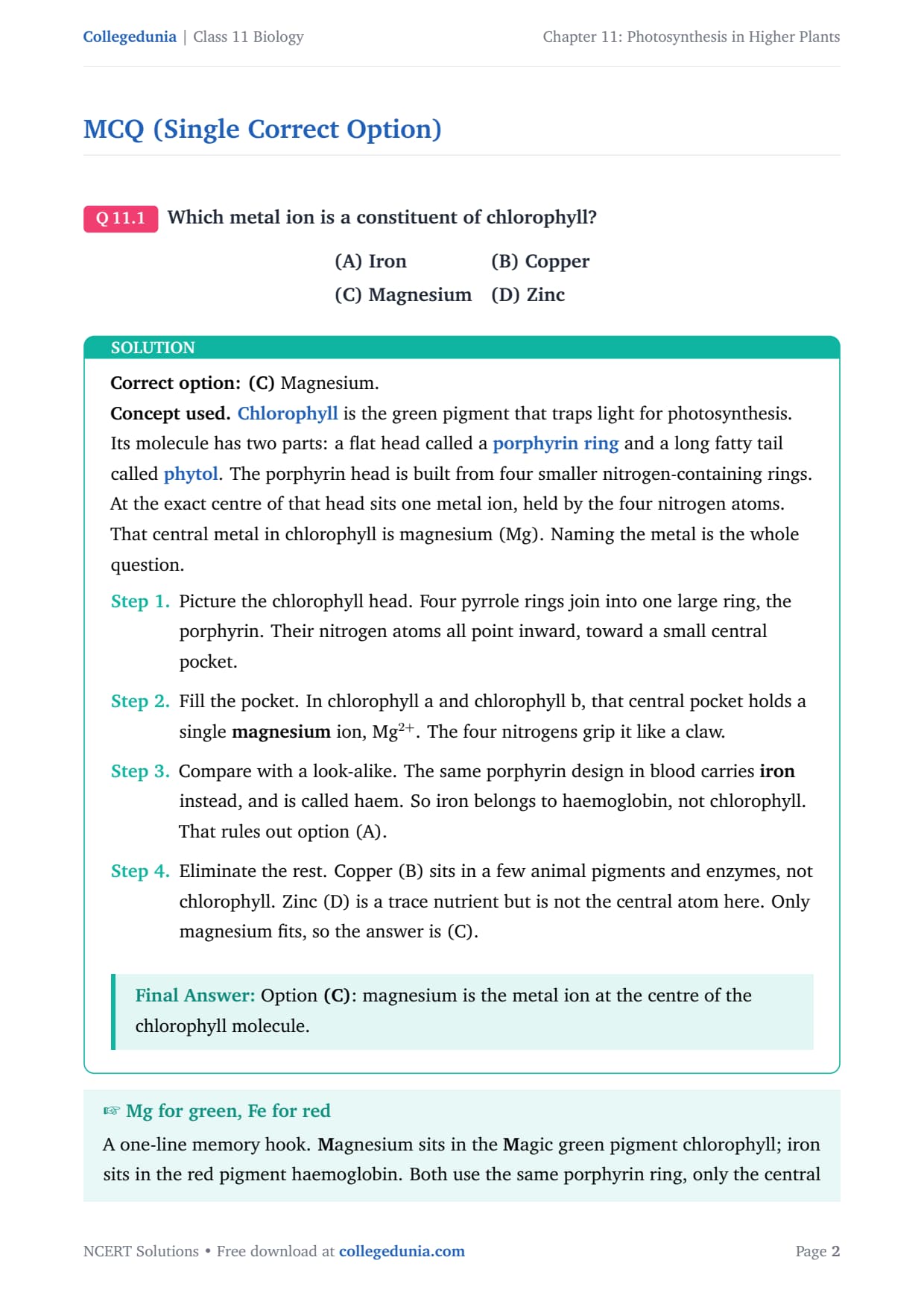
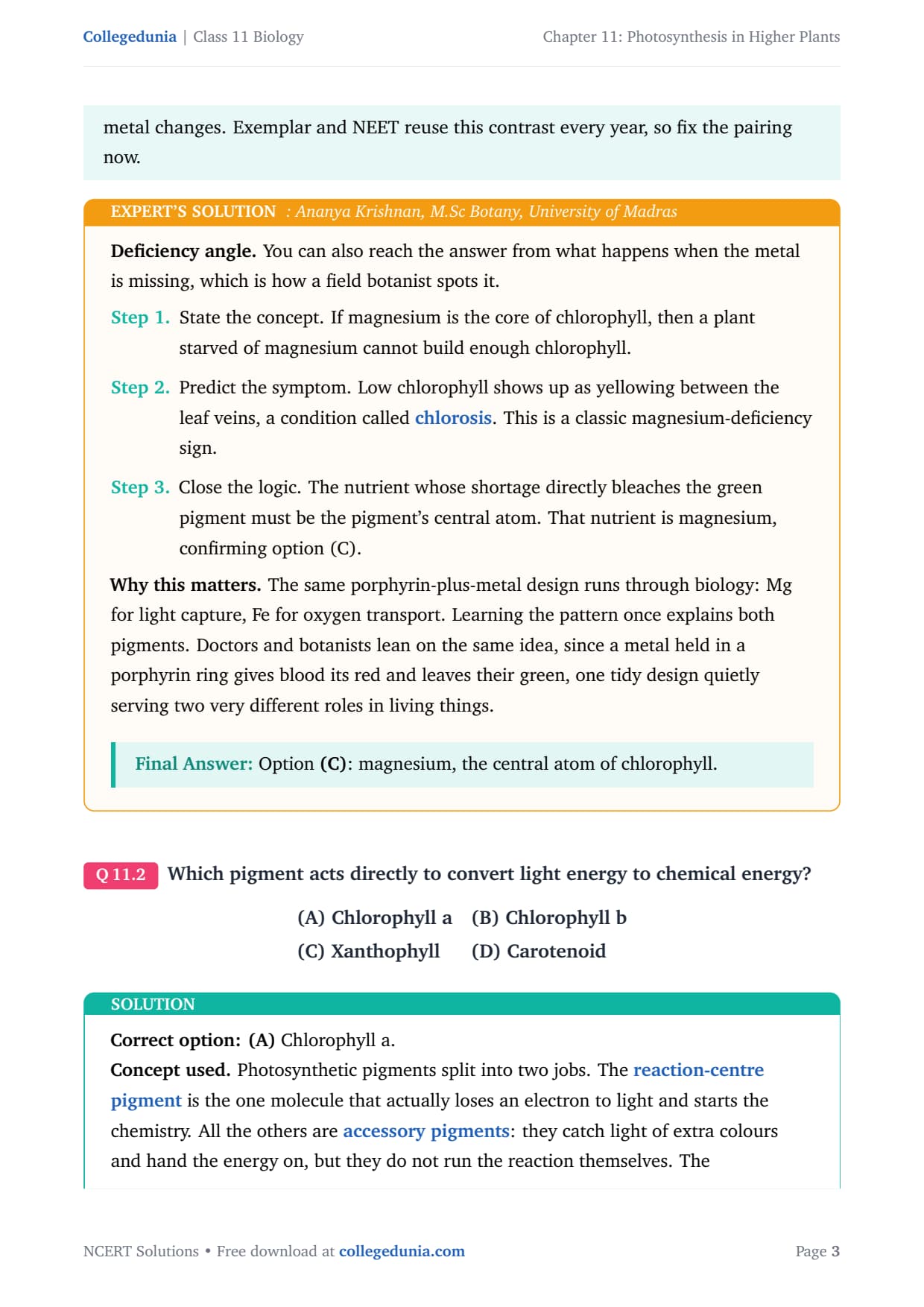
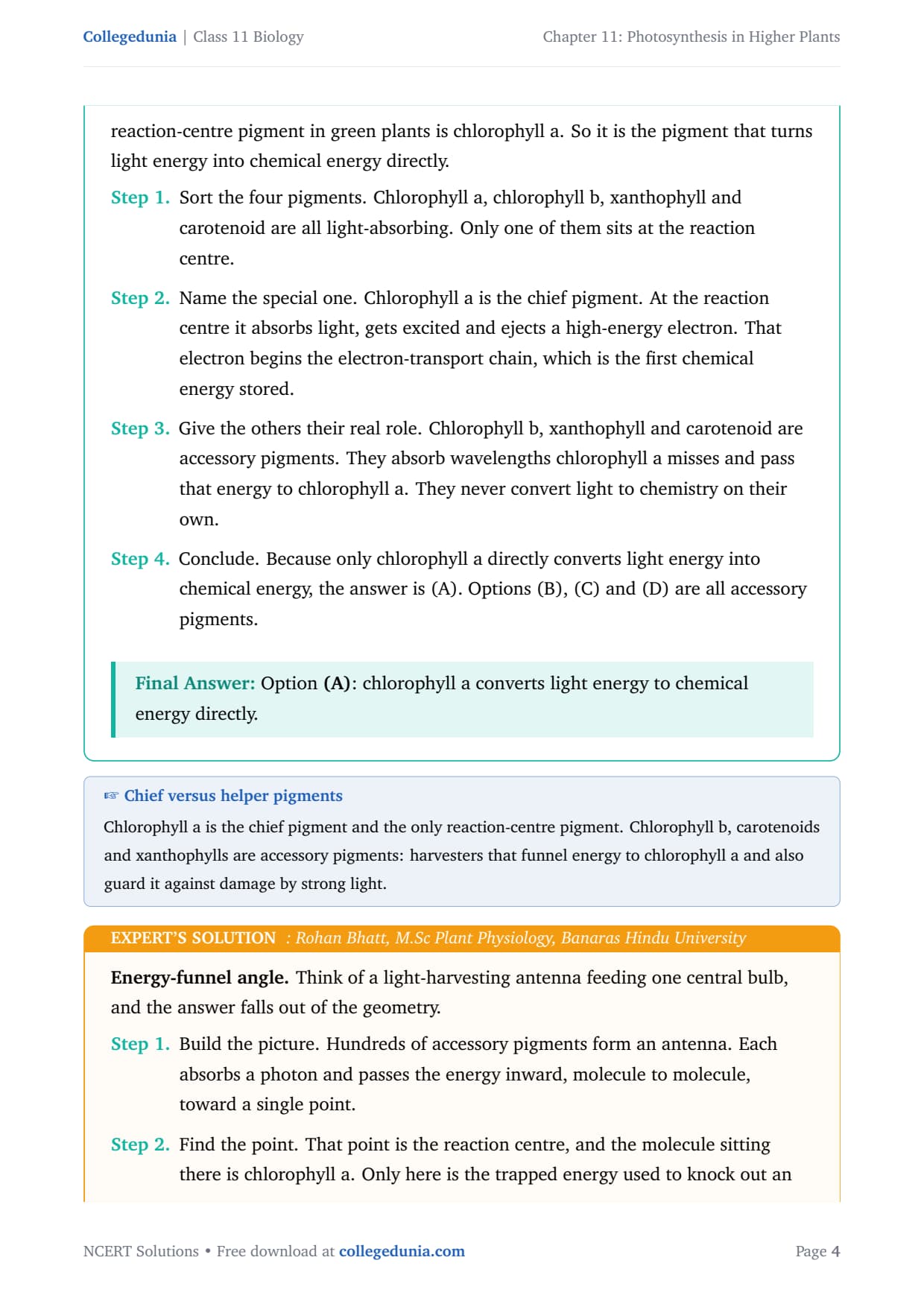
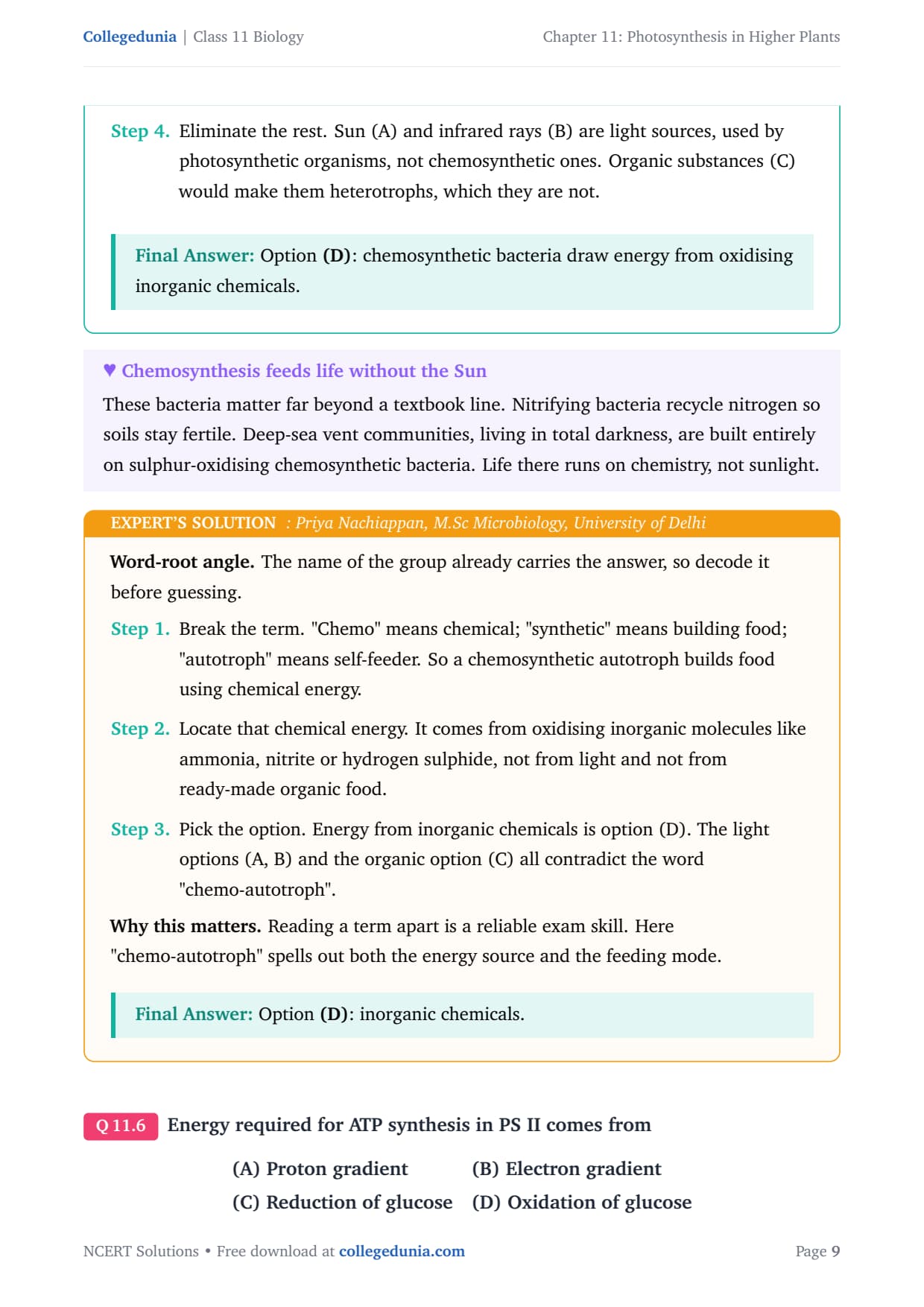
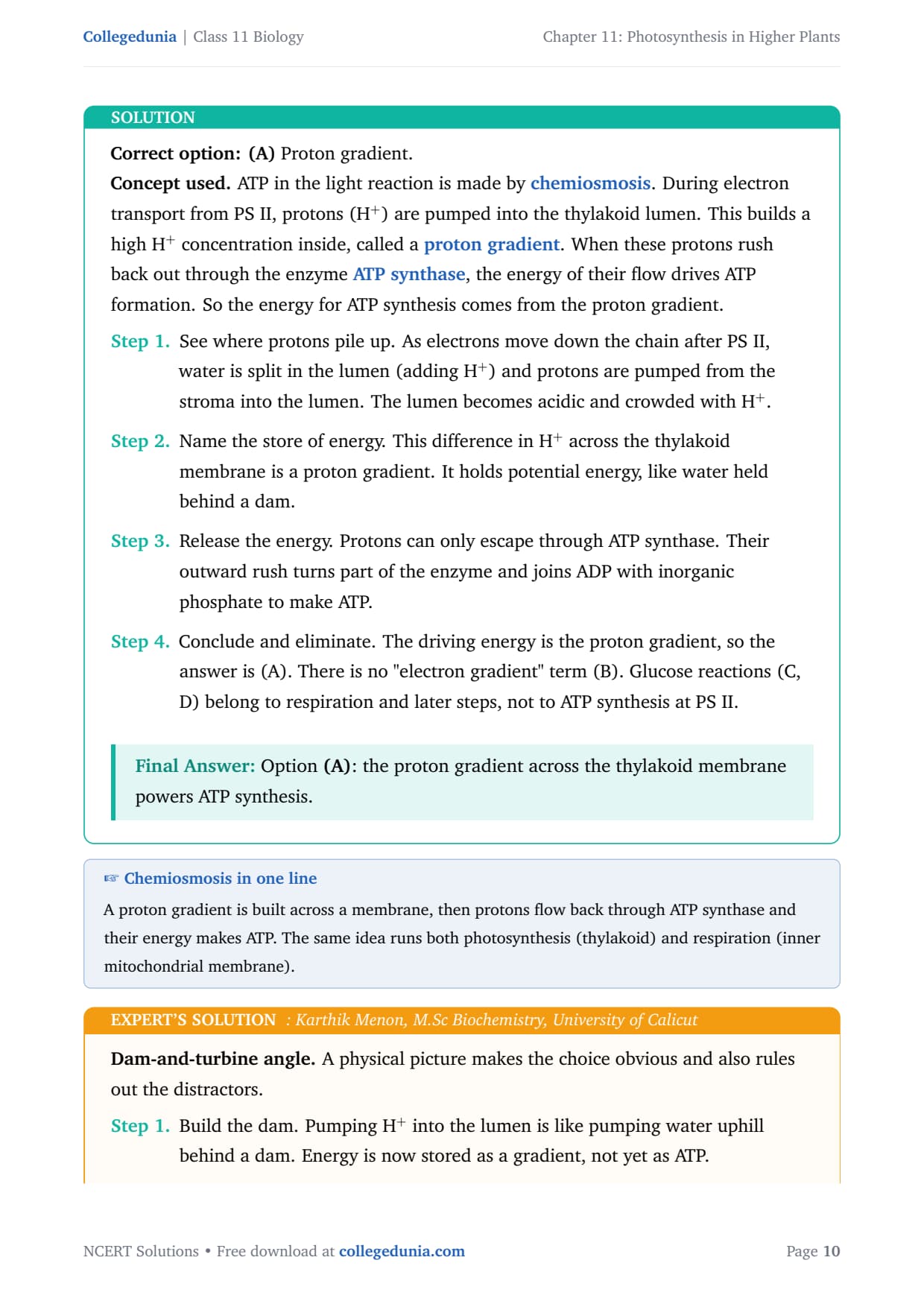
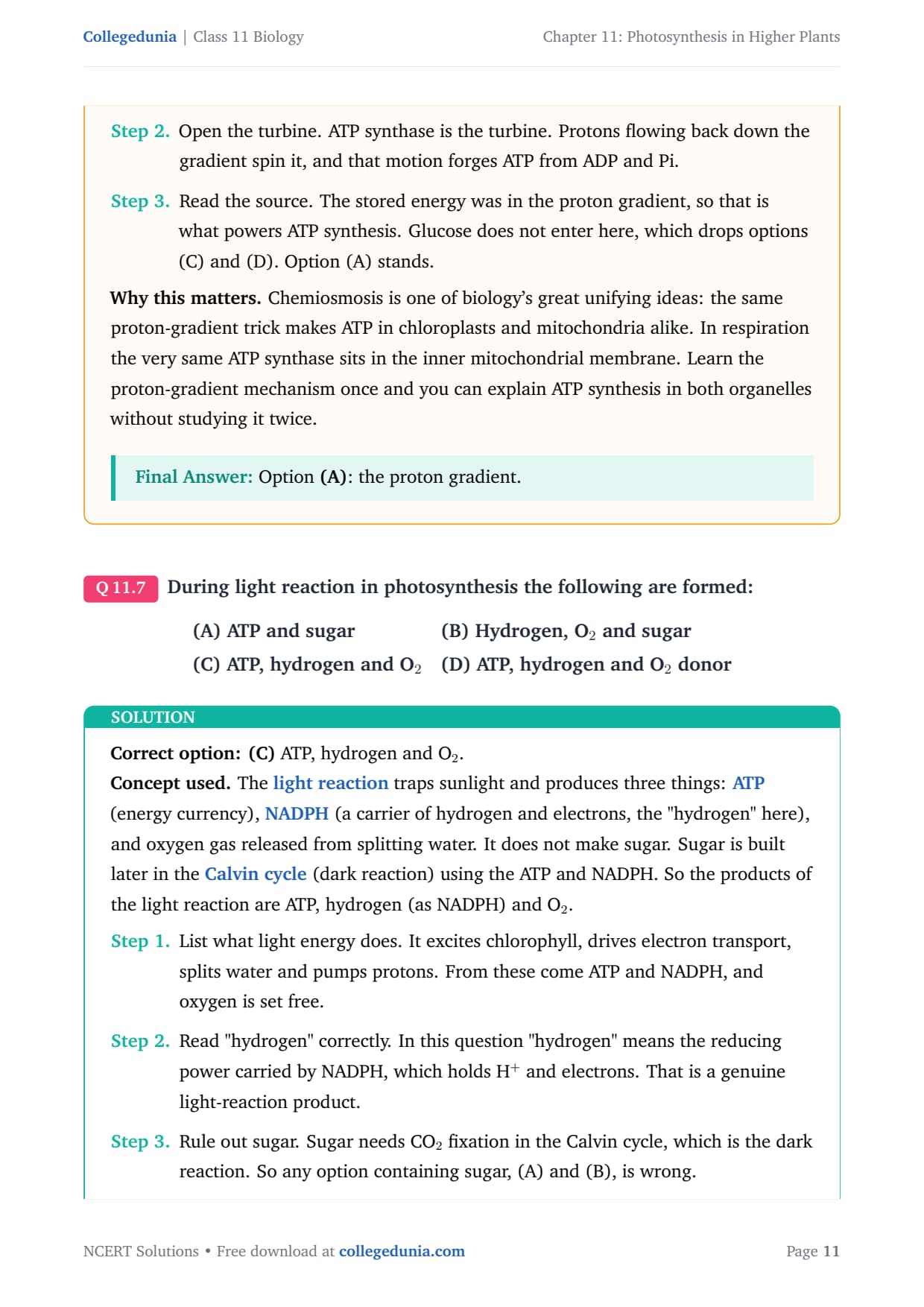
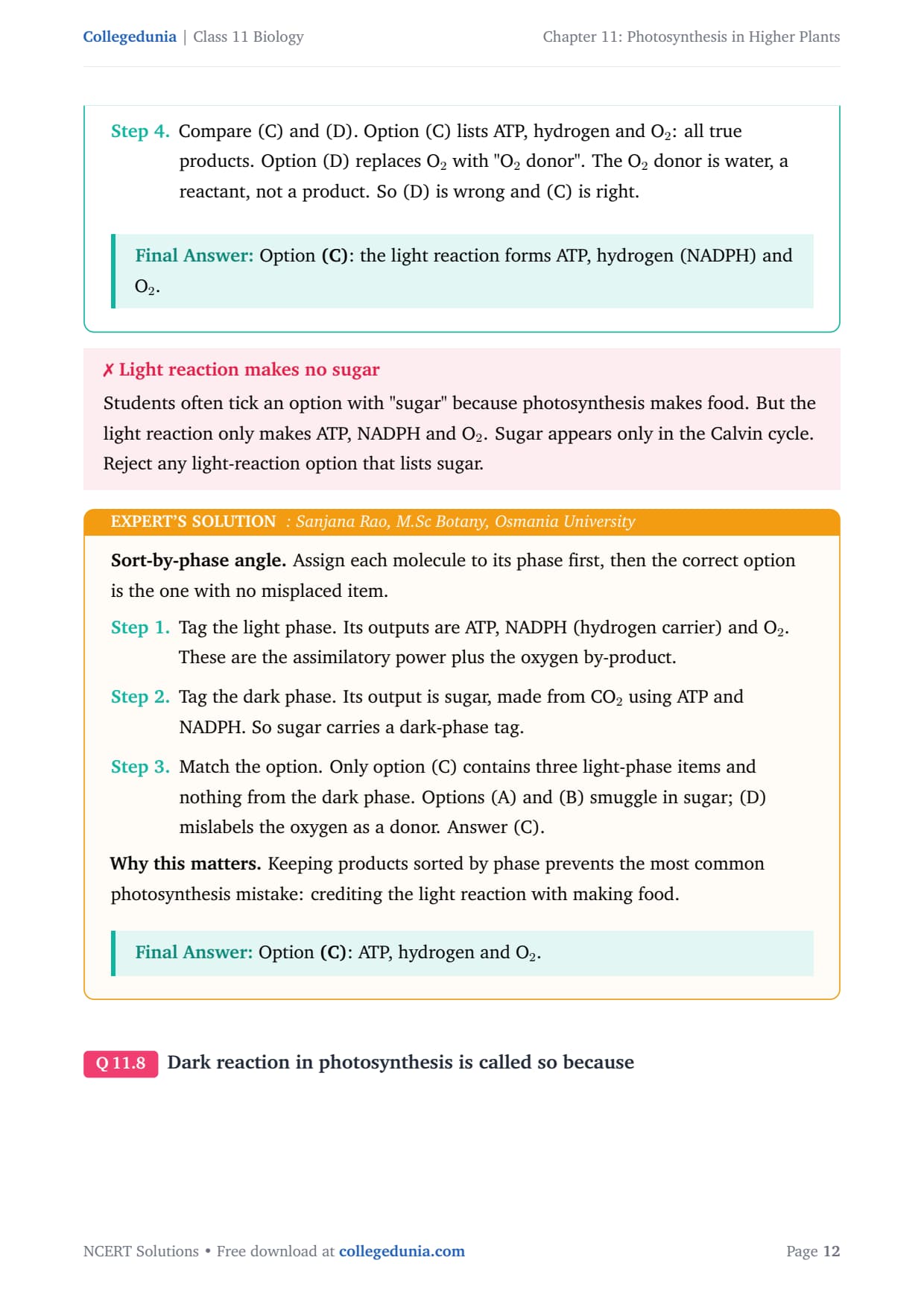
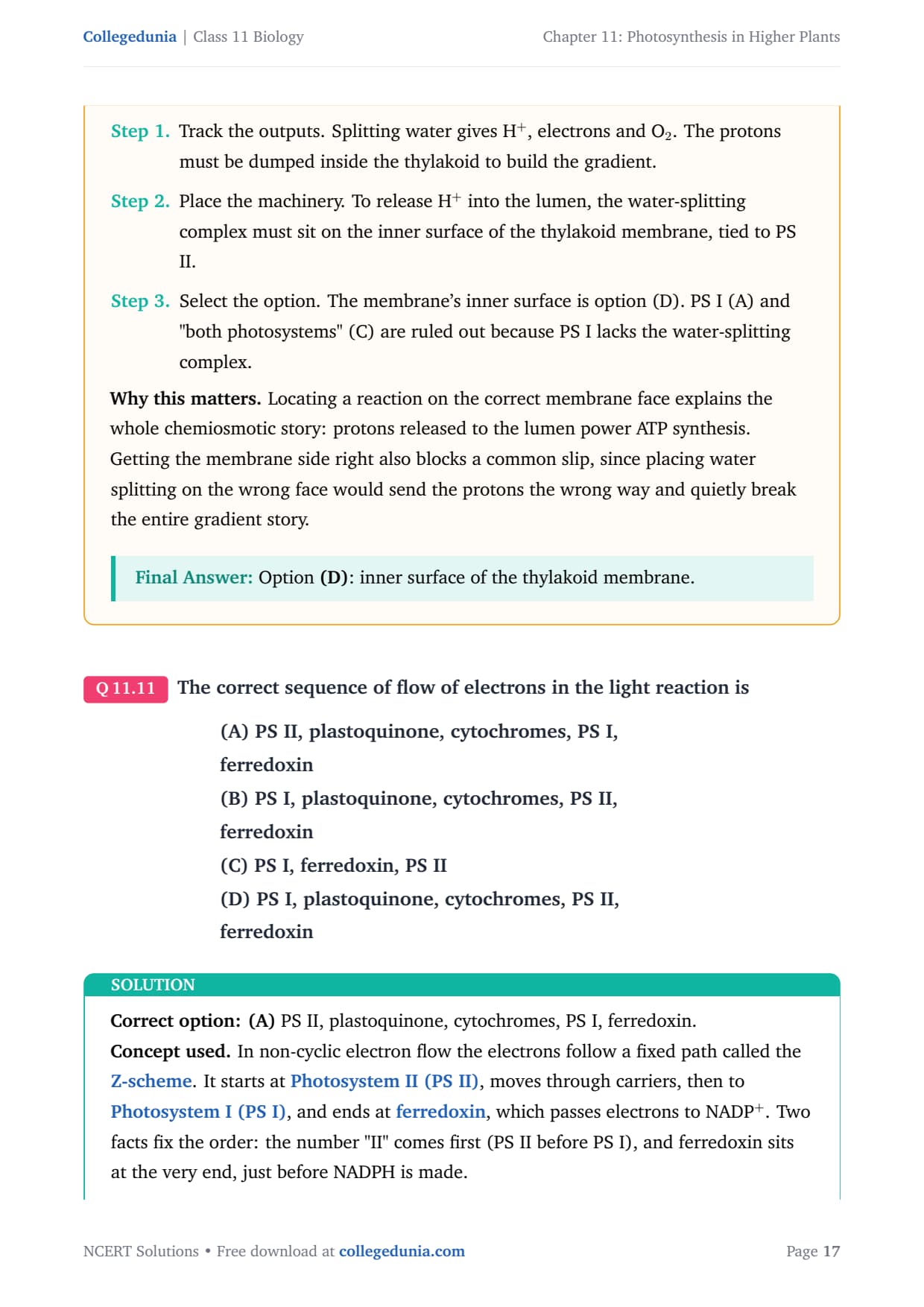
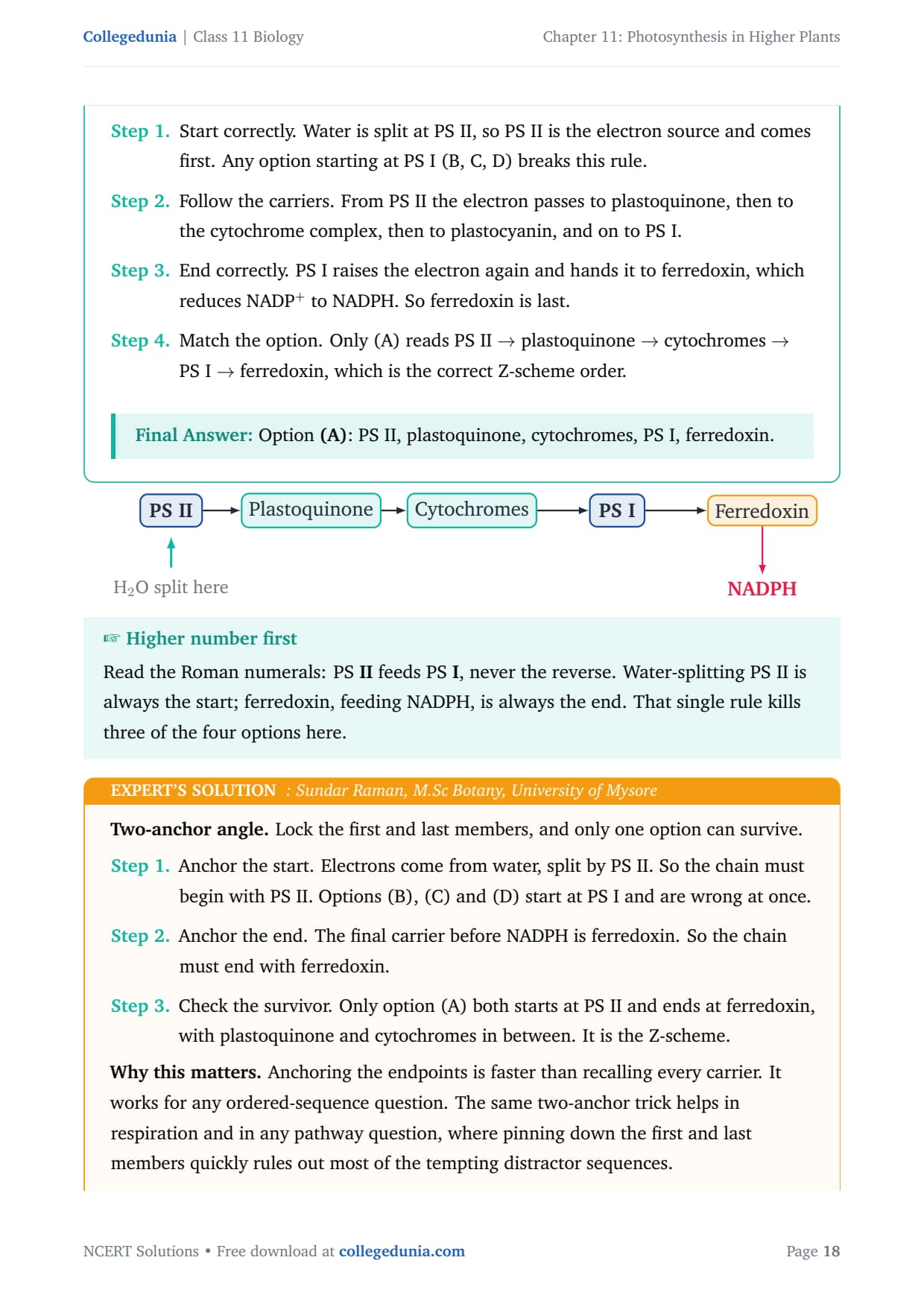
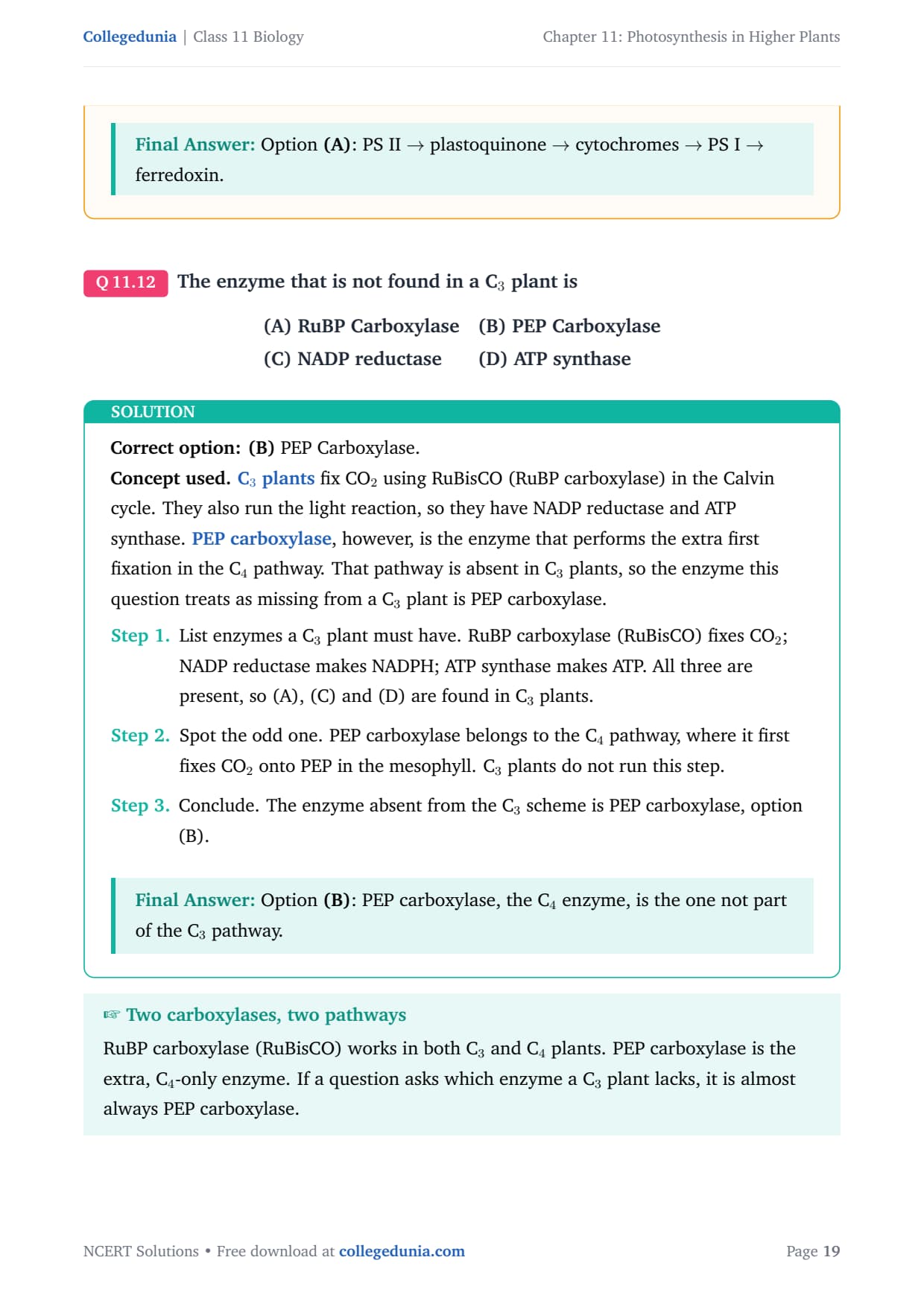
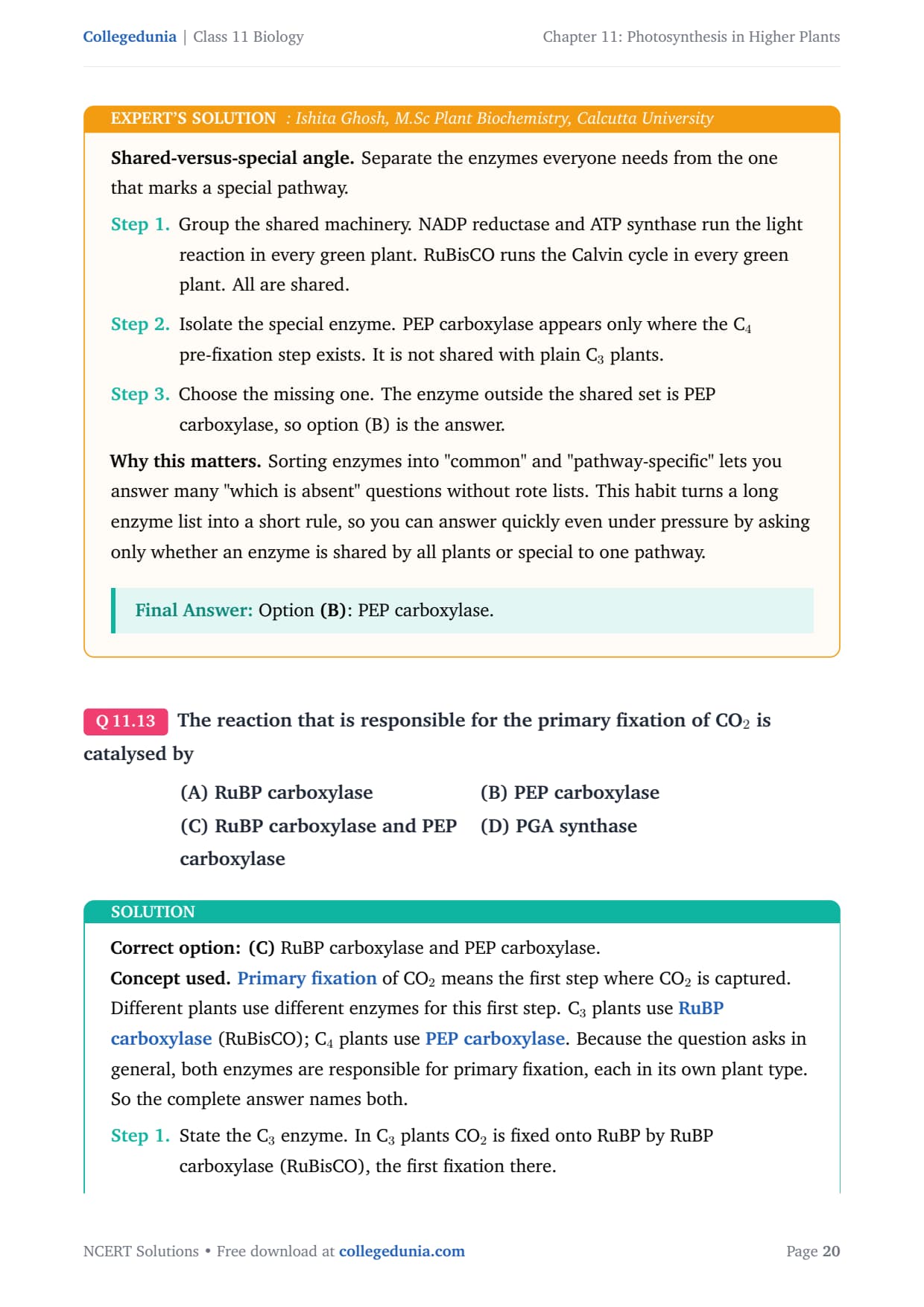
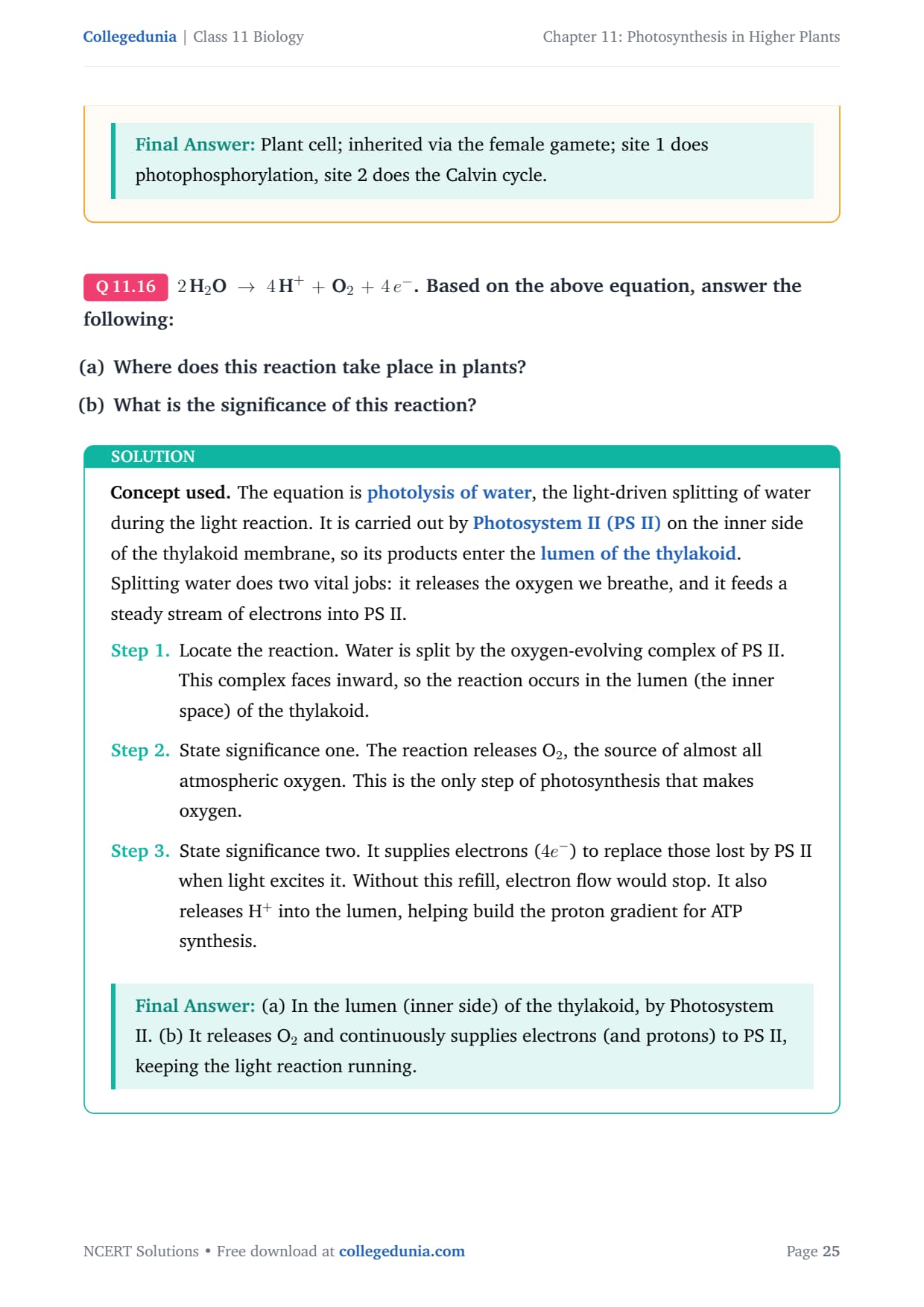
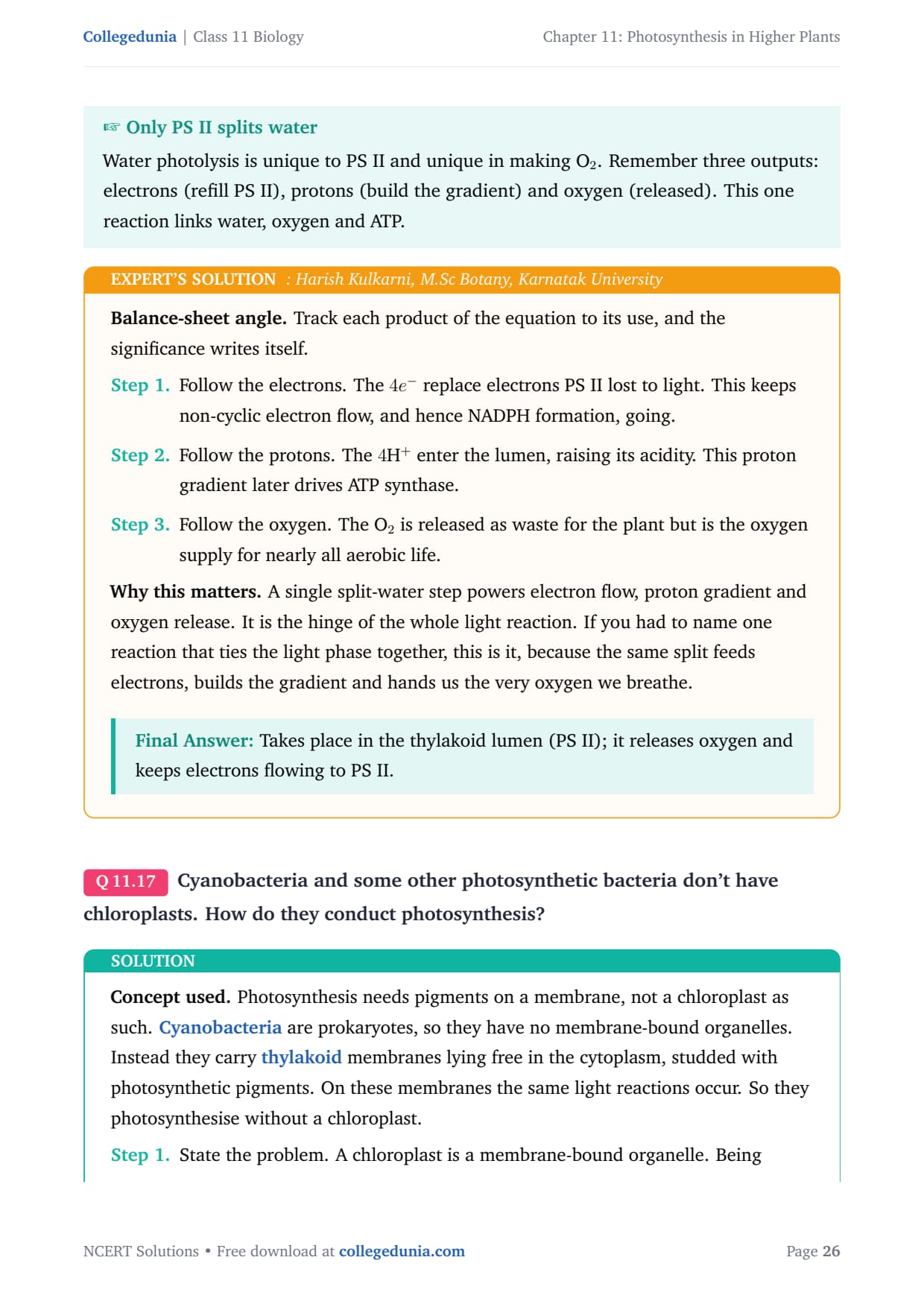
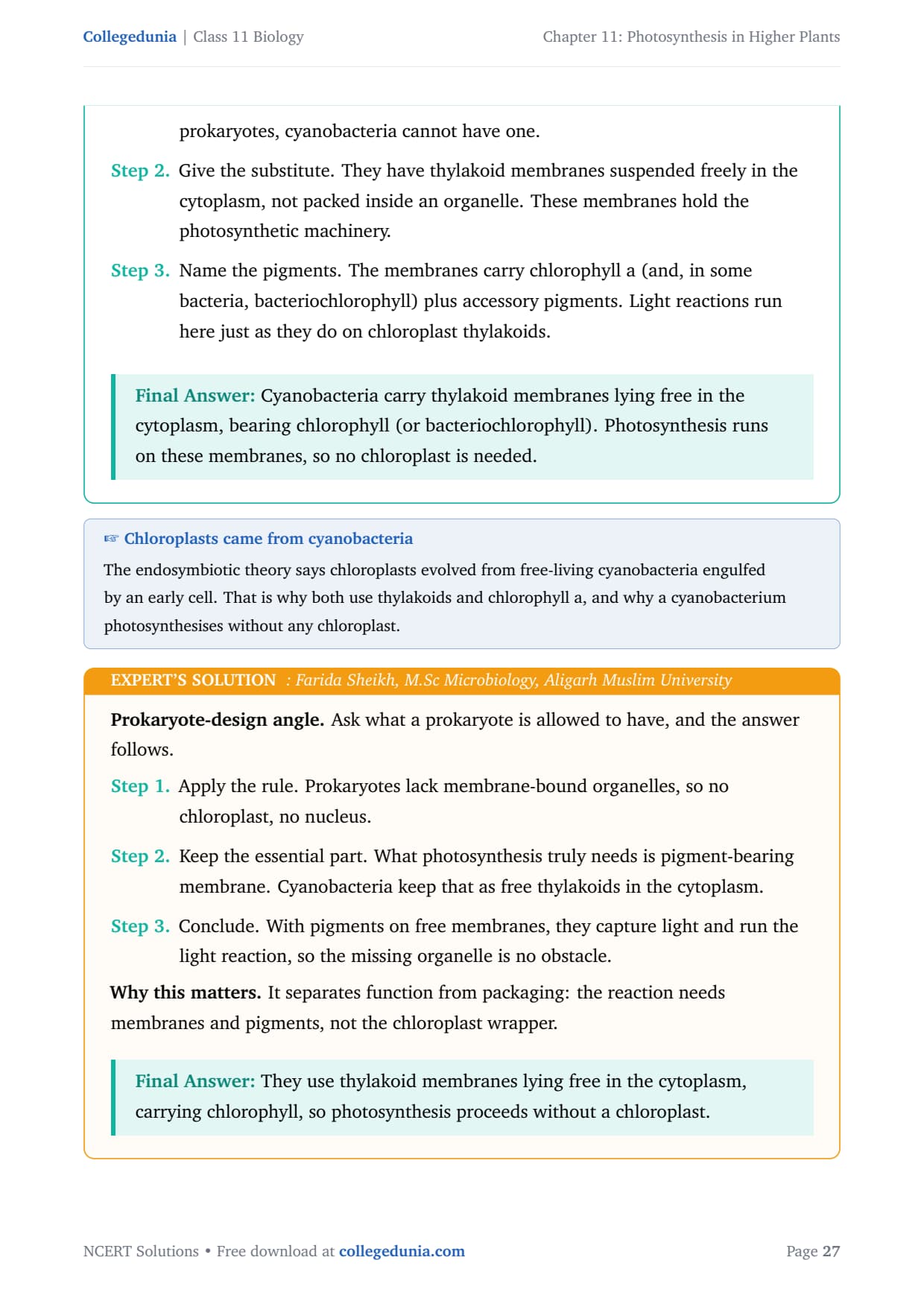
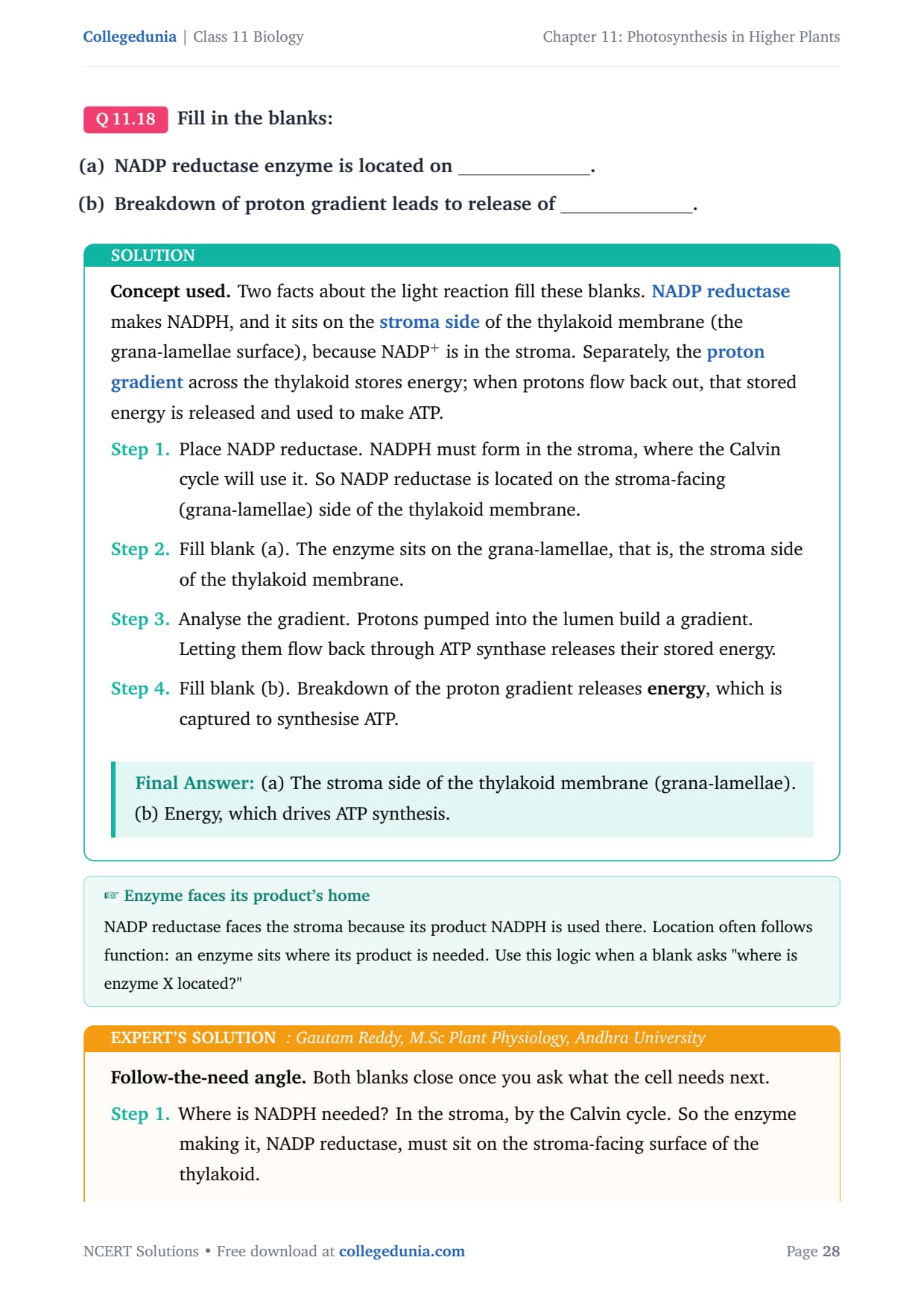
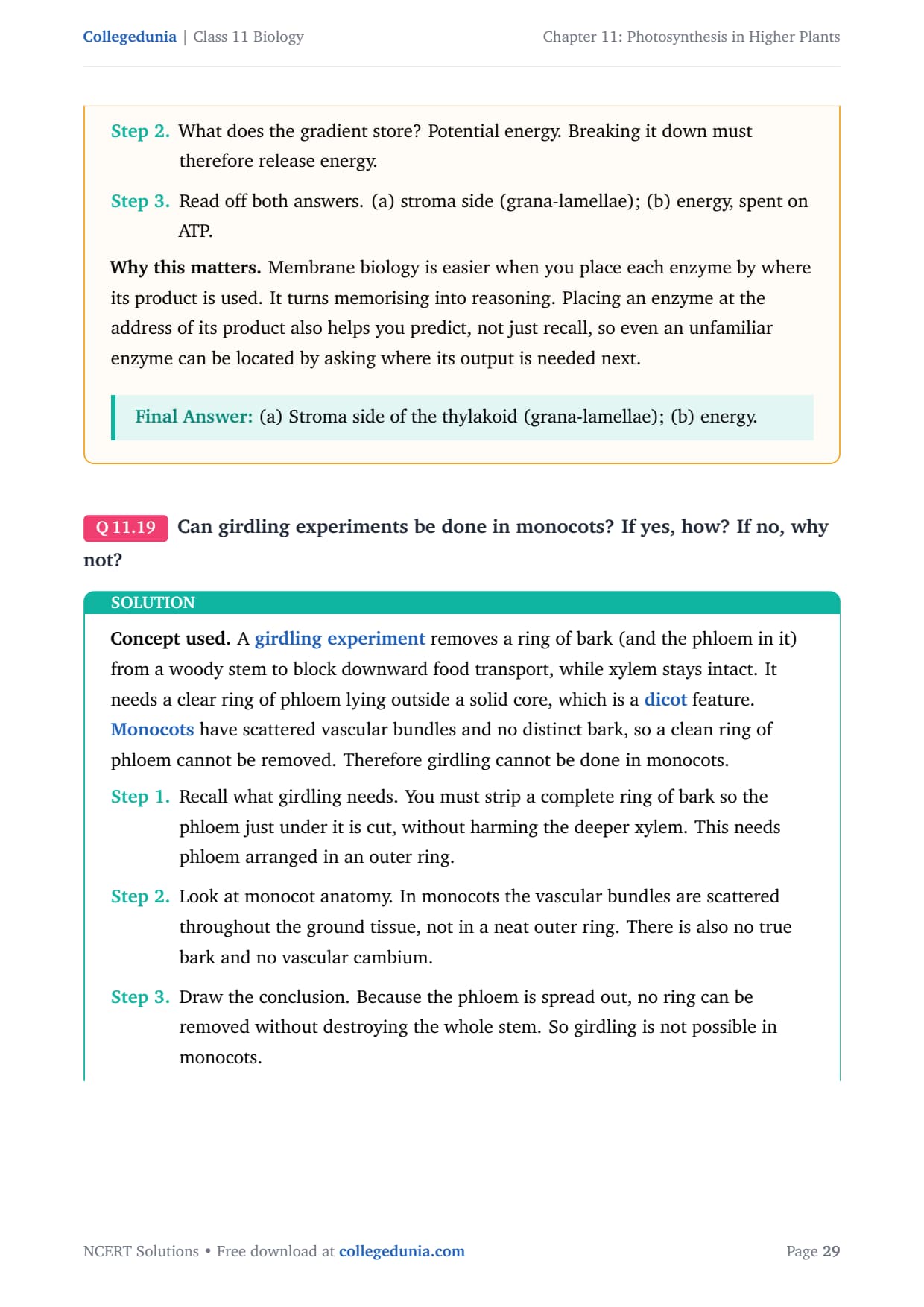
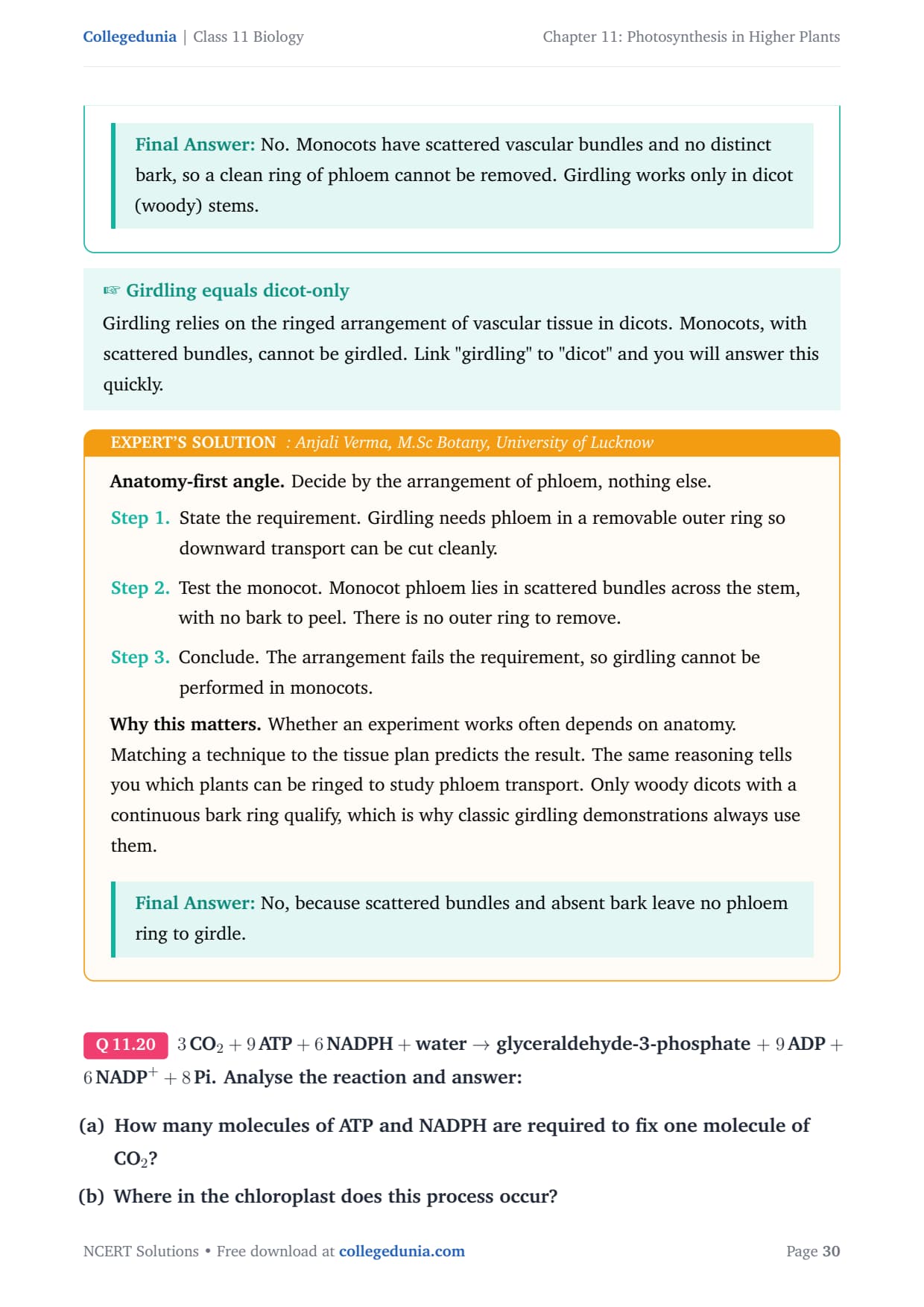
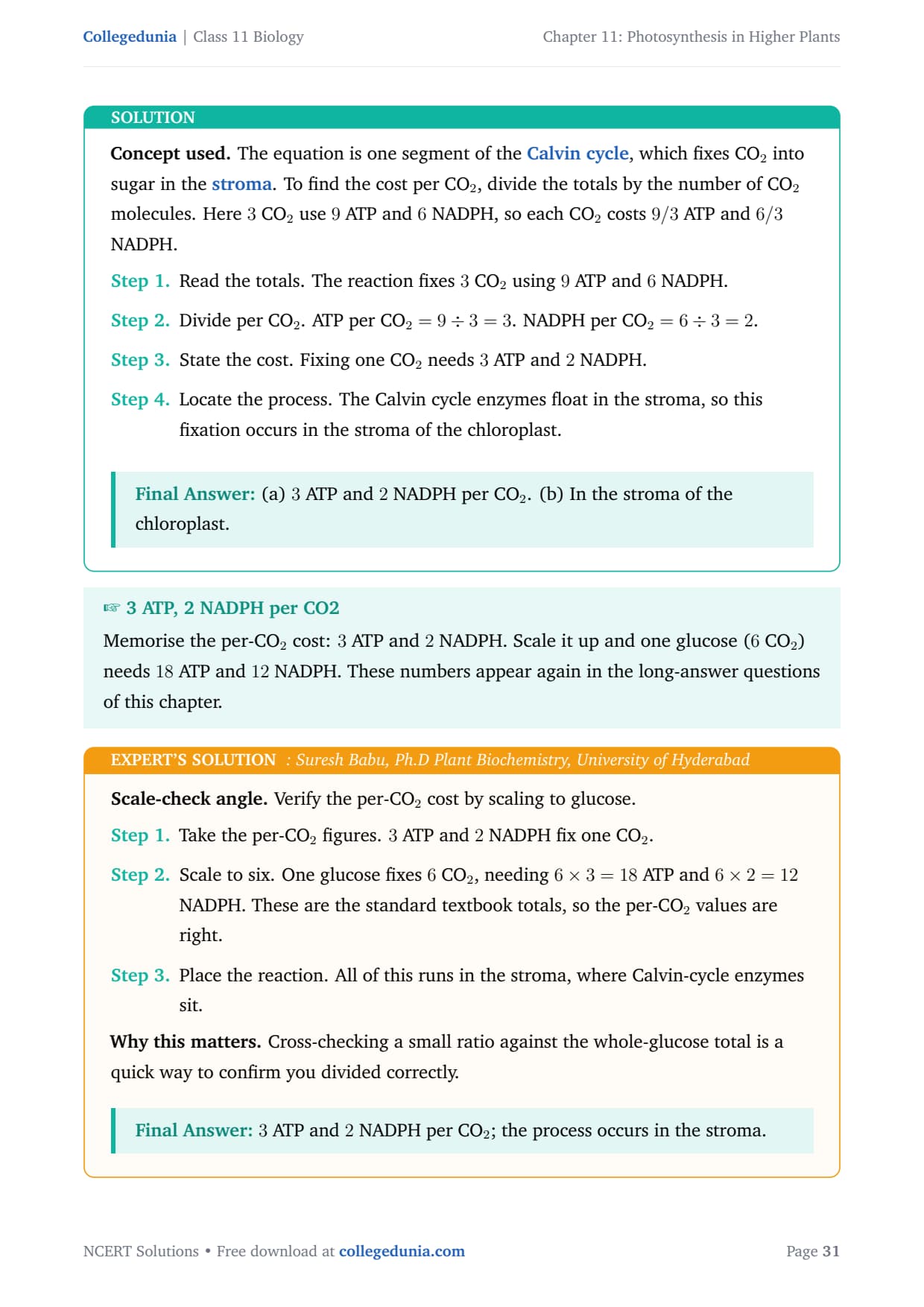
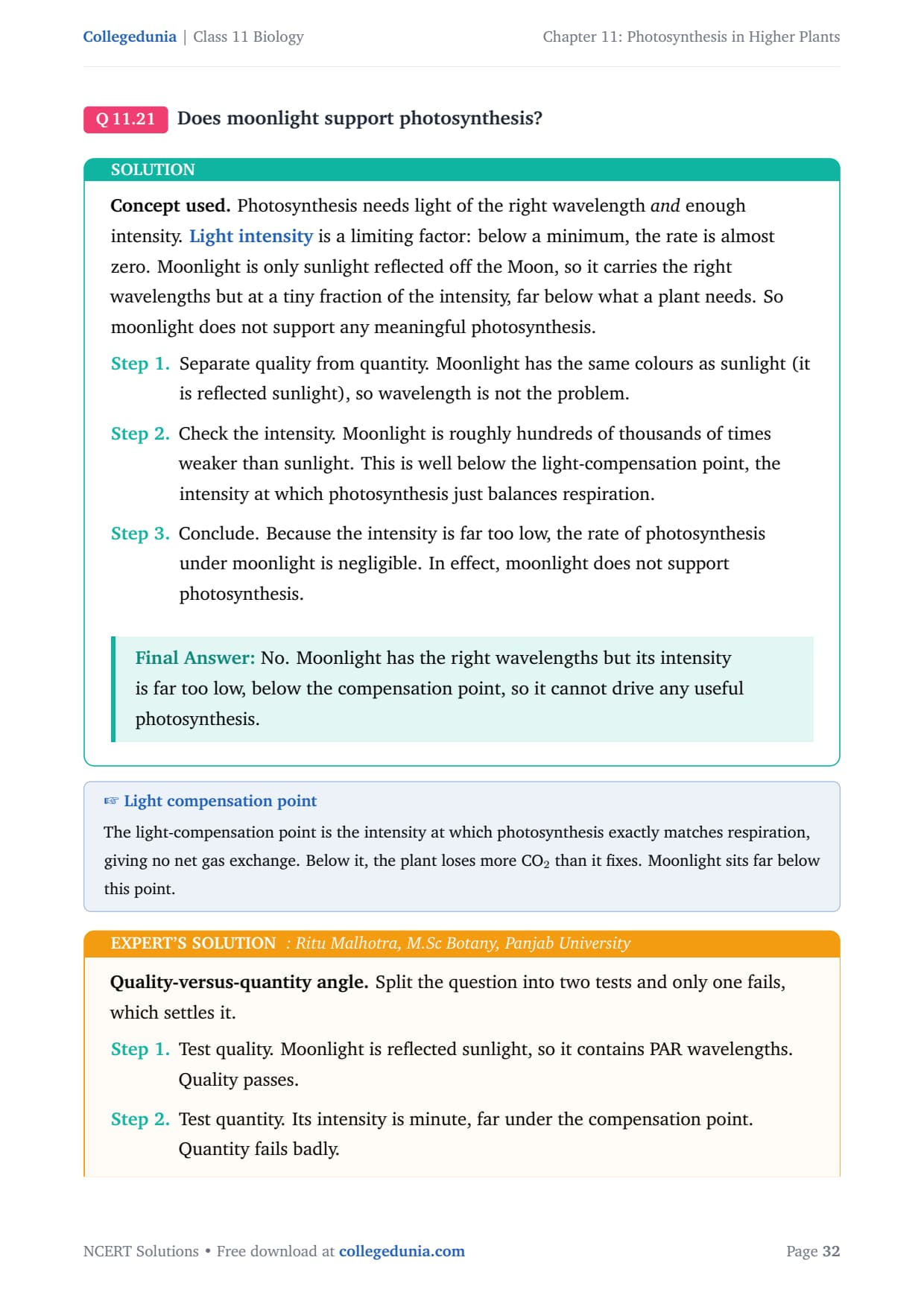
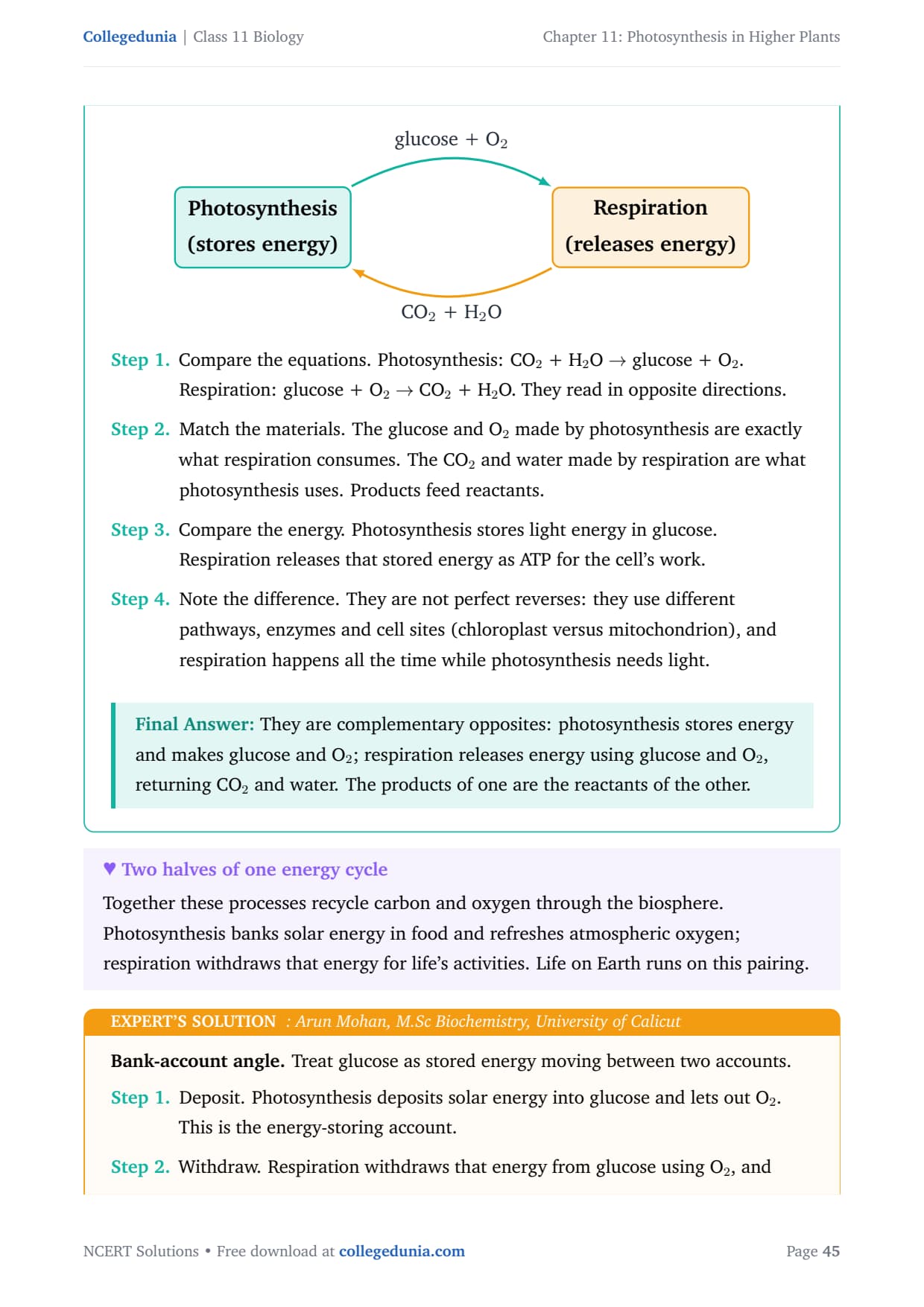
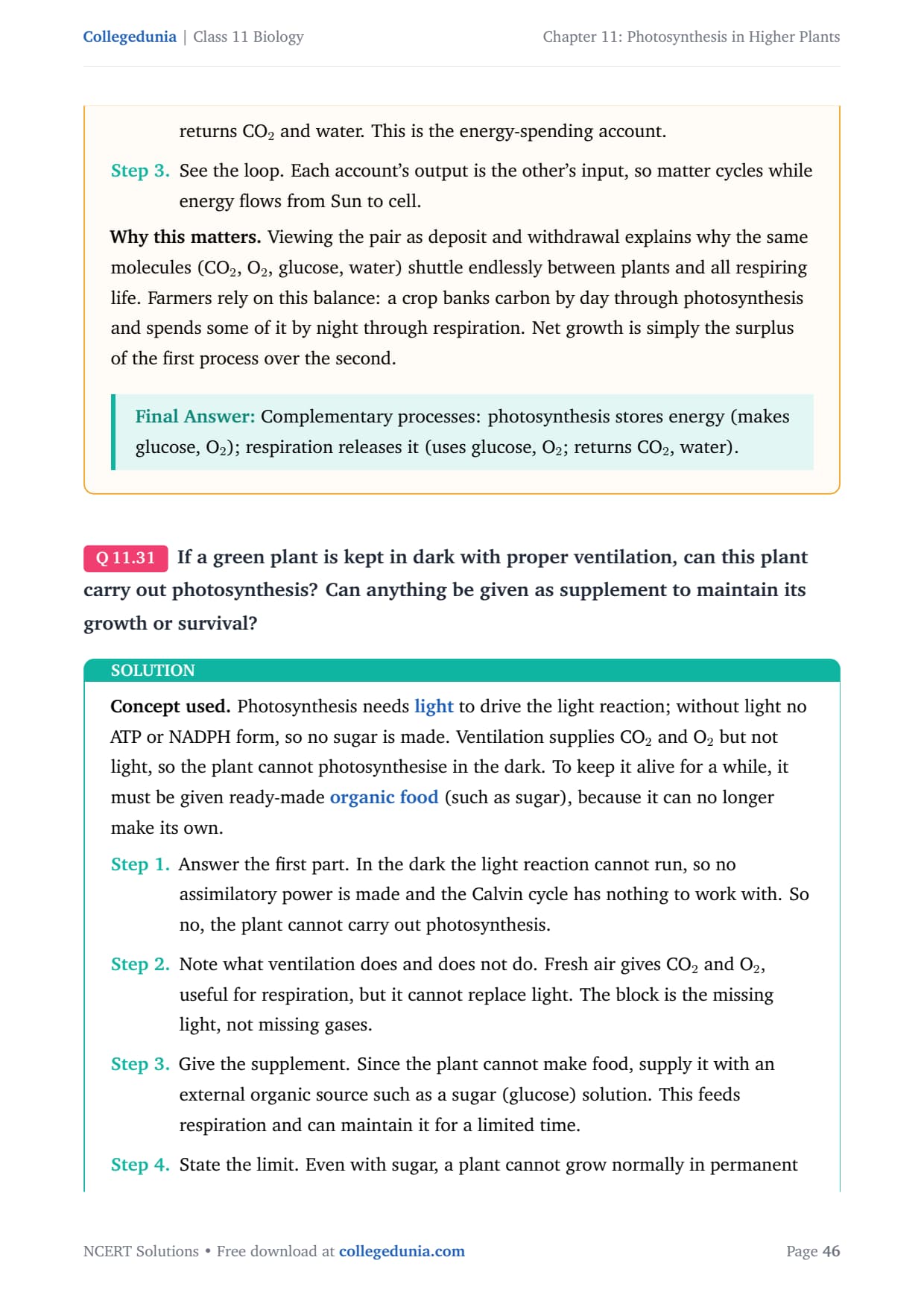
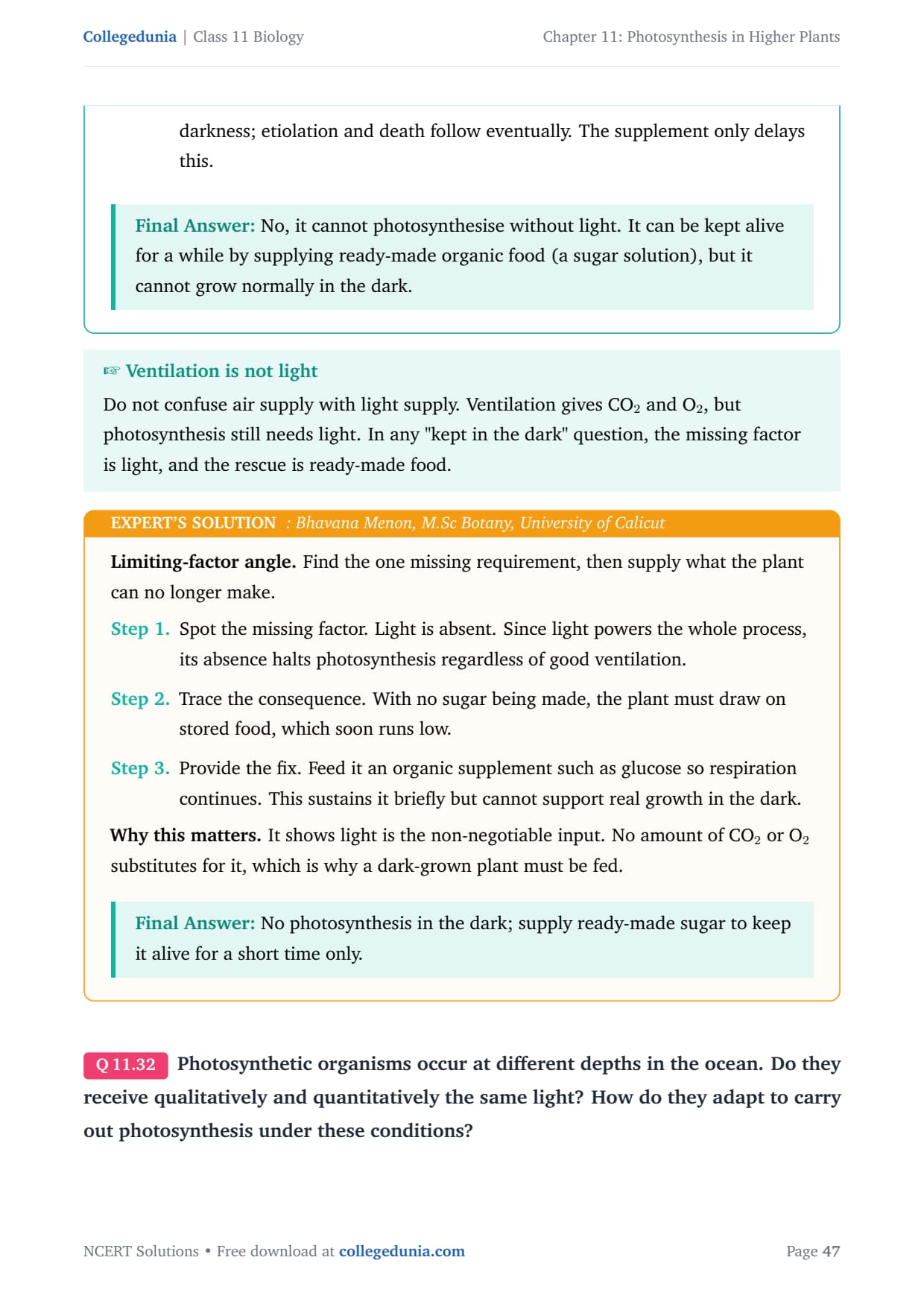
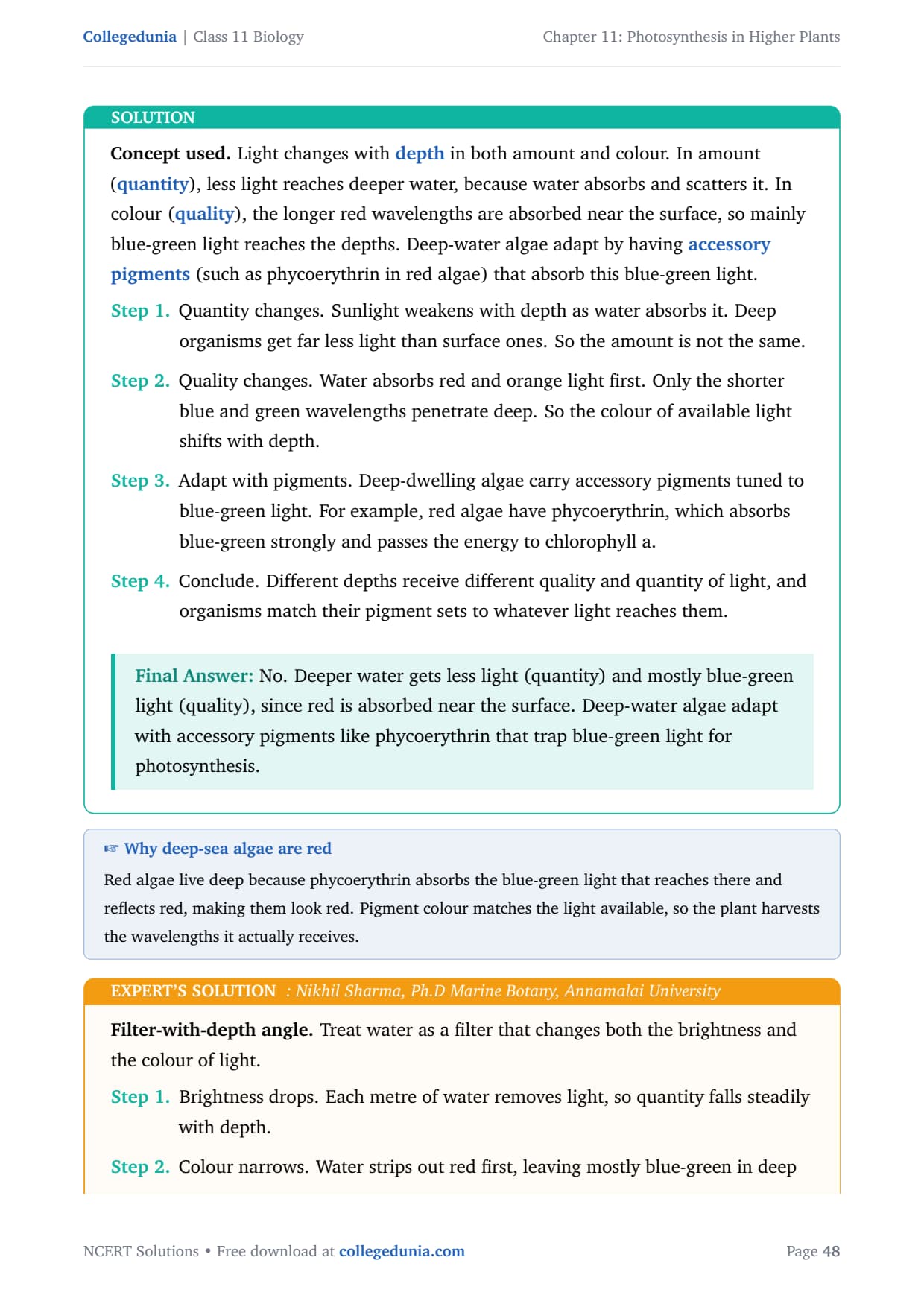
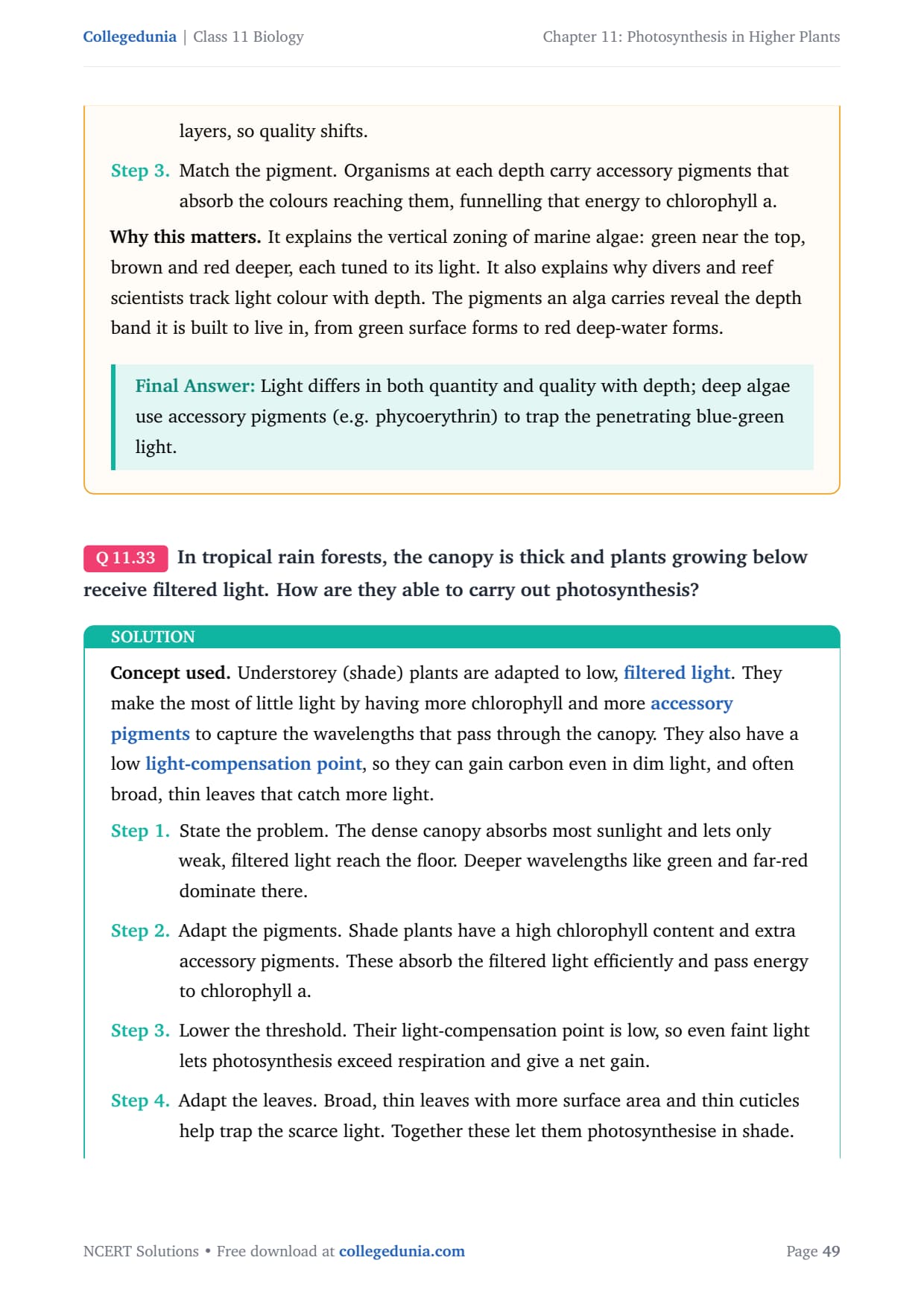
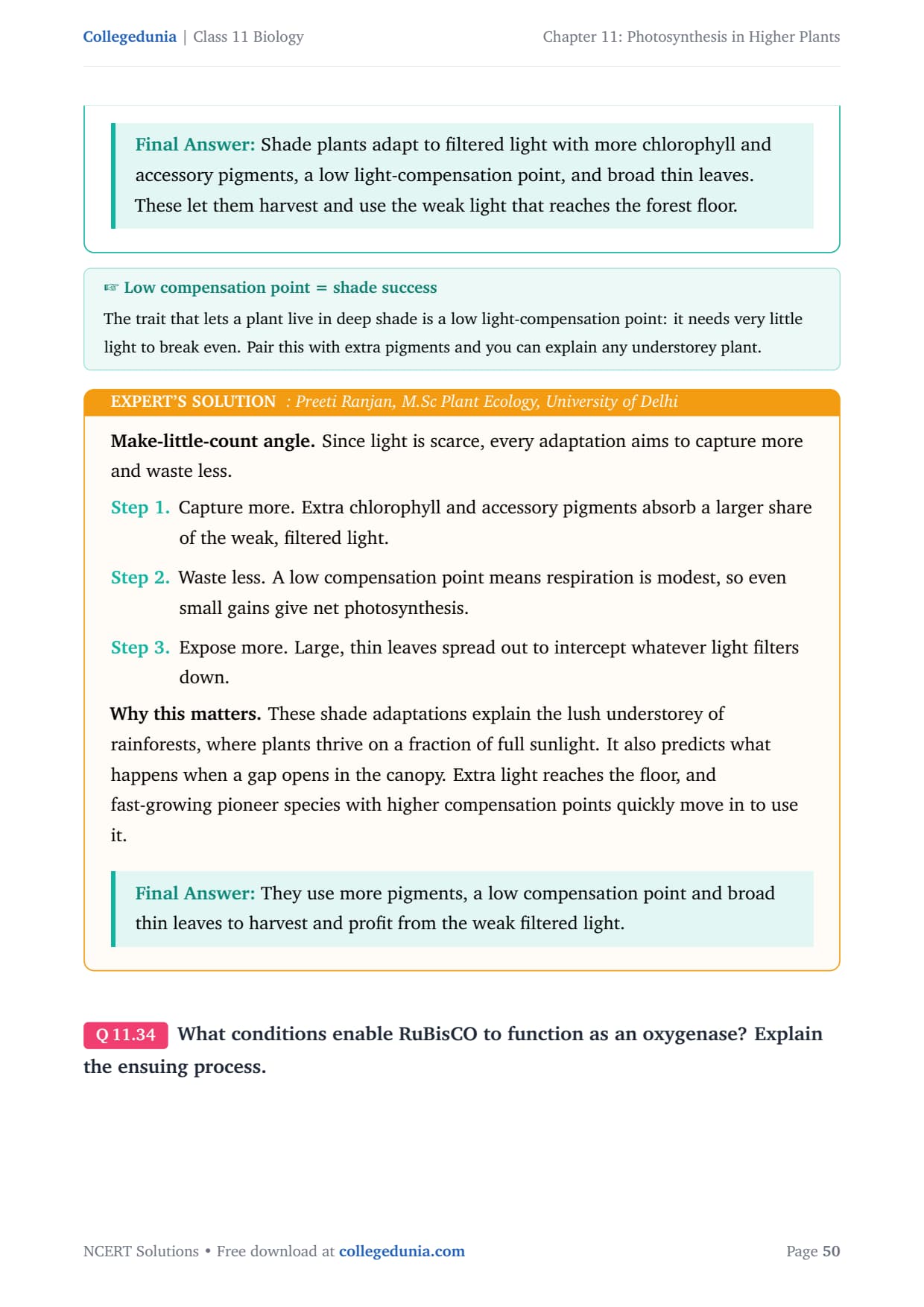
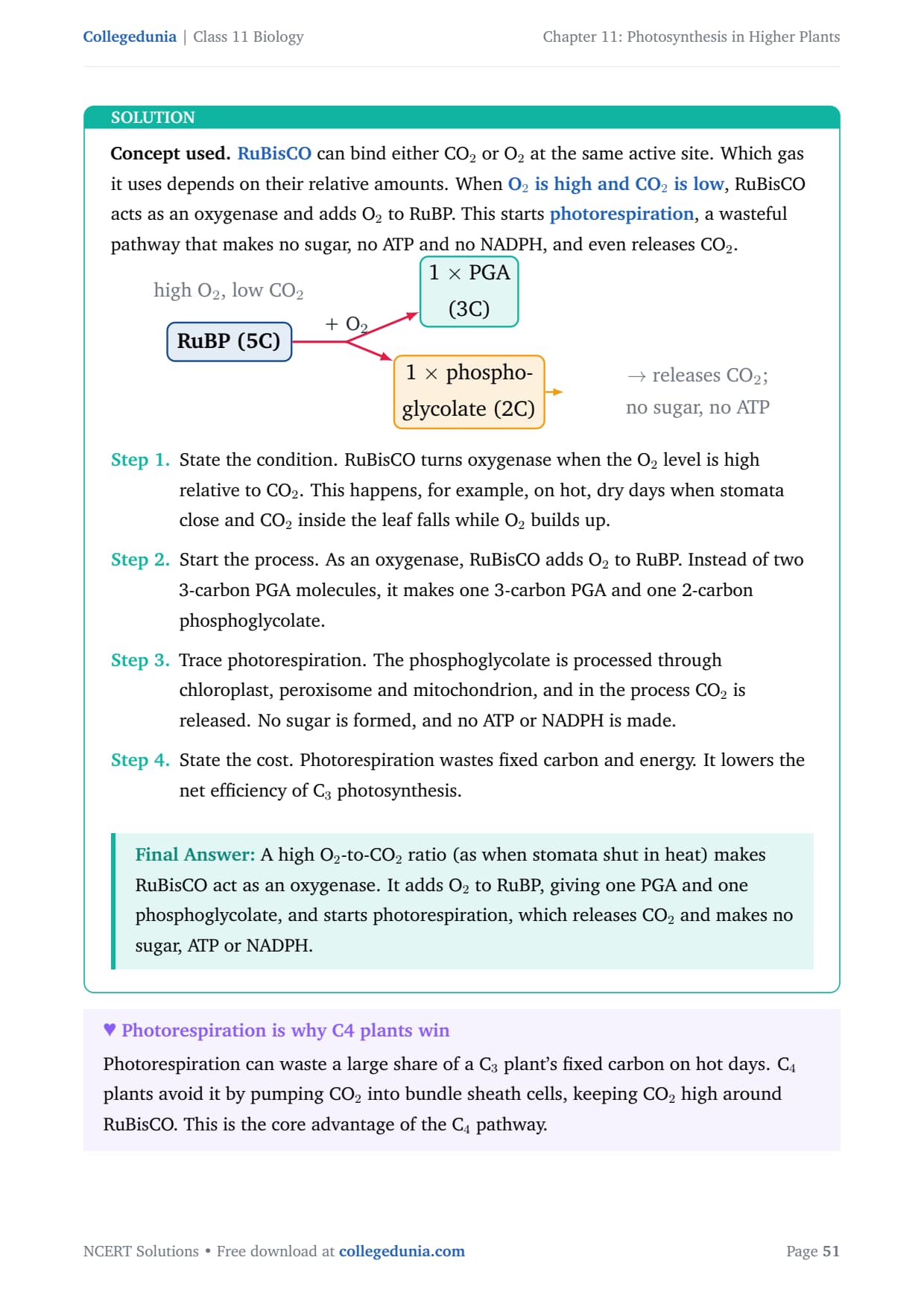
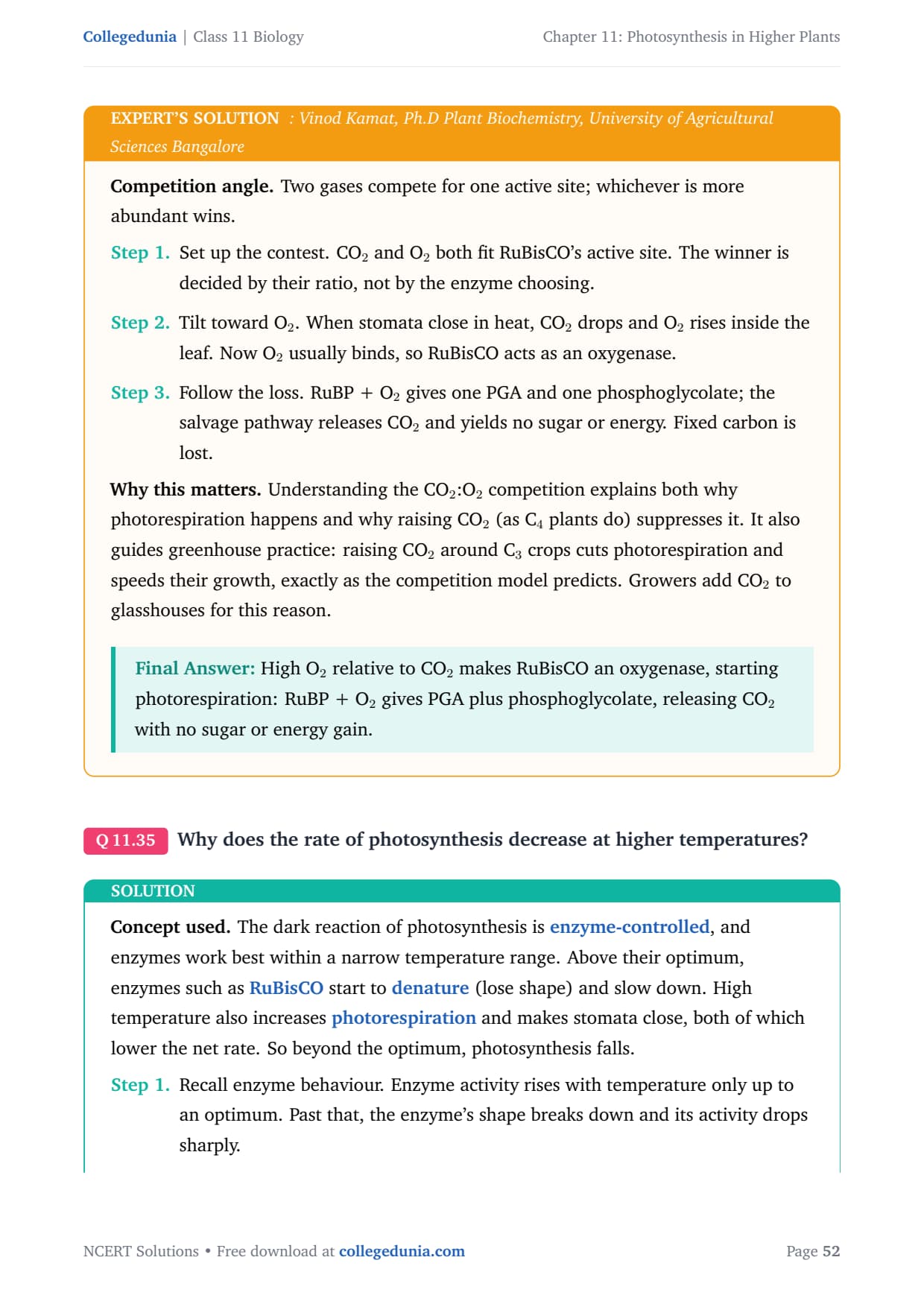
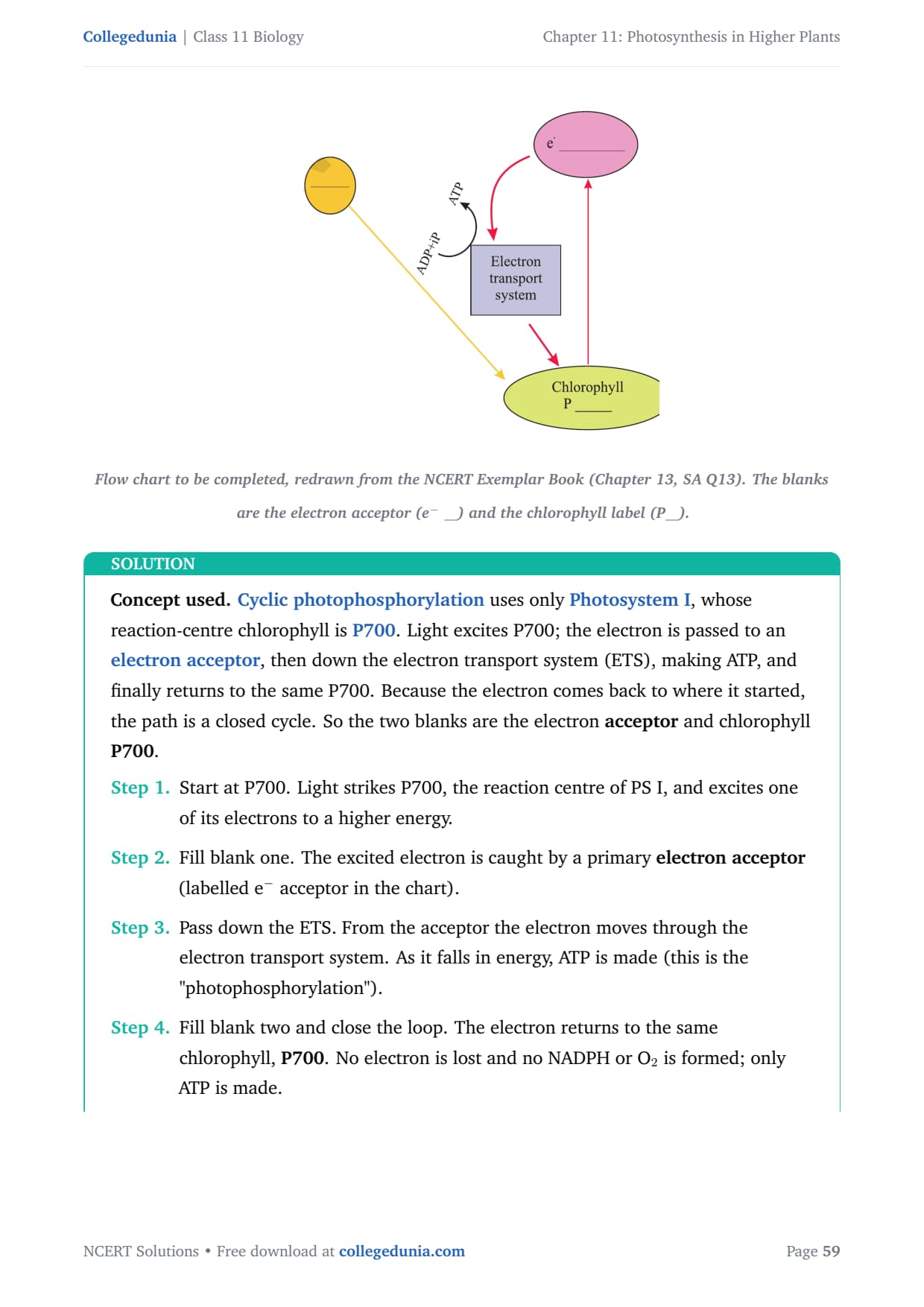
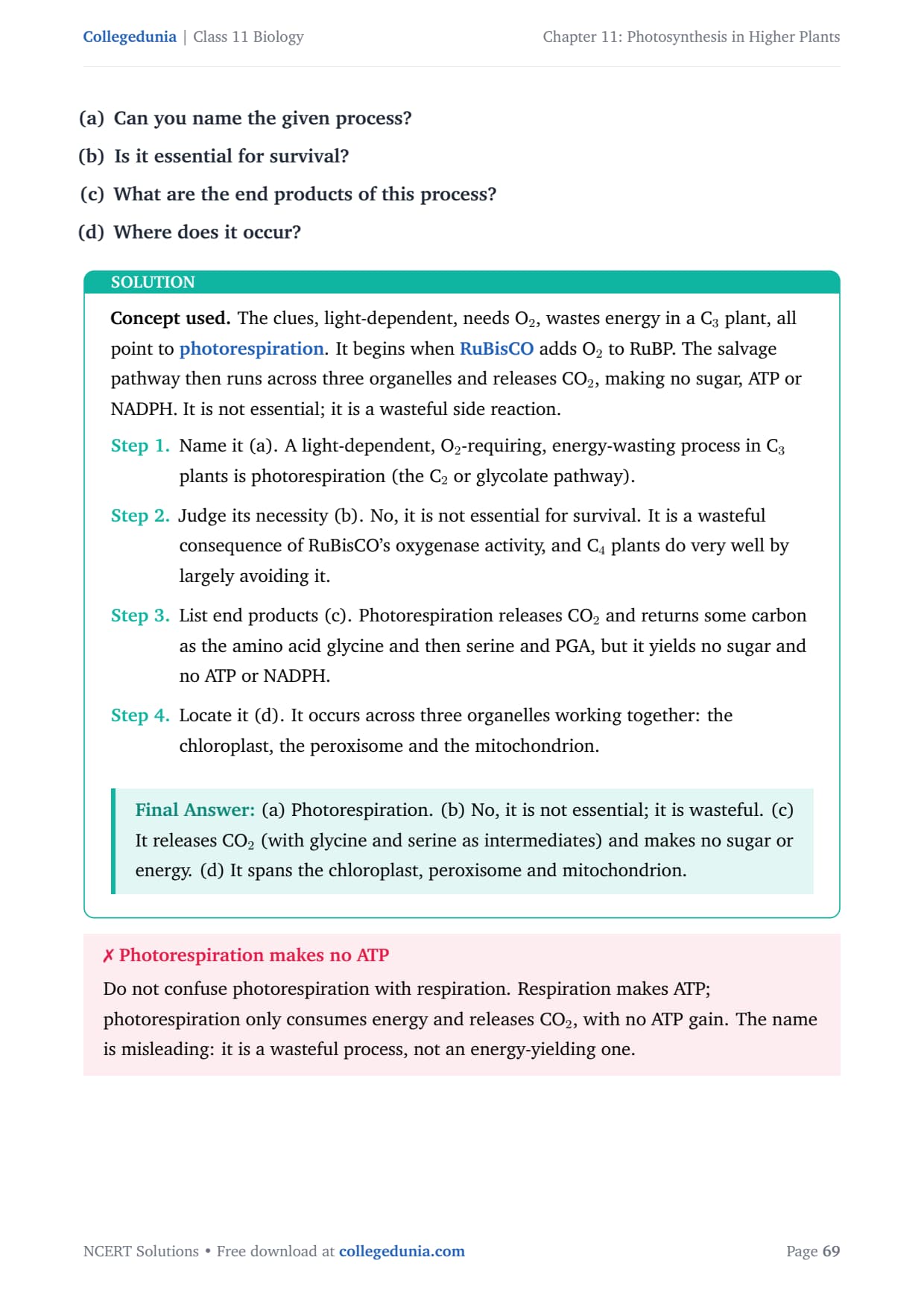
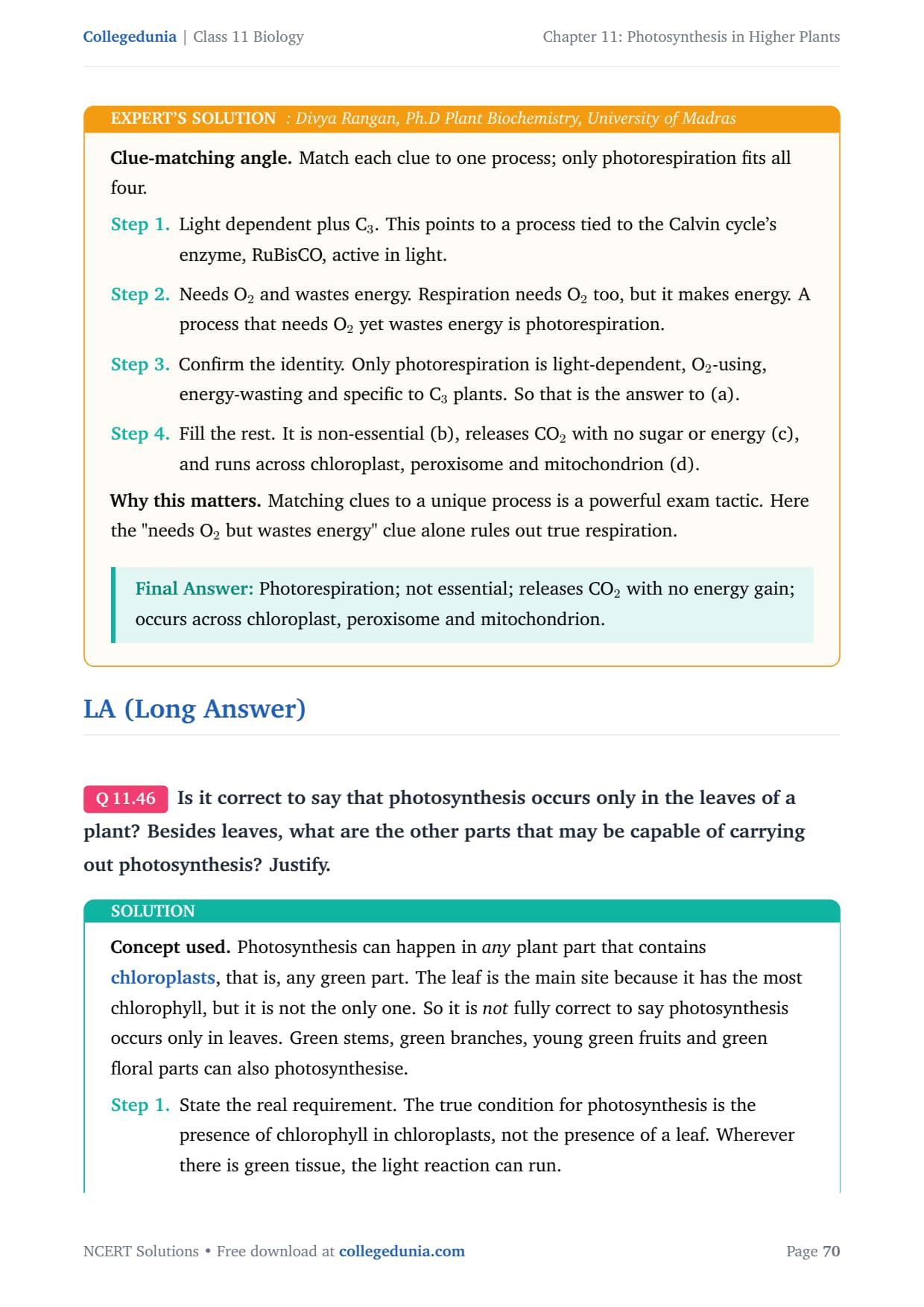
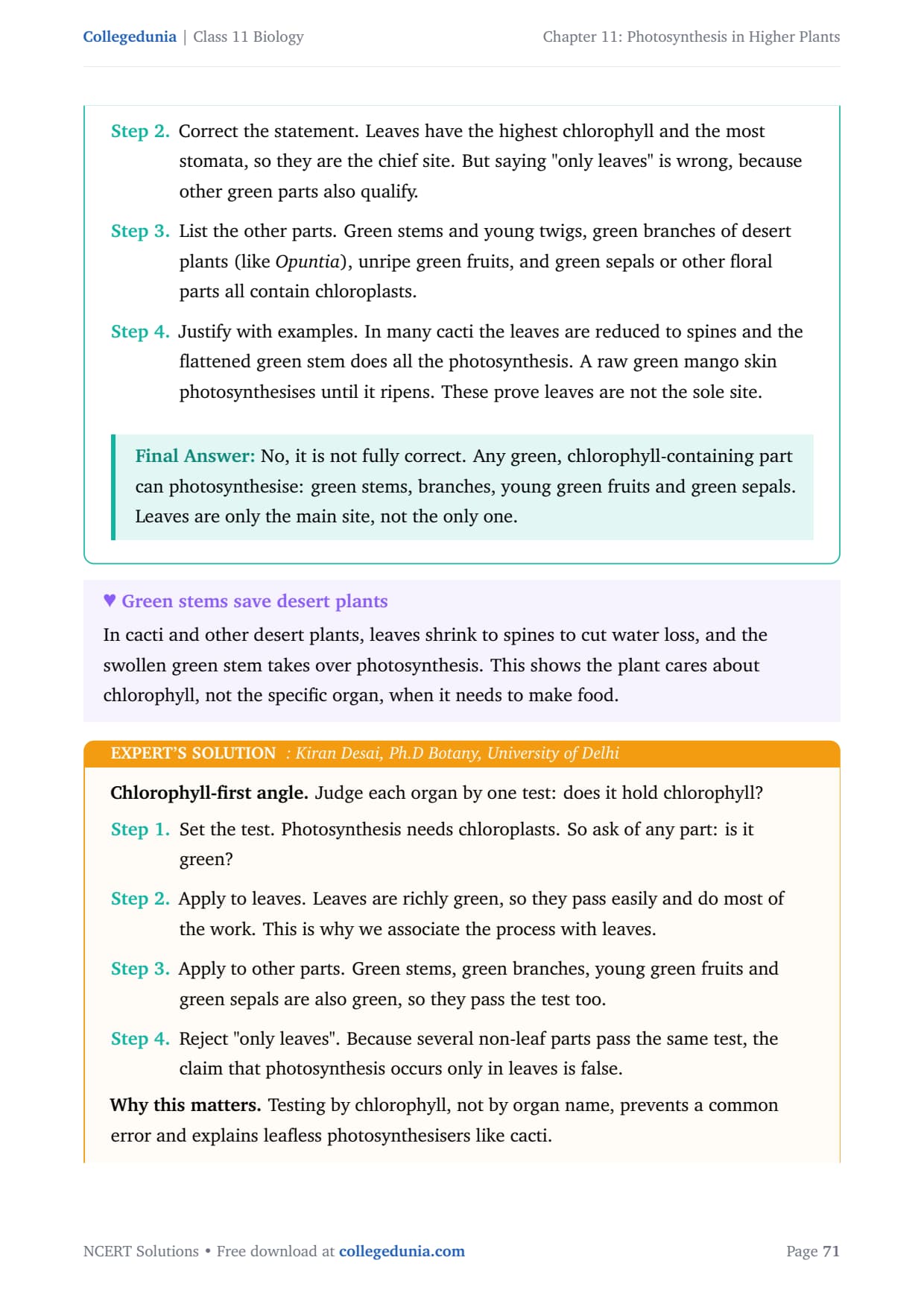
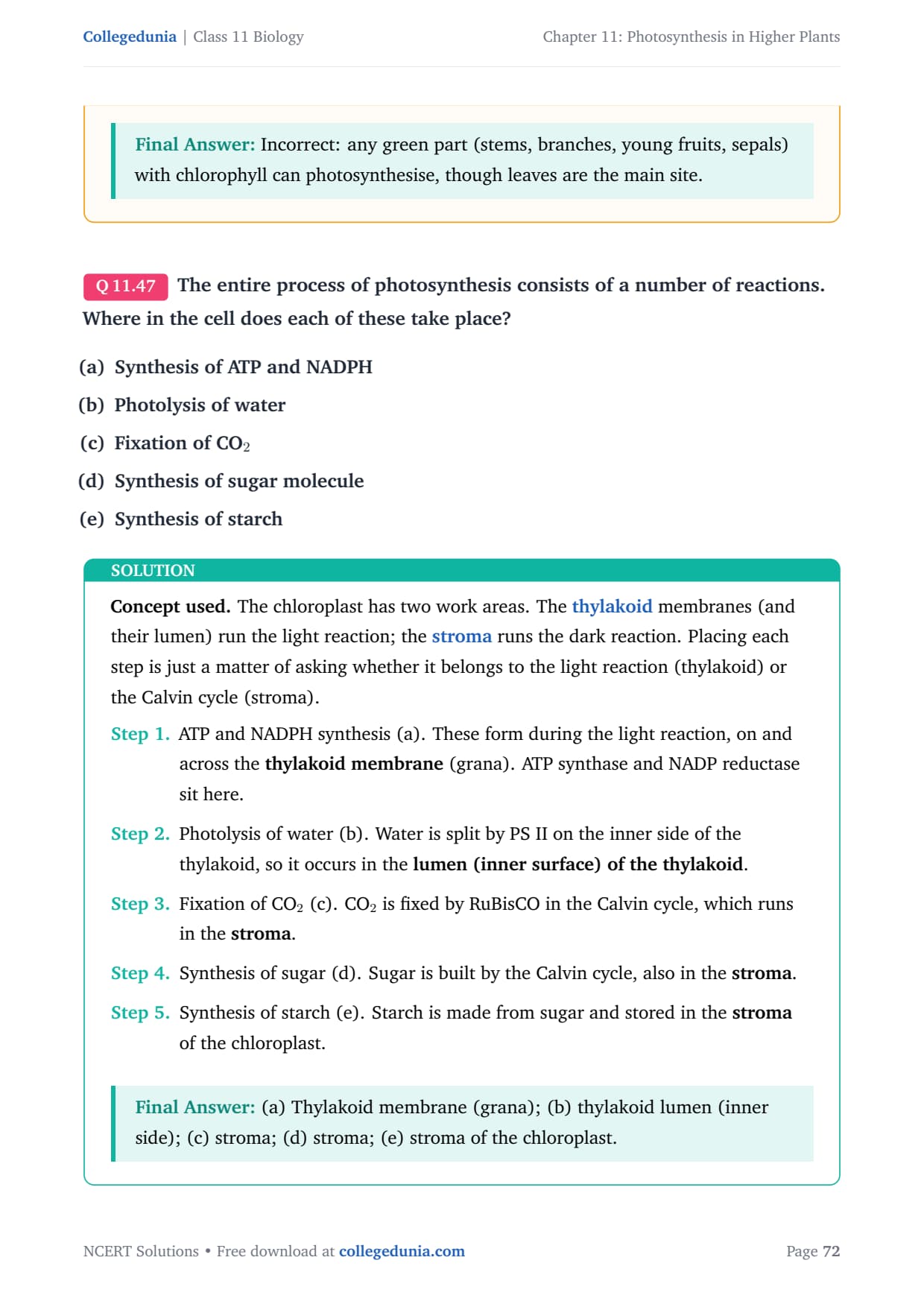
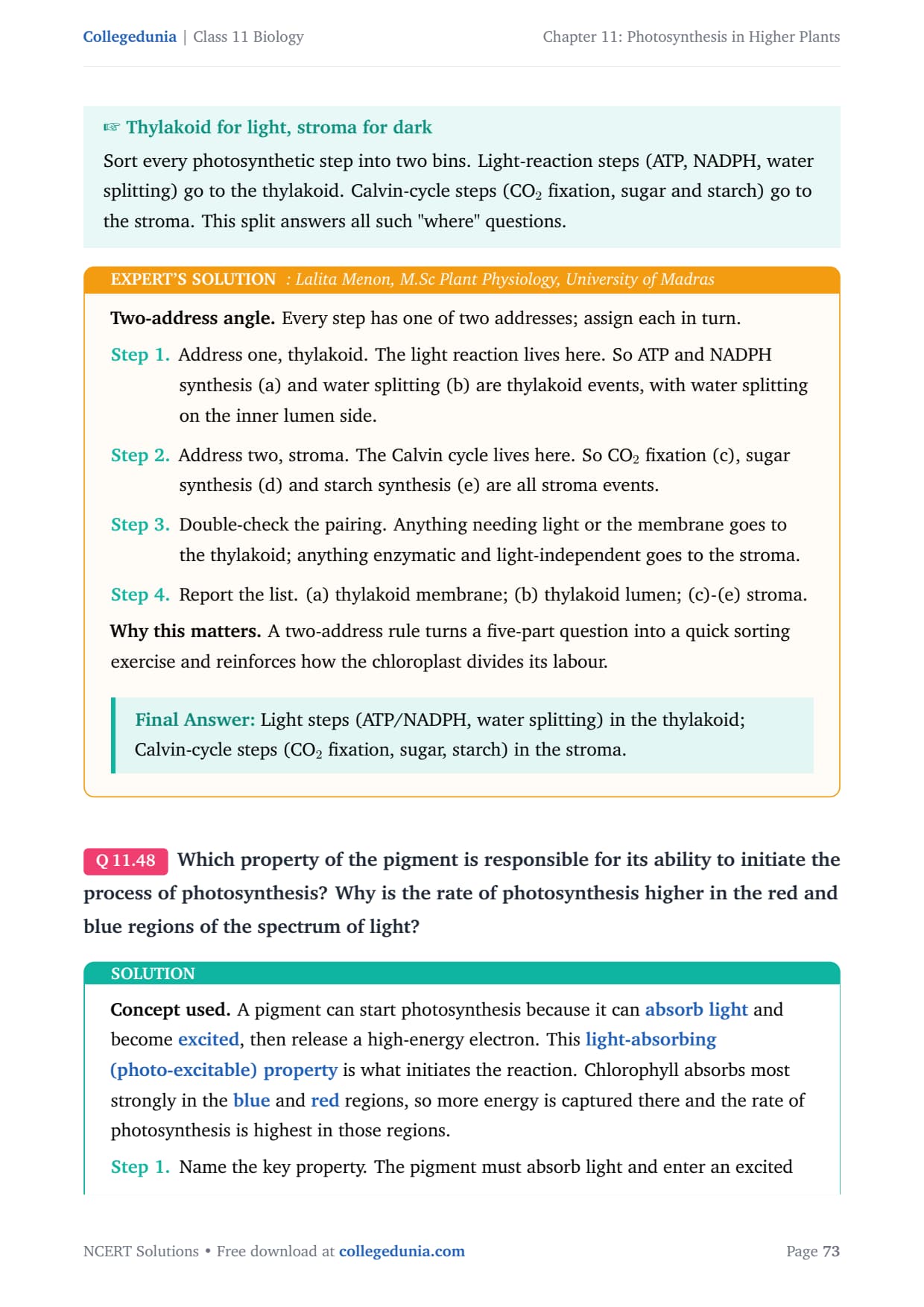
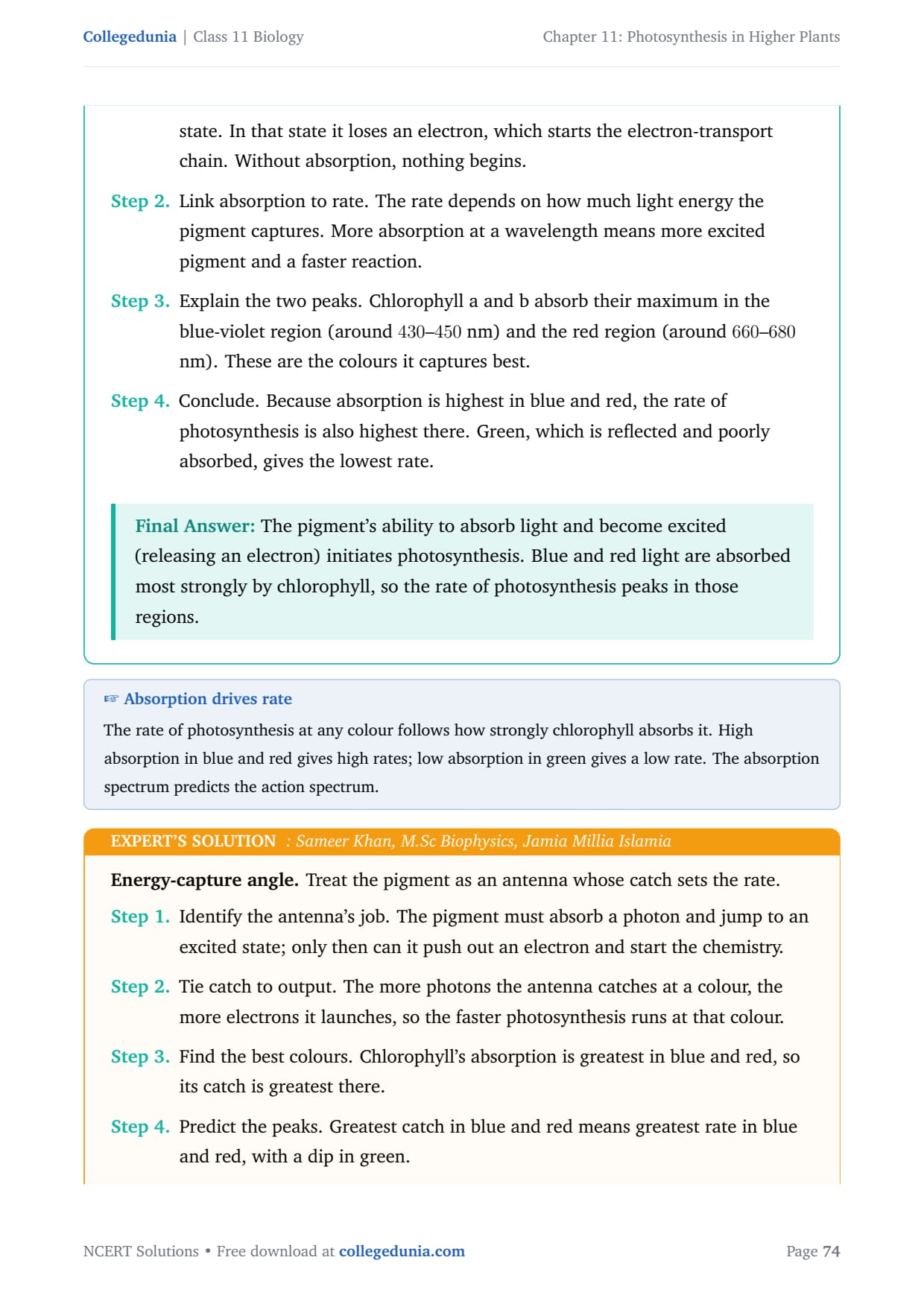
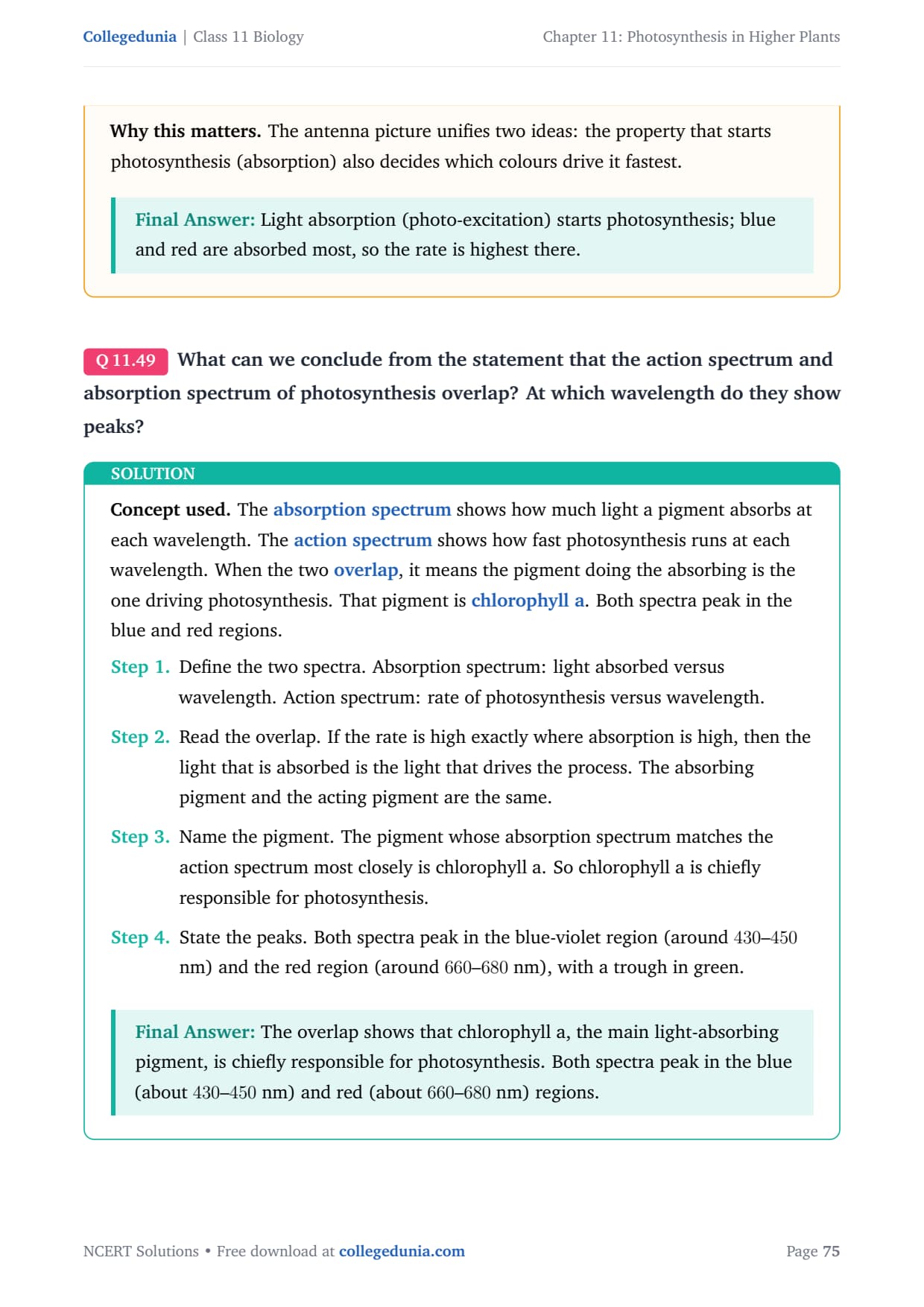
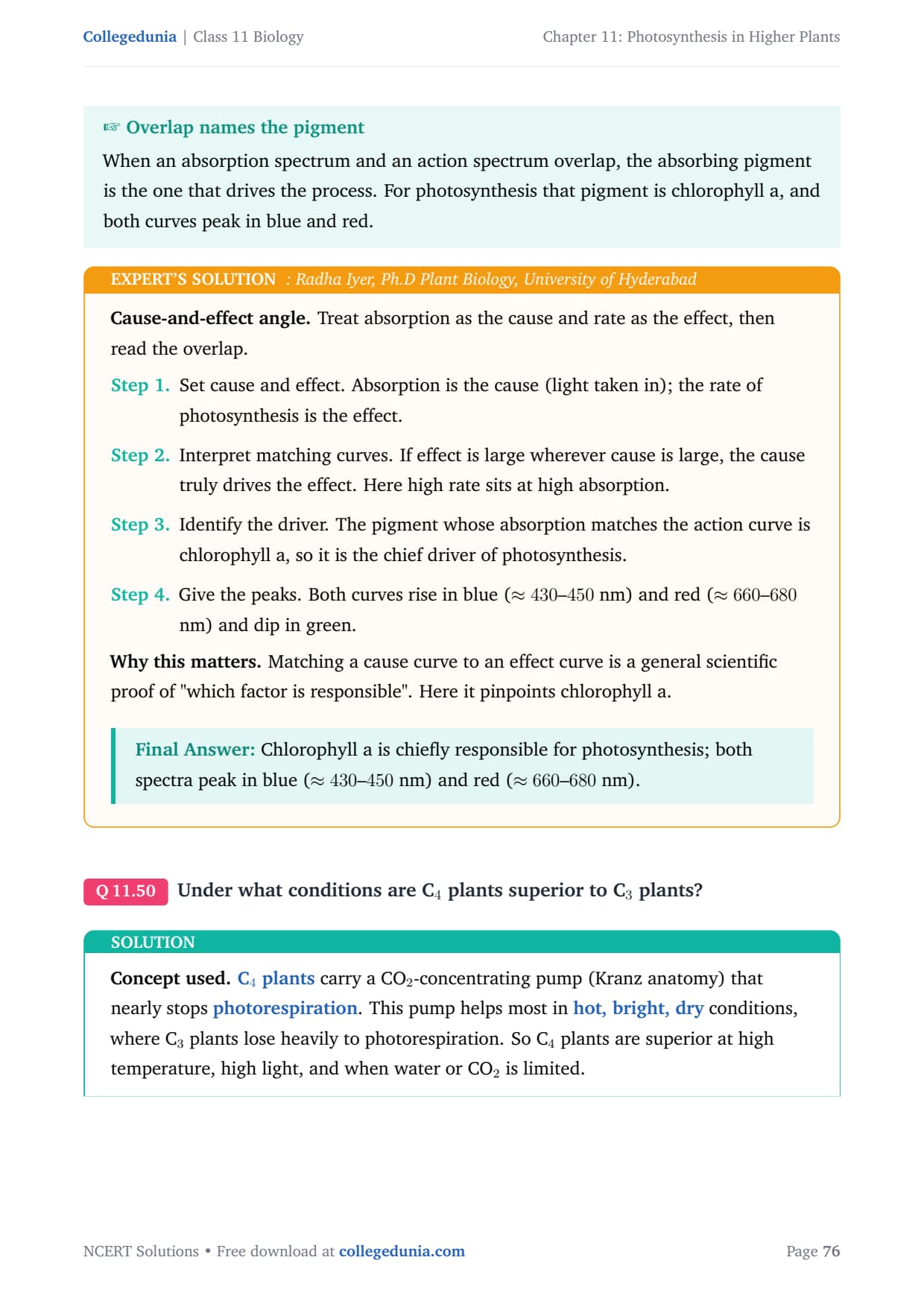
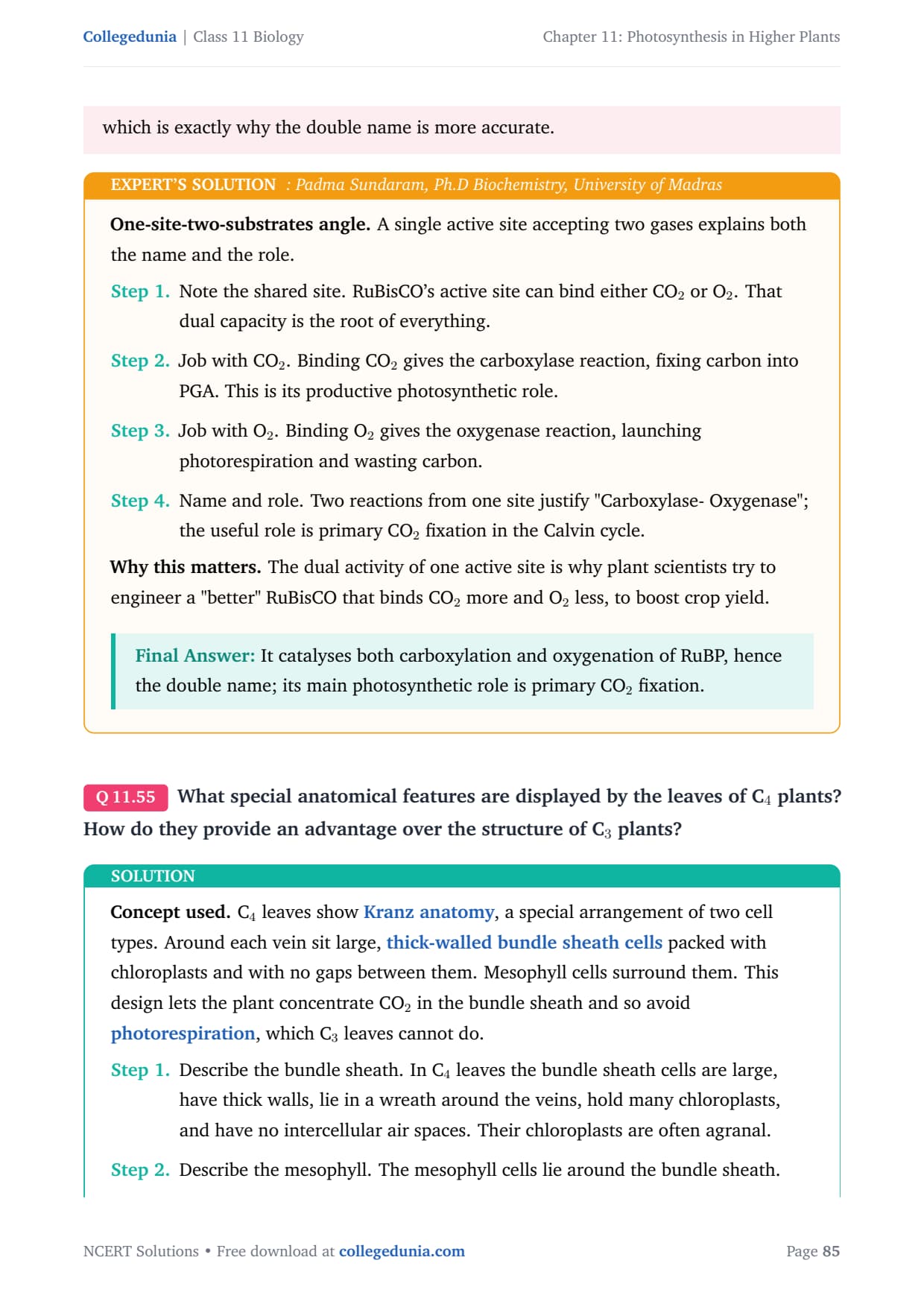
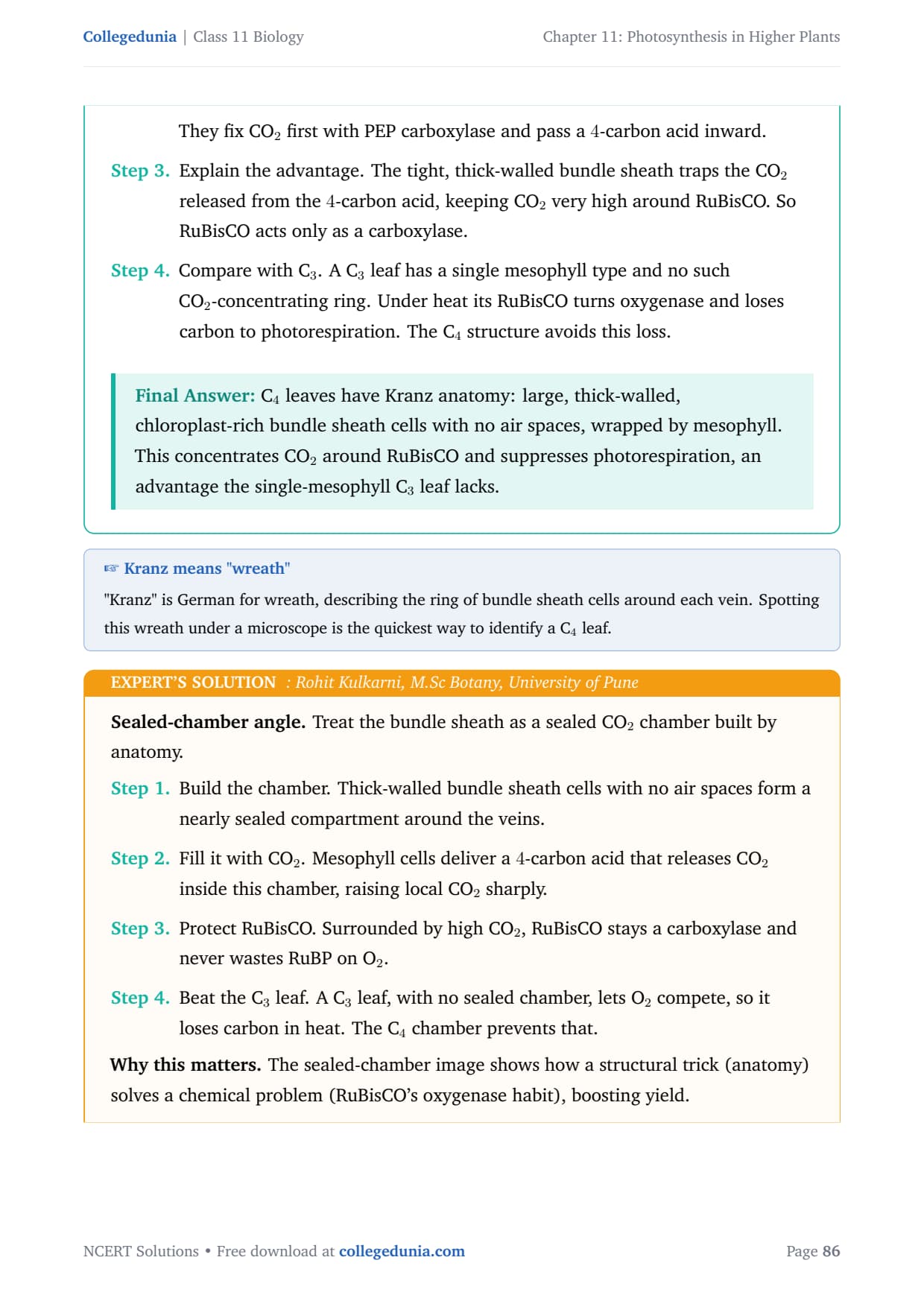
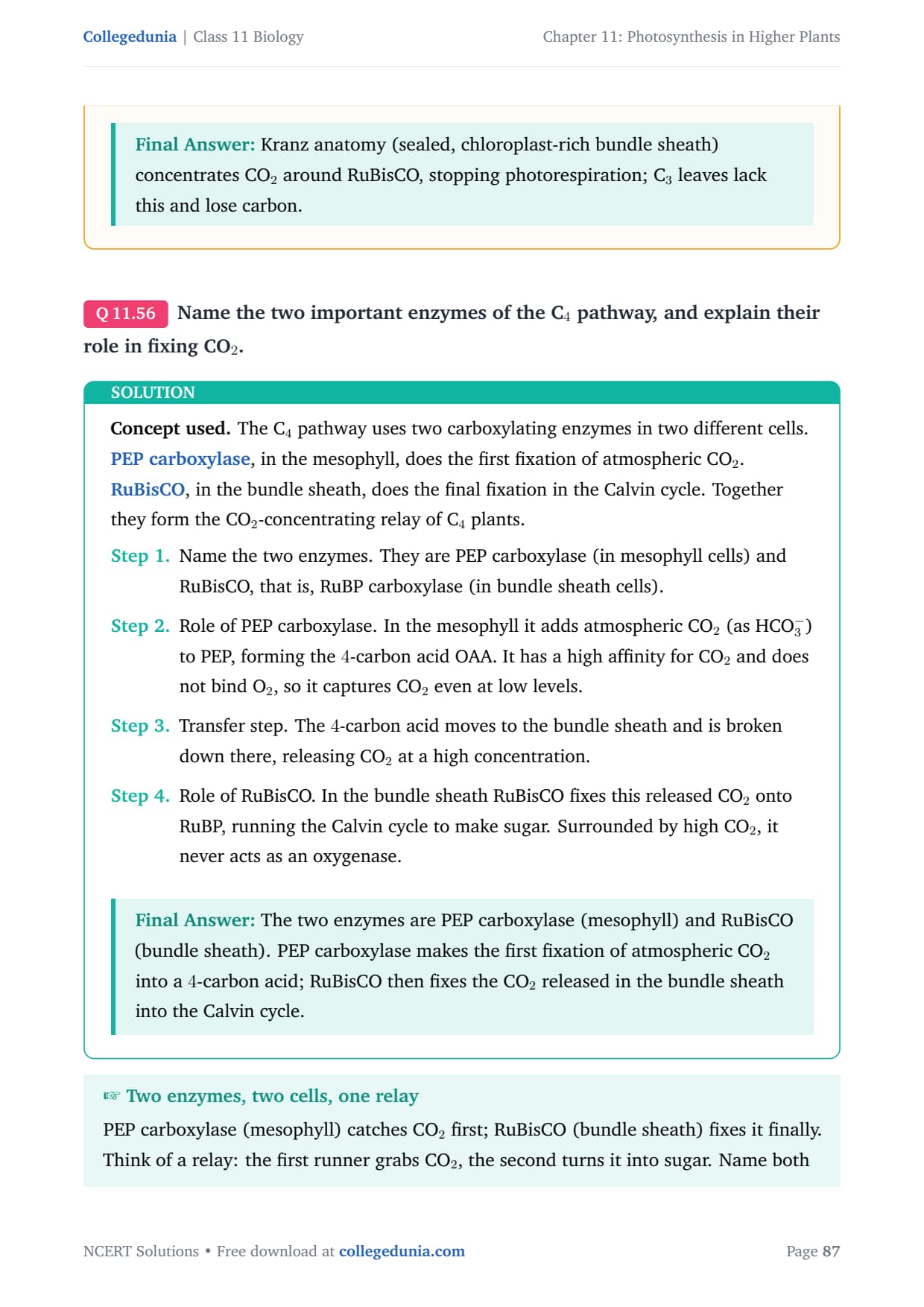
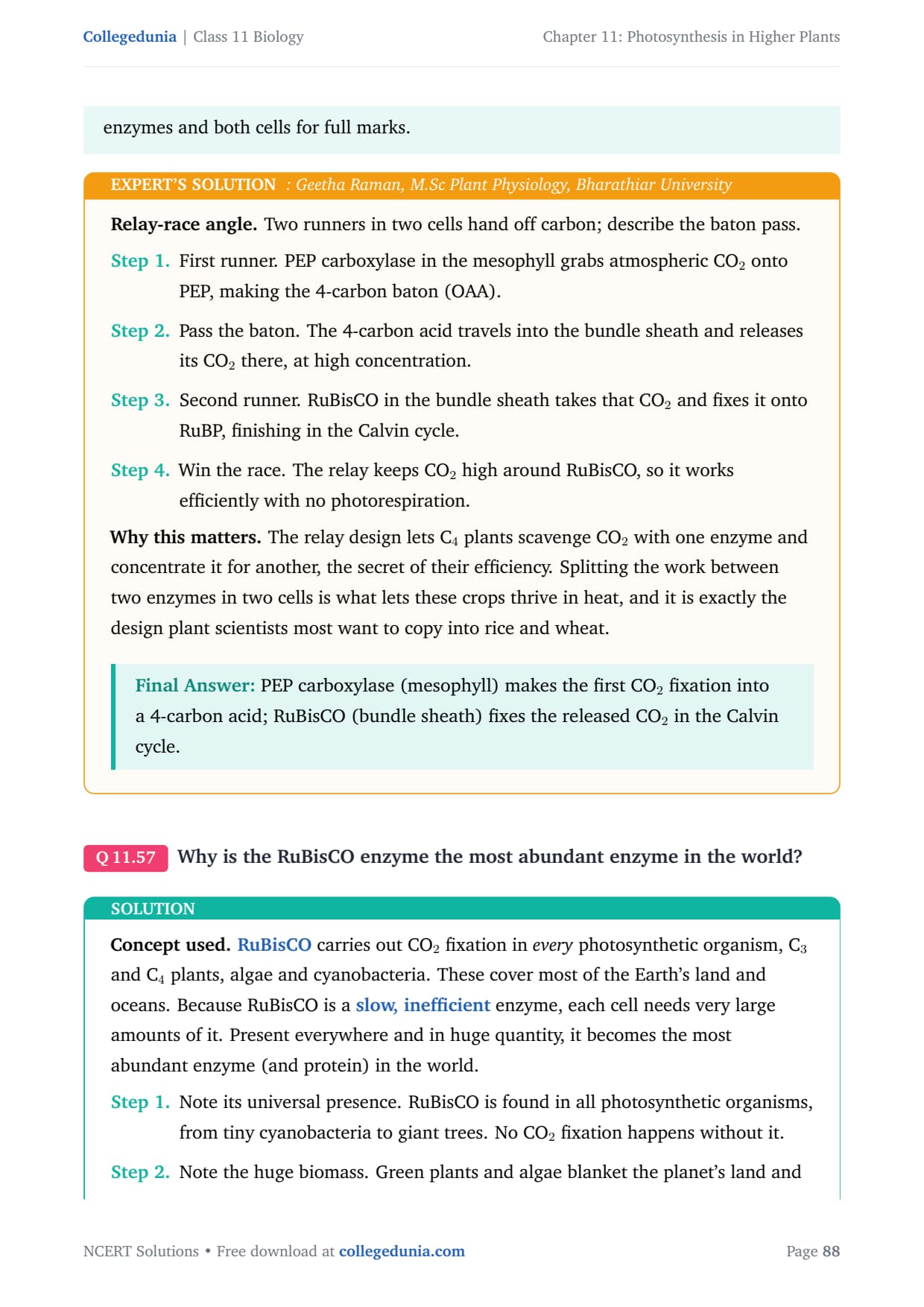
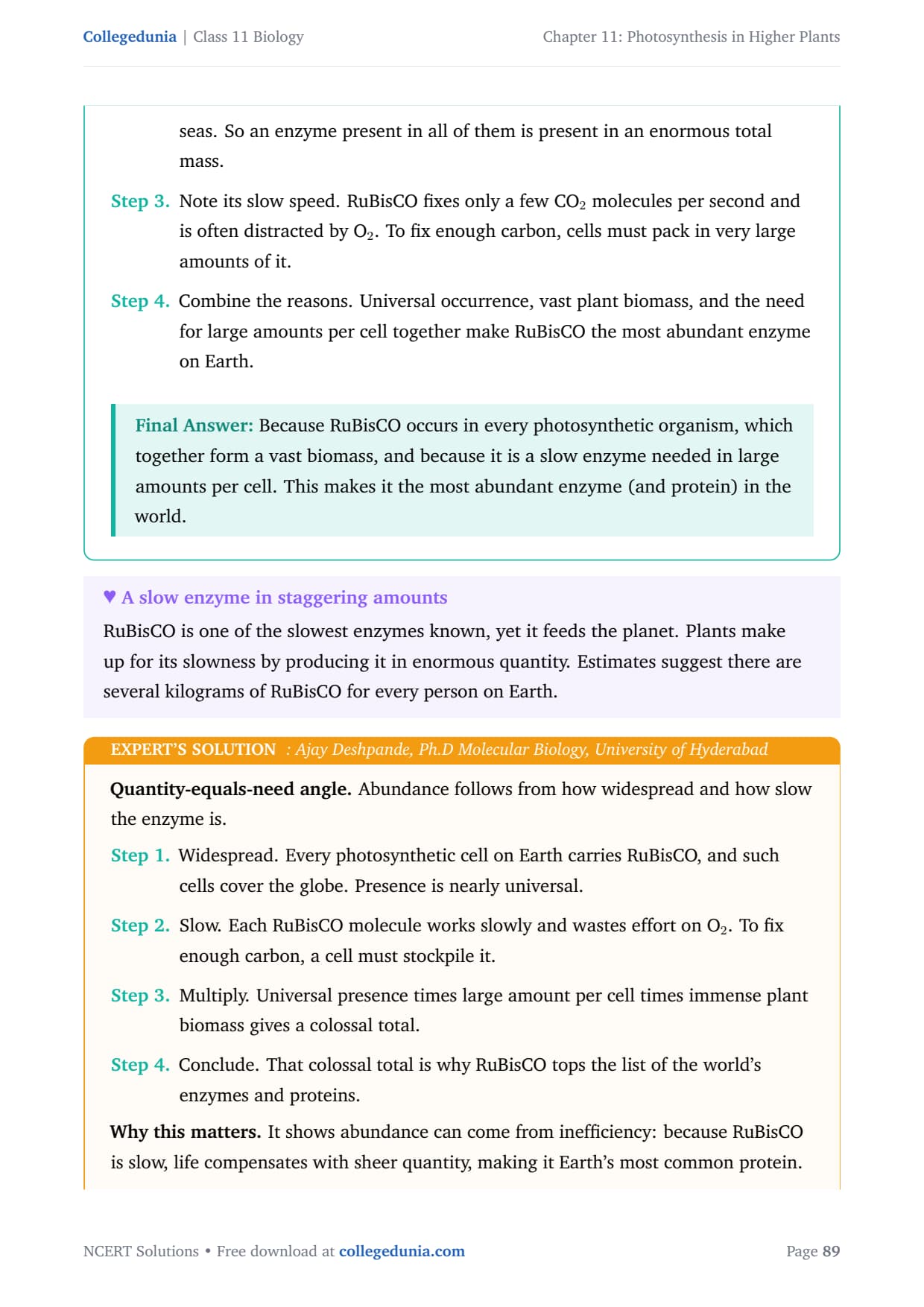
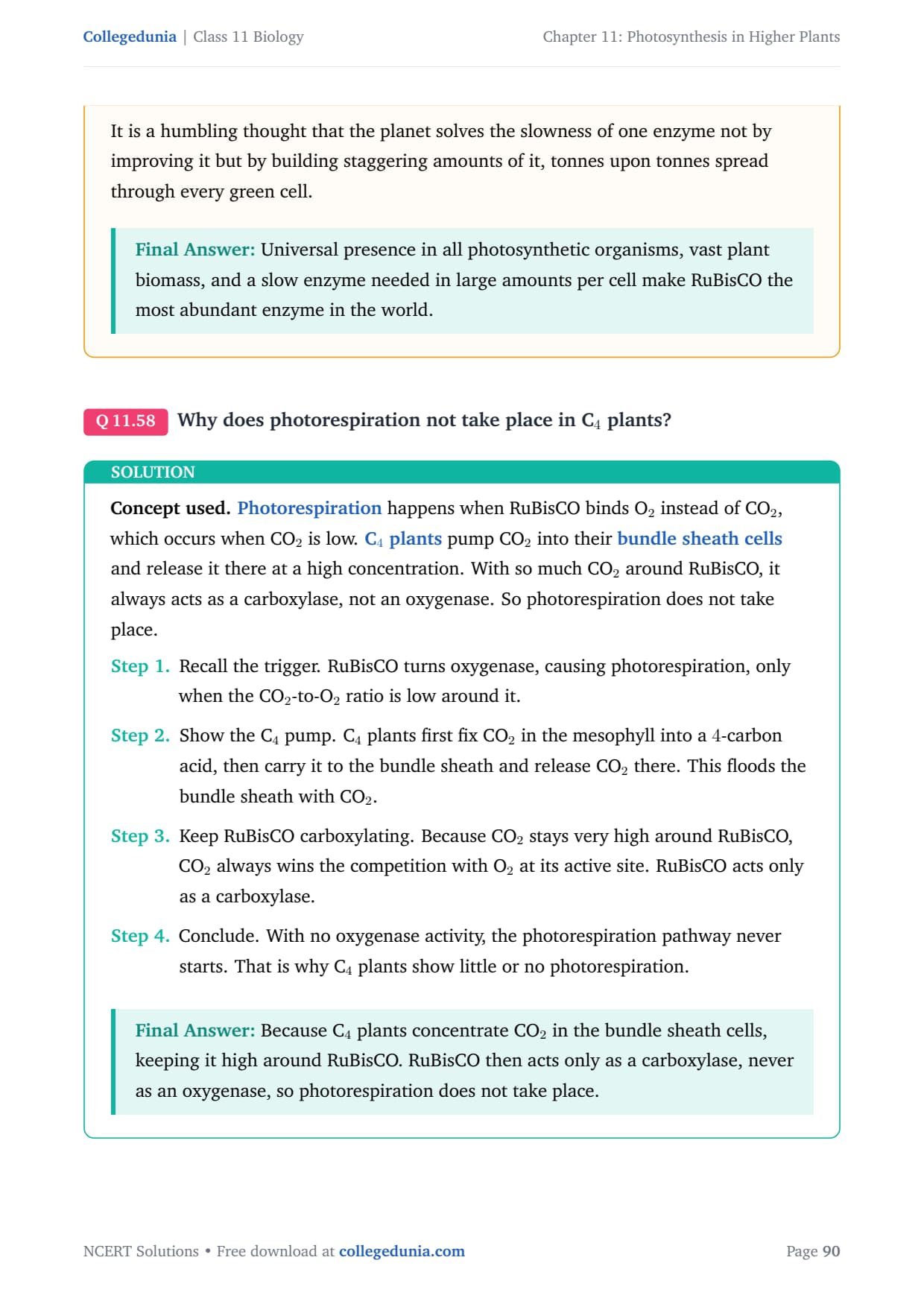
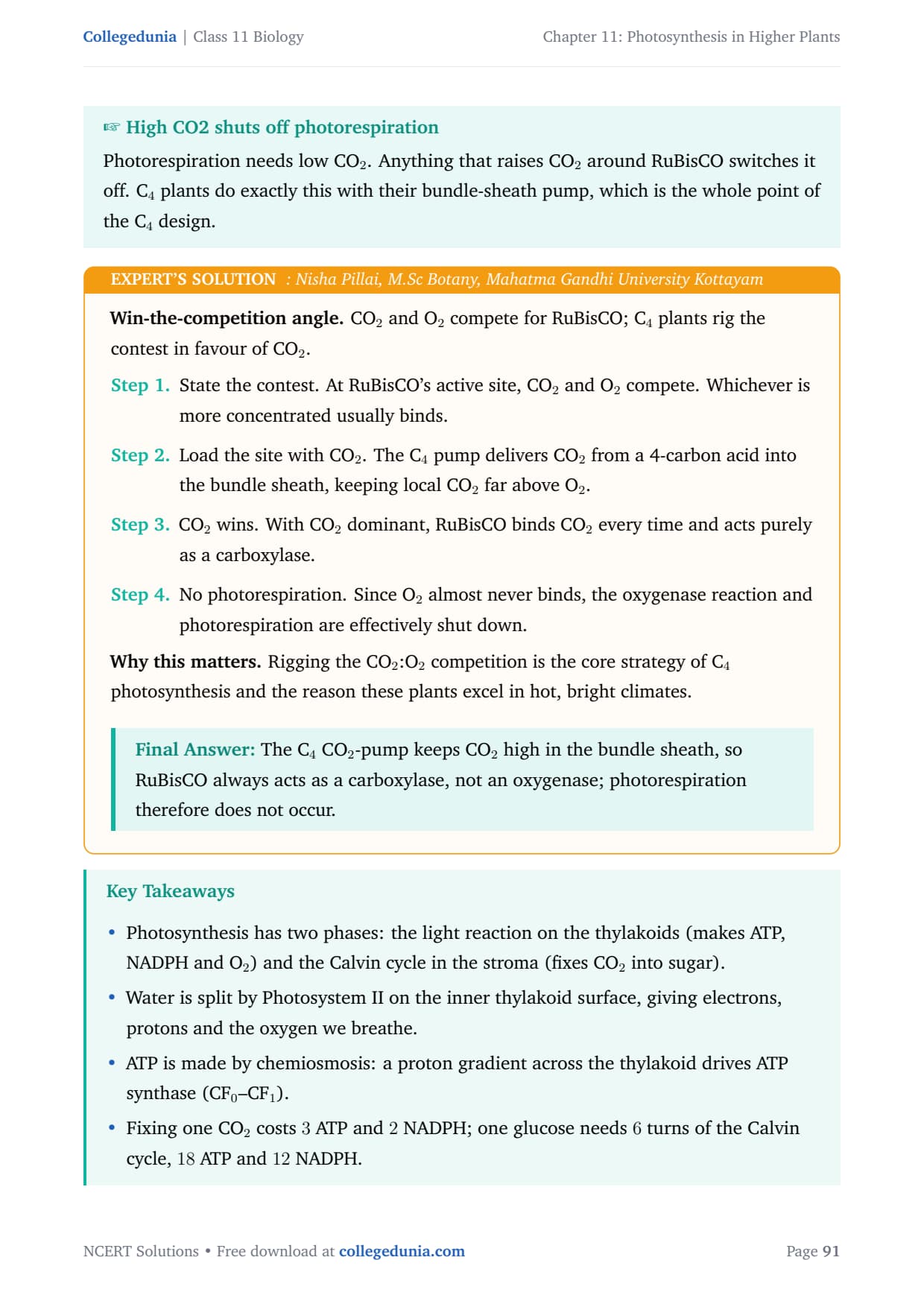
This is one of the highest-yield chapters in Class 11 Biology, and the Exemplar treats it that way. Pigments, the light reaction, the Calvin cycle and the C4 pathway all appear as reasoning questions rather than plain recall. Two questions in the printed MCQ key even carry a misprint, so the chapter is a real test of whether you understand the science or only remember the answer key.
- CBSE Weightage: 4 to 5 marks, usually one question on the light reaction, the Calvin cycle or C3 against C4 plants
- NEET Weightage: 3 to 4 questions per year on pigments, photophosphorylation, RuBisCO and the C4 pathway
- CUET Weightage: 2 to 3 questions on the events of the light and dark reactions in the Biology domain paper
Every answer is checked against the official NCERT Exemplar key, and the two printed-key misprints in this chapter, at MCQ 4 and MCQ 8, are flagged and corrected so students are never marked wrong.
Topics Covered in the Class 11 Biology Photosynthesis in Higher Plants Exemplar
The 58 questions in this chapter are built on four ideas, and each one is tested from several angles because photosynthesis is dense with mechanism. Photosynthesis in Higher Plants carries more NEET weight than almost any other Class 11 chapter, so the Exemplar pushes past definitions into why each step happens. Working through these four clusters fixes the sequence of events that boards and NEET ask about every year.
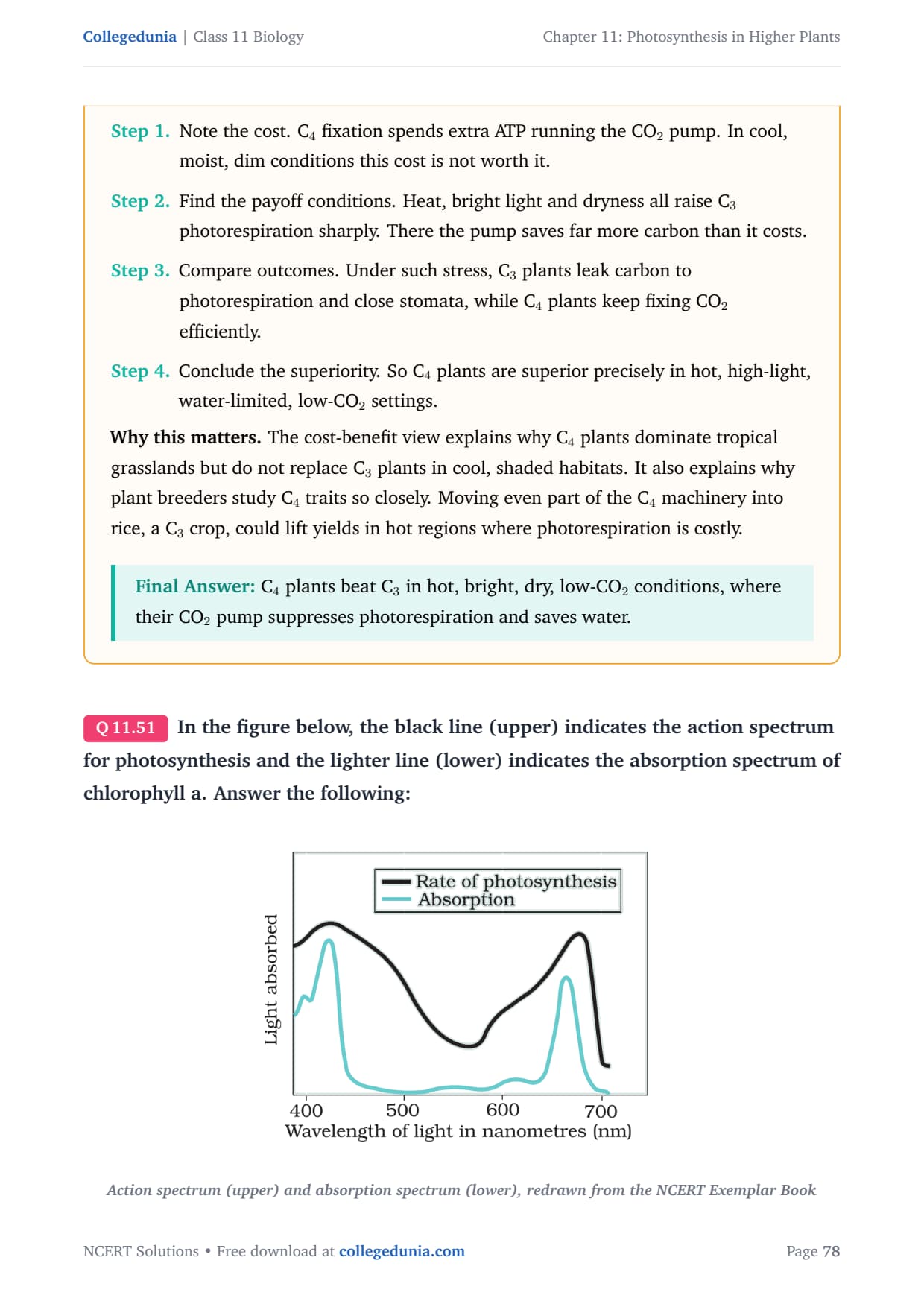
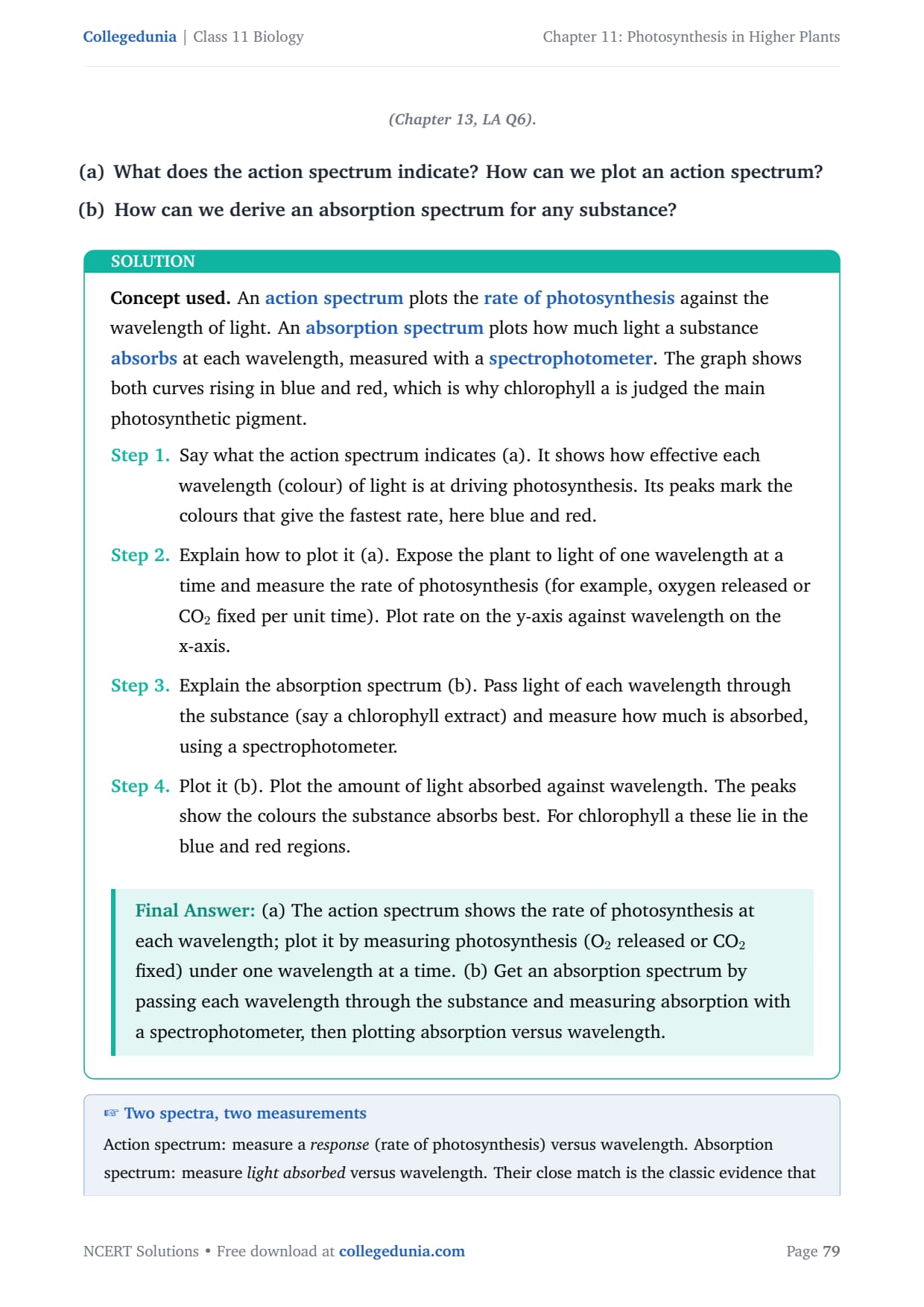
- Pigments and light: chlorophyll and its Mg core, the absorption and action spectra, photosynthetically active radiation, and why green light is least effective
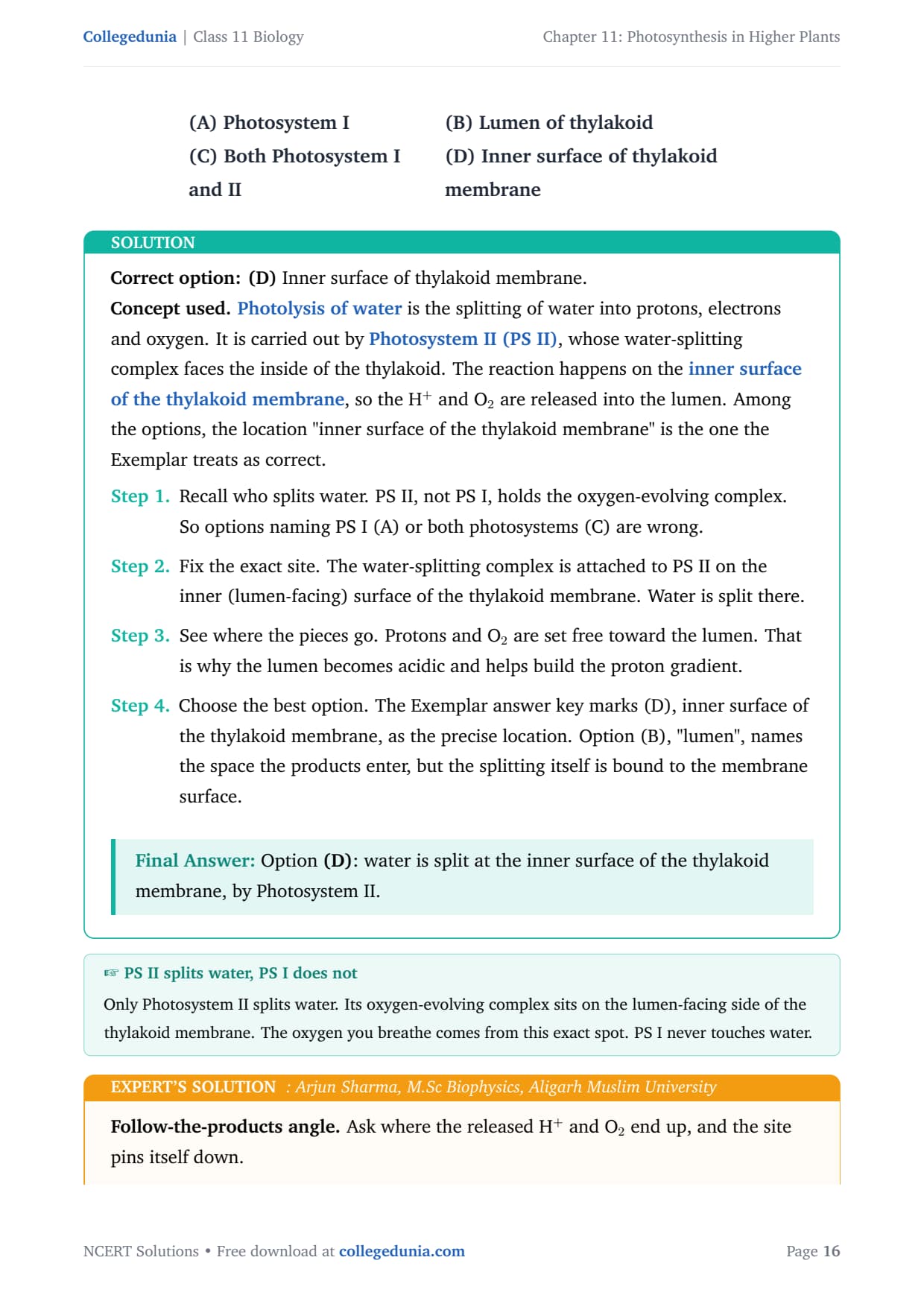
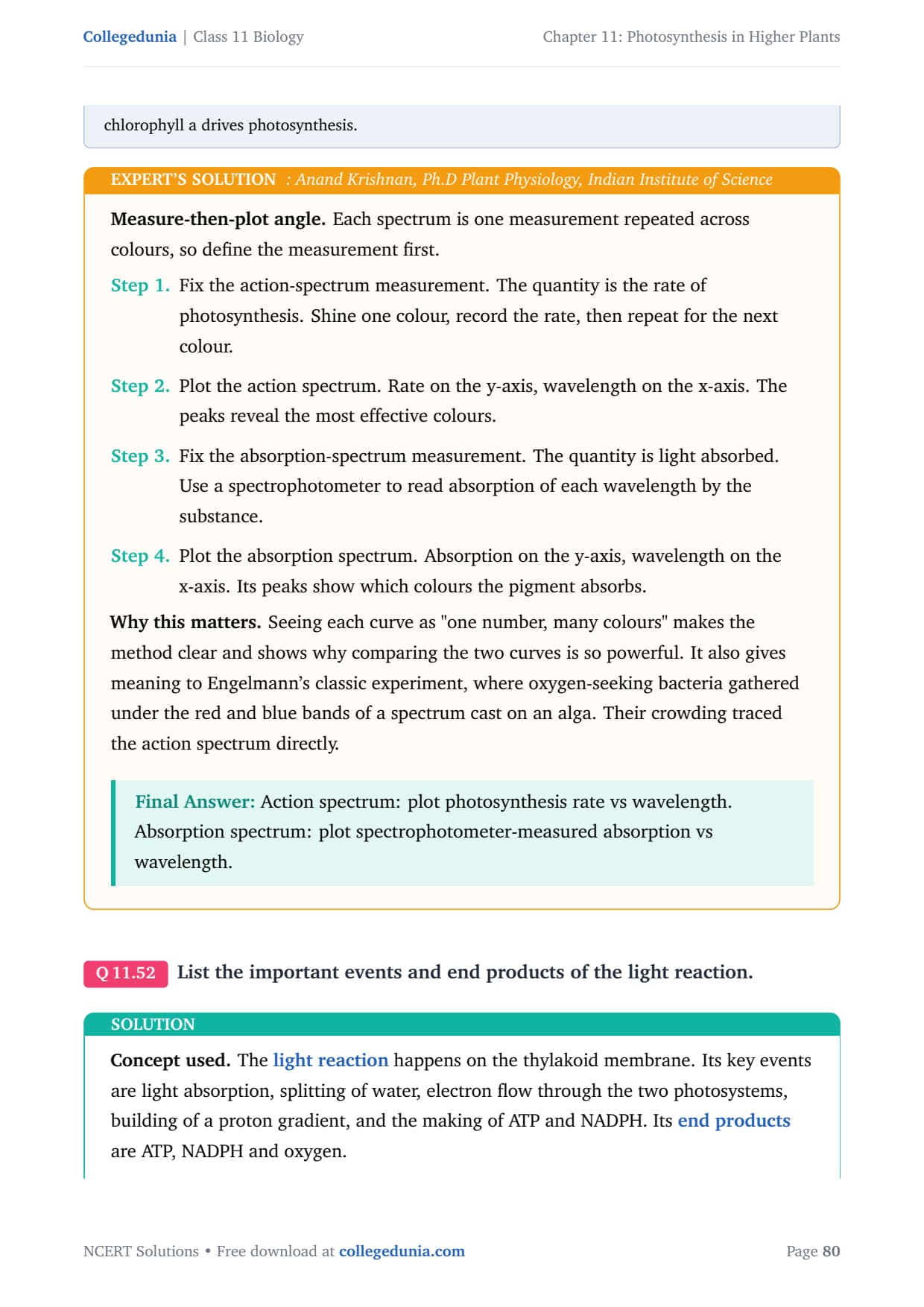
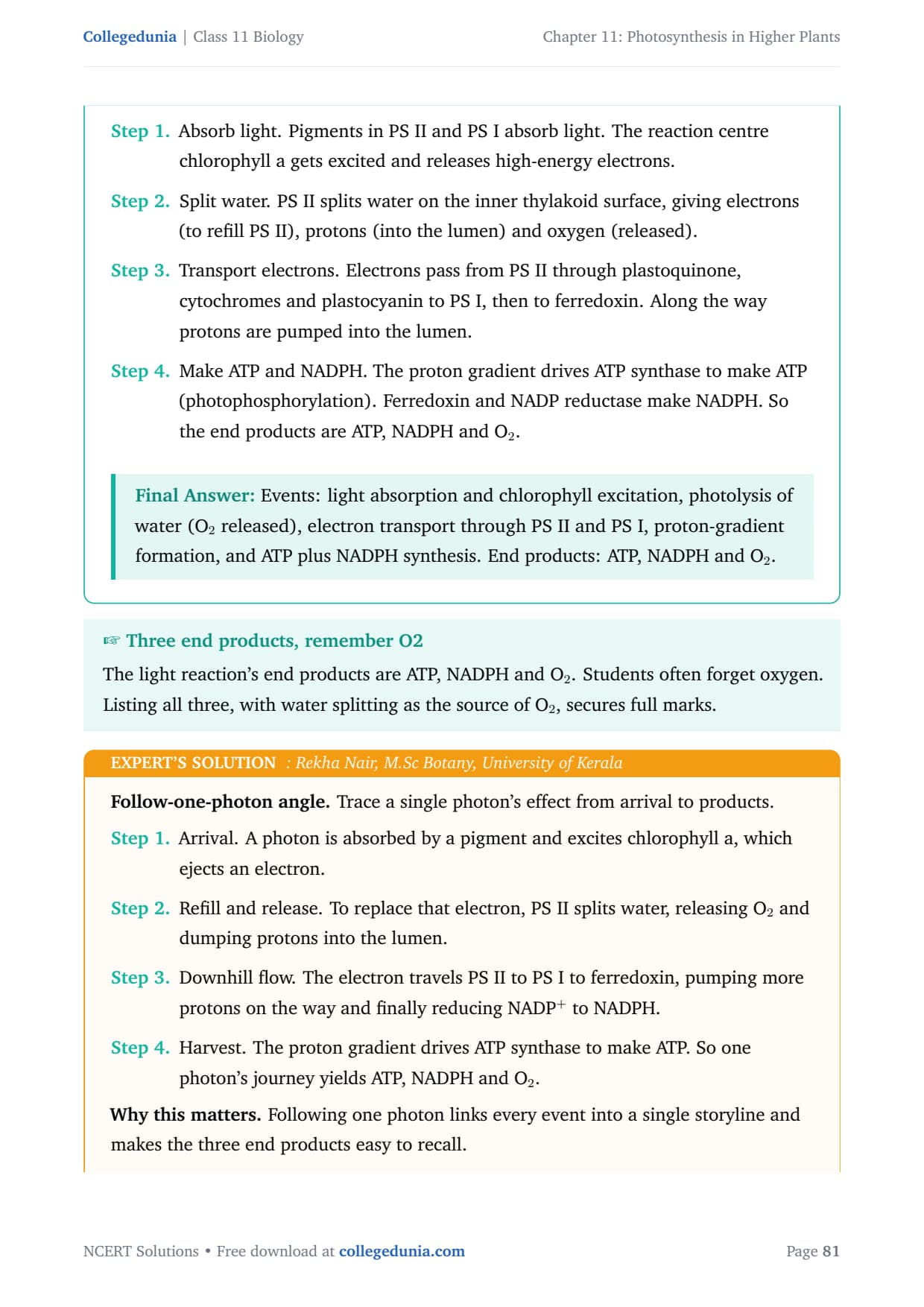
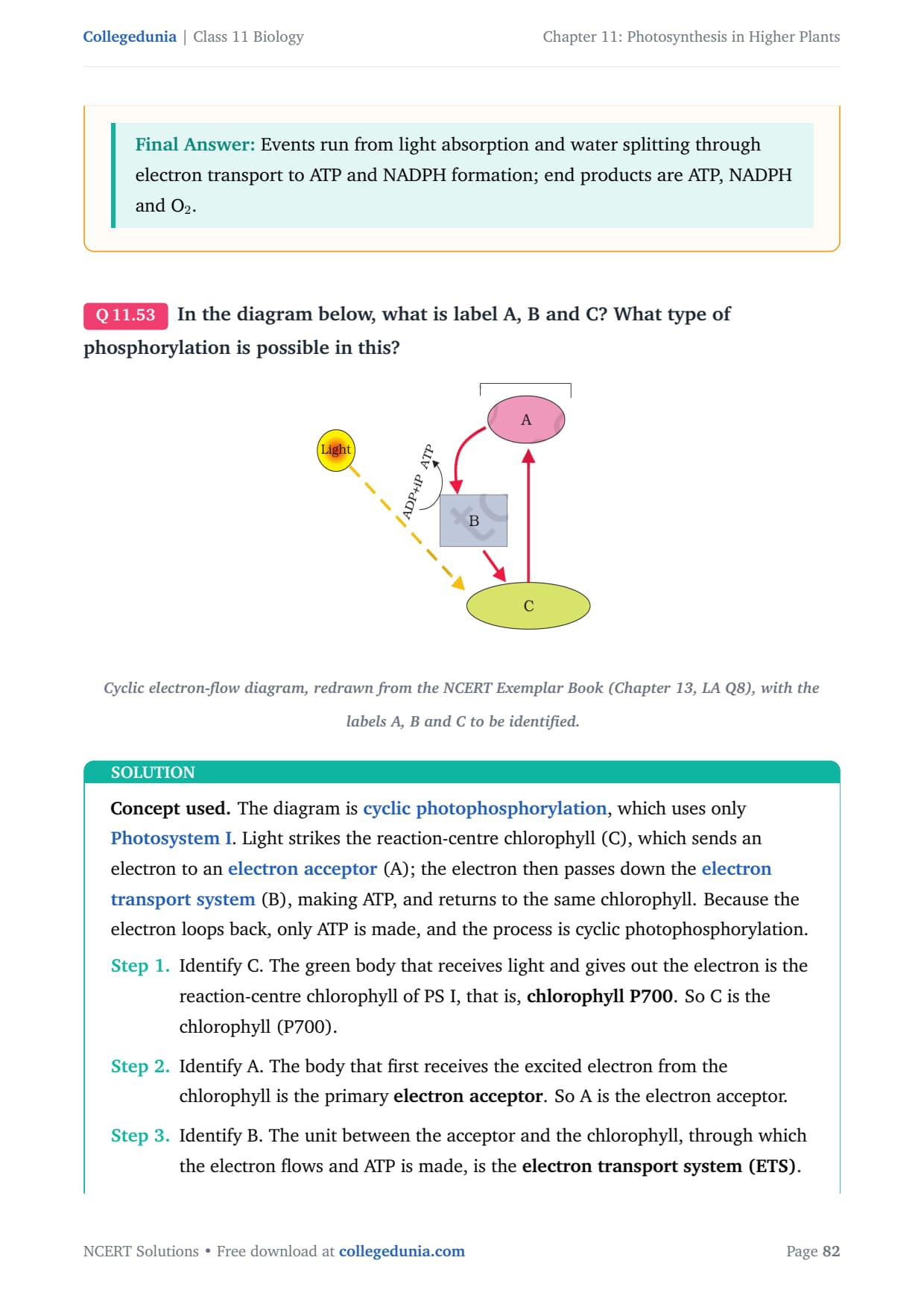
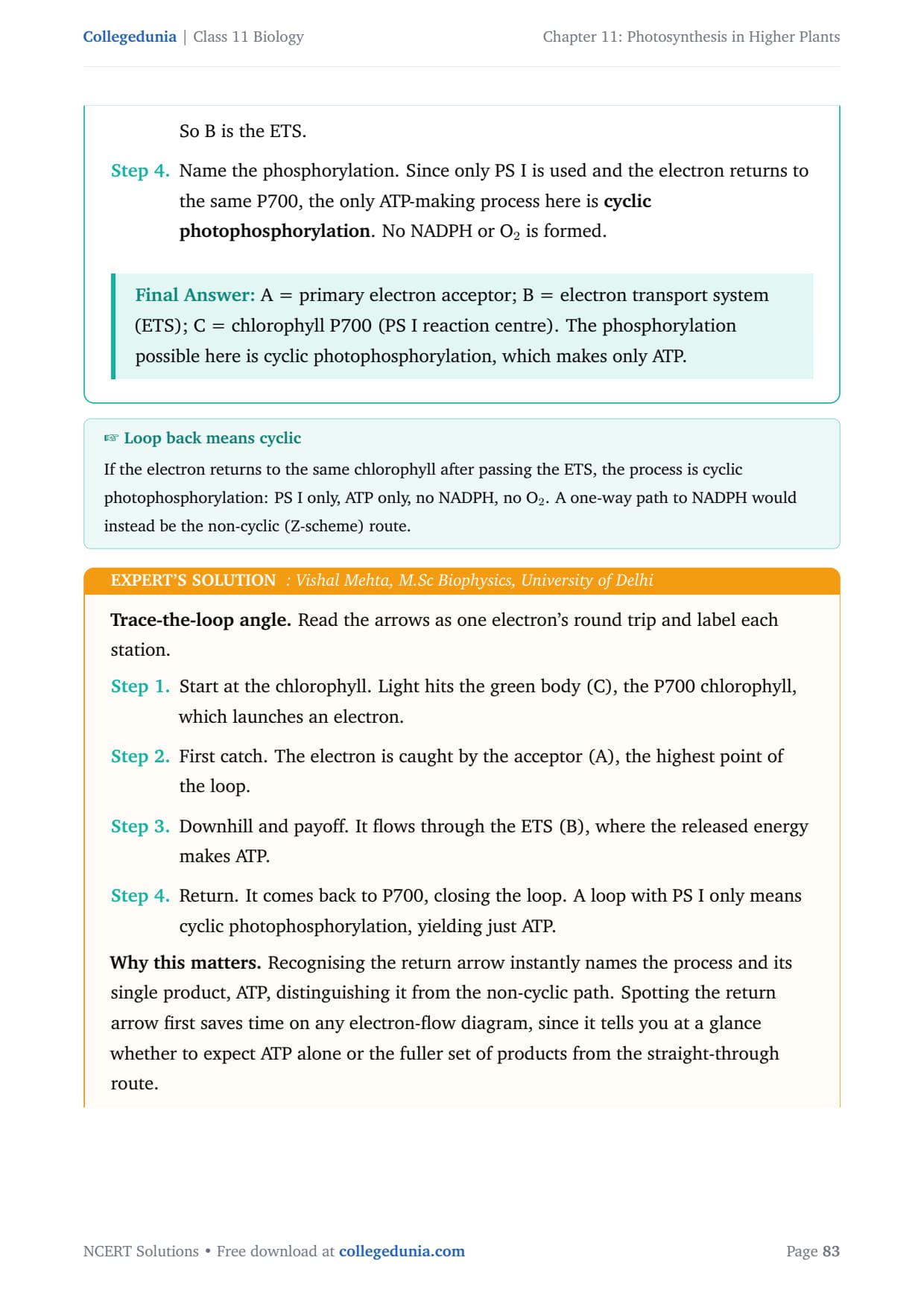
- The light reaction: photosystems I and II, photolysis of water, the electron flow, and cyclic against non-cyclic photophosphorylation making ATP and NADPH
- The dark reaction: the Calvin cycle, RuBP as the CO2 acceptor, RuBisCO, and why the reaction is called dark yet runs in daylight
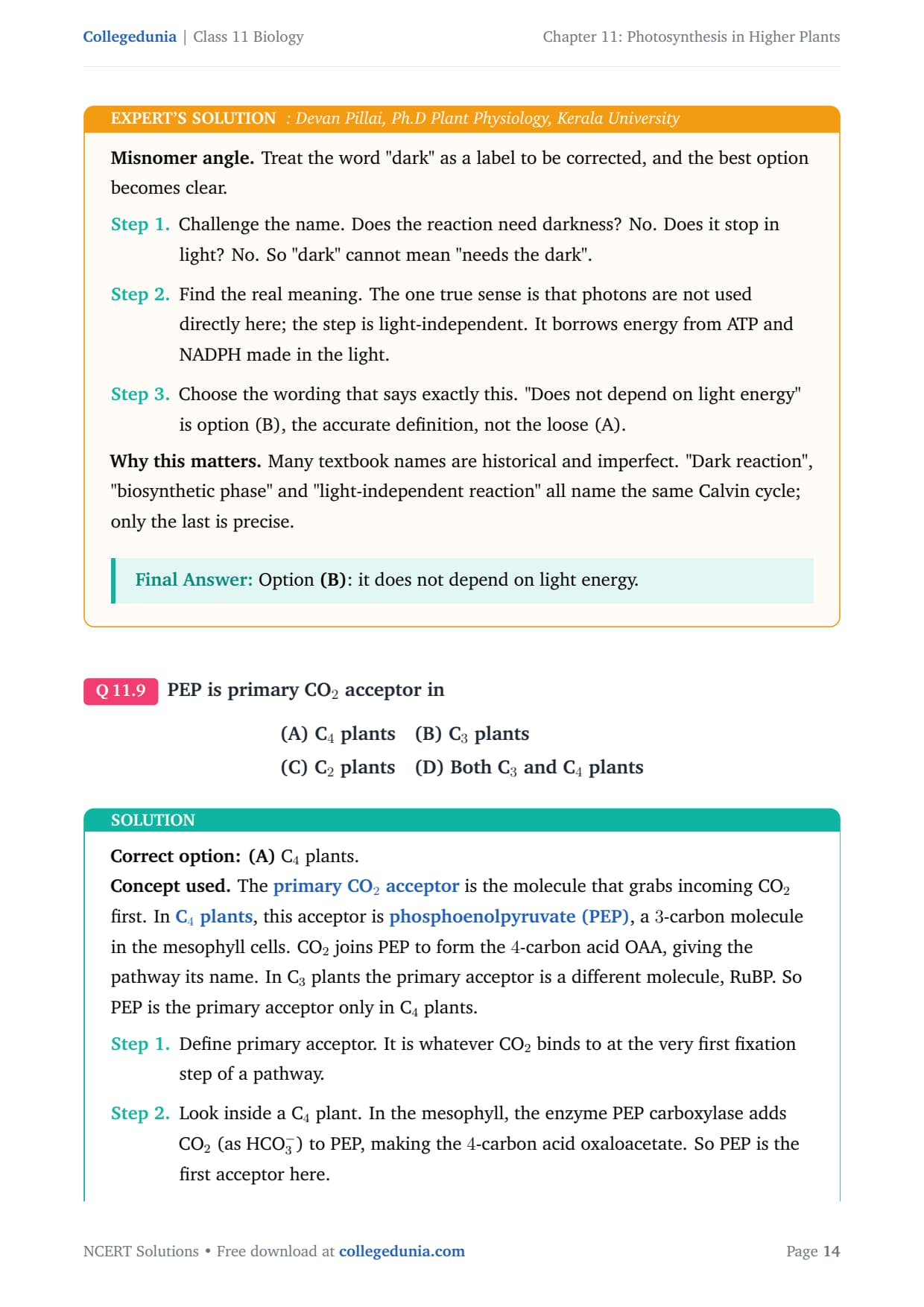
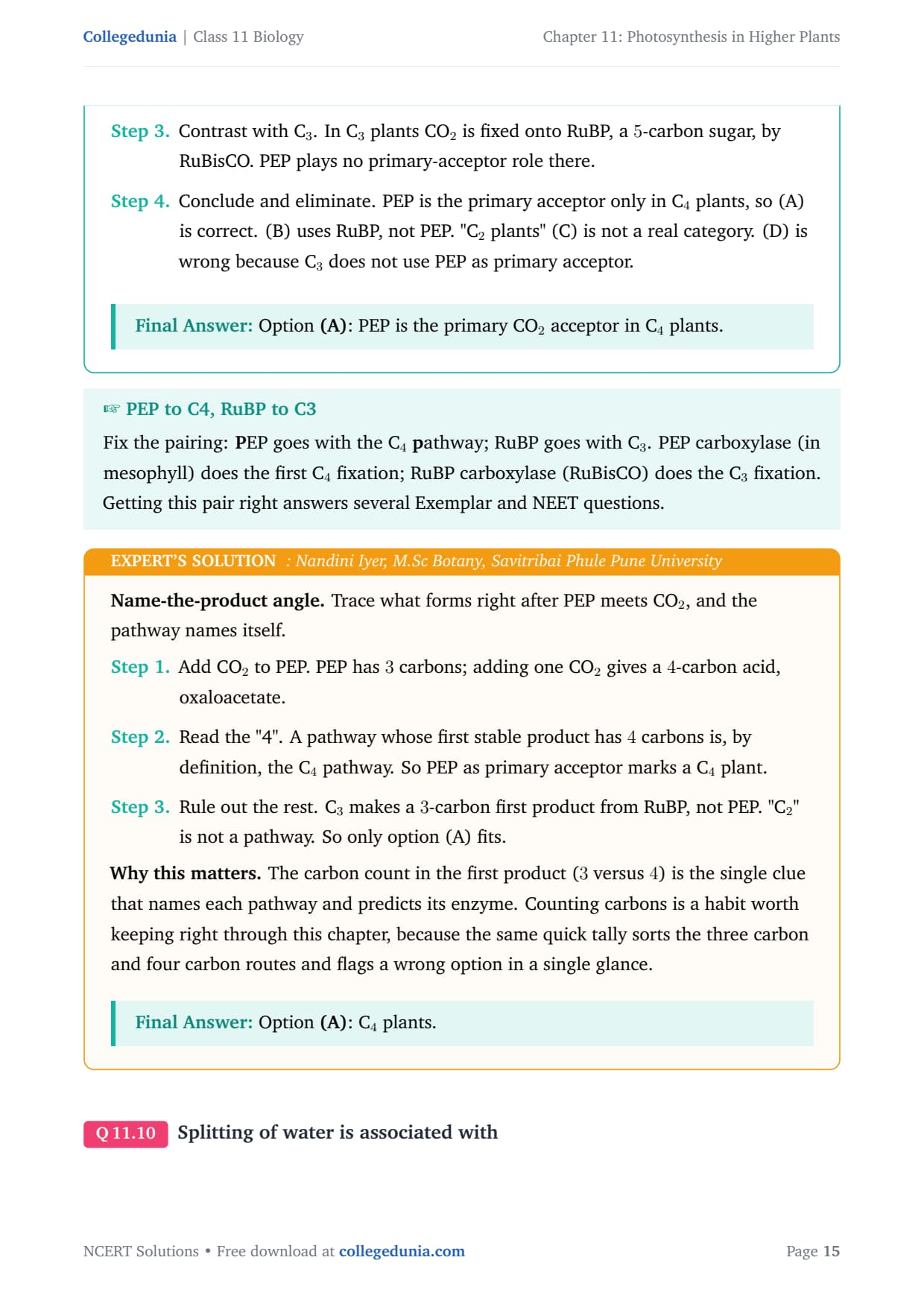
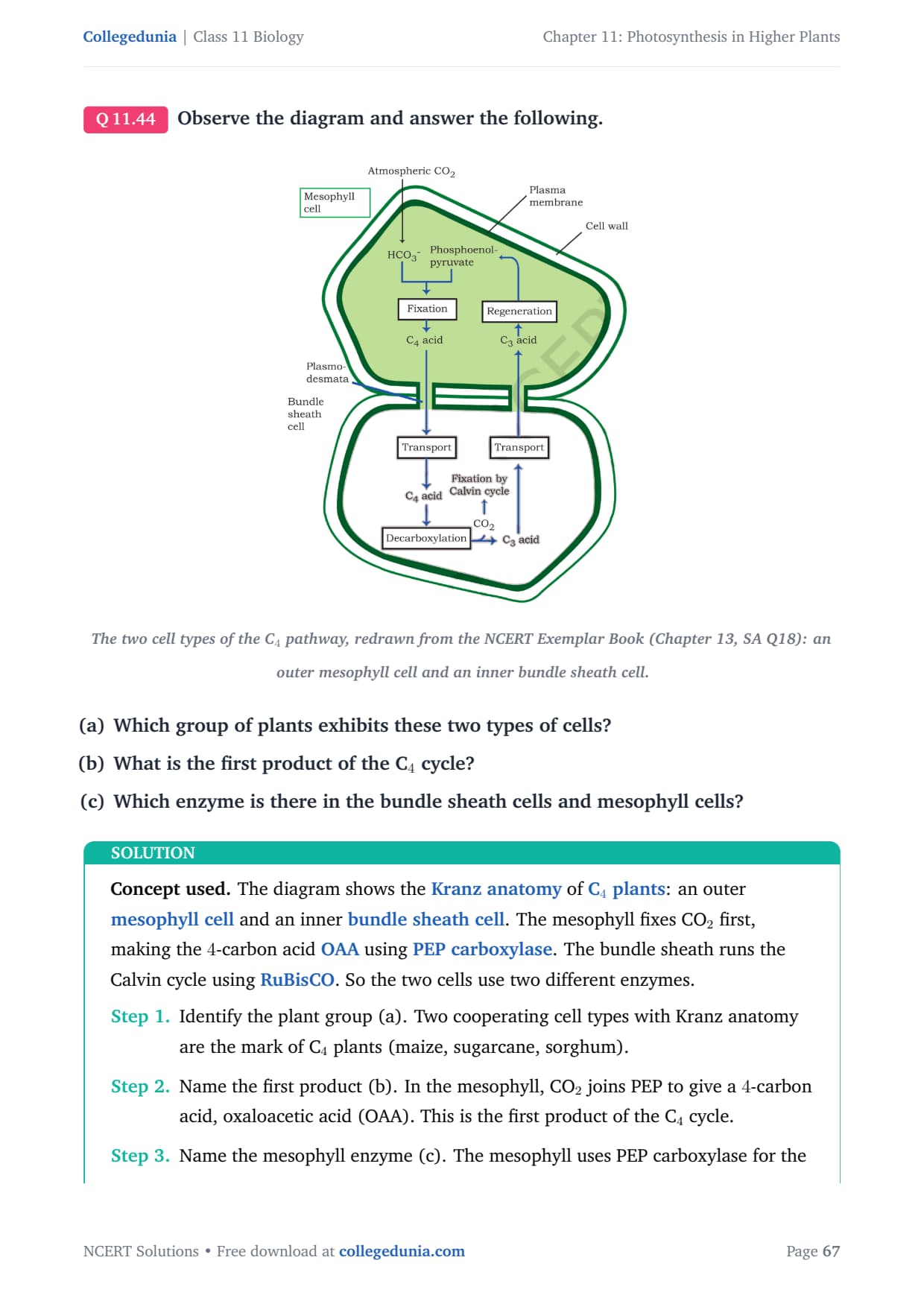
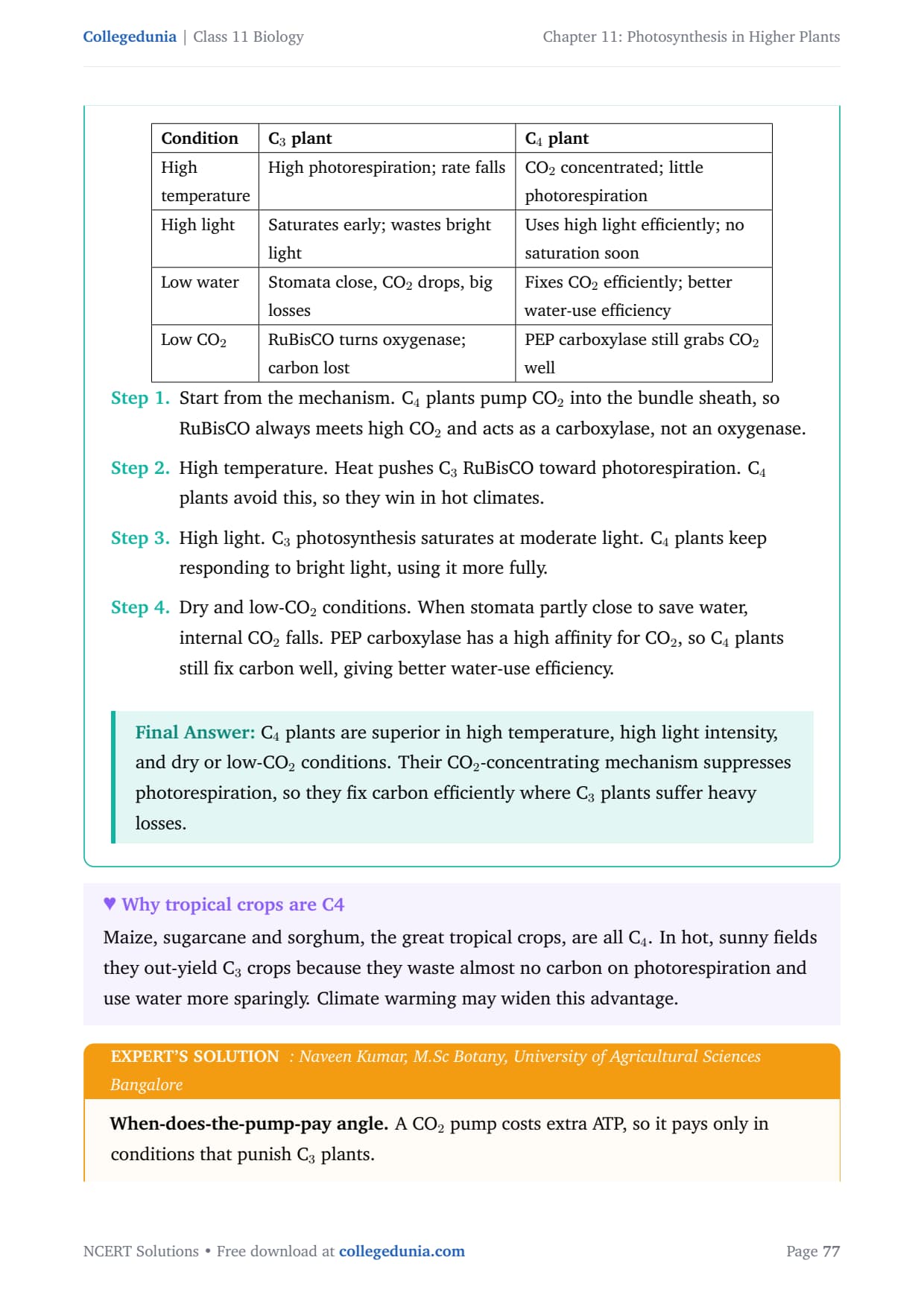
- C4 pathway and photorespiration: PEP as the primary acceptor, Kranz anatomy, why C4 plants avoid photorespiration, and RuBisCO acting as an oxygenase
Question Types in the Photosynthesis in Higher Plants NCERT Exemplar
Class 11 Biology Exemplar chapters use four question types, and this chapter is the largest in the book, so every type is well represented. The MCQ set is precise and includes the two misprinted keys, while the Short Answer set is the biggest section and carries most of the mechanism questions on the light reaction and the C4 cycle. The Long Answer set asks for full accounts of RuBisCO, Kranz anatomy and photophosphorylation. The table below shows how the 58 questions split.
| Question Type | Count | What It Tests |
|---|---|---|
| MCQ (single correct) | 14 | Pigments, photosystems and the products of each reaction stage |
| VSA (Very Short Answer) | 12 | One-line facts such as the NADP reductase location and moonlight photosynthesis |
| SA (Short Answer) | 19 | Mechanism of the light reaction, the C4 cycle and RuBisCO as an oxygenase |
| LA (Long Answer) | 13 | Full accounts of photophosphorylation, Kranz anatomy and the Calvin cycle |
Printing Errors in the Photosynthesis Exemplar Key
Two answers in the official Exemplar MCQ key for this chapter are misprinted, and a student who trusts the printed key blindly will learn the wrong fact. Both are corrected in the PDF at the exact question, with the scientific reason and the agreement of standard solution sources noted so the correction is safe to rely on. Knowing these two before an exam protects easy marks that the key itself would otherwise cost you.
- MCQ 4, least effective light: the printed key says (d) Violet, but that is wrong. Green light is least absorbed by chlorophyll, so it is least effective, and the correct answer is (b) Green. Leaves look green precisely because green is the wasted colour.
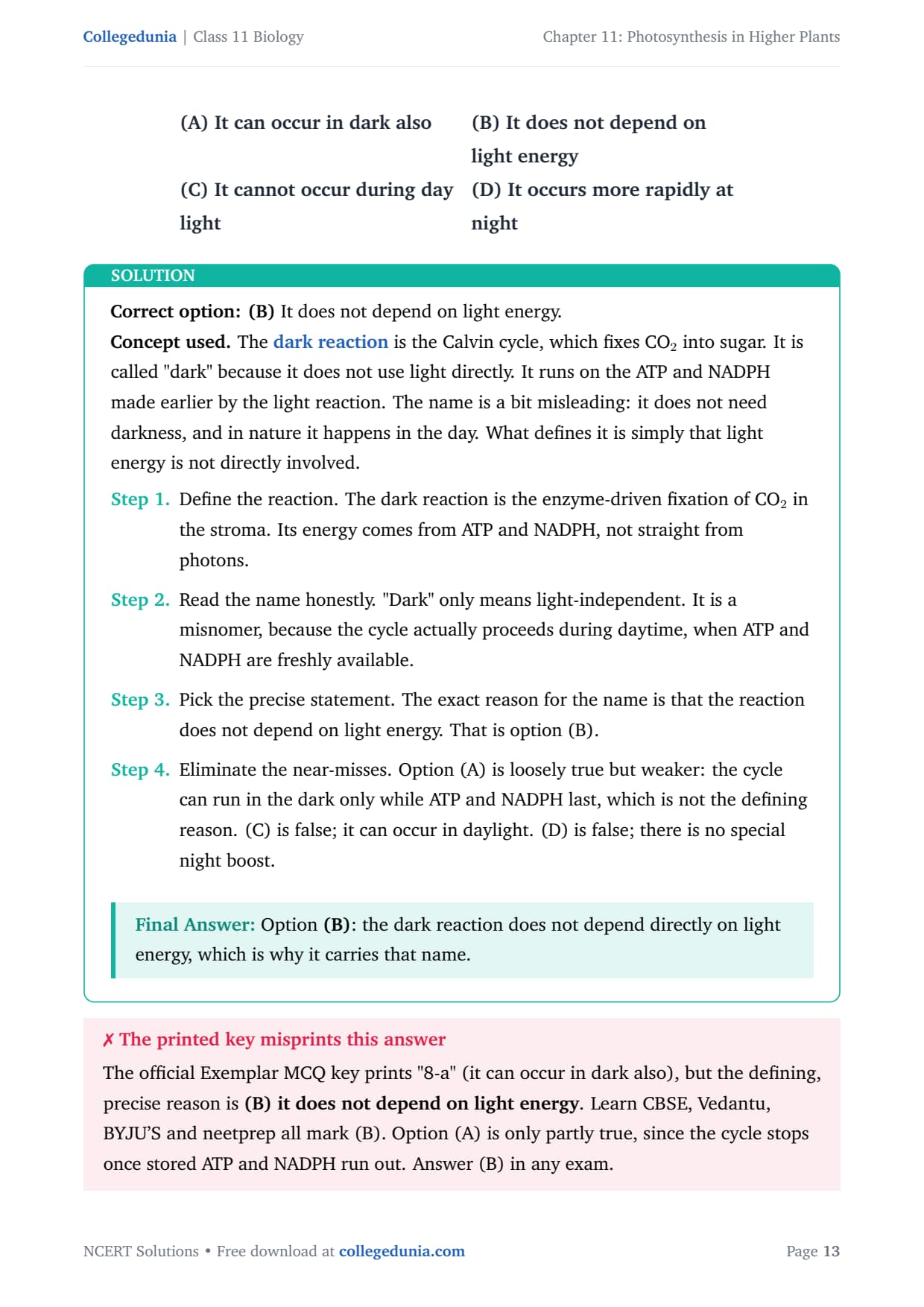
- MCQ 8, why the dark reaction is called dark: the printed key says (a), it can occur in the dark. The precise, defining reason is (b), it does not depend on light energy directly. Option (a) is only partly true, since the cycle stops once stored ATP and NADPH run out.
Answer (b) Green for MCQ 4 and (b) for MCQ 8 in any exam, whatever the printed key shows. Learn CBSE, Vedantu and BYJU'S all mark these two the same way, so the correction is not an opinion. The PDF states the misprint next to each question so students are never penalised for choosing the scientifically correct option.
Common Mistakes Students Make in Photosynthesis in Higher Plants
The Exemplar plants wrong options that sound like textbook lines. Four errors catch most students in this chapter, and each is flagged in the PDF at the exact question where it appears. Learning to spot them early protects marks across the whole plant physiology unit, because the same ideas return in Respiration in Plants and in Class 12 metabolism.
- The light reaction makes no sugar: it produces only ATP, NADPH and O2. Sugar appears only in the Calvin cycle, so any light-reaction option that lists sugar is wrong.
- Dark reaction does not mean it runs in the dark: the Calvin cycle runs mostly in daylight using fresh ATP and NADPH. Dark only means no light is used directly, and in real darkness the cycle soon stops.
- Photorespiration makes no ATP: unlike respiration, it only consumes energy and releases CO2 with no ATP gain. The name misleads students into treating it as an energy-yielding process.
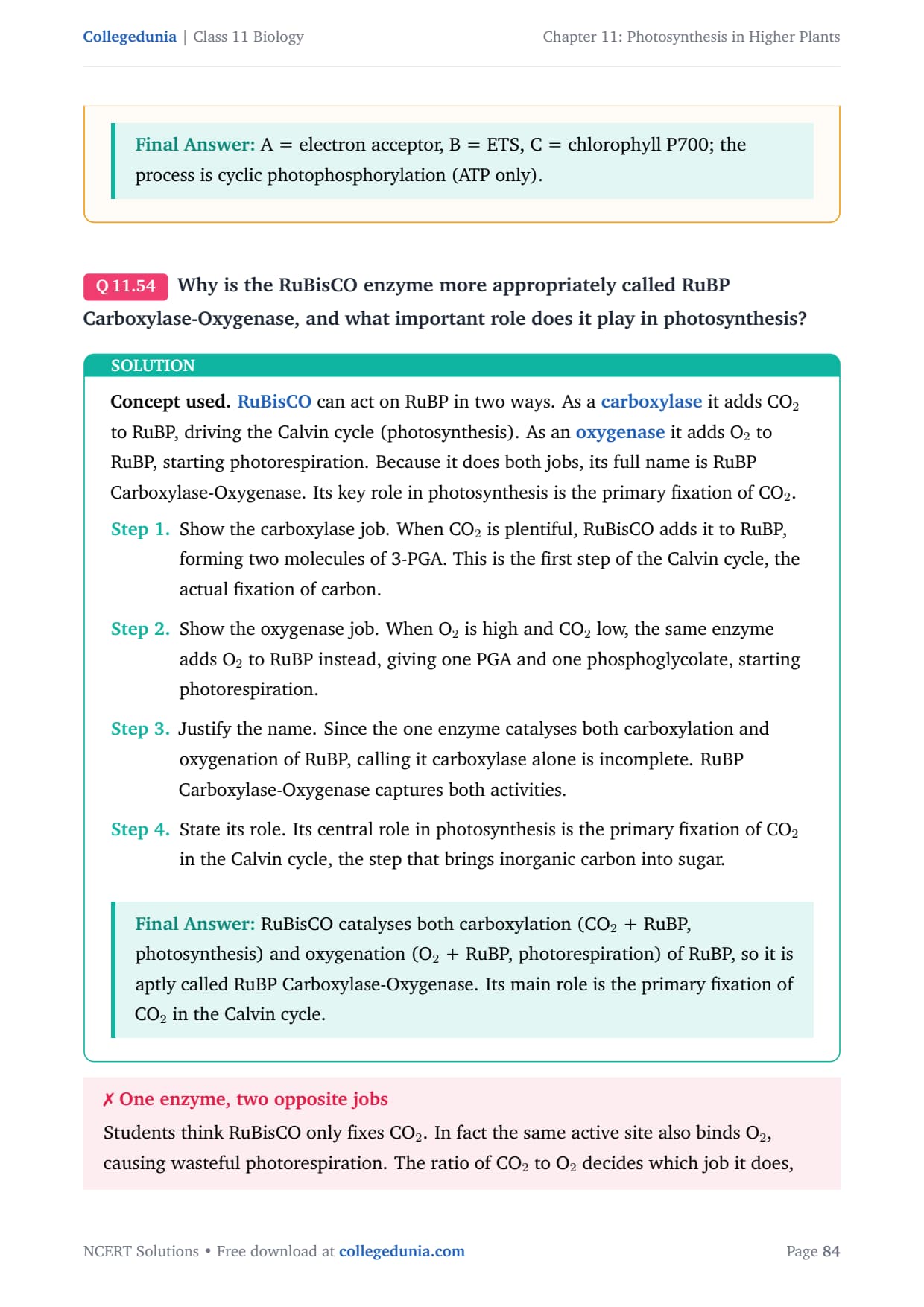
- RuBisCO has two opposite jobs: the same active site binds both CO2 and O2, and the ratio of the two gases decides which job it does. Treating it as a pure carboxylase misses the whole point of photorespiration.
How the Exemplar Steps Up from the Class 11 Biology Textbook
The textbook tells you what each pigment absorbs and what each reaction produces. The Exemplar gives you a claim or a colour and asks you to reason from the mechanism, which is a different skill and the one that boards and NEET actually test. This is why students who only read the chapter feel the Exemplar is harder. The content is the same, but the demand is to explain rather than recall.
The question on least effective light shows the gap clearly. The textbook shows the absorption spectrum with peaks in blue and red, so a quick reader ties strong absorption to importance. The Exemplar asks which colour is least effective and even prints the wrong answer in its key. To answer correctly you have to reason that green is reflected rather than absorbed, which is why a leaf looks green, so green light is the least effective for photosynthesis. The same reasoning drives the RuBisCO questions, where you must see that one enzyme fixes CO2 in bright conditions but wastes energy as an oxygenase when O2 is high. Working these builds the mechanism-level judgement, not the recall, that Chapter 11 is meant to leave you with.
How to Use These NCERT Exemplar Solutions for Boards, NEET and CUET
Attempt each question before you open the solution. This chapter rewards the attempt because the option looks right until you trace it back to the mechanism. Read the question, decide the stage and the product yourself, and only then check it against the PDF. The gap between your reasoning and the model answer is where the marks live, and it is also where the two misprinted keys are caught.
- Boards: the Short Answer and Long Answer sets match the 3 and 5 mark board pattern, especially photophosphorylation, the C3 against C4 comparison and Kranz anatomy
- NEET: work the MCQ and Short Answer sets first, since NEET repeats pigments, the light reaction, RuBisCO and the C4 pathway at that level every year
- CUET: the mechanism-based MCQ set is the closest practice for the domain paper, which favours precise recall of the events of each reaction stage
Student Feedback
Students using Collegedunia's Class 11 Biology Exemplar Solutions told us that the light reaction and the C4 pathway were the hardest parts of this chapter, and that the two misprinted MCQ keys had confused them badly before. Around 7 in 10 said that seeing the green-light and RuBisCO questions solved with the reasoning spelled out, and the key errors flagged, finally made the mechanism stick instead of feeling like a list to memorise.
Other Resources for Class 11 Biology Photosynthesis in Higher Plants
Collegedunia has the full set of study material for this chapter. Use the Notes for a first read, then the Exemplar once the reaction stages are steady, and keep the NCERT Solutions and Formula Sheet open for the textbook exercise and quick revision alongside.
Also Check:
- NCERT Solutions for Class 11 Biology Chapter 11
- Class 11 Biology Chapter 11 Notes
- Class 11 Biology Chapter 11 Formula Sheet
- Class 11 Biology Chapter 11 NCERT Book PDF
- Class 11 Biology Chapter 11 Exemplar Book PDF
NCERT Exemplar Solutions for Other Class 11 Biology Chapters
Each chapter below has the same step-by-step treatment and a free PDF. All 19 chapters have an NCERT Exemplar book chapter behind them, so the list covers every one.
Photosynthesis in Higher Plants Class 11 NCERT Exemplar Solutions FAQs
Ques. How many questions are there in the Class 11 Biology Photosynthesis in Higher Plants Exemplar?
Ans. Chapter 11 has 58 questions, the largest chapter in the book. They are split into 14 MCQ, 12 Very Short Answer, 19 Short Answer and 13 Long Answer questions. All 58 are solved in the free PDF on this page.
Ques. Which light colour is least effective in photosynthesis?
Ans. Green light is least effective, because chlorophyll reflects green rather than absorbing it, which is why leaves look green. The printed Exemplar MCQ key for this question misprints the answer as Violet, but Violet is strongly absorbed and highly effective. The correct answer is Green, and the PDF flags the misprint at that question.
Ques. Does the dark reaction of photosynthesis need darkness?
Ans. No. The dark reaction, or Calvin cycle, runs mostly in daylight using the ATP and NADPH made by the light reaction. It is called dark only because it does not use light energy directly. In real darkness it soon stops once the stored ATP and NADPH run out.
Ques. Why is RuBisCO called RuBP carboxylase-oxygenase?
Ans. The same active site of RuBisCO can bind either CO2 or O2. When it binds CO2 it acts as a carboxylase and fixes carbon, and when it binds O2 it acts as an oxygenase and drives wasteful photorespiration. The ratio of CO2 to O2 decides which job it does, so the double name is the accurate one.
Ques. Are there any errors in the Photosynthesis Exemplar answer key?
Ans. Yes. The printed MCQ key misprints two answers. MCQ 4 should be (b) Green, not (d) Violet, and MCQ 8 should be (b) it does not depend on light energy, not (a). Both are corrected in the PDF with the scientific reason, and standard sources such as Learn CBSE, Vedantu and BYJU'S confirm the corrections.



Comments