




NCERT Exemplar Solutions for Class 11 Biology Chapter 5 Morphology of Flowering Plants solve all 41 questions from the Exemplar book. Every MCQ, Very Short Answer, Short Answer and Long Answer problem is answered step by step in the free 67-page PDF, updated for the 2026-27 syllabus.
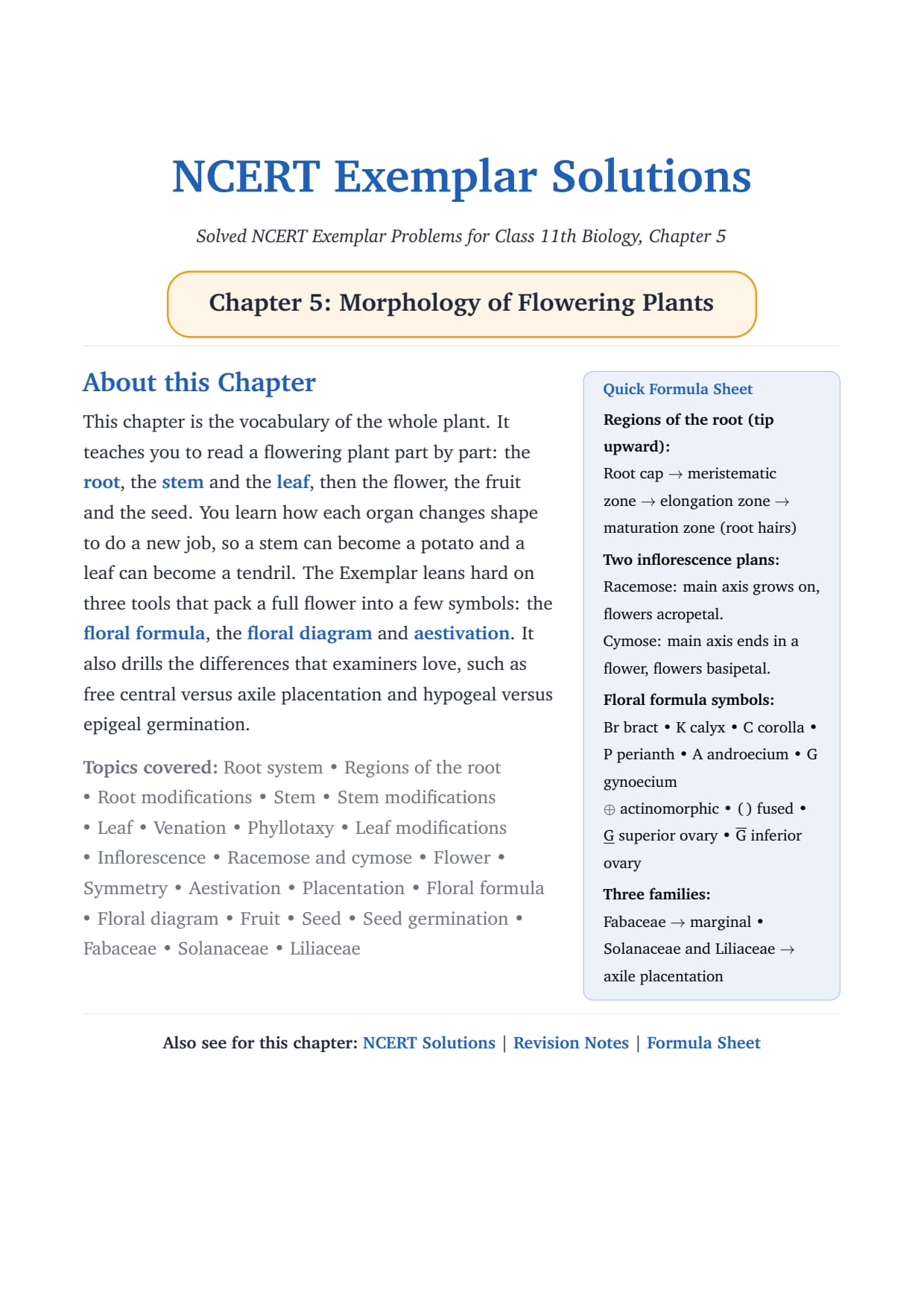
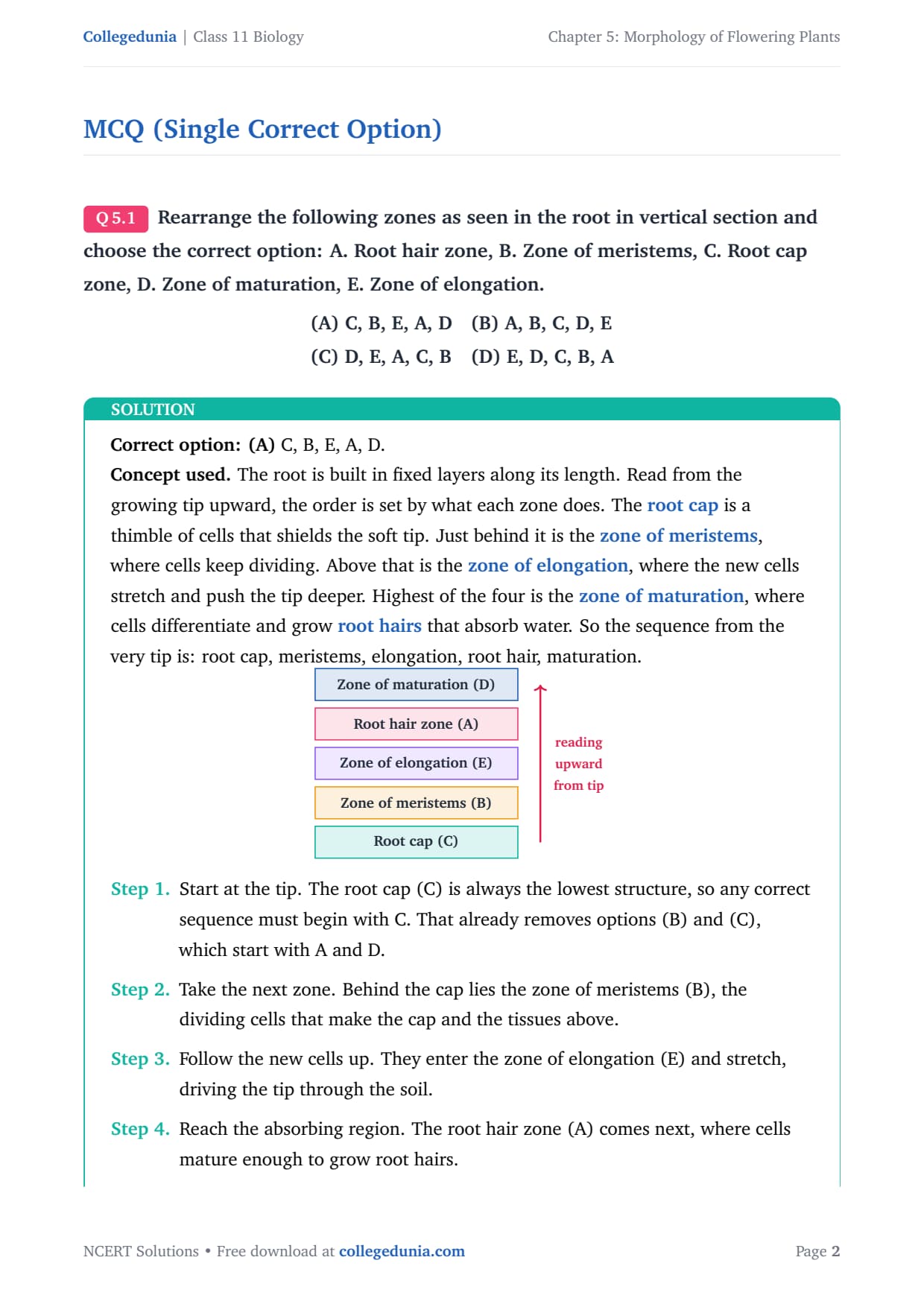
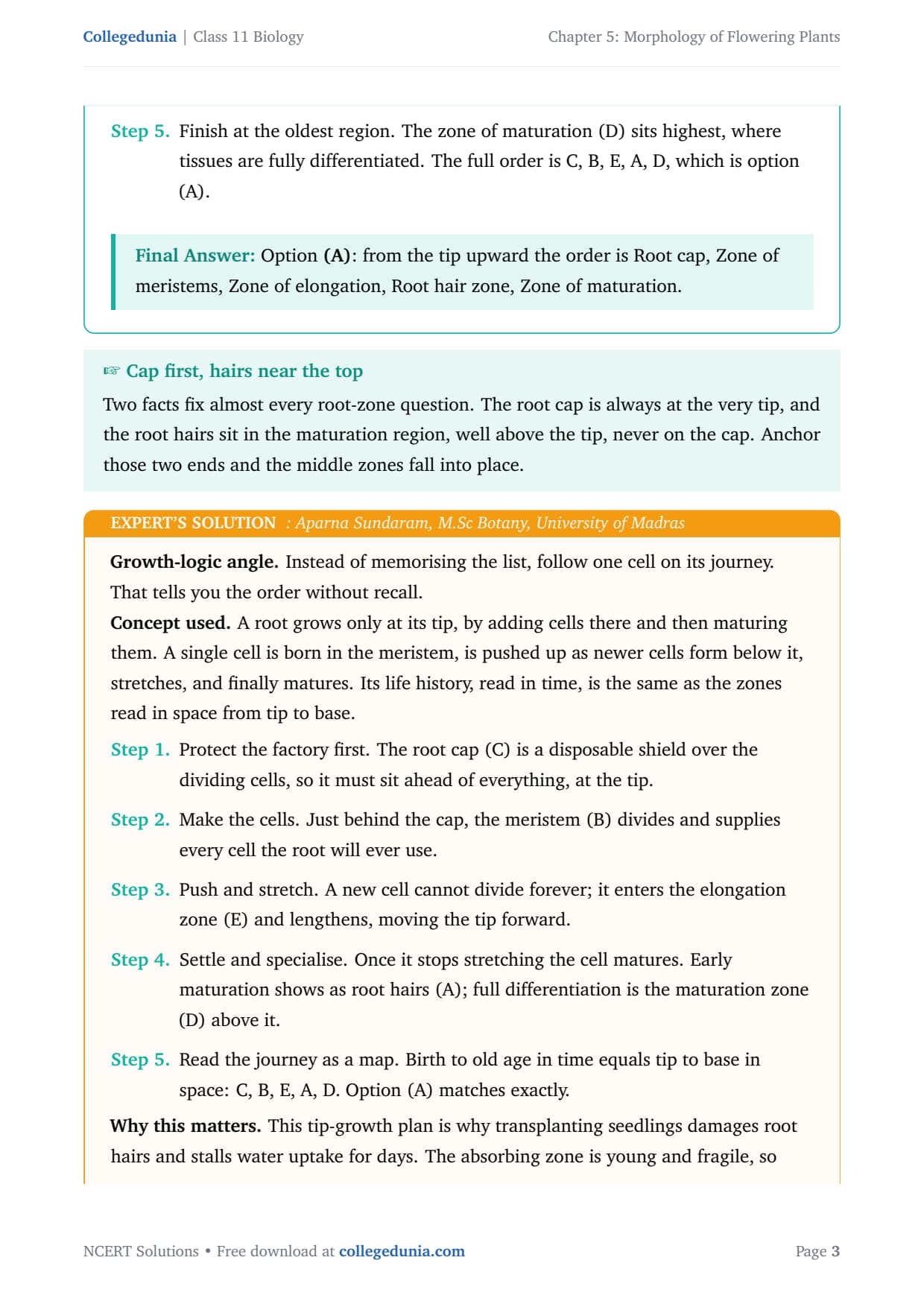
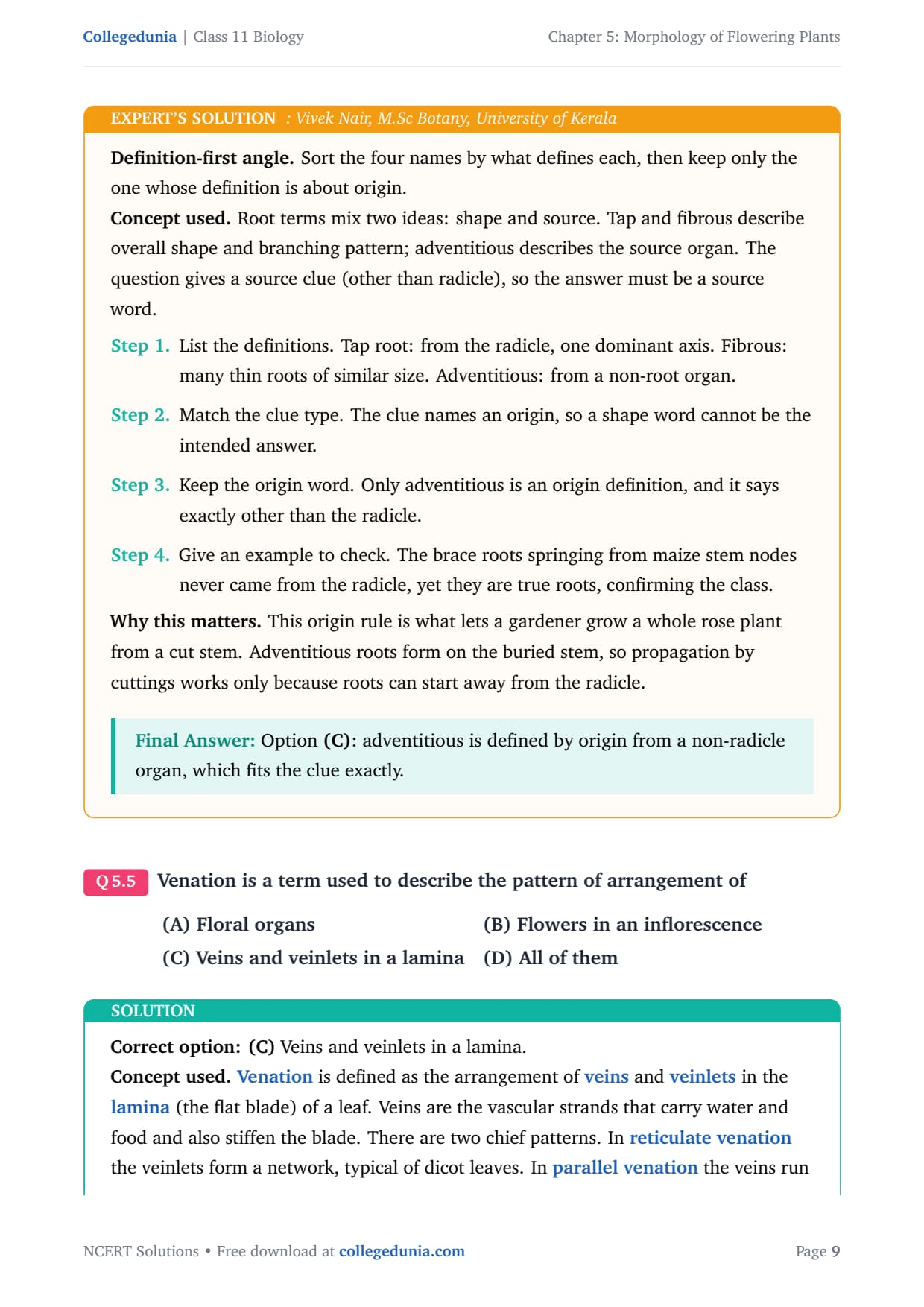
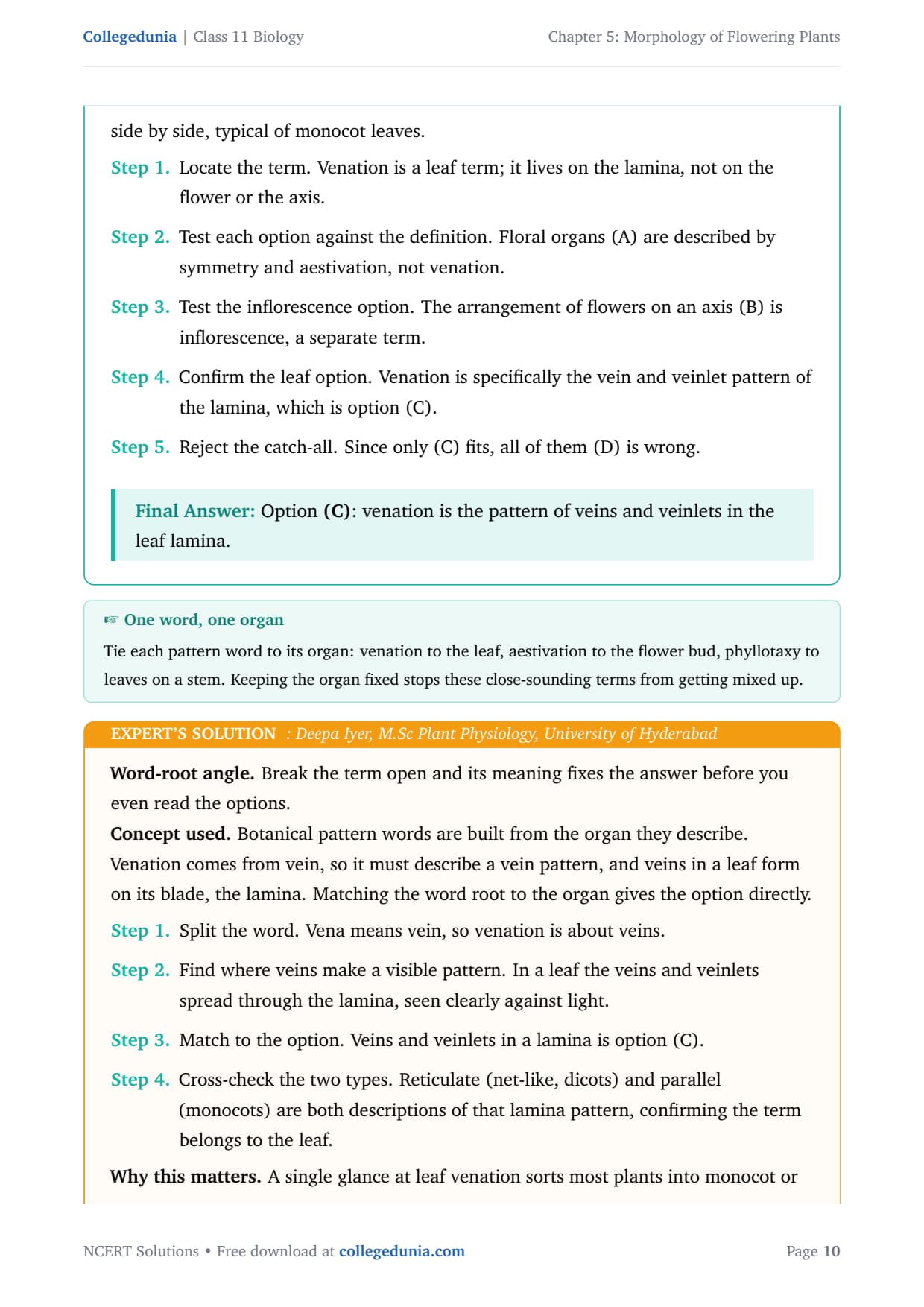
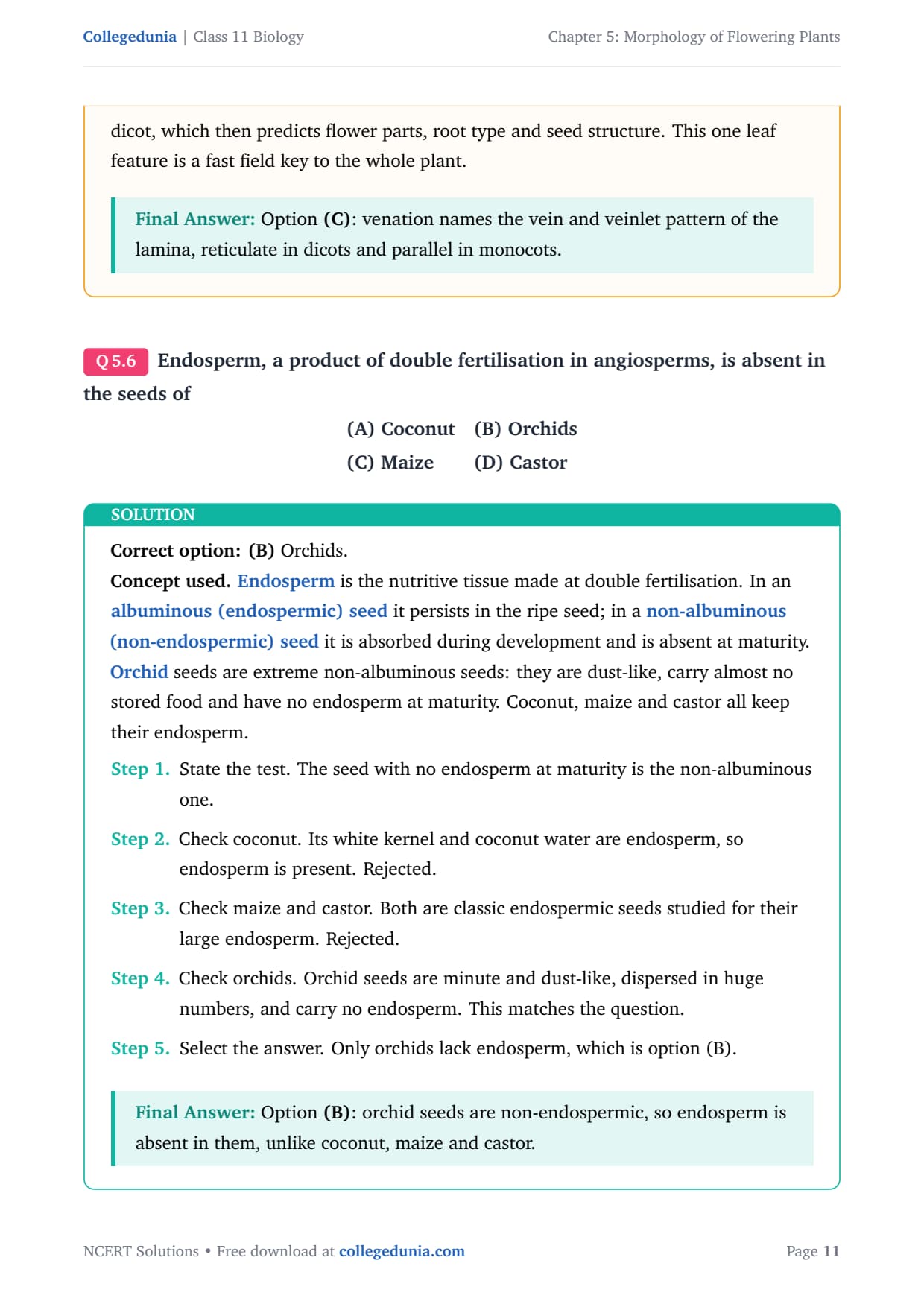
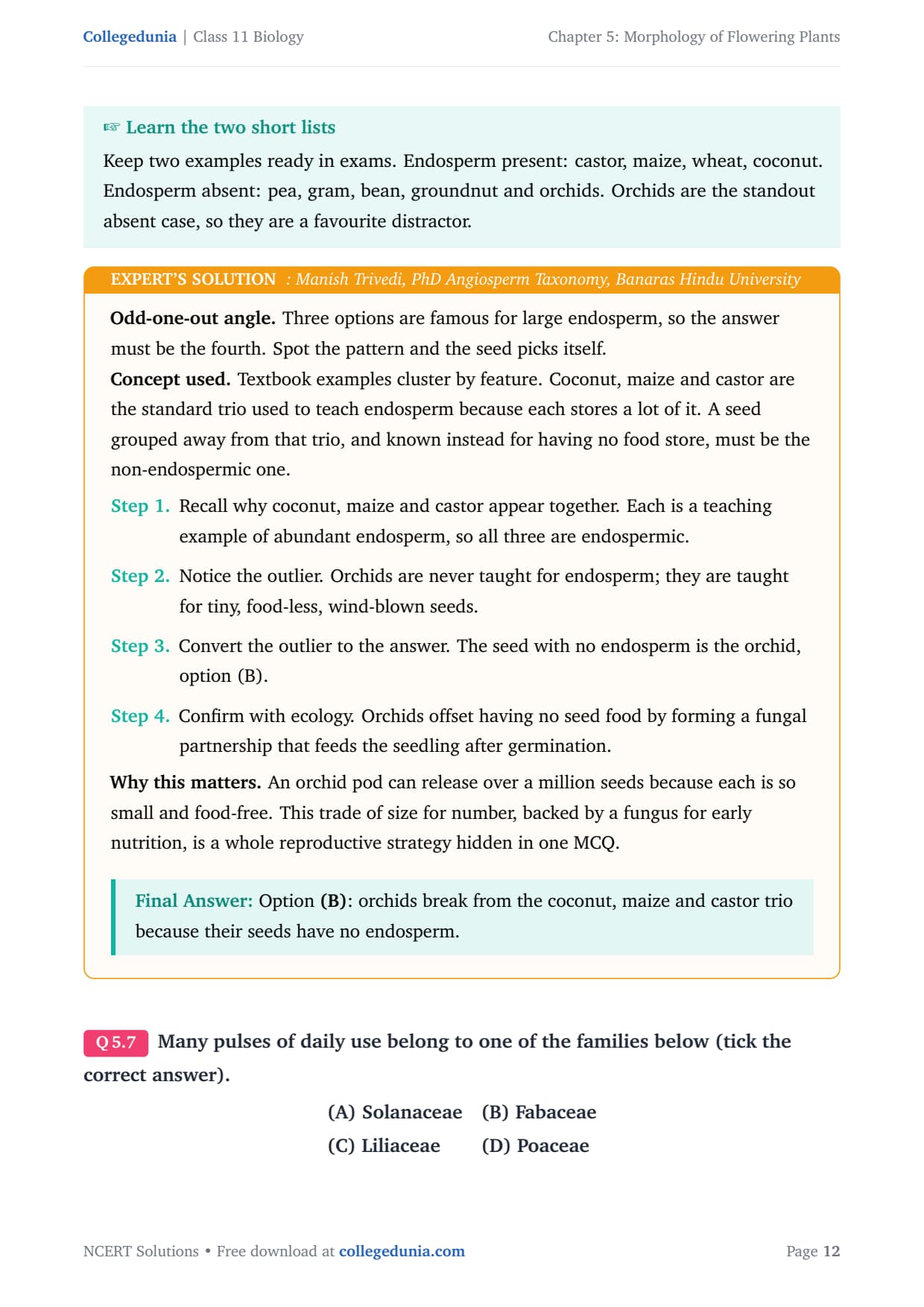
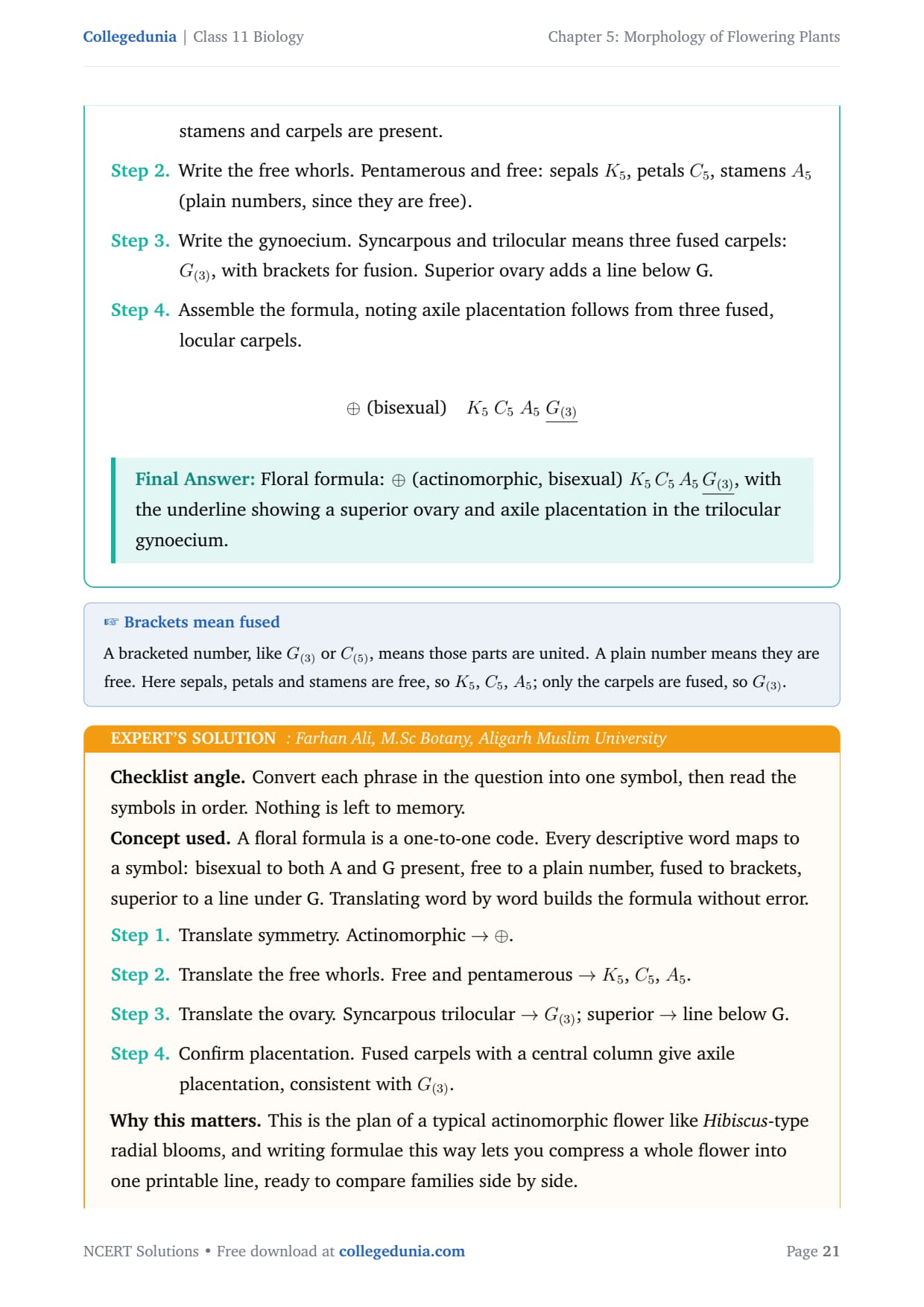
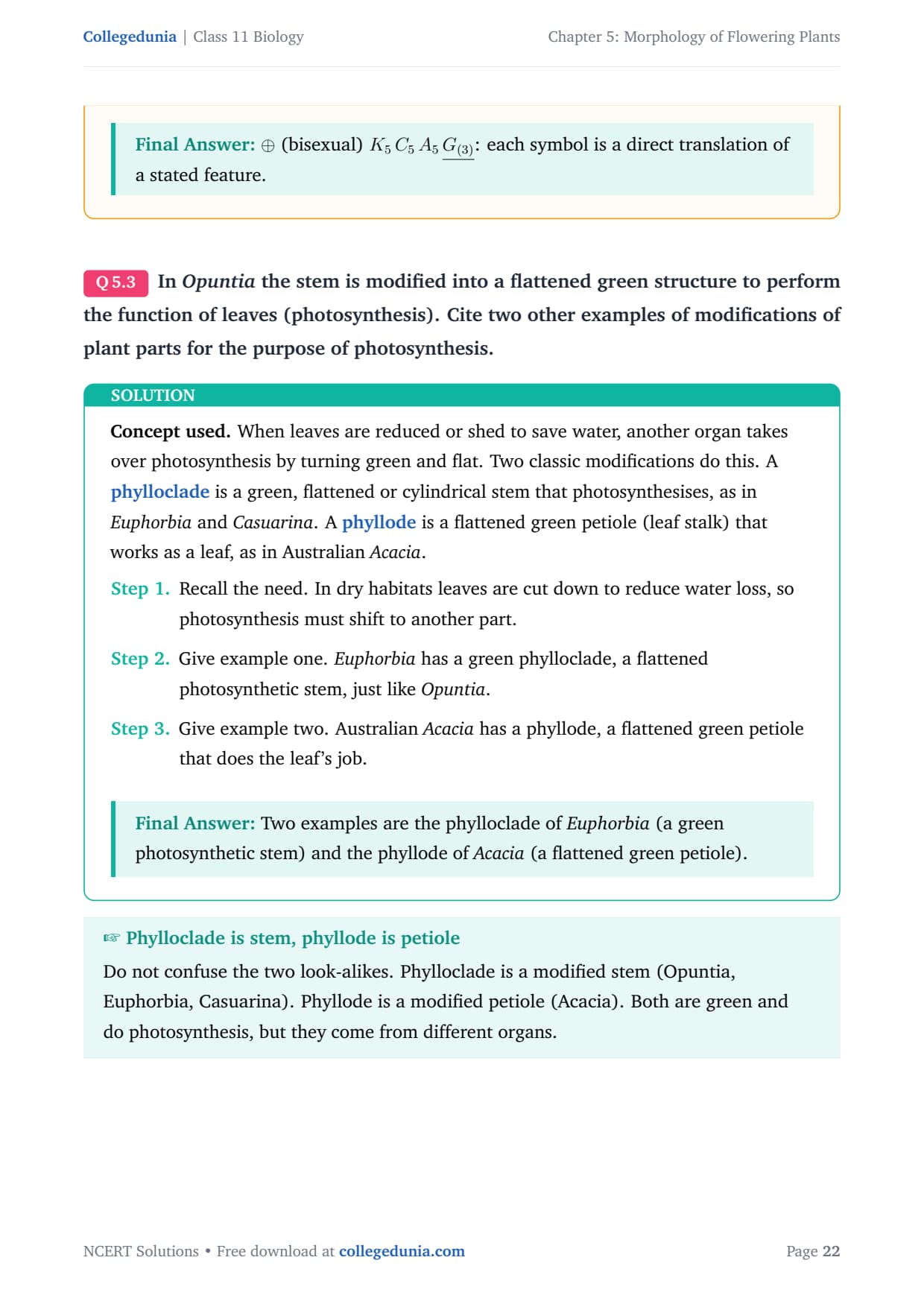
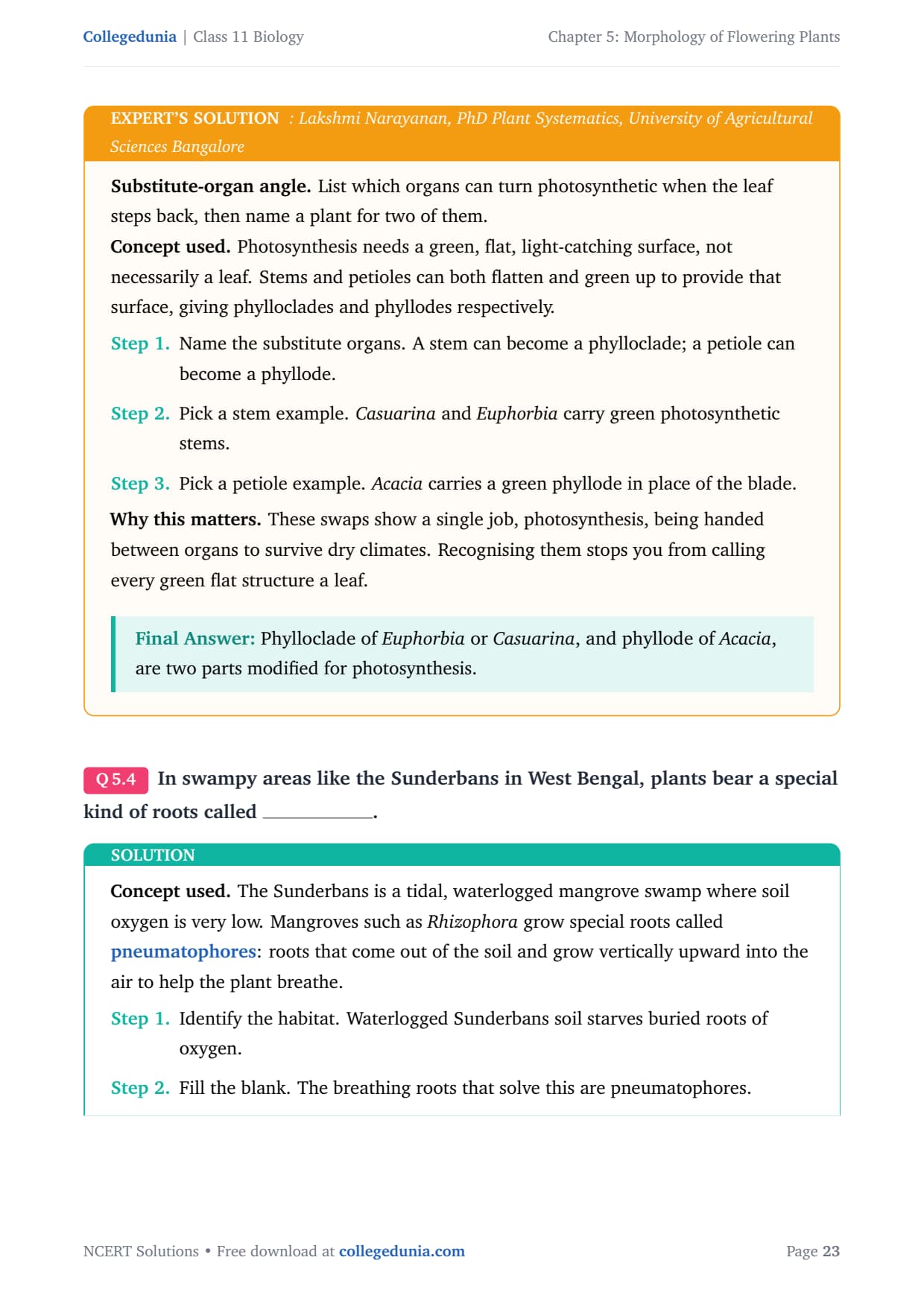
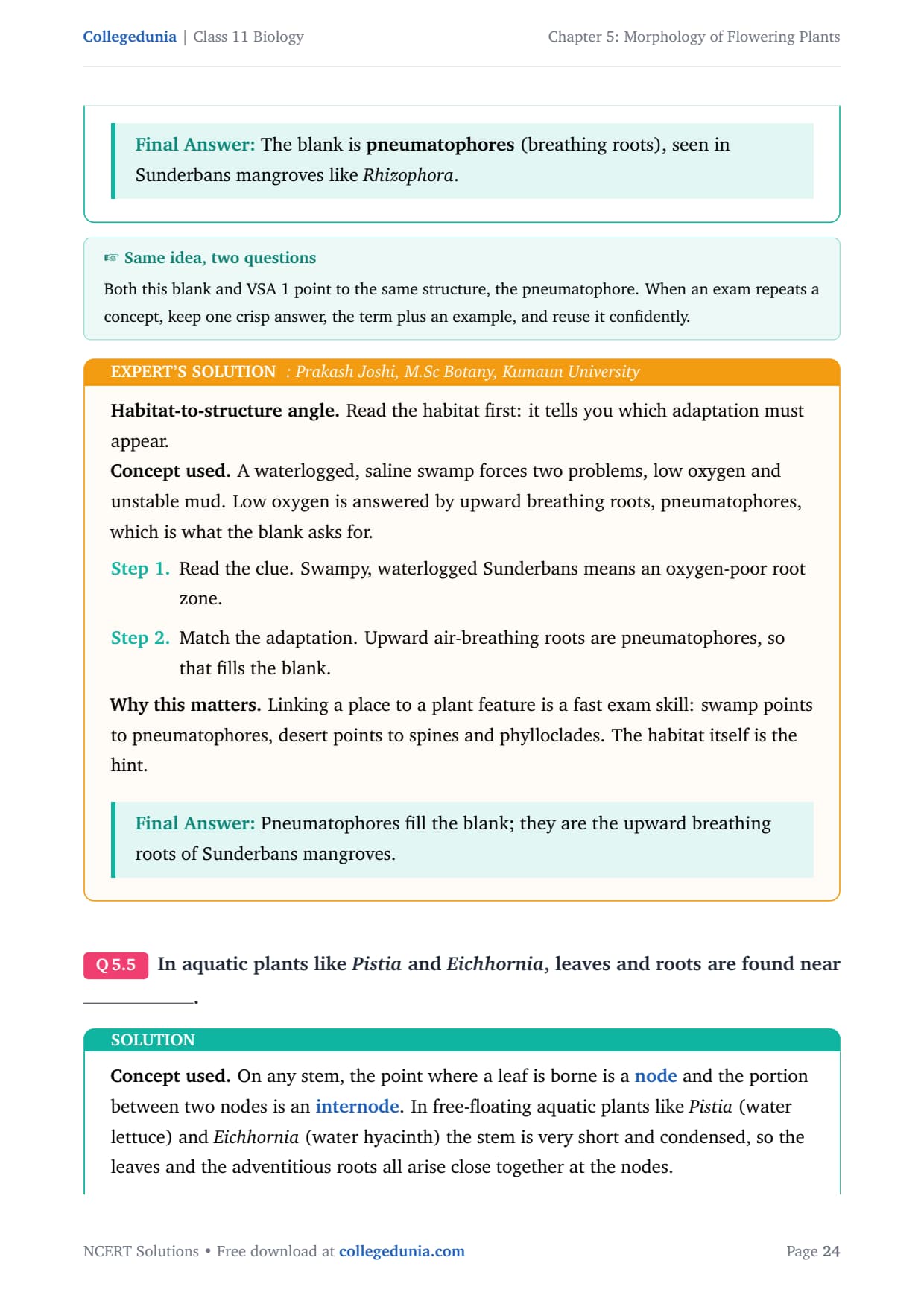
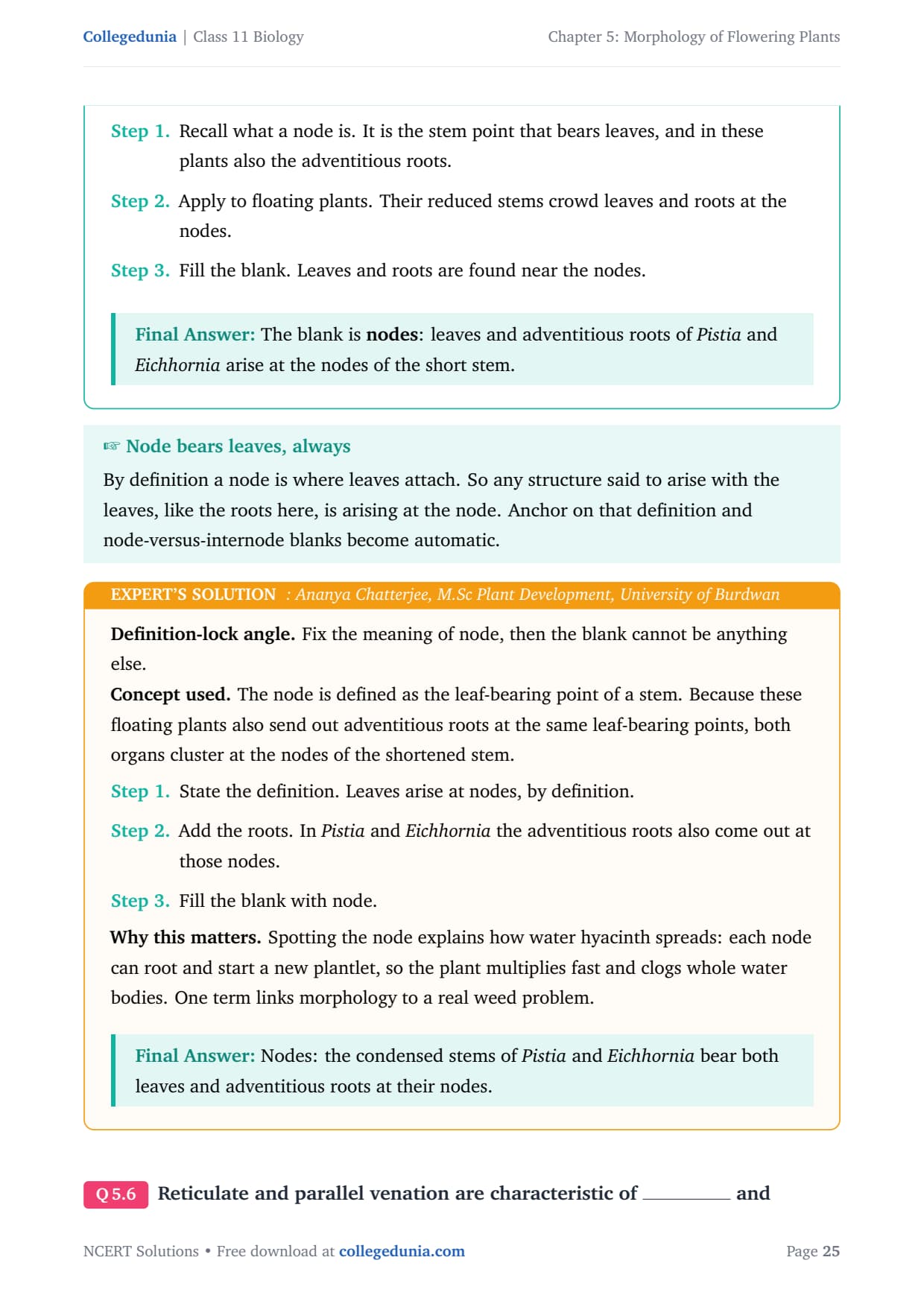
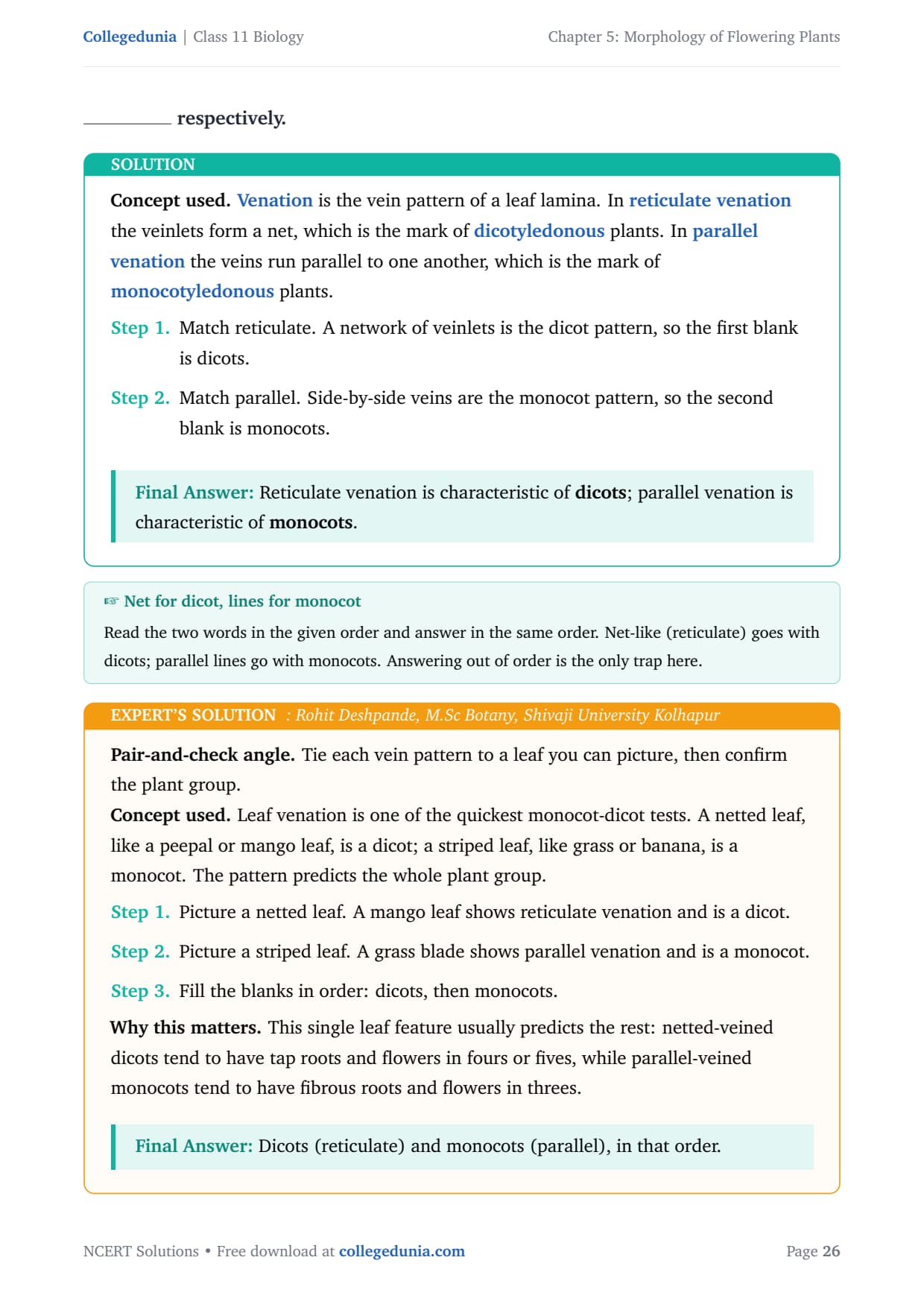
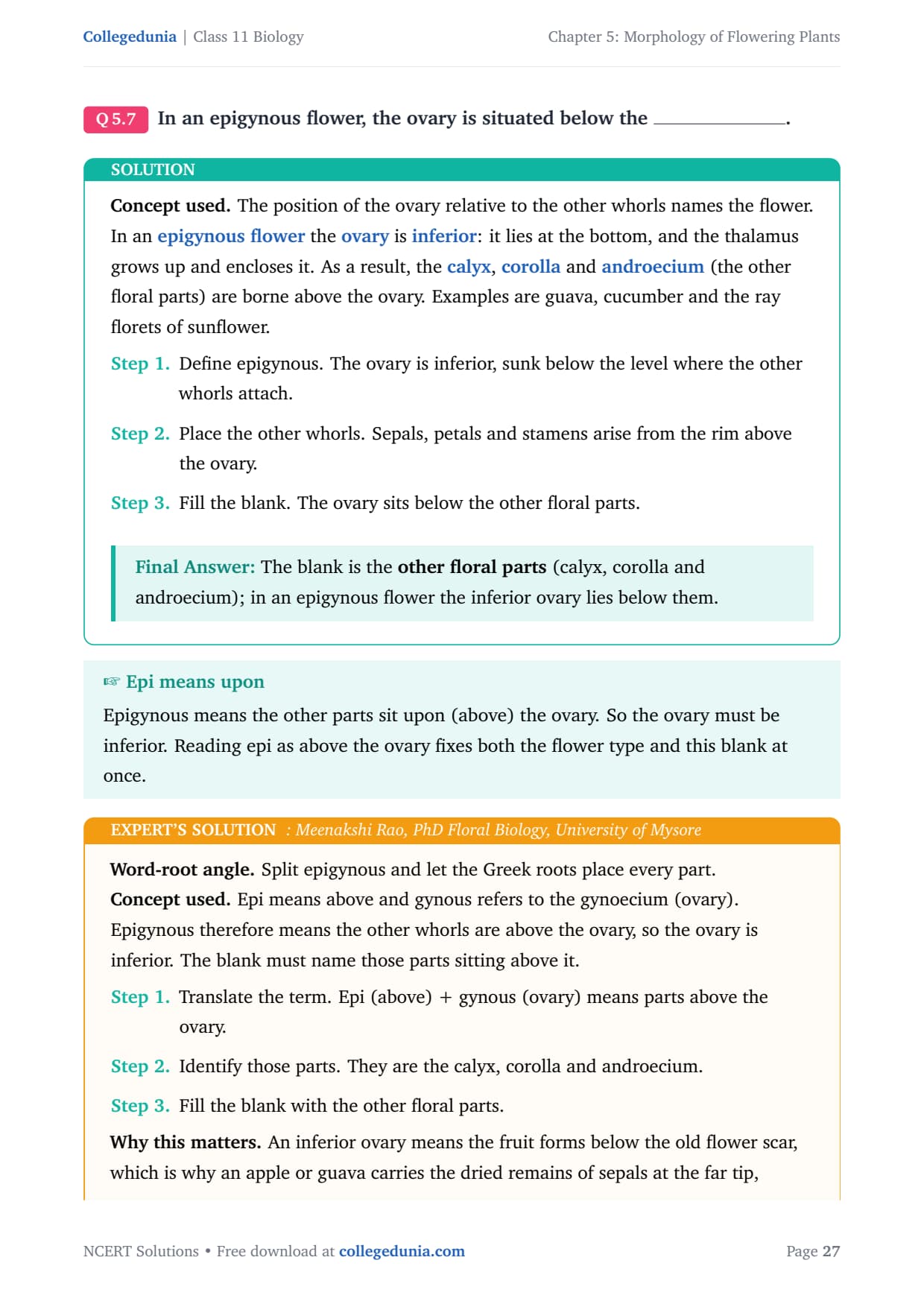
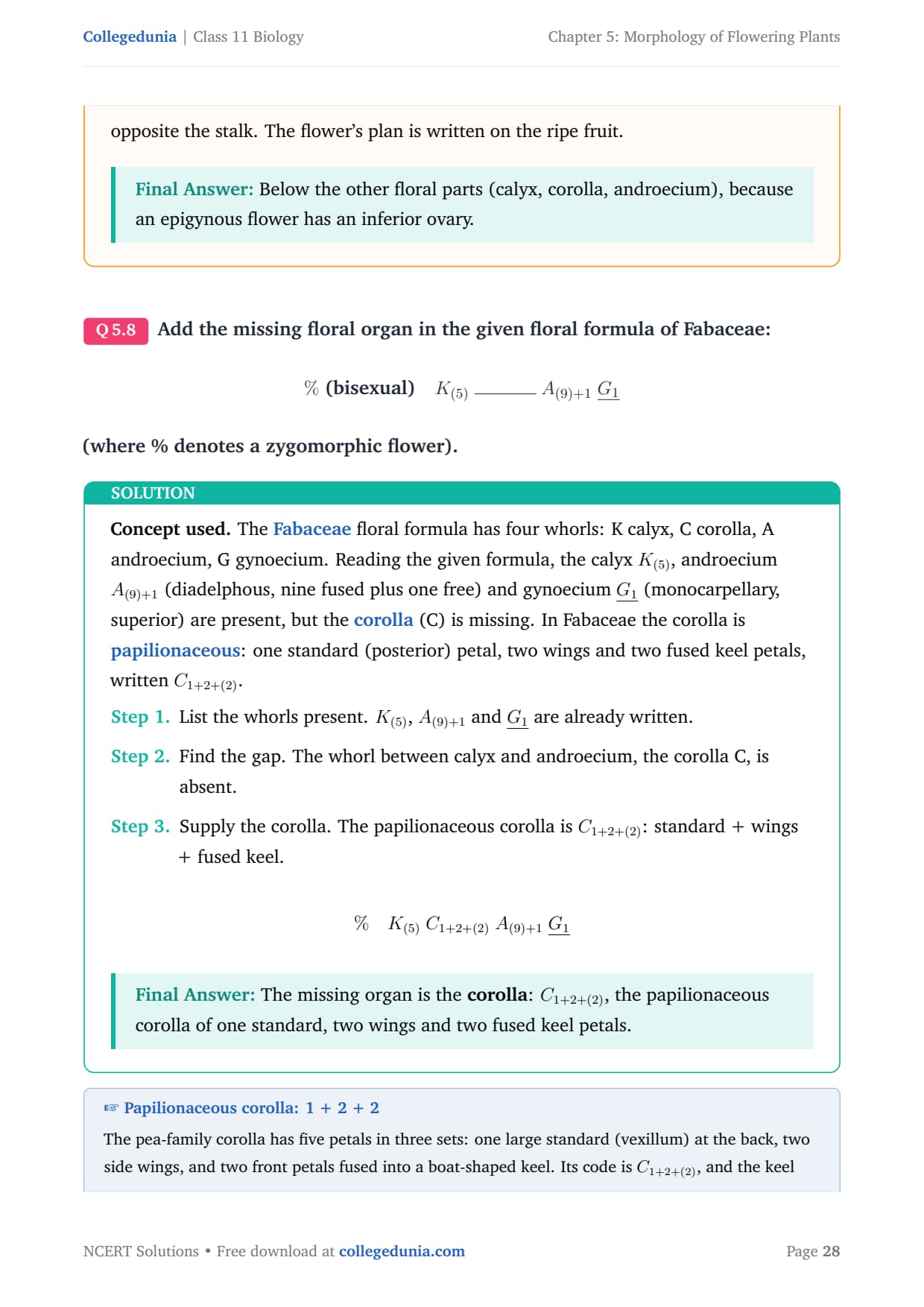
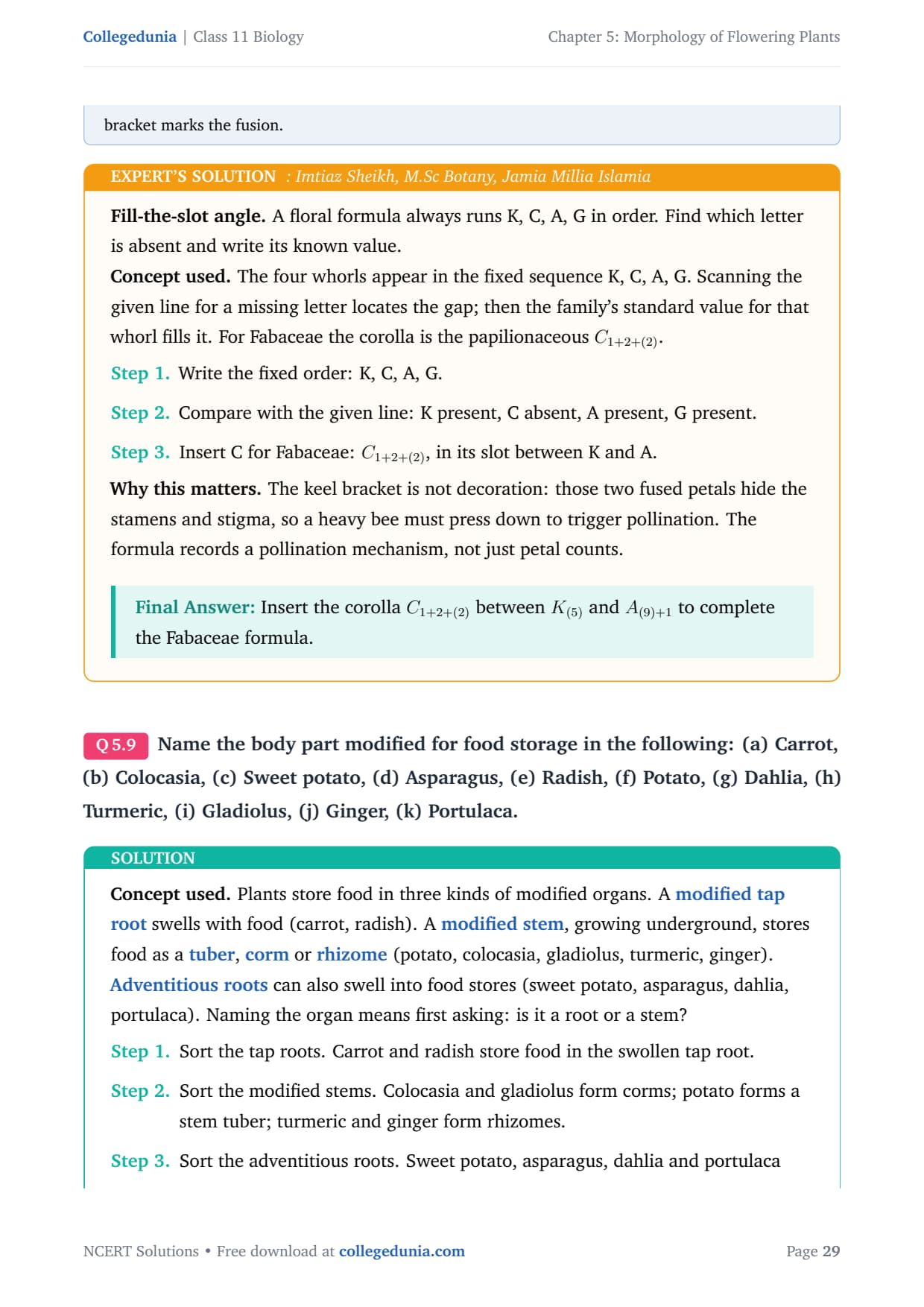
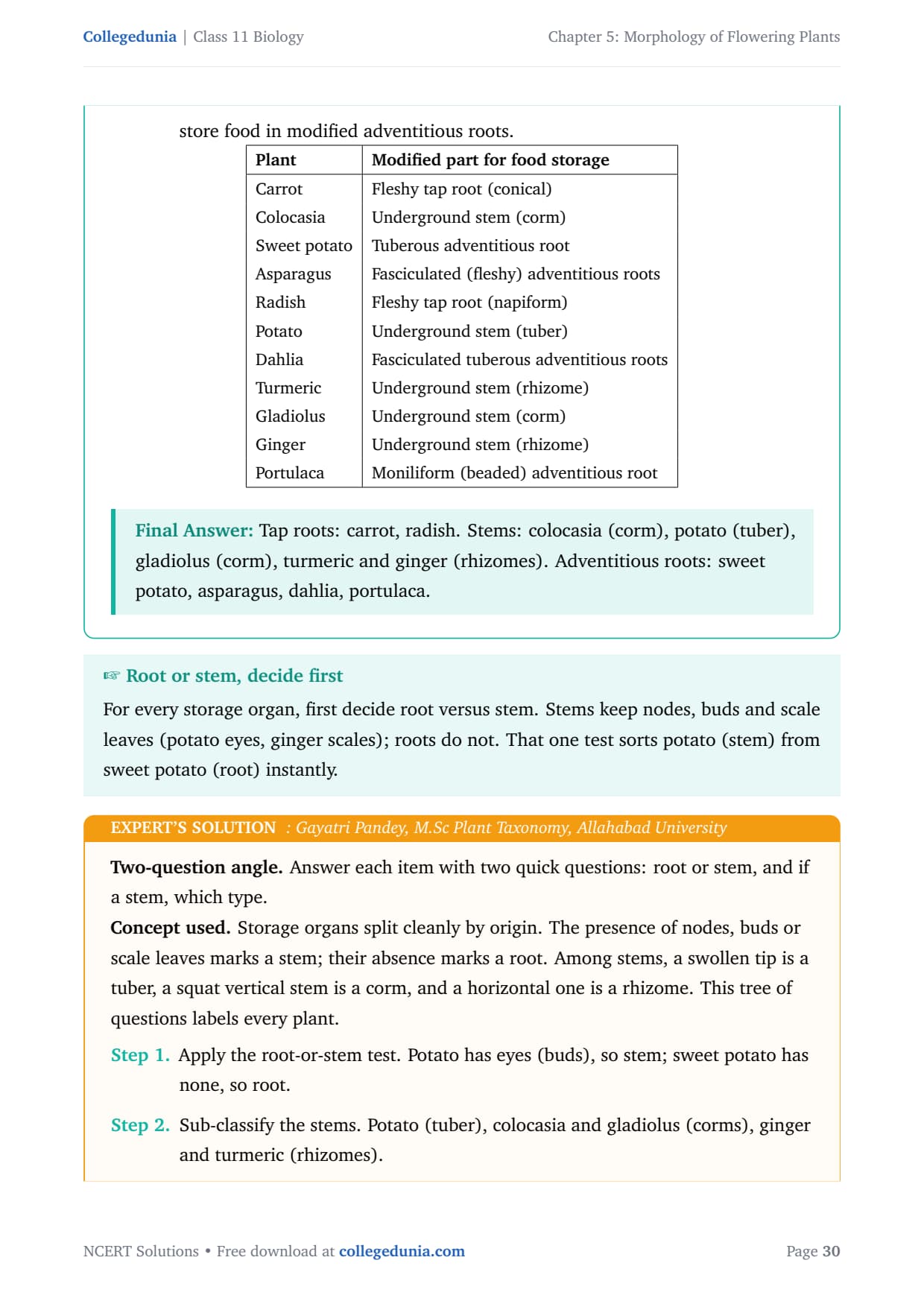
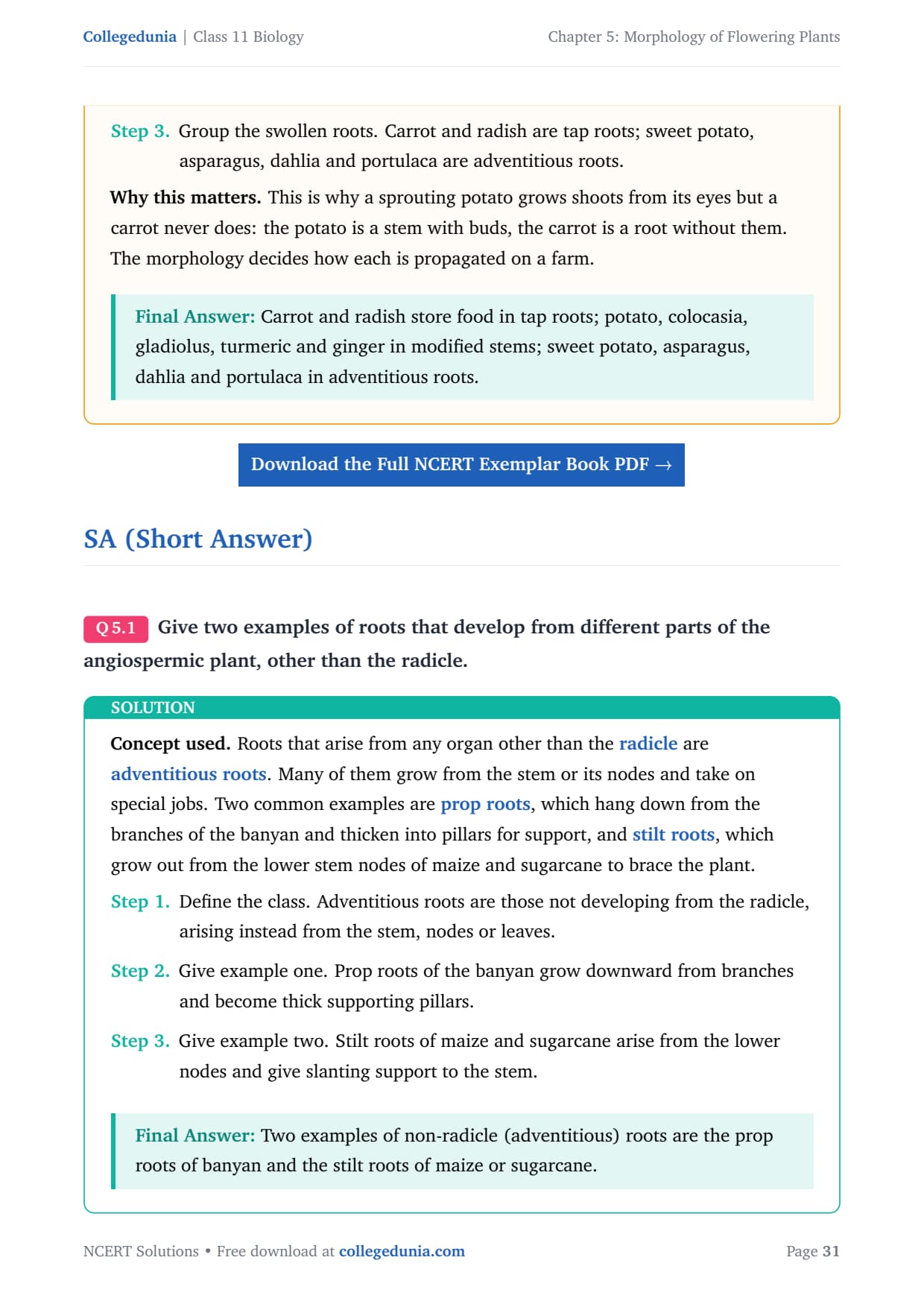
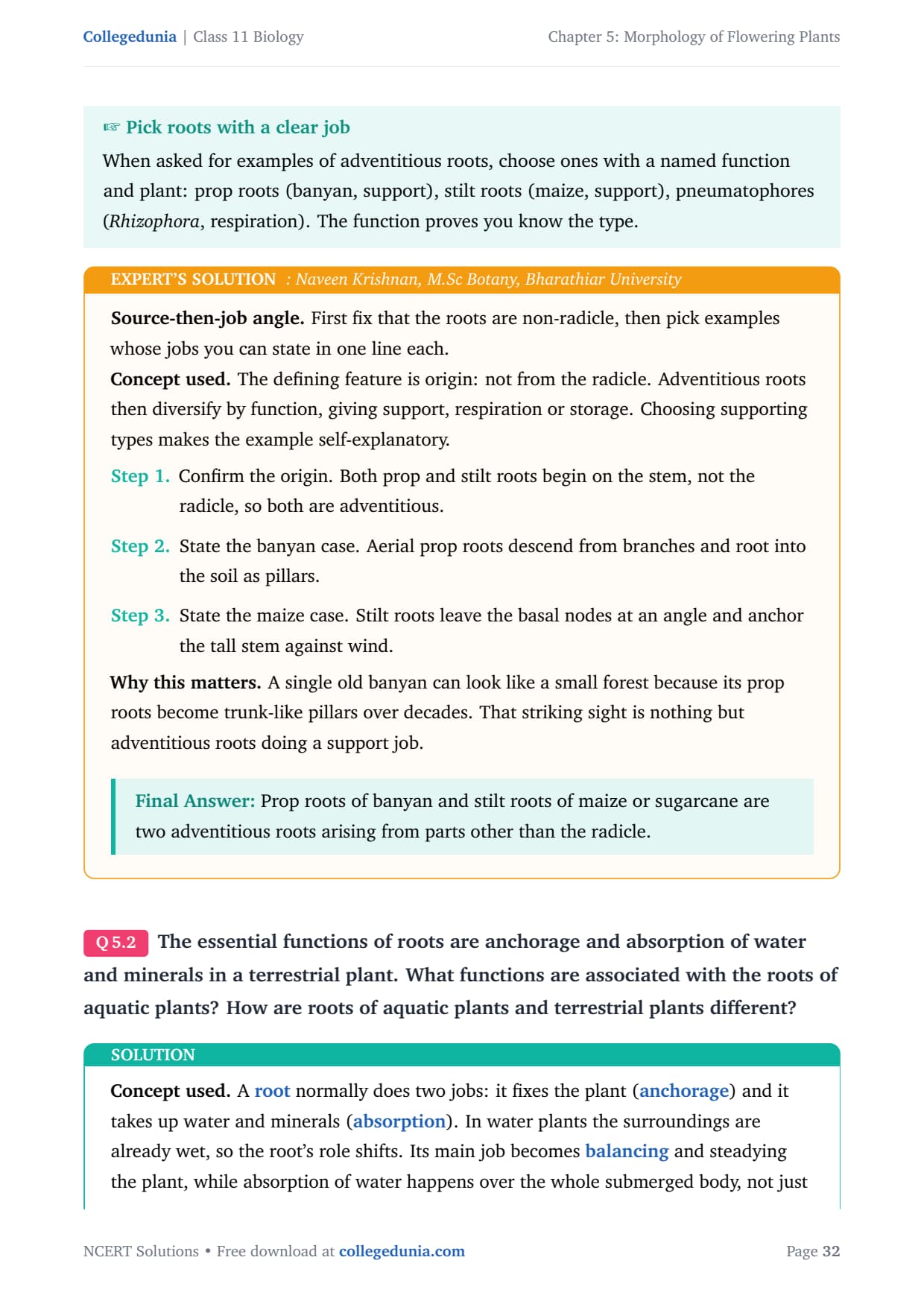
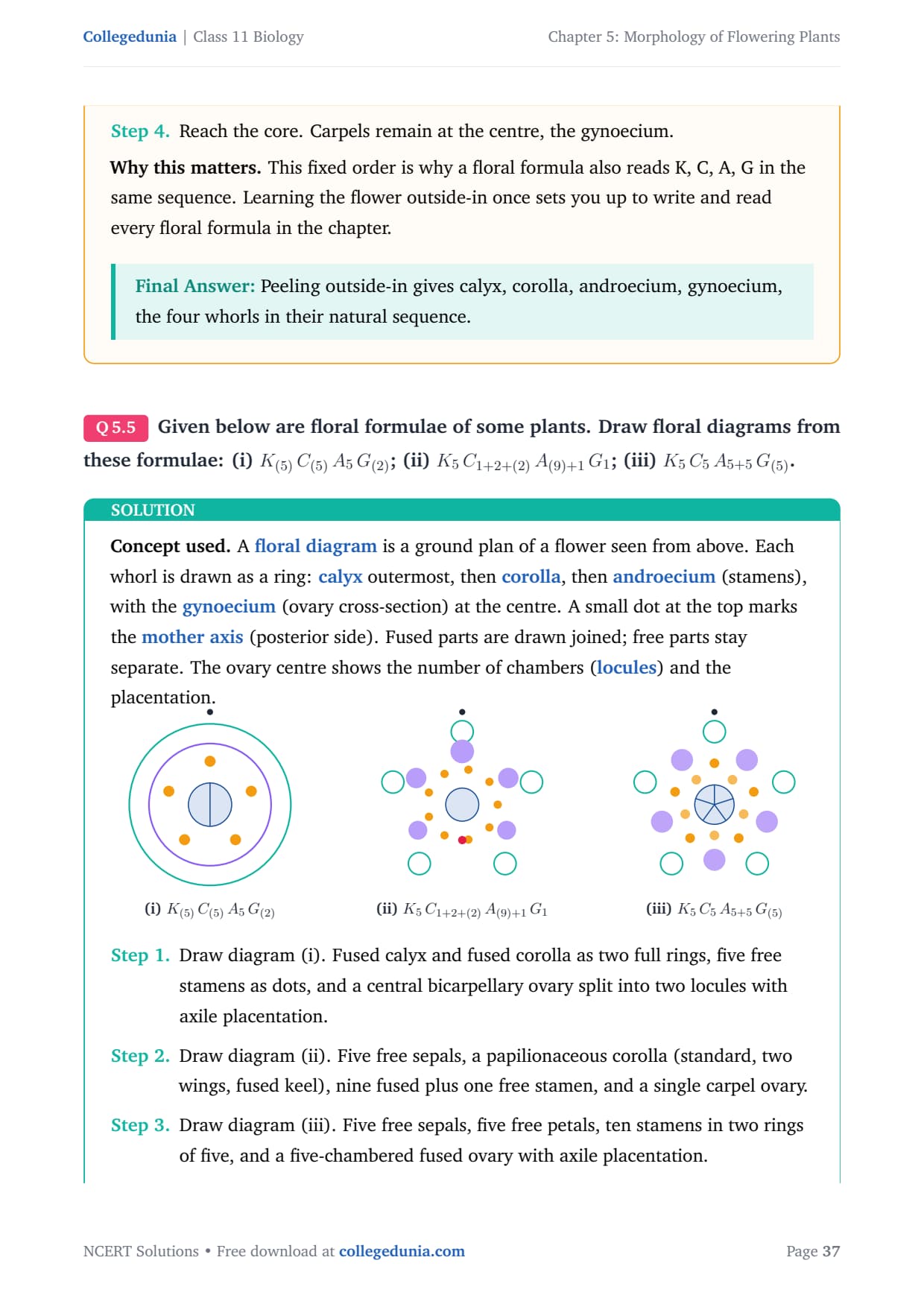
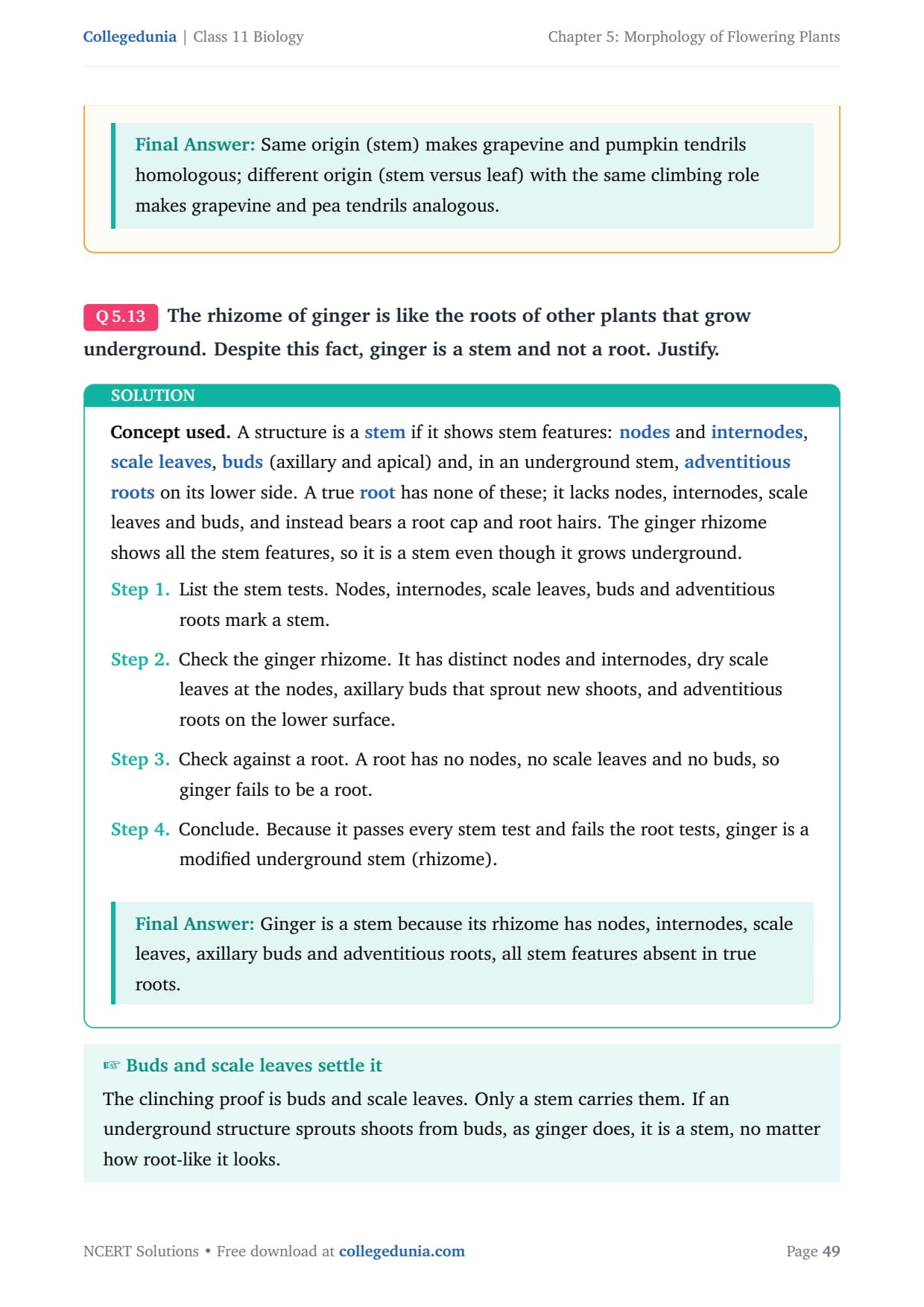
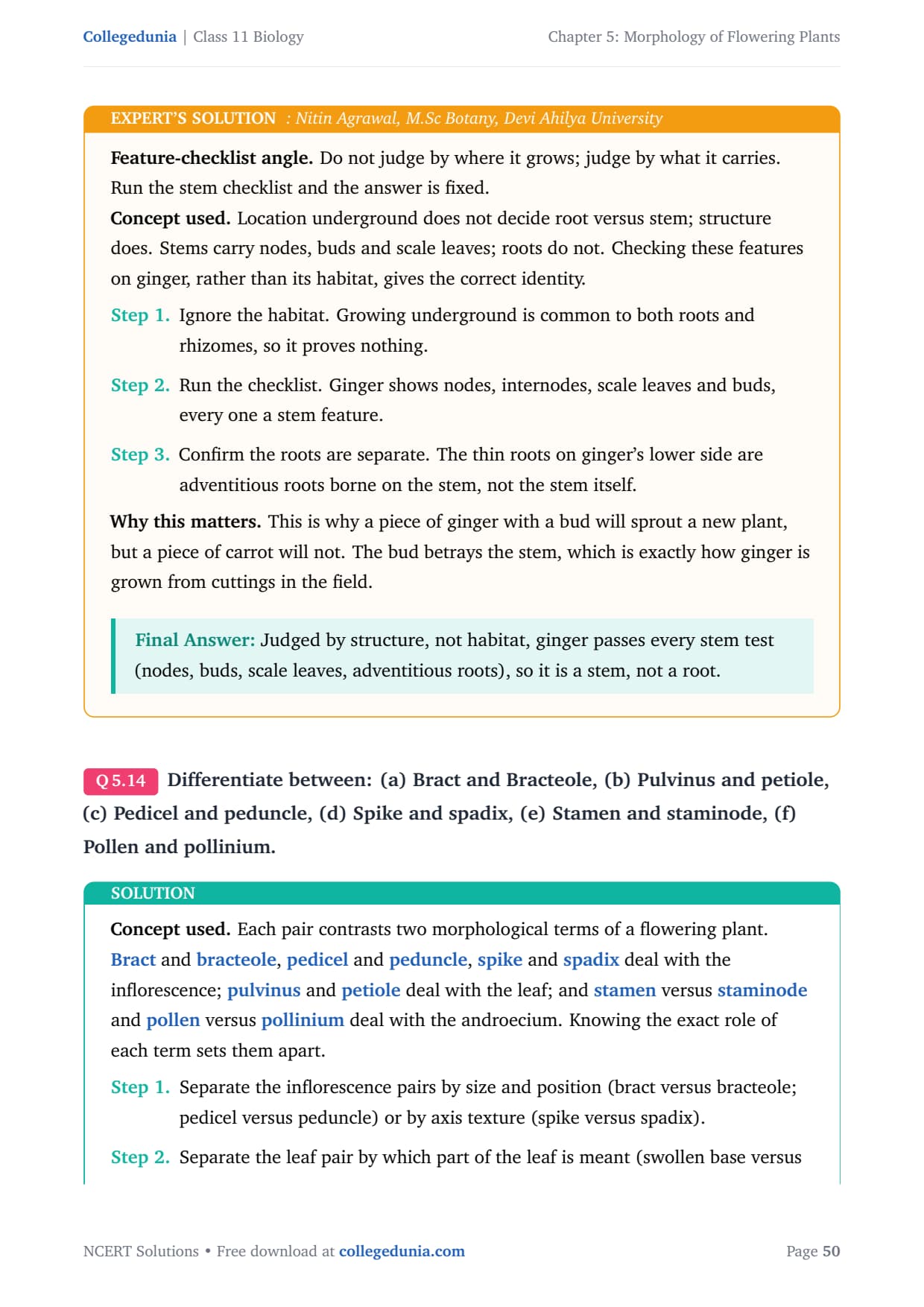
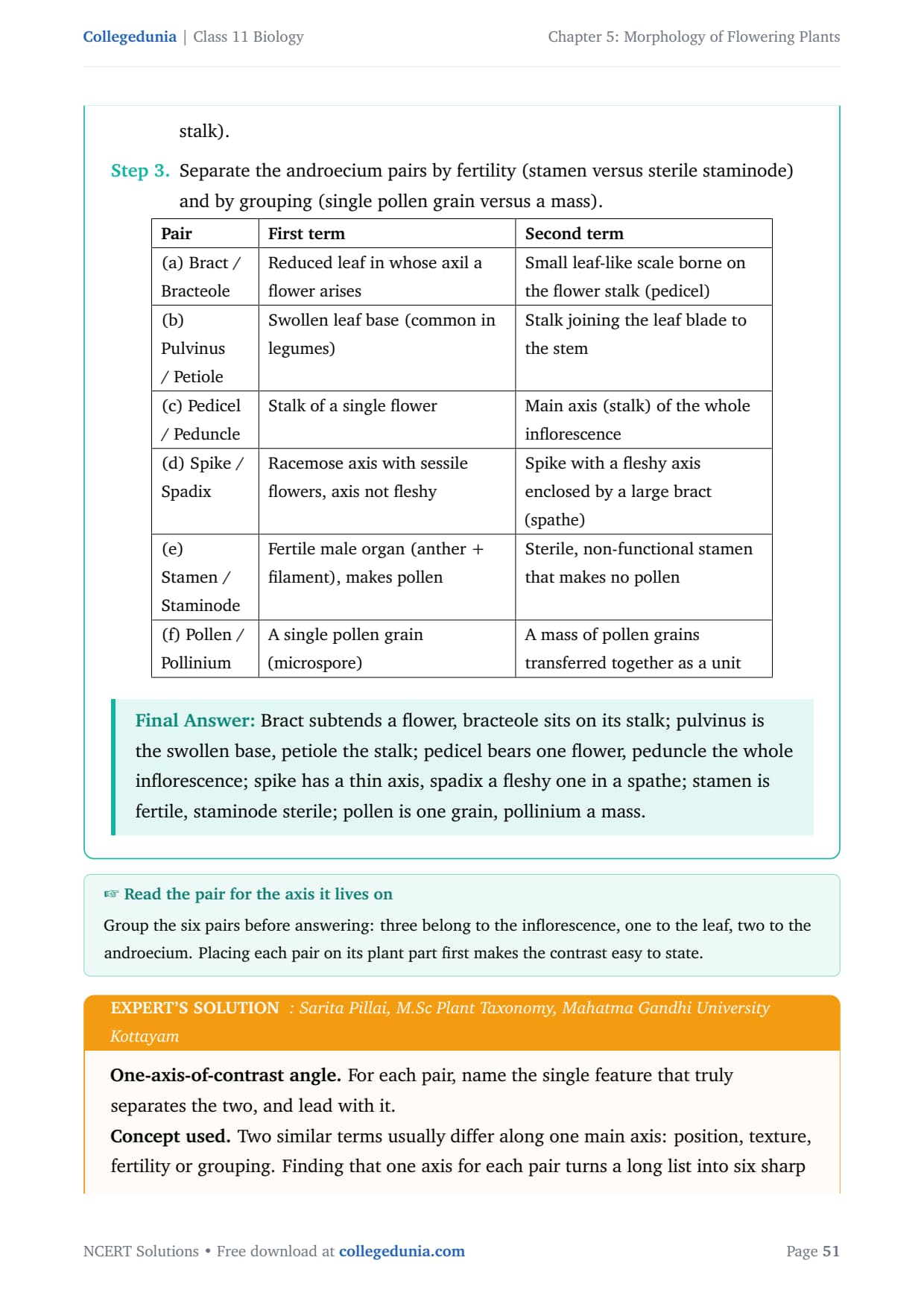
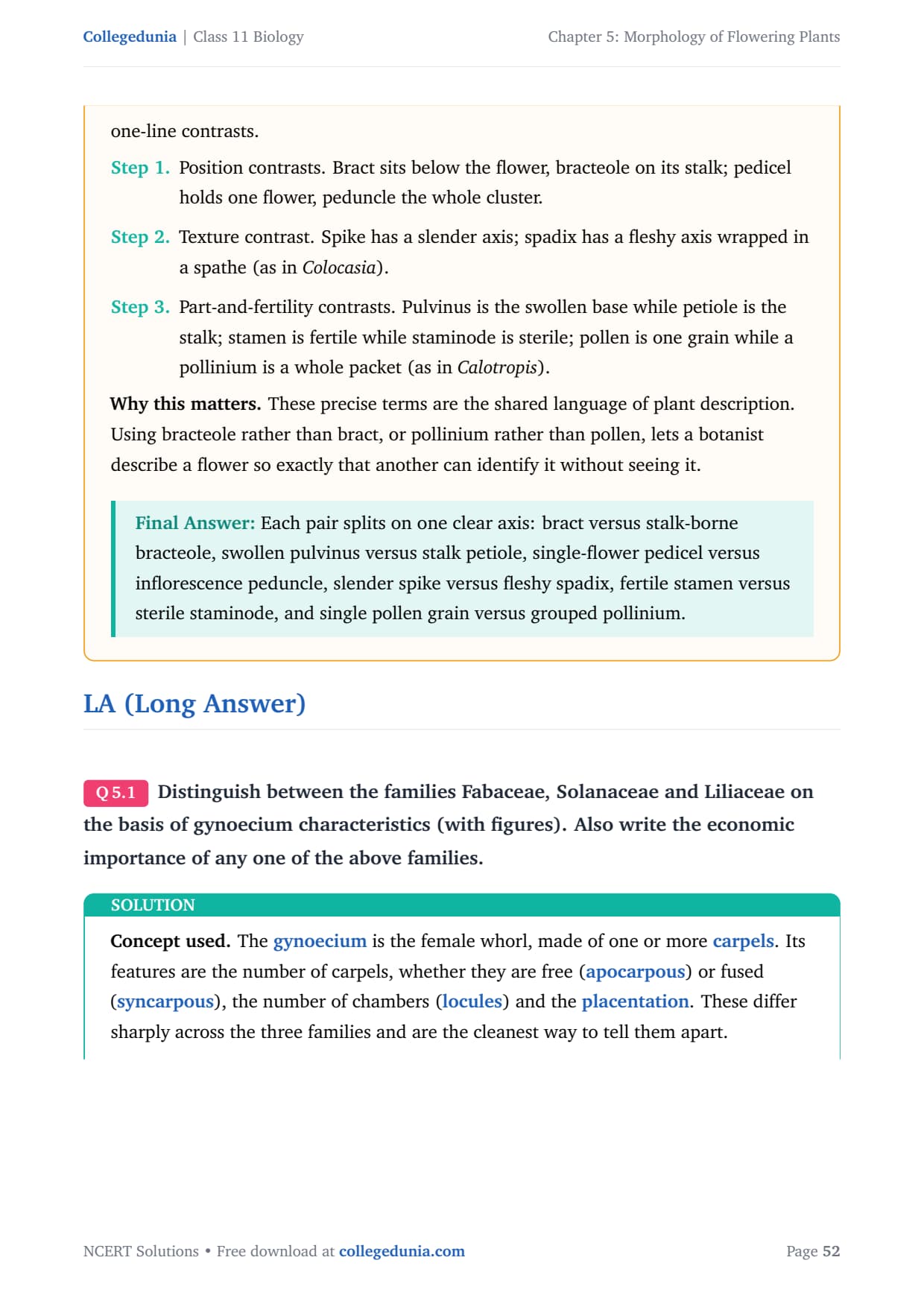
Morphology of Flowering Plants is the chapter that gives you the vocabulary for every plant you will study after it. Roots, stems, leaves, the flower and the fruit each have a set of forms and modifications, and the Exemplar asks you to name them precisely and tell apart the ones that look alike. It also introduces the floral formula and the three families you must know, so a firm grip here carries straight into the physiology and reproduction chapters.
- CBSE Weightage: 3 to 4 marks, usually one question on modifications or on writing a floral formula and diagram
- NEET Weightage: 2 to 3 questions per year on modifications, inflorescence, placentation and the plant families
- CUET Weightage: 1 to 2 questions on morphology terms and the distinguishing features of families in the Biology domain paper
Every answer is checked against the official NCERT Exemplar key, and the terms this chapter is famous for confusing, such as acropetal against basipetal and hilum against chalaza, are pulled apart in full.
Topics Covered in the Class 11 Biology Morphology of Flowering Plants Exemplar
The 41 questions in this chapter are built on four ideas, and each one is a set of named parts you must be able to draw and distinguish. The textbook lists the modifications and the floral parts, but the Exemplar asks you to identify a part from its position or to explain why two similar structures are not the same, which is the harder skill. Working through it fixes the descriptive language you need before flowering-plant anatomy and reproduction build on it.
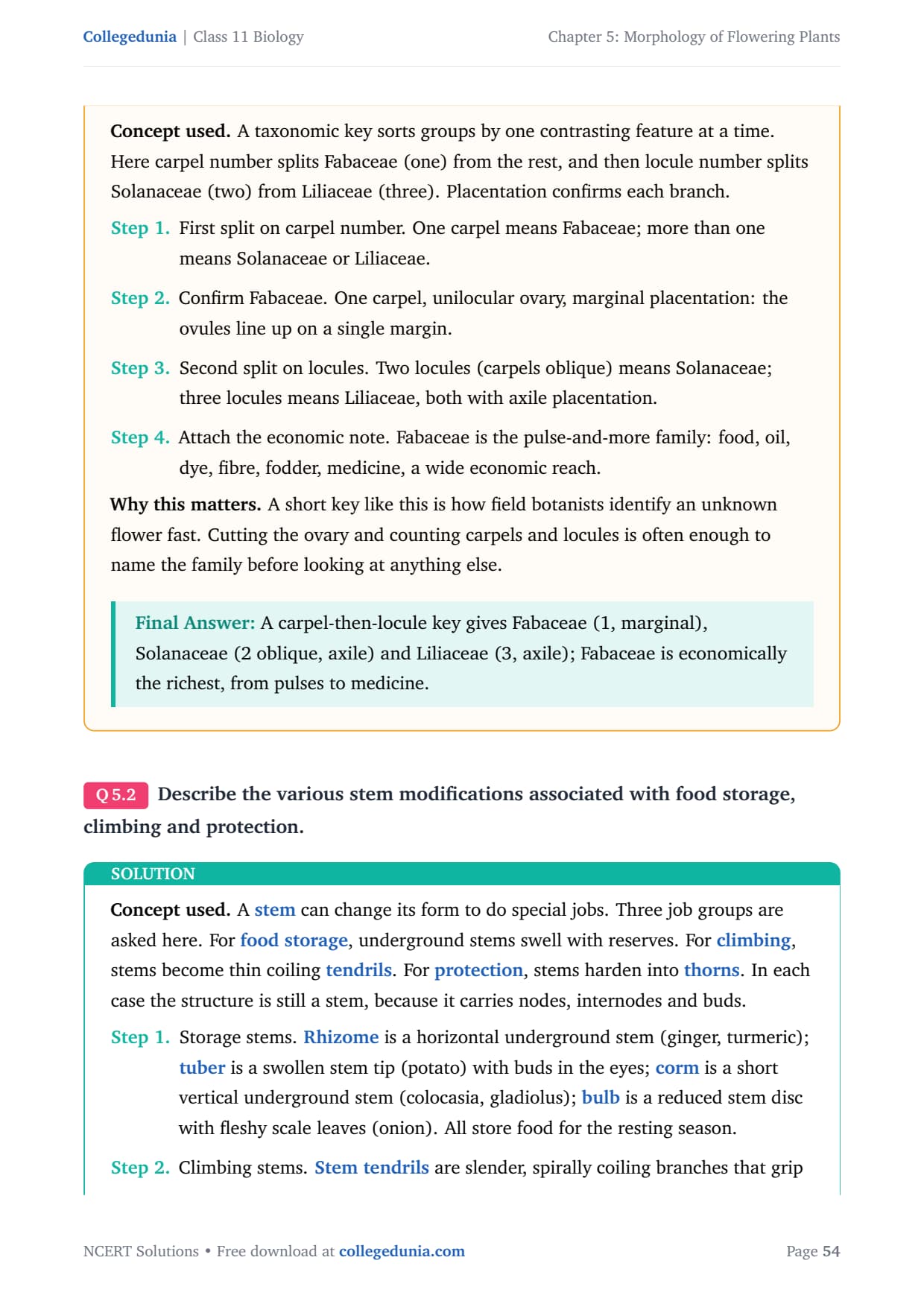
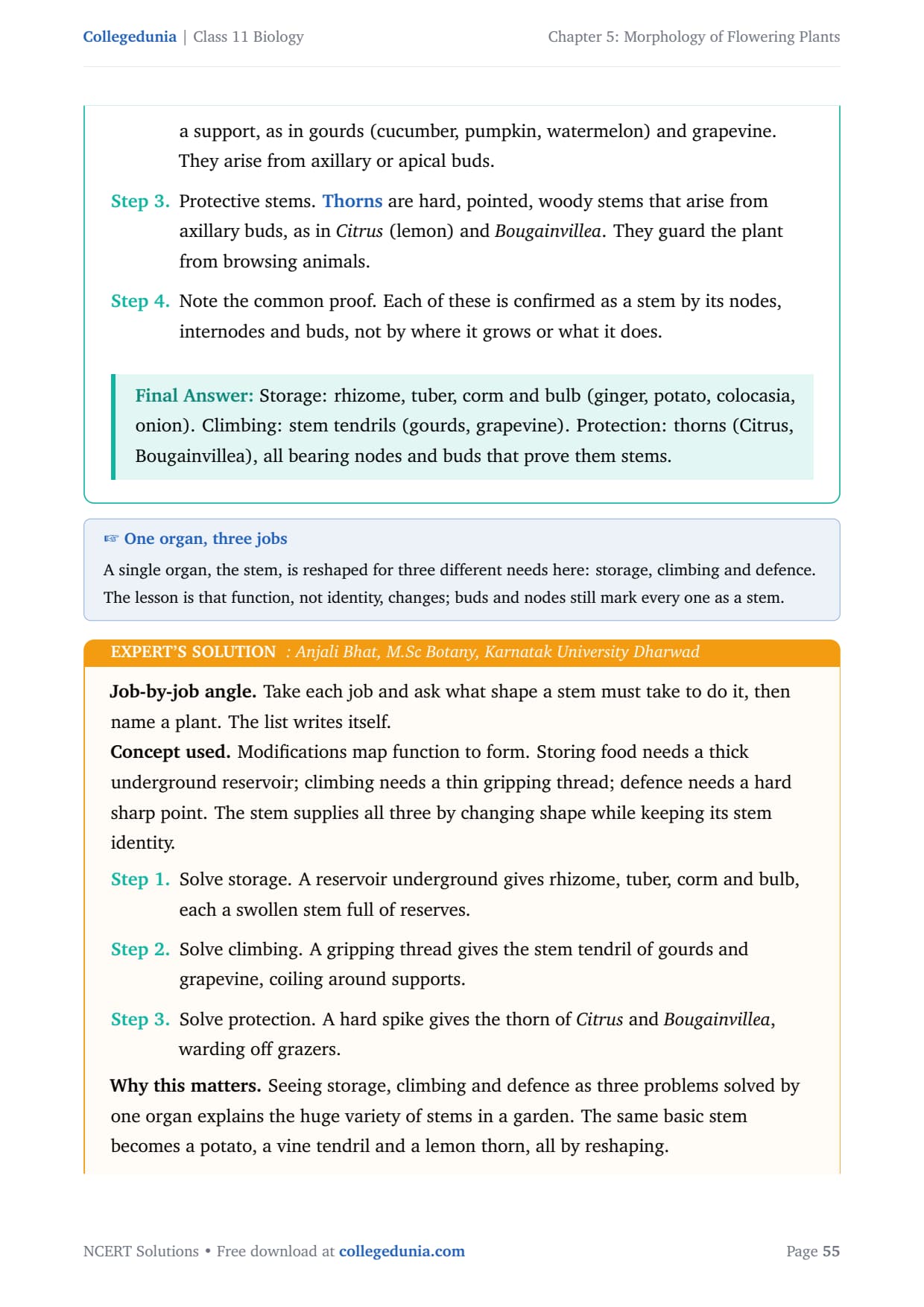
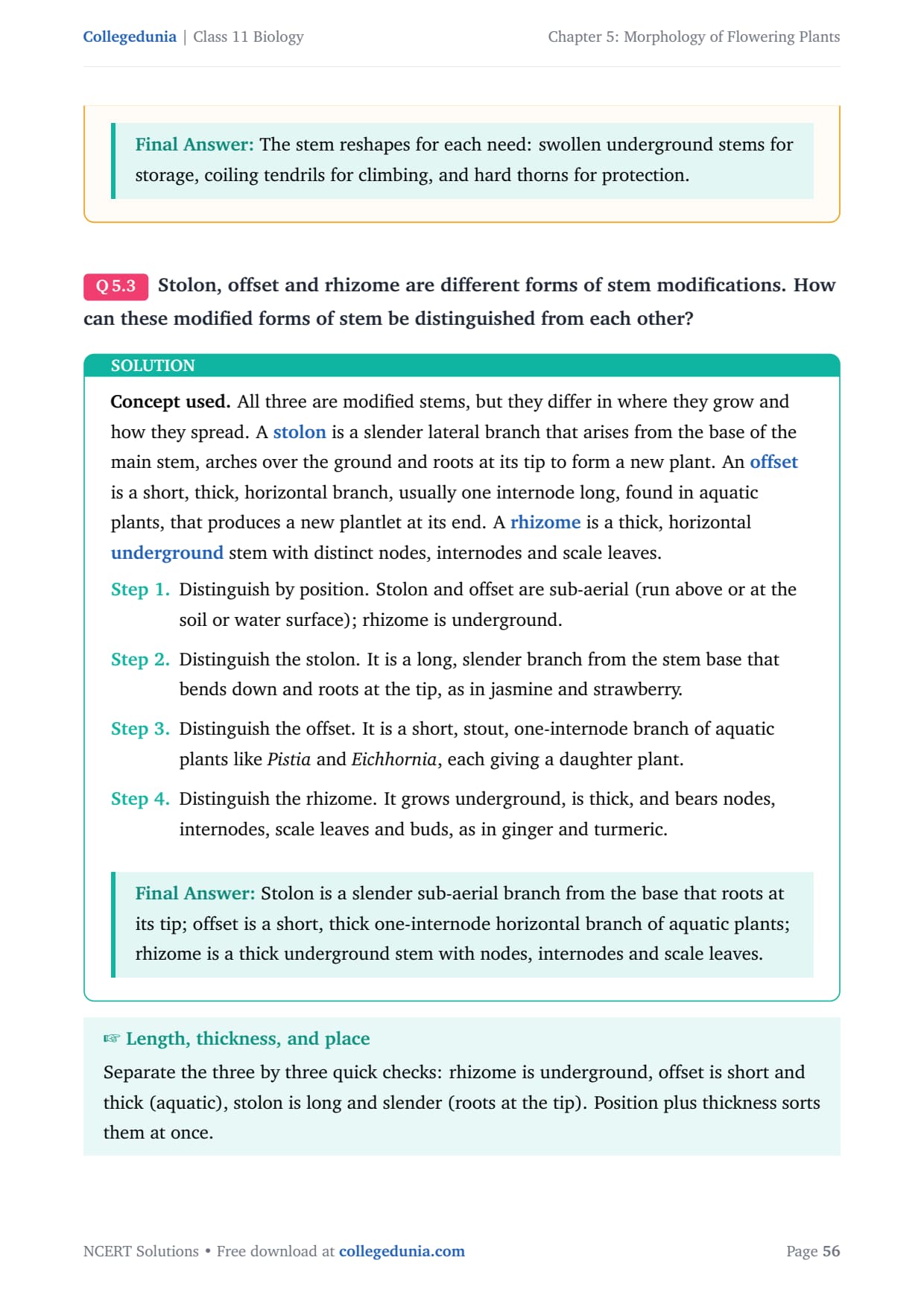
- Root, stem and leaf with modifications: the zones of the root, tap and adventitious systems, stem modifications such as stolon, offset, rhizome, tuber and tendril, and leaf features like venation and phyllotaxy
- Inflorescence: racemose with acropetal succession and cymose with basipetal succession, and the flower read as a modified shoot
- The flower in detail: aestivation, the types of placentation, hypogynous, perigynous and epigynous positions of the ovary, and the floral formula and diagram
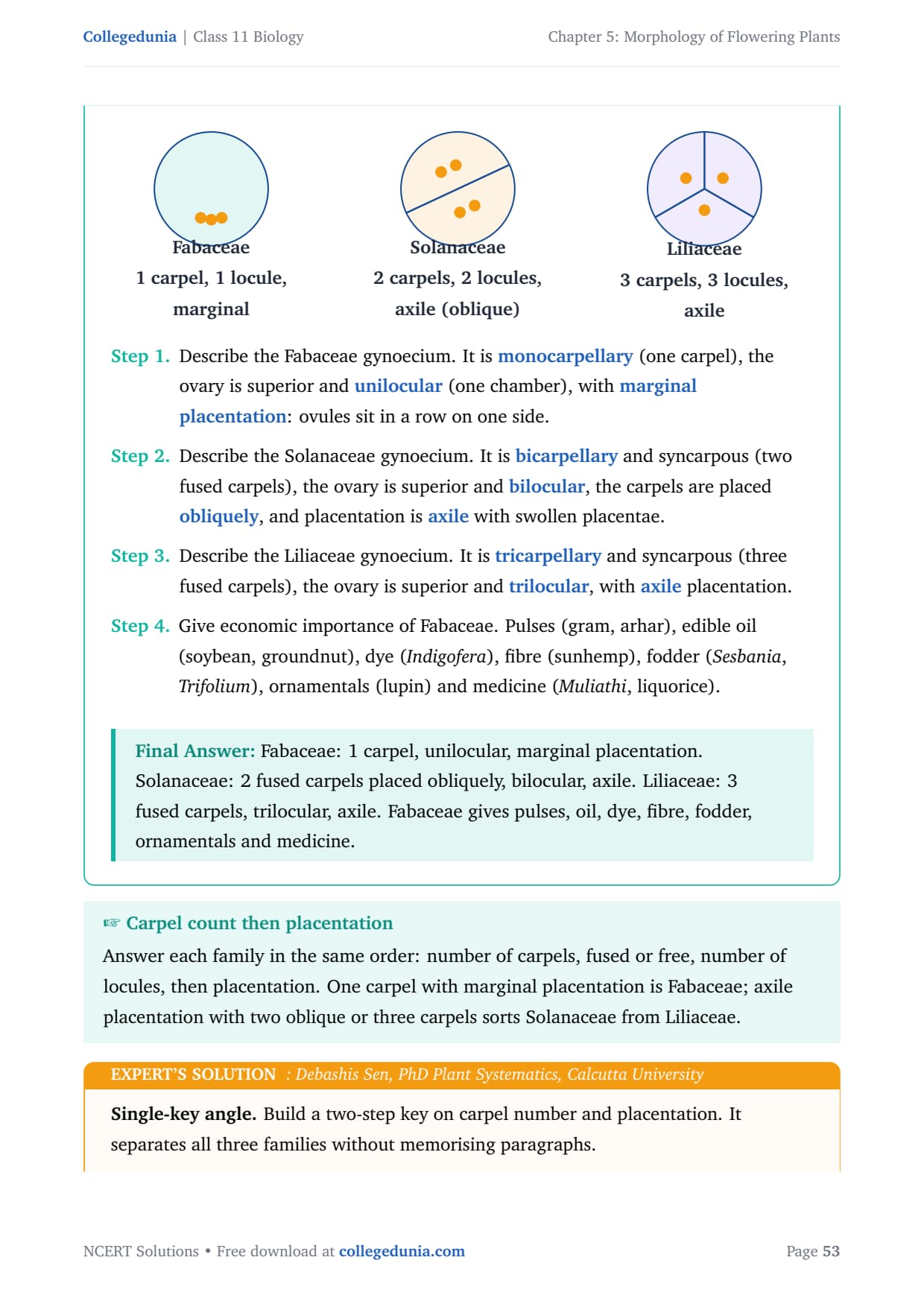
- Fruit, seed and families: the parts of a fruit and seed, and the distinguishing features of Fabaceae, Solanaceae and Liliaceae
Question Types in the Morphology of Flowering Plants NCERT Exemplar
Class 11 Biology Exemplar chapters use four question types, and each one carries a different demand in Morphology. The MCQ set often turns on a single term such as a placentation type or a family, while the Long Answer set asks you to draw floral diagrams, compare families or explain a modification in full. The Short Answer questions are the largest group here, so precise distinctions and clean labelled sketches earn the most marks. The table below shows how the 41 questions split.
| Question Type | Count | What It Tests |
|---|---|---|
| MCQ (single correct) | 10 | Naming a part or type from its position, such as placentation or venation |
| VSA (Very Short Answer) | 9 | One-line identifications and single examples of modifications |
| SA (Short Answer) | 14 | Distinguishing look-alike structures and reading a floral formula |
| LA (Long Answer) | 8 | Drawing floral diagrams and comparing Fabaceae, Solanaceae and Liliaceae in full |
Direction, Position and the Homology Traps
The hardest questions in this chapter are not about single names at all. They ask you to read a direction or a position, and the Exemplar builds several problems around the traps in that reading. Acropetal and basipetal describe opposite orders of opening, and getting the direction wrong flips a racemose inflorescence into a cymose one. The same care decides where the hilum ends and the chalaza begins, and whether two tendrils are homologous or only similar in use, so each of these is worth learning as a rule of orientation rather than a loose label.
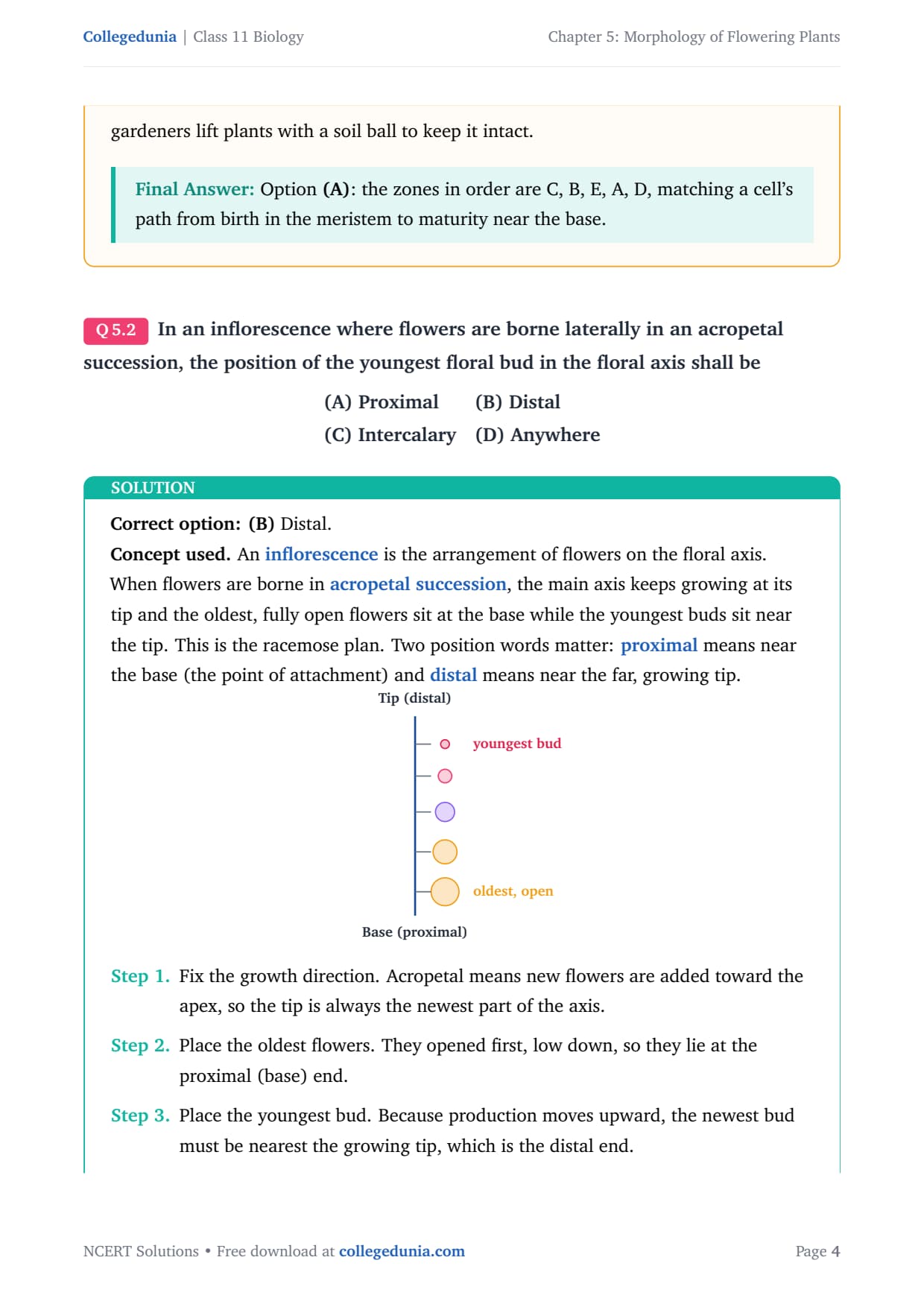
- Acropetal against basipetal: in a racemose inflorescence the main axis keeps growing and flowers open in acropetal order from below upward, while a cymose axis ends in a flower and opens in basipetal order
- Hilum against chalaza: the hilum is the scar where the funicle joins the seed, while the chalaza is the basal region opposite it, and questions on ovule and seed structure test the two apart
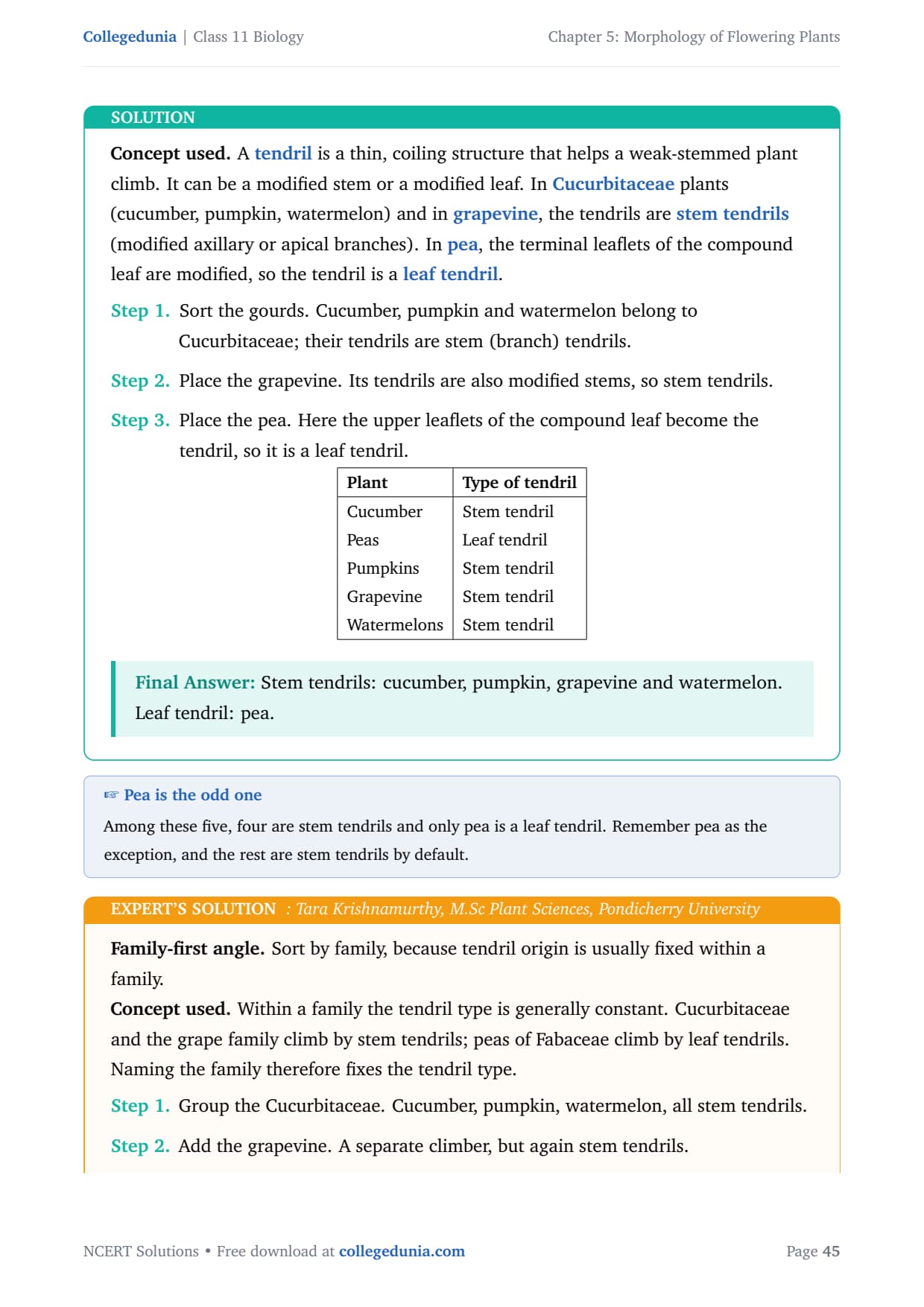
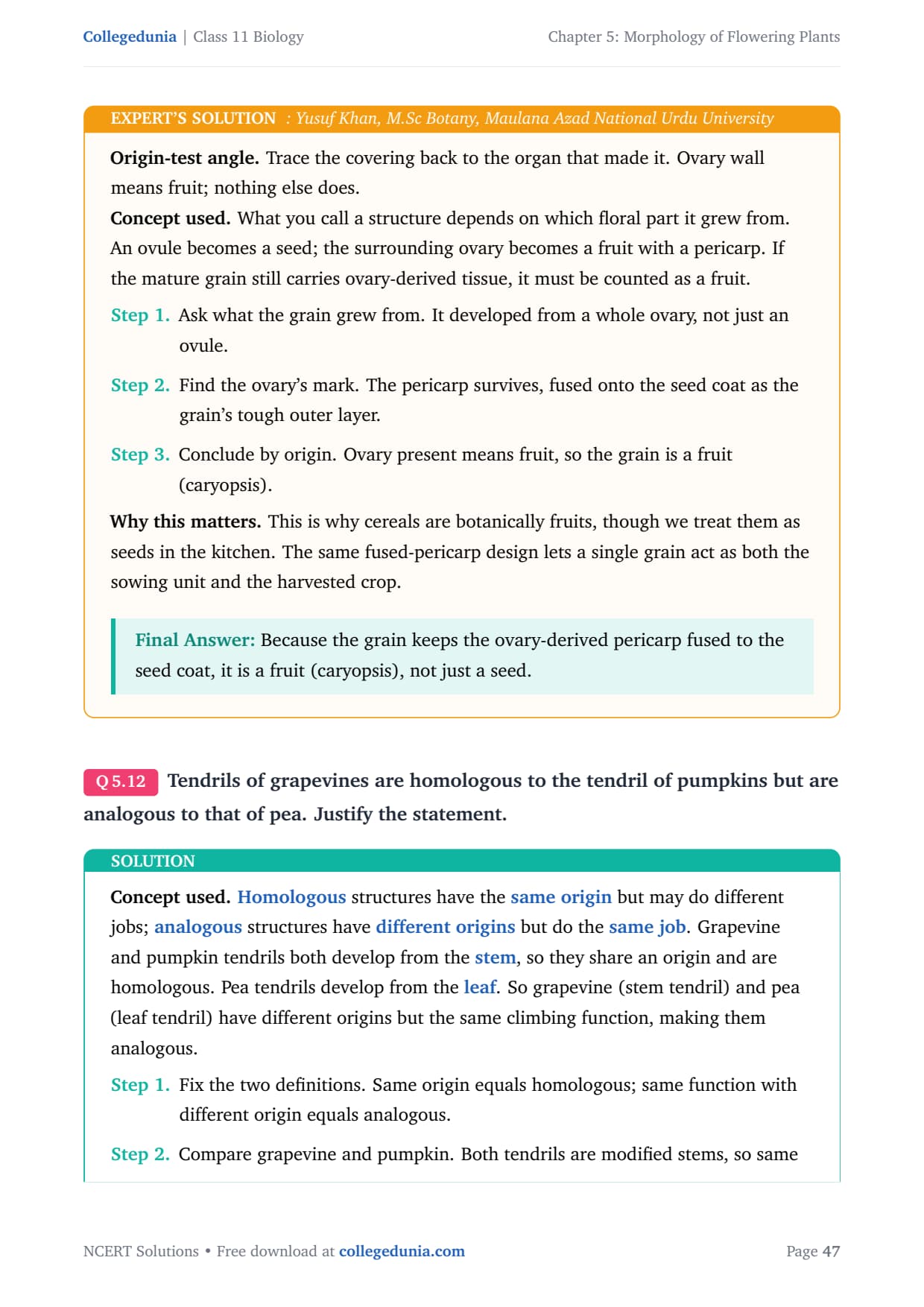
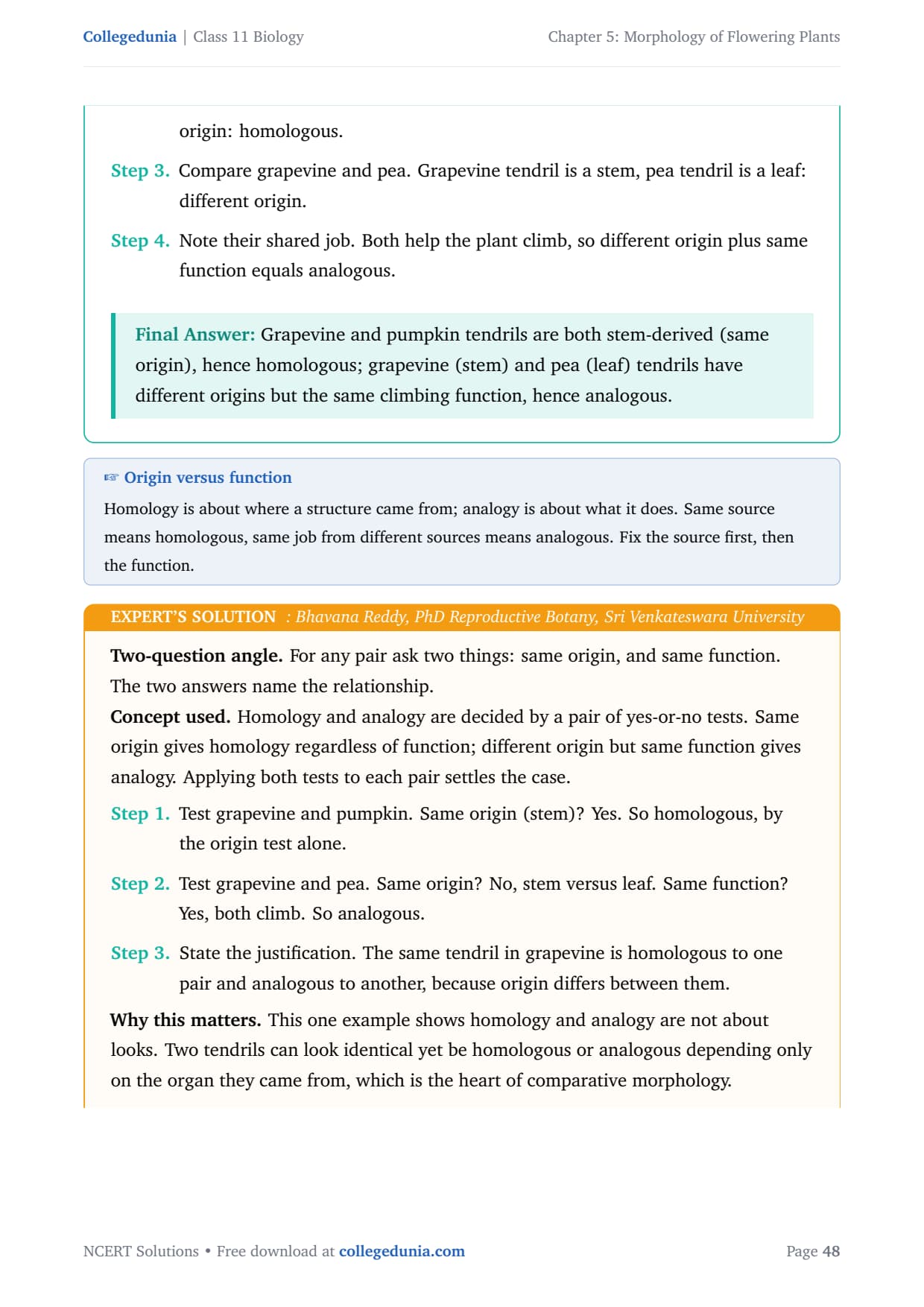
- Homologous against analogous: a grapevine tendril and a pumpkin tendril are homologous because both are modified stems, even though a pea tendril, a modified leaf, only looks similar
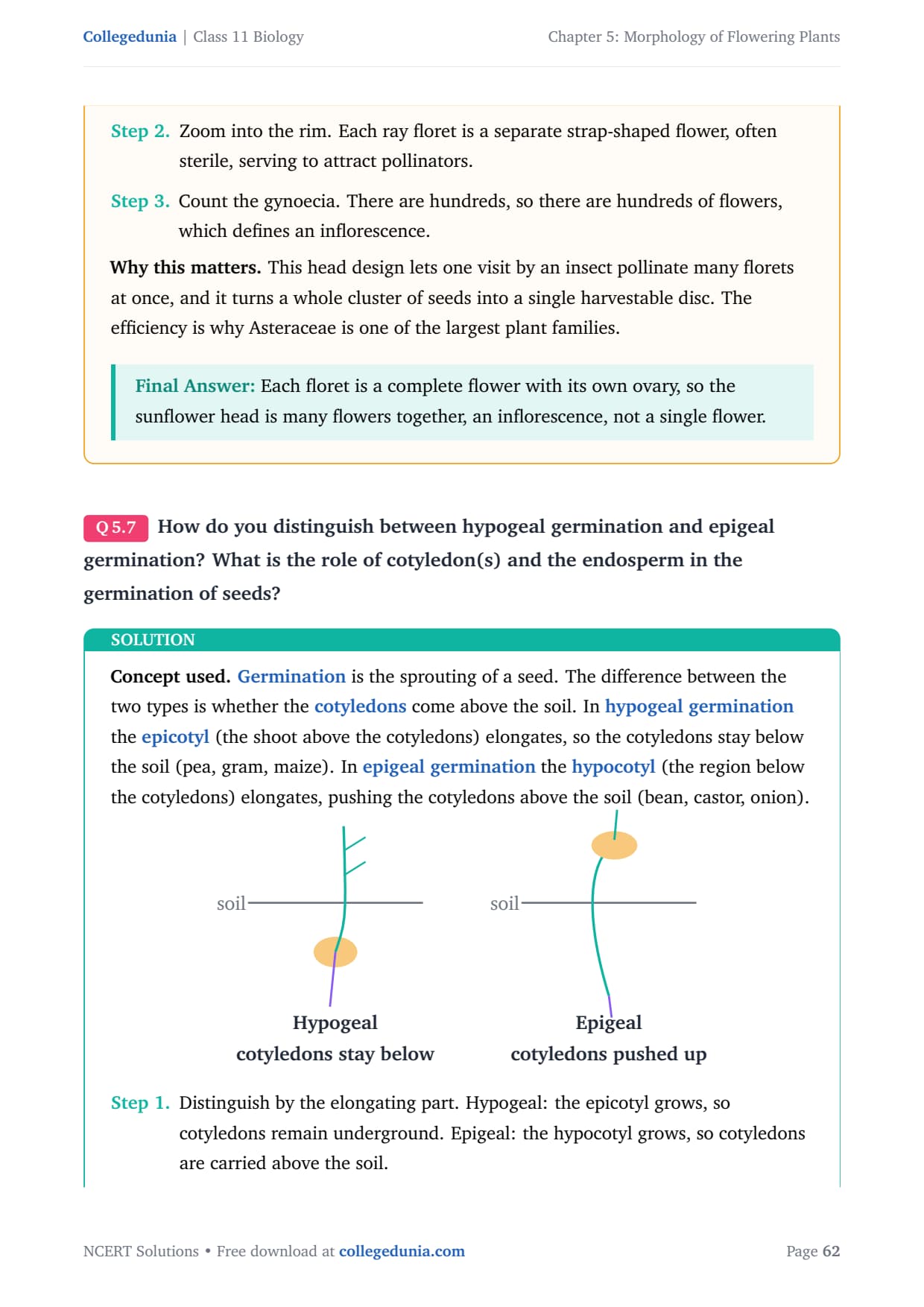
- Sunflower is not a flower: a sunflower is a capitulum, an inflorescence of many small florets, so a question that calls it a single flower is testing whether you read the structure correctly
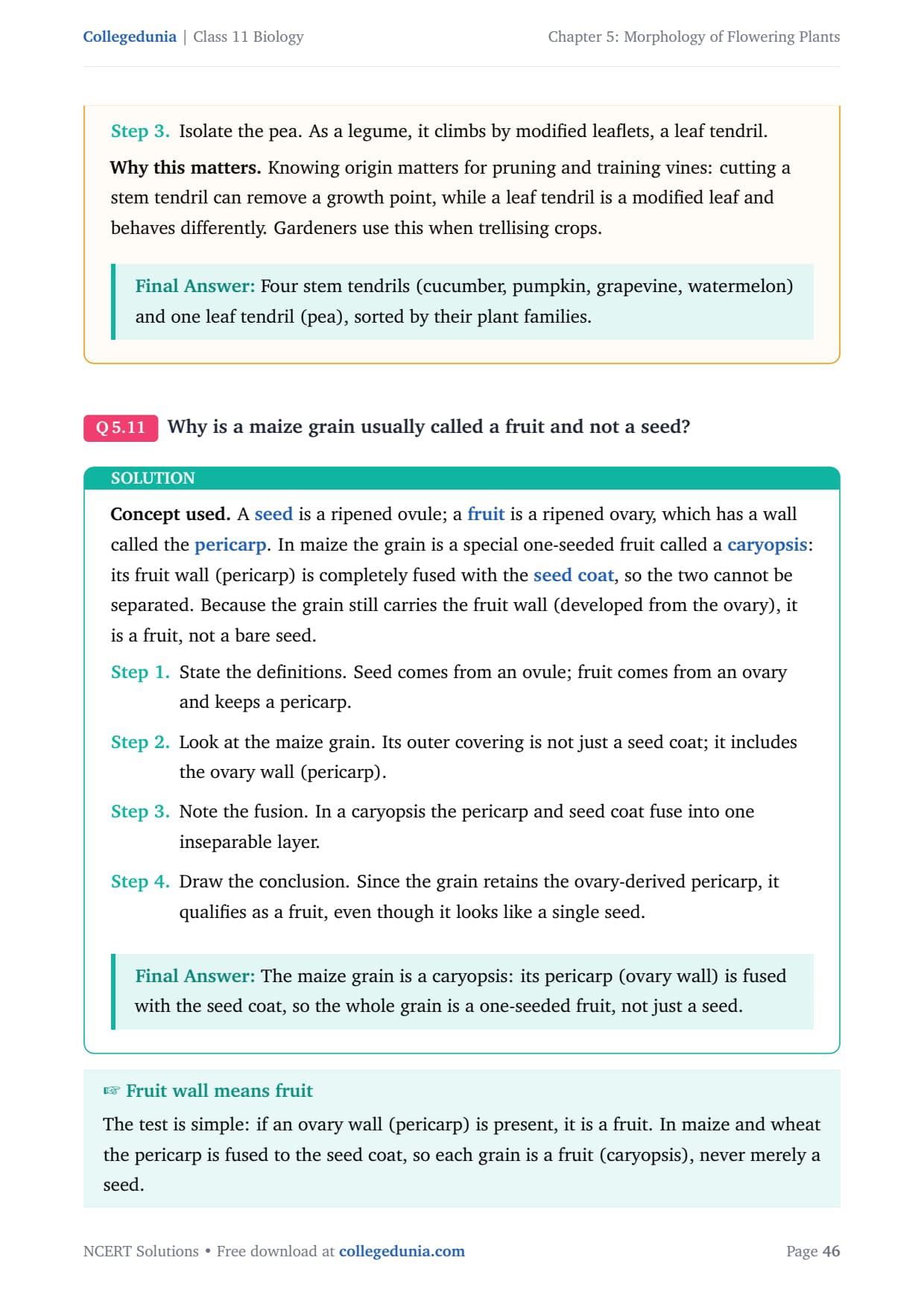
Reading the direction or position correctly is usually enough to answer, and the Exemplar makes you prove it. A maize grain is called a fruit and not a seed because its wall is fused with the pericarp, a single structural fact that settles the whole question. Each answer in the PDF names the deciding orientation or structure and explains why the tempting label is wrong.
Common Mistakes Students Make in Morphology of Flowering Plants
The Exemplar plants wrong options and half-right terms on purpose. Four errors catch most students in this chapter, and each is flagged in the PDF at the exact question where it appears. Learning to spot them early saves marks across the botany unit, because the same descriptive terms return in Anatomy of Flowering Plants and in the reproduction chapters.
- Acropetal against basipetal: racemose inflorescences open acropetally, from the base upward, while cymose ones open basipetally. Students match the direction to the wrong inflorescence and lose the mark on both.
- Hilum against chalaza: the hilum is the scar of attachment and the chalaza is the base of the ovule opposite it. A question on where the placenta connects near the seed is testing this pair, not the micropyle.
- The maize kernel: the edible bulk of a maize grain is endosperm, not mesocarp, and the grain itself is a fruit, a caryopsis, not a seed. Calling it a seed reverses a favourite Exemplar answer.
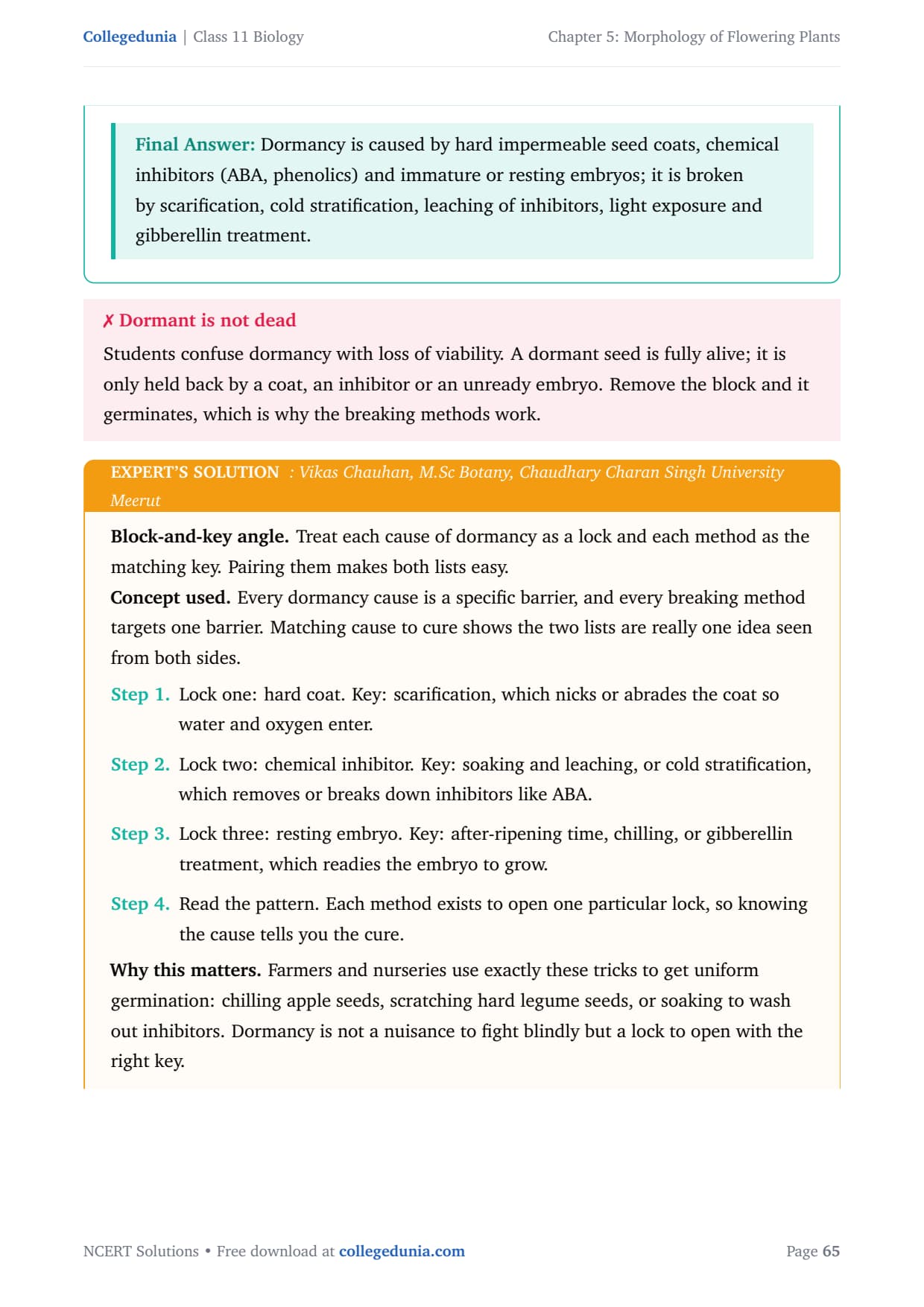
- Dormant is not dead: a dormant seed is fully alive but held back from germinating until conditions are right. Students read dormancy as loss of viability and give the opposite of the correct answer.
How the Exemplar Steps Up from the Class 11 Biology Textbook
The textbook names a structure and asks you to describe it. The Exemplar names a familiar plant or part and asks you to justify what it really is, which is a different skill and the one that boards and NEET actually test. This is why students who only read the chapter feel the Exemplar is unfair. It is not harder in content, it is harder in the way it asks.
The question that asks you to explain why a sunflower is not a flower shows the gap clearly. The textbook lists the sunflower under the family Asteraceae, so a quick reader treats it as one large flower. The Exemplar hands you the everyday name and asks you to defend it. To answer, you have to recognise that the sunflower head is a capitulum made of many ray and disc florets, a point the textbook shows in a figure but never forces you to argue. The maize-grain question works the same way, asking why the grain is a fruit and not a seed, and the answer rests on the fused fruit wall and seed coat. Working these builds judgement, not recall, which is exactly what Morphology is meant to leave you with.
How to Use These NCERT Exemplar Solutions for Boards, NEET and CUET
Attempt each question before you open the solution, and always draw the sketch yourself first. This chapter rewards a clean labelled diagram more than a paragraph, because the marks in Morphology sit on correct parts and correct positions. Read the question, draw or define in your own words, and only then check it against the PDF. The gap between your labels and the model answer is where the marks live.
- Boards: the Short Answer and Long Answer sets match the 3 and 4 mark board pattern, especially the floral diagrams and the comparison of Fabaceae, Solanaceae and Liliaceae
- NEET: work the MCQ and Very Short Answer sets first, since NEET repeats modifications, inflorescence, placentation and the plant families at exactly that level every year
- CUET: the term-based MCQ set is the closest practice for the domain paper, which favours naming a part or family from a single feature
Student Feedback
Students using Collegedunia's Class 11 Biology Exemplar Solutions told us that writing floral formulae and telling the placentation types apart were the hardest parts of this chapter, well above naming the stem and root modifications. Around 7 in 10 said that seeing the sunflower, maize-grain and acropetal questions solved with the deciding structure named each time finally made the descriptive terms stick.
Other Resources for Class 11 Biology Morphology of Flowering Plants
Collegedunia has the full set of study material for this chapter. Use the Notes for a first read, then the Exemplar once the morphology terms are steady, and keep the NCERT Solutions and Formula Sheet open for quick revision alongside.
Also Check:
- NCERT Solutions for Class 11 Biology Chapter 5
- Class 11 Biology Chapter 5 Notes
- Class 11 Biology Chapter 5 Formula Sheet
- Class 11 Biology Chapter 5 NCERT Book PDF
- Class 11 Biology Chapter 5 Exemplar Book PDF
NCERT Exemplar Solutions for Other Class 11 Biology Chapters
Each chapter below has the same step-by-step treatment and a free PDF. All 19 chapters have an NCERT Exemplar book chapter behind them, so the list covers every one.
Morphology of Flowering Plants Class 11 NCERT Exemplar Solutions FAQs
Ques. How many questions are there in the Class 11 Biology Morphology of Flowering Plants Exemplar?
Ans. Chapter 5 has 41 questions. They are split into 10 MCQ, 9 Very Short Answer, 14 Short Answer and 8 Long Answer questions. All 41 are solved in the free PDF on this page.
Ques. What is the difference between acropetal and basipetal arrangement?
Ans. In an acropetal arrangement the older flowers are at the base and the younger ones toward the tip, so a racemose inflorescence with a continuously growing axis opens acropetally. In a basipetal arrangement the order is reversed, with the oldest flower at the tip, as in a cymose inflorescence. Matching the direction to the wrong inflorescence is the common error the Exemplar checks.
Ques. Why is a maize grain called a fruit and not a seed?
Ans. In maize the fruit wall, or pericarp, is fused with the seed coat, so the grain cannot be separated into a bare seed. Because the pericarp is part of the structure, the grain is a one-seeded fruit called a caryopsis, not a seed. The Exemplar uses this to test whether students distinguish a fruit from a seed by structure rather than by size or name.
Ques. What is the difference between the hilum and the chalaza?
Ans. The hilum is the scar on the seed that marks where the funicle was attached, while the chalaza is the basal region of the ovule, lying opposite the hilum, where the integuments and nucellus meet. Questions on ovule and seed structure often ask where the placenta connects near the seed, and knowing this pair keeps the answer correct.
Ques. Is the NCERT Exemplar enough for NEET questions from Morphology of Flowering Plants?
Ans. For this chapter it covers the ground well. NEET asks two to three questions a year on modifications, inflorescence, placentation and the three plant families, and they sit at the level of the Exemplar MCQ and Short Answer sets. Work all 10 MCQs and the 14 Short Answers, and practise the floral formulae, before moving to a coaching module.



Comments