




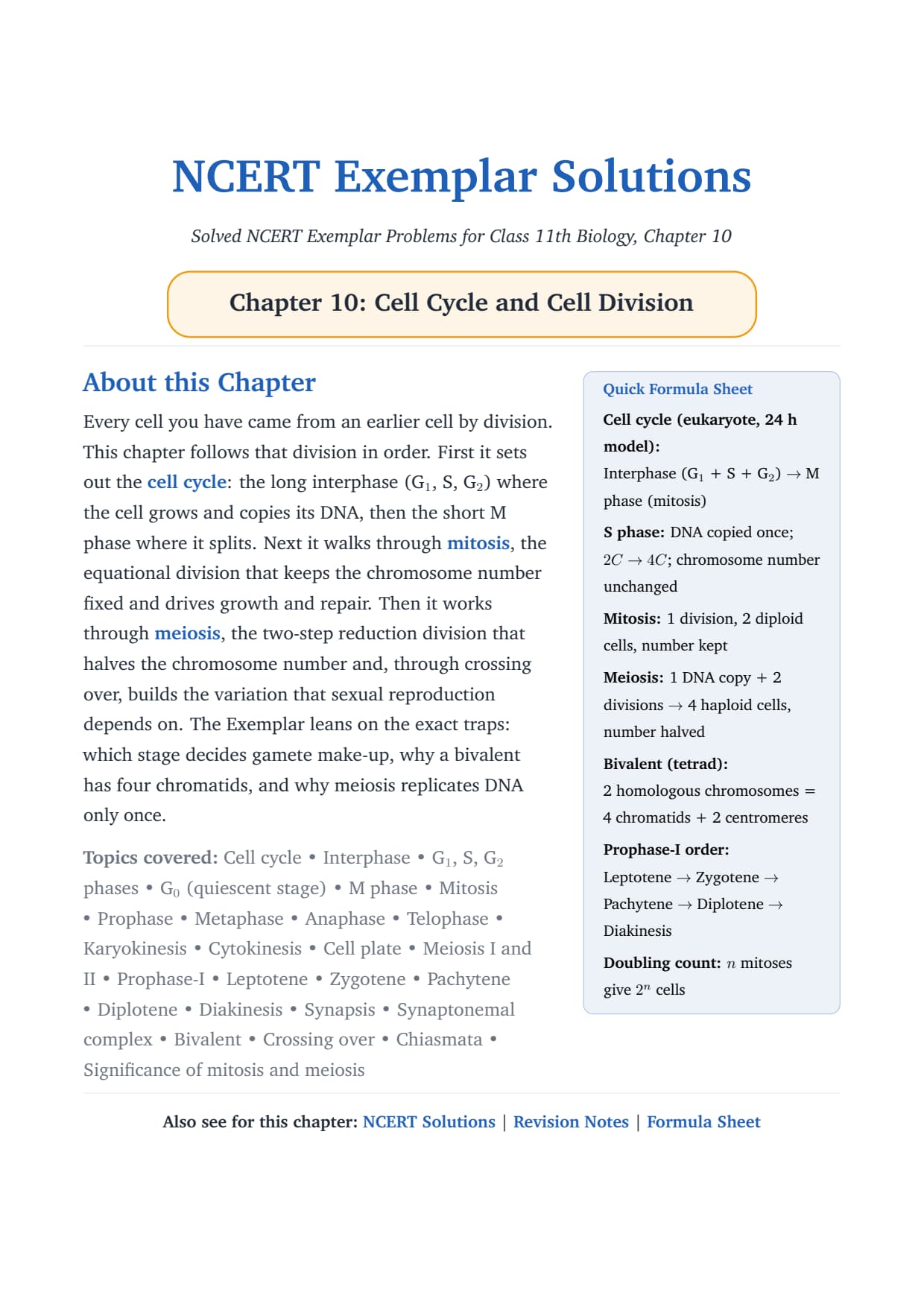
NCERT Exemplar Solutions for Class 11 Biology Chapter 10 Cell Cycle and Cell Division solve all 43 questions from the Exemplar book. Every MCQ, Very Short Answer, Short Answer and Long Answer problem is answered step by step in the free 70-page PDF, updated for the 2026-27 syllabus.
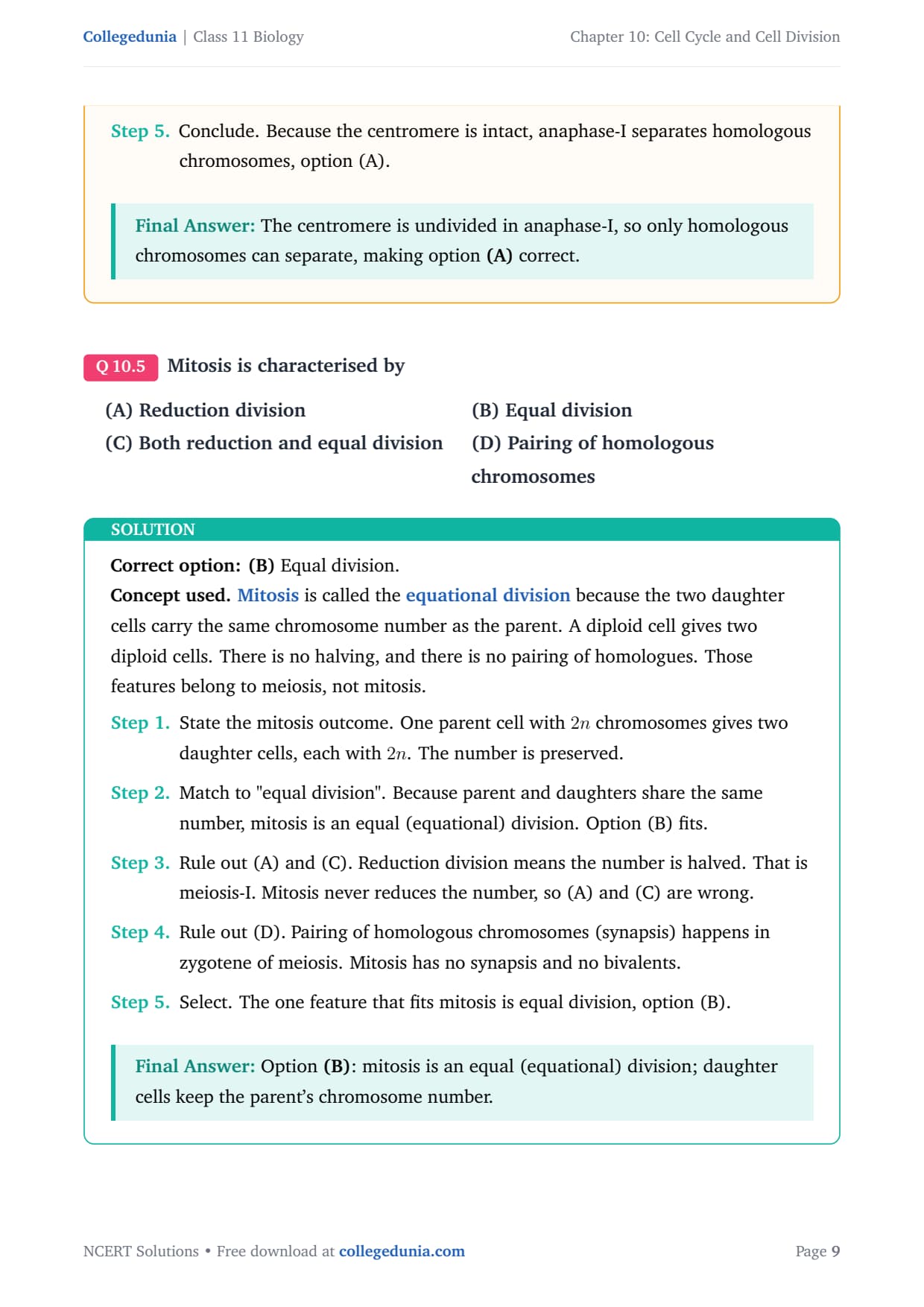
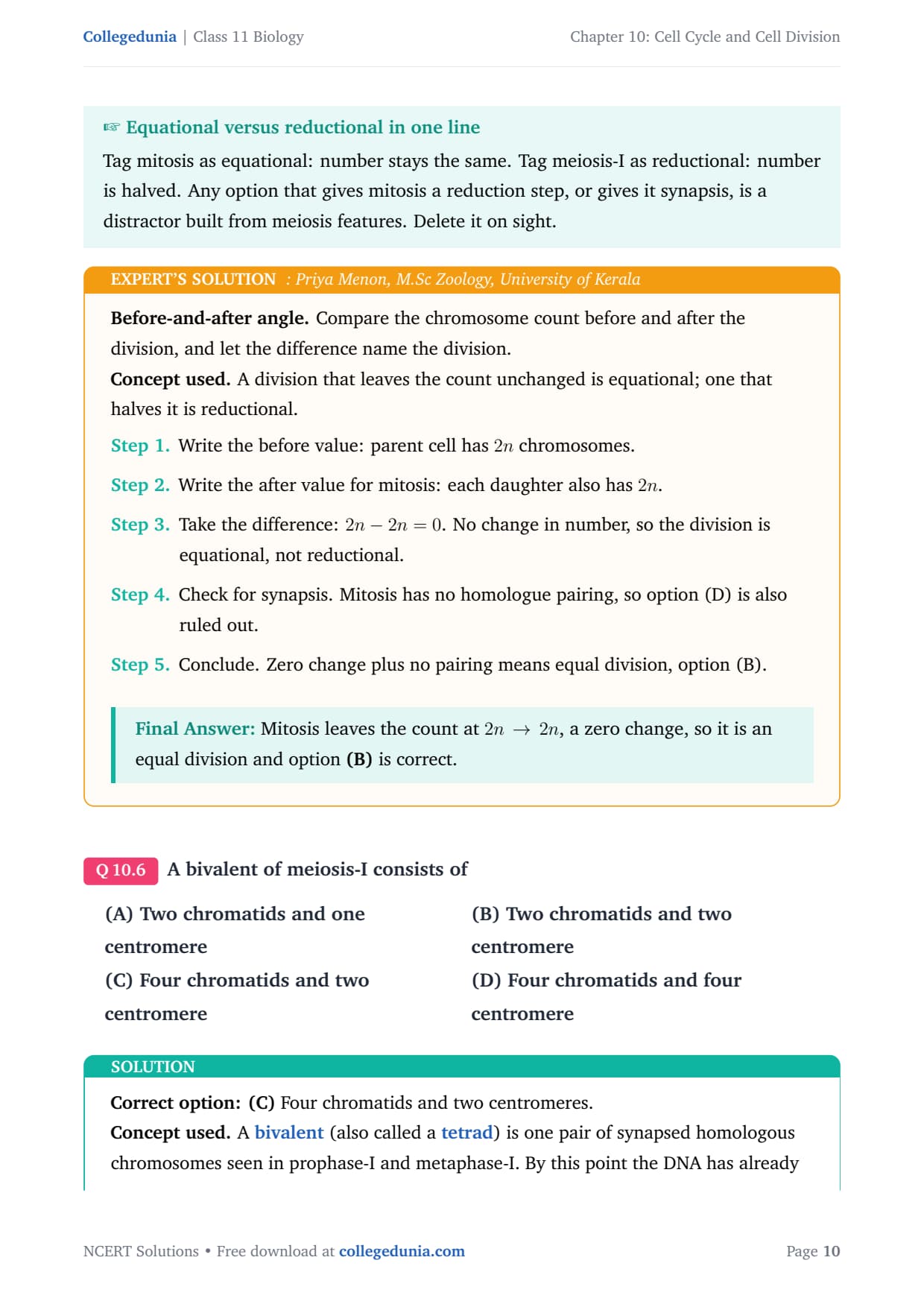
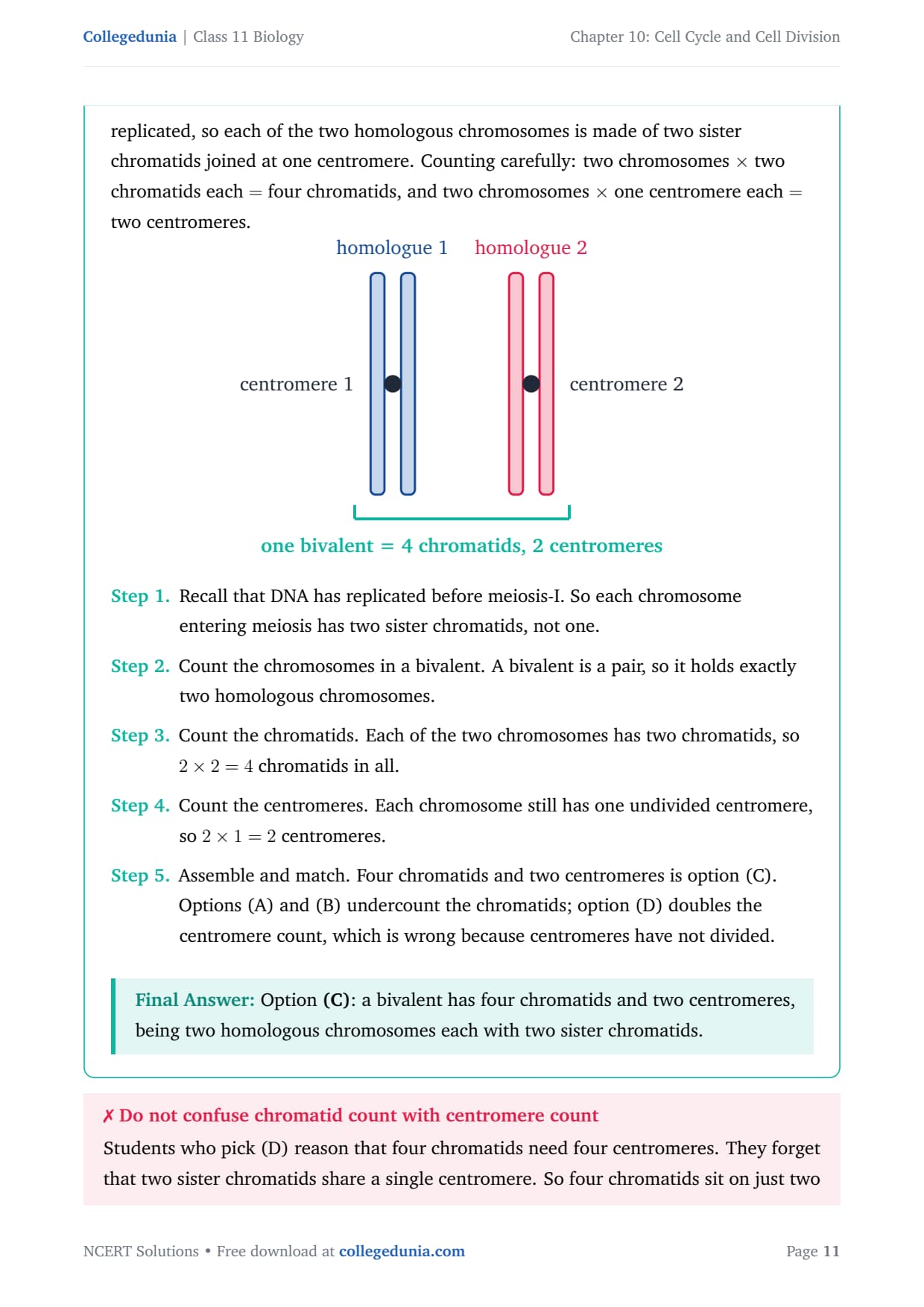
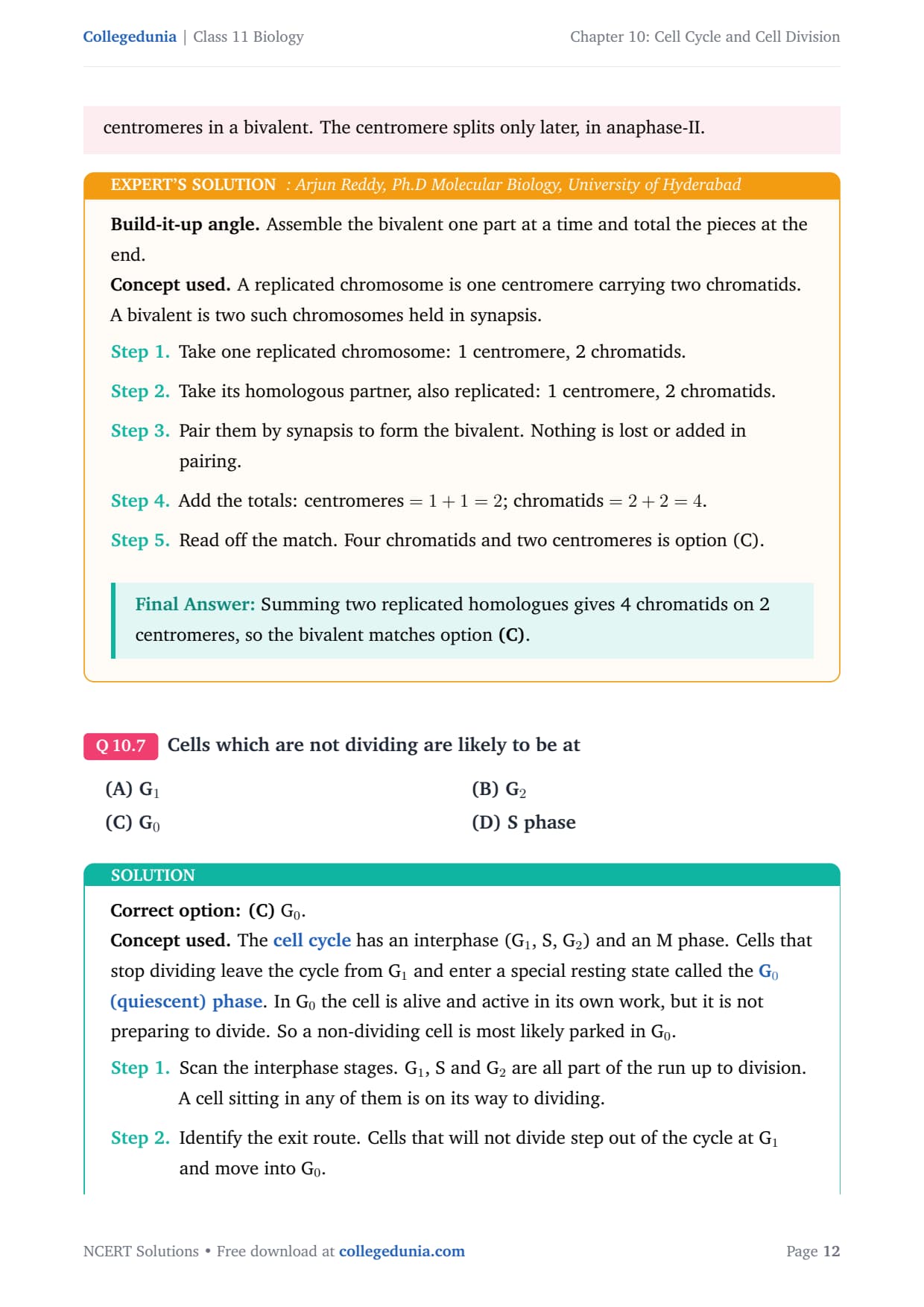
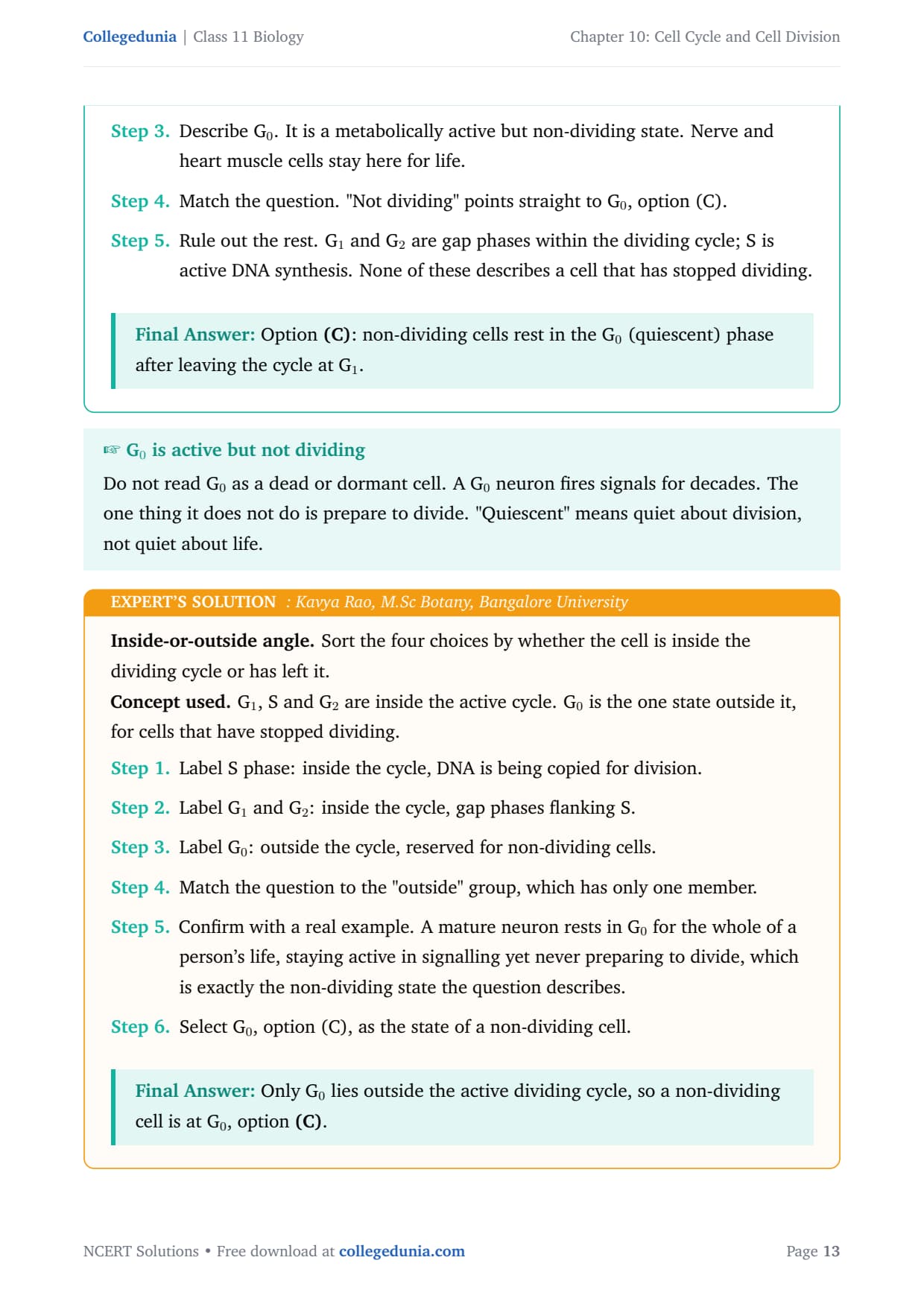
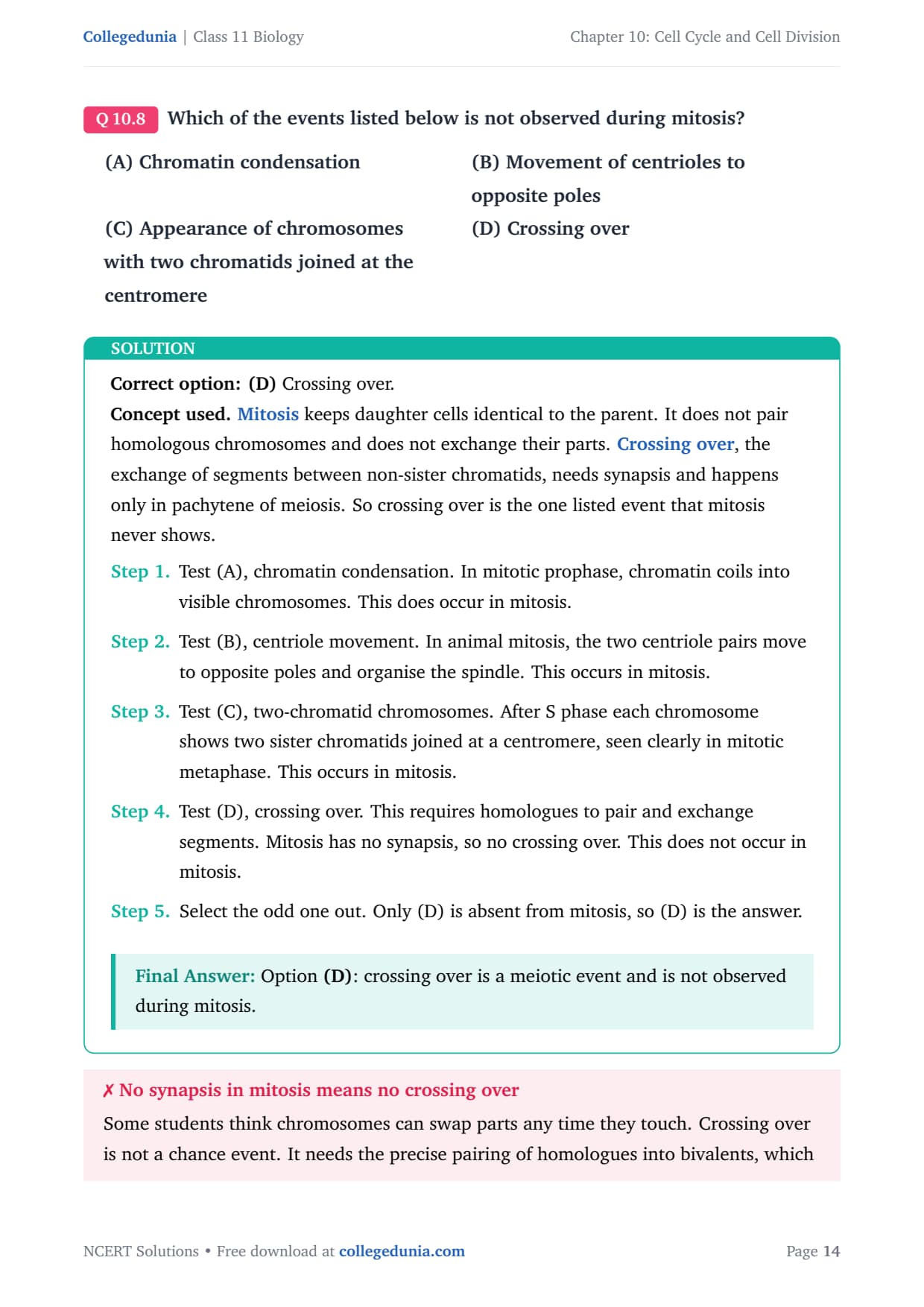
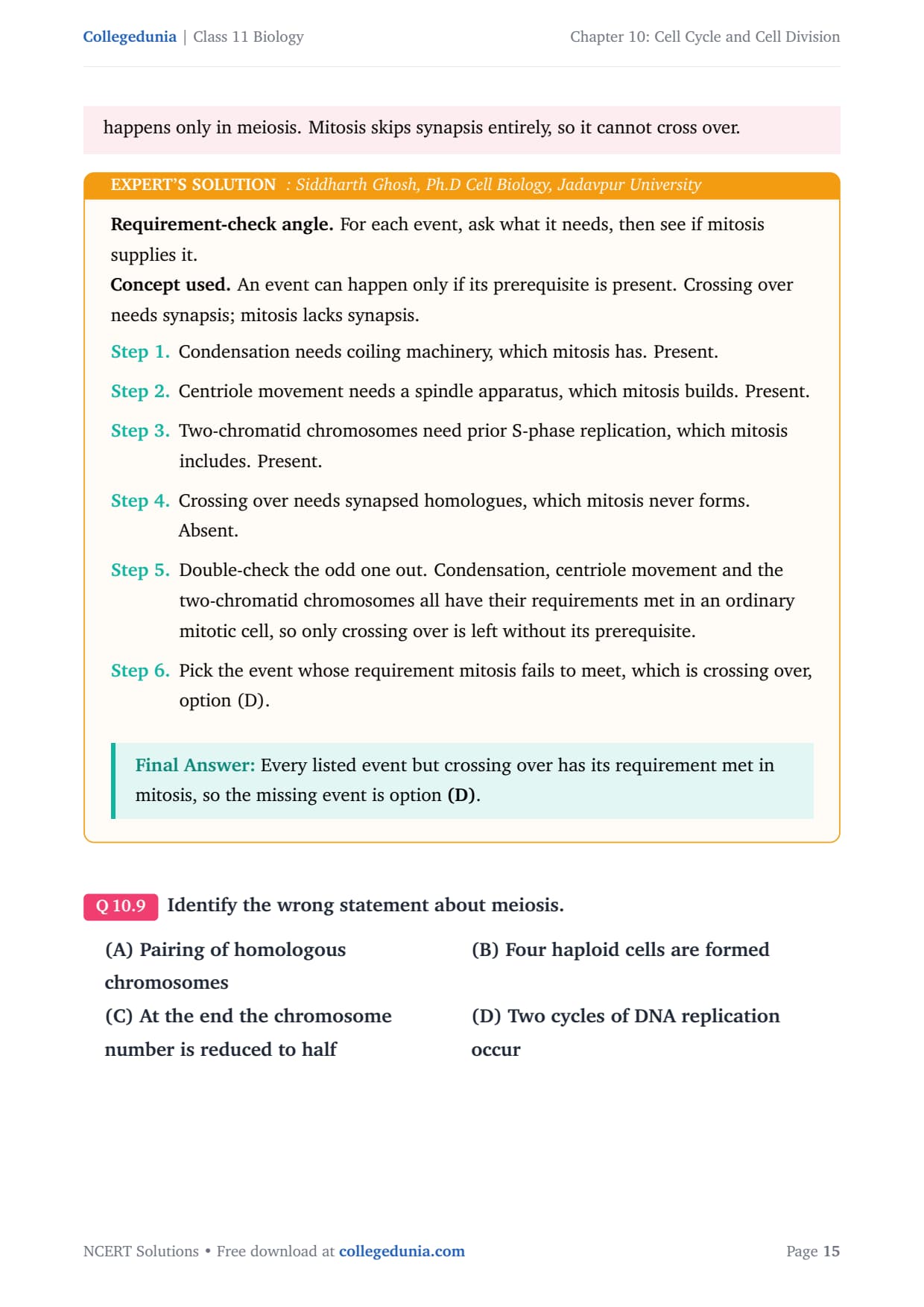
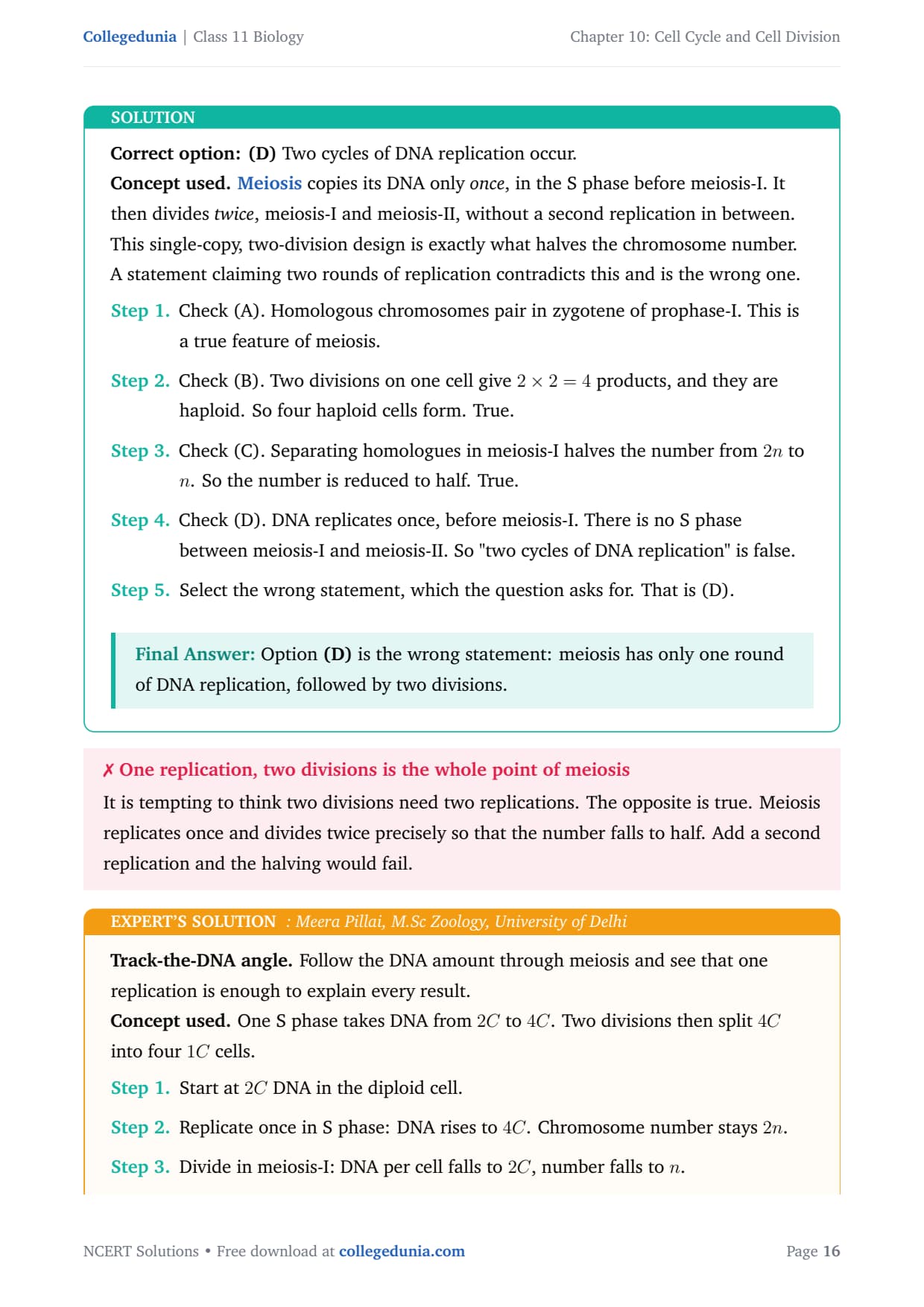
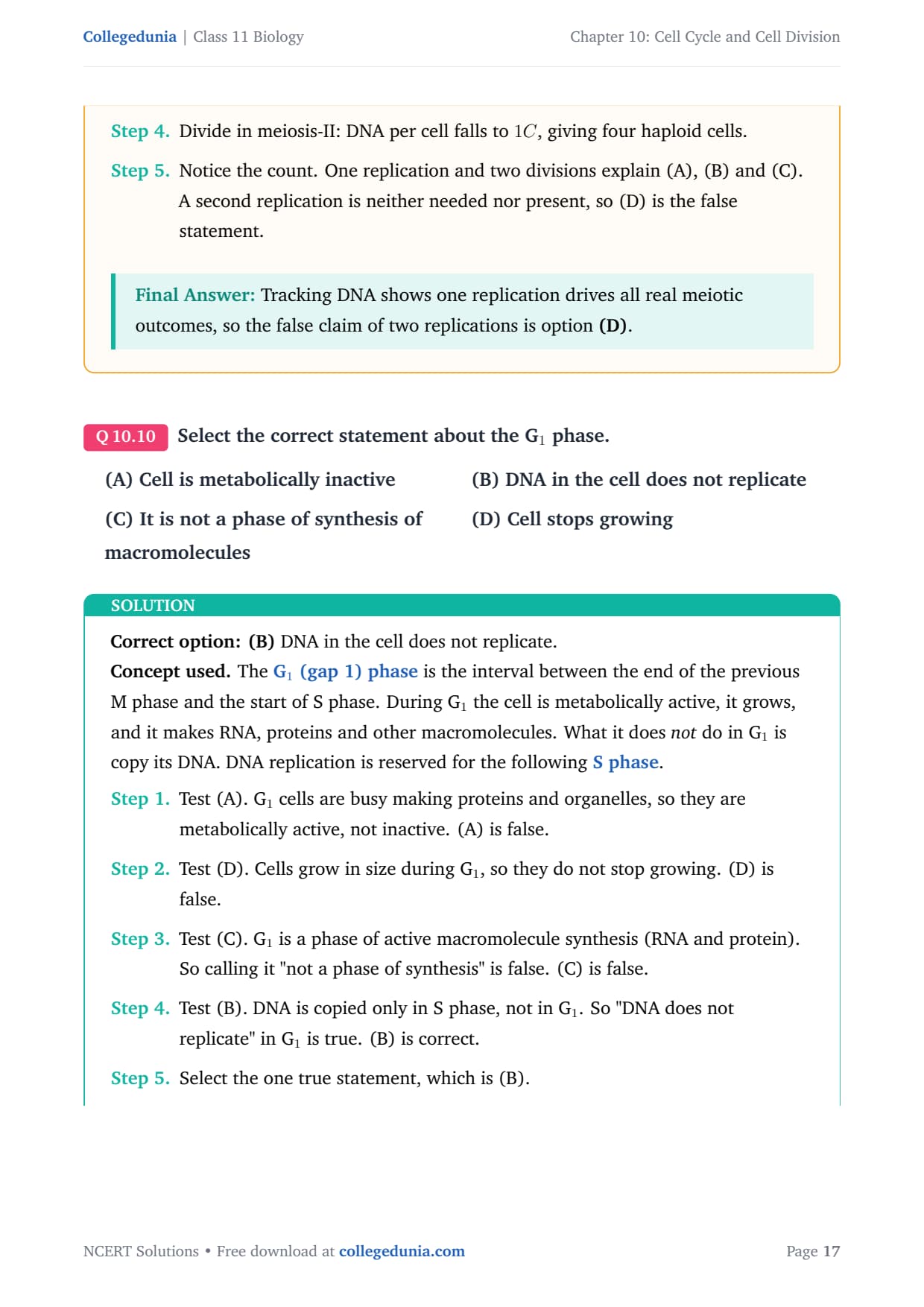
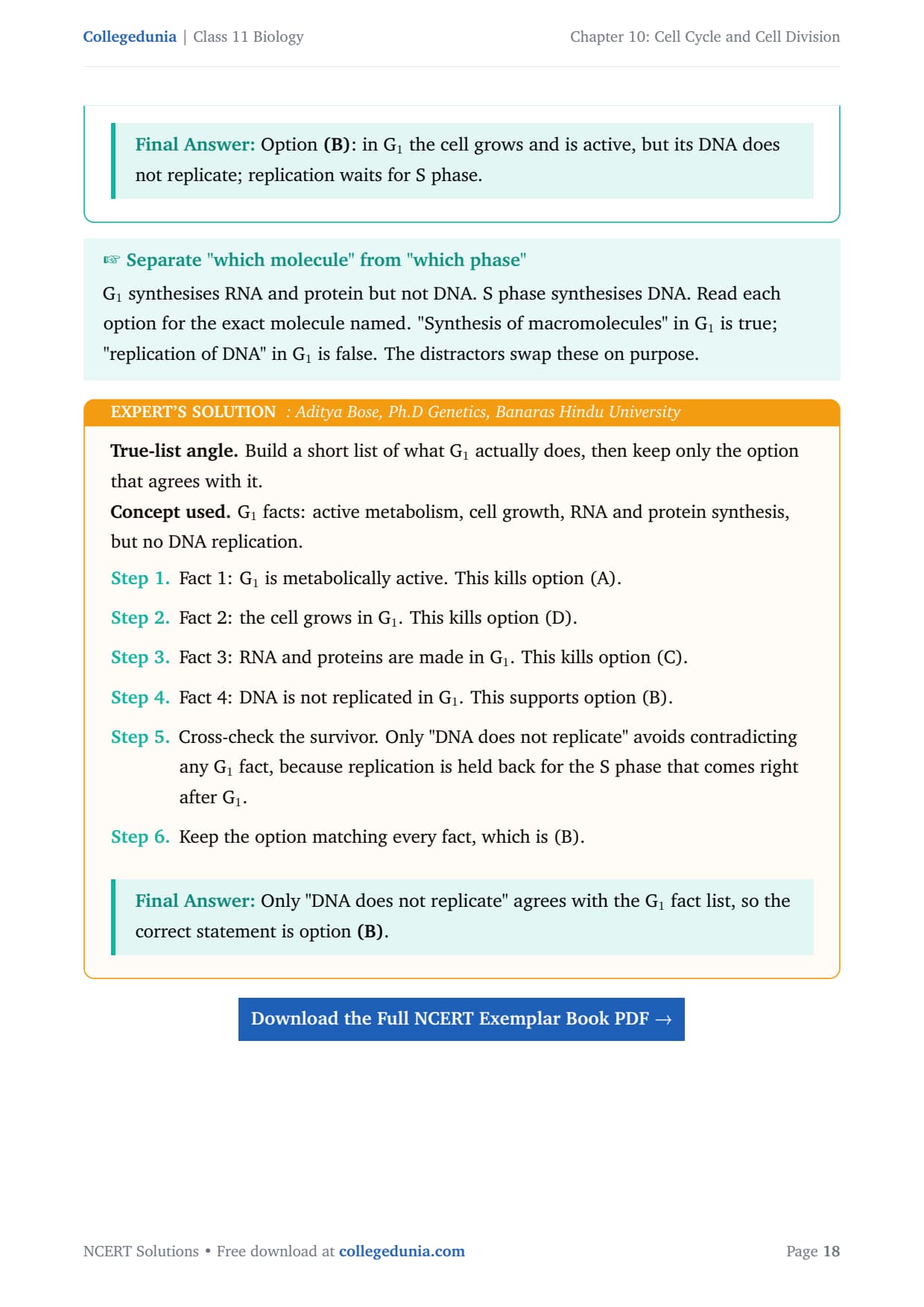
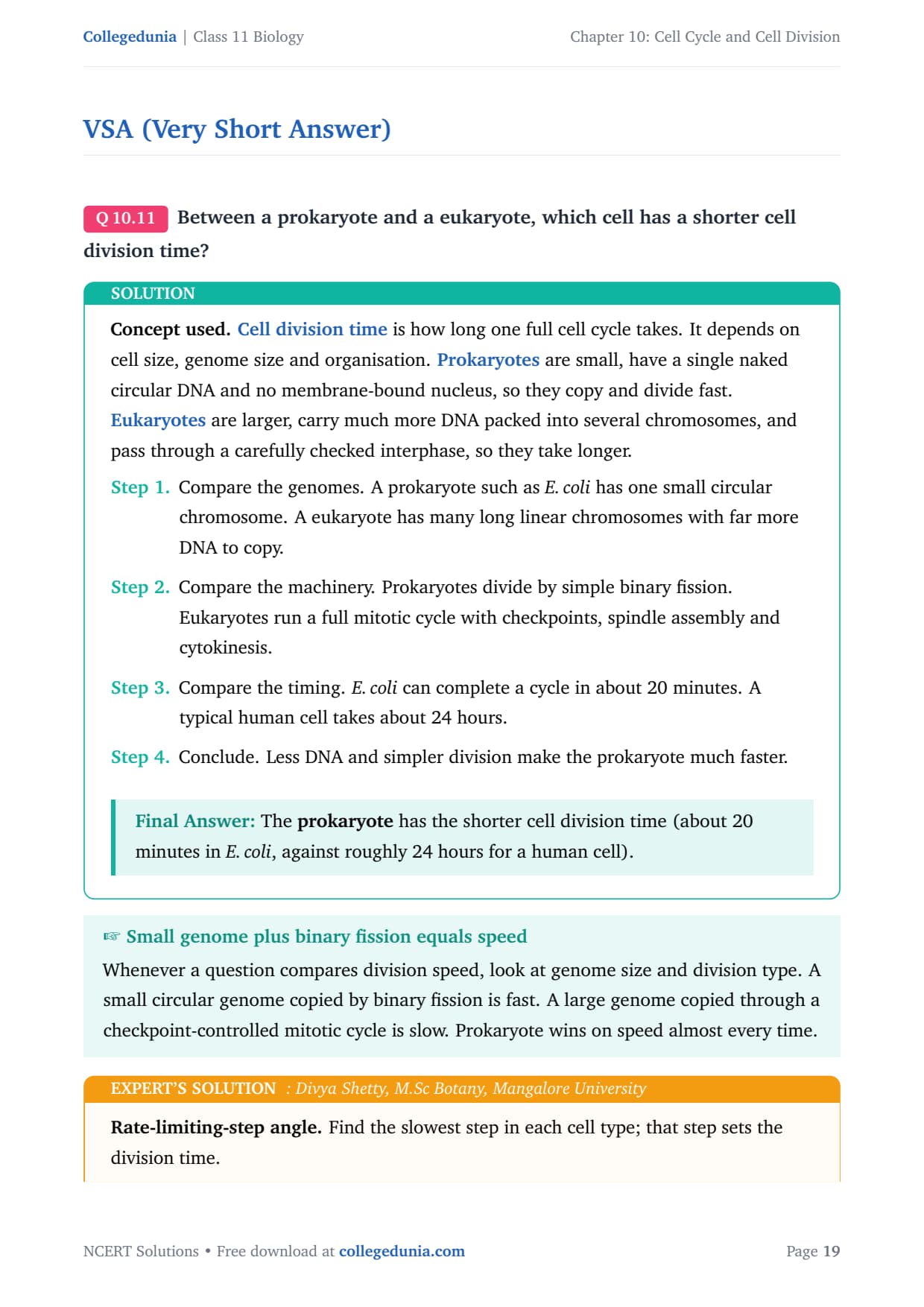
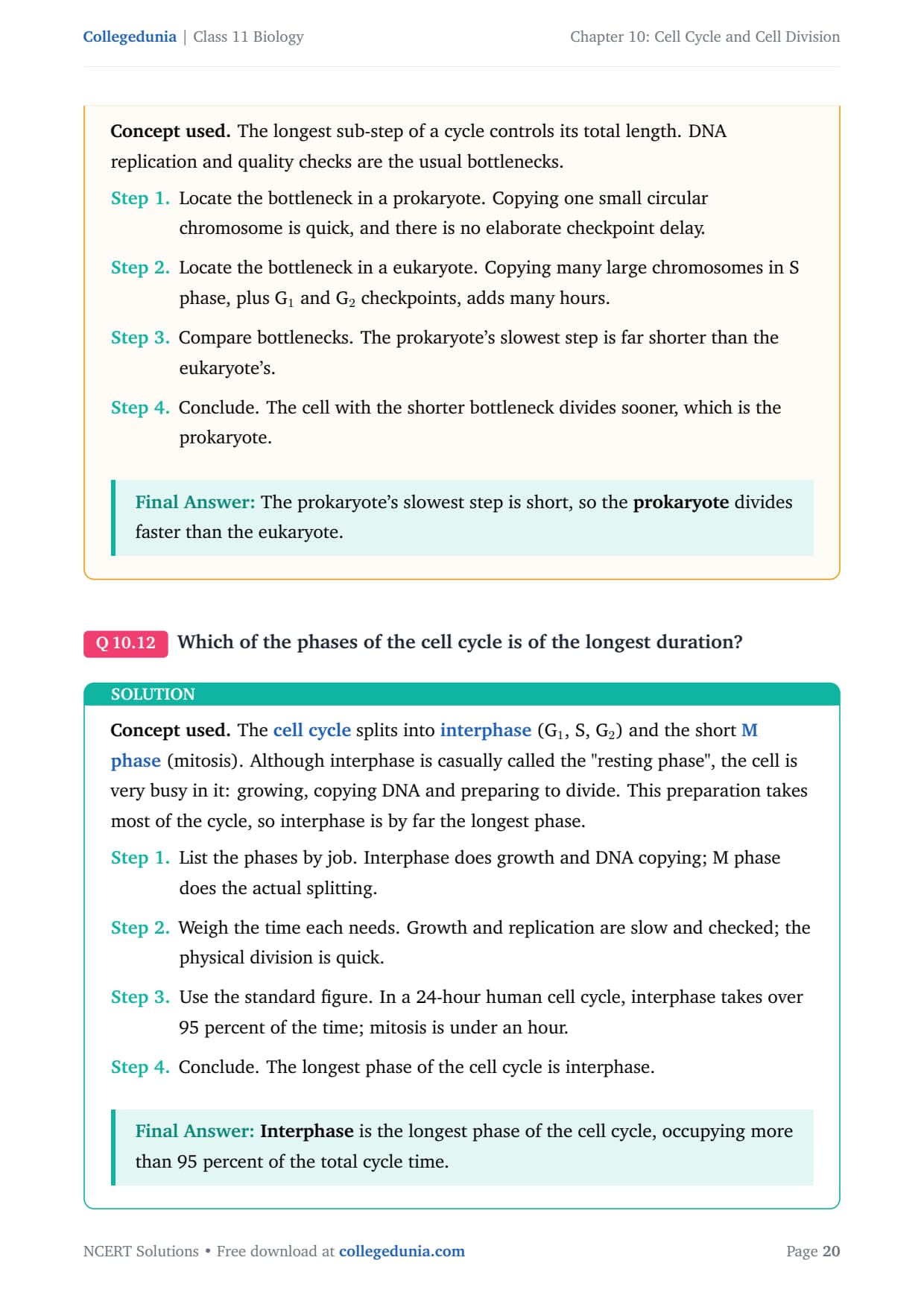
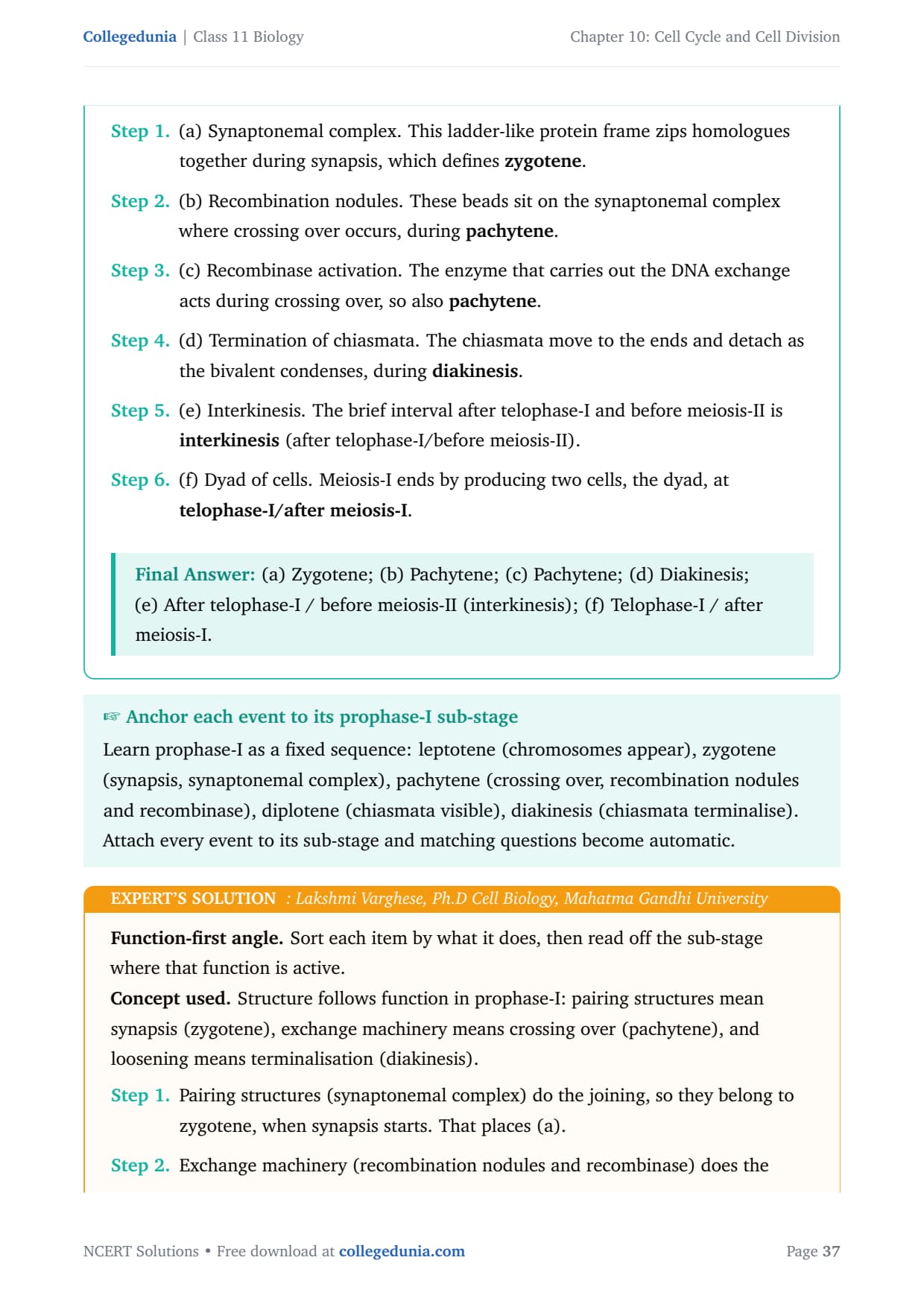
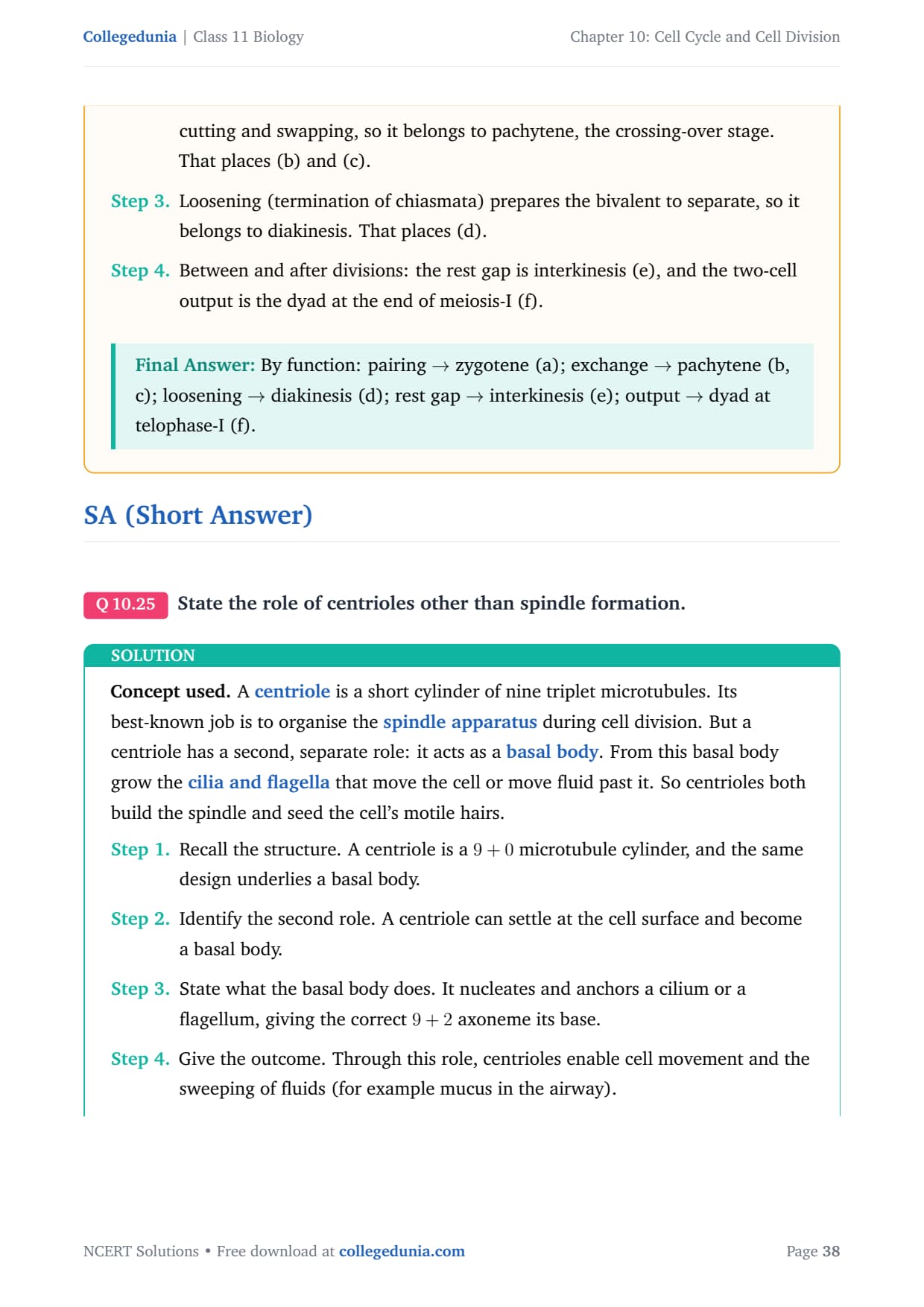
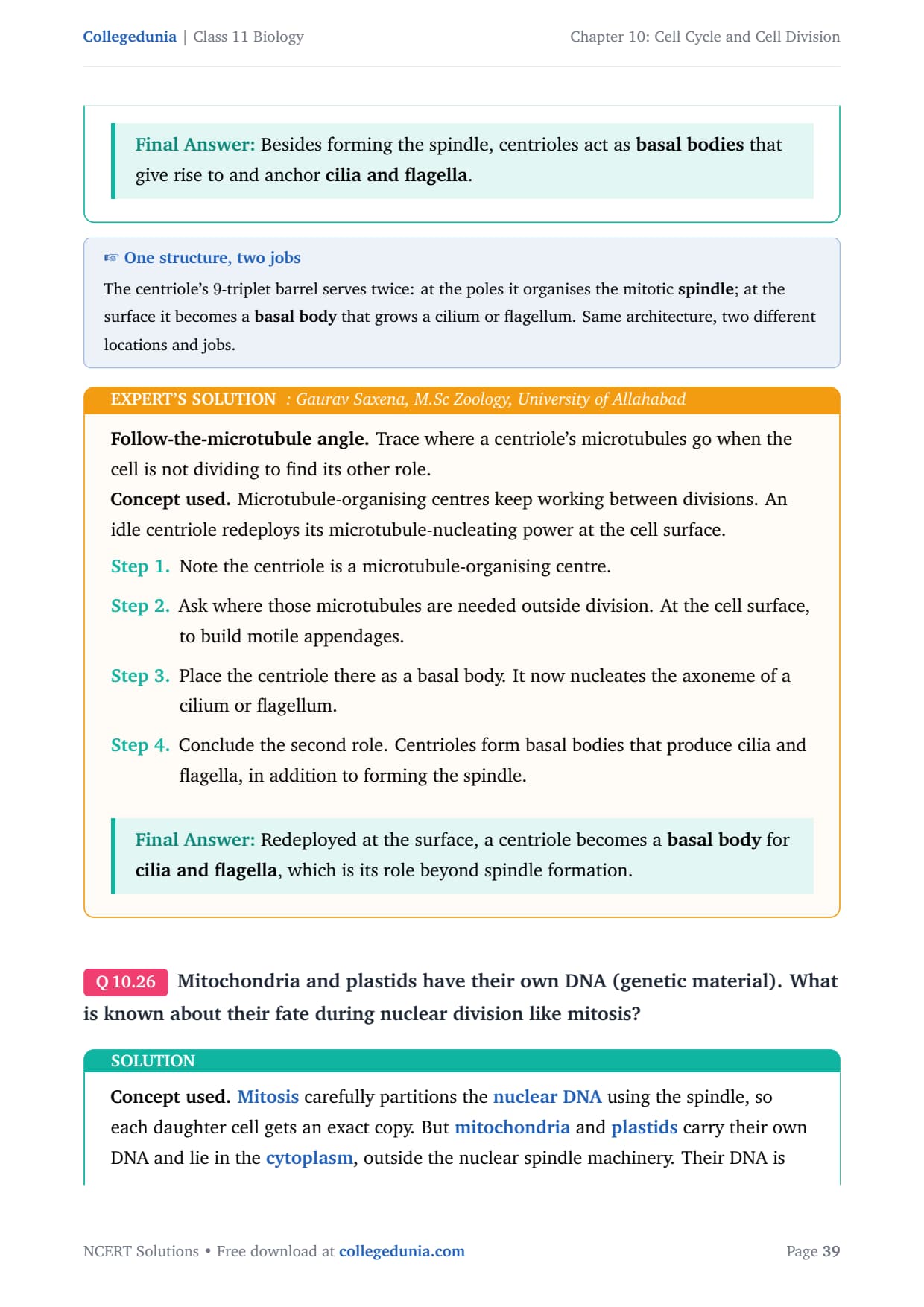
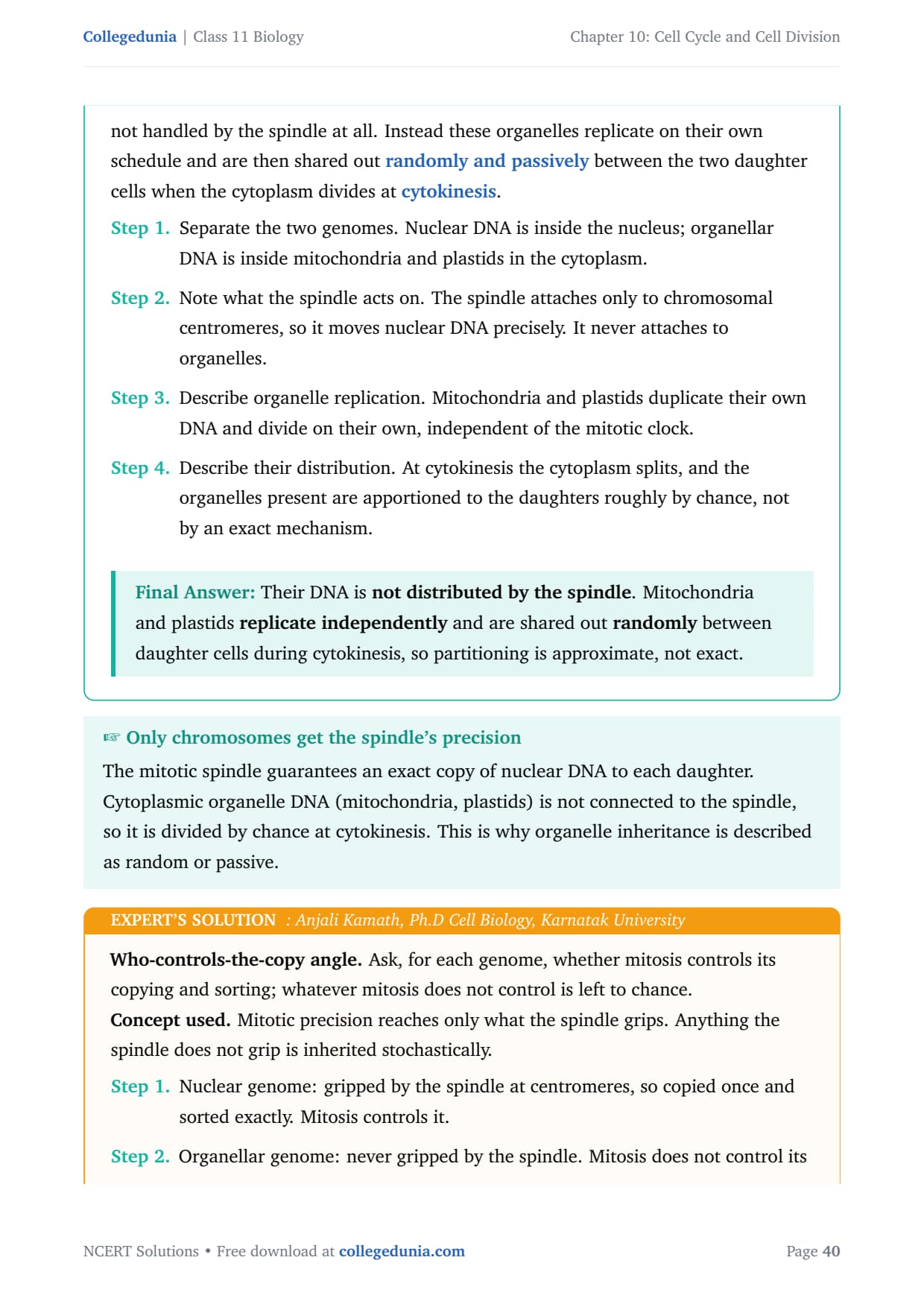
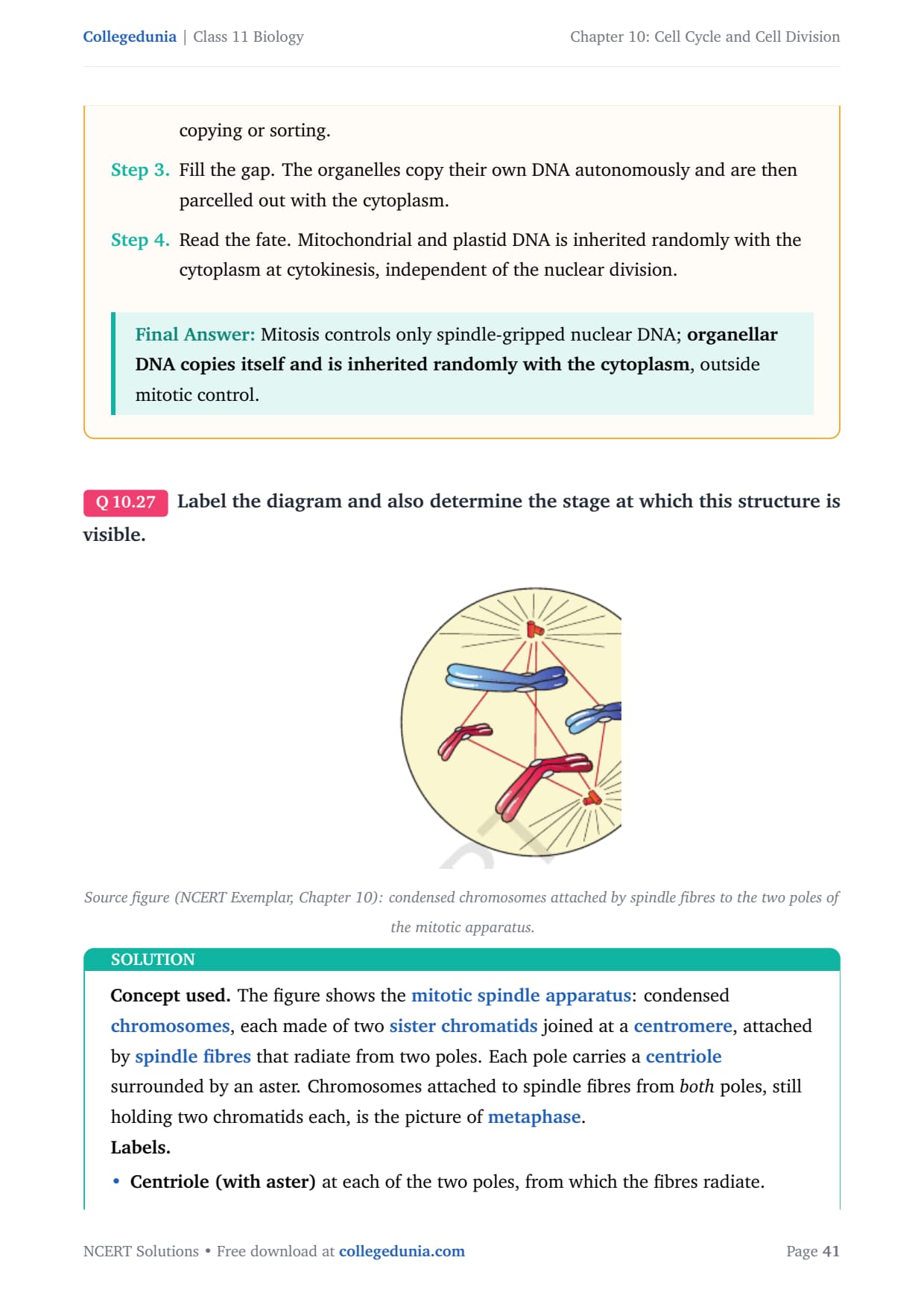
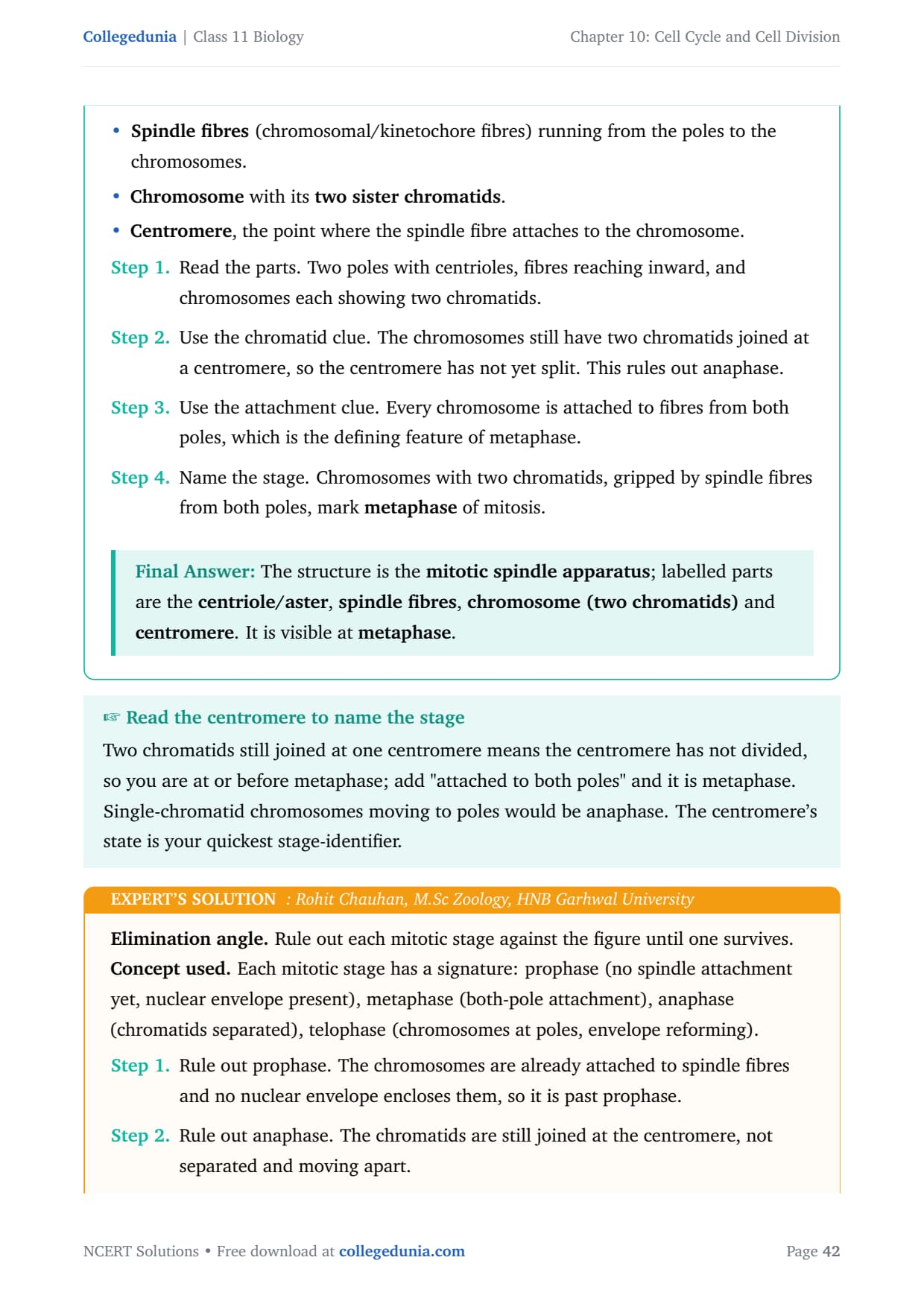
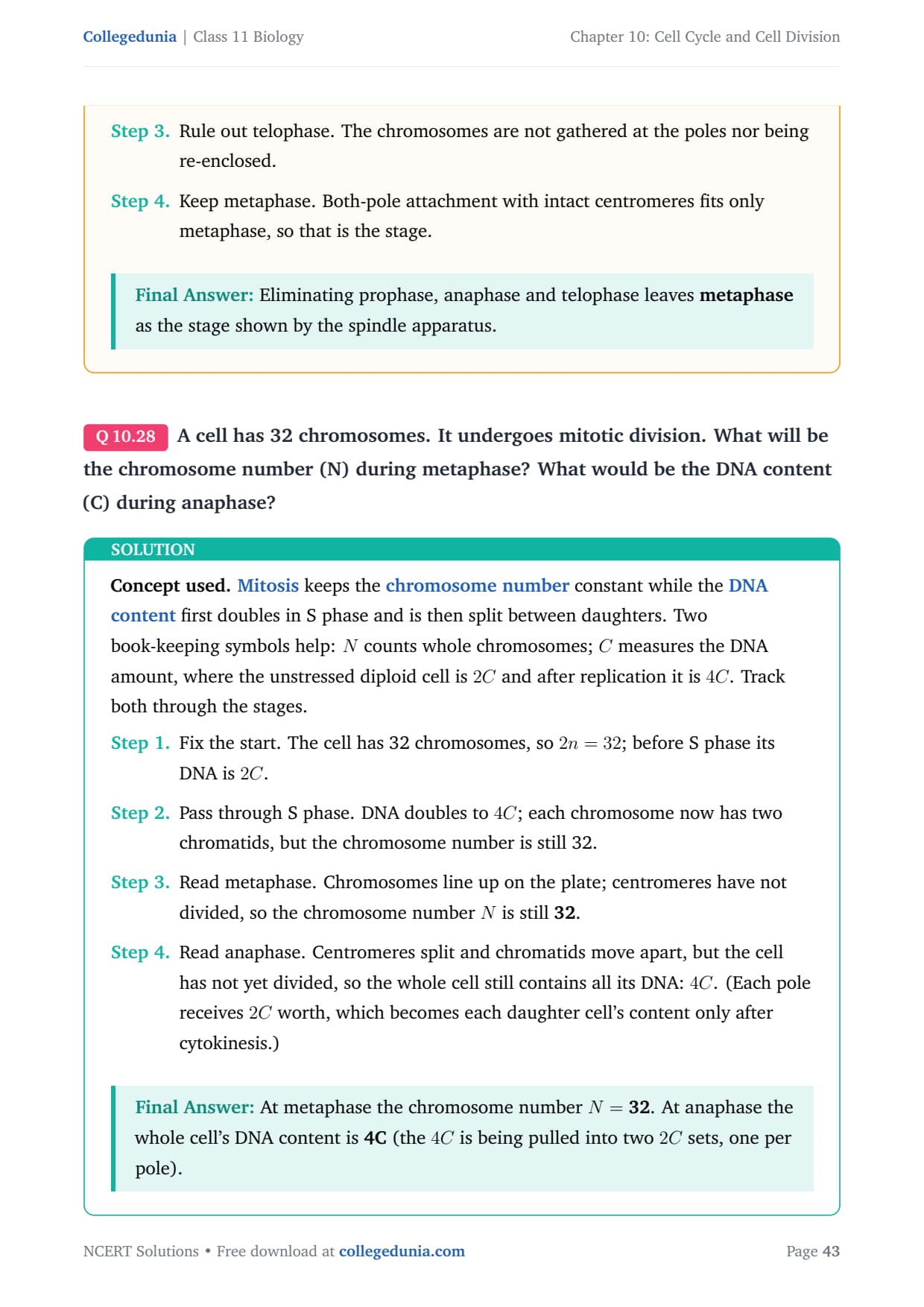
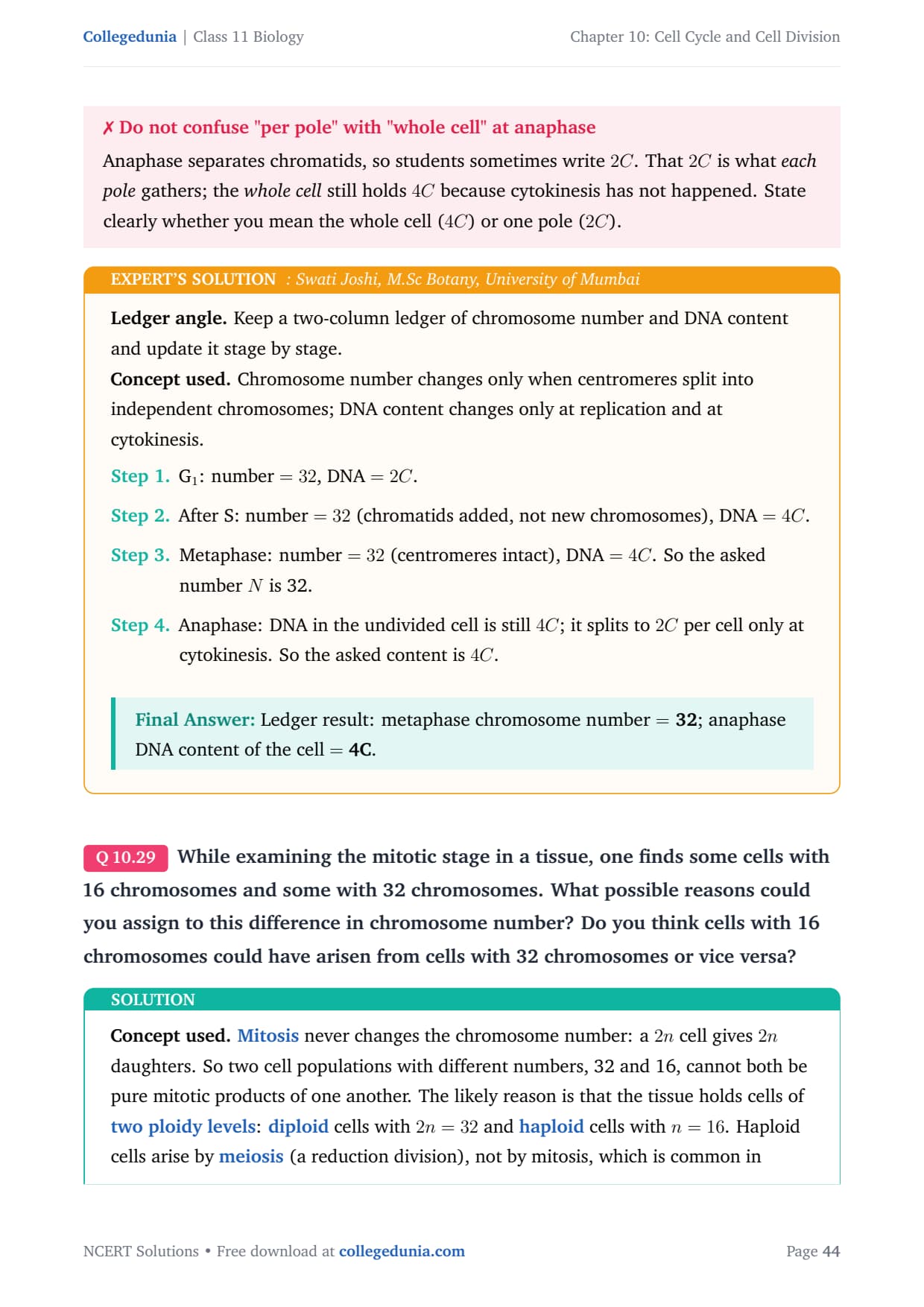
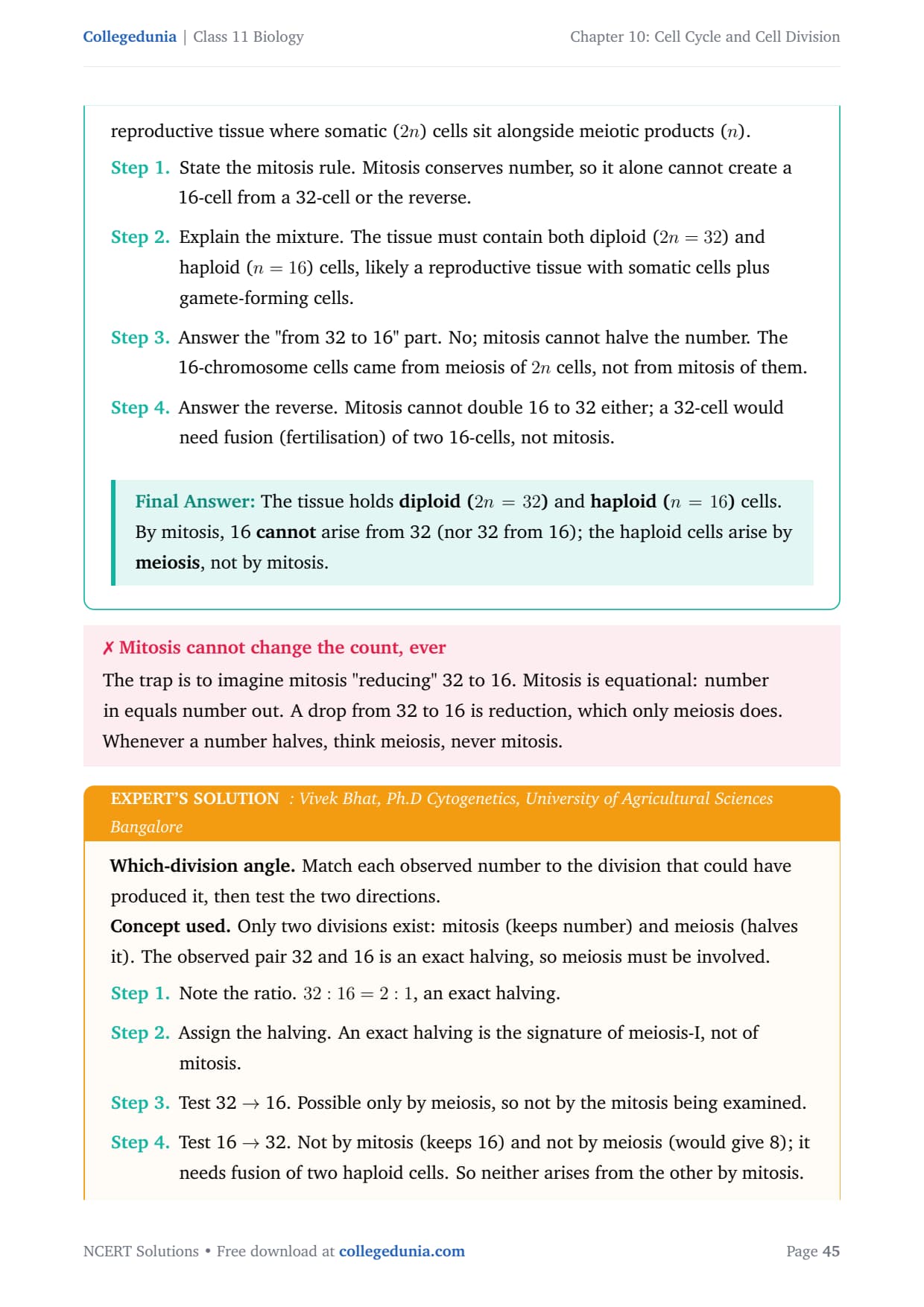
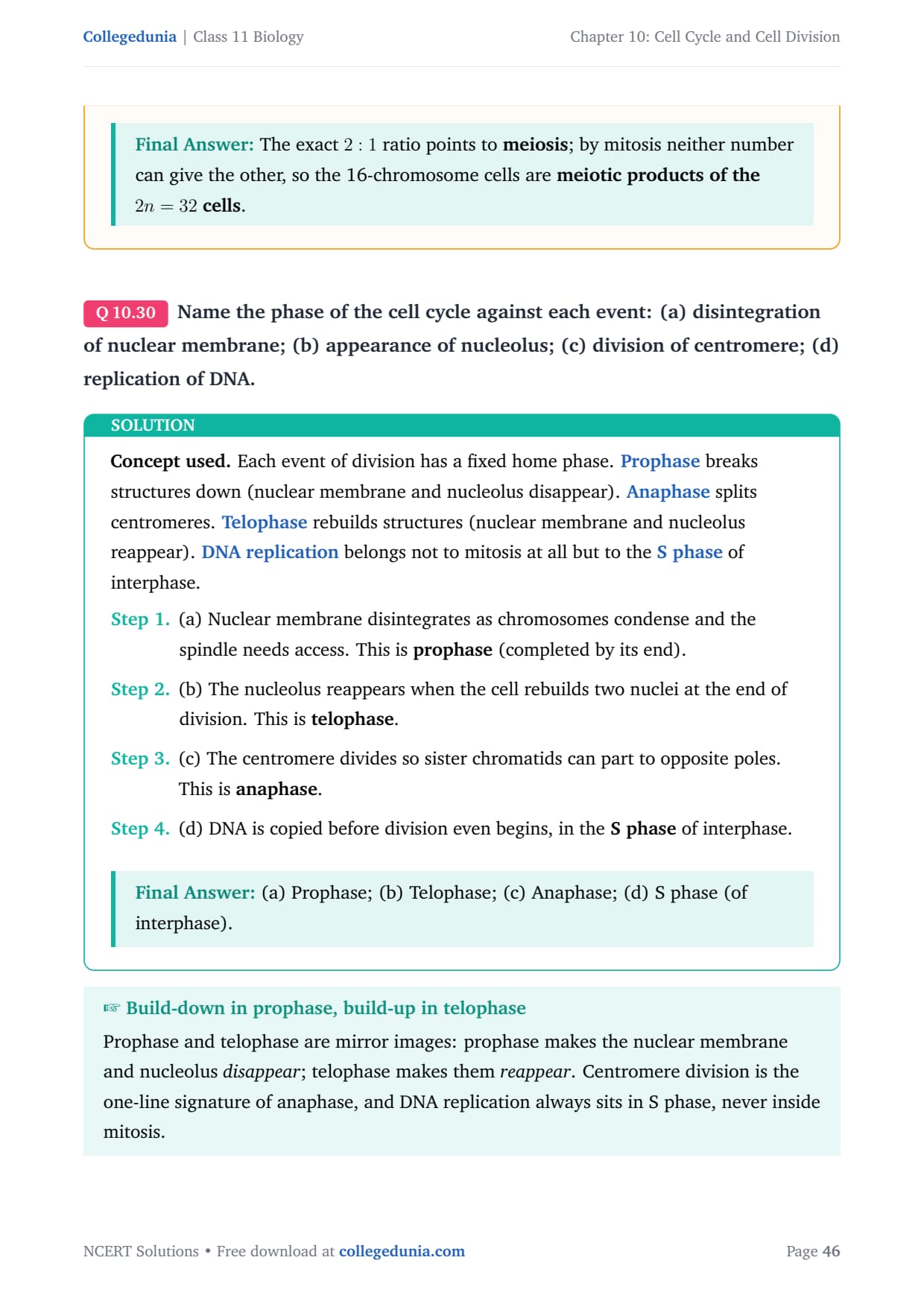
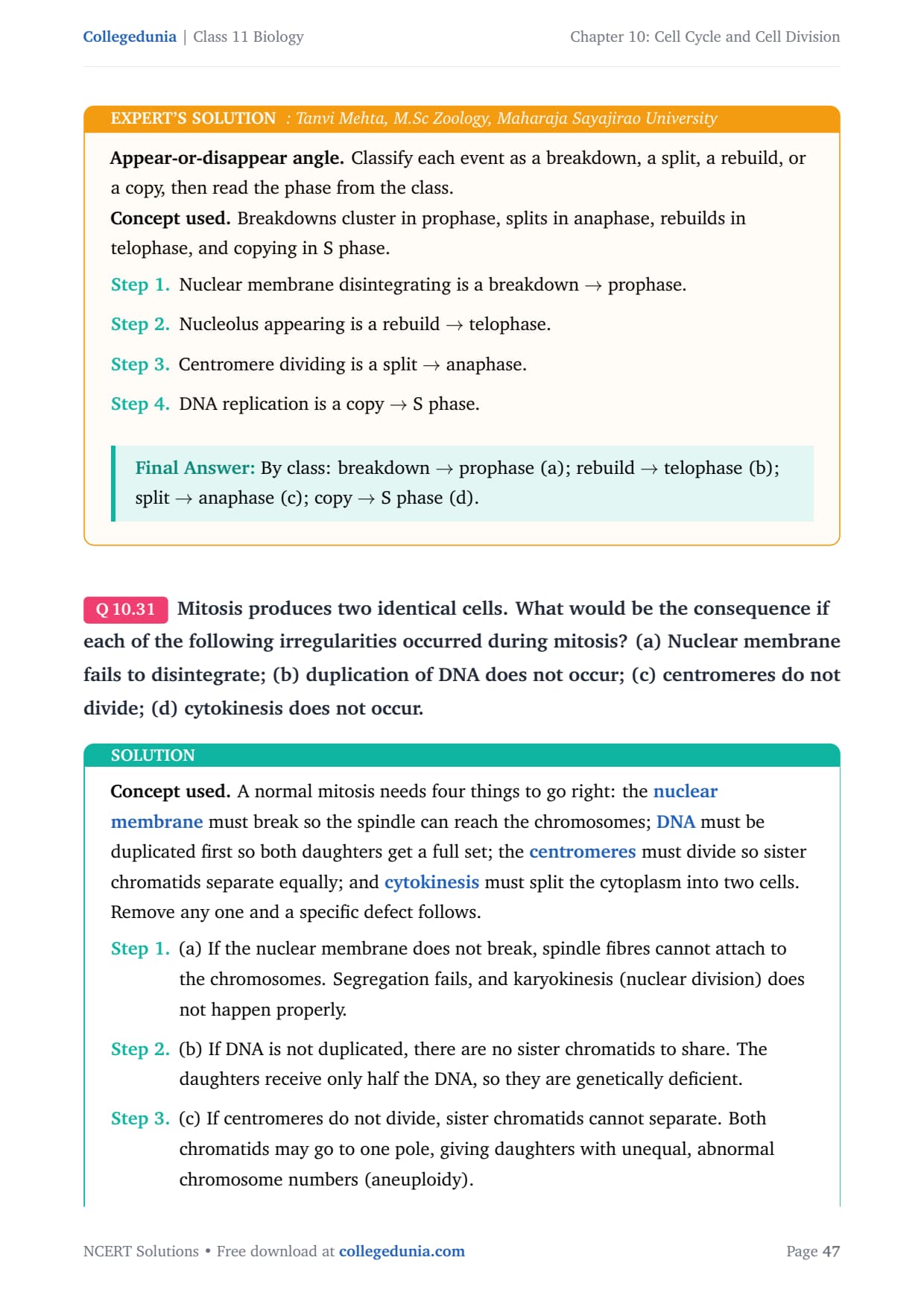
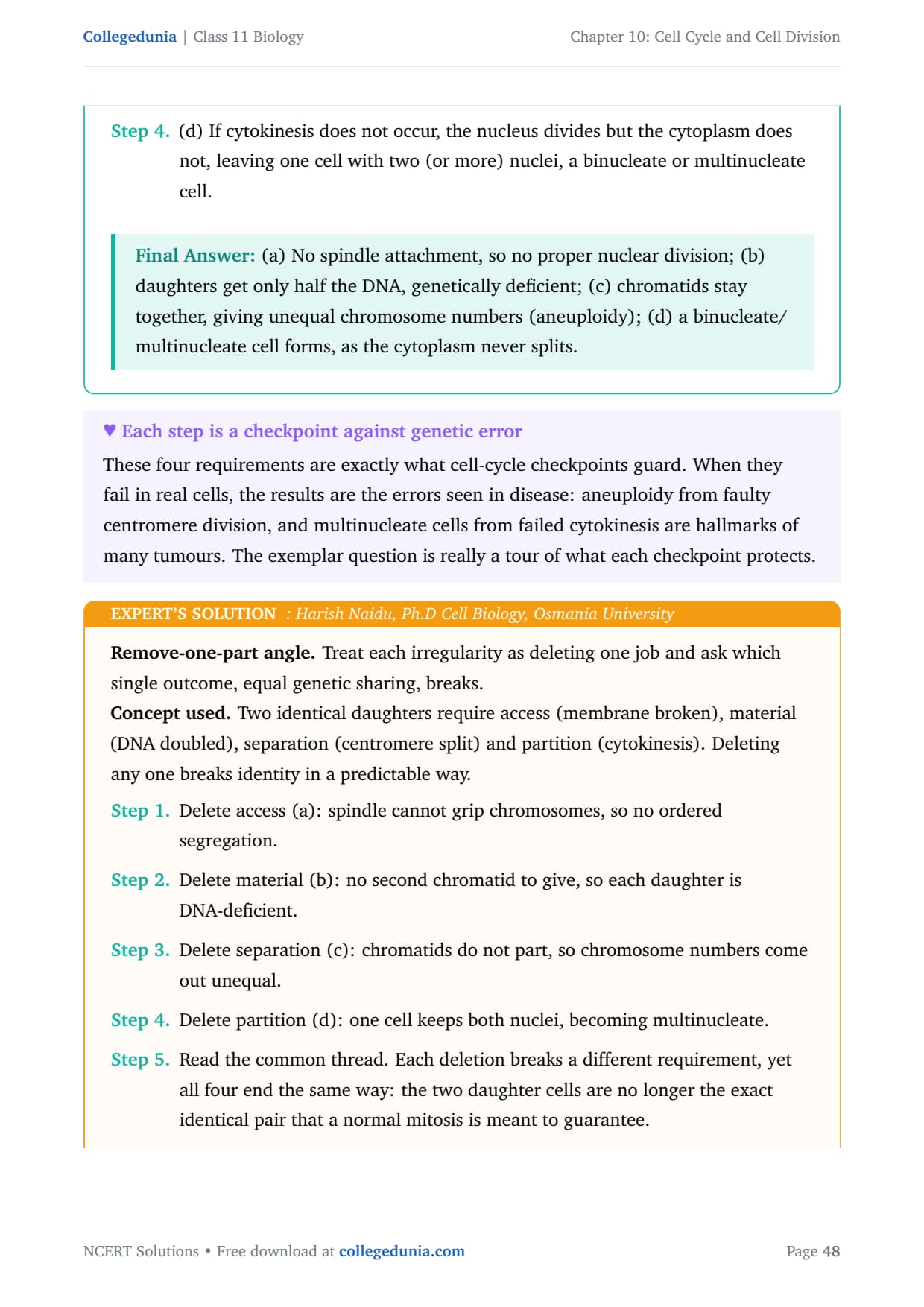
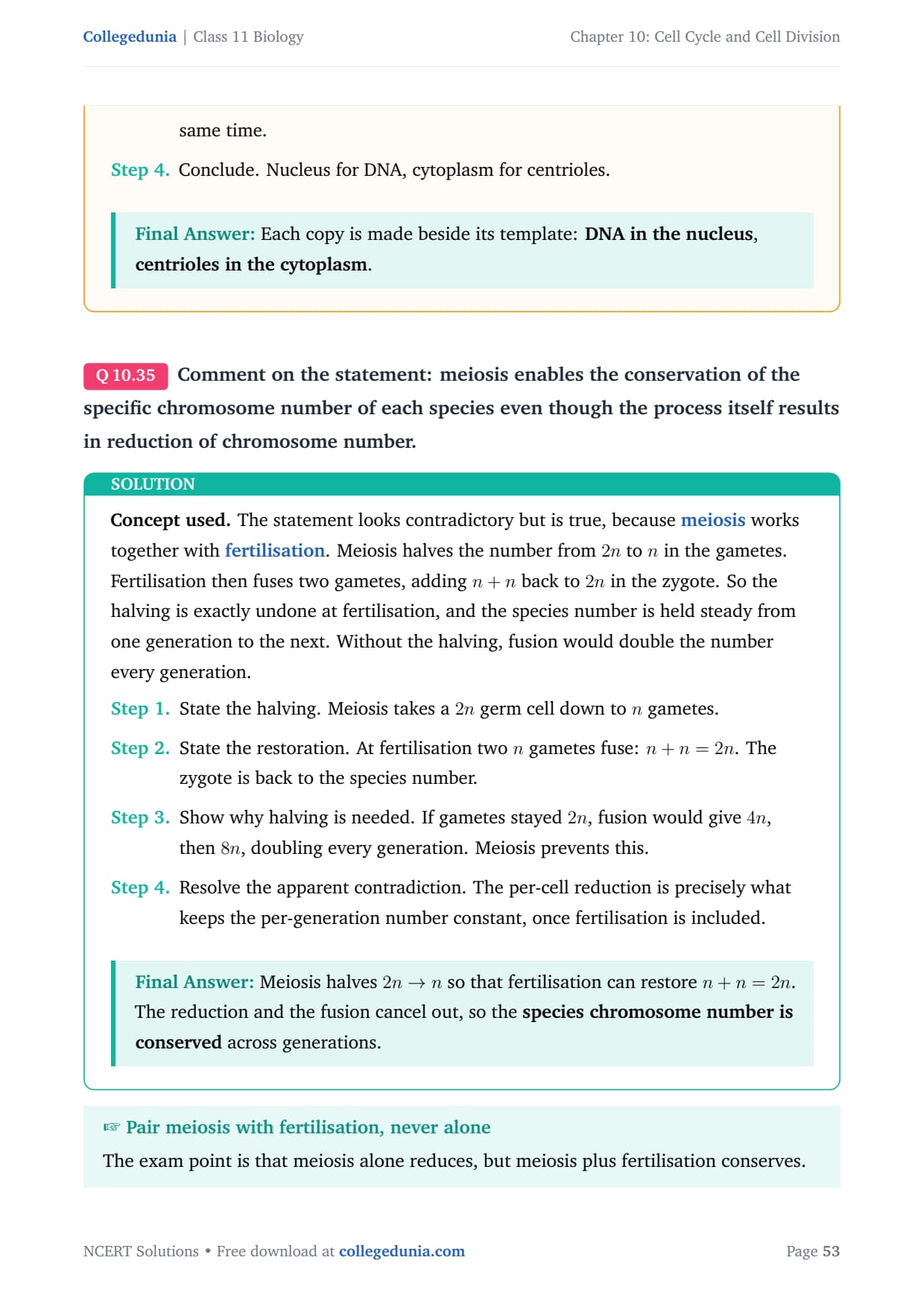
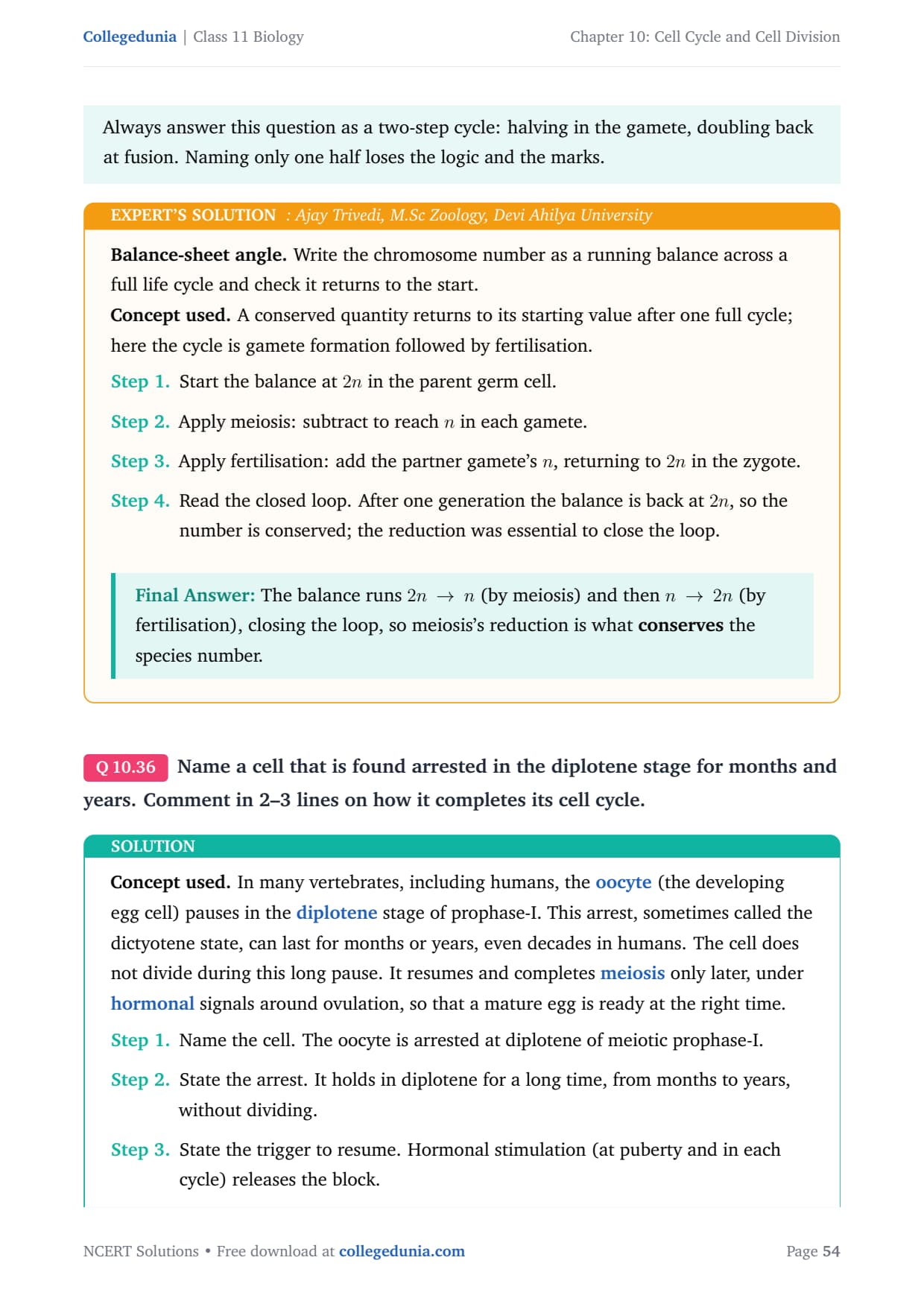
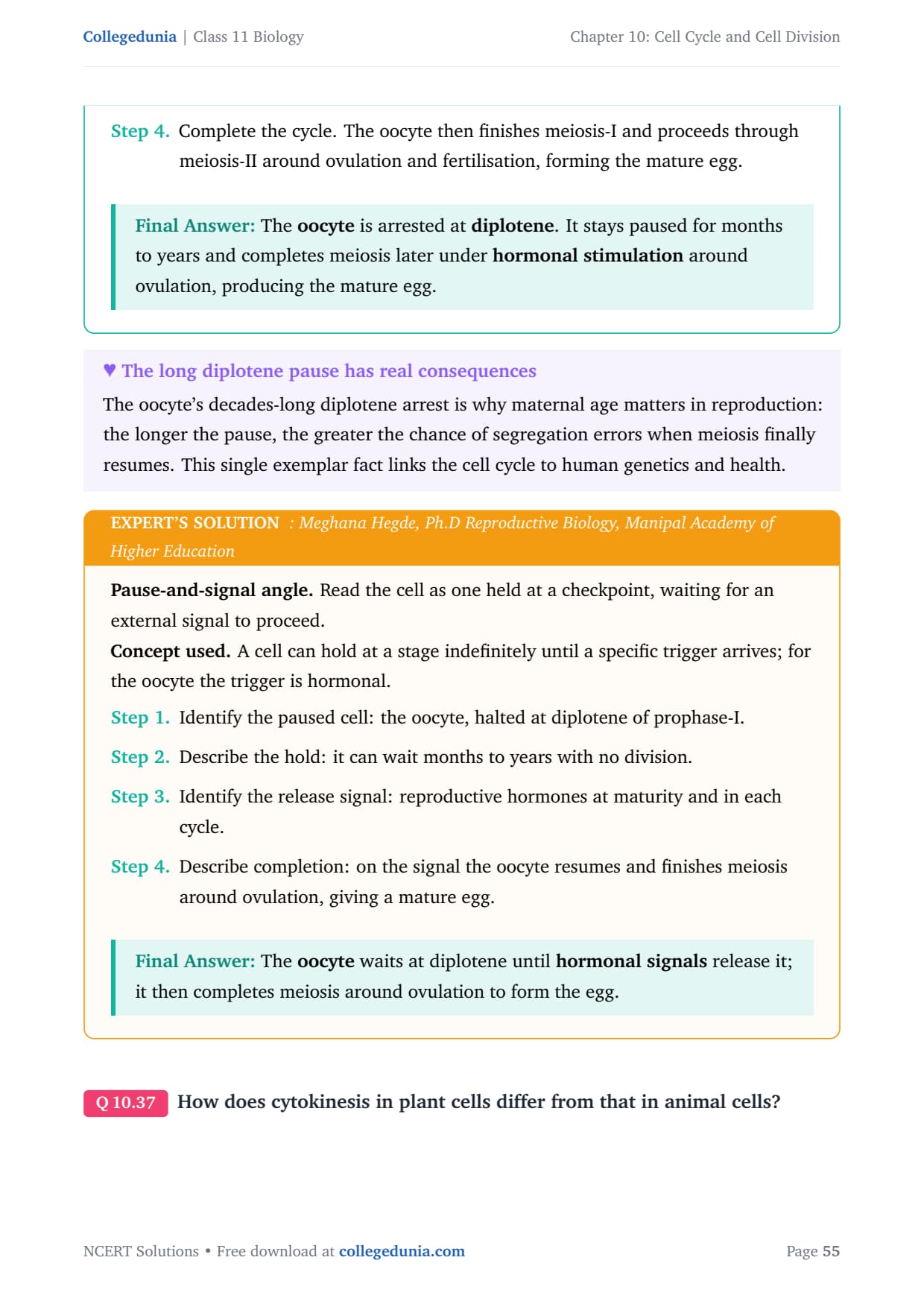
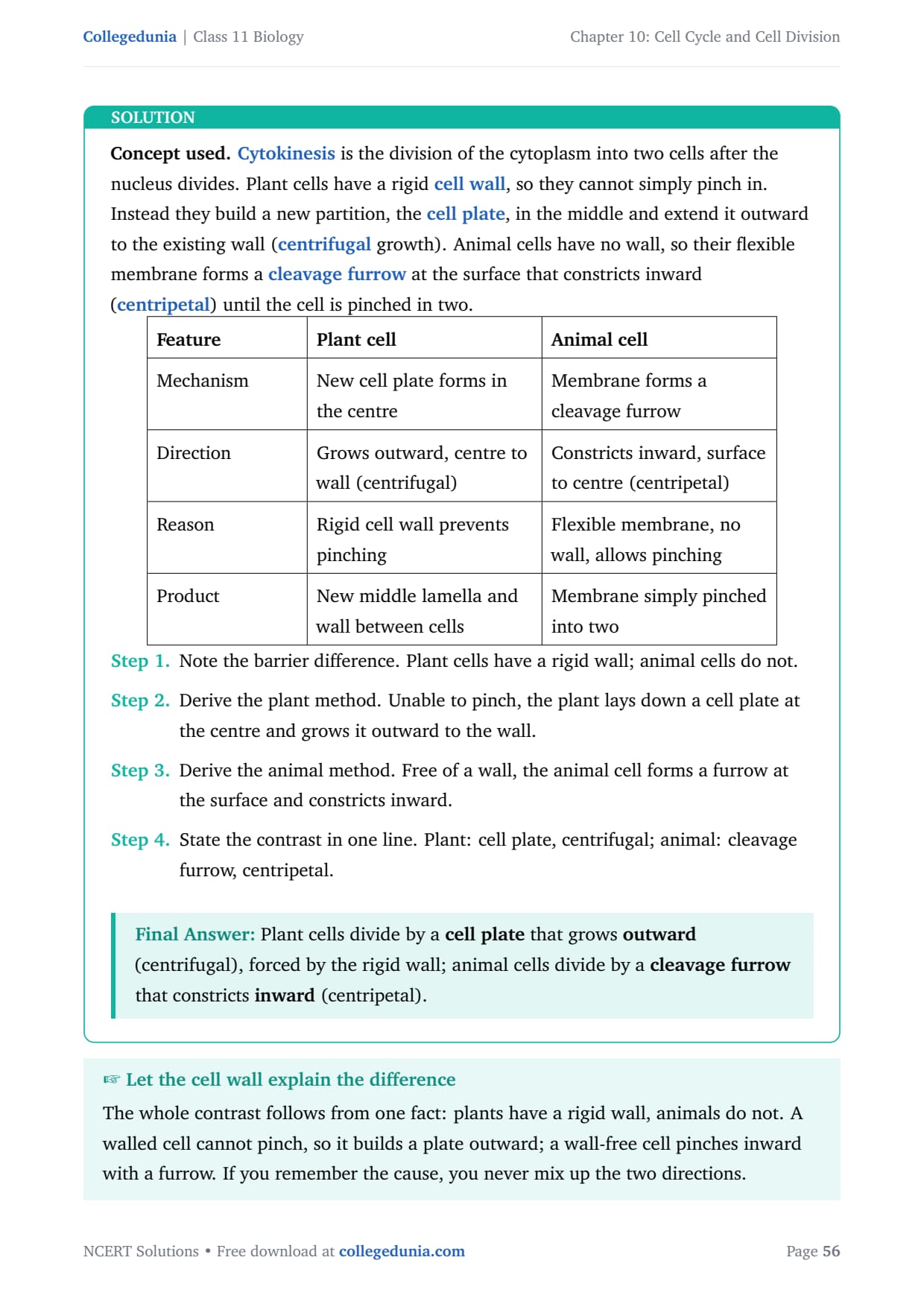
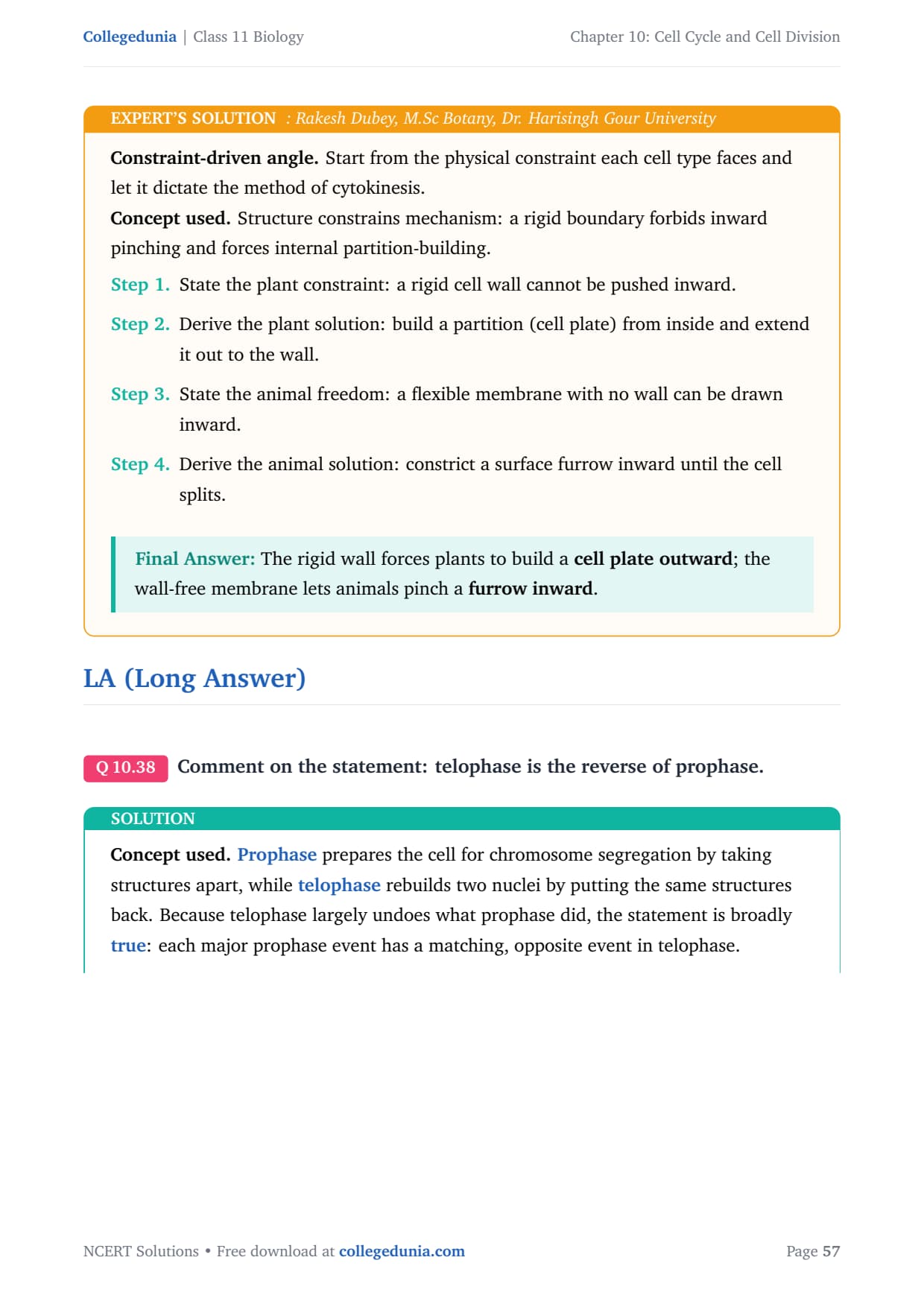
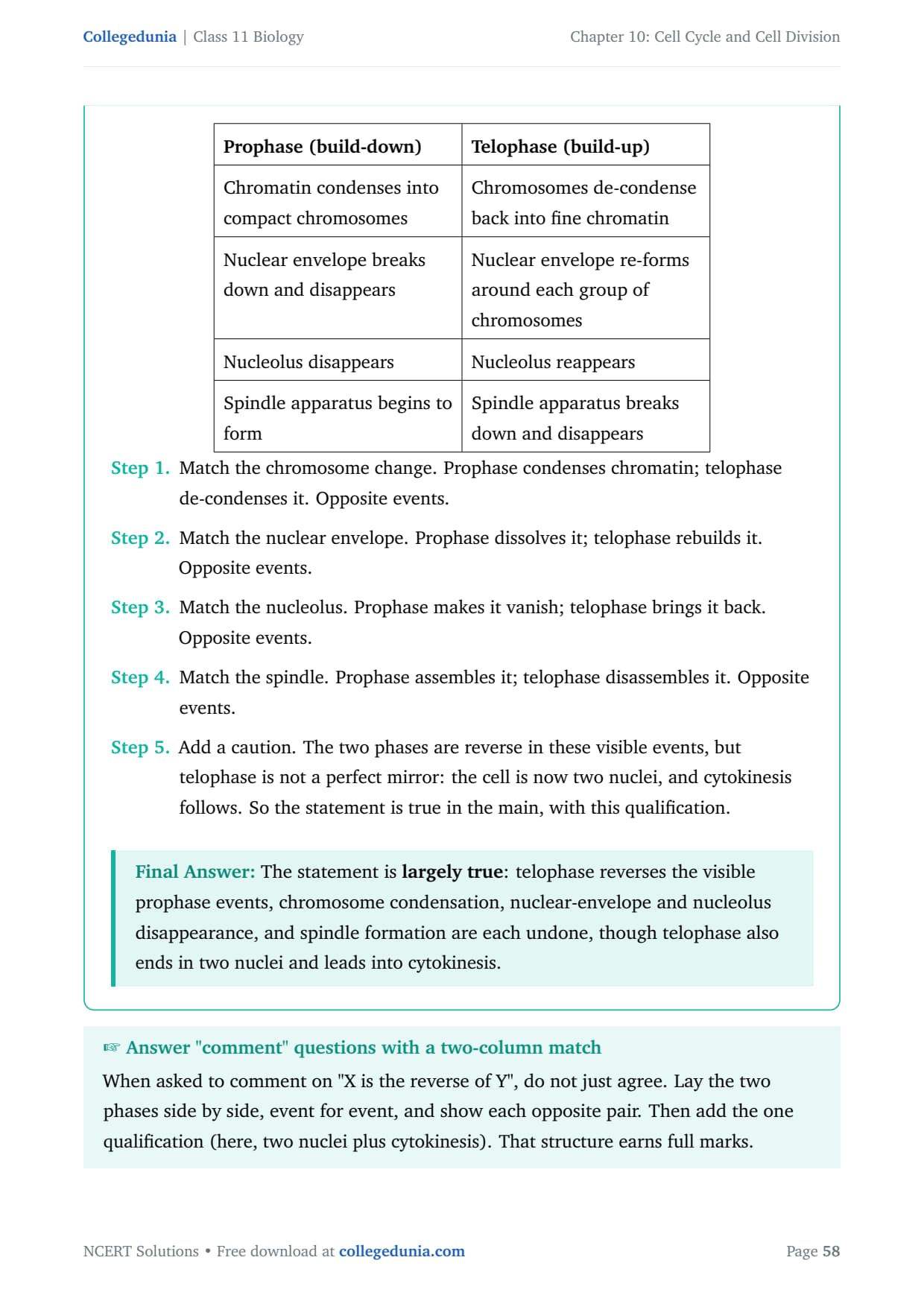
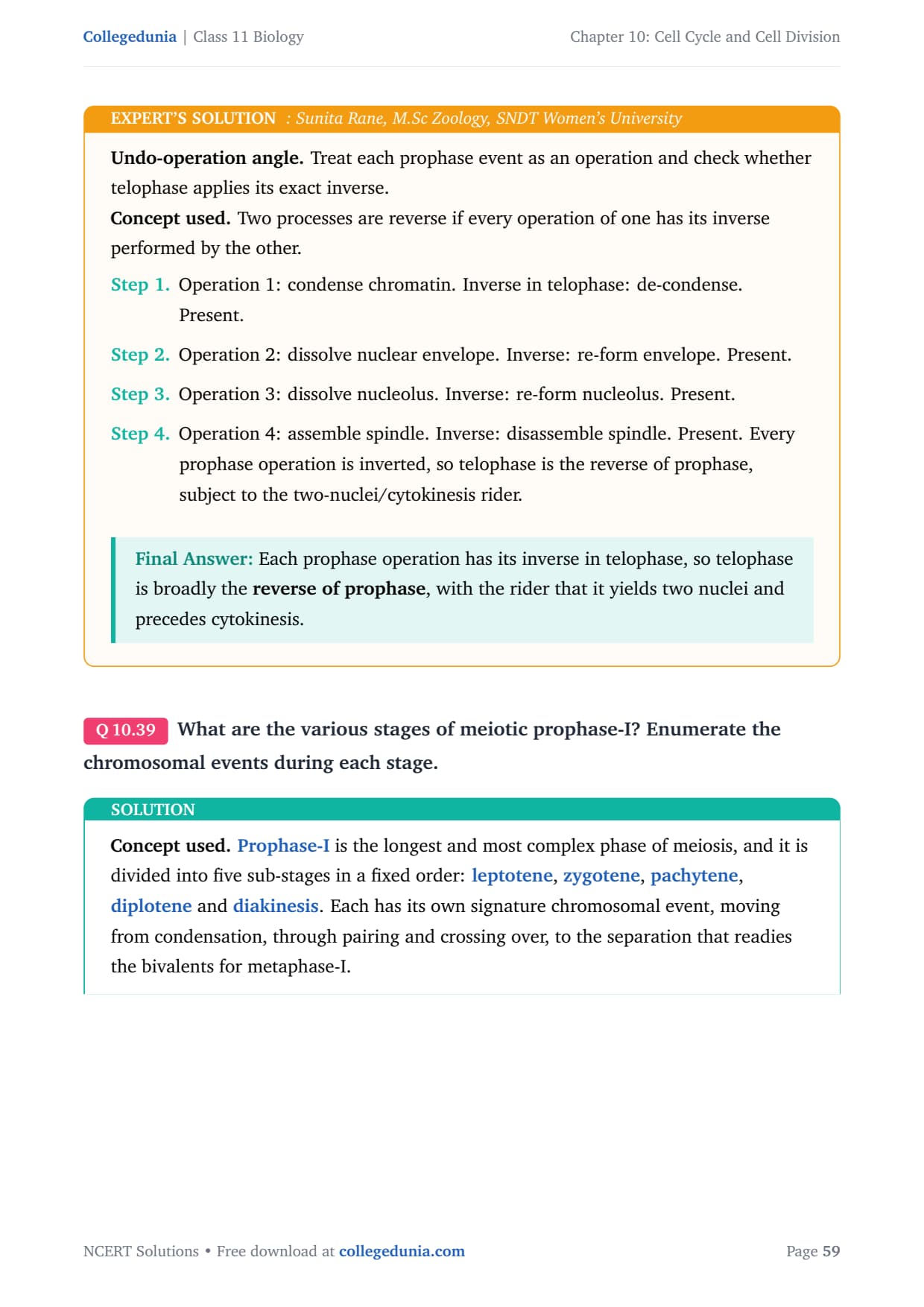
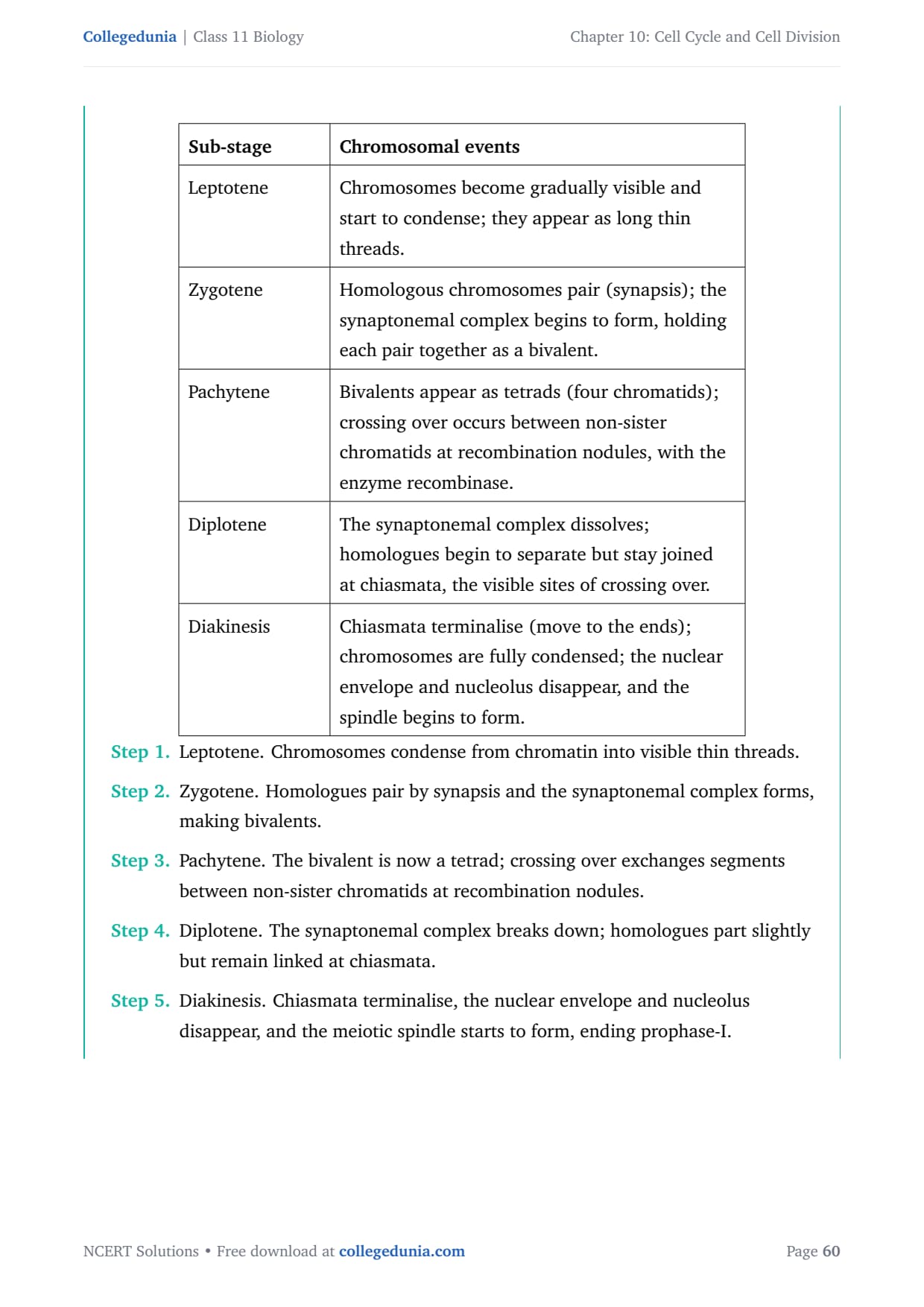
This chapter is where Class 11 Biology turns visual and numerical at the same time. You have to track chromosomes through named phases and also count them correctly at each step. The Exemplar leans hard on both skills, mixing phase-identification MCQs with arithmetic on chromosome number, chromatids and cell counts that the textbook exercise never asks.
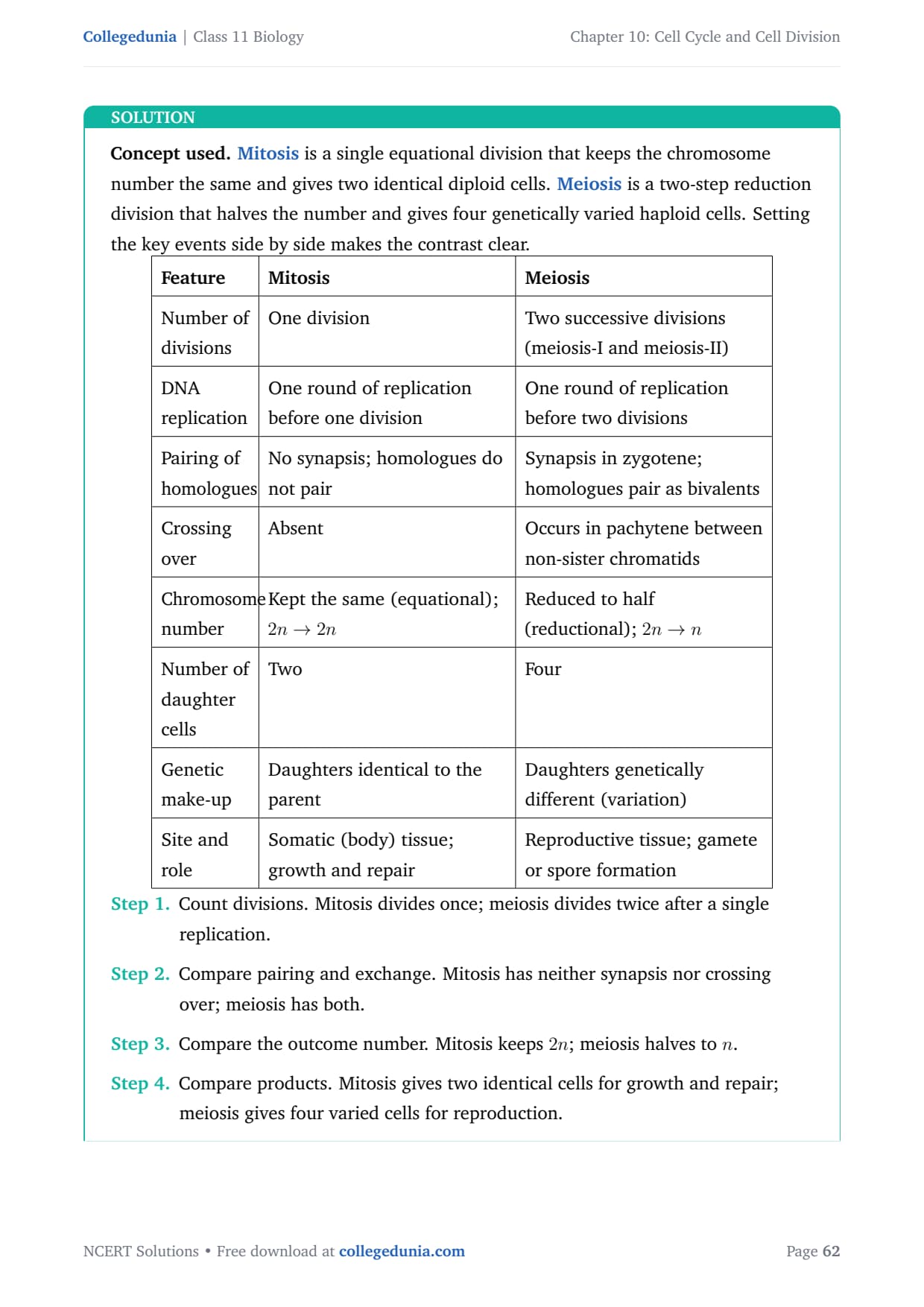
- CBSE Weightage: 3 to 4 marks, usually one question comparing mitosis with meiosis or identifying a phase from a diagram
- NEET Weightage: 2 to 3 questions per year on meiotic phases, the cell cycle phases and chromosome number arithmetic
- CUET Weightage: 1 to 2 questions on cell cycle phases and the events of mitosis and meiosis in the Biology domain paper
Every answer is checked against the official NCERT Exemplar key, and the traps this chapter is famous for, such as anaphase-I against anaphase-II and chromatid count against centromere count, are pulled apart in full.
Topics Covered in the Class 11 Biology Cell Cycle and Cell Division Exemplar
The 43 questions in this chapter are built on four ideas, and every one of them rewards a student who can picture the chromosome and count it at the same time. Cell Cycle and Cell Division is short on definitions but heavy on process, so the Exemplar asks you to place events in the right phase and then work out what the chromosome number does. Fixing these four clusters makes the later chapters on reproduction and inheritance far easier.
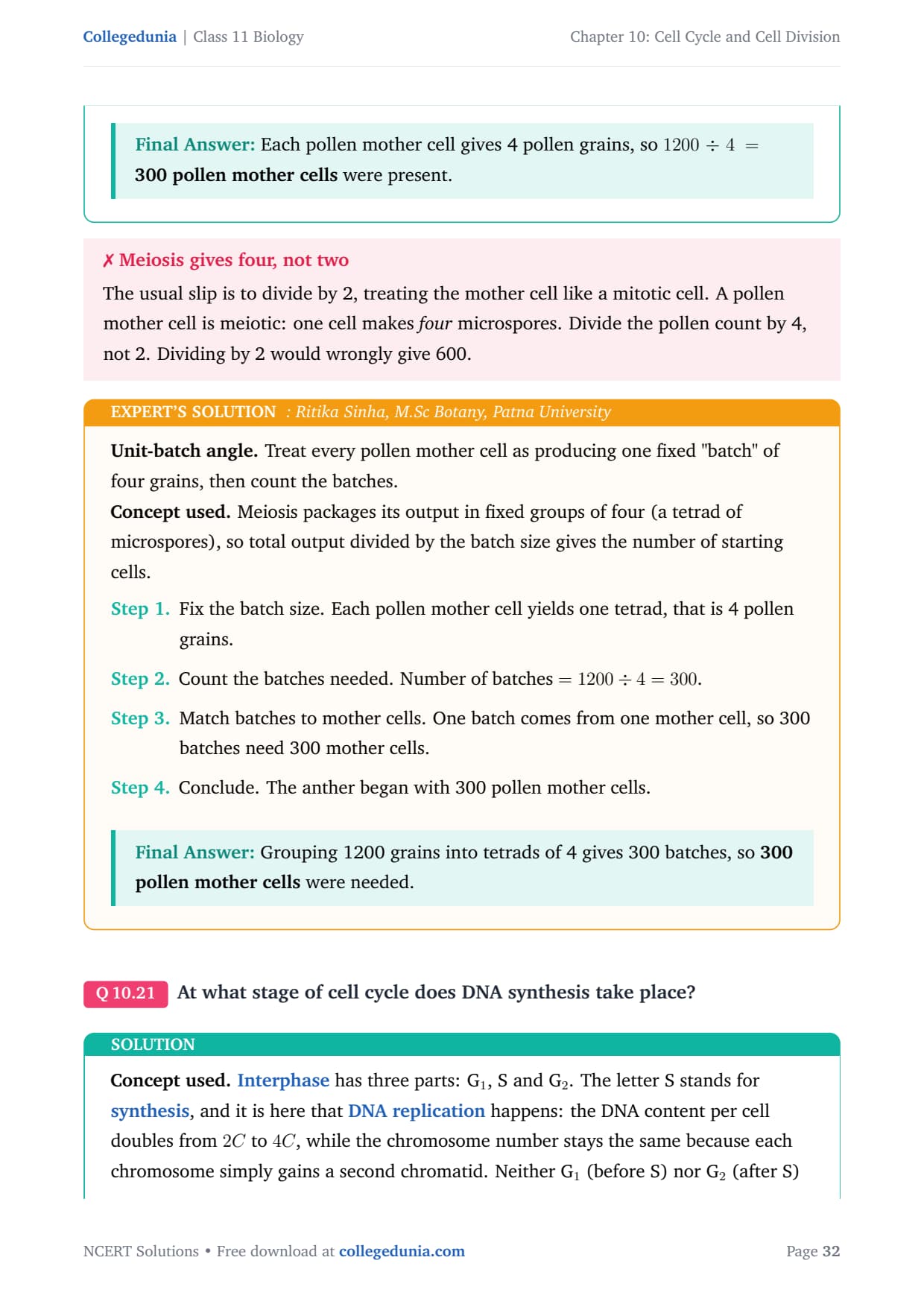
- The cell cycle and interphase: the G1, S and G2 phases, DNA synthesis in S phase, and why interphase is the longest and busiest part rather than a resting stage
- Mitosis: the equational division, its four phases, and the point that the chromosome number never changes from mother cell to daughter cells
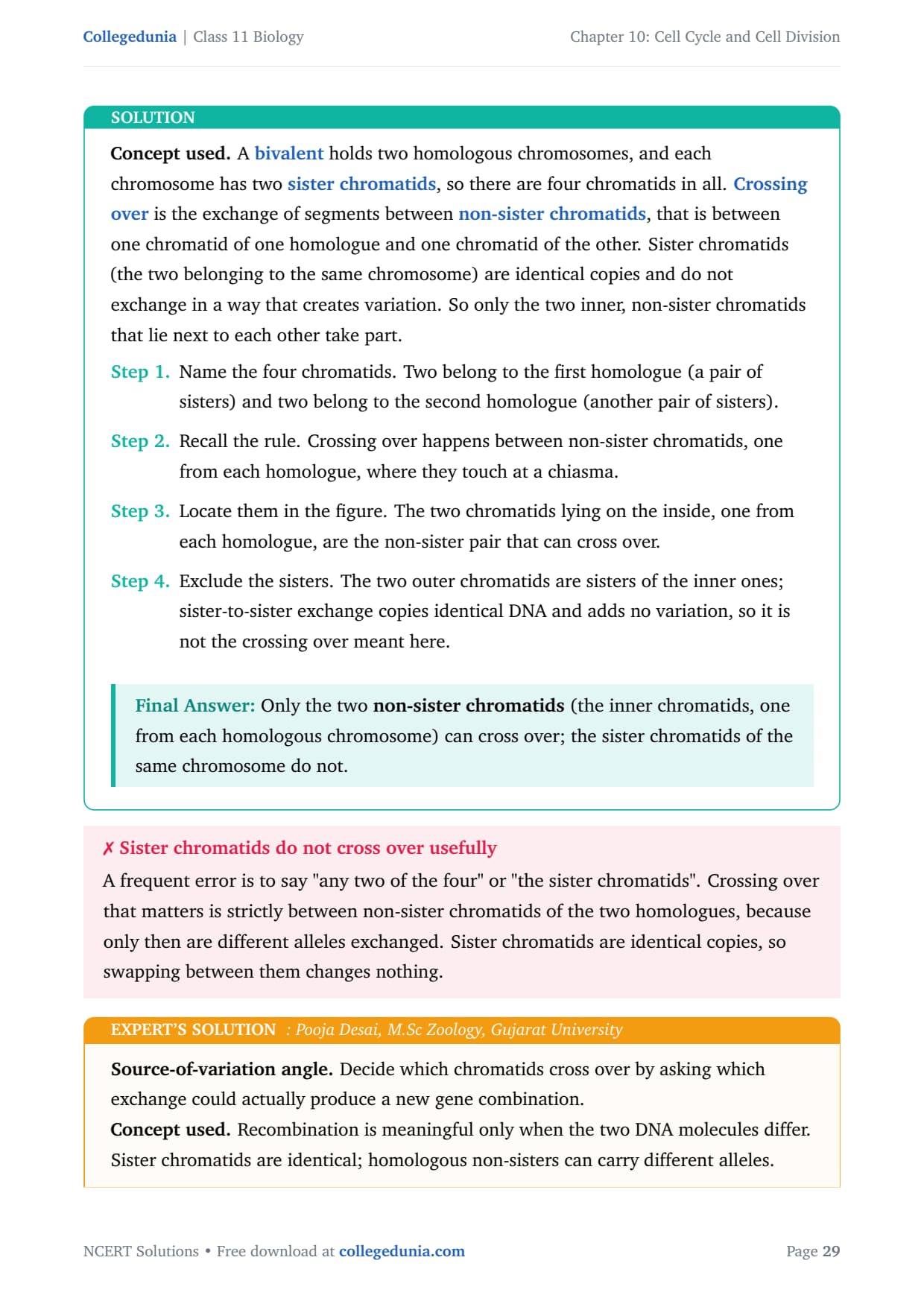
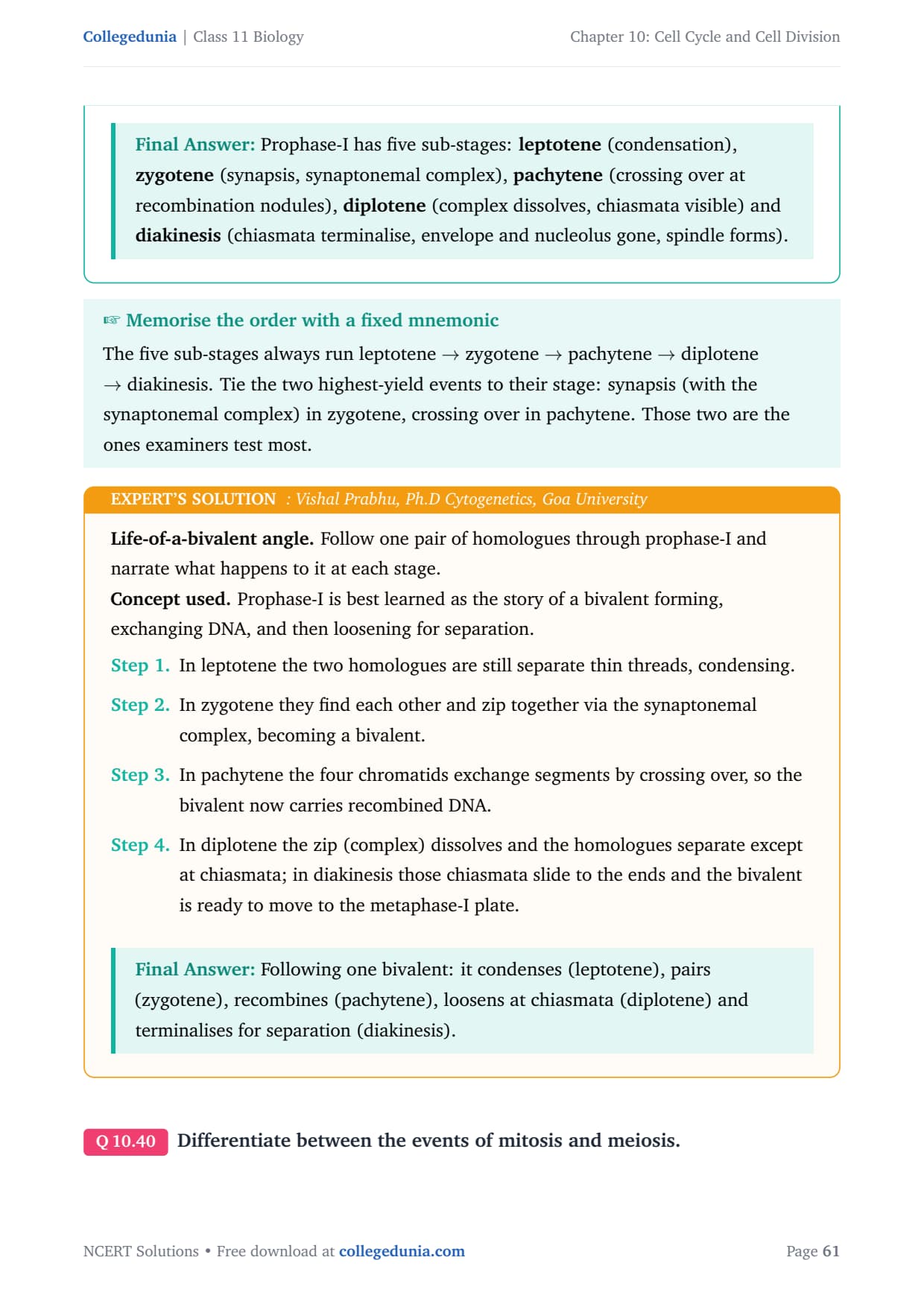
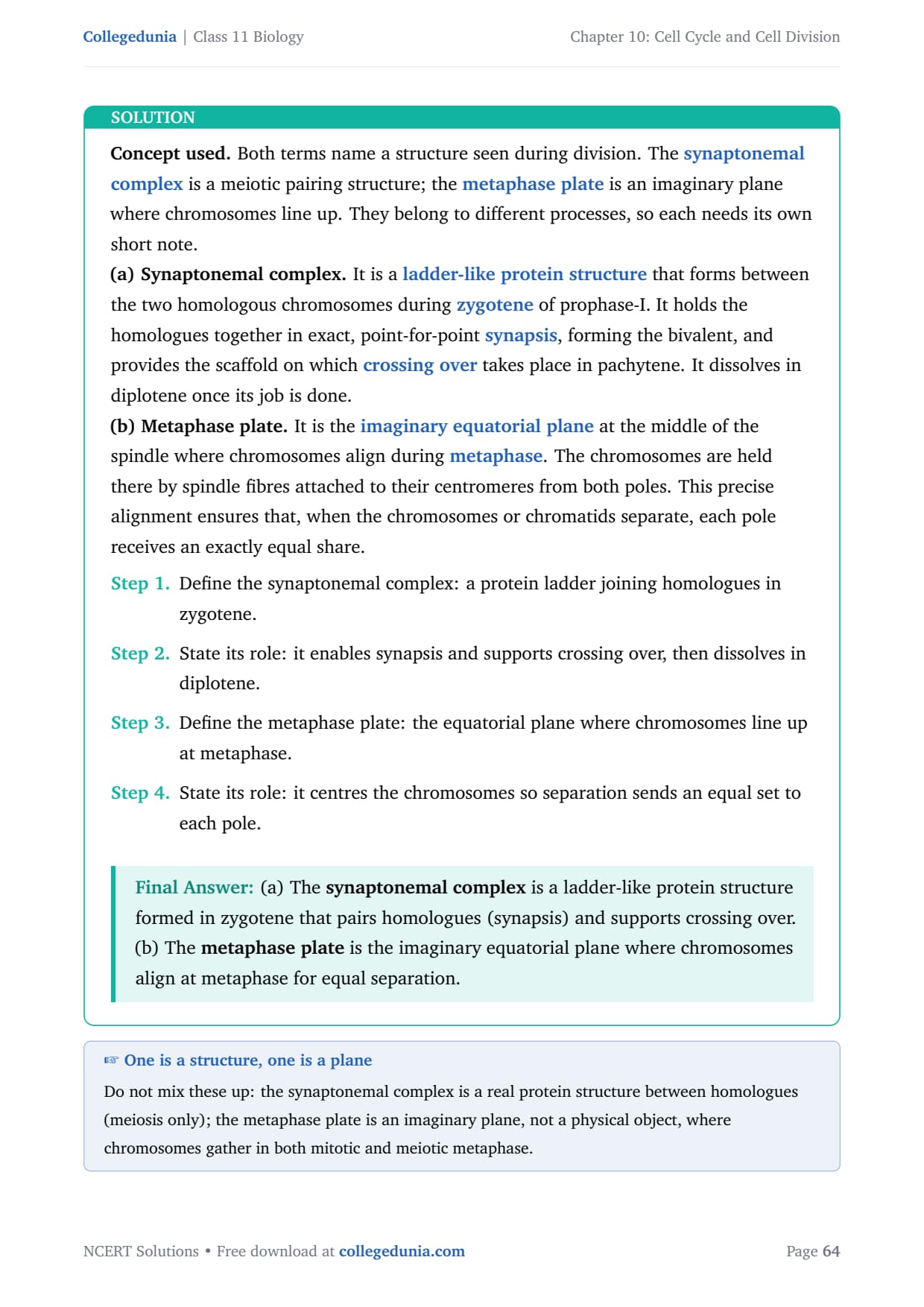
- Meiosis: one replication with two divisions, the substages of prophase-I, synapsis, bivalents and crossing over between non-sister chromatids
- Significance and chromosome arithmetic: pollen mother cells and microspores, C-value at each phase, cytokinesis in plant against animal cells, and uncontrolled division in cancer
Question Types in the Cell Cycle and Cell Division NCERT Exemplar
Class 11 Biology Exemplar chapters use four question types, and this chapter tilts the balance towards short reasoning. The MCQ set tests phase identification and the small print of each stage, while the Very Short Answer set is unusually large here because so many single-fact points, such as the stain used for chromosomes or the tissue that does meiosis, can be asked in one line. The Short Answer set is where the chromosome arithmetic lives. The table below shows how the 43 questions split.
| Question Type | Count | What It Tests |
|---|---|---|
| MCQ (single correct) | 10 | Identifying phases and the precise events of mitosis and meiosis |
| VSA (Very Short Answer) | 14 | One-line facts such as the chromosome stain and the meiotic tissue |
| SA (Short Answer) | 13 | Chromosome and cell-number arithmetic, and phase-by-phase comparisons |
| LA (Long Answer) | 6 | Full accounts of prophase-I, and the significance of mitosis and meiosis |
Counting Chromosomes: Where Meiosis and Mitosis Trip Students Up
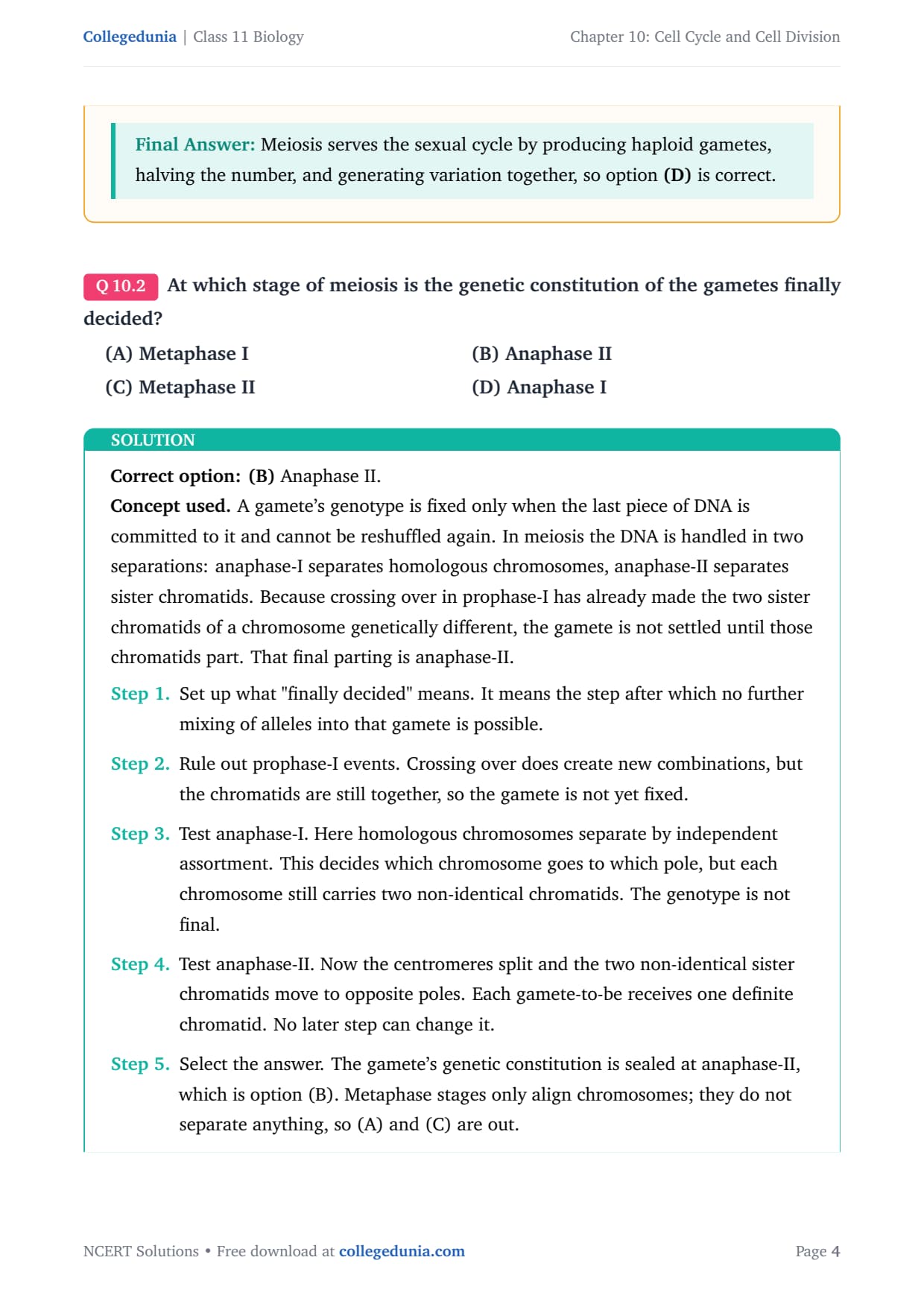
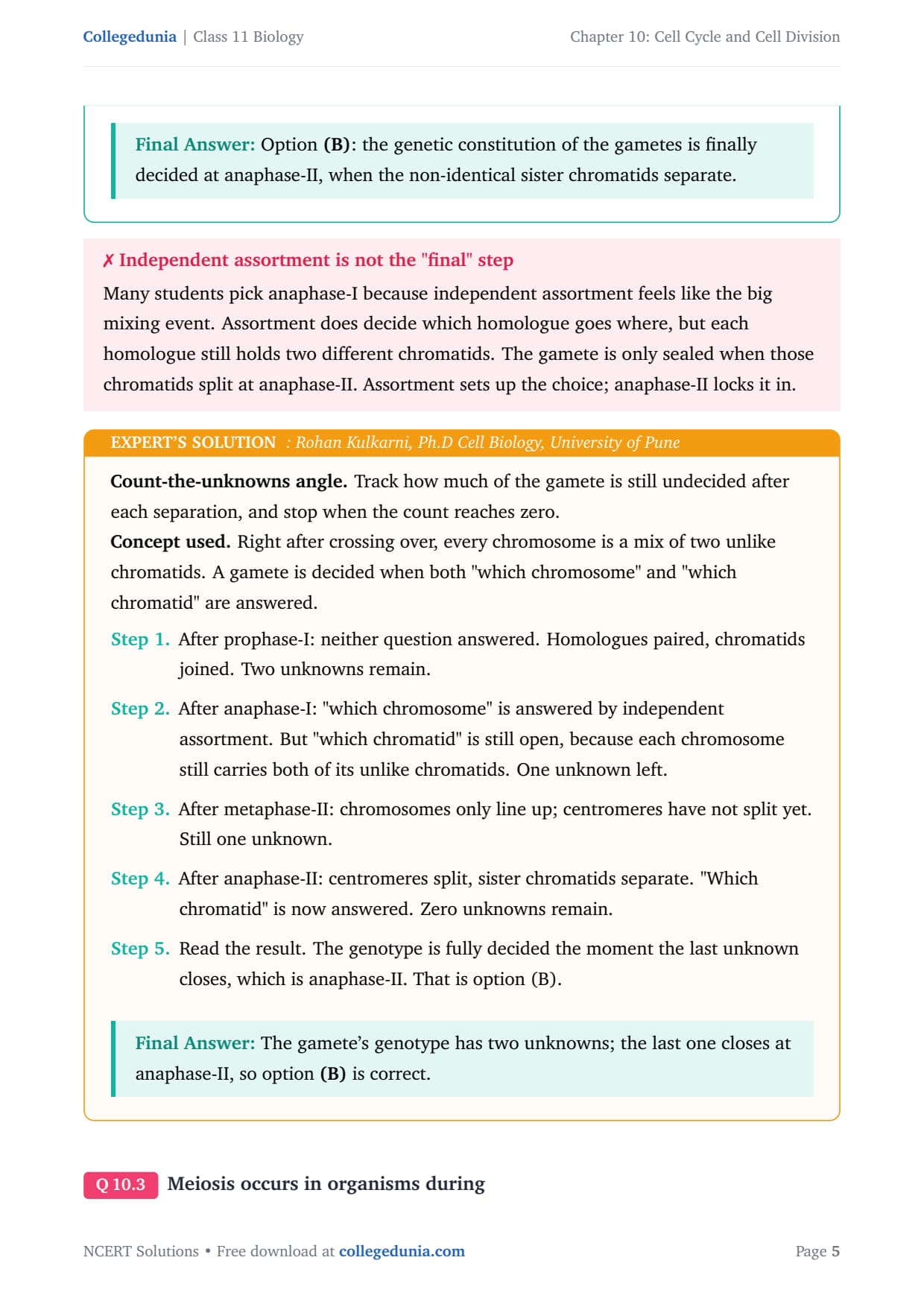
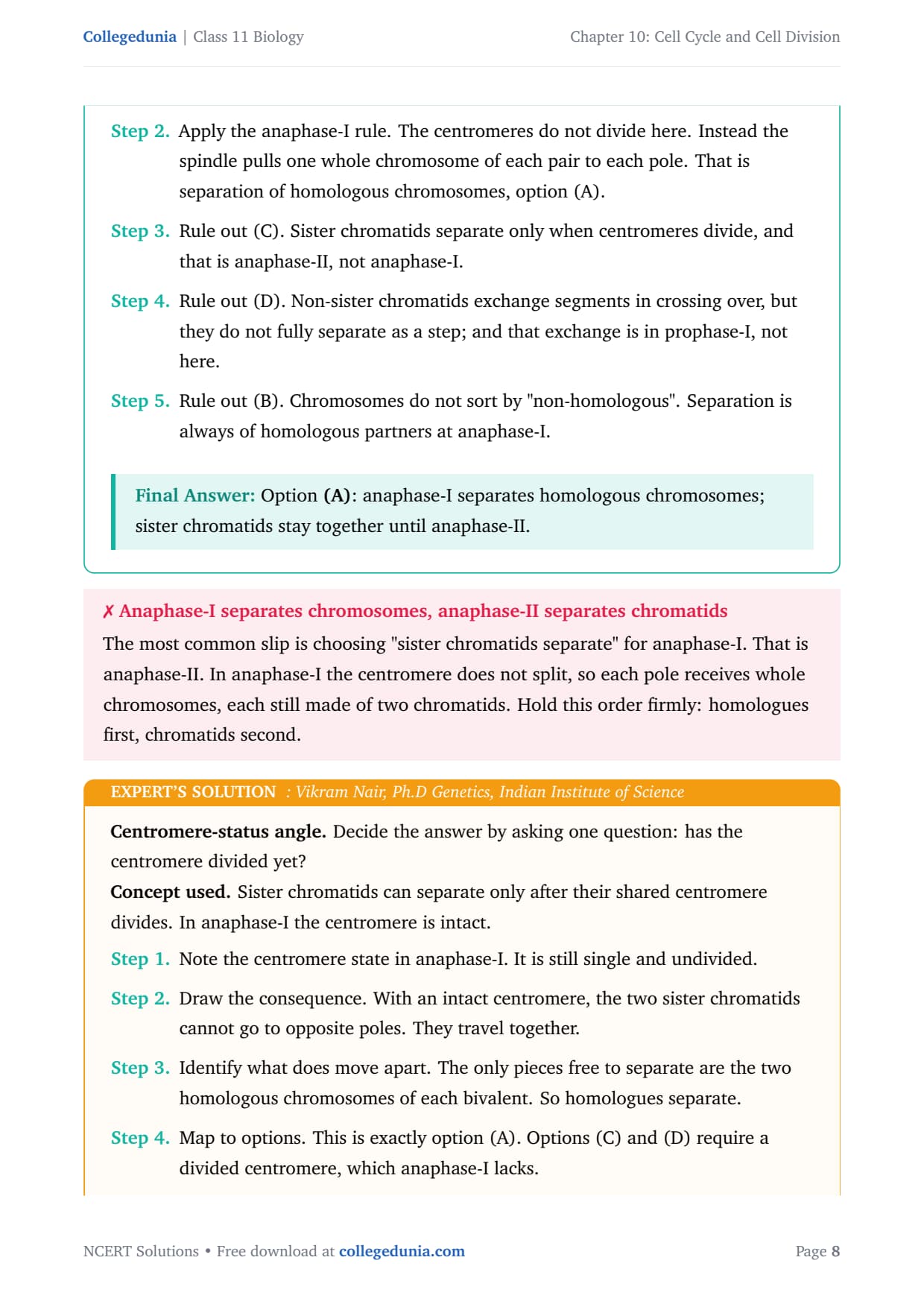
The hardest questions here are not about naming phases, they are about numbers. The Exemplar builds several problems around a single confusion: what actually separates at each anaphase, and what that does to the count. In anaphase-I the centromere does not split, so homologous chromosomes move apart and each pole receives whole chromosomes that still carry two chromatids each. Only in anaphase-II do the sister chromatids finally separate. Getting this order right settles more than one question in the chapter, so it is worth holding as a rule.
- Homologues first, chromatids second: anaphase-I separates chromosomes while anaphase-II separates chromatids, and choosing the wrong one is the most common slip in the MCQ set
- A bivalent has four chromatids but two centromeres: two sister chromatids share one centromere, so four chromatids never mean four centromeres
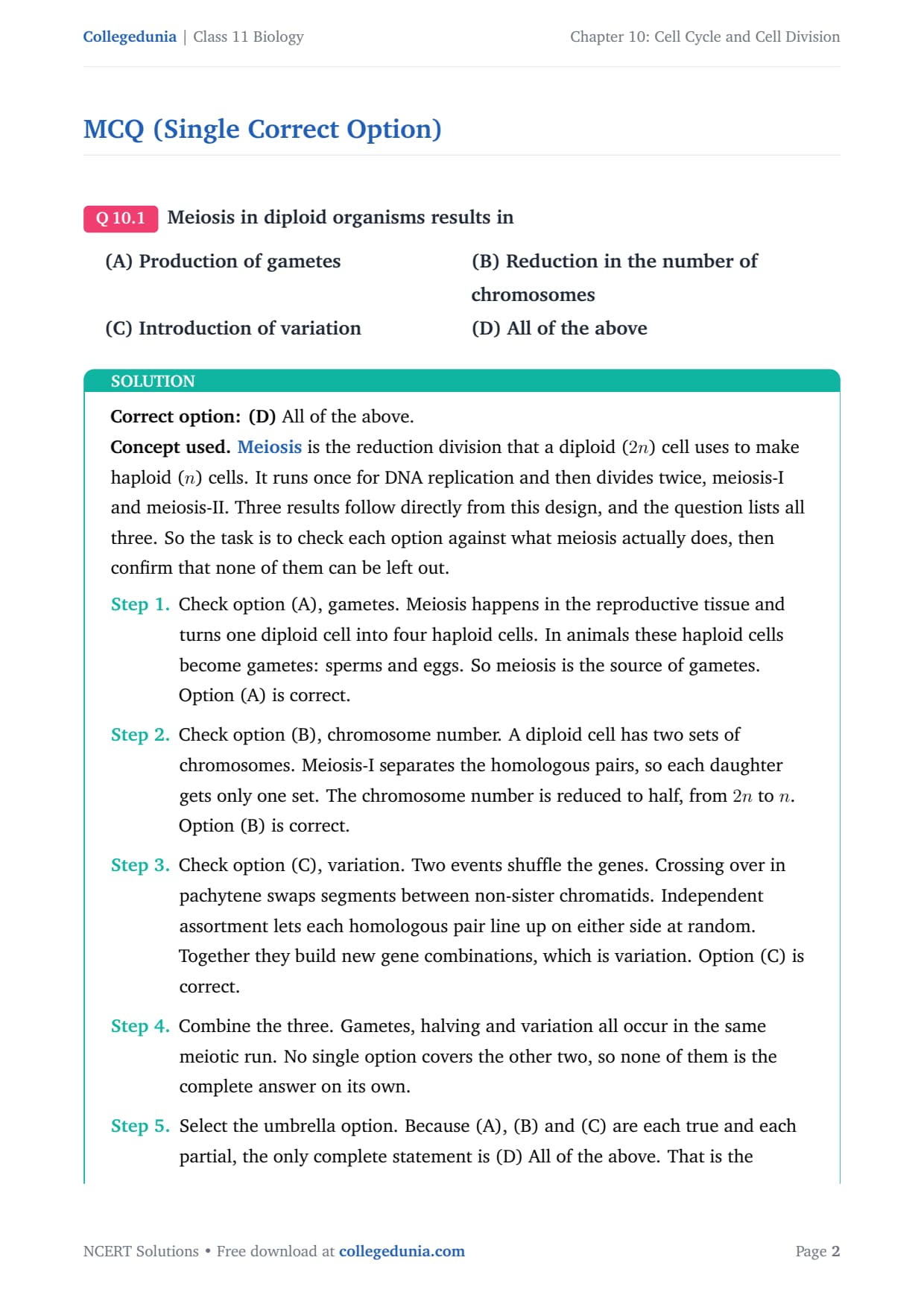
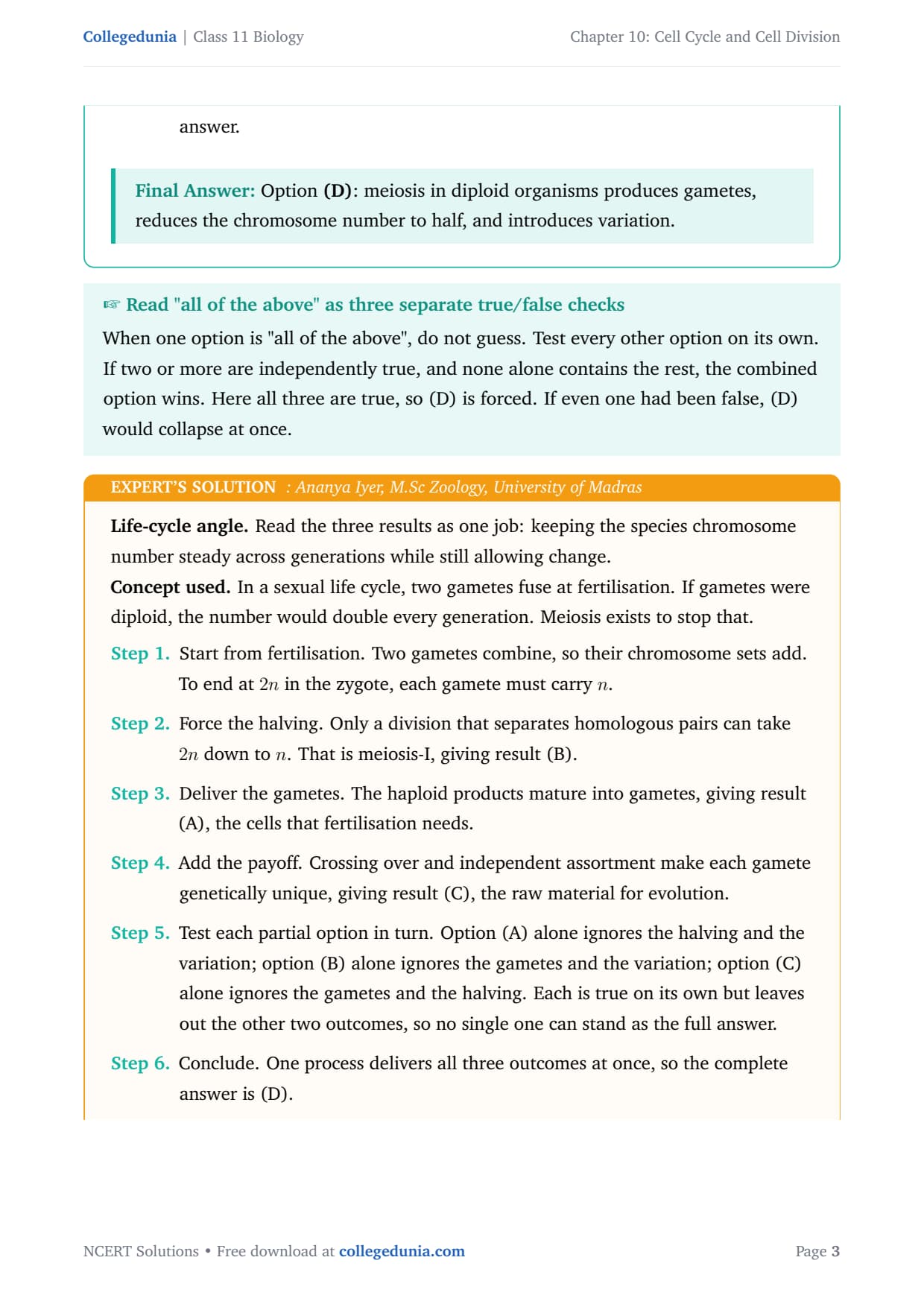
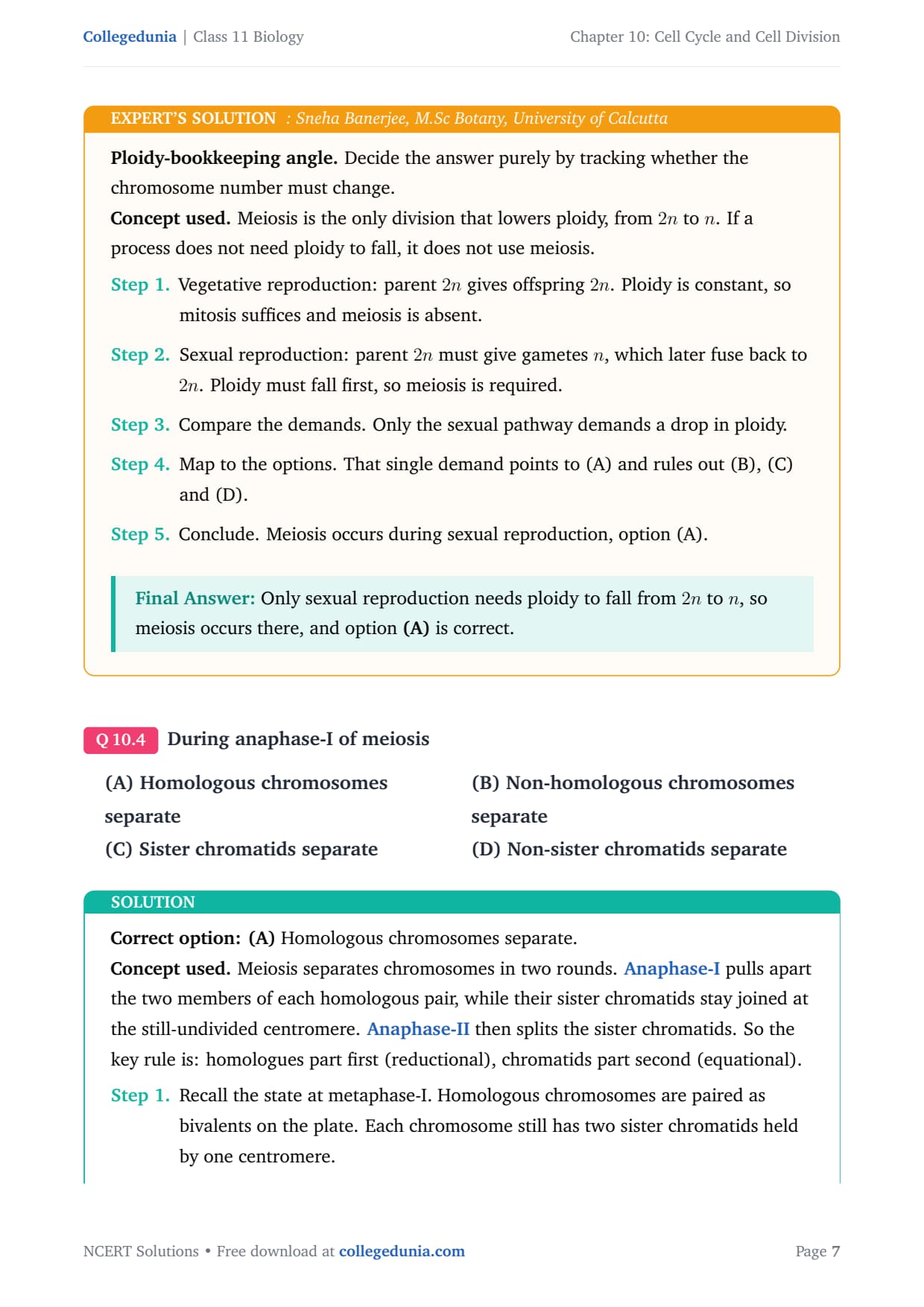
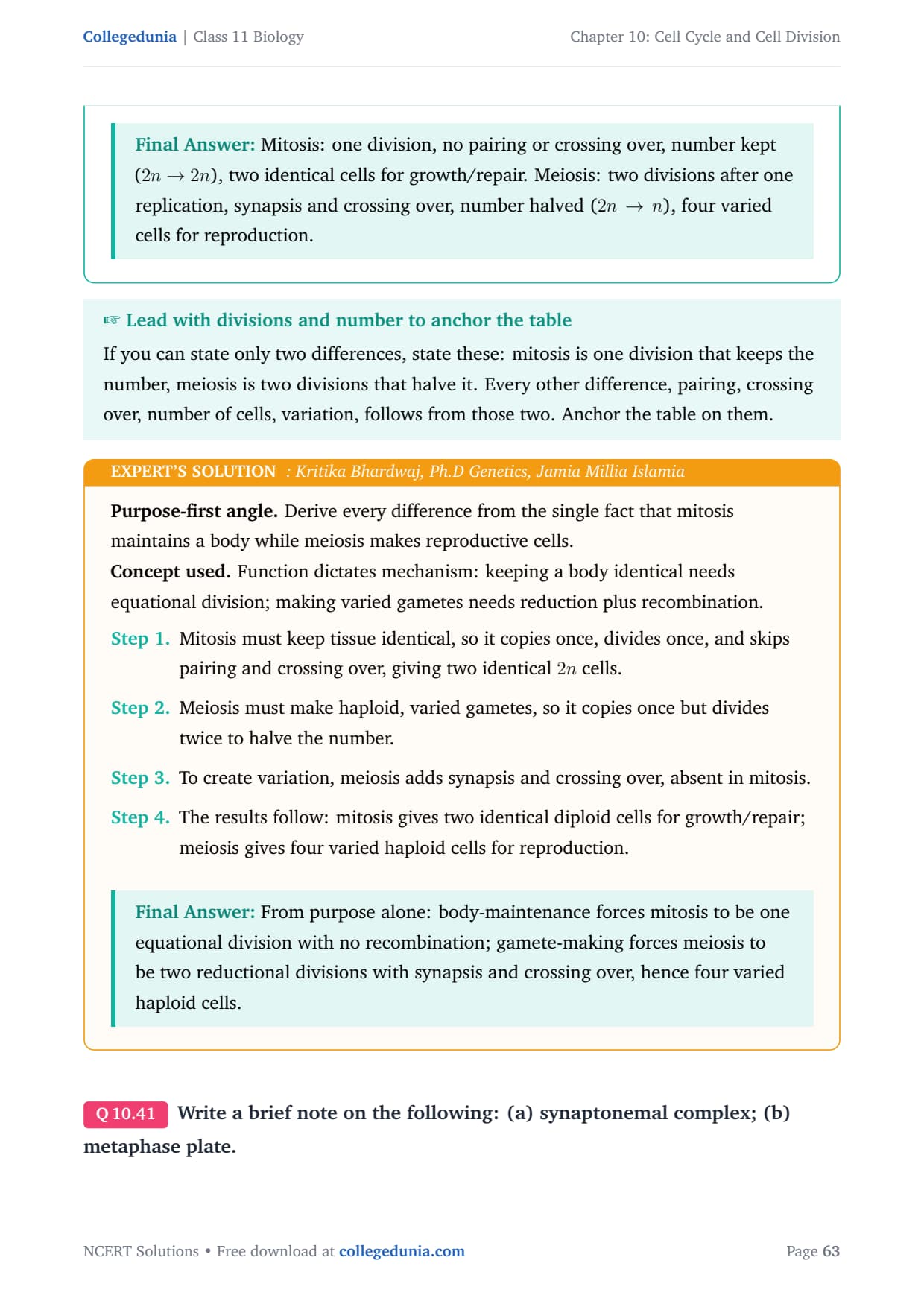
- One replication, two divisions: meiosis copies the DNA once and divides twice precisely so the number falls to half, which is the whole point of a reductional division
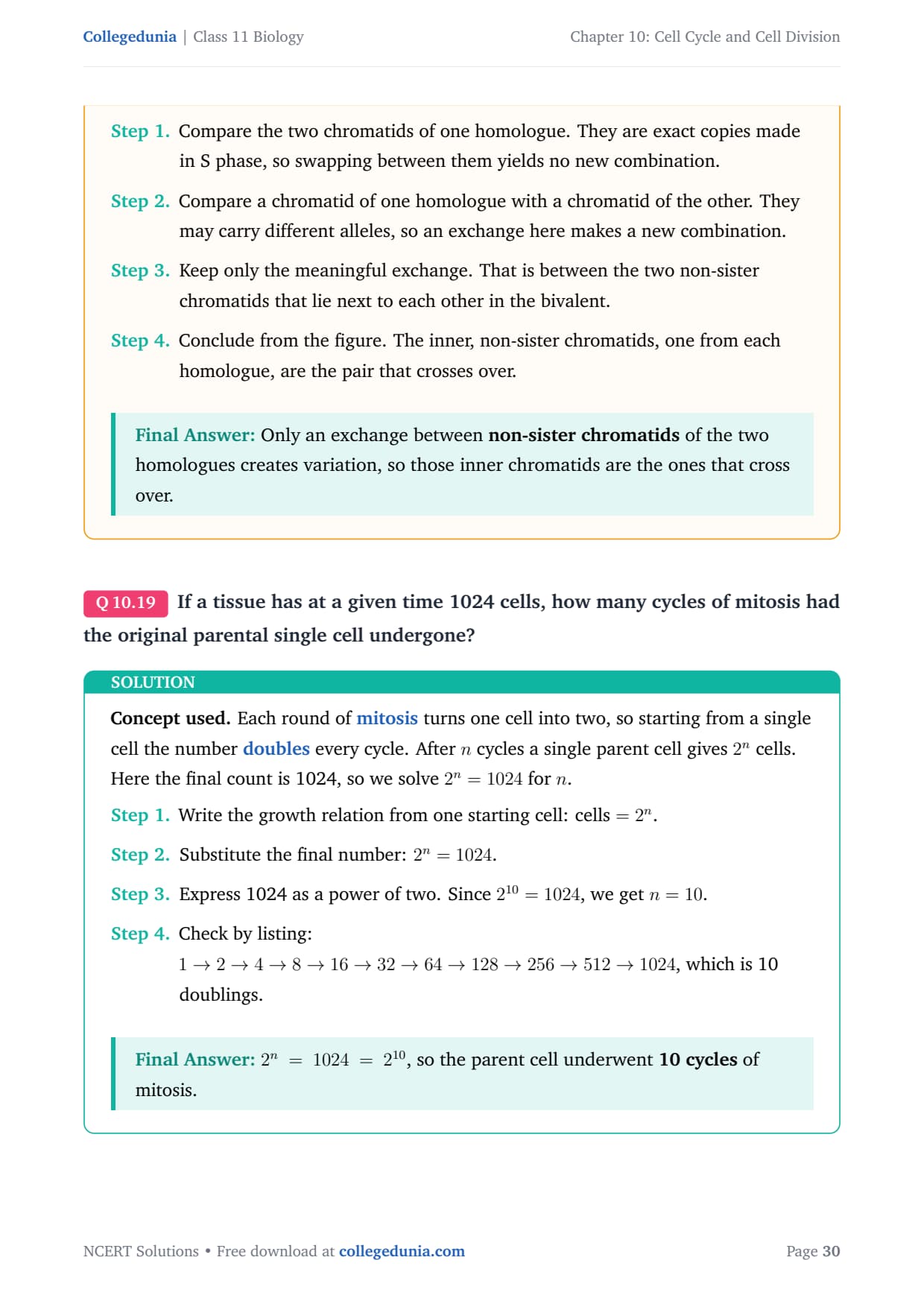
- Mitosis is equational: a cell with 32 chromosomes gives daughter cells with 32, never 16, because only meiosis halves the count
Whenever a chromosome number halves, think meiosis, and never mitosis. A cell that appears to drop from 32 to 16 cannot be mitotic, and the Exemplar uses exactly that number to catch a rushed reader. Each answer in the PDF states which structure is separating, at which phase, and what the count becomes, so the arithmetic is never left to guesswork.
Common Mistakes Students Make in Cell Cycle and Cell Division
The Exemplar plants wrong options that feel right at first glance. Four errors catch most students in this chapter, and each is flagged in the PDF at the exact question where it appears. Learning to spot them early protects marks across the whole reproduction unit, because meiosis and chromosome number return the moment you reach inheritance in Class 12.
- Anaphase-I against anaphase-II: students pick "sister chromatids separate" for anaphase-I, but that is anaphase-II. In anaphase-I the centromere stays intact and whole chromosomes move to the poles.
- Chromatid count against centromere count: a bivalent of meiosis-I has four chromatids, yet only two centromeres, because each pair of sister chromatids shares one. Reasoning "four chromatids need four centromeres" is the planted trap.
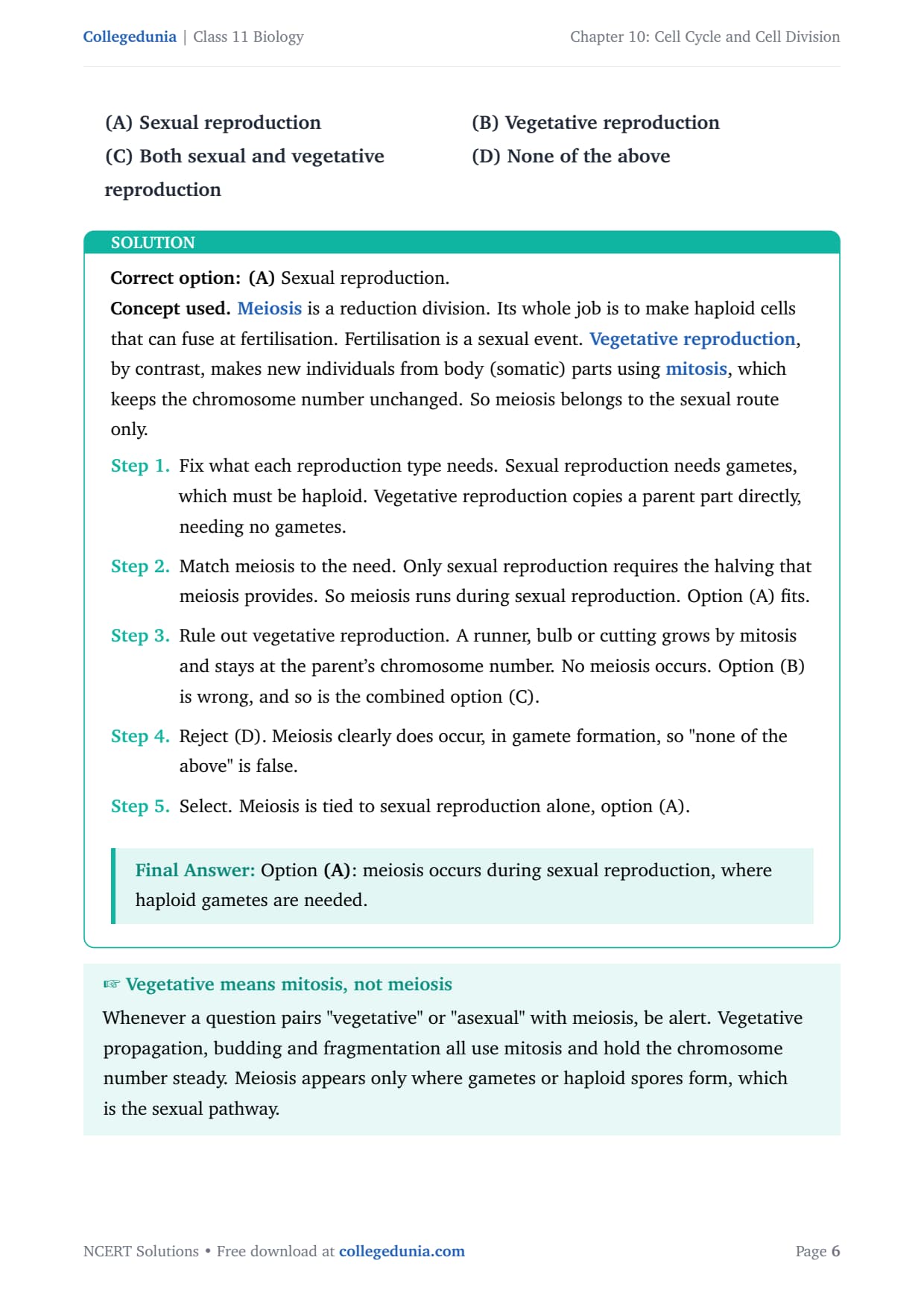
- Where meiosis happens: meiosis is confined to the germ line, the gamete or spore forming tissue. Naming a somatic tissue such as skin, muscle or leaf is a common and costly slip.
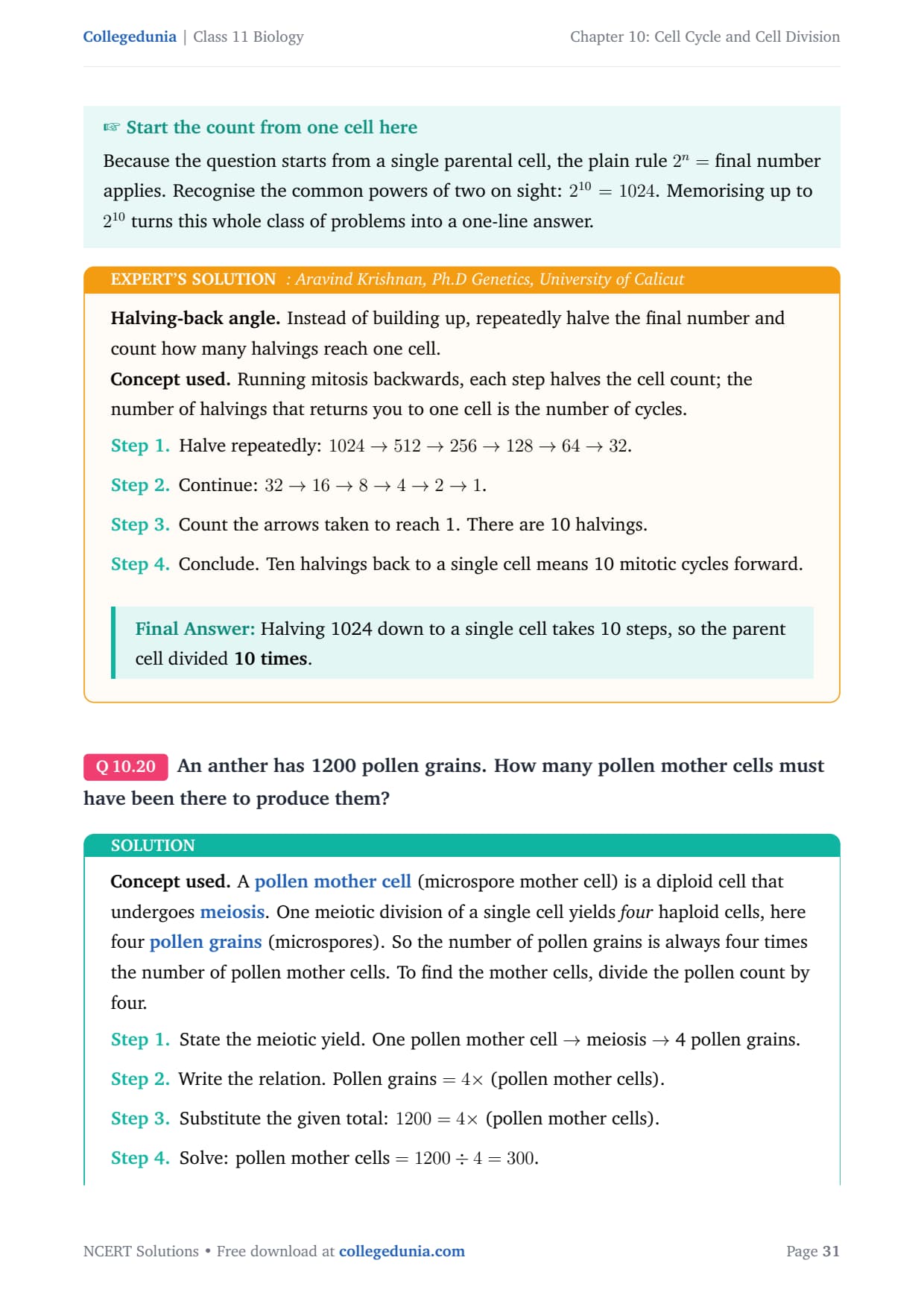
- Pollen mother cell arithmetic: one pollen mother cell forms four microspores, so 1200 pollen grains come from 300 mother cells. Dividing by 2 instead of 4 wrongly gives 600.
How the Exemplar Steps Up from the Class 11 Biology Textbook
The textbook describes each phase and asks you to state what happens in it. The Exemplar hands you a number and asks you to work the phase backwards, which is a different skill and the one that boards and NEET actually test. This is why students who only read the chapter find the Exemplar unfair. The content is the same, but the demand is to calculate rather than recall.
The pollen grain question shows the gap clearly. The textbook tells you a pollen mother cell is meiotic and gives four microspores, so a quick reader files that away as a fact. The Exemplar then asks how many mother cells produce 1200 pollen grains and waits. To answer, you must divide by four, not two, because meiosis quarters the count. The same jump appears in the question on 1024 cells, where you have to see that mitosis doubles the number each cycle, so ten cycles are needed since two to the power ten is 1024. Working these builds the numerical judgement, not the recall, that Chapter 10 is meant to leave you with.
How to Use These NCERT Exemplar Solutions for Boards, NEET and CUET
Attempt each question before you open the solution. This chapter rewards the attempt because the phase looks obvious until you try to name the exact event or run the count. Read the question, decide the phase and write the number yourself, and only then check it against the PDF. The gap between your working and the model answer is where the marks live.
- Boards: the Short Answer and Long Answer sets match the 3 and 5 mark board pattern, especially the mitosis against meiosis comparison and the account of prophase-I substages
- NEET: work the MCQ and Very Short Answer sets first, since NEET repeats meiotic phases, cell cycle phases and chromosome arithmetic at that level every year
- CUET: the phase-identification MCQ set is the closest practice for the domain paper, which favours precise recall of the events of each stage
Student Feedback
Students using Collegedunia's Class 11 Biology Exemplar Solutions told us that the chromosome-number questions were the hardest part of this chapter, well above the phase-naming questions. Around 7 in 10 said that seeing the pollen mother cell and the anaphase questions solved side by side, with the exact structure named at each phase, finally made the counting rules stick after weeks of guessing.
Other Resources for Class 11 Biology Cell Cycle and Cell Division
Collegedunia has the full set of study material for this chapter. Use the Notes for a first read, then the Exemplar once the phases and counts are steady, and keep the NCERT Solutions and Formula Sheet open for the textbook exercise and quick revision alongside.
Also Check:
- NCERT Solutions for Class 11 Biology Chapter 10
- Class 11 Biology Chapter 10 Notes
- Class 11 Biology Chapter 10 Formula Sheet
- Class 11 Biology Chapter 10 NCERT Book PDF
- Class 11 Biology Chapter 10 Exemplar Book PDF
NCERT Exemplar Solutions for Other Class 11 Biology Chapters
Each chapter below has the same step-by-step treatment and a free PDF. All 19 chapters have an NCERT Exemplar book chapter behind them, so the list covers every one.
Cell Cycle and Cell Division Class 11 NCERT Exemplar Solutions FAQs
Ques. How many questions are there in the Class 11 Biology Cell Cycle and Cell Division Exemplar?
Ans. Chapter 10 has 43 questions. They are split into 10 MCQ, 14 Very Short Answer, 13 Short Answer and 6 Long Answer questions. All 43 are solved in the free PDF on this page.
Ques. What is the difference between anaphase-I and anaphase-II?
Ans. In anaphase-I the centromere does not split, so homologous chromosomes separate and each pole receives whole chromosomes that still carry two sister chromatids. In anaphase-II the centromere splits and the sister chromatids finally separate. Choosing anaphase-I for "sister chromatids separate" is the trap the Exemplar plants in this chapter.
Ques. Why does meiosis have one replication but two divisions?
Ans. Meiosis copies the DNA only once and then divides twice so that the chromosome number is reduced to half in the gametes. If the DNA replicated a second time between the two divisions, the halving would fail and the gamete would carry the wrong number. This single-replication, double-division design is the whole point of a reductional division.
Ques. Which tissue of plants and animals undergoes meiosis?
Ans. Meiosis occurs only in the germ line, the gamete-forming tissue in animals and the spore-forming tissue in plants. Somatic tissues such as skin, muscle and leaf divide only by mitosis. Naming a body tissue for meiosis is a common Very Short Answer error, and the Exemplar checks for it directly.
Ques. Is the NCERT Exemplar enough for NEET questions from Cell Cycle and Cell Division?
Ans. For this chapter it covers the ground well. NEET asks two to three questions a year on meiotic phases, cell cycle phases and chromosome arithmetic, and they sit at the level of the Exemplar MCQ and Short Answer sets. Work all 10 MCQs and the chromosome-number Short Answers before moving to a coaching module.



Comments