




NCERT Exemplar Solutions for Class 11 Biology Chapter 13 Plant Growth and Development solve all 48 questions from the Exemplar book. Every MCQ, Very Short Answer, Short Answer and Long Answer problem is worked step by step in the free 69-page PDF, updated for the 2026-27 syllabus.
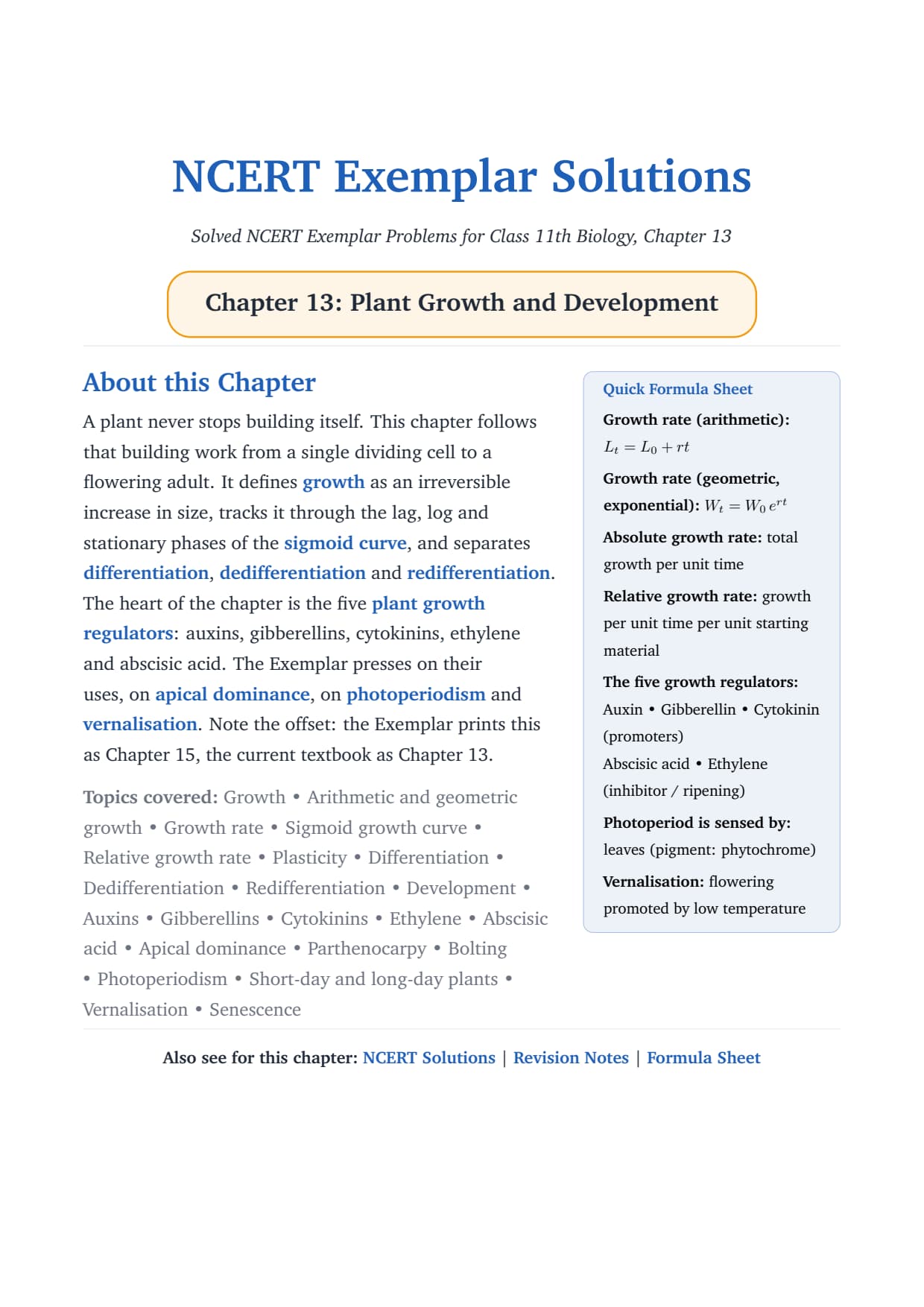
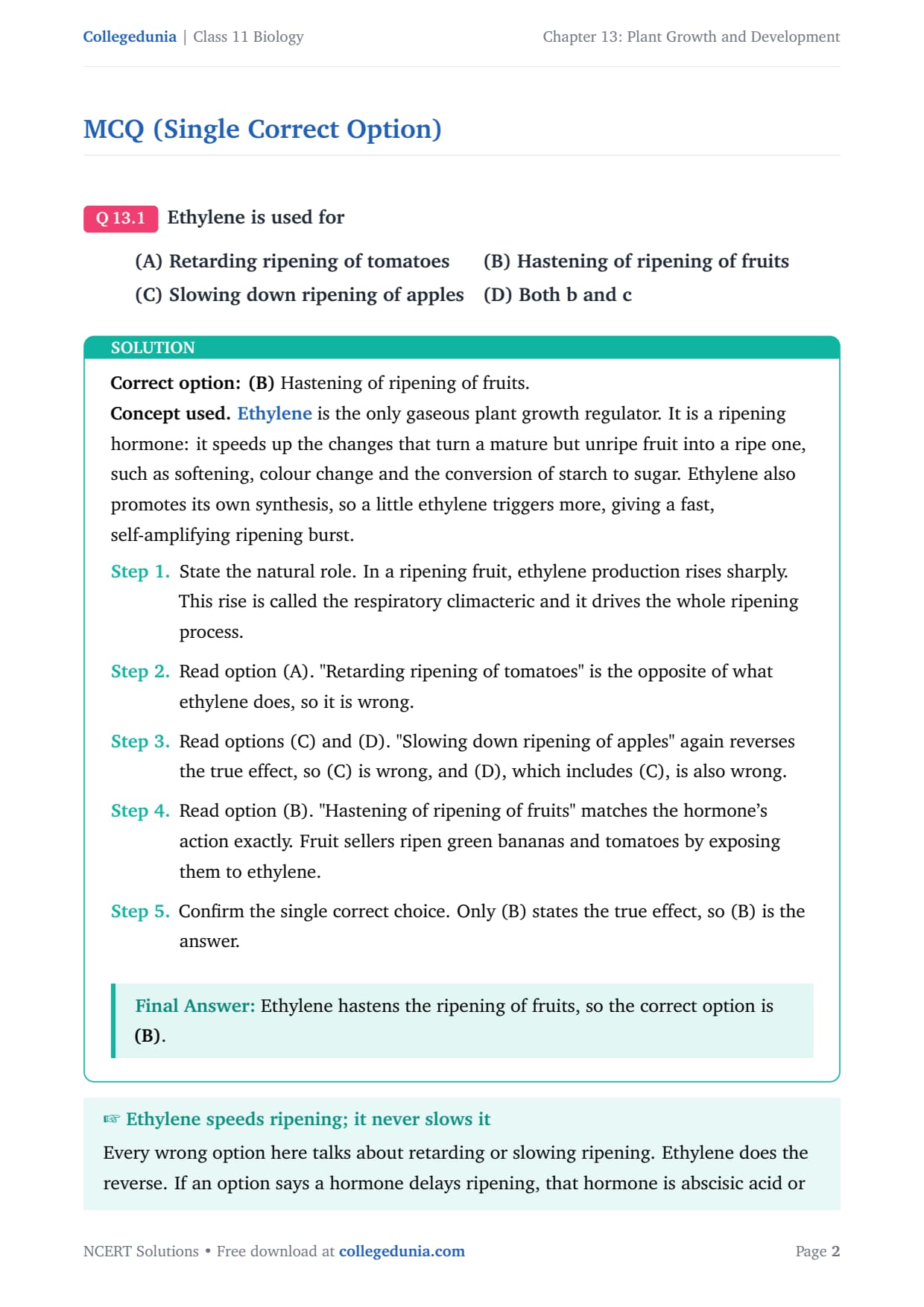
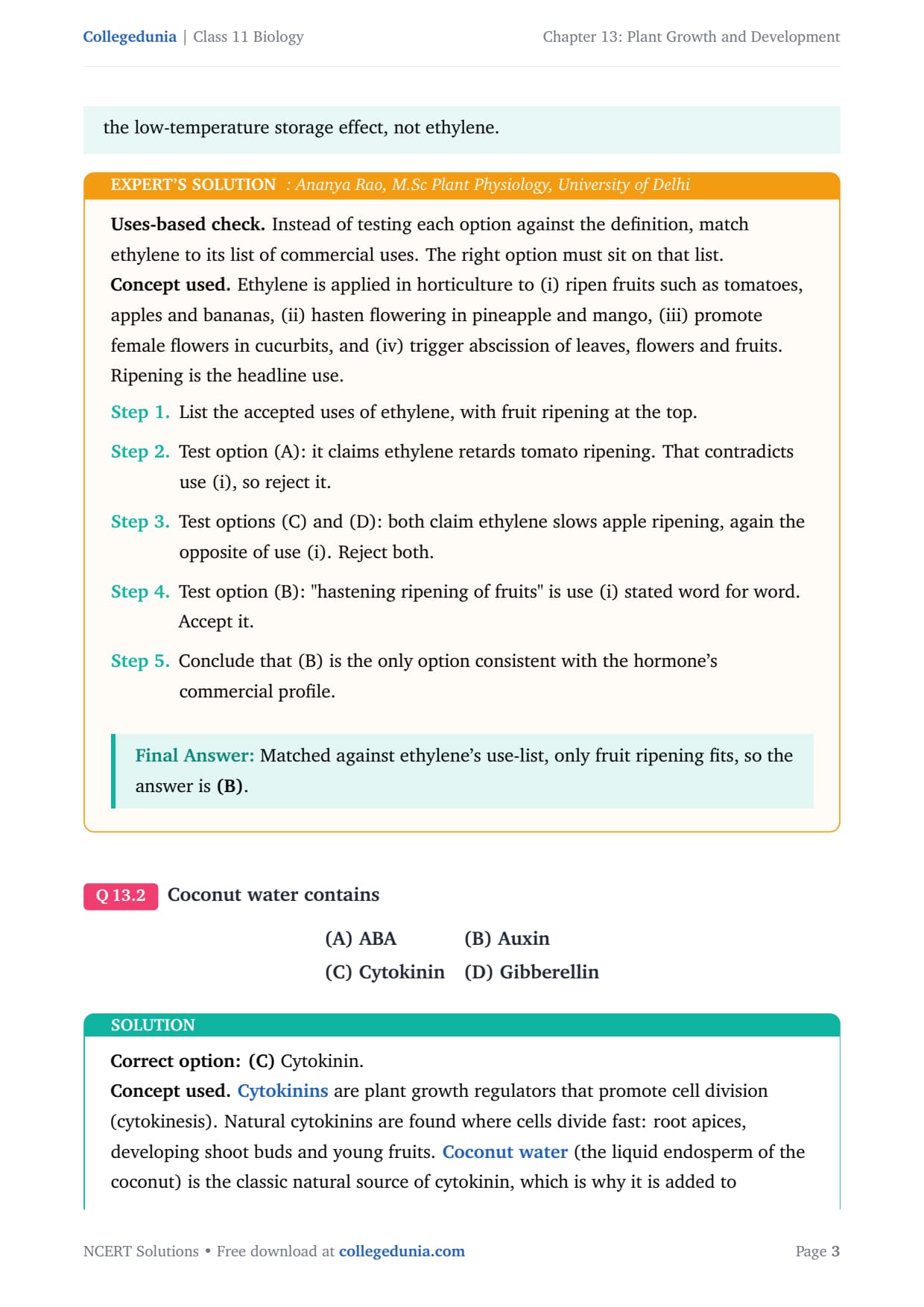
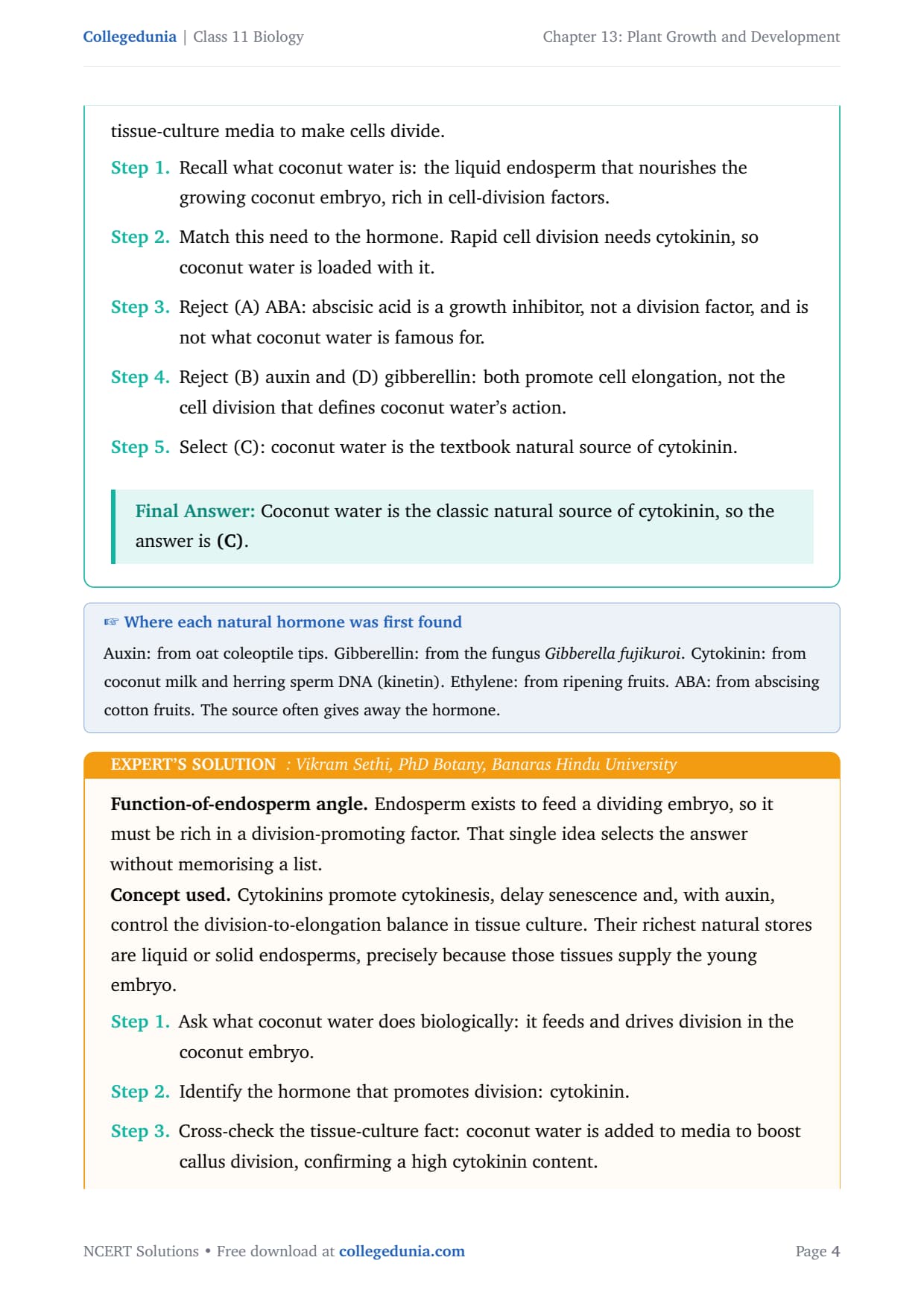
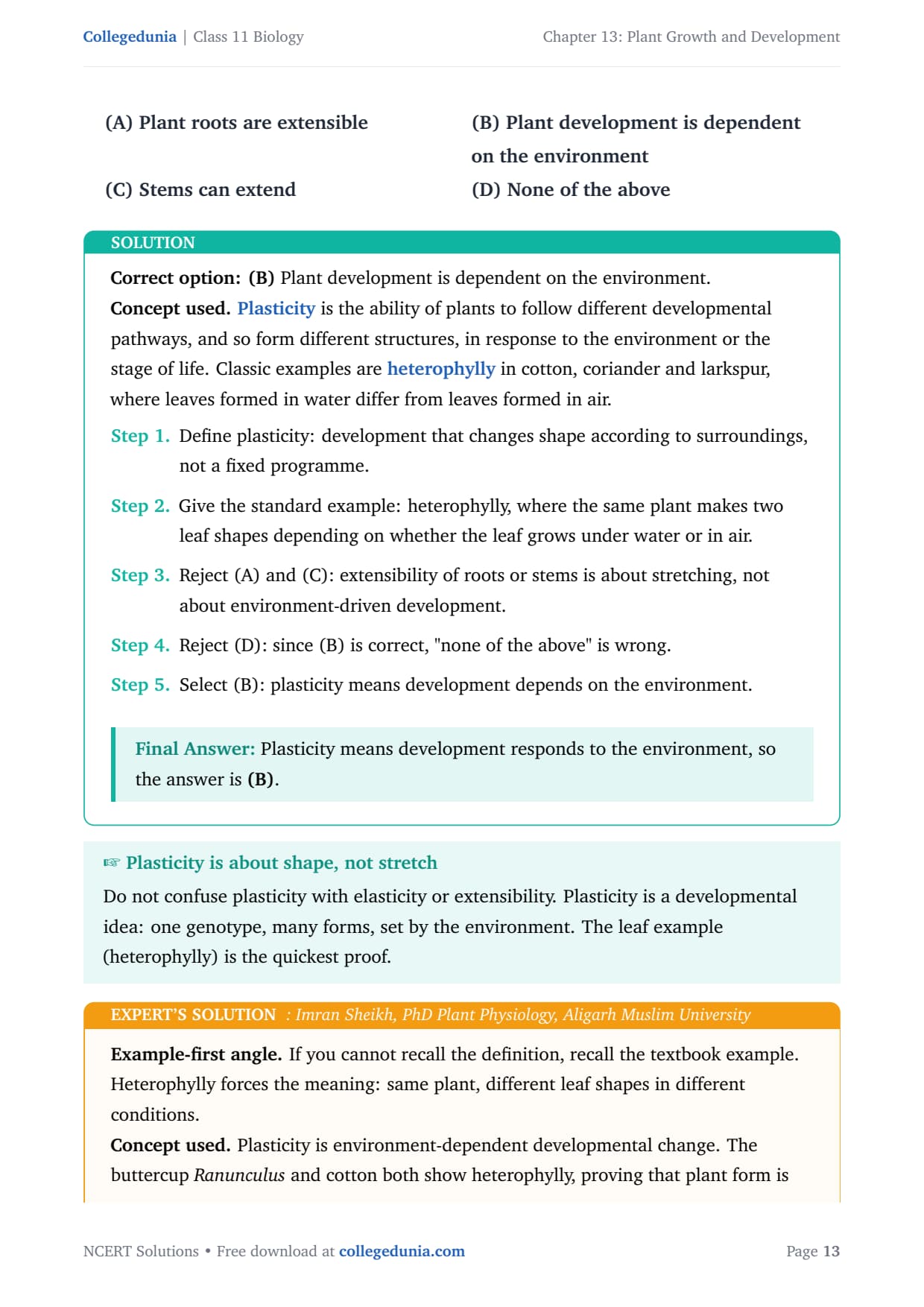
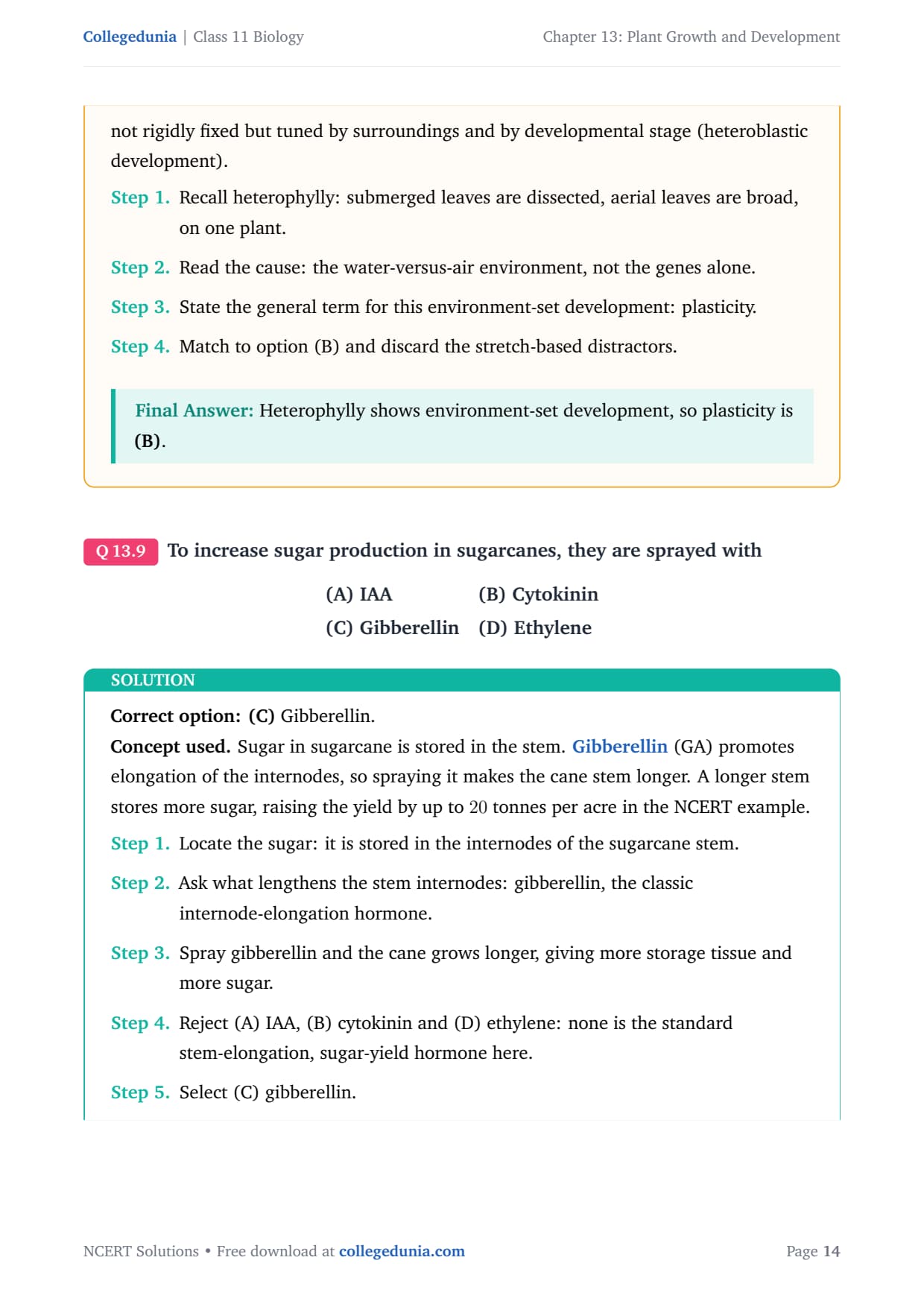
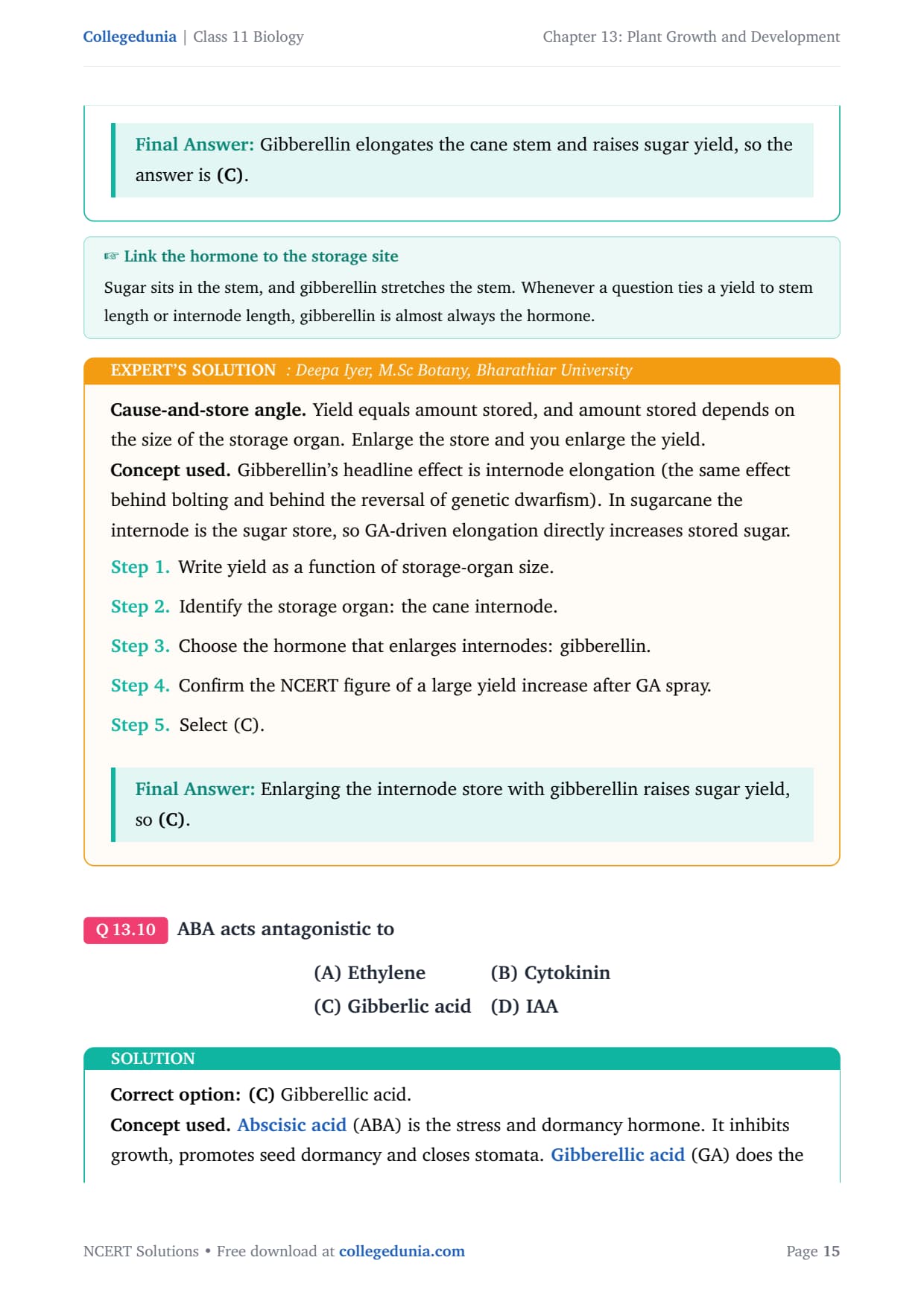
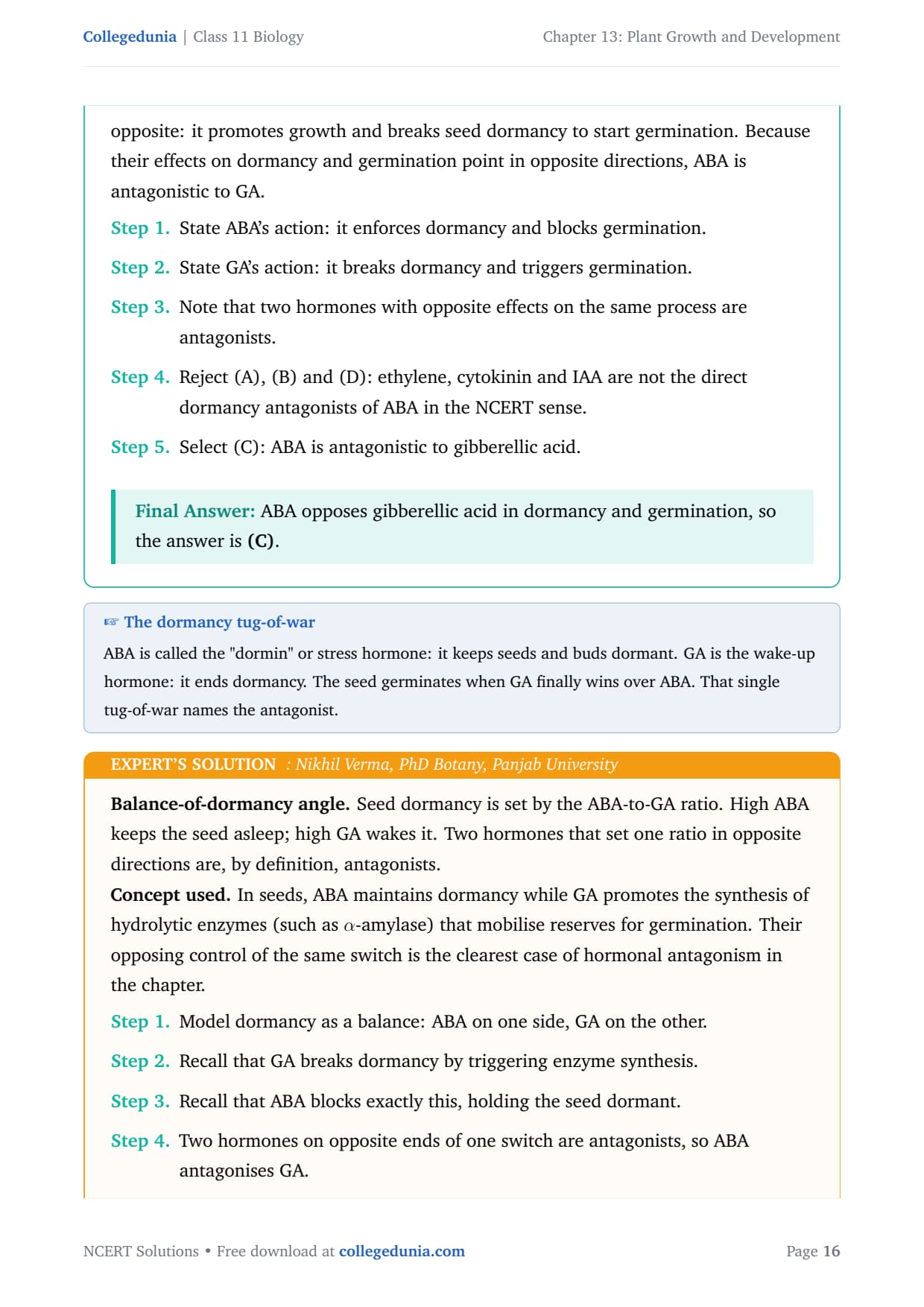
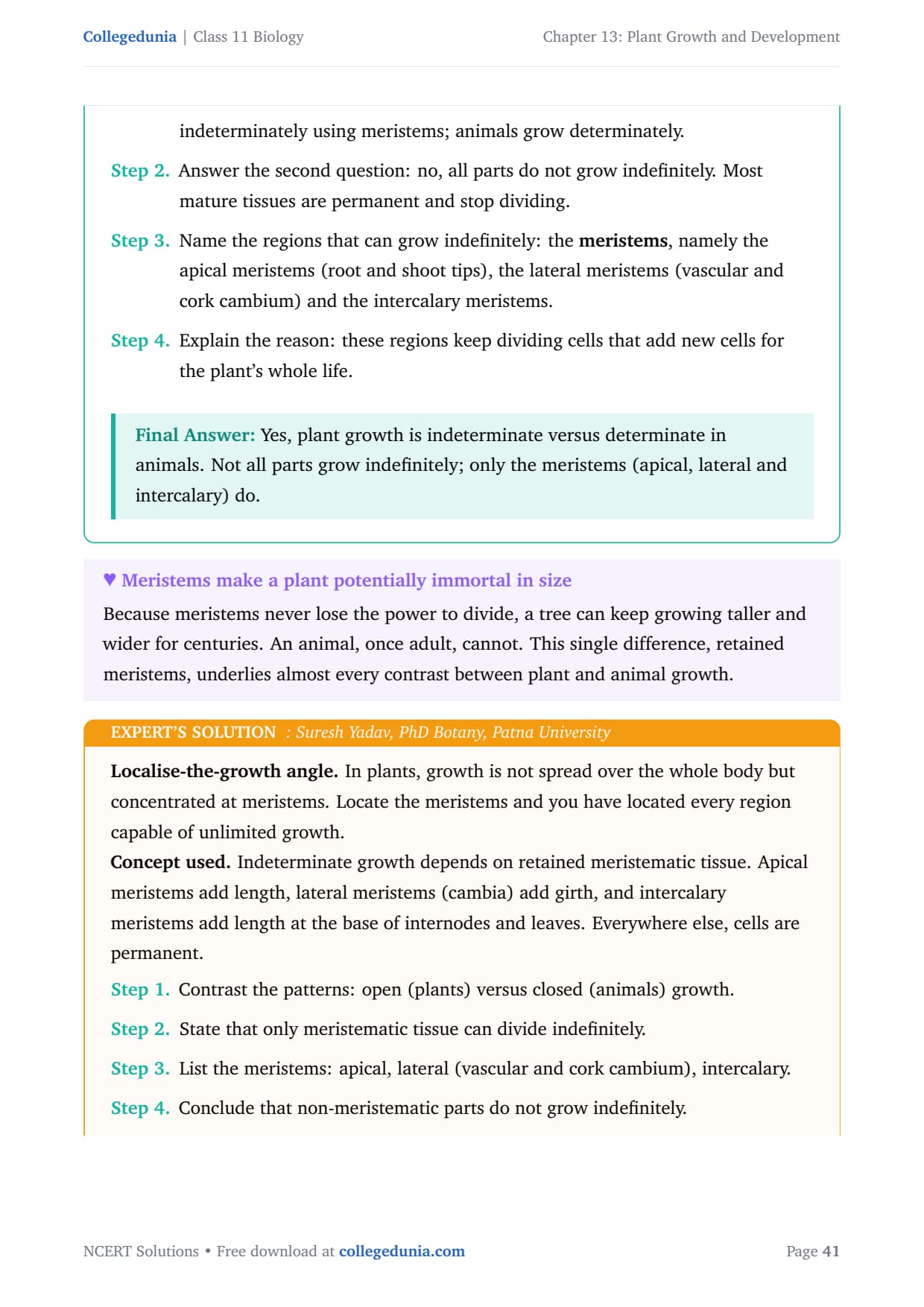
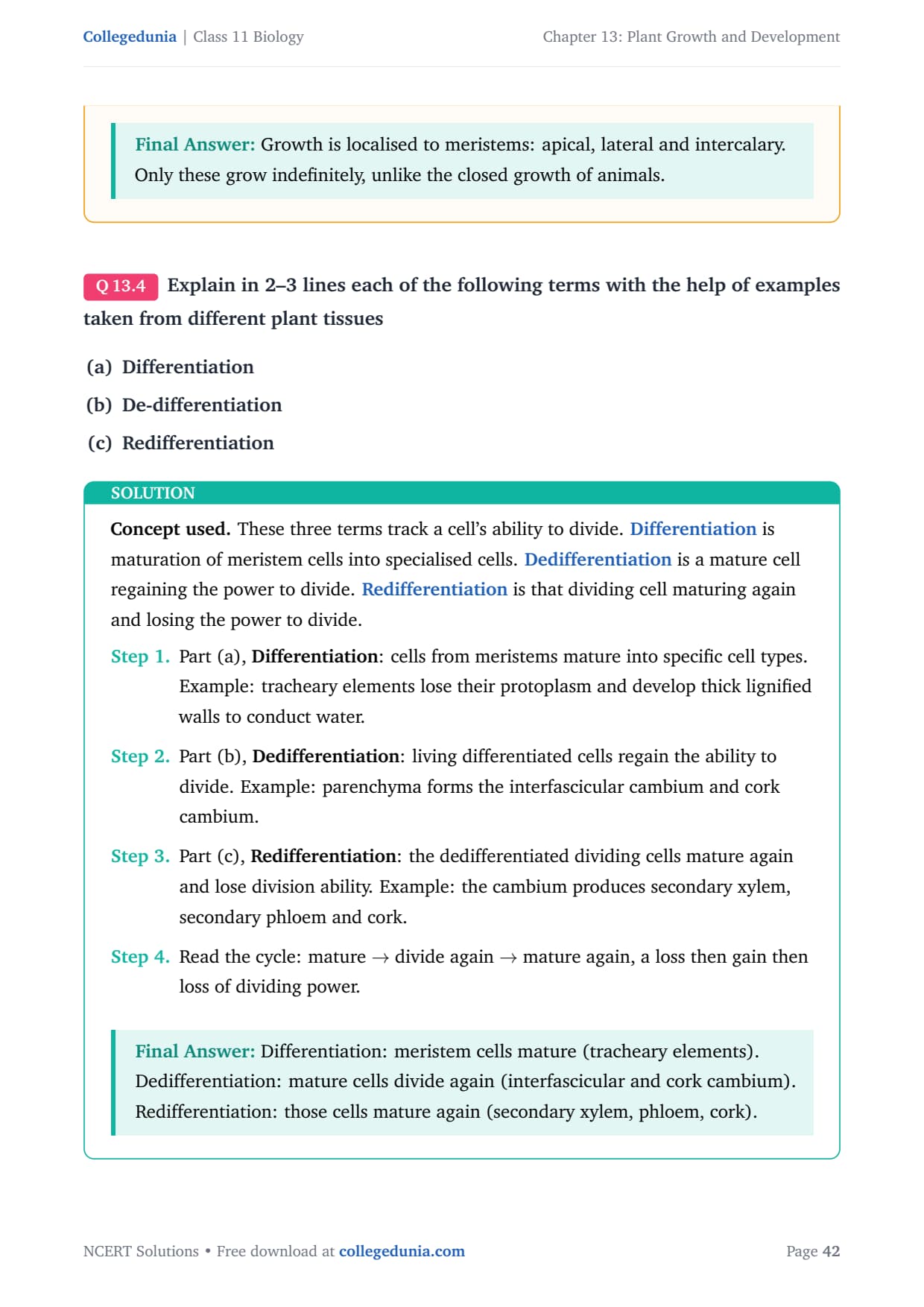
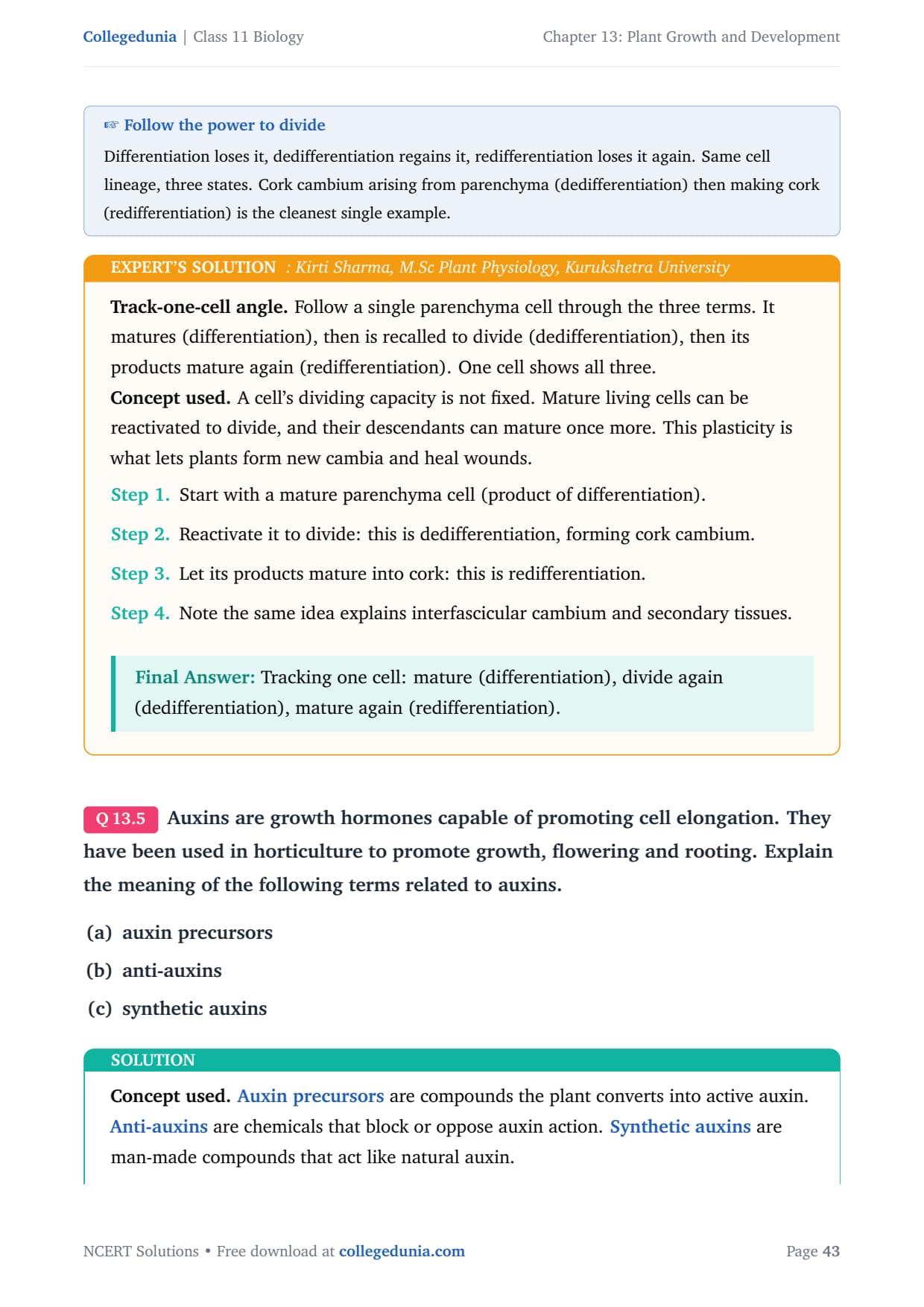
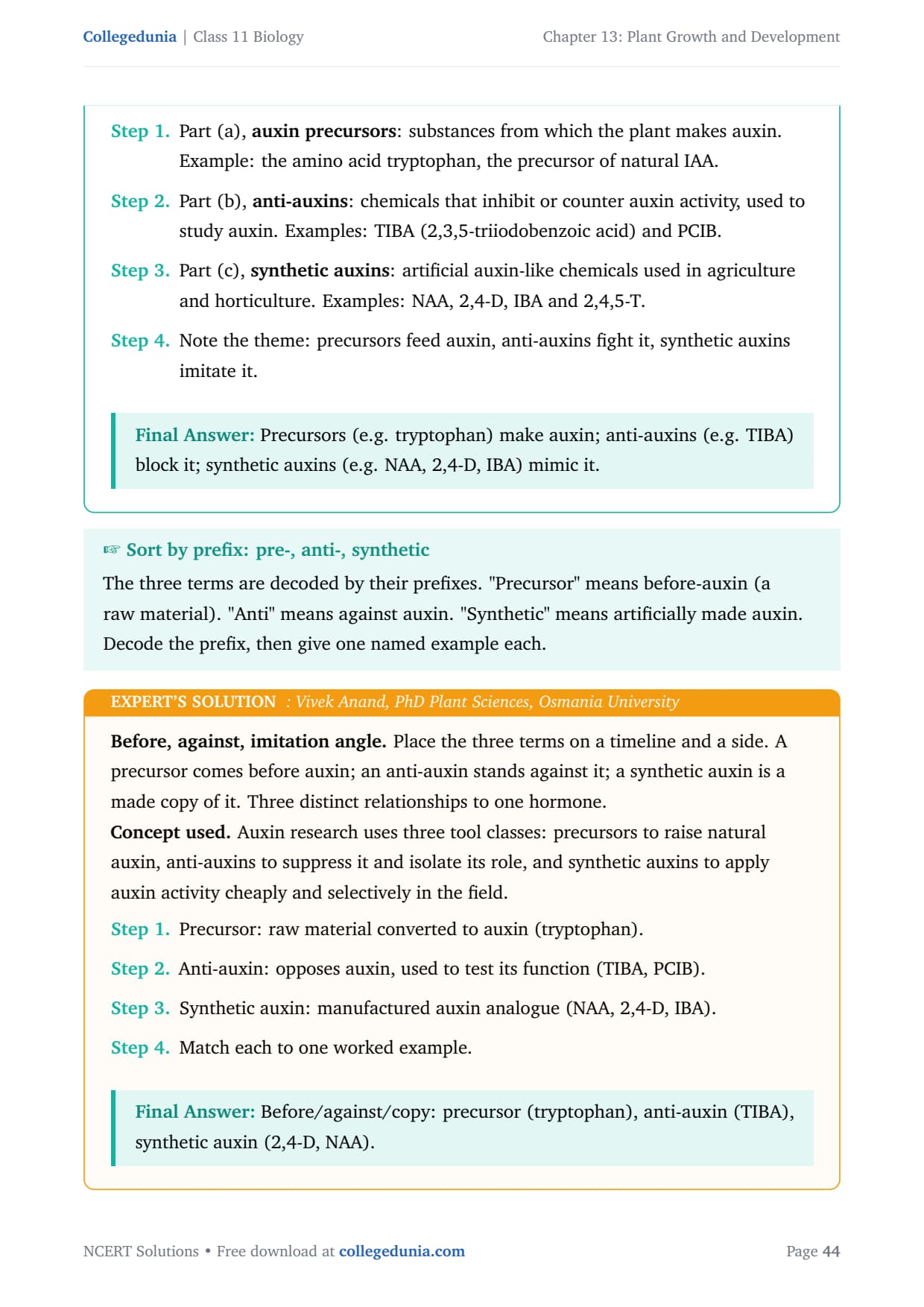
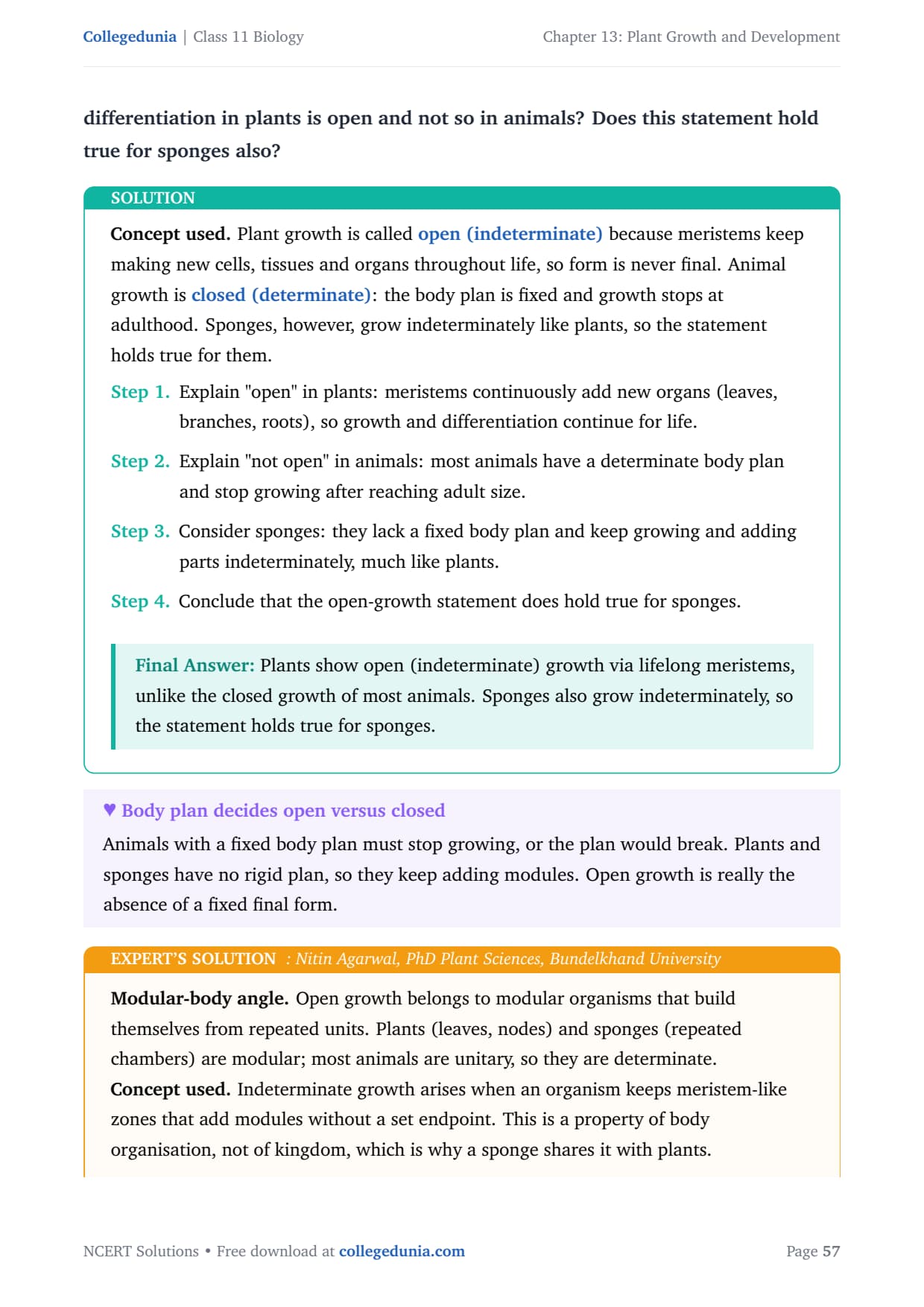
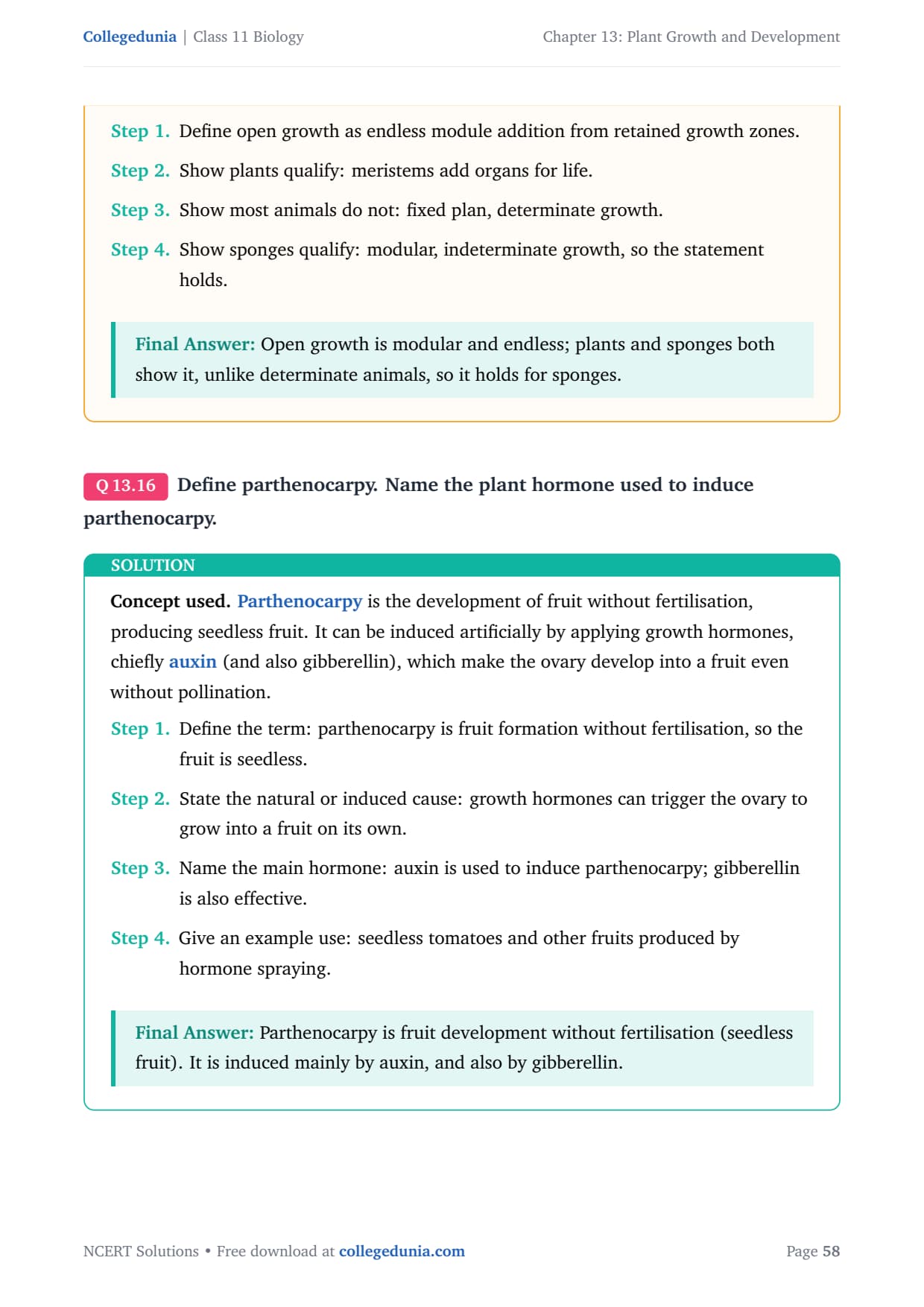
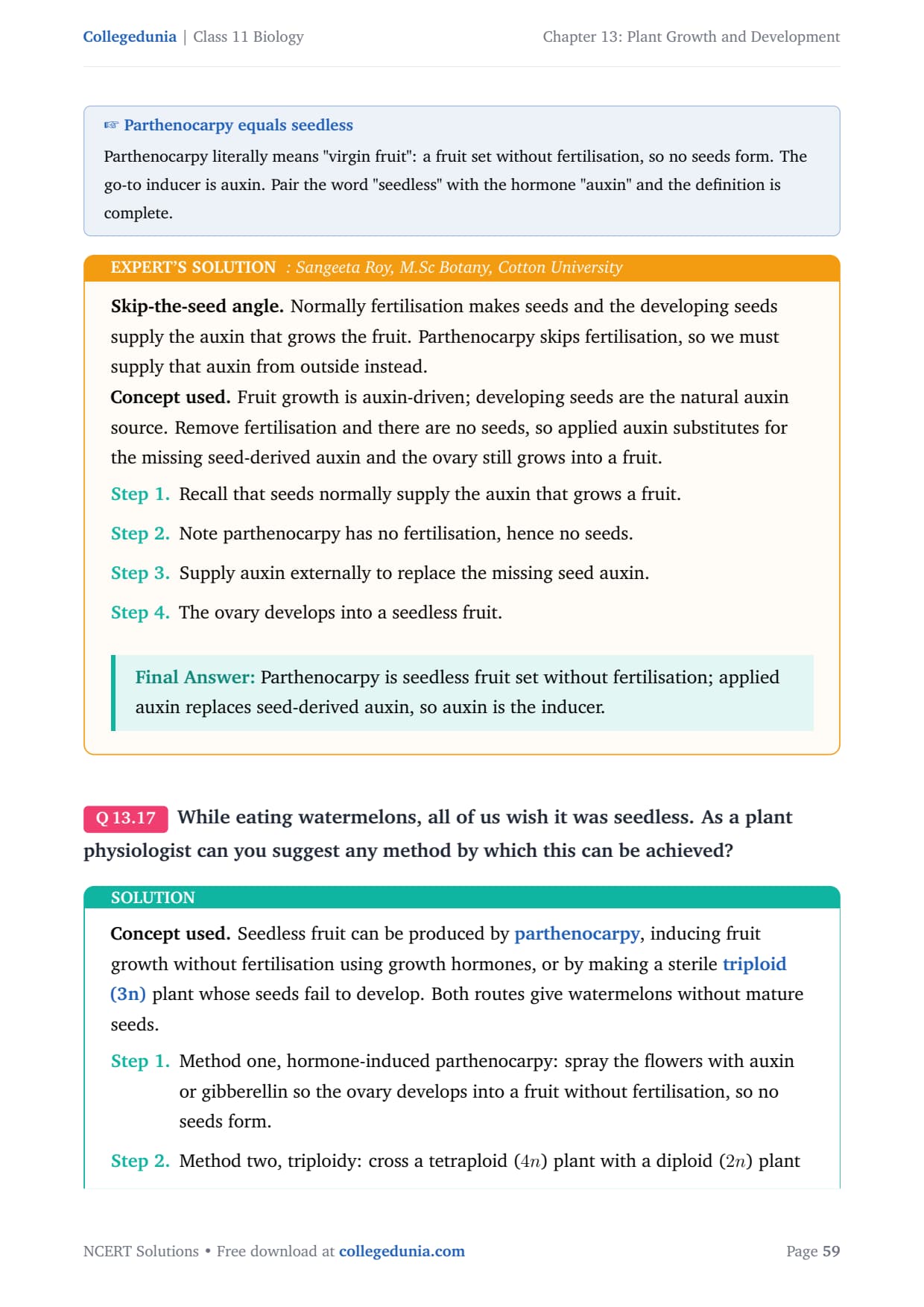
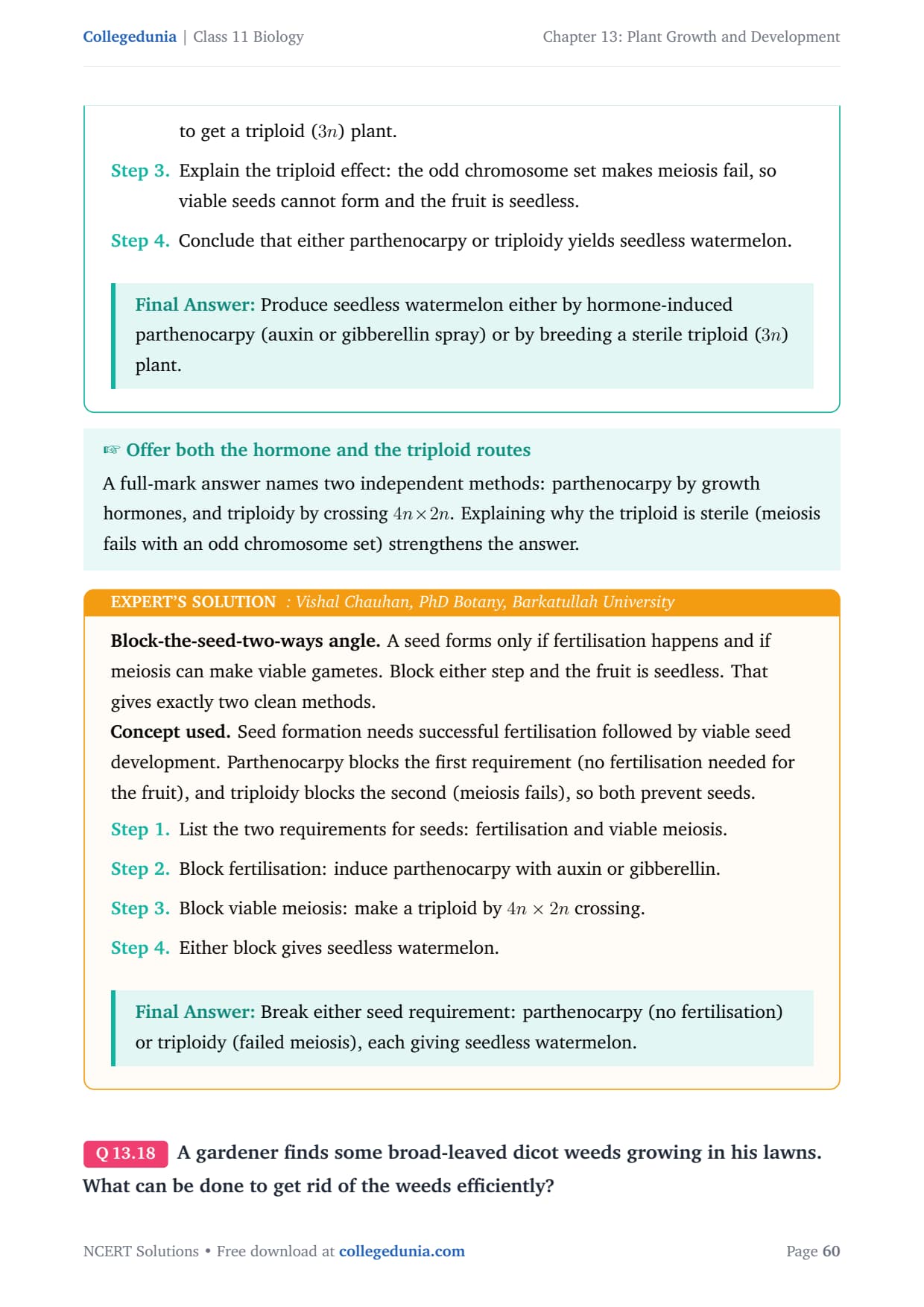
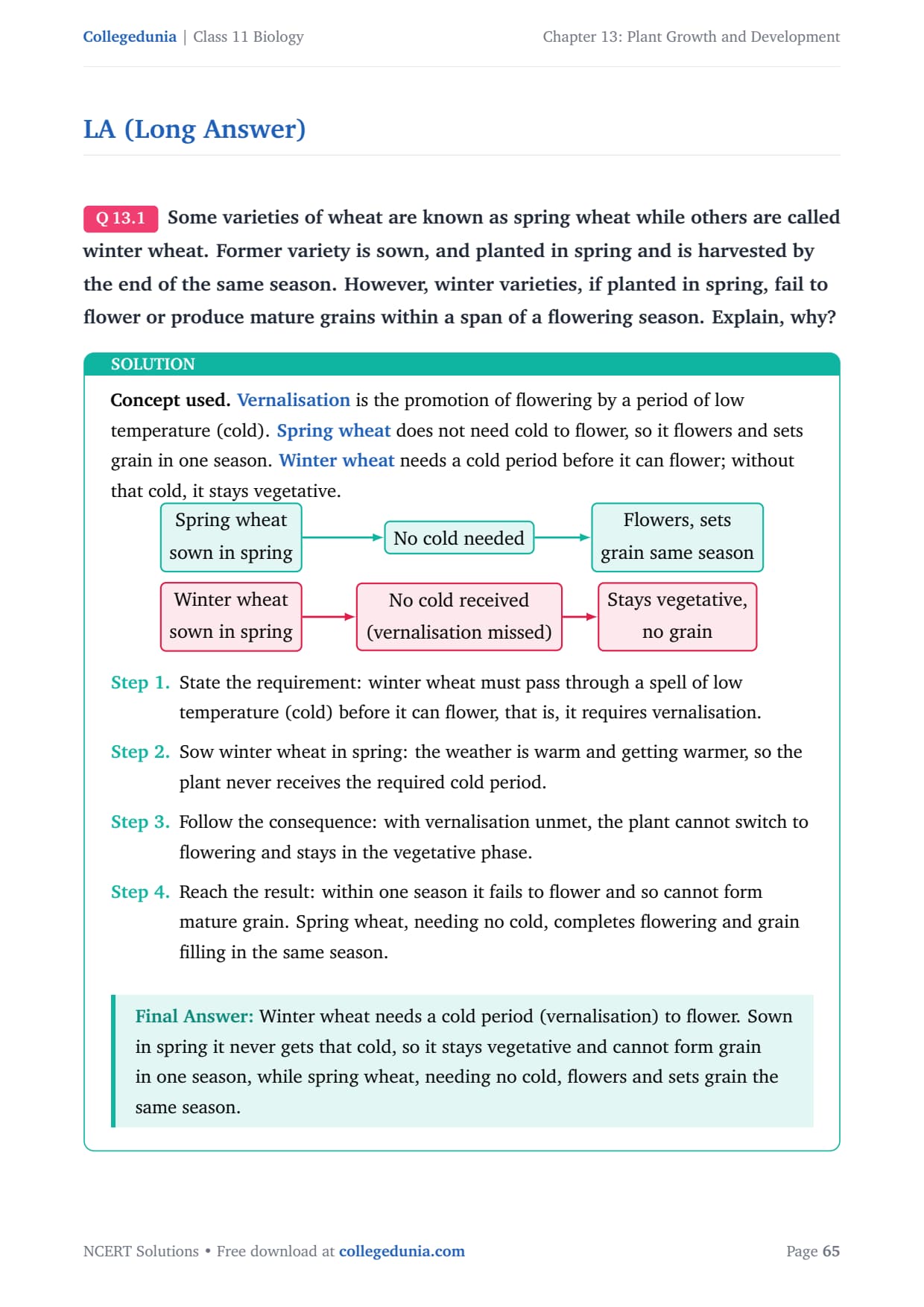
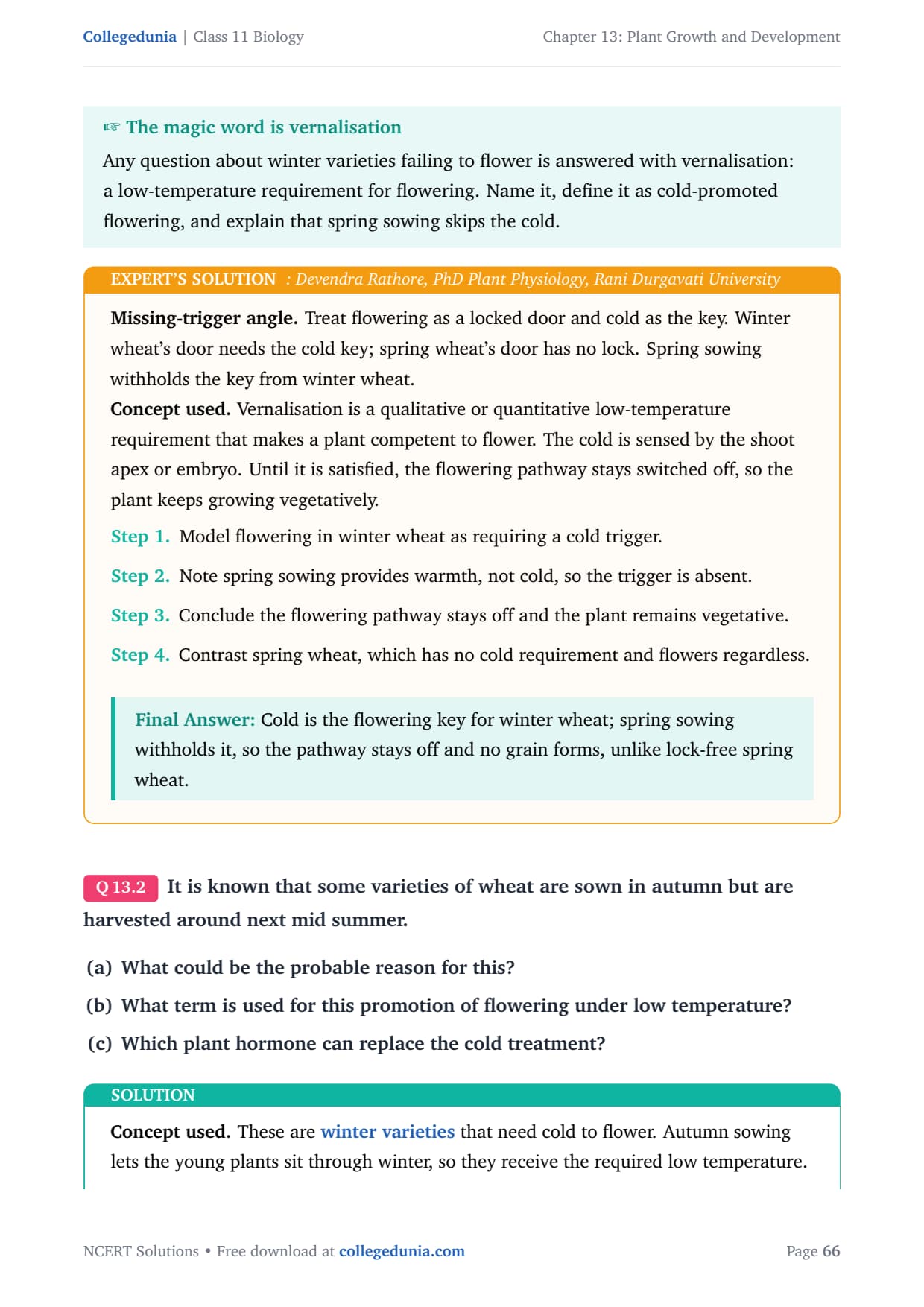
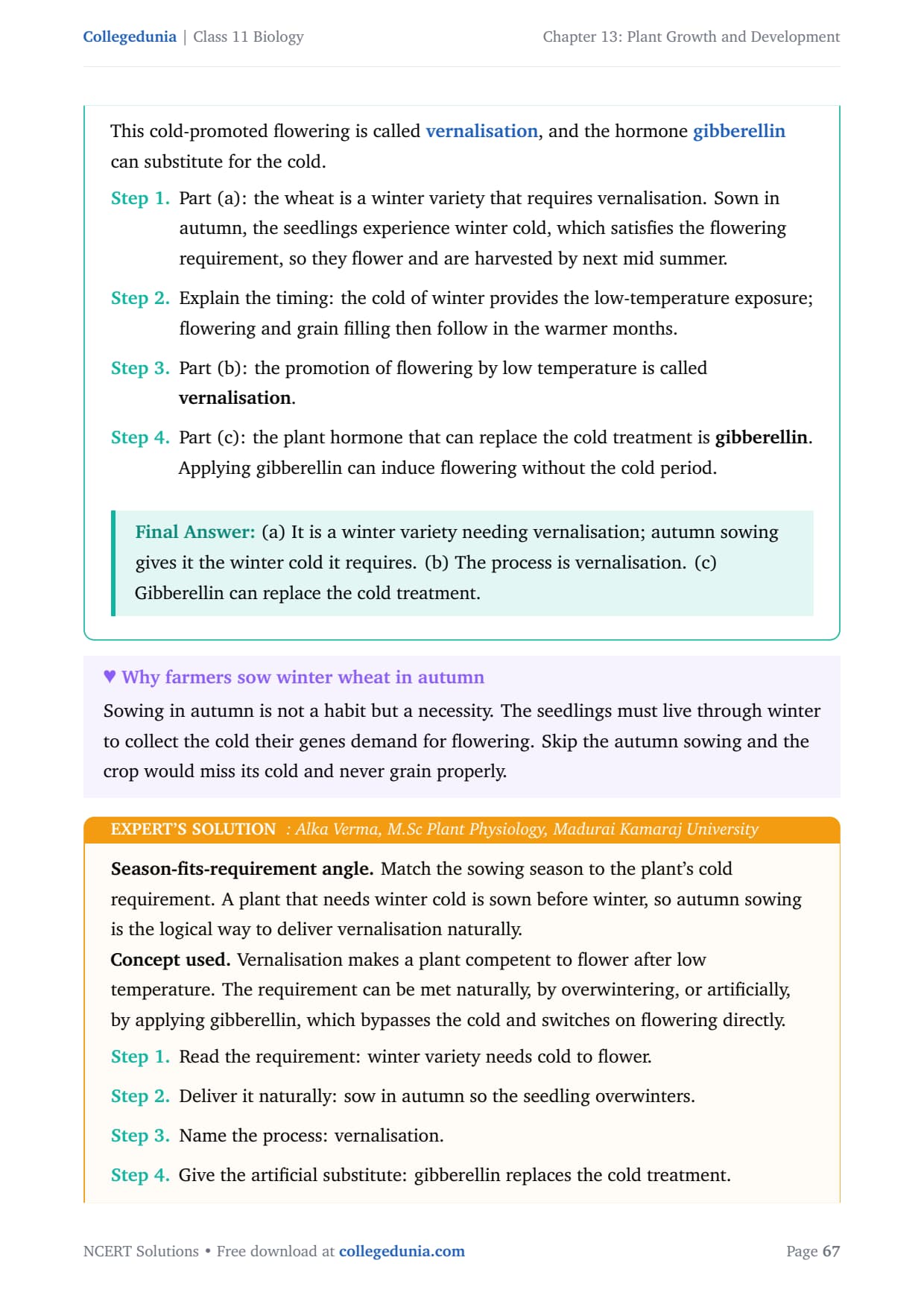
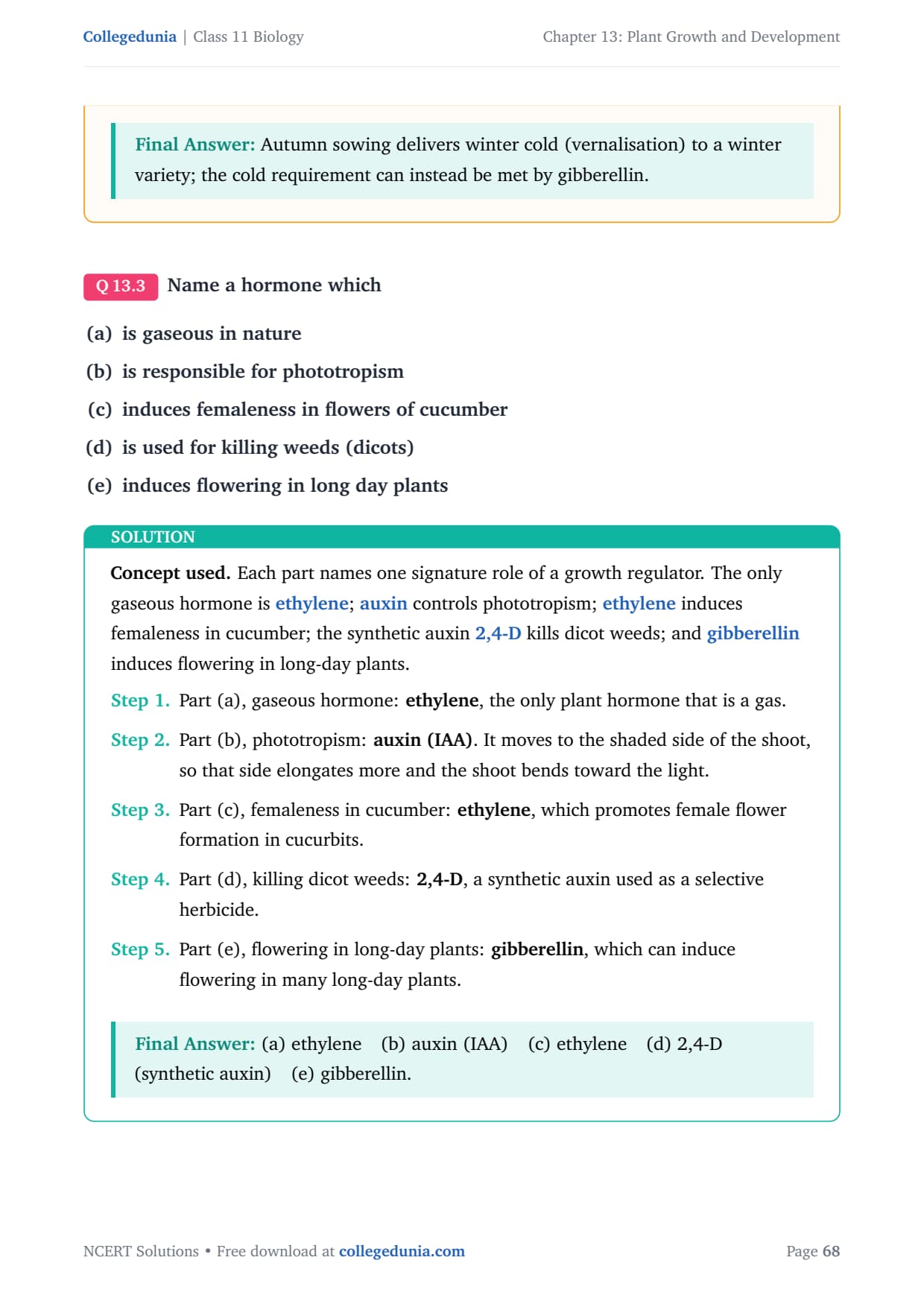
This chapter follows a plant from a single dividing cell to a flowering adult, through the sigmoid growth curve, differentiation and the five plant growth regulators. The textbook lists the hormones and their effects, but the Exemplar asks you to pick the right hormone for a job, calculate a growth rate, or explain why the leaf, not the bud, senses day length. That shift from recall to application is what makes it harder.
- CBSE Weightage: 4 to 5 marks, usually one question on the plant growth regulators, the sigmoid curve or photoperiodism
- NEET Weightage: 2 to 3 questions per year on hormone functions, apical dominance, vernalisation and photoperiodism
- CUET Weightage: 1 to 2 questions on hormone uses and growth definitions in the Biology domain paper
Every answer is checked against the official NCERT Exemplar key, and the confusions this chapter is built on, such as auxin against cytokinin in apical dominance and synergism against antagonism, are pulled apart in full.
Topics Covered in the Class 11 Biology Plant Growth and Development Exemplar
The 48 questions in this chapter cluster around four ideas, and each returns in the plant physiology you meet in Class 12. Plant Growth and Development is descriptive in the textbook but reasoning-heavy in the Exemplar, because almost every question ties a hormone or a phase to a specific effect. Working through it fixes the vocabulary of growth, differentiation and hormonal control that later chapters take for granted.
- Growth and its measurement: irreversible increase in size, arithmetic and geometric growth, the sigmoid curve, and absolute against relative growth rate
- Differentiation and plasticity: differentiation, dedifferentiation and redifferentiation, and plasticity shown through heterophylly
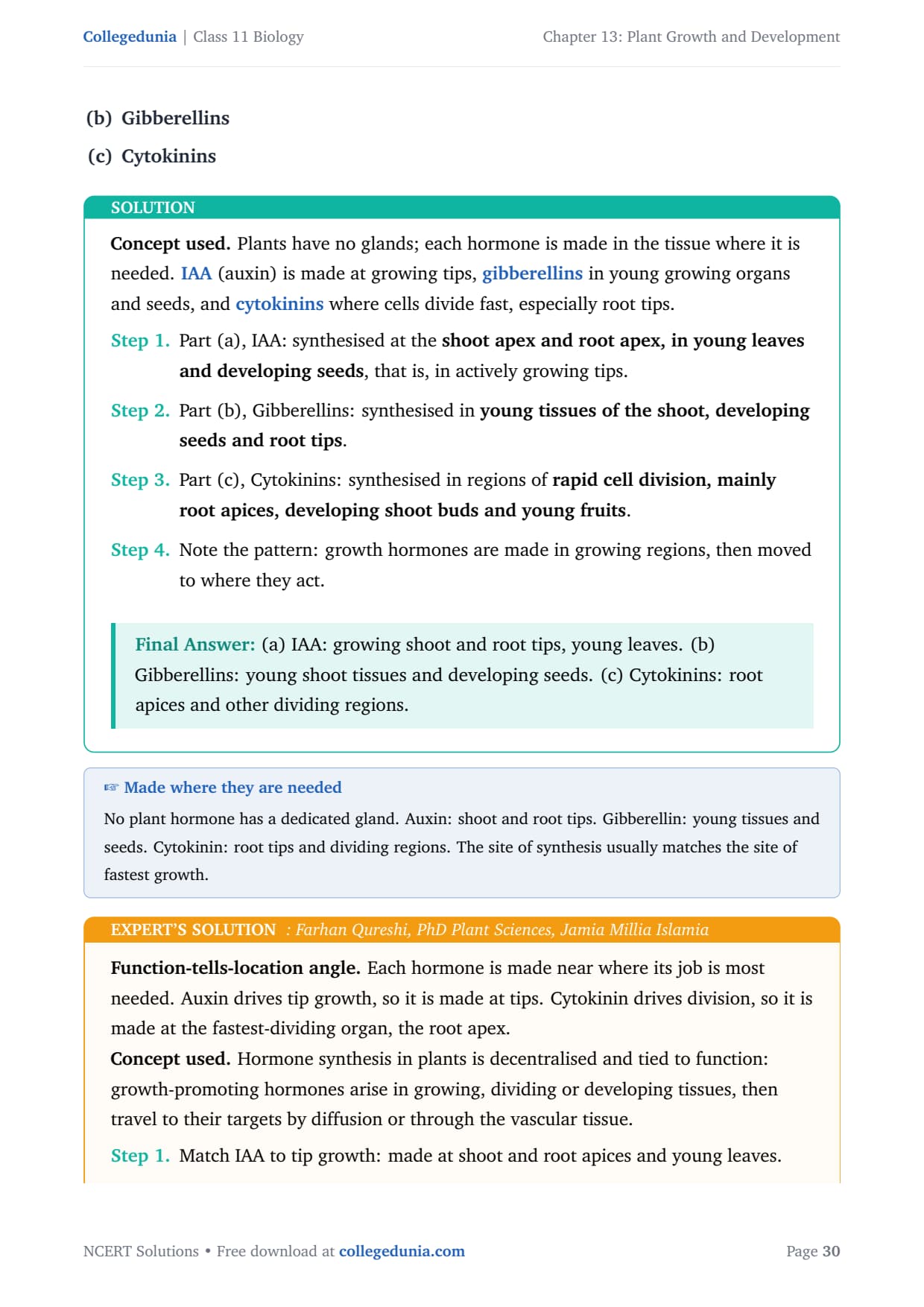
- The five plant growth regulators: auxins, gibberellins, cytokinins, ethylene and abscisic acid, their natural sources and signature uses
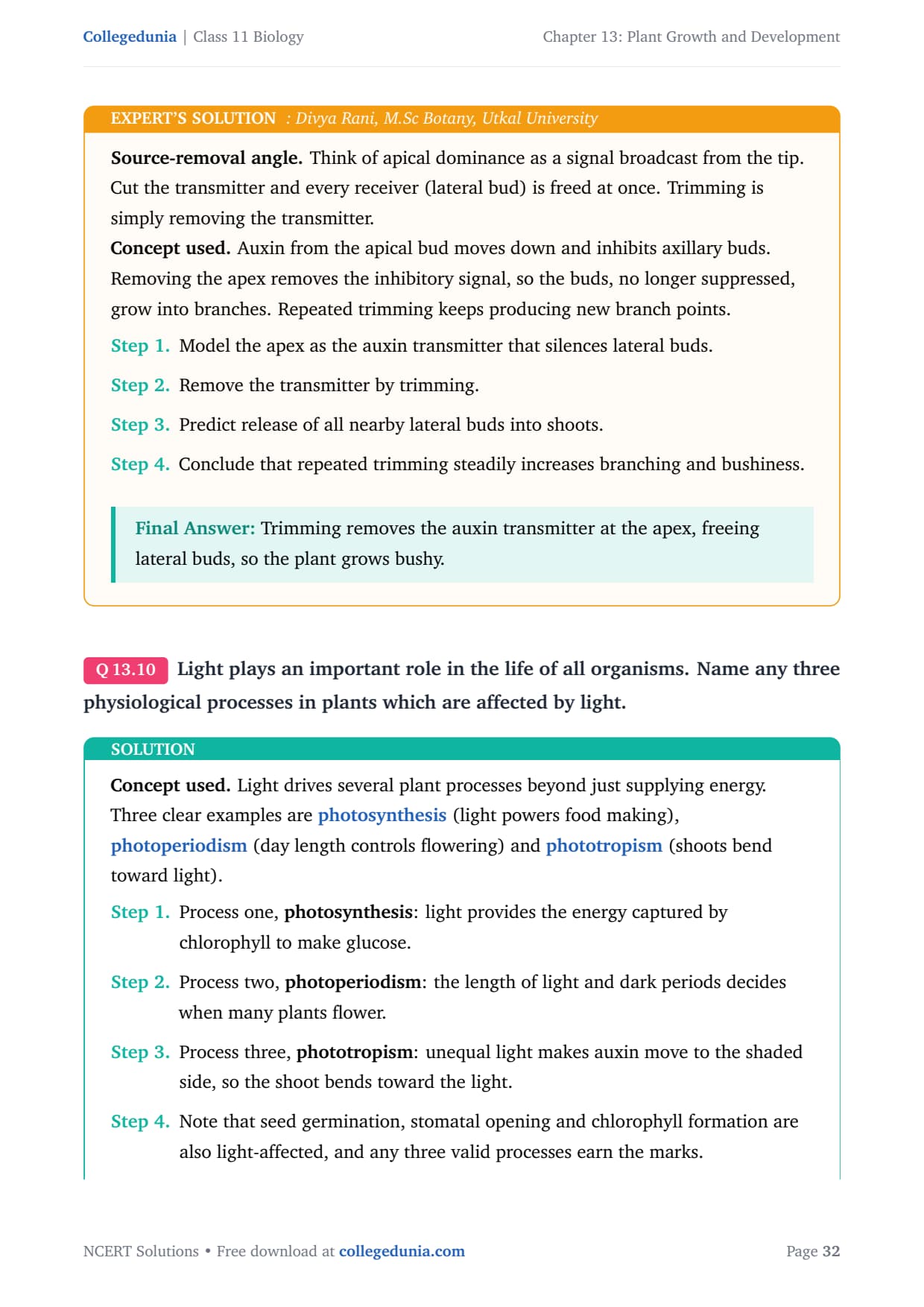
- Photoperiodism and vernalisation: short-day and long-day plants, the leaf as the site of perception, phytochrome, and low-temperature promotion of flowering
Question Types in the Plant Growth and Development NCERT Exemplar
Class 11 Biology Exemplar chapters use four question types, and each makes a different demand. The MCQ set turns on a single distinction, such as which hormone breaks apical dominance, while the Short Answer set carries the bulk of the chapter and the most marks. The Very Short Answer questions include the fill-in-the-blank and hormone-matching items that NEET repeats, and the Long Answer set asks for full accounts of growth or hormonal control. The table below shows how the 48 questions split.
| Question Type | Count | What It Tests |
|---|---|---|
| MCQ (single correct) | 12 | Precise matching of hormones to their signature effects and uses |
| VSA (Very Short Answer) | 13 | Fill-in-the-blank hormone facts and short growth-rate calculations |
| SA (Short Answer) | 20 | Explaining photoperiodism, vernalisation and differentiation |
| LA (Long Answer) | 3 | Building full accounts of the growth curve and hormonal control |
Matching the Right Hormone to Each Job
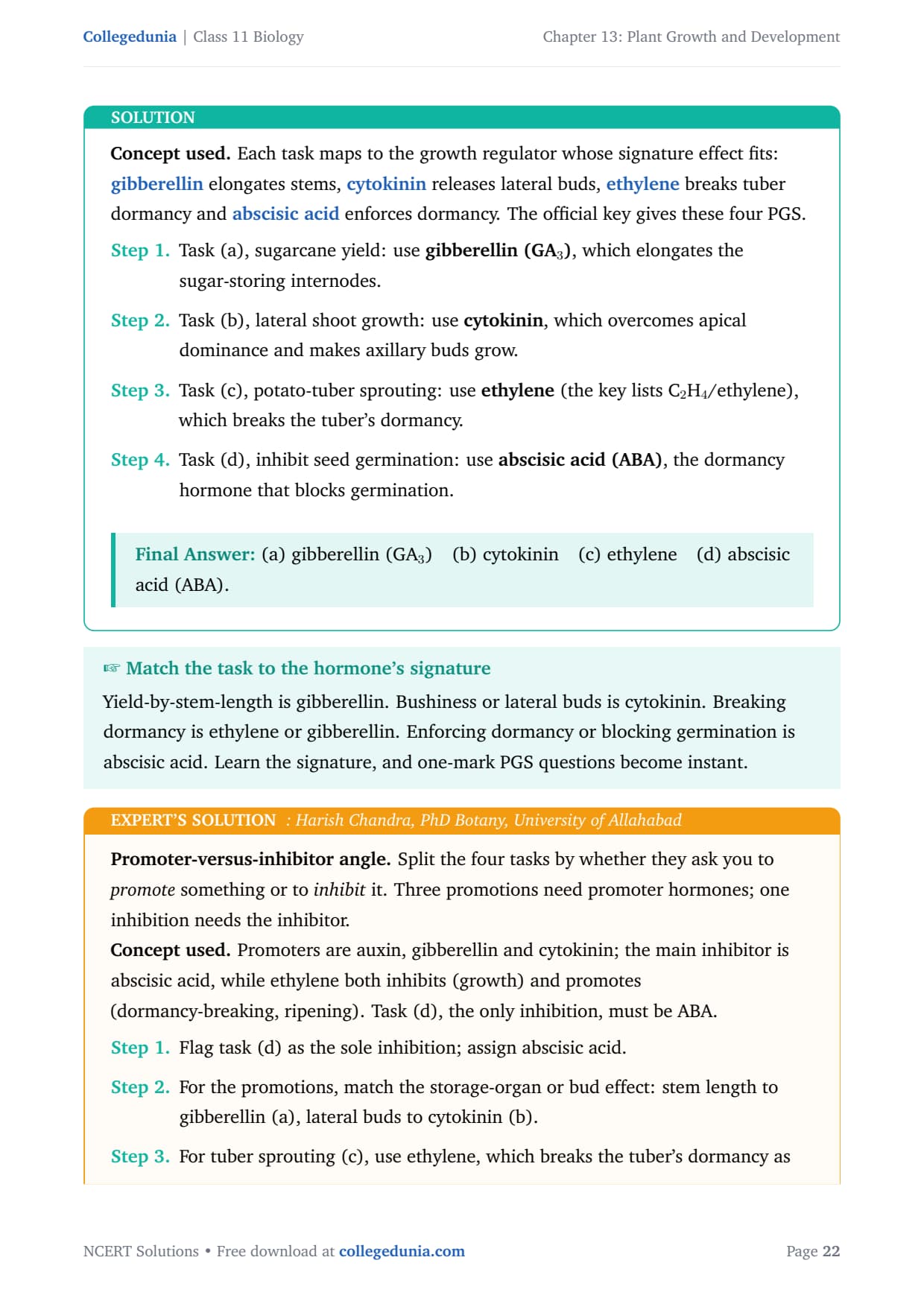
The hardest questions in this chapter are not definitions at all. They give you a task, such as raising sugarcane yield or breaking tuber dormancy, and ask which growth regulator to use. The Exemplar builds many problems around these traps, because a plant makes only five hormones yet each has a signature effect that decides the answer. Learning the signatures as a set, rather than one fact at a time, settles most of the MCQ and matching questions at once.
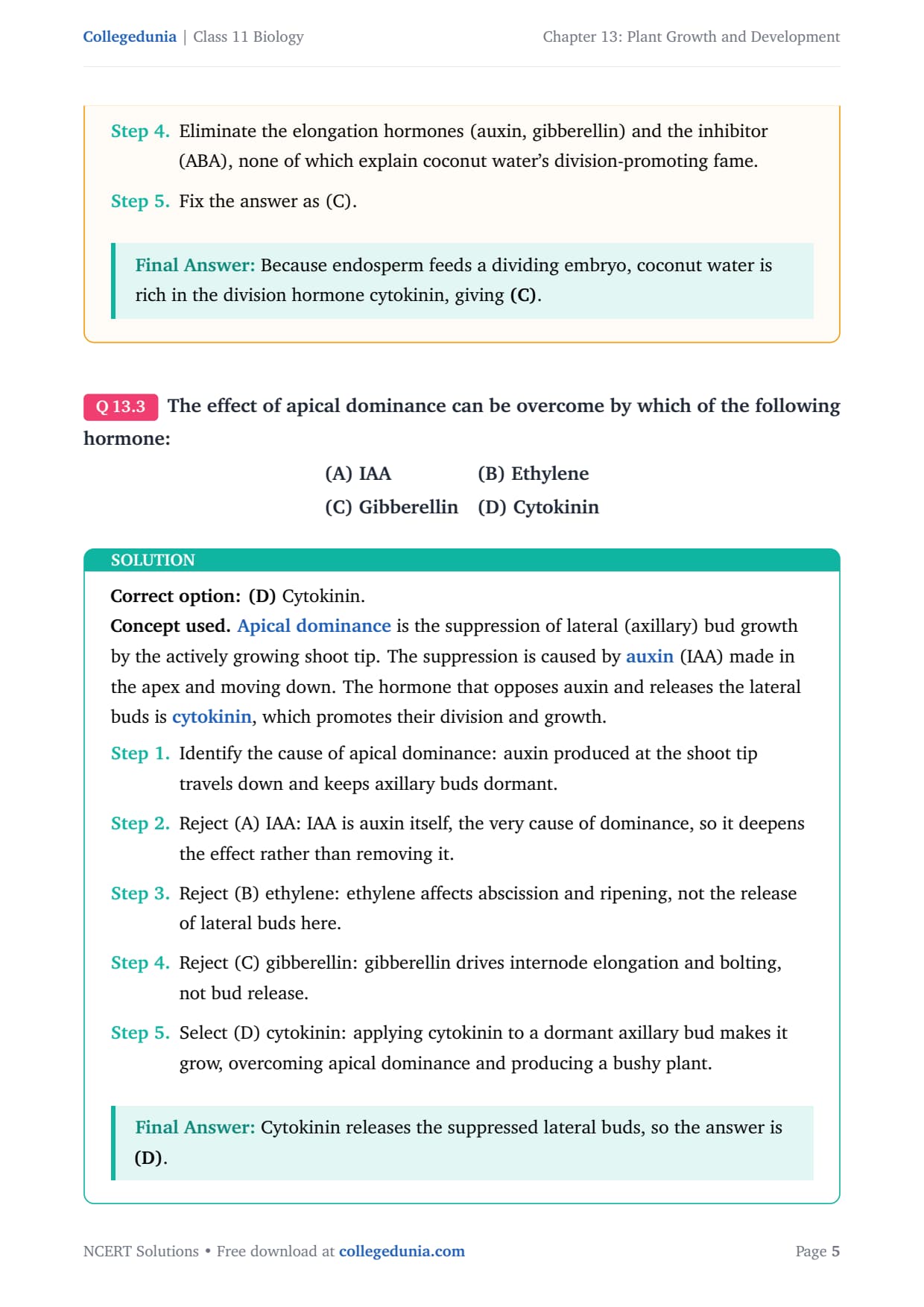
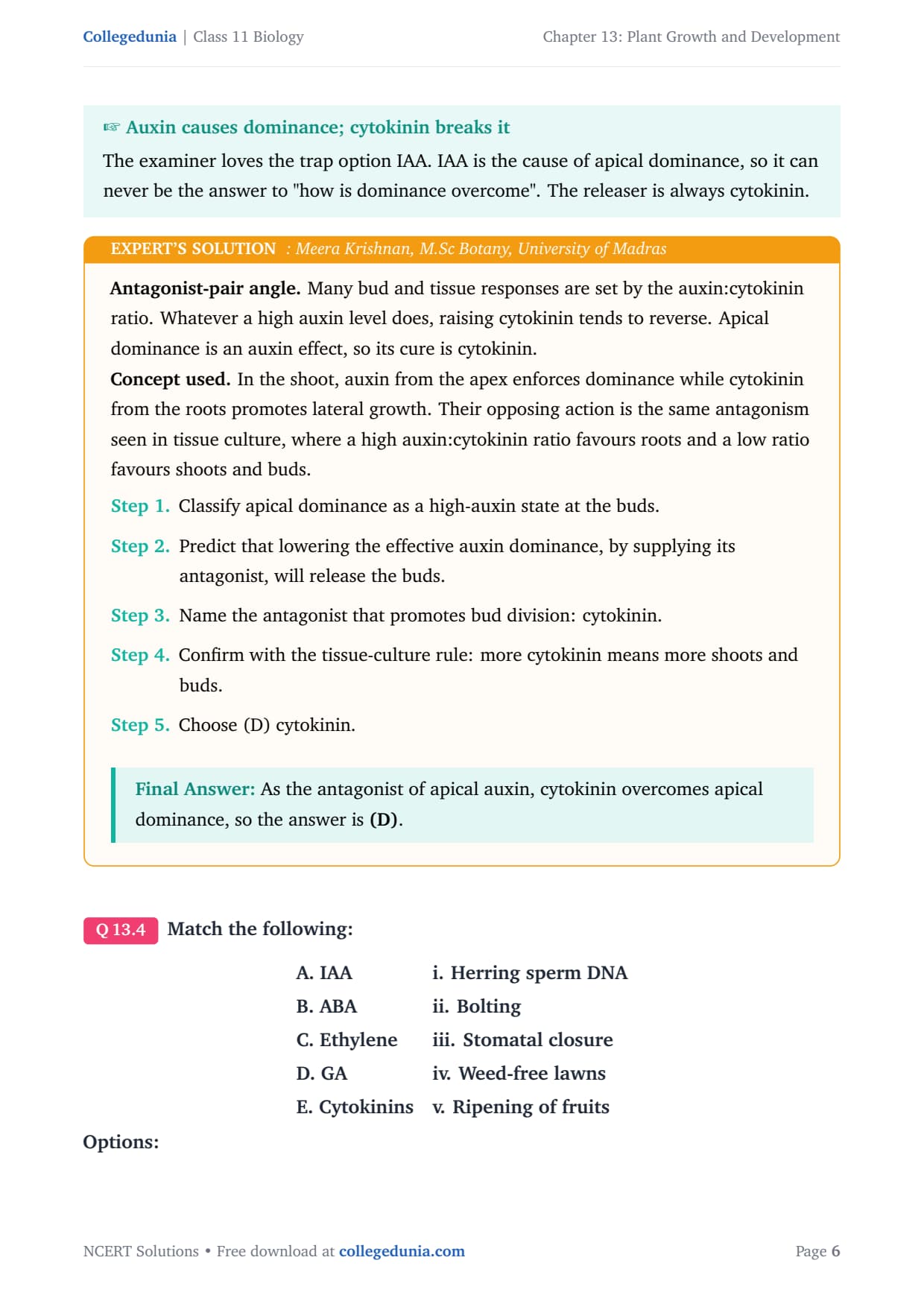
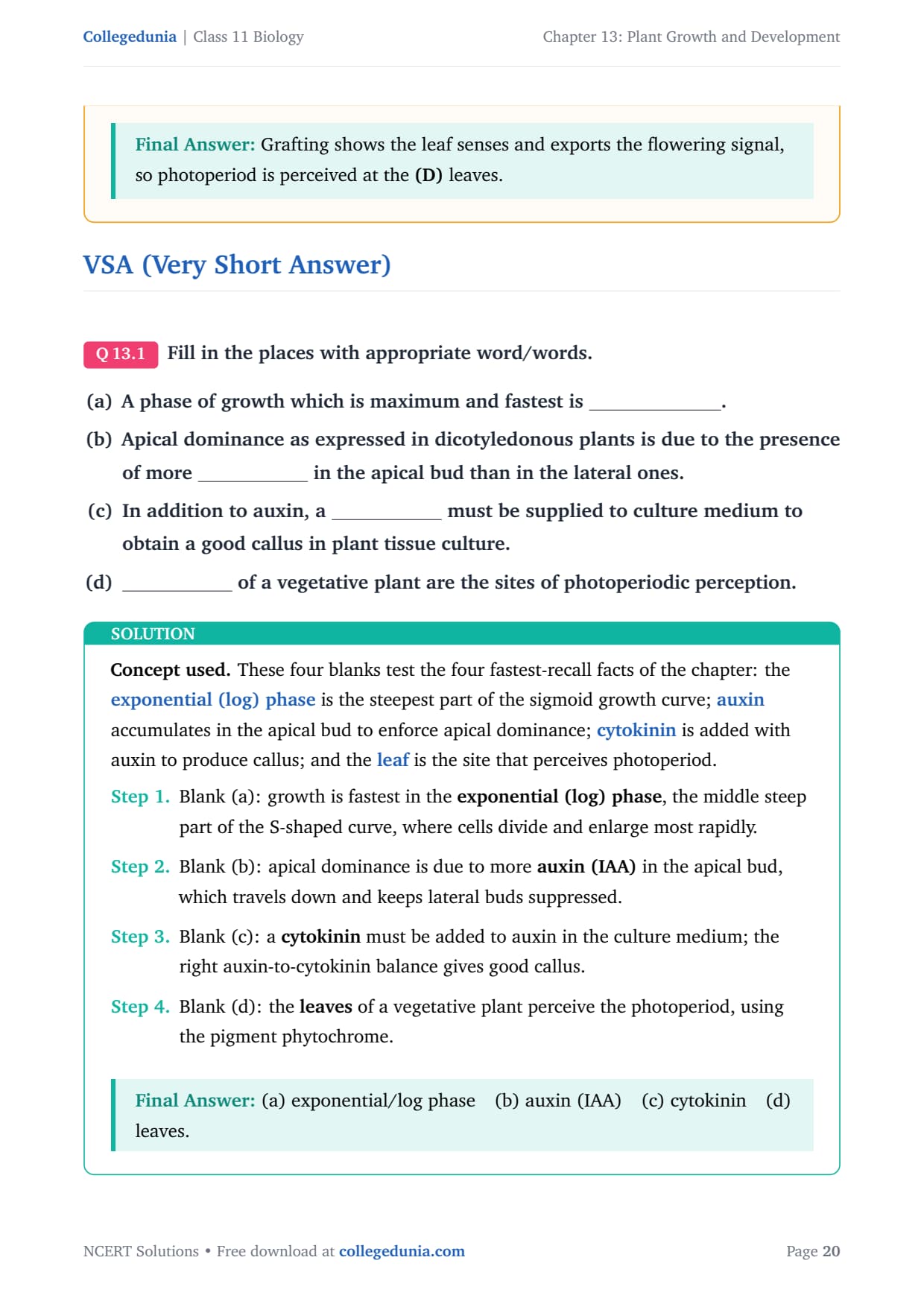
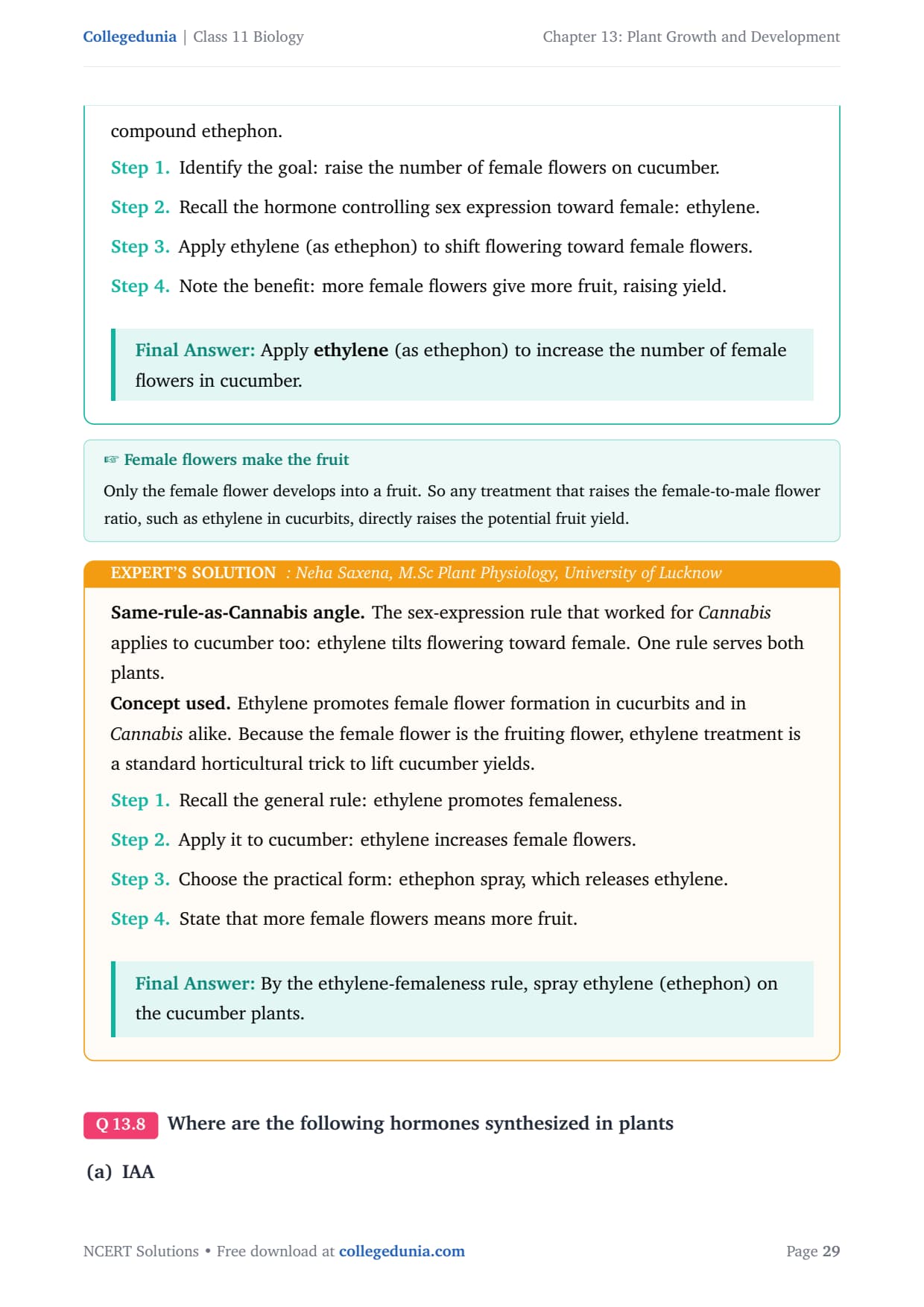
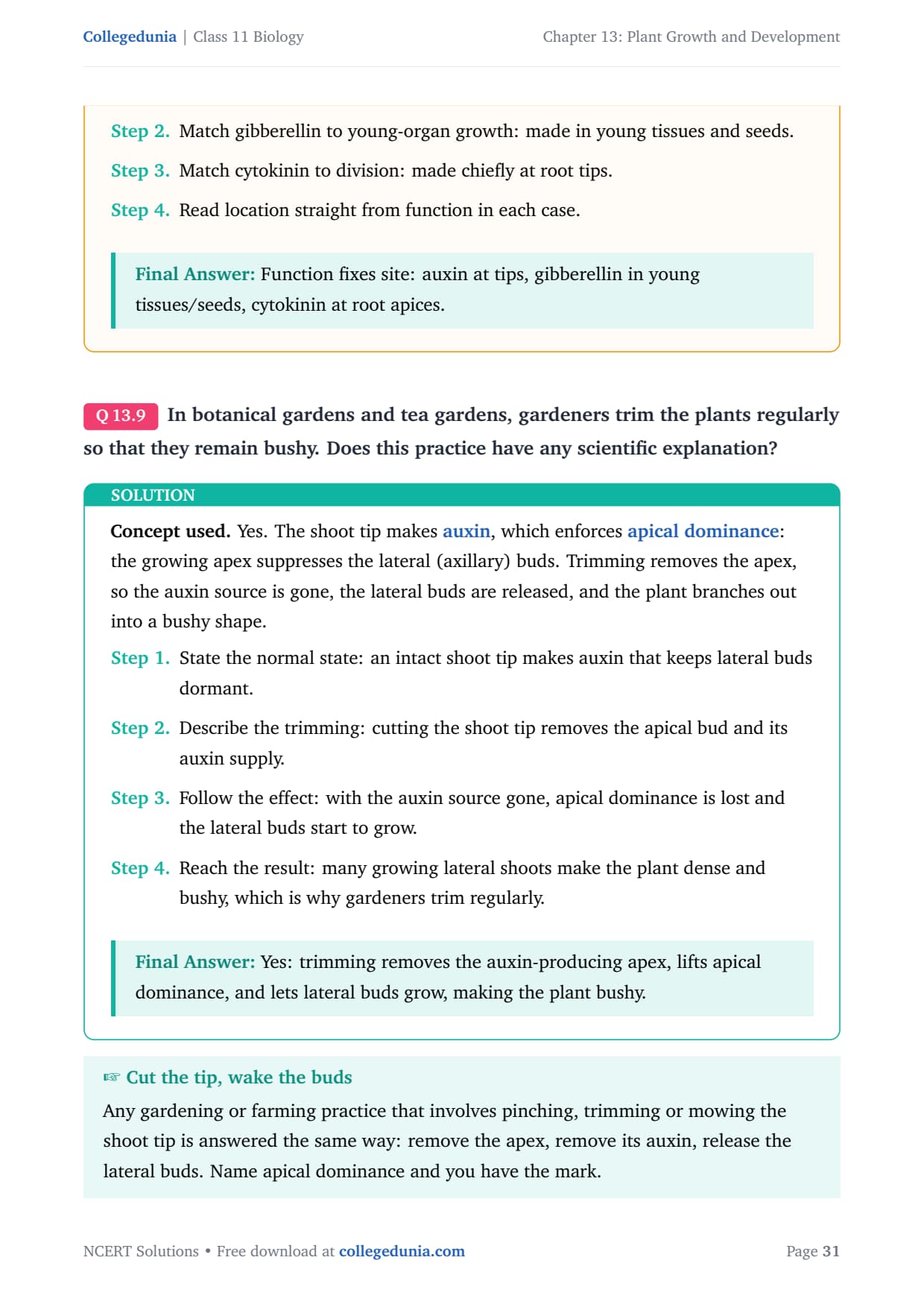
- Auxin causes apical dominance, cytokinin breaks it: auxin made at the shoot tip keeps lateral buds dormant, so applying auxin deepens dominance. Cytokinin is the releaser that makes axillary buds grow into a bushy plant.
- Gibberellin stretches stems: spraying gibberellin elongates sugarcane internodes and raises sugar yield, and it also causes bolting, the sudden internode elongation before flowering.
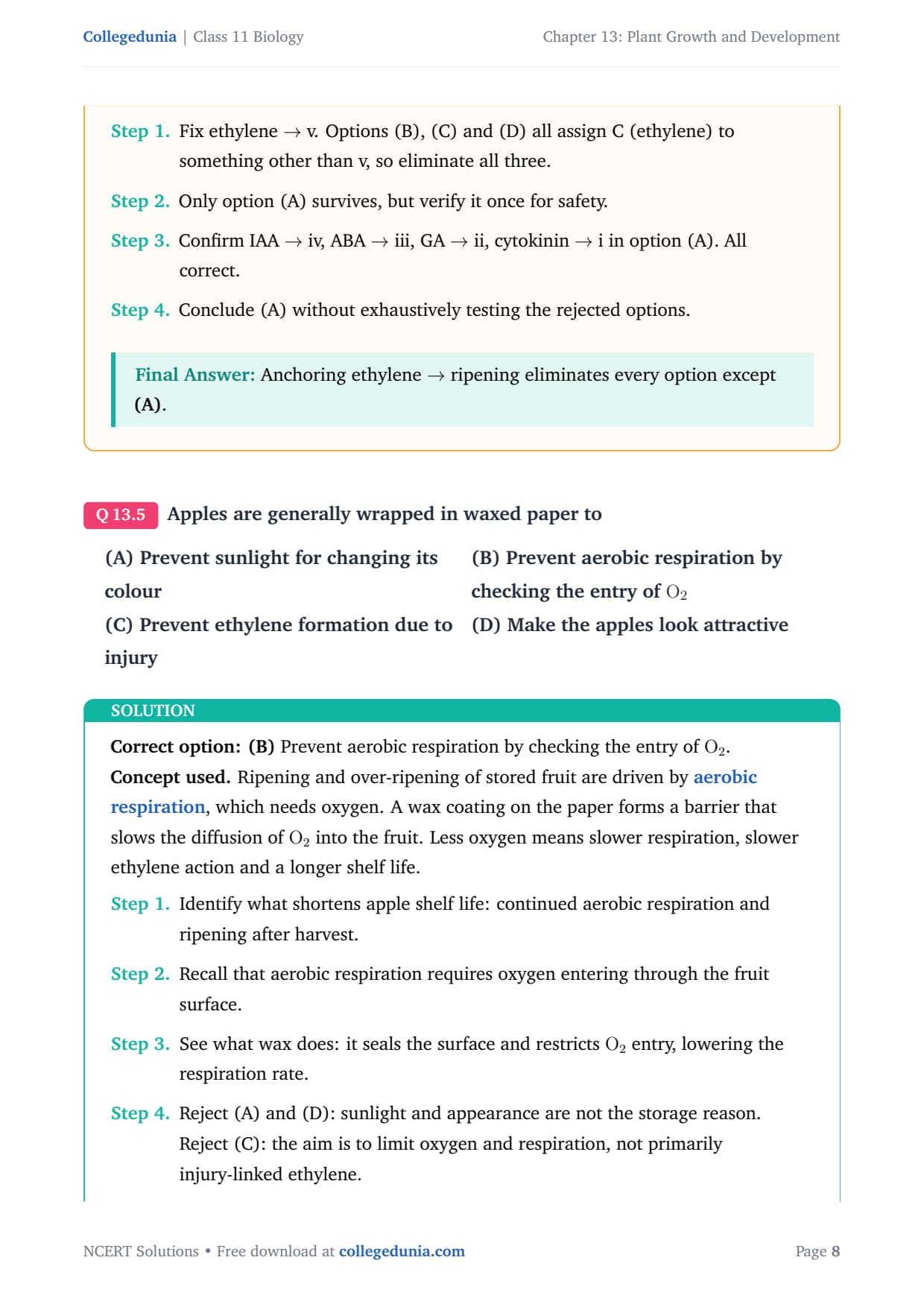
- Ethylene is the ripening gas: it hastens fruit ripening rather than slowing it, and it can break the dormancy of a potato tuber. It never retards ripening.
- Abscisic acid enforces dormancy: ABA is the stress hormone that closes stomata, promotes seed dormancy and inhibits germination, acting as the antagonist of gibberellin.
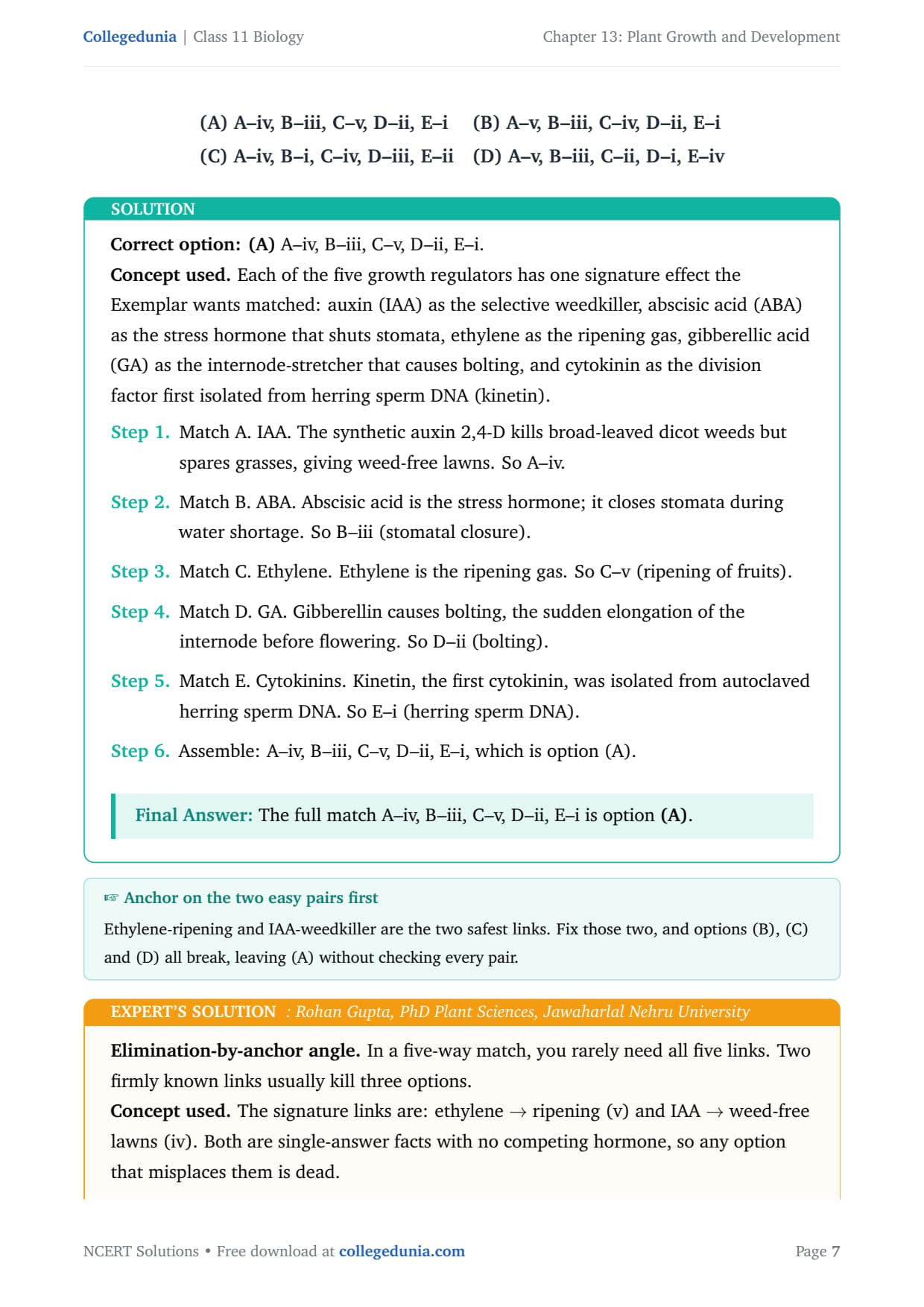
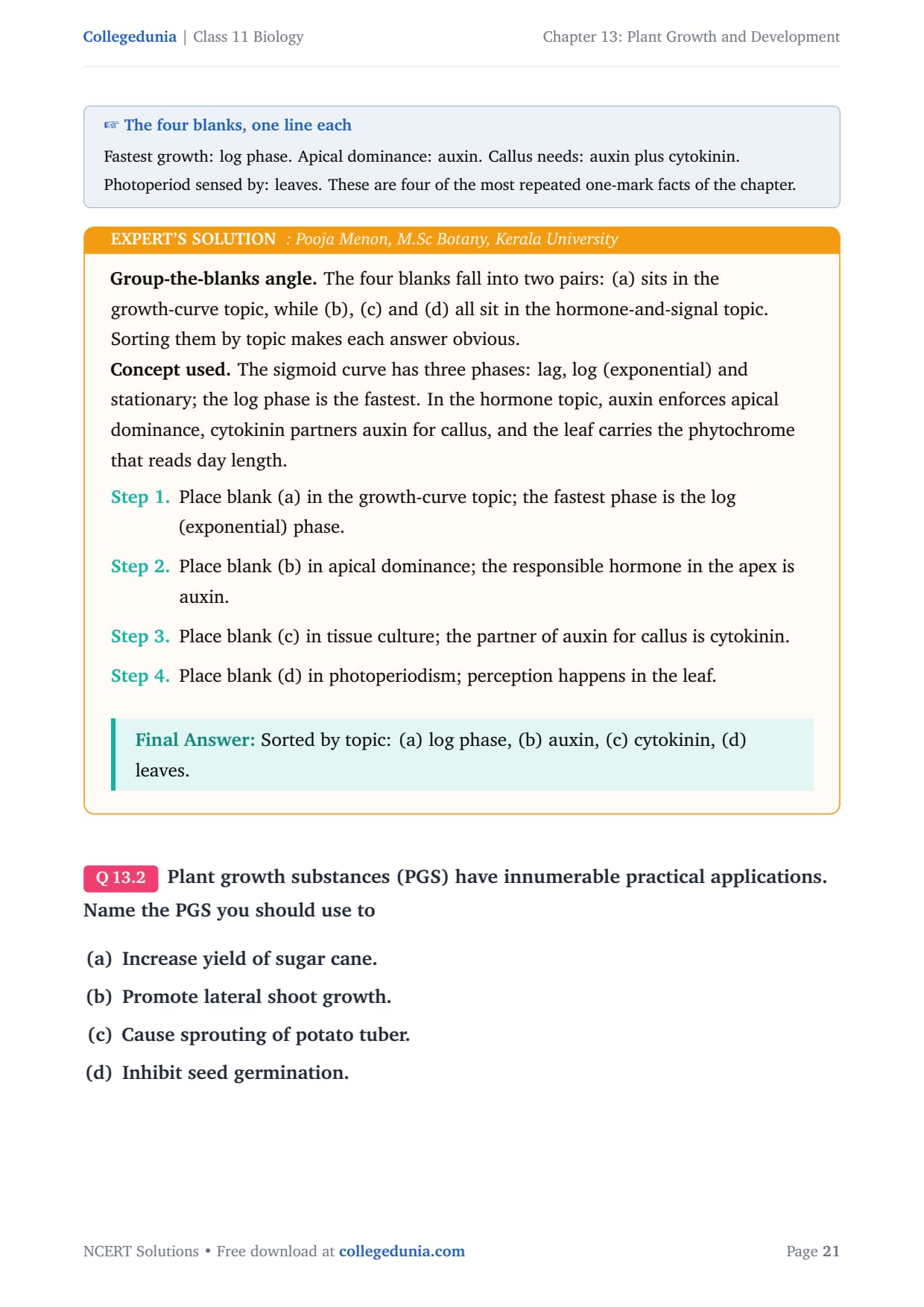
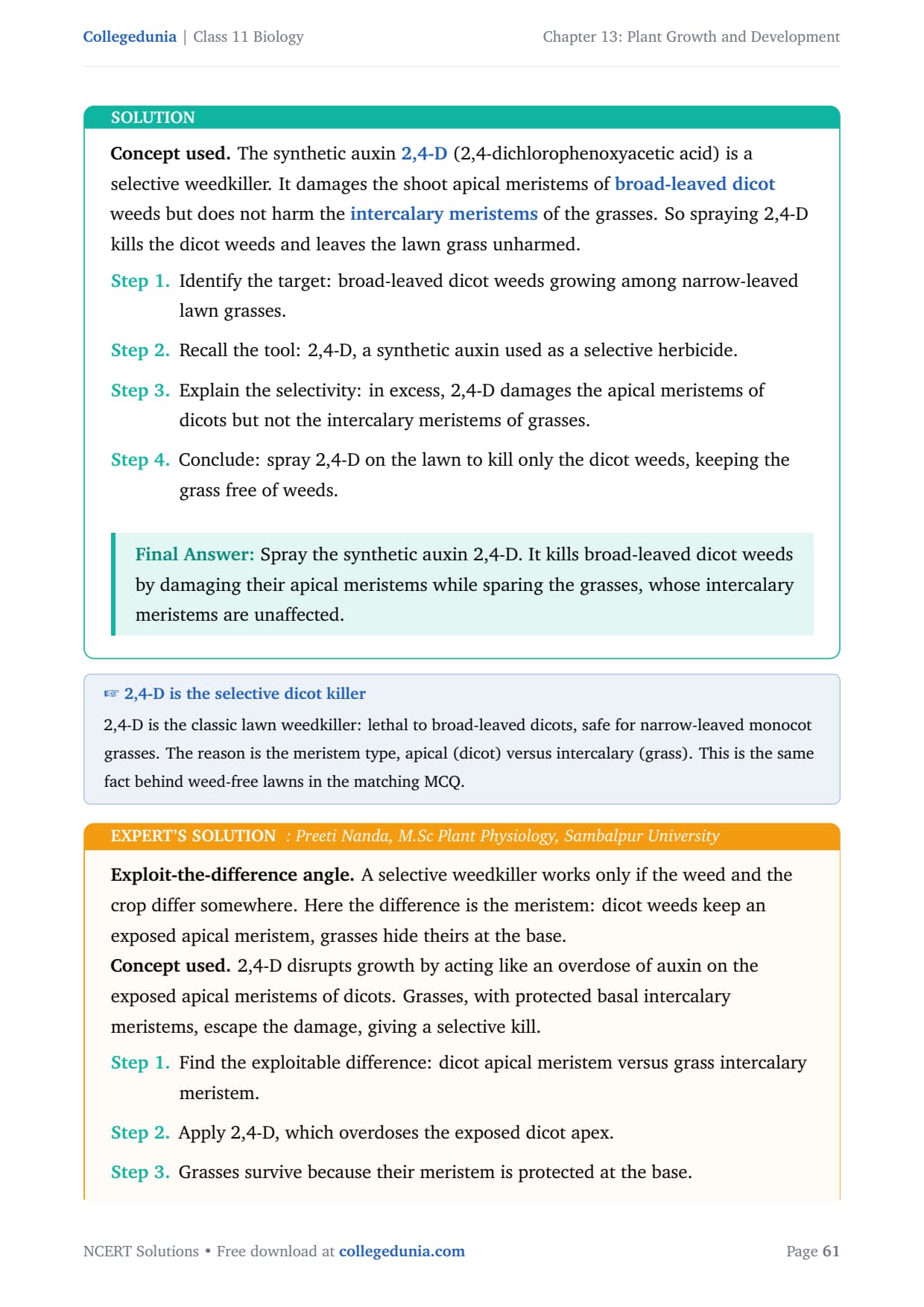
Learn each hormone by its one headline effect, and the matching questions solve themselves. The PDF anchors every hormone question on that signature effect, then shows how a task like weed-free lawns points to the selective auxin 2,4-D, so students choose the right regulator without guessing.
Common Mistakes Students Make in Plant Growth and Development
The Exemplar plants wordplay traps and near-miss options on purpose. Four errors catch most students in this chapter, and each is flagged in the PDF at the exact question where it appears. Learning to spot them early protects marks across the hormone and flowering questions, because the same confusions return throughout plant physiology.
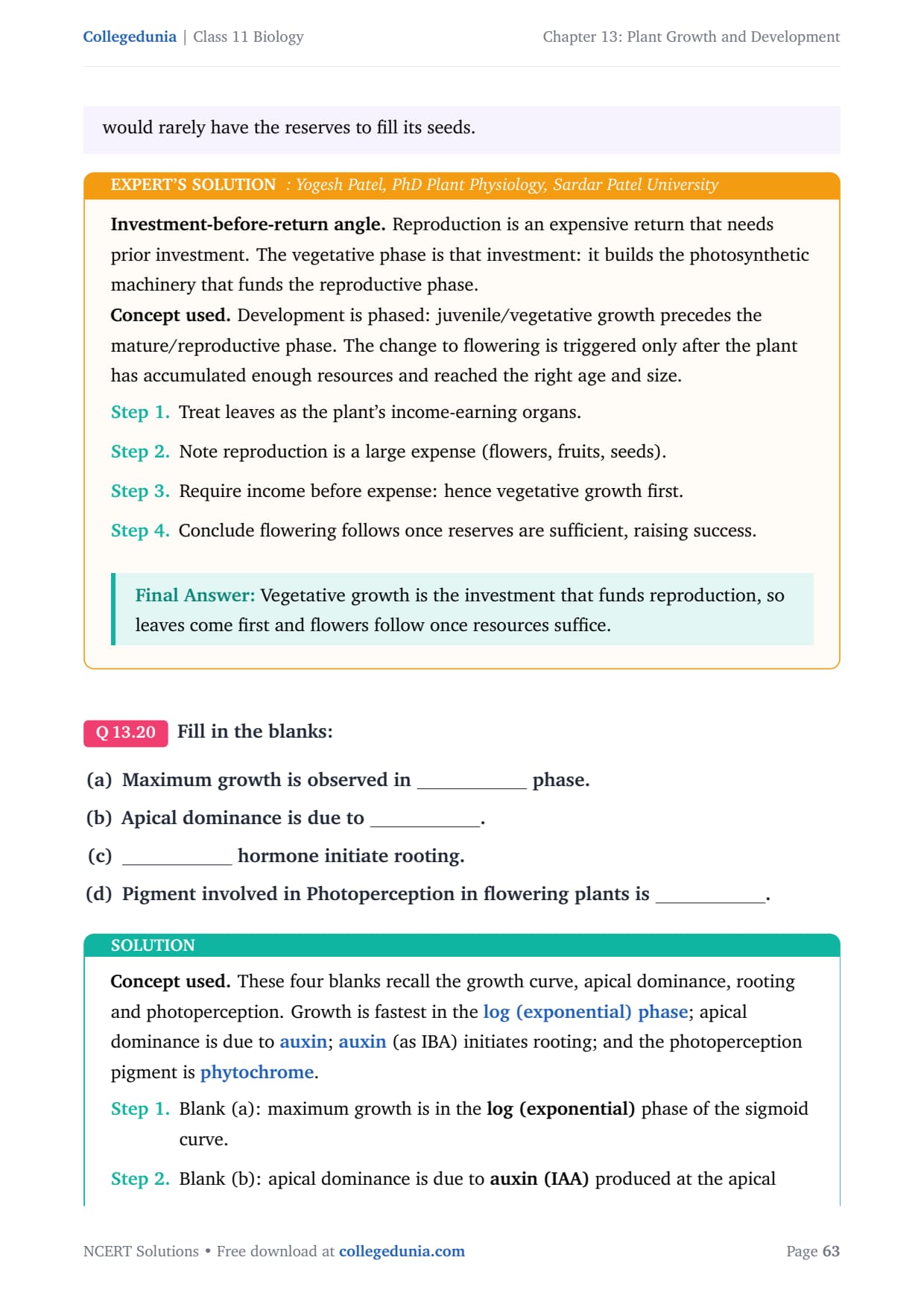
- IAA as the answer to breaking apical dominance: IAA is auxin itself, the cause of dominance, so it can never release lateral buds. The releaser is always cytokinin, yet the trap option IAA catches many students.
- Synergism against antagonism: synergism is two hormones working in the same direction on one function, while antagonism is two hormones pulling in opposite directions. The Exemplar plants the antagonism definition as a synergism distractor.
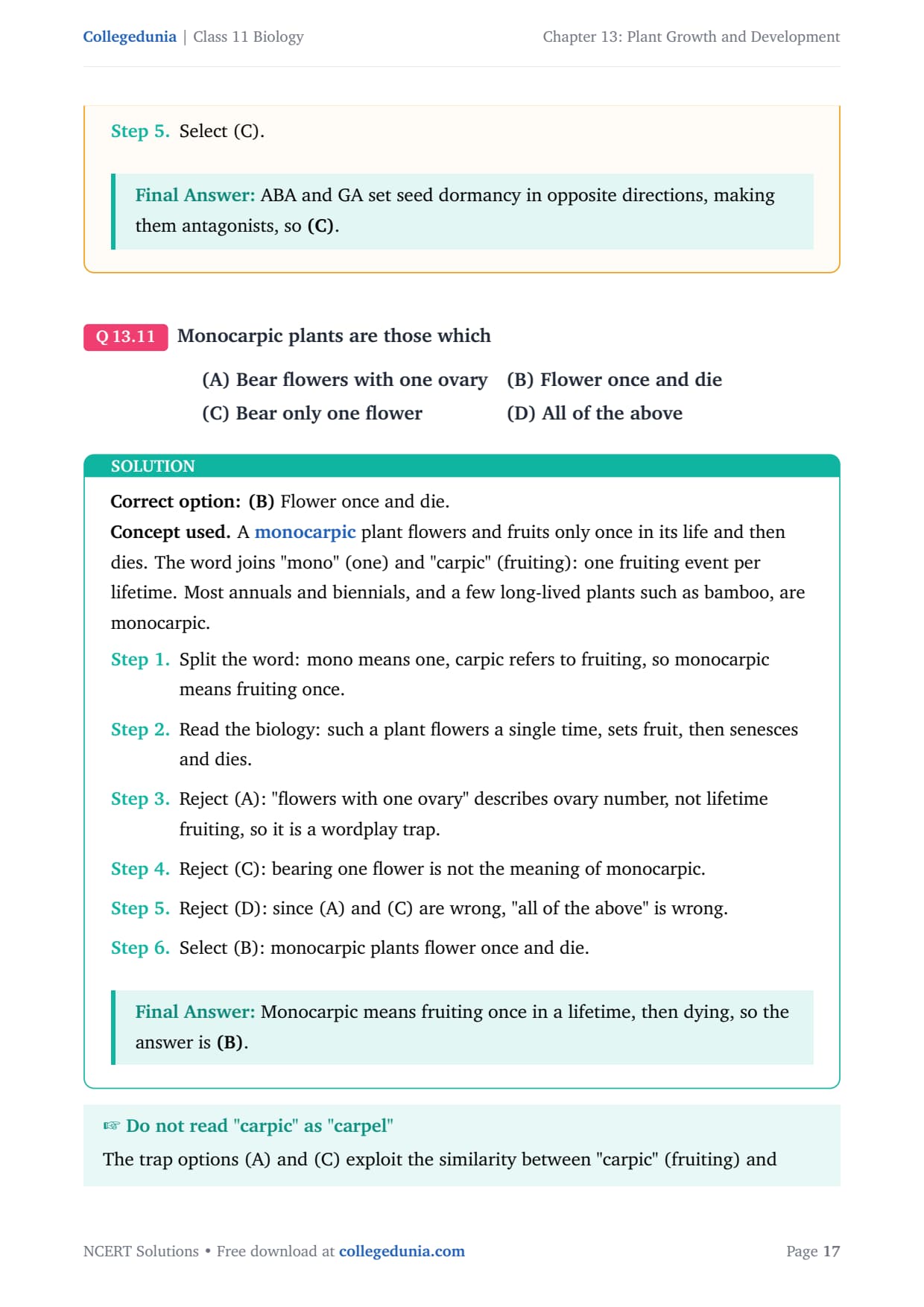
- Reading carpic as carpel: a monocarpic plant fruits once in a lifetime then dies, such as bamboo. It has nothing to do with the number of carpels or flowers, but the similar spelling traps quick readers.
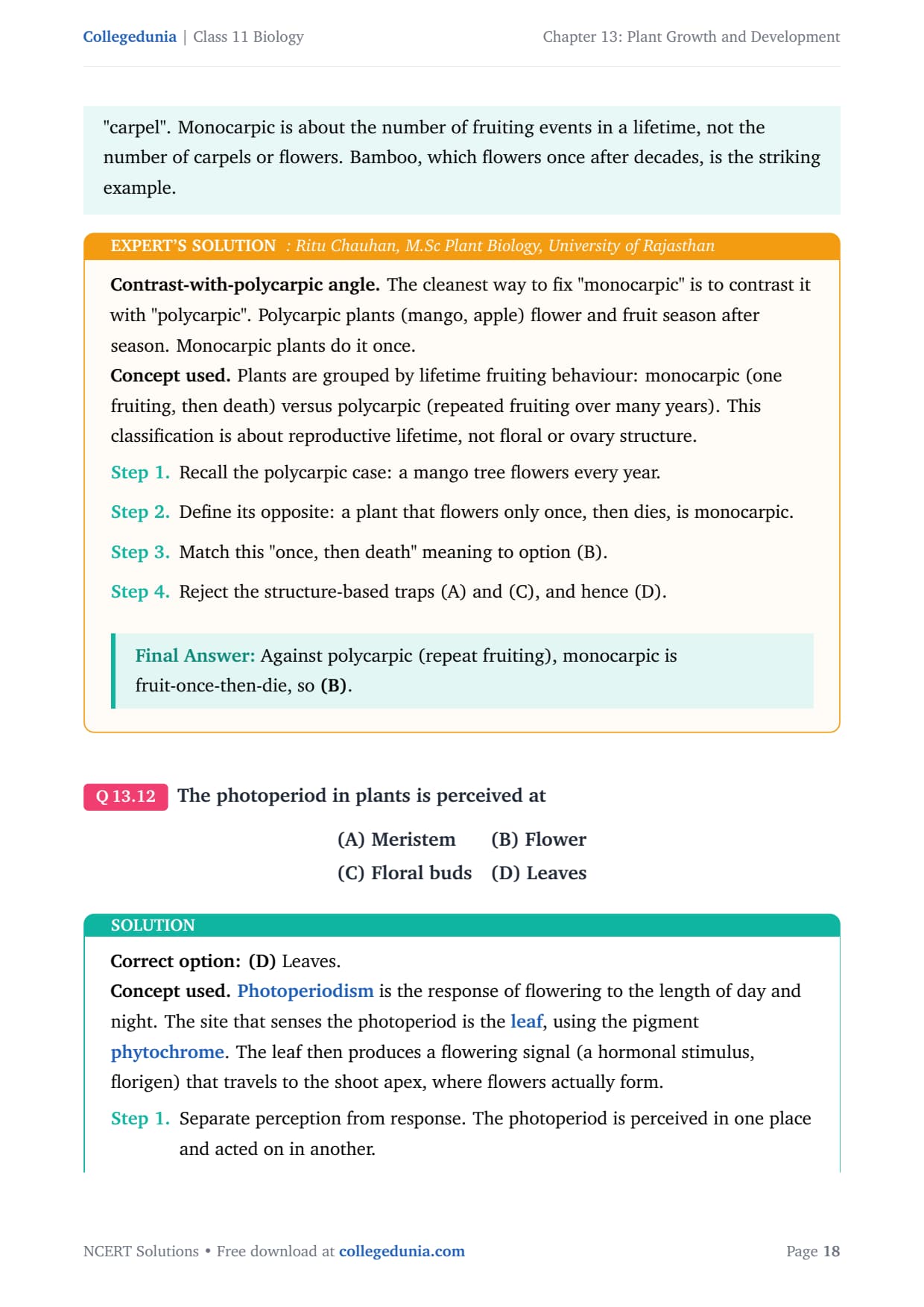
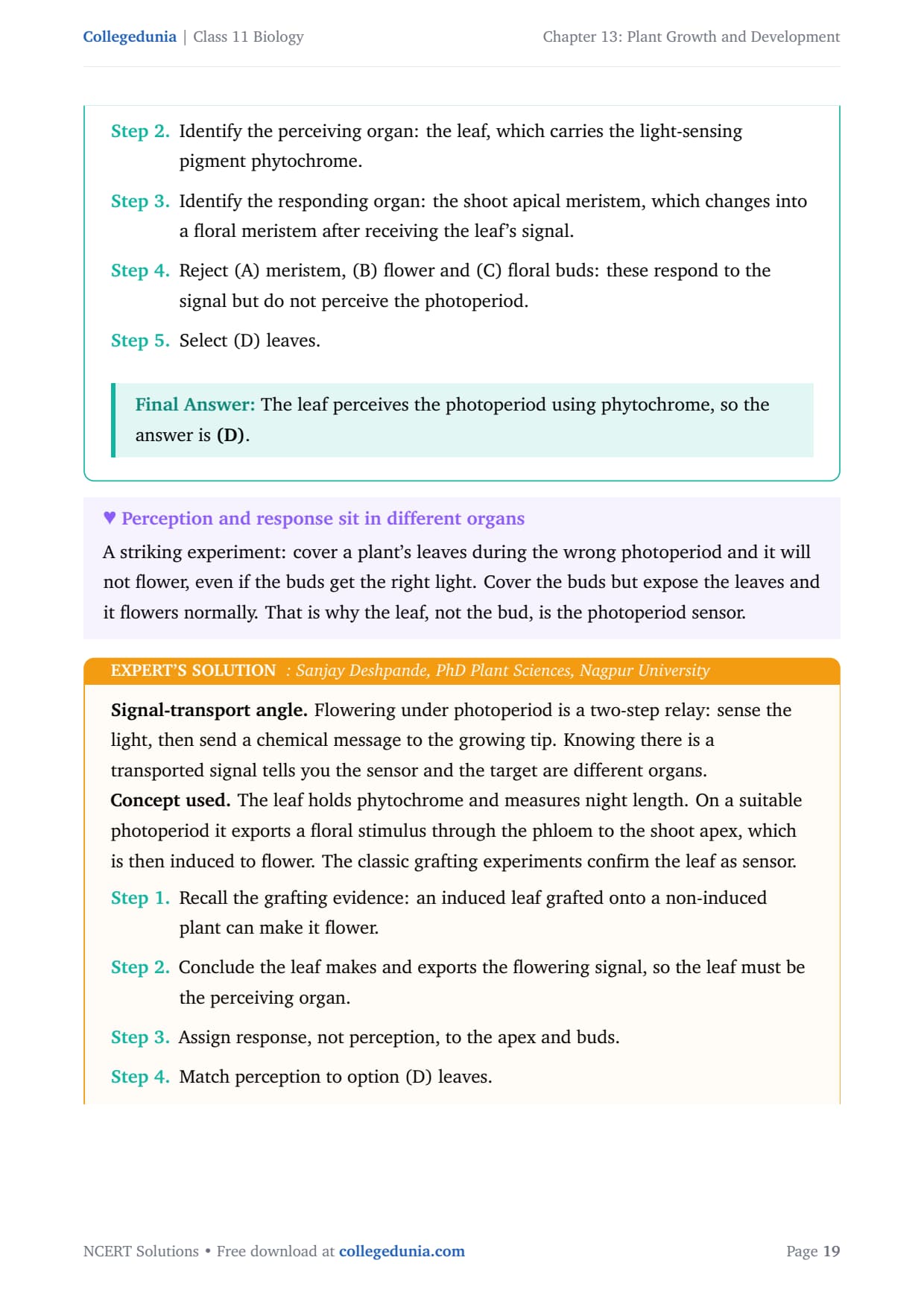
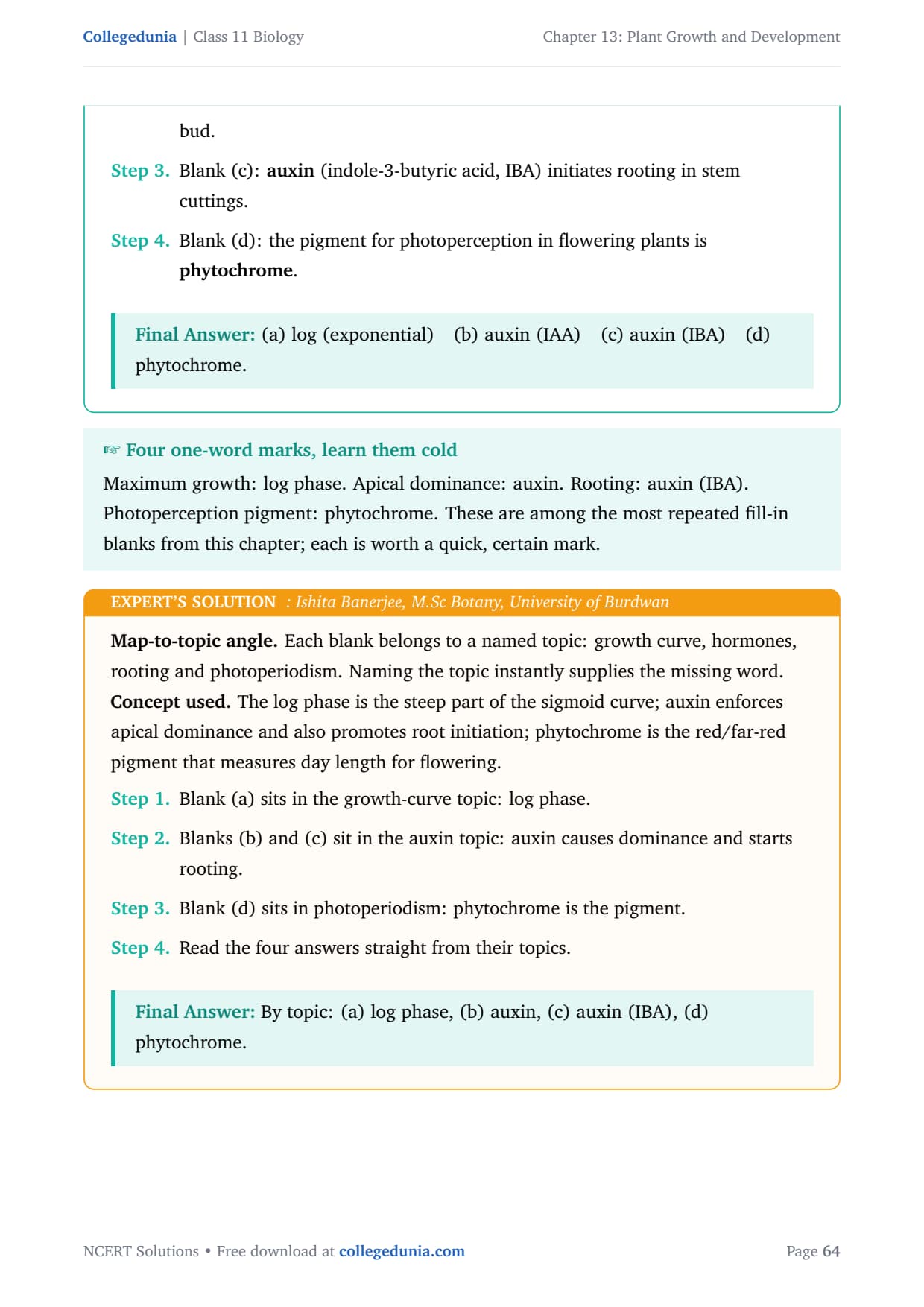
- Photoperiod perceived at the bud: the leaf, using phytochrome, perceives the photoperiod, while the shoot apex only responds. Grafting an induced leaf onto a non-induced plant makes it flower, proving the leaf is the sensor.
How the Exemplar Steps Up from the Class 11 Biology Textbook
The textbook gives you a hormone and its effect and asks you to state it back. The Exemplar gives you a practical task or a growth number and asks you to reason to the answer, which is the skill boards and NEET actually test. This is why students who only read the chapter feel the Exemplar is unfair. It is not harder in content, it is harder in the way it asks.
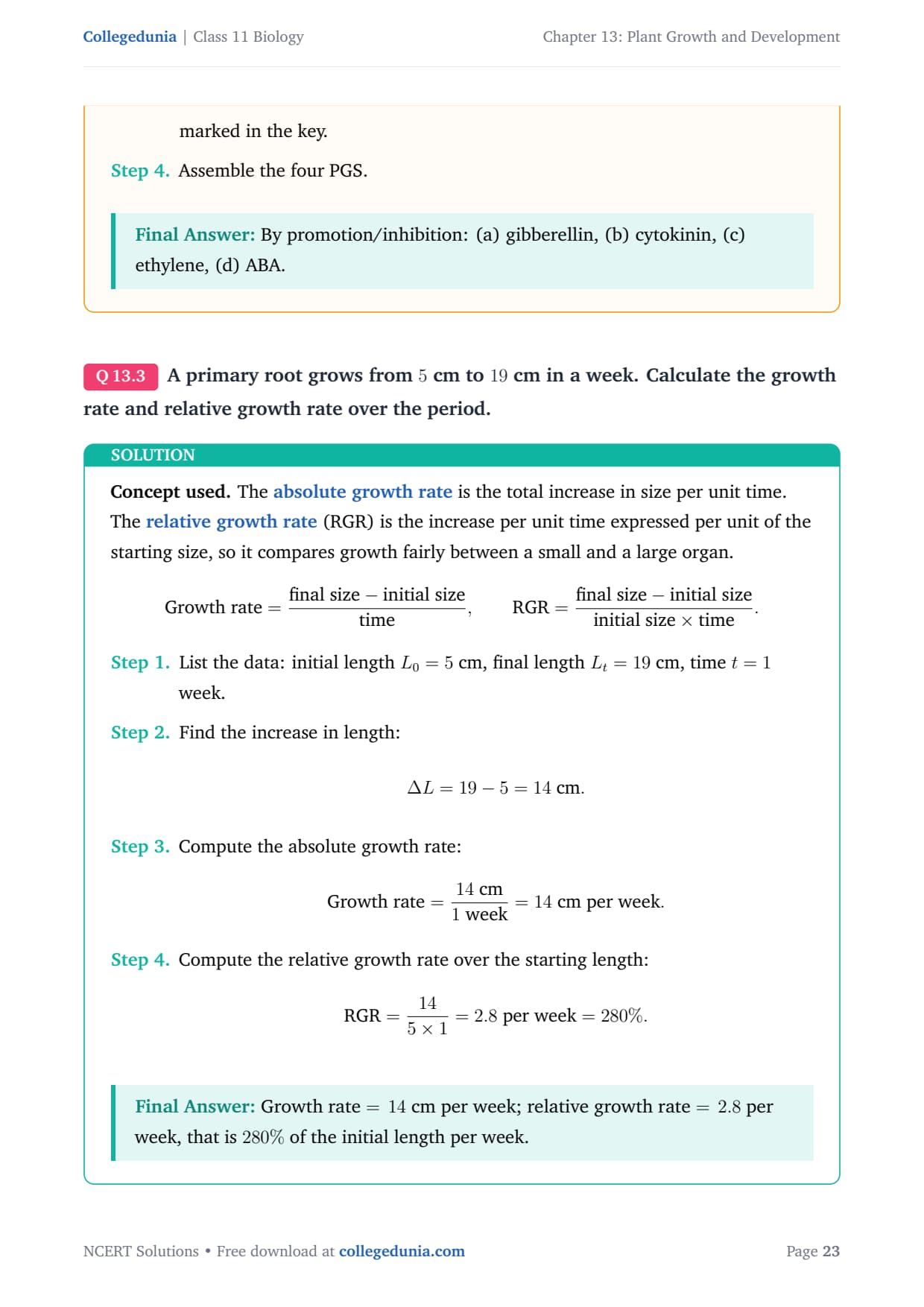
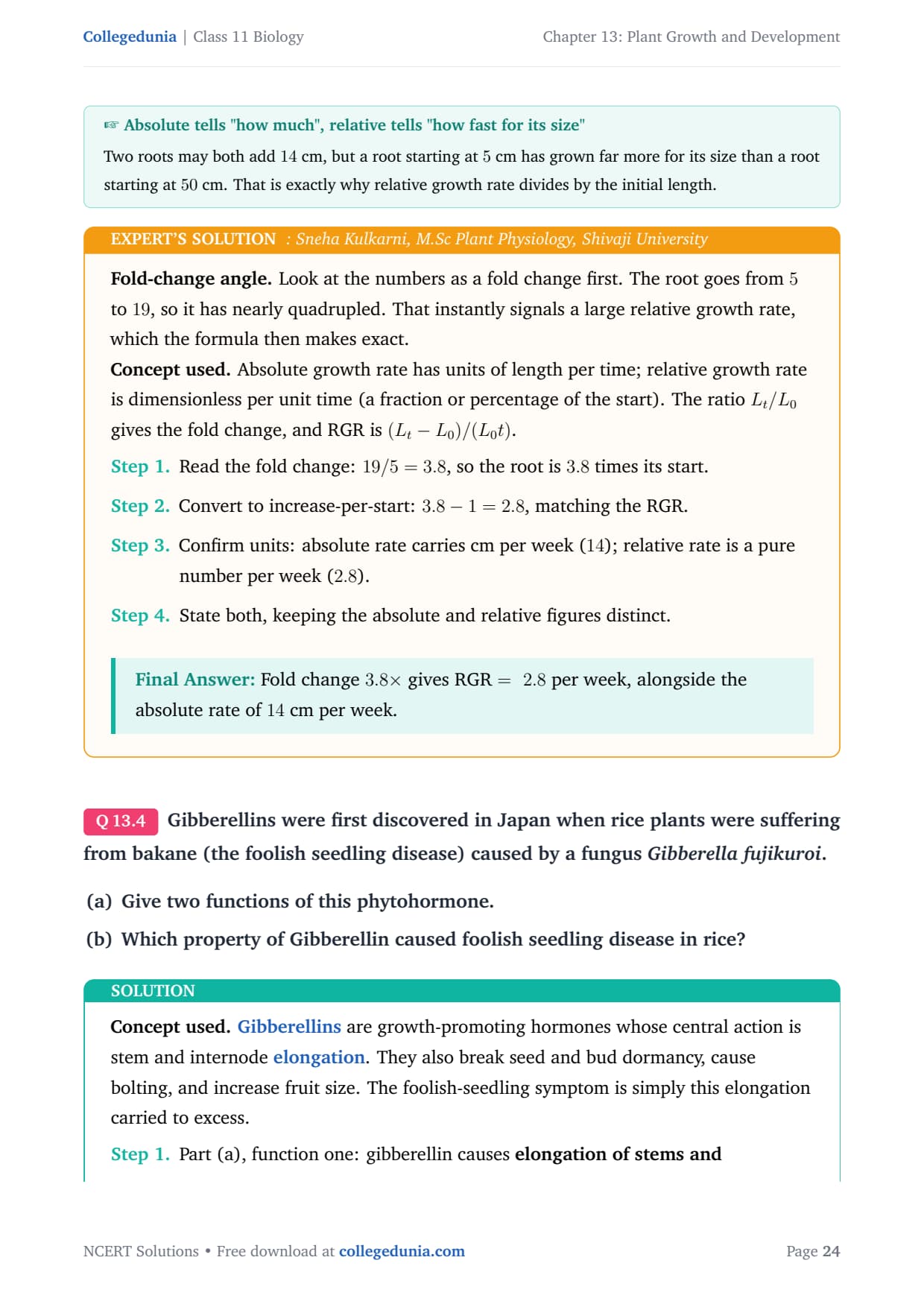
The growth-rate question shows the gap clearly. The textbook defines absolute and relative growth rate, so a quick reader ties growth to a single number. The Exemplar hands you a root growing from 5 cm to 19 cm in a week and waits. To answer, you have to see that the absolute rate is 14 cm per week, while the relative rate divides that increase by the starting length to give 2.8 per week, a far larger figure for a small organ. The same happens with the hormone-matching items and the photoperiod questions, where a memorised list fails but a reasoned signature or a grafting fact succeeds. Working these builds judgement, which is exactly what Chapter 13 is meant to leave you with.
How to Use These NCERT Exemplar Solutions for Boards, NEET and CUET
Attempt each question before you open the solution. This chapter rewards the attempt more than the reading, because the hormone tasks look obvious until you must pick one of five regulators. Commit to a hormone and a reason in your own words, then check it against the PDF. The gap between your choice and the model answer is where the marks live.
- Boards: the Short Answer and Long Answer sets match the 3 and 5 mark board pattern, especially photoperiodism, vernalisation and the growth curve
- NEET: work the MCQ and Very Short Answer sets first, since NEET repeats hormone functions, apical dominance and photoperiodism at that level every year
- CUET: the hormone-use MCQ set is the closest practice for the domain paper, which favours precise single-term recall
Student Feedback
Students using Collegedunia's Class 11 Biology Exemplar Solutions told us that choosing the correct growth regulator for each task was the hardest part of this chapter, well above the growth-curve questions. Around 7 in 10 said that seeing the five hormones lined up by their signature effects, with the trap options named at each question, finally made the hormone matching stick after a term of mixing up auxin and cytokinin.
Other Resources for Class 11 Biology Plant Growth and Development
Collegedunia has the full set of study material for this chapter. Use the Notes for a first read, then the Formula Sheet to fix the growth-rate equations and the hormone list, and keep the NCERT Solutions open for the textbook exercise alongside the Exemplar.
Also Check:
- NCERT Solutions for Class 11 Biology Chapter 13
- Class 11 Biology Chapter 13 Notes
- Class 11 Biology Chapter 13 Formula Sheet
- Class 11 Biology Chapter 13 NCERT Book PDF
- Class 11 Biology Chapter 13 Exemplar Book PDF
NCERT Exemplar Solutions for Other Class 11 Biology Chapters
Each chapter below has the same step-by-step treatment and a free PDF. All 19 chapters have an NCERT Exemplar book chapter behind them, so the list covers every one.
Plant Growth and Development Class 11 NCERT Exemplar Solutions FAQs
Ques. How many questions are there in the Class 11 Biology Plant Growth and Development Exemplar?
Ans. Chapter 13 has 48 questions. They are split into 12 MCQ, 13 Very Short Answer, 20 Short Answer and 3 Long Answer questions. All 48 are solved in the free 69-page PDF on this page.
Ques. Which hormone overcomes apical dominance?
Ans. Cytokinin overcomes apical dominance. Auxin made at the shoot tip enforces dominance by keeping lateral buds dormant, so applying auxin deepens the effect. Cytokinin is the antagonist that releases the axillary buds and makes the plant bushy. The trap option IAA is auxin itself and is always wrong here.
Ques. Where is the photoperiod perceived in a plant?
Ans. The photoperiod is perceived at the leaves, using the pigment phytochrome. The leaf then exports a flowering signal through the phloem to the shoot apex, which responds by forming flowers. Grafting experiments confirm the leaf is the sensor, not the bud or the meristem.
Ques. What is the difference between synergism and antagonism of hormones?
Ans. Synergism is two hormones acting together in the same direction to support one function, such as auxin and gibberellin promoting stem growth. Antagonism is two hormones pulling in opposite directions, such as abscisic acid opposing gibberellin in seed dormancy. The Exemplar plants the antagonism definition as a synergism distractor.
Ques. Is the NCERT Exemplar enough for NEET questions from Plant Growth and Development?
Ans. For this chapter it covers the ground well. NEET asks two to three questions a year on hormone functions, apical dominance, photoperiodism and vernalisation, and they sit at the level of the Exemplar MCQ and Very Short Answer sets. Work all 12 MCQs and the hormone-matching items before moving to a coaching module.



Comments