




NCERT Exemplar Solutions for Class 11 Biology Chapter 4 Animal Kingdom solve all 45 questions from the Exemplar book. Every MCQ, Very Short Answer, Short Answer and Long Answer problem is answered step by step in the free 65-page PDF, updated for the 2026-27 syllabus.
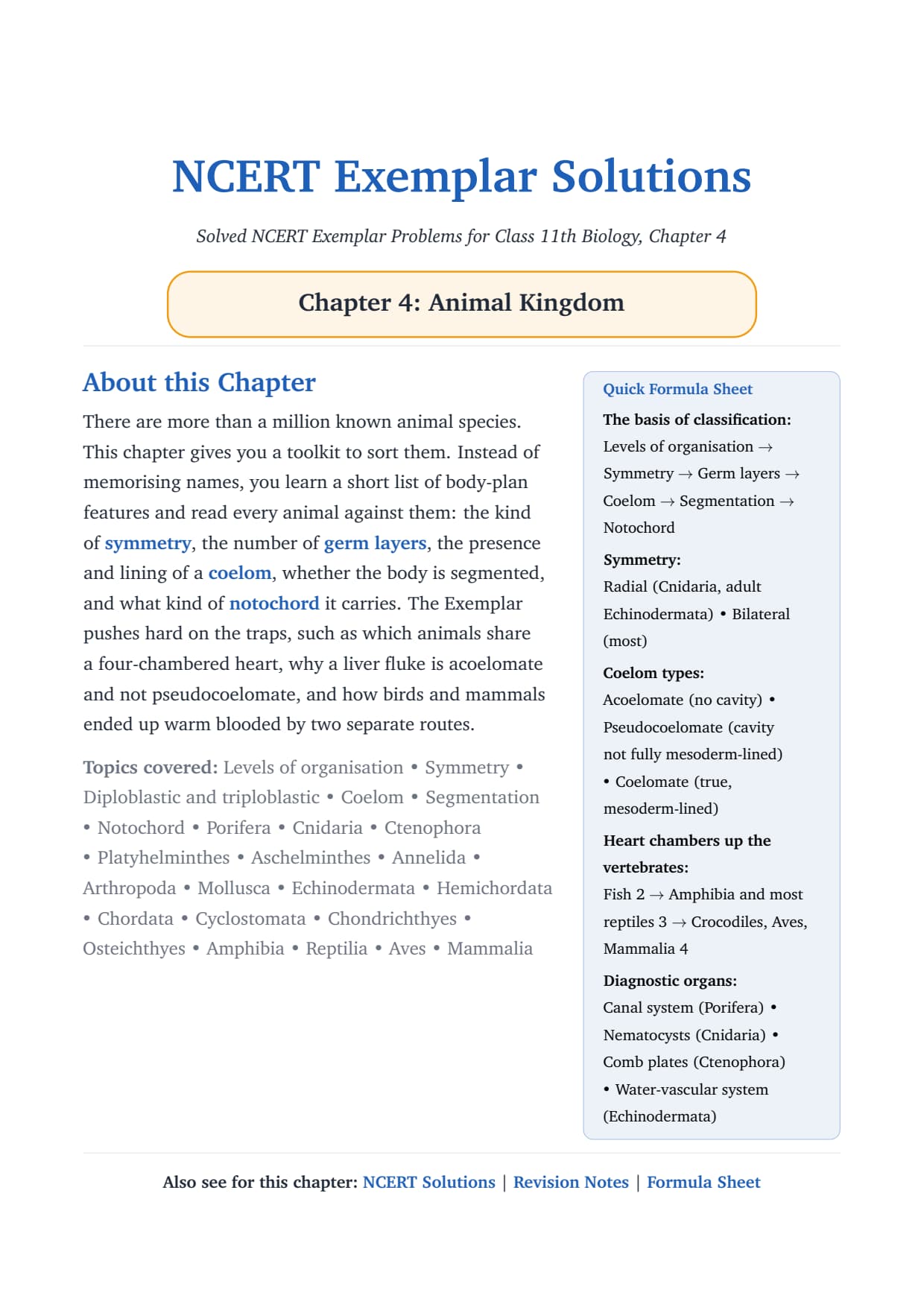
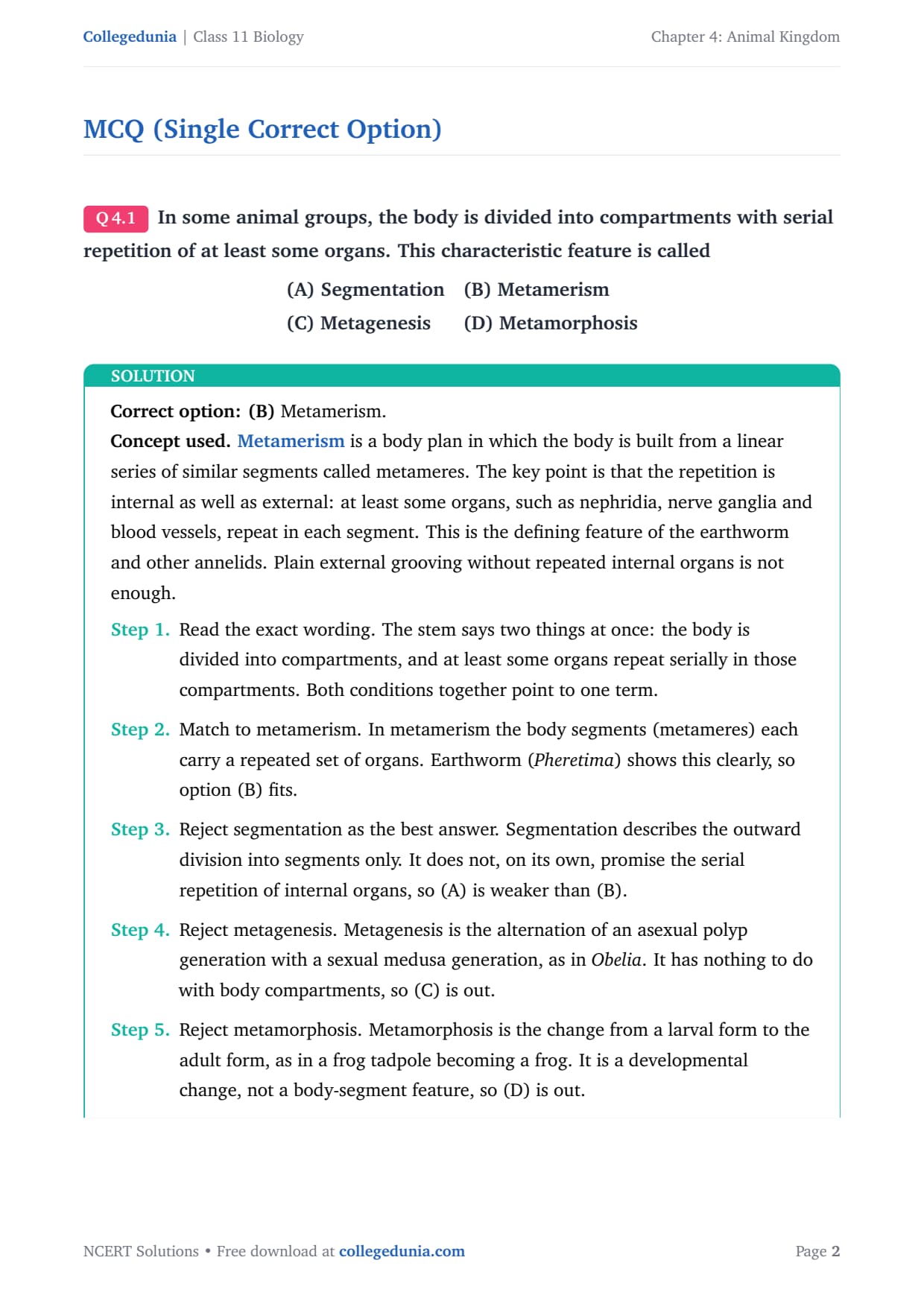
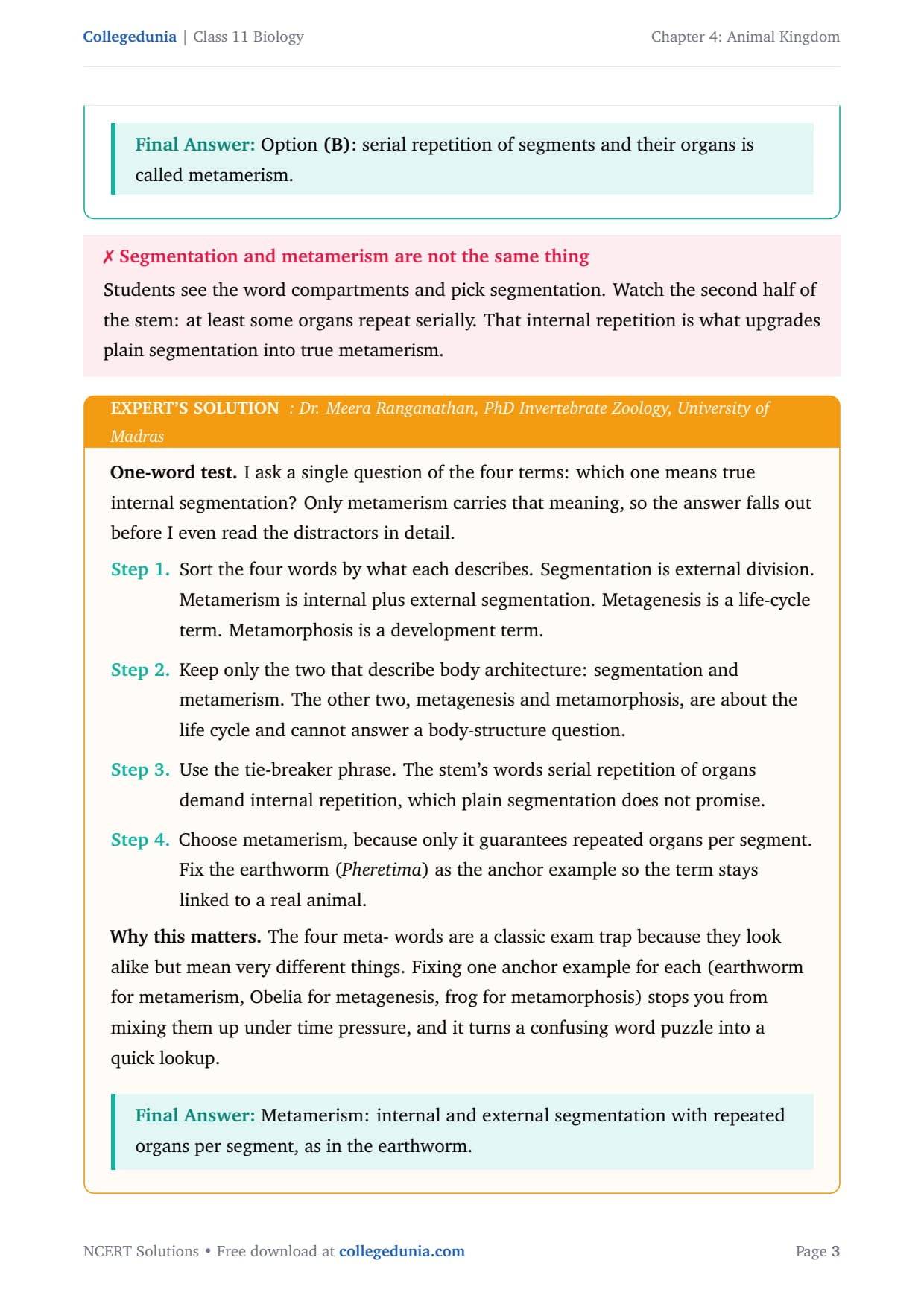
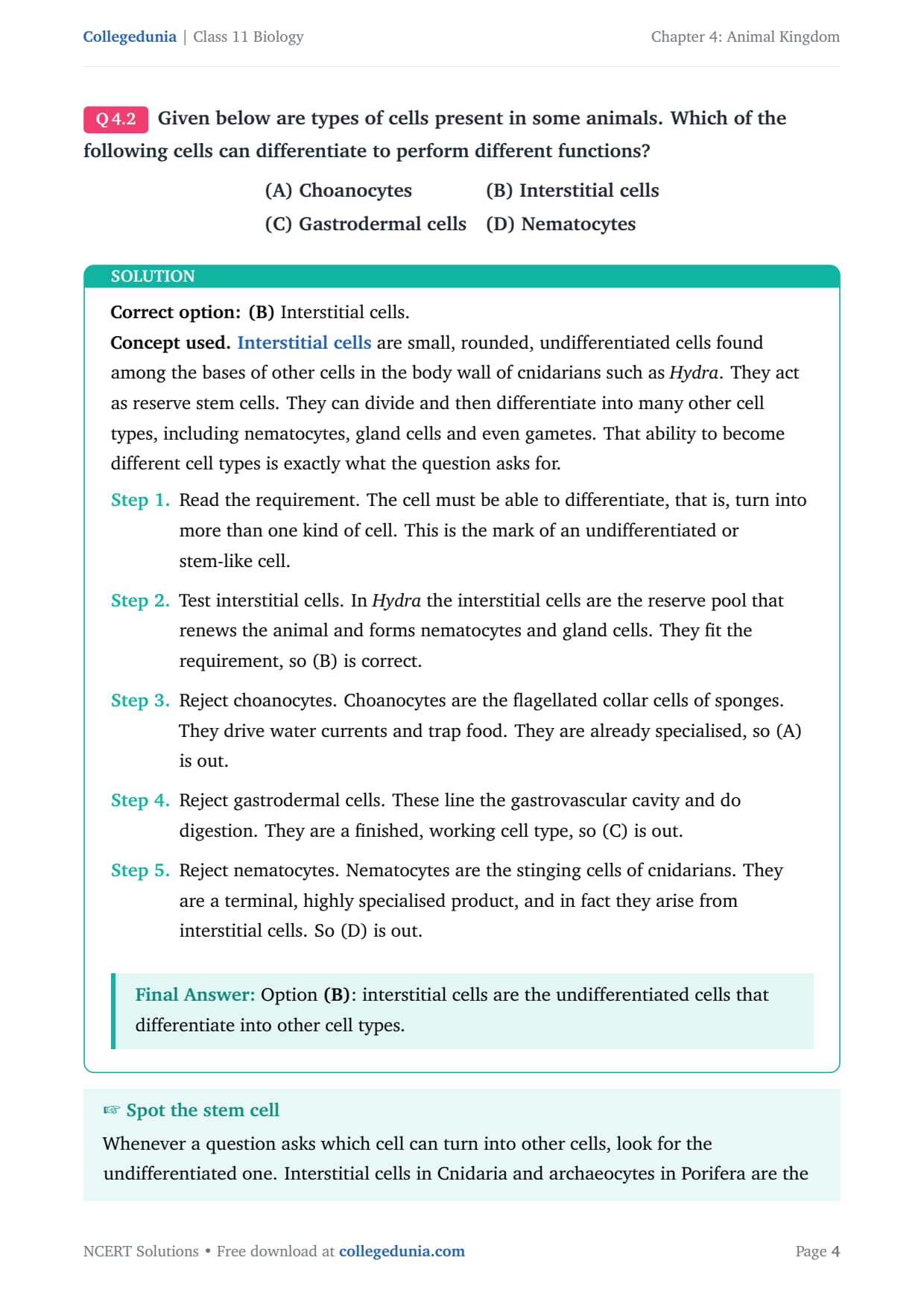
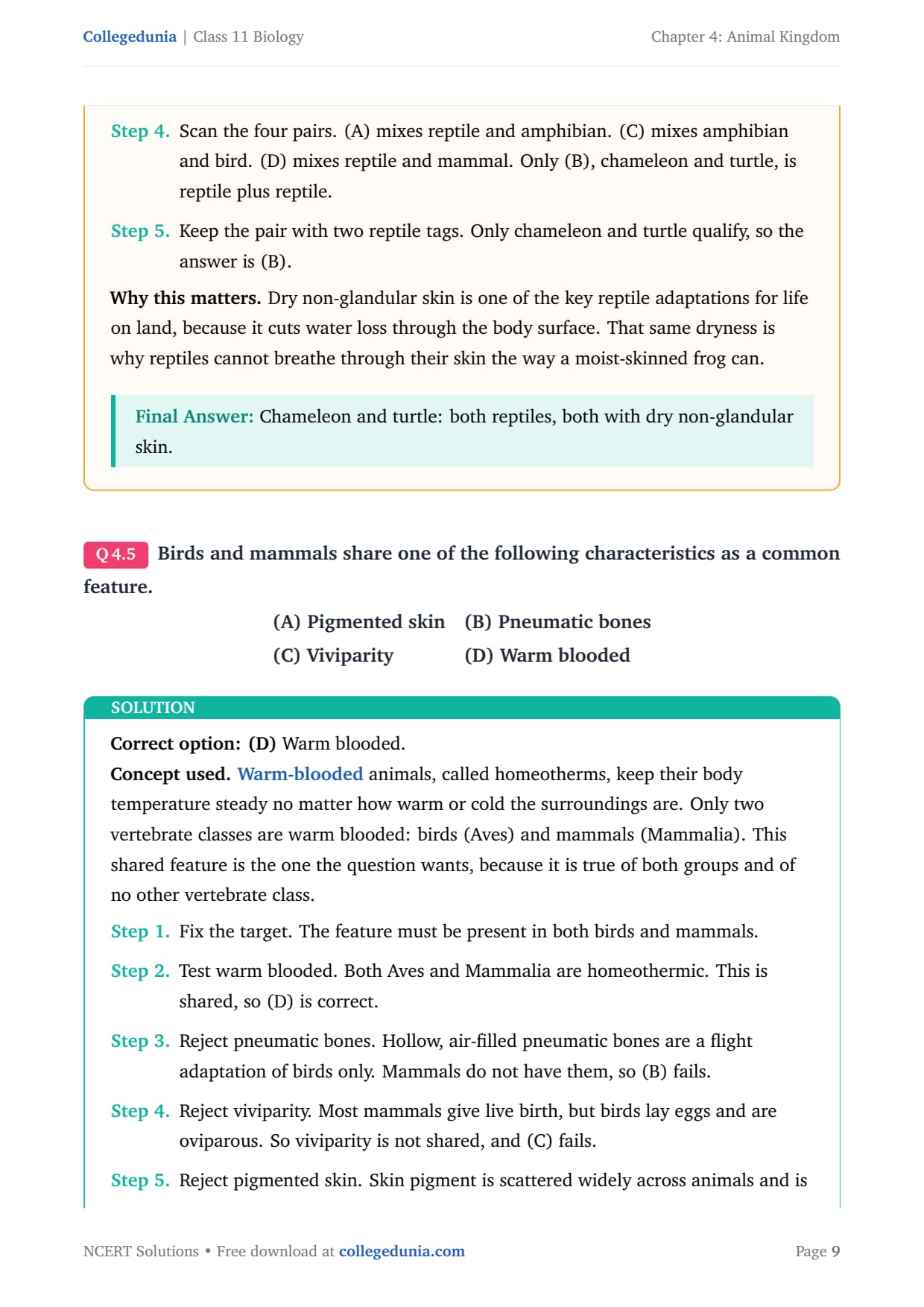
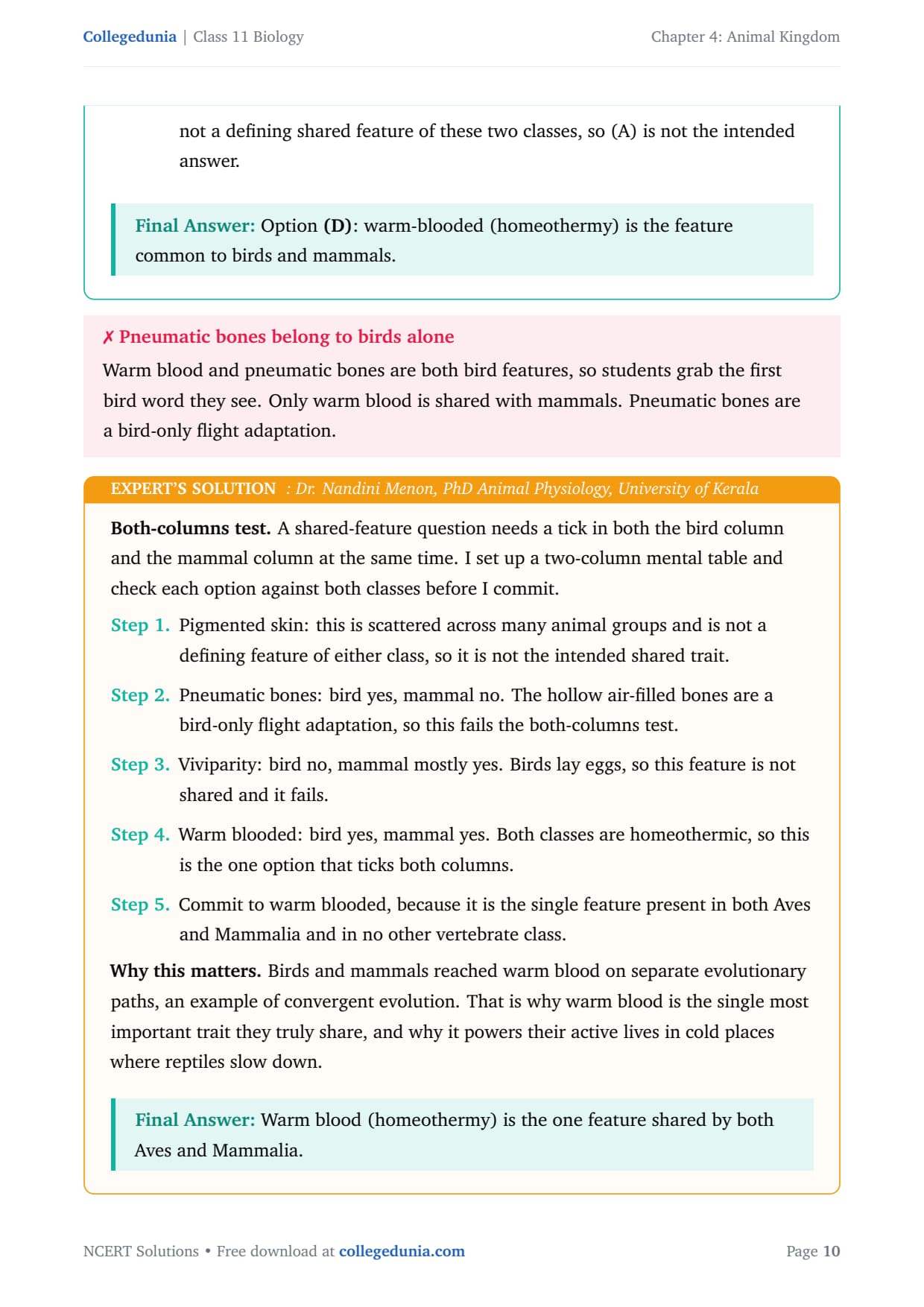
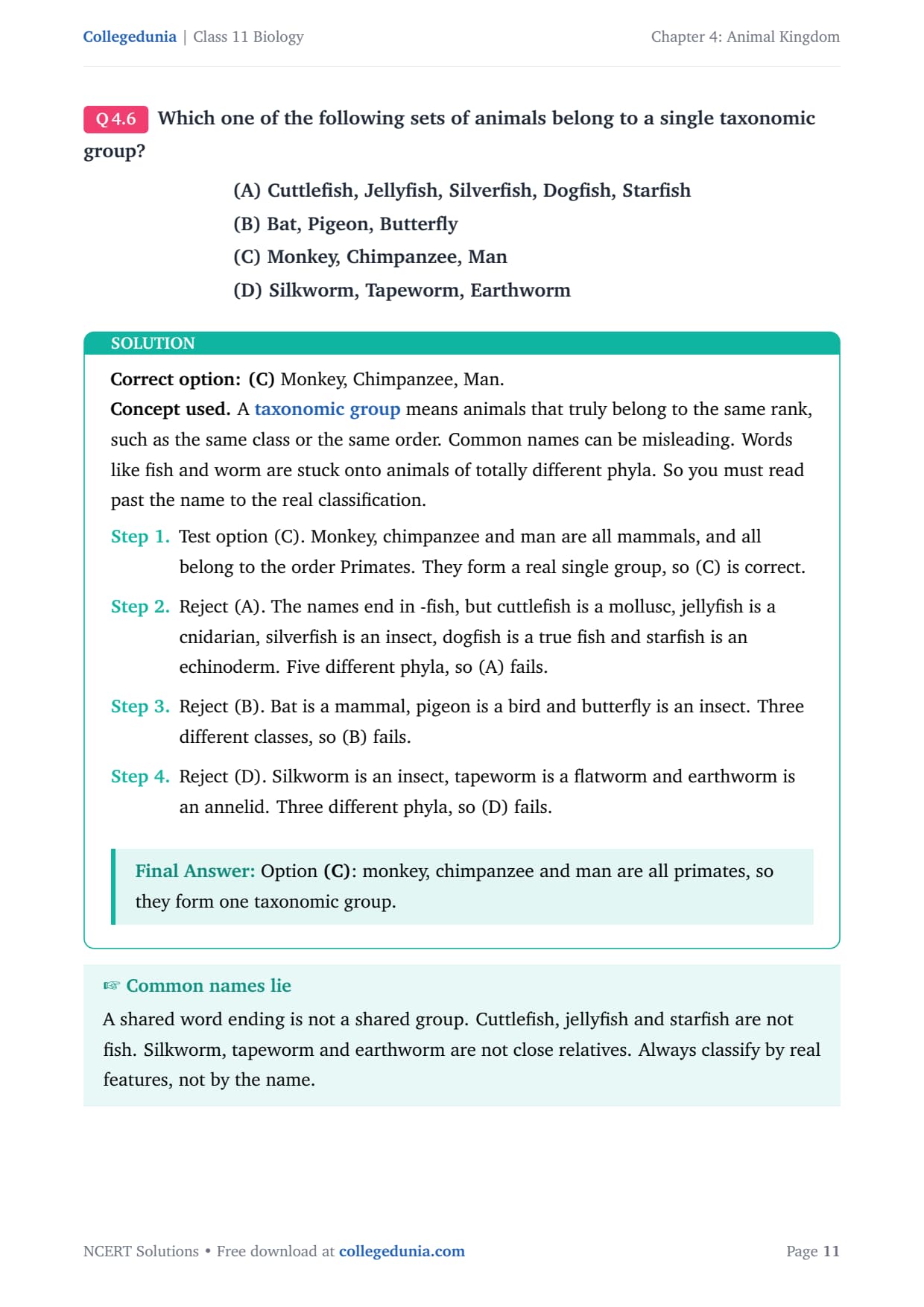
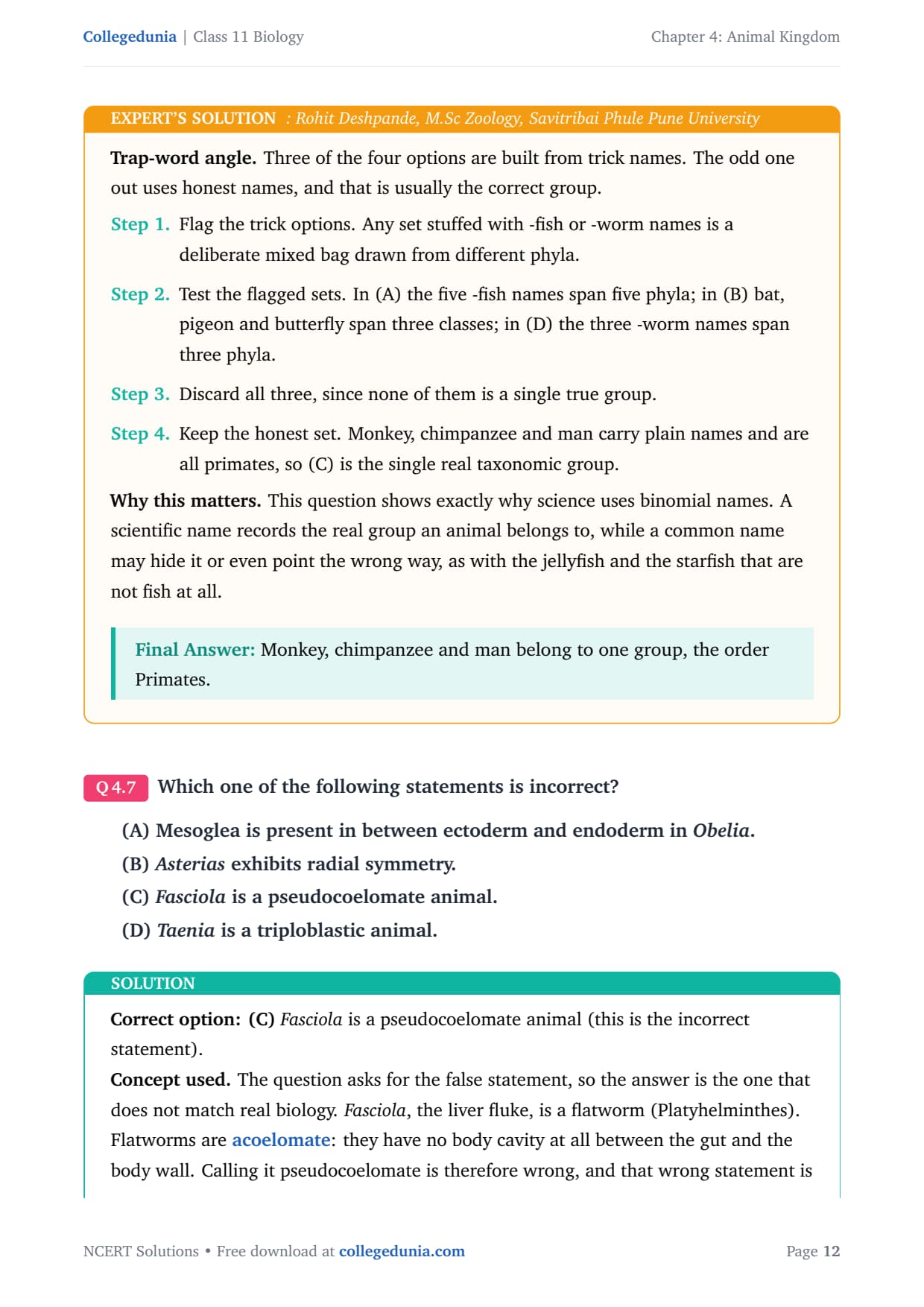
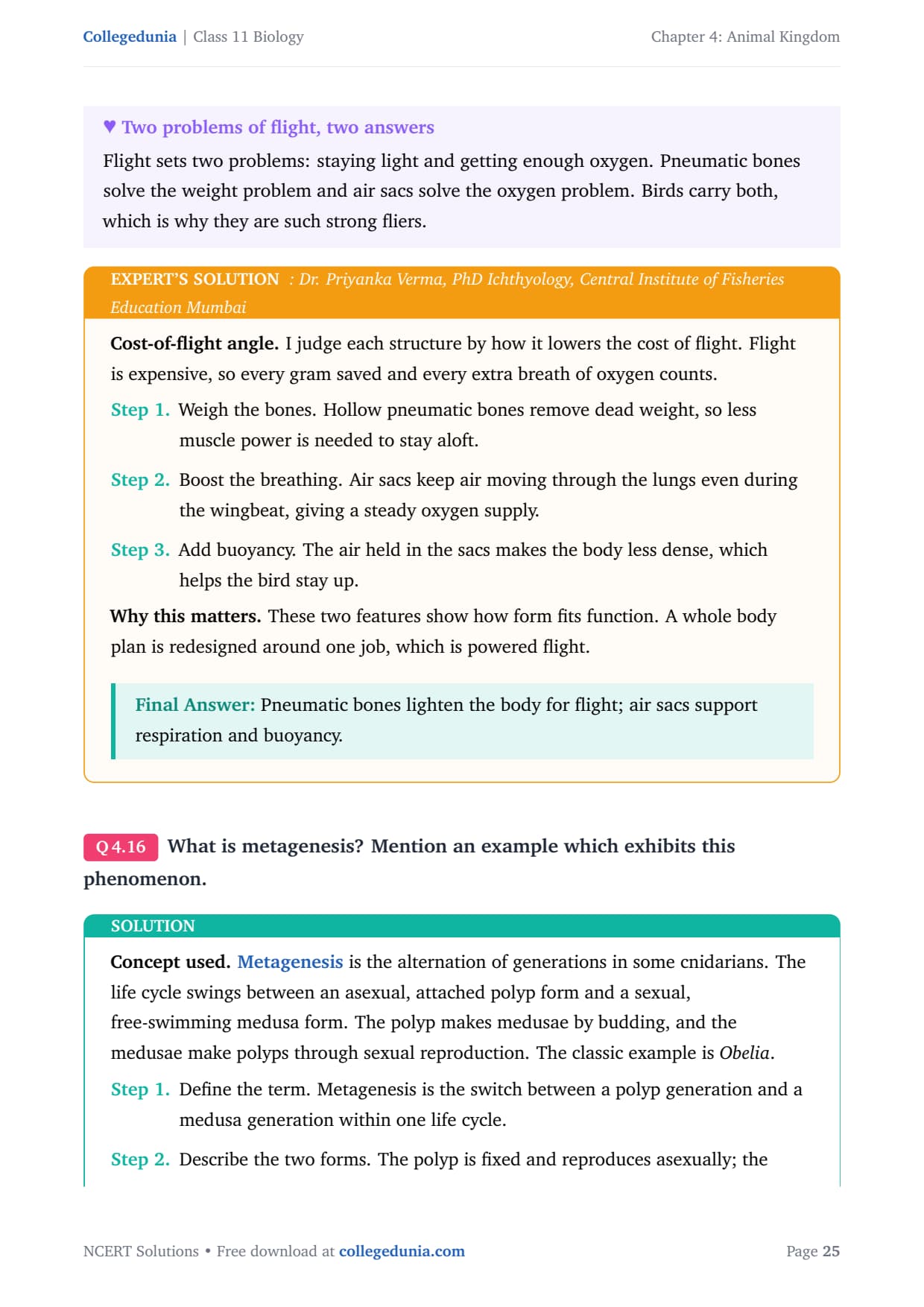
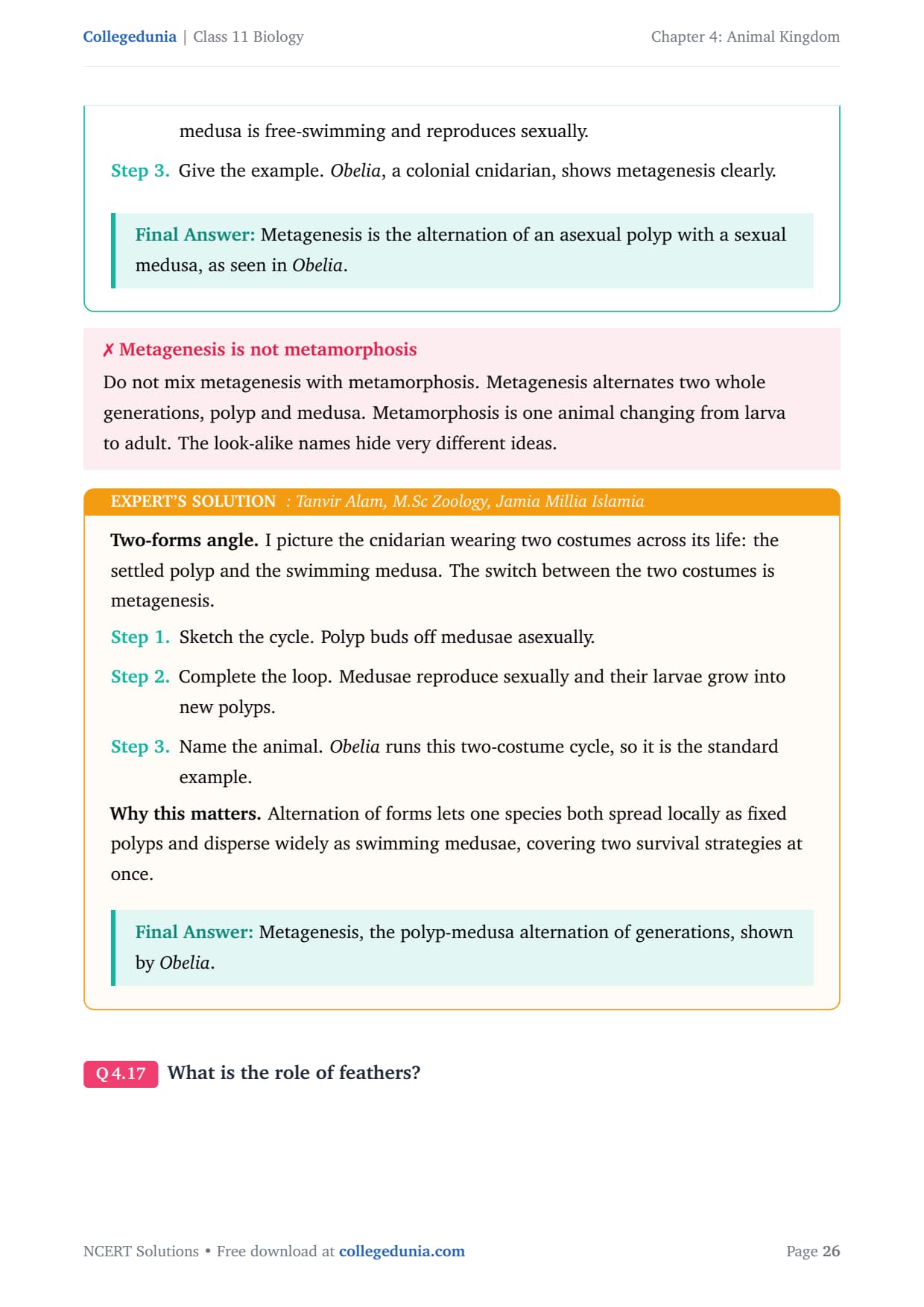
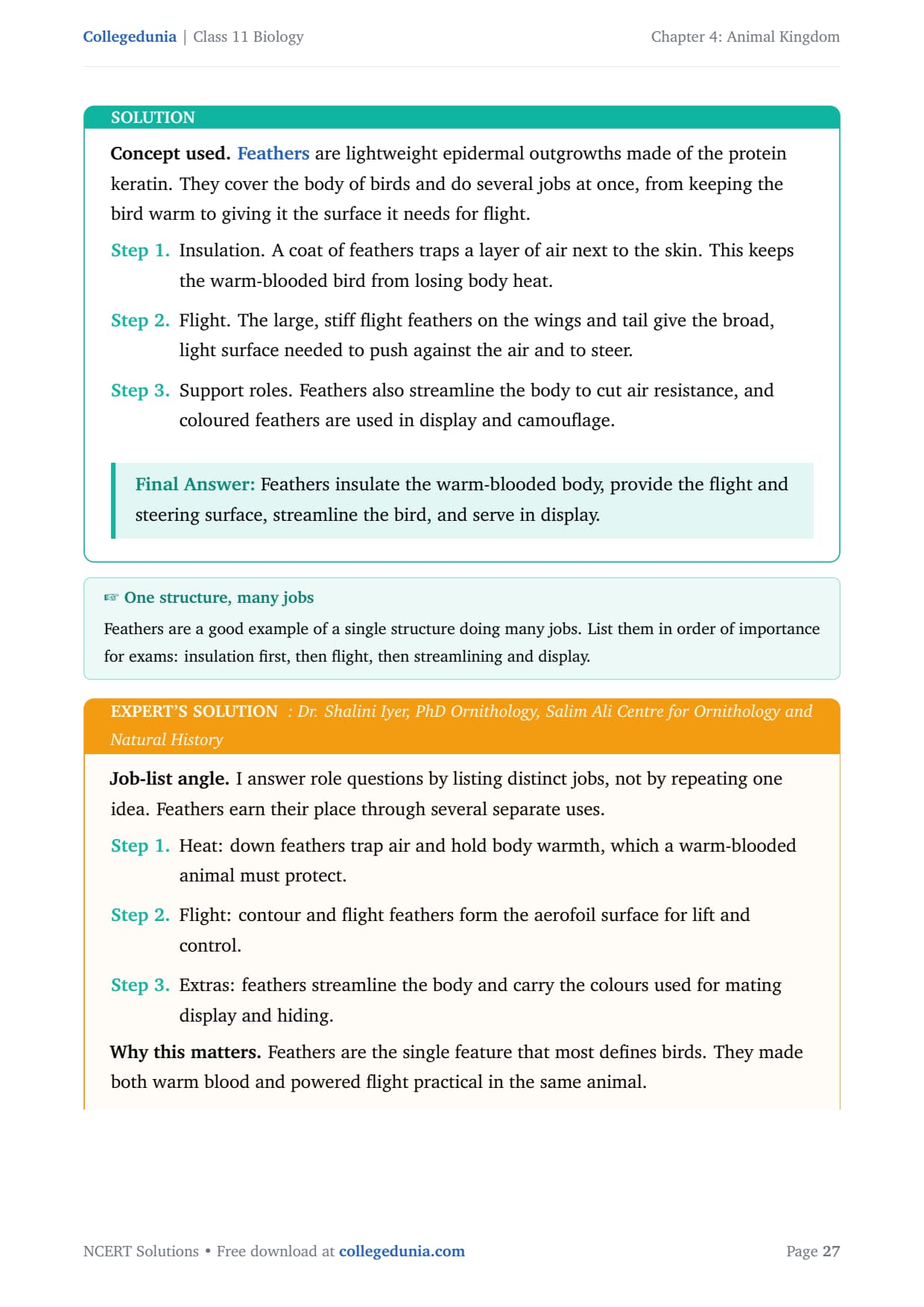
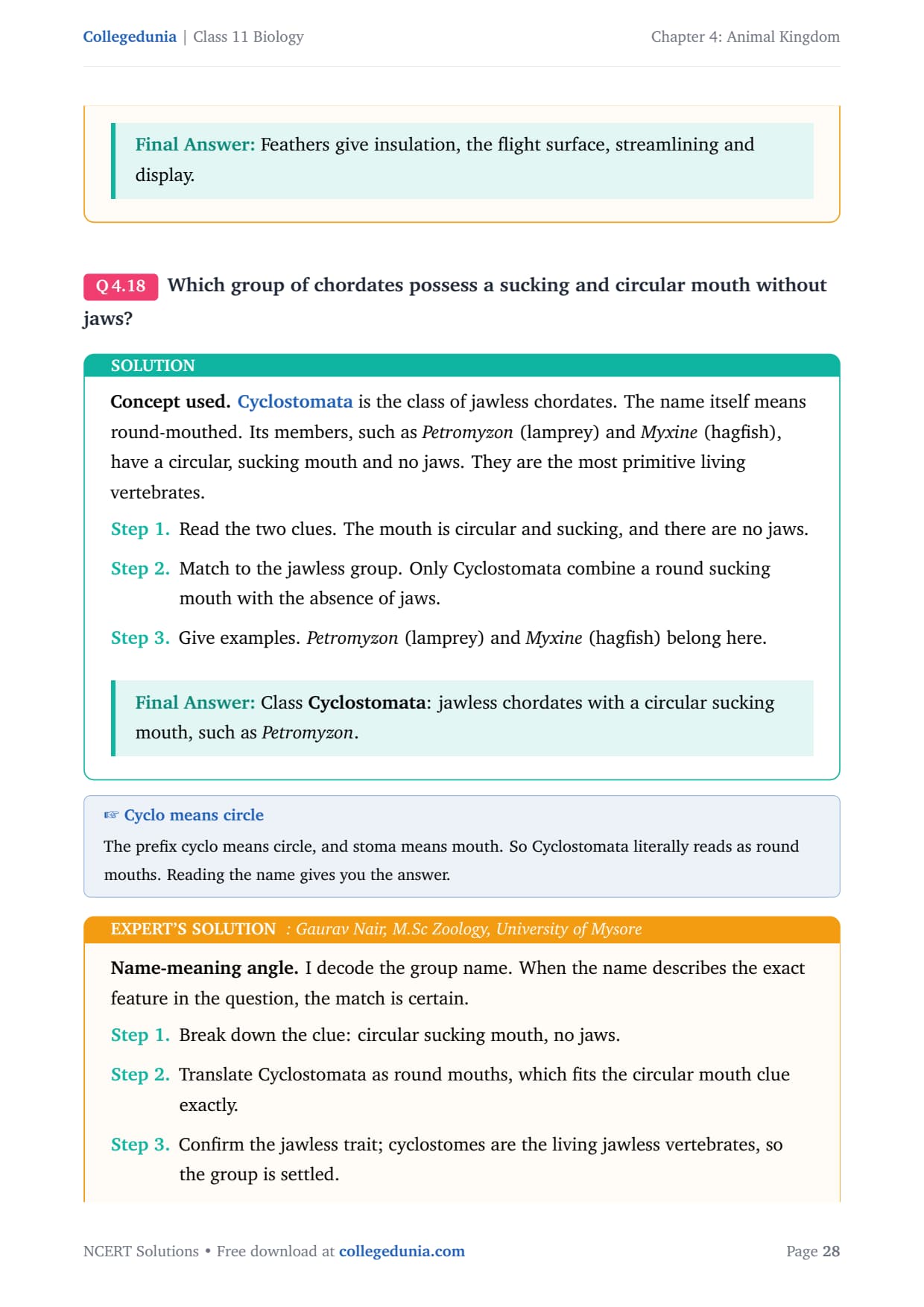
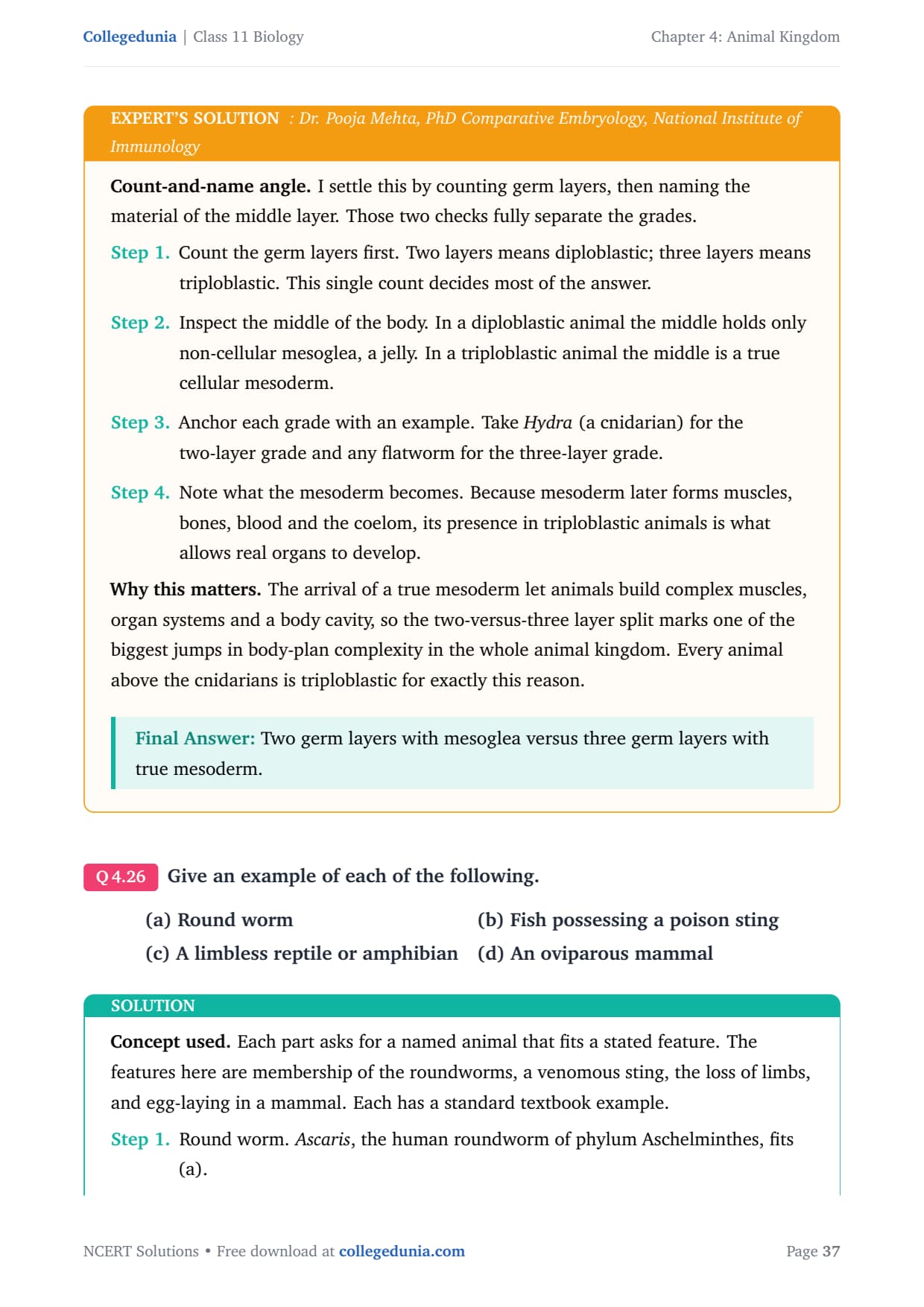
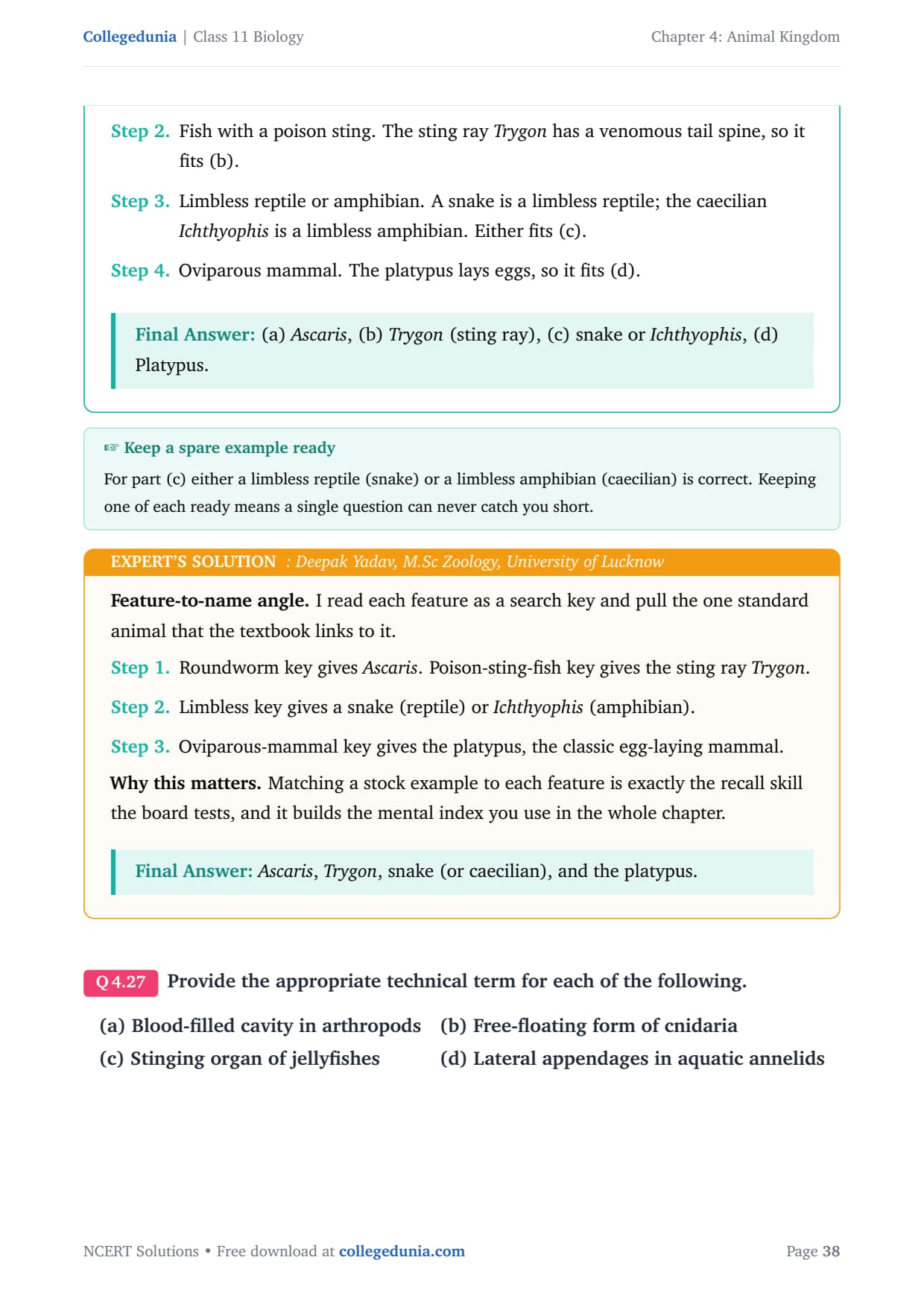
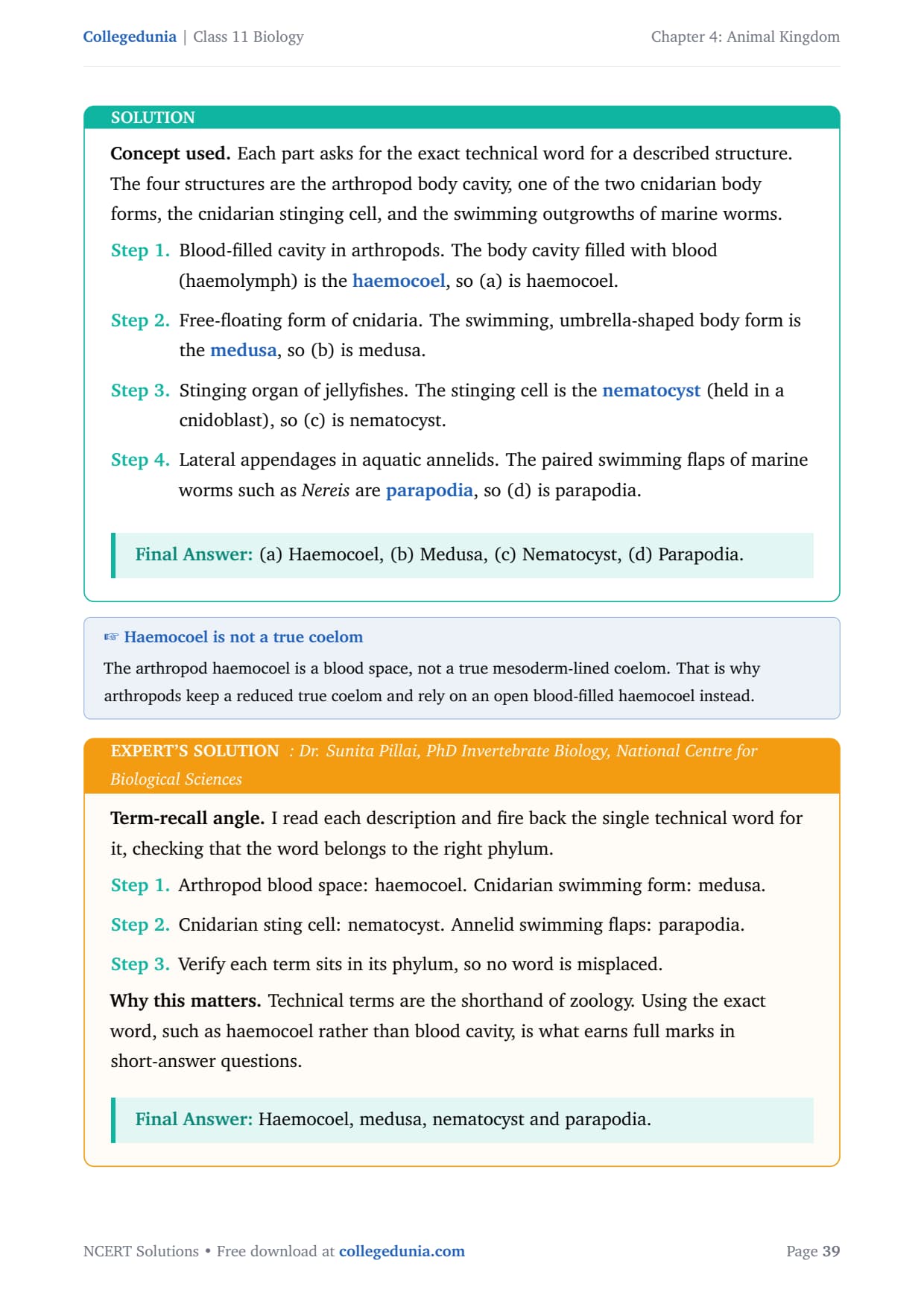
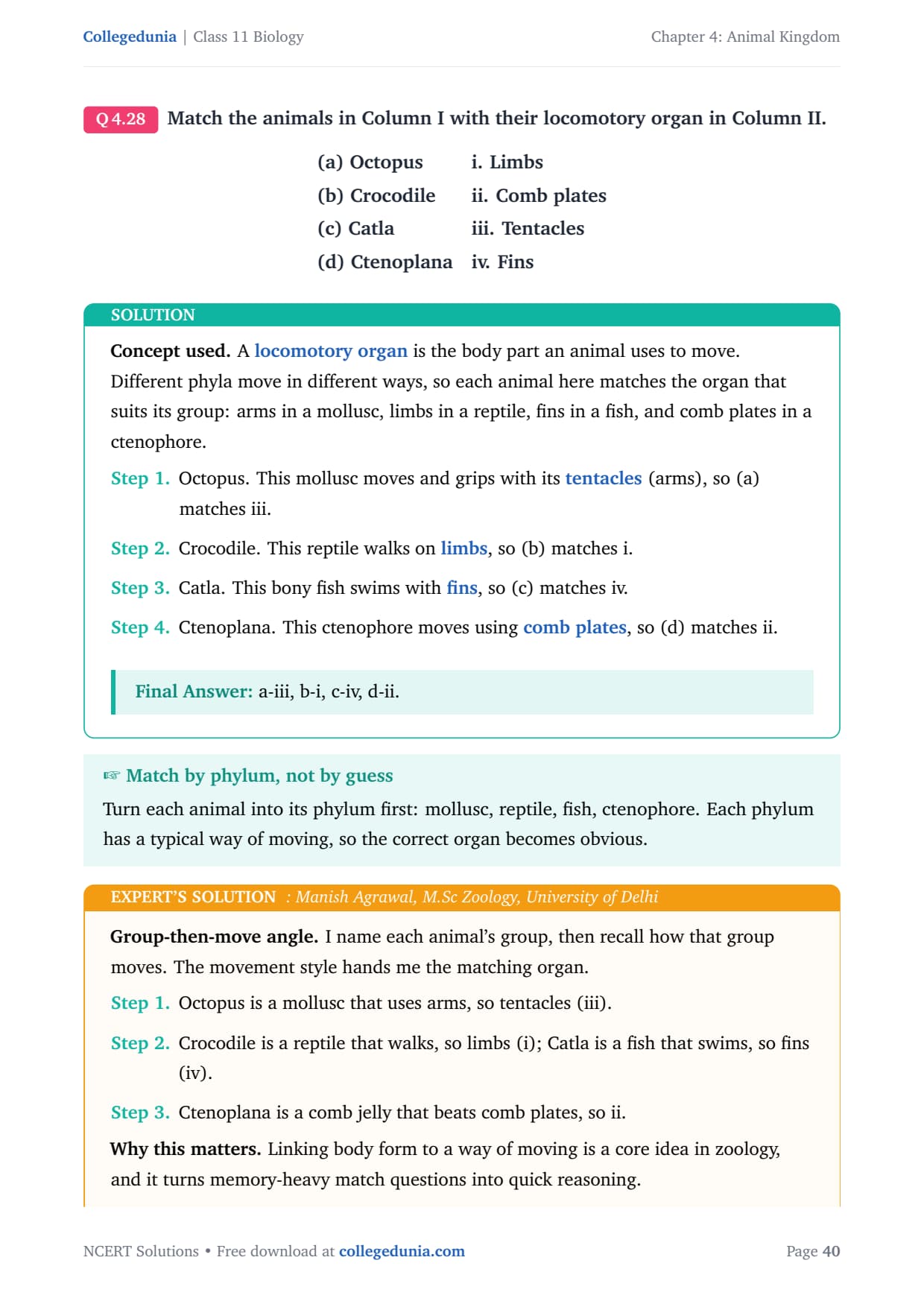
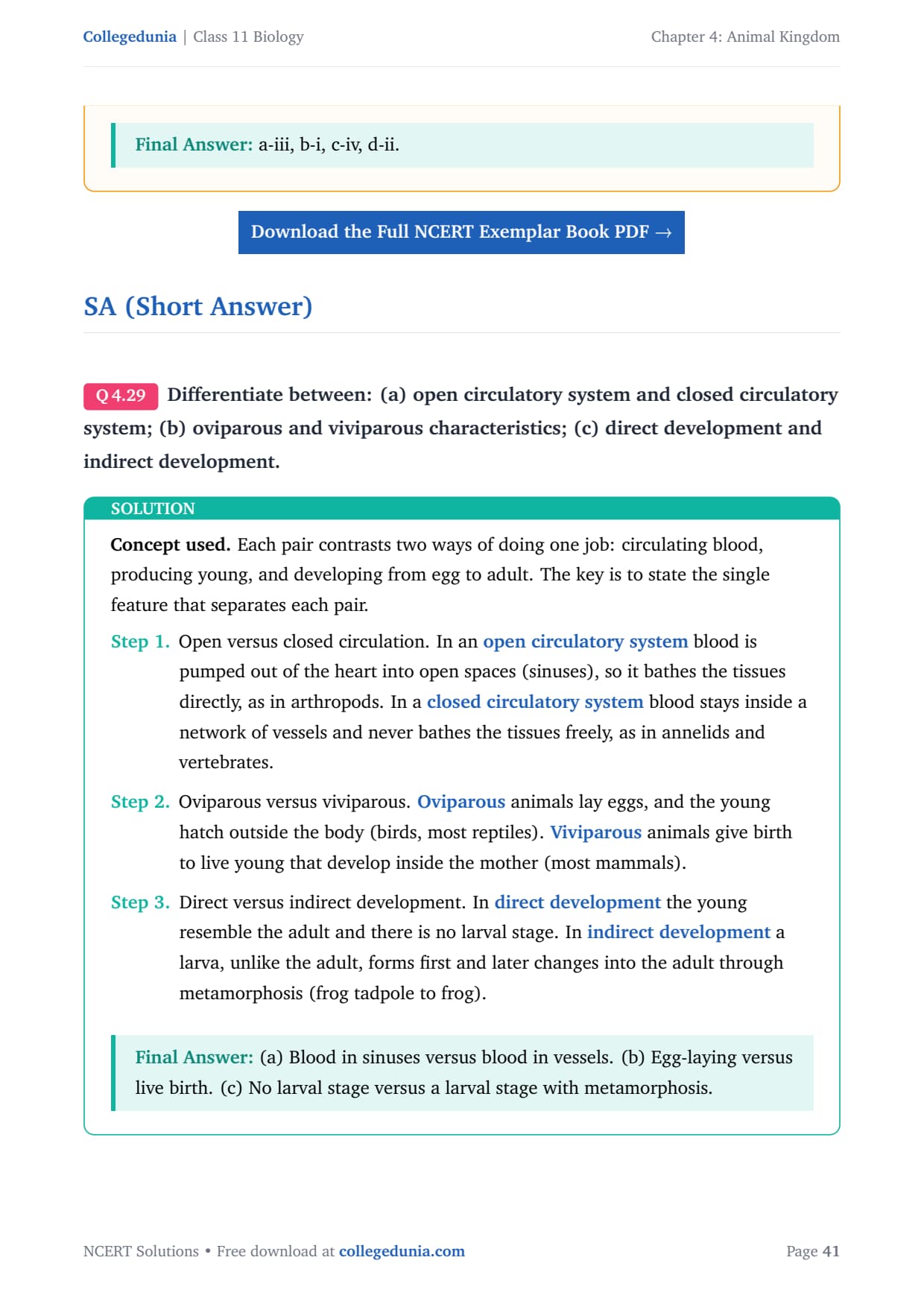
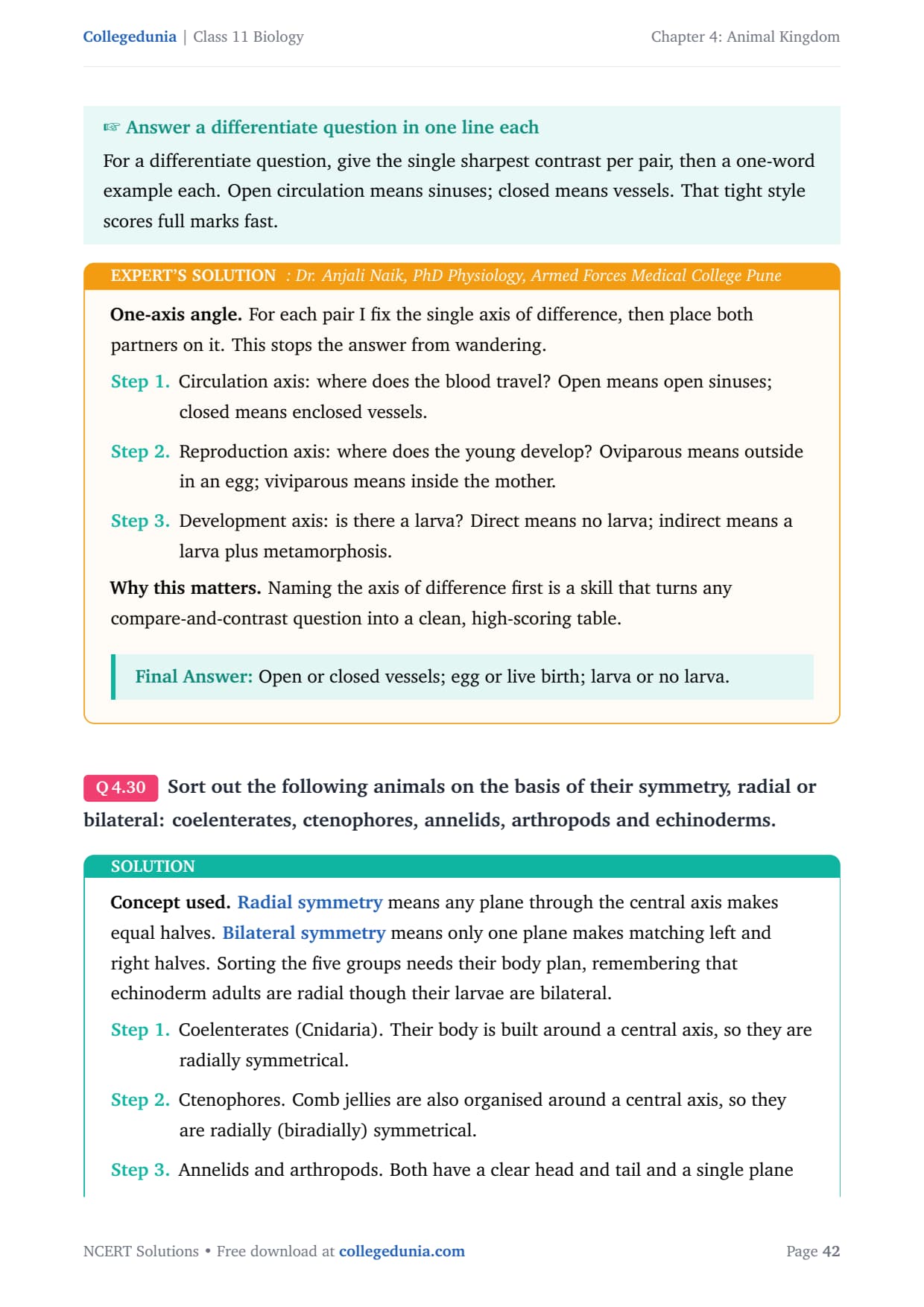
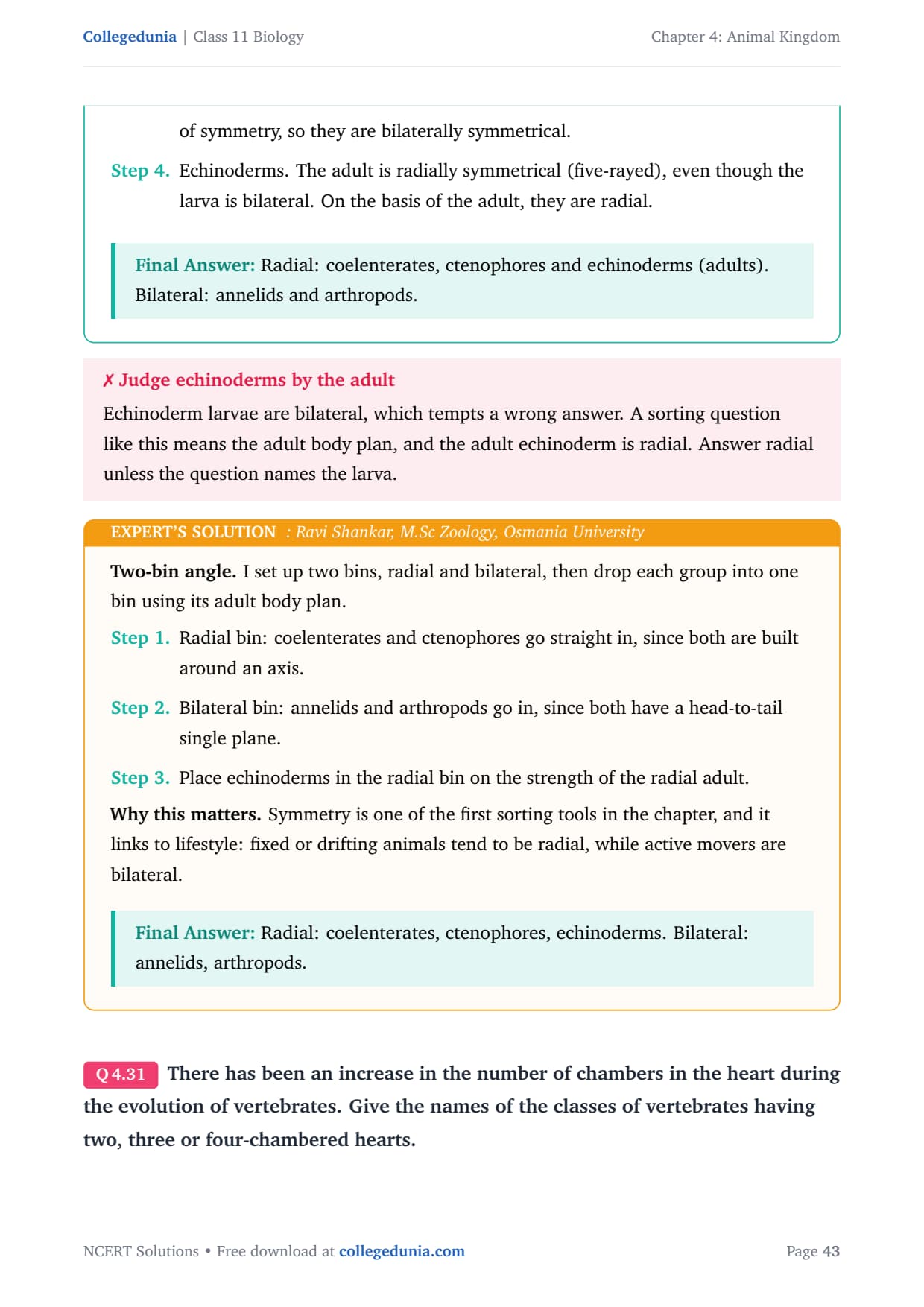
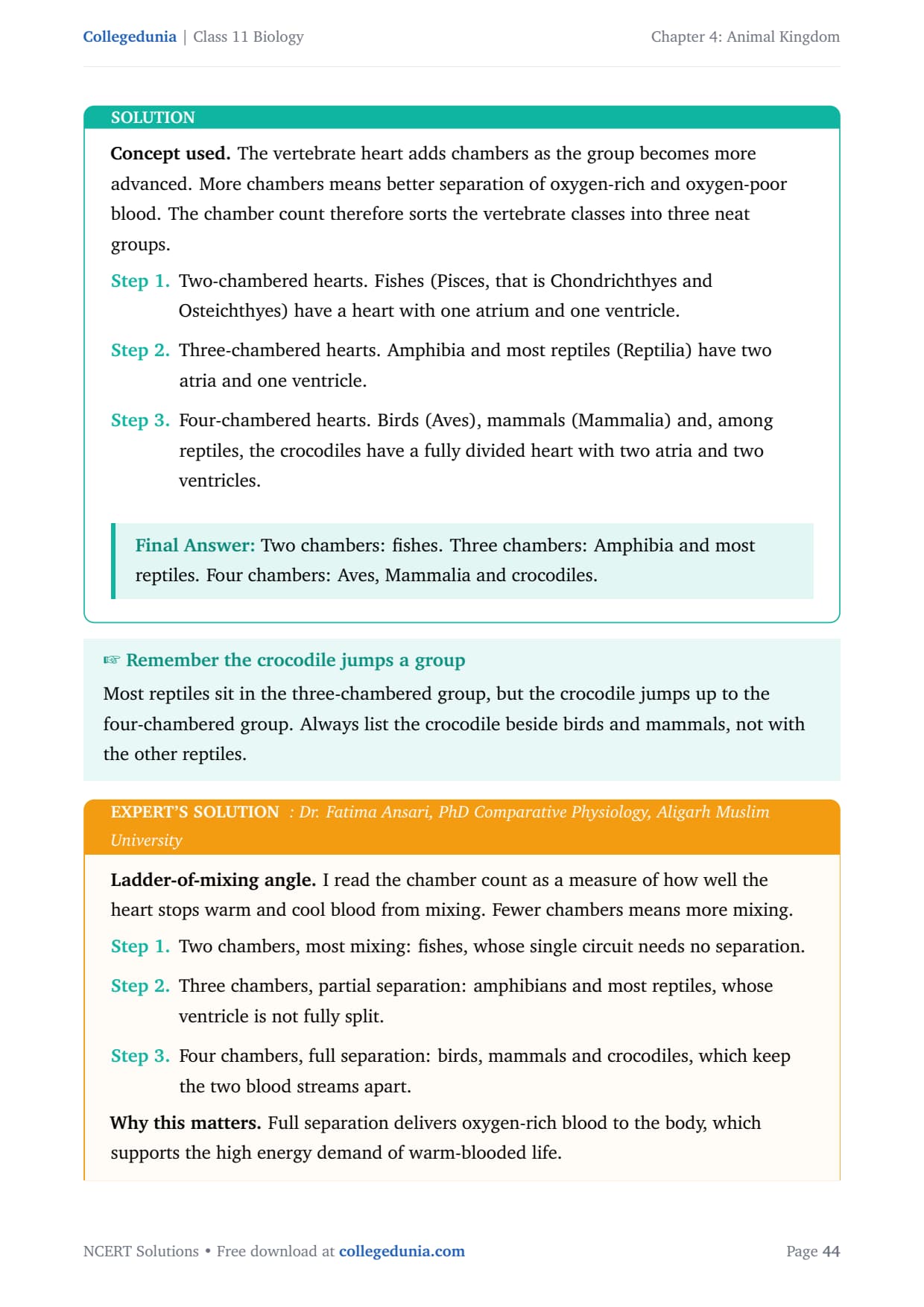
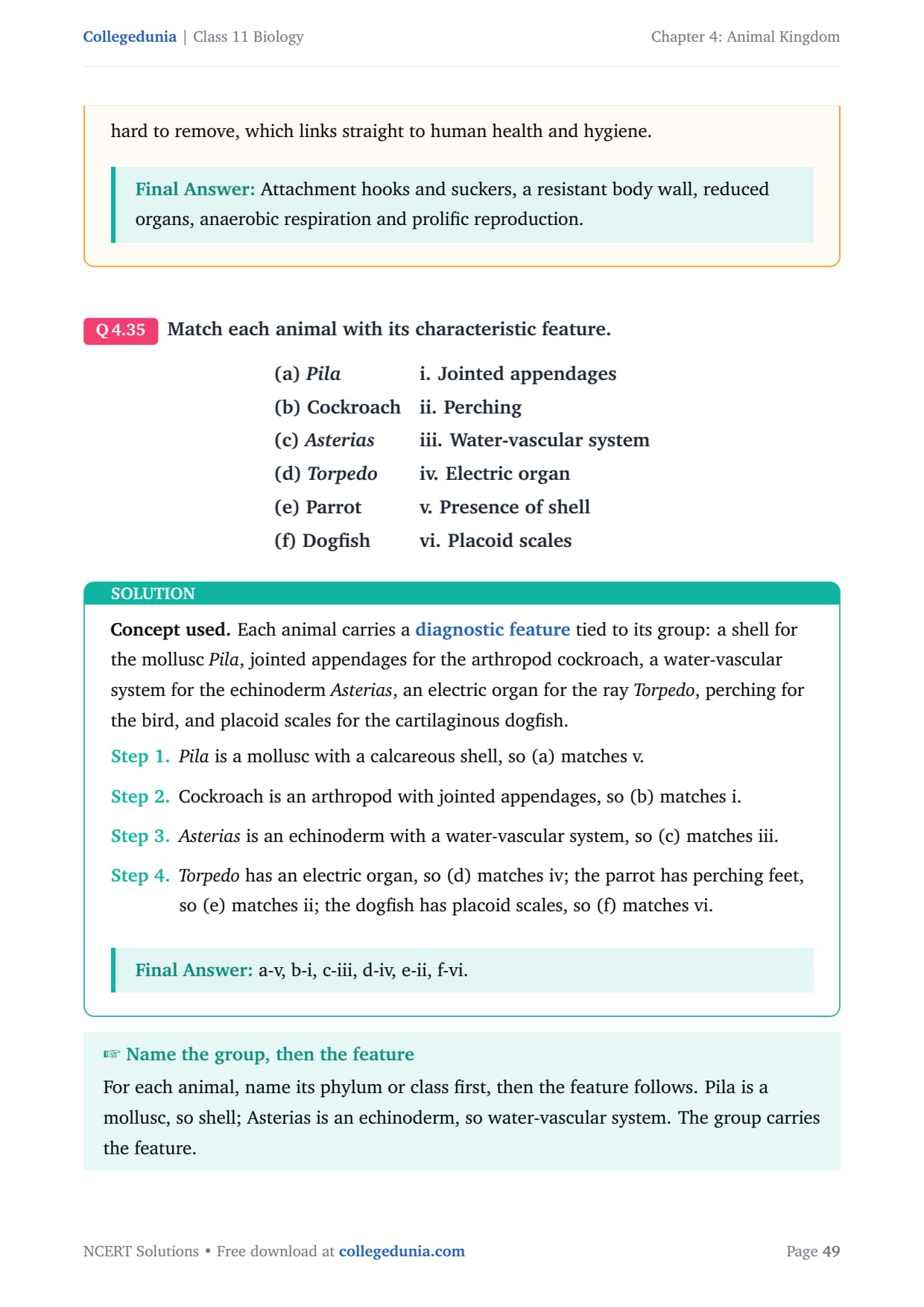
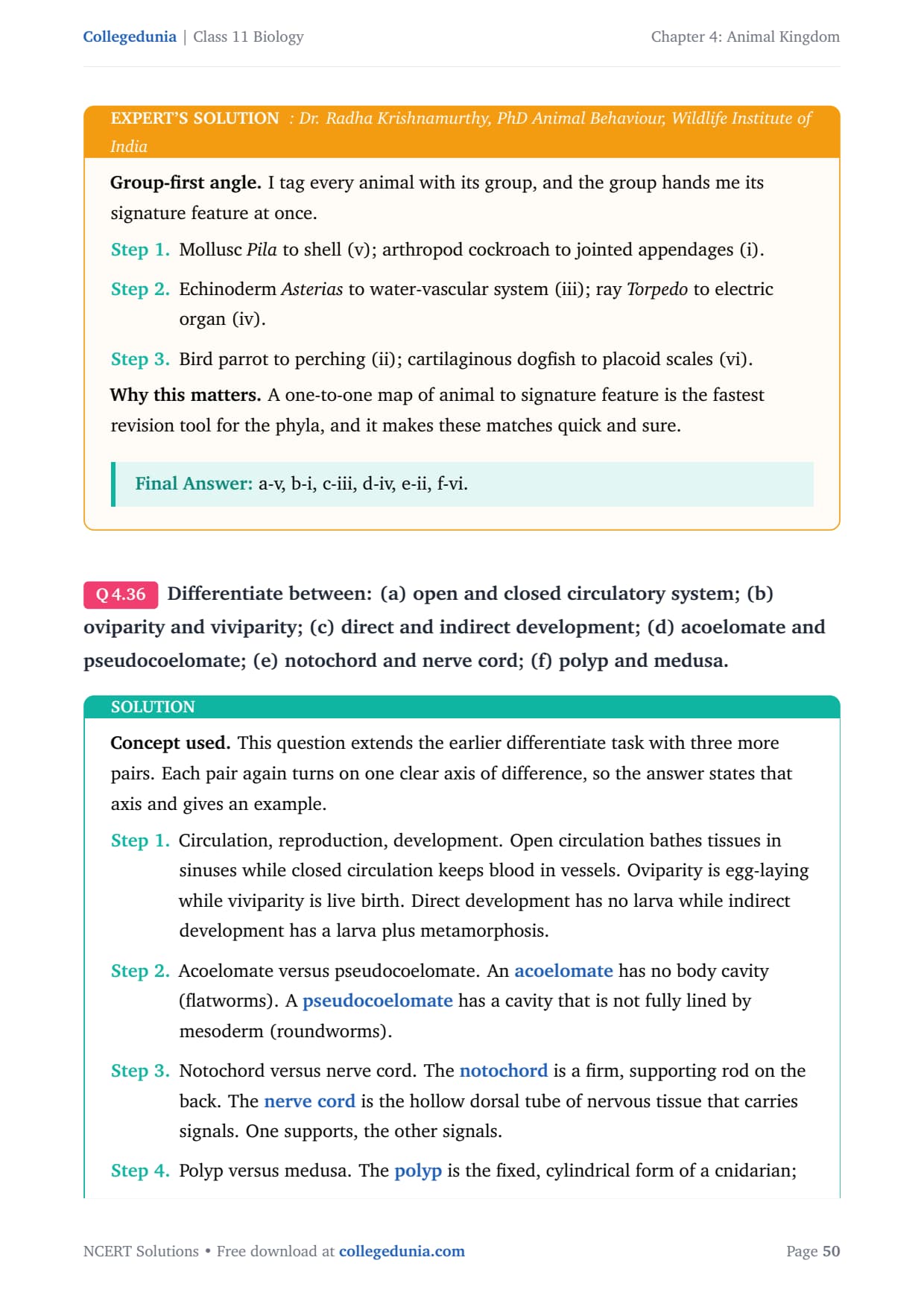
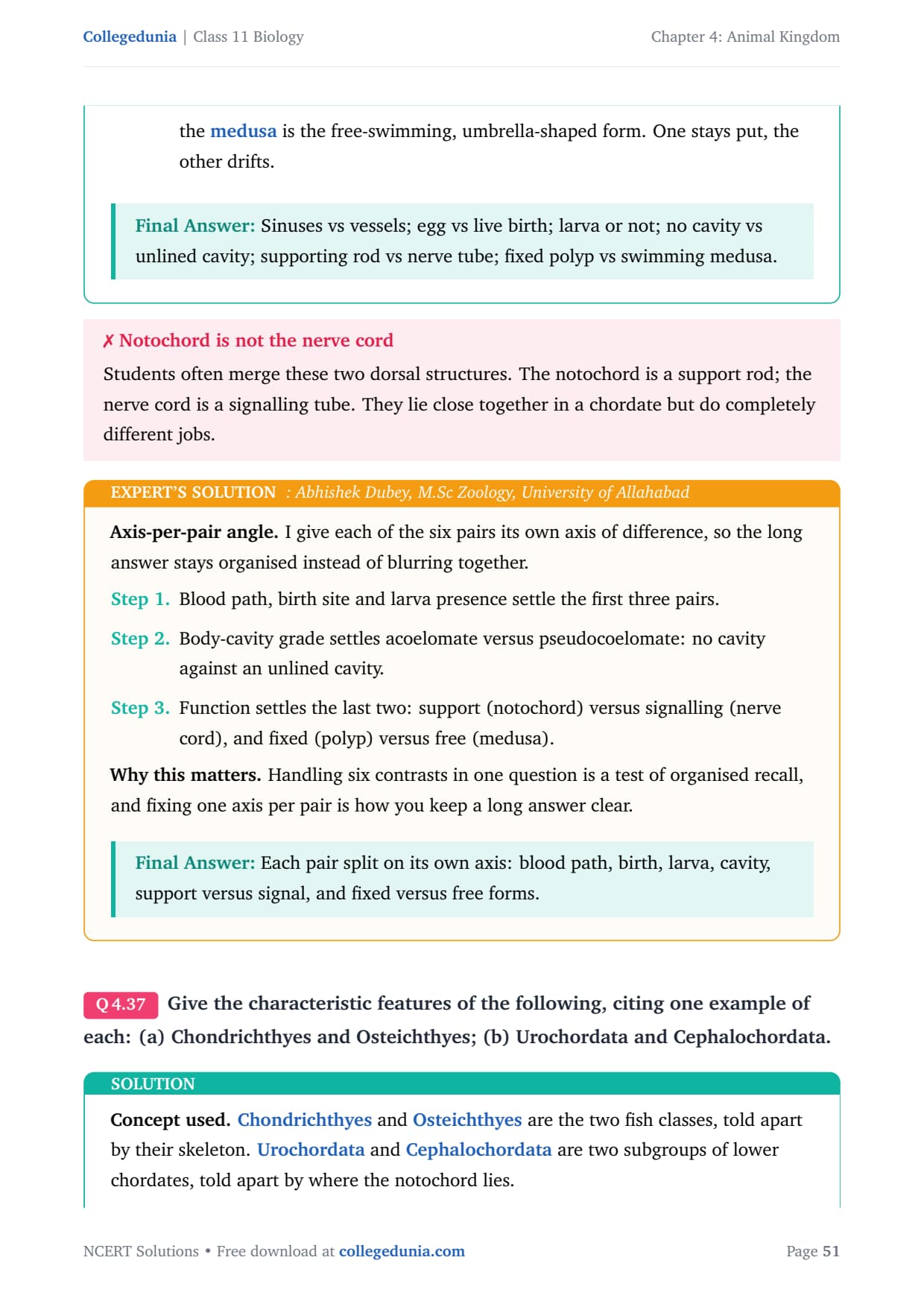
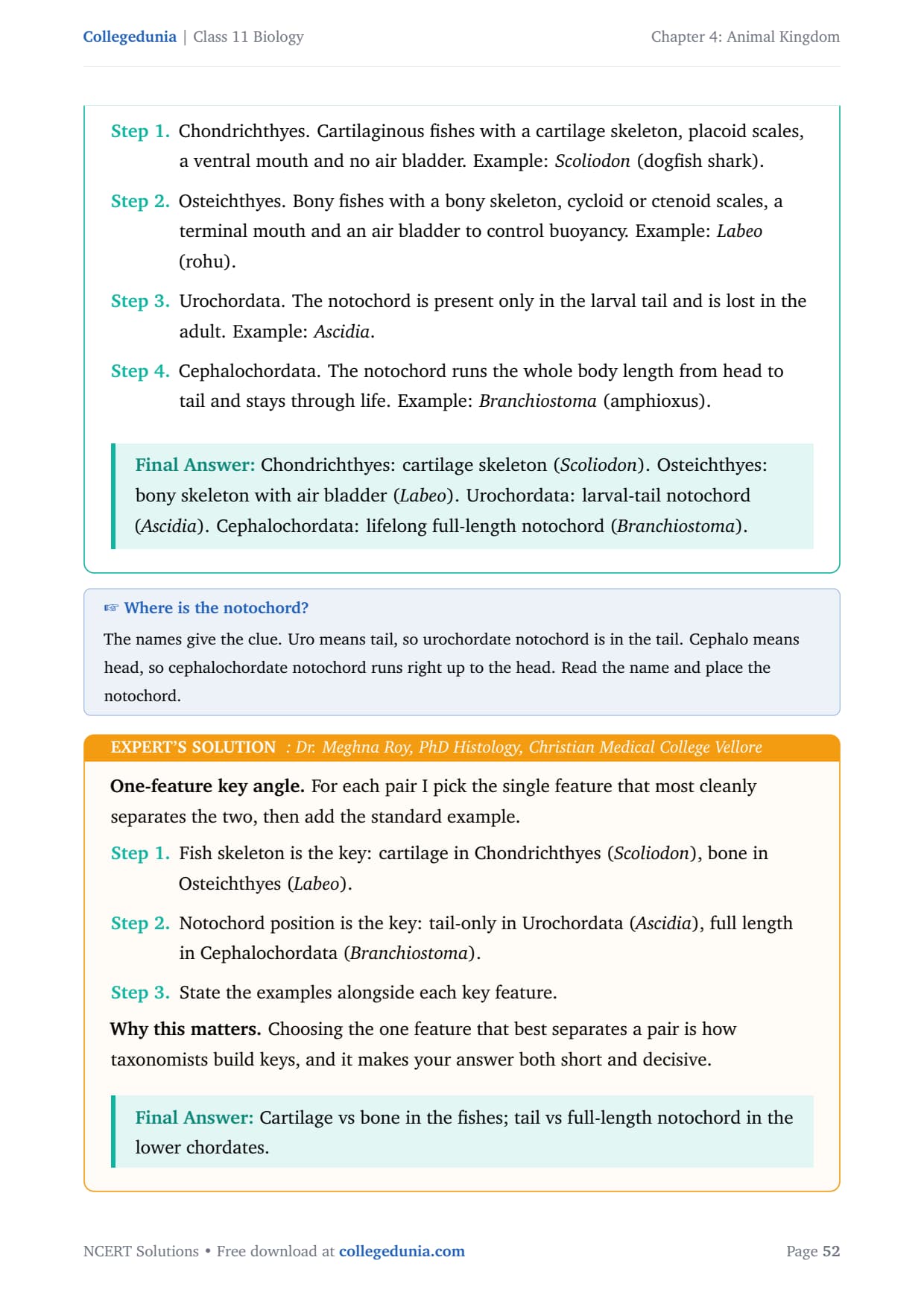
Animal Kingdom is the chapter where classification stops being about names and starts being about features. Symmetry, body cavity, germ layers, segmentation and the notochord decide where an animal sits, and the Exemplar tests each one as a rule rather than a list. Once these features are steady, every phylum from Porifera to Chordata falls into place, which is why this chapter carries so much weight in both boards and NEET.
- CBSE Weightage: 3 to 4 marks, usually one question on the basis of classification or the features of a vertebrate class
- NEET Weightage: 2 to 3 questions per year on phyla characters, coelom, symmetry and the vertebrate classes
- CUET Weightage: 1 to 2 questions on distinguishing features of animal phyla in the Biology domain paper
Every answer is checked against the official NCERT Exemplar key, and the traps this chapter is famous for, such as segmentation against metamerism and pseudocoelom against acoelomate, are pulled apart in full.
Topics Covered in the Class 11 Biology Animal Kingdom Exemplar
The 45 questions in this chapter are built on four ideas, and together they turn the animal phyla into a single system you can reason through instead of memorise. The textbook lists the features and the examples, but the Exemplar asks you to use one feature to place an animal, which is the harder and more useful skill. Working through it fixes the fundamental characters before you meet them again in Structural Organisation in Animals and in the human physiology chapters.
- Basis of classification: levels of organisation, radial and bilateral symmetry, diploblastic and triploblastic germ layers, coelomate, pseudocoelomate and acoelomate body plans, segmentation and the notochord
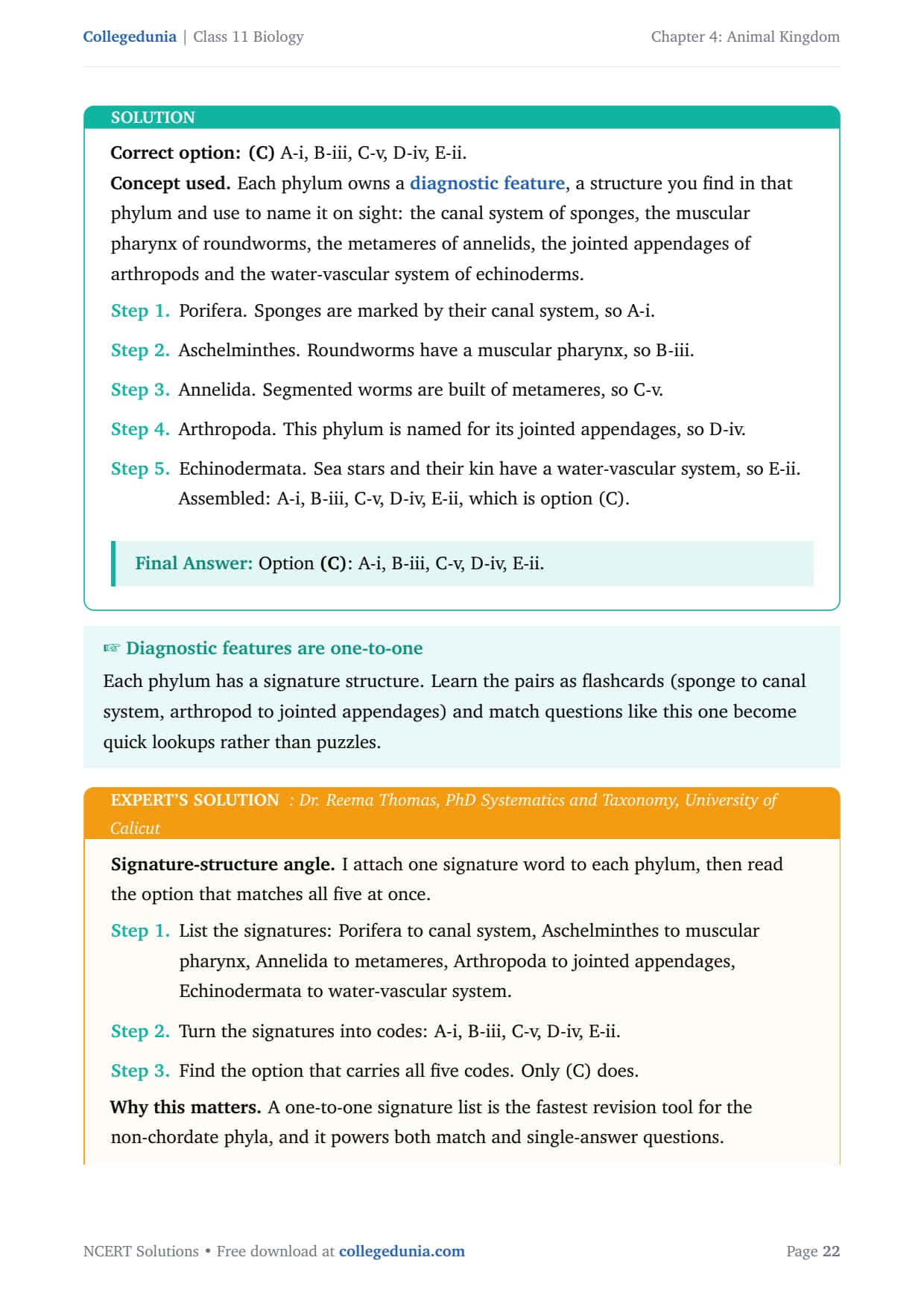
- Non-chordate phyla: Porifera, Cnidaria, Ctenophora, Platyhelminthes, Aschelminthes, Annelida, Arthropoda, Mollusca, Echinodermata and Hemichordata with their defining characters
- Chordate fundamentals: the notochord, dorsal hollow nerve cord and pharyngeal gill slits, and the subphyla Urochordata, Cephalochordata and Vertebrata
- Vertebrate classes: Cyclostomata, Chondrichthyes, Osteichthyes, Amphibia, Reptilia, Aves and Mammalia, and their scales, heart chambers, thermoregulation and mode of reproduction
Question Types in the Animal Kingdom NCERT Exemplar
Class 11 Biology Exemplar chapters use four question types, and each one carries a different demand in Animal Kingdom. The MCQ set turns on a single character, often a heart chamber or a type of scale, while the Long Answer set asks you to compare whole groups and cite examples. The Very Short Answer questions dominate this chapter, so quick, exact recall of one feature per animal is what earns the most marks. The table below shows how the 45 questions split.
| Question Type | Count | What It Tests |
|---|---|---|
| MCQ (single correct) | 13 | Placing an animal by one character such as coelom, symmetry or heart chambers |
| VSA (Very Short Answer) | 15 | One-line features and single examples like pneumatic bones or radula |
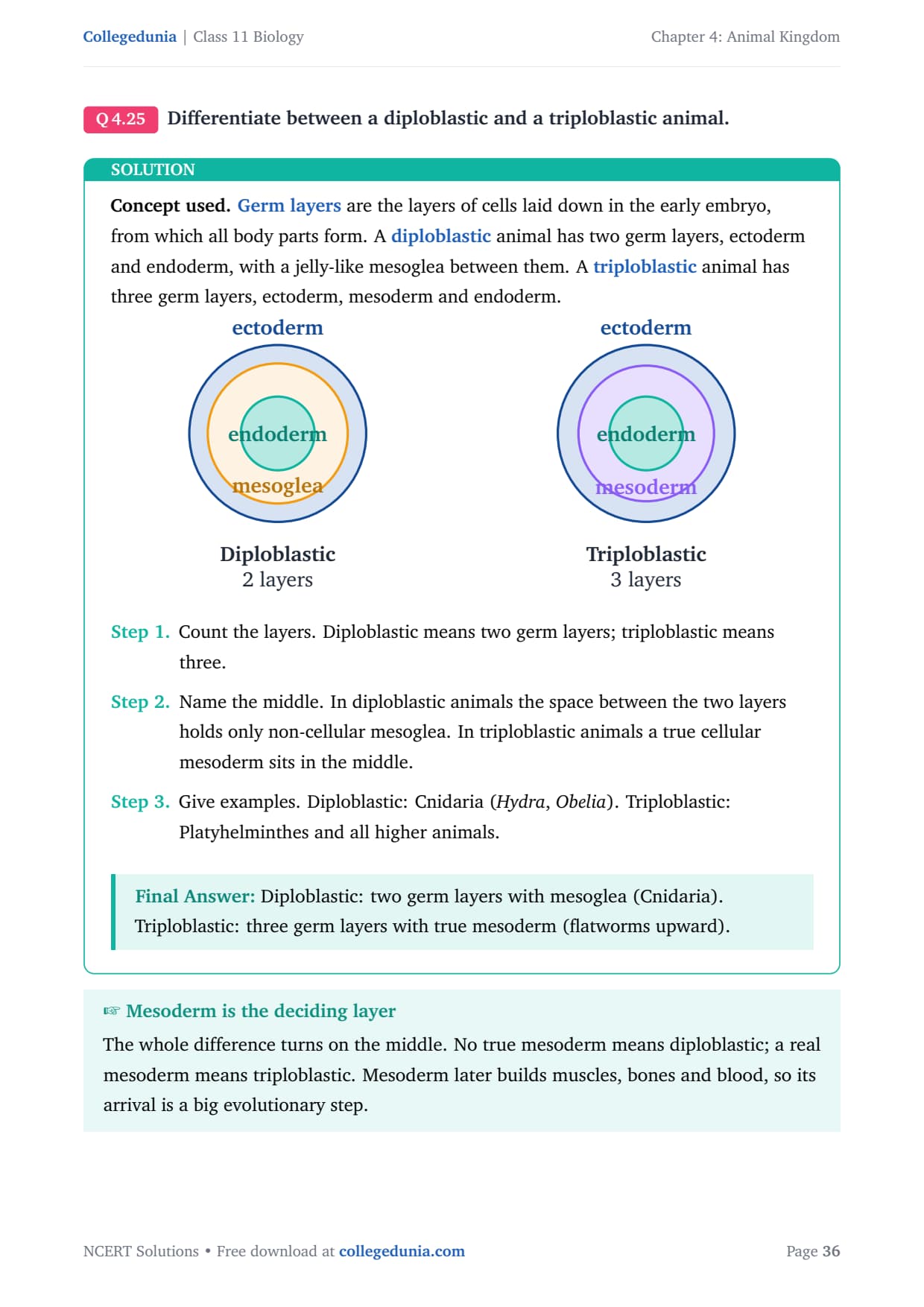
| SA (Short Answer) | 13 | Differentiating pairs such as diploblastic and triploblastic, chordate and non-chordate |
| LA (Long Answer) | 4 | Building a full comparison of phyla or the trend in heart chambers across vertebrates |
The Features That Decide the Phylum
The hardest questions in this chapter are not about examples at all. They ask you to place an animal using one deciding feature, and the Exemplar builds several problems around the traps in that feature. A pseudocoelomate is not an animal without a body cavity, it is one whose cavity is not fully lined by mesoderm, and that single point settles the position of Aschelminthes. The same care decides symmetry, segmentation and germ layers, so each of these is worth learning as a rule that identifies a group.
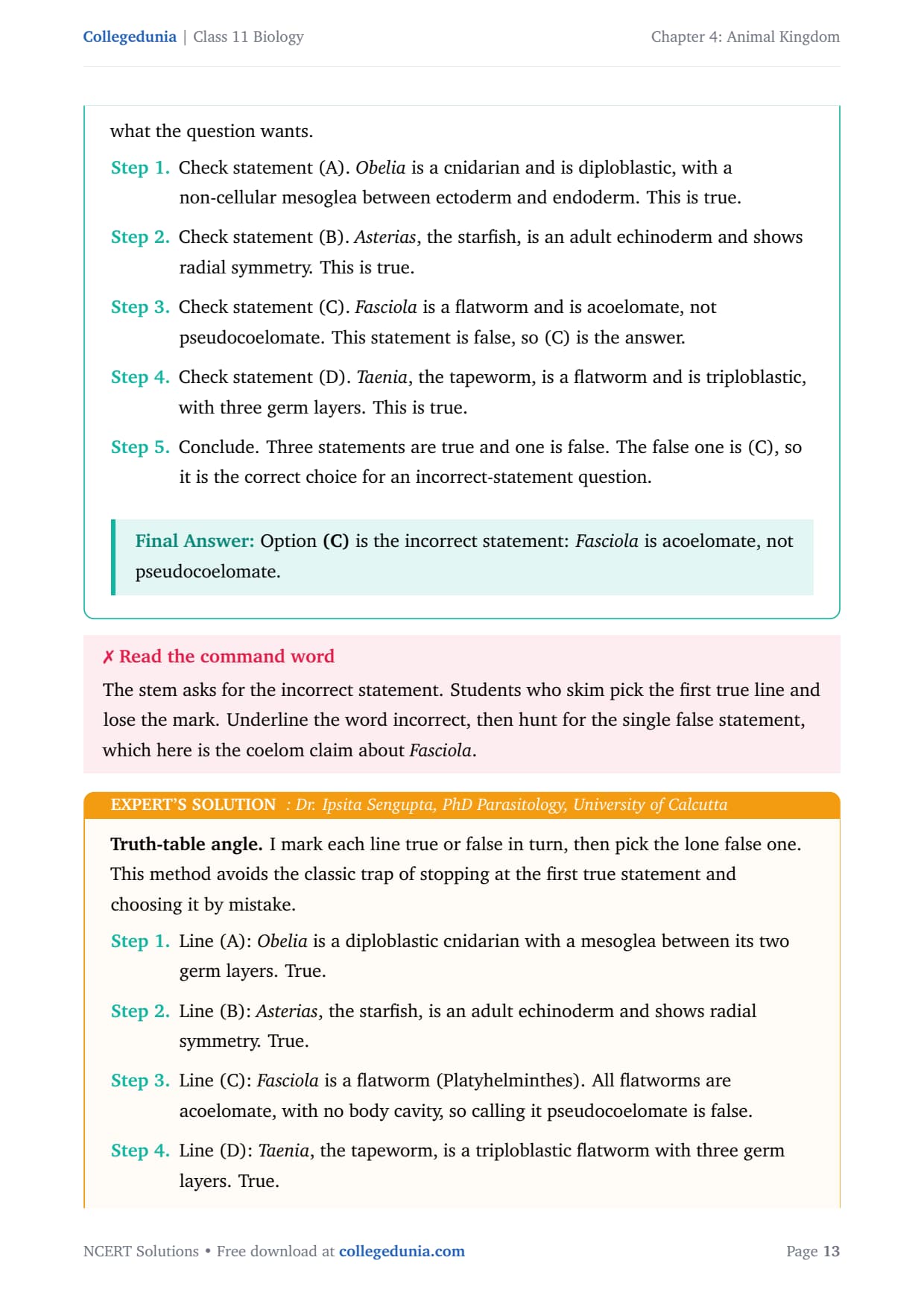
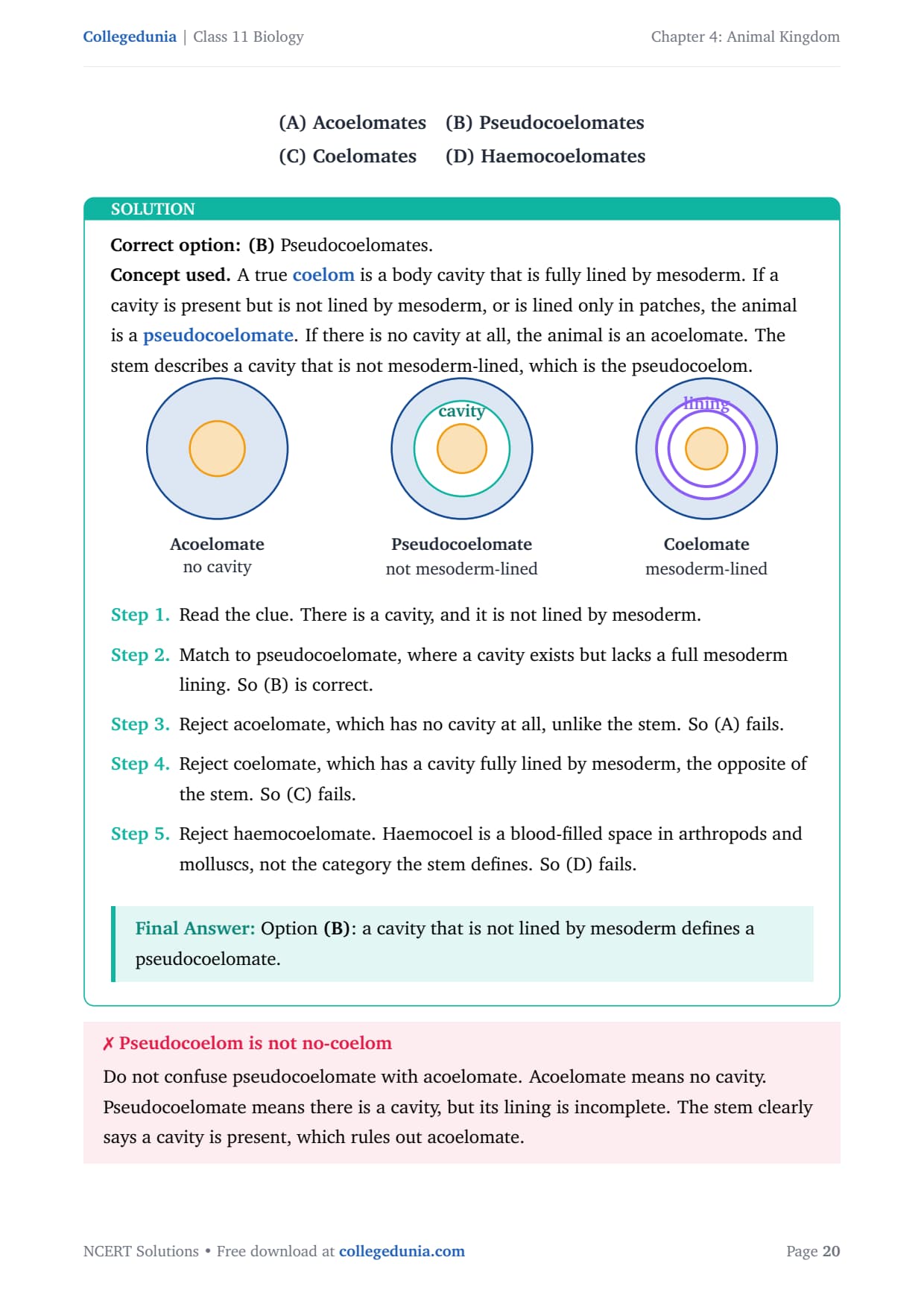
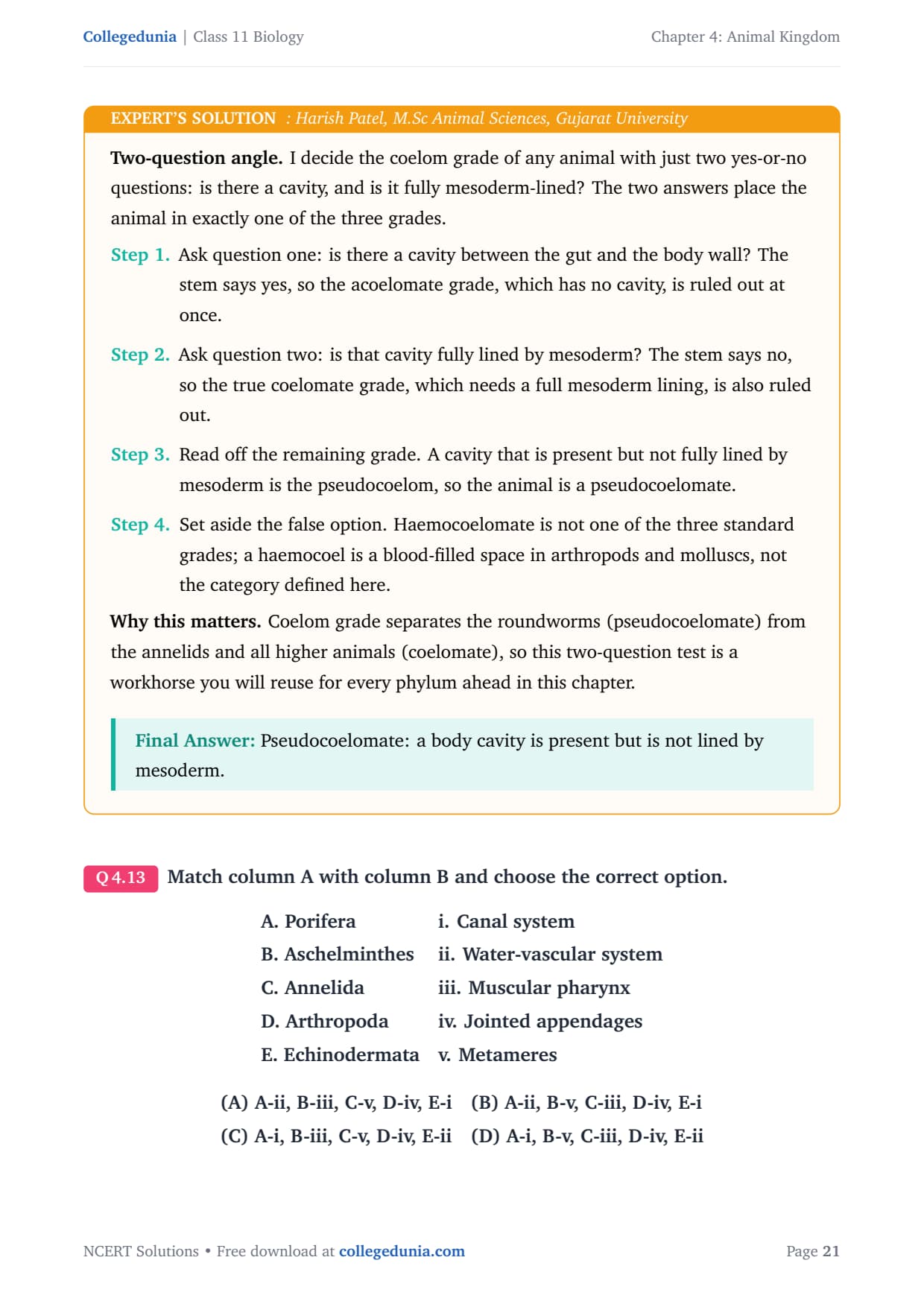
- Coelom is a three-way split, not a yes or no: coelomates have a mesoderm-lined cavity, pseudocoelomates like Aschelminthes have a cavity without a full mesodermal lining, and acoelomates like Platyhelminthes have none
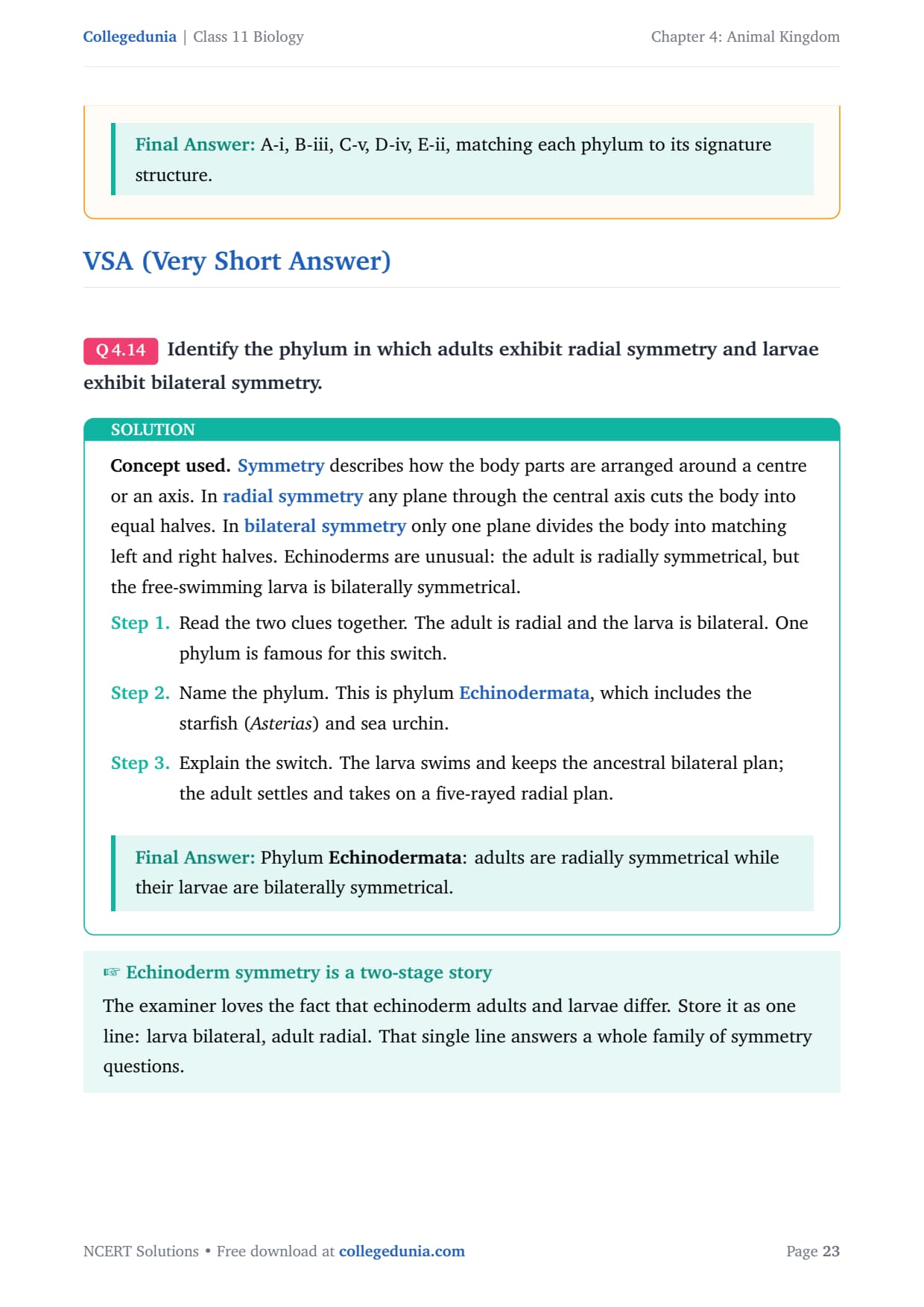
- Symmetry can change with the life stage: echinoderm adults show radial symmetry while their larvae are bilateral, which is why the phylum is placed with the bilateral animals
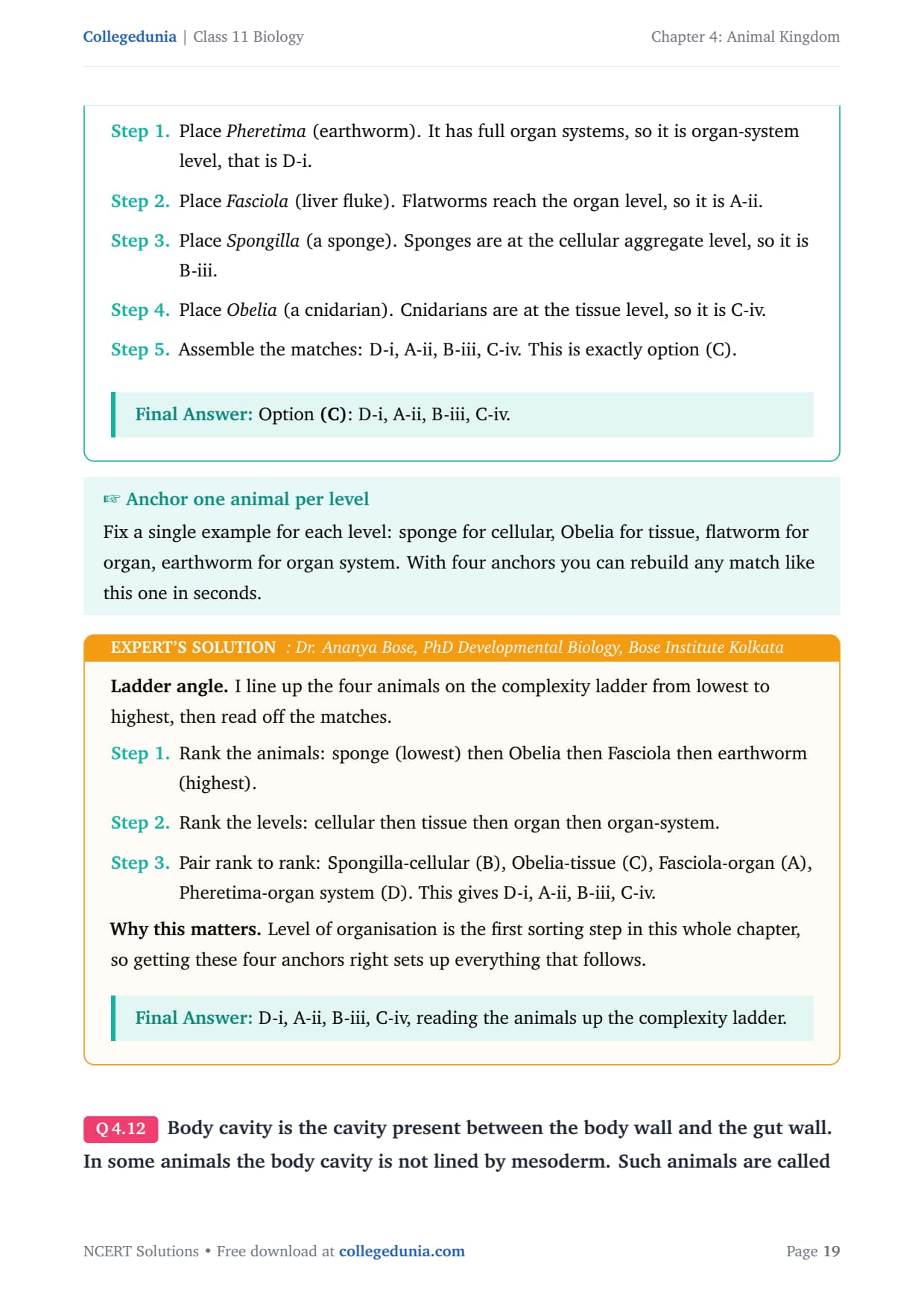
- Segmentation must be true to count: only true metamerism, with serial repetition of internal organs as in Annelida, qualifies, and surface rings alone do not
- Germ layers set the ceiling: diploblastic animals build only two layers and stay simple, while triploblastic animals gain mesoderm and with it real organs
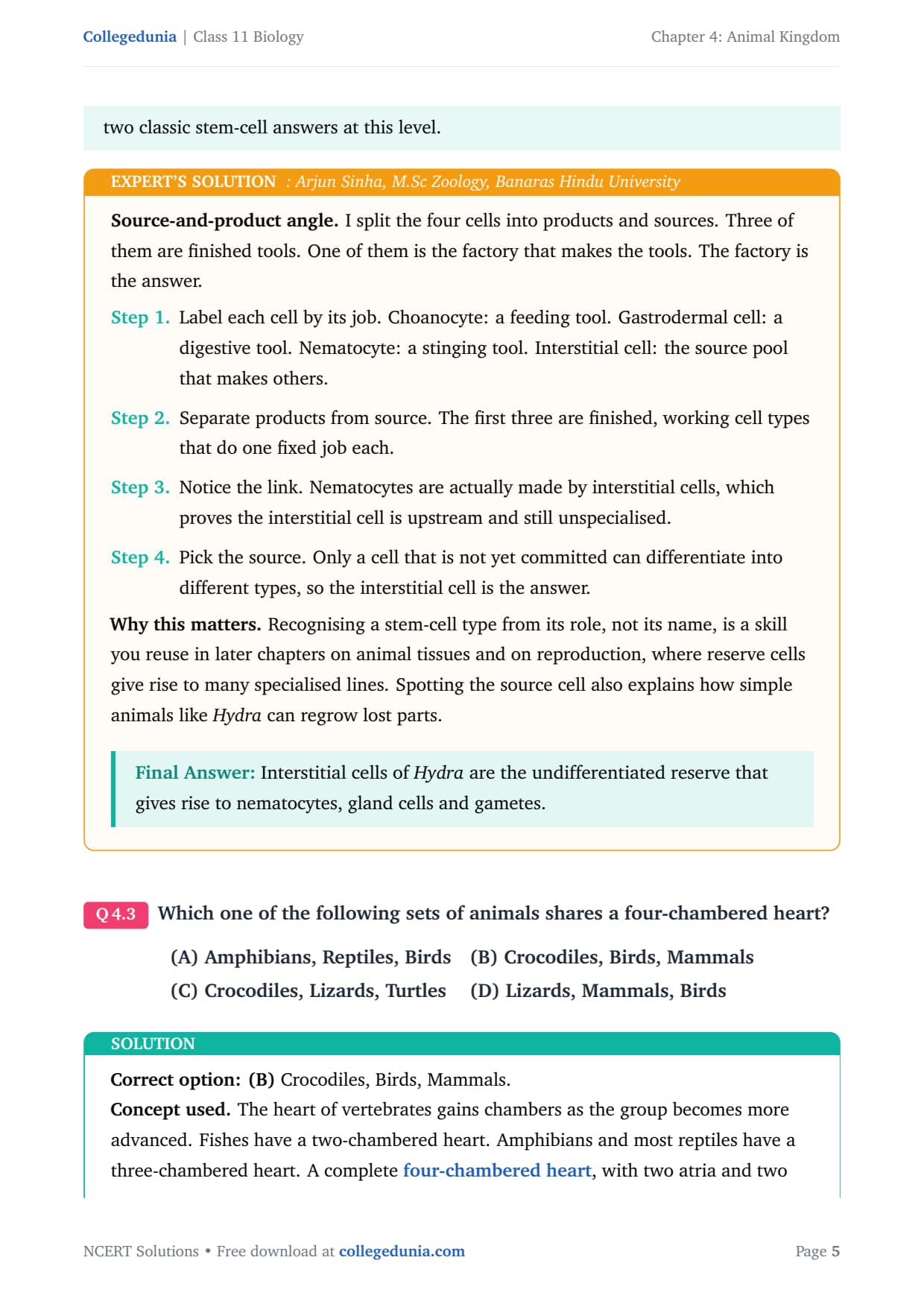
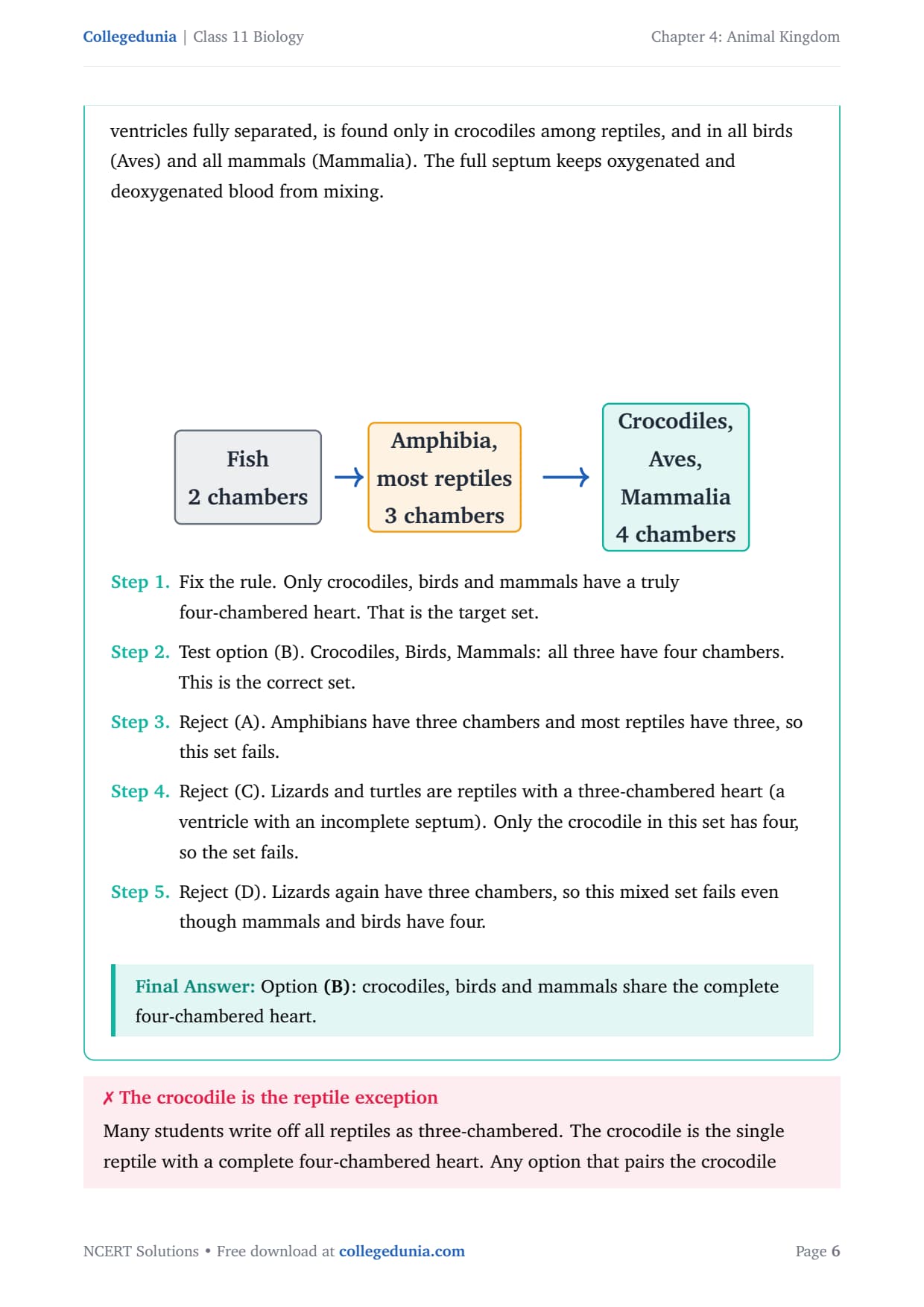
One feature, read exactly, is usually enough to name the phylum, and the Exemplar makes you prove it. A crocodile sits with birds and mammals on the strength of a single character, its four-chambered heart, even though it is a reptile. Each answer in the PDF names the deciding feature and explains why the tempting alternative does not work.
Common Mistakes Students Make in Animal Kingdom
The Exemplar plants wrong options and half-right features on purpose. Four errors catch most students in this chapter, and each is flagged in the PDF at the exact question where it appears. Learning to spot them early saves marks across the whole diversity unit, because the same characters return in Structural Organisation in Animals and in every physiology chapter that follows.
- Segmentation against metamerism: true metamerism means the body and its internal organs repeat serially, as in earthworms, so a merely ringed surface is not enough. Students call any segmented-looking body metameric and lose the mark.
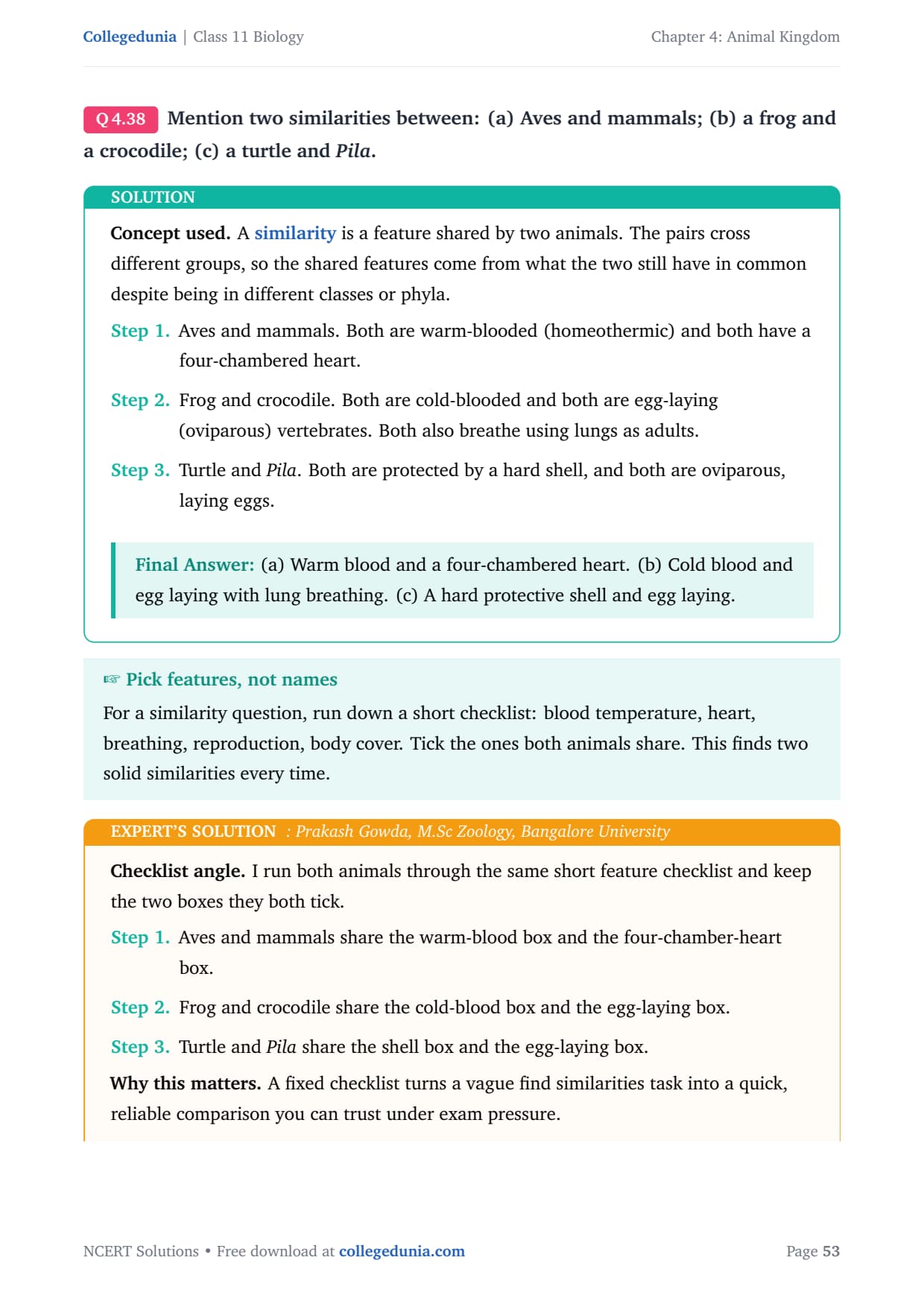
- The crocodile heart exception: reptiles have a three-chambered heart, but the crocodile has four chambers. A question that sets crocodiles beside birds and mammals is testing this exception, not a rule about all reptiles.
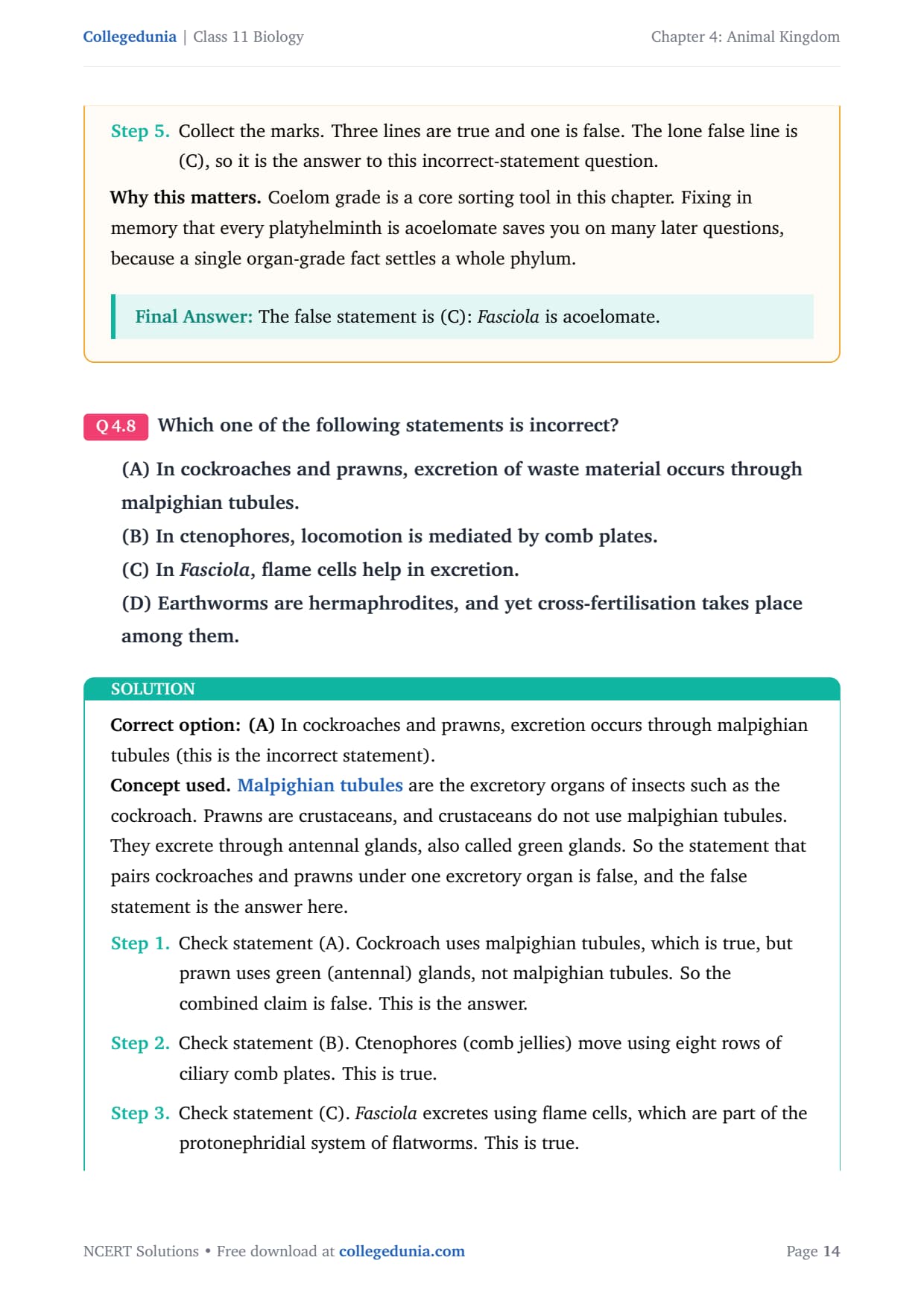
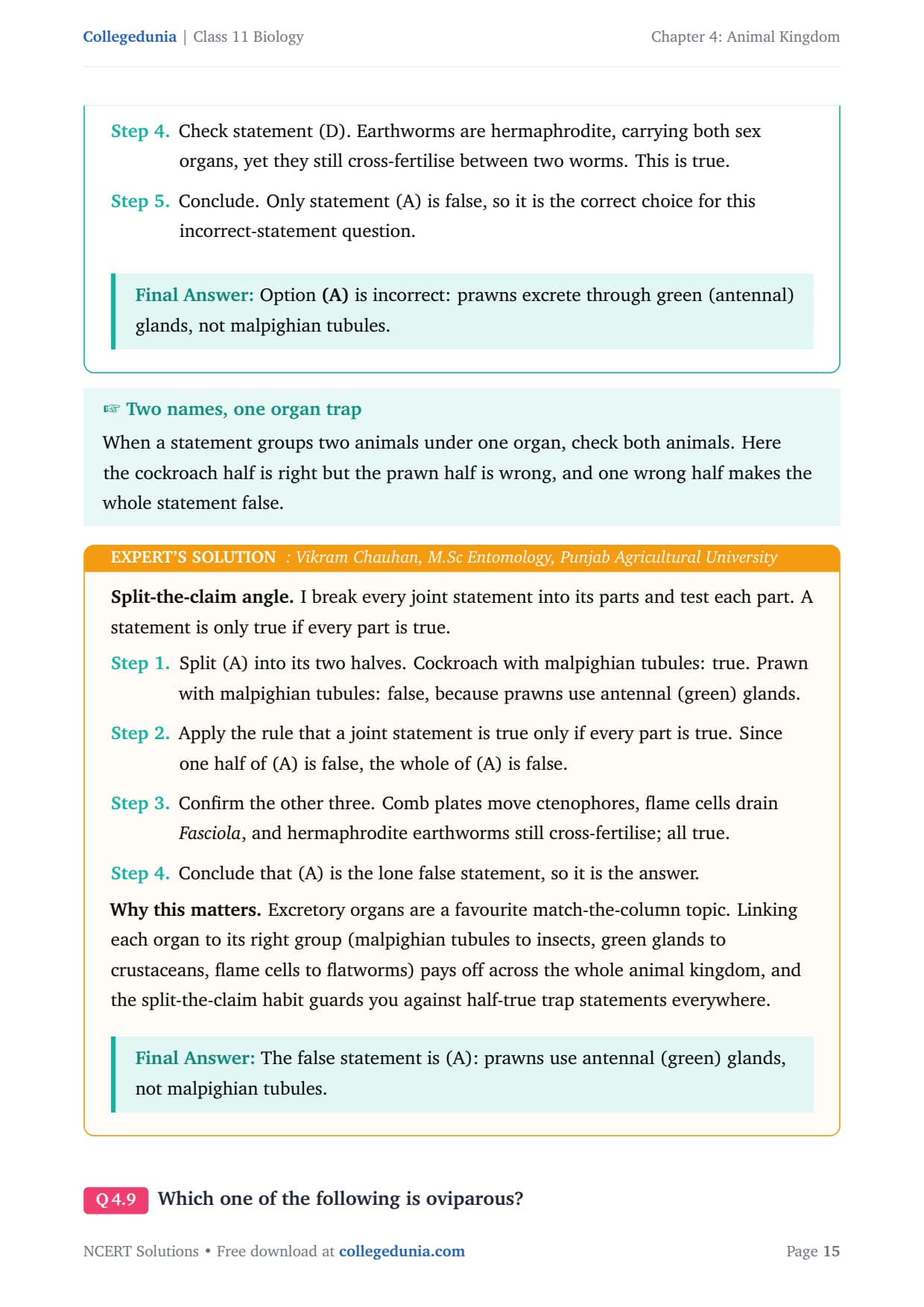
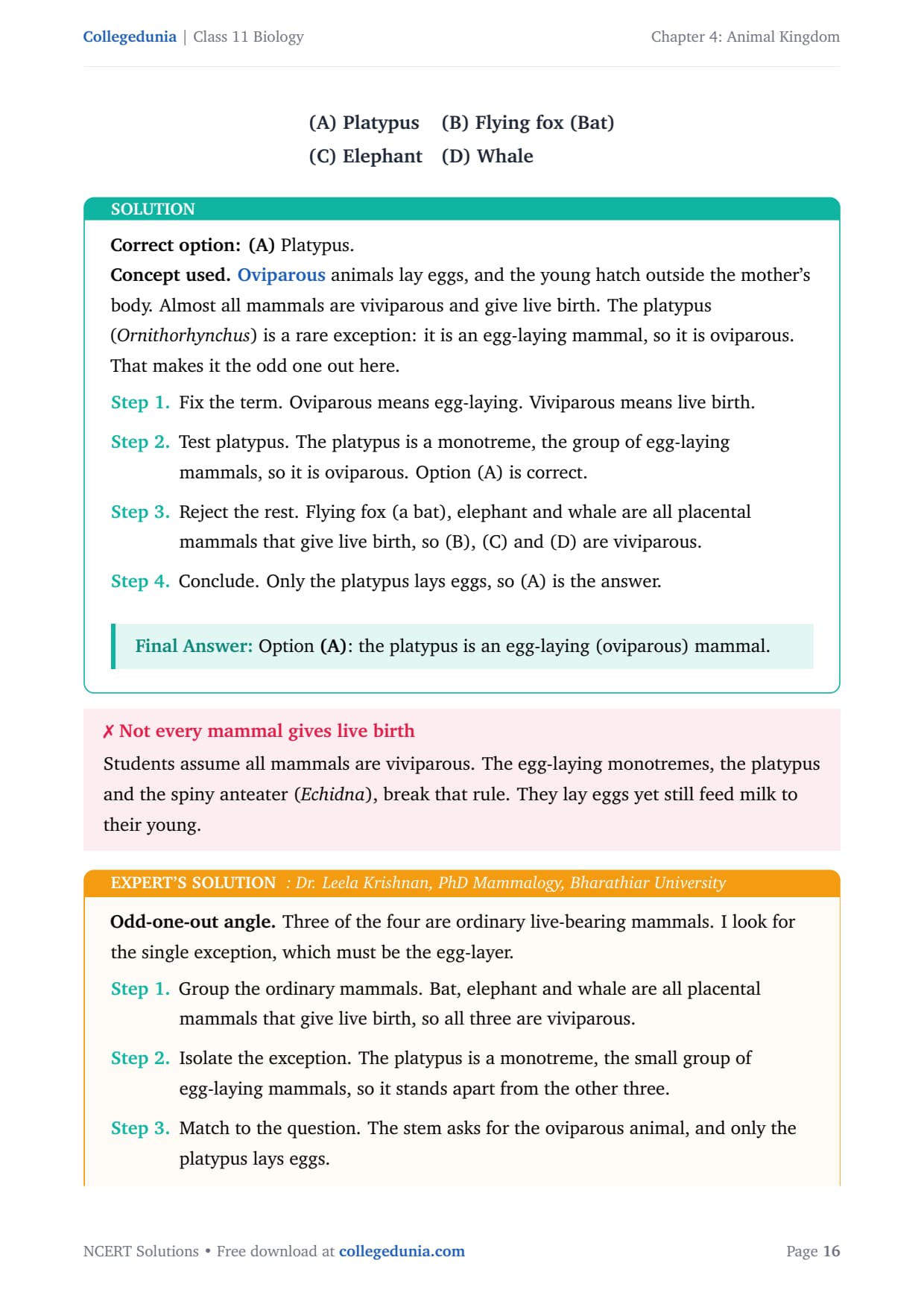
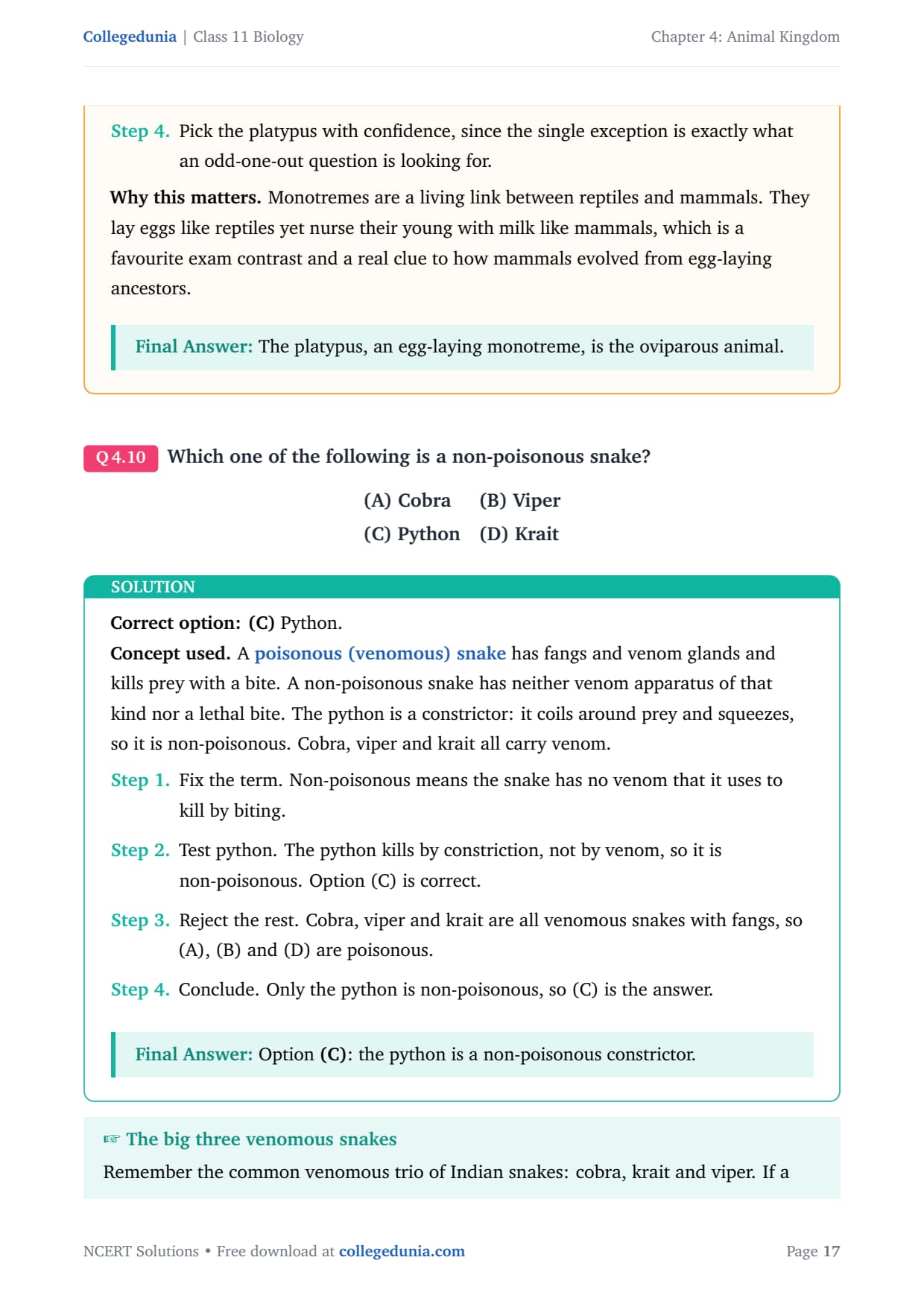
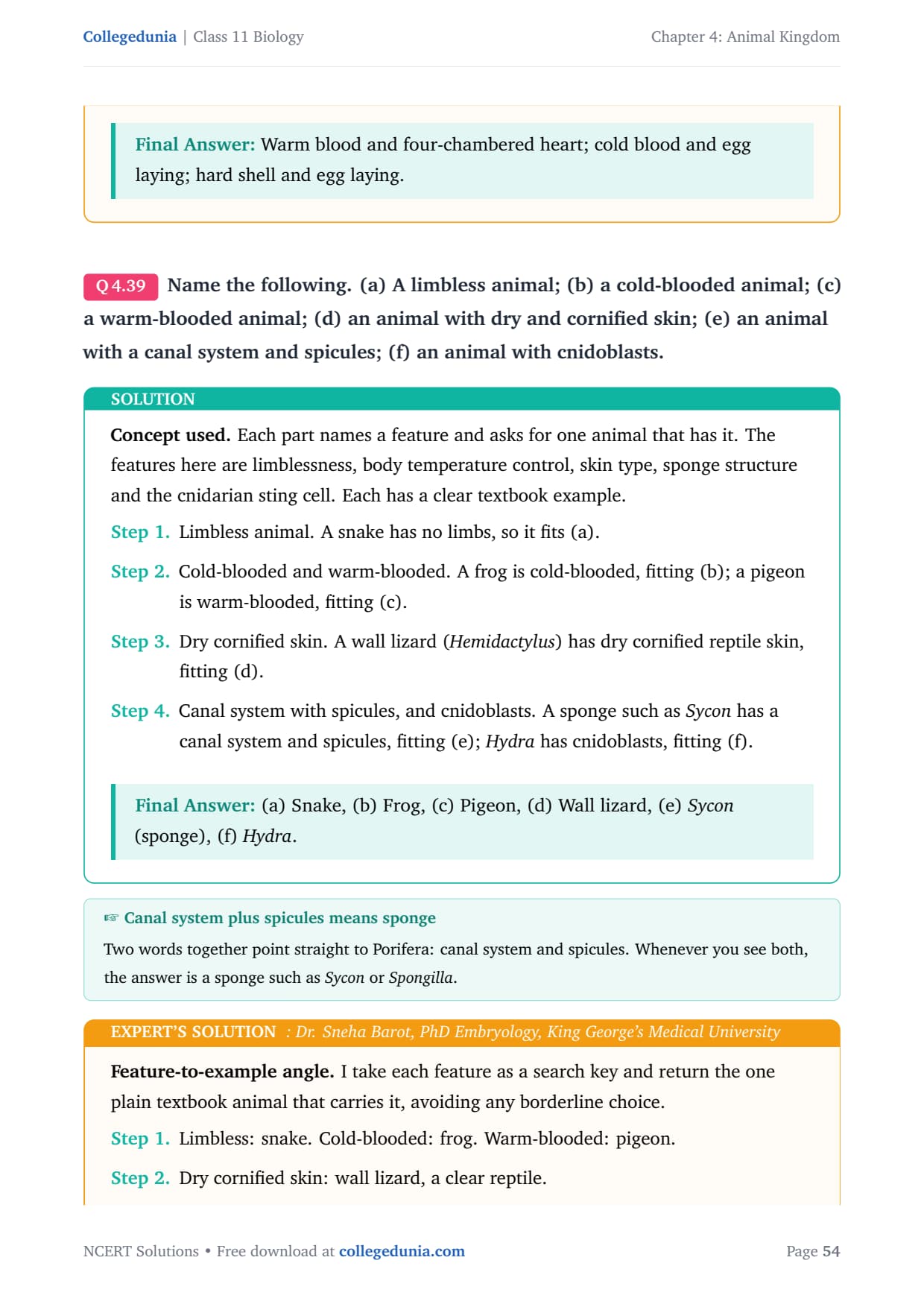
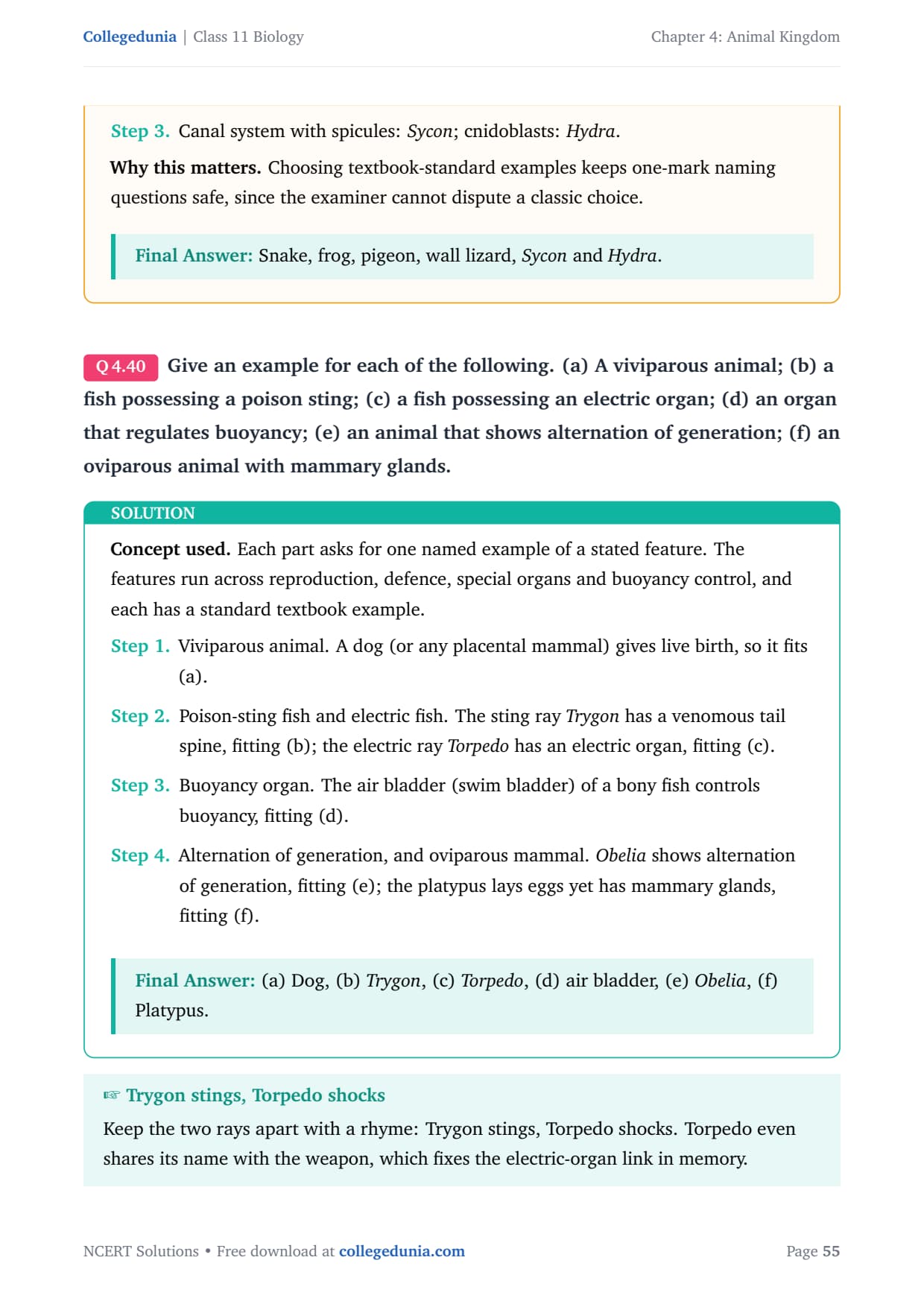
- Every mammal gives live birth: the egg-laying monotremes, Ornithorhynchus and Echidna, are oviparous mammals. An oviparous question that lists a mammal is checking whether you remember them.
- Pseudocoelom against acoelomate: Aschelminthes are pseudocoelomate, meaning they do have a body cavity, just one not lined fully by mesoderm. Reading pseudocoelom as no coelom reverses the answer.
How the Exemplar Steps Up from the Class 11 Biology Textbook
The textbook gives you a phylum and its list of characters and asks you to state them back. The Exemplar gives you a character and asks which phylum it names, which is the reverse direction and the one that boards and NEET actually test. This is why students who only read the chapter feel the Exemplar is unfair. It is not harder in content, it is harder in the way it asks.
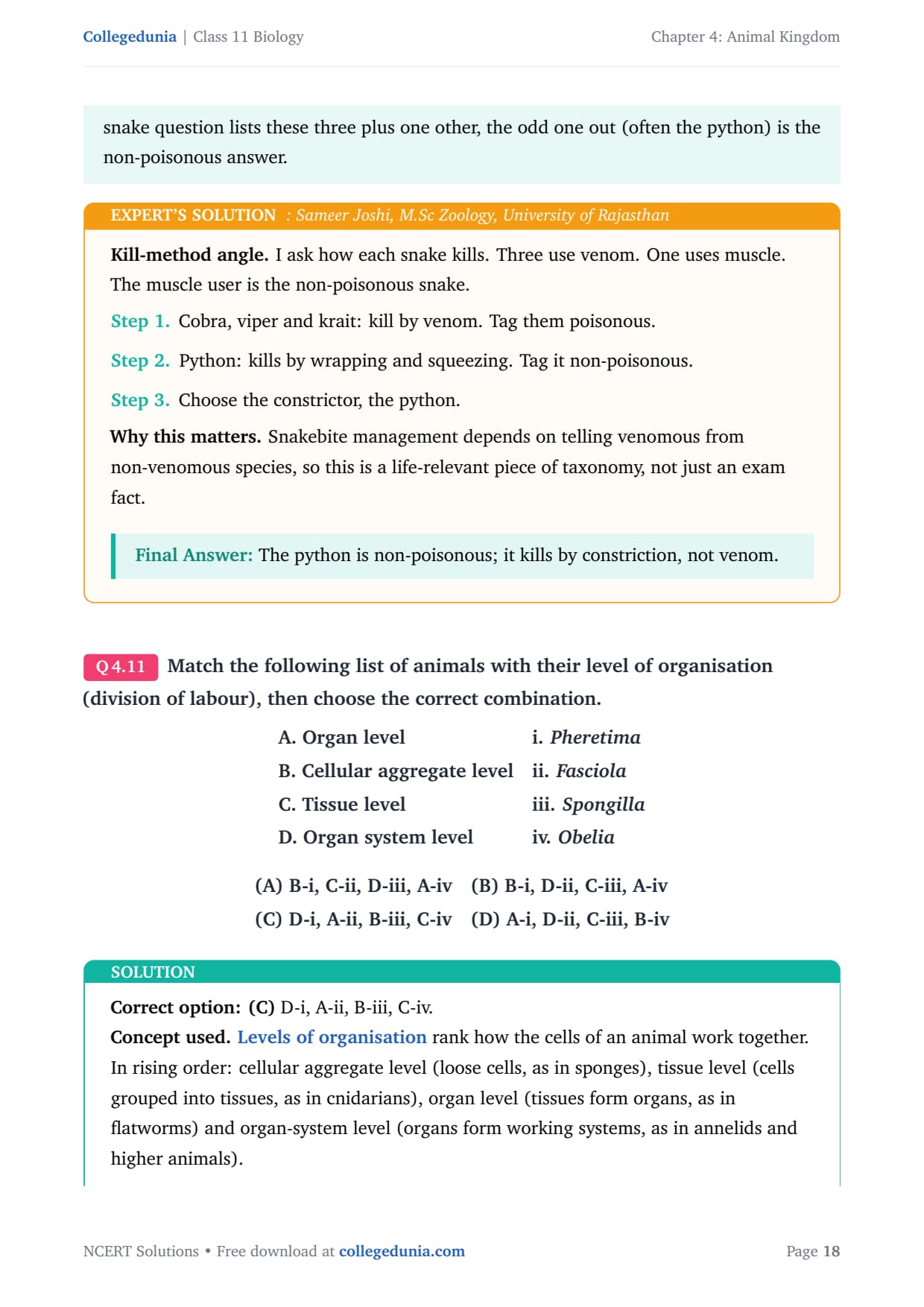
The question that asks you to identify the phylum whose adults are radially symmetric while the larvae are bilateral shows the gap clearly. The textbook simply states that echinoderms are radially symmetric, so a quick reader ties the phylum to radial symmetry alone. The Exemplar hands you the larva as well and waits. To answer, you have to know that the bilateral larva reveals the true affinity of Echinodermata with the bilaterally symmetric animals, a point the textbook mentions once and never forces you to use. The heart-chambers question works the same way, tracing the increase from two chambers in fishes to four in birds and mammals and asking you to read a trend rather than recall a single fact. Working these builds judgement, not recall, which is exactly what Animal Kingdom is meant to leave you with.
How to Use These NCERT Exemplar Solutions for Boards, NEET and CUET
Attempt each question before you open the solution. This chapter rewards the attempt more than the reading, because the features look obvious until you try to apply them to a named animal. Read the question, commit to the deciding character in your own words, and only then check it against the PDF. The gap between your feature and the model answer is where the marks live.
- Boards: the Short Answer and Long Answer sets match the 3 and 4 mark board pattern, especially the difference tables and the trend in heart chambers across the vertebrate classes
- NEET: work the MCQ and Very Short Answer sets first, since NEET repeats phylum characters, coelom, symmetry and the vertebrate classes at exactly that level every year
- CUET: the feature-based MCQ set is the closest practice for the domain paper, which favours placing an animal from a single distinguishing character
Student Feedback
Students using Collegedunia's Class 11 Biology Exemplar Solutions told us that the questions on the basis of classification, especially coelom and symmetry, were the hardest part of this chapter, well above remembering phylum examples. Around 7 in 10 said that seeing the pseudocoelom, echinoderm larva and crocodile heart questions solved with the deciding feature named each time finally made the phyla stop blurring together.
Other Resources for Class 11 Biology Animal Kingdom
Collegedunia has the full set of study material for this chapter. Use the Notes for a first read, then the Exemplar once the classification features are steady, and keep the NCERT Solutions and Formula Sheet open for quick revision alongside.
Also Check:
- NCERT Solutions for Class 11 Biology Chapter 4
- Class 11 Biology Chapter 4 Notes
- Class 11 Biology Chapter 4 Formula Sheet
- Class 11 Biology Chapter 4 NCERT Book PDF
- Class 11 Biology Chapter 4 Exemplar Book PDF
NCERT Exemplar Solutions for Other Class 11 Biology Chapters
Each chapter below has the same step-by-step treatment and a free PDF. All 19 chapters have an NCERT Exemplar book chapter behind them, so the list covers every one.
Animal Kingdom Class 11 NCERT Exemplar Solutions FAQs
Ques. How many questions are there in the Class 11 Biology Animal Kingdom Exemplar?
Ans. Chapter 4 has 45 questions. They are split into 13 MCQ, 15 Very Short Answer, 13 Short Answer and 4 Long Answer questions. All 45 are solved in the free PDF on this page.
Ques. What is the difference between segmentation and metamerism?
Ans. Metamerism is true segmentation, where both the body and its internal organs are repeated serially along the length, as seen in Annelida. A surface that merely looks ringed is not metameric. The Exemplar plants an option for students who treat any segmented-looking body as metameric, so the answer turns on whether the internal organs repeat too.
Ques. Which reptile has a four-chambered heart?
Ans. The crocodile is the only reptile with a four-chambered heart, while other reptiles have a three-chambered heart. This is why a question that groups crocodiles with birds and mammals is correct, since all three share the four-chambered heart. It is an exception to remember, not a rule for the whole class Reptilia.
Ques. What is metagenesis and which animal shows it?
Ans. Metagenesis is the alternation between an asexual polyp generation and a sexual medusa generation in the life cycle of some cnidarians, for example Obelia. It is often confused with metamorphosis, which is a change in body form during development, as in a frog. The Exemplar tests the two terms apart, so naming the correct example is what secures the mark.
Ques. Is the NCERT Exemplar enough for NEET questions from Animal Kingdom?
Ans. For this chapter it covers the ground well. NEET asks two to three questions a year on phylum characters, coelom, symmetry and the vertebrate classes, and they sit at the level of the Exemplar MCQ and Very Short Answer sets. Work all 13 MCQs and the 15 Very Short Answers before moving to a coaching module.



Comments