




NCERT Exemplar Solutions for Class 11 Biology Chapter 19 Chemical Coordination and Integration solve all 40 questions from the Exemplar book. Every MCQ, Very Short Answer, Short Answer and Long Answer problem is answered step by step in the free 63-page PDF, updated for the 2026-27 syllabus.
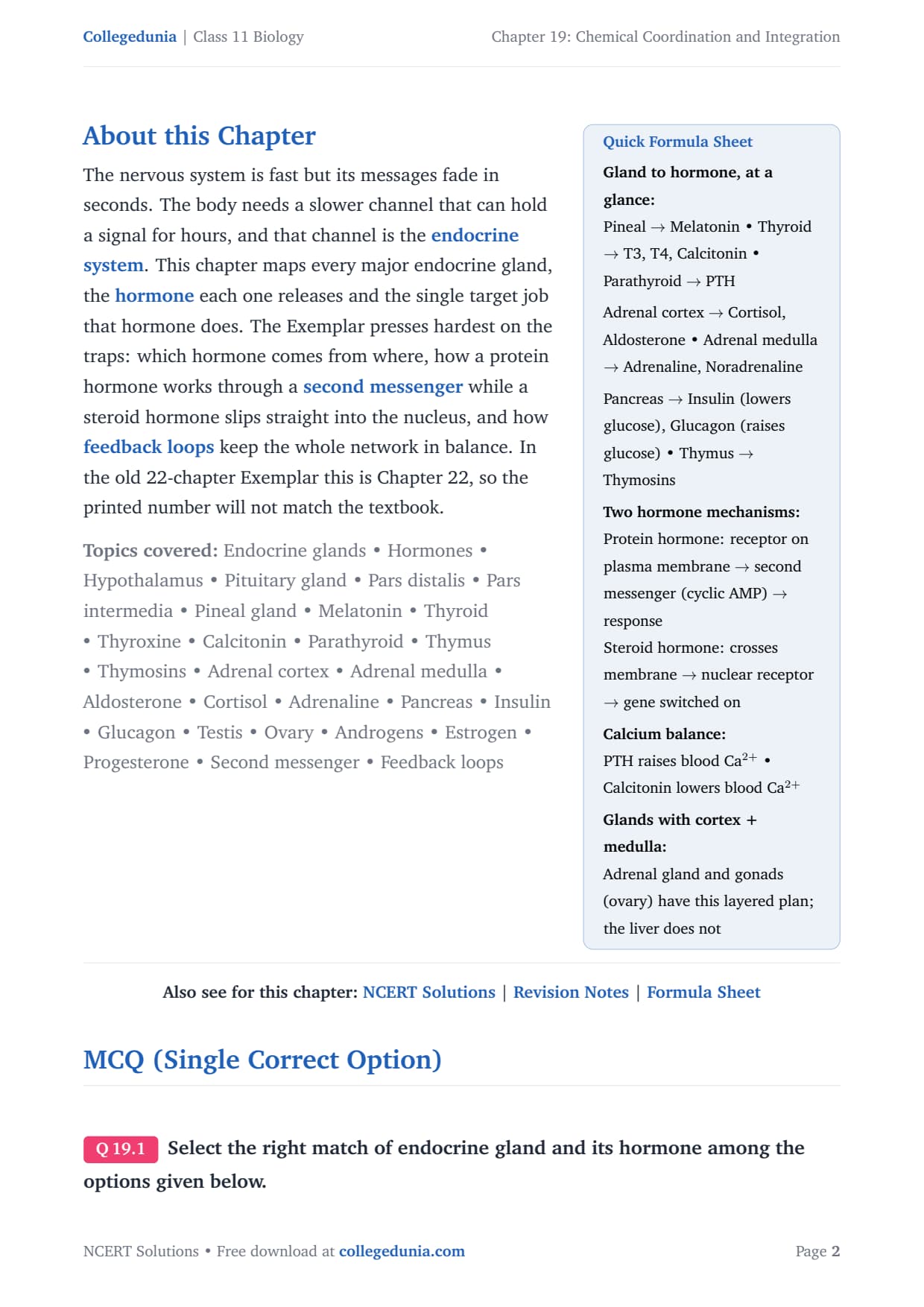
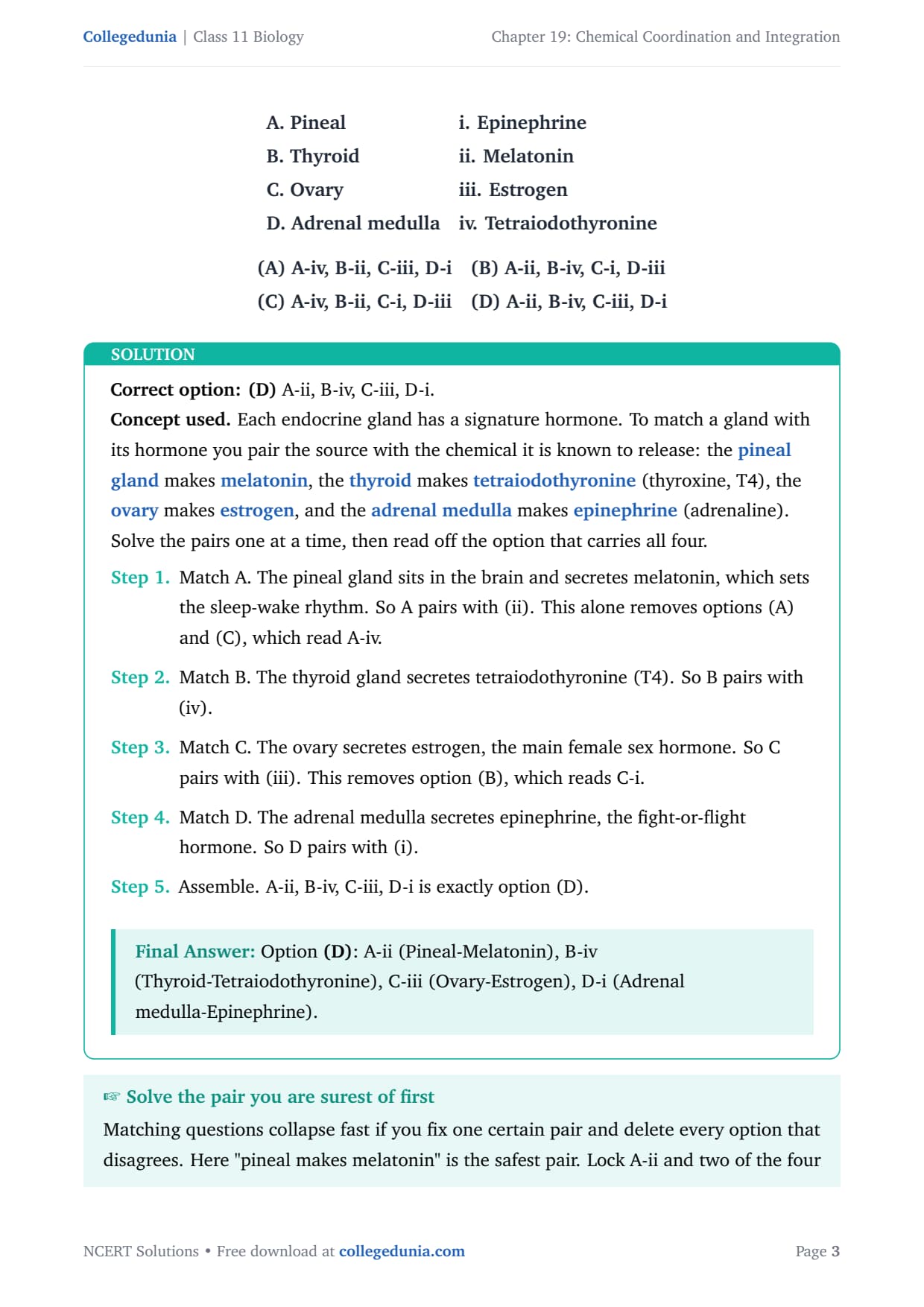
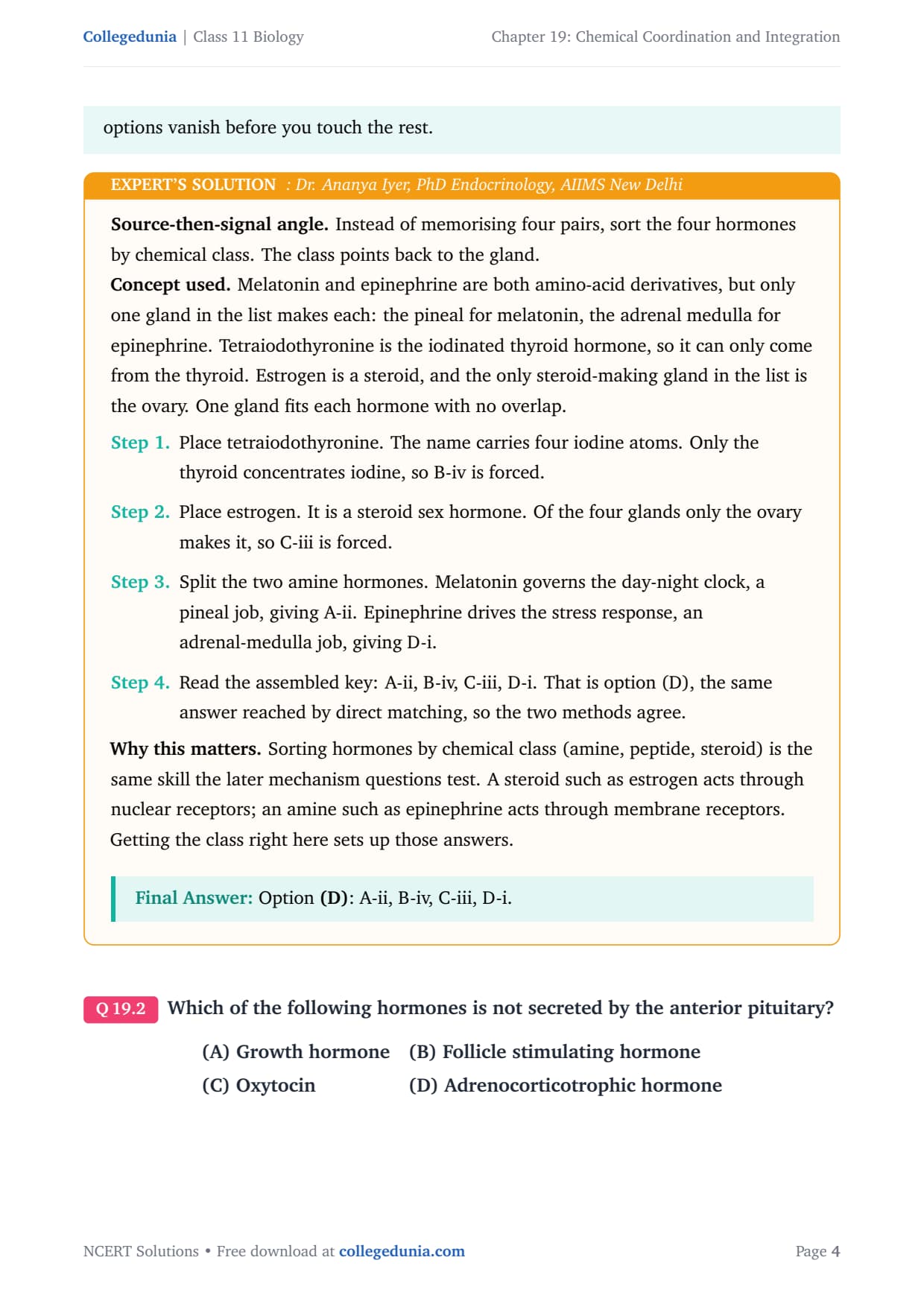
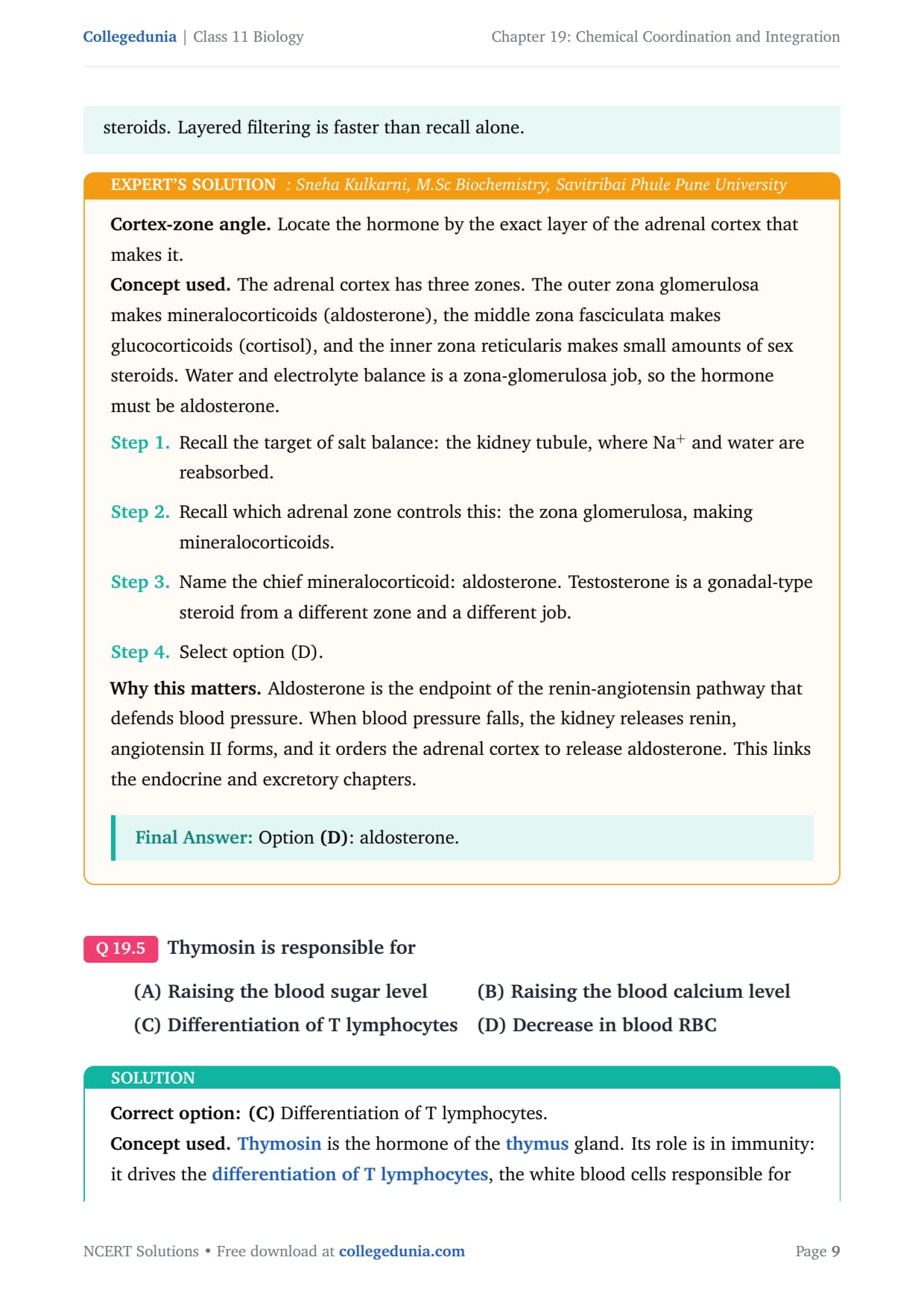
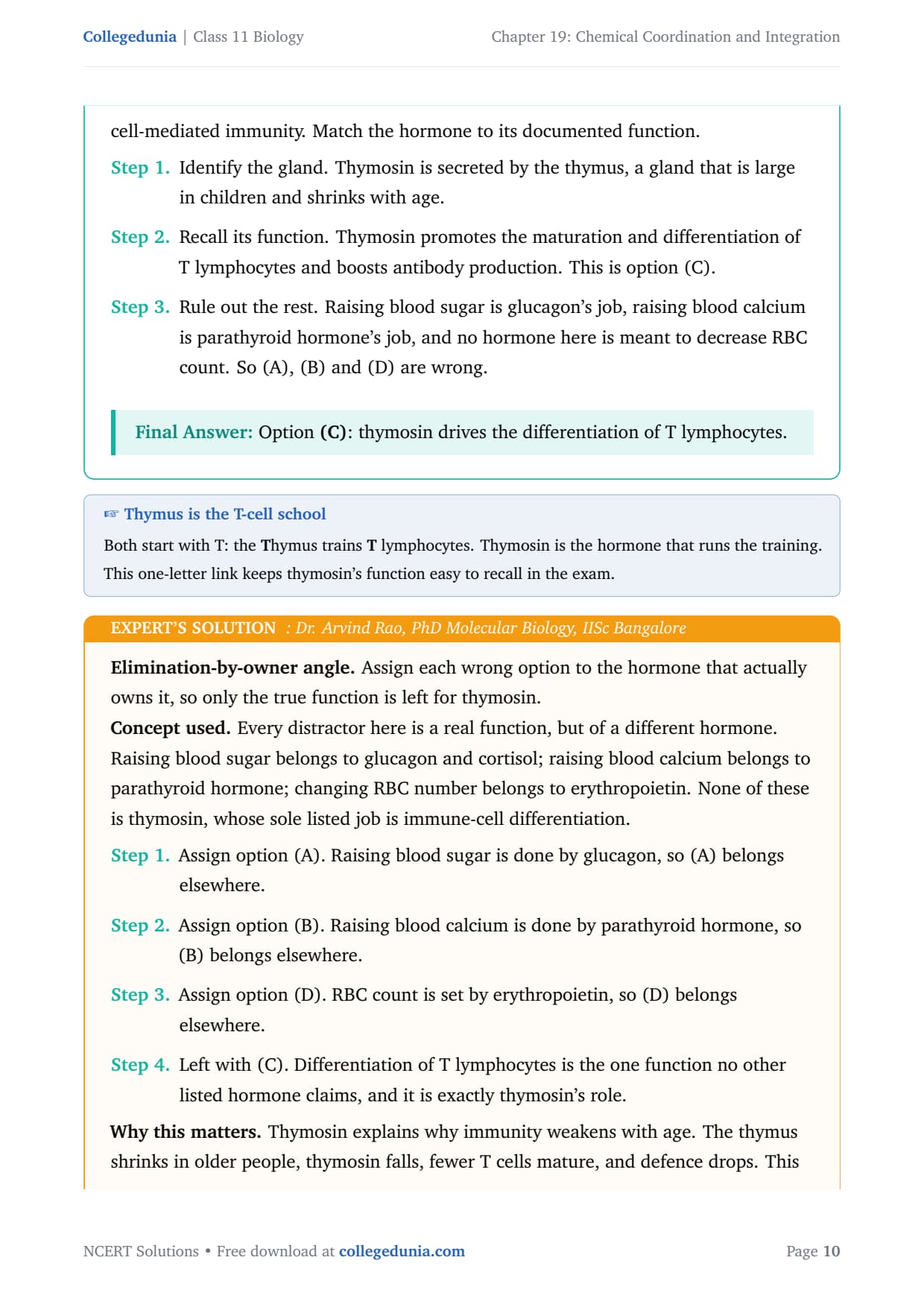
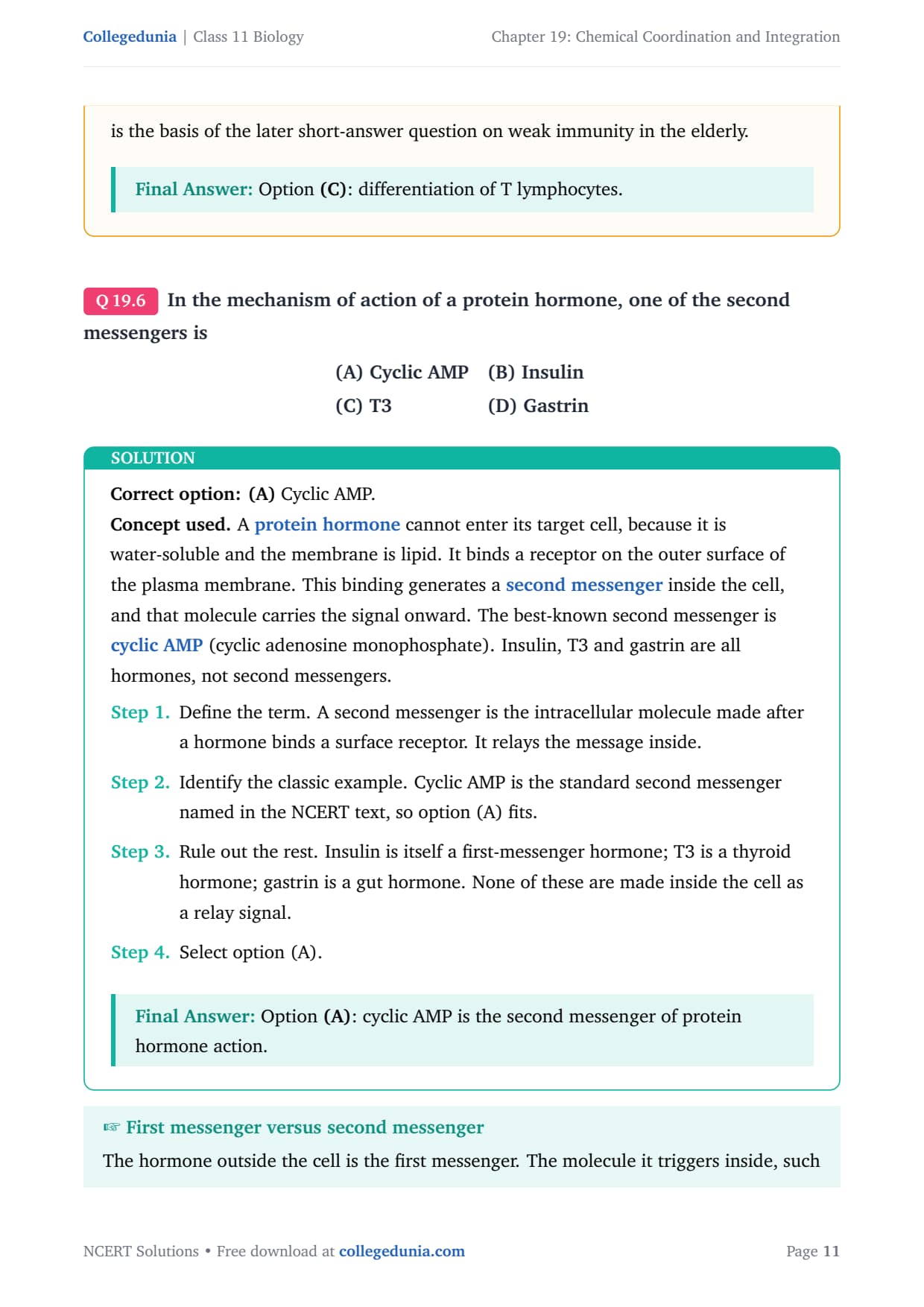
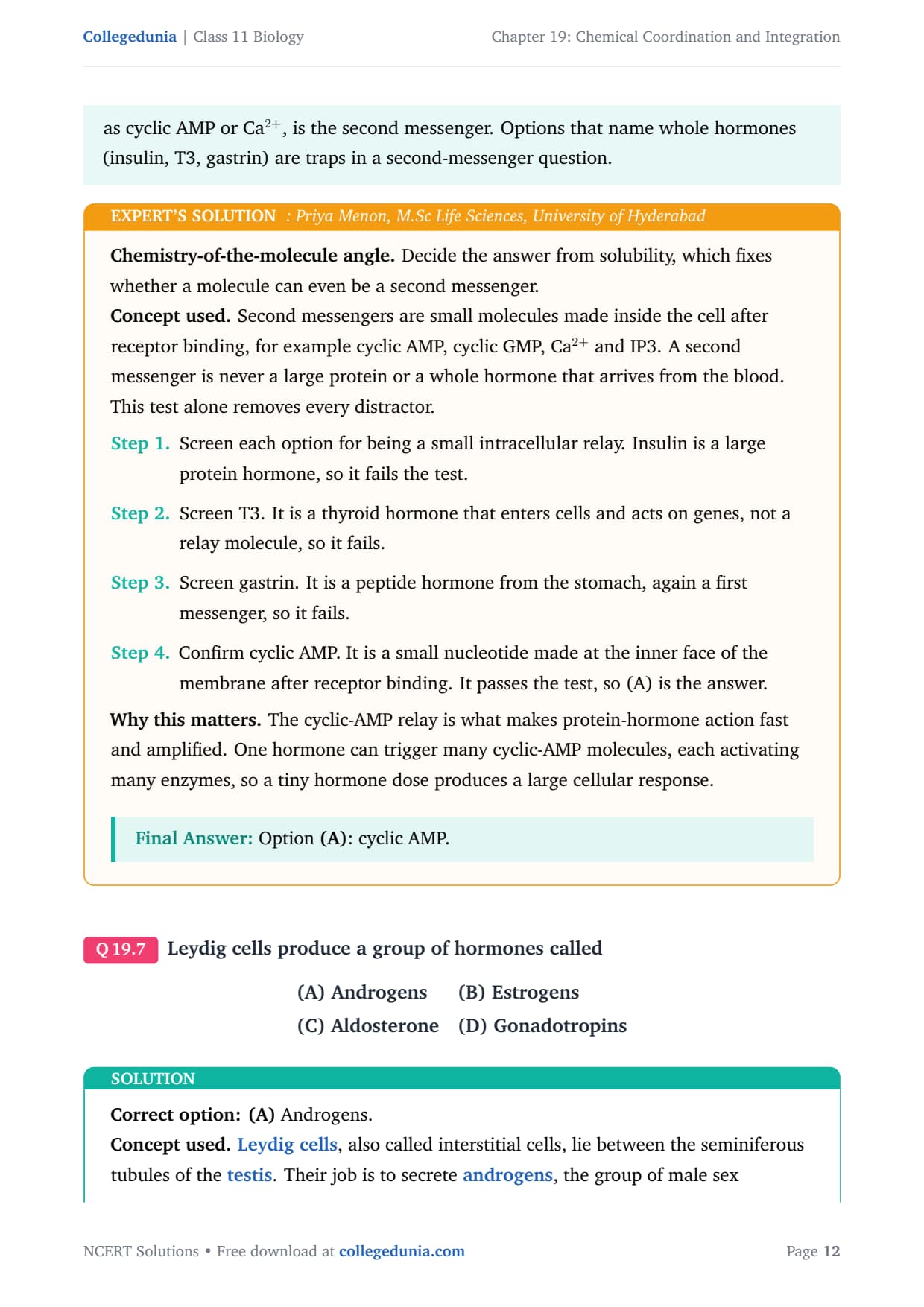
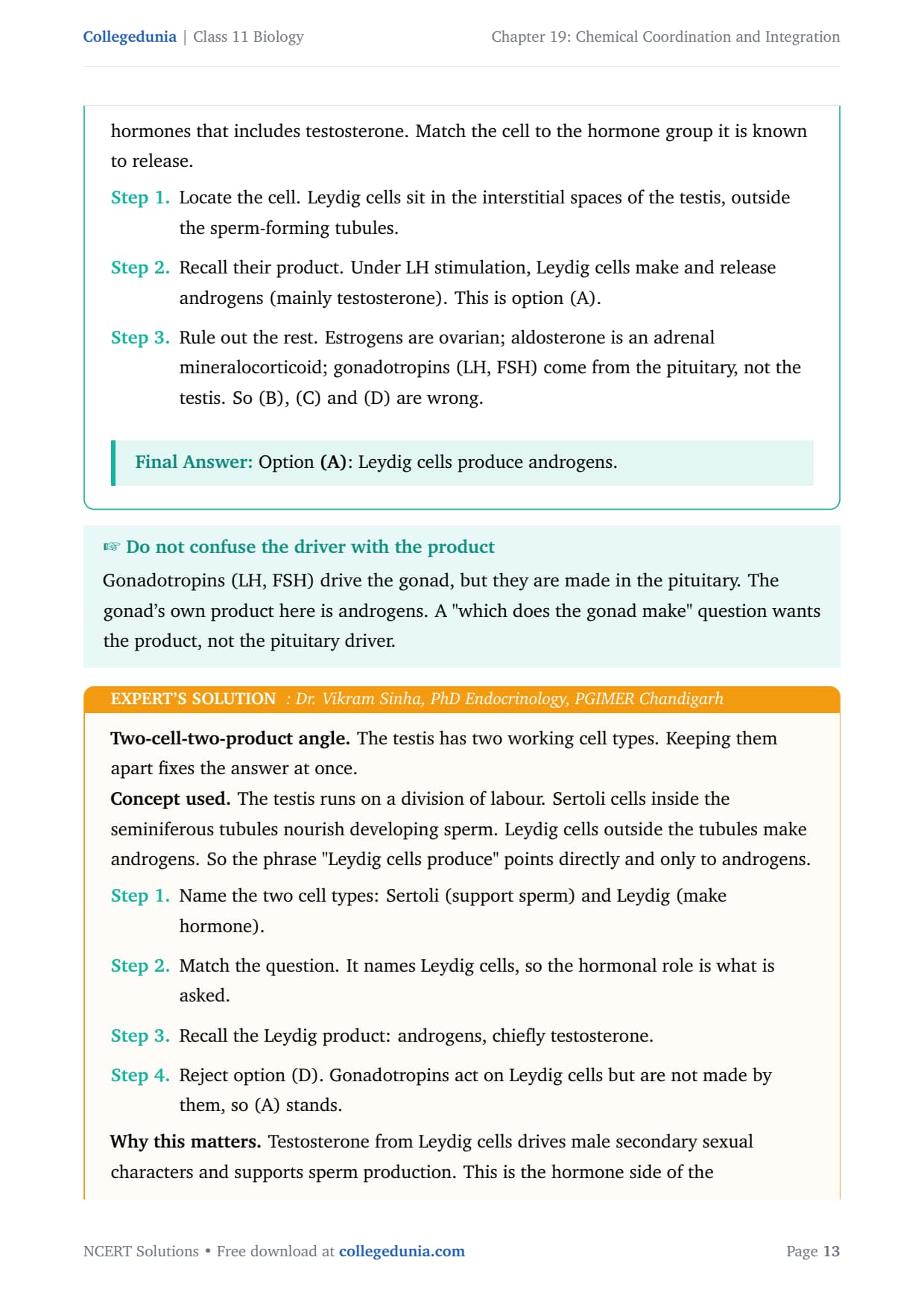
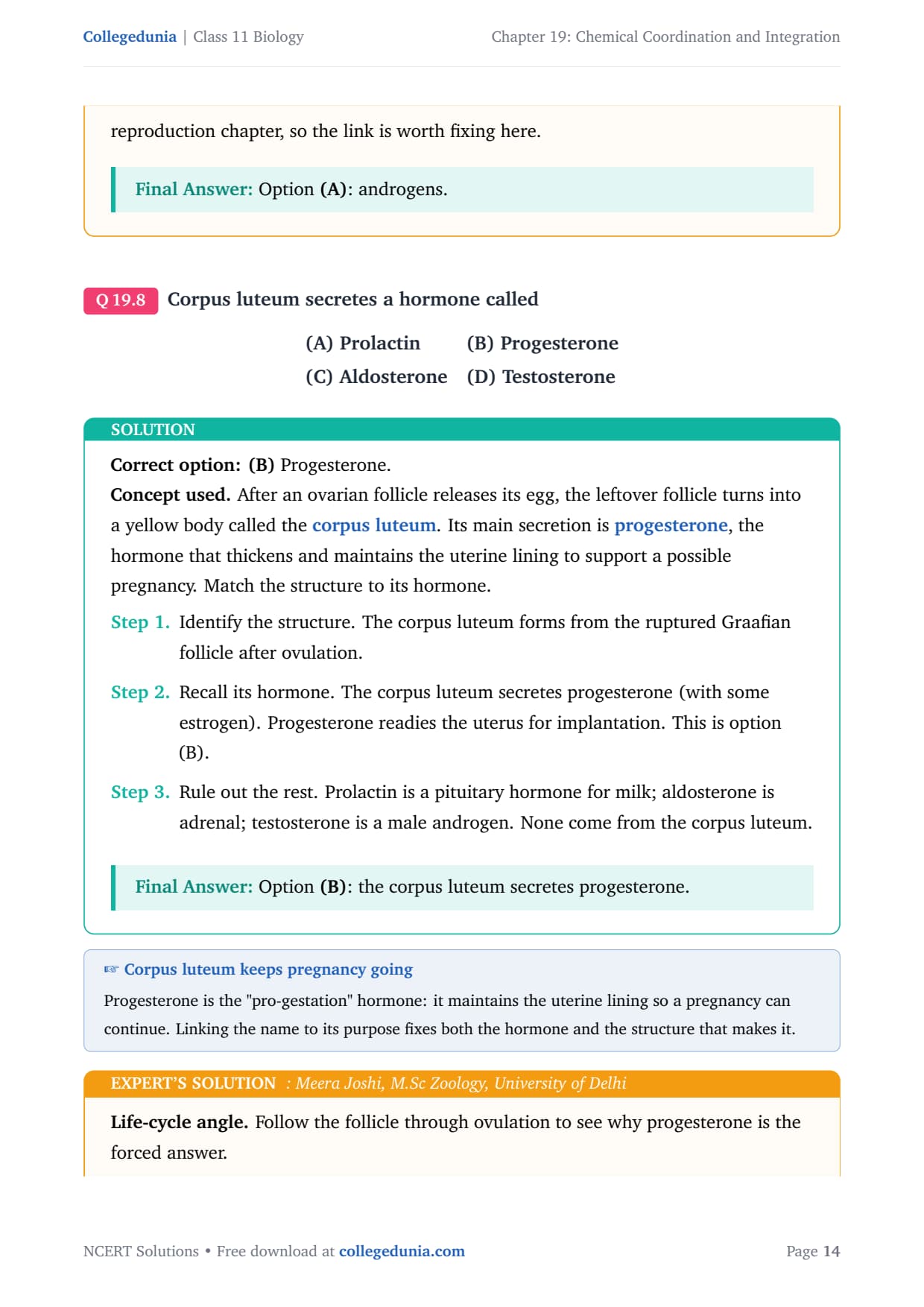
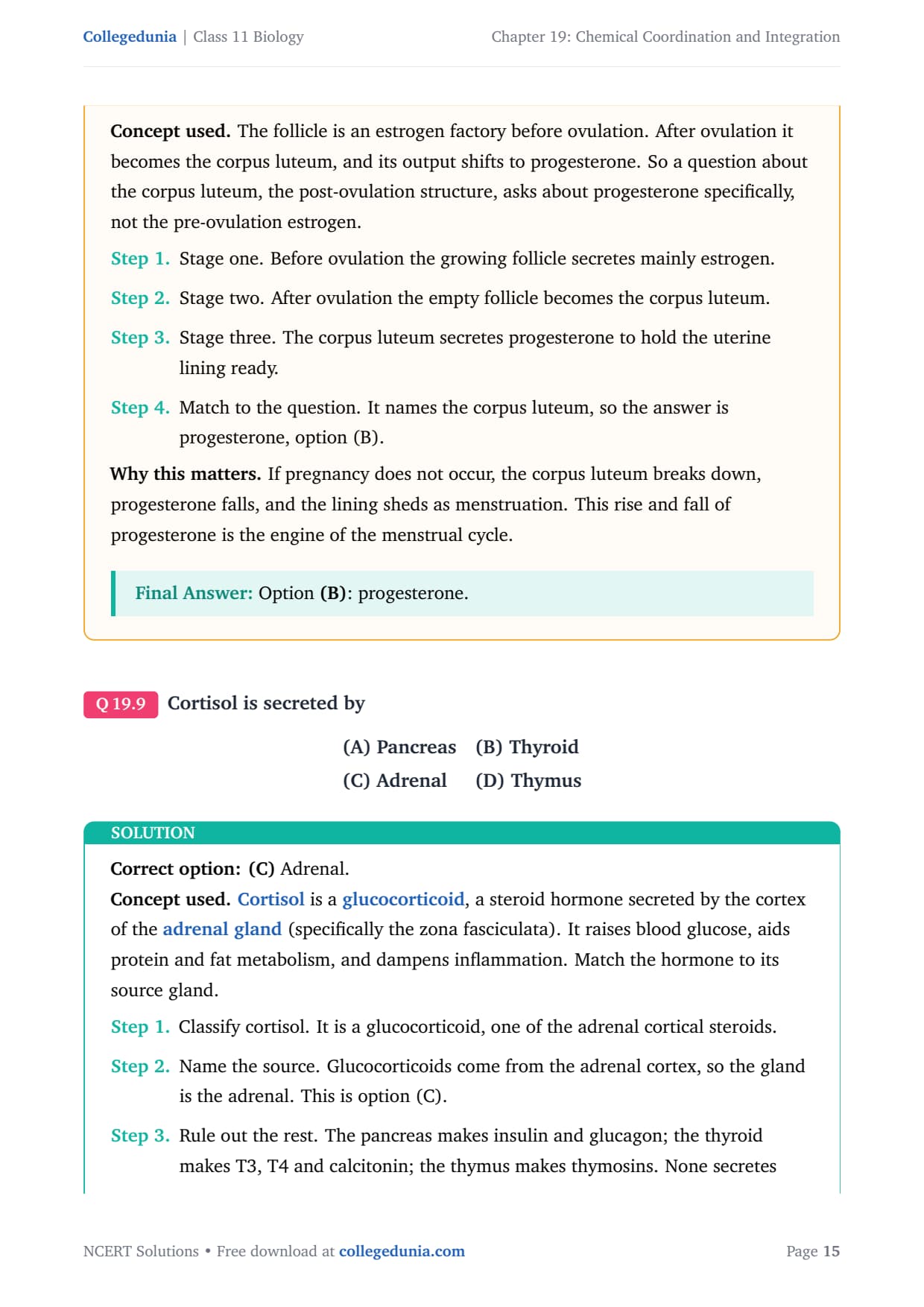
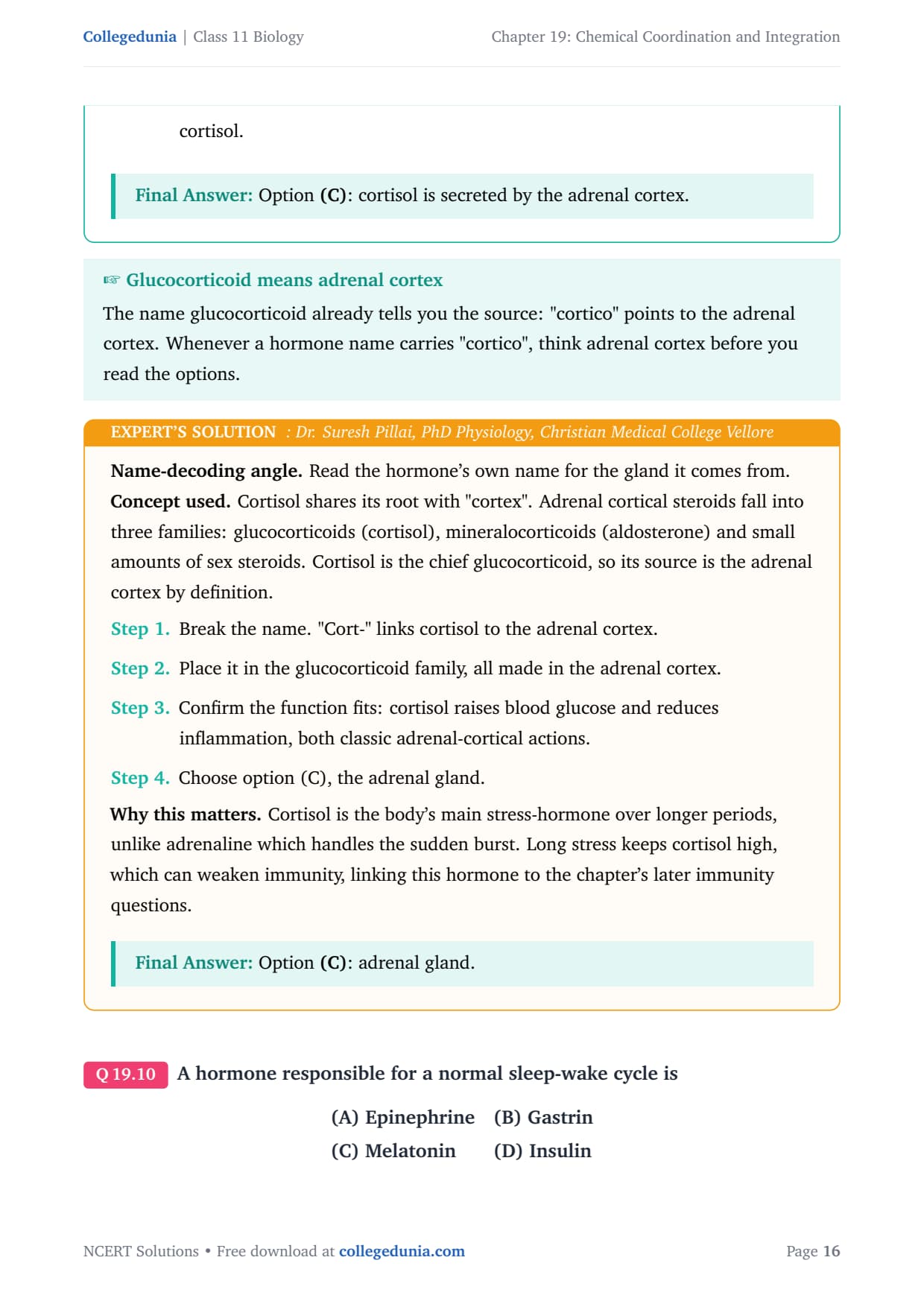
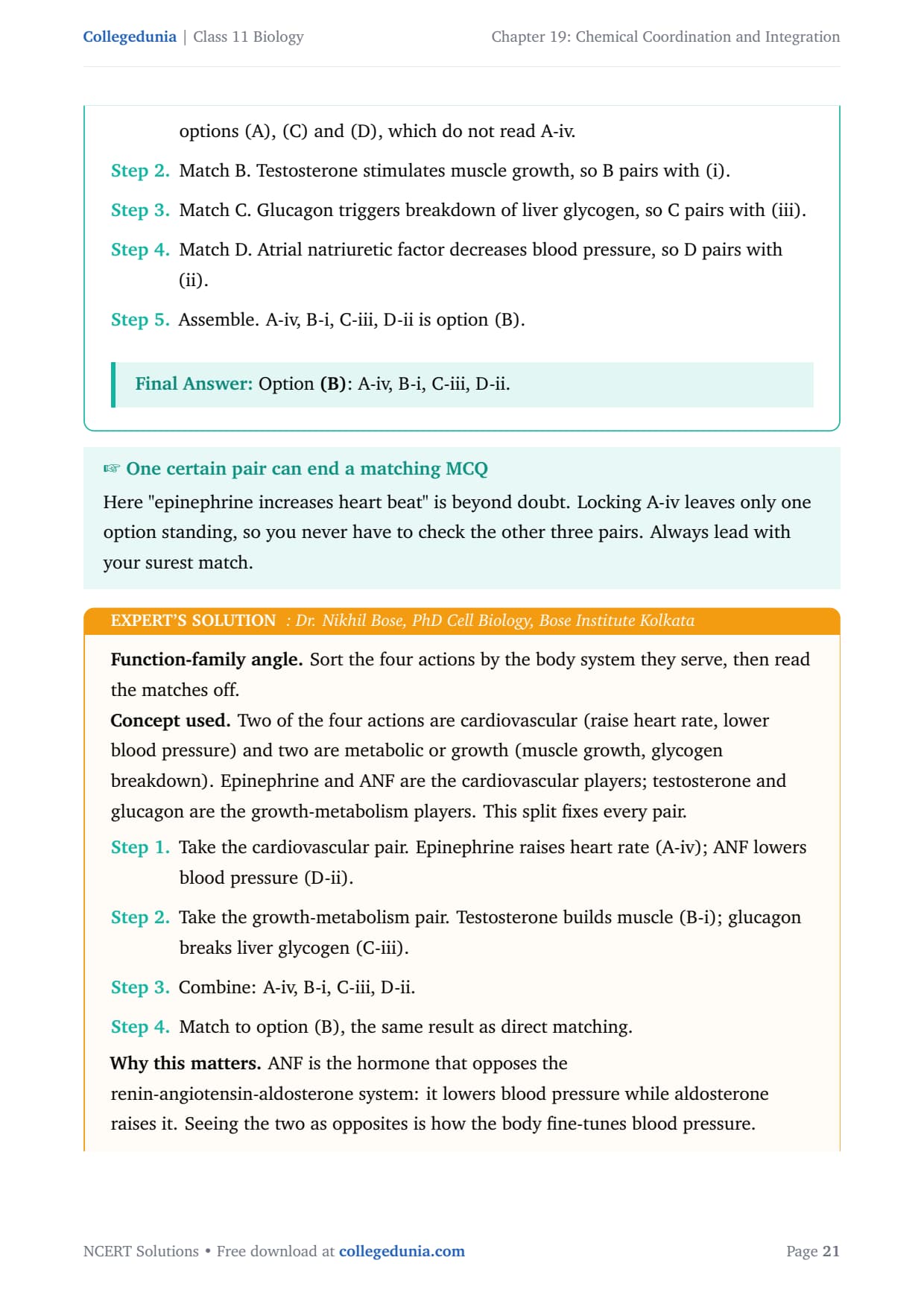
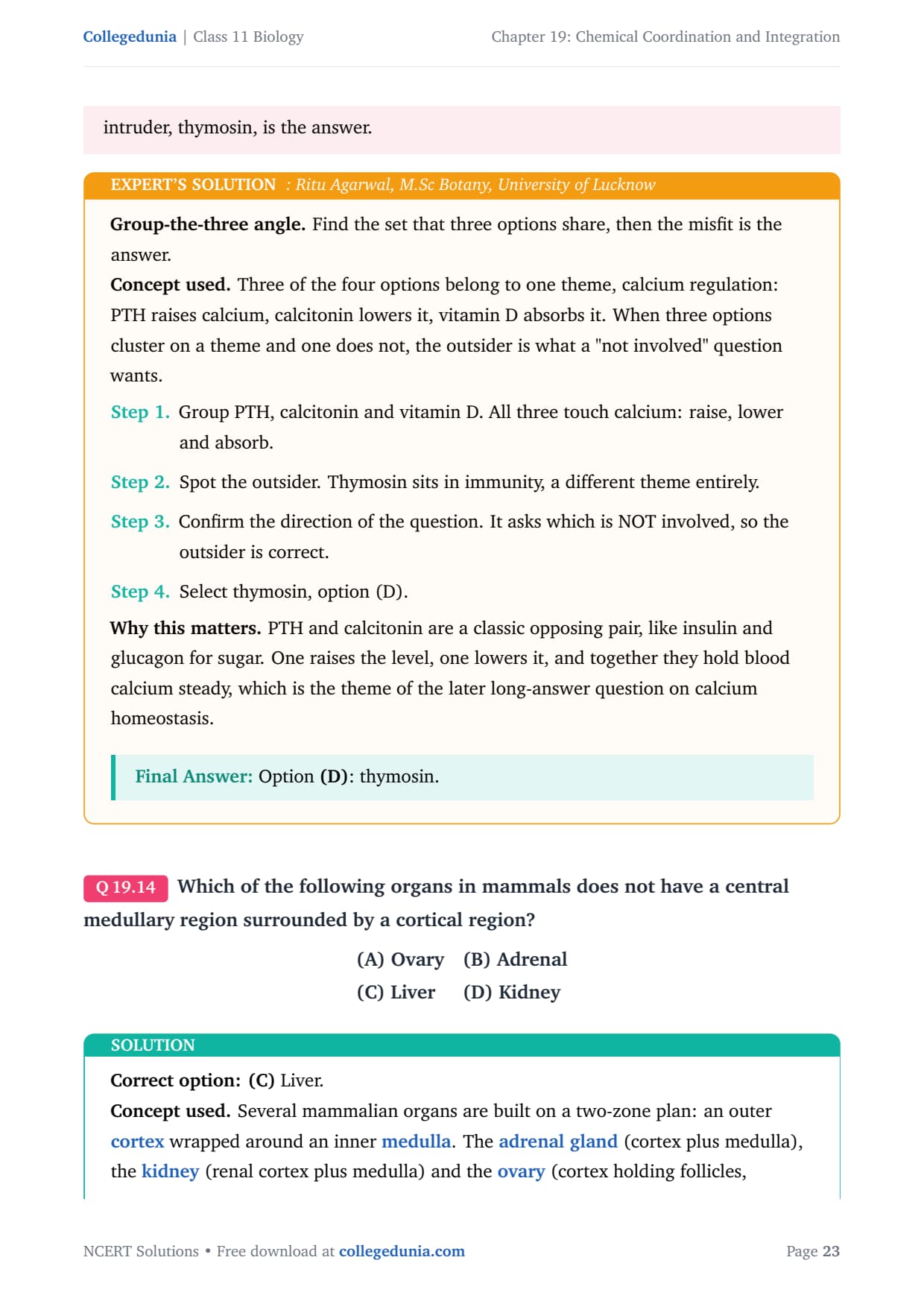
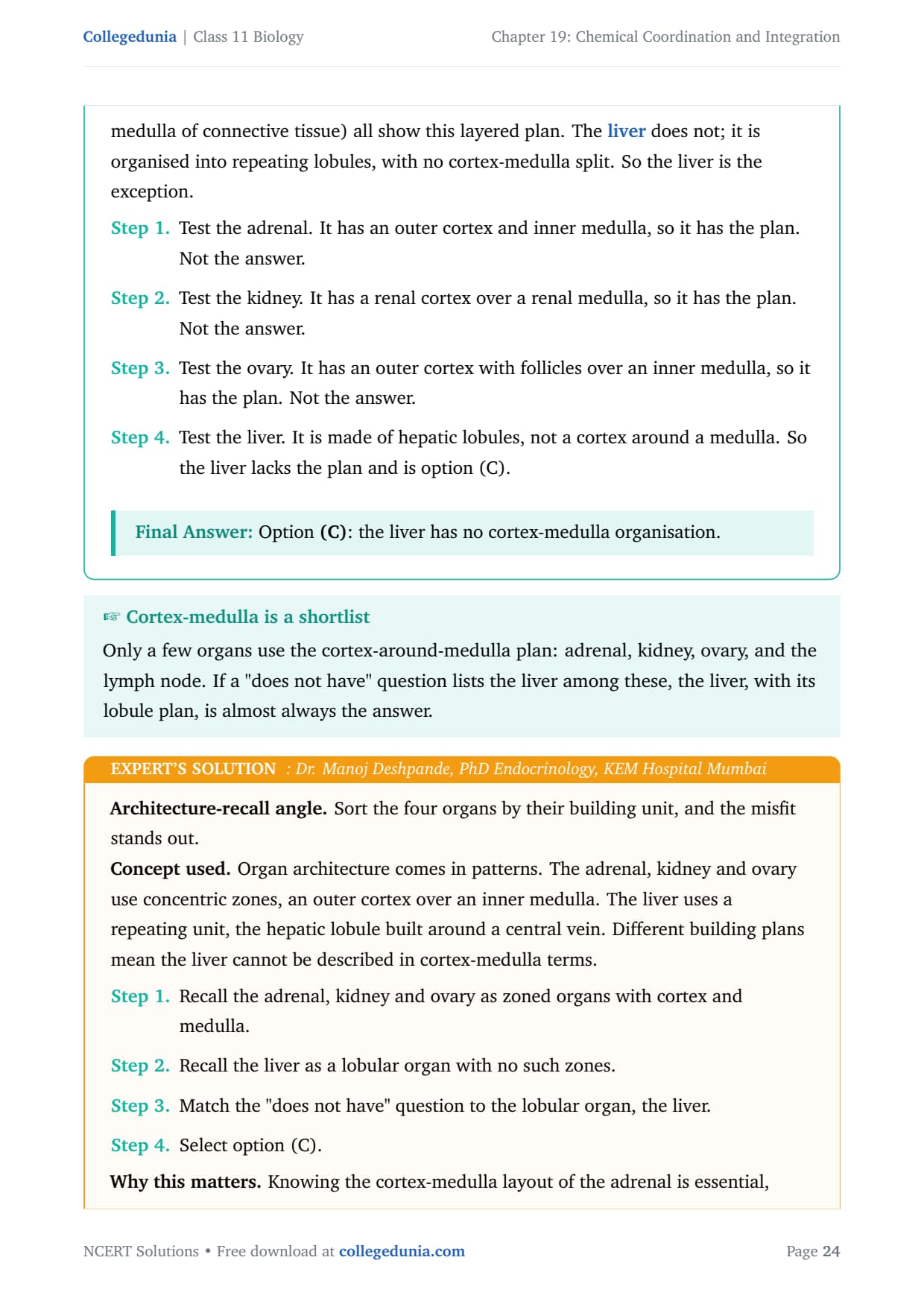
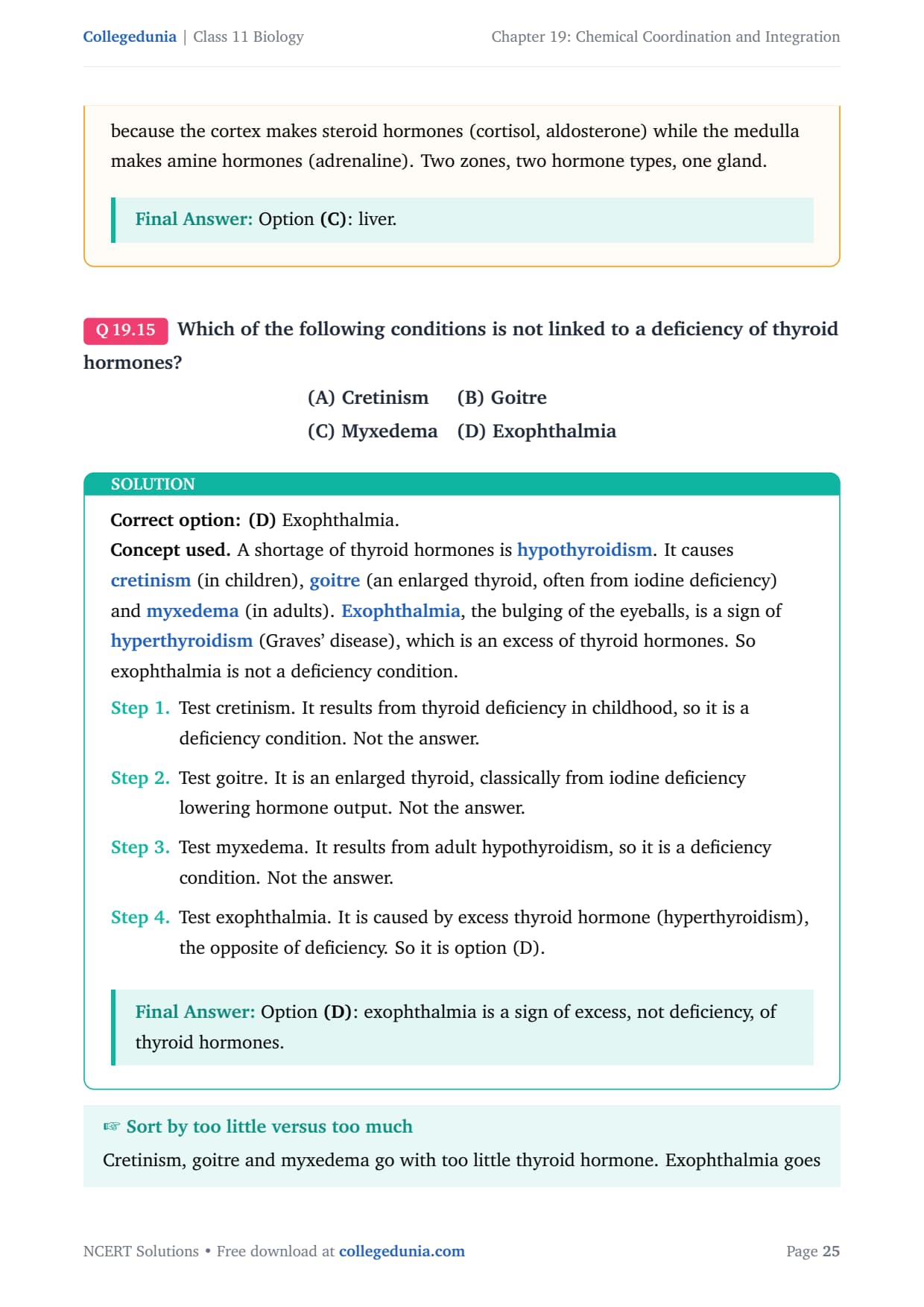
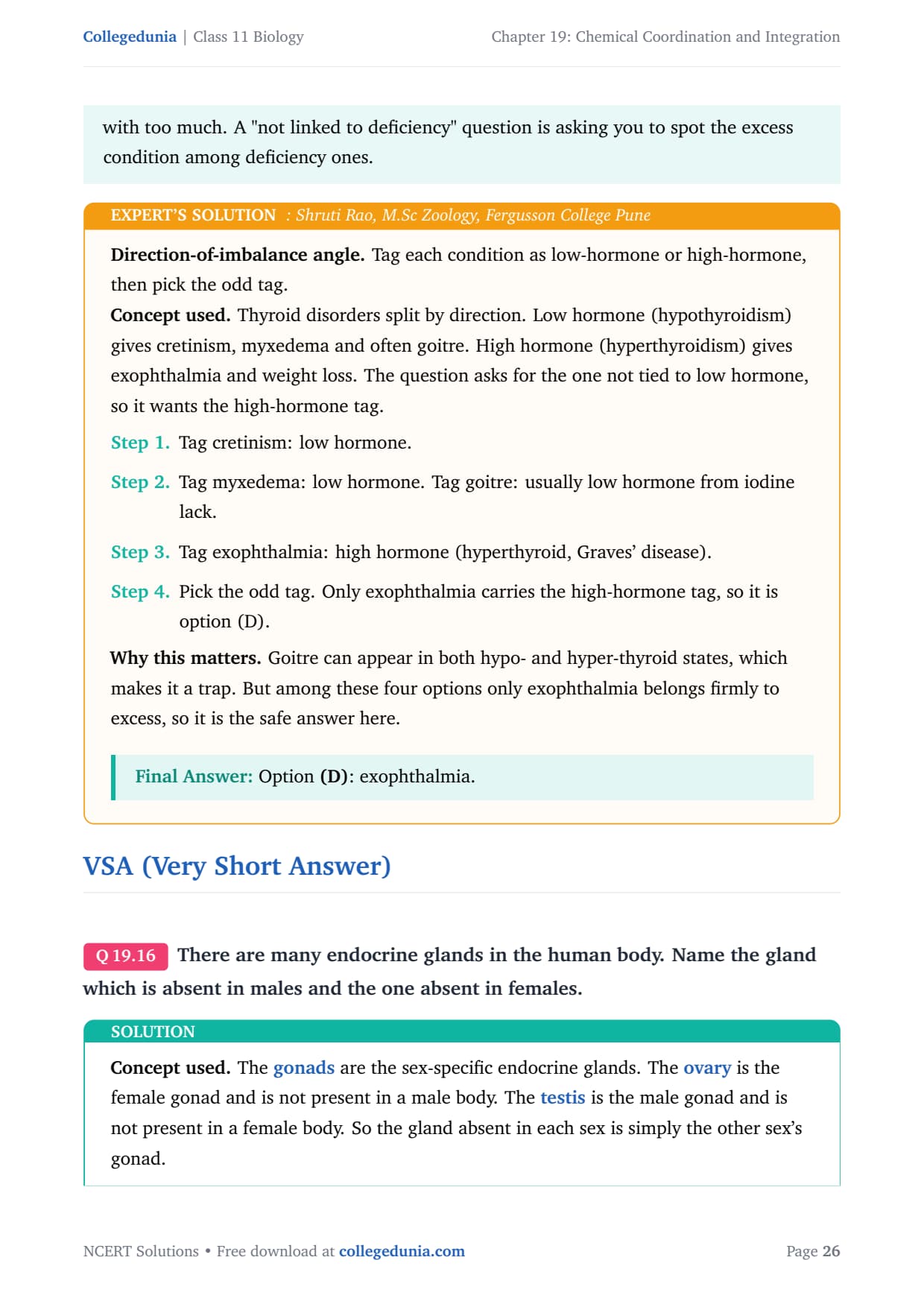
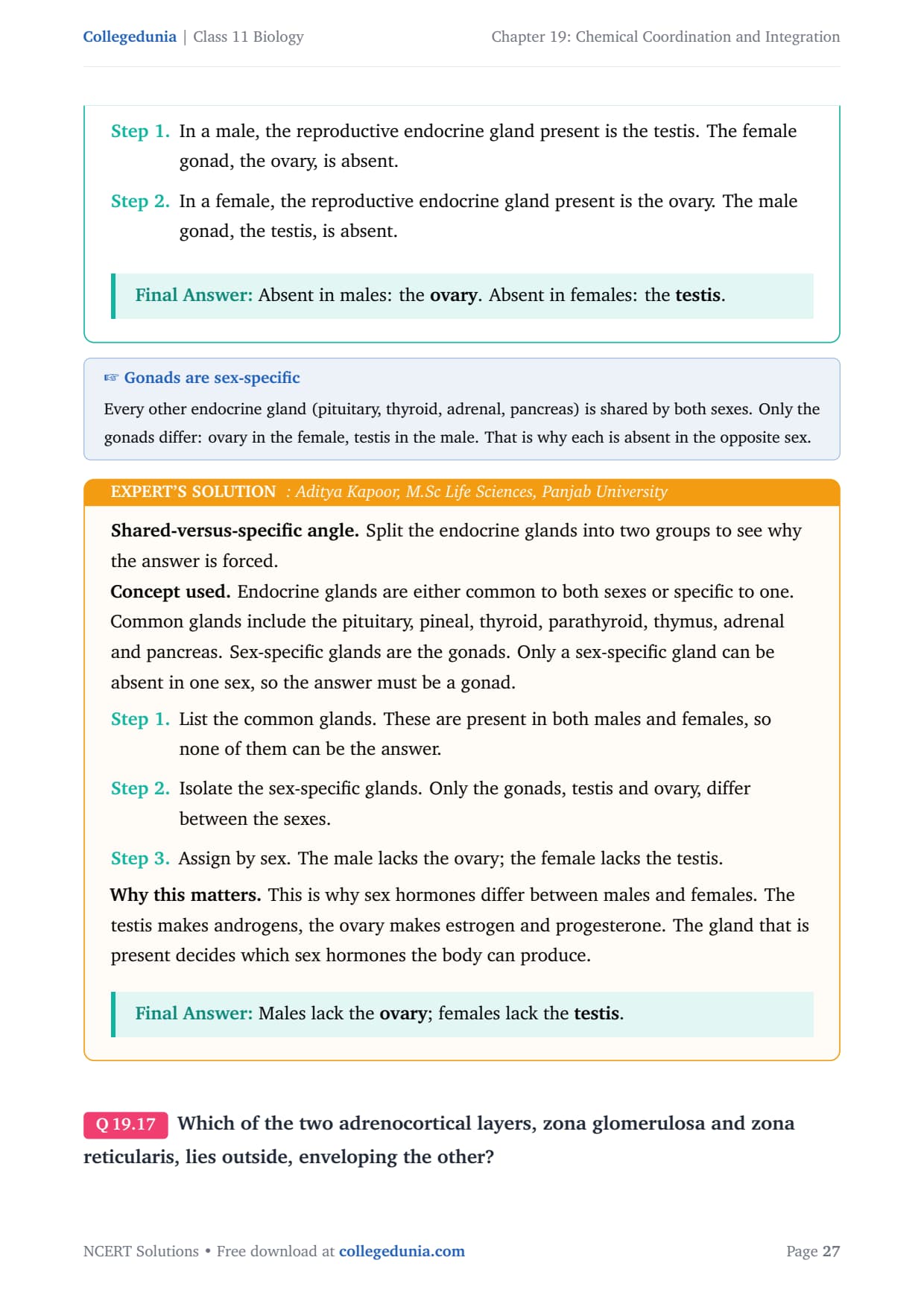
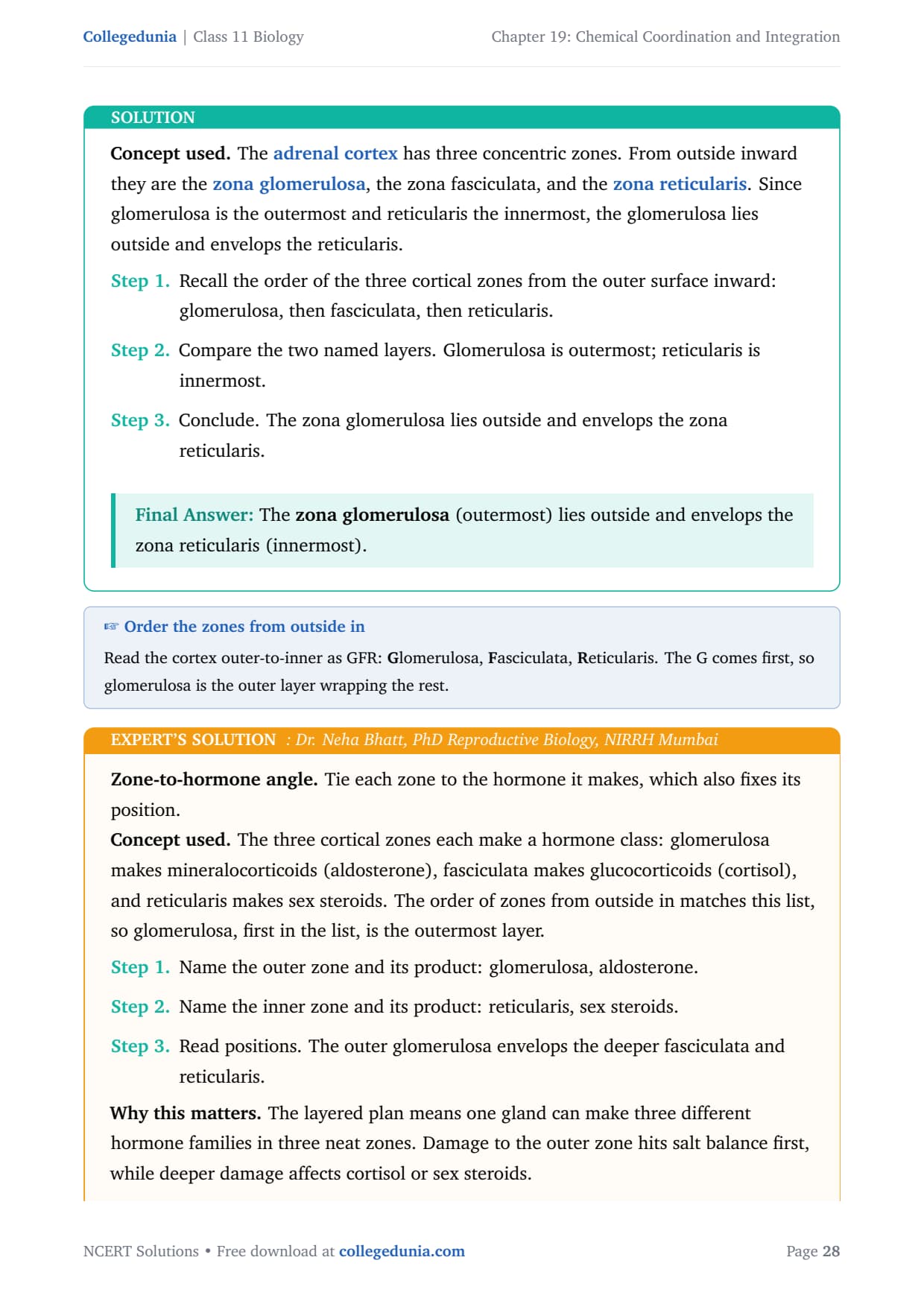
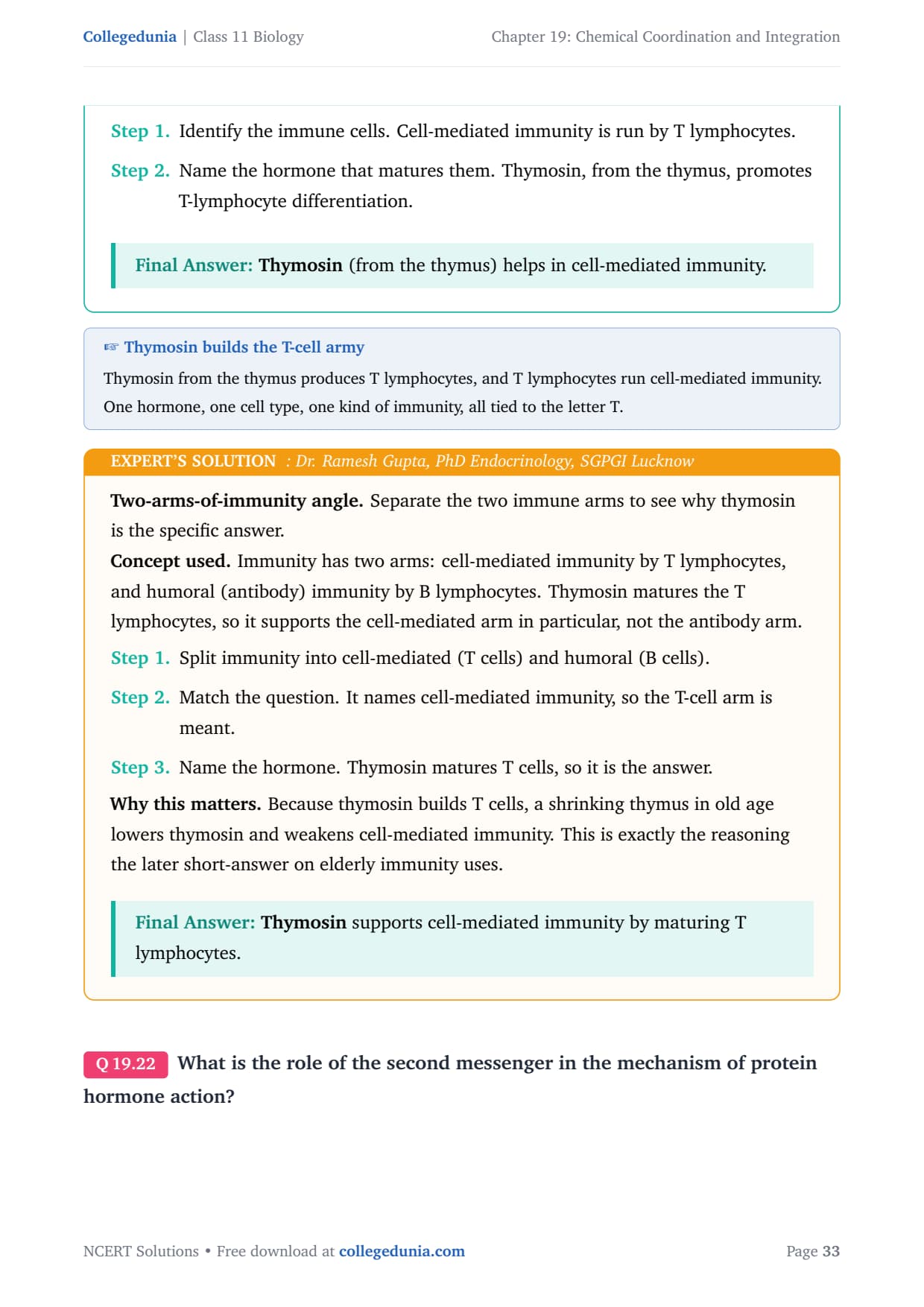
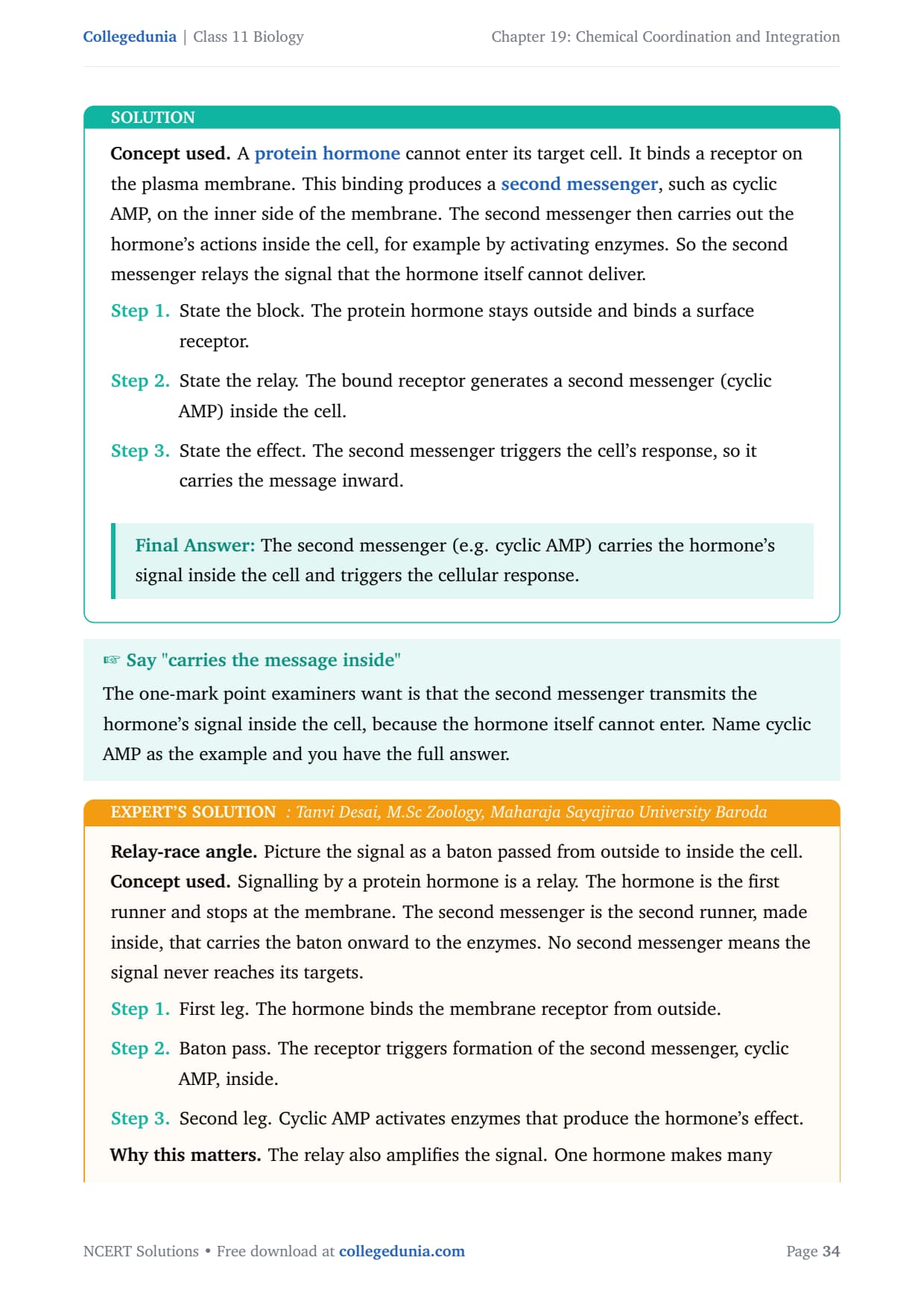
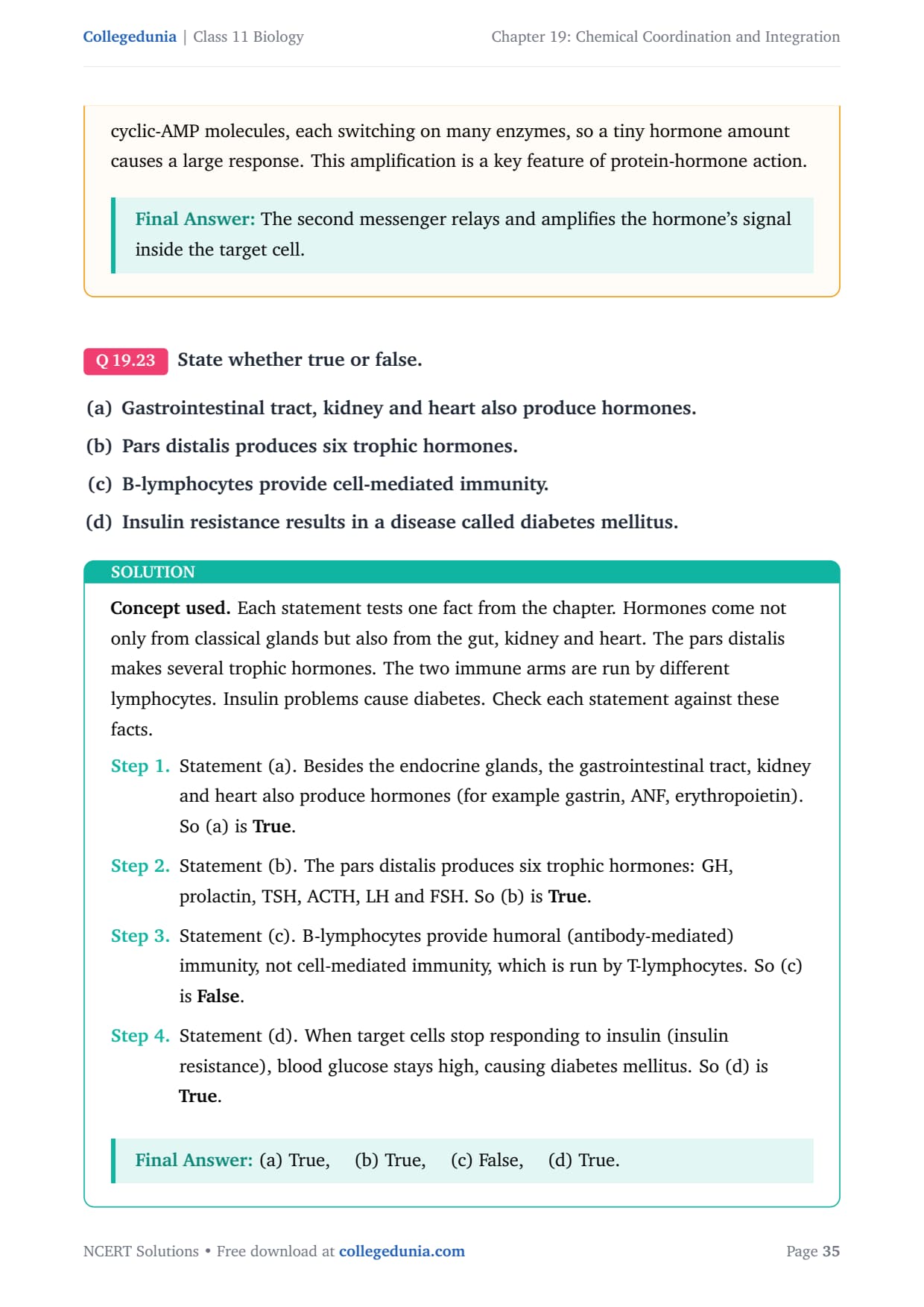
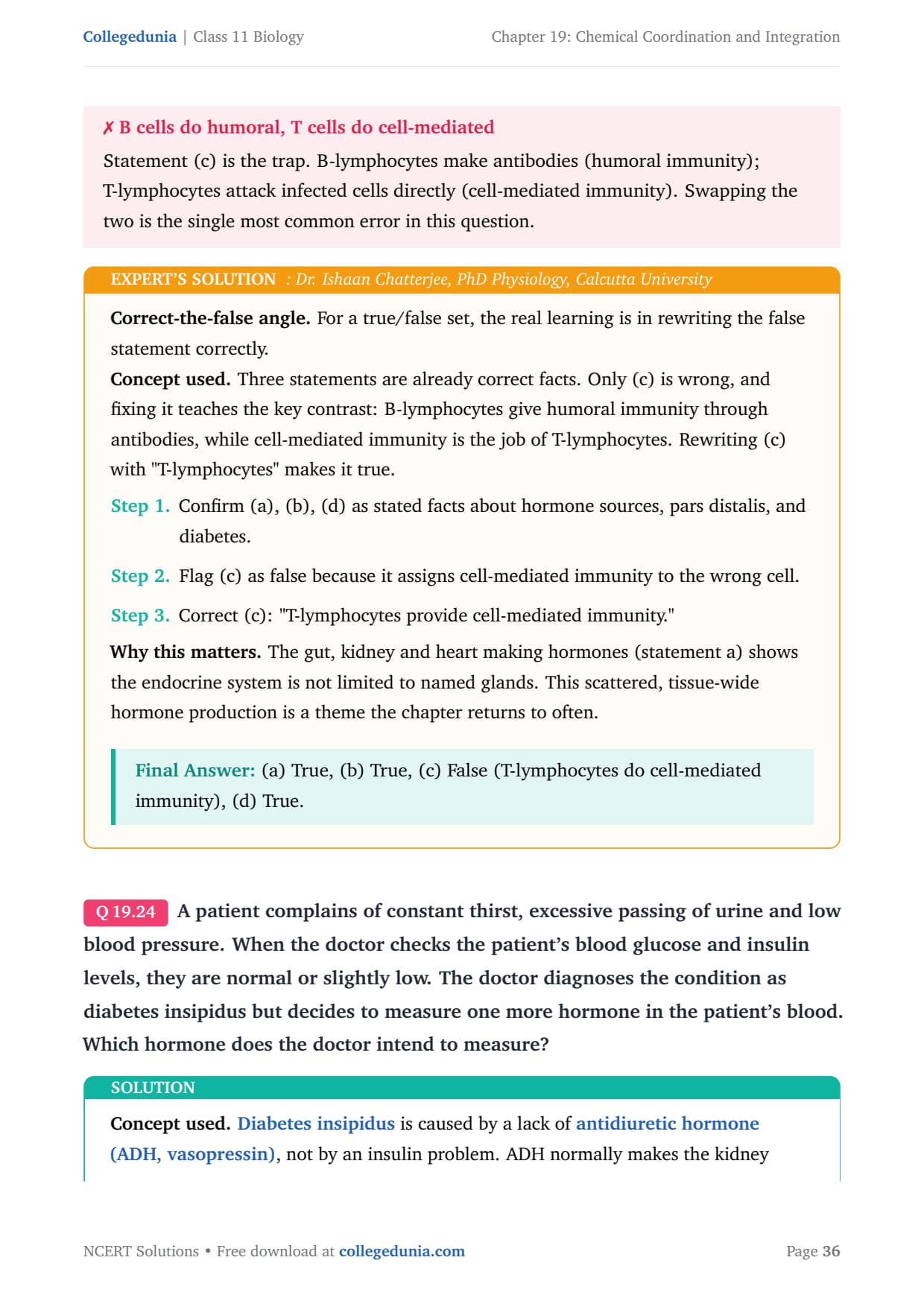
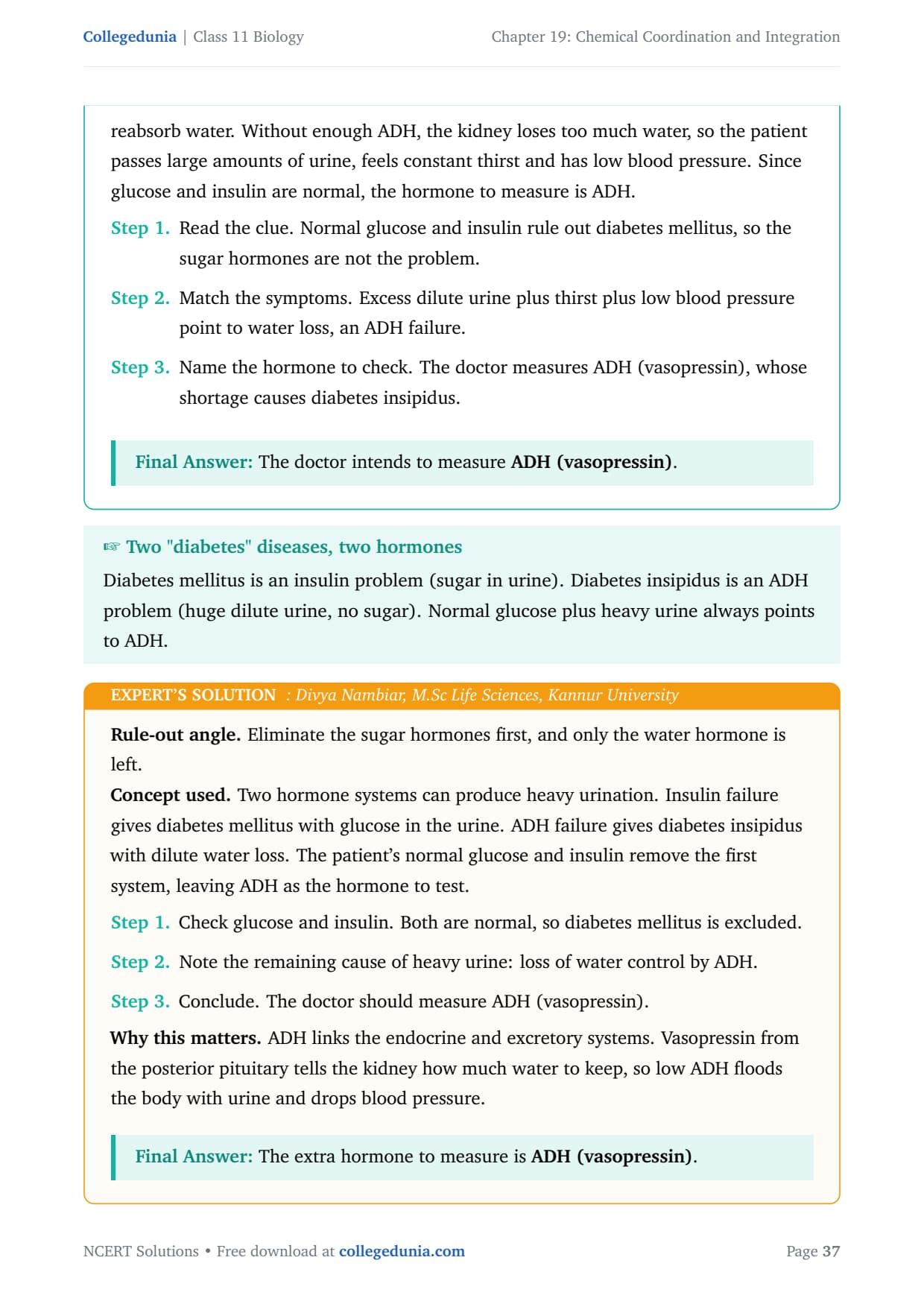
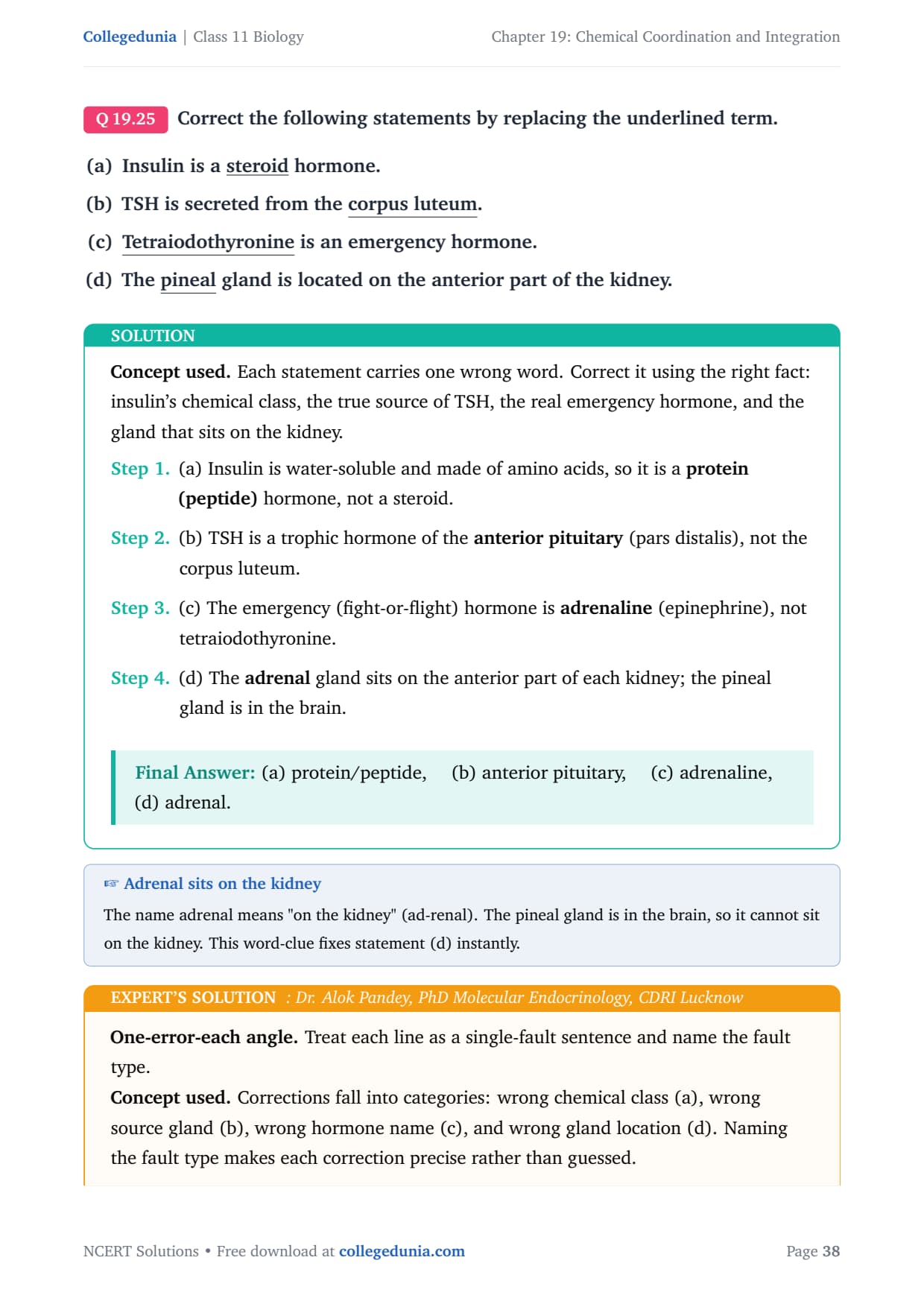
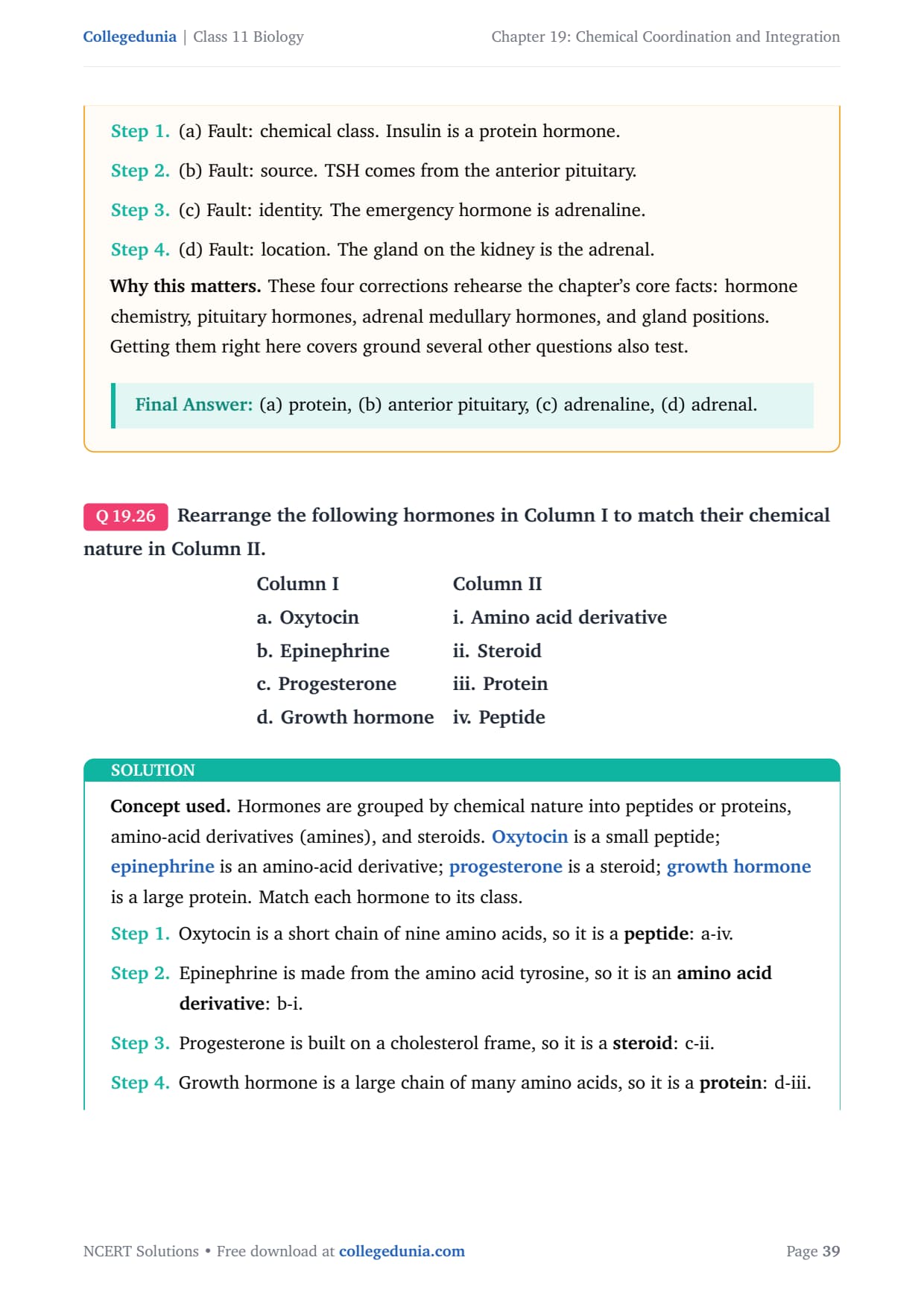
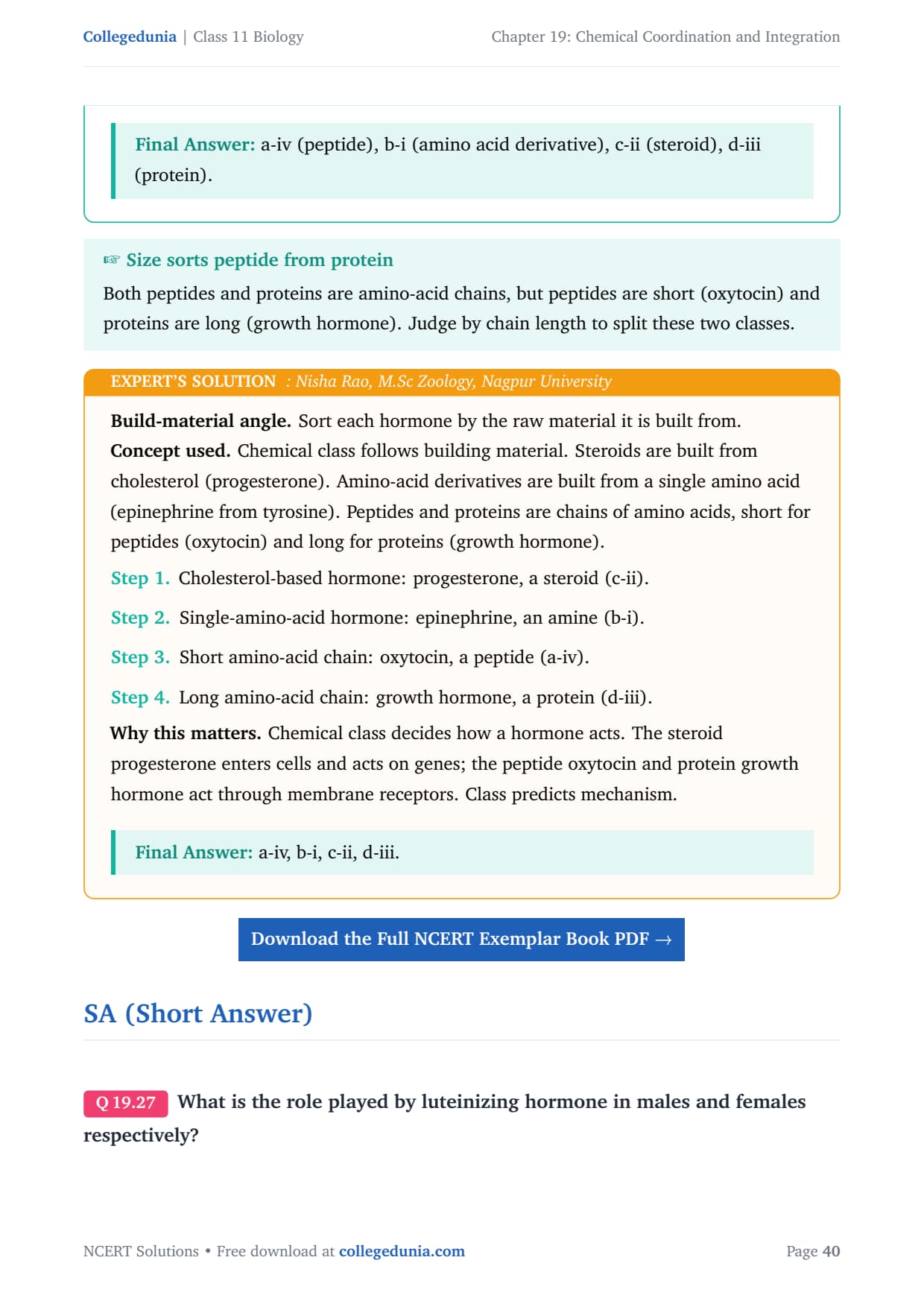
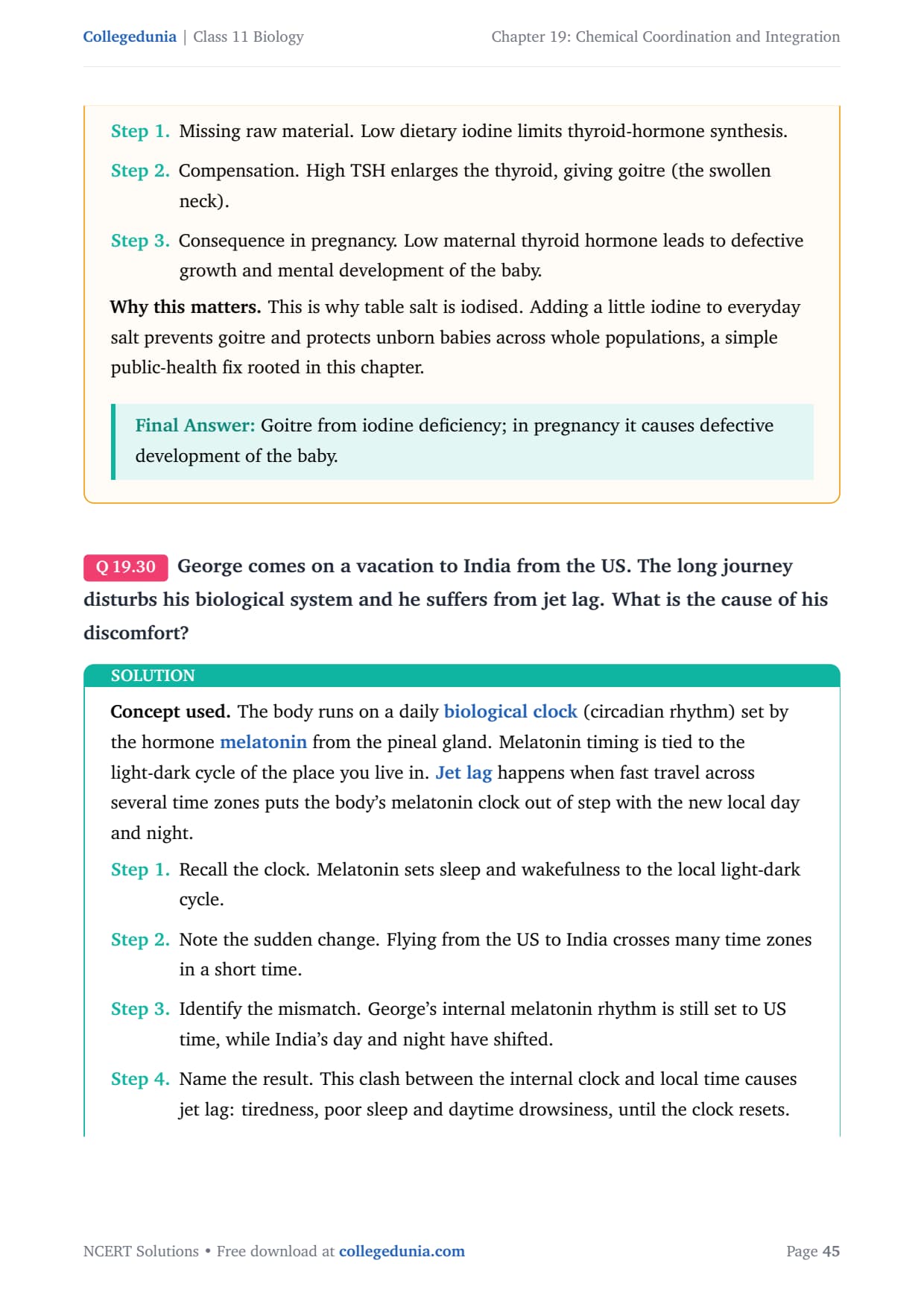
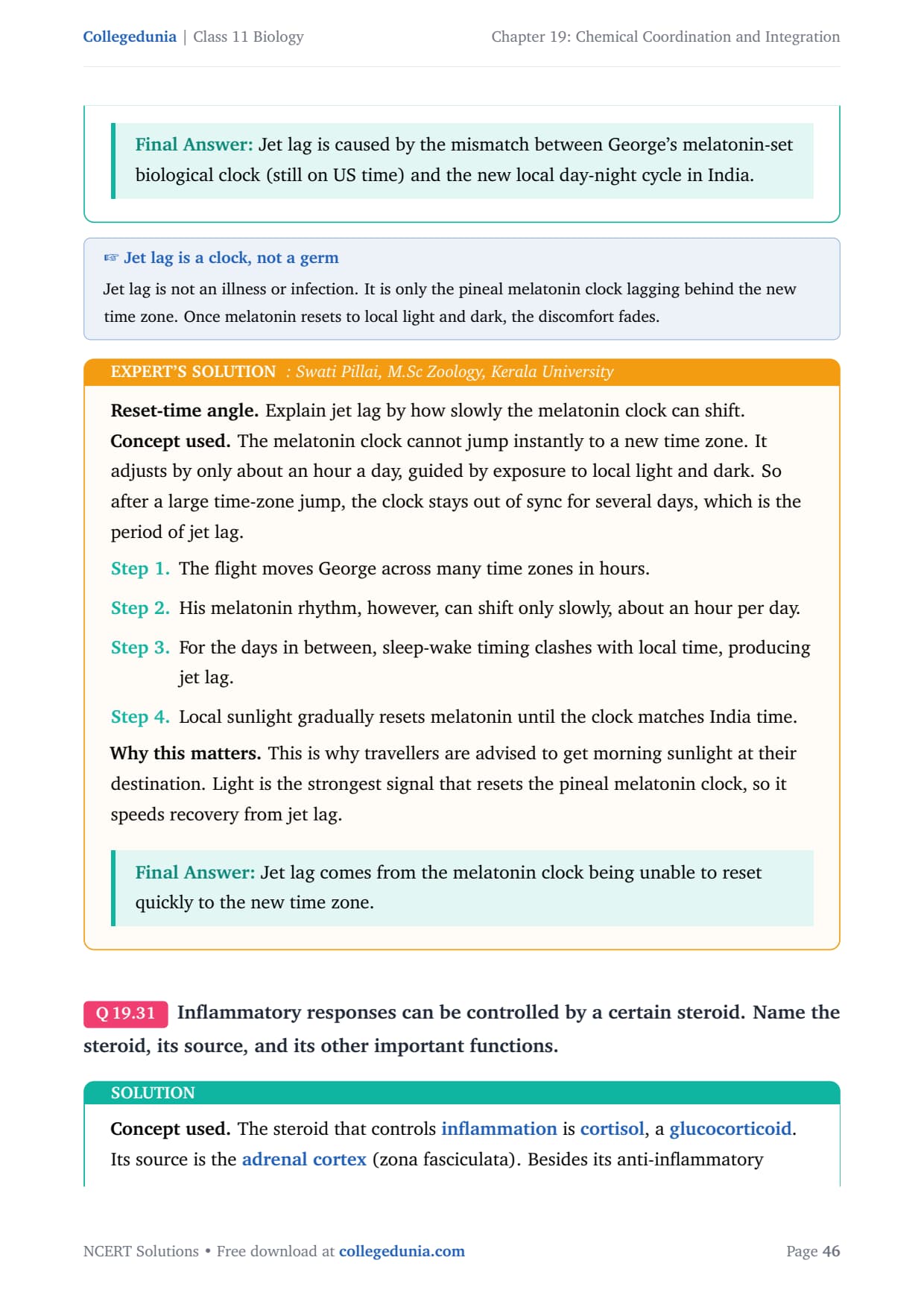
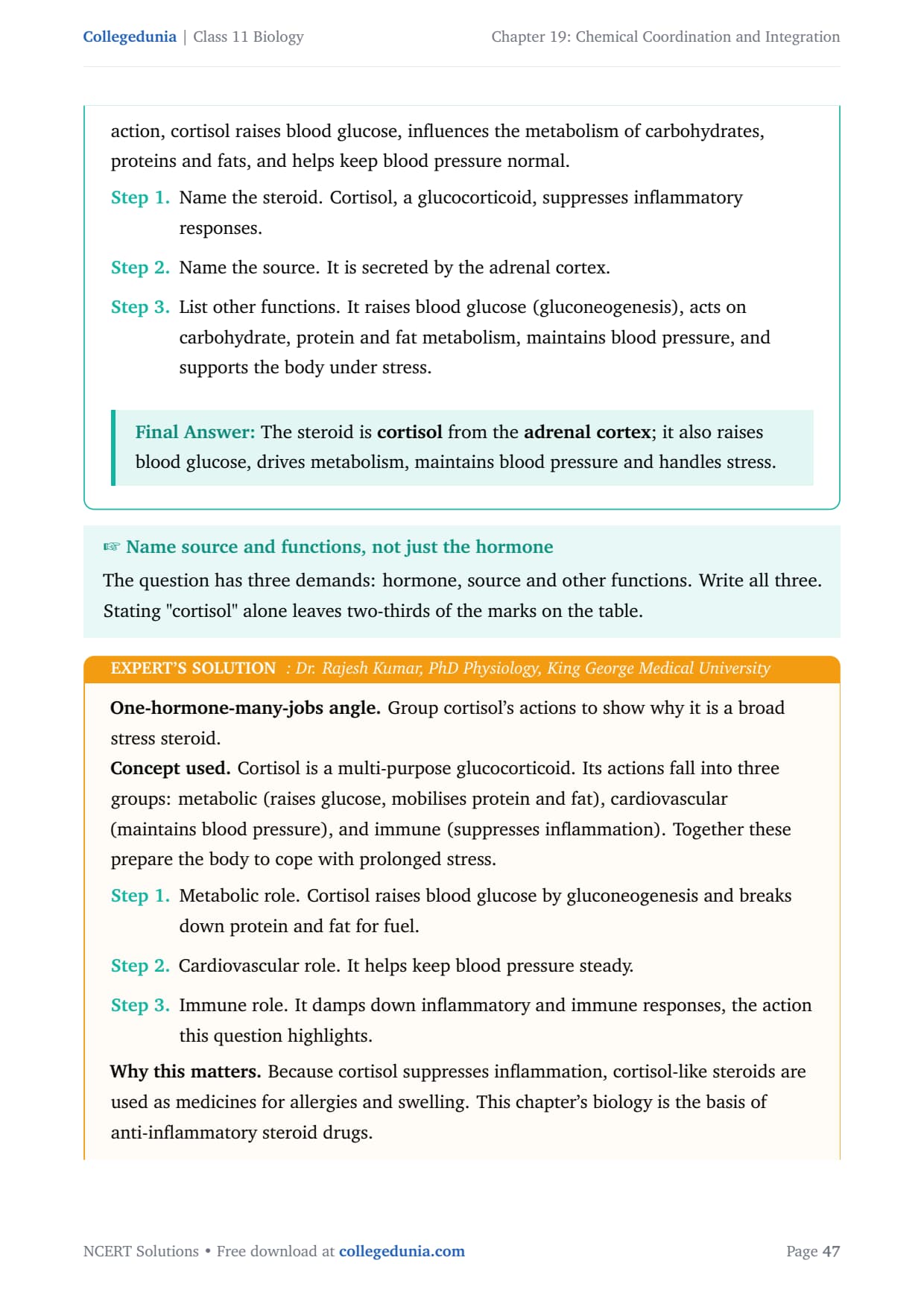
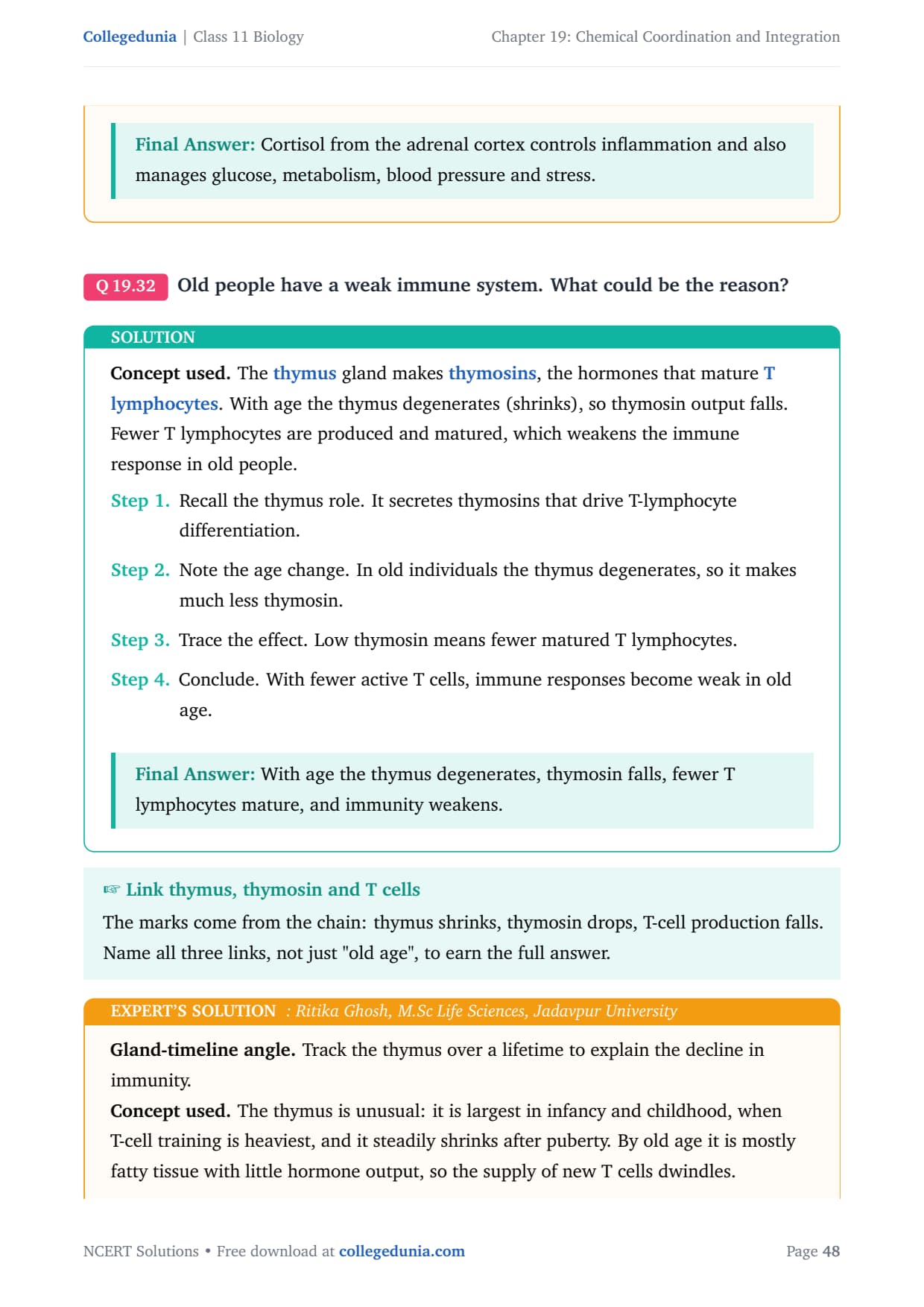
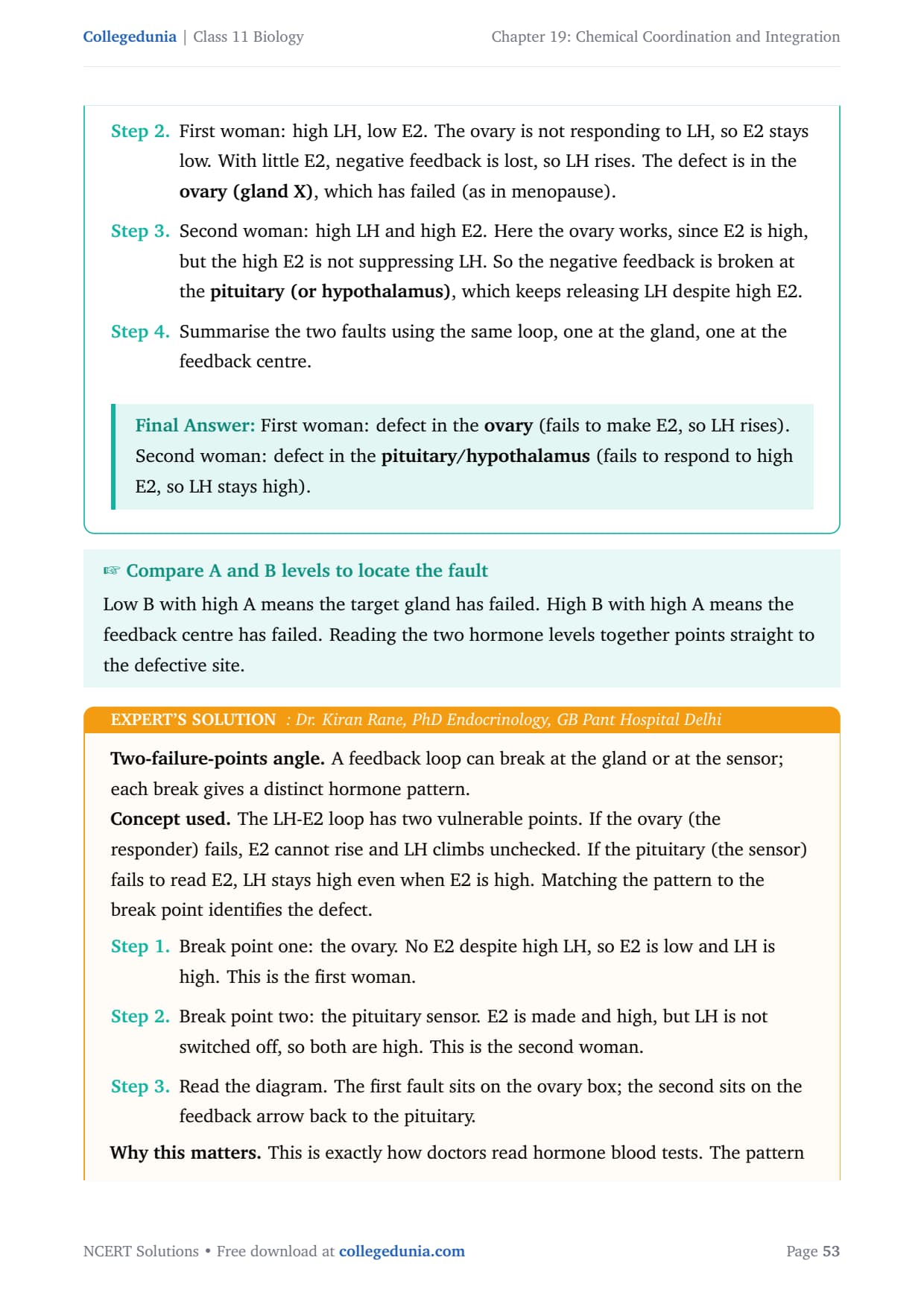
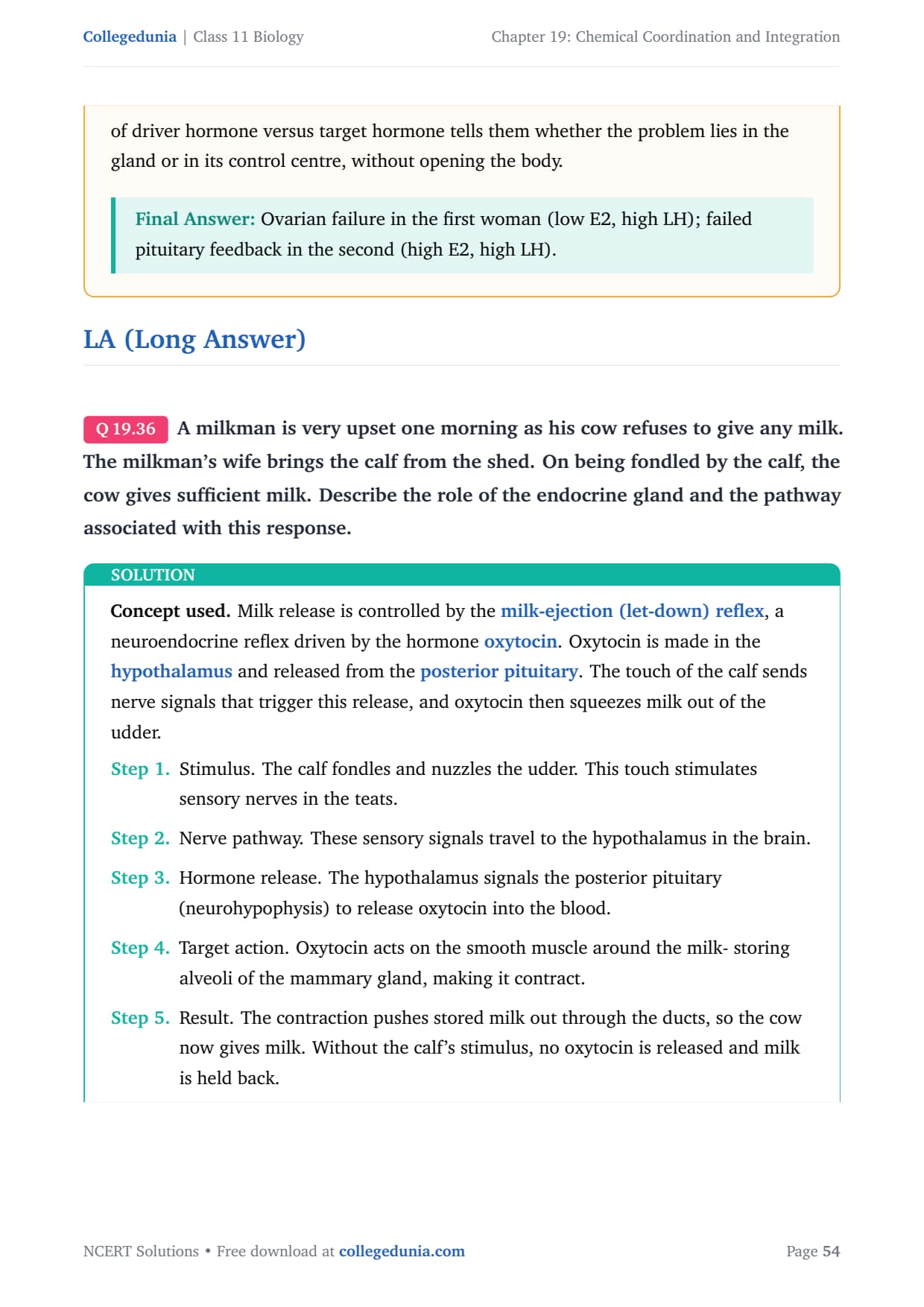
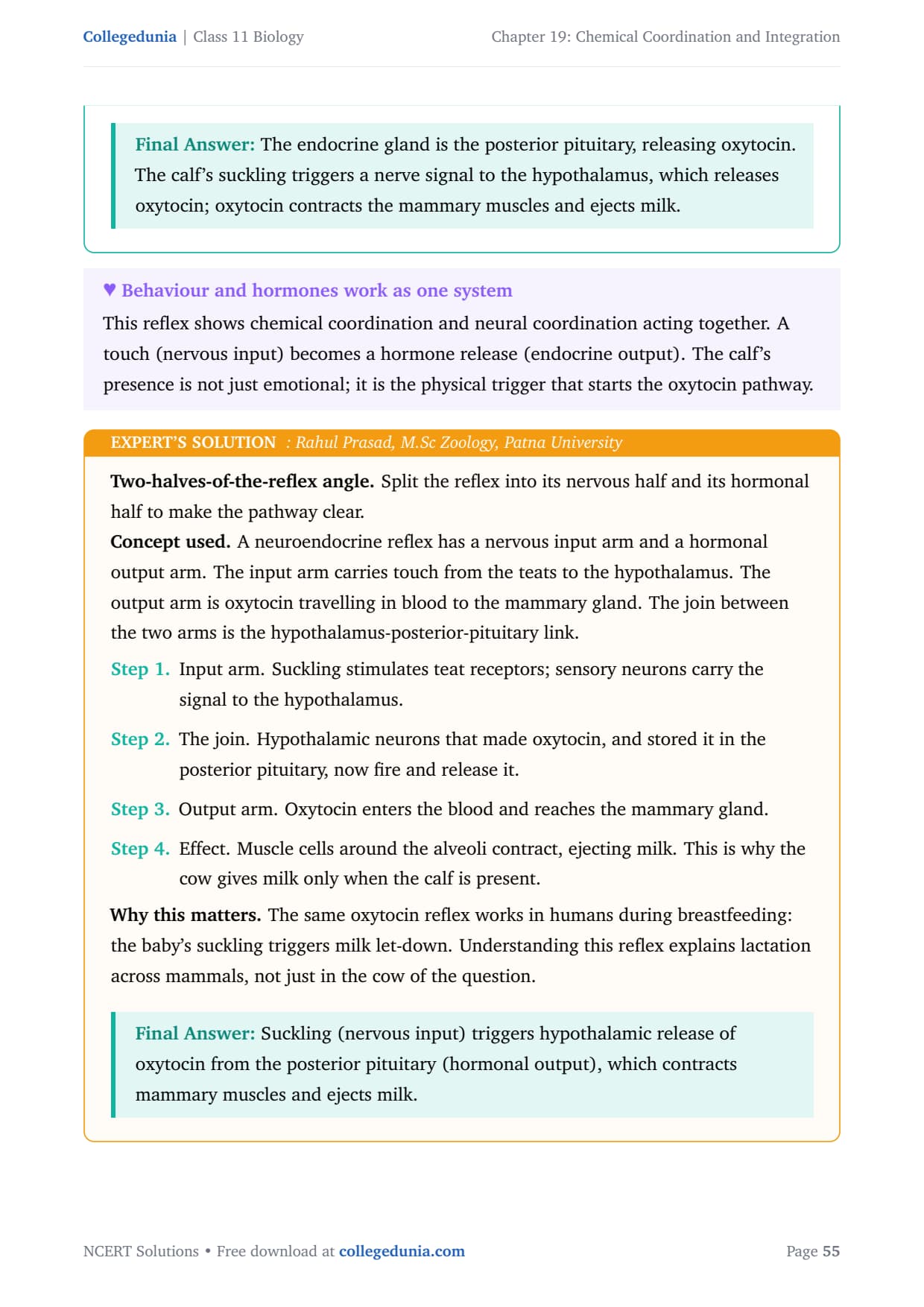
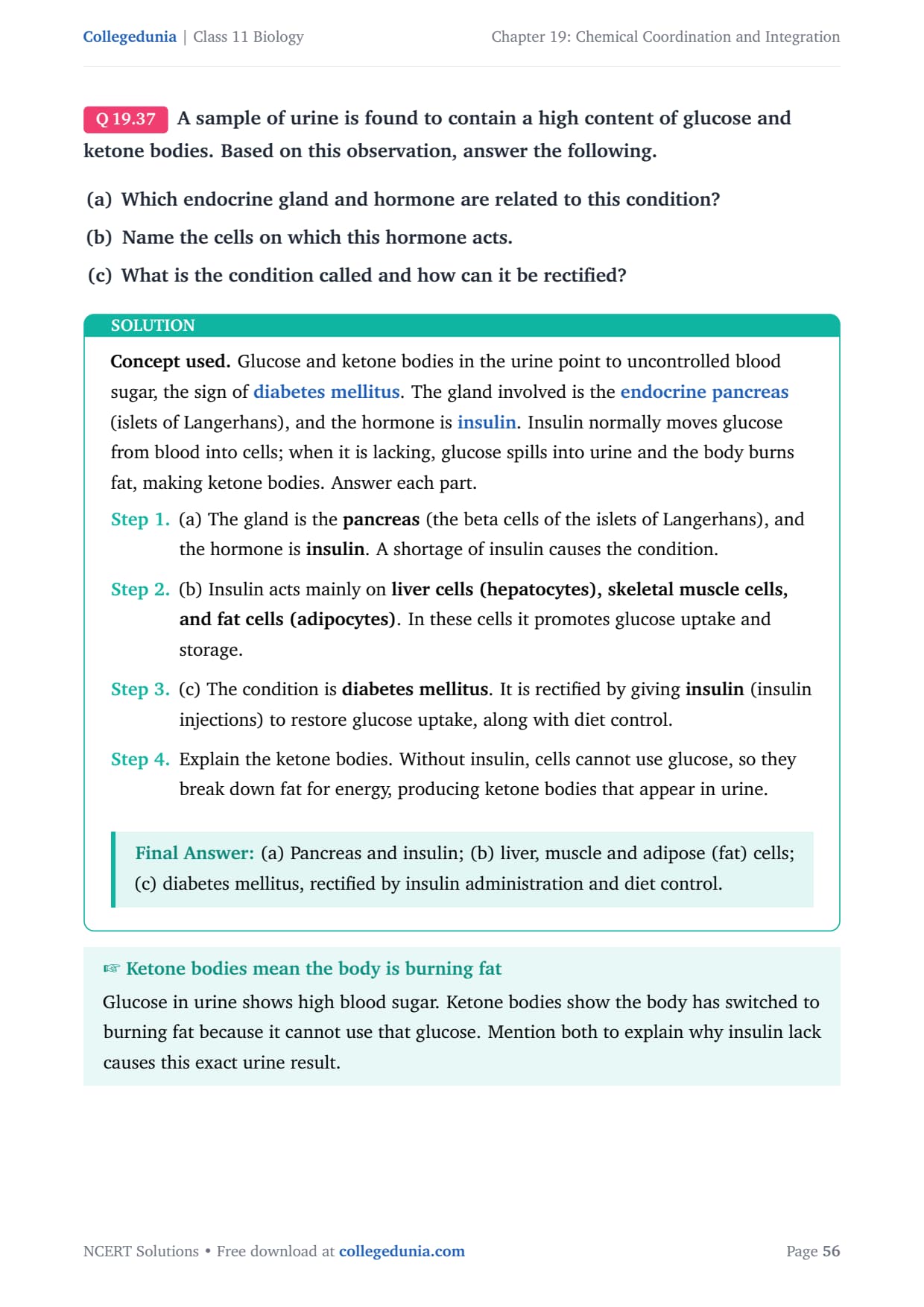
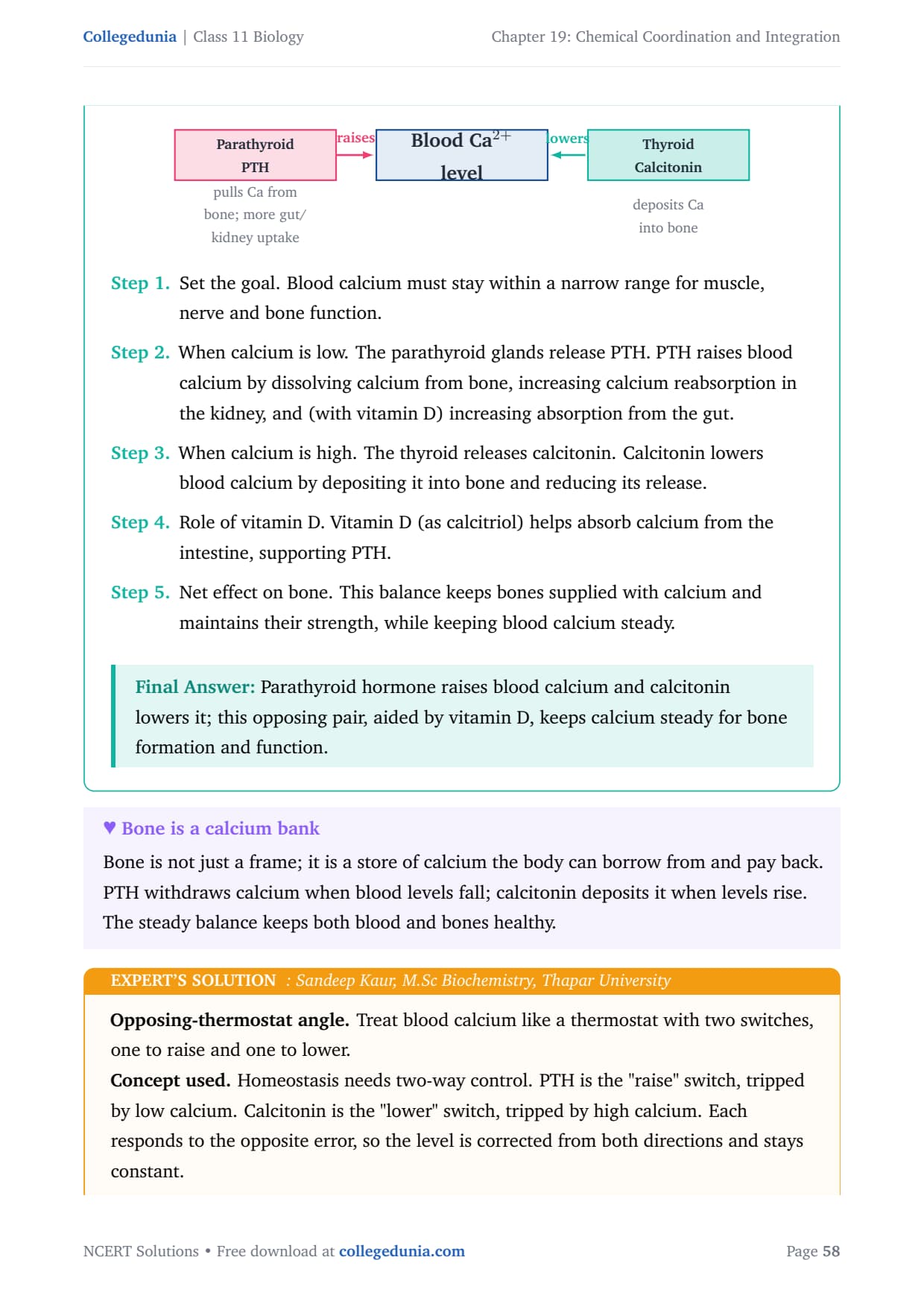
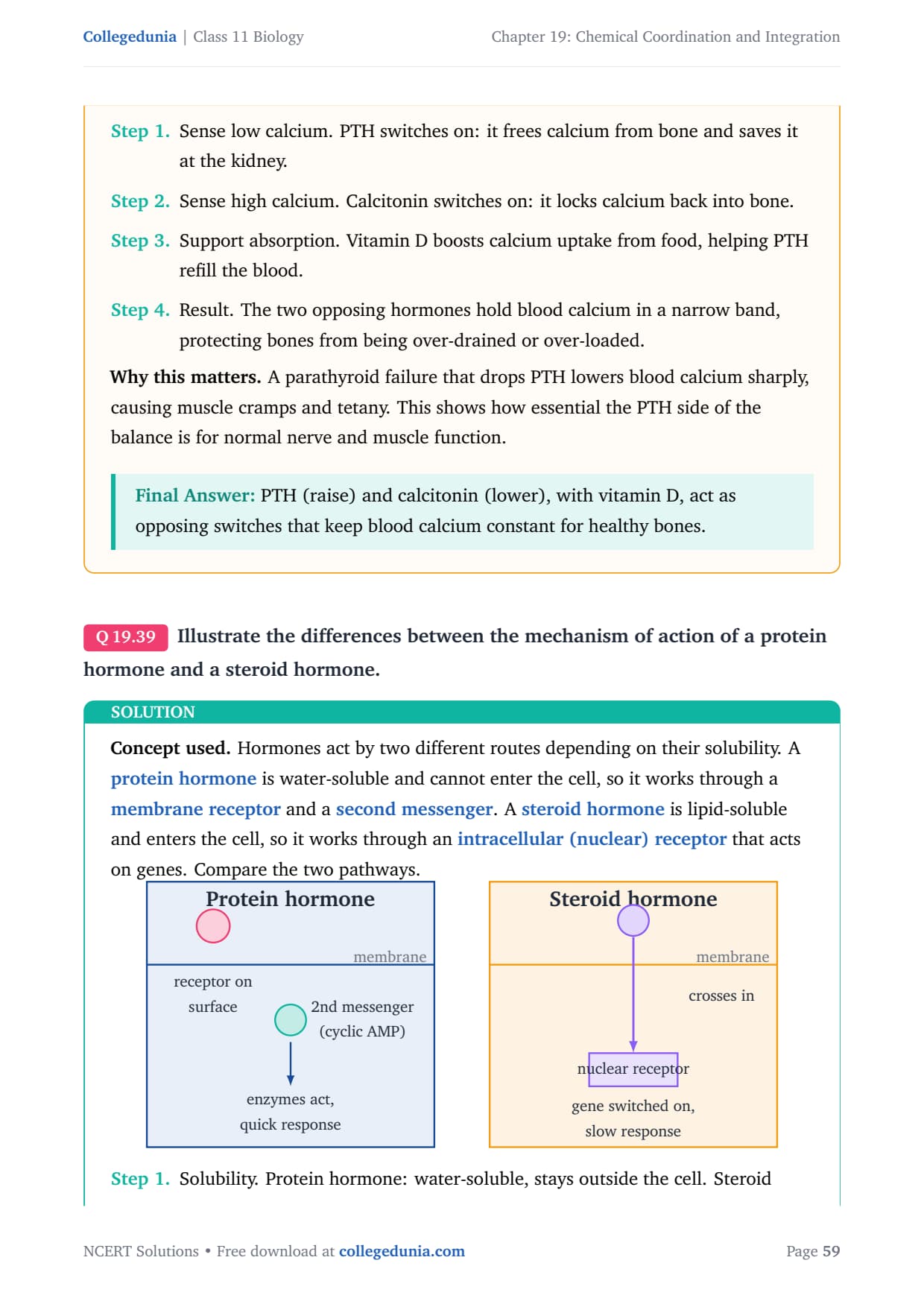
This is the last chapter of Class 11 Biology, and NEET returns to it every single year. Hormones, glands and their disorders are pure recall on the surface. The Exemplar instead asks you to trace a signal from gland to target cell and name the exact molecule doing the work.
- CBSE Weightage: 4 to 5 marks, usually one gland-hormone question plus a short question on a hormonal disorder
- NEET Weightage: 3 to 4 questions per year from hormone chemistry, gland functions and the mechanism of hormone action
- CUET Weightage: 1 to 2 questions on glands and their secretions in the Biology domain paper
Every answer is checked against both official NCERT Exemplar keys, and the two places where the printed book is wrong are flagged at the question itself instead of being copied quietly.
Topics Covered in the NCERT Exemplar Class 11 Biology Solutions Chapter 19
The 40 questions sit on four ideas. Each one comes back in Class 12 when you study reproduction and human health. The chapter looks like a table to memorise, but almost every Exemplar question asks you to use the table rather than repeat it.
- Endocrine glands and their hormones: hypothalamus, pituitary, pineal, thyroid, parathyroid, thymus, adrenal, pancreas and the gonads
- Hormone chemistry: peptide, protein, amino acid derivative and steroid hormones, and why the class decides where the receptor sits
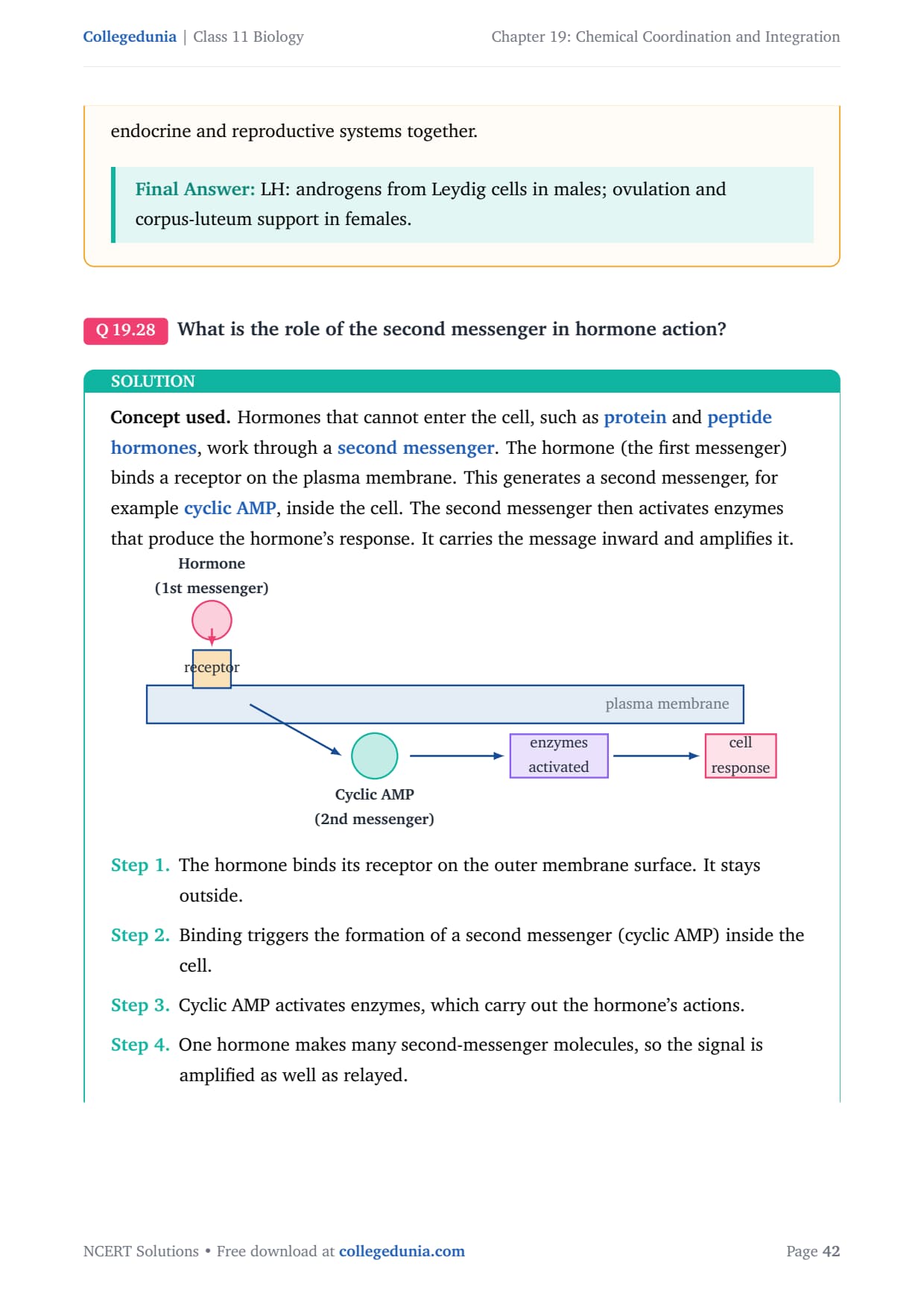
- Mechanism of hormone action: membrane receptors, second messengers such as cyclic AMP, and intracellular receptors for steroids
- Disorders and non-endocrine sources: goitre, diabetes mellitus, diabetes insipidus, exophthalmia, plus hormones from the heart, kidney and gut
Question Types in the Chemical Coordination and Integration Exemplar
The four types make very different demands. The MCQ set turns on one word inside an option, while the Long Answer set asks for a full mechanism with the gland, the hormone and the target named. Sixty-five percent of this chapter is MCQ and Very Short Answer, which makes it strong NEET practice. The split is below.
| Question Type | Count | What It Tests |
|---|---|---|
| MCQ (single correct) | 15 | Gland-hormone pairs, receptor location and two matching-column sets |
| VSA (Very Short Answer) | 11 | One-line recall such as the gland that makes calcitonin |
| SA (Short Answer) | 9 | LH in both sexes, second messengers and iodine deficiency |
| LA (Long Answer) | 5 | Insulin action, calcium balance and full hormone pathways |
Printed Errors in the Source Book and the Chapter 22 Numbering
Three source problems catch students here. None of them is a mistake in your reading, and all three are handled openly in the PDF.
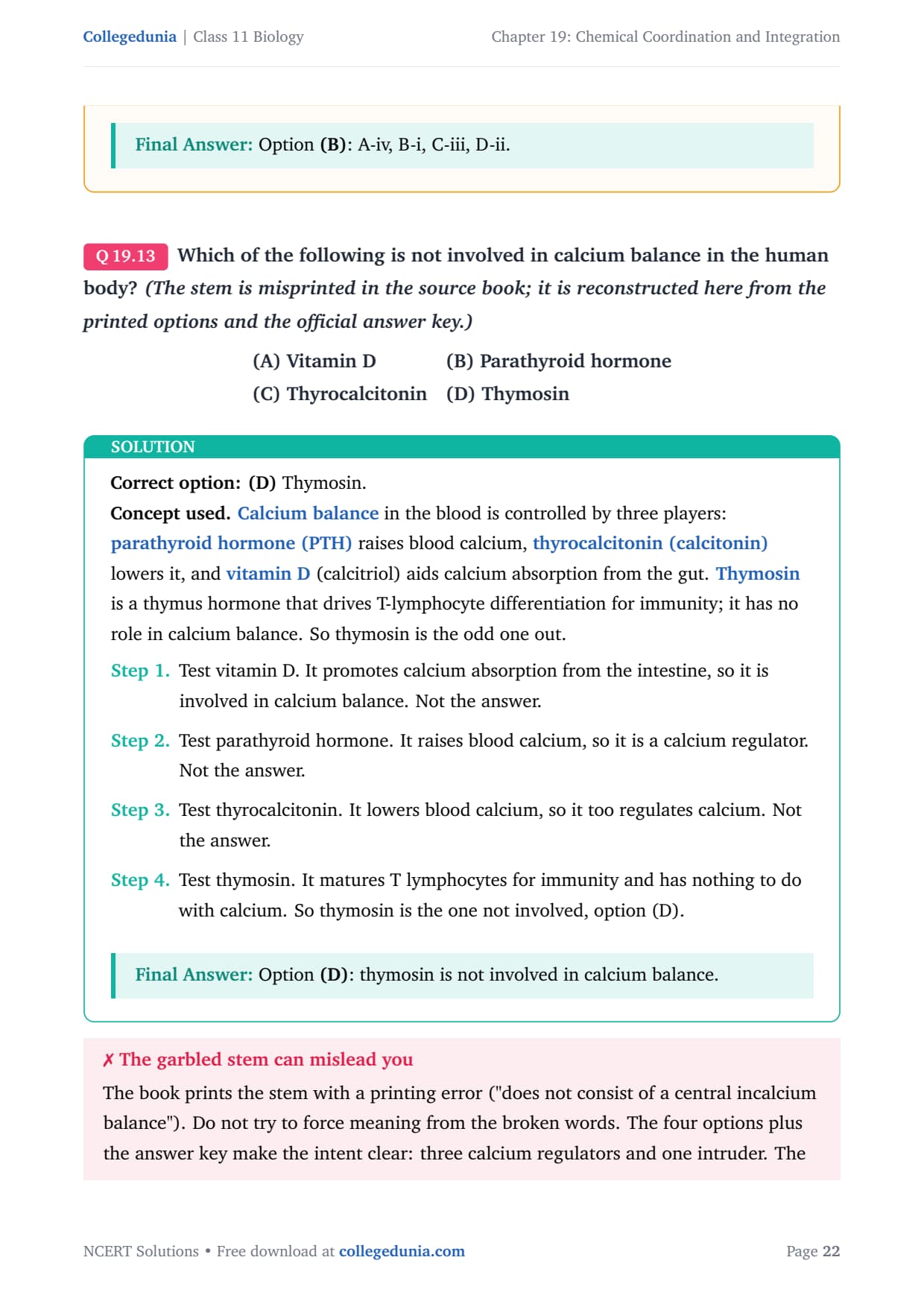
- MCQ 13 has a garbled stem: the printed line reads "does not consist of a central incalcium balance", which is not a question at all. Its own options are Vitamin D, parathyroid hormone, thyrocalcitonin and thymosin, and the key answer is (d). The real question is therefore "Which of the following is NOT involved in calcium balance in the human body?" Thymosin is an immune hormone, so it is the odd one out.
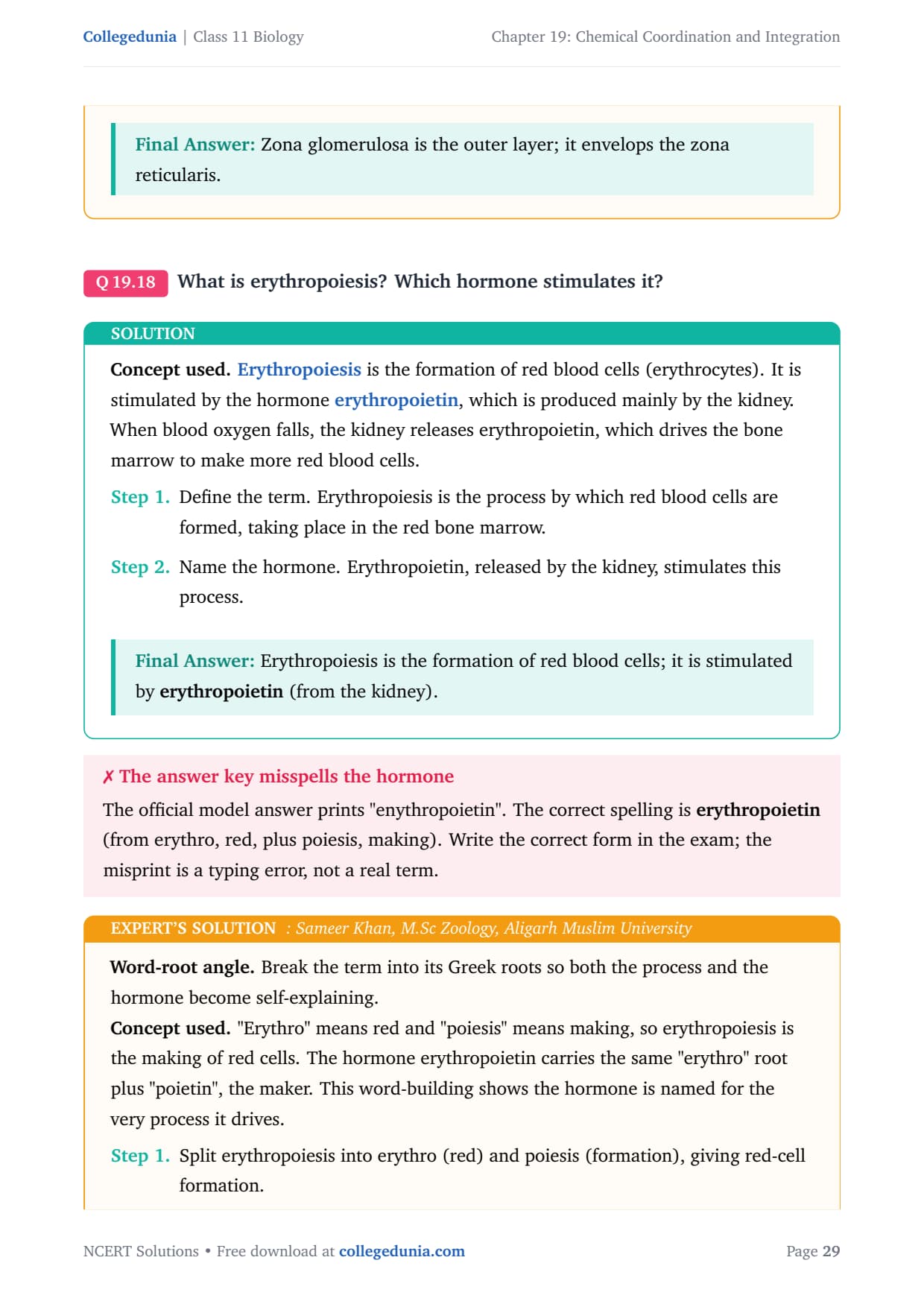
- The descriptive key misspells a hormone: Very Short Answer 3 asks what stimulates erythropoiesis. The official model answer prints "enythropoietin". The correct spelling is erythropoietin, and writing the printed form in an exam loses the mark.
- The chapter prints as Chapter 22: the Exemplar is the older 22-chapter edition, so this content is the last chapter there. Both answer keys index it under "CHAPTER 22". Your textbook calls it Chapter 19. The content is identical.
MCQ 13 is unanswerable as printed, so students who skip it lose a mark that is easy to score once the stem is repaired.
Common Mistakes Students Make in Chemical Coordination and Integration
The Exemplar plants wrong options on purpose, and four errors take most of the marks here. Each one is flagged in the PDF at the question where it appears.
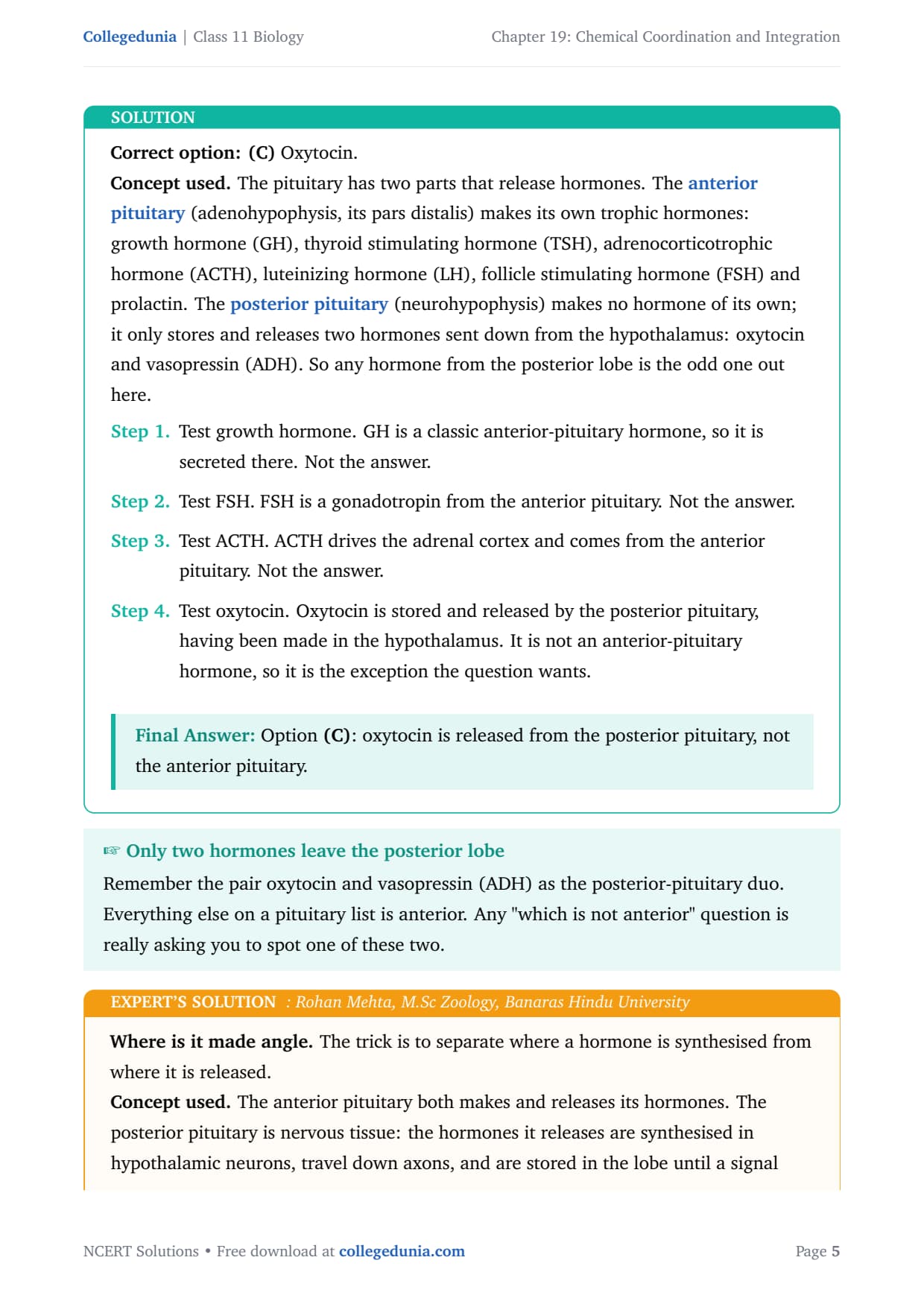
- Calling oxytocin an anterior pituitary hormone: the posterior pituitary only stores and releases oxytocin and ADH. It makes neither. One MCQ is built entirely on this line.
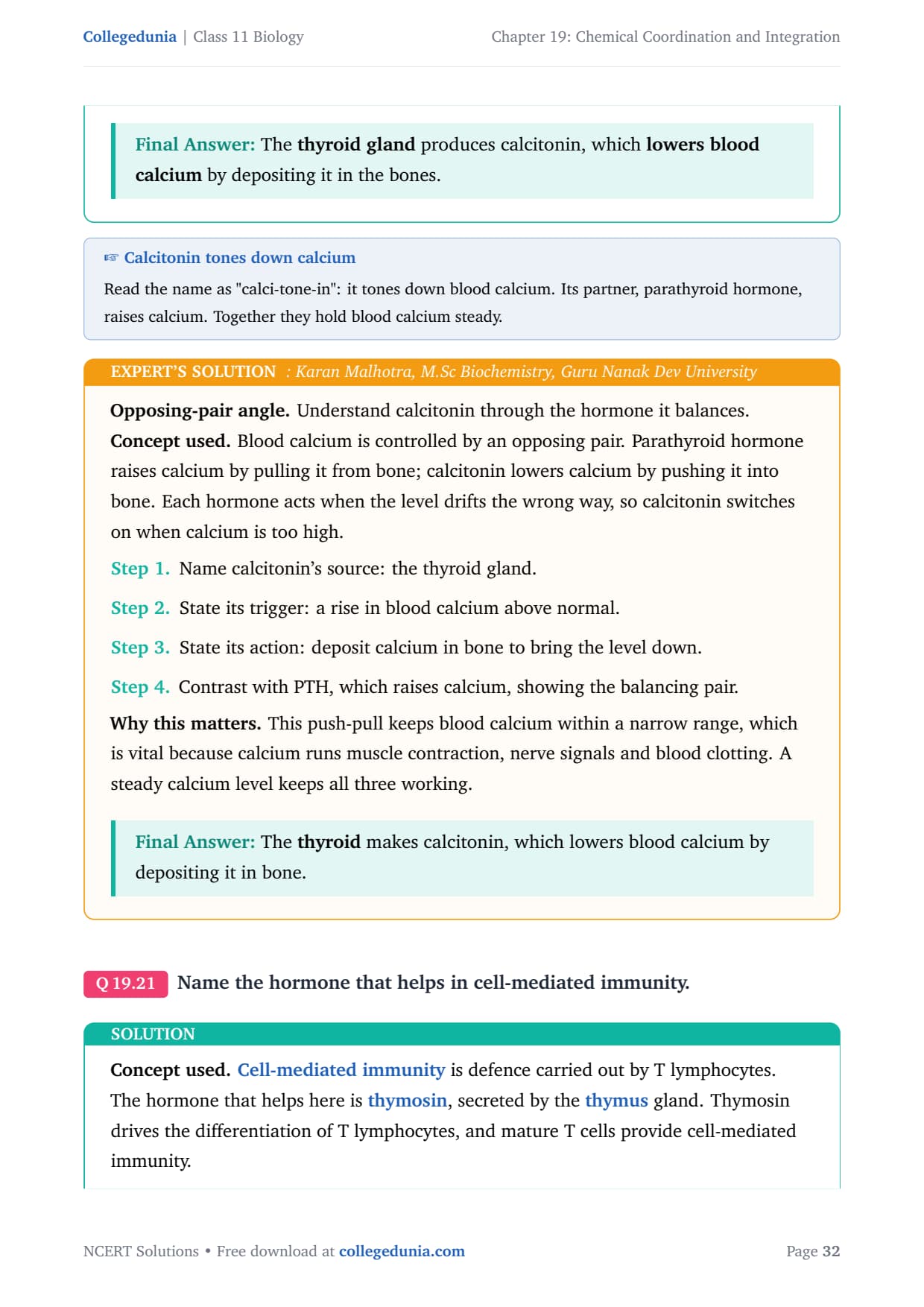
- Swapping B and T lymphocytes: thymosin from the thymus drives T cell maturation and cell-mediated immunity. B cells give humoral immunity. A True or False question tests exactly this swap.
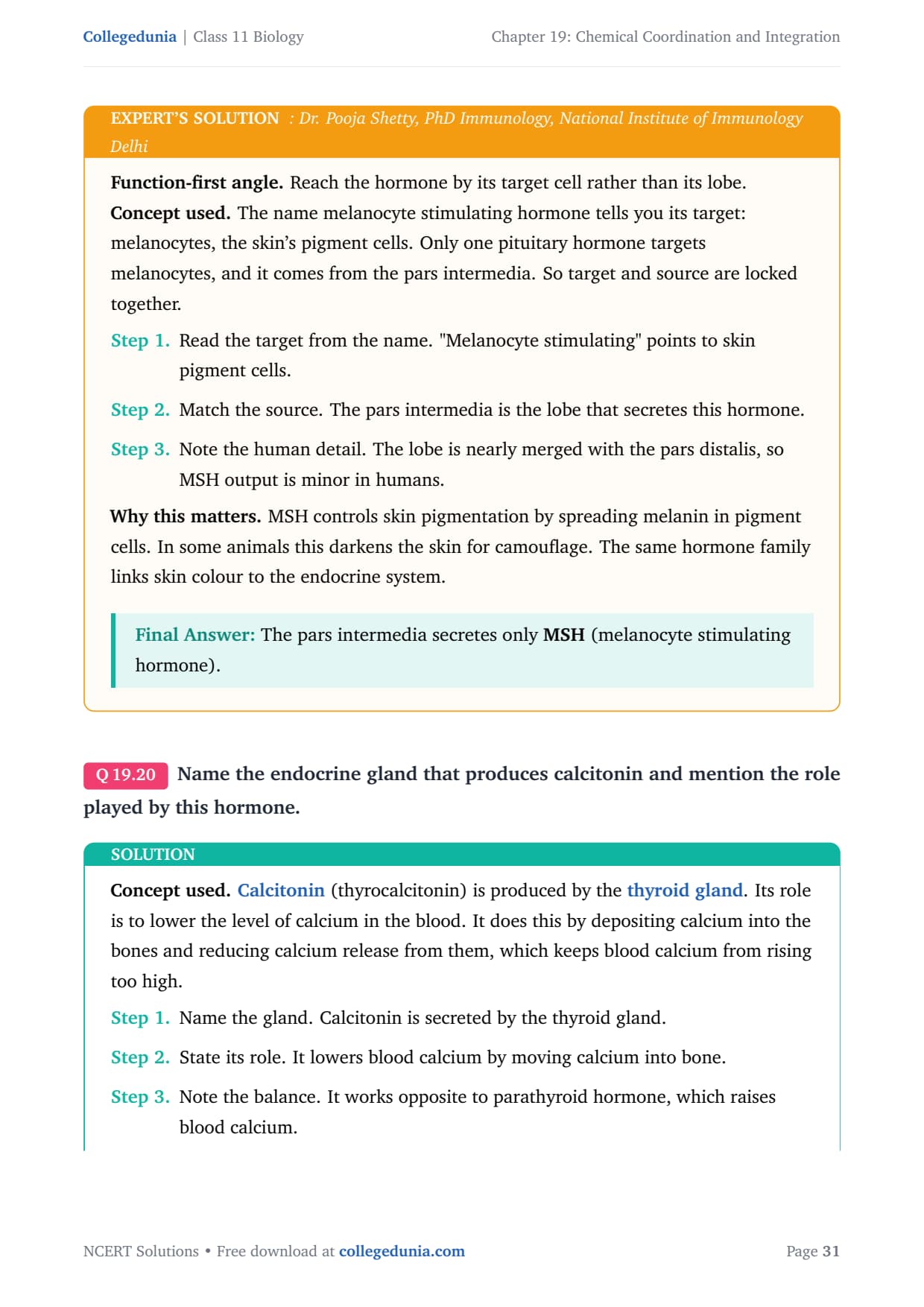
- Reversing the calcium hormones: parathyroid hormone raises blood calcium, calcitonin from the thyroid lowers it. Students often name the wrong gland for calcitonin.
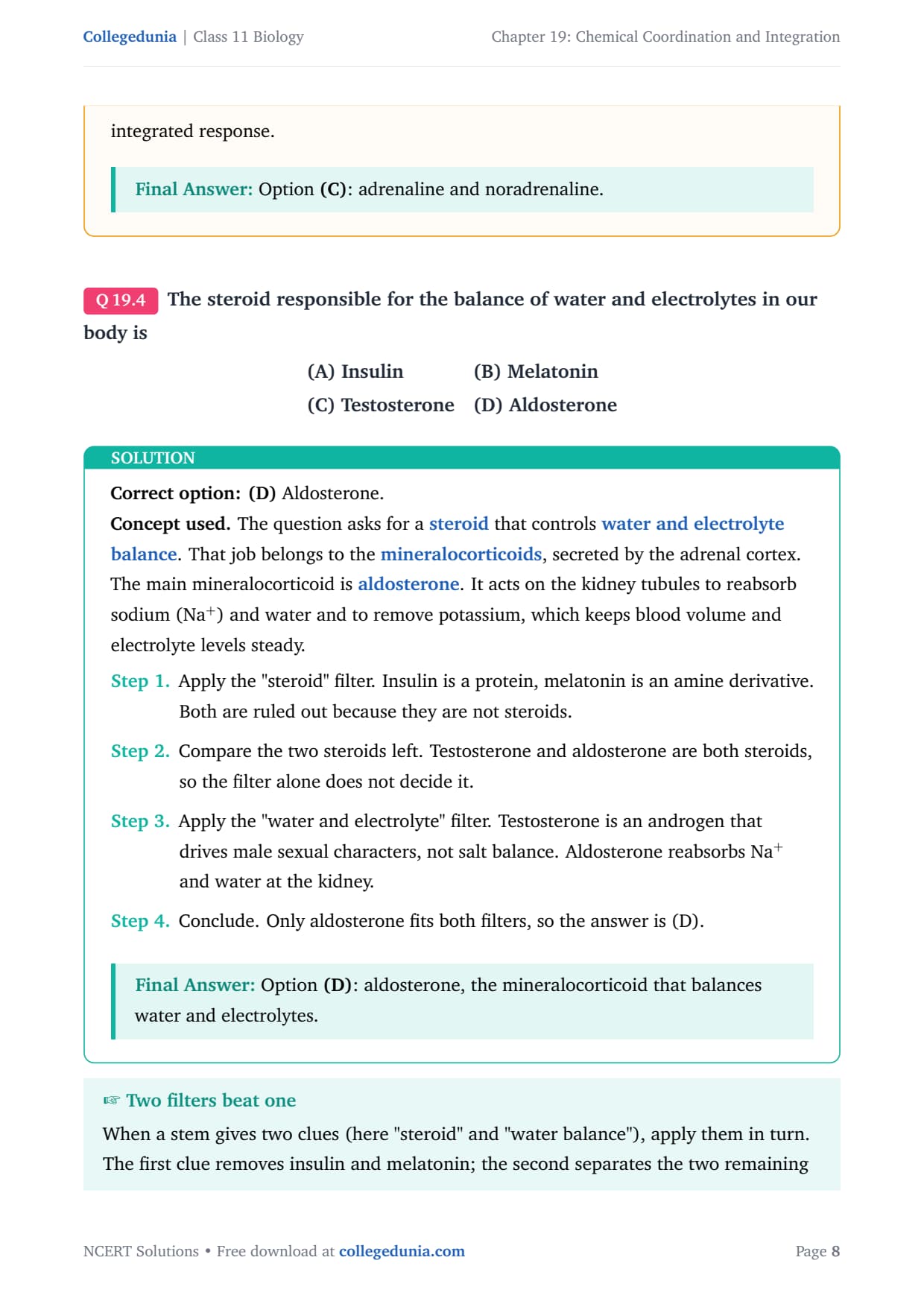
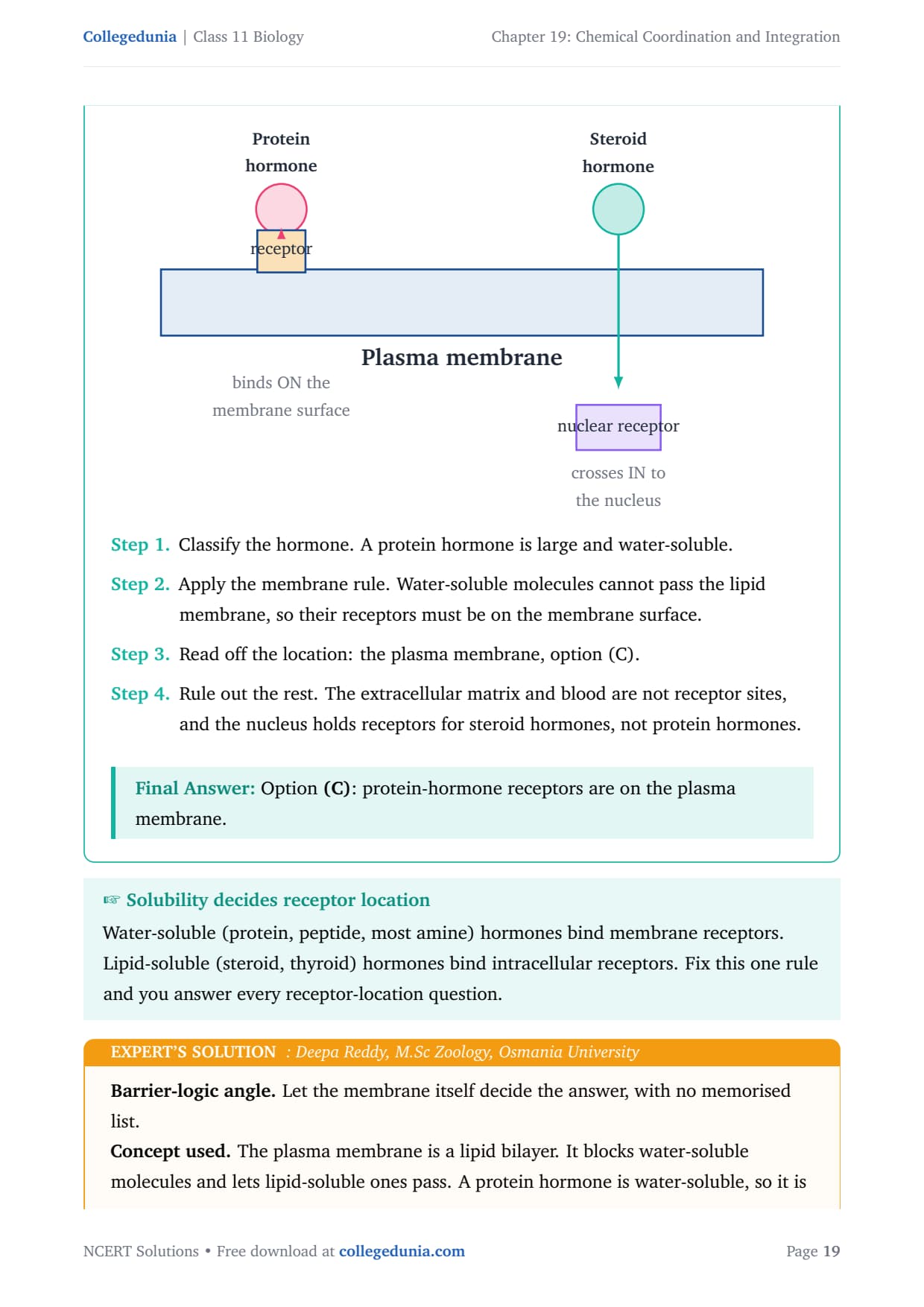
- Calling insulin a steroid: insulin is a protein hormone, so its receptor sits on the plasma membrane. Only lipid-soluble steroids reach an intracellular receptor.
How to Use These Exemplar Solutions for Boards, NEET and CUET
Attempt each question before you open the solution. Build one gland-hormone-function-disorder table by hand and keep adding to it as you work. The Exemplar rewards students who can name the exact molecule, not the general idea.
- Boards: the Short Answer and Long Answer sets match the pattern boards use, especially the insulin and calcium balance questions
- NEET: work the 15 MCQs and 11 Very Short Answers first, since NEET repeats gland functions and hormone chemistry at that exact level
- CUET: the two matching-column MCQs are the closest practice for the domain paper, which favours precise one-term recall
Student Feedback
Students using Collegedunia's Class 11 Biology Exemplar Solutions told us the mechanism of hormone action was the hardest part of this chapter, well above the gland-hormone recall. Around 7 in 10 said the note on the garbled MCQ 13 stem was the first time anyone had explained why that question looked impossible to answer.
Other Resources for Class 11 Biology Chapter 19
Collegedunia has the full set of study material for this chapter. Use the Notes for a first read, then the Exemplar once the gland table is steady.
Also Check:
- NCERT Solutions for Class 11 Biology Chapter 19
- Class 11 Biology Chapter 19 Notes
- Class 11 Biology Chapter 19 NCERT Book PDF
- Class 11 Biology Chapter 19 Exemplar Questions with Solutions
NCERT Exemplar Solutions for Other Class 11 Biology Chapters
Each chapter below has the same step-by-step treatment and a free PDF, with the question count taken from the Exemplar book itself.
Chemical Coordination and Integration Class 11 NCERT Exemplar Solutions FAQs
Ques. How many questions are there in the Class 11 Biology Chemical Coordination and Integration Exemplar?
Ans. Chapter 19 has 40 questions. They are split into 15 MCQ, 11 Very Short Answer, 9 Short Answer and 5 Long Answer questions. All 40 are solved in the free 63-page PDF on this page.
Ques. Why does my Exemplar book call this Chapter 22 and not Chapter 19?
Ans. The NCERT Exemplar for Class 11 Biology is the older 22-chapter edition, where this content is the last chapter and prints as Chapter 22. The current textbook has 19 chapters and lists it as Chapter 19. Both answer keys also index it under Chapter 22, so search there when you check an answer.
Ques. What is the correct question for the garbled MCQ 13 in this chapter?
Ans. The printed stem is broken by the book layout and reads "does not consist of a central incalcium balance". The options are Vitamin D, parathyroid hormone, thyrocalcitonin and thymosin, and the key gives (d). So the real question asks which hormone is NOT involved in calcium balance. Thymosin regulates immunity, not calcium, so it is the answer.
Ques. Why is oxytocin not an anterior pituitary hormone?
Ans. Oxytocin is made by the hypothalamus and travels down nerve fibres to the posterior pituitary, which only stores and releases it. The anterior pituitary makes its own six hormones, including growth hormone, TSH, ACTH, LH, FSH and prolactin. An MCQ in this chapter uses that split as its whole trap.
Ques. Is this Exemplar chapter enough for NEET questions on hormones?
Ans. It covers the ground well. NEET asks three to four questions a year on gland functions, hormone chemistry, the mechanism of hormone action and hormonal disorders, and all four appear here. Work the 15 MCQs and 11 Very Short Answers first, then the Long Answer set on insulin and calcium balance.



Comments