




NCERT Exemplar Solutions for Class 11 Biology Chapter 6 Anatomy of Flowering Plants solve all 51 questions from the Exemplar book. Every MCQ, Very Short Answer, Short Answer and Long Answer problem is answered step by step in the free 86-page PDF, updated for the 2026-27 syllabus.
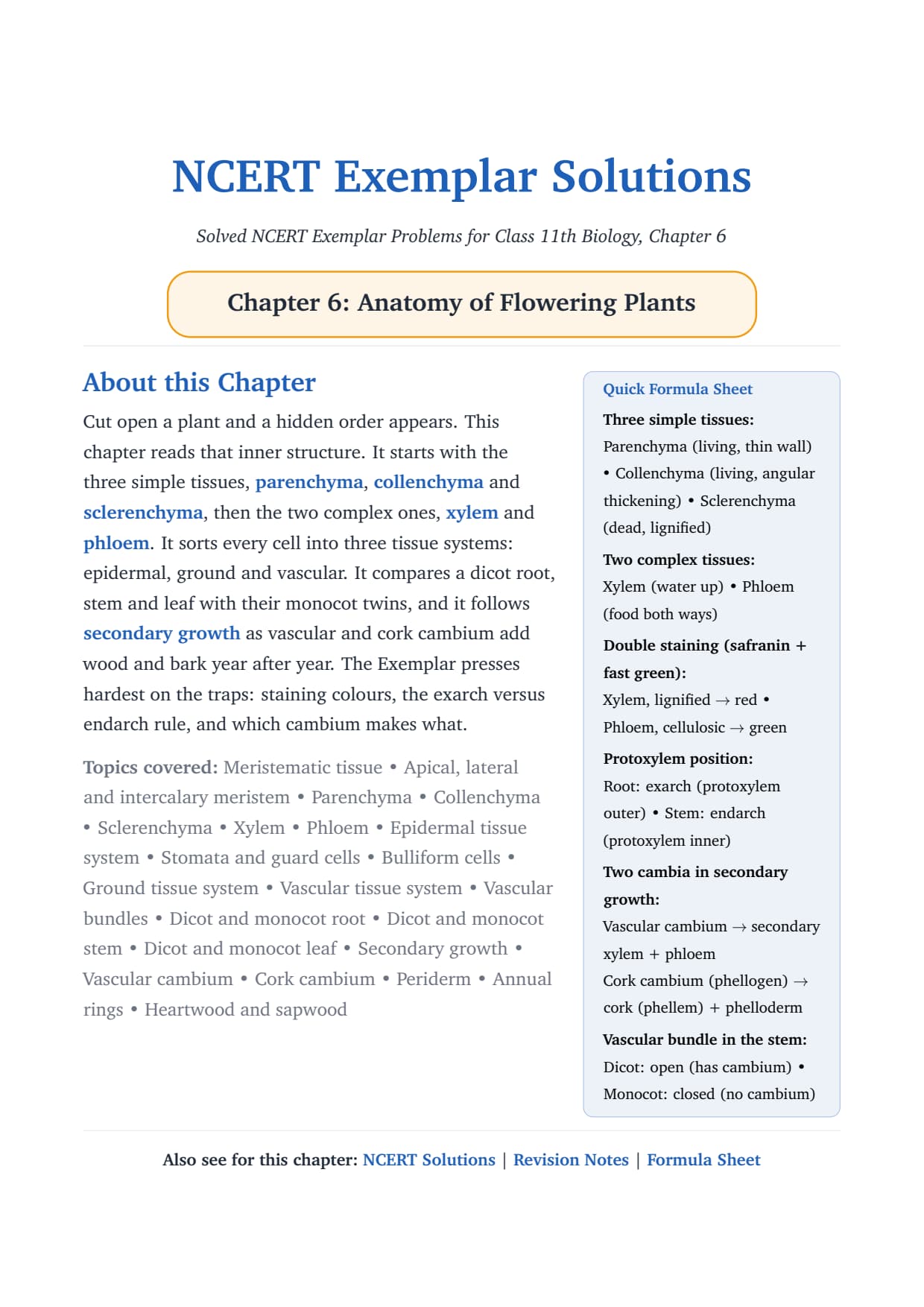
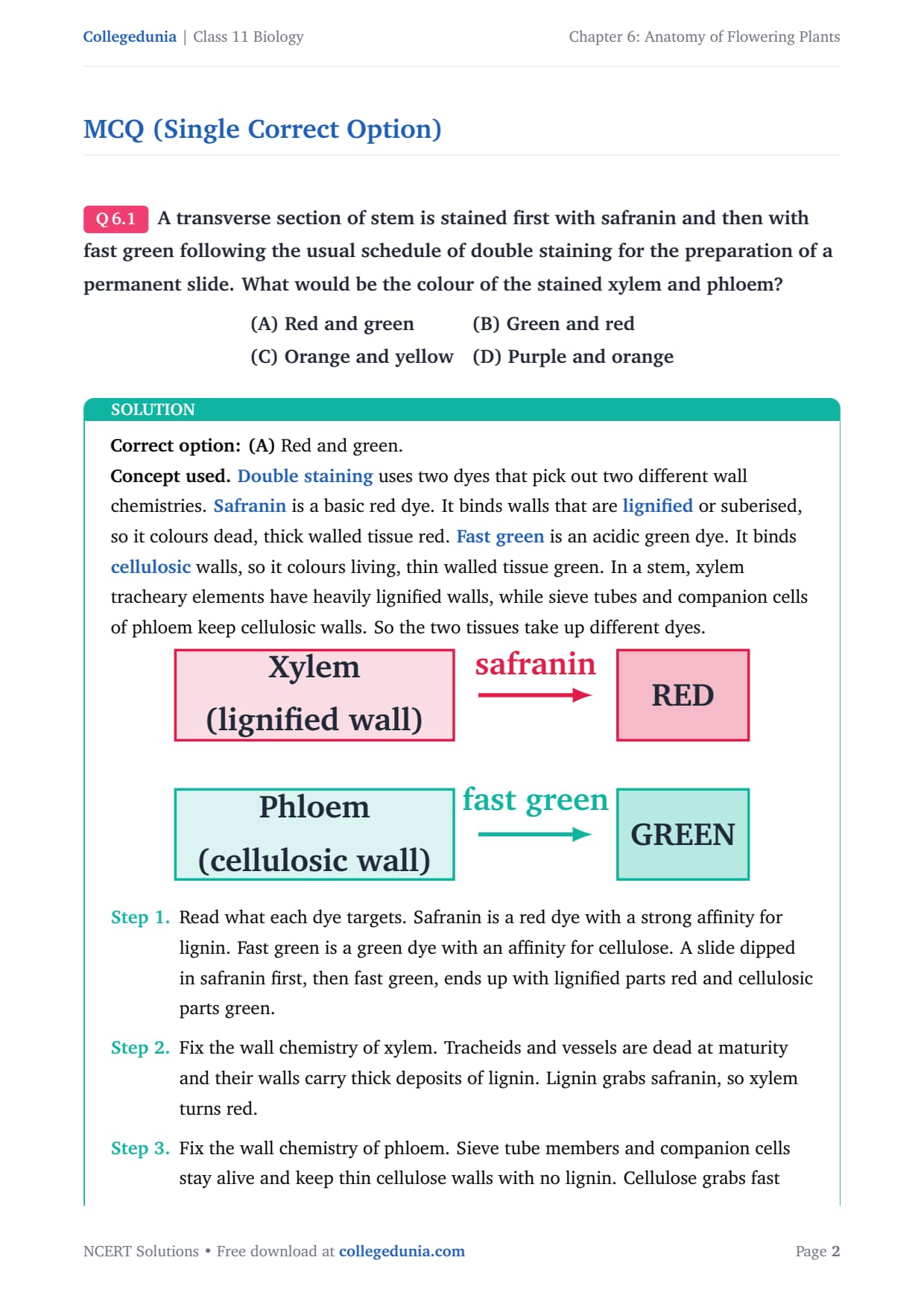
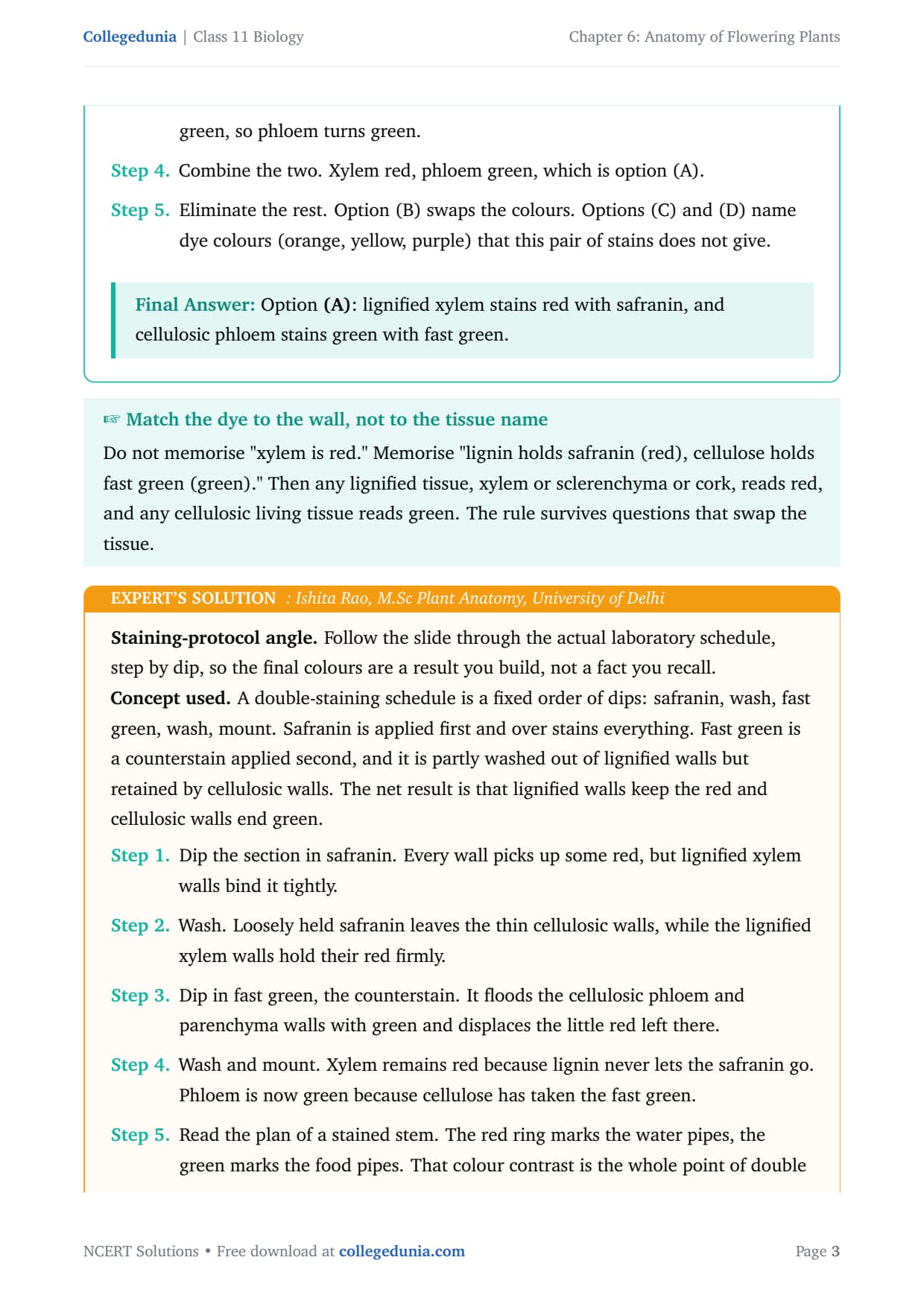
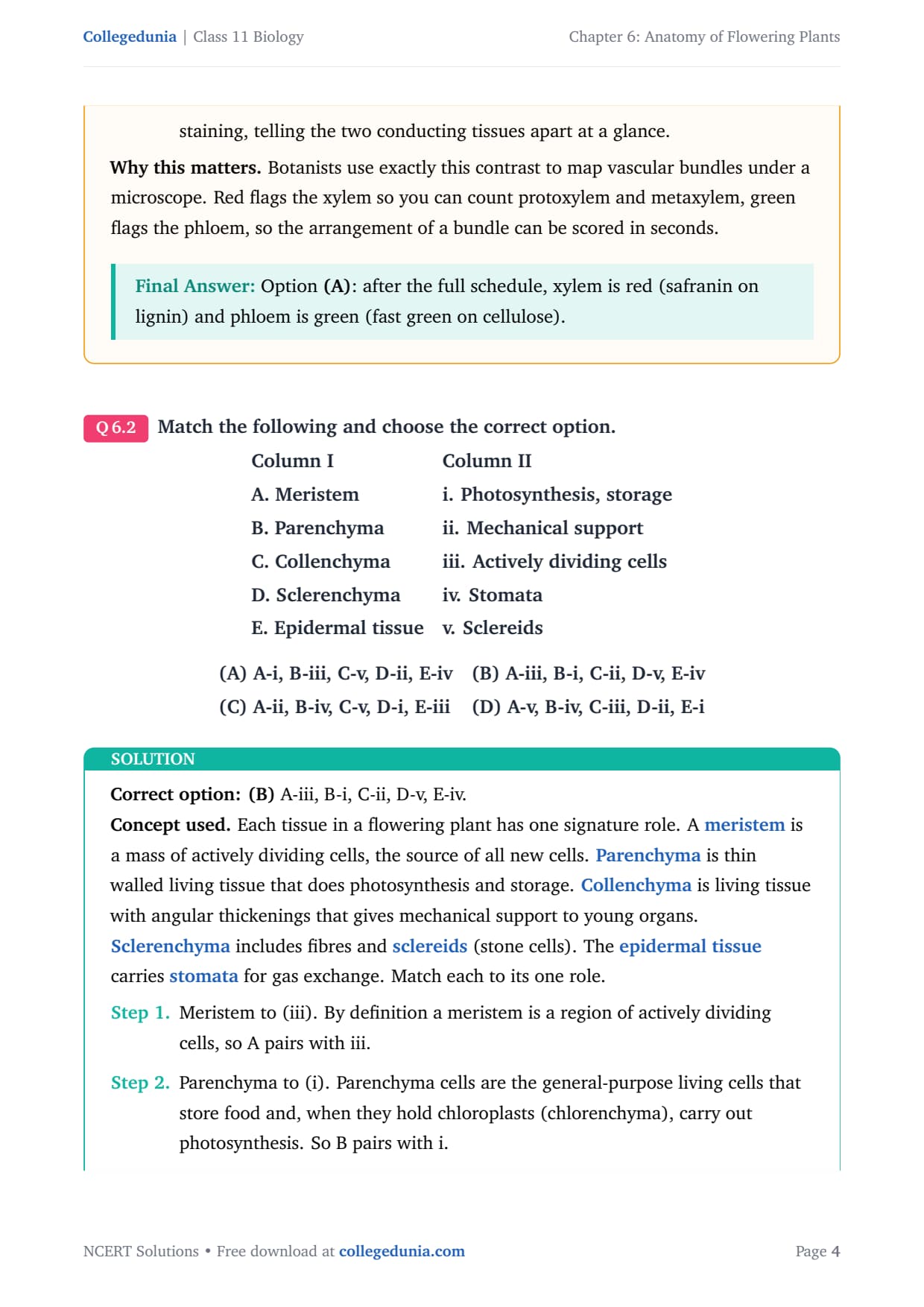
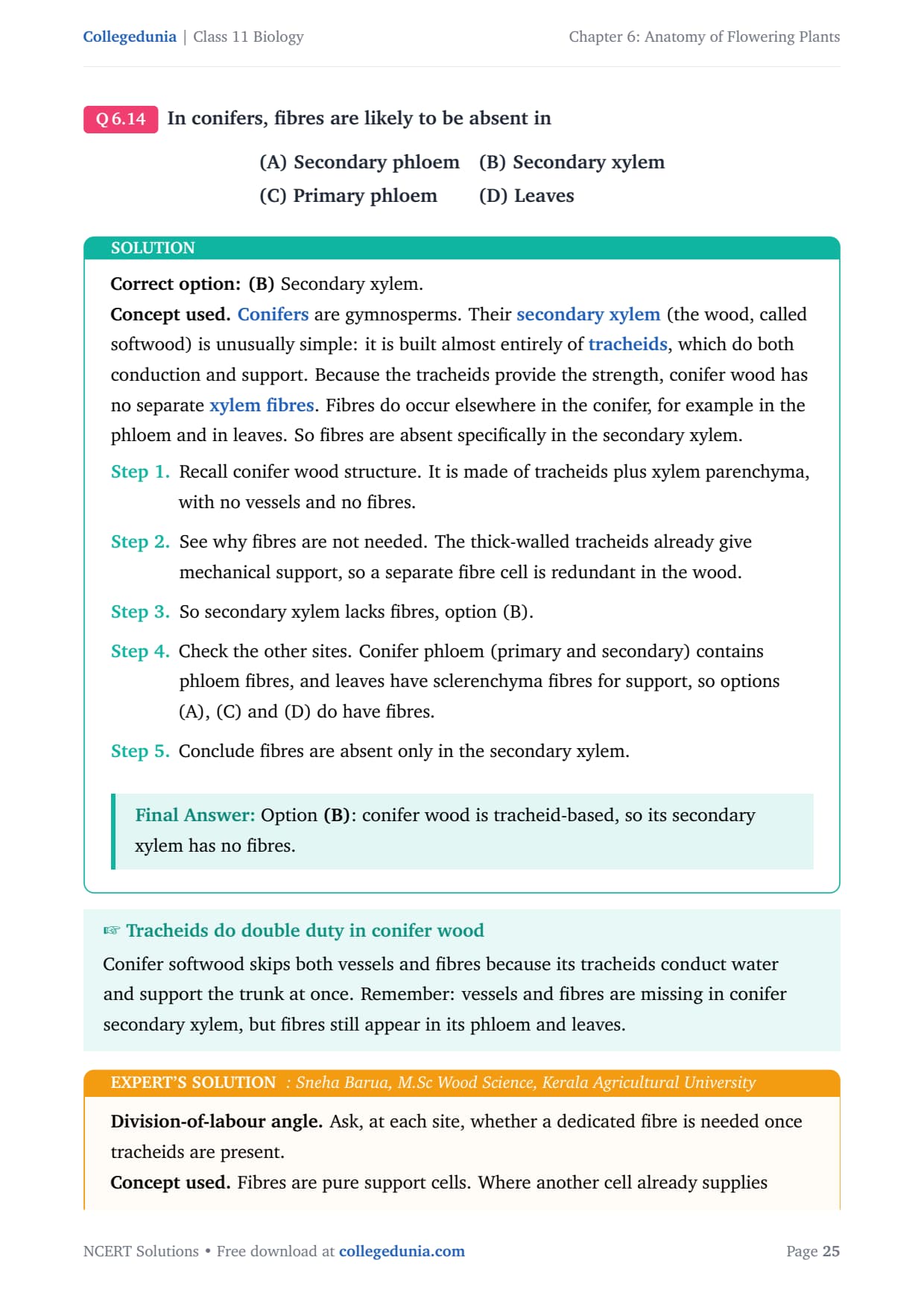
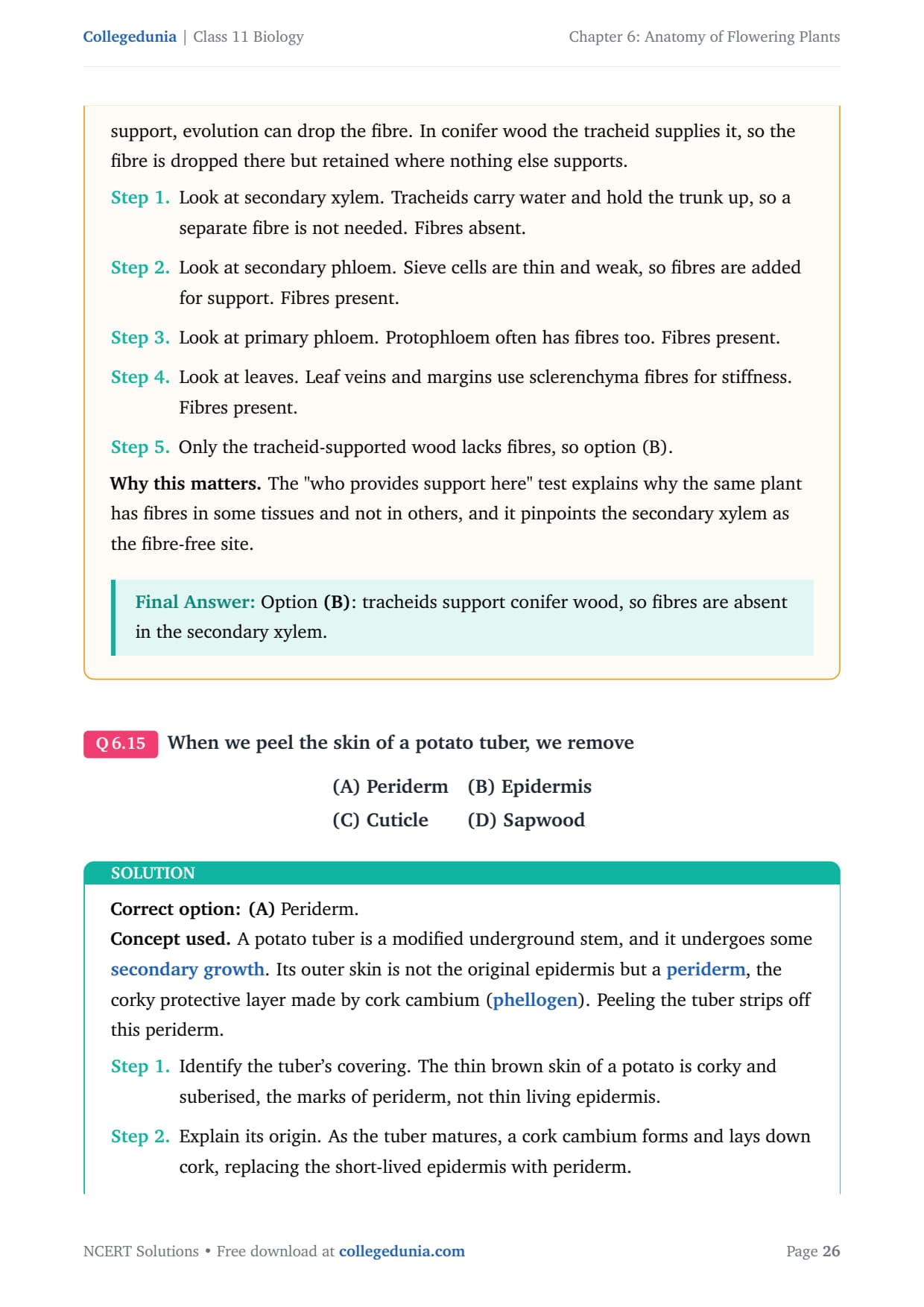
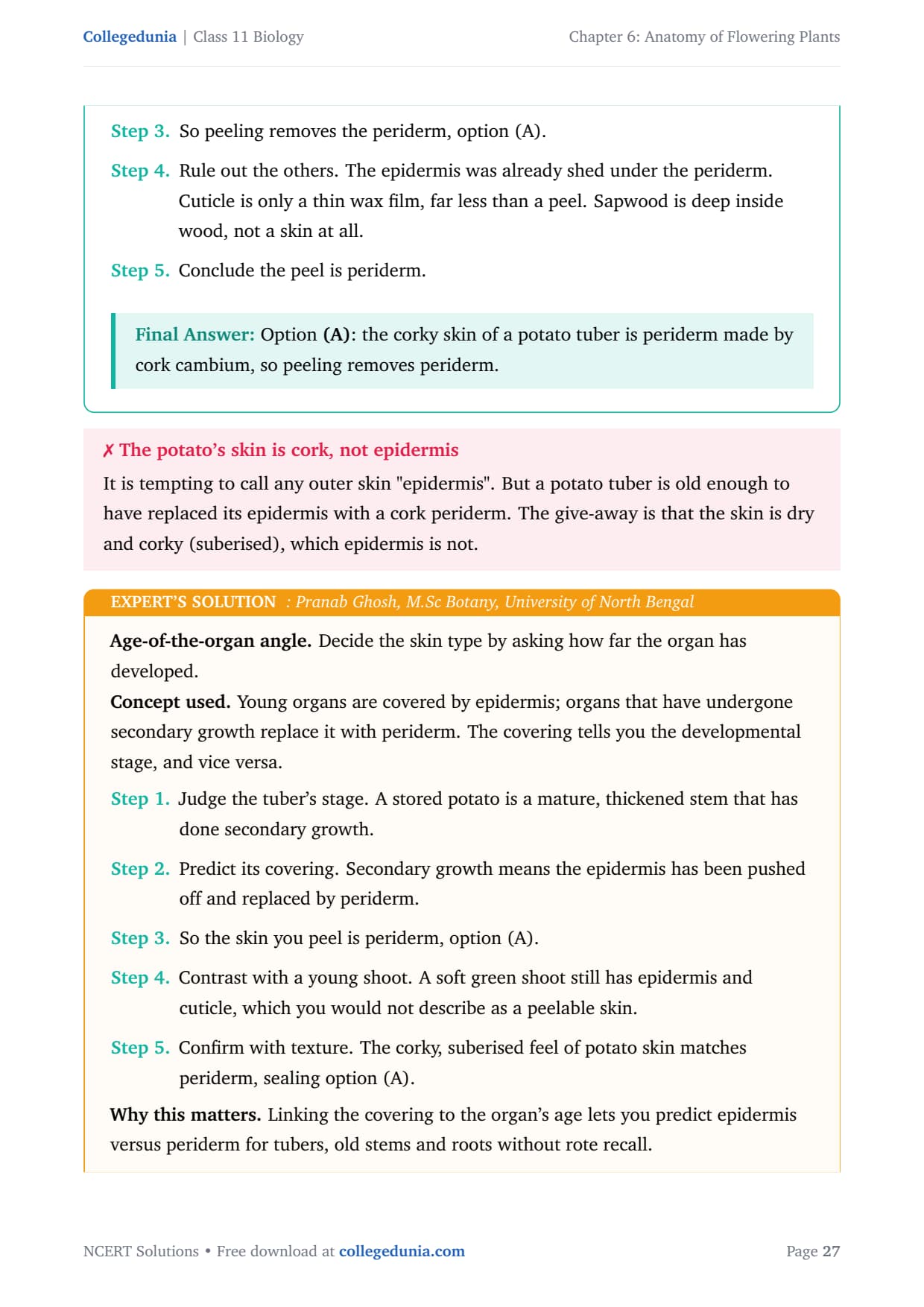
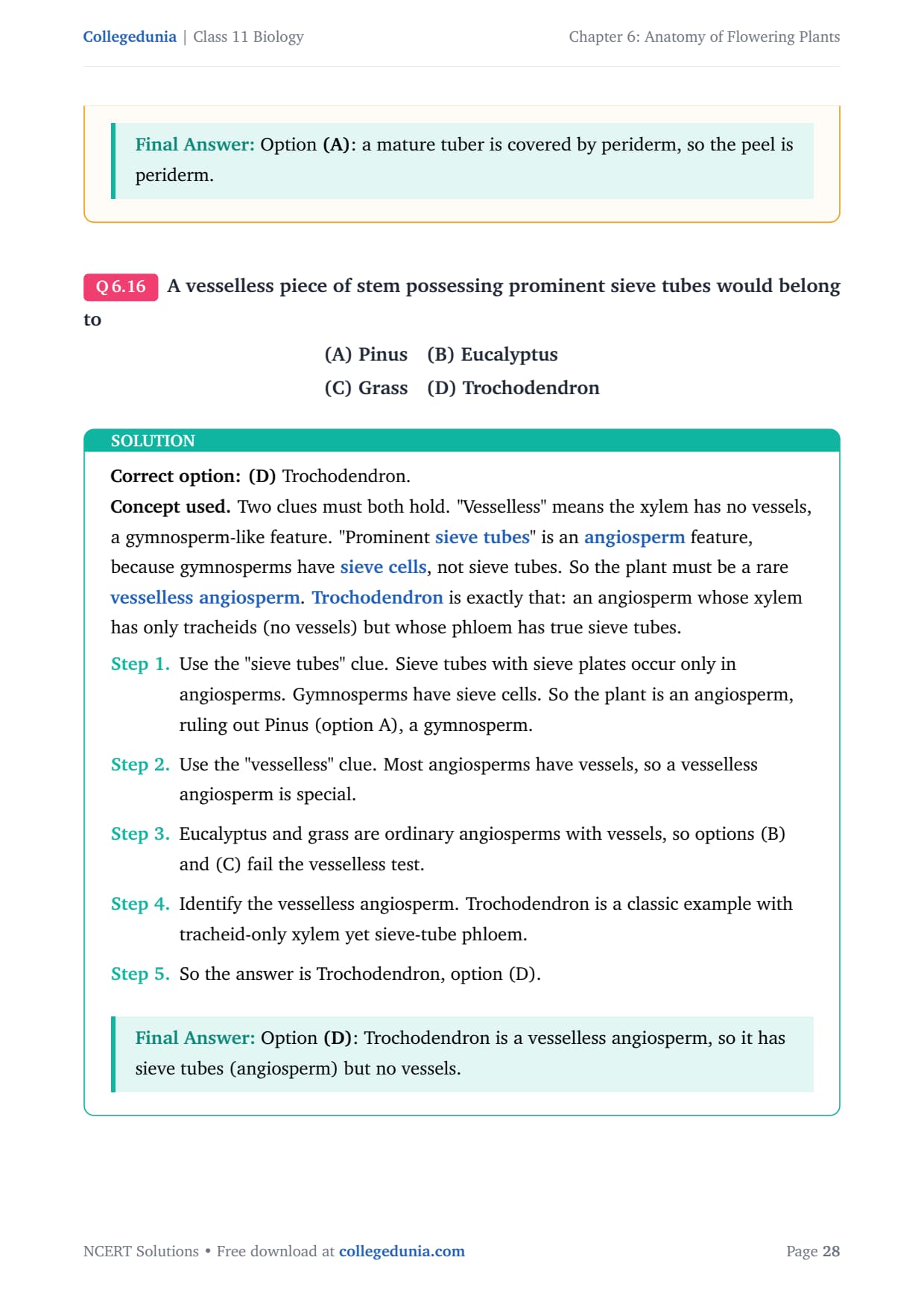
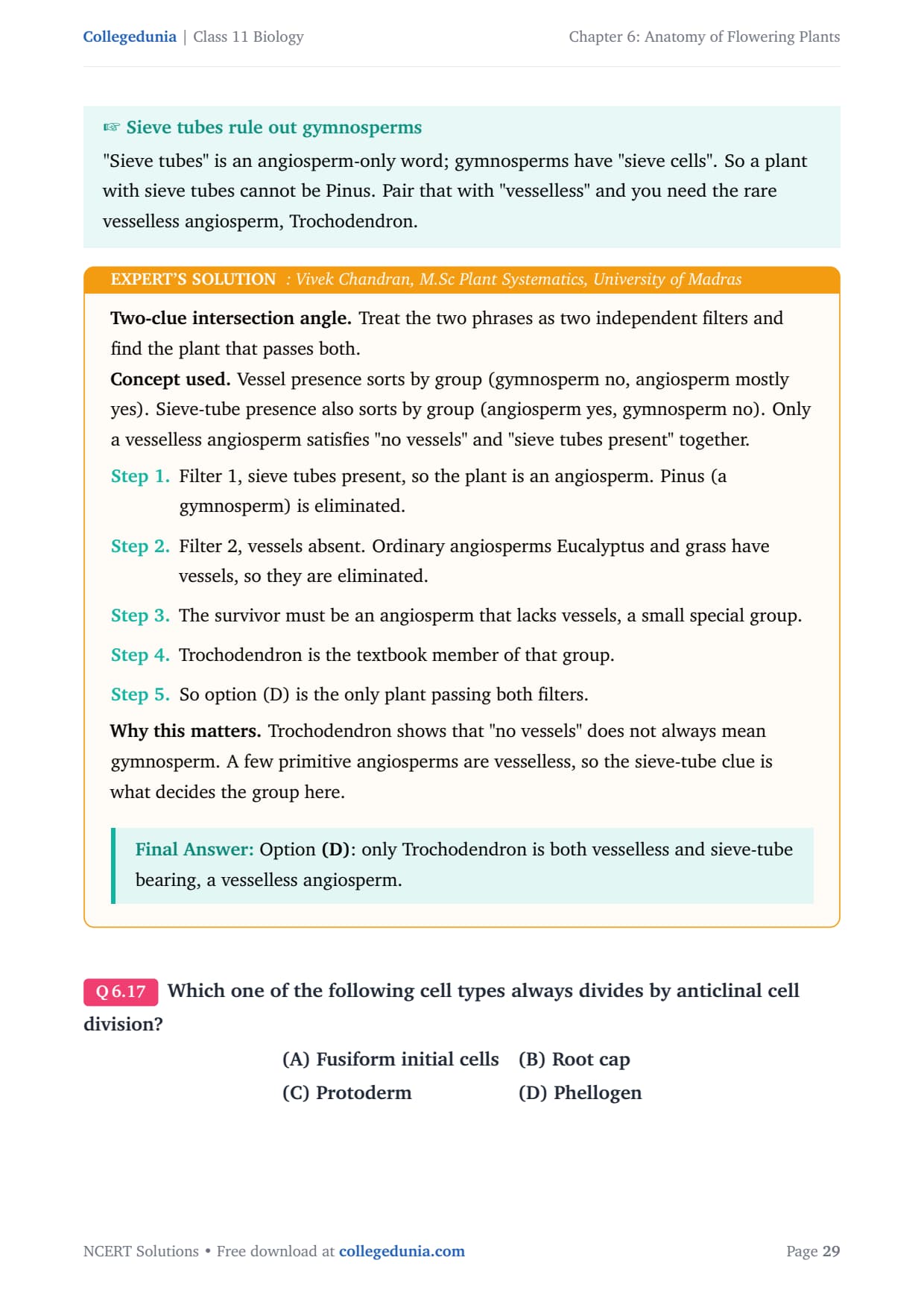
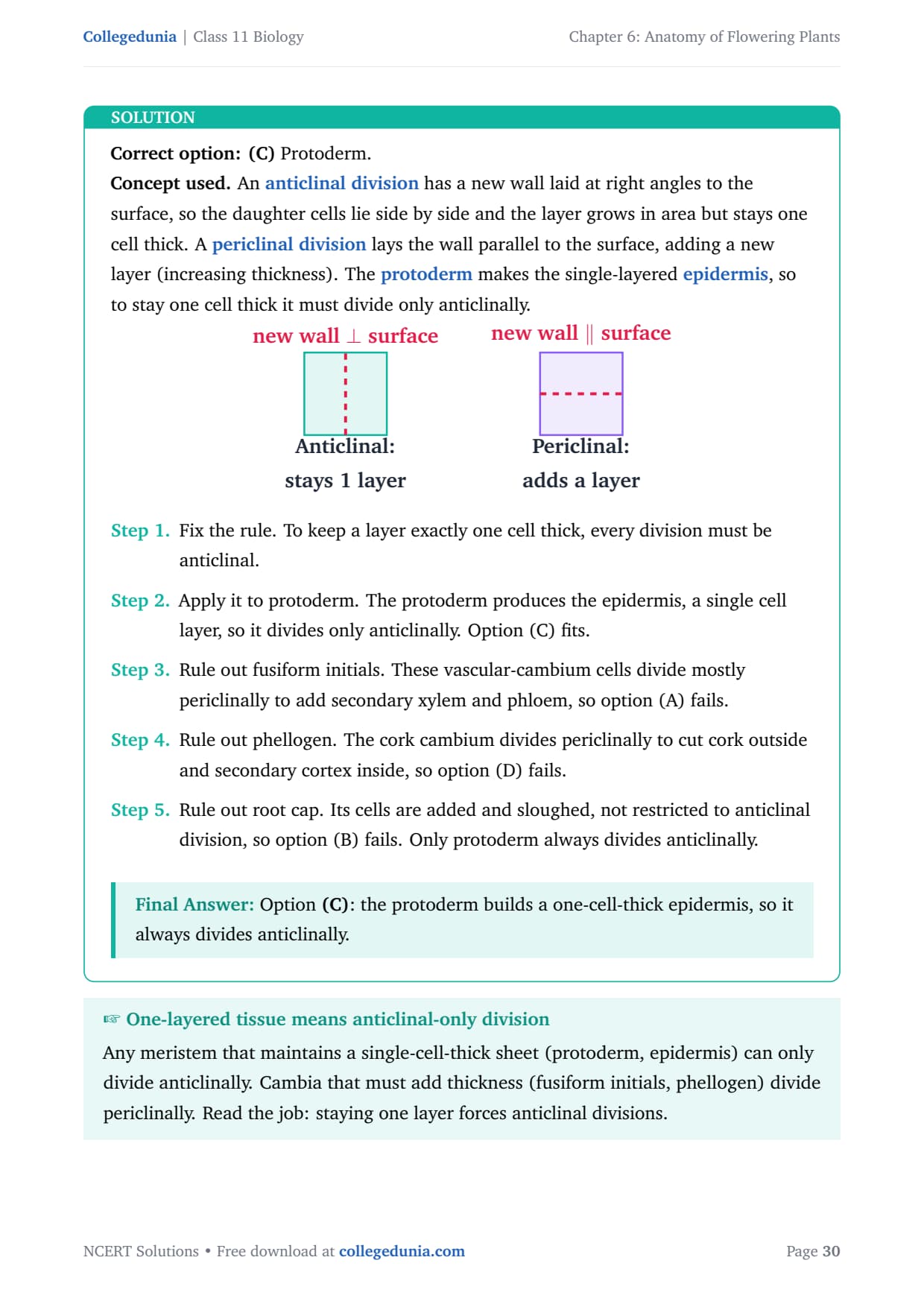
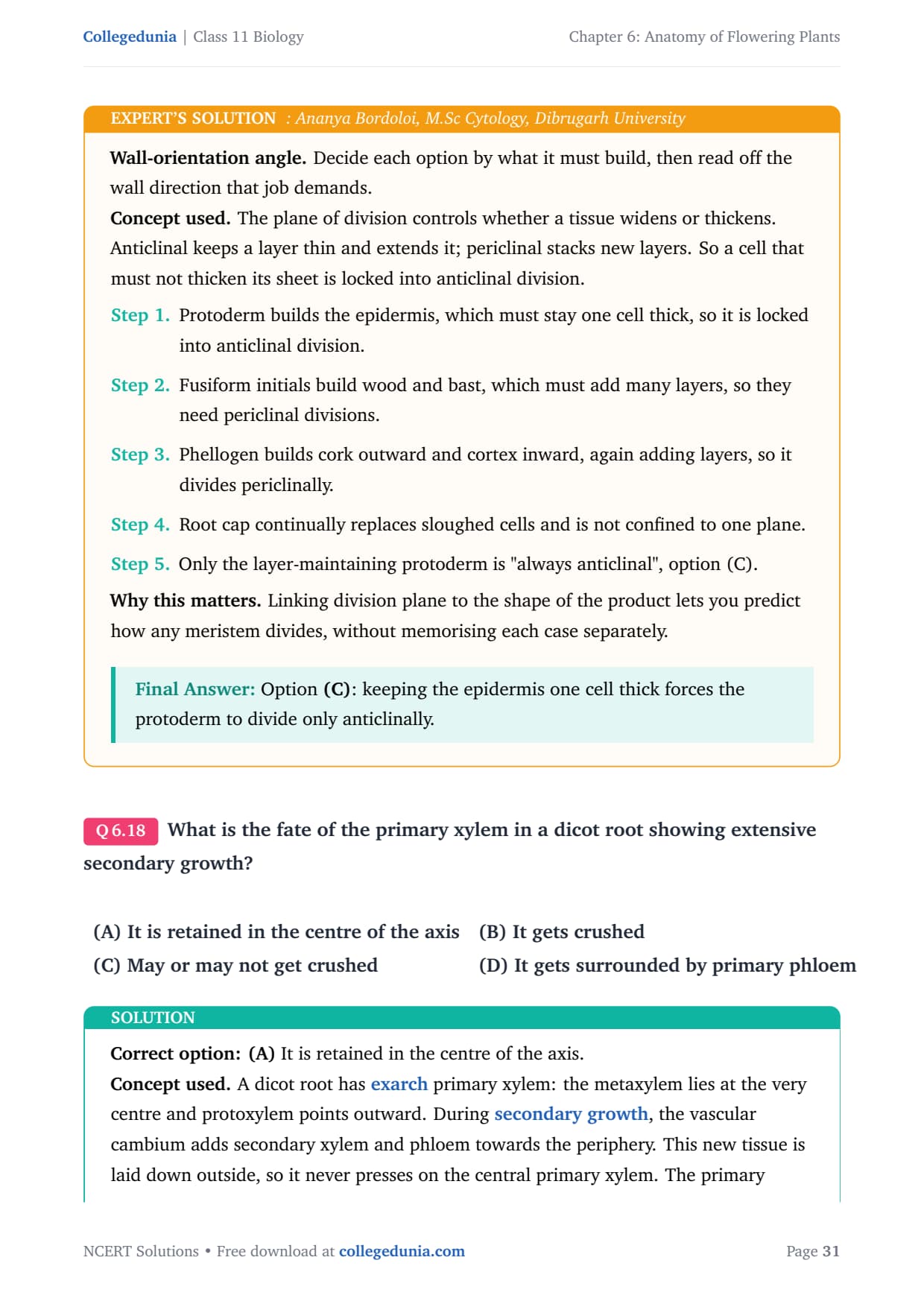
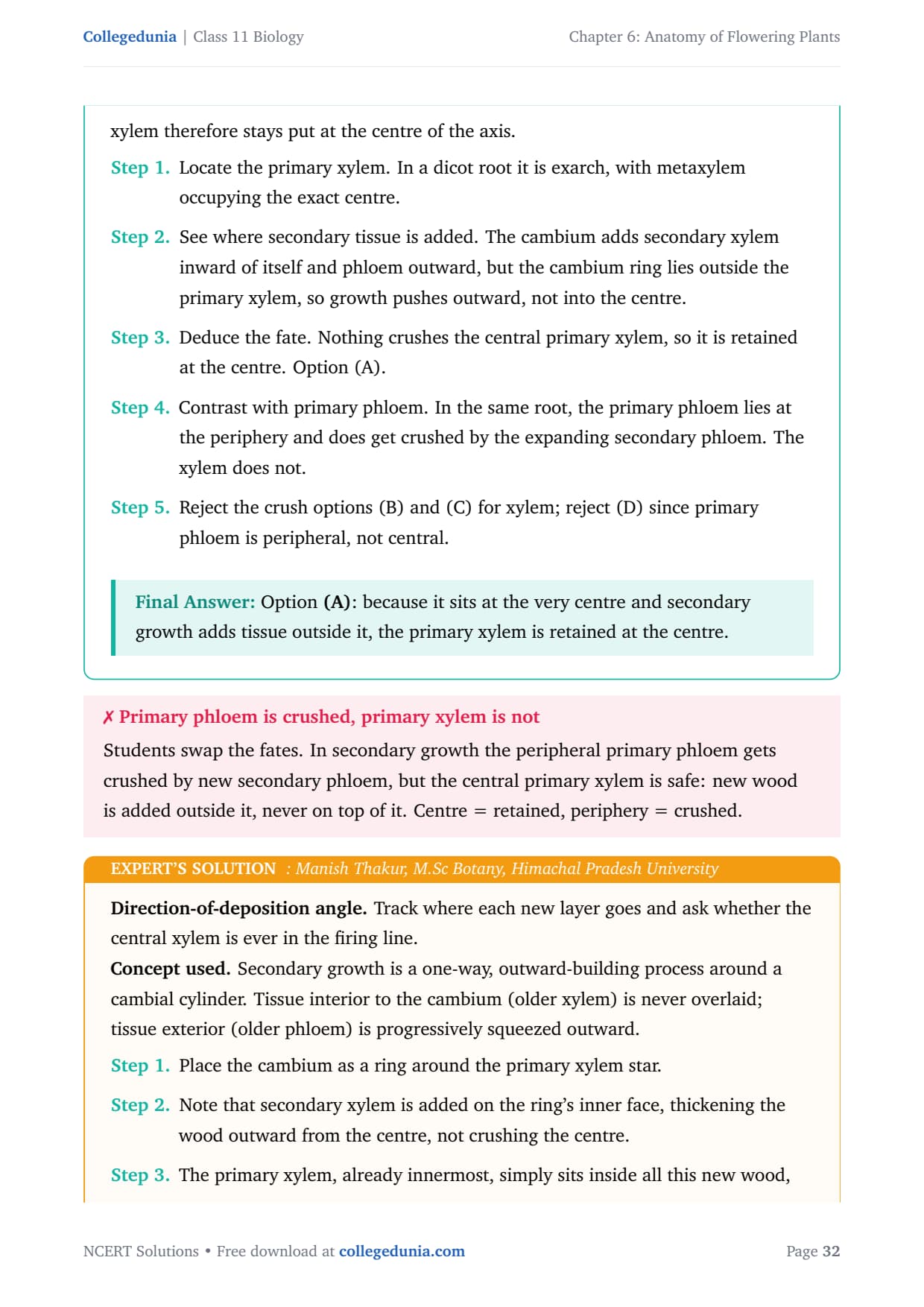
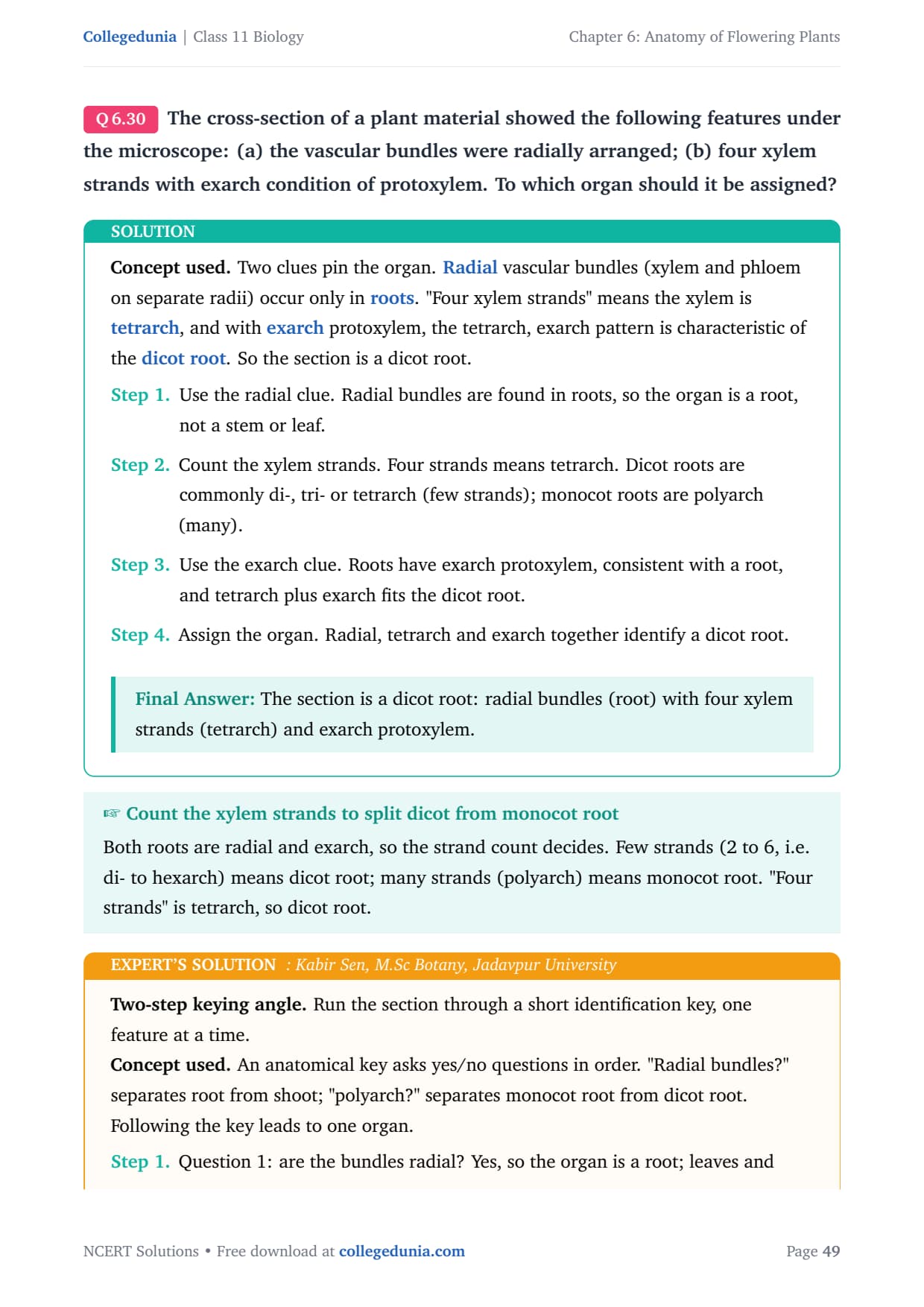
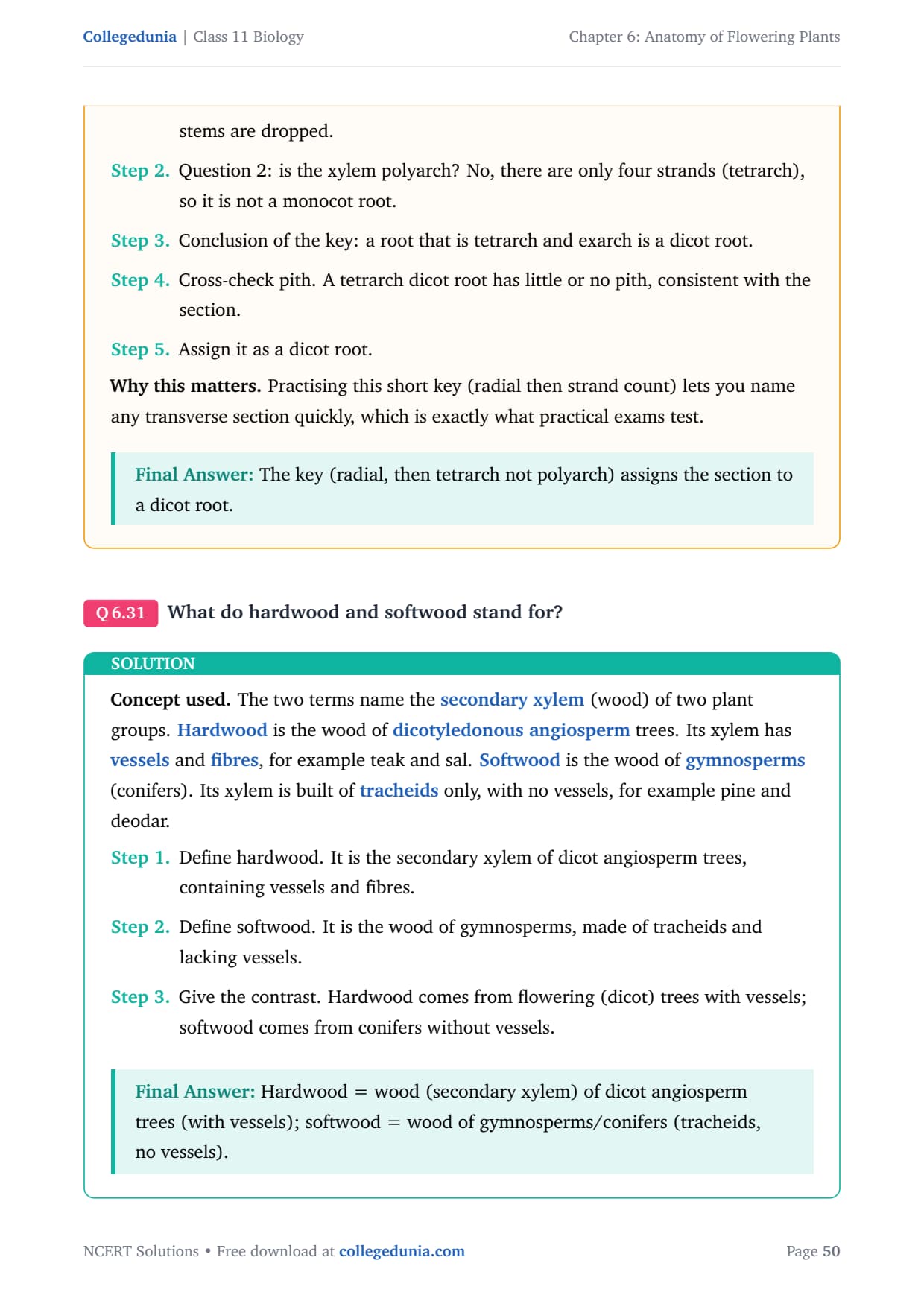
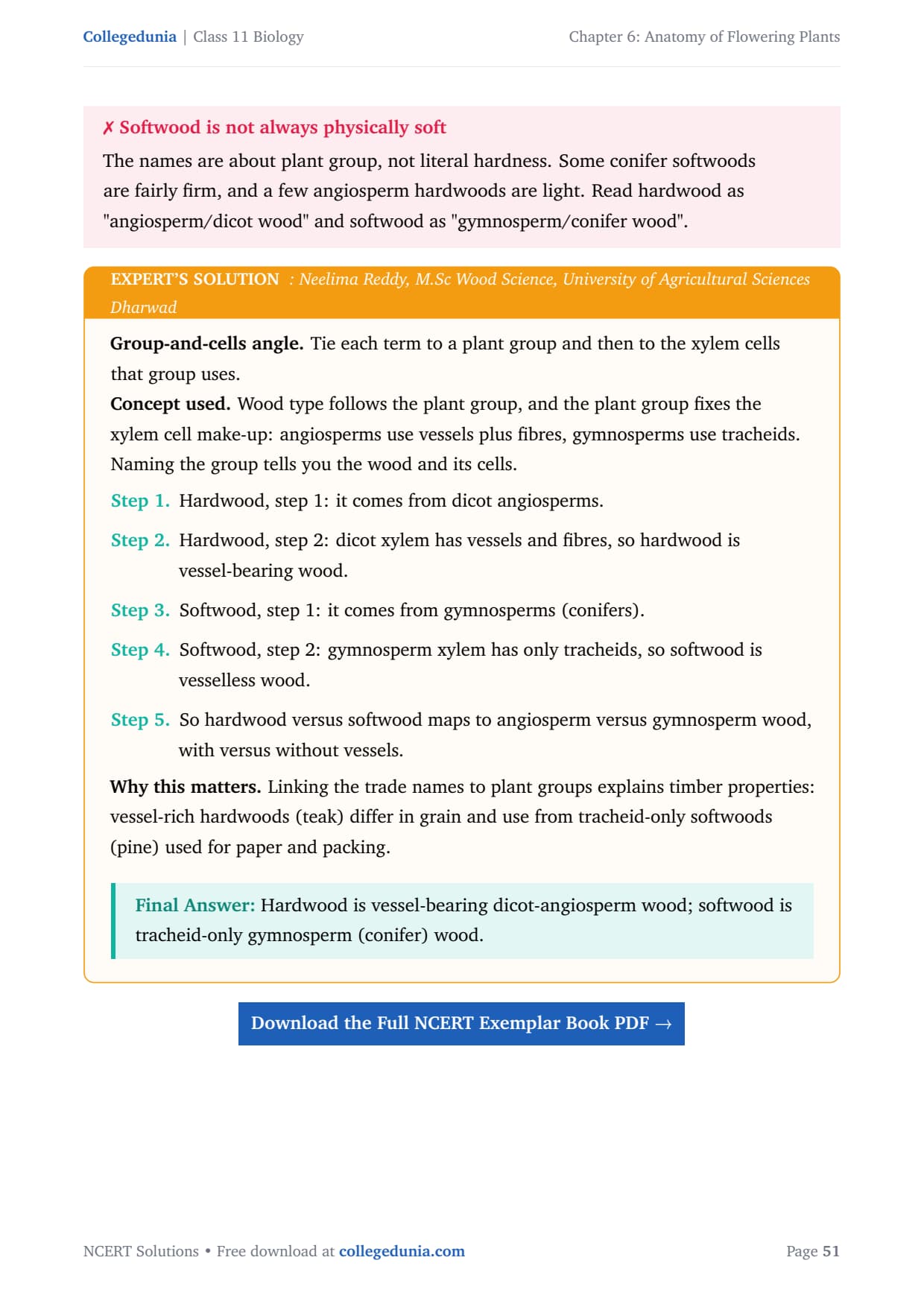
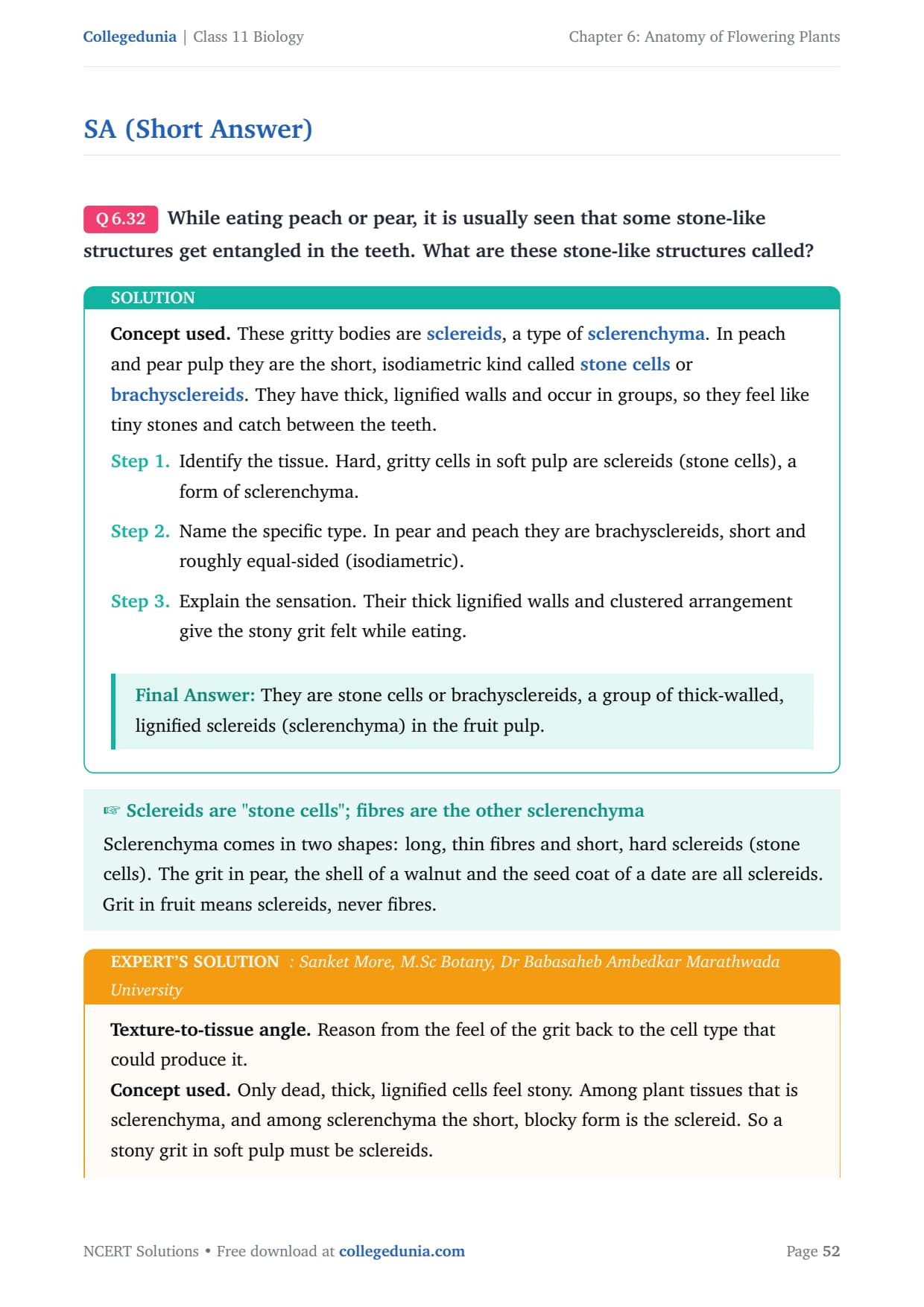
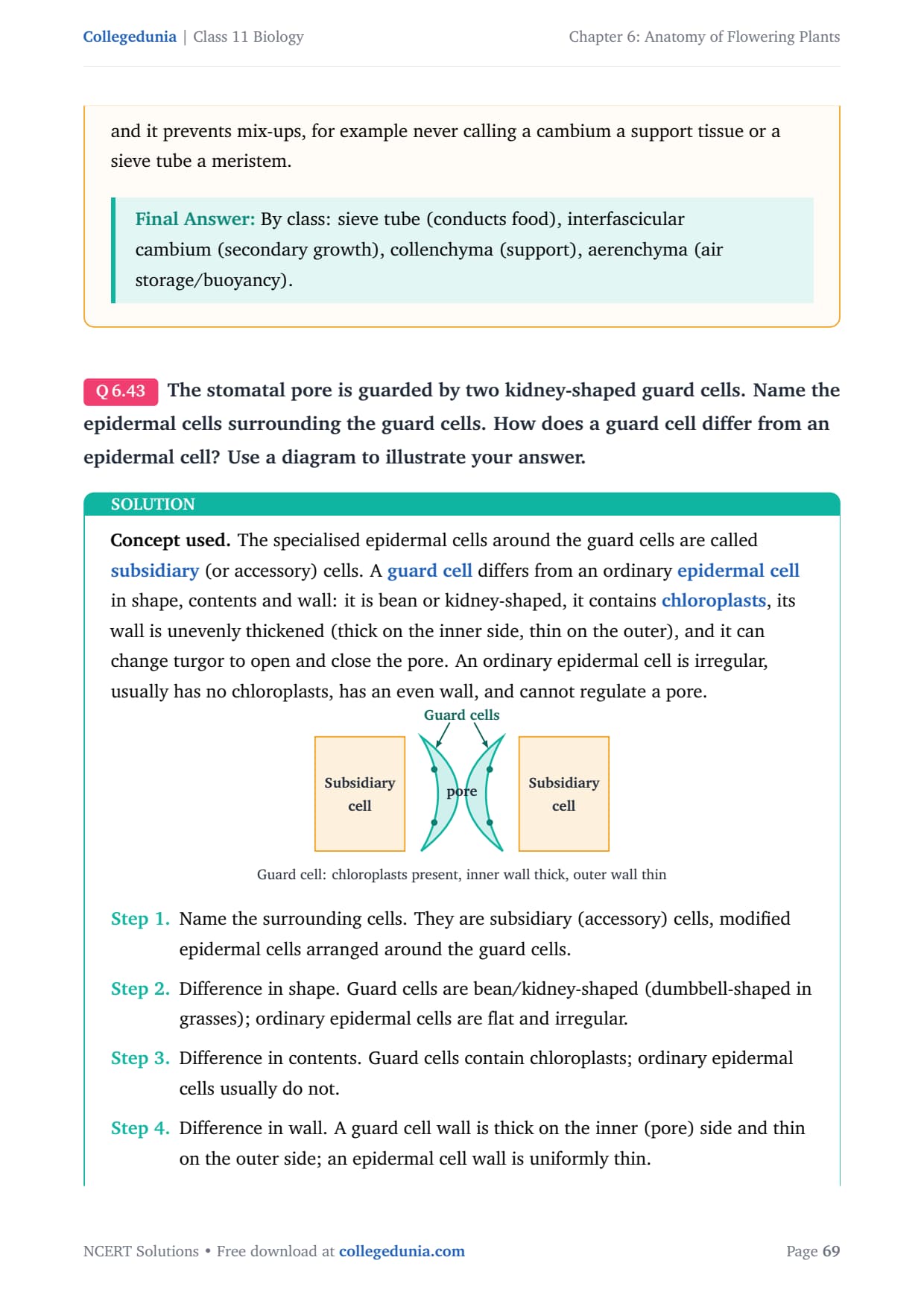
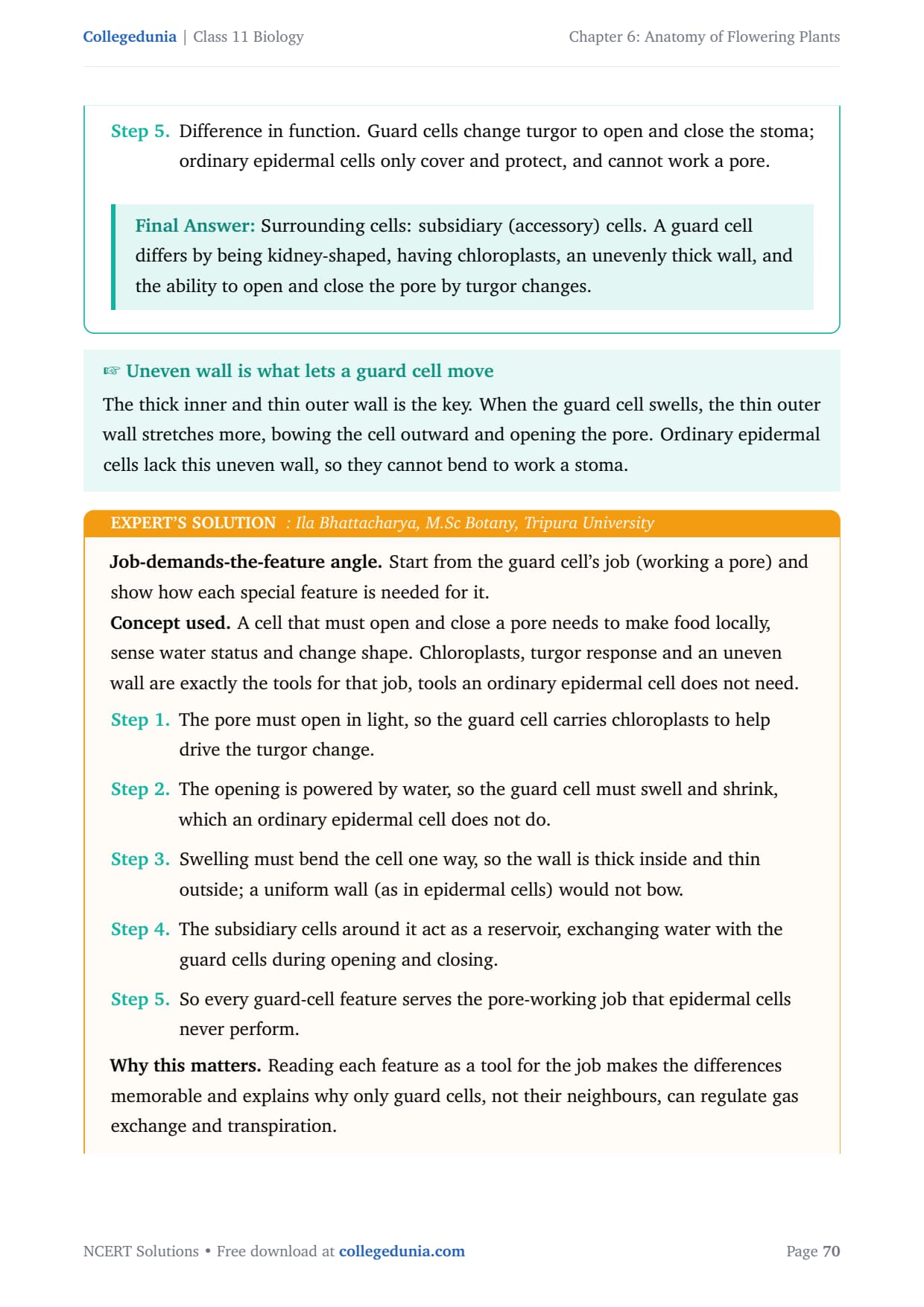
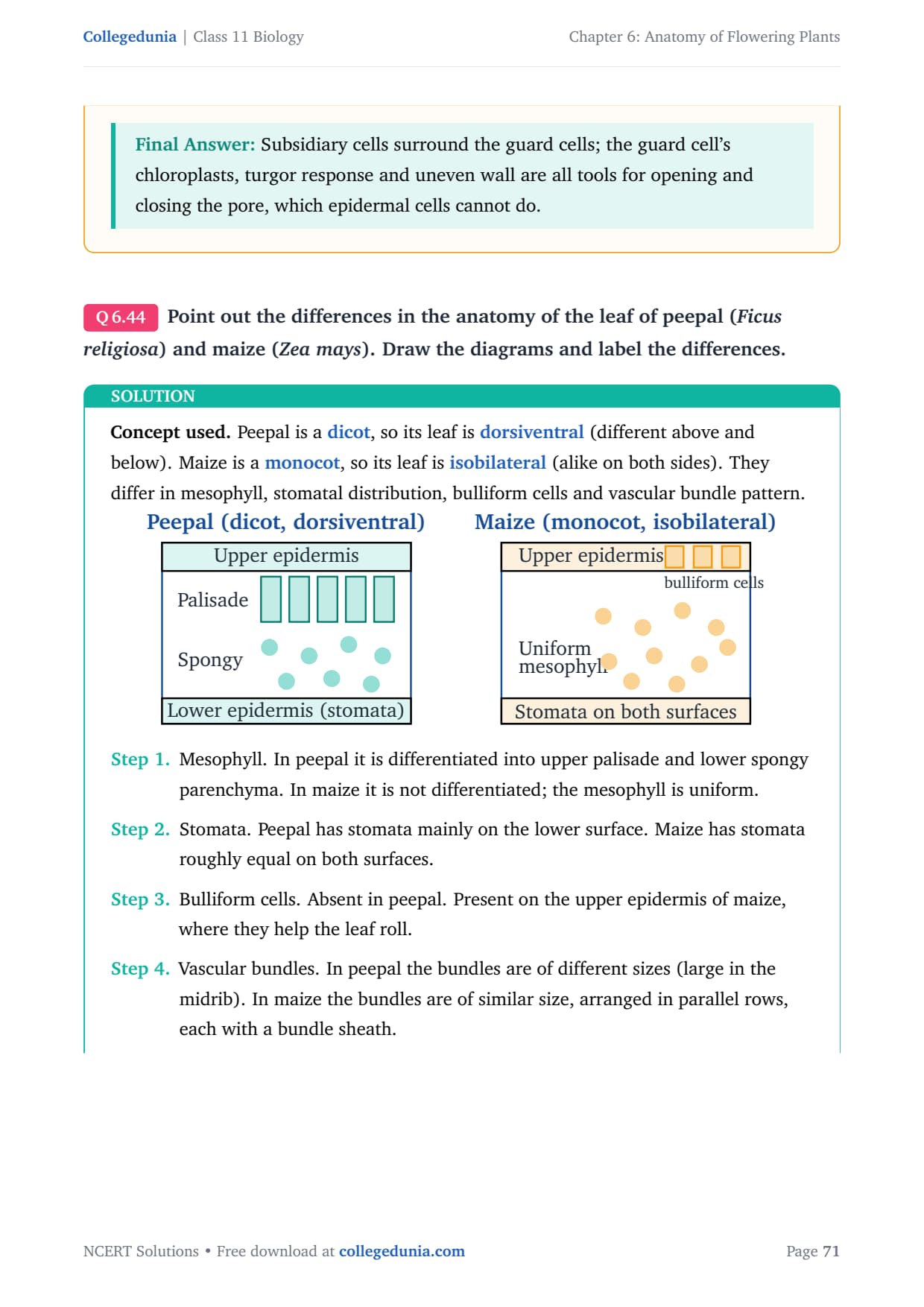
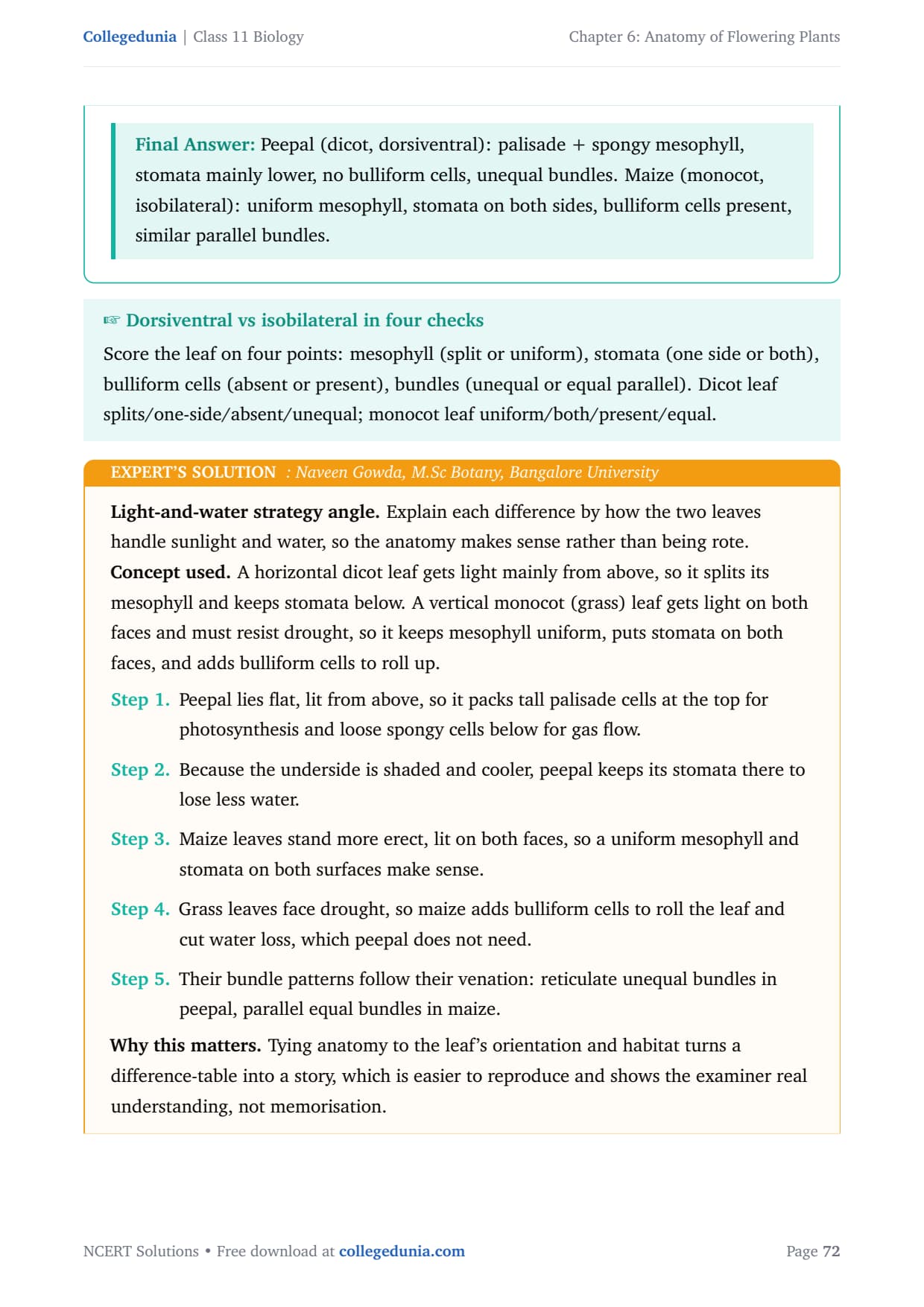
Anatomy is the chapter where a plant stops being a shape and becomes a set of tissues. You learn to read the inside of a root, a stem and a leaf, and to tell a dicot from a monocot by section alone. The Exemplar pushes far past the textbook here, because almost every question turns on one careful word, such as open against closed or exarch against endarch, where a single mistake flips the whole answer.
- CBSE Weightage: 3 to 5 marks, usually a tissue comparison or a labelled dicot and monocot section
- NEET Weightage: 2 to 3 questions per year on tissue types, secondary growth and the anatomy of roots and stems
- CUET Weightage: 1 to 2 questions on tissue systems and the dicot against monocot distinctions in the Biology domain paper
Every answer is checked against the official NCERT Exemplar key, and the pairs this chapter is famous for confusing, such as collenchyma against sclerenchyma and phellogen against phelloderm, are pulled apart in full.
Topics Covered in the Class 11 Biology Anatomy of Flowering Plants Exemplar
The 51 questions in this chapter are built on four ideas, and they build on each other in order. You start with single cells, group them into the three simple tissues, then meet the two complex ones, and finally watch a stem thicken through secondary growth. The Exemplar is dense here because the textbook diagrams look simple, yet the reasoning behind each tissue and each staining colour is where the marks sit. Working through it fixes the vocabulary you need before any physiology chapter makes sense.
- Meristems and simple tissues: apical, lateral and intercalary meristems, then parenchyma, collenchyma and sclerenchyma
- Complex tissues and tissue systems: xylem and phloem, sorted into the epidermal, ground and vascular tissue systems
- Dicot and monocot anatomy: the internal structure of the root, stem and leaf, and the differences between the two groups
- Secondary growth: vascular cambium, cork cambium, wood and bark, annual rings, and heartwood against sapwood
Question Types in the Anatomy of Flowering Plants NCERT Exemplar
Class 11 Biology Exemplar chapters use four question types, and each one carries a different demand. The MCQ set looks easy until an option turns on a single label, while the Long Answer set asks you to explain a whole process such as secondary growth from the first cambium to the final bark. The Short Answer questions are the largest block here, and they are where most marks are won or lost, because they reward a precise structural detail and punish a vague one. The table below shows how the 51 questions split.
| Question Type | Count | What It Tests |
|---|---|---|
| MCQ (single correct) | 18 | Precise reading of tissue labels, staining and bundle terms |
| VSA (Very Short Answer) | 13 | One-line names such as bulliform cells and periderm |
| SA (Short Answer) | 14 | Distinguishing look-alike tissues and structures like stone cells |
| LA (Long Answer) | 6 | Explaining secondary growth or comparing dicot and monocot sections |
Staining, Exarch versus Endarch, and Which Cambium Makes What
The hardest questions in this chapter are not about naming a tissue at all. They ask you to place a detail correctly, and the Exemplar builds several problems around three traps that decide more than one answer each. If you learn these as rules rather than facts, a large share of the chapter answers itself. Each of the three sits at a point where a careless reader loses the whole mark.
- Double staining tells xylem from phloem: with safranin and fast green, the lignified xylem turns red and the cellulosic phloem turns green, so a colour in the question is really a tissue clue
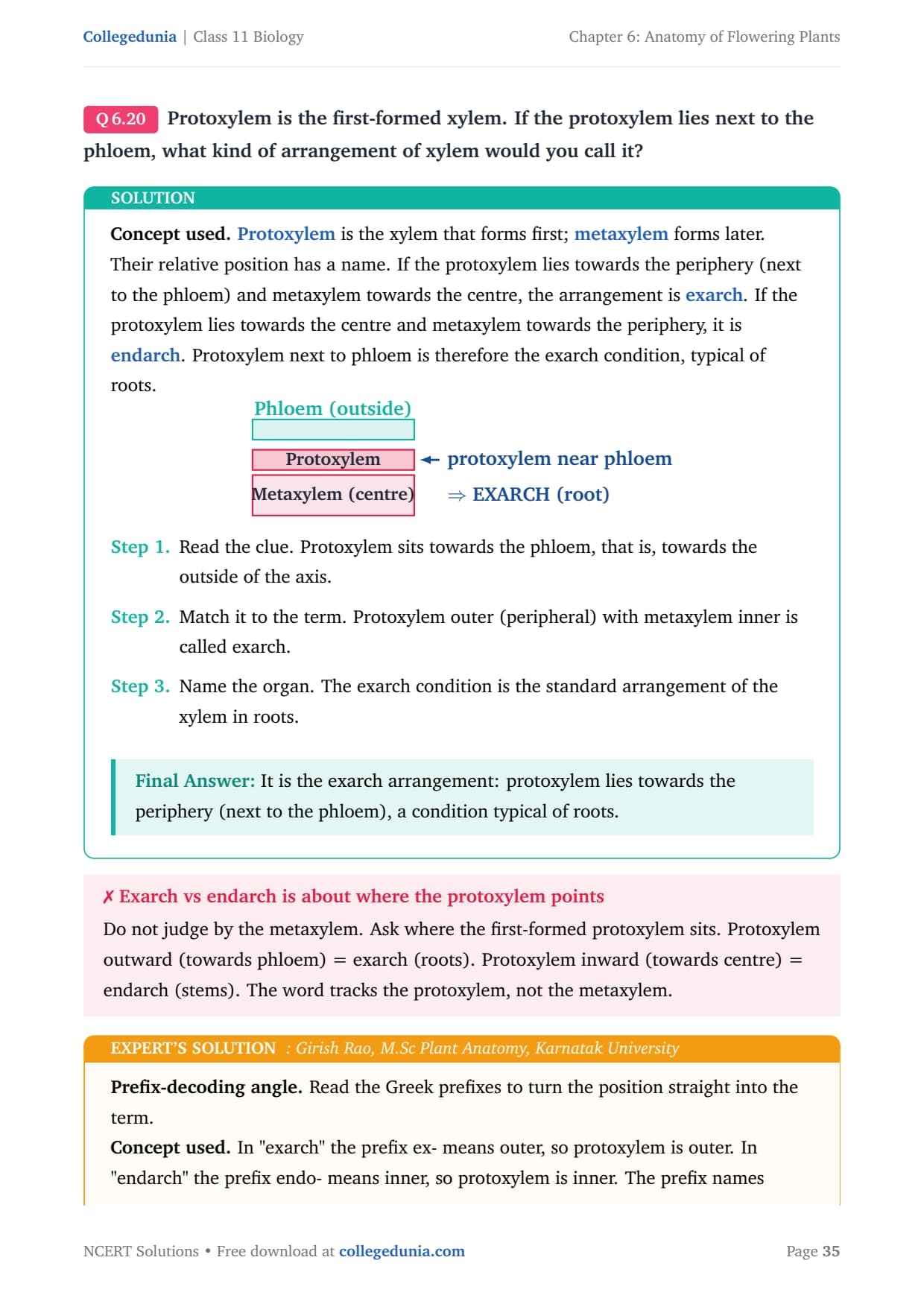
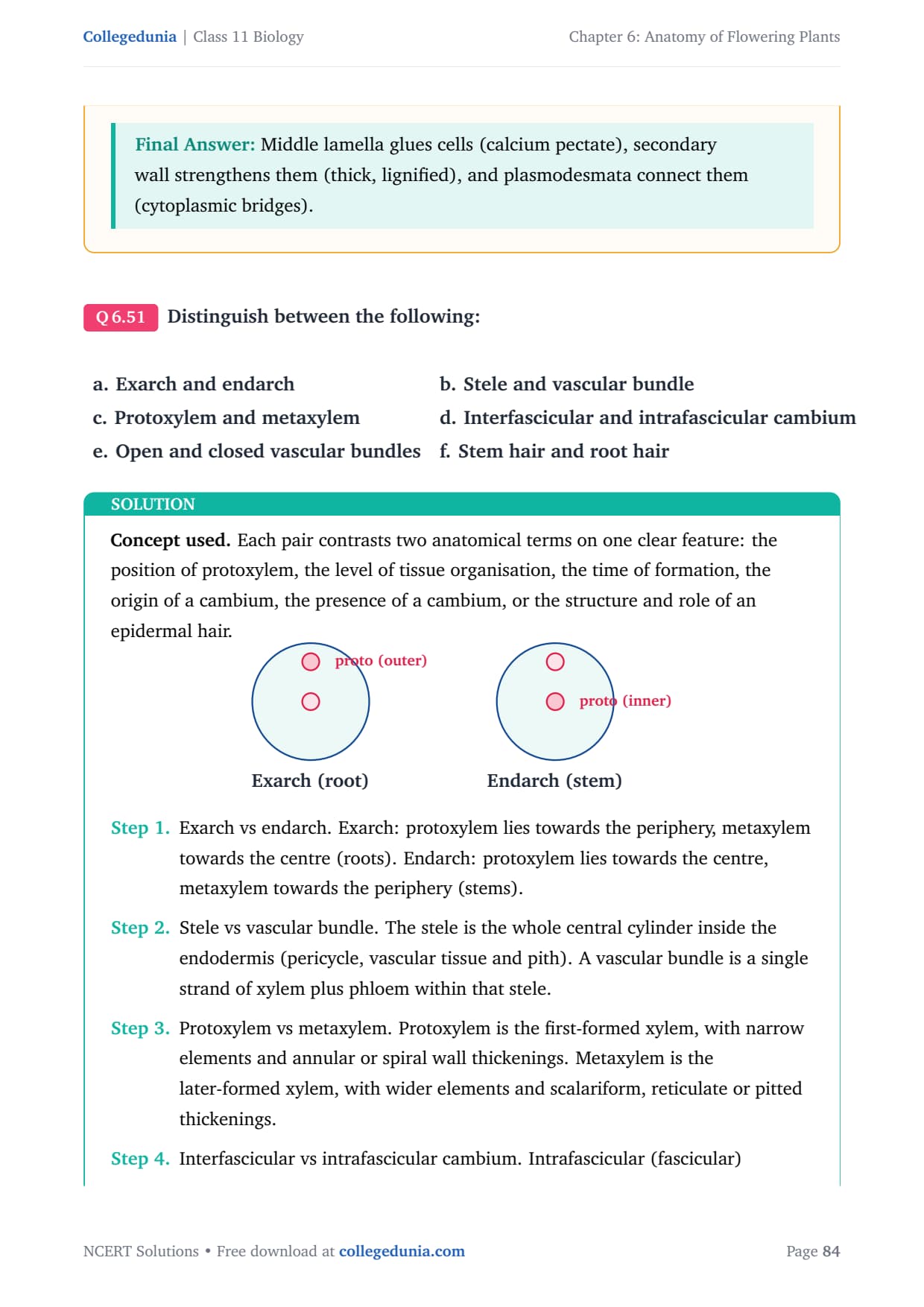
- Exarch and endarch track the protoxylem: ask where the first-formed protoxylem points, not the metaxylem. Protoxylem outward is exarch, seen in roots; protoxylem inward is endarch, seen in stems
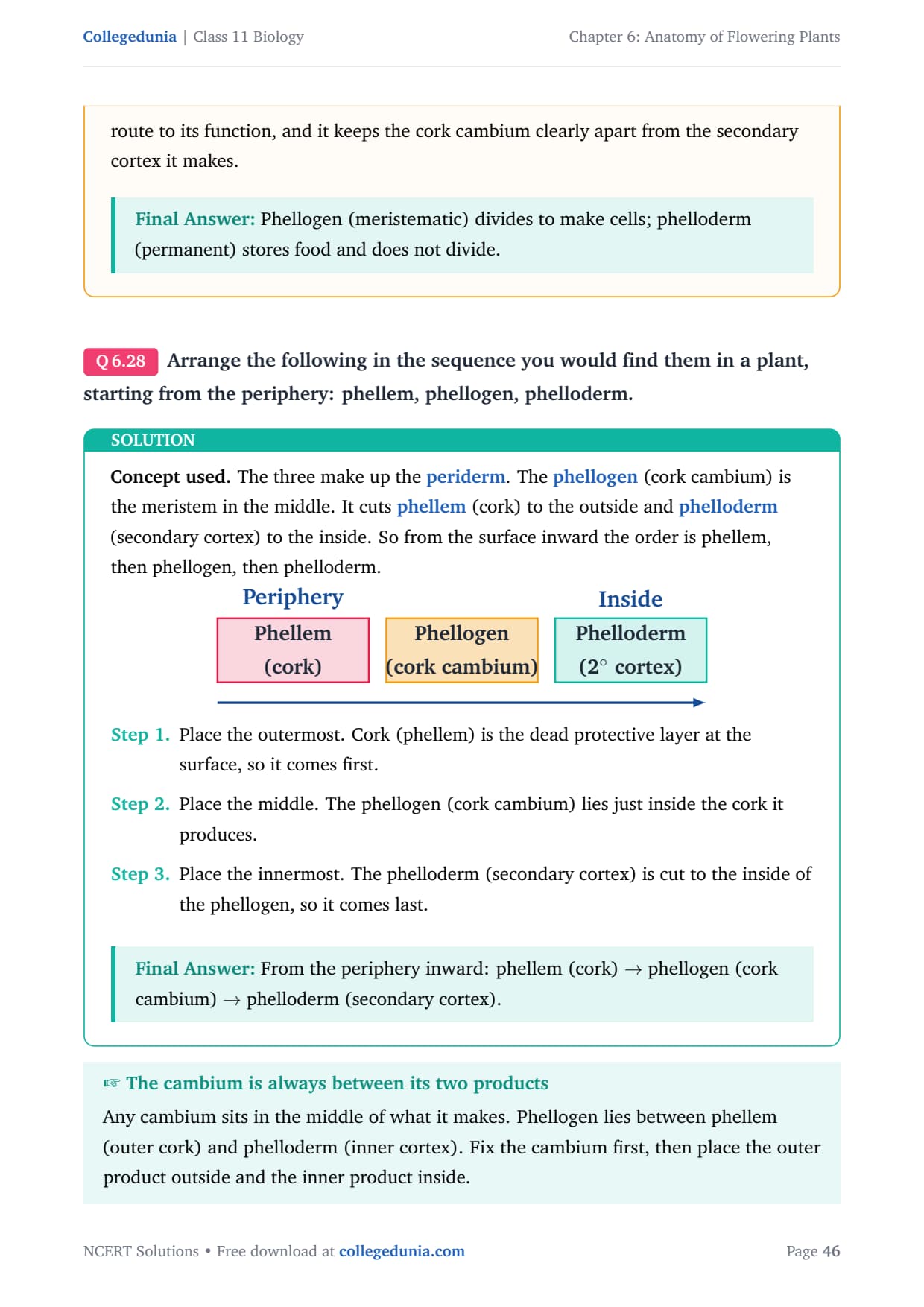
- The two cambia make different things: the vascular cambium adds secondary xylem and phloem, while the cork cambium or phellogen makes cork and phelloderm. Do not let one do the other's job
- Open against closed is only about cambium: a dicot stem bundle is open because a cambium lies between xylem and phloem, and a monocot stem bundle is closed because it does not
In this chapter one wrong word, not one wrong fact, is what usually costs the mark. A student who writes endarch for a root, or ties cork to the vascular cambium, has the right idea and the wrong label. Each answer in the PDF states which structure is doing the work and why the tempting neighbour is not it.
Common Mistakes Students Make in Anatomy of Flowering Plants
The Exemplar plants swapped labels and half-right matches on purpose. Four errors catch most students in this chapter, and each is flagged in the PDF at the exact question where it appears. Learning to spot them early saves marks across the whole tissue unit, because the same distinctions return in secondary growth and in every diagram-based question.
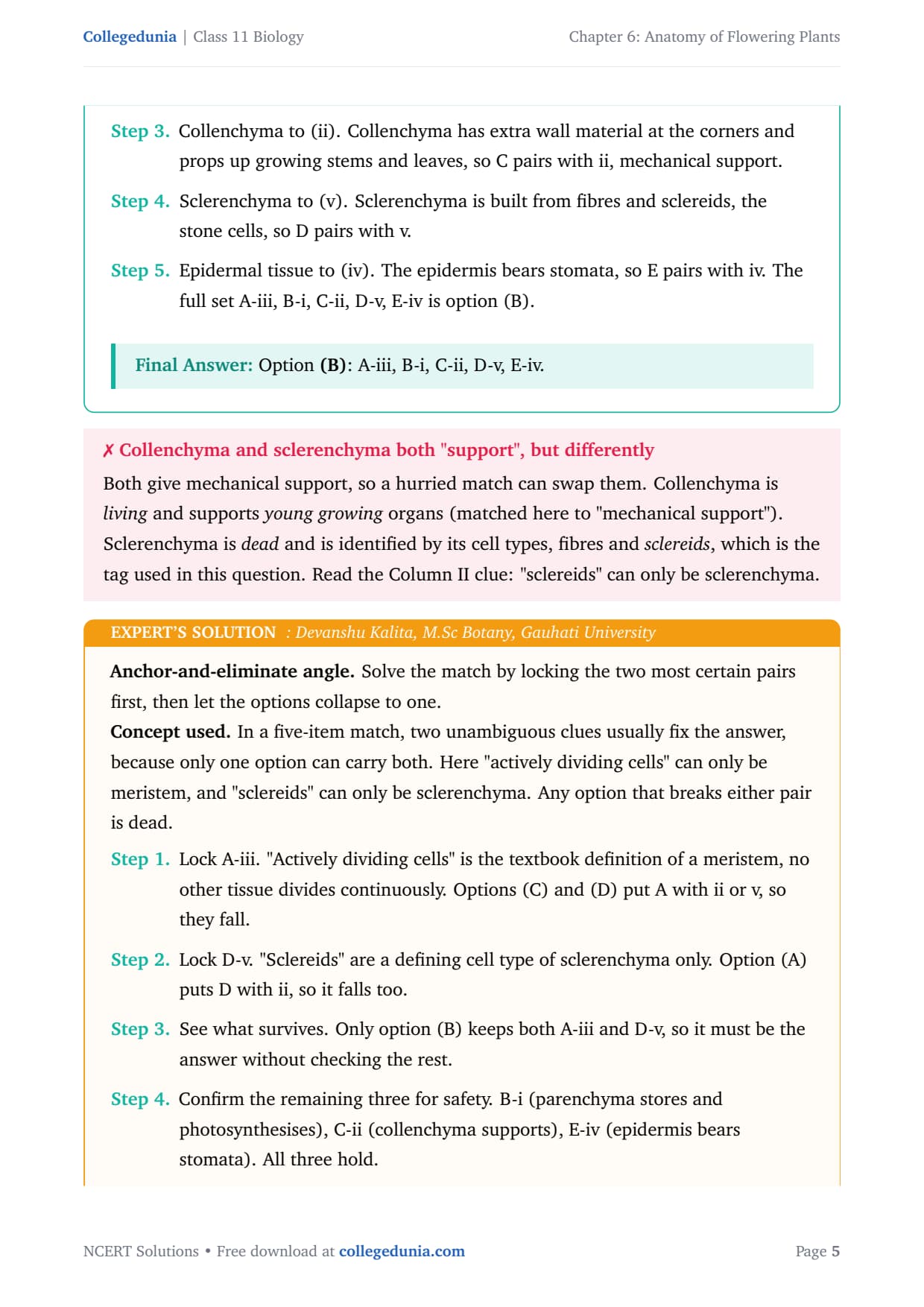
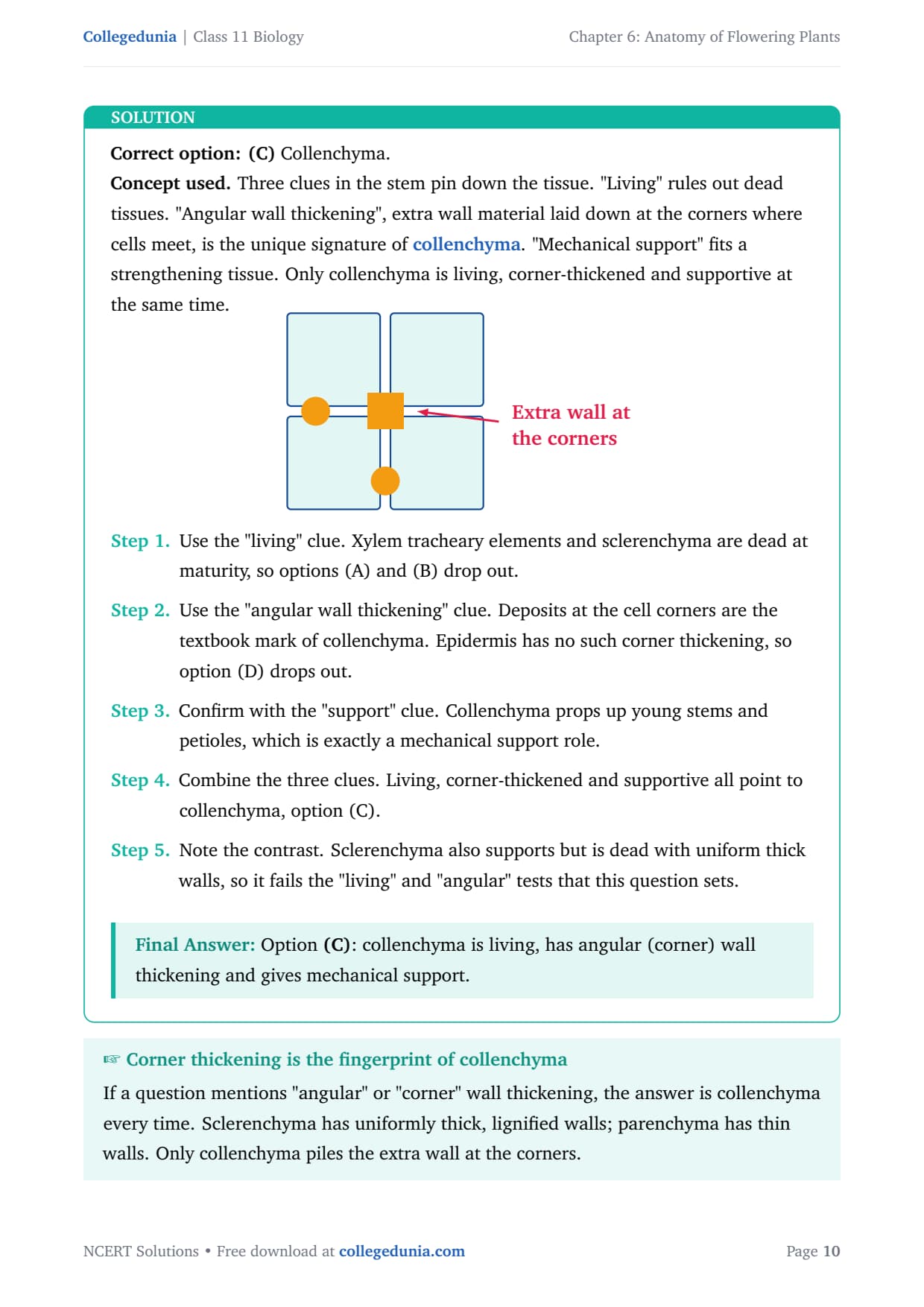
- Collenchyma against sclerenchyma: both give mechanical support, but collenchyma is living and supports young growing organs, while sclerenchyma is dead and lignified. A hurried match swaps them.
- Open against closed vascular bundle: open does not mean exposed. It means a cambium is present, so the bundle can add secondary tissue. Dicot stem is open, monocot stem is closed.
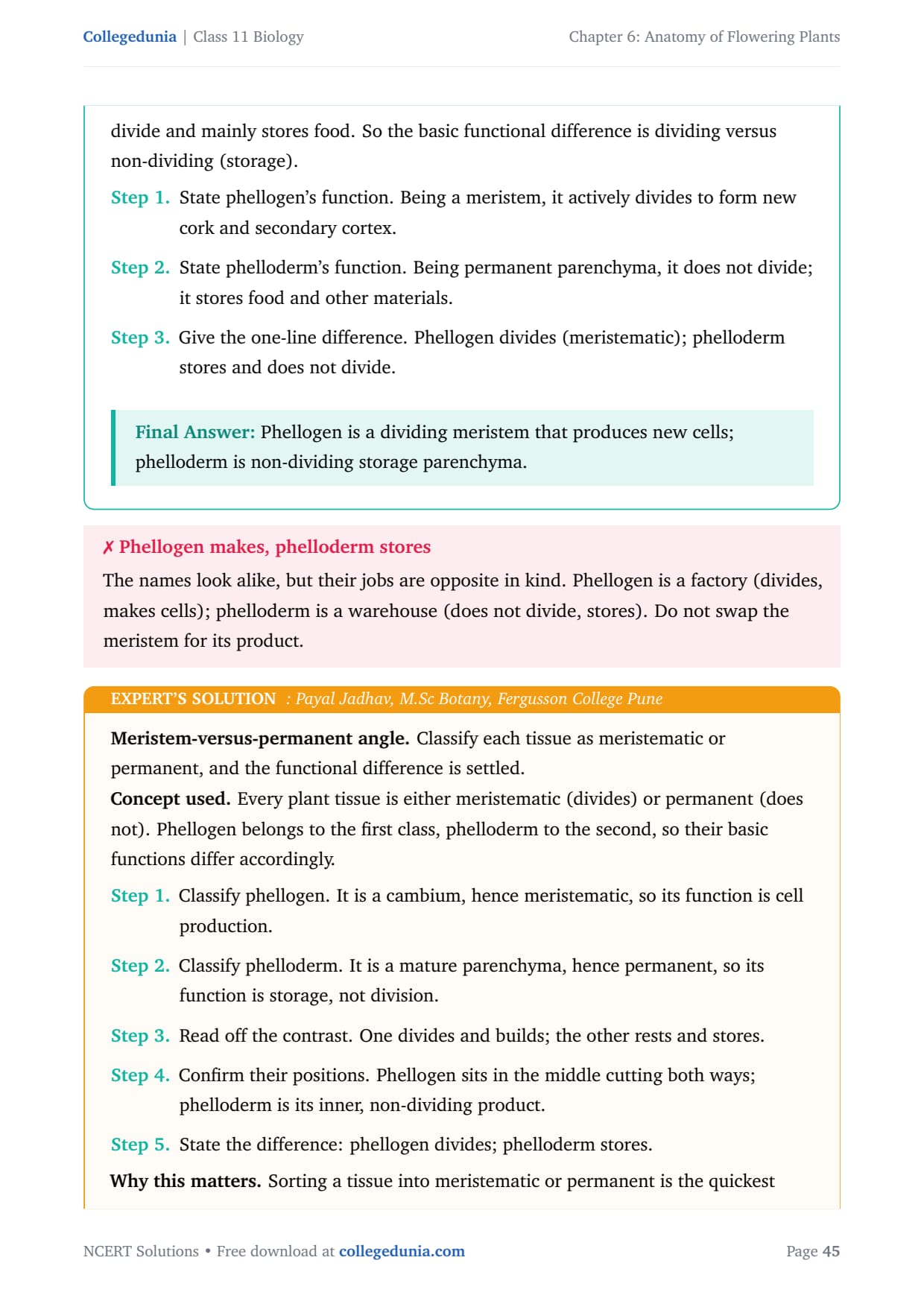
- Phellogen against phelloderm: the names look alike but the jobs are opposite. Phellogen is the meristem that divides and makes cells, while phelloderm is the stored inner product that does not divide.
- Cork against epidermis: an old potato skin is corky and suberised, not epidermis, and a root cap is a parenchyma mass, not epidermis. Any dry outer skin on old tissue is usually cork.
How the Exemplar Steps Up from the Class 11 Biology Textbook
The textbook gives you a labelled section and asks you to name the parts. The Exemplar gives you an unusual plant or a swapped colour and asks you to reason your way to the label, which is a different skill and the one that boards and NEET actually test. This is why students who only revise the diagrams feel the Exemplar is unfair. It is not harder in content, it is harder in the way it asks.
The question about a palm shows the gap clearly. The textbook tells you that secondary growth comes from a vascular cambium in dicots, so a quick reader ties thickening to a cambium. The Exemplar hands you a tall, thick palm and waits. A palm is a monocot and has no vascular cambium, yet it clearly grows in girth, so you have to explain the increase through primary thickening rather than a normal cambium. The same move happens with the stone cells in a pear, where a gritty texture has to be traced to sclereids, and with the exarch root, where the protoxylem position alone decides the answer. Working these builds judgement, not recall, which is exactly what Chapter 6 is meant to leave you with.
How to Use These NCERT Exemplar Solutions for Boards, NEET and CUET
Attempt each question with the section diagram beside you before you open the solution. This chapter rewards a labelled sketch more than a paragraph, because the answers become obvious once the tissue is drawn in the right place. Read the question, mark the structure on your own diagram, and only then check it against the PDF. The gap between your label and the model answer is where the marks live.
- Boards: the Short Answer and Long Answer sets match the 3 and 5 mark board pattern, especially the dicot against monocot comparison and the secondary growth sequence
- NEET: work the MCQ and Very Short Answer sets first, since NEET repeats tissue types, staining and the exarch against endarch rule at that level every year
- CUET: the label-based MCQ set is the closest practice for the domain paper, which favours precise single-term recall of tissues and tissue systems
Student Feedback
Students using Collegedunia's Class 11 Biology Exemplar Solutions told us that the secondary growth and the exarch against endarch questions were the hardest part of this chapter, well above the plain tissue-naming questions. Around 7 in 10 said that seeing the palm girth and the stone cell questions solved side by side, with the exact tissue named each time, finally made the anatomy stick after weeks of confusing one section with another.
Other Resources for Class 11 Biology Anatomy of Flowering Plants
Collegedunia has the full set of study material for this chapter. Use the Notes for a first read, then the Formula Sheet to lock the tissue and staining rules, and keep the NCERT Solutions open for the textbook exercise alongside the Exemplar.
Also Check:
- NCERT Solutions for Class 11 Biology Chapter 6
- Class 11 Biology Chapter 6 Notes
- Class 11 Biology Chapter 6 Formula Sheet
- Class 11 Biology Chapter 6 NCERT Book PDF
- Class 11 Biology Chapter 6 Exemplar Book PDF
NCERT Exemplar Solutions for Other Class 11 Biology Chapters
Each chapter below has the same step-by-step treatment and a free PDF. All 19 chapters have an NCERT Exemplar book chapter behind them, so the list covers every one.
Anatomy of Flowering Plants Class 11 NCERT Exemplar Solutions FAQs
Ques. How many questions are there in the Class 11 Biology Anatomy of Flowering Plants Exemplar?
Ans. Chapter 6 has 51 questions. They are split into 18 MCQ, 13 Very Short Answer, 14 Short Answer and 6 Long Answer questions. All 51 are solved in the free PDF on this page.
Ques. What is the difference between collenchyma and sclerenchyma?
Ans. Both are simple tissues that give mechanical support. Collenchyma is living, has angular wall thickening of cellulose and supports young growing organs. Sclerenchyma is dead, has thick lignified walls and gives strength to mature parts. The Exemplar plants an option that pairs support with the wrong one, so name the living or dead status to be safe.
Ques. Why is a dicot stem bundle called open and a monocot stem bundle closed?
Ans. The words refer only to the cambium. A dicot stem has a strip of vascular cambium between the xylem and phloem, so the bundle can add secondary tissue and is called open. A monocot stem has no such cambium, so its bundle cannot grow further and is called closed. This is why monocots normally show no secondary growth.
Ques. What is the difference between exarch and endarch protoxylem?
Ans. The terms describe where the first-formed protoxylem sits. In an exarch arrangement the protoxylem lies towards the outside, near the phloem, which is the pattern in roots. In an endarch arrangement the protoxylem lies towards the centre, which is the pattern in stems. Always judge by the protoxylem, never by the metaxylem.
Ques. Is the NCERT Exemplar enough for NEET questions from Anatomy of Flowering Plants?
Ans. For this chapter it covers the ground well. NEET asks two to three questions a year on tissue types, secondary growth and root and stem anatomy, and they sit at the level of the Exemplar MCQ and Short Answer sets. Work all 18 MCQs and the 14 Short Answers before moving to a coaching module.



Comments