




NCERT Exemplar Solutions for Class 11 Biology Chapter 8 Cell The Unit of Life solve all 39 questions from the Exemplar book. Every MCQ, Very Short Answer, Short Answer and Long Answer problem is answered step by step in the free 68-page PDF, updated for the 2026-27 syllabus.
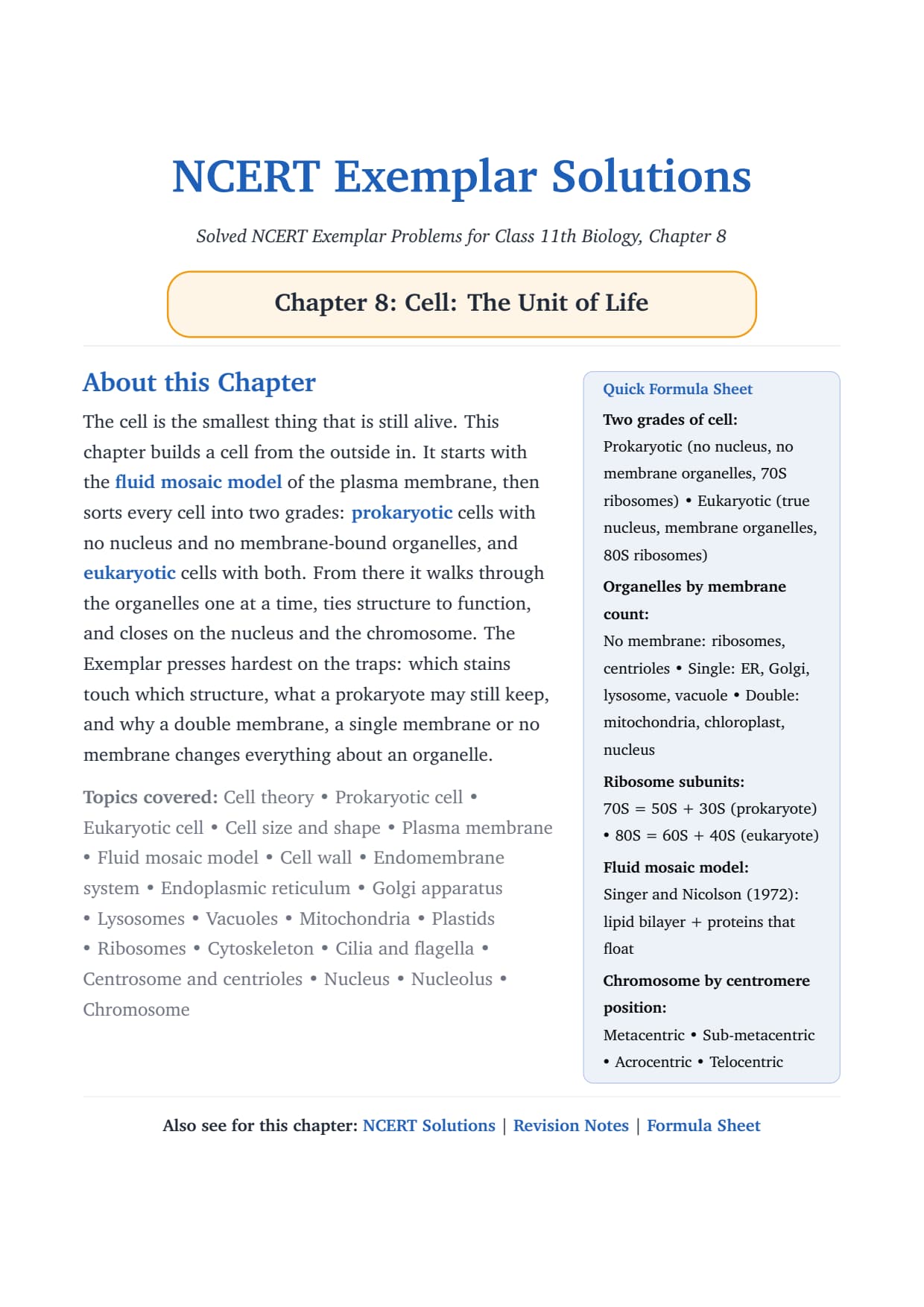
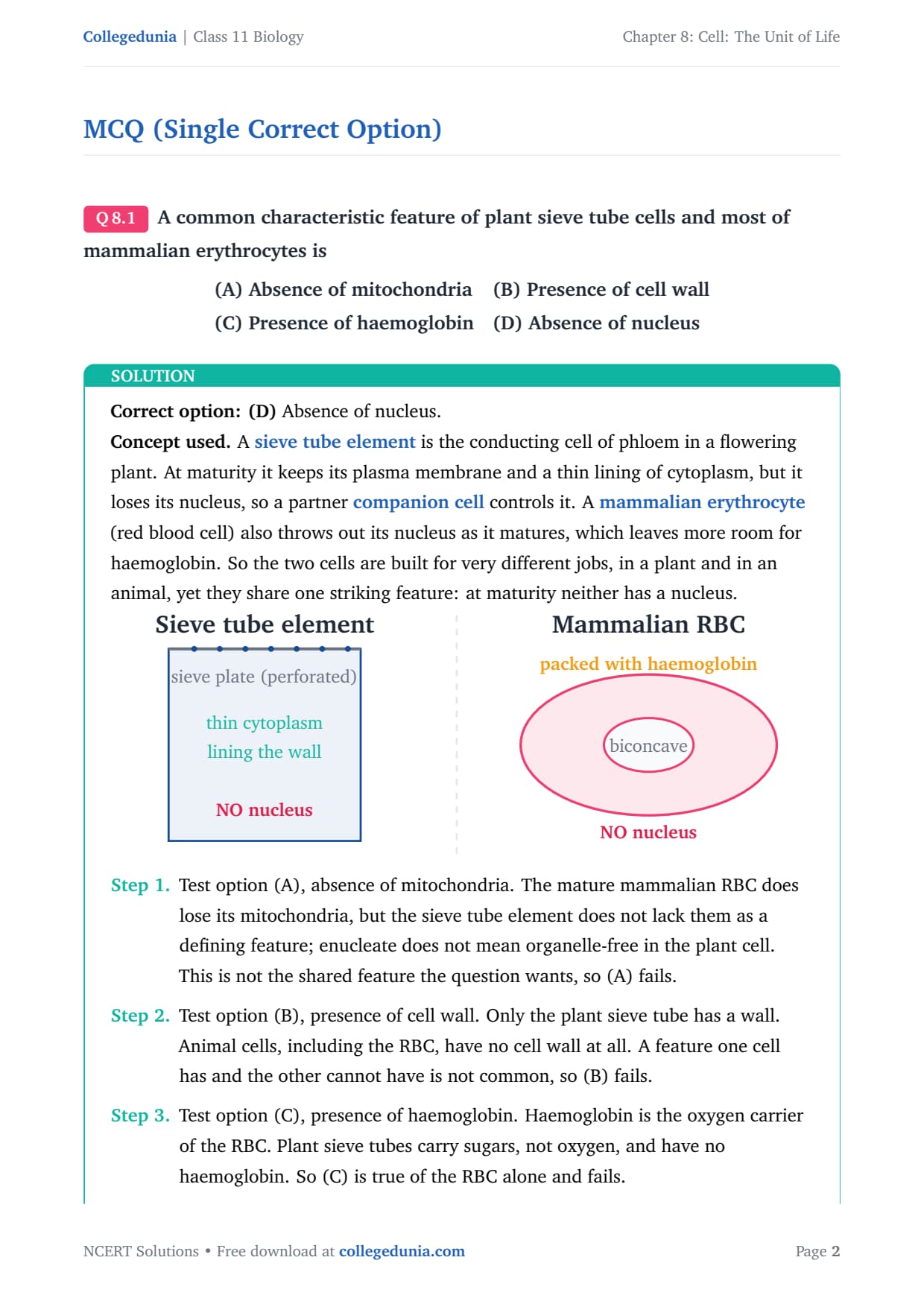
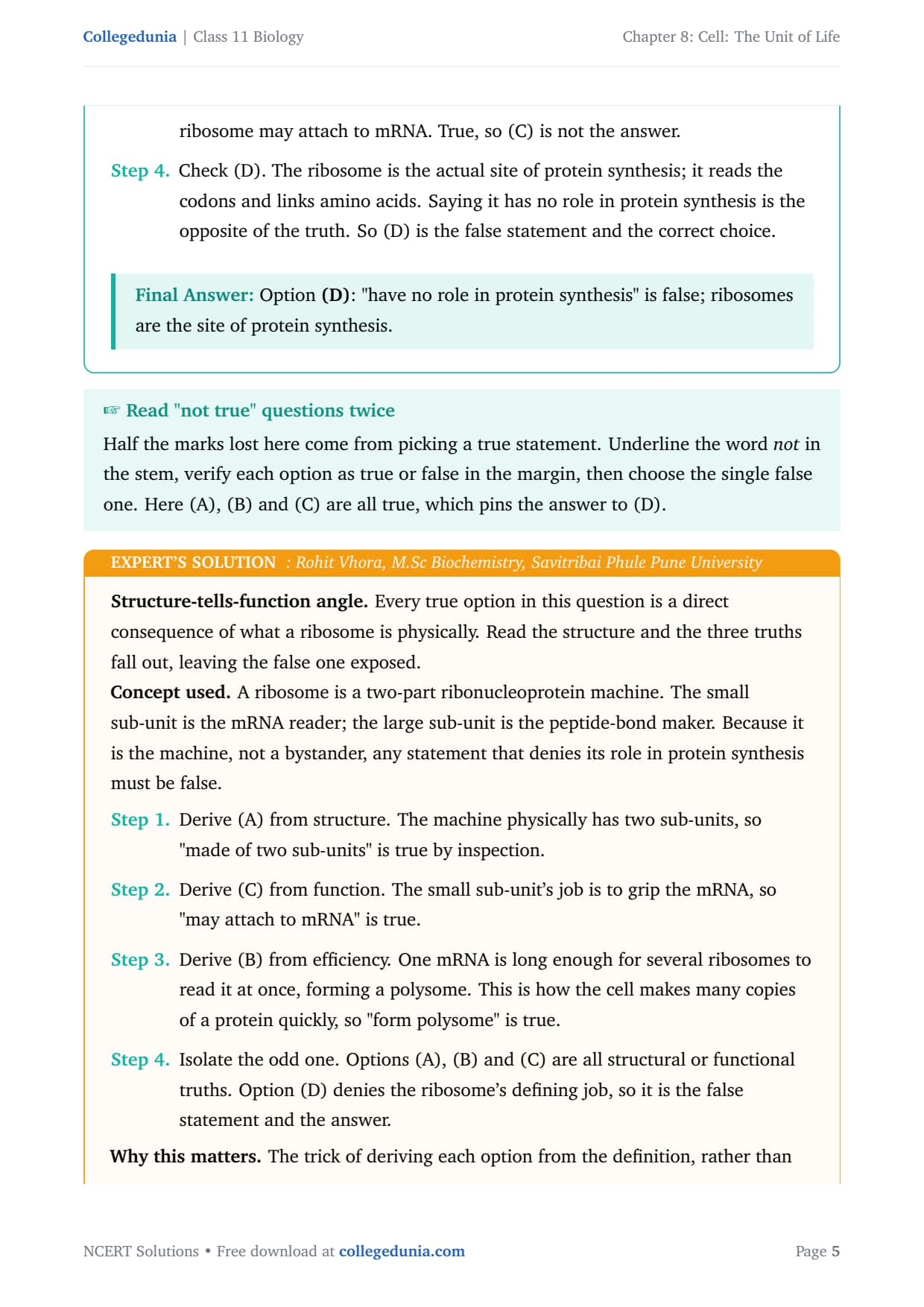
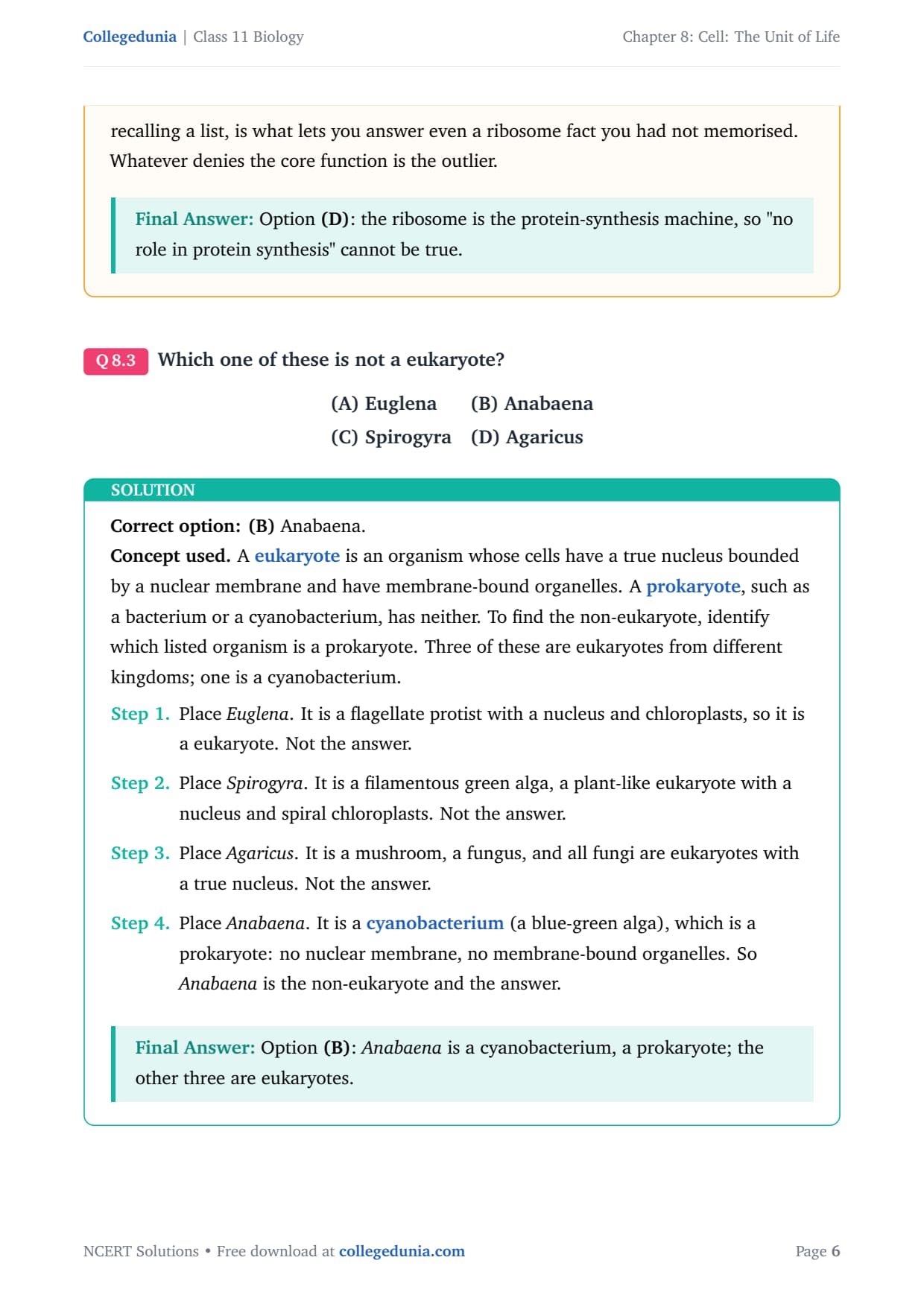
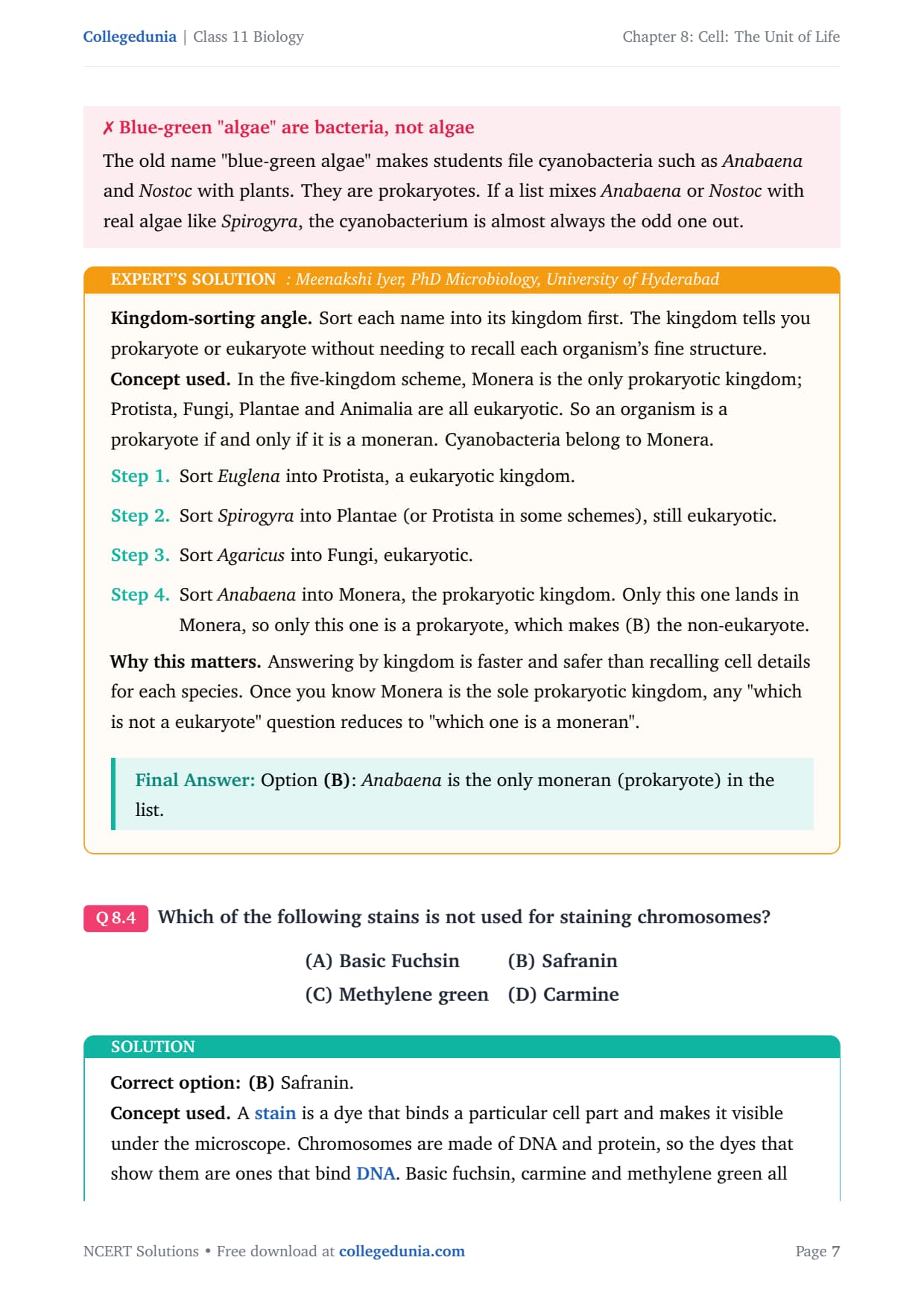
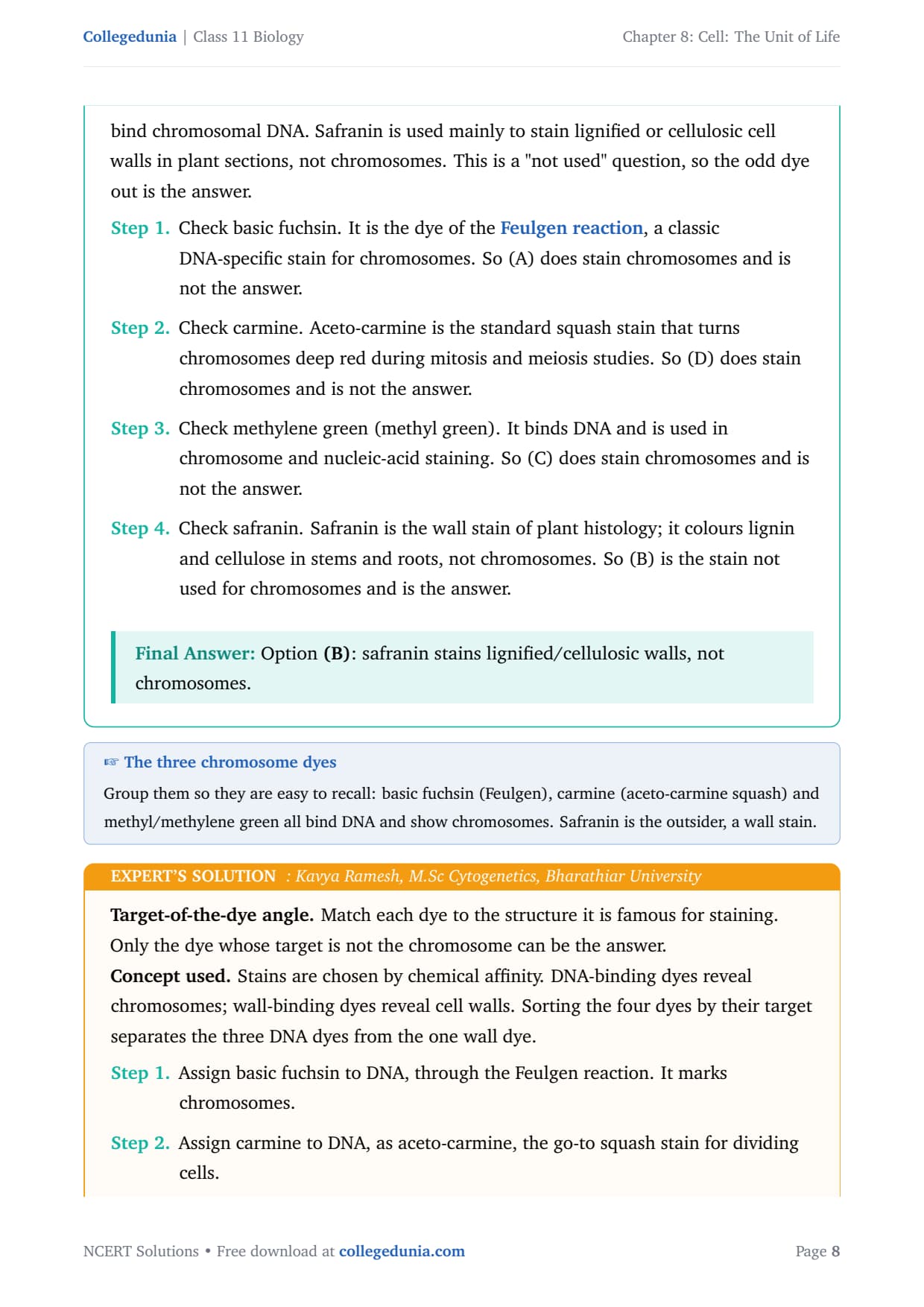
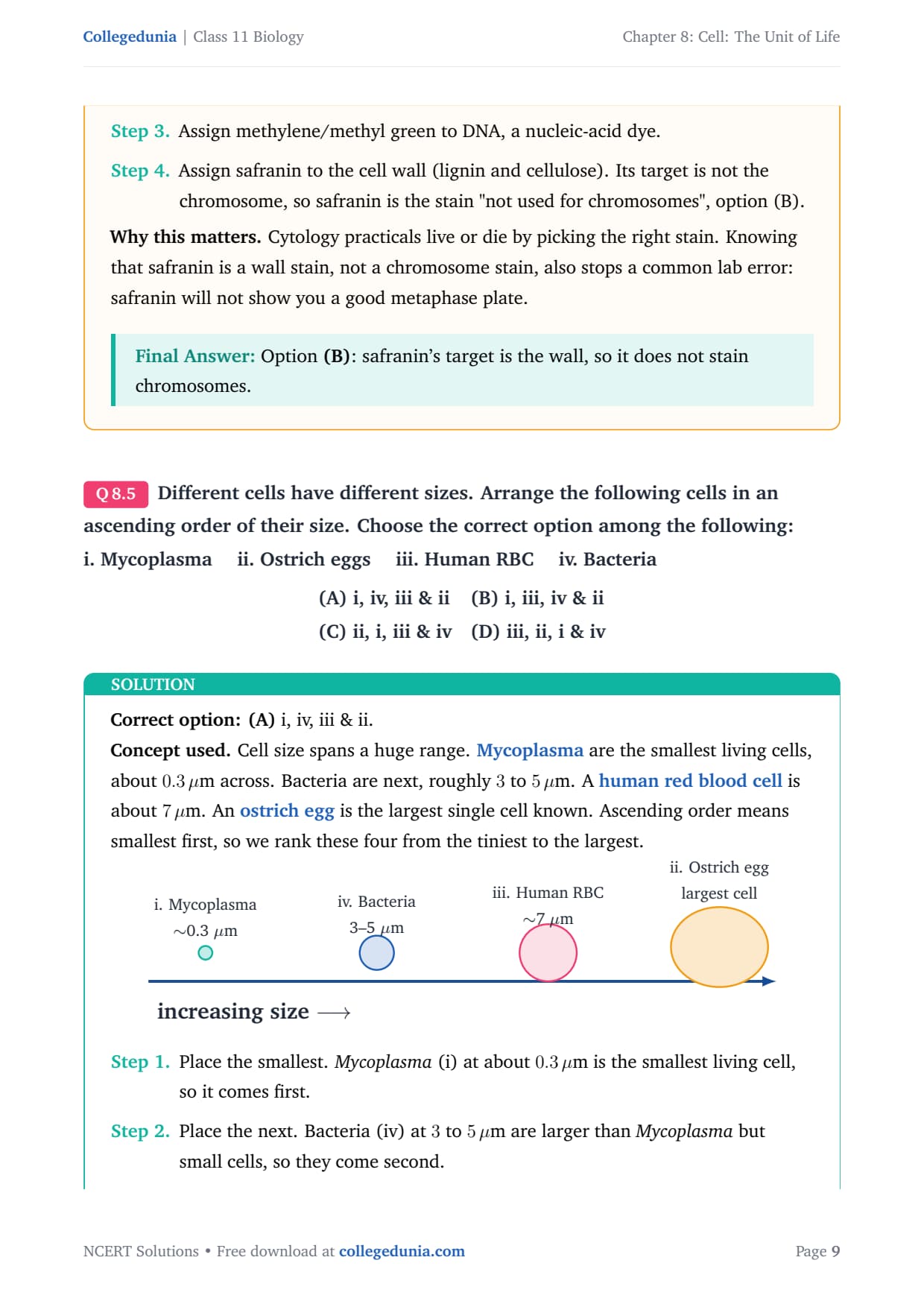
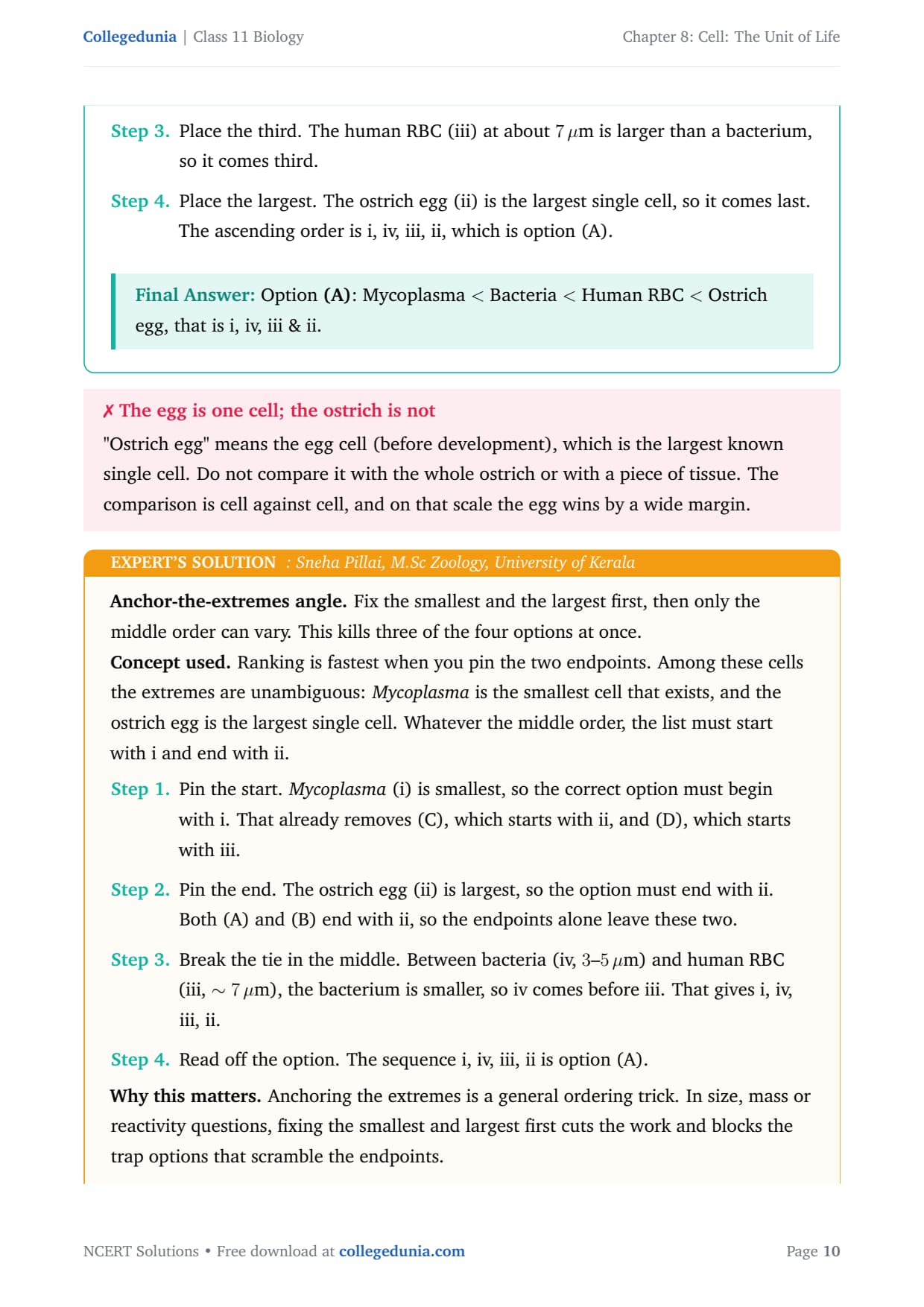
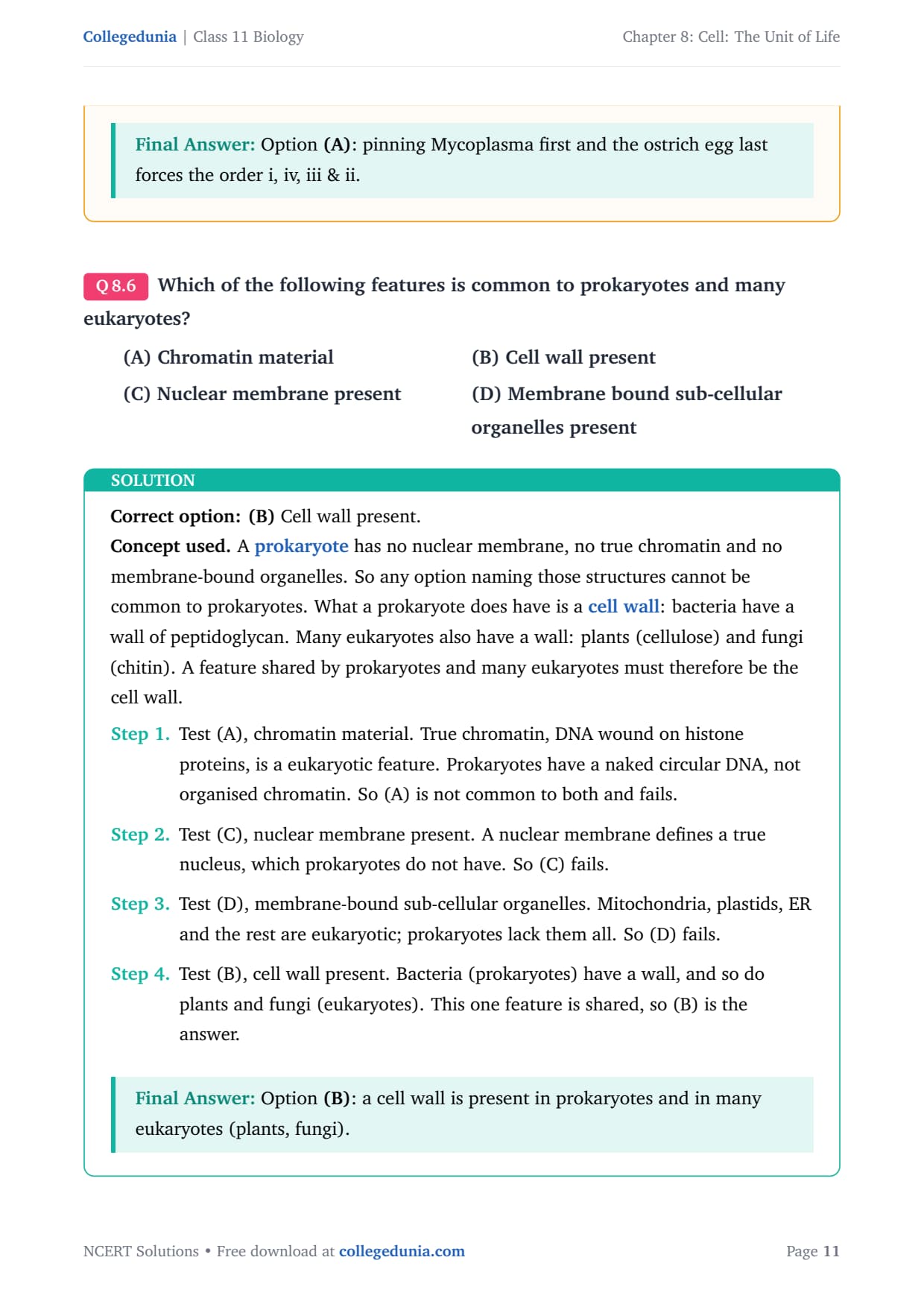
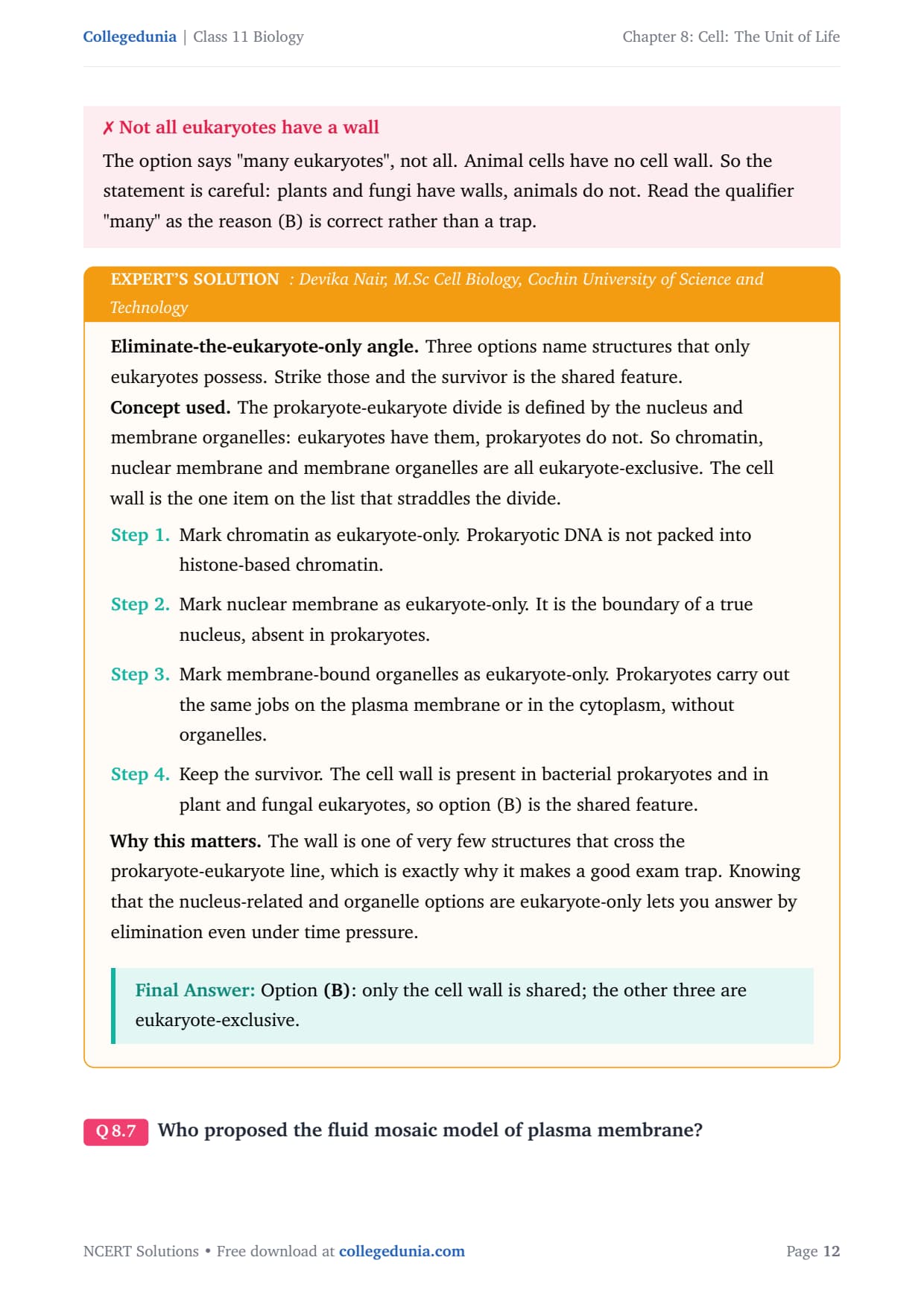
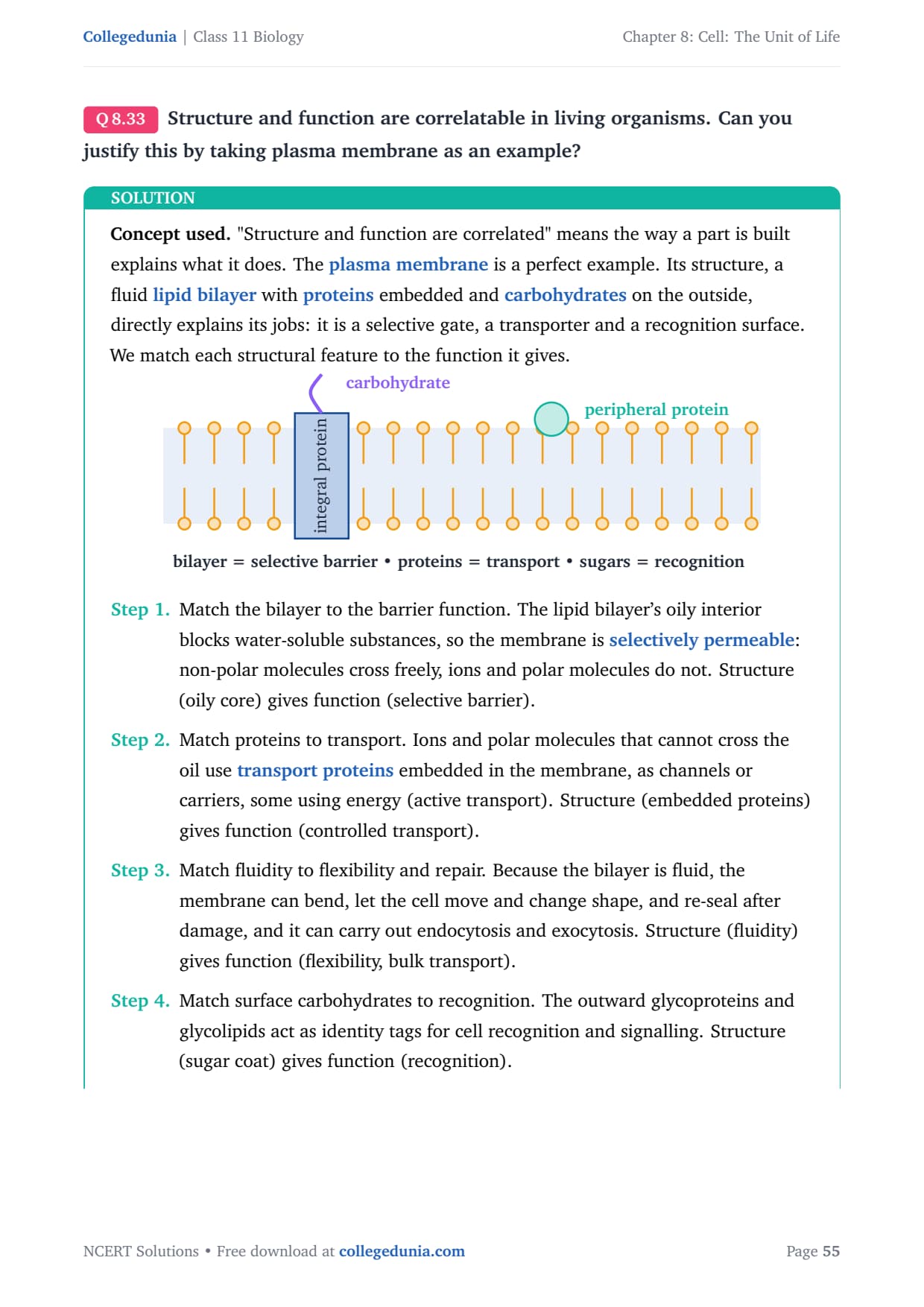
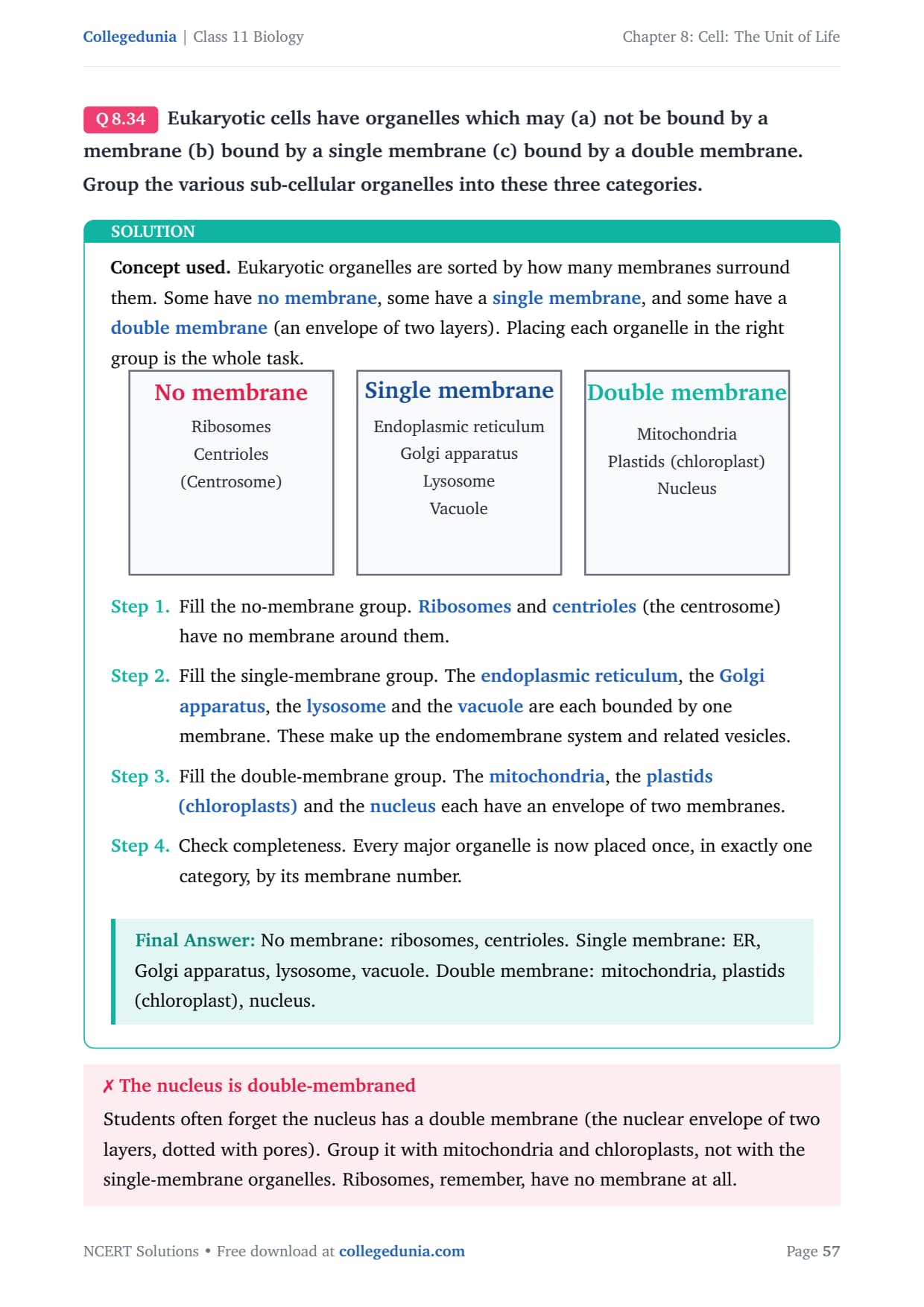
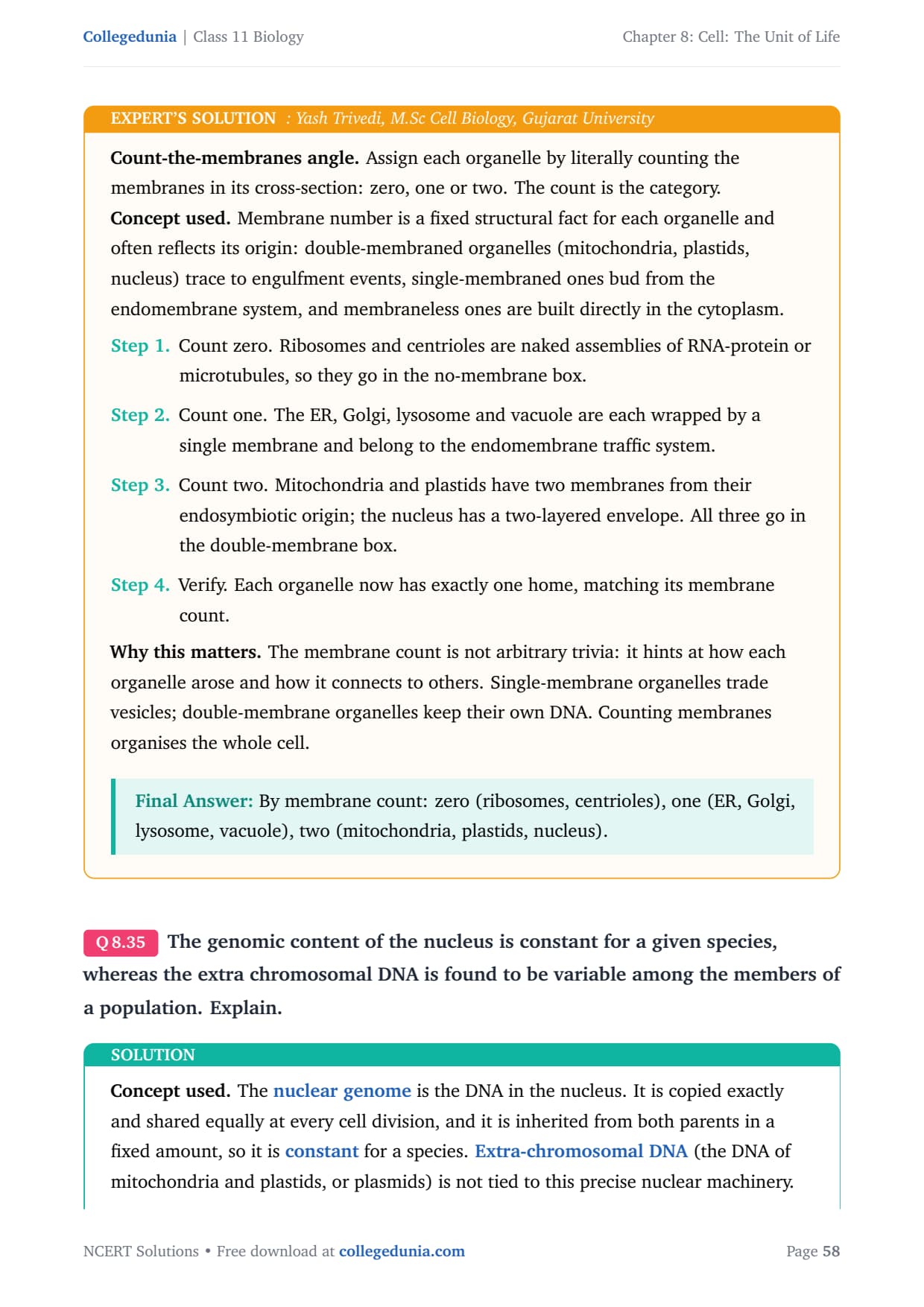
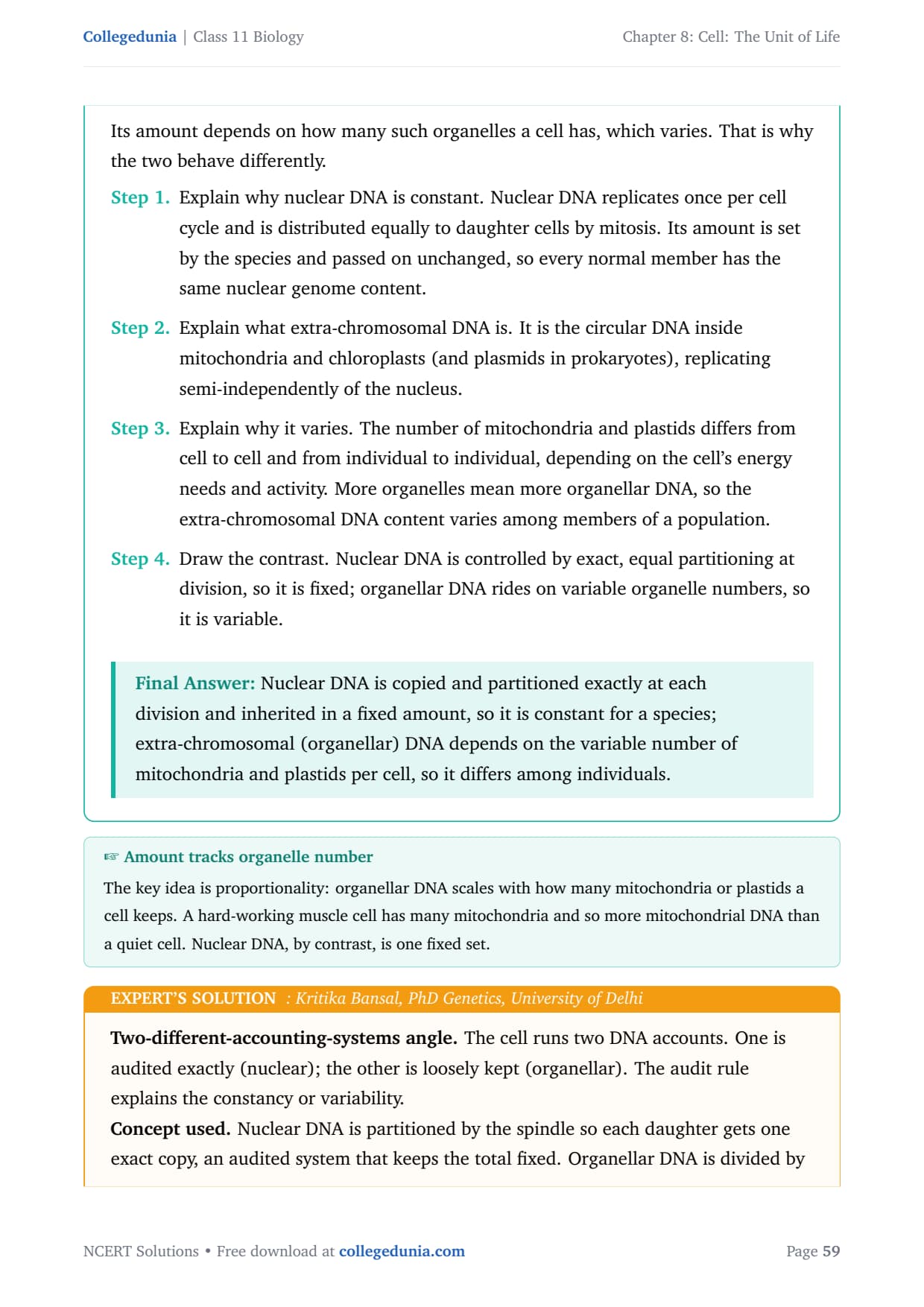
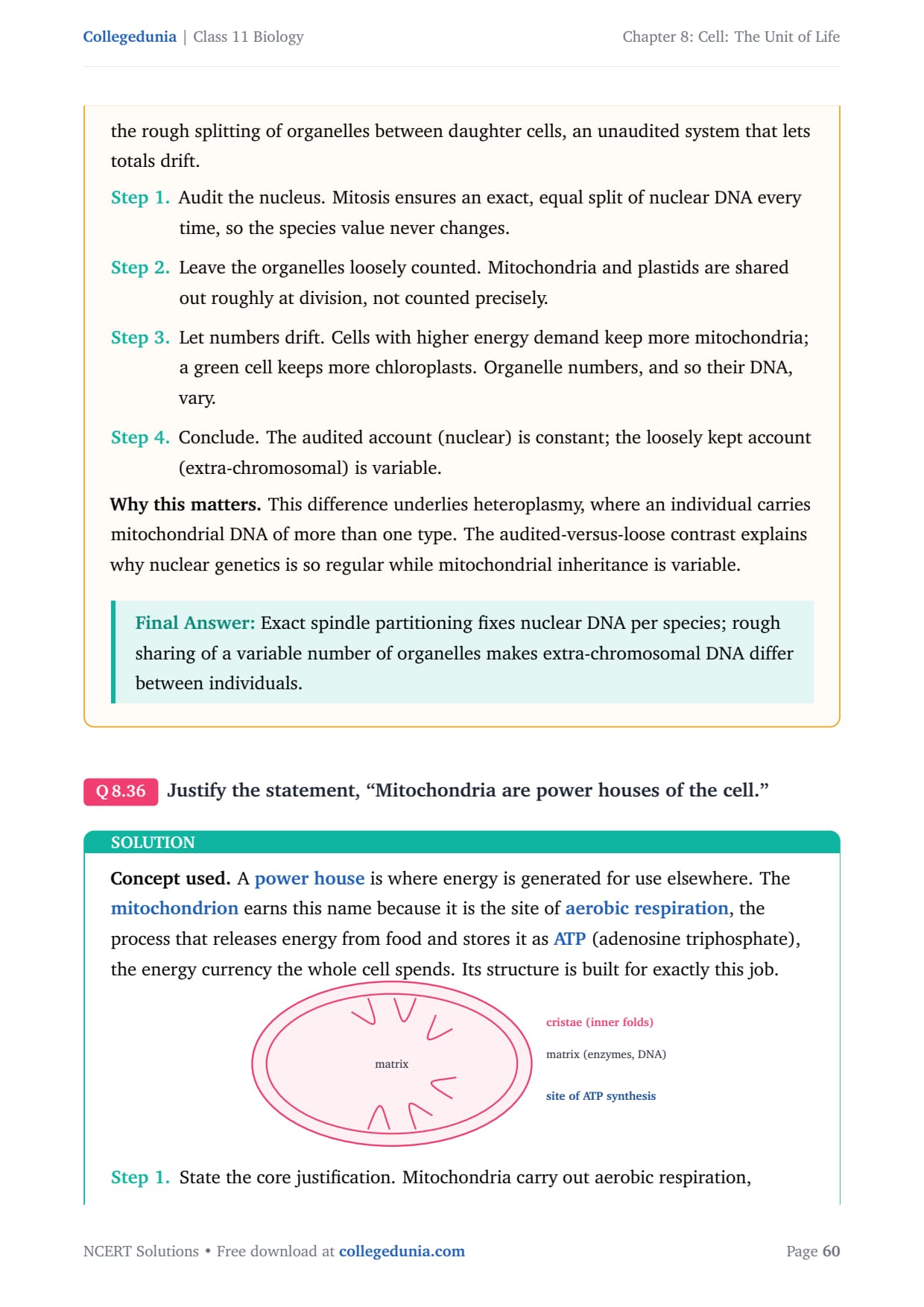
Cell The Unit of Life is the chapter where the whole of cell biology begins, and the Exemplar treats it as a memory chapter with a reasoning twist. Cell theory, cell size, the prokaryotic cell and every eukaryotic organelle are packed into 39 questions. The traps here are almost all about telling two look-alike structures apart, and the same distinctions return in Cell Cycle and in the whole of Class 12.
- CBSE Weightage: 3 to 5 marks, usually a labelled organelle question or a prokaryote against eukaryote comparison
- NEET Weightage: 3 to 4 questions per year on cell organelles, ribosomes, membrane structure and the prokaryotic cell
- CUET Weightage: 2 to 3 questions on cell theory, organelle function and the fluid mosaic model in the Biology domain paper
Every answer is checked against the official NCERT Exemplar key, and where the printed key misprints an answer, such as the stain used for mitochondria, the correct option is stated with the reason and the source.
Topics Covered in the Class 11 Biology Cell The Unit of Life Exemplar
The 39 questions in this chapter are built on four ideas, and each one is asked as a difference rather than a definition. Cell The Unit of Life is short on formulae but heavy on structure, so almost every question rewards a student who can name what an organelle does and how it differs from its neighbour. Working through it fixes the vocabulary you rely on for the rest of the year.
- Cell theory and cell size: the work of Schleiden, Schwann and Virchow, the smallest cell PPLO, the largest single cell the ostrich egg, and arranging cells by size
- The prokaryotic cell: nucleoid, cell envelope, mesosome, gas vacuoles, inclusion bodies and the 70S ribosome
- Membrane and endomembrane system: the fluid mosaic model, tonoplast, endoplasmic reticulum, Golgi apparatus and lysosomes
- Organelles with their own DNA: mitochondria and plastids, plus the nucleus, ribosomes, cytoskeleton, cilia and flagella
Question Types in the Cell The Unit of Life NCERT Exemplar
Class 11 Biology Exemplar chapters use four question types, and each carries a different demand. The MCQ set is where the misprints and the fine distinctions hide, so it is slower than it looks. The Long Answer set asks for full structure descriptions, often with a diagram, while the Short Answer set rewards a precise one or two line difference. The table below shows how the 39 questions split.
| Question Type | Count | What It Tests |
|---|---|---|
| MCQ (single correct) | 14 | Precise reading of organelle function and cell structure |
| VSA (Very Short Answer) | 7 | One-line facts such as what a tonoplast is or what S means in 70S |
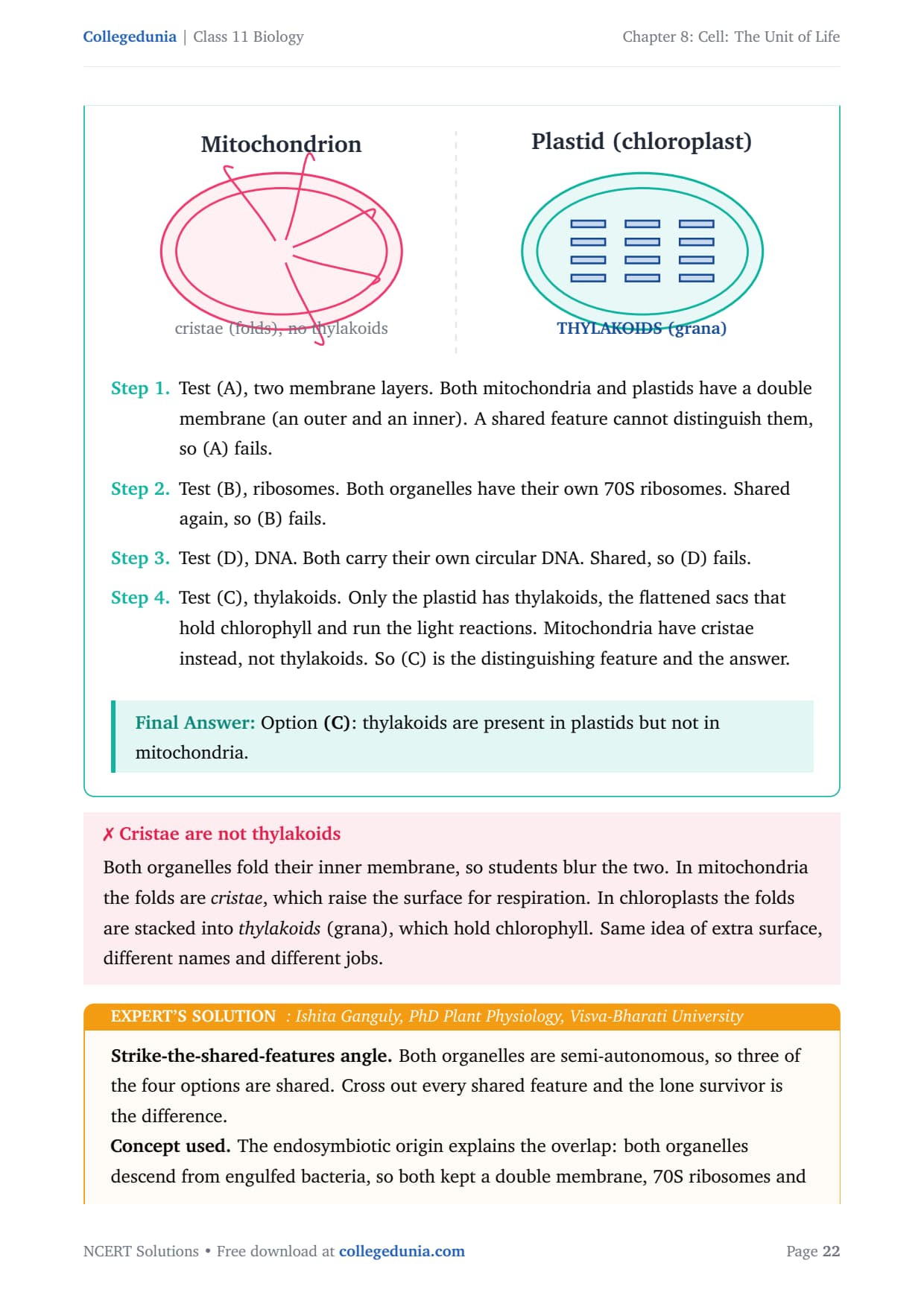
| SA (Short Answer) | 8 | Distinguishing structures like cristae from thylakoids |
| LA (Long Answer) | 10 | Full descriptions of the membrane, the nucleus or the mitochondrion |
Printing Errors in the Cell The Unit of Life Exemplar Key
One question in this chapter has a genuine misprint in the official NCERT Exemplar answer key, and the PDF flags it at the exact question so students do not learn the wrong option. The rule to remember is to match every stain to its target, because the whole error turns on one dye being assigned to the wrong organelle. Trusting the printed letter here would cost a full MCQ mark.
- The stain for mitochondria: the printed key marks this MCQ as (a) Fast green, but fast green stains cytoplasm and cellulose, not mitochondria
- The correct answer: the vital stain for mitochondria is Janus Green B, option (d), which is oxidised to blue exactly where the mitochondria are
- How to hold the rule: one dye, one target. Safranin marks lignified walls, aceto-carmine marks chromosomes, and only Janus green points at the mitochondrion
- Source agreement: Vedantu, Learn CBSE and other standard solutions all confirm (d), so write (d) Janus green with a one-line reason
A printed answer key is not proof, and the Exemplar rewards students who can defend the right option. The PDF works the full stain table so the misprint becomes obvious rather than confusing.
Common Mistakes Students Make in Cell The Unit of Life
The Exemplar plants wrong options and half-right descriptions on purpose. Four errors catch most students in this chapter, and each is flagged in the PDF at the exact question where it appears. Learning to spot them early saves marks across the cell biology unit, because the same distinctions return in Cell Cycle and Cell Division and again in Class 12.
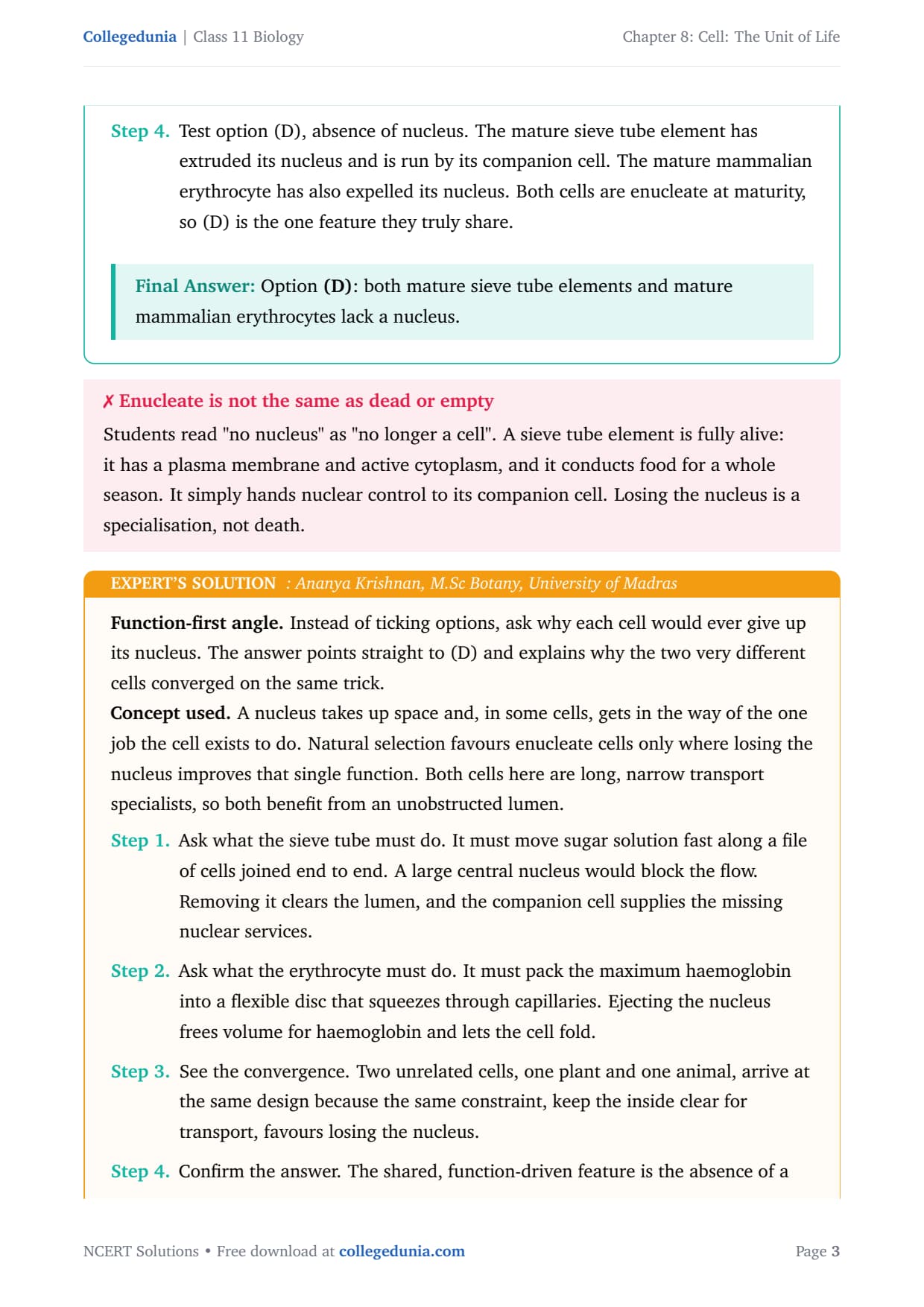
- Enucleate is not the same as dead: mature mammalian red blood cells and sieve tube cells lose their nucleus yet stay alive and working, so lacking a nucleus is their shared feature, not a sign of death.
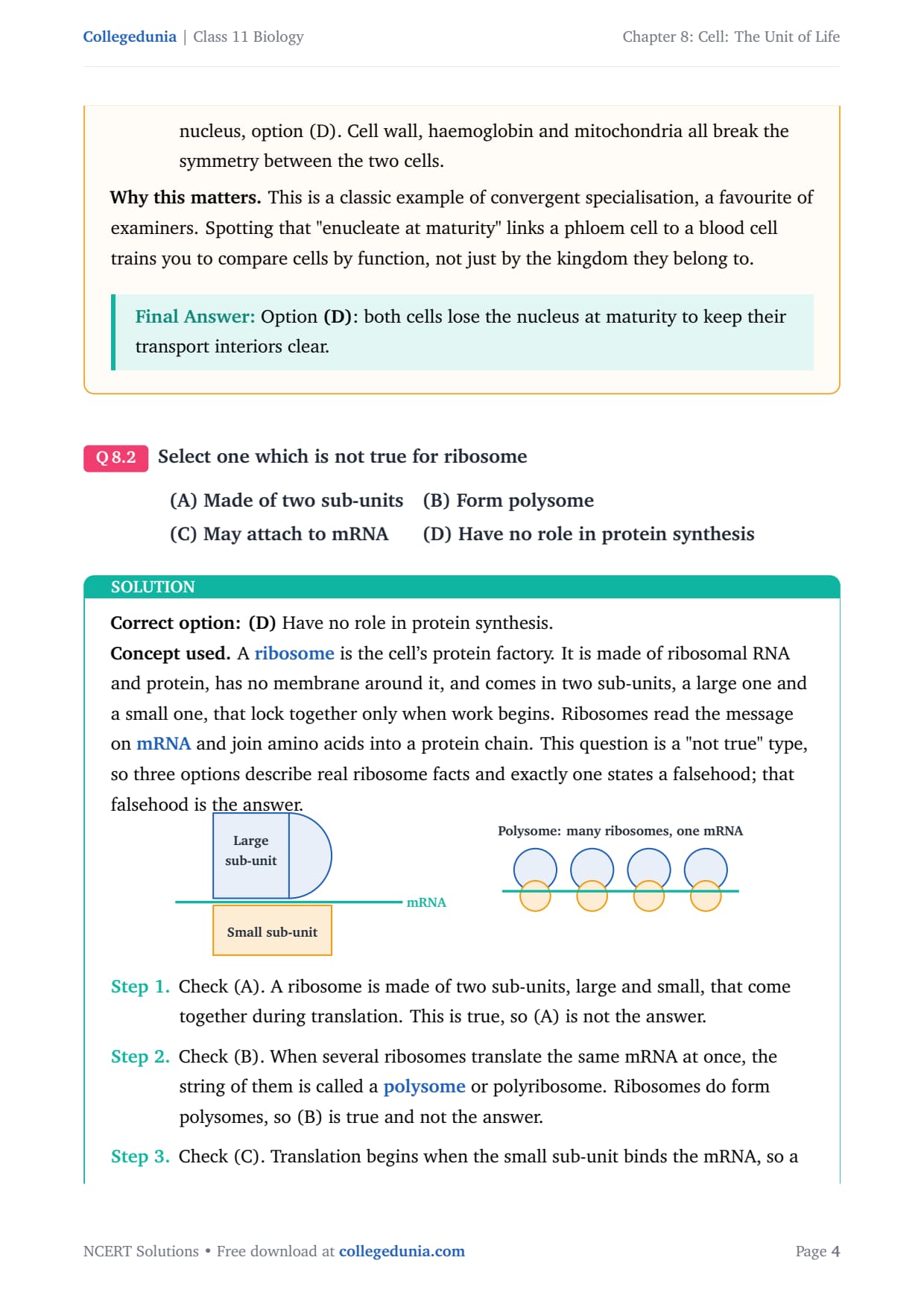
- Svedberg values are not additive: a 70S ribosome is made of a 50S and a 30S subunit, not an 80S total, because S is a measure of sedimentation, not simple mass that adds up.
- Blue-green algae are bacteria: cyanobacteria are called blue-green algae by tradition, but they are prokaryotes with no true nucleus, so treating them as algae in a eukaryote question loses the mark.
- Not every eukaryote has a wall: animal cells have only a plasma membrane, so a question that assumes a cell wall around all eukaryotes is testing whether you remember the exception.
How the Exemplar Steps Up from the Class 11 Biology Textbook
The textbook lists the parts of a cell and asks you to describe them. The Exemplar shows you two cells and asks what they share or how they differ, which is a different skill and the one that NEET actually tests. This is why students who only read the chapter feel the Exemplar is unfair. It is not harder in content, it is harder in the way it asks.
The question on the common feature of plant sieve tube cells and most mammalian red blood cells shows the gap clearly. The textbook tells you a red blood cell has no nucleus and moves on. The Exemplar puts a sieve tube next to a red blood cell and waits for you to see the link. To answer, you have to notice that both are living cells that function without a nucleus, so the shared feature is being enucleate, not being dead or empty. The same pattern runs through the cristae against thylakoids question and the prokaryote against eukaryote comparison, where a single correct point separates a full mark from a zero. Working these builds the comparison habit that the chapter is meant to leave you with.
How to Use These NCERT Exemplar Solutions for Boards, NEET and CUET
Attempt each question with a labelled sketch before you open the solution. This chapter rewards a diagram more than a paragraph, because a clean drawing of the mitochondrion or the plasma membrane answers half the Long Answer set on its own. Commit to a structure in your own words, then check it against the PDF and see which label you missed.
- Boards: the Long Answer set on the nucleus, mitochondrion and fluid mosaic model matches the 3 and 5 mark diagram questions exactly
- NEET: drill the MCQ and Very Short Answer sets, since NEET repeats ribosomes, membrane structure and the prokaryotic cell every year at this level
- CUET: the cell theory and organelle function MCQs are the closest practice for the domain paper, which favours single-fact recall
Student Feedback
Students using Collegedunia's Class 11 Biology Exemplar Solutions told us that the organelle comparison questions, and the stain misprint in particular, were the hardest part of this chapter. Around 7 in 10 said that seeing the fast green against Janus green question solved with the full stain table, and the correct option defended, was the moment the dye rules finally stopped slipping in the exam.
Other Resources for Class 11 Biology Cell The Unit of Life
Collegedunia has the full set of study material for this chapter. Use the Notes for a first read, then the Exemplar once the organelle vocabulary is steady, and keep the NCERT Solutions open for the textbook exercise alongside.
Also Check:
- NCERT Solutions for Class 11 Biology Chapter 8
- Class 11 Biology Chapter 8 Notes
- Class 11 Biology Chapter 8 Formula Sheet
- Class 11 Biology Chapter 8 NCERT Book PDF
- Class 11 Biology Chapter 8 Exemplar Book PDF
NCERT Exemplar Solutions for Other Class 11 Biology Chapters
Each chapter below has the same step-by-step treatment and a free PDF. All 19 chapters have an NCERT Exemplar book chapter behind them, so the list covers every one.
Cell The Unit of Life Class 11 NCERT Exemplar Solutions FAQs
Ques. How many questions are there in the Class 11 Biology Cell The Unit of Life Exemplar?
Ans. Chapter 8 has 39 questions. They are split into 14 MCQ, 7 Very Short Answer, 8 Short Answer and 10 Long Answer questions. All 39 are solved in the free 68-page PDF on this page.
Ques. What is the vital stain used for mitochondria in this chapter?
Ans. The correct stain is Janus Green B, option (d). The printed NCERT Exemplar key misprints this as fast green, but fast green stains cytoplasm and cellulose. Janus green is oxidised to blue exactly at the mitochondria, so it is the vital stain. Standard solutions such as Vedantu and Learn CBSE all confirm (d), and the PDF flags the misprint at that question.
Ques. Why is a 70S ribosome not the sum of its subunits?
Ans. A 70S ribosome is built from a 50S and a 30S subunit, which does not add up to 80S. The S stands for the Svedberg unit, a measure of how fast a particle sediments in a centrifuge, and it depends on shape and density, not just mass. Svedberg values are therefore not additive, which is a common Exemplar trap.
Ques. What feature is common to sieve tube cells and mammalian red blood cells?
Ans. Both are living cells that lack a nucleus at maturity, so they are enucleate. Losing the nucleus does not make them dead, which is the point the Exemplar tests. Mature red blood cells drop the nucleus to carry more haemoglobin, and sieve tube cells depend on their companion cells to stay alive.
Ques. Is the NCERT Exemplar enough for NEET questions from Cell The Unit of Life?
Ans. For this chapter it covers the ground well. NEET asks three to four questions a year on organelles, ribosomes, membrane structure and the prokaryotic cell, and they sit at the level of the Exemplar MCQ and Short Answer sets. Work all 14 MCQs and the diagram-based Long Answers before moving to a coaching module.



Comments