




NCERT Exemplar Solutions for Class 11 Biology Chapter 18 Neural Control and Coordination solve all 32 questions from the Exemplar book. Every MCQ, Very Short Answer, Short Answer and Long Answer problem is answered step by step in the free 45-page PDF, updated for the 2026-27 syllabus.
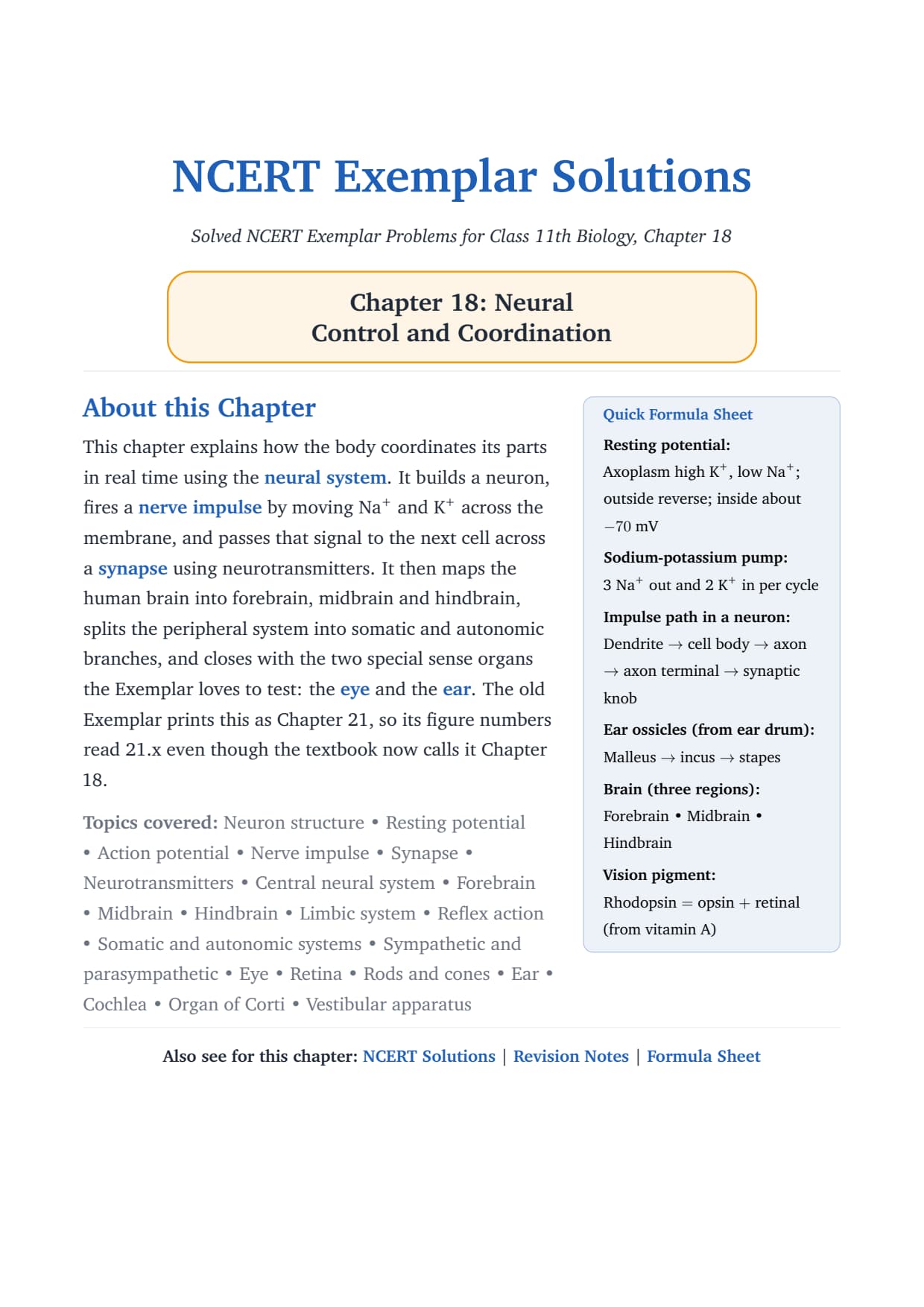
This chapter tracks a signal from one neuron to the next, then maps the brain and the two sense organs the Exemplar tests hardest, the eye and the ear. The textbook describes these structures. The Exemplar asks you to order them, compare them and justify them.
- CBSE Weightage: 4 to 5 marks, usually one question on the reflex arc, the nerve impulse or the parts of the human brain
- NEET Weightage: 2 to 3 questions per year from resting potential, synapse, brain regions and the structure of the ear
- CUET Weightage: 1 to 2 questions on neuron parts and sense organ function in the Biology domain paper
Every answer is checked against both official NCERT Exemplar keys, and the two places where the printed key and the question stem do not quite agree are flagged at the exact question.
Topics Covered in the Class 11 Biology Neural Control and Coordination Exemplar
The 32 questions sit on four clusters. Sense organs take the largest share, which surprises students who revise only the brain. Almost half the MCQ set is about the eye and the ear.
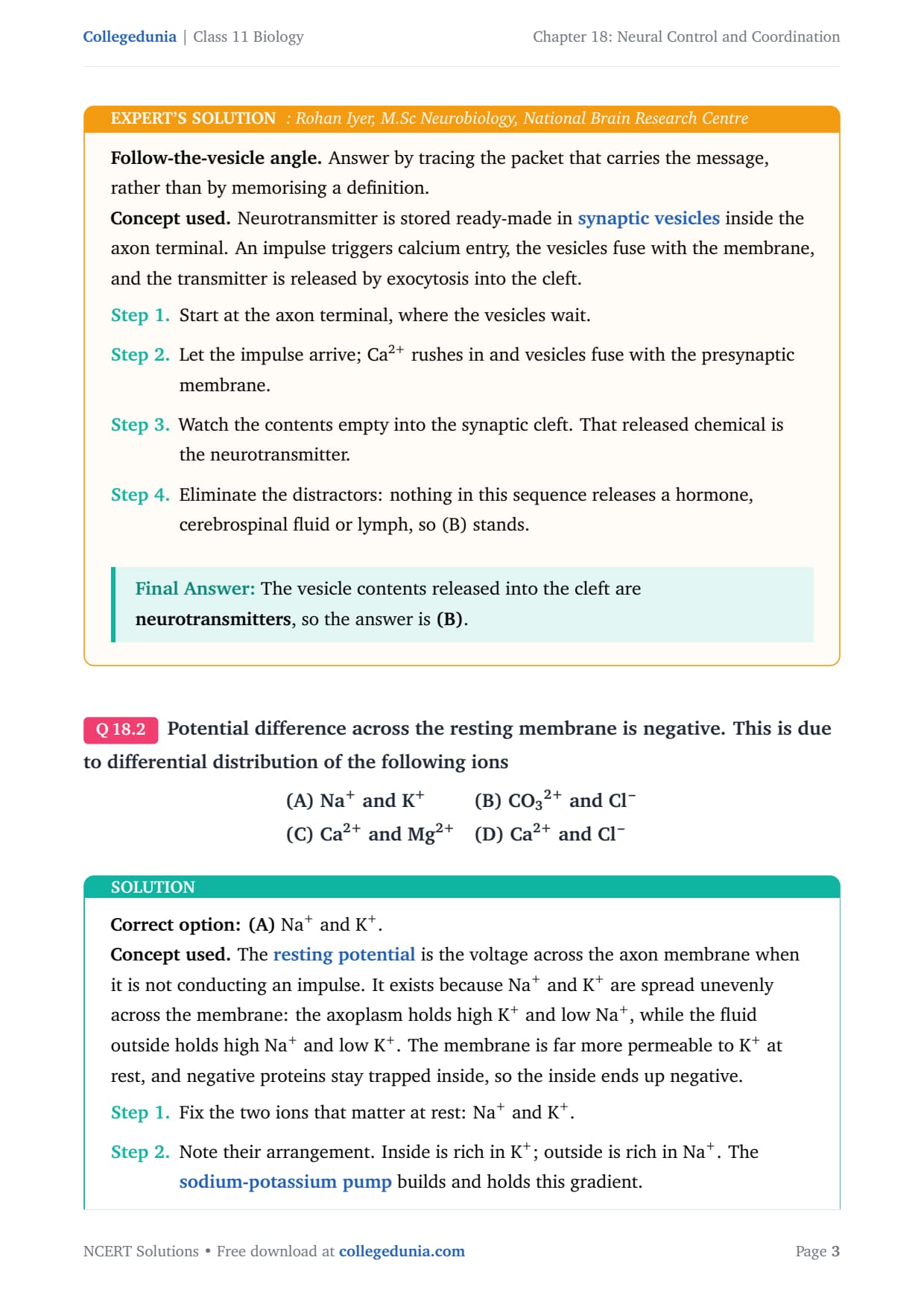
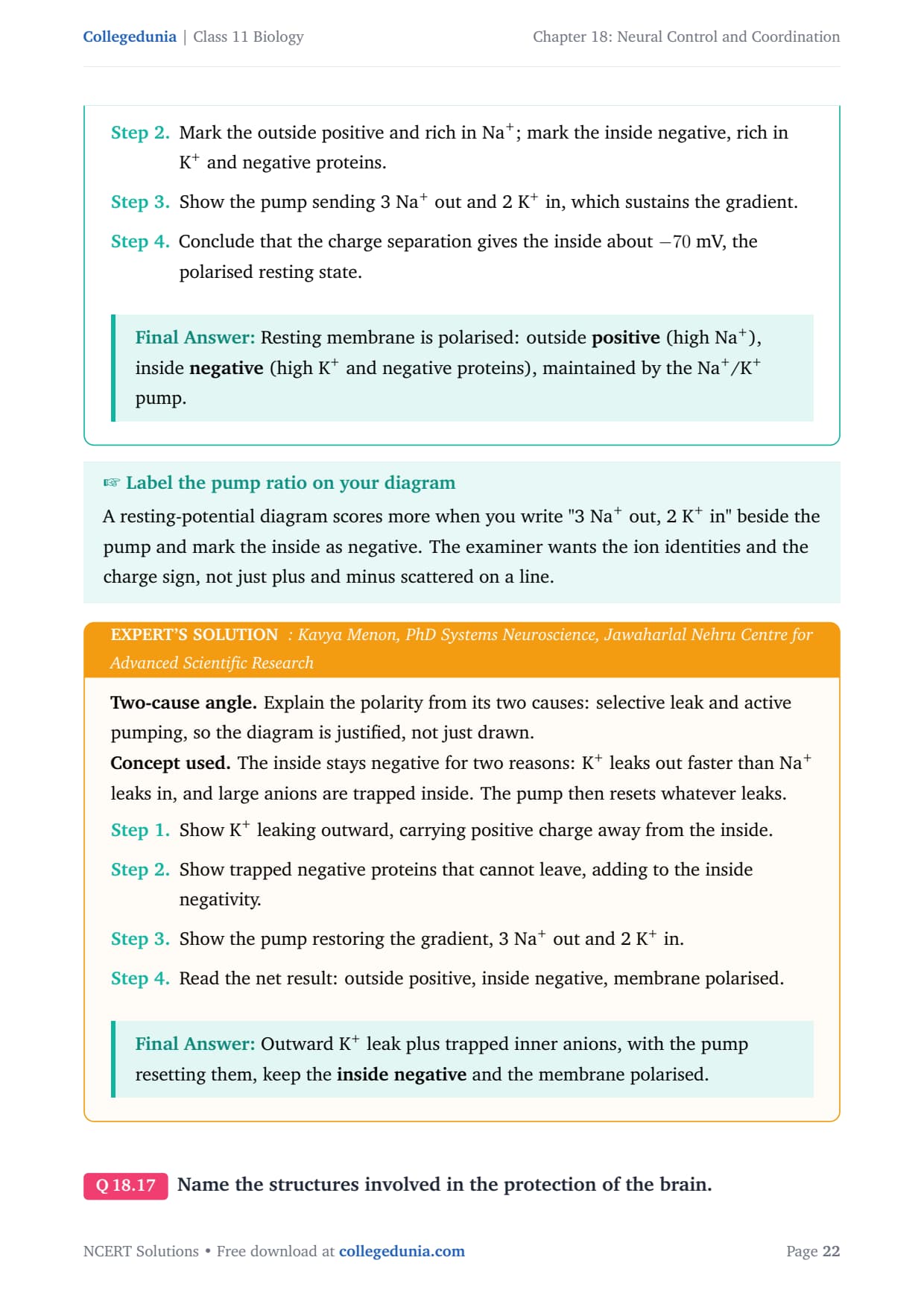
- Neuron and nerve impulse: neuron parts in order, resting potential, the roles of Na+ and K+, and the ion pump that holds the gradient
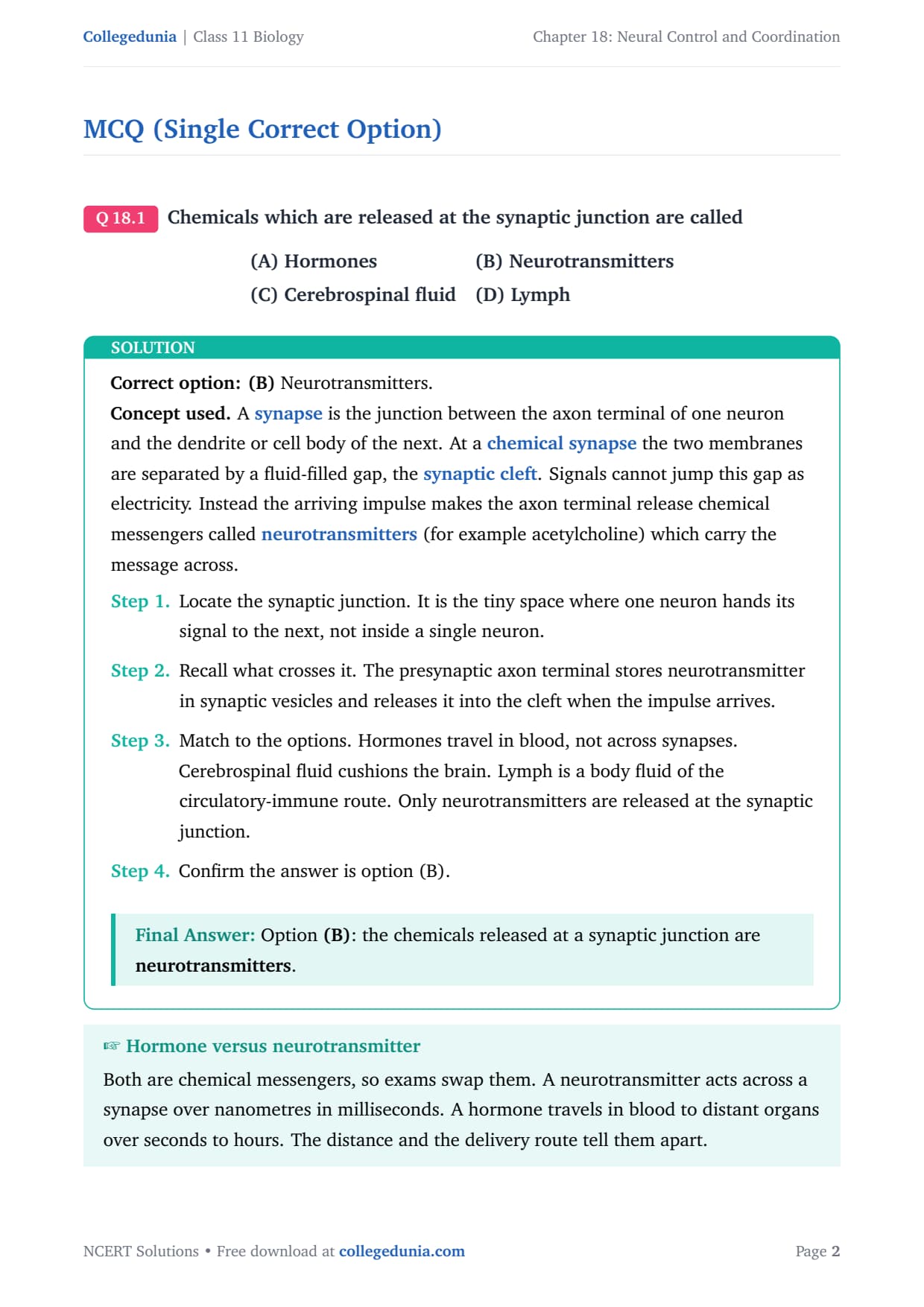
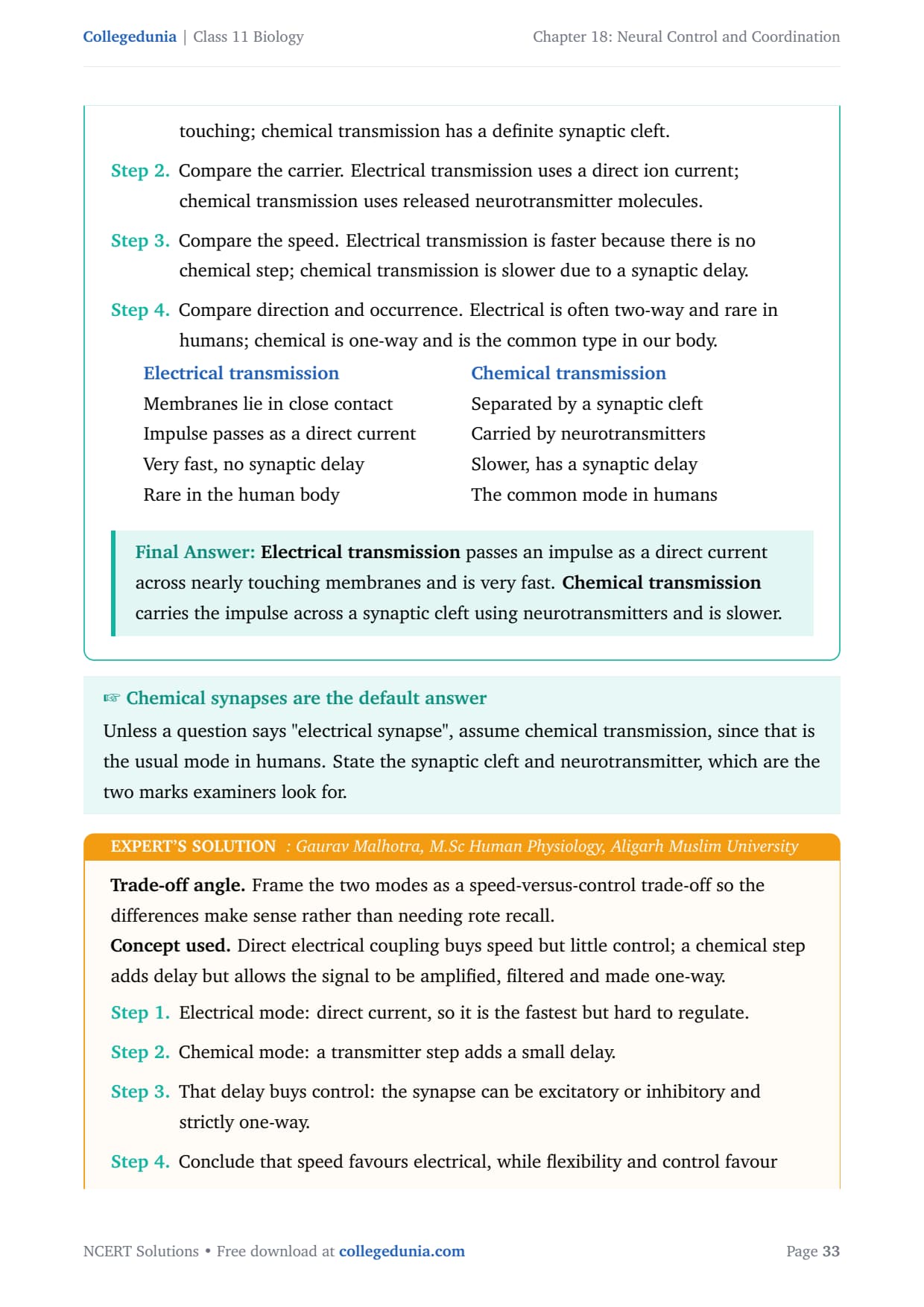
- Synapse and transmission: neurotransmitters, the synaptic cleft, and how electrical transmission differs from chemical transmission
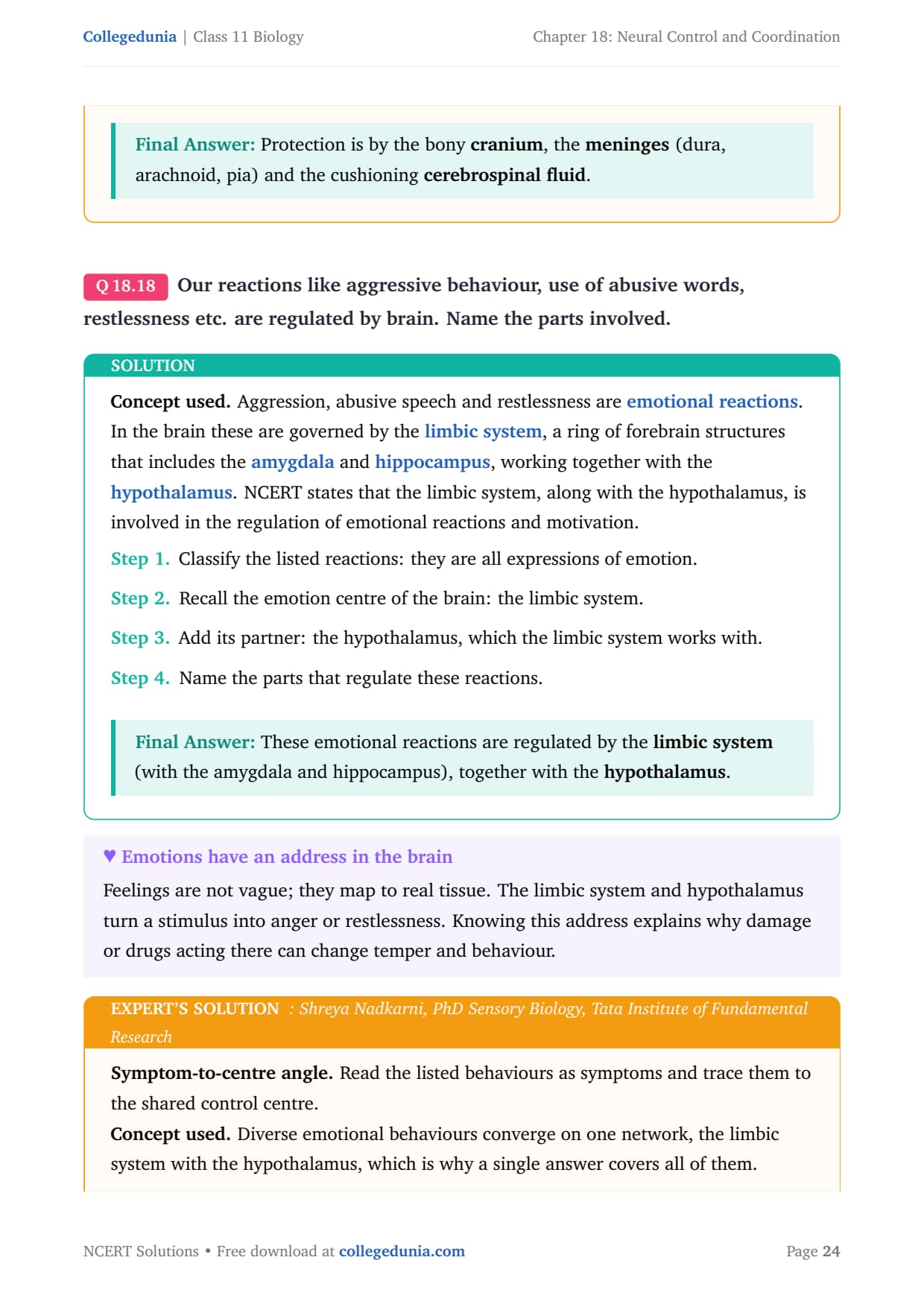
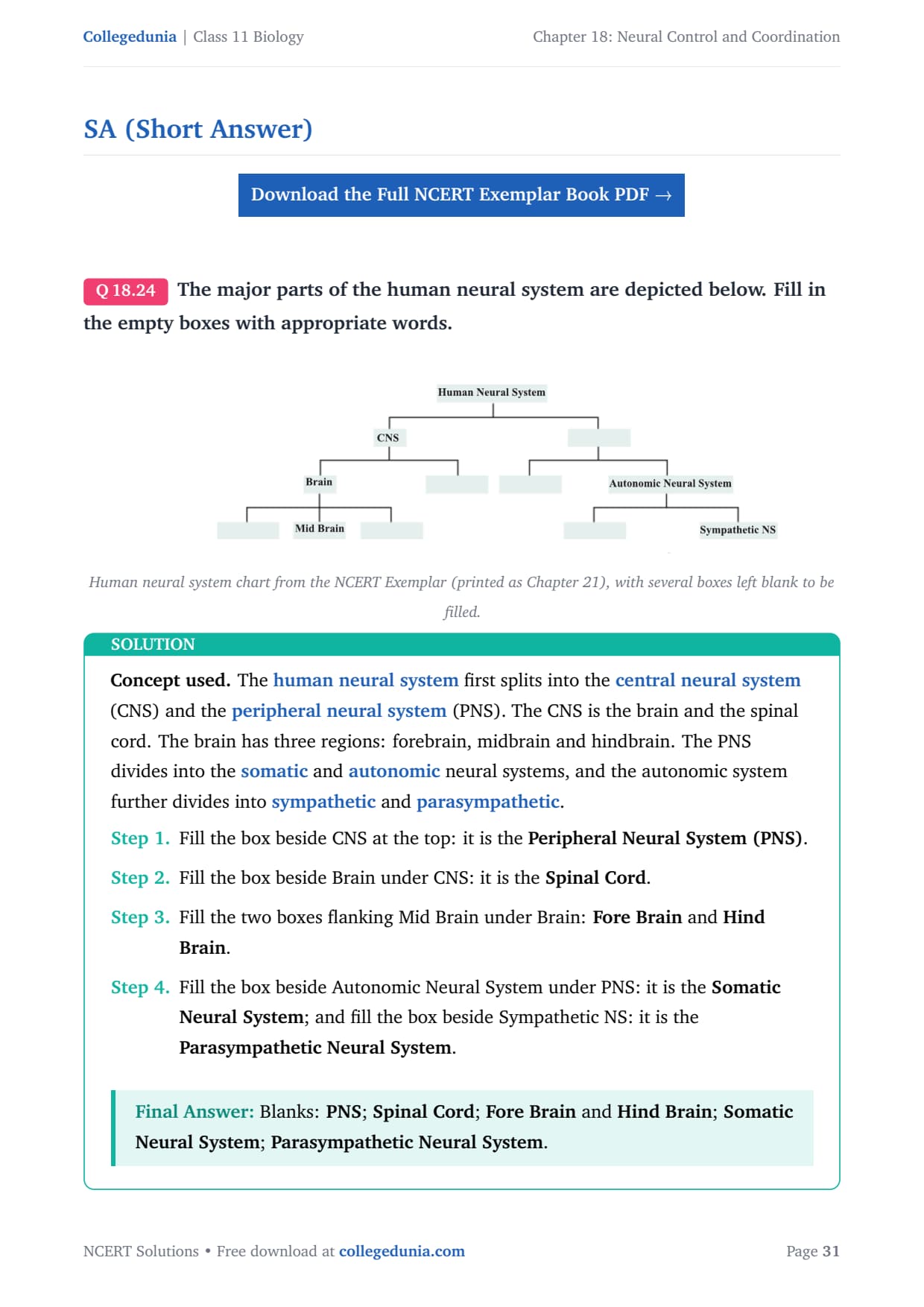
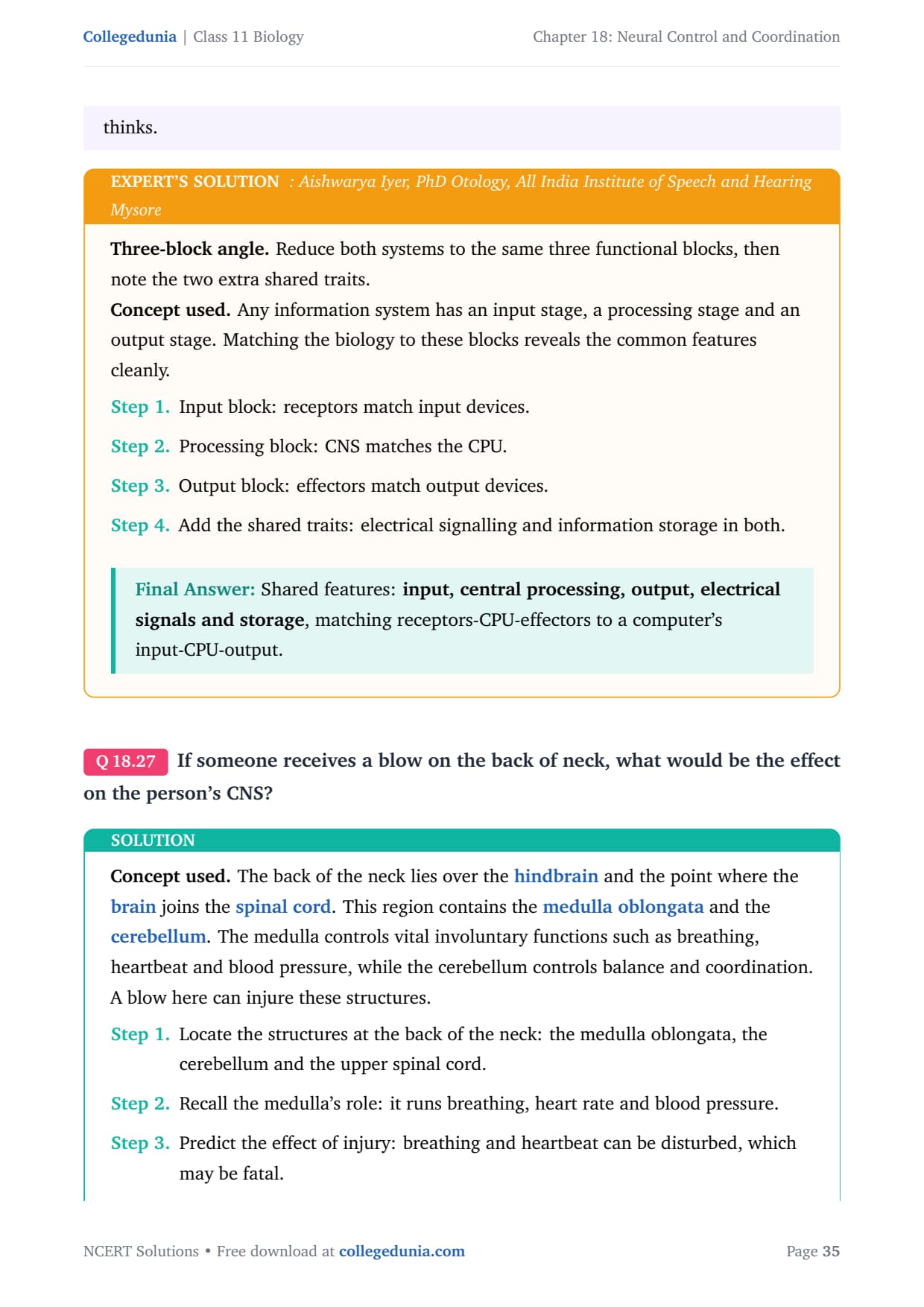
- Central and peripheral neural system: forebrain, midbrain and hindbrain, grey and white matter, the limbic system, and the autonomic branches
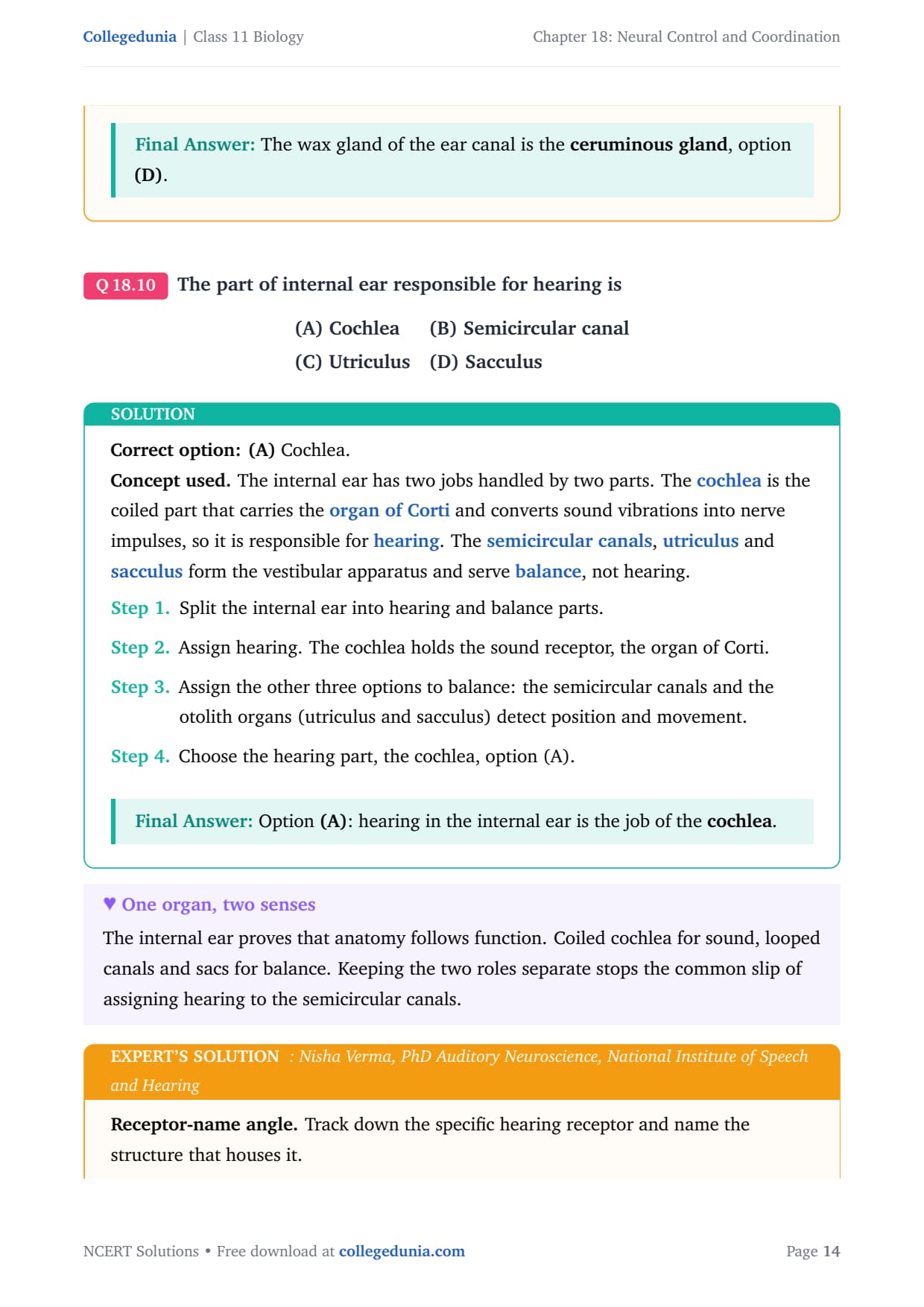
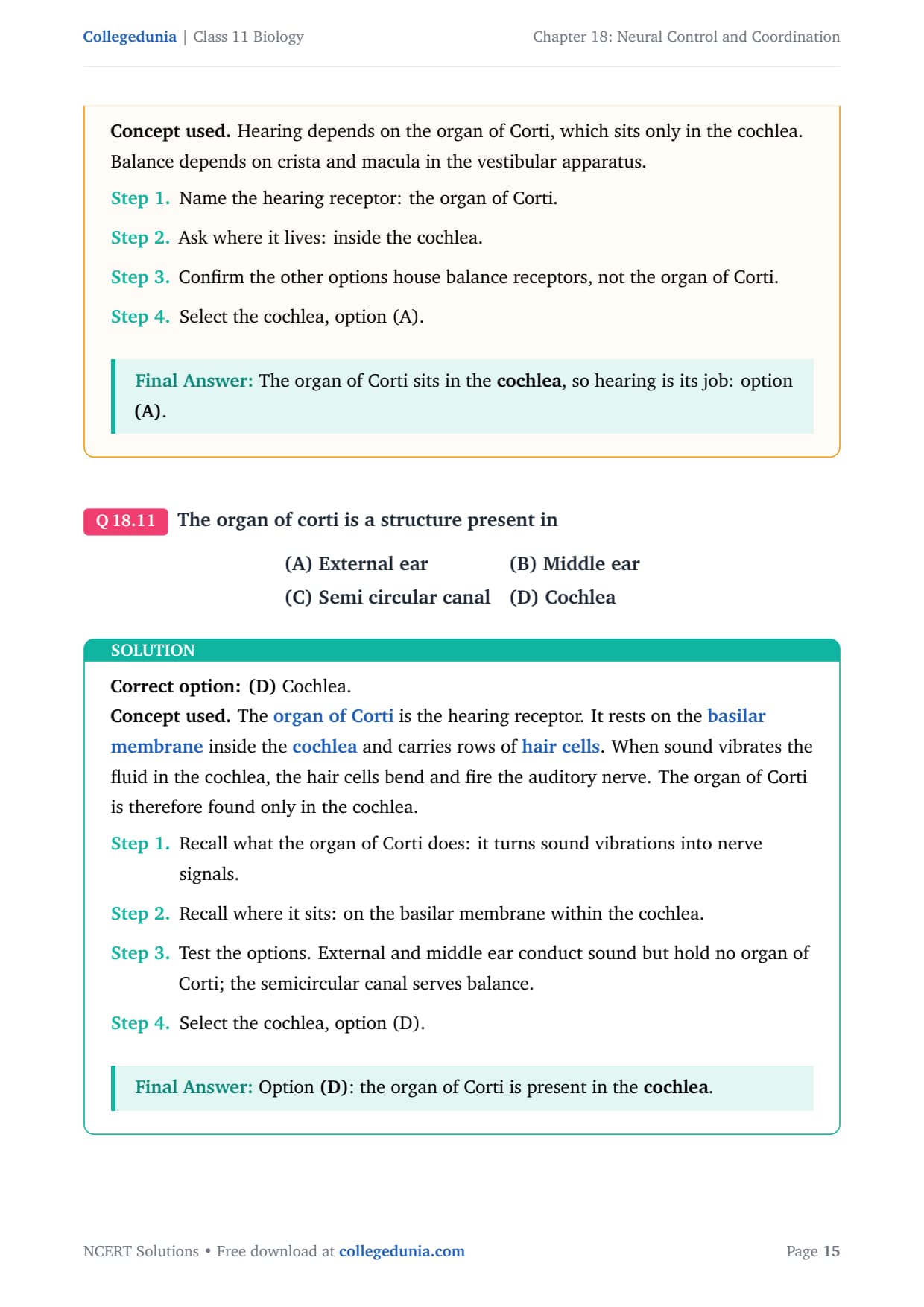
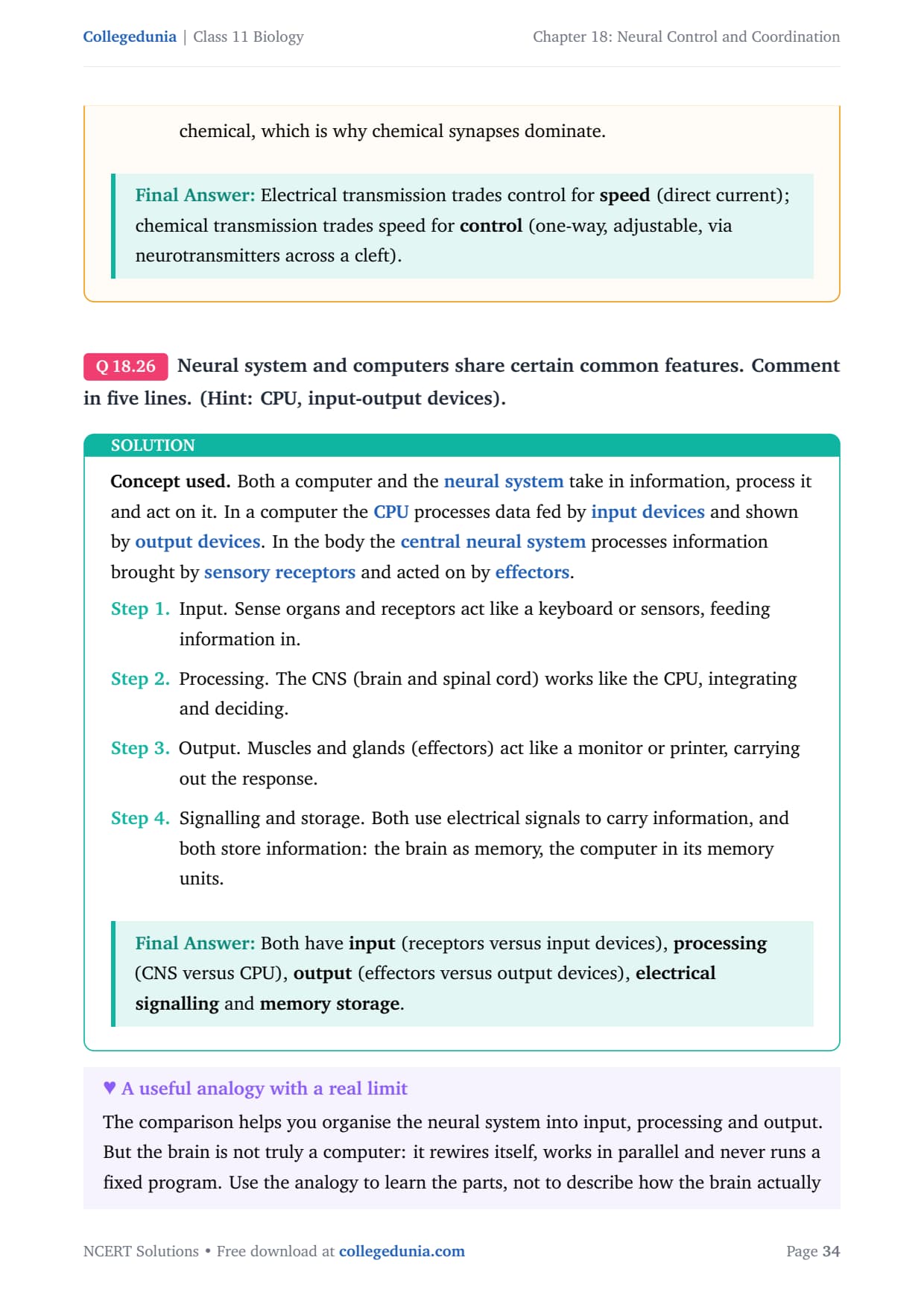
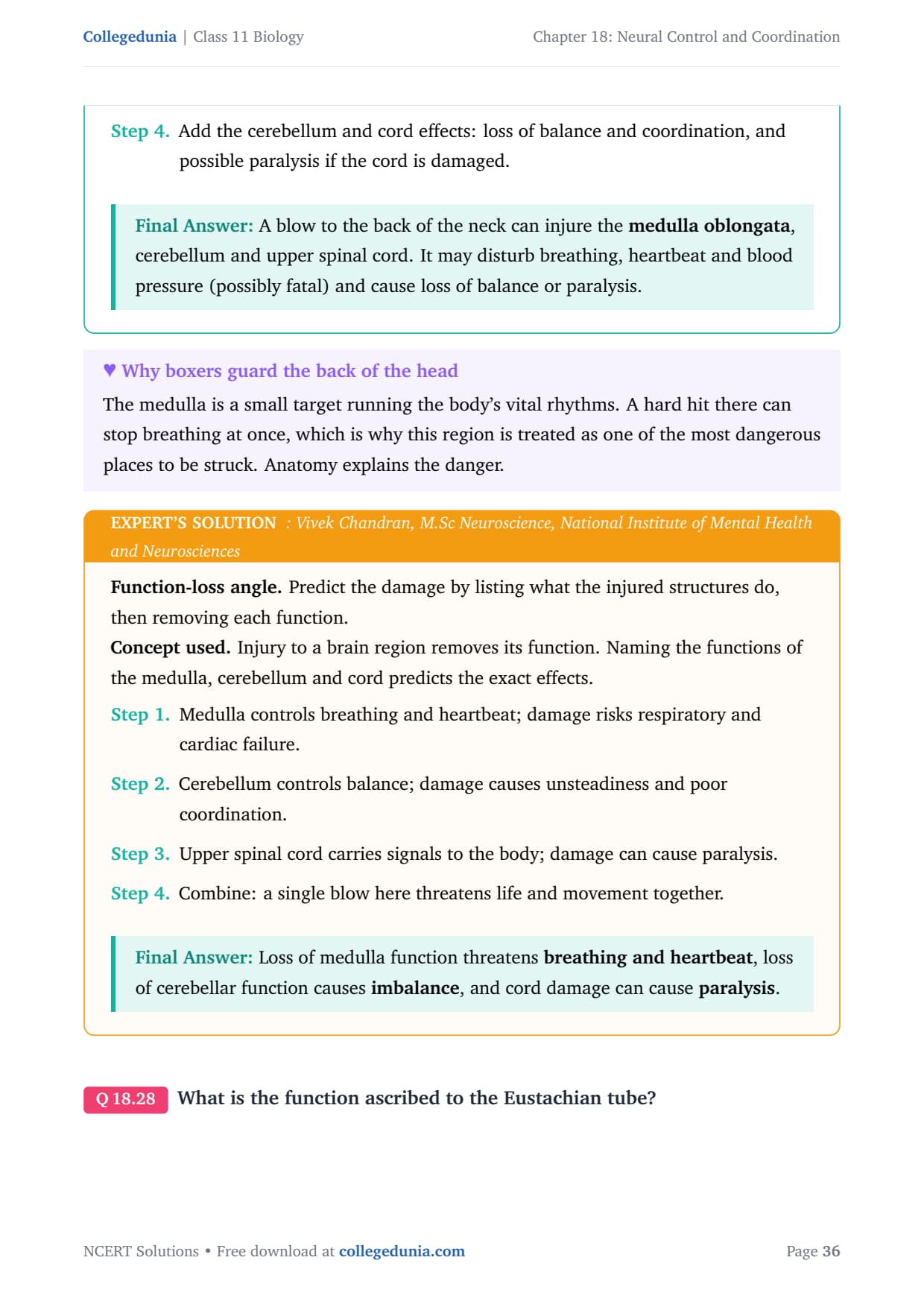
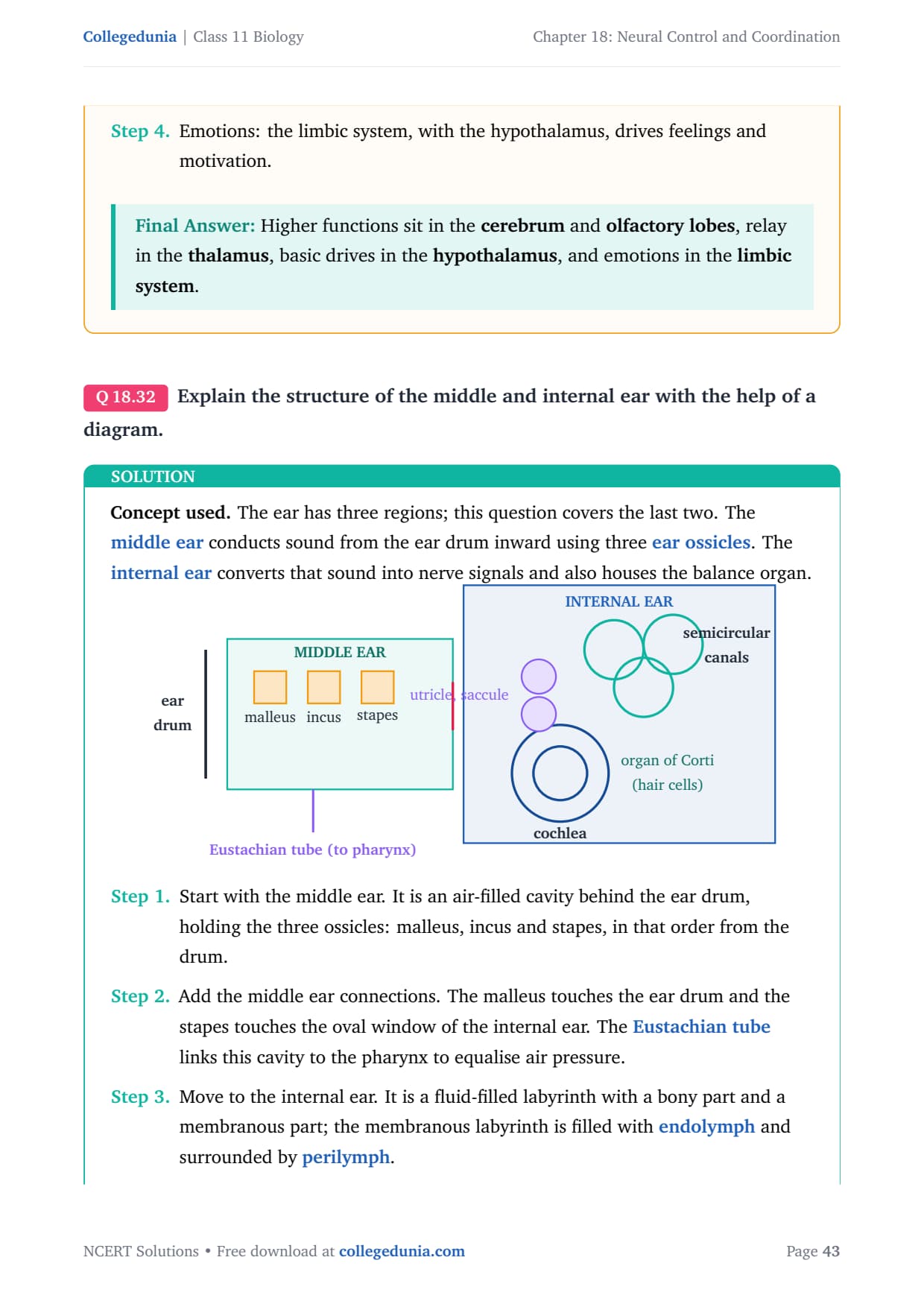
- Eye and ear: the three coats of the eyeball, rods against cones, the ossicle chain, the cochlea, the vestibular apparatus and the Eustachian tube
Question Types in the Neural Control and Coordination NCERT Exemplar
The split here is unusual. Very Short Answer is the biggest set, and several of those ask for an ordered sequence rather than a term. Only three Long Answer questions appear, but each carries a diagram.
| Question Type | Count | What It Tests |
|---|---|---|
| MCQ (single correct) | 11 | Precise recall of ion names, brain areas and ear parts |
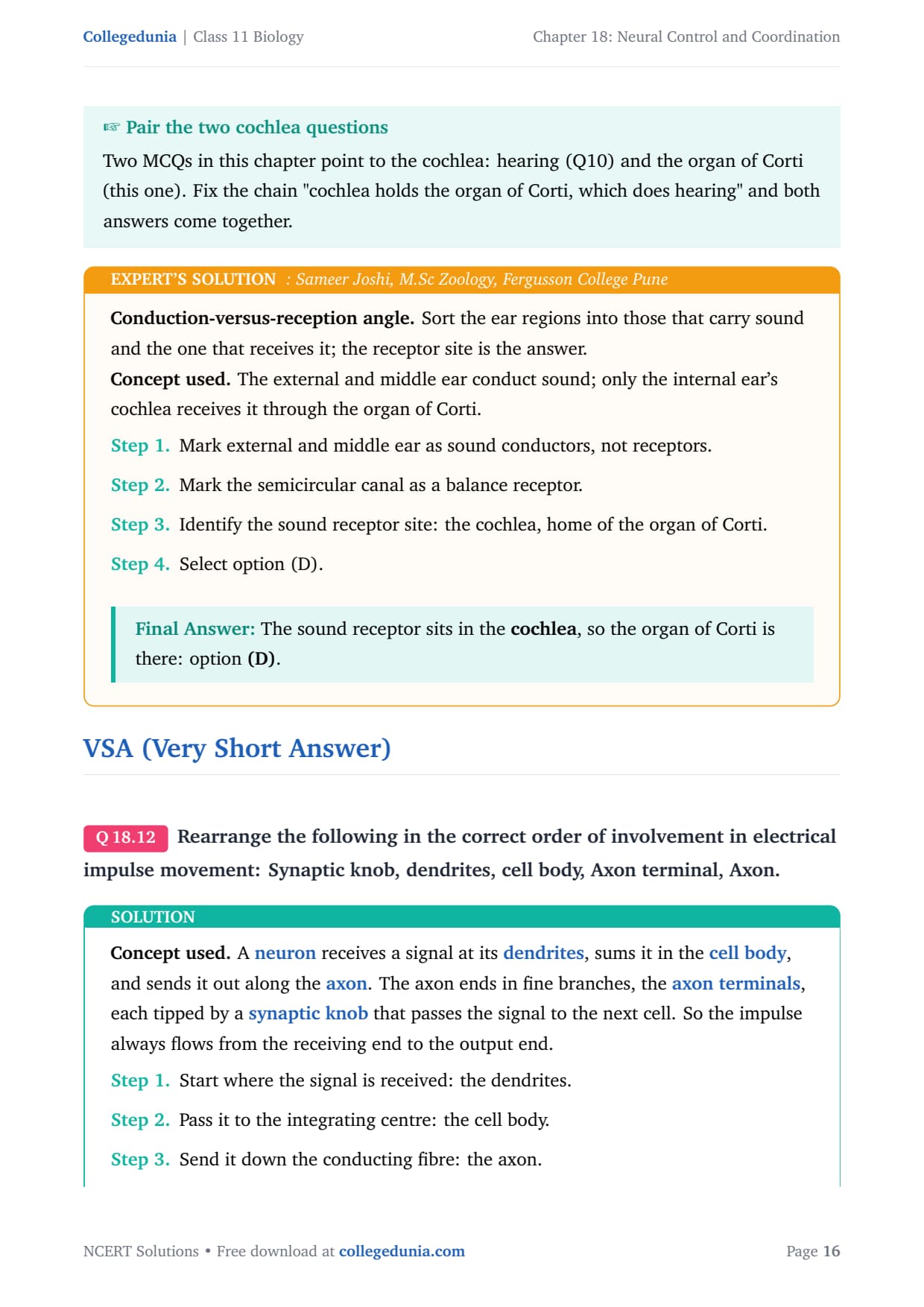
| VSA (Very Short Answer) | 12 | Ordering sequences such as neuron parts and the sound path |
| SA (Short Answer) | 6 | Comparisons like electrical against chemical transmission |
| LA (Long Answer) | 3 | Full explanations with labelled diagrams of the ear and forebrain |
Why Your Exemplar Book Prints This Chapter as Chapter 21
The NCERT Exemplar for Class 11 Biology is the older 22-chapter edition. In that book this content is printed as Chapter 21, while the current 19-chapter textbook calls it Chapter 18. The content is the same, so the mismatch only matters when you go looking for an answer.
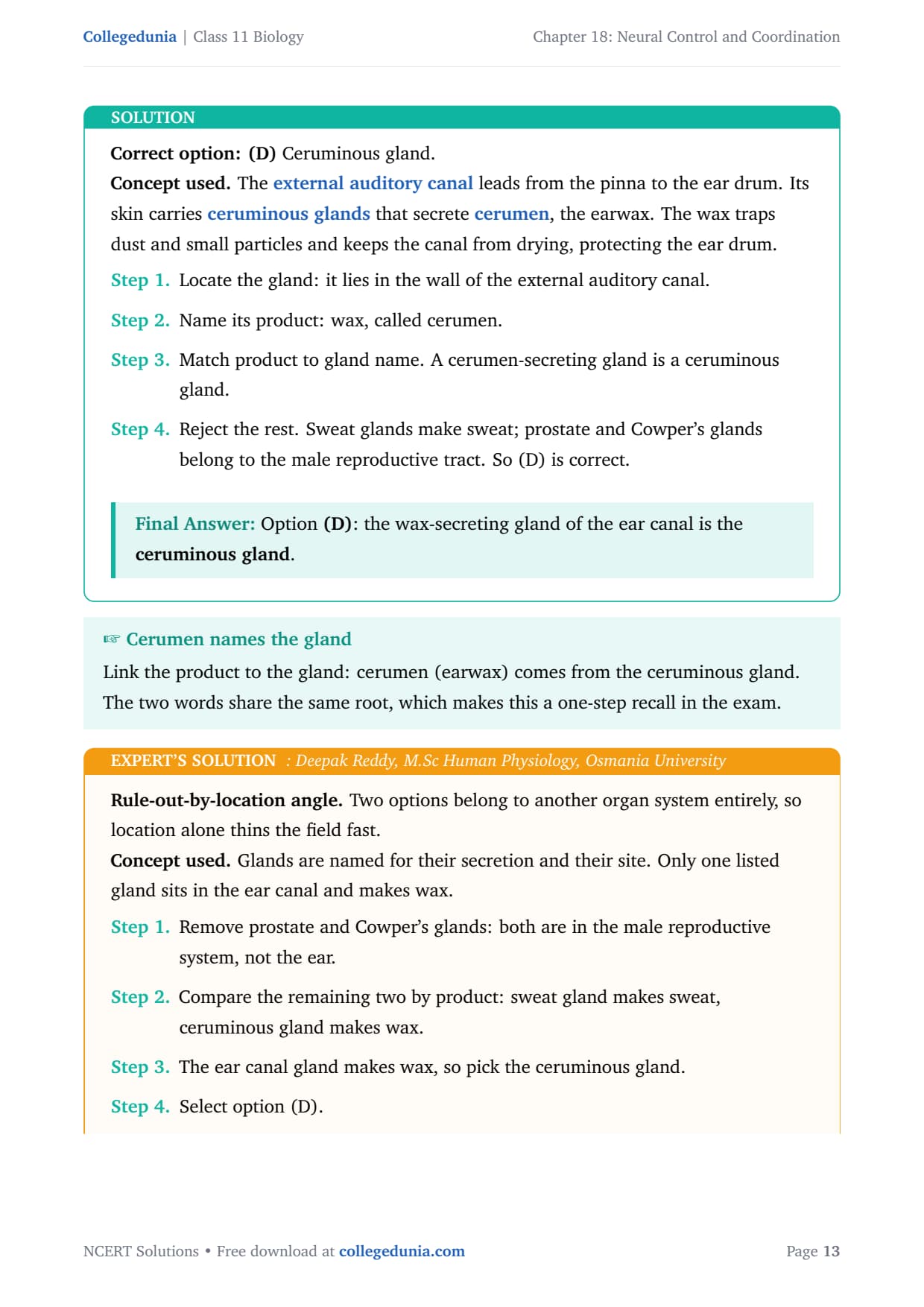
Both answer keys index this chapter as 21, not 18, so search the Chapter 21 block. This book also splits its answers across two files. The MCQ key is chapter-indexed, and all 11 answers are correct as printed. The descriptive key is not chapter-indexed, and it covers only four questions from this chapter, the first four Very Short Answer items. The rest are grounded in the NCERT Class 11 Biology textbook.
Two Answers in This Chapter That Need a Second Look
Neither of these is a wrong key. Both are places where the printed answer and the question you are given do not line up, so copying the key without reading the stem loses marks.
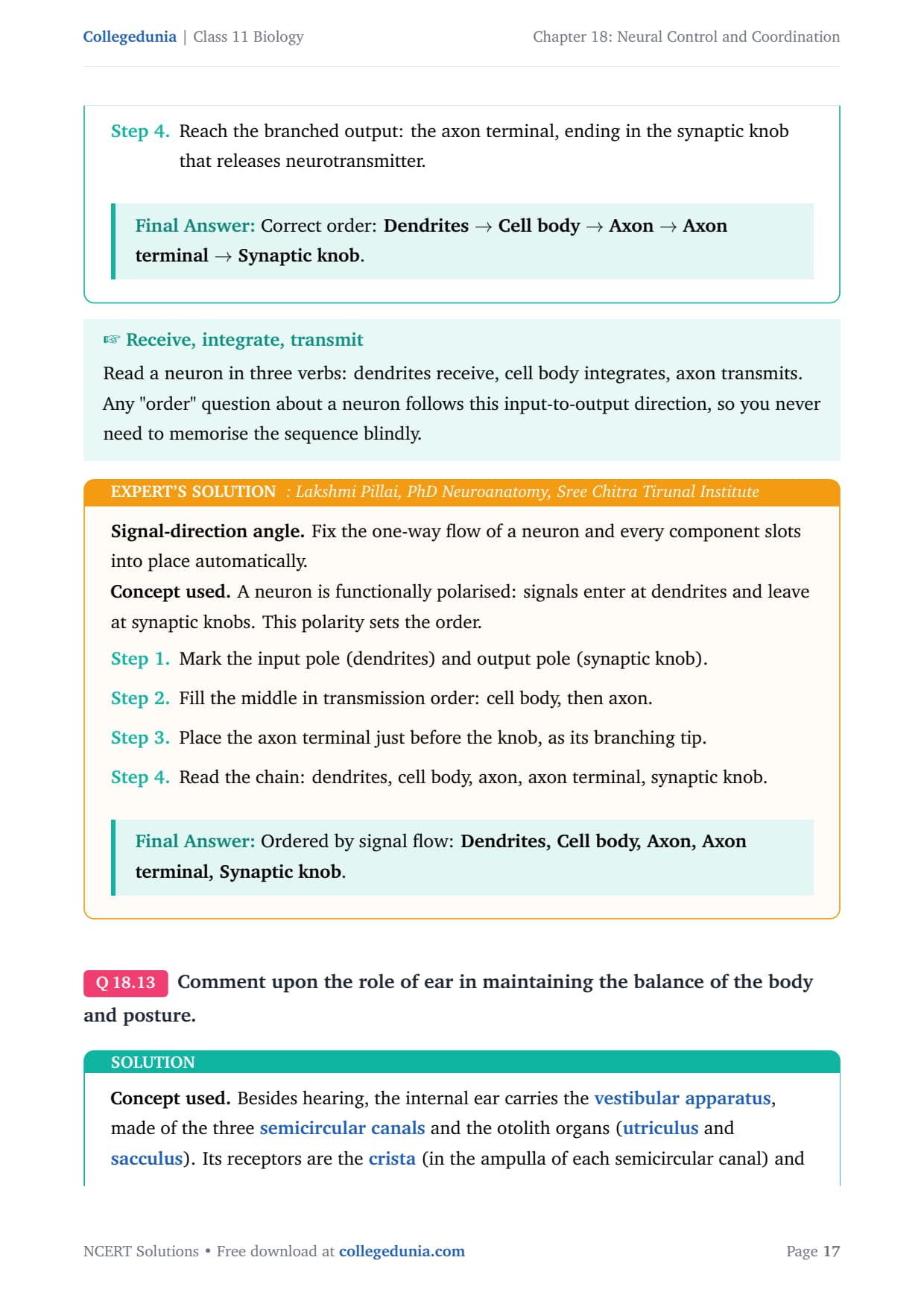
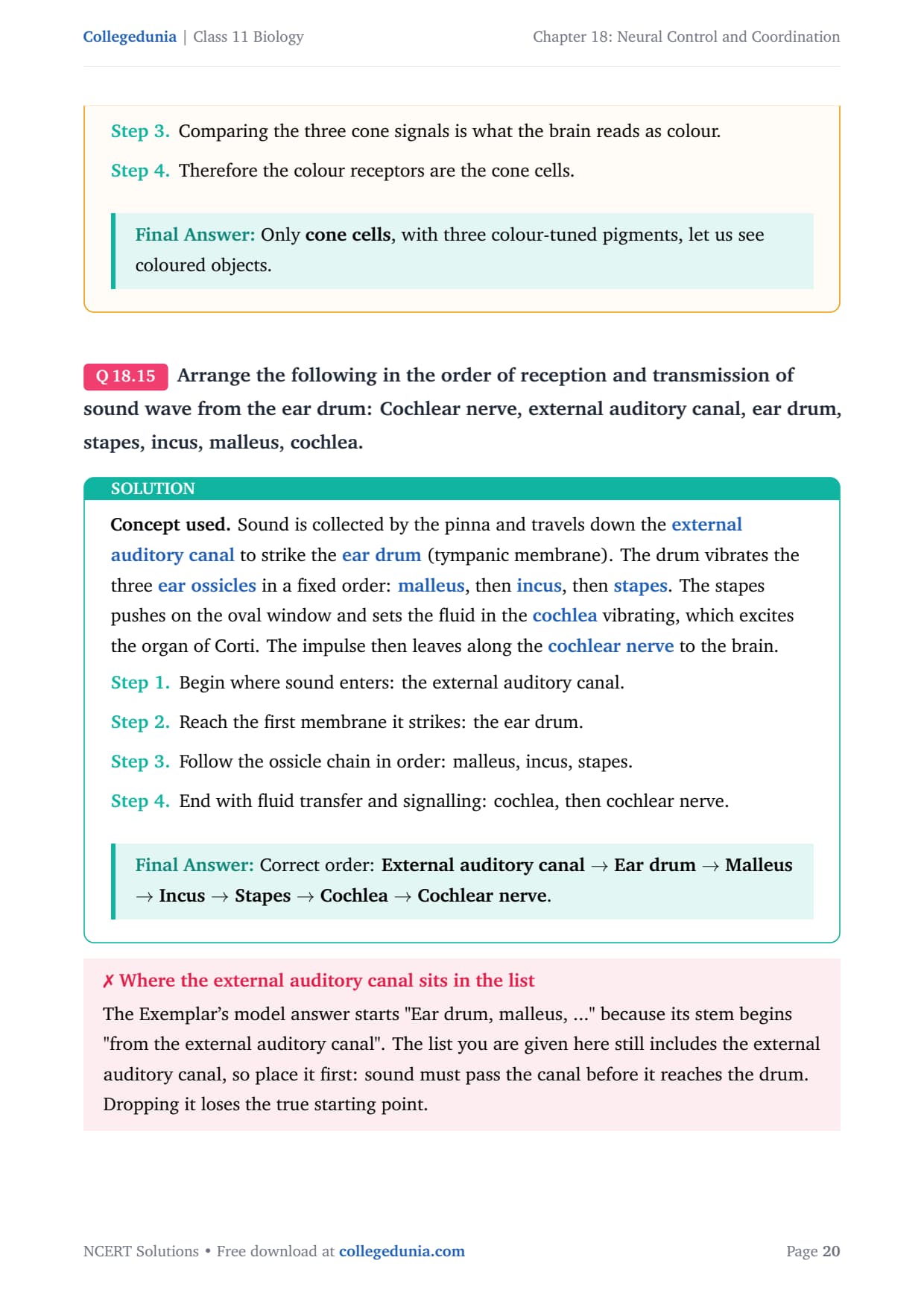
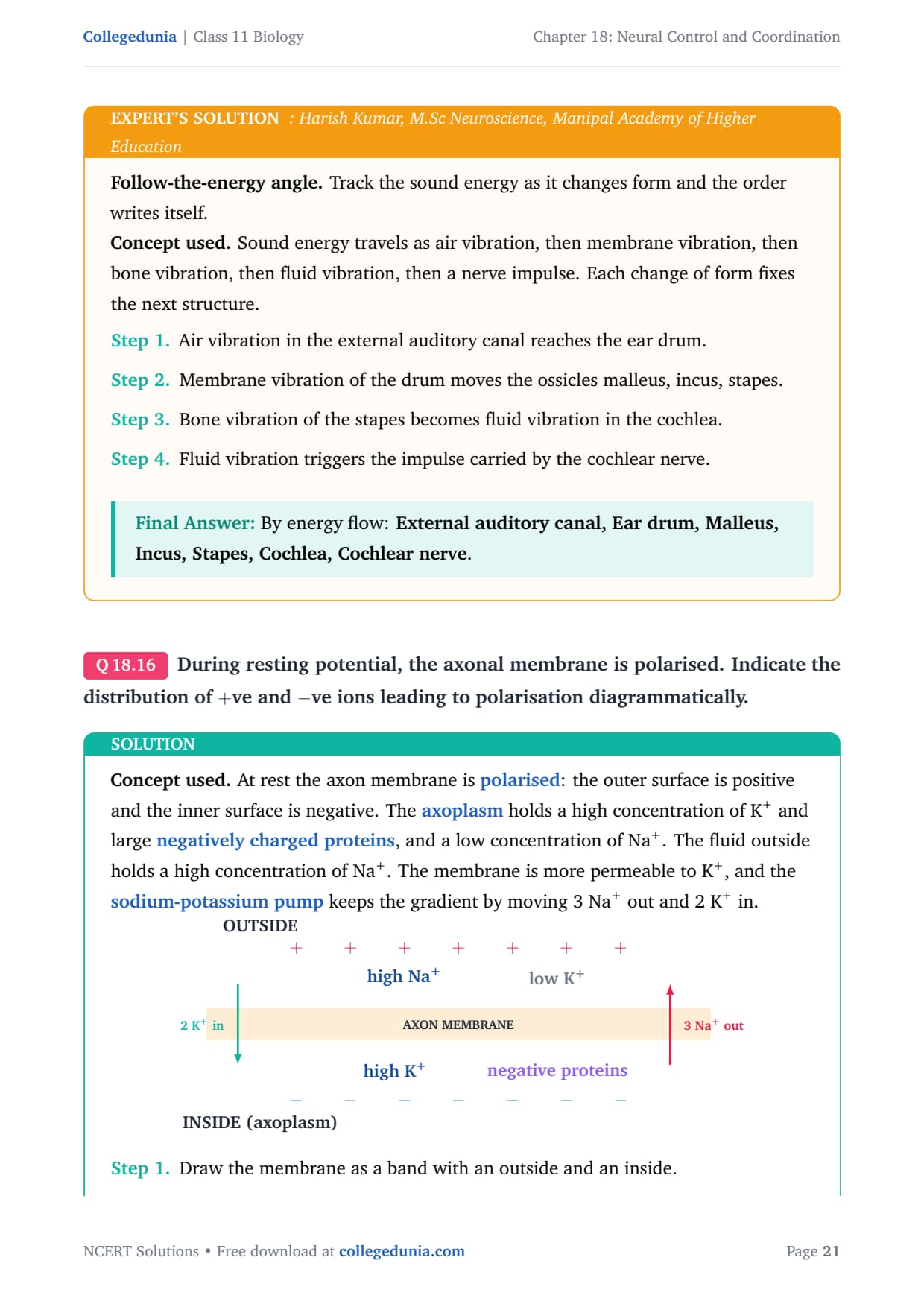
- The sound conduction order: the model answer begins "Ear drum, malleus, incus, stapes, cochlea, cochlear nerve", because the official stem starts the path at the external auditory canal. The list you are asked to arrange still contains that canal, so place it first. Sound passes the canal before it reaches the drum.
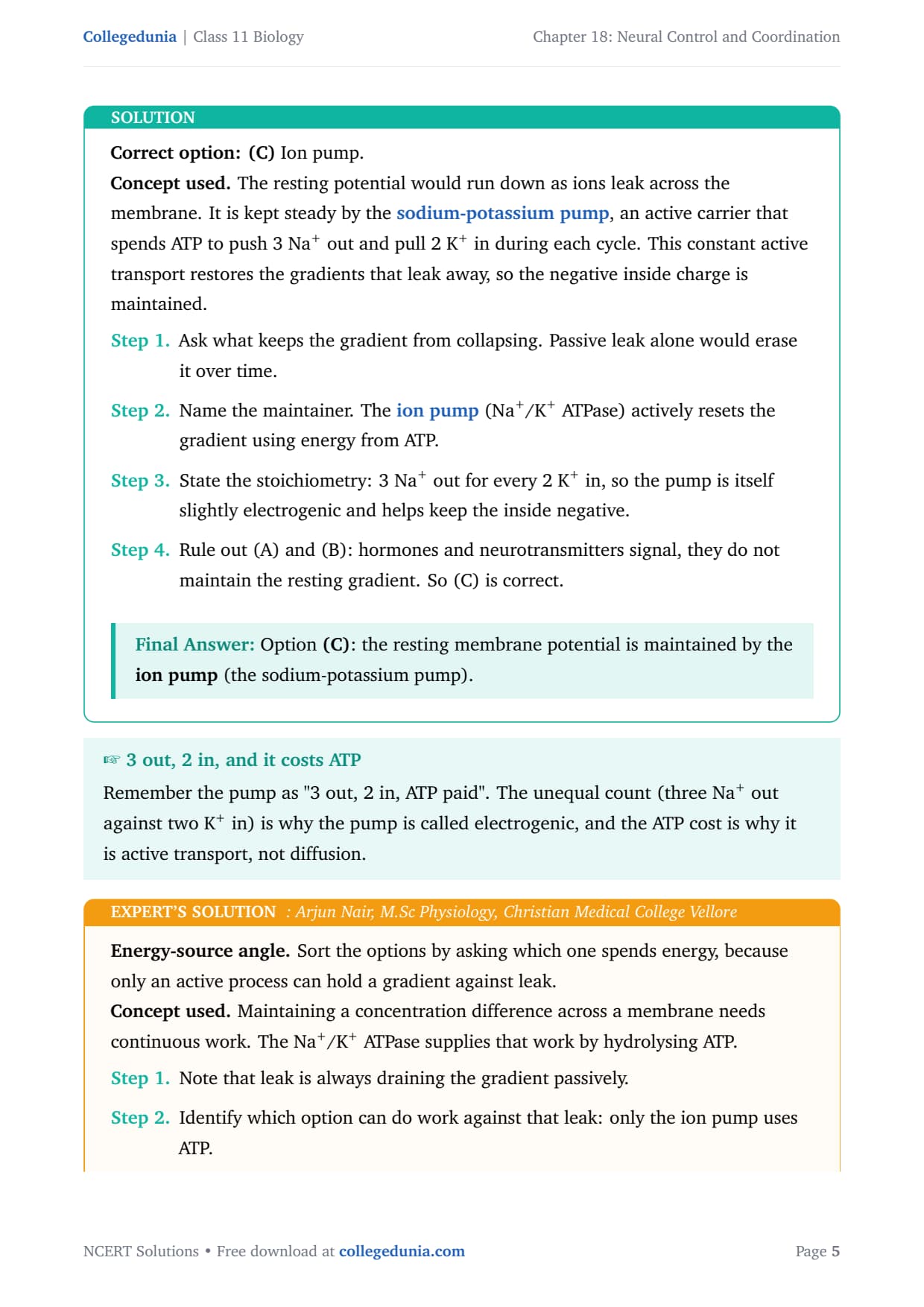
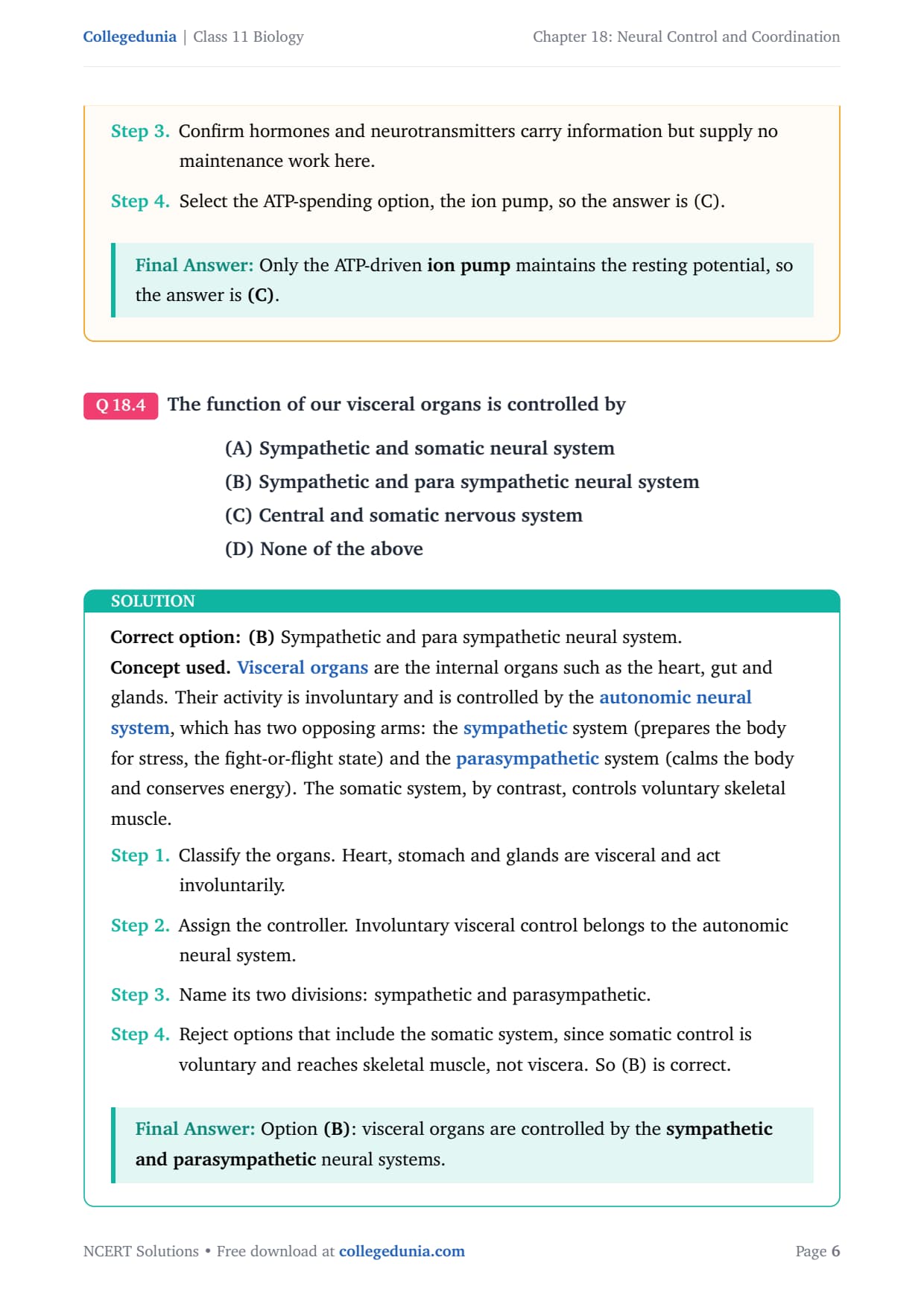
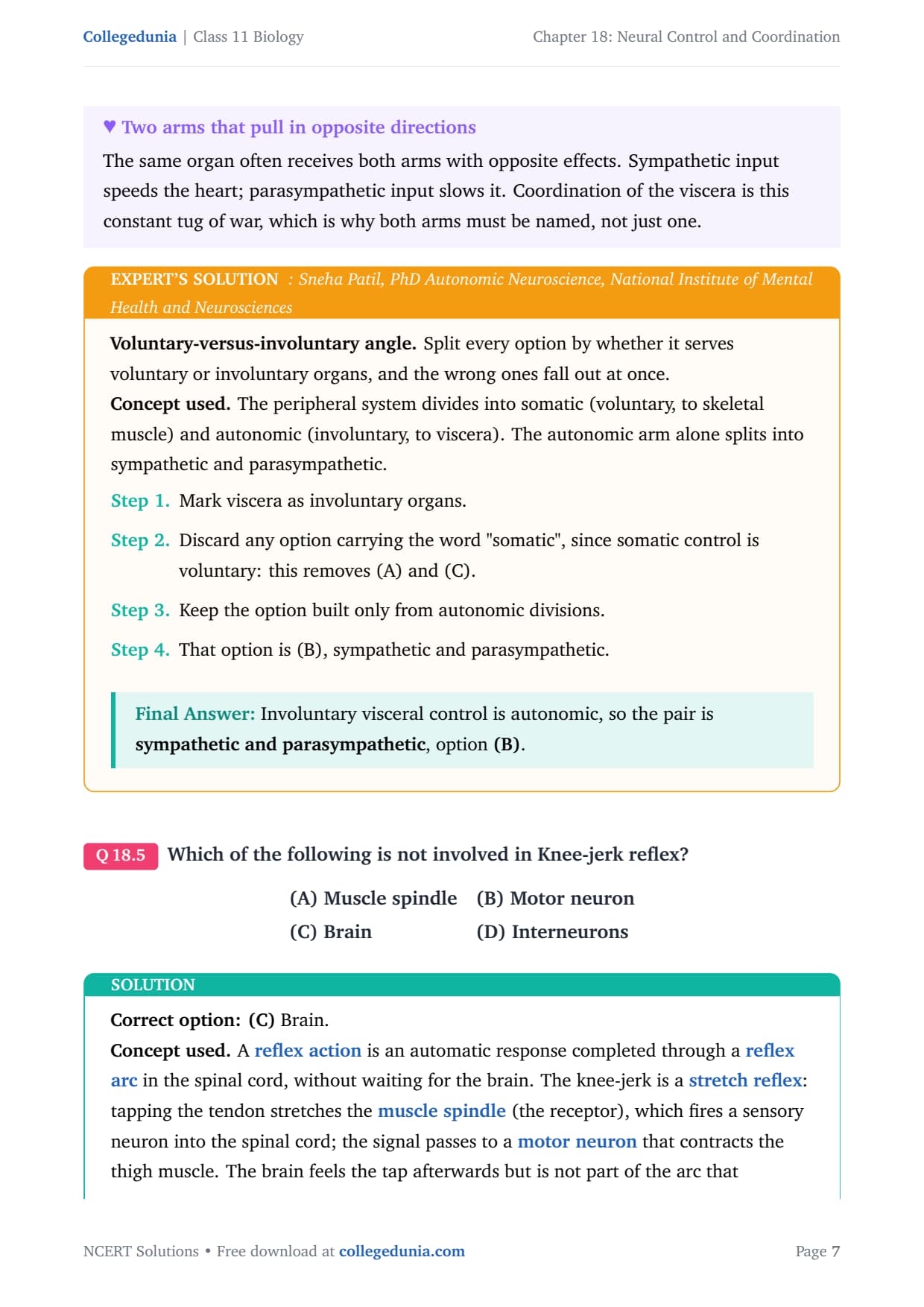
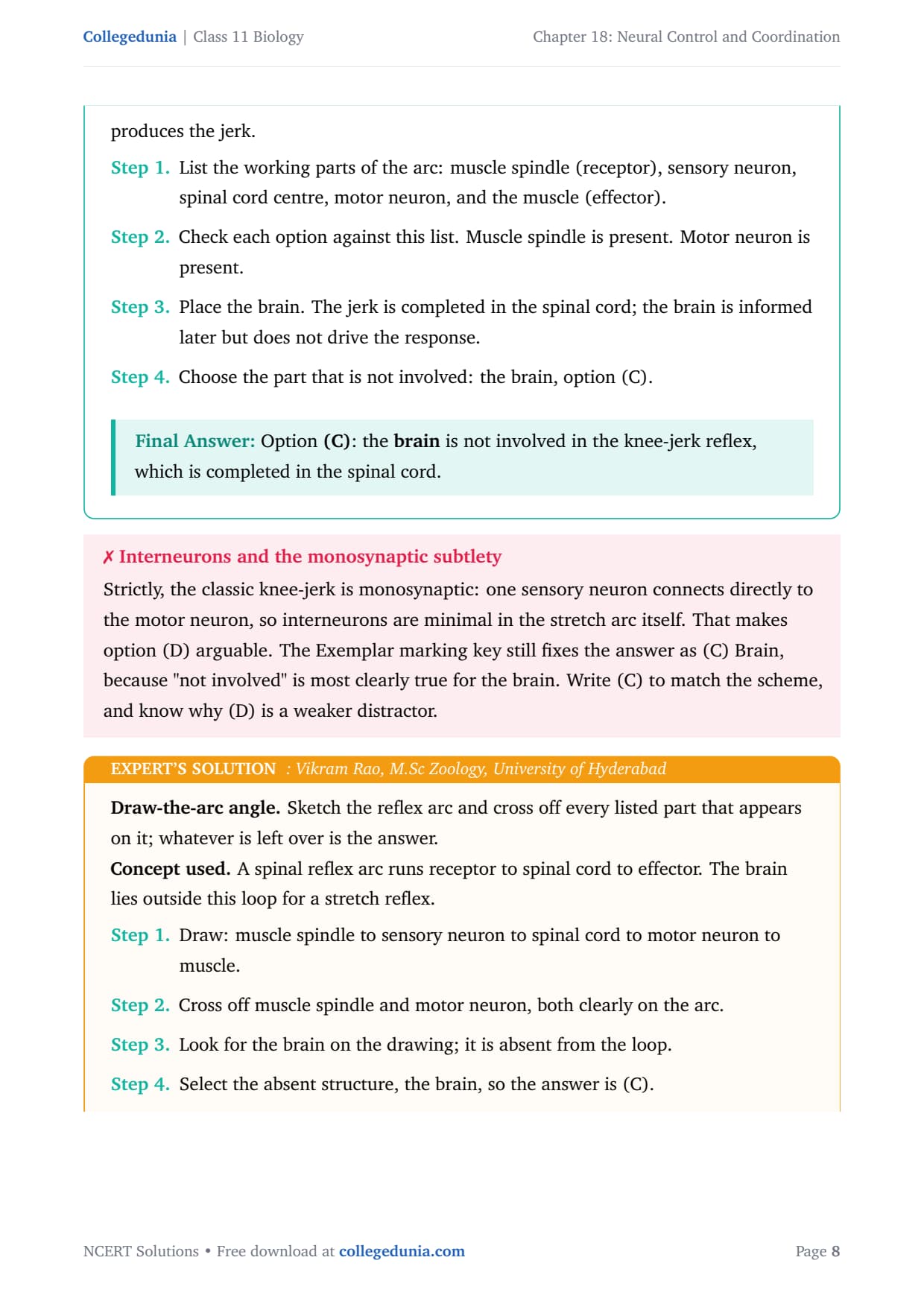
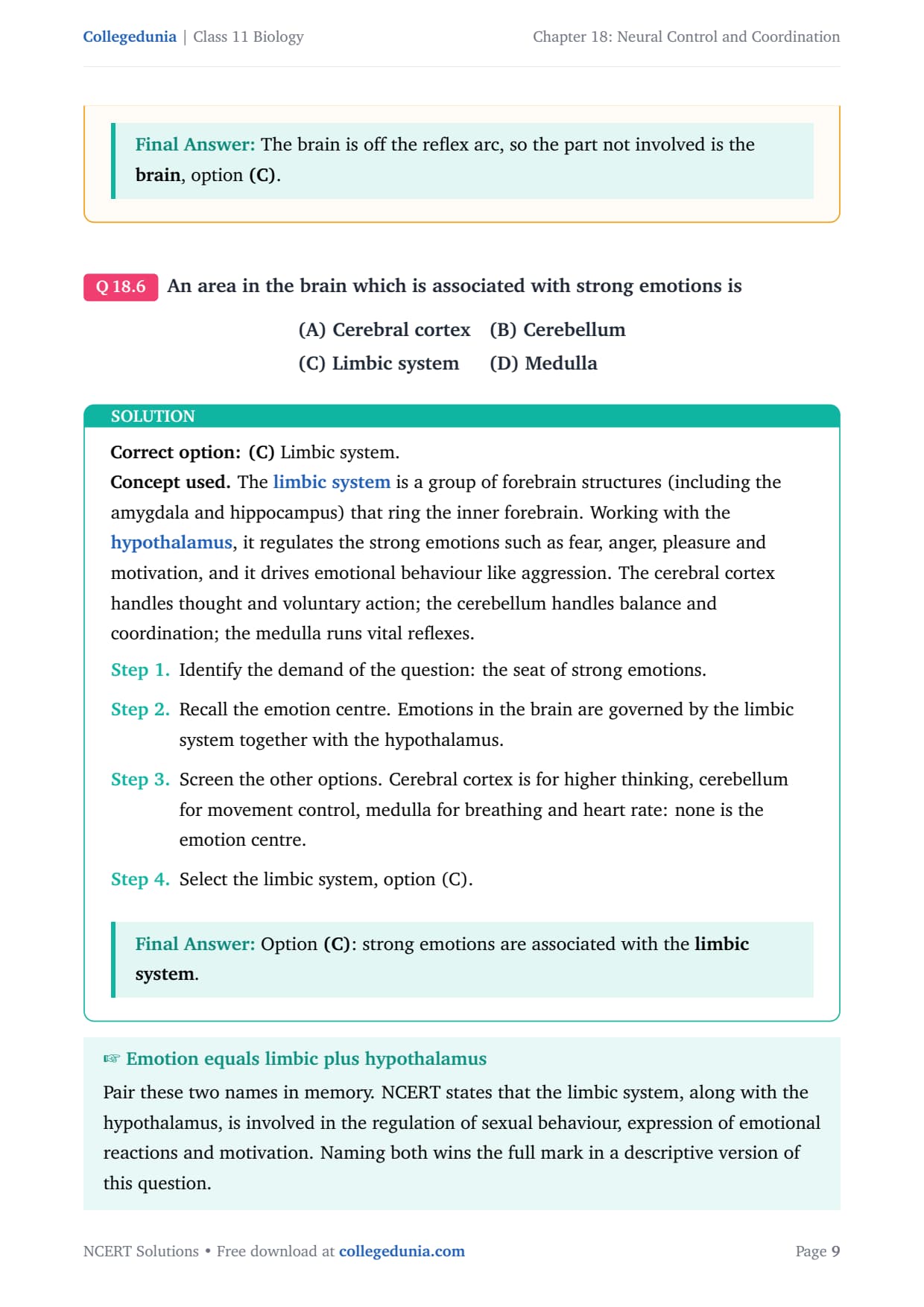
- The knee-jerk reflex question: the key gives (c) Brain, which is right, since the stretch reflex is completed in the spinal cord. But the classic knee-jerk is monosynaptic, so interneurons are barely involved either, making option (d) arguable. Write (c) to match the scheme.
Common Mistakes Students Make in Neural Control and Coordination
Four errors take most of the marks lost in this chapter, and each is flagged in the PDF at the question where it appears.
- Reading "negative" as depolarised: a negative resting potential means the membrane is polarised, outside positive and inside negative. Depolarisation is the reversal during the impulse.
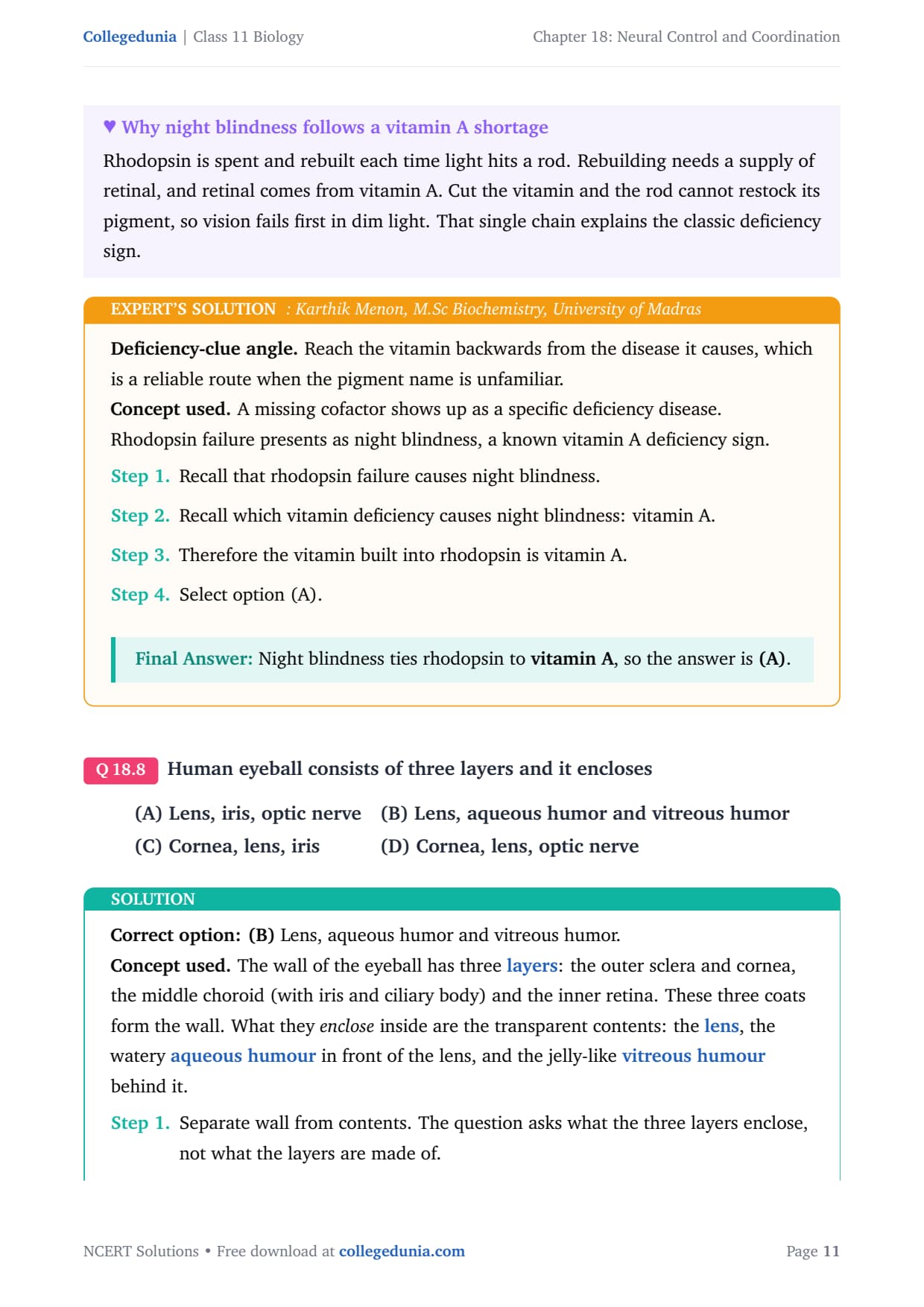
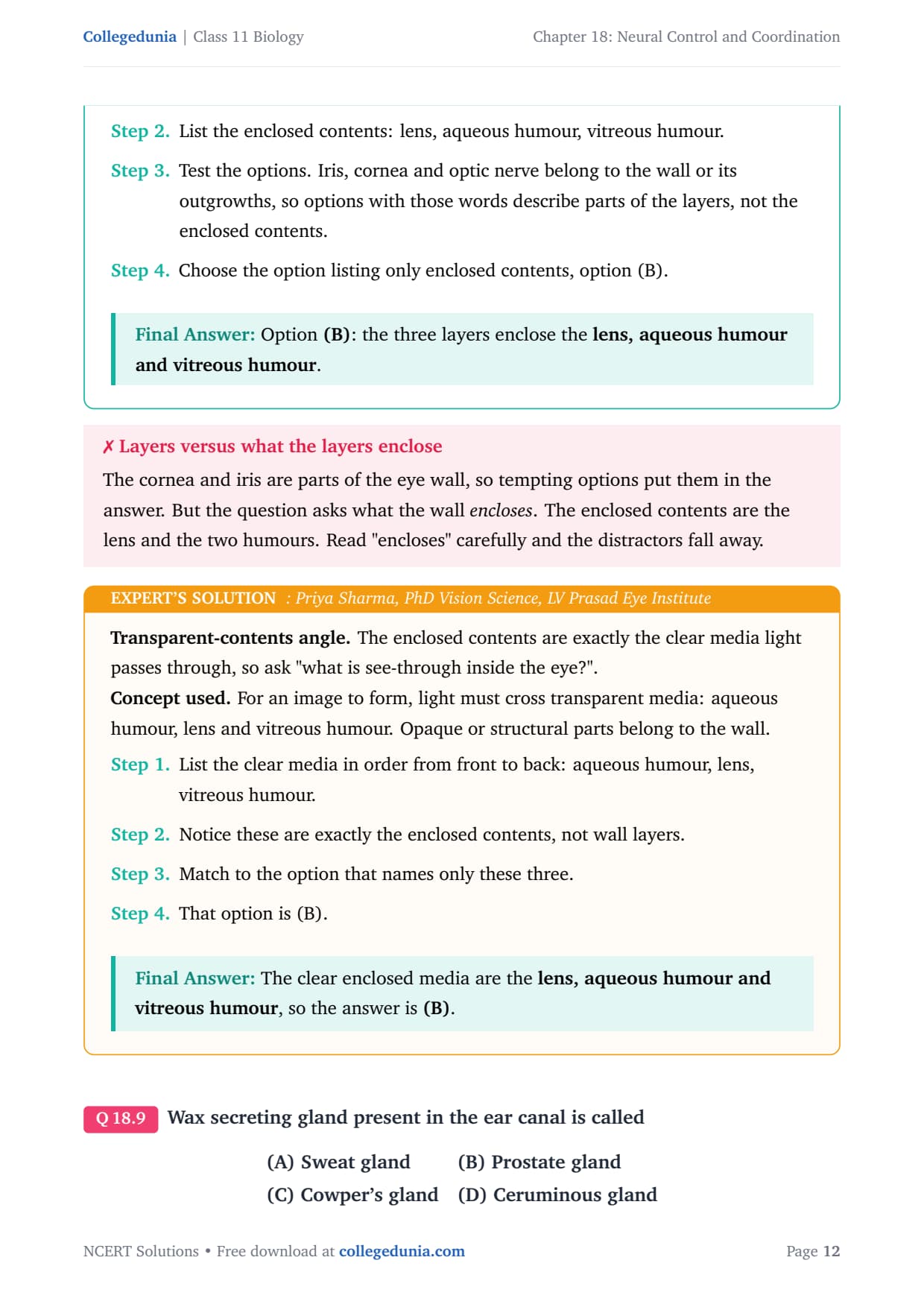
- Layers against contents: the eyeball question asks what the three coats enclose, which is the lens and the two humours. Cornea and iris are parts of the wall itself.
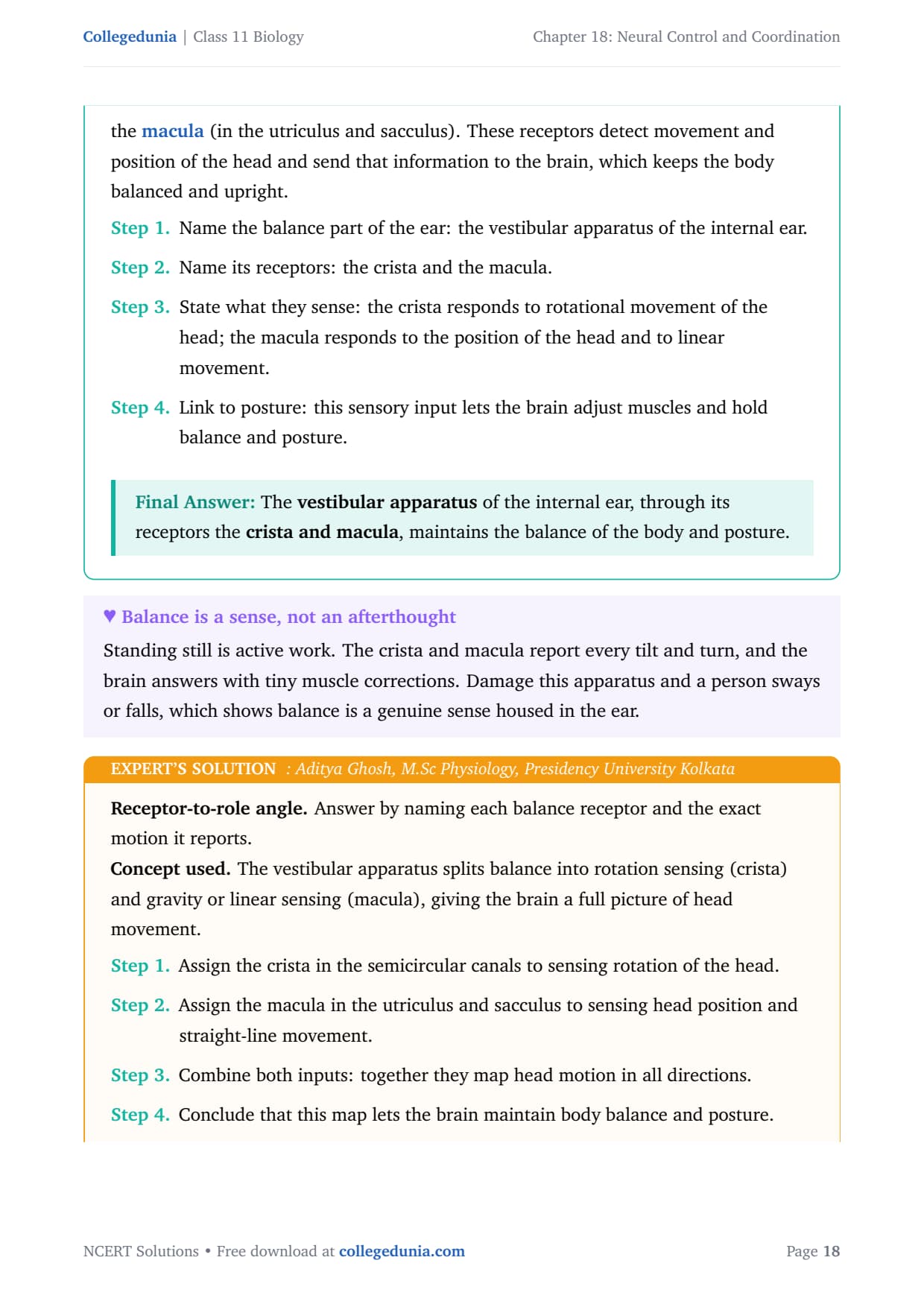
- Cochlea against semicircular canals: the cochlea handles hearing while the vestibular apparatus handles balance. Two separate MCQs turn on this one split.
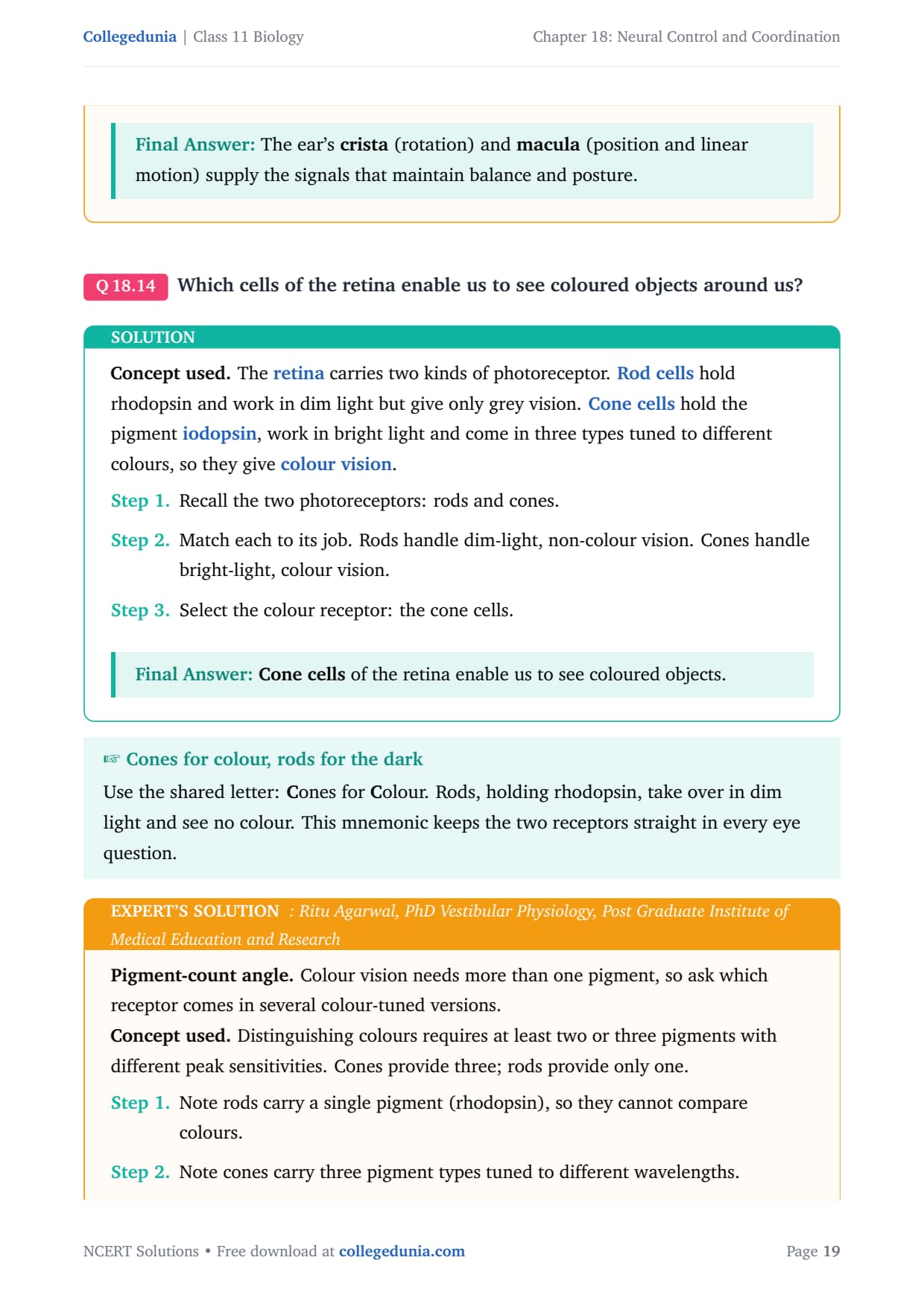
- Rods against cones: rods carry one pigment and cannot compare colours. Only cone cells, with three colour-tuned pigments, give colour vision.
How to Use These NCERT Exemplar Solutions for Boards, NEET and CUET
Attempt each question before opening the solution, especially the ordering ones. Writing the sequence from memory exposes gaps that reading never will.
- Boards: the three Long Answer questions match the 5 mark diagram pattern, so practise labelling the ear and the forebrain by hand
- NEET: work the 11 MCQs and the 12 Very Short Answers first, since NEET repeats resting potential, brain areas and ear structure at that level
- CUET: the single-term MCQ set is the closest practice for the domain paper, which rewards exact recall of structure names
Student Feedback
Students using Collegedunia's Class 11 Biology Exemplar Solutions told us the ear questions were the hardest part of this chapter, ahead of the brain and the nerve impulse. Around 7 in 10 said the note about where the external auditory canal belongs in the sound path was the single fix that stopped them losing that mark.
Other Resources for Class 11 Biology Neural Control and Coordination
Collegedunia has the full set of study material for this chapter. Read the Notes first, then use the Exemplar once the neuron and brain vocabulary is steady.
Also Check:
- NCERT Solutions for Class 11 Biology Chapter 18
- Class 11 Biology Chapter 18 Notes
- Class 11 Biology Chapter 18 NCERT Book PDF
- Class 11 Biology Chapter 18 Exemplar Questions with Solutions
NCERT Exemplar Solutions for Other Class 11 Biology Chapters
Each chapter below has the same step-by-step treatment and a free PDF, with the question count taken from the Exemplar book itself.
Neural Control and Coordination Class 11 NCERT Exemplar Solutions FAQs
Ques. How many questions are there in the Class 11 Biology Neural Control and Coordination Exemplar?
Ans. Chapter 18 has 32 questions. They are split into 11 MCQ, 12 Very Short Answer, 6 Short Answer and 3 Long Answer questions. All 32 are solved in the free 45-page PDF on this page.
Ques. Why does my Exemplar book call this Chapter 21 and not Chapter 18?
Ans. The NCERT Exemplar for Class 11 Biology is the older 22-chapter edition, where this content is printed as Chapter 21. The current textbook has 19 chapters and lists it as Chapter 18. Both answer keys also index it under Chapter 21, so look there when you check an answer. The content is identical.
Ques. What is the correct order of sound conduction through the ear?
Ans. External auditory canal, then ear drum, then malleus, incus and stapes, then cochlea, then cochlear nerve. The official model answer starts at the ear drum because its own stem begins from the canal. The list you are asked to arrange includes the canal, so place it first or you lose the starting point.
Ques. Which parts are not involved in the knee-jerk reflex?
Ans. The key answer is the brain, since the stretch reflex is completed in the spinal cord and the brain is informed only afterwards. Interneurons are also minimal, because the classic knee-jerk is monosynaptic, but the marking scheme fixes the answer as the brain.
Ques. Do all questions in this chapter have an official NCERT answer?
Ans. No. All 11 MCQ answers come from the chapter-indexed MCQ key. The descriptive key is not chapter-indexed and covers only the first four Very Short Answer questions here. The remaining 17 descriptive answers on Collegedunia are grounded in the NCERT Class 11 Biology textbook.



Comments