




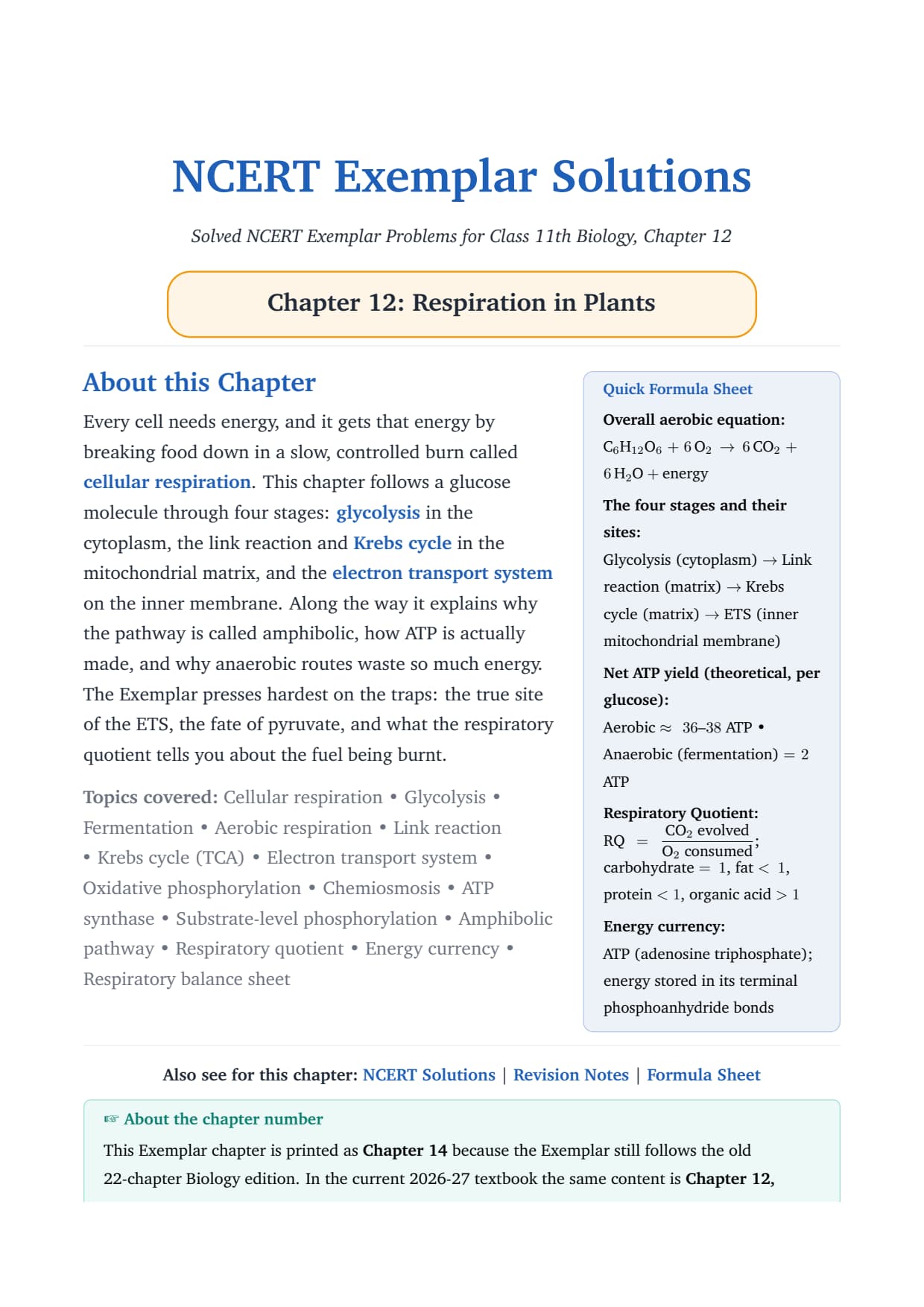
NCERT Exemplar Solutions for Class 11 Biology Chapter 12 Respiration in Plants solve all 43 questions from the Exemplar book. Every MCQ, Very Short Answer, Short Answer and Long Answer problem is worked step by step in the free 68-page PDF, updated for the 2026-27 syllabus.
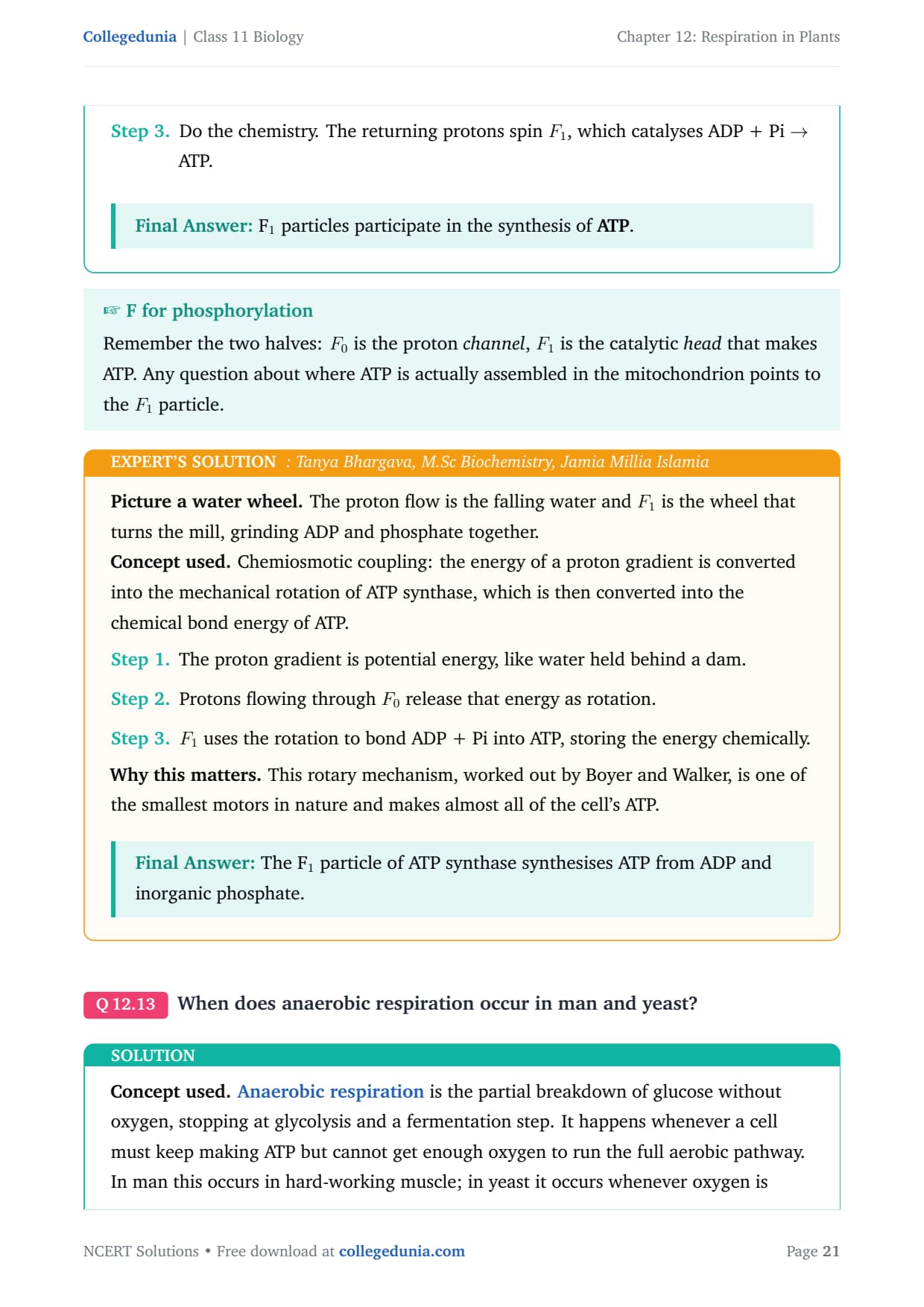
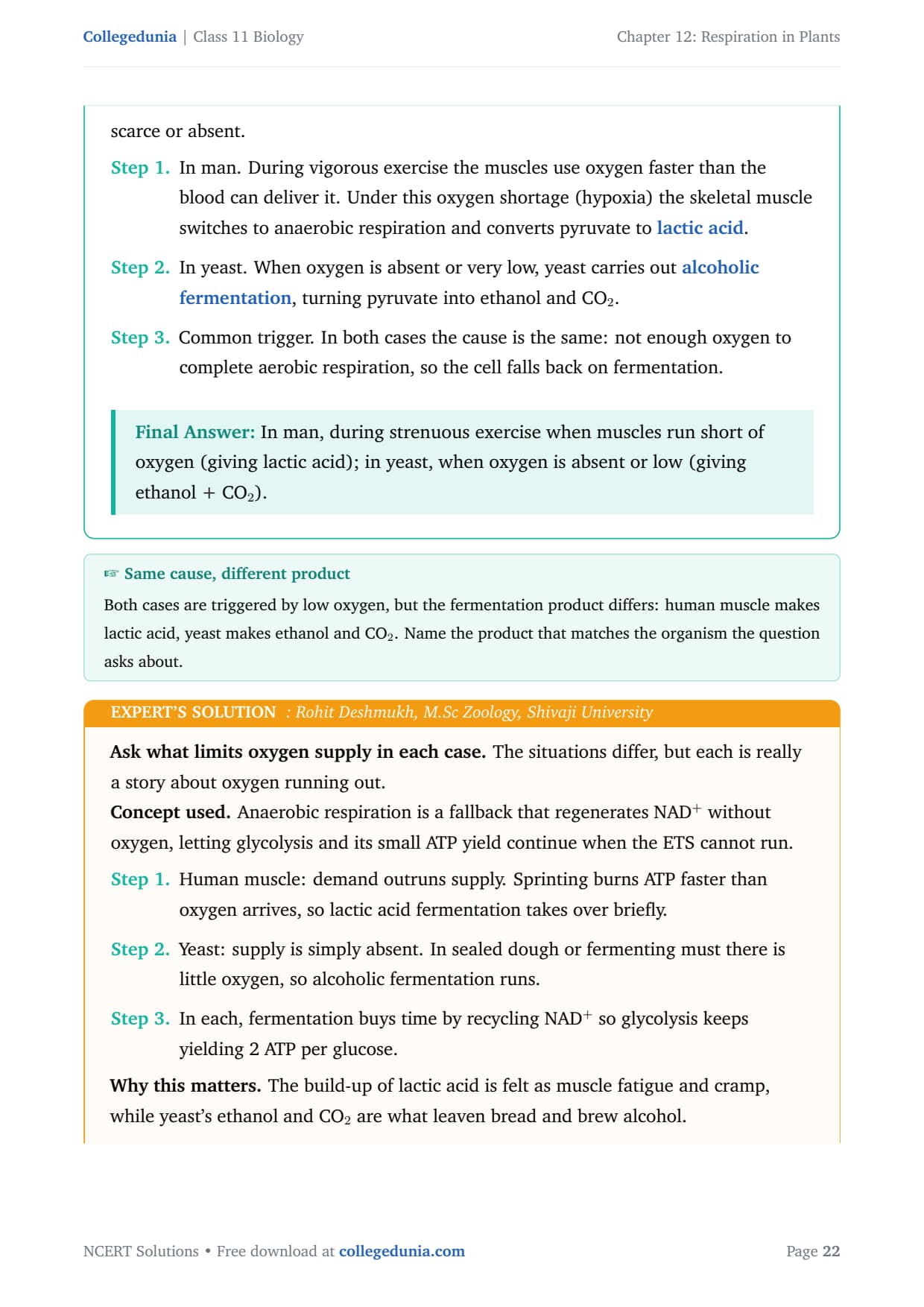
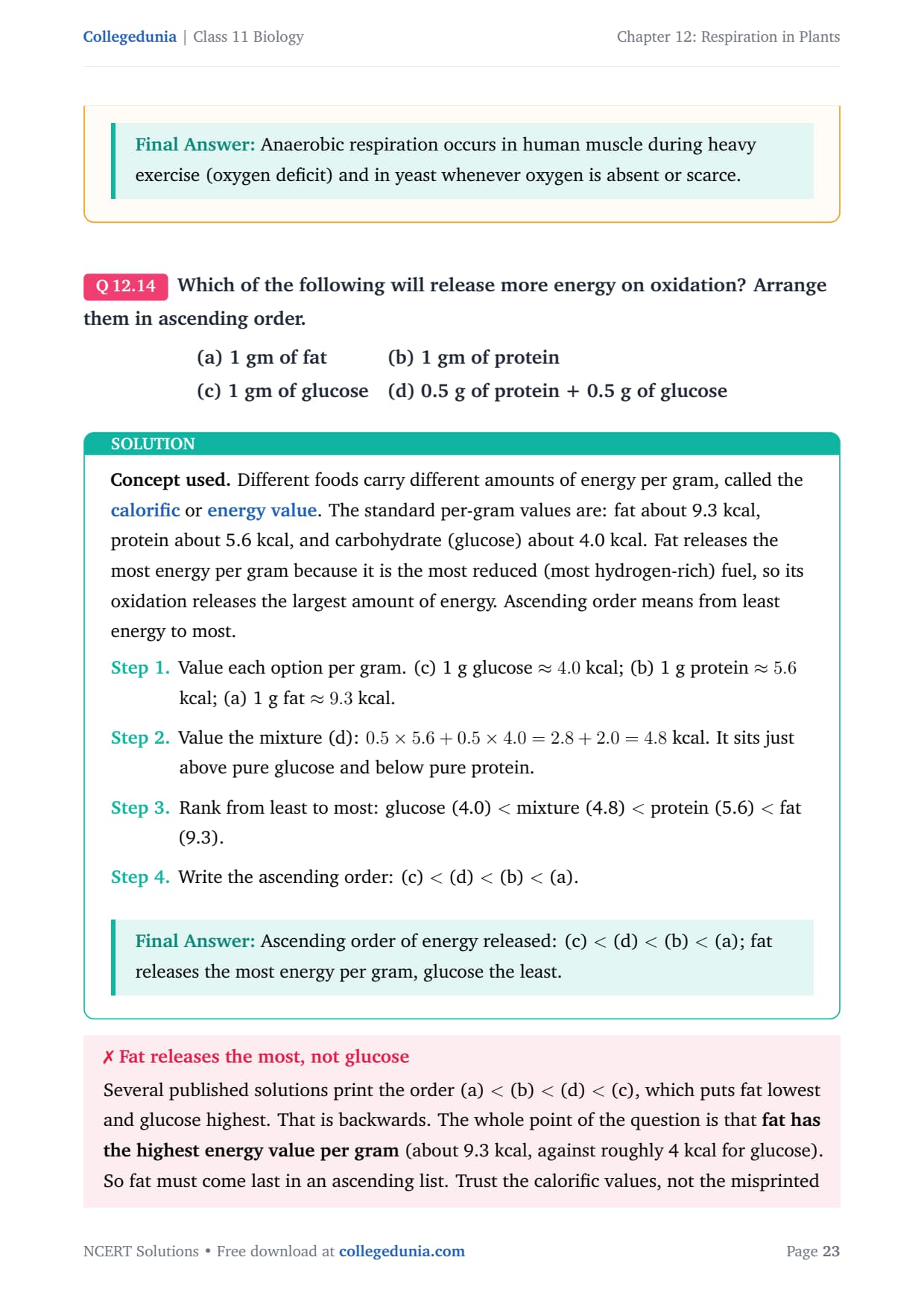
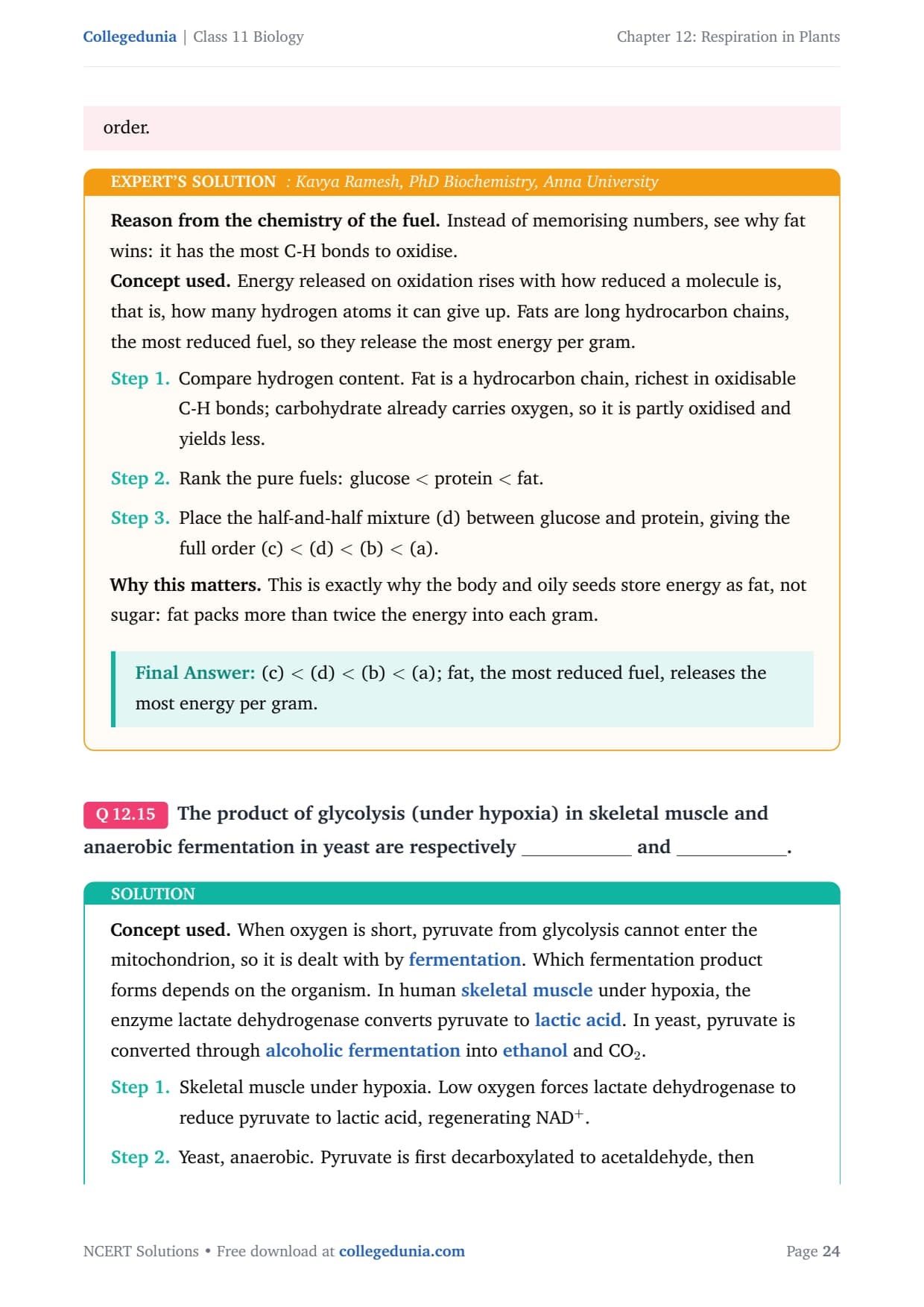
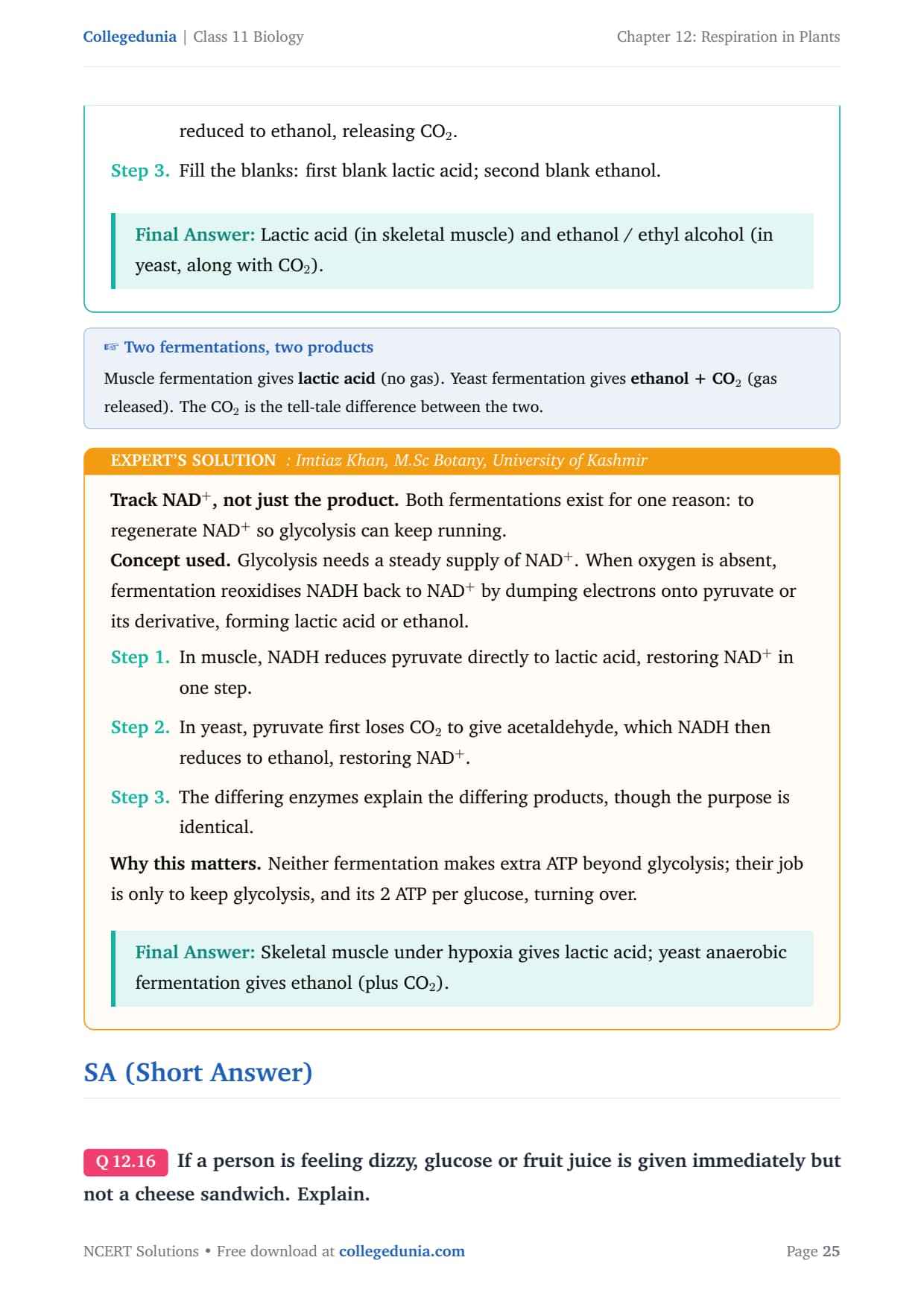
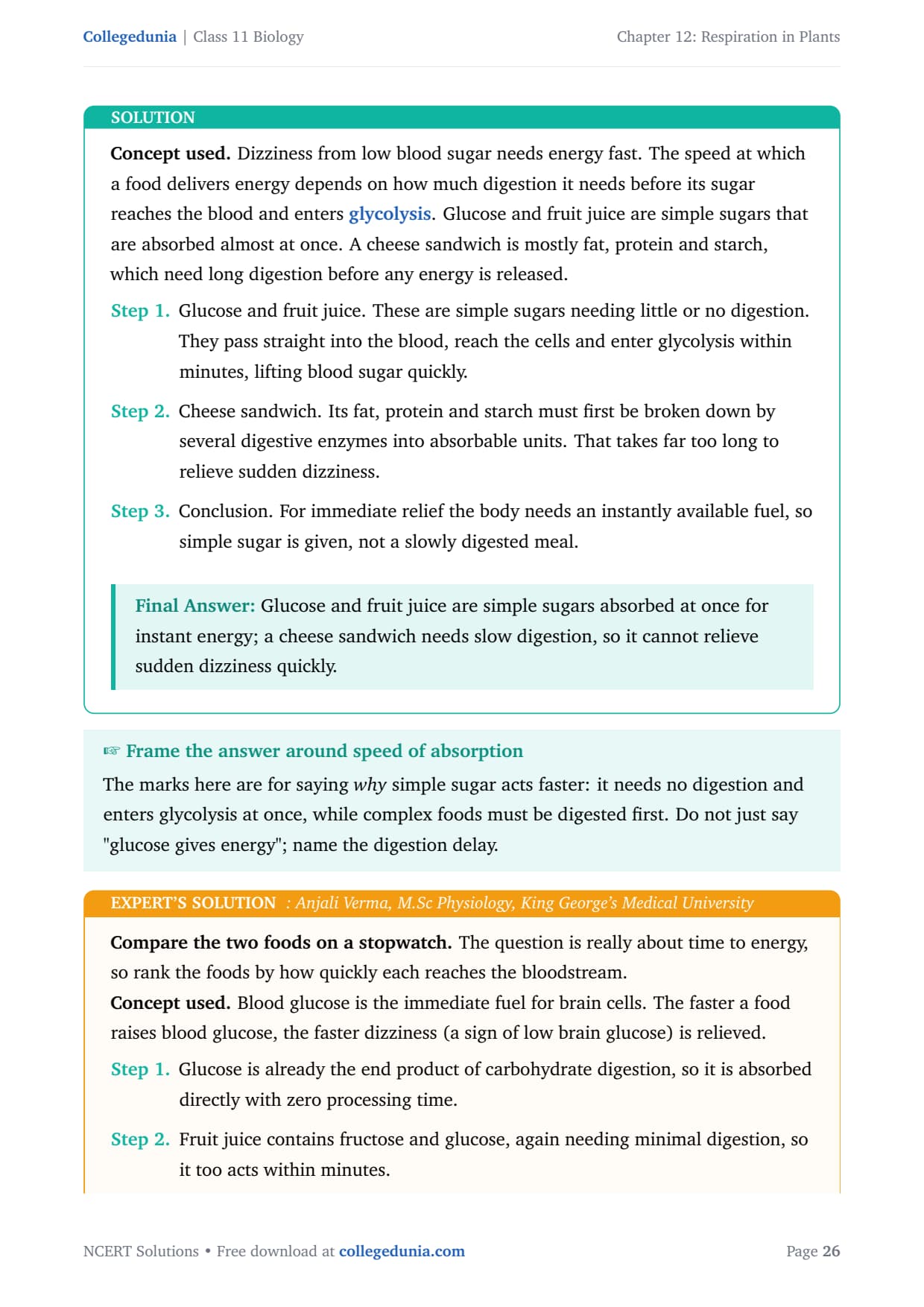
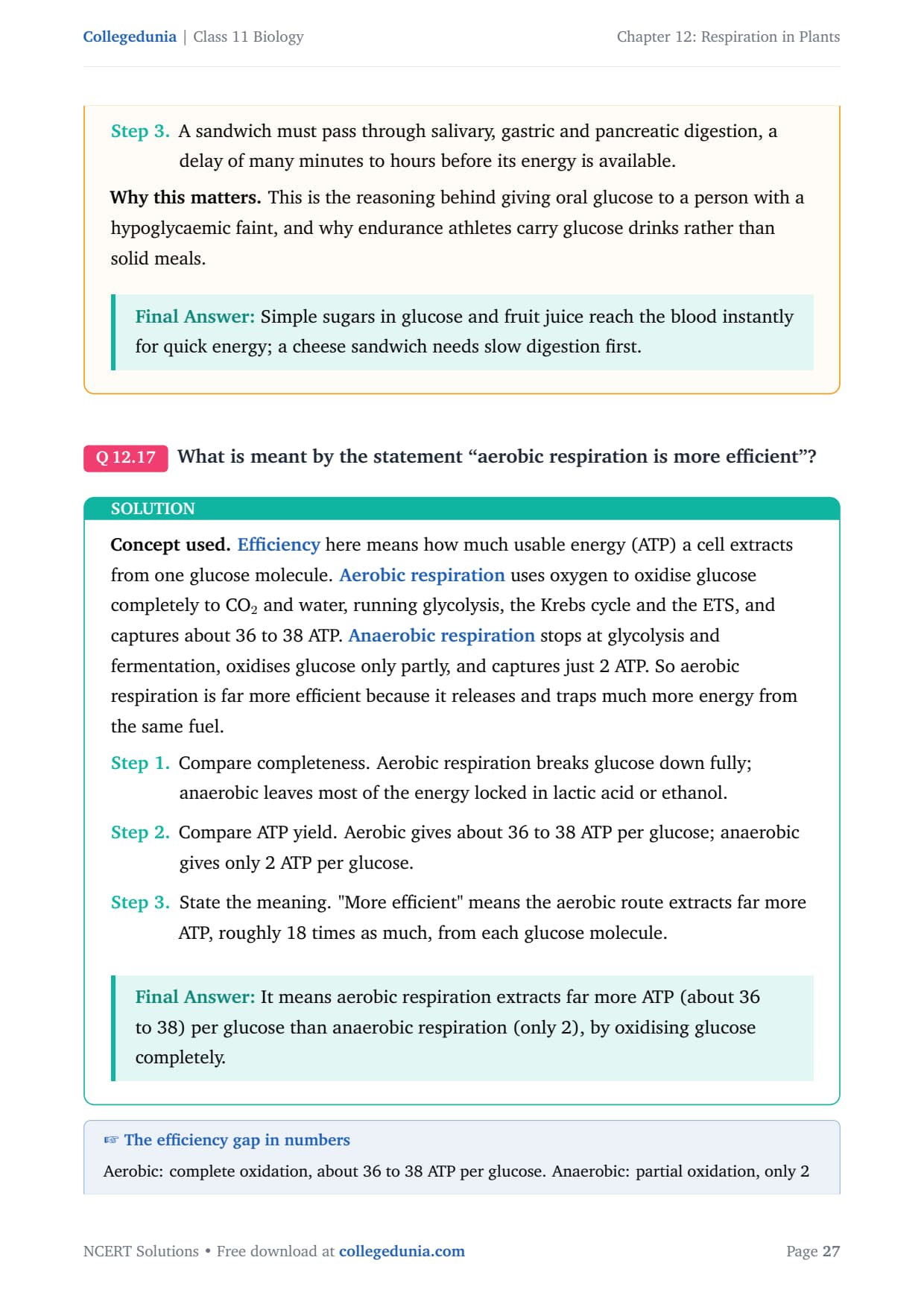
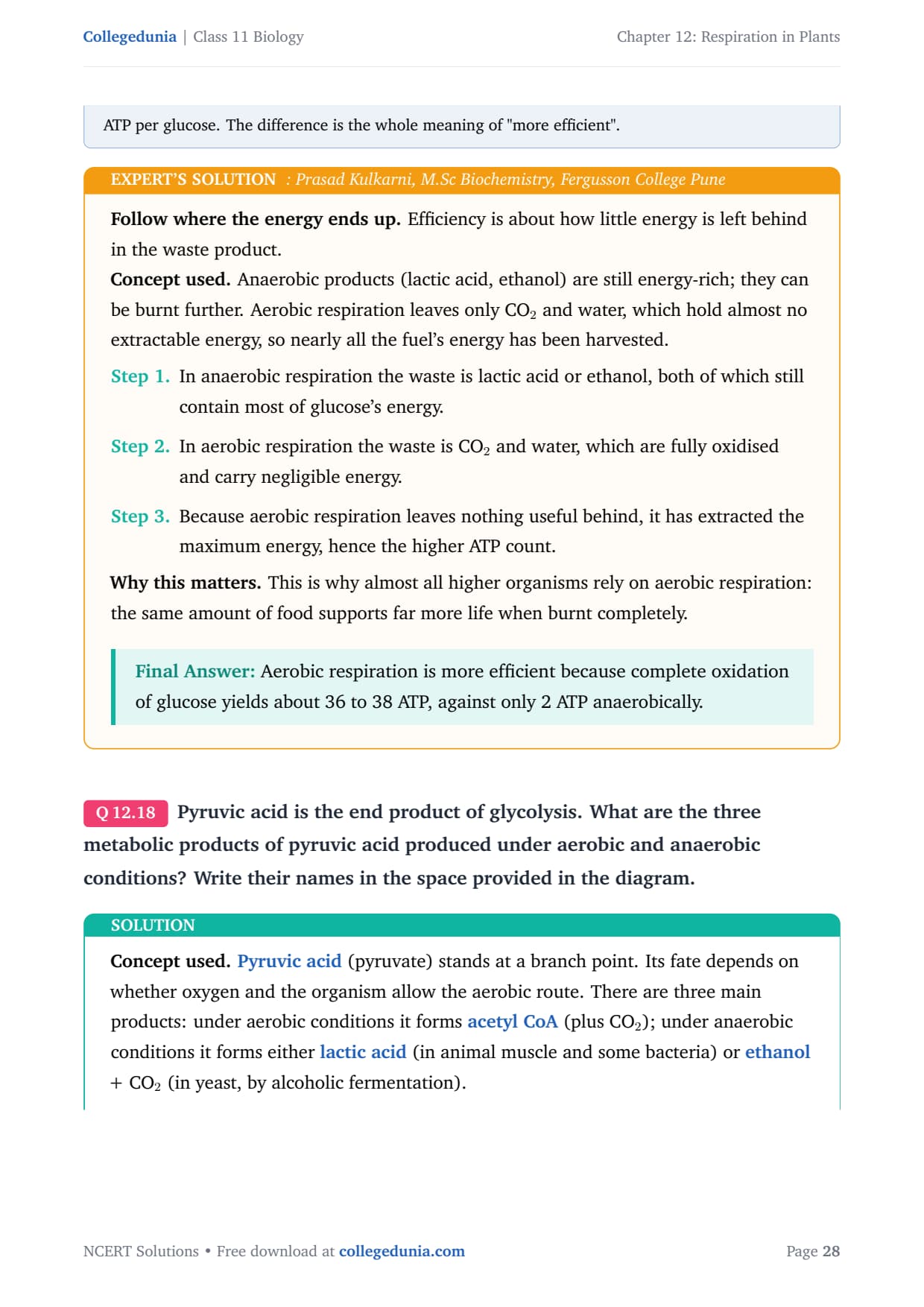
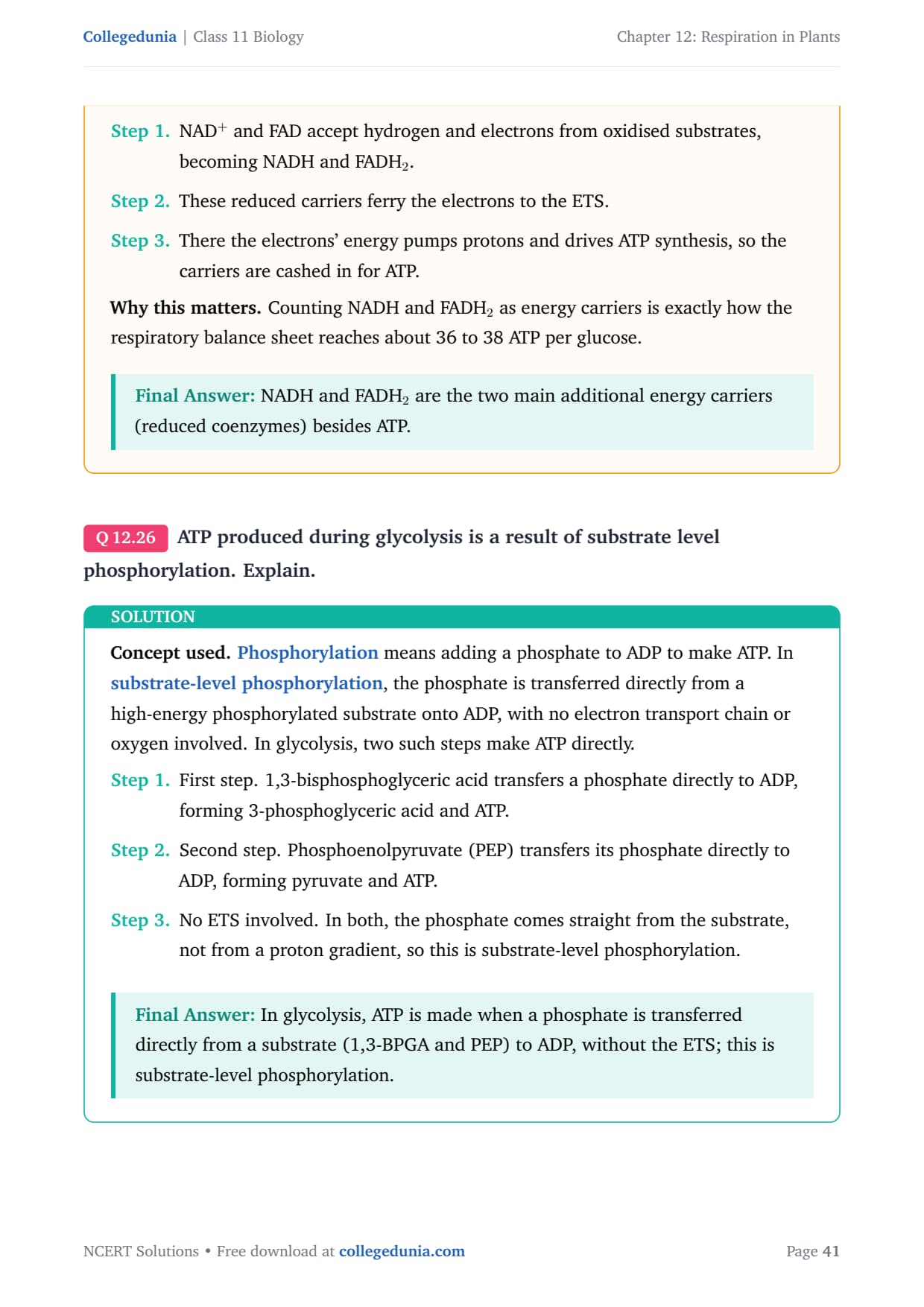
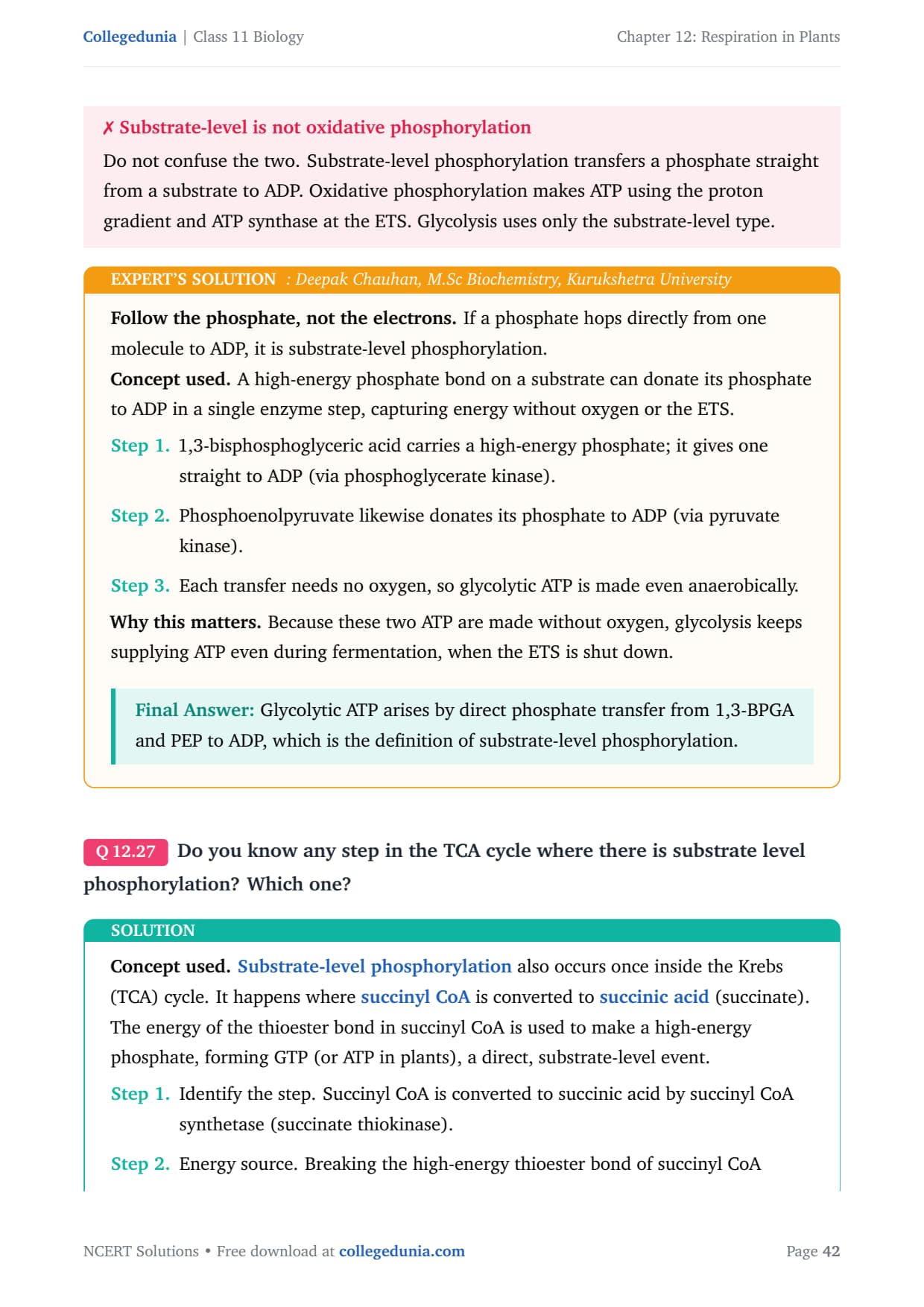
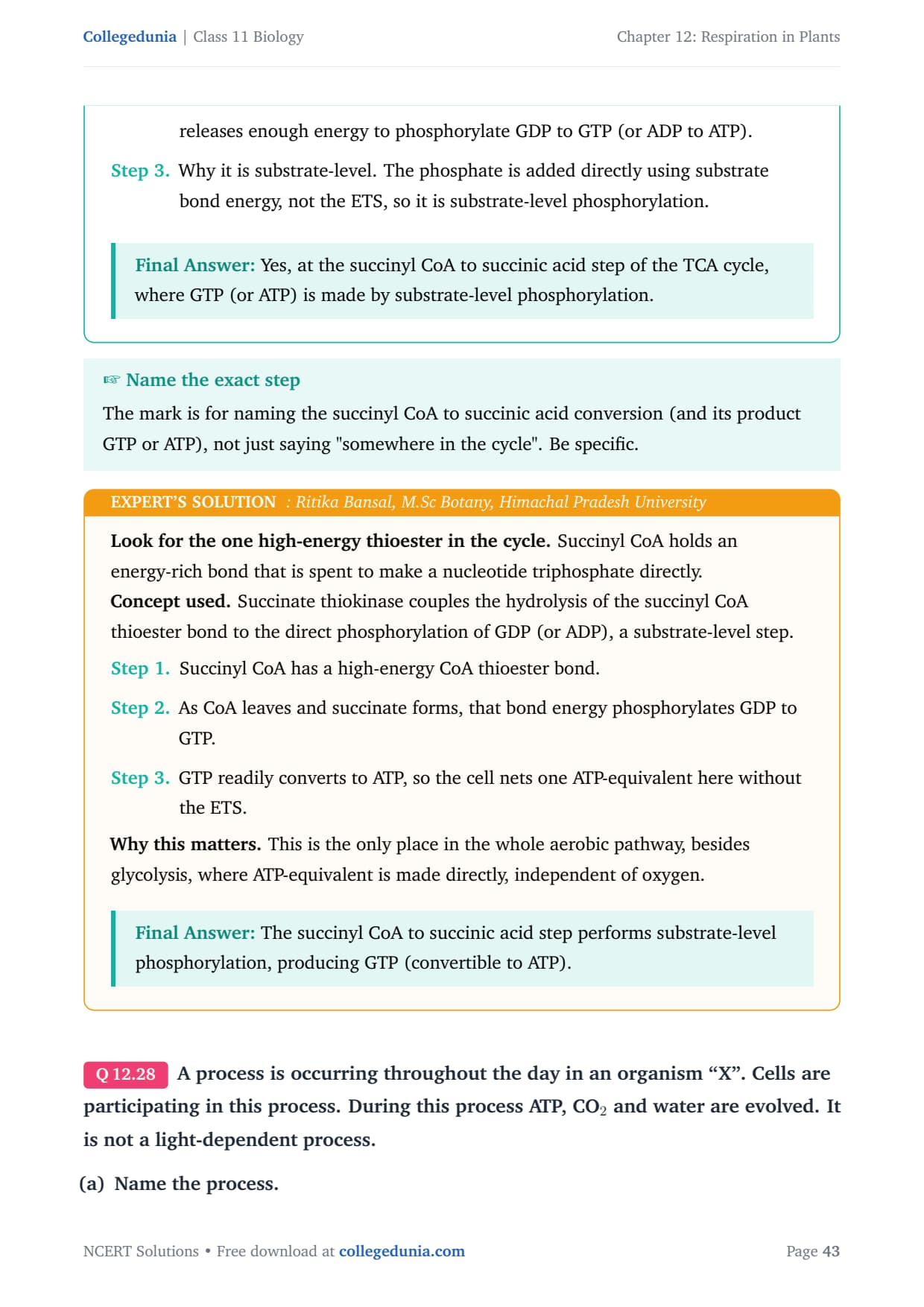
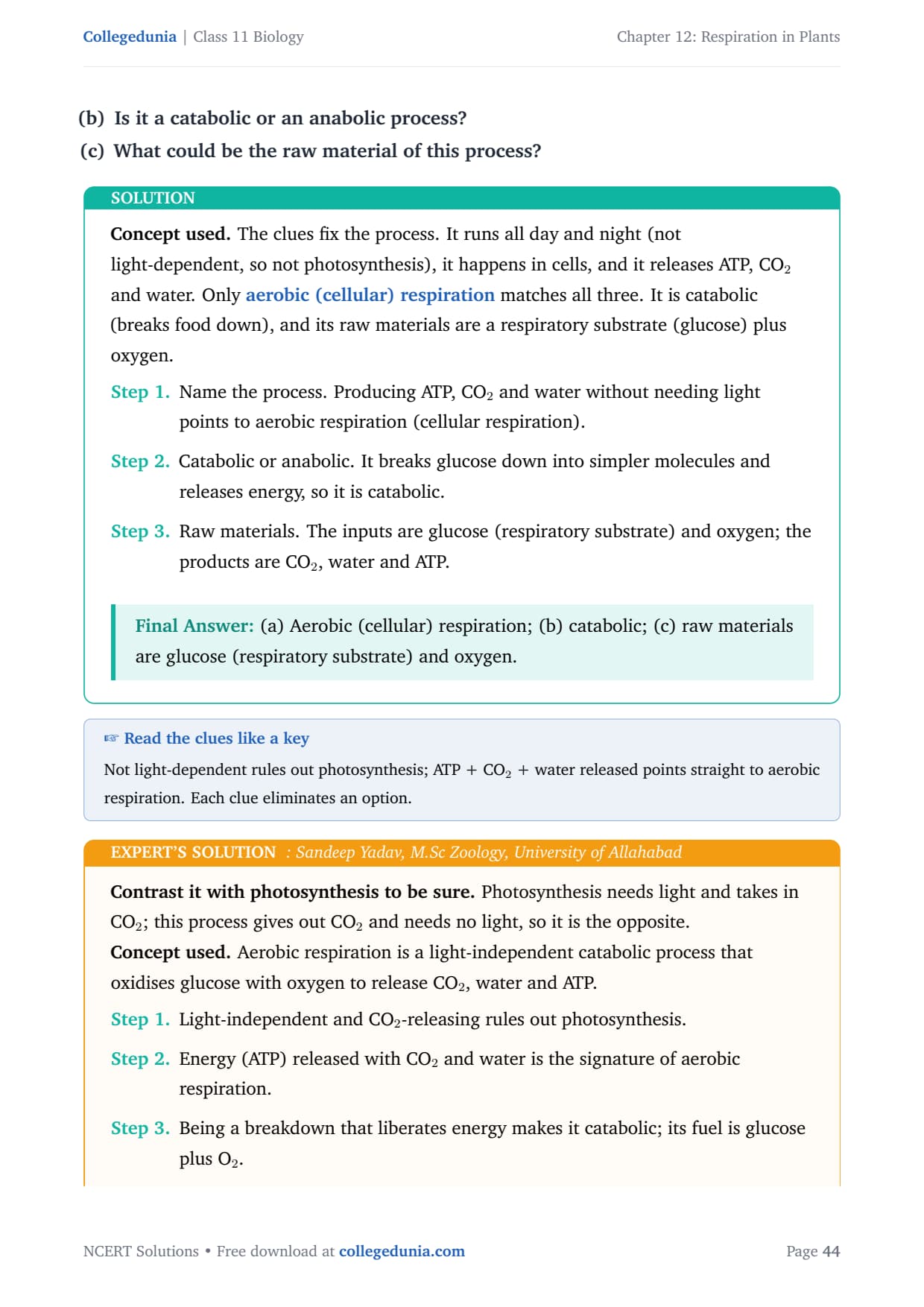
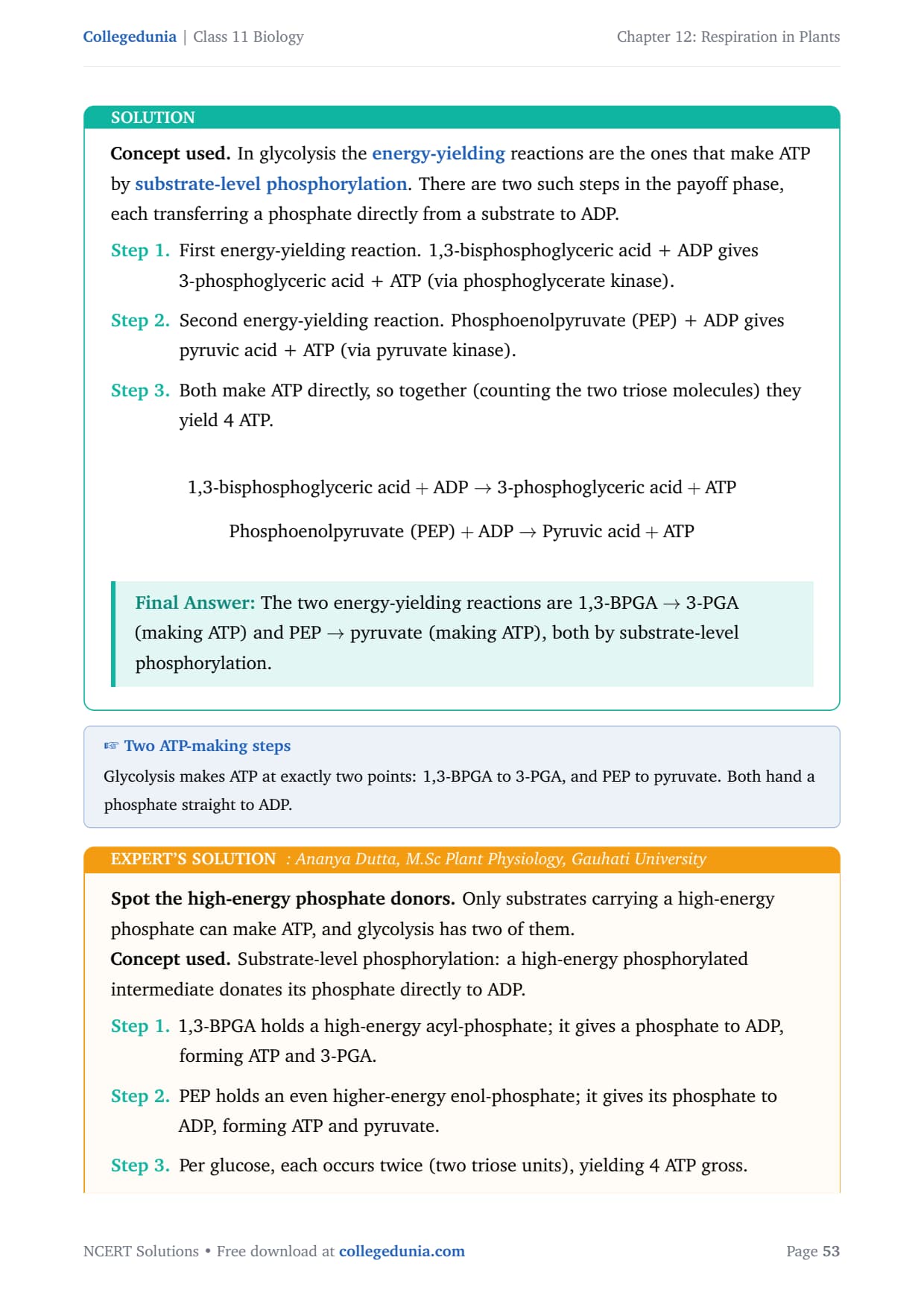
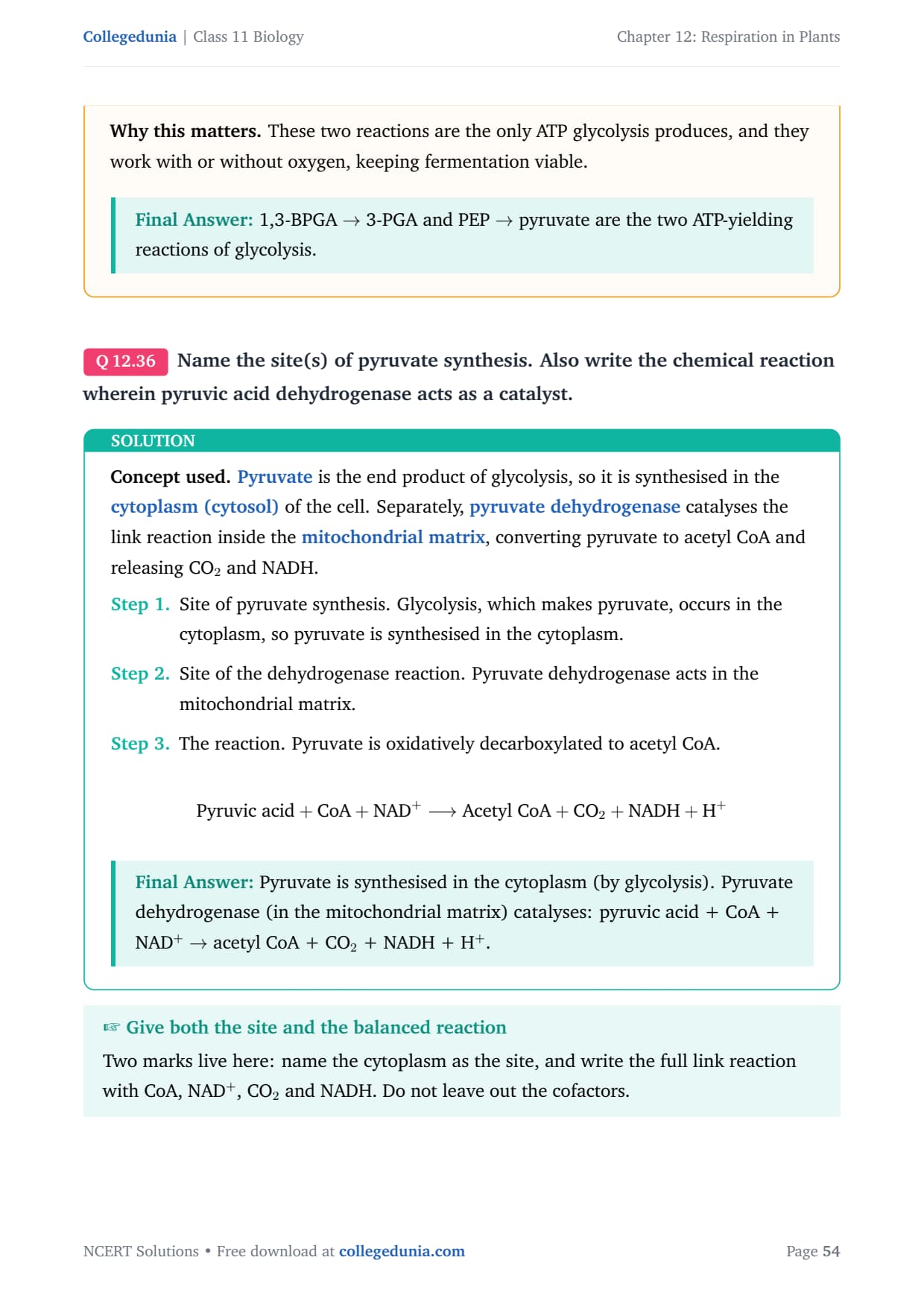
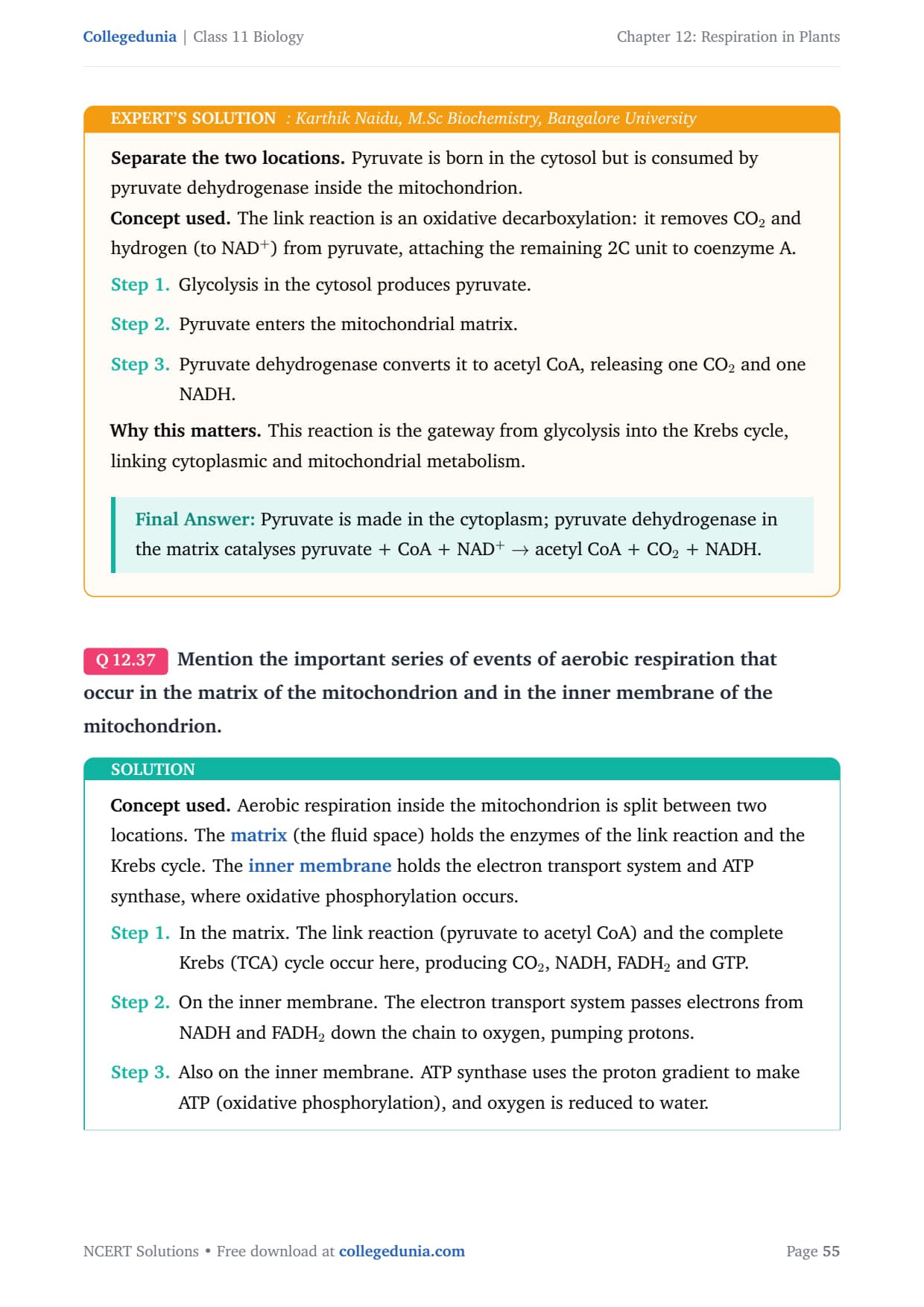
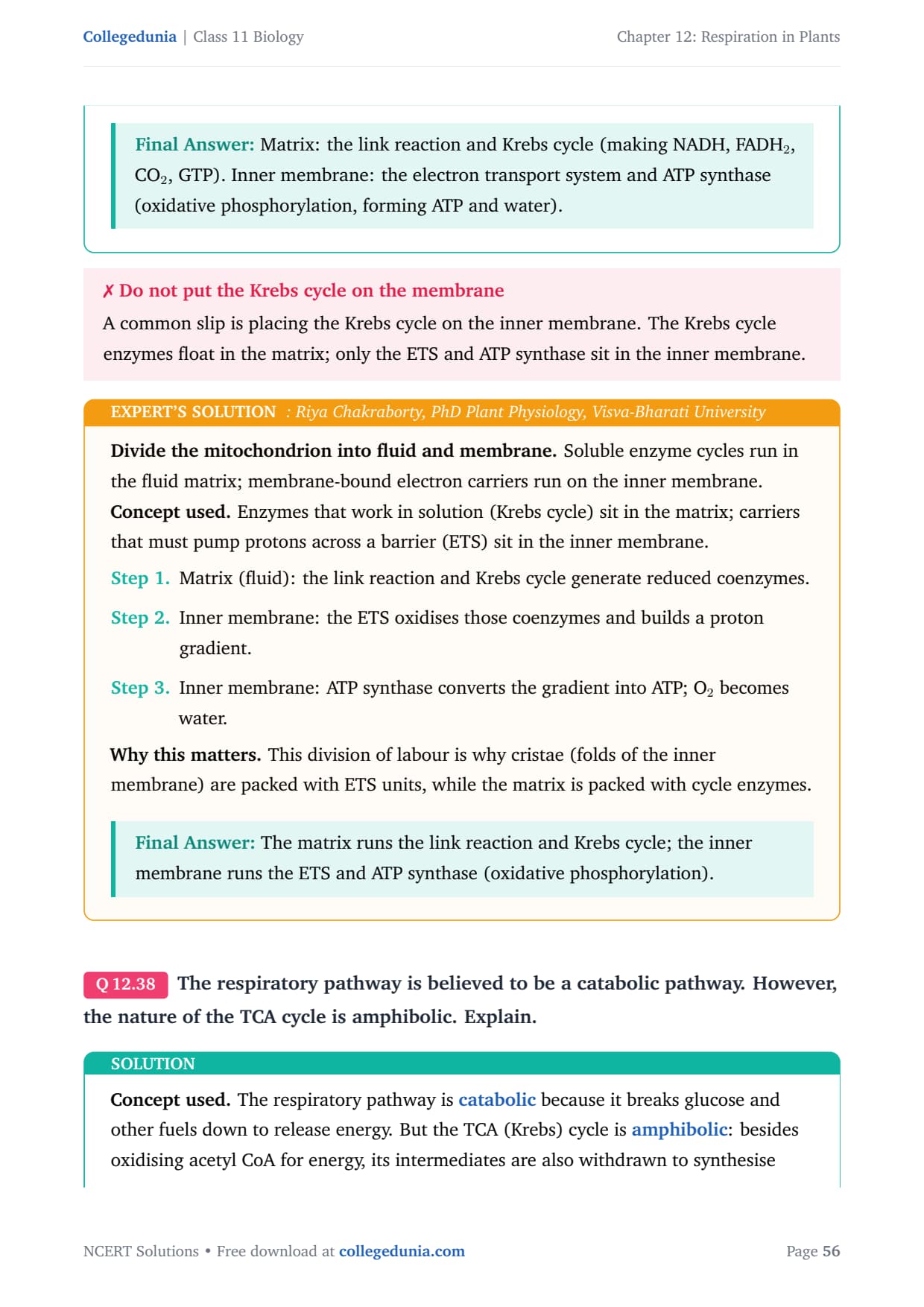
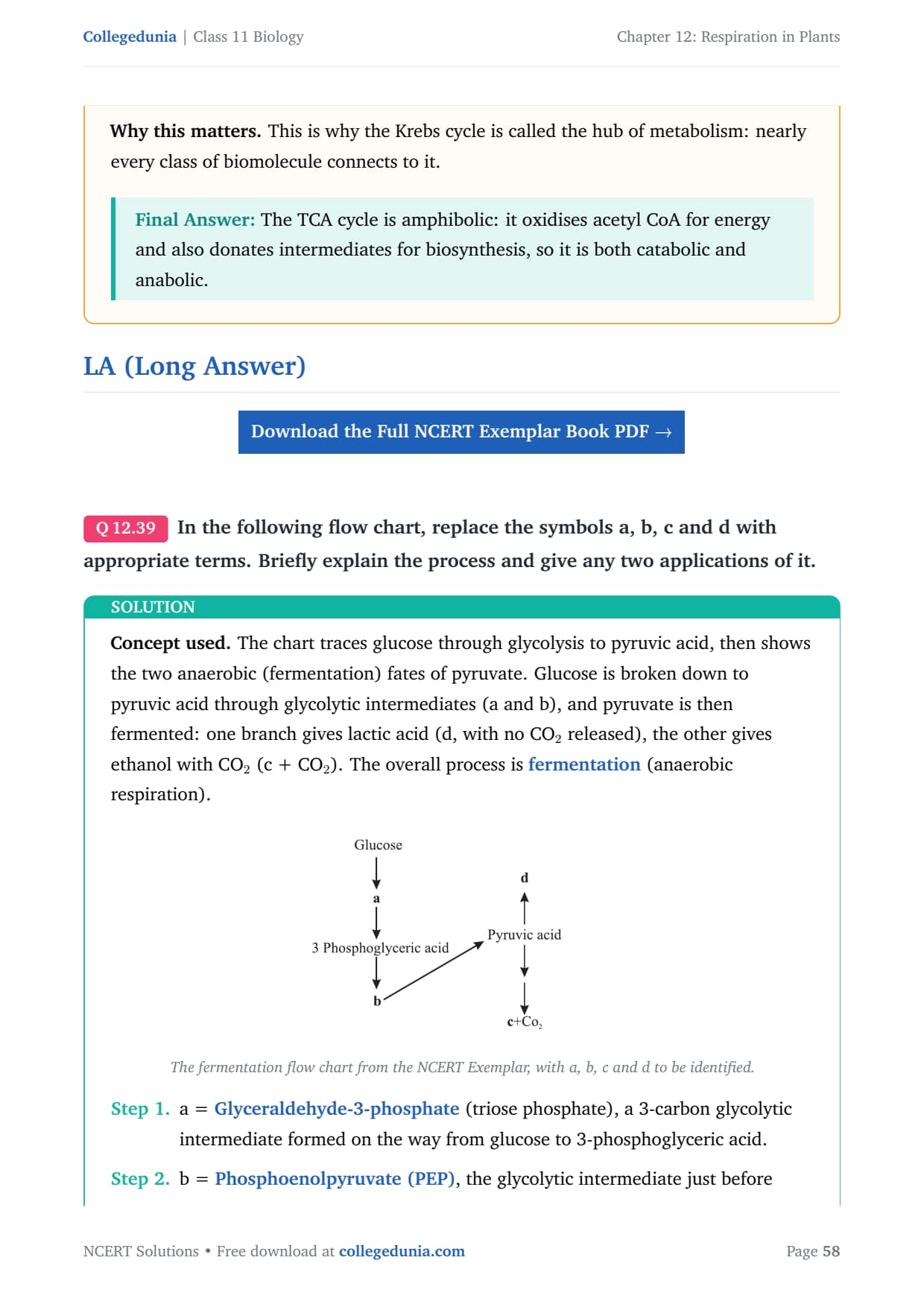
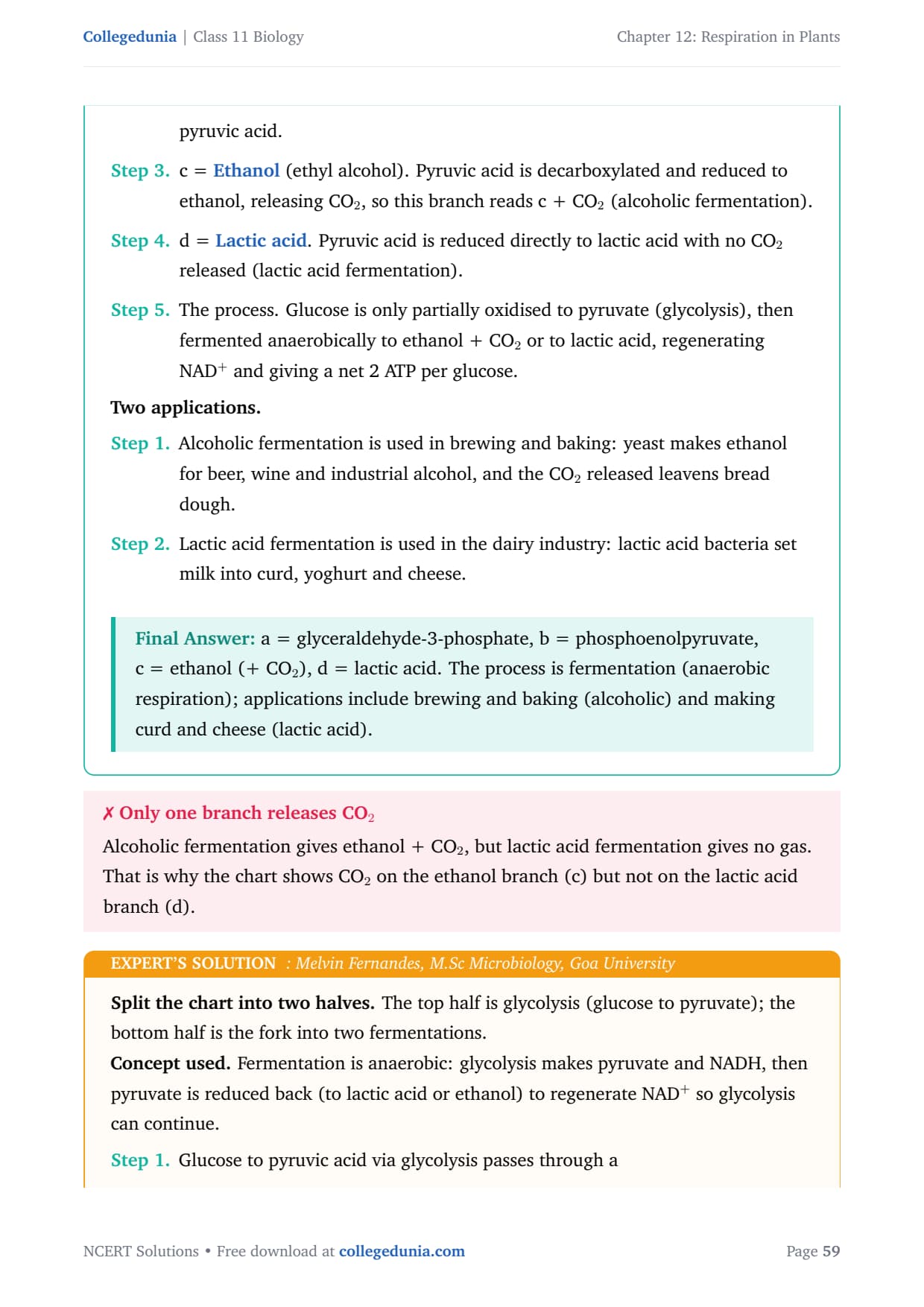
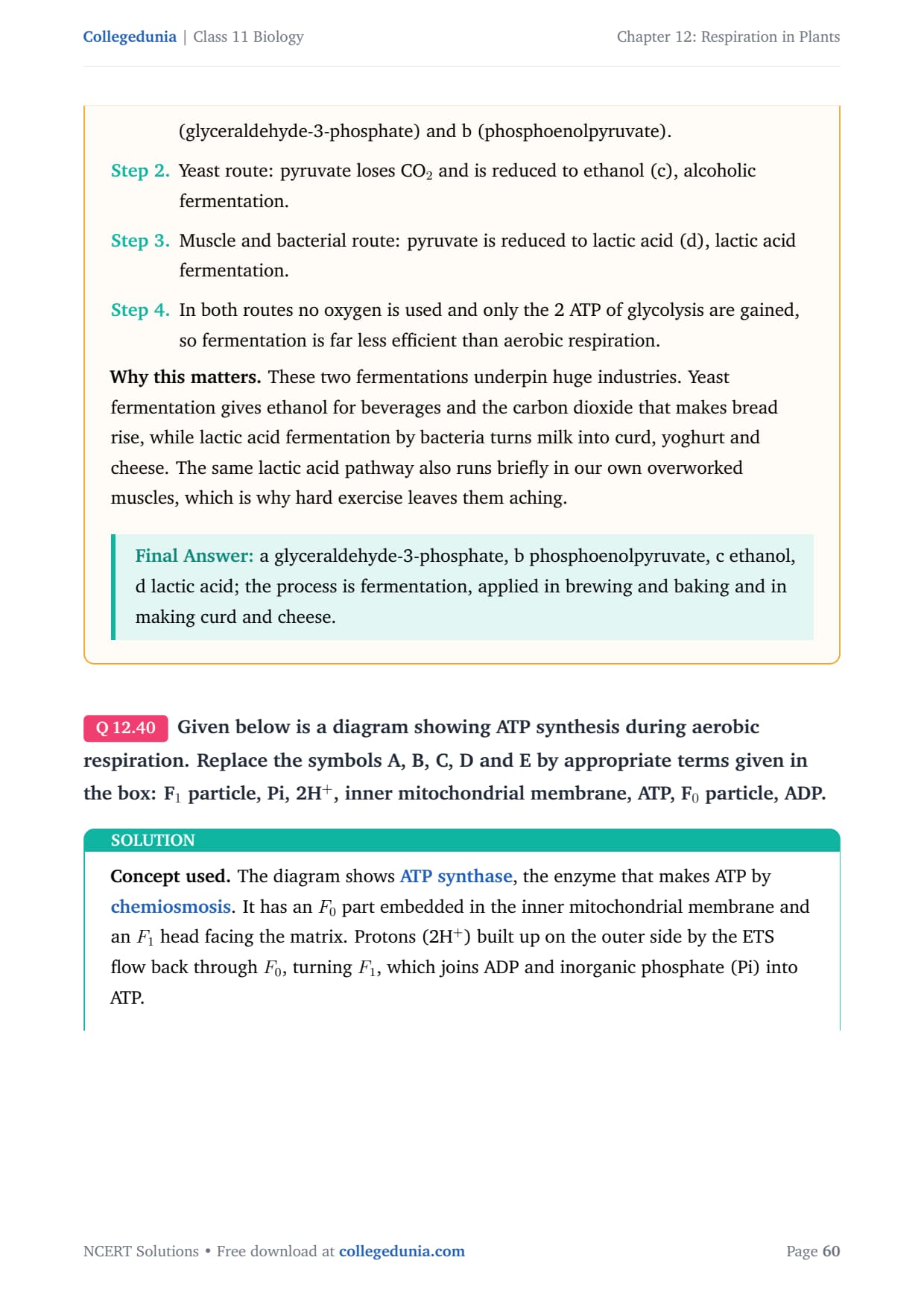
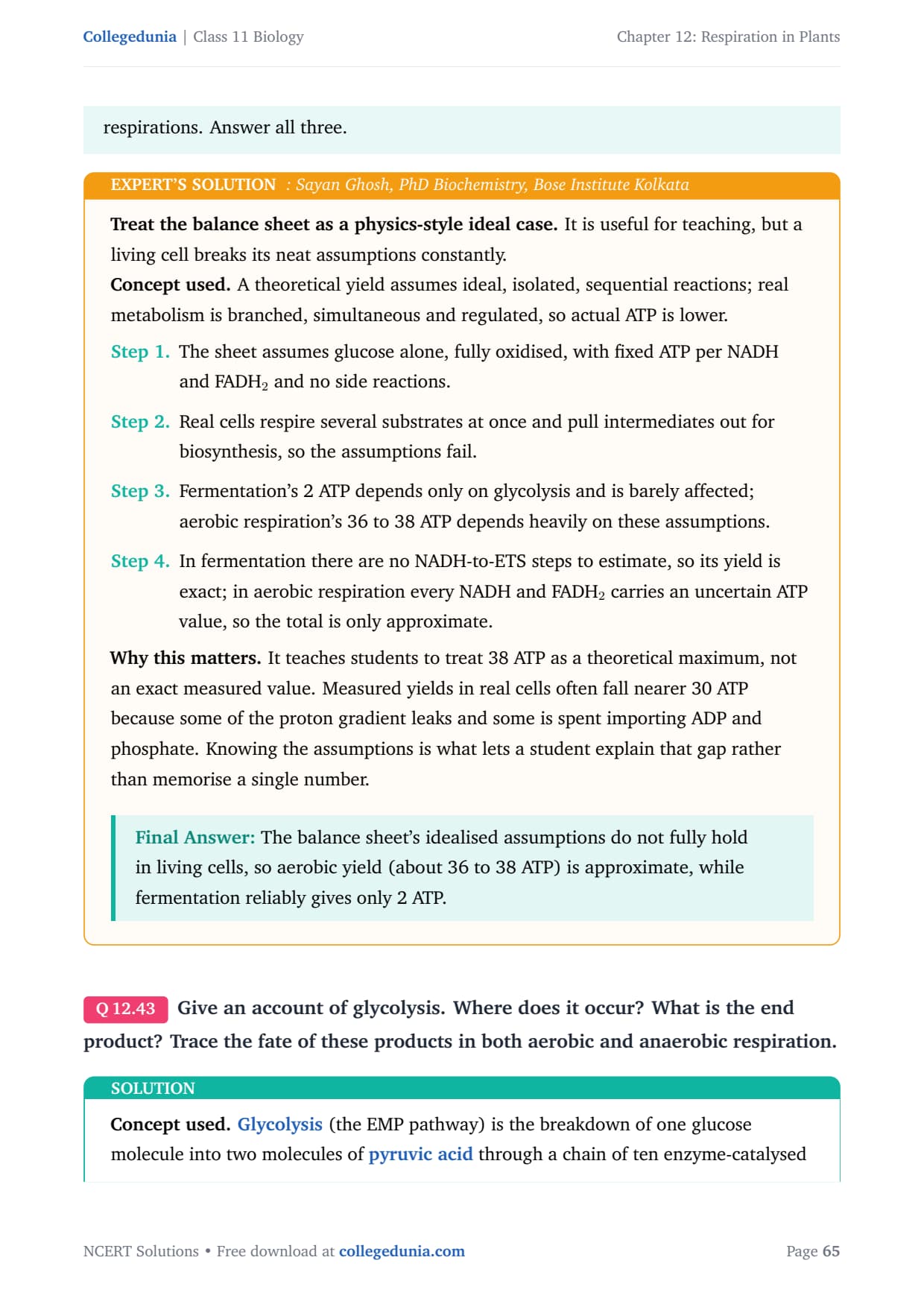
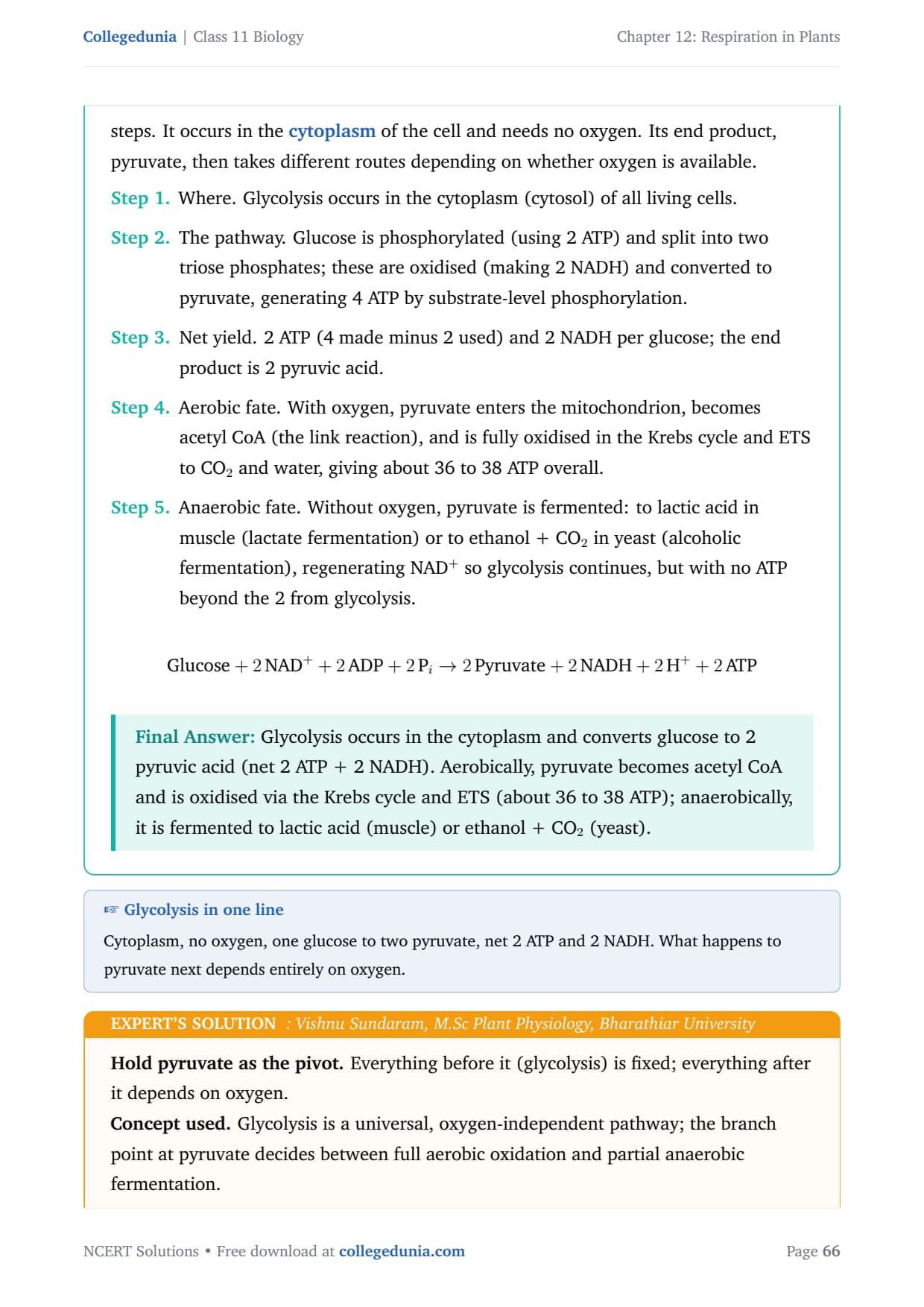
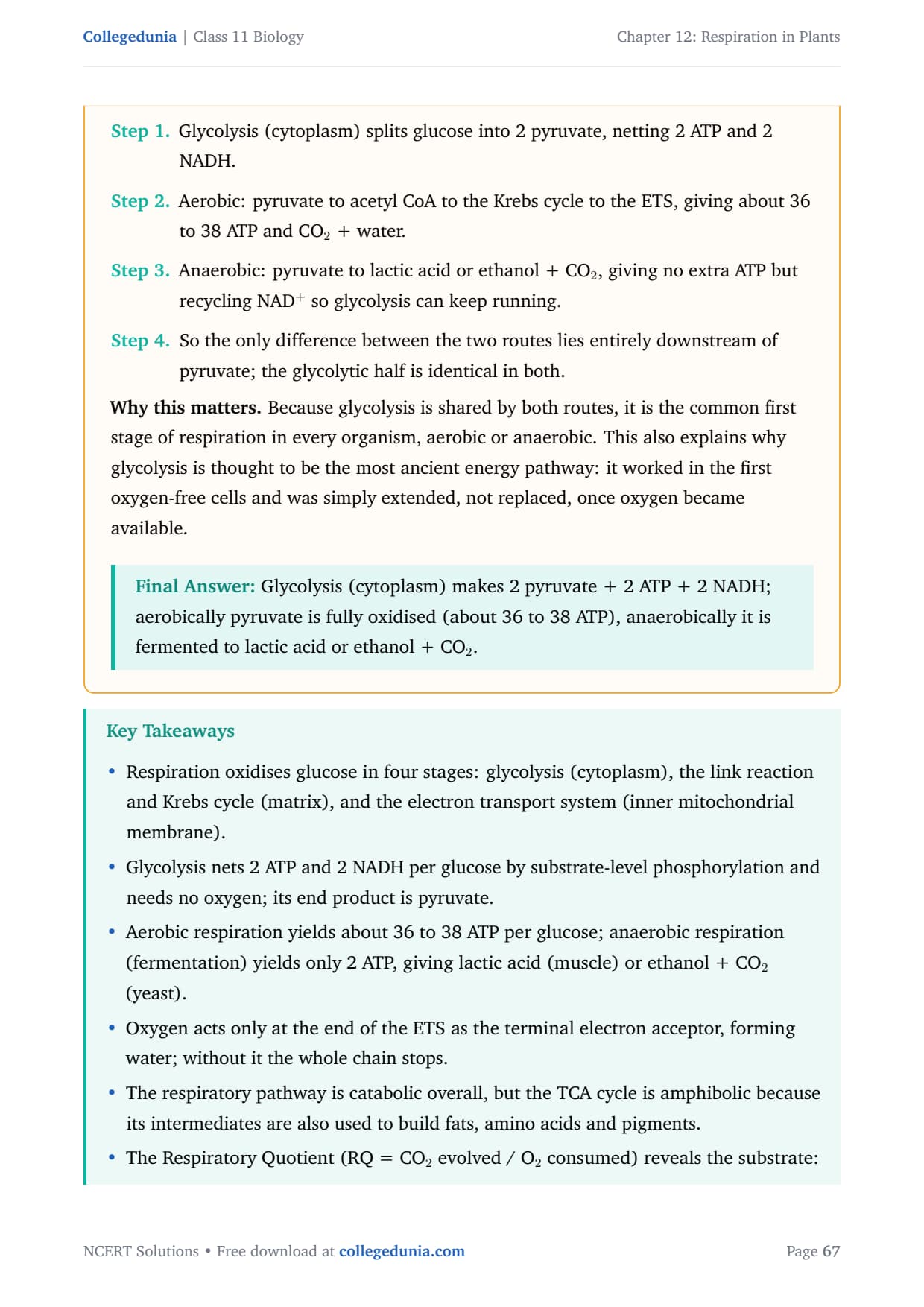
This chapter follows one glucose molecule through the whole respiratory pathway, from glycolysis in the cytoplasm to the electron transport system on the inner mitochondrial membrane. The textbook lays out the four stages, but the Exemplar tests whether you can track a carbon, an electron and an ATP through each one. That is a far harder demand than naming the steps.
- CBSE Weightage: 3 to 4 marks, usually one question on glycolysis, the Krebs cycle or the respiratory balance sheet
- NEET Weightage: 2 to 3 questions per year on the ETS site, ATP yield, respiratory quotient and the fate of pyruvate
- CUET Weightage: 1 to 2 questions on stages, sites and the enzymes of respiration in the Biology domain paper
Every answer is checked against the official NCERT Exemplar key, and where that key misprints an answer, such as the location of the electron transport system, the error is flagged and the correct option is taught instead.
Topics Covered in the Class 11 Biology Respiration in Plants Exemplar
The 43 questions in this chapter cluster around four ideas, and each one returns the moment you begin Breathing and Exchange of Gases later in the year. Respiration in Plants looks like pure biochemistry, so students try to memorise it, but the Exemplar rewards reasoning about sites, substrates and yields far more than recall. Working through it fixes the machinery of energy release that every other physiology chapter assumes you already know.
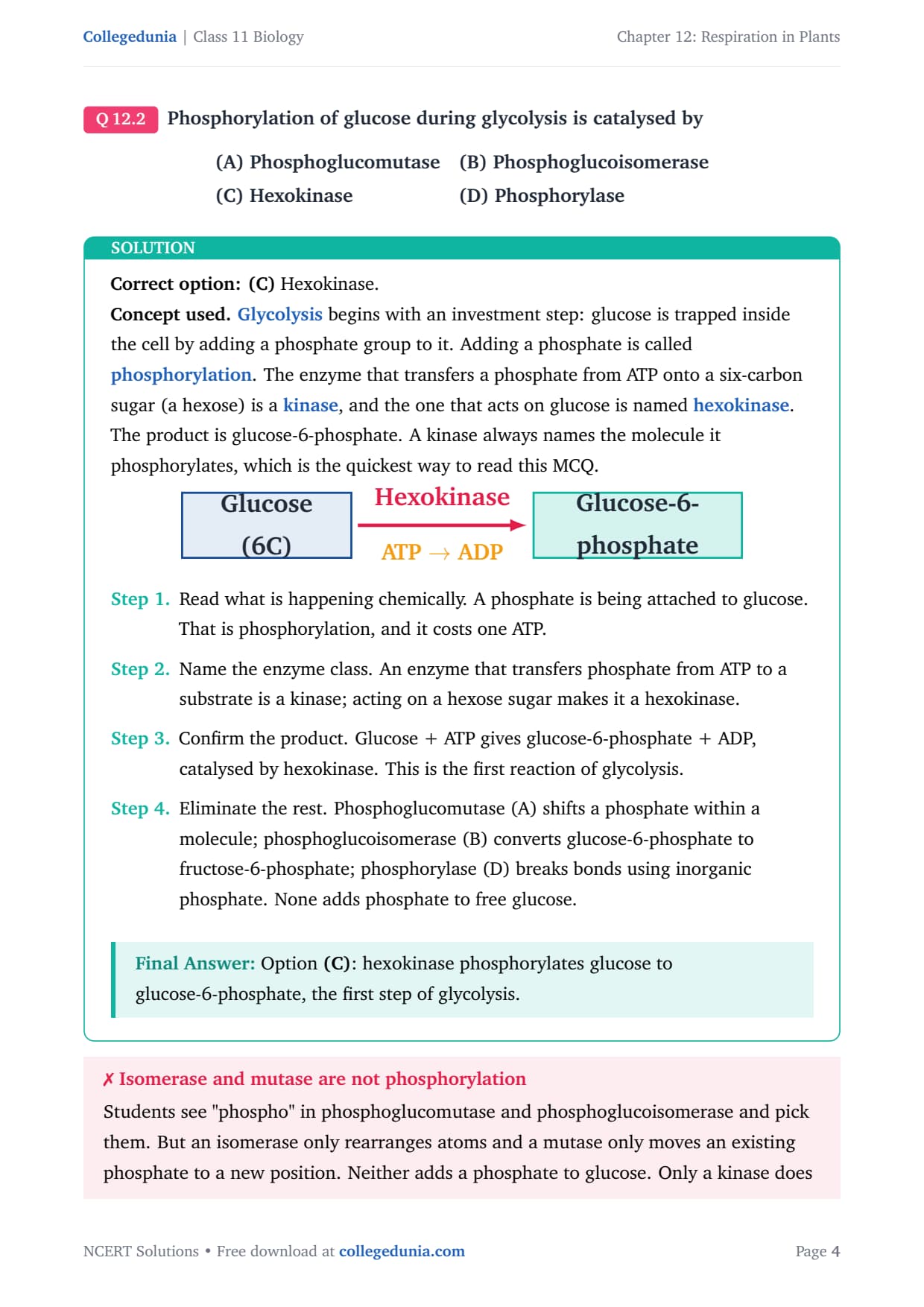
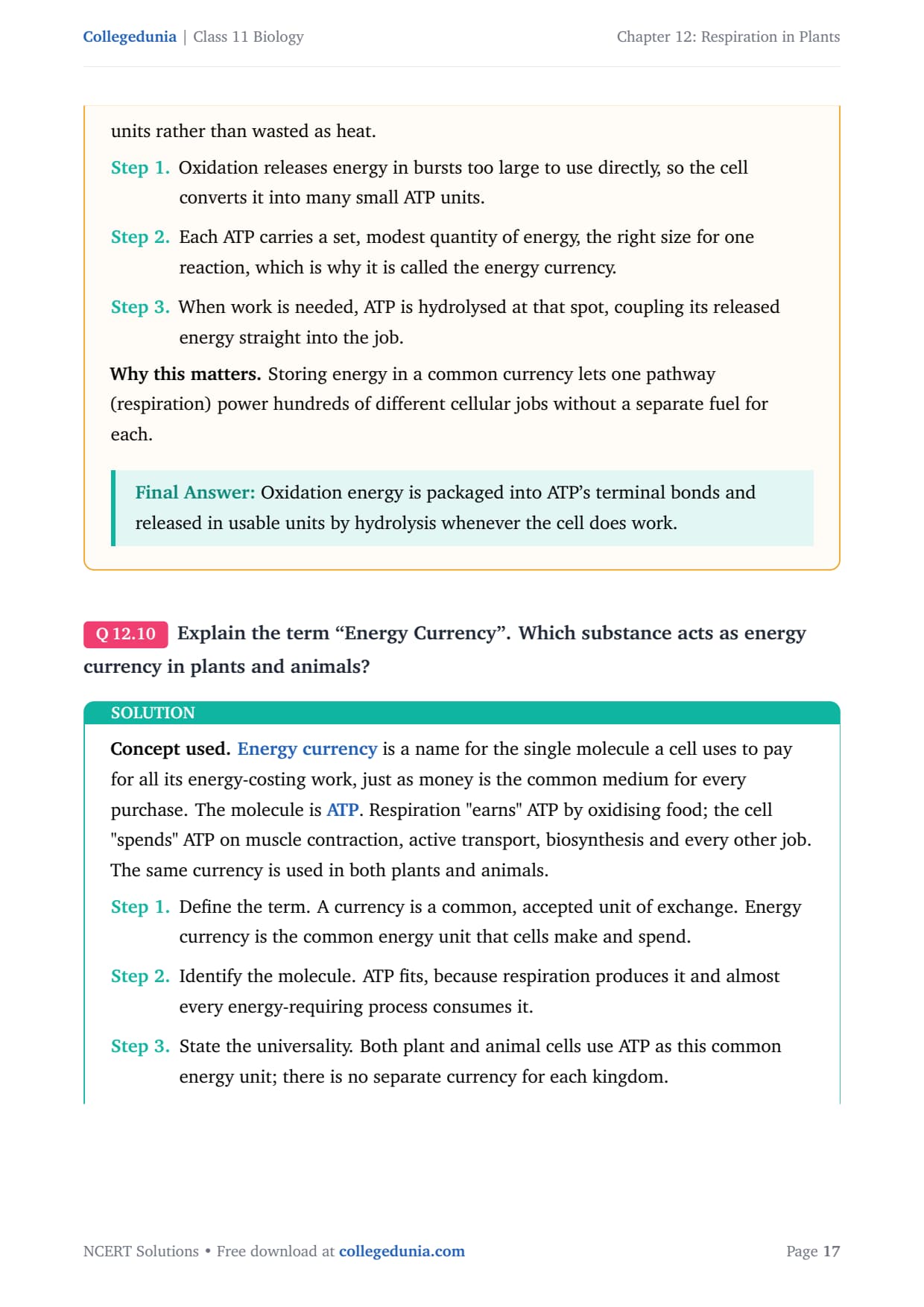
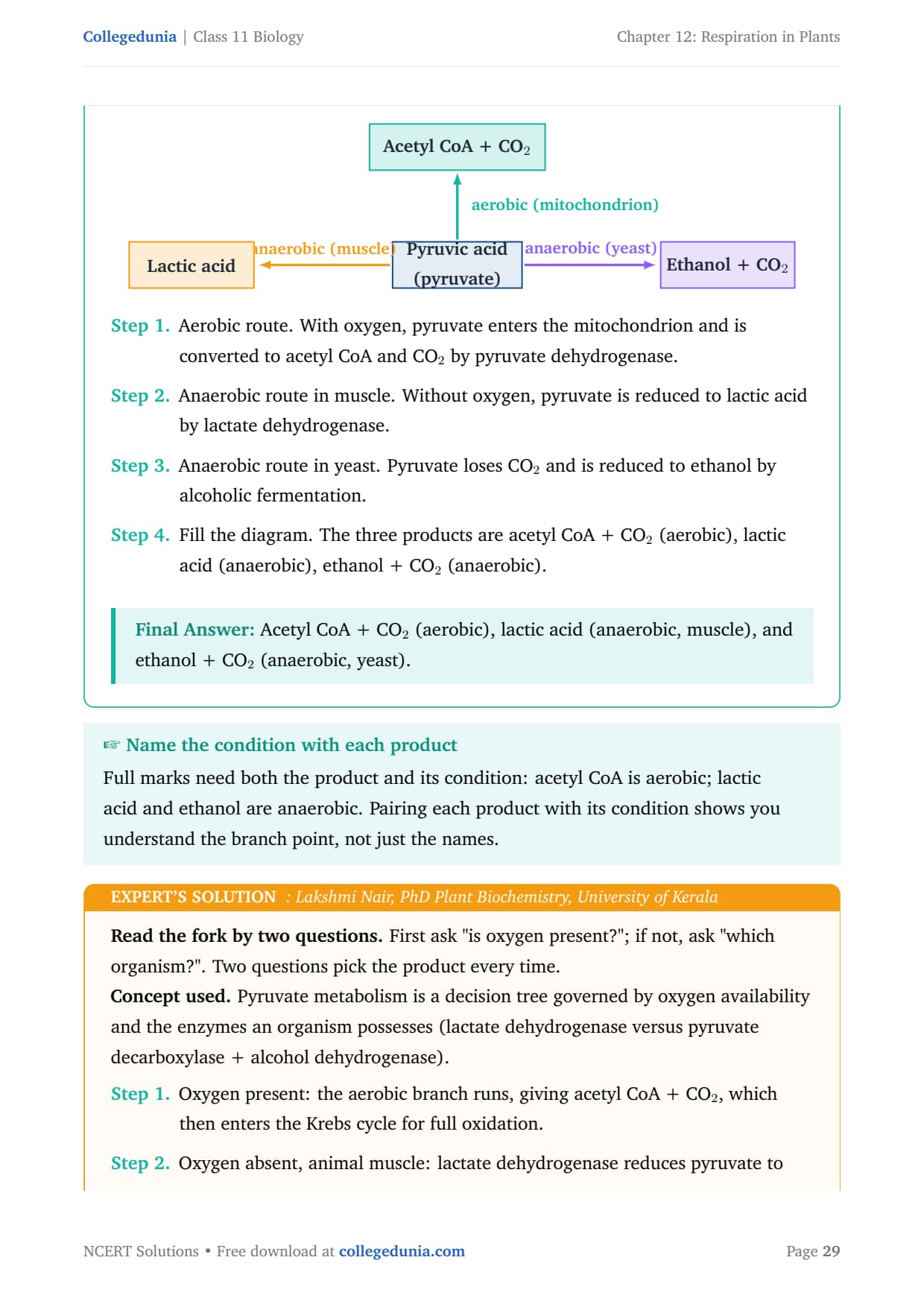
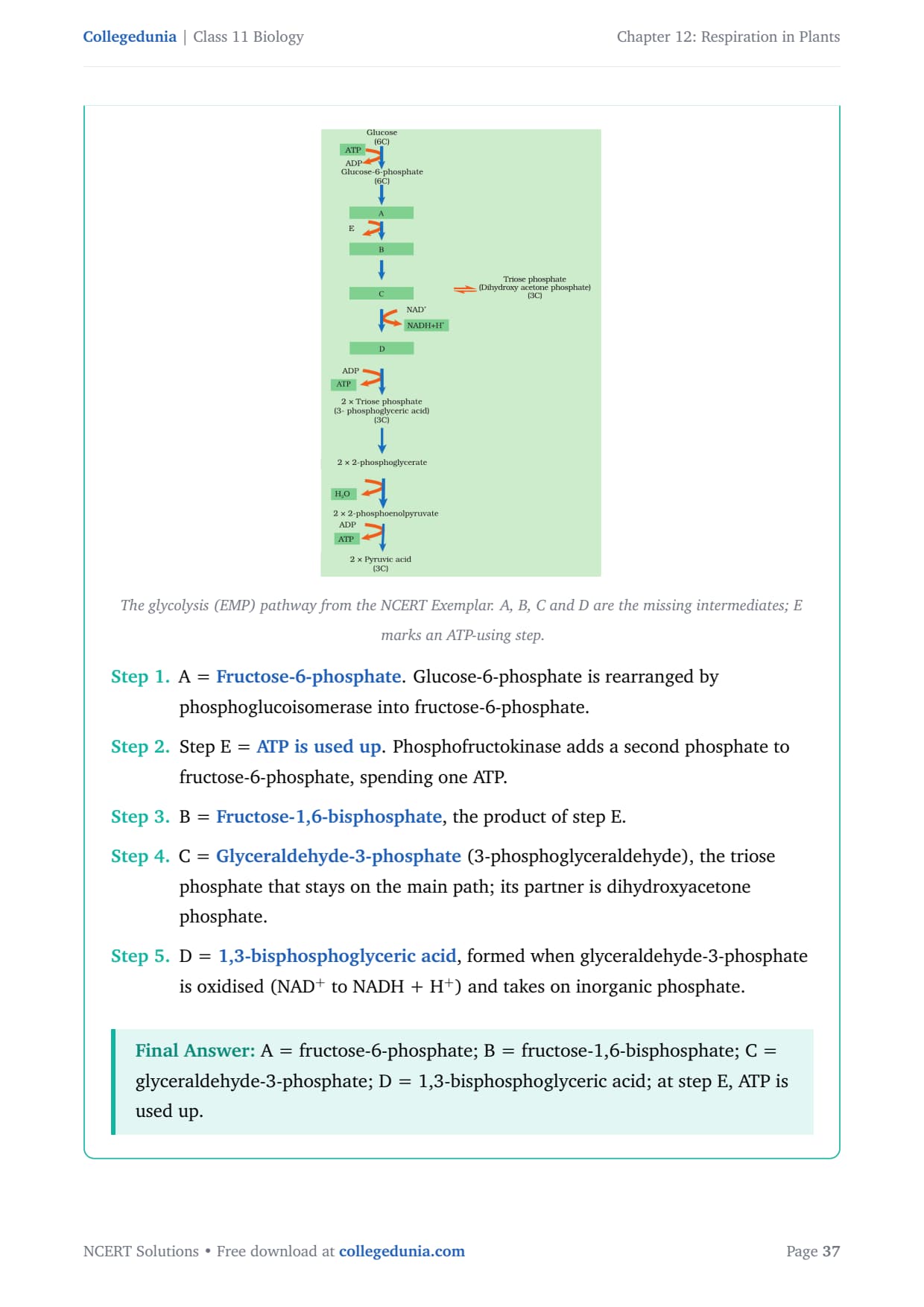
- Glycolysis and the fate of pyruvate: phosphorylation by hexokinase, substrate-level ATP, and the aerobic versus anaerobic branch into acetyl CoA, lactic acid or ethanol
- Krebs cycle and the link reaction: oxidative decarboxylation, the enzymes of the mitochondrial matrix, and where CO2 is actually released
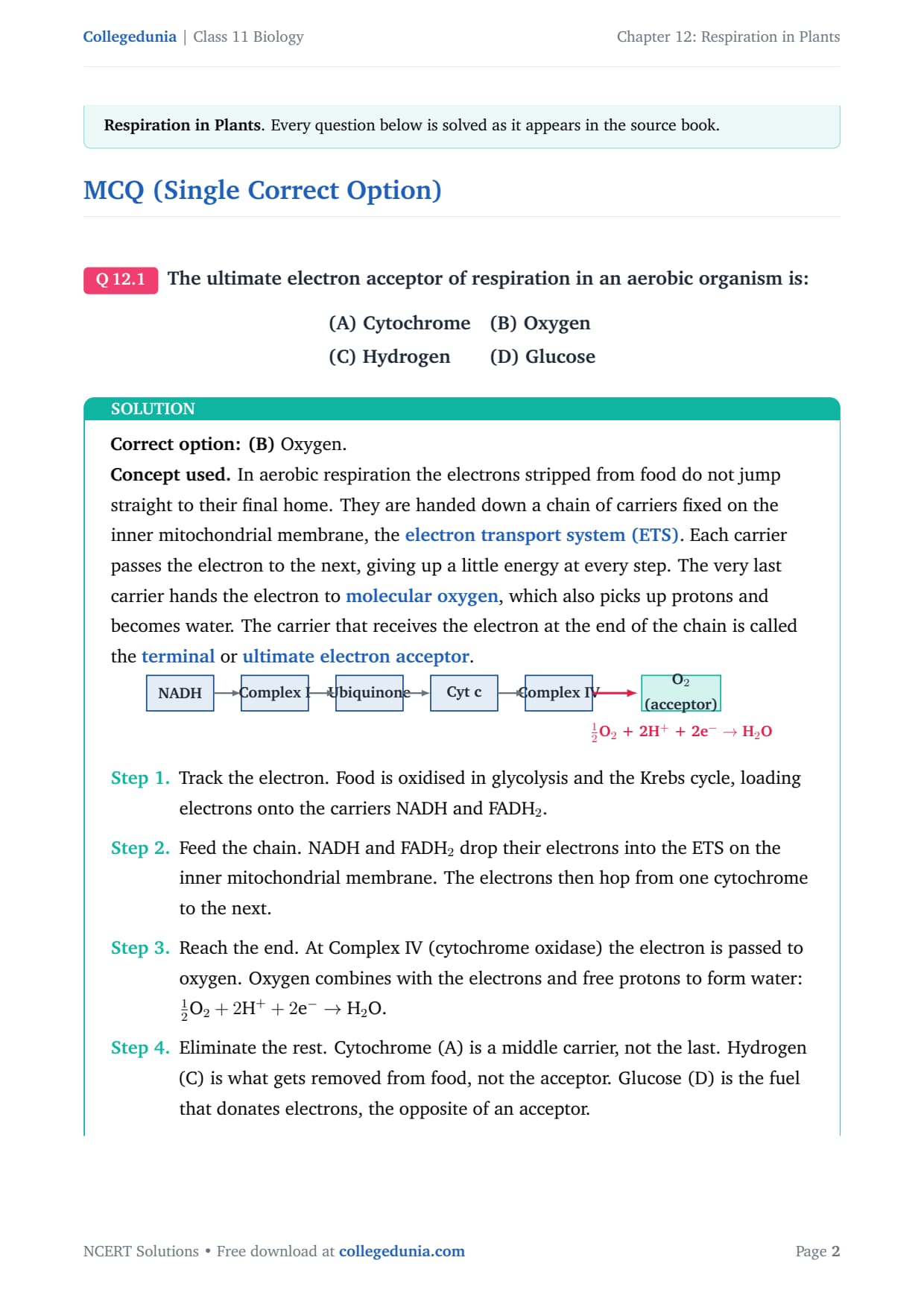
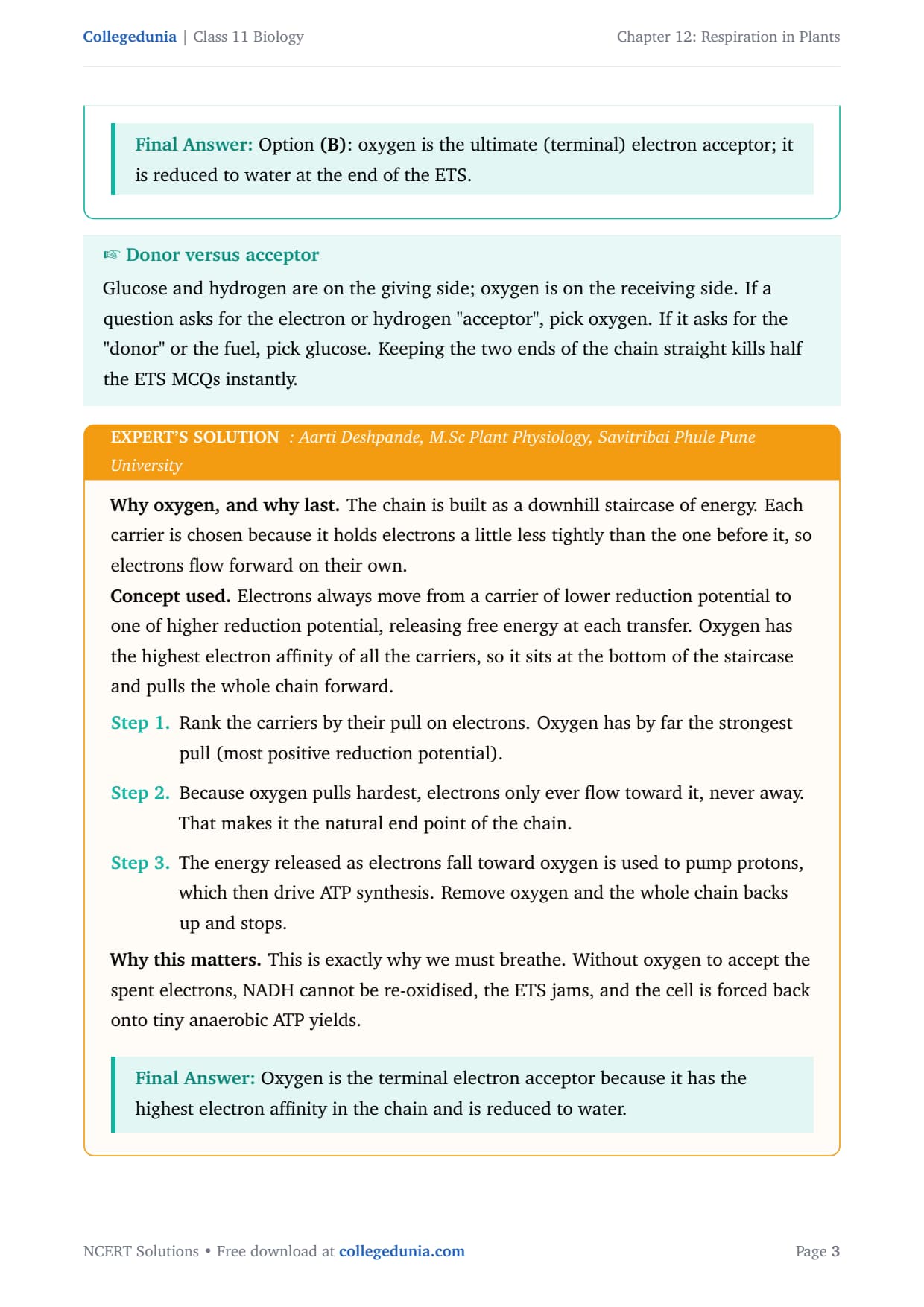
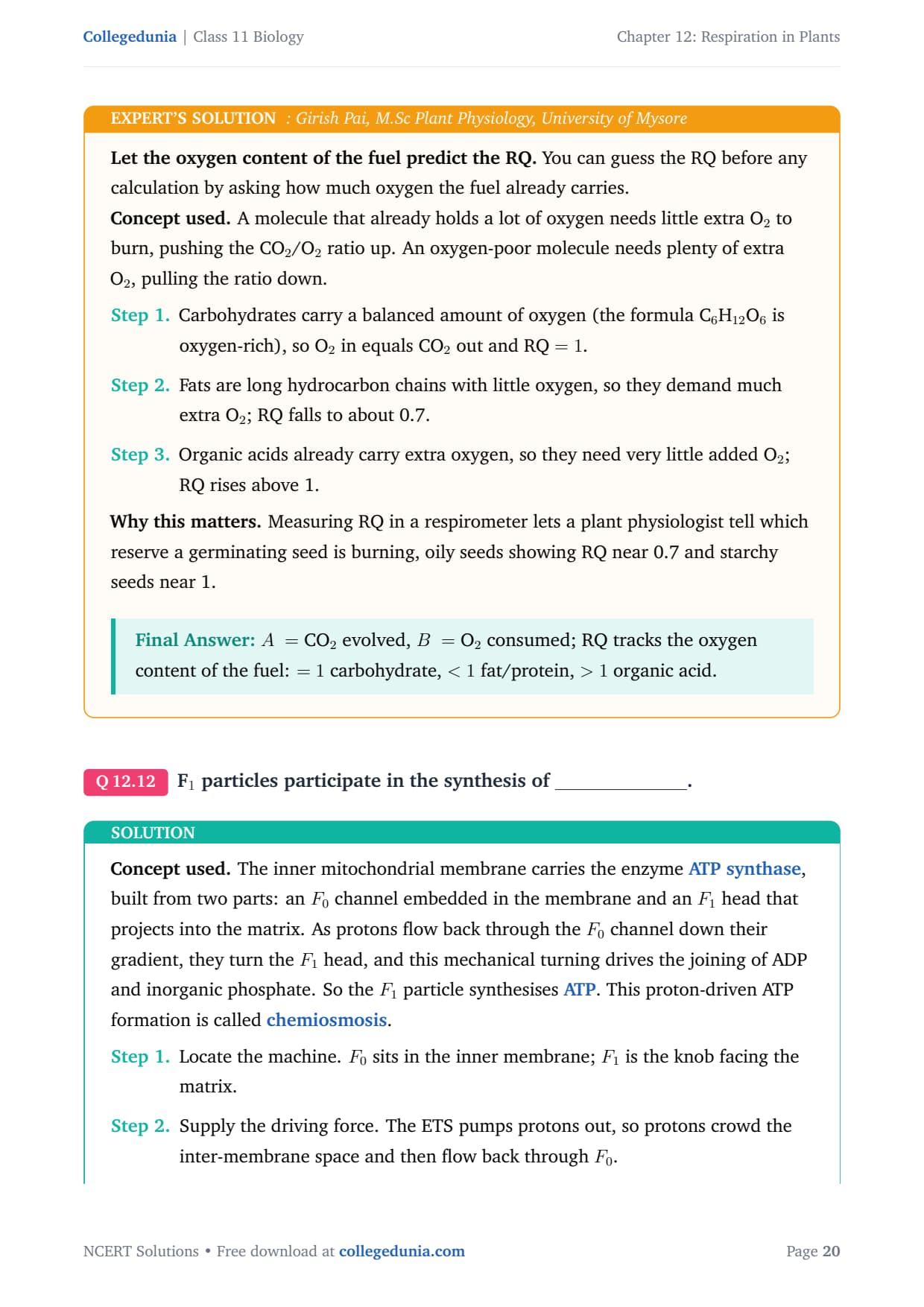
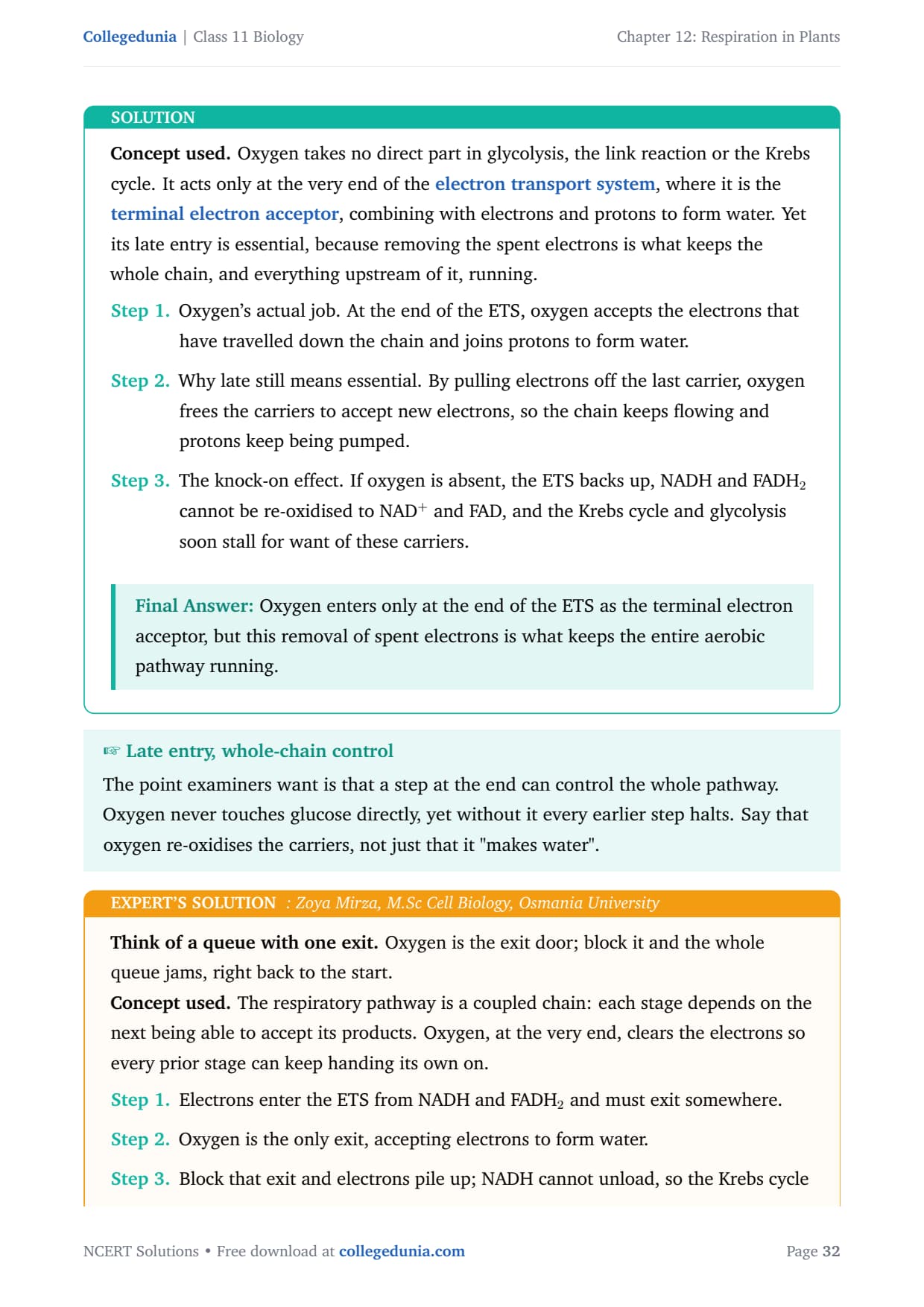
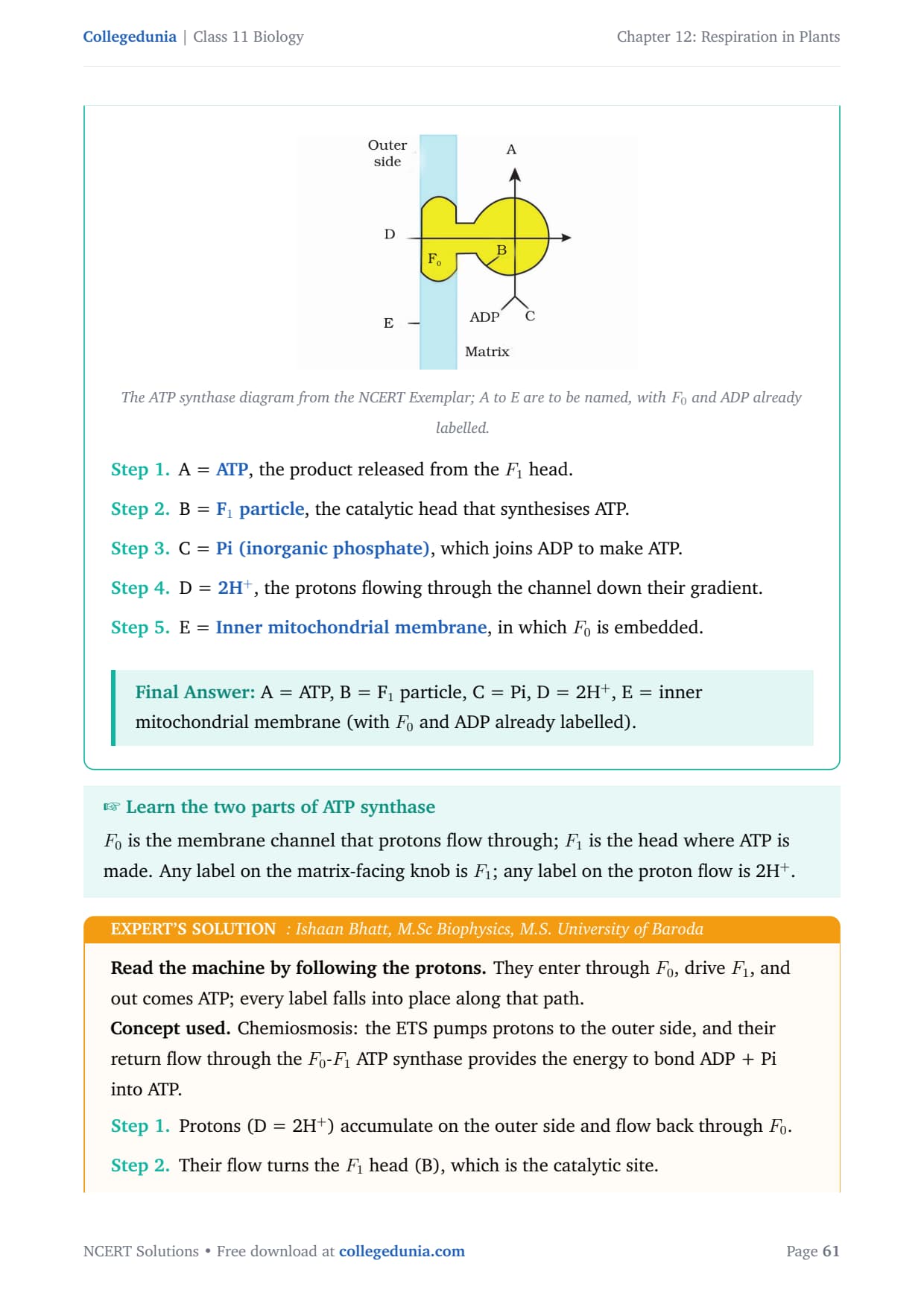
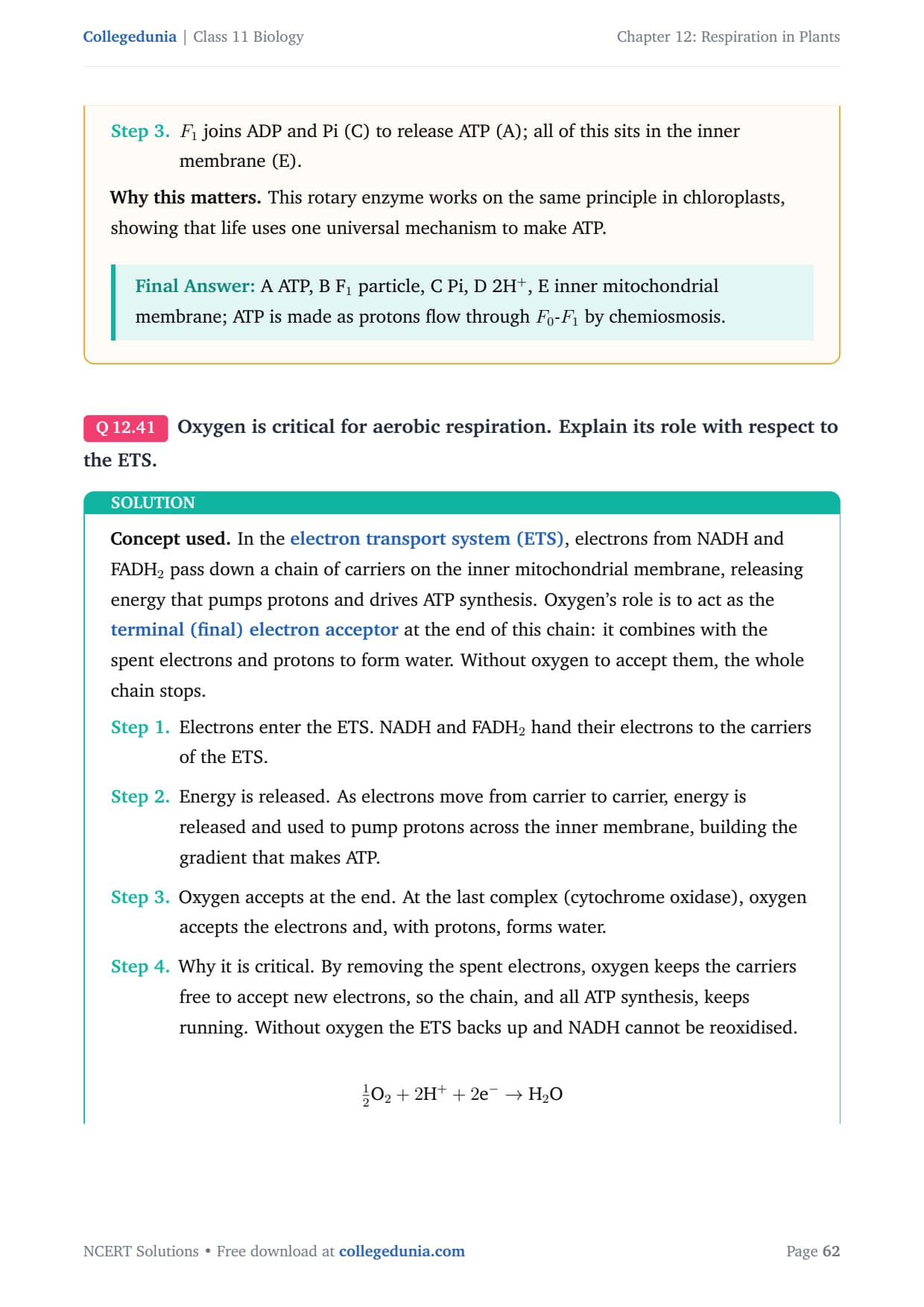
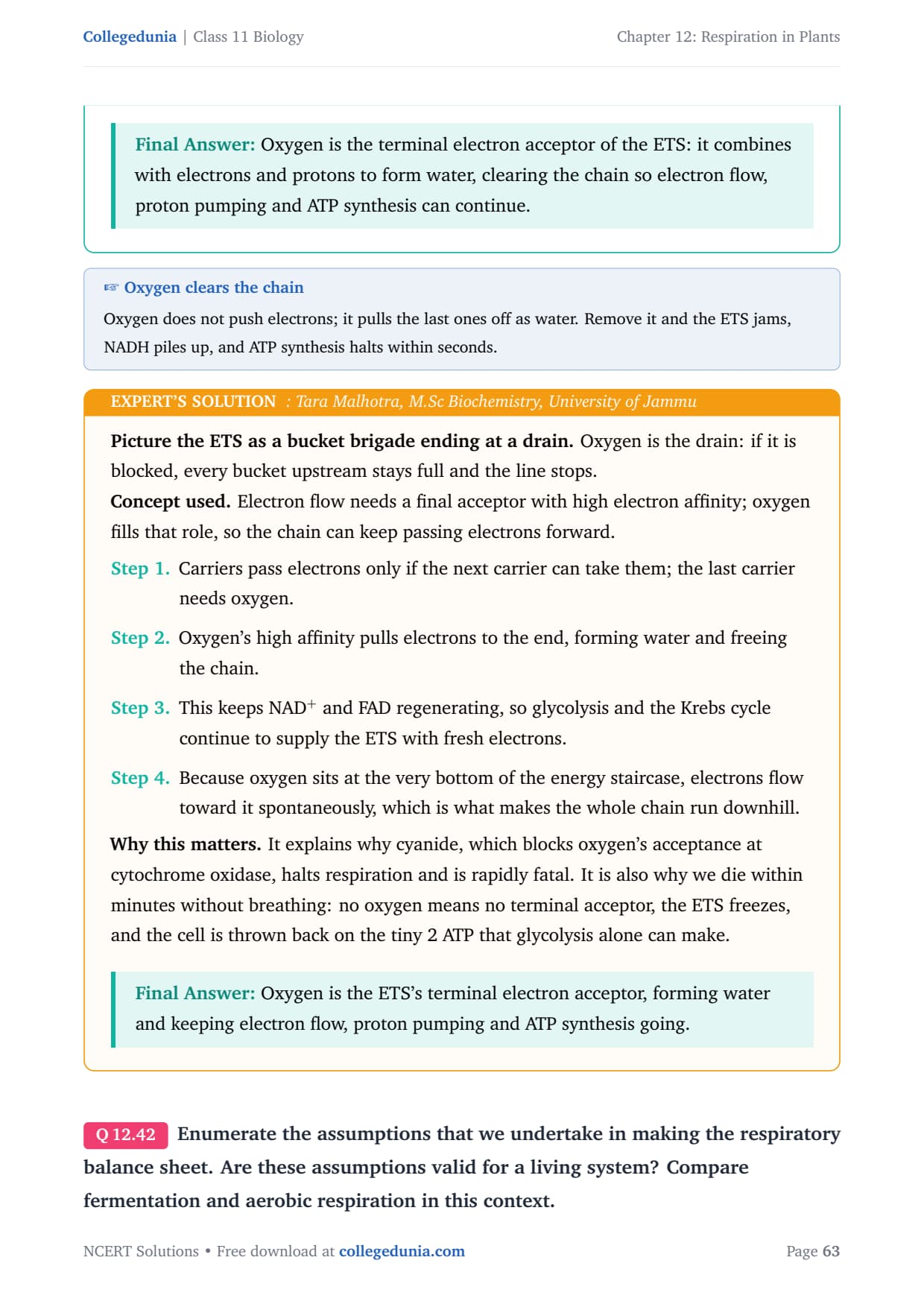
- ETS, chemiosmosis and oxidative phosphorylation: the electron carriers, oxygen as the terminal acceptor, the proton gradient and F1 ATP synthase
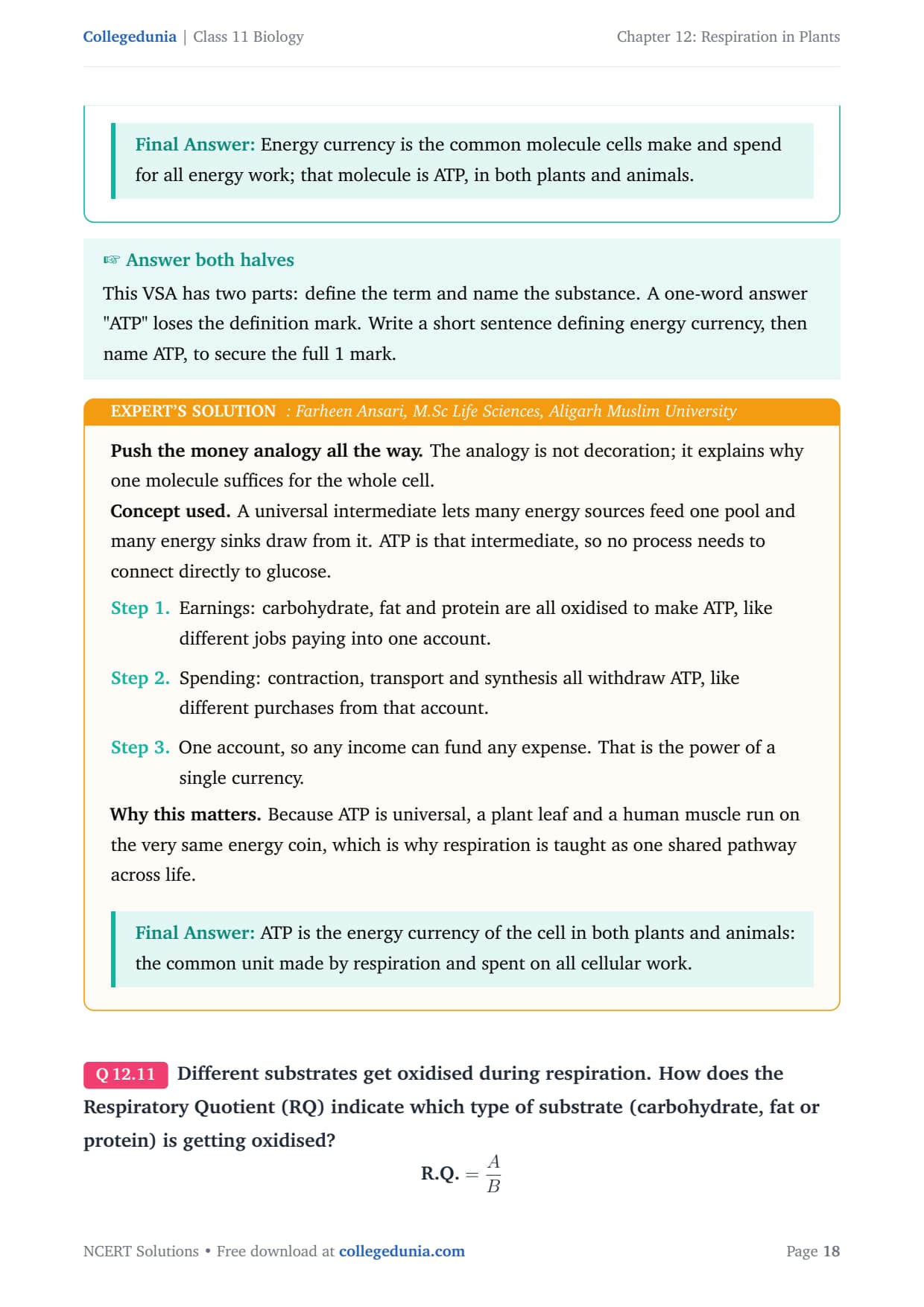
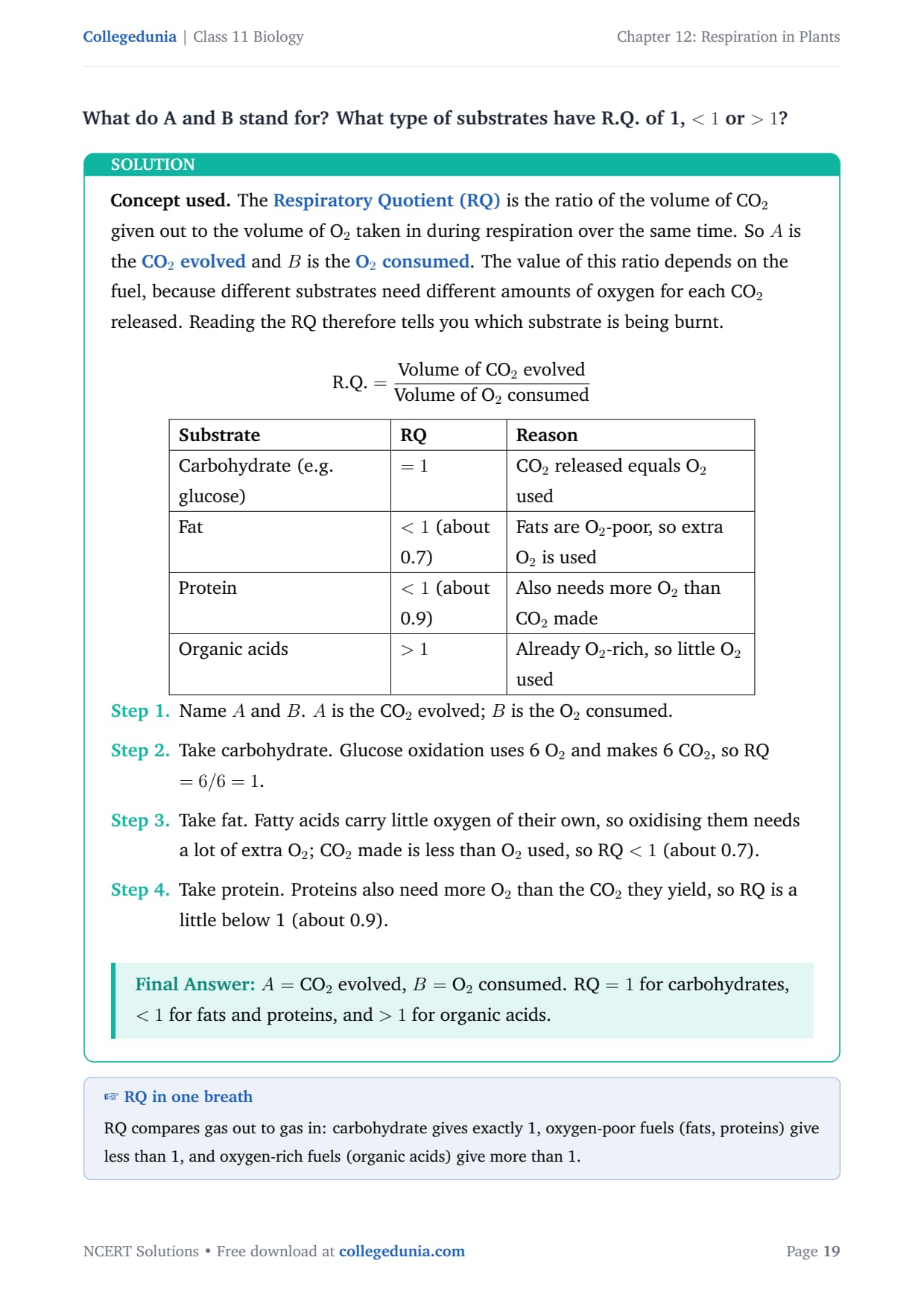
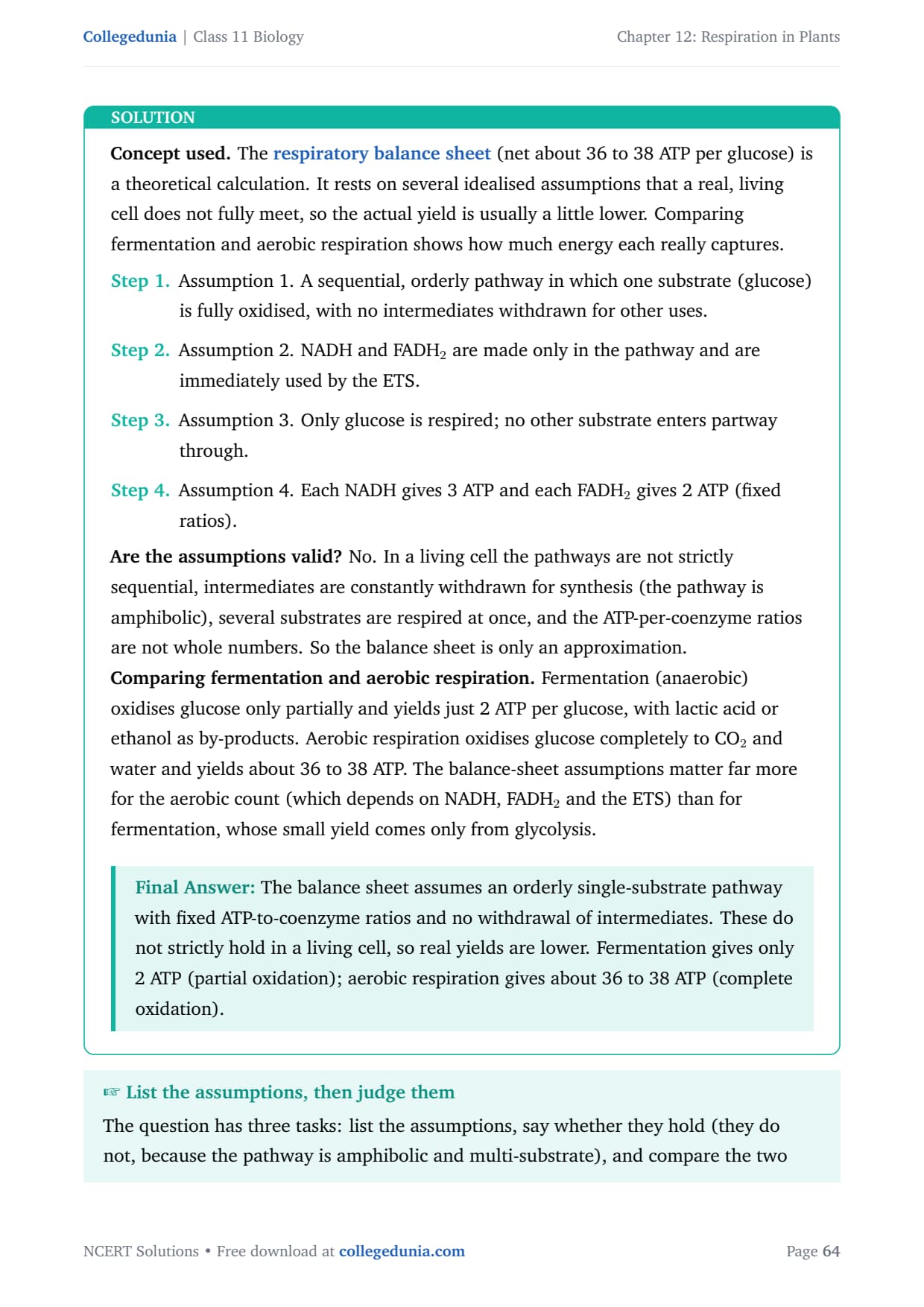
- Amphibolic pathway and respiratory quotient: respiration as both breakdown and building, the RQ of carbohydrate, fat and organic acid, and the respiratory balance sheet
Question Types in the Respiration in Plants NCERT Exemplar
Class 11 Biology Exemplar chapters use four question types, and each one makes a different demand. The MCQ set turns on a single word, such as donor against acceptor, while the Long Answer set asks you to build the whole respiratory balance sheet from scratch. The Short Answer questions carry the largest share of the chapter and the most marks, because they reward a precise site or enzyme and punish a vague one. The table below shows how the 43 questions split.
| Question Type | Count | What It Tests |
|---|---|---|
| MCQ (single correct) | 8 | Precise reading of respiratory sites, enzymes and electron carriers |
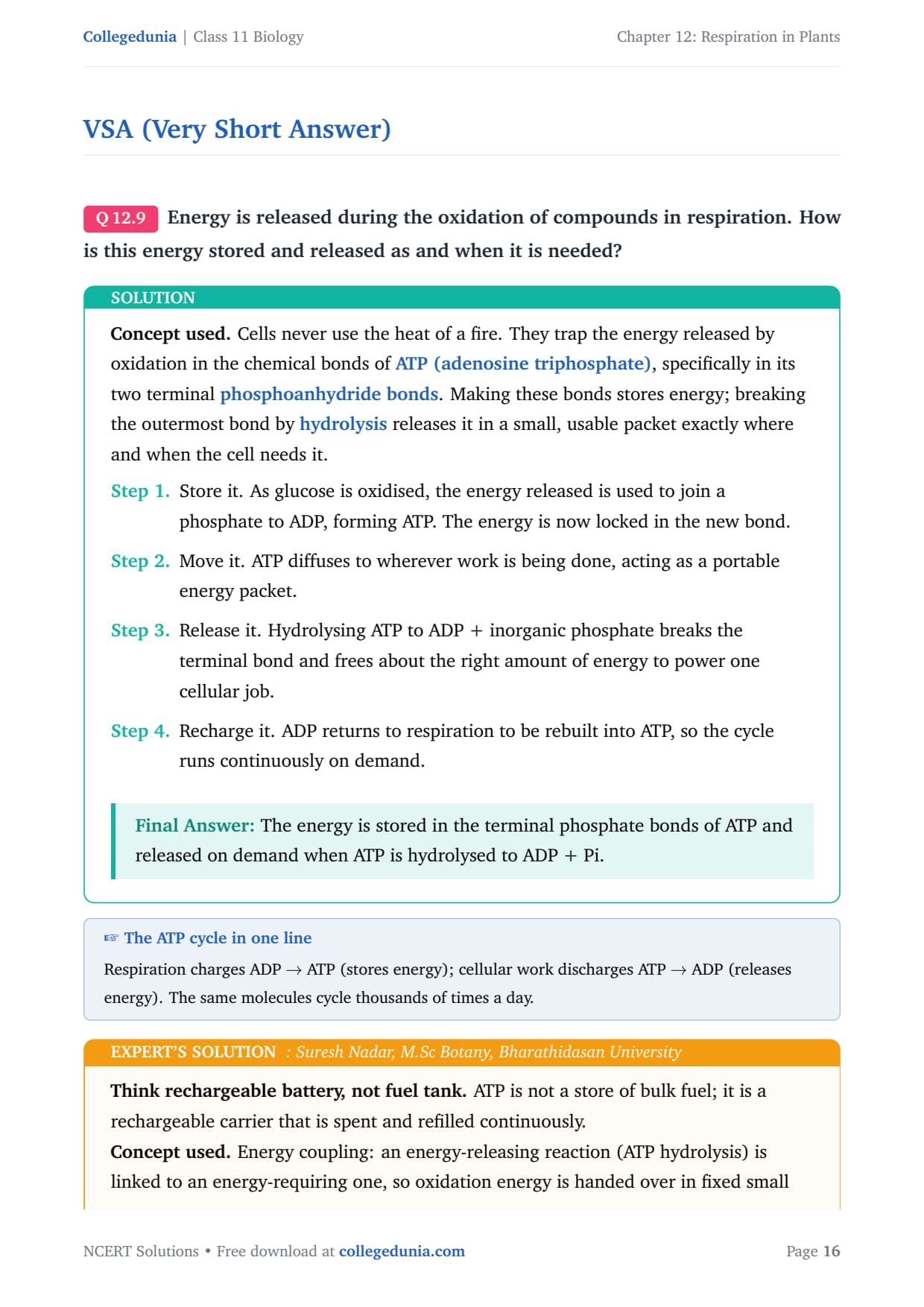
| VSA (Very Short Answer) | 7 | One-line definitions such as energy currency and the RQ ratio |
| SA (Short Answer) | 23 | Explaining glycolysis steps, fermentation and the amphibolic nature of respiration |
| LA (Long Answer) | 5 | Building the full aerobic pathway and the respiratory balance sheet |
Printing Errors in the Respiration in Plants Exemplar Key
This is one of the few chapters where the official NCERT Exemplar answer key carries a genuine printing error, and it sits in the multiple choice section. The Exemplar still follows the old 22-chapter Biology edition, so the source prints this content as Chapter 14, but every question is the current Chapter 12 material. Knowing the one place where the printed key is wrong stops you from learning the mistake by heart before an exam.
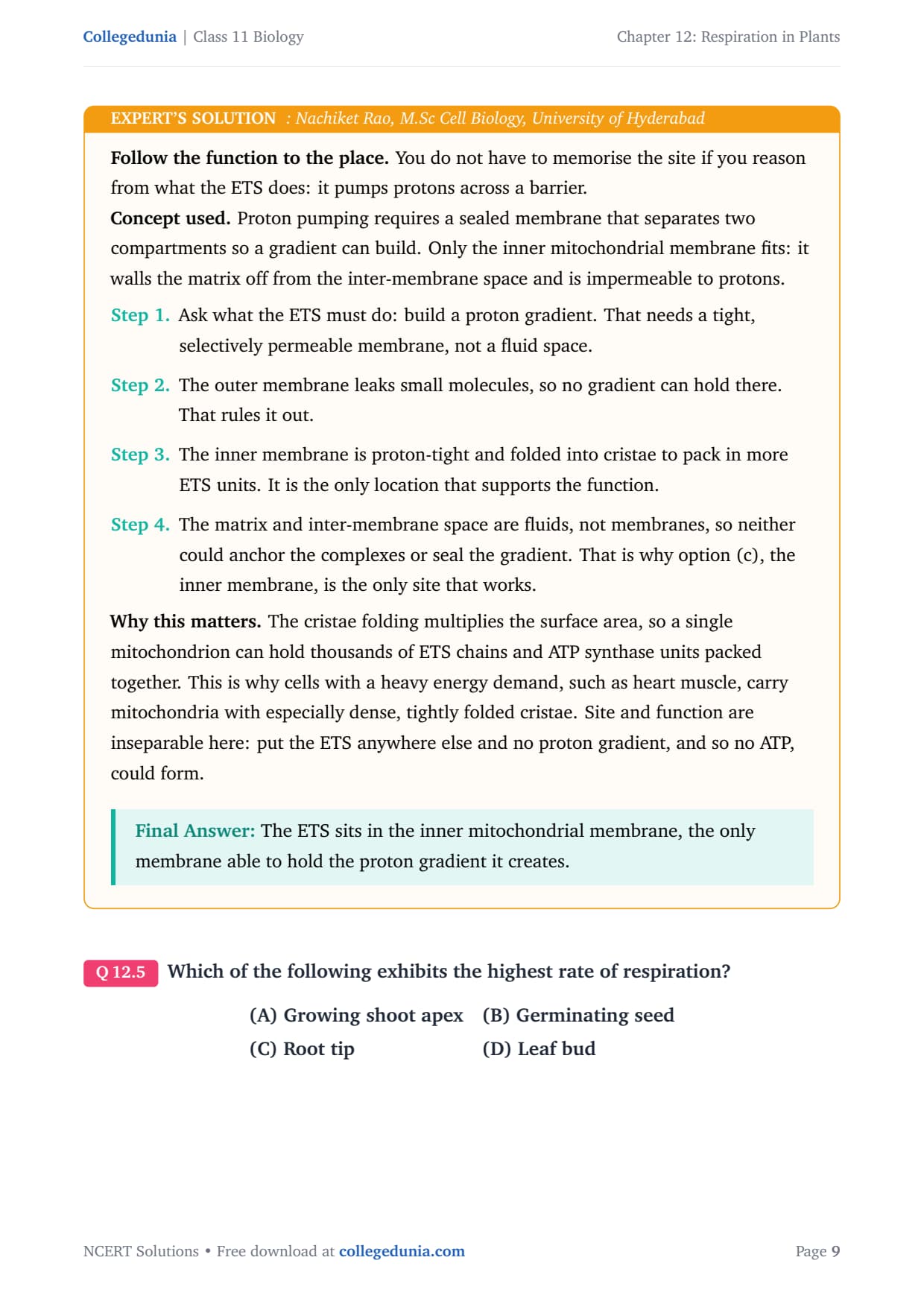
- The ETS location, MCQ 4: the question asks where the electron transport system sits, and the printed key marks (b) inter-membrane space. That is wrong. The inter-membrane space is a fluid gap with no membrane to hold the complexes.
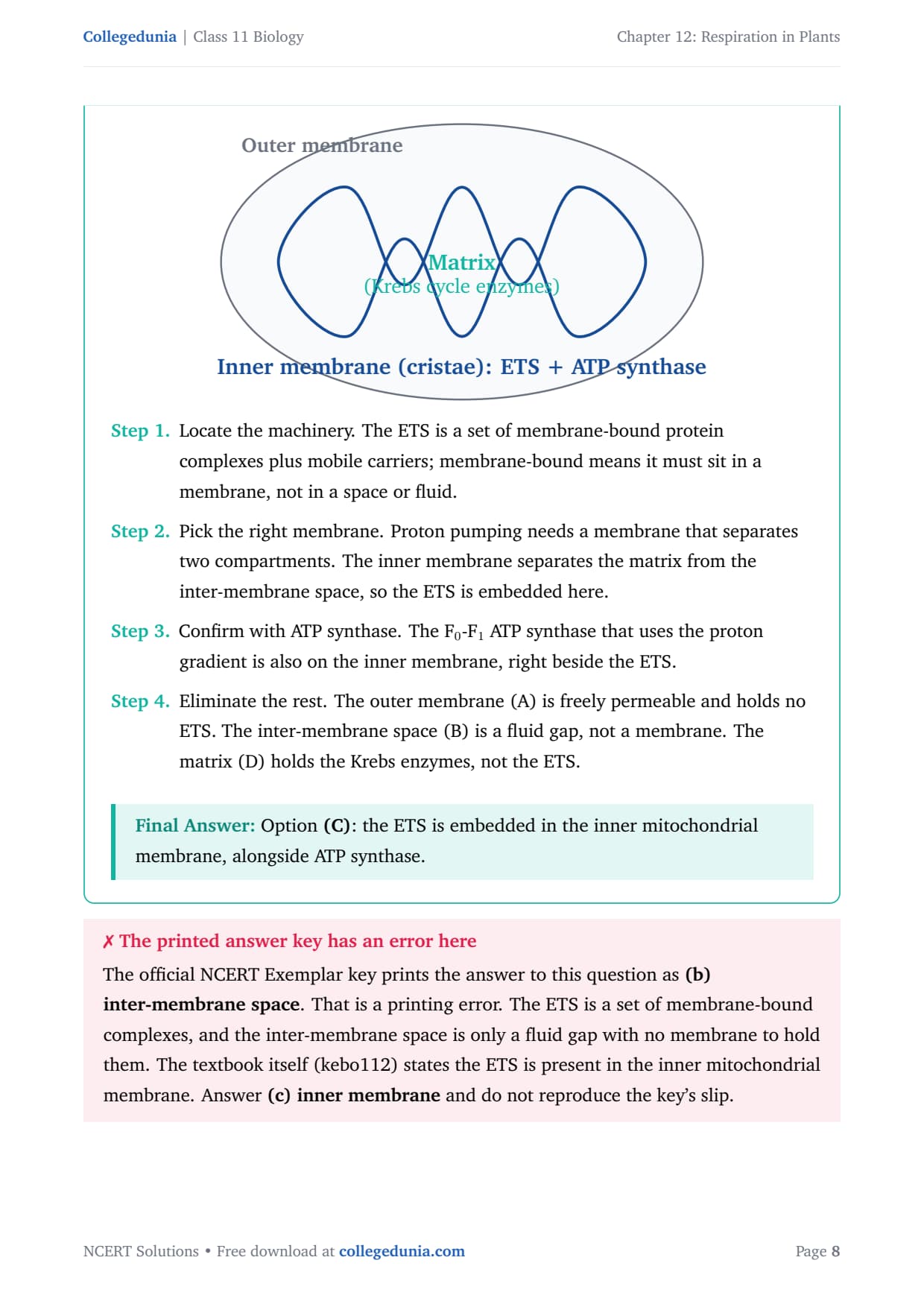
- The correct answer is (c) inner membrane: the NCERT textbook states plainly that the ETS is present in the inner mitochondrial membrane, folded into cristae, alongside ATP synthase.
- Why the key slips: proton pumping needs a sealed membrane separating two compartments, so only the inner membrane can hold the gradient. Reasoning from function, not from the key, gives the right site.
- What to write in an exam: answer (c) inner membrane and do not reproduce the key's slip, because CBSE and NEET both mark the inner membrane as correct.
When a printed key clashes with the textbook, trust the mechanism, not the print. The PDF solves MCQ 4 with a labelled mitochondrion diagram and a mistake box that names the error exactly, so students never carry the wrong site into the ETS questions that follow.
Common Mistakes Students Make in Respiration in Plants
The Exemplar plants half-right options and easy confusions on purpose. Four errors catch most students in this chapter, and each is flagged in the PDF at the exact question where it appears. Learning to spot them early protects marks across the whole energy unit, because the same distinctions return in Photosynthesis and in Breathing and Exchange of Gases.
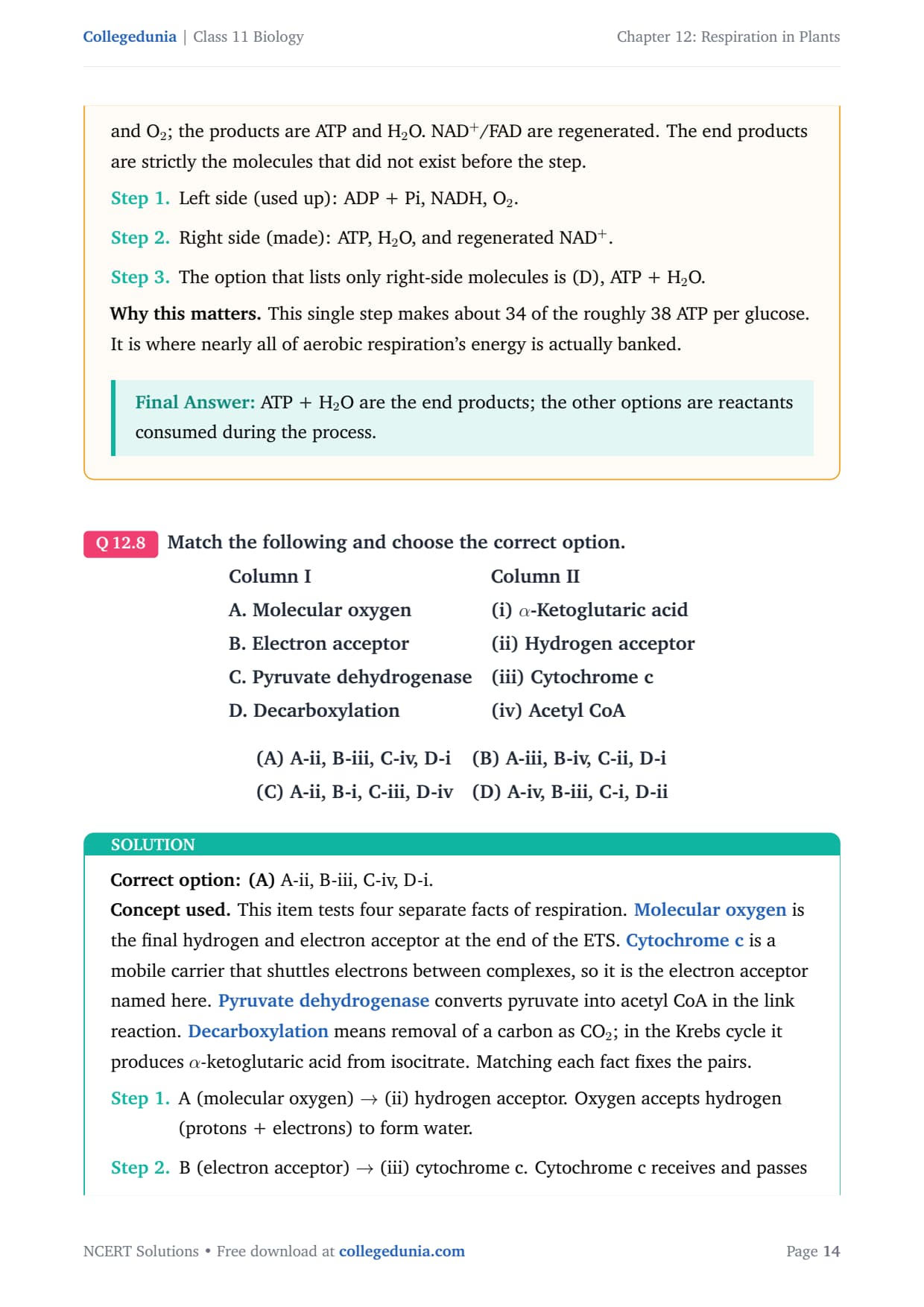
- Donor against acceptor: glucose and hydrogen are on the giving side of the ETS, while oxygen is the terminal acceptor. A question that asks for the acceptor is answered with oxygen, not glucose, yet students reverse the two ends of the chain.
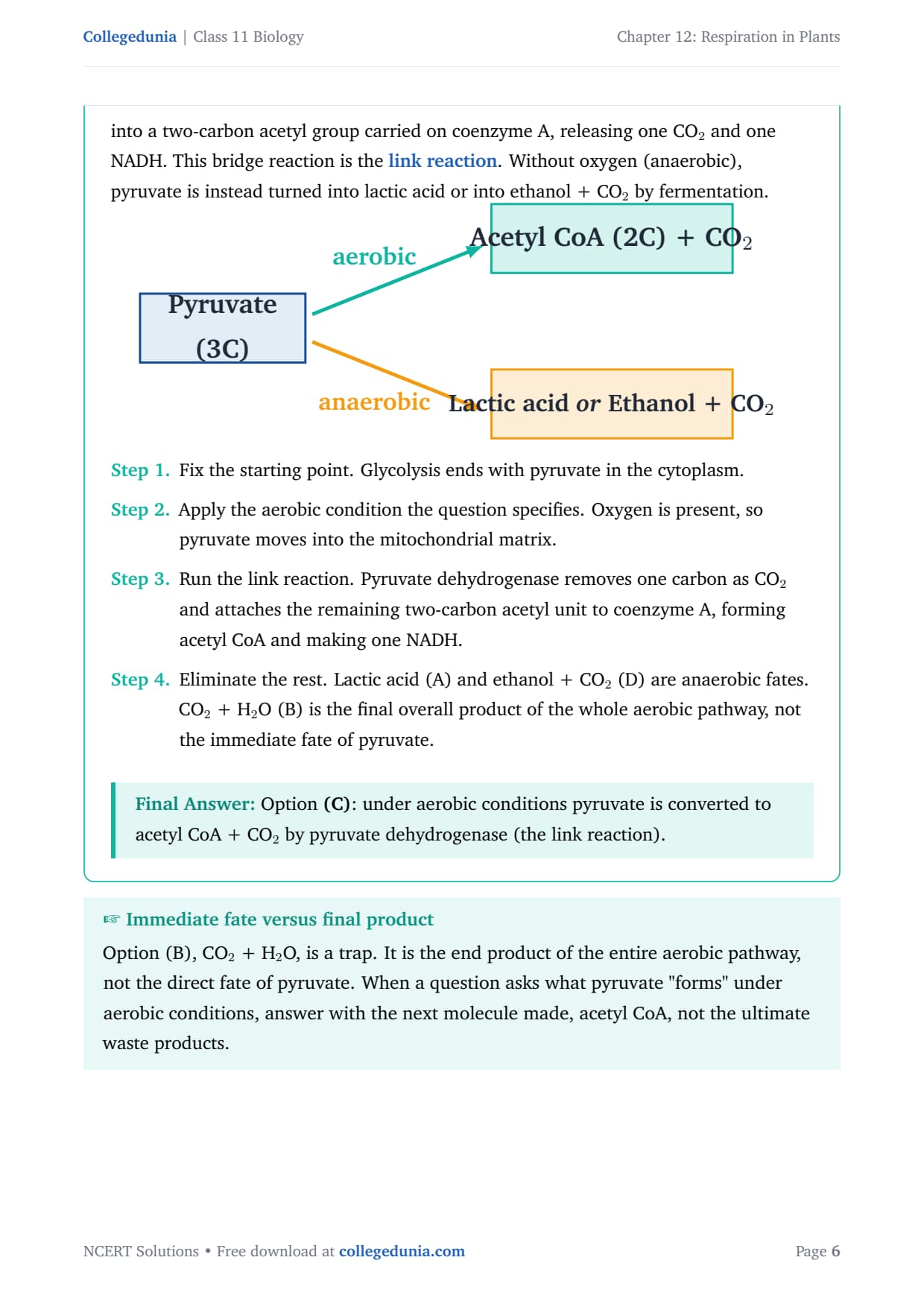
- Immediate fate against final product: under aerobic conditions pyruvate forms acetyl CoA plus CO2, not CO2 plus water. Water is the end product of the whole pathway, not the next molecule made from pyruvate.
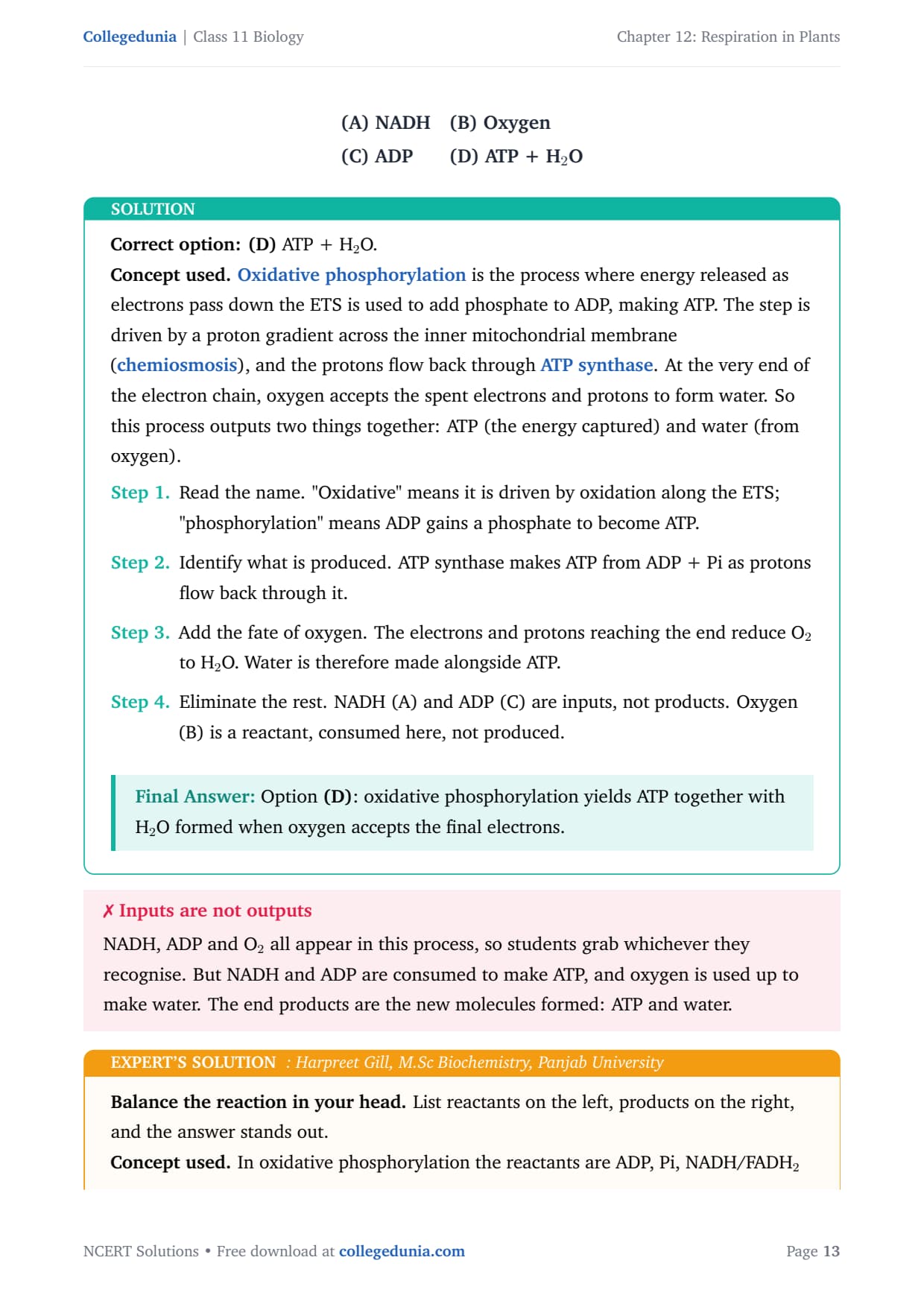
- Inputs mistaken for outputs: NADH, ADP and O2 all appear in oxidative phosphorylation, but they are consumed. The end products are the new molecules formed, ATP and water.
- Isomerase and mutase are not phosphorylation: only a kinase adds a phosphate from ATP, so glucose is phosphorylated by hexokinase. Phosphoglucomutase and phosphoglucoisomerase only rearrange or relocate, despite the tempting prefix.
How the Exemplar Steps Up from the Class 11 Biology Textbook
The textbook gives you the pathway as a sequence to remember. The Exemplar gives you a substrate, a site or a number and asks you to reason your way to the answer, which is the skill boards and NEET actually test. This is why students who only read the chapter feel the Exemplar is unfair. It is not harder in content, it is harder in the way it asks.
The respiratory quotient question shows the gap clearly. The textbook states that fats give an RQ below one, so a quick reader memorises the value. The Exemplar hands you the fuel and asks you to predict the RQ. To answer, you have to see that a fatty acid carries little oxygen of its own, so it demands extra O2 to burn, pushing the CO2 to O2 ratio below one. The same shift happens with the ETS site and the fate of pyruvate, where a memorised line fails but a reasoned site or carbon count succeeds. Working these builds judgement about the machinery, which is exactly what Chapter 12 is meant to leave you with.
How to Use These NCERT Exemplar Solutions for Boards, NEET and CUET
Attempt each question before you open the solution. This chapter rewards a drawn pathway more than a read one, so sketch glycolysis or the mitochondrion first and check your labels against the PDF. The gap between your diagram and the model answer is where the marks live, especially on the balance-sheet Long Answers.
- Boards: the Short Answer and Long Answer sets match the 3 and 5 mark board pattern, especially the aerobic pathway and the respiratory balance sheet
- NEET: work the MCQ and Very Short Answer sets first, since NEET repeats the ETS site, ATP yield, RQ and the fate of pyruvate at that level every year
- CUET: the site-and-enzyme MCQ set is the closest practice for the domain paper, which favours precise single-term recall
Student Feedback
Students using Collegedunia's Class 11 Biology Exemplar Solutions told us that the electron transport system and the respiratory balance sheet were the hardest part of this chapter, well above glycolysis. Around 7 in 10 said that seeing the ETS drawn on the inner membrane, with the printed key error flagged in the same solution, finally settled where oxidative phosphorylation happens after a term of mixing up the mitochondrial compartments.
Other Resources for Class 11 Biology Respiration in Plants
Collegedunia has the full set of study material for this chapter. Use the Notes for a first read, then the Formula Sheet to fix the ATP yields and the RQ values, and keep the NCERT Solutions open for the textbook exercise alongside the Exemplar.
Also Check:
- NCERT Solutions for Class 11 Biology Chapter 12
- Class 11 Biology Chapter 12 Notes
- Class 11 Biology Chapter 12 Formula Sheet
- Class 11 Biology Chapter 12 NCERT Book PDF
- Class 11 Biology Chapter 12 Exemplar Book PDF
NCERT Exemplar Solutions for Other Class 11 Biology Chapters
Each chapter below has the same step-by-step treatment and a free PDF. All 19 chapters have an NCERT Exemplar book chapter behind them, so the list covers every one.
Respiration in Plants Class 11 NCERT Exemplar Solutions FAQs
Ques. How many questions are there in the Class 11 Biology Respiration in Plants Exemplar?
Ans. Chapter 12 has 43 questions. They are split into 8 MCQ, 7 Very Short Answer, 23 Short Answer and 5 Long Answer questions. All 43 are solved in the free 68-page PDF on this page.
Ques. Where is the electron transport system located in the mitochondrion?
Ans. The electron transport system is located in the inner mitochondrial membrane, folded into cristae, alongside ATP synthase. Note that the printed NCERT Exemplar key marks the inter-membrane space for this MCQ, which is an error. The correct answer is the inner membrane, and the PDF flags the slip.
Ques. What is the fate of pyruvate under aerobic and anaerobic conditions?
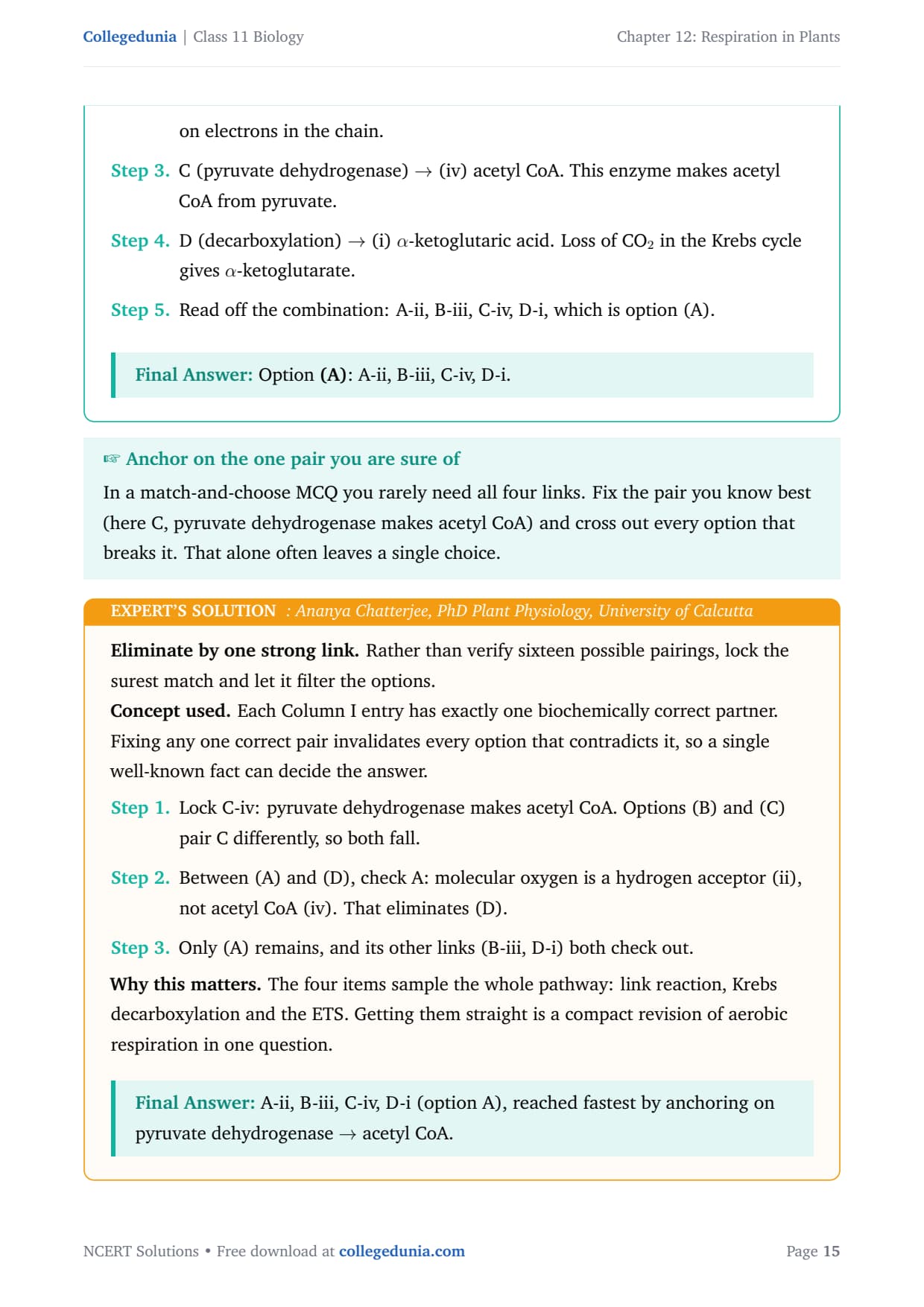
Ans. Under aerobic conditions pyruvate is converted to acetyl CoA plus CO2 by pyruvate dehydrogenase, the link reaction. Under anaerobic conditions it becomes lactic acid in muscle or ethanol plus CO2 in yeast through fermentation. The Exemplar tests this fork in several questions.
Ques. What does the respiratory quotient tell you about the fuel being burnt?
Ans. The respiratory quotient is the ratio of CO2 evolved to O2 consumed. It is 1 for carbohydrates, below 1 for fats and proteins, and above 1 for organic acids. An oxygen-poor fuel needs extra O2, so its RQ falls below 1, which is how the RQ reveals the substrate.
Ques. Is the NCERT Exemplar enough for NEET questions from Respiration in Plants?
Ans. For this chapter it covers the ground well. NEET asks two to three questions a year on the ETS site, ATP yield, respiratory quotient and the fate of pyruvate, and they sit at the level of the Exemplar MCQ and Short Answer sets. Work all 8 MCQs and the balance-sheet Long Answers before moving to a coaching module.



Comments