



Content Curator
Nutrients are substances or compounds in food which are essentials for life and health of Living organisms. Nutrients provide necessary and needful components that support life and life energies in total and help sustain life on earth. Nutrients may be derived from various sources; these sources include sources of consumption like food one eats, water, the sunlight etc.
| Table of Content |
Keyterms: Nutrients, earth, Protein, Carbohydrates, Fats, Vitamins, Minerals, Metabolism, Macronutrients
Types of Nutrients
[Click Here for Sample Questions]
There are two main classifications of nutrients:
Macro Nutrients
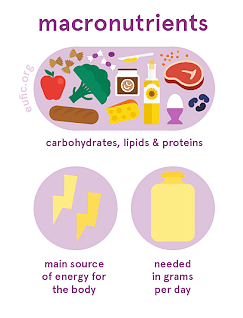
Macro Nutrients are those nutrients that the body requires in a large amount; these facilitate the functioning of life supporting activities like Metabolism.
Macronutrients provide the body with energy in the form of calories to carry everyday activities.
Macronutrients are basically of three types- Protein, Carbohydrates and Fats
Macro Nutrients
Micro Nutrients
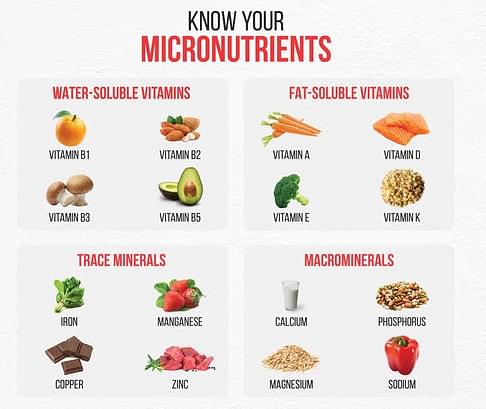
Micronutrients also form a major part of the nutrients that a living organism needs, these include vitamins and minerals. Vitamins and Minerals are needed in order to produce energy, functioning of the immune system and growth of the body.
Also Read:
Important Nutrients in Food
[Click Here for Sample Questions]
Living creature like animals and humans cannot prepare their own food and so they cannot sustain the necessary required nutrients that are essential to support live hence they are dependent of external factors to fulfill the necessary nutrition requirements.

Important nutrients that food supplements a living organism are:
- Carbohydrate- Carbs or the Carbohydrates are the nutrients that are needed most by the body these are in the form of Sugar, fiber and starch. These are the main source of energy to the body and the main source of fuel to the Brain.
Foods like Grains, Starchy Vegetables milk and milk products are rich sources of carbohydrates.
- Protein- Protein contains amino acids that help in tissue building and bone strengthening, it is another most important nutrient that the body needs.
Foods like- Milk, Soy, eggs etc. are rich sources of protein.
- Fats- Fats are an essential supplement to energy in the body; when the body is out of carbohydrates it uses fats to sustain the energy requirements of the body.
Foods like- Meat, nut seed, Milk products are good sources of fat.
- Vitamins and Minerals- Vitamins and minerals supplement the other sources of nutrients in growth and development of the body, several vitamins like Vitamin D and Minerals like calcium are essential for growth and development of motor skills in the body.
Foods like- Milk, Fruits etc. are considered rich sources of vitamins and minerals.
- Iron- Iron is very important as it is a constituent of blood in living organisms, food like- green leafy vegetables, Soybeans etc. are good sources of iron, they also help in building Red blood cells in the human body.

Foods Nutrition Value
[Click Here for Sample Questions]
| Type of Nutrition & value | Energy | Protein | Carbohydrate | Sugar |
|---|---|---|---|---|
| Food | ||||
| Rice (Brown) | 82 calories | 1.83 g | 17.05 g | 0.16 g |
| Milk | 146 calories | 7.7 g | 11.7 g | 12.3 g |
| Fruits (one apple) | 52 calories | 0.3 g | 13.8 g | 10.4 g |
Functions of Nutrients
[Click Here for Sample Questions]
- Nutrients supplement the energy requirements of the body.
- They help in sustaining life of all the living creatures
- Nutrients contribute to the structure of the body
- Nutrients help sustain good health.
- Nutrients help in proper growth of living organisms
- Nutrients help living organisms to carry out life supporting activities like reproduction.
Things to Remember
[Click Here for Sample Questions]
- Foods like Soy, Salmon, Kale, sea-weed etc. are the most important nutritional foods. They supplement each and every nutrition requirement like that of Macronutrients and Micro Nutrition.
- Nutrition is a very essential part of a living organism's energy requirement; it serves as the building block of life in every creature.
- Along with green plants Algae, Bacteria and Fungi are also known to be creating their own food, thus they too are considered and Autotrophs. They create their own nutrition and fulfill their energy requirements. Kelp too is an autotroph organism and performs photosynthesis.
- Nutrients not only sustain energy requirements in an organism but it also plays a vital role in sustaining life on earth, nutrition plays an important role in producing offspring in animals and plants both. It sustains life through reproduction. It helps in cell enrichment and development of organisms including humans.
Sample Questions
Ques. What is lipid? (1 Mark)
Ans. Lipids are hydrocarbon containing molecules that make up the building blocks of the structure and help in functioning of living cells. Rich sources of lipids are Fats, oil, waxes and vitamins like A,D,E and K.
Ques. What are the two types of vitamins? (1 Mark)
Ans. Vitamins can be categorized as Water soluble Vitamins and Fat Soluble Vitamins. Water Soluble vitamins are vitamin C, all the Vitamin B etc. and Fat soluble vitamins are Vitamin A, D, E, and K.
Ques. What are Discretionary Calories? (1 Mark)
Ans. Discretionary Calories are the leftover calories which are derived after subtracting the Caloric content from a healthy eating plan from our energy requirements. These energy requirements can be supplemented through dairy products and sugar.
Ques. What are haustoria? (1 Mark)
Ans. Haustoria are specialized structures found in saprophytes that are used to draw nutrients directly from the vascular system of the host. They are modified roots. For example, in Cuscuta.
Ques. What will happen to a plant if its xylem is removed? (1 Mark) [CBSE 2009]
Ans. Xylem in plants transports water and dissolved mineral nutrients from the roots to all parts of the vascular plant. So, if xylem is removed from the plant, the water and mineral supply to the plant will stop and therefore, the plant will die.
Ques. What are the three basic classes of Nutrients? (2 Marks)
Ans. The three main classes of nutrients that also make up the macronutrients are Carbohydrates, Lipids and Proteins. These three nutrients are needed in a relatively large amount and they provide the main source of energy i.e. Calories which are burnt in the body to provide necessary energy.
Ques. What are the six major/main classes of food? (2 Marks)
Ans. Six major classes of food are-
- Whole grains and Starchy Vegetables like Spinach
- Fruits and Non-Starchy Vegetables
- Dairy products
- Fish, Poultry, Meats and Eggs
- Heart Healthy Oils- Omega
- Elective and Discretionary Calories – cheese, sugar etc.
Also Read:



Comments