



Content Writer
The pancreas is an organ in the abdomen which is considered a vital part of the digestive system. It is surrounded by the small intestine, liver, spleen, gall bladder and stomach in the human body.
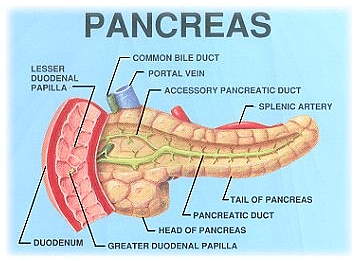
- Structurally, the pancreas is divided into the head, neck, body and tail.
- Such organs are called heterocrine glands, with gonads being the only other organs.
- It performs two essential functions, namely endocrine and exocrine.
- The organ is located behind the stomach and near the spleen in the human body.
- It helps in food digestion and blood sugar regulation.
- The shape of the pancreas is similar to that of a flat peach.
- It is approximately 12-15 cm long and has a salmon-like colour.
Key Terms: Pancreas, Endocrine, Exocrine, Spleen, Human Body, Hormones, Enzymes, Blood Sugar, Organs, Digestive System, Small Intestine, Liver, Duodenum, Kidney
What is Pancreas?
[Click Here for Sample Questions]
The pancreas is an important organ of the digestive system that is responsible for converting food we consume into fuel for the body's cells. It is a mixture of endocrine and a digestive exocrine function.
- It is determined that 99% of the pancreas is composed of exocrine, and 1% is composed of endocrine.
- The inflammation of the pancreatic organ is called pancreatitis.
- The right side of the pancreas is the widest section of the organ.
- Insulin and glucagon are secreted by this organ.
- Pain in the upper belly, fever and vomiting are some common signs of pancreatic problems.
- According to the Pancreas Cancer Action Network, red grapes and apples are considered best for our pancreas.
Also Read:
| Related Articles | ||
|---|---|---|
| Red Data Book | Biosphere Reserves | National Parks |
| Human Digestive System | Diabetes Insipidus | Carbohydrate Metabolism |
Pancreas Location
[Click Here for Sample Questions]
The pancreas is an elongated, tapered organ that is located in the abdomen. It is sandwiched between the stomach and the spine, with the initial section of the small intestine, the duodenum, bordering the bottom.
- The abdominal organs include the stomach, spleen, small intestine, and the liver.
- The head or the broad portion of the pancreas extends to the abdomen’s right side.
- It is considered the widest portion of the sensory organ.
- The portion lies in the curve of the duodenum.
- The tail or the narrower end of the pancreas reaches the left abdominal wall.
- It forms the body of the pancreas.

Pancreas Structure
[Click Here for Sample Questions]
Pancreas measure between 12-15 cm in a healthy adult. It has lobules, and is long and salmon colored in appearance. It can be divided into four anatomical divisions:
Head
The head encloses the supermesenteric artery and vein and is cradled within the duodenum’s curvature. Superior and inferior pancreaticoduodenal arteries are located on the right side part of the duodenum.
- The peritoneal membrane and the transverse colon are located on the front side.
- A small uncinate process is located below the head.
Neck
The neck sits right in between the head and body, separating them and is about 2 cm in breadth. It is covered with an abdominal membrane called the peritoneum.
- This membrane connects the internal organs and provides them support.
- You can visualize this membrane as a bag or lining that holds all the organs together.
Body
The main and accessory pancreatic ducts run through the pancreas’s body. It opens into the common bile duct and duodenum, respectively. The main duct’s opening is regulated by the sphincter of Boyden.
- This part of the pancreas extends upward.
Tail
The tail of the pancreas is right in between the left kidney and the spleen. It stretches between 1.3-3.5 cm in length. This part of the pancreas is considered the thinnest.
Pancreas Functions
[Click Here for Sample Questions]
The pancreas plays different roles in various bodily functions. Since it is a heterocrine gland, it can function as both exocrine and endocrine glands. Some of the important functions include:
- The pancreas helps in blood sugar regulation, which is essential for key organs, including the brain, liver, and kidneys.
- It also improves the metabolism rate of the body.
- Digestion of acidic chyme, fats, and protein in the duodenum will release secretin and cholecystokinin (CCK).
- It stimulates the release of enzymes from the acinar cells of the pancreas.
The function of pancreas are majorly divided into two categories, endocrine and exocrine.
Exocrine Functions
A majority of the pancreas is exocrine in nature. The cells help produce the digestive enzymes that help break down food. These cells are known as acinar cells and are arranged in groups called acini.
- Digestive enzymes enter the digestive system through the pancreatic duct and then the duodenum.
- The first point of contact is the small intestine.
- On average, a human pancreas produces somewhere between 1.5 and 3 litres of digestive enzymes every day.
Digestive enzymes are categorized as enzymes that break down protein, fats, and carbohydrates, for example:
| Enzyme that breaks down: | Examples |
|---|---|
| Proteins | Pepsin, trypsin, and chymotrypsin |
| Fats | Phospholipase A2, cholesterol esterase, lipase, and lysophospholipase |
| Carbohydrates | Amylase |
| Fun fact: Pancreatic fluid is alkaline in nature because of its rich bicarbonate content. This property helps neutralize stomach acids in the duodenum.
|
Endocrine Functions
The endocrine portion of the pancreas helps regulate the body’s glucose levels. Hormones are secreted into the bloodstream instead of any organ systems and are called insulin, glucagon, and amylin.
- Each of the endocrine systems is discussed in detail below:
Insulin
Insulin is secreted by the beta cells of the pancreas. It aids the body in utilizing sugars as a source of energy. A lack or deficiency of insulin can result in increased blood sugar levels, causing diabetes.
Glucagon
Glucagon, secreted by the alpha cells, works in an inverse fashion to the insulin. It initiates the glycogenolysis process in the liver. This process converts glycogen stored in the liver to glucose, resulting in increased blood sugar levels.
Amylin
Amylin, a hormone secreted by the beta cells, is crucial in appetite or glycemic regulation. It acts by reducing the rate of gastric emptying and, as a result, promotes satiety.
- This helps prevent blood glucose level spikes after a meal.
Pancreatic Diseases
[Click Here for Sample Questions]
Major pancreatic diseases that affect the pancreas are pancreatitis, diabetes, and pancreatic cancer.
Pancreatitis
Pancreatitis involves inflammation of the pancreas caused by premature action of the enzymes inside the organ. Premature action refers to enzymes starting to act even before being released into the duodenum.
- Alcohol consumption and gallstones block the pancreatic ducts.
- It can result in rapid-onset inflammation, leading to acute pancreatitis.
- The inflammation can persist over time, leading to chronic pancreatitis.
Diabetes Mellitus
Diabetes Mellitus arises due to damage or failure linked to the endocrine parts of the pancreas. The major characteristic of this disease is continuously increased blood sugar levels.
- It can be either sudden or gradual, depending on the type of diabetes.
- Type-1 diabetes mellitus is a result of damage to the beta cells of the pancreatic islets.
- In contrast, type-2 diabetes mellitus is a result of insulin resistance paired with reduced insulin secretion.
Pancreatic Cancer
Pancreatic cancer can be hard to detect in its early stages because of the pancreas’s location. It is a result of uncontrolled growth of the pancreatic cells that result in a mass of cells.
- These cancerous cells are capable of spreading to other parts of the body, too.
- Pancreatic cancer is of two types, namely endocrine and exocrine.
- They affect two different parts of the pancreas, as their names suggest.
- Some common examples of pancreatic cancer include neuroendocrine tumors and adenocarcinoma.
Other pancreatic diseases include,
- Exocrine pancreatic insufficiency
- Pseudocysts
- Congenital malformations
- Hemosuccus pancreaticus
- Cystic fibrosis
- Neoplasms.
Things to Remember
- Pancreas have both endocrine and exocrine functions.
- It is located in the abdomen and is connected to the digestive system.
- It produces digestive enzymes as well as hormones that regulate various bodily functions.
- Pancreas produces proteases, lipases, amylases, insulin, glucagon, and amylase.
- Some common pancreatic diseases include diabetes, pancreatitis, and pancreatic cancer.
Also Read:
Sample Questions
Ques: Describe Pancreas and its functions? (2 marks)
Ans: Pancreas is an abdominal organ that plays a vital role in digestion as well as metabolic regulation. It produces both enzymes as well as hormones giving it the name “dual organ.”
- The enzymes include proteases, lipases, and amylases.
- The hormones include insulin, glucagon, and amylin.
Ques: Name and explain a few common pancreatic diseases? (3 marks)
Ans: Some common pancreatic diseases include diabetes mellitus, pancreatitis, and pancreatic cancer.
- Diabetes mellitus is a disease caused by either reduced secretion of insulin or insulin resistance. It can lead to high levels of blood sugar.
- Pancreatitis is the inflammation of the pancreas caused by premature action of the enzymes produced in it. This malfunction can be because of alcoholism or gallstones.
- Pancreatic cancer is a result of the rapid and uncontrolled growth of pancreatic cells that then spread and invade other parts of the body.
Ques: Why is the pancreas known as a heterocrine gland? (3 marks)
Ans: Heterocrine glands are those that perform the functions of both endocrine and exocrine glands. Pancreas is known as a heterocrine gland because it performs the functions of both endocrine and exocrine glands.
- It performs the functions of endocrine glands by regulating the blood sugar level in the human body.
- The gland functions as an exocrine gland by producing enzymes that help in breaking down food in the body.
Ques: Explain the structure of Pancreas? (4 marks)
Ans: The Pancreas can be divided into four anatomical divisions:
- The head encloses the super mesenteric artery, and vein and is cradled within the duodenum’s curvature.
- The neck sits right in between the head and body, separating them and is about 2 cm in breadth.
- It is covered with an abdominal membrane called the peritoneum and this membrane connects the internal organs and provides them support.
- The tail of the pancreas is right in between the left kidney and the spleen. It stretches between 1.3-3.5 cm in length.
Ques: What are the endocrine functions of the pancreas? (3 marks)
Ans: The endocrine portion of the pancreas helps regulate the body’s glucose levels. Hormones are secreted into the bloodstream instead of any organ systems and are called :
- Insulin: It is secreted by the beta cells of the pancreas that aids the body in utilizing sugars as a source of energy.
- Glucagon: It is secreted by the alpha cells, works in an inverse fashion to the insulin as it initiates the glycogenolysis process in the liver. This process converts glycogen stored in the liver to glucose, resulting in increased blood sugar level.
- Amylin: The hormone secreted by the beta cells, is crucial in appetite regulation or glycemic regulation. It acts by reducing the rate of gastric emptying and as a result promotes satiety.
Ques: What are the exocrine functions of the pancreas? (3 marks)
Ans: A majority of the pancreas is exocrine in nature. Exocrine cells help produce the digestive enzymes that help breakdown food. These cells are known as acinar cells and are arranged in groups called acini.
- Digestive enzymes enter the digestive system through the pancreatic duct and then the duodenum.
- The first point of contact is the small intestine.
- On average, a human pancreas produces somewhere between 1.5 and 3 liters of digestive enzymes every day.
- Digestive enzymes are categorized as enzymes that break down protein, fats, and carbohydrates.
Ques: Where is pancreas located? (2 marks)
Ans: Abdominal organs like the stomach, spleen, small intestine, and the liver surround the pancreas from various sides. It is sandwiched between the stomach and the spine with the initial section of the small intestine, the duodenum, bordering the bottom.
Ques: What is the difference between endocrine and exocrine glands? (3 marks)
Ans: The difference between endocrine and exocrine glands are as follows:
| Endocrine Glands | Exocrine Glands |
|---|---|
| Endocrine gland is a type of gland that do not have ducts. | Exocrine glands is a type of gland that have ducts. |
| Hormones are secretory products in this gland. | Sweat, enzymes, mucus and sebum are secretory products in this gland. |
| Examples include thyroid glands and parathyroid gland. | Examples include salivary glands and liver. |
Ques: What are common tests conducted to check the health of the pancreas? (2 marks)
Ans: The common tests conducted to check the health of the pancreas are as follows:
- Endoscopic ultrasound
- Angiography
- Blood tests
- CAT scan
- Fecal elastase test
- Magnetic resonance imaging (MRI)
- Secretin pancreatic function test
Ques: What are the ways to keep pancreas healthy? (3 marks)
Ans: Various ways to keep pancreas healthy include
- Keep your body weight under control.
- Avoid consumption of alcohol and quit smoking.
- Increase the intake of a low-fat diet.
- Get regular health check-ups.
Ques: What are the glands included in the endocrine and exocrine system? (2 marks)
Ans: The glands included in the endocrine glands are as follows:
- Hypothalmus
- Adrenal Glands
- Testes
- Ovaries
- Parathyroid Gland
- Thyroid Gland
- Pituitary Gland
- Pineal Gland
- Thymus
The glands included in the exocrine glands are as follows:
- Prostate
- Sweat Glands
- Lacrimal Glands
- Salivary Gland
- Mammary Glands
- Mucous Membranes.
- Sebaceous Gland (oil gland)
- Sweat glands
For Latest Updates on Upcoming Board Exams, Click Here: https://t.me/class_10_12_board_updates
Check-Out:



Comments