



Education Content Expert
Steroid Hormone is a group of hormones that belongs to a class of chemical compounds called Steroids.
- It is secreted by three steroid glands namely the adrenal cortex, testes, and ovaries.
- During pregnancy, the placenta also secretes steroid hormones in smaller amounts.
- Cholesterol is the source of all steroid hormones.
- They are then carried via the bloodstream to the cells of various target organs.
- Steroid hormones carry out and control a wide range of physiological processes.
Read More: NCERT Solutions for Class 11 Biology Chemical Coordination and Integration
Key Terms: Steroid Hormones, Sex Steroids, Corticosteroids, Adrenal Cortex, Estrogen, Progesterone, Genomic Pathways
Classification of Steroids
[Click Here for Sample Questions]
Steroids are categorized according to the functions performed by them. They are primarily divided into two classes:
- Sex Hormones or Sex Steroids (Progesterone, Androgens and Estrogens)
- Corticosteroids (Glucocorticoids and Mineralocorticoids)
Corticosteroids
Corticosteroids are a group of steroid hormones that are produced in the adrenal cortex of vertebrates. The two main groups of corticosteroids are glucocorticoids and mineralocorticoids.

Corticosteroids
Glucocorticoids
Glucocorticoids works for the regulation of glucose metabolism, and are synthesized in the adrenal cortex. The immune system uses feedback to reduce inflammation and other elements of immunological function, and glucocorticoids are a component of this process.
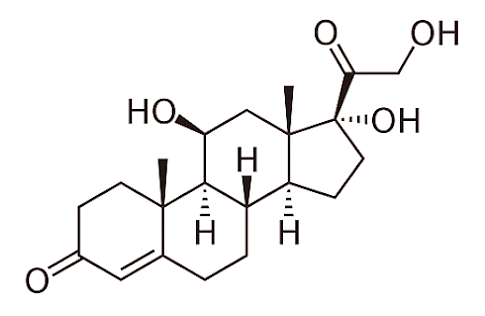
Glucocorticoids
Mineralocorticoids
Mineralocorticoids are hormones made in the adrenal cortex that keep the body's balance of salt and water (electrolyte balance and fluid balance). The most important mineralocorticoid is aldosterone.

Mineralocorticoids
Read More:
| Relevant Concepts | ||
|---|---|---|
| Corticoid | Cortisol Hormone | Adrenal Glands |
| Hormonal Imbalance | Female Hormones | Metabolites |
Sex Steroid Hormones
Steroid hormones called 'sex hormones' bind to steroid hormone receptors in vertebrates. They can also be referred to as gonadocorticoids, sex steroids, and gonadal steroids. Sex hormones include androgens, estrogens, and progestogens.
- Progestogens: They are commonly known as gestagens or progestogens. These steroid hormones belong to a group that binds to and stimulates the progesterone receptor (PR). Progestogens are so named because of the role they play in maintaining pregnancy.
- Androgen: A type of steroid hormone, natural or artificial, that binds to receptors in vertebrates and controls the development and maintenance of male characteristics is known as an androgen. Androgens are produced in the ovaries, adrenal glands, and testes.
- Estrogen: It is usually referred to as oestrogen, and is a sex hormone that affects secondary sex traits as well as the development and management of the female reproductive system. The three primary endogenous estrogens essential for estrogenic hormonal activity are Estrone (E1), Estradiol (E2), and Estriol (E3). Estestrol (E4) is another oestrogen released during pregnancy.
Read More: Chemical Coordination and Integration
Functions of Steroid Hormone
[Click Here for Previous Year Questions]
Steroid Hormones are composed of rings of carbon atoms, and are crucial for a variety of physiological processes including development, growth, energy metabolism, homeostasis, and reproduction.
Some important functions of Steroid Hormones are as follows:
- Carbohydrate Regulation
- Help Modulate Sexual Development
- Help Modulate Metabolism and Immunological Responses,
- Help Modulate Salt and Water Balance
- Resistance to Disease and Injury.
- Mineral Balance
- Reproductive Functions
- Inflammatory Response
- Stress Response
- Bone Metabolism
- Cardiovascular Fitness
- Activates DNA for Protein Synthesis
Steroid Hormone Synthesis
[Click Here for Sample Questions]
Endoplasmic reticulum and mitochondria are the areas in the cells from where steroid hormones are synthesized.
- Natural steroid hormones are produced by the gonads and adrenal glands predominantly from cholesterol.
- Due to their ability to travel through cell membranes, lipids bind to steroid hormone receptors and trigger cellular changes.
- Carrier proteins transport steroid hormones in the bloodstream including sex hormone-binding globulin or corticosteroid-binding globulin.
- The liver goes through further conversions and catabolism, along with other "peripheral" tissues and target tissues.
Read More: Chemical Coordination & Integration Important Questions
Mechanism of Action of Steroid Hormone
[Click Here for Previous Year Questions]
Steroid Hormones affect their target cells through multiple pathways. These numerous pathways can all be divided into two categories namley genomic and nongenomic pathways. Genomic processes are slow and vary the transcription levels of particular proteins in the cell, but non-genomic pathways move much more quickly.
Genomic Pathways
- The earliest mechanisms of steroid hormone activity to be identified were the genetic impacts.
- Since the steroid hormones in their free state are soluble in fat, this pathway requires that they pass through the cell membrane first.
- In the cytoplasm, the steroid may or may not go through enzyme-mediated processes including reduction, hydroxylation, or aromatization.
- The steroid is then binded to a massive metalloprotein called a nuclear receptor (steroid hormone receptor).
- Various steroid receptors dimerize in response to steroid-binding.
- Two receptor subunits form a single functional DNA-binding unit that can reach the cell nucleus on combining with each other.
- Steroid-receptor ligand complex binds to unique DNA sequences in the nucleus.
Read More: Chemical Coordination and Integration MCQs
Non-Genomic Pathways
There are numerous non-genomic pathways as they include non-genomic effect mechanisms.
- The plasma membrane based steroid hormone receptors mediate each and every one of these routes.
- Ion channels, transporters, G-protein coupled receptors (GPCR), and membrane fluidity have all been demonstrated to be affected by steroid hormones.
- Most frequently, GPCR-linked genes are among them.
Check More:
Things to Remember
- Steroid hormones are hormones that belong to the class of chemical compounds called steroids.
- They are produced by three steroid glands called the adrenal cortex, the testicles, and the ovaries.
- Placenta also secretes steroid hormones during pregnancy.
- Cholesterol is the main source of all steroid hormones.
- Sex Steroids and Corticosteroids are the two types of steroids.
- Corticosteroids are classified into Glucocorticoids and Mineralocorticoids.
- Androgens, Estrogens, and Progestogens are the three types of Sex Steroids.
- Steroid Hormones affect the target cells through Genomic and Non-Genomic Pathways.
Previous Years’ Questions
- Steroid hormone is derived from… (BCECE - 2004)
- Aldosterone is a steroid hormone and is important in the… (AIIMS - 2007)
- A steroid hormone which regulates glucose metabolism…. (NEET - 2006)
- Which of the following is true for the effect of steroid hormone…. (GUJCET - 2007)
- Ovarian hormones are usually… (COMEDK - 2007)
- Hypothetical plant hormones are… (AIIMS - 2014)
- Which of the following hormones is a derivative… (WBJEE - 2014)
- Which one of the following hormones is a modified… (MP PMT - 2010)
- The hormones involved in maintaining calcium balance… (KCET - 2017)
- Decreased levels of estrogen is a common cause for… (KEAM)
Sample Questions
Ques. How is Steroid Hormone produced? (2 Marks)
Ans. Steroid hormones are a group of hormones that are produced by three steroid glands namely the adrenal cortex, testicles, and ovaries. The placenta also secretes steroids while a woman is pregnant. All steroid hormones are derived from cholesterol.
Ques. Describe the function of hormones. (3 Marks)
Ans. Hormones regulate the functioning of entire organs, having an impact on a variety of physiological functions including growth and development, reproduction, and nutrient metabolism. Additionally, hormones affect fluid volume, salt and sugar levels in the blood, as well as how the body consumes and stores energy. The body's reactions to relatively little levels of hormones can be hugely potent.
Ques. Are steroid hormones derived from Cholesterol? (2 Marks)
Ans. Cholesterol is the genesis of all steroid hormones. They are transported to the cells of numerous organs through the bloodstream, where they regulate a wide range of physiological processes, which are the key pathways in the biosynthesis of steroid hormones.
Ques. Are steroids considered lipids or hormones? (2 Marks)
Ans. Steroids are one of the major classes of lipids. They can be distinguished from other lipid classes by the differences in their structure. An abundance of carbon hydrogens gives steroids, like other lipids. Thisis a primary characteristic of a nonpolar structure.
Ques. How can Steroids affect Hormones? (3 Marks)
Ans. Steroid use can hamper the body's regular hormone production. They can lead to reduced sperm production, decreased testicular function, low testosterone levels, and testicular atrophy.
- Steroids can trigger gene transcription either fast by attaching to cell surface receptors or gradually by attaching to cytoplasmic or nucleic receptors.
- The adrenal medulla and the adrenal cortex make up the adrenal glands.
Ques. What is the importance of Steroid Hormone? (2 Marks)
Ans. Steroid Hormones aid in the regulation of metabolism, inflammation, immunological responses, salt and water balance, the emergence of sexual traits, and resistance to damage and disease. The term "steroid" refers to both bodily hormones and pharmaceuticals created artificially to mimic the effects of naturally occurring steroids.
Ques. Which hormone makes up the principal steroid? (2 Marks)
Ans. Aldosterone is a steroid hormone that is released by adrenal glands. Aldosterone is the primary regulator of the body's salt and water balance, it is classified as a mineralocorticoid. It has a small impact on the metabolism of lipids, proteins, and carbohydrates.
Ques. What is the most abundant steroid hormone and where are steroid hormones stored? (3 marks)
Ans. Dehydroepiandrosterone is the most abundant circulating steroid in the human body, and is a key precursor hormone. On its own, it has minimal diverse effects, but when it is transformed into other hormones, like sex steroids, it has significant biological impact. Steroid hormones are not kept in the cell; instead, they are created in the endoplasmic reticulum and secreted as required.
Ques. Can hormones recover from steroid use? (2 Marks)
Ans. The natural hormone production can support a certain muscle mass and rate of training recovery. One can support more mass and recover more quickly by injecting synthetic hormones (such as steroids, testosterone, etc.). When a person stops using steroids, their hormone levels and, consequently, their muscle mass, return to normal.
Ques. How do steroid hormones act within the cell? Which two organs produce steroid hormones? (2 Marks)
Ans. Steroid hormones induce cell signaling pathways that control particular genes within the DNA of the cell. The hormone and receptor complex control transcription by altering the amount of mRNA produced from particular genes. They are primarily secreted by the ovaries, with minor contributions from the adrenal glands and (in males) the testes.
Check-Out:



Comments