


What is the chemical name of water

Collegedunia Team logo

Collegedunia Team

Content Curator

The chemical name of water is "dihydrogen oxide". It consists of two hydrogen atoms and one oxygen atom, with the chemical formula H2O.

  • It is a colorless, tasteless, and odorless liquid.
  • It is a polar molecule with a partial positive charge on hydrogen atoms and a partial negative charge on oxygen atoms.
  • It is essential for life and is used for many biological processes.
  • It is a good solvent, meaning it dissolves many substances.
  • It has a high heat capacity and high surface tension.
  • It has a unique property of expanding when it freezes, which allows ice to float.
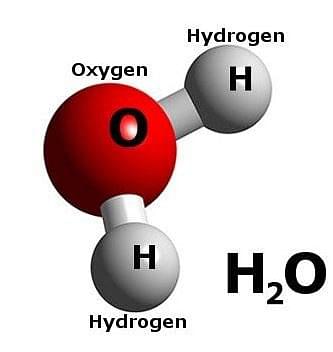
dihydrogen oxide

Dihydrogen Oxide

Check out:

CBSE CLASS XII Related Questions

  • 1.

    Conductivity of \( 2.5 \times 10^{-4} \) M methanoic acid solution is \( 5.25 \times 10^{-5} \) S cm\(^{-1}\).

    (a) Calculate its molar conductivity.

    (b) Calculate its degree of dissociation.

    [Given : \( \lambda^{\circ}_{(\mathrm{H^+})} = 349.5 \) S cm\(^2\) mol\(^{-1}\) and \( \lambda^{\circ}_{(\mathrm{HCOO^-})} = 50.5 \) S cm\(^2\) mol\(^{-1}\)]


      • 2.
        Consider the decomposition of hydrogen peroxide \( (\mathrm{H_2O_2}) \) as per the equation given below : \[ 2\mathrm{H_2O_2} \xrightarrow[\text{Alkaline medium}]{I^-} 2\mathrm{H_2O} + \mathrm{O_2} \] The mechanism for this reaction was found to be : Step I : \( \mathrm{H_2O_2} + I^- \longrightarrow \mathrm{H_2O} + IO^- \) (slow) Step II : \( \mathrm{H_2O_2} + IO^- \longrightarrow \mathrm{H_2O} + I^- + \mathrm{O_2} \) (fast) (a) Write the rate law expression. (b) Determine the order of reaction with respect to \( \mathrm{H_2O_2} \), \( I^- \) and overall order of reaction. (c) What is the molecularity of the reaction in Step II ?


          • 3.
            Draw the structure of 'X' in the following reaction:


              • 4.
                The chelating ligand used for the treatment of lead poisoning is :

                  • Ethane-1,2-diamine
                  • Oxalate ion
                  • Dimethylglyoxime
                  • EDTA

                • 5.
                  Which of the following curve represents the first order reaction?

                    • A
                    • B
                    • C
                    • D

                  • 6.
                    Following reaction takes place in one step:

                    \(2A + B \rightarrow 2C\)

                    How will the rate of above reaction change if the volume of the reaction vessel is decreased to one third of its original volume? Will there be any change in the order of reaction with the reduced volume?

                      CBSE CLASS XII Previous Year Papers

                      Comments


                      No Comments To Show
