



Content Curator
Water management is regulation of water resources in order to conserve maximum amount of water and to reduce the threat to life and property damage. Unregulated extraction and non-replenishment has reduced groundwater drastically and deteriorated its quality. Climate change has worsened the crisis further, which causes erratic and intense rainfall. There is also serious lack of infrastructure for safe disposal of waste water in both urban and rural areas, which further leads to contamination of water resources. Thus, with each passing day the need to take strong steps towards water management is growing and is calling for our immediate attention.
| Table of Content |
Key Terms: Water, Water Conservation, Resources, Rainwater Harvesting, Ground Water Recharge
What is Water Management?
[Click Here for Sample Questions]
Water management is the planning, distributing, managing and developing of resources and techniques, so as to ensure the optimum use and conservation of water resources. Proper implementation of steps towards water management can help us prevent the speedy deterioration of crucial sources of water.
India has about 18% of the world’s population and only 4% of the world’s water resources. We are water stressed and the consumption of water is increasing day by day exponentially. At global level too, with the rapid increase in the population to over 6 billion people in the past few years, the use of water has increased up to 500% and management of water has become a necessary step. In order to save India and the world from completely losing water resorces, water management and conservation has become the need of the hour.
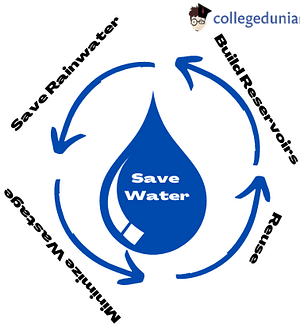
Water Management
Also Read: Advantages of Dams
Water Conservation
[Click Here for Sample Questions]
There is a misconception people have that, water is replenishable and Earth can never face its scarcity. But that is far from the reality. Water resources are depleting at a drastic pace and all living beings, including humans, are now evident of it. While its true that the Earth is 70% water, but only 0.3% of it can be used by humans and only 0.006% is fit for our consumption. For our upcoming generations, there won’t be any access to pure water if we do not involve water conservation as a habit in our lives. Water conservation is the practice of using water efficiently to reduce unnecessary water usage. It is important because fresh clean water is a limited resource, as well as a costly one.
Most of the rainwater gets wasted even though it is one of the most precious natural resources. Farmers can play an important role in water conservation methods by using suitable techniques like rainwater harvesting and drip irrigation. Urban as well as rural households can build rain water harvesting systems along with proper monitoring of usage of water for household activities.
Also Read:
Methods of Water Management
[Click Here for Sample Questions]
Water conservation and management has been a crucial part of our livlihoods since ancient times. Even Indus Valley Civilization has evidents of storage resrvoirs so as to conserve water. Some of the ways to manage and conserve water for its optimum use are listed below:
Rain Water Harvesting
Rainwater harvesting is collecting the run-off from a structure, traditionally, harvesting the rain from a roof. The rain will collect in gutters that channel the water into downspouts and then into some sort of storage vessel. Rainwater collection systems can be as simple as collecting rain in a rain barrel or as elaborate as harvesting rainwater into large cisterns to supply your entire household demand.
Groundwater Recharge
Groundwater recharge is increasing the natural groundwater supplies using man-made euipments and structures such as infiltration basins, trenches, dams, or injection wells. Aquifer storage and recovery (ASR) is a specific type of groundwater recharge practiced with the purpose of both augmenting groundwater resources and storing the water for the future for various uses.
Drip Irrigation
Drip irrigation is a type of irrigation system that has the potential to save water and nutrients by allowing water to drip slowly to the roots of plants, either from above the soil surface or buried below the surface. The goal is to place water directly into the root zone and minimize evaporation. Drip irrigation systems distribute water through a network of valves, pipes, tubing, and emitters. If managed properly, it can help us save an enormous amount of water that is wasted during the traditional irrigation methods.
Sewage Water Treatment
Sewage treatment is the process of removing contaminants from municipal wastewater, containing mainly household sewage plus some industrial wastewater. Physical, chemical, and biological processes are used to remove contaminants and produce treated wastewater that is safe enough for release into the environment. This is very helpful in both reducing the water pollution and recycling the water.
Also Read: Water Table
Things to Remember
- Water management is the planning, distributing, managing and developing of resources and techniques, so as to ensure the optimum use and conservation of water resources.
- Water conservation is the practice of using water efficiently to reduce unnecessary water usage. It is important because fresh clean water is a limited resource, as well as a costly one.
- Rainwater harvesting is collecting the run-off from a structure, traditionally, harvesting the rain from a roof.
- Drip irrigation is a type of irrigation system allows water to drip slowly to the roots of plants, either from above the soil surface or buried below the surface.
- Sewage treatment is the process of removing contaminants from municipal wastewater, containing mainly household sewage plus some industrial wastewater.
Sample Questions
Ques: What is the importance of water mnagement? (2 Marks)
Ans: Unregulated extraction and non-replenishment has reduced groundwater drastically and deteriorated its quality and so to ensure that our future generations will have secure access to pure water it is important to manage and conserve our water resources.
Ques: Why are water resources depleting at such a fast rate? (2 Marks)
Ans: Exploitation of water resources along with wastage and unregulated extractions are reducing the ground water level. Pollution and untreated sewage supplies make the rivers unhygeinic and harmful. The climate change is not helping either and combining all these, water resources currently are facing threat to their extistence. If not managed and conserved properly, there soon would be no water for our use.
Ques: What are the methods of water management? (2 Marks)
Ans: There are several methods of water management like rain water harvesting, ground water recharge, drip irrigation, sewage water treatment, construction of artificial resrvoirs and wells and many more.
Ques: What are water resources? (3 Marks)
Ans: Water resources, generally, are the sources of fresh water fit for human use and consumption. A few examples are rivers, lakes, glaciers, ground water and reservoirs.
Ques: What are the goals of water management? (2 Marks)
Ans: Goals of water manangement are promoting sustainable, economical, efficient and equitable use of allocated water resources. These can involve improving advantages and reducing the risk associated with current hydraulic facilities.
Ques: How does rainwater harvesting work? (2 Marks)
Ans: Rainwater harvesting is collecting the run-off from a structure, traditionally, harvesting the rain from a roof. The rain will collect in gutters that channel the water into downspouts and then into some sort of storage vessel. Rainwater collection systems can be as simple as collecting rain in a rain barrel or as elaborate as harvesting rainwater into large cisterns to supply your entire household demand.
Ques: Explain drip irrigation technique. (2 Marks)
Ans: Drip irrigation is a type of irrigation system that has the potential to save water and nutrients by allowing water to drip slowly to the roots of plants, either from above the soil surface or buried below the surface. The goal is to place water directly into the root zone and minimize evaporation. Drip irrigation systems distribute water through a network of valves, pipes, tubing, and emitters. If managed properly, it can help us save an enormous amount of water that is wasted during the traditional irrigation methods.
Ques: How can we recharge groundwater? (2 Marks)
Ans: We can recharge groundwater using man-made euipments and structures such as infiltration basins, trenches, dams, or injection wells. Aquifer storage and recovery (ASR) is a specific type of groundwater recharge practiced with the purpose of both augmenting groundwater resources and storing the water for the future for various uses.
Ques: What is the current situation of water in India and in the world? (3 Marks)
Ans: India has about 18 percent of the world’s population and only 4 percent of the world’s water resources. We are water stressed and the consumption of water is increasing day by day exponentially. At global level, with the rapid increase in the population to over 6 billion people in the past few years, the use of water has increased up to 500% and management of water has become a necessary step. In order to save India and the world from completely losing water resorces, water management and conservation has become the need of the hour.
Ques: What is sewage water treatment? (2 Marks)
Ans: Sewage treatment is the process of removing contaminants from municipal wastewater, containing mainly household sewage plus some industrial wastewater. Physical, chemical, and biological processes are used to remove contaminants and produce treated wastewater that is safe enough for release into the environment. This is very helpful in both reducing the water pollution and recycling the water.
Also Read:



Comments