



Content Curator
Causes of noise pollution range from minor household work, to large industrial work including factory work and also noise generated from transportation vehicles. Noise pollution is an undesired level of sound in the environment that affects human hearing and mental health. It is mainly the presence of a high pitched annoying volume of any sound. Noise pollution is a serious issue and affects health physically as well as psychologically.
| Table of Content |
Key takeaways: Noise pollution, Environment, Sound, Mental Health, Sleep Disturbance, Decibel scale.
What is Noise Pollution?
[Click Here for Sample Questions]
Anything that is undesired in the environment and affects the health of people living around it causes pollution in the environment. Noise pollution is an undesired level of sound in the environment and affects human hearing and health. It is mainly the presence of a high volume annoying sound.
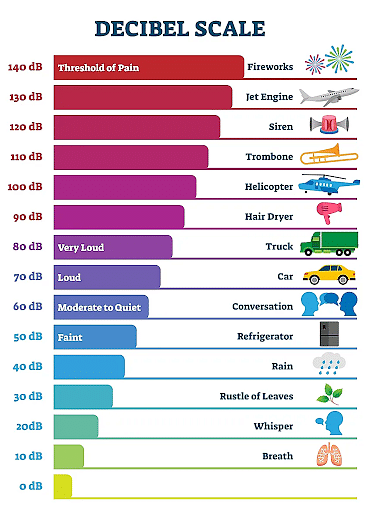
Sources of Noise Pollution
This sound can be due to a number of causes. This greatly affects mental health
People don’t realize how grave this situation is unless they are affected physically by it.
People are used to listening to high volume sound for entertainment purposes, this not only affects the eardrum, but also affects psychologically. Many people become deaf at an early age, and some also get frustrated or have a stress disorder much earlier in their lives.
Read More:
| Related Articles | ||
|---|---|---|
| Pollution effects on Plants | Air Pollution prevention and control act | Effects of Acid rain |
Causes of Noise Pollution
[Click Here for Sample Questions]
In 1987, noise was also included in the list of pollutants. There are a huge number of causes of noise pollution which are described below.
- Transportation vehicles: Honking on the road is one of the major causes of noise pollution. In the present era, there is an increasing number of vehicles on the road, which is contributing to noise pollution majorly. Also, exposure to raw sound from takeoff of an airplane also can cause deafness, as it creates around 150 dB of sound.
- Industrialization: Due to increasing industrialization, noise pollution has increased tremendously. There are huge machines, turbines, mills etc in these industries which act as one of the main contributing factors of noise pollution.
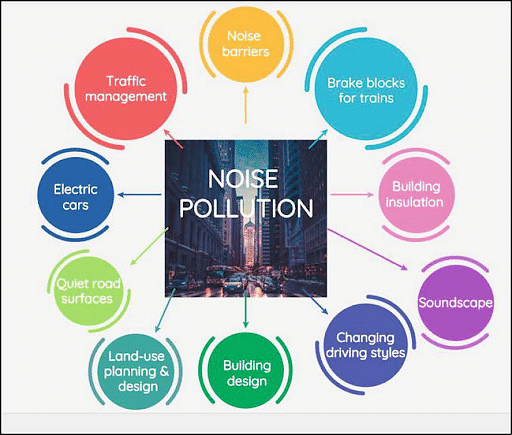
Causes of Noise Pollution
- Wedding parties/ functions/ events: Public gatherings including wedding functions, public concerts, or any religious event contribute majorly to noise pollution using large speakers and drums. Also, firecrackers, big music instruments cause noise pollution and air pollution at the same time.
- Mining Industry: One of the most overlooked causes is the mining industry. The big machinery causes a lot of noise as well as air pollution in the environment.
- Household pollution: In households, noise pollution can be generated due to mixers, washing machines, vacuum cleaners etc.
Effects of Noise Pollution
[Click Here for Sample Questions]
Noise pollution creates physical as well as psychological problems in individuals, such as
- Hypertension: Chronic exposure to high volume of sound causes hypertension in individuals, this also affects their sleep pattern and causes other serious problems like a change of breathing pattern, increased heartbeat and chronic stress.
- Partial to Complete Deafness: Continuous exposure to a high volume of sound can create partial to complete deafness. Overexposure to high volume can permanently damage the eardrums as well.

Effects of Noise Pollution
- Noise pollution can also affect mood and cognitive thinking. There is increased irritability, mood swings, and chronic stress disorders.
Read more:
| Relevant Articles | ||
|---|---|---|
| Pollution | Types of pollution | |
Things to Remember
- Any increased unwanted sound in the environment cause noise pollution
- Noise pollution can occur in both indoor as well as outdoor.
- Indoor noise pollution can be due to household appliances.
- Outdoor noise pollution can be due to vehicles, air transportation, industries etc.
- Noise pollution affects individuals seriously, and thus needs to be controlled and checked.
Sample Question
Ques. What is pollution? (1 mark)
Ans. Pollution can be defined as unwanted particles and things in the environment. It can be in air, water, soil. If the particles are in the air, it is known as air pollution. Noise pollution is also a type of air pollution.
Ques. Define noise pollution. (1 mark)
Ans. An unwanted high volume in the environment that affects the hearing ability of the individual and also affects them mentally and physically is known as noise pollution.
Ques. How does noise pollution affect individuals? (2 marks)
Ans. Noise pollution affects individuals in the following way:
- With continuous exposure to high volume, like loud music, earphones, machinery, jet airplanes, the eardrum is exposed and it causes complete to partial deafness.
- Due to continuous exposure to loud volume, the person is affected mentally. There is irritation, stress disorders and sometimes this leads to hypertension. The sleep pattern is affected and problems related to blood pressure arise.
Ques. What are different kinds of man-made and natural noise pollution? (2 marks)
Ans. Natural noise pollution includes thunderstorms, high tide volumes etc.
Man-made noise pollution includes car honking, loudspeaker volumes, machinery in factories, mills etc.
Ques. When was noise pollution considered and under which act? (2 marks)
Ans. In India, the air (prevention and control of pollution) act came into being in 1981, later on in 1987 noise pollution was also included in that.
Ques. Give some brief measures to lower noise pollution. (3 marks)
Ans. Noise pollution can be lowered with the following steps:
- No honking zone should be there in the residential area.
- The houses should have a better noise-cancelling system to prevent outside noise pollution.
- Household machinery like washing machines etc should not be installed near the bedroom to avoid exposure.
Ques. What measures can be taken to avoid noise pollution from industries? (3 marks)
Ans. The following measures can be taken to prevent noise pollution from industries
- The industries or factories should be placed on the outskirts of the city so that less number of residential people are exposed to it.
- There should be proper barring and muffling of sound using proper techniques like noise absorbing material, so that extra sound is not going out.
- The factory workers should be properly trained and given noise cancelling headphones to prevent their exposure.
Ques. What measures can be taken to improve the air quality index in your city? (4 marks)
Ans. To improve the air quality index in the city, the following measures can be taken:
- Promotion of CNG usage over diesel and petrol.
- Strict no burning of plastics or waste in an open environment.
- Promotion of activities like turning off the engine on the signals.
- Walking as much as one can, and avoiding personal vehicles.
- Using public transportation.
Ques. What is acid rain? (2 marks)
Ans. When excessive air pollutants are mixed with the rain droplets, like sulfates and they come down as additives in the rain droplets, it is known as acid rain. It is very harmful to the environment and corrodes buildings and monuments.
Ques. What are the effects of air pollution? (2 marks)
Ans. Air pollution has some serious effects on health, such as:
- Chronic problems like COPD.
- It causes and accentuates problems like asthma.
- It leads to the depletion of the ozone layer.
- It causes acid rain and deteriorates buildings and monuments.
Check-Out:



Comments