



Content Writer
Complex carbohydrates are high in vitamins and minerals, and are quickly becoming recognised as an essential component of human diets. Carbohydrates, which include starches and sugars, are biological constituents that are used as a source of energy in the body. Carbohydrates are made up of repeating units joined together, with the smaller forms known as monomers and the bigger formations known as polymers. Disaccharides are two bonded monosaccharides, whereas monosaccharides are monomers of carbohydrates.
| Table of Content |
Key Terms: Carbohydrates, food, vitamis, minerals, energy, sucrose, starch, maltose, biomolecules, starch, fibre
What are Complex Carbohydrates?
[Click Here for Sample Questions]
Most of us associate carbohydrates with foods such as bread, pasta, rice, and other grains. Carbohydrates, on the other hand, are considerably more than that. These are the primary and preferred sources of energy for the human body. Fibre, sugar, and starch are the three primary components. The carbohydrate family is no longer limited to this.
Simple and complex carbs are two types of carbohydrates. Carbohydrates are made up of three main ingredients: starch, fibre, and sugar. Simple carbohydrates include sugar, while complex carbs include starch and fibre. The amount of these components found in food determines the quality of nutrients.
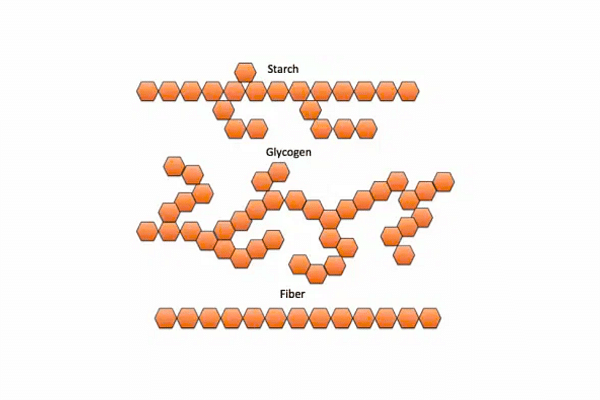
Complex Carbohydrates
Sugar molecules are merged together in long complicated chains to form complex carbohydrates. Beans, peas, veggies, and whole grains are all high in complex carbs. In the body, both complex and simple carbs are converted to glucose and used as energy. Glucose is absorbed by the brain and bodily cells. Unused glucose is retained in the muscles and liver rather than being converted to glycogen and utilised later.
Read More:
| Chapter Related Concepts | ||
|---|---|---|
| Carbohydrate Metabolism | RNA and DNA | |
| Cellulose | Fats and Oils | Sucrose |
Examples of Complex Carbohydrates
[Click Here for Sample Questions]
Some complex carbohydrates are better than others. Complex carbohydrates that have not been processed or refined are the healthiest, and they include:
- Brown rice, wild rice, oatmeal, and whole-grain bread are examples of whole grains
- Foods that resemble grains, such as quinoa (a seed) and buckwheat (a grass)
- Potatoes, sweet potatoes, and corn are examples of starchy vegetables.
- Everything from asparagus to zucchini is considered a non-starchy vegetable.
- Lentils, kidney beans, and chickpeas are examples of beans and legumes.
Structure of Complex Carbohydrates
[Click Here for Sample Questions]
The stoichiometric formula for carbohydrates is (CH2O)n, where n is the number of carbons in the molecule. In other words, the carbon-to-hydrogen-to-oxygen ratio in carbohydrate molecules is 1:2:1. This formula also explains how the term "carbohydrate" came to be: the components are carbon ("carbo") and water (thus, "hydrate"). Monosaccharides, disaccharides, and polysaccharides are the three forms of carbohydrates.
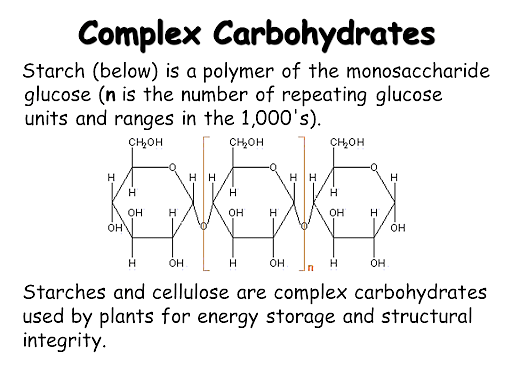
Structure of Complex Carbohydrates
Carbohydrates are a class of macromolecules that offer structural support to plant cells, fungi, and all arthropods, such as lobsters, crabs, shrimp, insects, and spiders, as well as providing energy to the cell. Depending on the number of monomers in the molecule, carbohydrates are classed as monosaccharides, disaccharides, or polysaccharides.
Animals, plants, and microorganisms all contain complex carbohydrates. They are components of cell membranes as well as cellular subcellular materials. They're also present in bodily fluids like blood, tears, milk, and urine. The covalent structures of between 4,000 and 6,000 natural carbohydrates have recently been identified.
Polysaccharides are complex carbohydrates that are unsubstituted at their reducing ends; examples include oligosaccharides in milk, cellulose in plant cell walls, and storage forms like starch and glycogen. Many additional complex carbohydrates found in nature are covalently linked to other molecules like proteins or lipids.
Complex Carbohydrates Foods
[Click Here for Sample Questions]
- Carbohydrates are the body's primary energy source.
- Minerals, vitamins, and fibre are all needed for optimal health and can be found in complex carbohydrate foods.
- Instead of processed sugars, which lack the vitamins and minerals found in natural and complex carbs, the majority of carbohydrates come from complex carbohydrates and natural sugars.
- Sugars that have been refined are referred to as "empty calories" since they have very little nutritional value.
- The only animal-derived food that has a significant amount of carbohydrates is milk. Carbohydrates are divided into two categories: simple and complex. Foods high in "healthy" complex carbs include whole grains, beans, and vegetables.
- Parents should promote foods high in complex carbohydrates and dietary fibre for children over the age of two, but caution should be exercised to ensure that these foods do not fill a baby up before energy and nutrient demands are met.
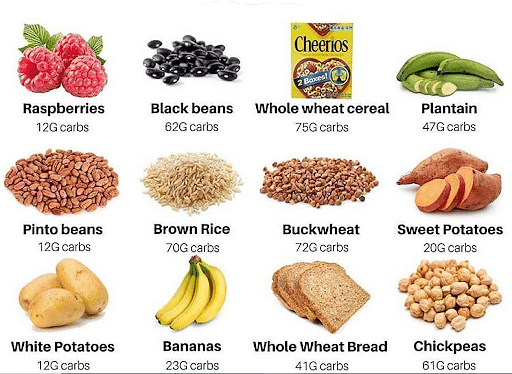
Complex Carbohydrates Foods
Simple vs. Complex Carbohydrates: What's the Difference?
[Click Here for Sample Questions]
Simple carbs and complex carbohydrates are the two forms of carbohydrates that may be clearly distinguished. Let's look at the definitions of both categories to better comprehend basic vs complex carbs.
| Sr.No | Simple Carbohydrates | Complex Carbohydrates |
|---|---|---|
| 1 | Easy to Digest | Takes more time to digest |
| 2 | It contains sweetness | In comparison, It contains less sweetness |
| 3 | Quickly spikes blood glucose level | Slowly spikes blood glucose level |
| 4 | There are two types namely: Monosaccharides & Disaccharides | There are two types namely: Polysaccharides such as starch |
| 5 | It's a term for carbohydrates with only one monosaccharide unit. | A polysaccharide made up of hundreds or thousands of monosaccharide units is referred to as a polysaccharide. |
| 6 | Eg: Sucrose, fructose, lactose, Maltose, and glucose | Eg: Whole grains, bread, cereals, starchy vegetables. |
Things to Remember
- Carbohydrates are made up of three main ingredients: starch, fibre, and sugar. Simple carbohydrates include sugar, while complex carbs include starch and fibre. The amount of these components found in food determines the quality of nutrients.
- Simple and complex carbs are two types of carbohydrates. These complex carbohydrates are high in vitamins and minerals and are quickly becoming recognised as an essential component of human diets.
- Complex carbohydrates that have not been processed or refined are the healthiest, and they include: Brown rice, wild rice, oatmeal, and whole-grain bread are examples of complex carbohydrates.
- Simple carbs are less nutrient-dense than complex carbs. They have more fibre and take longer to digest. This also makes them more full, which makes them a good weight-loss option.
- Complex carbohydrates are divided into two categories: fibre and starch. Fibre is particularly significant since it aids with intestinal regularity and cholesterol control.
Also Read:
Sample Questions
Ques. What are the benefits of complex carbohydrates? (1 Mark)
Ans. Complex carbs frequently meet the body's energy, nutritional, and fibre requirements. It's a better alternative. Starch simple sugars are broken down in the body. The body needs to break down all sugar/starch into glucose in order to use it.
Ques. What is the difference between complex and simple carbohydrates? (1 Mark)
Ans. Bread and pasta, for example, contain complex carbs. Basic carbohydrates can be found in foods like table sugar and syrups. Sugar molecule chains in complex carbohydrates are longer than in simple carbohydrates. The body converts these sugar molecules into glucose, which it needs for energy.
Ques. What are the four different kinds of Complex Carbohydrates? (1 Mark)
Ans. Monosaccharides, disaccharides, oligosaccharides, polysaccharides, and others are the four chemical groups of saccharides. Monosaccharides and disaccharides, the smallest (lowest molecular weight) carbohydrates, are generally referred to as sugars.
Ques. Why are Polysaccharides called Complex Carbohydrates? (1 Mark)
Ans. Polysaccharides, often known as complex carbohydrates, are starches made up of longer saccharide chains that take longer to break down. Polysaccharides are energy storage compounds (e.g., starch and glycogen) as well as structural elements (e.g. cellulose in plants and chitin in arthropods). They are usually made up of three or more linked sugars chemically.
Ques. Name five carbohydrate sources. (1 Mark)
Ans. Carbohydrates can be found in a variety of meals, both healthy and unhealthy, including bread, beans, milk, pasta, potatoes, cookies, noodles, soft drinks, candies, and cherry pie. They also come in a variety of forms. Sugars, starches, and fibres are the most common and abundant forms.
Ques. Are fruits a good source of Complex Carbohydrates? (2 Mark)
Ans. No, the majority of carbohydrates in fruits are simple carbs like sucrose, glucose, and fructose. Fruits, on the other hand, include a certain amount of fibre, which is a type of complex carbohydrate. Complex carbohydrates, on the other hand, do not contribute to blood sugar spikes. The Glycemic Index, or GI number, can properly index this. Complex carbohydrates are foods that have a high GI number. Fruits cannot be classified as complex carbs because their GI values are lower. Some fruits, on the other hand, can be classified as complex carbohydrates.
Ques. What are the benefits of having Complex Carbs over Simple Carbs? (2 Mark)
Ans. Simple carbs break down to glucose for energy and are used right away, whereas complex carbs break down to glucose at a far slower rate than simple carbs, ensuring that you have a consistent flow of energy. The non-starchy vegetables are the only carbs that the body smoothly digests. They're high in fibre and low in carbohydrates.
For Latest Updates on Upcoming Board Exams, Click Here: https://t.me/class_10_12_board_updates
Check-Out:



Comments