



Education Journalist | Study Abroad Lead
Curium is a silvery-hard metal having a rather high melting and boiling point for an actinide, with the symbol Cm and atomic number 96. It is a transuranic radioactive chemical element. Magnetic characteristics are also present in this metal, The resistivity of this metal increases as the temperature rises. This actinide element was named after Marie and Pierre Curie, two scientists notable for their work on radioactivity. The group of Glenn T. Seaborg at the University of California, Berkeley, was the first to purposefully create and identify curium in July 1944.
| Table of Content |
Keyterms: Curium, Actinide, Melting and boiling point, Transuranic radioactive element, Radioactivity, Metal, Heat energy, X-ray
Applications of Curium
[Click Here for Sample Questions]
- In the power generating industry, curium-244 and curium 242 are employed in thermoelectric and thermionic converters.
- Curium is also used in X-ray spectrometers for qualitative analysis.
- Curium is employed as a source of electricity in biotechnology and medical applications such as pacemakers.
- Curium produces about 3 watts of heat energy per gramme. As a result, it is employed in spacecraft applications.
Also Read:
| Related Articles | ||
|---|---|---|
| Hydrochloric Acid | Neodymium | Promethium |
| Atomic Orbitals | Transuranium Element | Atomic Radius |
Properties of Curium
[Click Here for Sample Questions]
| Symbol | Cm |
|---|---|
| Atomic Number | 96 |
| Atomic Symbol | Cm |
| Atomic Mass | 247 u |
| Melting Point | 2,453 F 1,345 C |
| Boiling Point | 5,630 F 3,110 C |
| Key isotopes | 243Cm 248Cm |
| Group | Actinides |
| Colour | Metallic silver |
| State | Solid at standard temperature (20oC) |
| Period | 7 |
| Classification | Metallic |
| Block | f |
| Density | 13.51 gram per cm |
| Odour | Odourless |
- Curium is a radioactive element.
- It has a glossy and silvery appearance as a metal.
- It is malleable, chemically reactive and electropositive.
- In the presence of air, its surface quickly oxidises, forming a thin coating.
- It dissolves quickly in dilute solutions to generate Cm (III) solutions.

Atomic Mass of Curium
Preparation of Curium
[Click Here for Sample Questions]
Metallic curium is made by decreasing the elements that make it up. Curium (III) fluoride was initially used to make metallic curium. This process took place in a synthetic environment that was devoid of oxygen and water. A device made of tungsten and tantalum was used to produce the environment. Lithium or barium was also utilised as a reducing agent.
CmF3 + 3 Li → Cm + 3 LiF
The reduction of curium (IV) oxide is another method of getting metallic curium. Zinc-magnesium alloy in a combination of magnesium fluoride and magnesium chloride can be used to carry out this process.
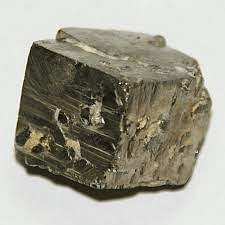
Curium
Effects of curium on Health
[Click Here for Sample Questions]
Ingestion of curium-contaminated food and drink, as well as inhalation of curium-contaminated dust, are the main routes of exposure. Unless there is a local source of contaminated dust, the most dangerous exposure is ingestion. Curium is taken up in the body considerably more rapidly if inhaled than eaten. Curium accumulates in the bones, its radiation prevents the development of red blood cells. As a result, curium is regarded as extremely hazardous. Bone cancers caused by ionising radiation released by curium isotopes accumulated on bone surfaces are one of the major health problems.
Environmental effects of Curium
[Click Here for Sample Questions]
The most frequent form of curium in the environment is curium oxide.The majority of environmental curium was caused by atmospheric nuclear weapons testing, which halted worldwide after 1980. Localized contamination has resulted from accidents and other discharges from weapons manufacturing facilities. However, the amount is insignificant, and its radiation contributes just a small percentage.
Sources of Curium
[Click Here for Sample Questions]
Curium is most likely present in natural uranium deposits as a result of a series of neutron captures and beta decays supported by the modest neutron flux naturally present in uranium ores. Natural curium, on the other hand, does not appear to exist today. It could, nevertheless, have existed in the past. 247Cm, the most stable curium isotope, has a half-life of 16 million years. This is a relatively brief period of time when compared to the age of the Earth. As a result, any primordial curium that existed millions of years ago would have vanished.
Things to Remember
- Curium is a radioactive silvery-white metal that is hard and dense.
- In dry air at room temperature, it tarnishes slowly.
- The majority of trivalent curium compounds are slightly yellow in colour.
- This element is radioactive, and needs to be handled with care.
- Prolonged exposure to this element can lead to health related problems.
- Because of its radioactivity, the element is thought to glow red in the dark.
- The Alpha Proton X-ray Spectrometer has been used to detect the presence of chemical elements in the atmosphere and rock surface compounds of Mars.
- Because of its radioactivity, curium is dangerous. It builds up in bones and damages the marrow, preventing red blood cell development.
Also Read:
Sample Questions
Ques: Which Isotope of Curium Is Used in Pacemakers? (1 mark)
a) Cm – 244
b) Cm – 252
c) Cm – 248
d) Cm – 242
Ans: d. Cm – 242 can be found in pacemakers.
Ques: Who Identified and Discovered Cm? (1 mark)
a) Glenn T. Seaborg
b) Albert Newton
c) Marie Curie
d) Pierre Curie
Ans: a. Glenn T. Seaborg identified as well as found Curium.
Ques: What device is capable of converting nuclear energy to electrical energy? (1 mark)
a) Thermocouples
b) ion accelerator
c) APXS spectrometers
d) Salt bridges
Ans: c. APXS spectrometers can convert nuclear energy into electricity.
Ques: What is the Curium's Natural Color? (1 mark)
Ans: Its colour is a metallic silvery-white. At ordinary temperatures, however, it quickly oxidises and begins to tarnish.
Ques: Why is Curium regarded as a hazardous metal? (1 mark)
Ans: Due to its high radioactive emission, it is classified as a dangerous metal. It has the potential to cause a variety of cancers in animals.
Ques: From below, which is the Cm-242 half-life? (1 mark)
a) Around 163 days
b) Around 163 seconds
c) Around 16300 years
d) Around 163 years
Ans: a. The half-life of Cm – 242 is around 163 days.
Ques: In the Periodic Table, where does Curium belong? (1 mark)
a) Halogens
b) Alkali metals
c) Lanthanide series
d) Actinide series
Ans: d. Curium belongs to the Actinides series.
Ques: What is the Curium Neutron Number? (1 mark)
a) 151
b) 150
c) 152
d) 153
Ans: a. Curium has 151 neutrons.
Ques: In which year curium was found? (1 mark)
a) 1962
b) 1954
c) 1930
d) 1944
Ans: d. 1944
Ques: What color does curium glow? (1 mark)
Ans: Curium is a hard, dense radioactive silvery-white metal. It tarnishes slowly in dry air at room temperature. Most compounds of trivalent curium are slightly yellow in color. Curium is highly radioactive and it glows red in the dark.
For Latest Updates on Upcoming Board Exams, Click Here: https://t.me/class_10_12_board_updates
Check-Out:



Comments