



Content Curator
Electrical cables help transport electrical energy from one point to another. Electrical cables are composed of electrically conducting materials with insulation layers. These when connected to devices at the right terminals generate power to run it. Based on the application, a variety of factors determine the type of cable to be used.
Read More: Some Natural Phenomena due to Sunlight
| Table of Content |
Key Terms: Electric Cable, Electric Wire, Conductor, Insulator, Shielded cable, Coaxial Cable, Twisted-pair Cable, Circuits
What is an Electrical Cable?
[Click Here for Sample Questions]
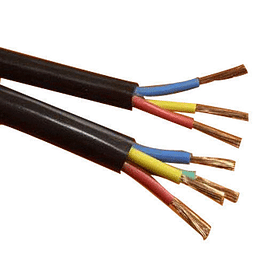
Electric cables are current-carrying wires which are bonded, twisted, or braided together in a single assembly. These wires are made from electrically conducting materials that are secured with one or more insulation layers. The entire setup is called a Cable Assembly. These cables carry electrical signals and aid the generation, transmission, and distribution of electric power.
Also read:
| Concepts Related to Electrical Cable | ||
|---|---|---|
| Physical Significance of Electric Field | Electric Flux | Charging by Induction |
| Types of Wiring | Power Transformer | Circuit |
| Ampere | Potential Energy | Carbon Resistor |
Components of an Electrical Cable
The electric cable is composed of three major components:
- Conductors: Conductors are the electricity transmitting wires in a cable. These are made from high conducting metals like Copper and Aluminum which have low resistance and can be used for high voltage applications.
- Insulators: The conducting wires are set apart using insulation materials to prevent any abnormalities in the current flow path. Being bad conductors of electricity, these prevent short circuits and unwanted current flow paths. In earlier times, paper, cloth, or rubber were used as insulating materials, however, these are now replaced with different synthetic polymers based on their application. Examples: Polyethylene, Butyl Rubber, etc.
- Sheath: These wires protect the cable from atmospheric conditions like high moisture in the air, chemical reactions, or fire attacks. Commonly used sheaths are made from polyvinyl chloride (PVC).

Components of an electric cable
Frequently Asked Questions on Electrical CableQues. What is an Underground Cable? (1 mark) Ans. An Underground Cable is a cable that is buried under the ground for the transmission and distribution of electric power. This method is often used in densely populated places. Ques. What cable do the Telecommunication Companies use to transmit telephone signals? (1 mark) Ans. Fibre Optics Cable is the type of cable used by Telecommunication Companies for the transmission of telephone signals. Ques. What is meant by the screening of cables? (1 mark) Ans. Screening of cables usually means the protection of cables through earthed wire mesh in order to avoid electromagnetic interference from various other signals. |
Wire Color-Coding
Based on the phase of power supply and voltage applied, the wirings in the cable are differentiated using color-coding. This allows adherence to safety standards and easy identification.
A single-phase supply needs a line, a neutral, and a ground wire each. Whereas, for a three-phase supply, three-line wires, a neutral, and a ground wire are needed. There are different standards of coding followed across countries in the world. The standards for colour-coding used in India are:
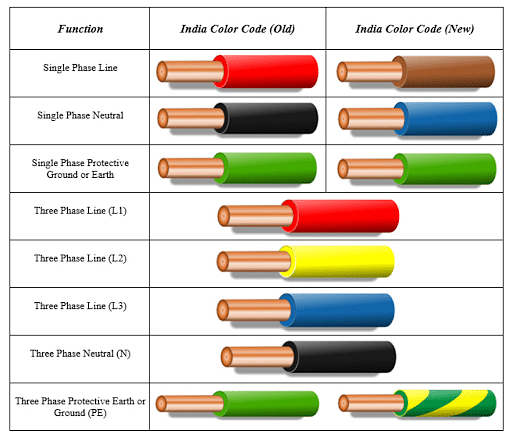
Standard color-coding for electrical wires in India
Also read:
Properties of Electrical Cable
Listed below are some standard properties of cable wires:
- Strength and Flexibility: Wires must have great insulation against external influences and should be easily installable. Eg: telephone lines, cameras, etc.
- Fire Retardant: Fire accidents and exhausts can cause damage to the wires. A fire-resistant material of wires minimizes damage in times of fire attacks.
- Long Life and Heat Resistance: Frequent maintenance of wirings in public or private facilities is not feasible. Wiring materials should hence be capable of withstanding heat as per standards and should be viable.
- Non-toxic and Environment-Friendly: Based on the site of installation, wiring materials must not contribute to producing pollutants that can damage property and life.
- Simple Usage: Complex circuits limit the application of the wirings. Hence, for domestic and commercial uses, the wirings are mostly comprehendible and outer insulation is ensured for security reasons.
- Cost-Effective: Cables are the backbones of electrical circuits. This makes it necessary to ensure they are available at a fair price.
Also check: Cells In Series and Parallel
General Applications of Electrical Cable
Electrical cables find application in almost every aspect of our day-to-day life. Some of the places where Electrical Cables are used Include:
- Homes
- Buildings
- Malls
- Tunnels
- Mines
- Metros Projects
- Airports
- Power Plants and Factories
- Ships
- Railways
- Construction Sites
Manufacturers of electrical cables and their components have a huge task at hand in abiding by the set standards. Serious accidents from faulty wirings can cause damage to vulnerable individuals and property sites. Risks of fire hazards, smoke, and harmful exhausts can further worsen the situation. Hence there are tests in place which need clearance so that safety is ensured in the respective facilities.
Also read: Resistors in Parallel
Types of Electric Cables
Based on their application, discussed below are a few types of electric cables:
- Shielded Cables: These are used in applications involving high voltage transmission like in security systems installed in public spaces. One or more insulated wires are embedded inside a conducting layer. The shield is consists of woven braided strands of Copper or Aluminium and conducting layer of a polymer which is overall enclosed in a jacket. This arrangement removes frequency irregularities and other external interferences in devices.
- Coaxial Cables: These are a type of shielded cables used to transmit television and radio signals. An inner conducting core is shielded by concentric conducting layers. These are separated by insulating layers and the whole setup is enclosed in a jacket.
- Fibre Optics: Optical data signals are transmitted using these cables. Light-based technology is used to carry information between two points. Thin strands of glass or plastic form the basic composition in these types of cables. Internet signals are predominantly transmitted using this cable type.
- Twisted Pair cables: This cable type is predominantly used in telephone cables to resist external disturbances. Two or more insulated wires are twisted together and colour-coded in this cable type.
- Power Cables: This type of cable is used in power cords and extension cables owing to their flexible usage. These comprise of one or more electrical conductors clasped with a sheath. Predominantly used in transmitting electrical power, these cables can be used overhead and also can be buried underground. Flexible power cables are used in portable devices, mobile tools, and machinery.
Also Check: Difference between LCD and LED
Things to Remember
- Electrical Cables are made of three major components: conductor, insulation, and sheath.
- The conductor carries electric signals, the insulation secures the electric circuit, and the sheath prevents unwanted chemical reactions caused by external factors.
- Cables can be divided broadly into Shielded and Power types.
- Coaxial, Fiber optics and Twisted-pair are Shielded Cables predominantly used to establish networks.
- A single-phase supply needs a line, a neutral, and a ground wire each, whereas, for a three-phase supply, three-line wires, a neutral, and a ground wire each is needed.
- Homes, buildings, malls, tunnels, mines, metros projects, airports, power plants and factories, ships, overhead power lines, railways, construction sites are some applications of Electrical cables.
Sample Questions
Ques: What are the components of an electric cable? Explain briefly their significance. (3 marks)
Ans: Electric cables comprise of three components
- Conductor: This part is made of Copper or Aluminium as they are good conductors of electricity. The conductor transmits an electric signal from one point to another.
- Insulation: This part keeps the conductors separated thereby preventing short-circuiting or an unwanted current flow path. Insulations are made from synthetic polymers like butyl rubber, polyvinyl chloride, etc.
- Sheath: This part prevents damage to wire from atmospheric influence or chemical reactions.
Ques: Differentiate between a cable and a wire? (2 marks)
Ans: Copper or Aluminium are metals that are good conductors of electricity. These conductors in the form of a stranded wire insulated with a polymer non-conductive coating is a wire. A cable is a combination of two or more shielded wires in a single jacket that can be used for the generation, distribution, and transmission of electric power.
Ques: List out different applications of wiring in a typical household? (4 marks)
Ans: Common applications of wiring in a household are:
- Broadband network cable- example of a coaxial cable
- Telephone set: example of twisted-pair cable
- Portable lights: example of optic fiber cable
- Extension cords: example of the power cable
Ques: What cables are typically used in homes for power? (3 marks)
Ans: Power cables made from conducting materials like copper and aluminum are widely used in households. They can be buried in the ground or used overhead for transmitting electric signals, thus making them advantageous over other cable types. Based on the use, different sizes and power cables made from different materials are used. Major components are- conductor, insulation, and outer jacket.
Ques: Where is Optical fiber cable used? (2 marks)
Ans: Optical fiber cable uses light technology to transmit an electrical signal from one point to another in a fiber. The major components of this cable are glass or plastic strands. These fibers facilitate long-distance communication and permit data transfer at higher bandwidths.
Ques: When do we use shielded cables? (3 marks)
Ans: Shielded cables are used when there are unwanted electrical noises or electromagnetic interferences that affect data and power transfer. These are composed of insulating conductors embedded in a conducting layer with protective insulation. These are typically used in airports, radio stations, and heavy industrial settings wherein external interferences need to be minimized for the proper functioning of the device.
Ques: Mention properties of cables suitable to be laid underground? (4 marks)
Ans: A cable to be laid underground should have the following features:
- Good strength and flexibility
- Non-inflammable
- Moisture resistant
- Resistant to acid or alkali attacks
- Long life
- Cost-effective
Ques: What are the uses of electrical cables? (4 marks)
Ans: Electrical cables find application in almost every aspect of our day-to-day life. Homes, buildings, malls, tunnels, mines, metros projects, airports, power plants and factories, ships, overhead power lines, railways, construction sites, and other locations which require an electricity supply. Manufacturers of electrical cables and their components have a huge task at hand in abiding by the set standards. Serious accidents from faulty wirings can cause damage to vulnerable individuals and property sites. Risks of fire hazards, smoke, and harmful exhausts can further worsen the situation. Hence there are tests in place which need clearance so that safety is ensured in the respective facilities.
Also check:



Comments