



Content Writer
Man-made fibres refer to the type of fibres that are created by man. The chemical composition, structure and properties of these fibres are changed during the manufacturing process.
- Man-Made Fibres refer to artificially made fibres that are different from natural fibres like cotton, silk or wool.
- Like plastic, they are also created from polymers.
- Nylon is the first man-made fibre.
- Natural fibres and synthetic fibres are two man-made fibres.
- Man-made fibres are significant parts of the NCERT Class 12 Chemistry syllabus of the recent academic year.
- They are used for several products like garments, carpets, drapes or other home-furnishing items.
- Some industrial items include drive belts, tyre cords, etc.
Key Terms: Man Made Fibres, Polymers, Plastics, Rayon, Natural Fibres, Synthetic Fibres, Polyester, Cellulose, Proteins, Monomers, Spinning
What are Man Made Fibres?
[Click Here for Sample Questions]
Man made fibres are a type of fibres that are created by man. These fibres are synthesised in the laboratory as they cannot occur naturally. They are produced from polymers- where molecules look like chains and are of both great weight and size.
- Some of these fibres are prepared from cellulose polymers that occur naturally in plants such as cotton, wood and flax.
- Man-made fibres are popular due to their resistance power against heat and mildew and their strength.
- These types of polymers are formed by continuous combinations of monomers.
- The properties of these fibres are altered and changed during the production process.
- Rayon and acetate are two man-made fibres created from cellulose polymers.

Man Made Fibres
Also Read:
| Related Articles | ||
|---|---|---|
| Lawrencium | Lead Iodide | Maillard Reaction |
| Manganese Dioxide | Animal Fibre | Synthetic Fibre |
Types of Man Made Fibres
[Click Here for Sample Questions]
There are two man made fibres which are as follows:
Natural Fibres
Natural Fibres are a type of fibres that are prepared from animals and plants. These fibres exhibit elasticity, which means they stretch when put under tension and return to their original length when the tension is removed.
- Natural Fibres are composed of materials of natural origin
- Here, necessary cellulose is collected from the wood pulp and further modified in a controlled atmosphere.
- These fibres are flexible and relatively strong.
- When natural fibres are not used for production, they are broken down with the help of bacteria.
- Some important plant fibres in the industry include hemp, jute, and flax fibre.
- Cotton, silk, jute and wool are common natural fibres.
Some of the sub-types of Natural Polymer fibres are the following:
- Cellulose Fibres
- Cellulose Ester Fibres
- Protein Fibres
- Other Natural Polymer Fibres
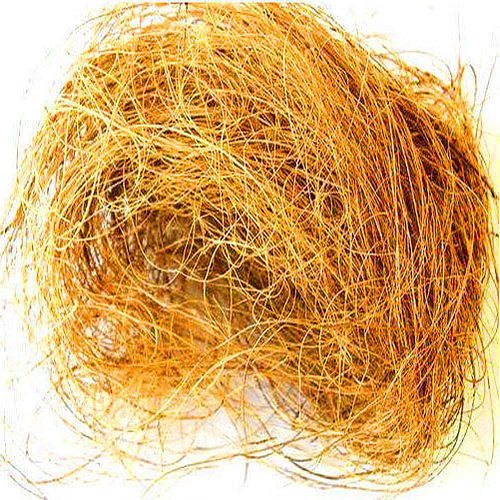
Natural Fibre
Synthetic Fibres
Synthetic Fibres are fibres that are composed of polymers produced in chemical laboratories of industrial plants. They can include compounds of various natures and can be produced in large numbers for various commercial causes.
- These fibres can withstand a lot of pressure, and many of these fibres have extended uses other than textiles.
- Synthetic fibres are cheaper and more durable than natural fibres.
- These fibres can easily blend with other fibres and endure good elasticity.
- This type of fibre can handle the heavy load without breaking.
- Polyester is a common example of synthetic fibres.
Some of the important Synthetic fibres are the following:
- Polyamides
- Polyvinyl derivatives
- Polyesters
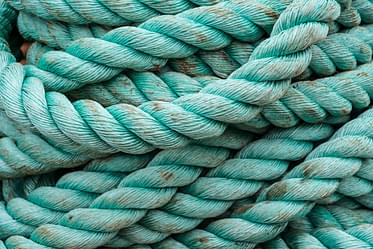
Synthetic Fibre
List of Man-made Fibres
[Click Here for Sample Questions]
Some of the significant man-made fibres are as follows:
Rayon
Rayon and acetate are obtained from cellular base. A cellulose base, derived from cotton linter and wood pulp, acts as the base for the creation of these fibres.
- The fibre was created by French Chemist Chardonnet.
- According to him, the nitrocellulose fibres within the cotton and wood pulp can be chemically transformed into cellulose fibre.
- The production of the rayon and acetate on commerical scale began in France in 1891.
Nylon
Nylon is a type of artificial fibre which is exceptionally strong, hard and water-resistant. It is used as polyamides, which are dependable for our entire lives.
- The year 1930s witnessed the production of Nylon for the first time.
- Nylon 6,6 is the one selected for commercial purposes.
- It consists of two organic compounds, and each of those compounds contains six carbon atoms.
Polyesters
Polyester was invented in 1938 out of Ethylene Glycol. Gradually, in 1972, it was replaced by Nylon and became the most-produced man-made fibre.
- It is a class of polymers containing the ester group in the chain.
- These are used for manufacturing types of car tyre reinforcements.
- They are non-biodegradable and moisture-resistant.
Chemical Composition of Man Made Fibres
[Click Here for Sample Questions]
One of the common features of all the polymers that aid the fibre-formation process is their linear structure. Polymers are created by their conjoined force, connected through bonds of smaller units referred to as Monomers.
- Monomers join each other to form a chain that forms the linear structure of a polymer.
- In the case of some polymers, shorter chains grow from longer chains, enabling a branch-like structure to be formed.
- These branch structures sometimes form a series of cross-links and create a network-like structure.
- While they are cooled, linear and branched polymers maintain their shape due to the intermolecular or Van der Waals force.
After applying heat, they melt and become unlinked once the intermolecular forces no longer work. Since they also melt with the help of an appropriate solvent, they are quite suitable for creating fibres.
- Unlike the linear and branched ones, network polymers create complicated bonded structures.
- They need to undergo proper chemical decomposition methods to melt.
Properties of Man Made Fibres
[Click Here for Sample Questions]
Important properties of man made fibres are as follows:
- Man made fibres are one of the tougest fibres.
- They have the capacity to hold the pressure.
- These fibres are naturally resistant to chemicals.
- Man made fibres have high elasticity and durability.
- These fibres do not shrink easily.
Properties of some significant man made fibre with their application are as follows:
| Polymer Name | Polymer type and family | Application in Apparel and Home-furnishing | Industrial Application |
|---|---|---|---|
| Cellulosics | Regenerated Cellulose | Rugs or substitute for clothing items | Disposable fabrics, paper |
| Cellulose Triacetate | linings of a suit or coat | Cigarette filters | |
| Polyamide | Polycaprolactam | Hosiery items, sportswear, lingerie, etc. | ----------- |
| Polyhexamethylene | Hosiery items, sportswear, lingerie, etc. | ----------- | |
| Polycaprolactam | Hosiery items, sportswear, lingerie, etc. | Seat belts, tires, nets and parachutes, hoses | |
| Polyhexamethylene | Hosiery items, sportswear, lingerie, etc. | Seat belts, tires, nets and parachutes, hoses | |
| Aramida | Poly-m-phenylene tereph-thalamide | ---------- | Bulletproof apparel, tire belts |
| Poly-m-phenylene | ---------- | Flameproof clothing | |
| Polyester | Polyethylene terephthalate | Carpets, press clothes | Seat belt, sewing threads |
| Polyacrylonitrile | Acrylic | Can be used as wool | Filters |
| Modacrylic | Flame resistant clothing items | Flame-proof tents |
Manufacturing and Fabrication Process of Man Made Fibres
[Click Here for Sample Questions]
There are many ways man made fibres are created. Following techniques are some of the most significant ones.
Spinning Technique
Spinning is the process of drawing fibres and twisting them to form a continuous thread or yarn. Before converting into fibre, polymers must be converted into a liquified or semi liquid stage.
- It can be done either by dissolving the polymer into an appropriate solvent or by heating and melting it.
- The process enables the longer molecules to move without any restriction.
- As a result, the polymer starts to become liquid and gets stored in a device called the Spinnerette.
- The liquid then is made hard to turn into a solidified stage of the fibre.
- It is used frequently in the textile industry.
- There are various types of Spinning techniques, such as solution or wet spinning, melt, gel and emulsion spinning.
Technique of Texturing
Texturing refers to the formation of coils or loops in the filament and the resulting changes in the behavioural patterns of the fabrics. From softness, elasticity, and rough texture to resilience power, texture plays a significant role in the process of man-made fabric formation.
Stuffing Technique
In this process, fabrics are carefully spun from a tow. Tows are put into one box, and together, they form a yarn plug. Once the process of crimping is over, the tow is cut into staple sizes and ready to be shipped.
Advantages of Man Made Fibres
[Click Here for Sample Questions]
The advantages of man made fibres are as follows:
- Man-made fibres retain their original shape even after washing and wear.
- These fibres can easily be stretched out.
- They are less expensive in comparison to natural fibres.
- Man-made fibres help in the reduction of laundry costs.
- They exhibit strong resistance to moths, mildew, insects, and mould.
- The storage of these fibres is quite simple.
Disadvantages of Man Made Fibres
[Click Here for Sample Questions]
The disadvantages of man made fibres are as follows:
- Man-made fibres cannot absorb moisture, thus causing our bodies to retain heat from perspiration.
- Since these fibres are rough, they are not suitable for pyjamas, underwear, etc.
- Some people might develop skin allergies after wearing these fibres.
- These fibres are hydrophobic in nature.
- Man-made fibres cannot be worn during hot weather.
Things to Remember
- Man-made fibres are praised all over the world mainly due to their availability and their strength.
- Artificial fibres go through an enormous number of compositional, structural, and moderation changes during formation.
- Depending on the molecular structure of the polymers, the fabric formation process gets selected.
- It also heavily depends upon the purpose of that particular fabric.
- They are used extensively both as home-furnishing objects and industrial goods.
- Both Natural and Man-made fibres can be constructed out of polymers.
- The man-made fibres, however, are only made of synthetic polymers created within a strictly controlled and supervised atmosphere.
Also Read:
Sample Questions
Ques: What are some of the properties of man-made fibres? (2 marks)
Ans: Man-made fibres are known to be more trustworthy than natural ones like silk or wool. Here are some characteristics of man-made fibres:
- Heat and mildew resistant
- Strong and resilient
- Composed of various chemical and molecular structures
Ques: What type of fibre is the best kind? (2 marks)
Ans: Among all the others present, the best kinds of fibres are those that are soluble as well as fermentable. It depends, however, largely on the end product, the kind of industry the fibre is aiming towards, the purpose and role of the fibres, etc.
Ques: Why are Synthetic fibres better than natural ones? (2 marks)
a) They are man-made
b) They are cheaper
c) They are eco-friendly
d) Their length can be controlled
Ans: (b) They are cheaper.
Explaination: Since the synthetic fibres are extracted through certain chemical procedures within chemical laboratories, there is not much finance involved. On the other hand, natural fibres are created out of natural elements that cannot be mass-produced and are highly expensive. Therefore, the correct answer is option number (b).
Ques: Which element out of these four is used to make parachutes and stockings? (2 marks)
a) Cotton
b) Wool
c) Nylon
d) Bakelite
Ans: (c)Nylon
Explaination: Out of all of these elements, the strongest and flexible one is used to create parachutes. The polymer that is used must be a condensation polymer so that it can withstand the strong blow of the wind and at the same time, remain flexible enough. Cotton and Wool, therefore, cannot be the answers. Bakelite even if strong, is not flexible enough. Therefore, the correct answer is (c) Nylon.
Ques: Which of these is a synthetic fibre? (1 mark)
a) Cotton
b) Wool
c) Jute
d) Nylon
Ans: (d) Nylon
Explaination: Synthetic fibres are the ones made in a chemical laboratory through the process of polymerization. Out of the options, Cotton, Wool and jute can be found in nature. Therefore, the right answer is option (d) Nylon
Ques: Name two synthetic fibres? (1 mark)
Ans: Nylon and Rayon are two synthetic fibres that can be created within the prescribed controlled atmosphere of chemical laboratories or industrial plants.
Ques: Plastic is a : (1 mark)
a) Polymer
b) Polythene
c) Acrylic
d) Polycot
Ans: (a) Polymer
Explaination: Like any synthetic fibre, plastic is also one of the man-made fibres. Plastic is created through the process of Polymerization. Therefore, the right answer is (a) Polymer.
Ques: What is spinning tecnique used in manufacturing of man made fibres? (3 marks)
Ans: Before converting into the fibre, polymers must be converted into a liquified or semiliquid stage. It can be done either by dissolving the polymer into an appropriate solvent or by heating and melting it.
- The process enables the longer molecules to move without any restriction.
- As a result, the polymer starts to become liquid and gets stored in a device called the Spinnerette.
- The liquid then is made hard to turn into a solidified stage of the fibre.
- This whole process is called Spinning and is used frequently in the textile industry.
Ques: What is the difference between natural and synthetic fibres? (3 marks)
Ans: The difference between natural and synthetic fibres are as follows:
| Natural Fibres | Sythetic Fibres |
|---|---|
| Natural fibres is a type of fibre that is produced naturally. | Synthetic fibre is a type of fibre that is created by man. |
| They exhibit natural colour. | They exhibit colour as per requirement. |
| They are less durable. | They are more durable. |
Ques: What are the properties of nylon? (3 marks)
Ans: The properties of nylon are as follows:
- Nylon is a lustrous material that exhibits resistance to many oils and chemicals.
- These fibres exhibit high resistance to fungi, insects, animals, mildew and moulds.
- Nylon is highly abrasion-resistant.
- These fibres cannot absorb water and can withstand high temperatures.
- They have a high melting point.
Ques: What are the advantage of using synthetic fibres? (3 marks)
Ans: The advantages of using synthetic fibres are as follows:
- Synthetic fibres are available in cheaper cost.
- They have good absorbent capacity.
- They tend to exhibit high elasticity.
- Synthetic fibres can have more stain resistant.
For Latest Updates on Upcoming Board Exams, Click Here: https://t.me/class_10_12_board_updates
Check-Out:



Comments