



Content Curator
In physics, work is defined as the energy transferred to or from an object by means of a force acting on the object. It is expressed mathematically as the product of the force and the displacement of the object in the direction of the force.
- When the force acting on an object is perpendicular to the displacement of the object, the work done by the force is zero. In other words, no energy is transferred to or from the object in this case.
- If the force and the displacement of the object are in the same direction, the work done by the force is positive. This means that energy is transferred to the object by the force, and the object gains energy.
- If the force and the displacement of the object are in opposite directions, the work done by the force is negative. This means that energy is transferred from the object to the force, and the object loses energy.
In summary, zero work means that no energy is transferred to or from the object, positive work means that energy is transferred to the object, and negative work means that energy is transferred from the object.
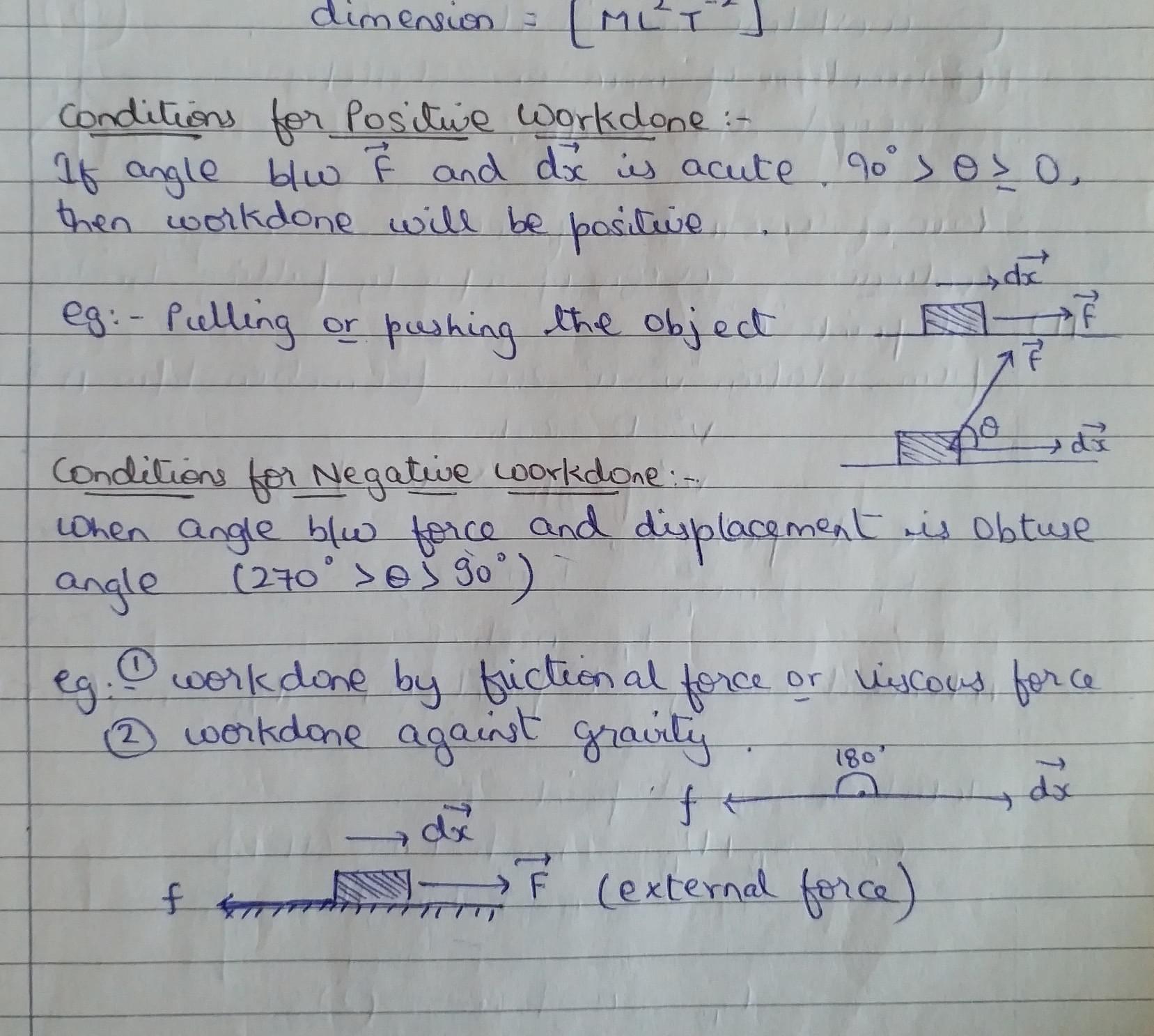
Zero Work, Positive Work and Negative Work
Previous Year Questions
- Calculate the work done by the applied force. [DUET 2011]
- What is the work done to pull the hanging part on the table. [JIPMER 2000]
- What is the work done in taking charge Q once along the loop? [NEET 2005]
- The work done by a given force only depends on? [JKCET 2018]
- Find the unknown angle between the force and displacement vector. [AMUEEE 2011]
Also check:



Comments