



Content Curator
Steric Hindrance is the spatial restriction on molecular interactions caused by the physical size and shape of the molecules. It occurs due to the presence of large substituents attached to a molecule, which can interfere with the bonding or reaction of other molecules.
Important facts on Steric hindrance:
- Steric hindrance determines the reactivity of a molecule.
- It affects the rates of chemical reactions by decreasing or inhibiting the approach of reactant molecules.
- Steric hindrance is used in medicinal chemistry to design drugs with improved pharmacokinetic properties.
- The concept of steric hindrance plays a crucial role in the design of synthetic strategies in organic chemistry.
- Steric hindrance is not limited to organic molecules, but it is also observed in inorganic and biochemical systems.
- The magnitude of steric hindrance can be quantified by the interaction energy between reactant molecules.
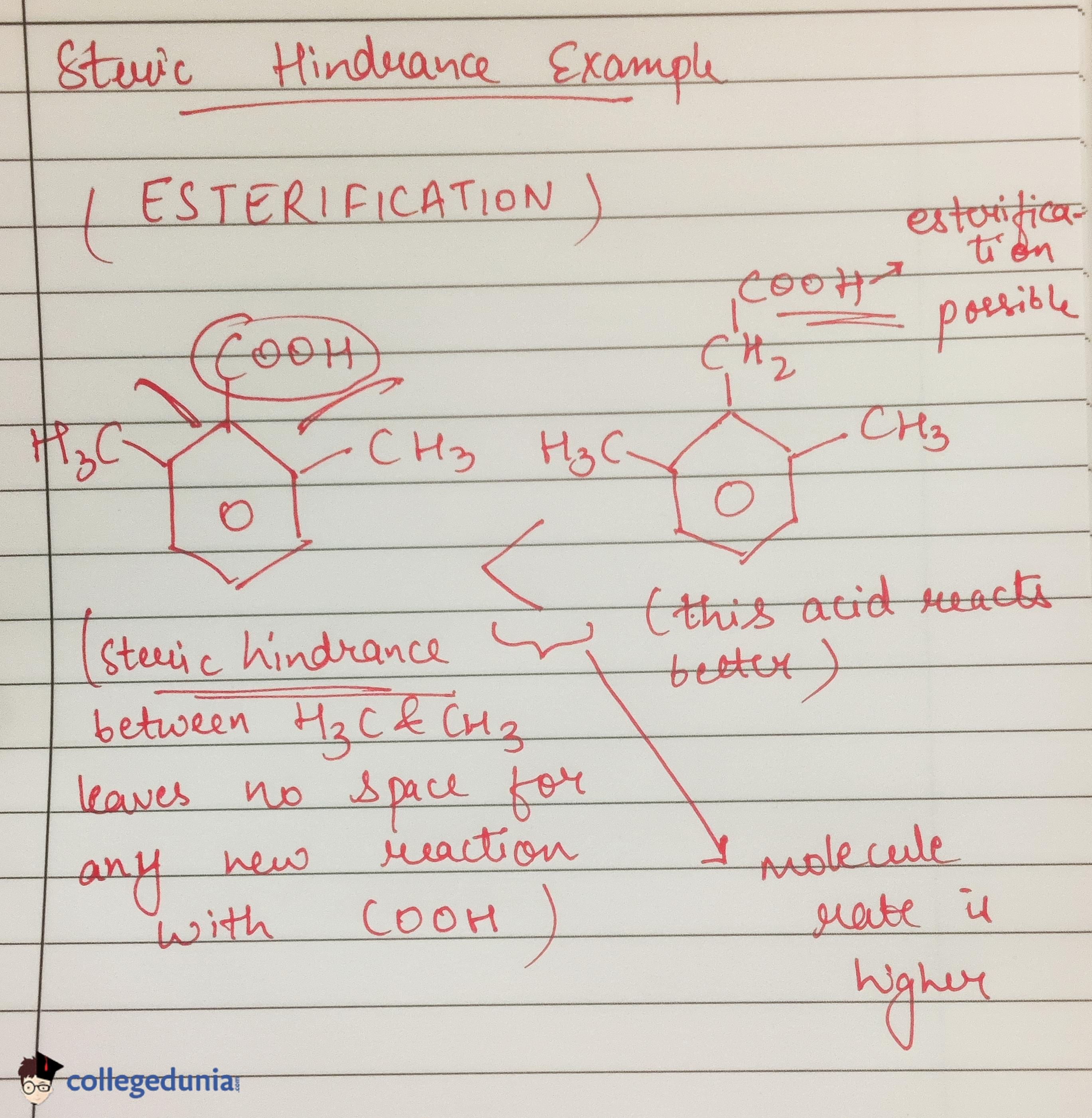
Steric Hindrance Example (Esterification)
Steric Effects refer to the influence of the spatial arrangement of atoms and groups on a molecule's reactivity and properties.
- Steric hindrance occurs when the size or bulk of groups on a molecule prevents or slows down chemical reactions by limiting the approach of reactant molecules.
- Steric hindrance is a critical factor in the study of organic chemistry, as it can affect reaction kinetics, mechanism, and stereochemistry.
- Steric hindrance can also play a role in the stability of a molecule, as well as its interaction with other molecules.
- This concept is also relevant to the design and synthesis of new drugs, as the size and orientation of drug molecules can affect their biological activity and toxicity.
Also check:



Comments