




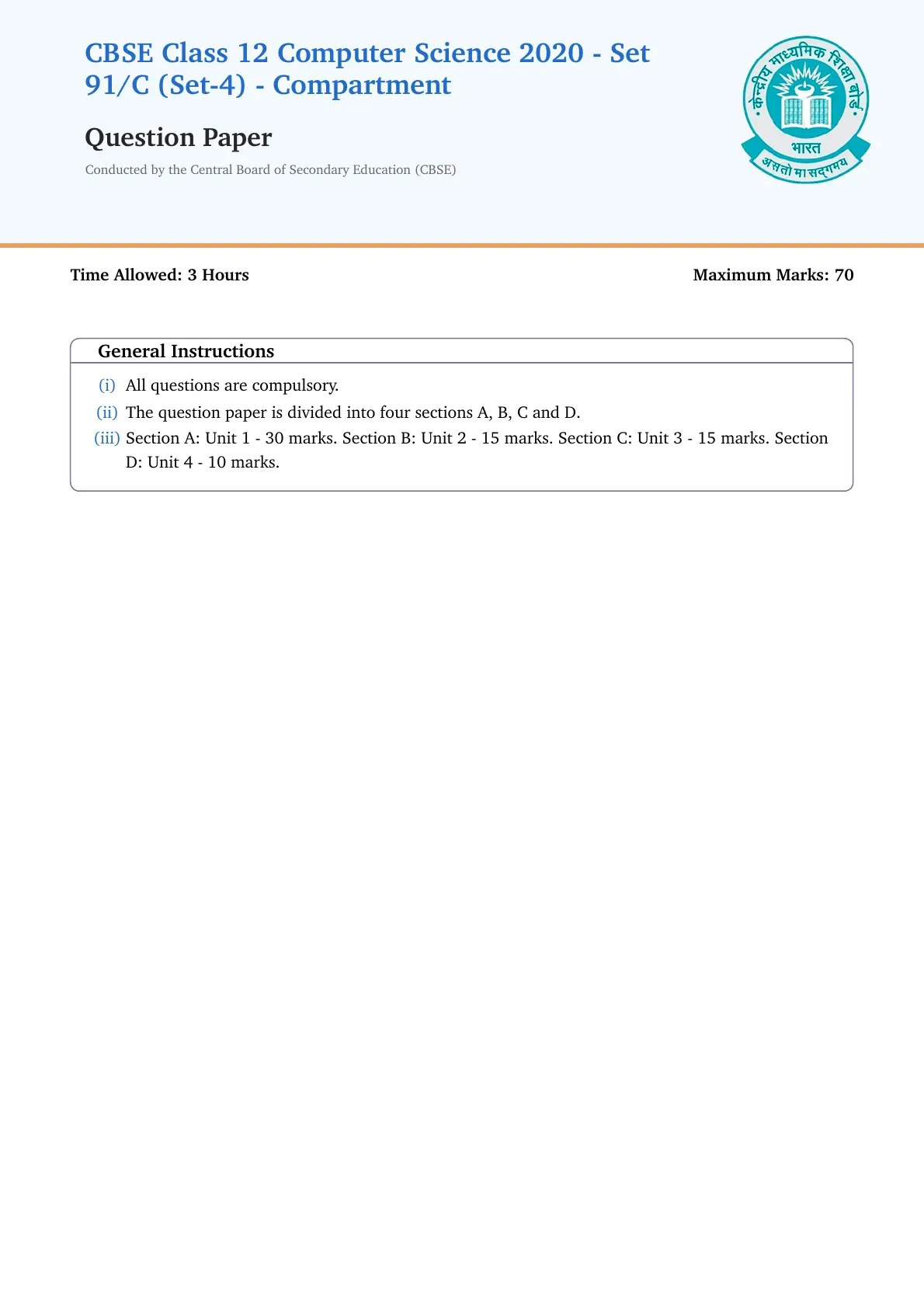
CBSE Class 12 Computer Science Question Paper 2020 Code 91/C (Set-4) (Compartment) is available for download here. CBSE conducted the Class 12 Computer Science exam on September 29, 2020 from 10:30 AM to 1:30 PM. The Computer Science theory paper is of 70 marks.
Also Check: CBSE Class 12 Question Paper 2020 (All Subjects)
The Computer Science question paper includes the following types of questions:
- The question paper has 5 questions, all compulsory, for 70 marks in 3 hours, with 15 minutes of extra reading time (10:15 AM to 10:30 AM)
- The paper is headed Computer Science (NEW) and is divided into four sections, A to D, based on Units 1 to 4
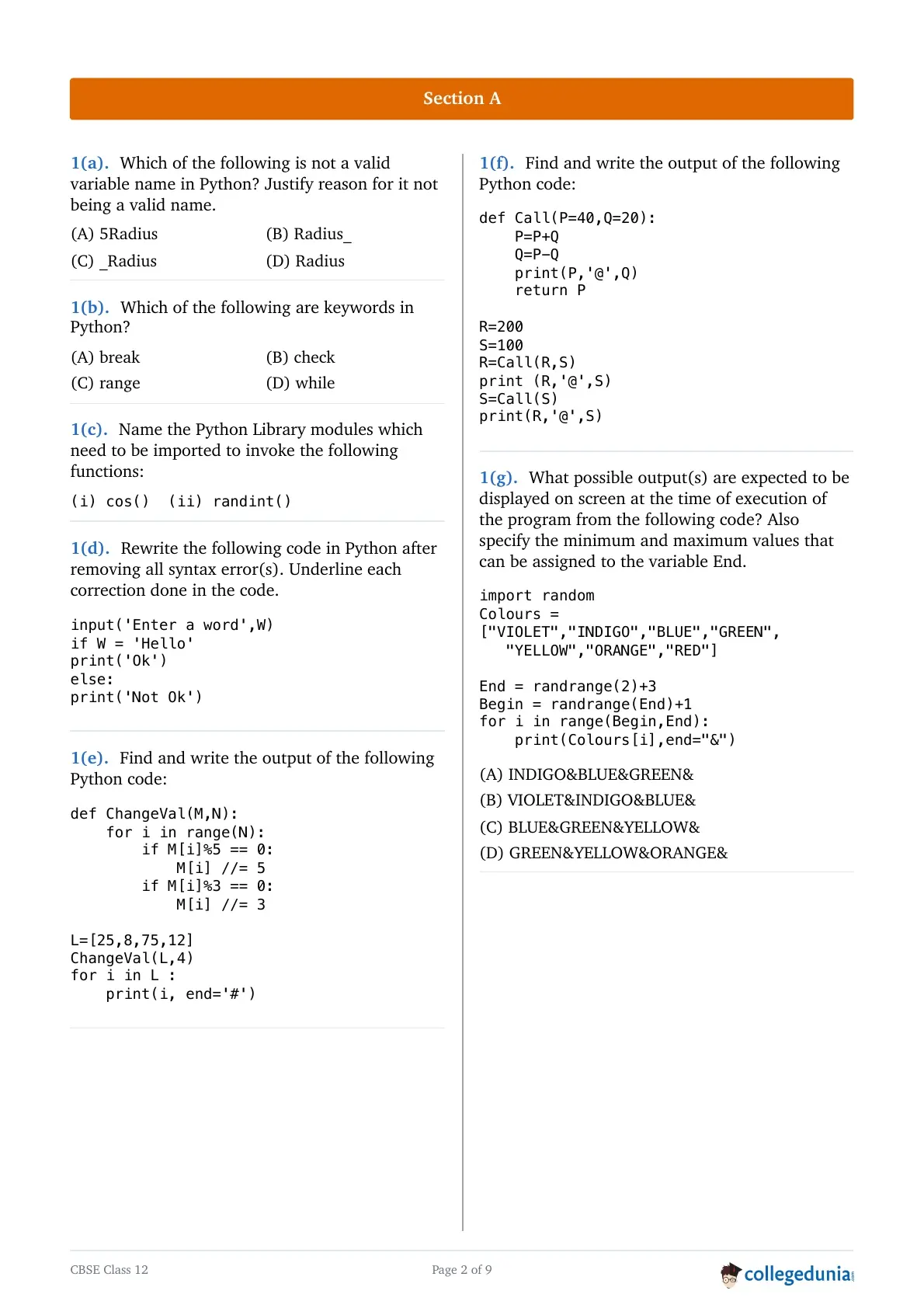
- Section A (Unit-1) carries 30 marks (Q1 12 marks and Q2 18 marks) and Section B (Unit-2) carries 15 marks (Q3)
- Section C (Unit-3) carries 15 marks (Q4) and Section D (Unit-4) carries 10 marks (Q5)
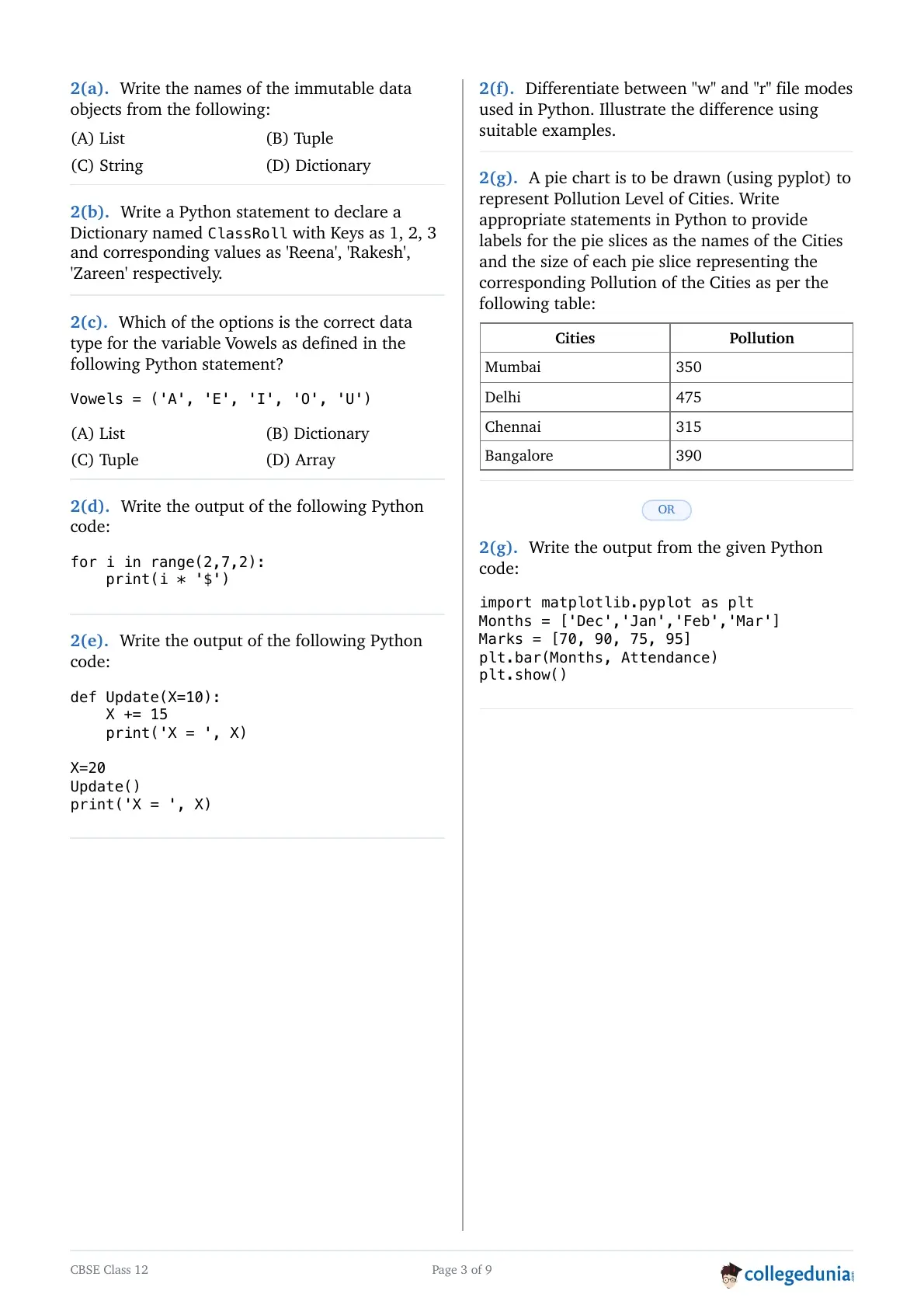
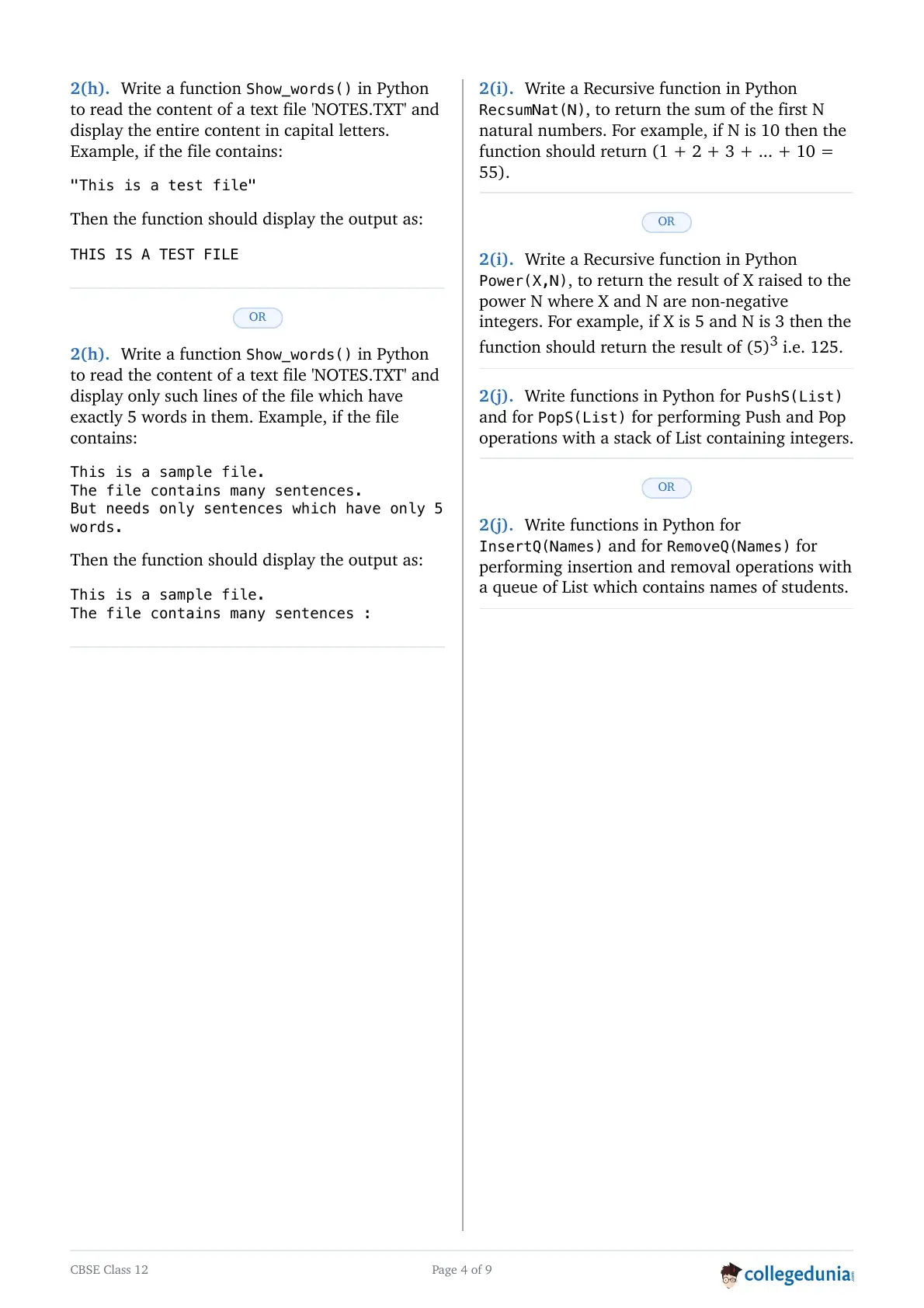
- Several parts of Q2 and Q4 carry an internal choice (OR) between two alternatives
CBSE Class 12 Computer Science Question Paper 2020 Code 91/C (Set-4) (Compartment) PDF
| CBSE Official PDF | CD PDF | CD PDF with Solutions |
|---|---|---|
| Download official PDF 0.35 MB | Download Collegedunia PDF 0.30 MB | – |
CBSE Class 12 Computer Science 2020 Question Paper Details
| Exam | CBSE Class 12 Board Examination 2020 |
| Subject | Computer Science |
| Paper code | 91/C (Set-4) (Compartment) |
| Exam date | September 29, 2020 |
| Time allowed | 3 hours (plus 15 minutes of reading time, 10:15 AM to 10:30 AM) |
| Maximum marks | 70 |
| Total questions | 5 (attempt 5) |
CBSE Class 12 Computer Science Question Paper Pattern and Marking Scheme
The CBSE Class 12 Computer Science 2020 question paper is of 70 marks and has 5 questions, of which 5 are to be attempted. The tables below give the section-wise paper pattern and the split of marks, as printed in the official question paper.
CBSE Class 12 Computer Science Question Paper Pattern 2020
| Section | Questions | Question Type | Choice | Marks per Question | Marks |
|---|---|---|---|---|---|
| Section A (Unit-1) | Q1 | Python programming: short-answer parts of 1 to 3 marks (names, keywords, modules, error correction, output tracing) | All 1 | 12 | 12 |
| Q2 | Python programming: parts of 1 to 4 marks (data types, functions, files, charts, recursion, stacks and queues), with internal choice in parts (g) to (j) | All 1 | 18 | 18 | |
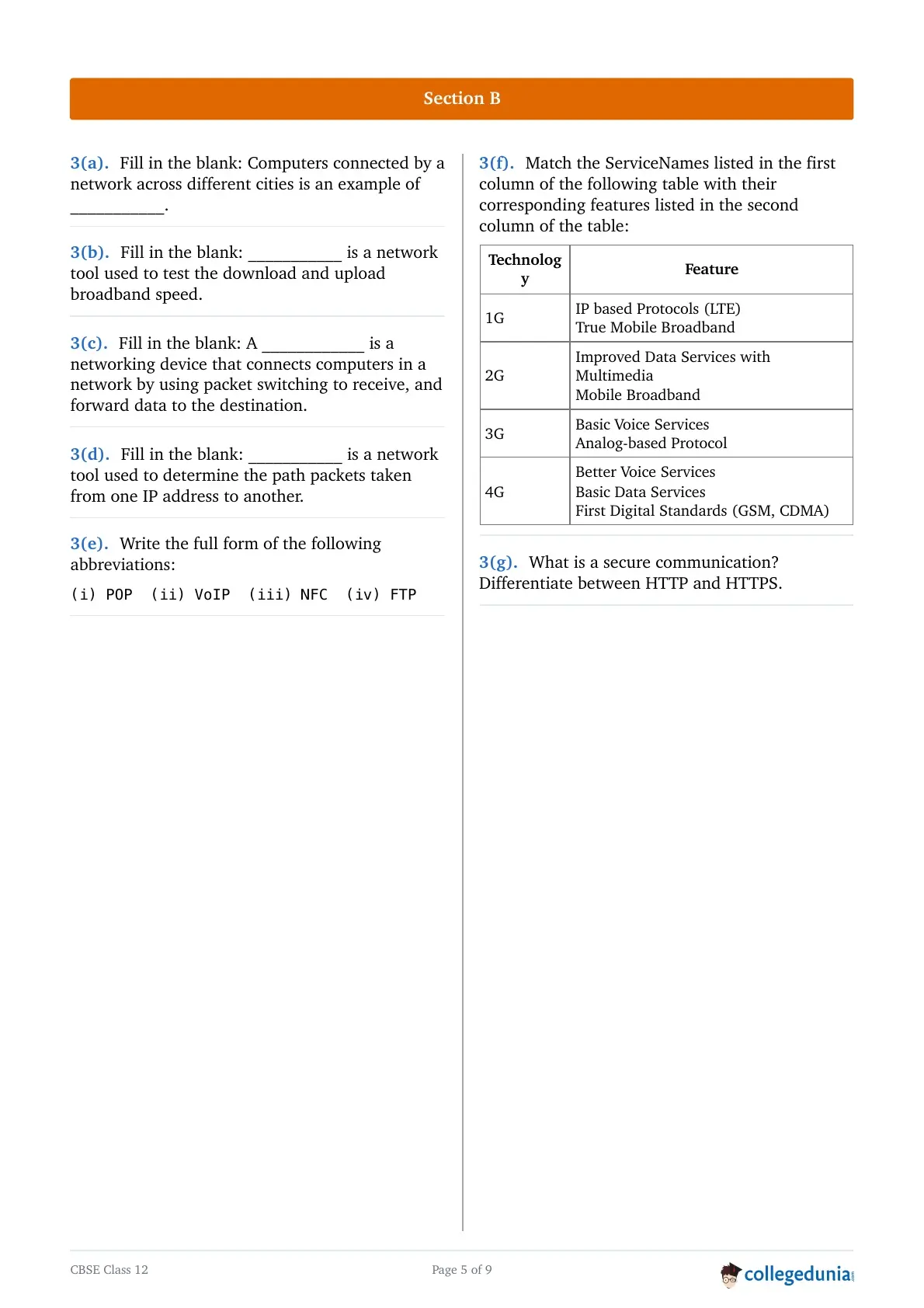
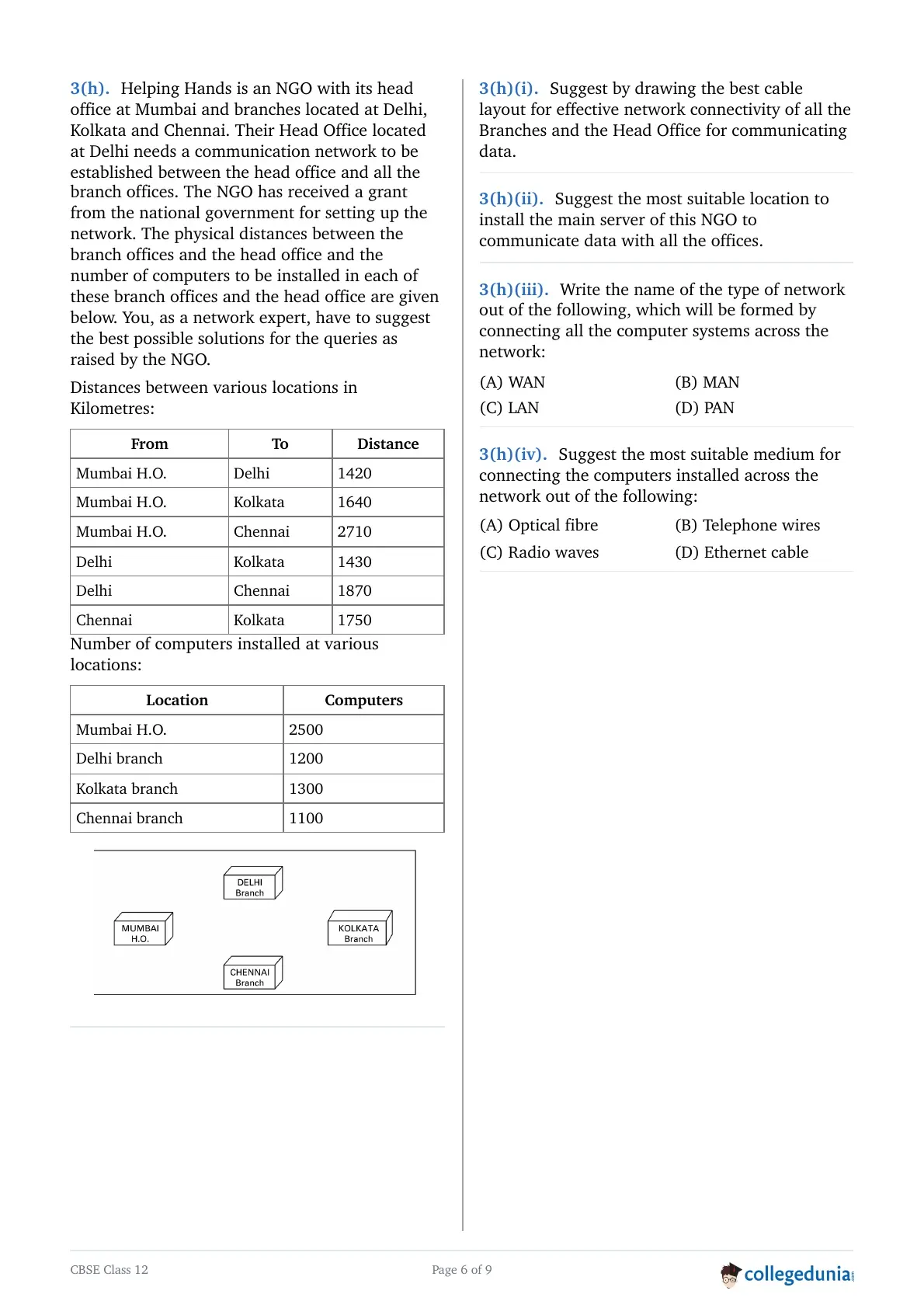
| Section B (Unit-2) | Q3 | Computer networks: fill in the blanks, full forms, matching and a network case study | All 1 | 15 | 15 |
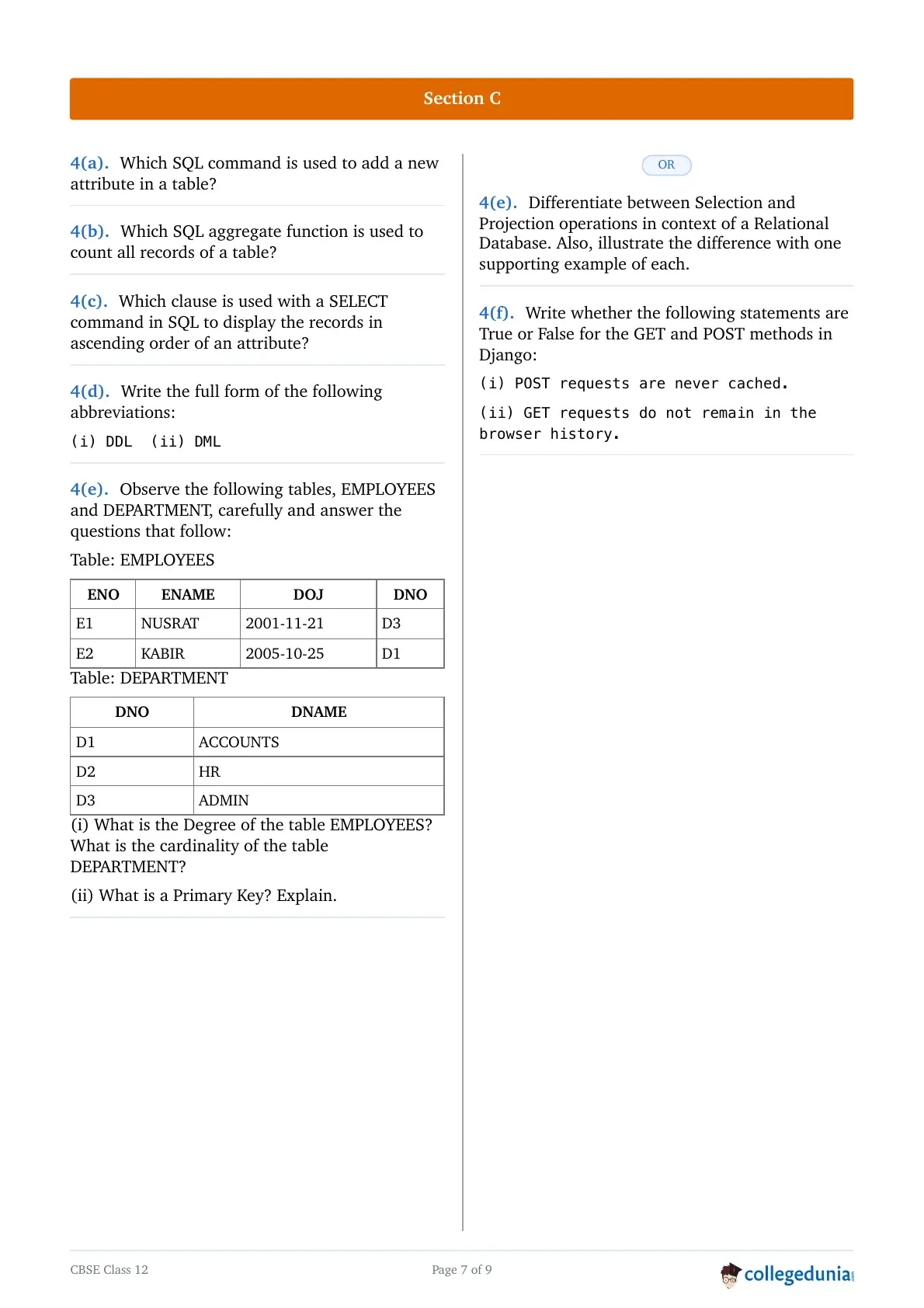
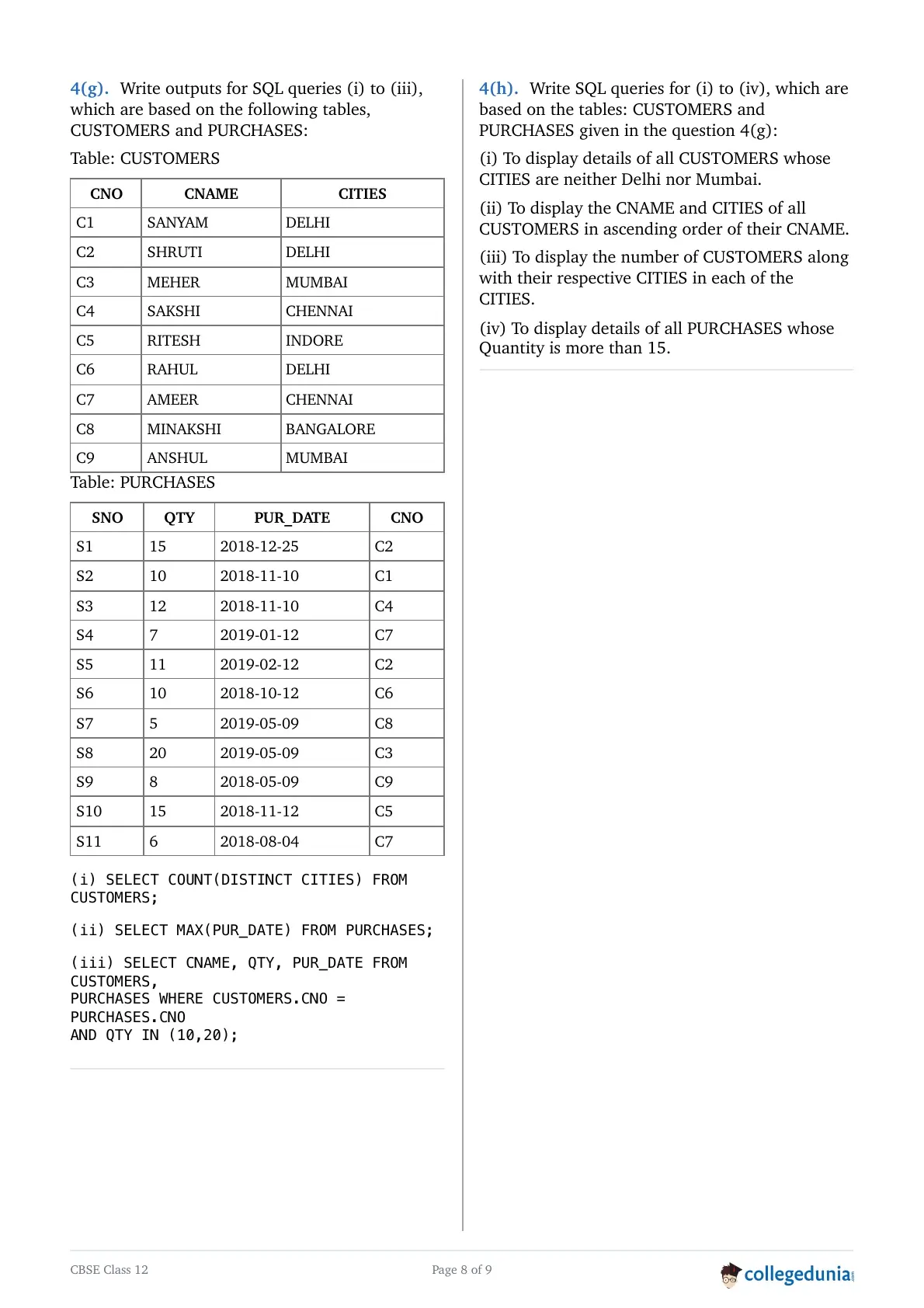
| Section C (Unit-3) | Q4 | Database management: SQL commands, queries and outputs, relational terms and a Django question, with internal choice in part (e) | All 1 | 15 | 15 |
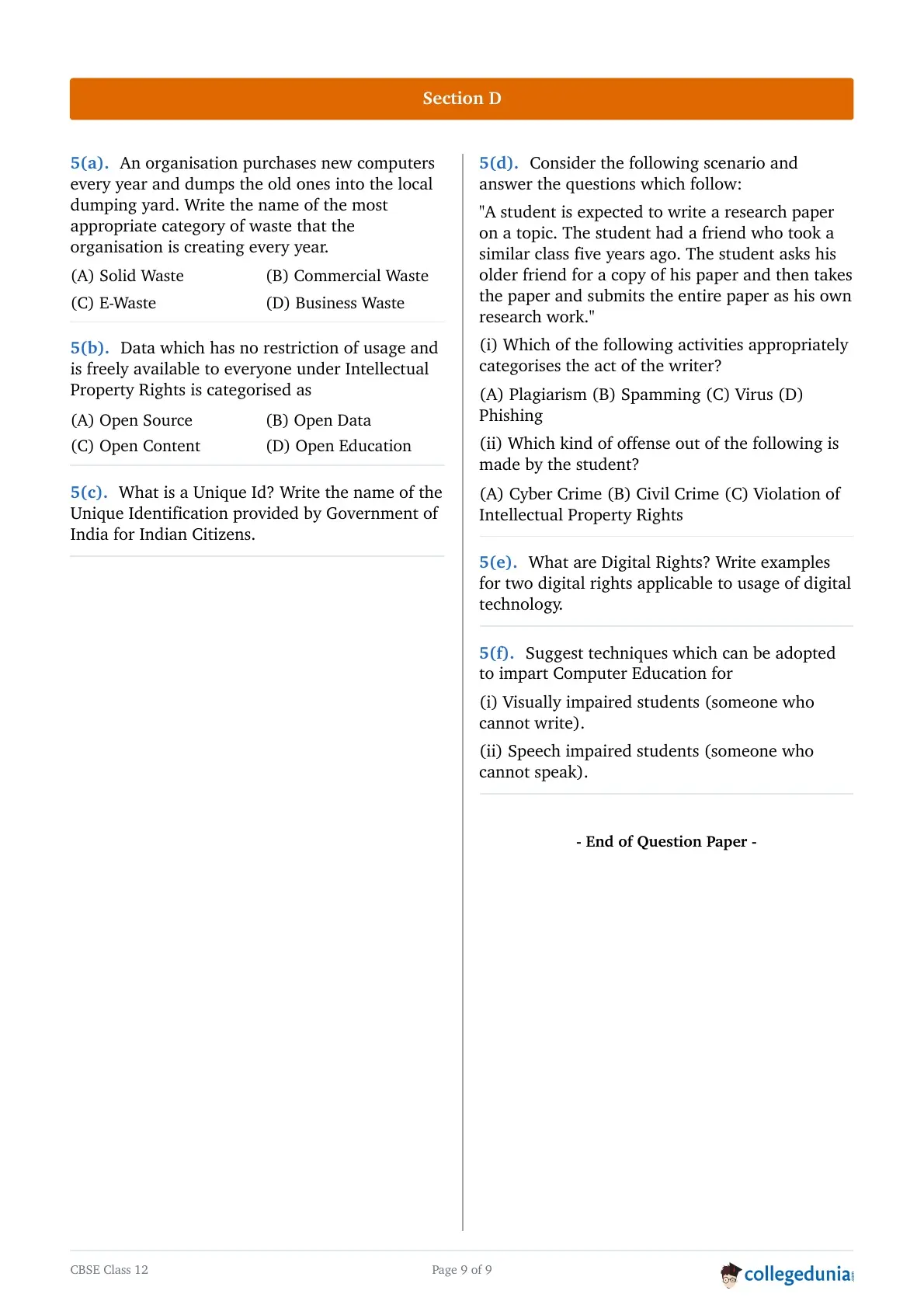
| Section D (Unit-4) | Q5 | Society, law and ethics (e-waste, open data, unique ID, cyber offences, digital rights, accessibility) | All 1 | 10 | 10 |
| Total | 5 questions | Attempt 5 | 70 |
CBSE Class 12 Computer Science Marks Distribution 2020
| Question Type | Questions to Attempt | Marks per Question | Total Marks |
|---|---|---|---|
| Python programming: short-answer parts of 1 to 3 marks (names, keywords, modules, error correction, output tracing) (Section A) | 1 | 12 | 12 |
| Python programming: parts of 1 to 4 marks (data types, functions, files, charts, recursion, stacks and queues), with internal choice in parts (g) to (j) (Section A) | 1 | 18 | 18 |
| Computer networks: fill in the blanks, full forms, matching and a network case study (Section B) | 1 | 15 | 15 |
| Database management: SQL commands, queries and outputs, relational terms and a Django question, with internal choice in part (e) (Section C) | 1 | 15 | 15 |
| Society, law and ethics (e-waste, open data, unique ID, cyber offences, digital rights, accessibility) (Section D) | 1 | 10 | 10 |
| Total | 5 | 70 |



Comments