



Content Curator
Calcium is a mineral that is most commonly linked with strong bones and teeth, but it also aids in blood clotting, muscular contraction, and the regulation of normal heart rhythms and neuron activities. Magnesium is a cofactor in about 300 enzyme systems in the body that affect a variety of physiological activities, including protein synthesis, muscle and neuron function, blood glucose control, and blood pressure regulation [1-3]. Magnesium is necessary for energy synthesis, oxidative phosphorylation, and glycolysis to take place. Alloying agents include magnesium and calcium. These are the most important elements in our bodies, and they have an impact on a variety of bodily processes.
Key Terms: Enzymes, ATP, Chemical Reactions, Alkaline Earth Metal, Magnesium, Calcium, Energy Synthesis, Chlorophyll
Calcium and Magnesium
[Click Here for Sample Questions]
Calcium and magnesium are alkaline earth metals which are two of the most significant elements in our bodies, that assist in the smooth functioning of various bodily processes. Both magnesium and calcium are often utilized as alloying elements. Calcium is used as a reducing agent in a variety of industries. Many biological functions in plants and animals are supported by these metals. The human body, in particular, requires large amounts of these elements.
Magnesium is a component of chlorophyll, the green pigment responsible for photogenic reactions in plants. Magnesium shortage in plants can cause yellowing of the leaves. Every day, the human body requires 200 to 300 milligrams of magnesium to keep its systems running well.

Chlorophyll Structure
Minerals and calcium are referred to as twin minerals. The optimal calcium-to-mineral ratio is 1:1. They have diametrically opposed impacts. Magnesium, for example, relaxes the muscle whereas calcium contracts it. In living creatures, calcium is the most vital element. Nitrogen absorption might be hampered by a calcium deficit in the body. Calcium is required for the metabolism of nitrogen in some plants.
Read More:
| Relevant Concepts | |
|---|---|
| Vitamin B12 Deficiency | Vitamin B types |
Biological Importance of Magnesium
[Click Here for Sample Questions]
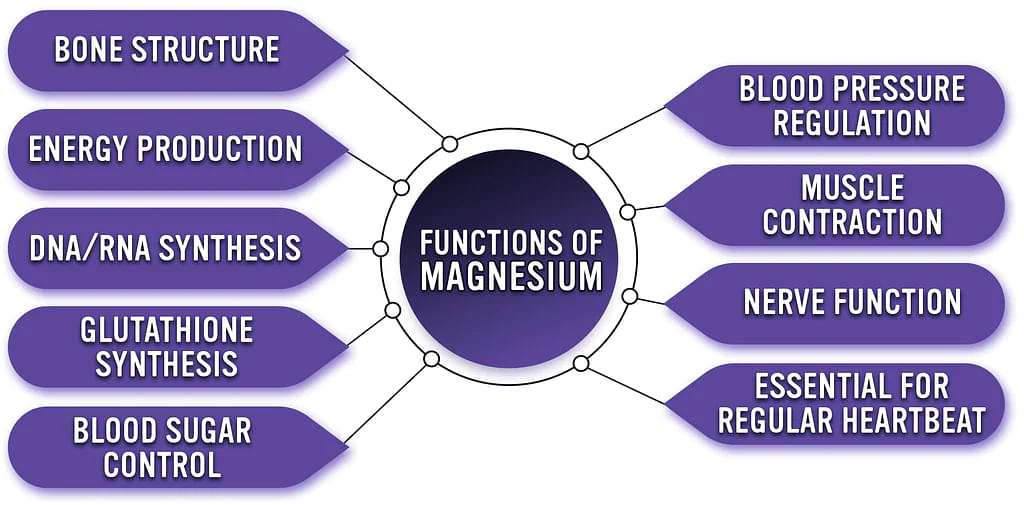
- Magnesium plays a critical role in the metabolic reactions that occur in our bodies. This ion's primary purpose in the body is to regulate enzyme activities, which are responsible for a variety of chemical reactions.
- Magnesium, as an enzyme co-factor, aids in the breakdown of glucose and fat molecules, as well as the creation of enzymes, proteins, and cholesterol regulation.
- It serves as a fuel source and aids in the creation of energy within the cells. Nutrients cannot be turned into usable energy or ATP (adenosine triphosphate), which is the fundamental unit of energy in the human body, without a sufficient supply of this ion.
Importance of Magnesium
- The creation of ATP is necessary for a variety of processes, including cell reproduction and protein synthesis.
- Human DNA Protector: Without a sufficient supply of this ion, DNA synthesis is impossible. It is in charge of DNA's stability and proper functioning.
- To keep an electrolyte balance, do the following: It is one of the most essential minerals for our bodies to maintain a proper electrolytic equilibrium. Deficiency in this ion causes the sodium-potassium pump to malfunction.
Biological Importance of Calcium
[Click Here for Sample Questions]
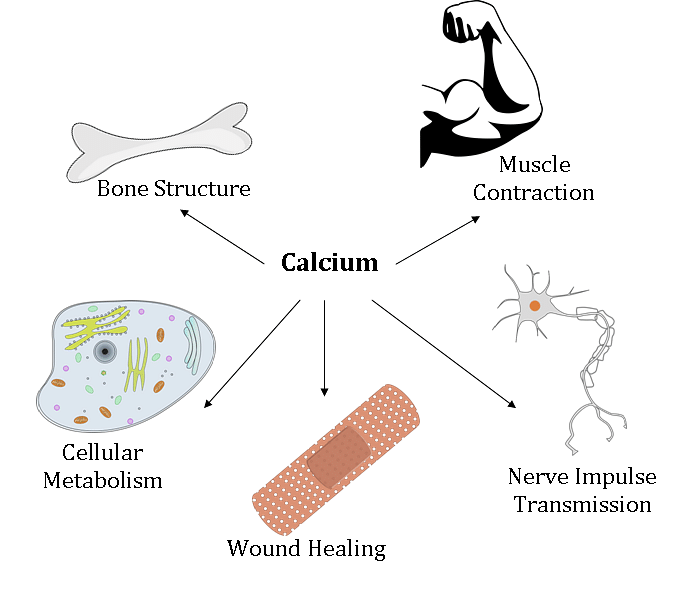
- Calcium can be found in large amounts in both our bones and teeth.
- Blood contains a large amount of calcium.
- Calcium aids in blood coagulation in the event of an injury. This clot will take a long time to form if you don't have enough calcium.
- Calcium has a significant impact on muscle contraction in our bodies.
- Our nerves can become faulty if there is a deficiency of calcium in the body.
- The presence of calcium aids in the regulation of nitrogen metabolism in plants. The entire growth process of the plants, as well as the quantity of chloroplasts in them, will be harmed if there is insufficient calcium.
Importance of Calcium
- The most vital mineral in the human body is calcium. Osteoporosis can be avoided by maintaining a healthy calcium level in the body.
- Most calcium is found in our teeth and bones, while the rest is found in blood, bodily tissues, and nerve cells.
- Calcium concentration in the blood is maintained by hormones (parathyroid hormone and calcitonin). Calcium is required for muscular contraction.
- When there is a lack of calcium in the blood, it takes longer for it to coagulate.
- Calcium aids in the stabilization of cell membrane permeability.
- It also aids the heart's and nerves' correct functioning.
Things to Remember
- Magnesium's position in the human body is very important, as Calcium's biological function is for our bodies to work properly.
- Calcium and magnesium must be consumed in sufficient amounts in order for our bodies to function properly.
- Calcium and magnesium are two of the most significant elements in our bodies, affecting a variety of functions.
- Osteoporosis can be avoided by maintaining a healthy calcium level in the body.
- Magnesium serves as a fuel source and aids in the creation of energy within the cells.
Read More:
Sample Questions
Ques. Which kind of diet is rich in Magnesium? (2 marks)
Ans. Pumpkin seeds, boiled spinach, Pumpkin seeds in the shell, oil-roasted peanuts, dry roasted almonds, dry roasted cashews, shredded wheat cereal, plain or vanilla soya milk, cooked black beans, whole wheat bread cooked, brown rice, low-fat plain yogurt, potato baked with skin, peanut butter smooth, and many more such foods are rich in Magnesium. Consuming this kind of food can help a person maintain the level of magnesium in your body
Ques. What is the proper daily proportion of calcium required by a normal human body? (2 marks)
Ans. The proper proportion of calcium requirement is determined by the age group of a person. The different proportions according to the age group are:
| Age | Required Amount |
|---|---|
| 0-6 months | 1,000mg per day |
| 7-12 months | 1,500mg per day |
| 1-8 years | 2500mg per day |
| 9-18 years | 3,000mg per day |
| 19-50 years | 2,500mg per day |
| 51 years and older | 2,000mg per day |
Ques. What is the difference between Mg and Mg2+? (2 marks)
Ans. Mg is representative of the symbol for magnesium or single magnesium atoms and Mg2+ is representative of the magnesium ions which are formed Mg loses two valence electrons.
Ques. What problems are faced by deficiency of Calcium? (2 marks)
Ans. If there is a deficiency of Calcium and Vitamin D, the body starts consuming calcium from the bones to implement important body functions. This process is called loss of bone mass. Loss of bone mass makes the bone porous and weak from the inside and this issue can cause problems like osteoporosis. So getting enough calcium from the food that is rich in calcium is better.
Ques. What should be done for improving magnesium absorption? (2 marks)
Ans. Improving magnesium absorption of raw materials instead of cooking them, trying to avoid or reduce the consumption of calcium-rich foods 2 hours before or after consuming magnesium-rich foods, and treating the deficiency of vitamin D in the body can also improve magnesium absorption. Also, magnesium absorption decreases after 60 years of age, and to improve it properly recommended supplements can help.
Ques. At what areas can Magnesium be found on Earth’s surface? (2 marks)
Ans. Magnesium can be found in a huge amount in the Earth's crust, and there are 60 minerals that have Magnesium in their composition. Magnesium Oxide, which has a chemical formula MgO, comprises 35% of the total weight of Earth's crust and is the second most abundant component in the crust of the Earth. The water in the ocean also houses a large amount of Magnesium.
Ques. What are some of the symptoms of a deficiency of Magnesium? (2 marks)
Ans. Some of the symptoms of deficiency of Magnesium are as follows:
- Headache
- Dizziness
- Nervousness
- Migraine
- Cramps in Muscles
- Gastrointestinal Cramps
- Nausea and vomiting
- Diarrhoea
- Cramps
Ques. What are some of the symptoms of a deficiency of Calcium? (2 marks)
Ans. Some of the symptoms for deficiency of Calcium are as follows:
- Depression and Anxiety
- Hair loss
- Brittle nails
- Stomach Pain
- Diarrhoea
- Tingling and Cramping of feet and hands
- Dry skin
- Muscle Cramps
Check-Out:



Comments