



Content Curator
Geothermal energy is a type of renewable energy that comes from the core of the Earth. It is caused by heat produced during the origin of the planet as well as radioactive decay.
- The term Geo refers to “Earth”, and Thermal refers to “Heat”.
- This thermal energy is stored in rocks and fluids at the center of the earth.
- There is a temperature difference between the earth's core and the surface.
- Due to this a constant transmission of thermal energy from the center to the exterior of the planet takes place.
- Thermal energy in rocks and fluids can be found at depths ranging from shallow to several miles below the Earth's surface.
- Geothermal energy reaches the surface of the Earth by water or steam.
| Table of Content |
Key Terms: Earth, Water, Rock, Sun, Nuclear fusion, Hot springs, Solar energy, Wind energy, Biomass energy, Hydroelectric energy, Thermal energy
What is Geothermal Energy?
[Click Here for Sample Questions]
Geothermal energy is thermal energy produced and stored inside the crust of the Earth.
- The center of the Earth maintains the same temperature as the Sun.
- This temperature is almost almost constant due to the continuous process of nuclear fusion.
- Because of the tremendous temperature and pressure, some rocks melt, causing the mantle to move upward.
- Molten rocks produced in the Earth's crust are forced upward and trapped in places known as 'hot spots.'
- When the groundwater comes into contact with a hot spot, steam is produced.
- This hot water-formed zone sometimes finds outlets and escapes at the surface.
- Hot springs are formed when hot water flows from one of these outlets.

Geothermal Energy
Also Read:
| Related Articles | ||
|---|---|---|
| Non-renewable energy | Wave power | Nuclear energy |
| Wind vane | Radioactivity | Mass energy and Nuclear binding energy |
Alternative Energy Sources
[Click Here for Sample Questions]
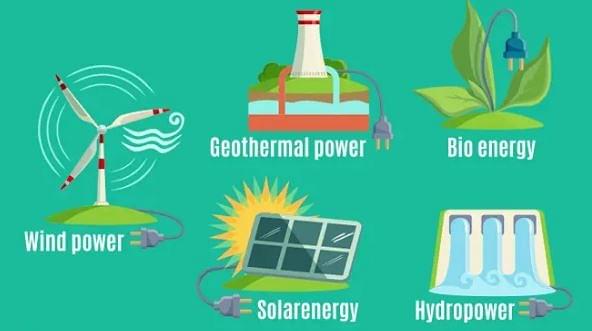
Alternative energy sources are the sources that do not consume fossil fuels. These sources are extensively available and do not generate any undesirable consequences for the environment. Here are some of the major alternative energy sources.
- Solar energy
- Hydroelectric Energy
- Biomass Energy
- Wind Energy
- Tidal Power
- Geothermal Energy
Solar Energy
Solar energy is received from the Sun. This is the most promising alternative energy source. It is bound to be available throughout centuries to mankind.
Geothermal Energy
It is the energy that is produced by the heat within the Earth. Hot rocks in the earth's core radiate heat, resulting in steam and pressure that escape to the earth's surface. This steam is used to drive turbines and generate electricity.
Wind Energy
Wind power is used to push the blades of the wind turbine connected to the electric generator. This creates wind energy, which is an effective alternative source in areas where the wind speed is high.
Biomass Energy
This category of alternative energy is generated from animal and human waste. These wastes include by-products along with agricultural yields, municipal solid wastes, and the timber industry.
Hydroelectric Energy
The potential energy stored in the water is produced to drive a water turbine that generates electricity. This energy production is termed hydroelectric power. Hydroelectric energy is the most commonly adopted alternative energy source at the present time.
Tidal Power
71% of the Earth's surface is covered by water bodies, primarily oceans. The gravity of the moon and sun causes the tides in the water body to fall and rise.
Geothermal Gradient
Geothermal gradient is explained as the difference in the temperature between the crust and the core of the planet. The gradient is the driving force behind the constant conduction of thermal energy. This energy exists in the form of heat from the core to the surface.
Sources of Energy
Applications of Geothermal Energy
[Click Here for Sample Questions]
Geothermal power plants are installed within a two-mile radius of the geothermal reserve. The steam emerging from these reserves is directly used to rotate the turbines of an electrical generator. It is also used to heat water which further produces steam for the process.
- Farming: In cold regions, geothermal energy is used to heat greenhouses. It is also useful in heating water for irrigation.
- Industry: Geothermal energy is used across industries in food dehydration, milk pasteurizing, gold mining, etc.
- Heating: Geothermal energy is used in heating buildings through district heating systems. In these systems, hot water through springs is directly sent to the buildings via pipelines.
Harnessing the Geothermal Energy
[Click Here for Sample Questions]
A hydrothermal convection system is used to extract geothermal energy.
- A hole is drilled deep under the earth and a pipe is inserted through it.
- The steam trapped in the rocks travels through the hole to the earth's surface.
- This steam is then used to rotate the turbine blades of an electric generator.
- Another approach involves using steam to heat water from an external source, which is then used to rotate the turbine.
Advantages of Geothermal Energy
[Click Here for Sample Questions]
Geothermal energy is believed to be one of the most beneficial sources of energy.
- Some countries also profit from the existence of geothermal energy on a large scale.
- For example, in Iceland, the electricity is 100% sustainable.
- It makes use of wind, hydro- and mostly geothermal energy.
This source of energy has several advantages, especially when compared to conventional resources.
Renewable Resource
The generation of geothermal energy adds a sense of dependability to the national power system.
- Geothermal energy may be created as a base-load renewable energy resource.
- It means it can be produced 24 hours a day, regardless of weather patterns.
- This source of energy provides an incredibly dependable and consistent supply of green energy.
Green energy
Geothermal energy plants, unlike fossil fuel plants, do not use any sort of combustion. This implies they emit only a small quantity of greenhouse gases. Binary geothermal power plants, the most prevalent in the world, and their flash binary equivalents generate almost little greenhouse gas.
Significant savings on your utility bills
Due to the underground loop structure, the construction of geothermal energy systems demands higher upfront capital inputs than standard systems. Some homeowners are hesitant to install geothermal systems because of the initial expense, but they fail to consider the big picture.
Widely available
The internal heat of the earth is present all around the world. The only roadblock is the capacity to extract energy. Individuals have been able to extract this hot water from the reservoir beneath the ground to heat homes and businesses due to technological developments.
Disadvantages of Geothermal Energy
[Click Here for Sample Questions]
While the benefits of geothermal energy are plenty, it is important to understand the downsides. This will help in formulating countermeasures upfront to prevent inconveniences that come along with them.
Here are the disadvantages of geothermal energy.
Geothermal energy has high initial capital costs
The expense of digging wells to reach the geothermal reservoir is excessive. When you consider the cost of heating and cooling system installation, the total cost shoots up. Although there is a predicted Return On Investment (ROI), it may take some time to occur.
Suited to a particular region
It is hard to discover remarkable geothermal reservoirs. Geothermal energy-producing locations are found distant from cities or populations. First, you must locate a location with the right type of hot rocks. The rocks should also be found at a sufficient depth to make drilling easier.
Sustainability issues
Although most research studies indicate that geothermal reservoirs are permanent, certain studies show that they can be exhausted if water is removed faster than it can be replenished. This can be an issue for residential heating and cooling since geothermal energy is used differently in houses than it is at geothermal power plants.
Transportation and transmission
Unlike fossil fuels, geothermal energy cannot be transferred directly. Once gathered, the tapped energy can only be used efficiently nearby. Furthermore, as a result of transmission, dangerous contaminants may be released into the atmosphere.
Things to Remember
- Geothermal energy is a type of renewable energy that comes from the core of the Earth.
- Geothermal energy reaches the surface of the Earth by water or steam.
- When the groundwater comes into contact with a hot spot, steam is produced.
- Solar energy is received from the Sun.
- The potential energy stored in the water is produced to drive a water turbine that generates electricity.
- The gravity of the moon and sun causes the tides in the water body to fall and rise.
- A hydrothermal convection system is used to extract geothermal energy.
Also Read:
Sample Questions
Ques. What is geothermal energy? (2 Marks)
Ans. Geothermal energy is the heat energy present inside the earth in certain regions called hot spots. When underground water comes in contact with the hot spot, steam is generated. This steam is routed through a pipe to a turbine and used to generate electricity.
Ques. How does geothermal heat get from the interior of the earth to the surface? (2 Marks)
Ans. Heat is constantly generated within the earth’s core and flows outward into cooler rocks, toward the earth’s surface. This process is more efficient where magma (molten rock) reaches the earth’s surface and volcanoes form. The hot rock heats groundwater that has accumulated from rain and snowmelt that percolates into the ground. Sometimes this heated water re-emerges as hot springs
Ques. List some of the alternative energy sources. (2 Marks)
Ans. A list of alternative energy sources are
- Hydroelectric Energy
- Solar Energy
- Wind Energy
- Biomass Energy
- Geothermal Energy
- Tidal Power
Ques. What is a geothermal gradient? (1 Mark)
Ans. A geothermal gradient is the temperature difference between a planet's core and its crust.
Ques. Name a most promising alternative energy source of energy. (1 Mark)
Ans. Solar energy is the most promising alternative energy resource.
Ques. Are geothermal energy and nuclear energy different from biomass energy, wind energy, and ocean thermal energy? If yes, Why? (2 Marks)
Ans. Geothermal energy and nuclear energy are different from biomass energy, wind energy, and ocean thermal energy. This is because, biomass energy, wind energy, and ocean thermal energy are derived from a single source of energy, that is the sun. On the other hand, geothermal and nuclear energies are not derived from the sun.
Ques. Is geothermal energy renewable or nonrenewable energy? (3 Marks)
Ans. Geothermal energy is renewable.
Explanation: Geothermal energy is renewable because the Earth has retained a huge amount of the heat energy that was generated during the formation of the planet. In addition, heat is continuously produced by the decay of radioactive elements within the Earth. Even in geothermal areas dependent on a reservoir of hot water, the volume taken out can be re-injected, making it a sustainable energy source.
Ques. (a) Explain how geothermal energy is harnessed to produce electricity. (3 Marks)
Ans. At some places in the world, the rocks at some depth below the surface of the earth are very very hot.
This heat comes from the fission of radioactive materials which are naturally present in these rocks. The places where very hot rocks occur at some depth below the surface of the earth are called ‘hot spots’.
The extremely hot rocks present below the surface of the earth heat the underground water and turn it into steam. As more and more steam is formed between the rocks it gets compressed to high pressures. A hole is drilled into the earth up to the hot rocks and a pipe is put into it. The steam present around the hot rocks comes up through the pipe at high pressure. This high-pressure steam turns the turbine of a generator to produce electricity.
Ques. Where is geothermal energy found? (4 Marks)
Ans. Rocks hot enough to be used to generate electricity are commonly found at tectonic plate boundaries where faults and volcanoes are common, like the “Ring of Fire” that borders the Pacific Ocean where the oceanic crust of the Pacific plate collides with continental crust. Other areas where volcanoes are common are places where continental crust is being broken and pulled apart like the African Rift Valley or the Basin and Range of the western US.

Geothermal energy
Volcanoes also occur at “hot spots” in places like Yellowstone National Park and Hawaii. These big volcanoes occur despite the fact they are not associated with plate boundaries. These hot geothermal reservoirs are found at depths of 1 to 2 miles below the surface. Lower temperature geothermally heated water can be used directly for heating buildings or spas or aquaculture. This lower-temperature water often occurs at shallower depths.
Geothermal heat pumps do not use hot water for heating and cooling. They use the earth as the heat source in the winter and as a heat sink in the summer. Ground source heat pumps exploit the lowest grade of geothermal energy. This is the fastest-growing use of geothermal energy in the world.
Ques. (a) Explain what is geothermal energy.
(b) Write one advantage and one limitation.
(c) Define (OTE).
(d) Write one advantage of the nuclear fission reaction. (4 Marks)
Ans. (a) The heat energy from hot rocks present inside the earth is called geothermal energy. This heat can be used as a source of energy to produce electricity. Geothermal energy is one of the few sources of energy that does not come directly or indirectly from solar energy.
At some places in the world, the rocks at some depth below the surface of the earth are very very hot. This heat comes from the fission of radioactive materials which are naturally present in these rocks. Such places are called ‘hot spots’. These hot rocks heat the underground water and turn it into steam.
(b) Advantage: One advantage of using geothermal energy is that it does not cause any pollution so it is a clean and environment-friendly source of energy.
Limitation: One disadvantage of geothermal energy is that it is not available everywhere. There is a very limited number of places where geothermal energy can be harnessed on a commercial scale.
(c) The energy available due to differences in the temperature of water at the surface of the ocean and deeper levels is called Ocean Thermal Energy (OTE). Ocean Thermal plants can operate if the temperature difference between the water at the surface and water at a depth of up to 2 km is 293 k (20°C) or more.
(d) An enormous amount of energy can be produced from nuclear fission which can be used to run turbines for the production of electricity.
For Latest Updates on Upcoming Board Exams, Click Here: https://t.me/class_10_12_board_updates
Also Check:



Comments