



Education Journalist | Study Abroad Lead
Reproductive health refers to maintaining health and hygiene of the reproductive organs. Maintaining reproductive health is very important for the healthy functioning of reproductive organs. Neglecting reproductive health can give rise to many reproductive disorders. It can even lead to infertility and serious life-threatening diseases like cancer.
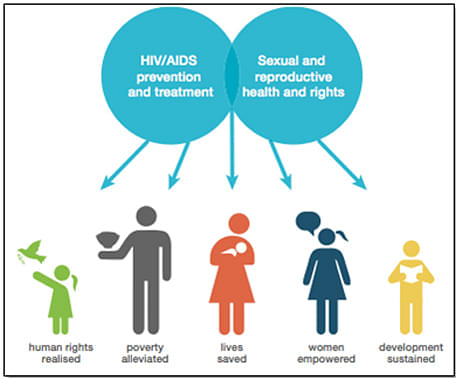
Reproductive Health Awareness
The major components of reproductive health includes:
- Family Planning - Since the population is growing at a much faster rate, family planning has become an important aspect of population control.
- Sexual Health - Awareness of sexual health is necessary to avoid sexual health issues. Using contraceptive devices not only helps in birth control but also prevents the transmission of sexually-transmitted diseases (STDs).
- Maternal Health - Maternal health is very important to ensure safety of both mother and the child. Proper care during the pregnancy and after it is important for the health of both mother and the baby as well as it avoids the complications during the pregnancy.
Also Read:
| Related Articles | ||
|---|---|---|
| Difference Between Sperm and Ovum | Female Hormones | Contraception |
MCQs on Reproductive Health
Ques 1. Which technique is used to detect AIDS?
- Northern Blot and ELISA
- Immunoblot and ELISA
- Western Blot and ELISA
- Southern Blot and ELISA
Click here for the answer
Answer. (c) Western Blot and ELISA
Explanation: AIDS stands for Acquired ImmunoDeficiency Syndrome. It is caused by human immunodeficiency virus (HIV). HIV virus attacks the immune system of humans making it harder to recover even from mild illnesses. As a result, it gives rise to a number of diseases in the body. This is a fatal condition.
AIDS is diagnosed by the ELISA test and confirmed by Western Blot technique. ELISA stands for enzyme-linked immunosorbent assay. It is used to diagnose HIV infection in the body. A positive ELISA test confirms the presence of antibodies in the blood. It is based on the principle of antigen-antibody interaction. Once ELISA comes out positive, AIDS is confirmed by performing the western blotting. Western Blotting is a technique used to separate and detect the presence of a specific protein from a mixture of proteins.
Ques 2. Which of the following statements is/are correct?
- MMR is the annual number of maternal deaths per 10,000 live births.
- IMR is the number of deaths of children under one year of age per 10,000 live births.
- NMR is the number of deaths during the first 28 completed days of life per 10,000 live births.
Options:
- 1 only
- 2 and 3 only
- 1 and 3 only
- None of the above
Click here for the answer
Answer. (d) None of the above
Explanation: MMR stands for Maternal Mortality Rate. MMR is the annual number of maternal deaths per 100,000 live births. Maternal death refers to the death of females during the course of pregnancy or within 42 days of termination of pregnancy.
IMR refers to the Infant Mortality Rate. It is the death of the children under 1 year of age per 1,000 live births.
NMR stands for Neonatal Mortality Rate. It is the number of deaths during the first 28 days of life per 1,000 live births in a given period. Hence, none of the statements written above is correct.
Ques 3. Which of the following is not a sexually transmitted disease?
- Gonorrhoea
- Syphilis
- Tuberculosis
- AIDS
Click here for the answer
Answer. (c) Tuberculosis
Explanation: Sexually-transmitted diseases (STDs) refers to those diseases which transmits through sexual intercourse. They are also called venereal diseases (VD) or Reproductive Tract Infections (RTI). These diseases transmit from one person to another only through body fluids. They are not transferred through touch, sharing food etc.
Gonorrhoea, Syphilis, Genital Herpes, chlamydiosis, AIDS etc. are some of the major sexually-transmitted diseases. Tuberculosis, however, is not a sexually-transmitted diseases. It is caused by a bacterium Mycobacterium tuberculosis. It mainly causes problems in the lungs. Its symptoms include chest pain, cough, fever and chills etc. Gonorrhoea and Syphilis are also caused by bacteria but they affect reproductive organs and are transmitted through sexual contact only. AIDS is caused by the HIV virus.
Ques 4. Which of the following is not a birth control method?
- Hormonal Method
- Barrier Method
- Natural Method
- MTP
Click here for the answer
Answer. (d) MTP
Explanation: The different birth control methods are mainly categorised into three groups: Hormonal Method, Barrier Method, Natural Method. Hormonal methods include ways by which hormonal balance is disturbed such that the body does not support pregnancy. Barrier methods include condoms, diaphragm, cervical caps, intrauterine devices etc. that act as barriers in the entry of sperm into the vagina. Natural Methods include periodic abstinence, lactational amenorrhea, coitus interruptus etc. These are all natural ways of preventing the sperm from reaching the egg.
MTP is not a birth control method. MTP refers to Medical Termination of Pregnancy. It is defined as the voluntary termination of pregnancy. However, it is considered to be legal only under specific situations like conditions in which pregnancy can be fatal to mother or child, rapes etc. It can be done only during the first trimester i.e. upto 12 weeks of pregnancy.
Ques 5. Which of the contraceptive methods prevents ovulation?
- Barrier
- Surgical
- Natural
- Hormonal
Click here for the answer
Answer. (d) Hormonal
Explanation: Contraceptive methods refers to the use of devices and medications to prevent unwanted pregnancy. The different contraceptive devices work in different ways. Some like condoms act as a barrier between the male and female reproductive organs thereby preventing fertilisation of sperm and egg. With natural methods, pregnancy can be prevented by abstaining from coitus during the time period when ovulation is expected or by ways such as withdrawing penis from vagina before ejaculation. Surgical methods include tubectomy and vasectomy in which a part of the tubes providing the passage for sperm and ova is surgically removed and the remaining part is tied together.
Hormonal methods work on the principle of changing hormonal levels in the body, thus preventing ovulation. Hormonal methods involve the use of oral pills containing either progestogens or progestin-oestrogen combination. These hormonal preparations inhibit ovulation, prevent implantation and alter the quality of cervical mucus to prevent the entry of sperm.
Ques 6. When was the National Family Health and Welfare Program started in India?
- 1947
- 1952
- 1953
- 1980
Click here for the answer
Answer. (b) 1952
Explanation: India launched the National Family Health and Welfare Program in 1952. It was the world’s first national family planning program launched with an aim to reduce birth rates and thereby stabilise the growing population. Started with an aim of controlling population growth, this program now also covers reproductive health, maternal mortality and infant mortality as major issues and works to increase awareness about them.
The main features of the family planning program are:
- Quality Assurance Committees (QACs) have been set up in all states and districts.
- Sterilisation camps in states with limited methods. Fixed Day Static Services (FDS) approach in sterilisation services.
- Counselling of women about family planning, reproductive health etc.
- Awareness and distribution of IUDs and contraception pills.
- Guidelines regarding the use of emergency contraception pills (ECPs) and their effectiveness in preventing conception due to unplanned/unprotected sex.
Ques 7. Which of the following is an assisted reproductive technology?
- ZIFT
- GIFT
- Artificial Insemination
- All of the above
Click here for the answer
Answer. (d) All of the above
Explanation: Assisted Reproductive Technologies (ART) refers to the use of special techniques to help infertile couples have children. There are several techniques available and widely used for this purpose. Mainly the different techniques of assisted reproduction is divided into two broad categories:
- In-vitro fertilisation - In this, fertilisation occurs outside the female body.
- In-vivo fertilisation - In this, fertilisation occurs inside the female body.
ZIFT refers to Zygote IntraFallopian Transfer. In this technique, sperm and ovum are fertilised in vitro (outside the female body) under artificial conditions and the zygote or early embryos are then transferred into the fallopian tube of the female.
GIFT stands for Gamete Intra Fallopian Transfer. It is the process of transfer of gametes into the fallopian tube of a female through artificial means.
Artificial Insemination is a technique used in cases where male is unable to inseminate females or have very low sperm counts. In this process, semen is collected from the husband or a healthy donor and is injected artificially either into the vagina or into the uterus (IUI - intrauterine insemination).
Hence all the techniques mentioned above are a type of assisted reproductive technologies and thus the correct answer is all of the above.
Ques 8. The copper used in Copper T has which of the following actions?
- Blastocidal
- Bacteriostatic
- Bactericidal
- Spermicidal
Click here for the answer
Answer. (d) Spermicidal
Explanation: There are different methods of contraception available and widely used. Apart from natural, hormonal and surgical methods, intrauterine devices are also used to prevent fertilisation and thus pregnancy.
The various intra-uterine devices available are lippes loop, copper T, copper 7 etc. Copper T is one such intra-uterine device that is inserted by the doctors in the uterus of the female through the vagina. The role of copper in copper T is to increase the phagocytosis of sperms in the uterus and decrease sperm motility, thus preventing it from reaching and fertilising the egg. Hence, the copper in Copper T has spermicidal action.
Ques 9. Which of the following is the underlying principle behind amniocentesis?
- The karyotyping in the amniotic fluid
- Chorionic villus sampling
- Umbilical cord blood sampling
- Ultrasound
Click here for the answer
Answer. (a) The karyotyping in the amniotic fluid
Explanation: Amniocentesis is a test done to determine the sex of the foetus, genetic anomalies and biochemical abnormalities. It is based on the chromosomal pattern (karyotyping) in the amniotic fluid surrounding the growing embryo. Amniocentesis was used to determine the sex of the foetus earlier. Later on, to prevent female foeticide its use for determining sex was banned.
Amniocentesis, however, is also used to determine any genetic or biochemical abnormalities in the growing foetus. It can be done in the 14th or 15th week of pregnancy. A small amount of amniotic fluid is taken out of the uterus and it is examined carefully to check for any genetic anomalies that may be present, metabolic disorders etc. Other tests can also be performed to check abnormalities in the growing embryo like umbilical cord blood sampling, chorionic villus sampling, ultrasound imaging etc.
Ques 10. Which of the following is a male sex hormone?
- Prolactin
- Adrenaline
- Oestrogen
- Testosterone
Click here for the answer
Answer. (d) Testosterone
Explanation: Testosterone is the chief male sex hormone. Testosterone is responsible for the appearance of male secondary sexual characteristics. At puberty, testosterone produced by the testis begins the production of sperm and appearance of secondary sexual characteristics in males. This hormone results in changes like beard growth, hoarseness in the voice of males, development of male reproductive organs etc.
Prolactin is a hormone that helps in the production of milk by the mammary glands of females. Adrenaline is secreted by the adrenal gland and is also called the hormone of fight, flight and fright. It increases the flow of blood in the body, sweating, increased blood flow to the heart, increased heart rate etc. in situations of emergency. Estrogen is the female sex hormone. It is produced by the ovary in females and it is responsible for the appearance of female secondary sexual characteristics.
For Latest Updates on Upcoming Board Exams, Click Here: https://t.me/class_10_12_board_updates
Also Check:



Comments